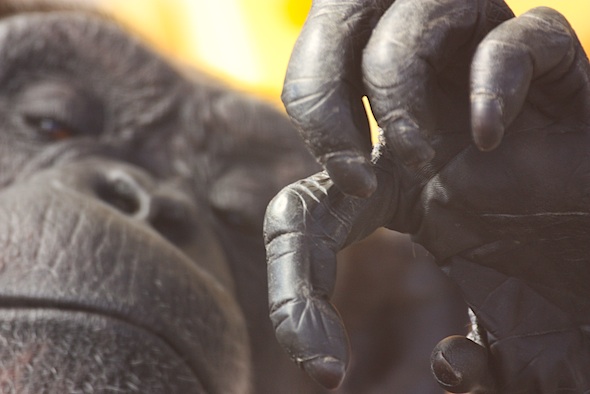
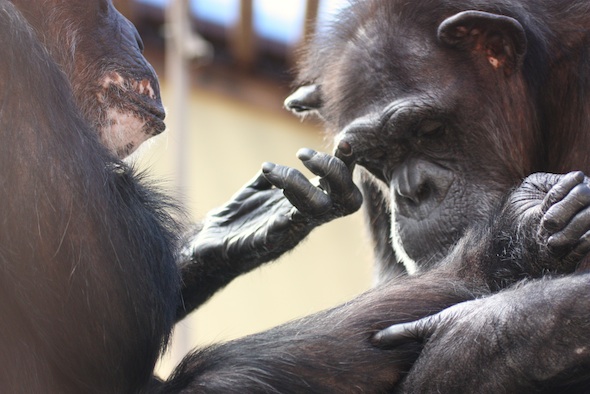
This is the closest that J.B. has ever come to getting a manicure…
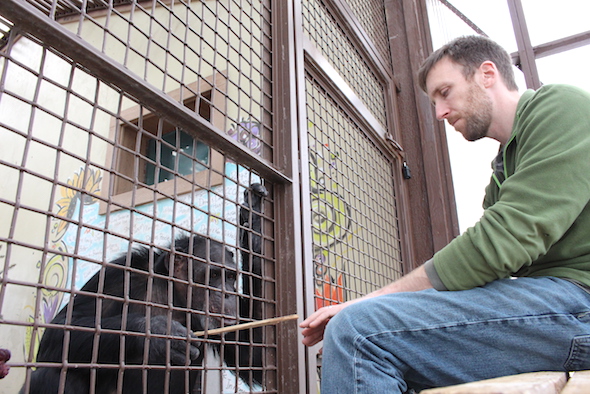

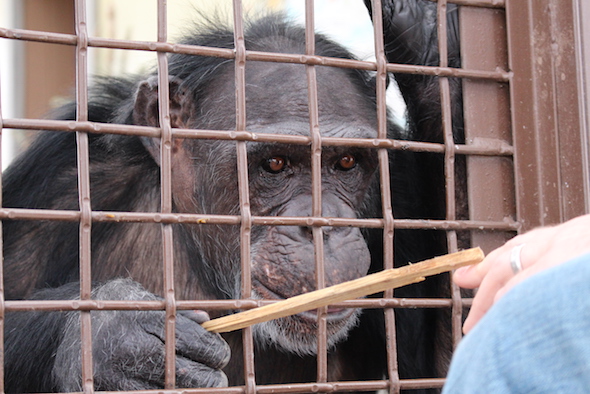
Chimpanzee Sanctuary Northwest
Hope. Love. Home. Sanctuary
This is the closest that J.B. has ever come to getting a manicure…
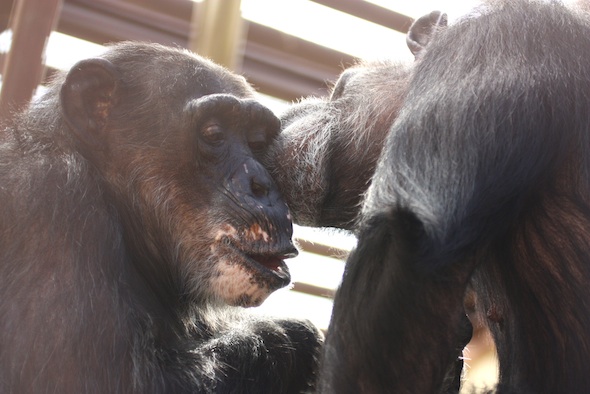
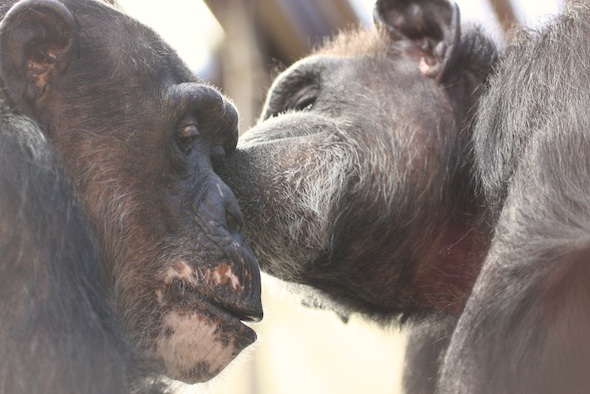
Out of all of the chimpanzees here at the sanctuary, Jody is the most elusive (especially when it comes to us taking photos of her). So, when the opportunity presents itself, we try to take it.
This morning, she payed special attention to Foxie’s brow ridge during grooming.
Jody on the left, Foxie on the right.
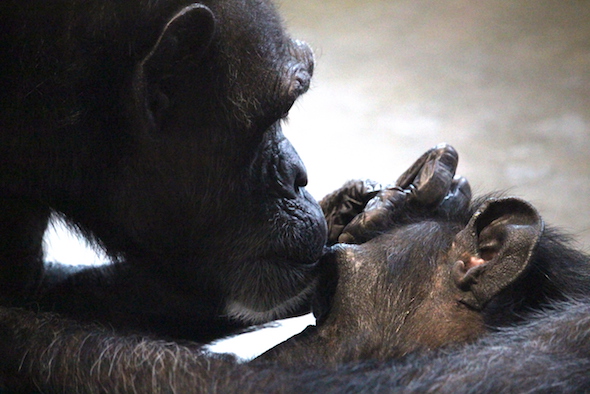


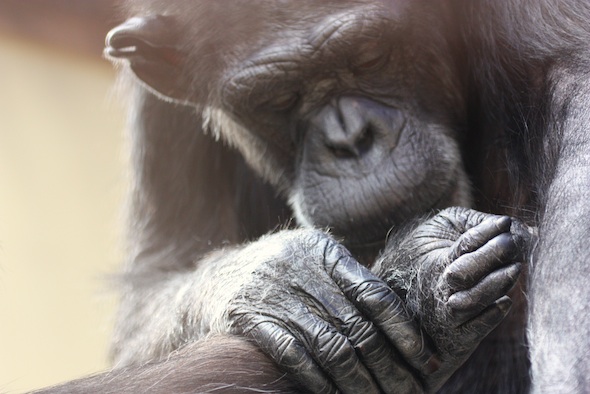
Afterwards, she “cuddled” with a blanket and took a short nap.
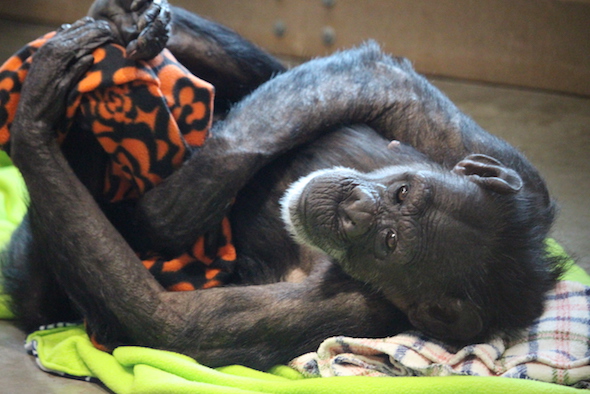
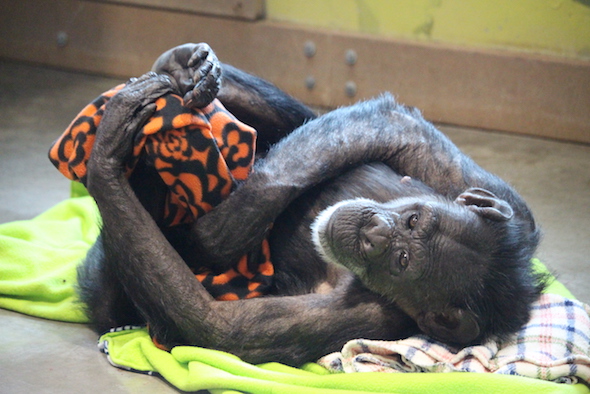
Here she is, this afternoon, taking a peak out the raceway door (the area leading from the Greenhouse to the chimps’ 2 acre outdoor enclosure) before making a few trips outside to gather snowy treats.
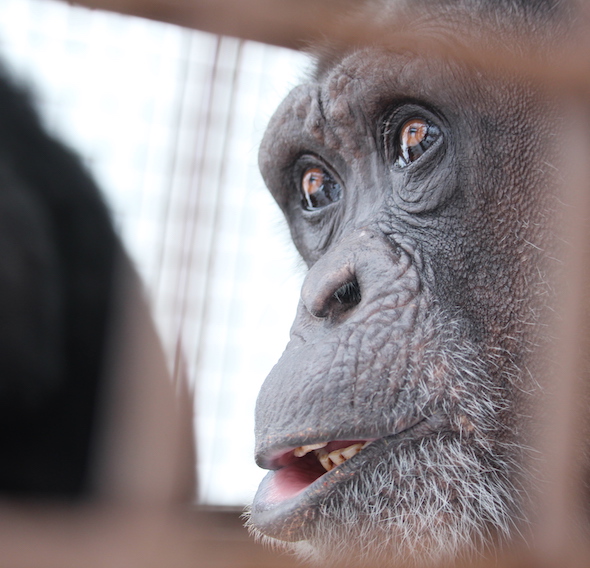
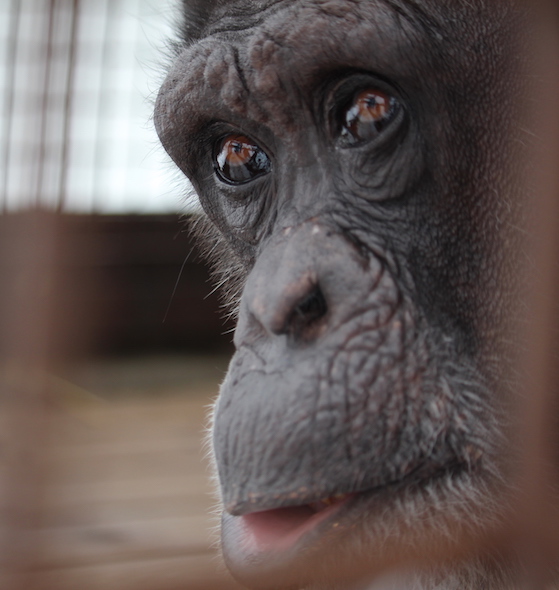
Get to know more about Jody here.
Mornings in the chimp house can be pretty exciting. Today, everyone was in a good mood! Watch the video to see what all of the chimpanzees were up to, while the Greenhouse portion of their home was being cleaned.
Chimpanzees exhibit a variety of innate behaviors and vocalizations in different contexts. During play, for example, chimpanzees will often head nod to one another and laugh, which for a chimpanzee is a breathy pant with the top teeth covered by the upper lip. In grooming, chimpanzees will often lip-smack, teeth-clack, or blow raspberries. These behaviors seem to be used to communicate with other individuals that they are interacting in a certain context. Co-director Diana wrote a blog entry last year on grooming, which includes more detailed information about these behaviors and what they mean. As caregivers, we also use these behaviors and vocalizations during interactions to connect with the chimpanzees using their communication methods, which helps build rapport.
In the following video, Jamie plays with staff caregiver Elizabeth. In the beginning of the clip you can hear Elizabeth breathy panting during this tug-of-war/tickle interaction. Jamie then decided that intern Holly’s boot needed some TLC, so look closely at Jamie’s face and mouth to see her lip smacking as she grooms.
Foxie and Burrito spend the better part of the afternoon grooming one another on the top platform of the Greenhouse today. These two chimpanzees are pretty close friends. But, just because they are friends does not mean they don’t fight. This morning, during one of Burrito’s displays, he chased a screaming Foxie as she ran from the playroom area of their indoor enclosure out to the Greenhouse. She got low to the ground and he ran right over her, slapping her along the way.
This is not unusual behavior for chimpanzees, but luckily grooming is a great way to make up after a fight.
Missy and Annie sat nearby, alternating between grooming and playing.
We’ve talked about the importance of grooming among chimpanzees before, and it’s pretty well known what an essential aspect of life grooming is for most primates. Below is a video of very good friends Burrito and Foxie grooming, with Missy (off-camera), occasionally also grooming Burrito.
There’s a lot of cool things about grooming. In a comment on a post back in 2009, I mentioned some of the following:
The basics: aside from the social aspects, grooming is the removal of dirt and debris and the tending to wounds (licking and picking scabs). It’s why chimpanzees don’t need baths – they do a really good job of cleaning themselves and each other – no water necessary.
The debris found on the grooming partner is not necessarily consumed, even though the lips are usually involved in grooming because chimpanzees use their prehensile lips, almost like another set of fingers, for many activities like inspecting objects, turning the pages of a magazine (in captivity), and especially in grooming.
Increased grooming often occurs after a conflict to reassure and/or “make up” with one another and to cement social bonds. Grooming has a calming affect, which is easy to see when you observe chimpanzees grooming one another. A study of wild chimpanzees that used non-invasive methods to collect urine samples after grooming bouts found that oxytocin (sometimes referred to as “the love hormone”) levels were higher in bonded grooming partners than in samples collected of chimpanzees who had not been grooming or had been grooming with a “non-bond partner.”
Regarding lip movements during grooming: it is common for chimpanzees, as well as other primates, to “lip smack” or “teeth clack” or make other “sympathetic mouth movements” when grooming (also when performing other fine motor behaviors – like many of us who move our tongue a certain way when we’re really concentrating on a task).
Each chimpanzee does his/her own thing, Burrito is a lip smacker (he may teeth clack on occasion too), Foxie is a teeth clacker, and Annie makes raspberry sounds with her lips. The intensity of the mouth movement/noise will increase if something (especially a wound or scab) is found during grooming.
Some scientists have hypothesized that these sympathetic mouth movements were an evolutionary step towards spoken language. Our friend Gabriel Waters and [former] Central WA University professor Dr. Fouts published a study on this theory a few years back: http://cat.inist.fr/?aModele=afficheN&cpsidt=1349990, and there was a book with this premise called Grooming, Gossip, and the Evolution of Language, which I admittedly still need to read, that argued that gossip for humans is what grooming is for chimpanzees and other non-human primates.
So, with all that information, here’s the video of Burrito and Foxie strengthening their friendship through grooming today:
Some of the best grooming sessions happen in the afternoon, in the “siesta” time between lunch and dinner.
Missy & Annie:
Foxie & Burrito:
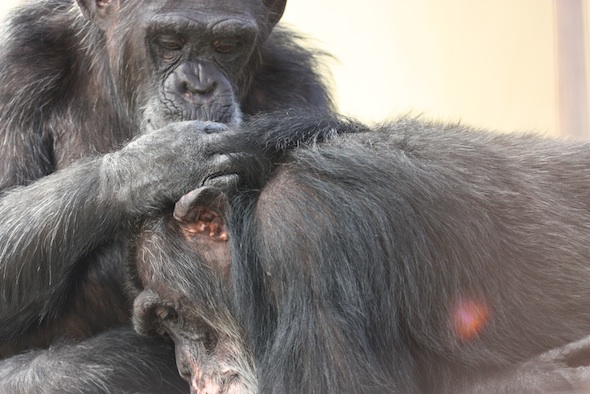
Missy & Burrito:
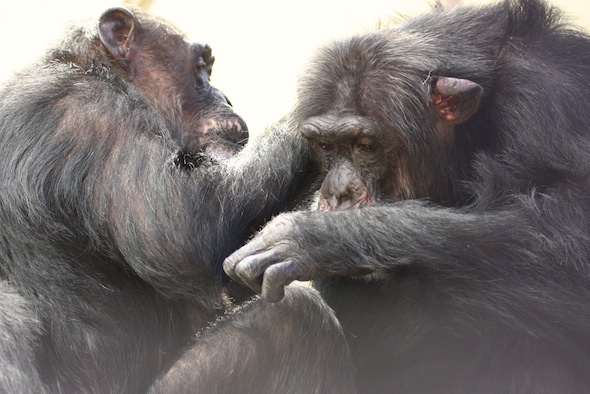
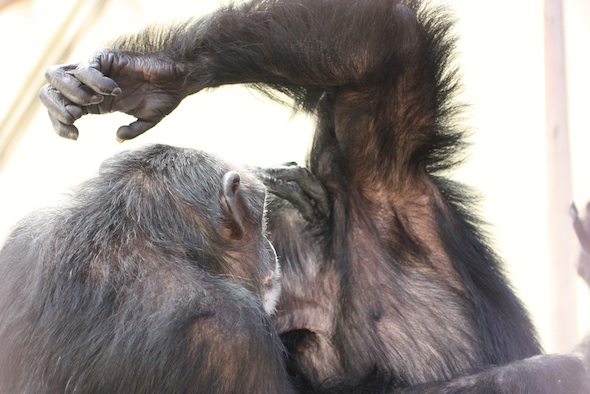
Annie: