• Skip to main content
  • Skip to primary sidebar
  • Skip to footer

Chimpanzee Sanctuary Northwest

Hope. Love. Home. Sanctuary

  • Our Family
    • The Chimpanzees
    • The Cattle
  • Blog
  • About Us
    • Visiting the Sanctuary
    • Philosophy
      • FAQs
      • Mission, Vision & Goals
      • Privacy Policy
    • The Humans
      • Staff
      • Board of Directors
      • Founder
    • Annual Reports
    • The Future of CSNW
    • CSNW In The News
  • You can help
    • Donate
      • Become a Chimpanzee Pal
      • Sponsor A Day
      • Transfer Stock
      • Be A Produce Patron
      • Be a Bovine Buddy
      • Give from your IRA
      • Personalized Stones
      • Bring Them Home Campaign
    • Leave A Legacy
    • Employment Opportunities
    • Volunteer
    • See Our Wish List
    • Events
  • Resources
    • About Chimpanzees
    • Enrichment Database
    • Advocacy
      • Advocacy Action Center
      • Apes in Entertainment
        • Trainers
        • Role of the AHA
        • Greeting Cards
      • Chimpanzees as Pets
      • Roadside Zoos
      • Chimpanzees in Biomedical Research
      • Conservation
        • African Apes
        • Orangutans
  • Shop
    • Merchandise Store
  • Contact
  • DONATE NOW

injury

Reason #2 Why Gordo Will Never Be a Doctor

August 19, 2024 by J.B.

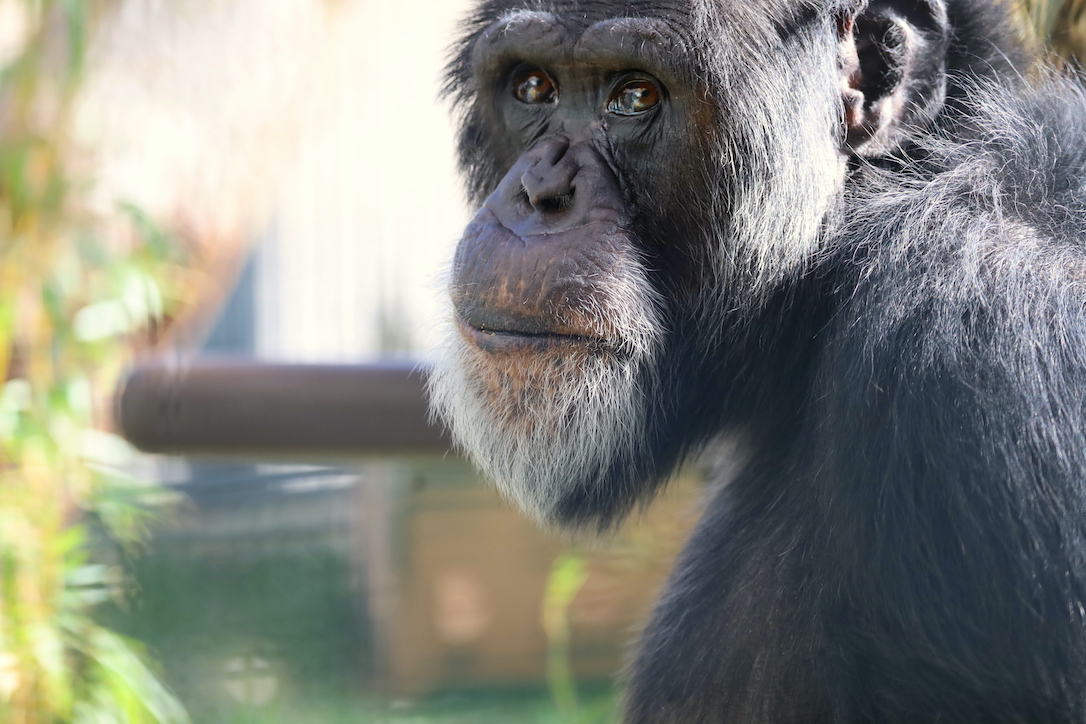
The official term for fear of blood, wounds, and injuries is hemophobia. To say that Gordo is hemophobic is true and yet somehow insufficient. What we really need, and what appears to be absent from the literature, is a term for the fear of someone else’s injury which you yourself inflicted.

Last week, I was working in the garage at the house when the Bray erupted with screams, barks, and alarm calls. Did someone see a snake? Is the group fighting? I ran up to the chimp house to see what was going on, expecting to find the staff frantically gathering snake capture equipment or trying to track a conflict. Instead, everyone was going about their business as usual.

I asked what was going on. “Gordo is freaking out over Willy’s toe.” Oh, right.

You see, Gordo hates the sight of wounds. We’ve known this for some time. Thankfully he hasn’t had many opportunities to see one lately. But Willy B’s recent injury, and the subsequent amputation of the of tip of his toe, had Gordo enthralled. Which, come to think of it, highlights another way in which the term hemophobia is lacking when it comes to Gordo’s condition: He doesn’t actually try to avoid the sight of injuries. In fact, he goes out of his way to look at them. Maybe the term we’re looking for, then, is cacospectamania, or the obsession with staring at repulsive things.

This whole episode brought back memories of an incident that I was happy to have forgotten about, however briefly. In the spring of ’22, we successfully completed the long process of systematically introducing Willy B’s group to Cy’s group and had officially formed a new group of nine. For weeks thereafter, the staff took turns sleeping overnight on a cot in the chimp house foyer due to the risk of serious conflicts in the newly formed group. While there were indeed conflicts from time to time, they were largely minor and the group eventually settled into a groove. We, in turn, began to relax our vigilance to the point where Diana and I could monitor the group via security cameras from our house across the driveway.

One evening, as Diana and I were making dinner, we heard whimpering from the monitors. There had been a conflict earlier that day, so perhaps they hadn’t finished what they started. I grabbed my radio and went to see what was going on.

Upon entering the chimp area, I could immediately sense something wasn’t right. Willy B was sitting on the bench in Room 6, where he had made his nest just a few hours earlier, his lips drawn back to expose his teeth in what is known as a fear grimace. Willy didn’t often engage with me in social interactions and rarely made direct eye contact, but at that moment his eyes were locked on mine. Help me, he appeared to be saying.

I looked up to see Gordo perched directly above Willy B in the door that passes through the ceiling into the mezzanine. Terry was positioned on the floor below him. Without a sound, the alpha male, Cy, suddenly appeared and sat in the doorway to Room 5, blocking the only other exit. Willy was alone and frightened, surrounded by three bonded males from another group after his own group mates had gone to bed. I radioed to Diana, “This is not good. You’d better get up here.”

Gordo stared intently at Willy B and began to scream. Was he marshaling his allies to launch an attack? The idea that our months-long effort to unite the two groups would fall apart so suddenly and spectacularly with a premeditated, late night ambush was not out of the realm of possibility. Chimps have been known to do worse things.

I ran through our options in my head. Diana could operate doors while I distracted the combatants with the CO2 fire extinguisher and bear scare darts we kept nearby. If we could separate even one of them, Willy might stand a chance.

Willy slowly turned his gaze from Gordo to Terry, then to Cy, and back to Gordo. He was out of options and he knew it. Gordo, meanwhile, crept closer and closer.

They are on the verge of an all out assault, I thought to myself. This is how it ends. Just then, Gordo squinted his eyes and peered intently at a small wound on Willy’s foot. His screams intensified as he studied the injury. That’s what this is all about? A cut on Willy’s foot? My emotions swung from fear and horror to disbelief. By the look on this face, so did Willy’s. Ironically, Gordo was most likely responsible for the very wound that was causing him so much distress, just as he was the one responsible for removing the toe from Willy B’s foot a couple weeks ago. This may explain why Willy is unable to muster any sympathy for Gordo’s condition.

Gordo eventually stopped screaming and the tension in the room slowly began to dissipate. Gordo, Terry, and Cy returned to their nests in the playrooms and Willy B, Diana, and I were able to breathe again, all three of us having learned an important insight about our pal, Gordo: He is not, in fact, a ruthless midnight assassin, but rather a garden variety hemophobic cacospectamaniac. It’s a slight but important difference, one that I am as grateful for today as I was then.
Filed Under: Gordo, Willy B Tagged With: behavior, chimpanzee, injury, northwest, rescue, Sanctuary

Honey B Takes a Trip to the Clinic

January 19, 2024 by Ellen Brady-McGaughey

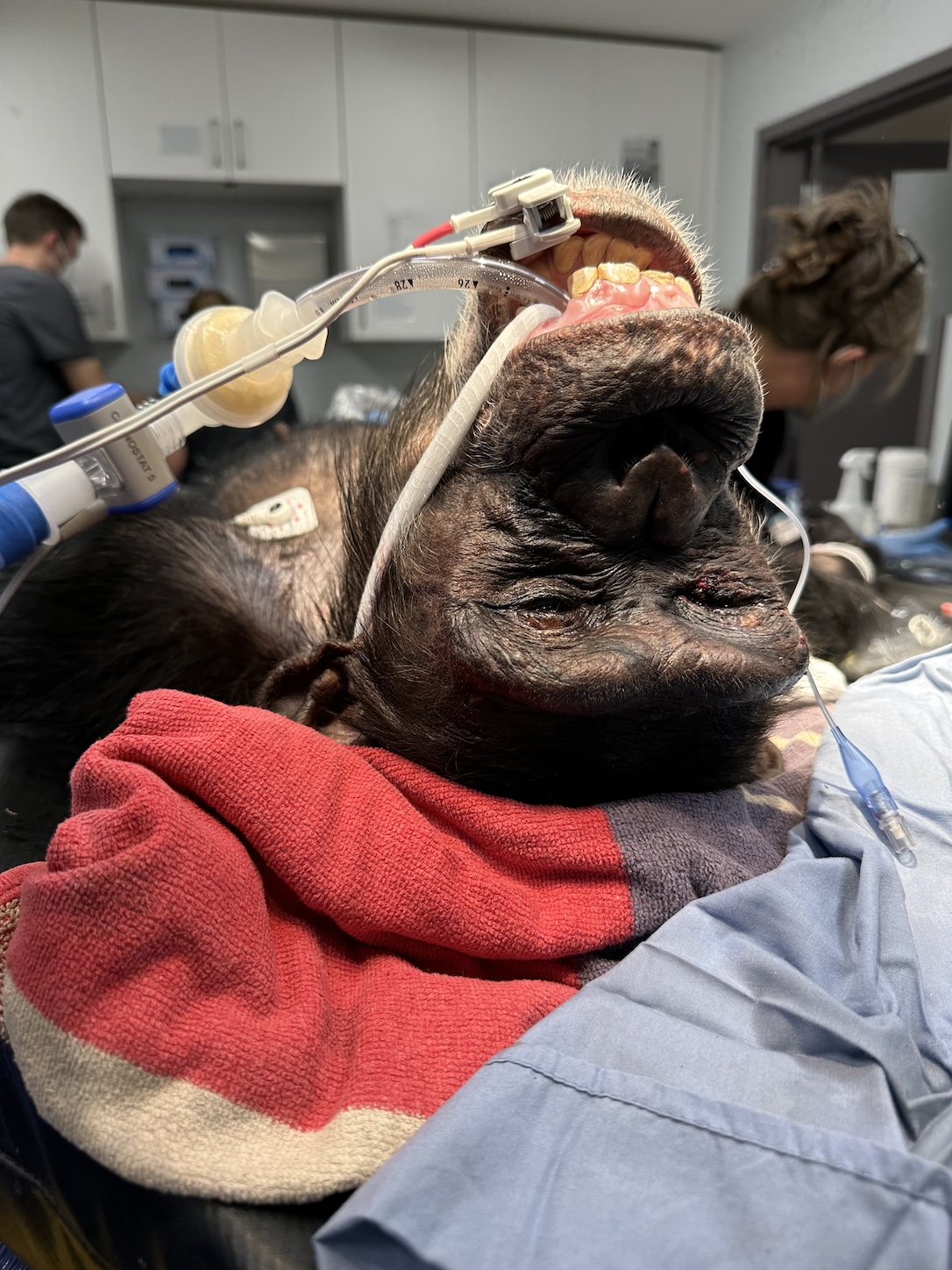
Yesterday was a very busy day at the sanctuary. There was a fight in Honey B’s group in the afternoon where she sustained a multilayered laceration to her lower right eyelid. Thankfully there was no damage to the eye itself, but the injury did require some stitches. Everyone quickly jumped into action to get Honey B prepared for her sedation. Dr. Erin was already onsite and the process was started right away. Honey B did well under anesthesia and was returned to a cozy room with blanket nests lovingly prepared for her by Kelsi, and socks on her feet to make sure she didn’t get cold. She has spent most of today resting after her eventful day yesterday and will stay separated from her group for several days to allow us to better monitor her healing.

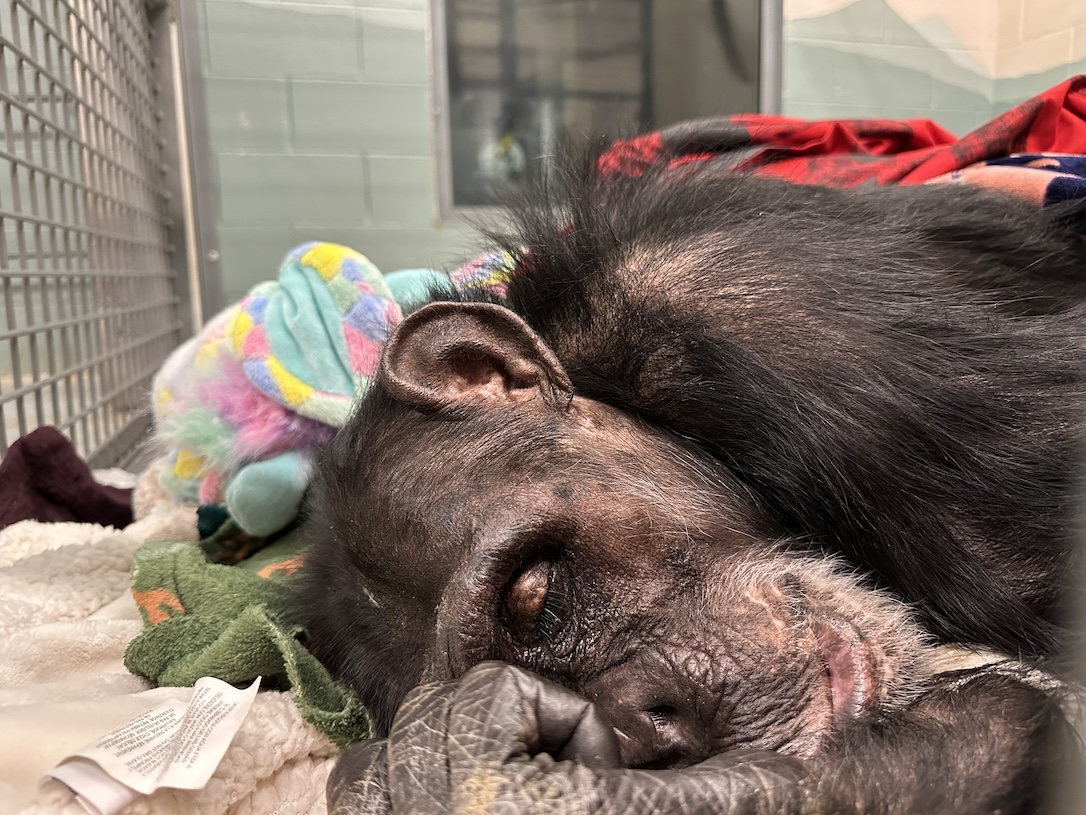
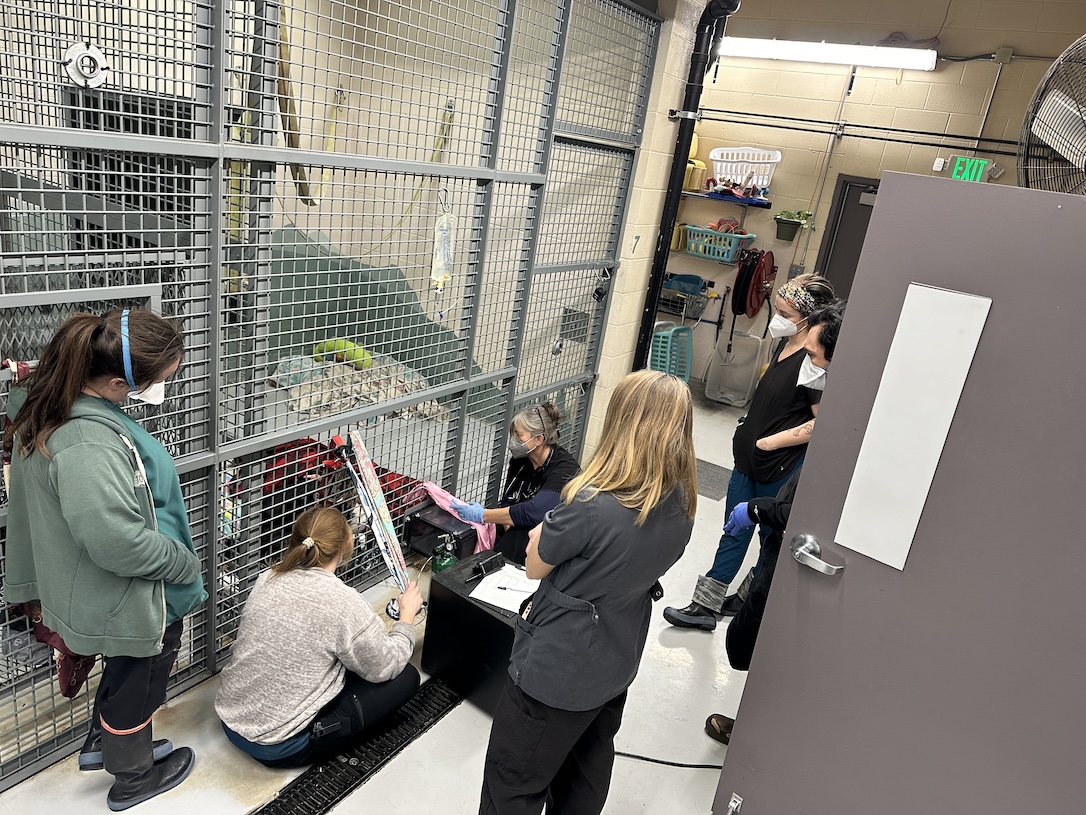
Below is a photo from the procedure, and some photos from after Honey B was returned to her room to recover.

Honey B during her procedure with Dr. Erin and J.B. in the background.

Honey B sleeping in one of her pre-made blanket nests after receiving her stitches.

Honey B recovering in her room, surrounded by her caregivers.

Filed Under: Honey B, Veterinary Care Tagged With: eyelid, honeyb, injury, stitches

Teamwork

July 30, 2023 by J.B.

Bite wounds are probably the most common injuries we see in chimps. Our treatment protocols for these wounds tend to be fairly conservative: administer analgesics for pain, clean frequently with antiseptic spray, and monitor closely. There are a few reasons for this. First, chimps have a superhuman (literally) ability to heal. Wounds that would send me racing to the ER for stitches will close up on their own in chimps with little to no treatment in a matter of days or weeks, remaining uninfected and leaving no visible trace once healed. Second, because of the frequency of wounding in captive groups, there’s always a risk of antibiotic resistance if antibiotics are over prescribed. And third, many forms of diagnostics and treatment require the chimps to be anesthetized—something we avoid whenever practical out of concern for their overall safety and well being.

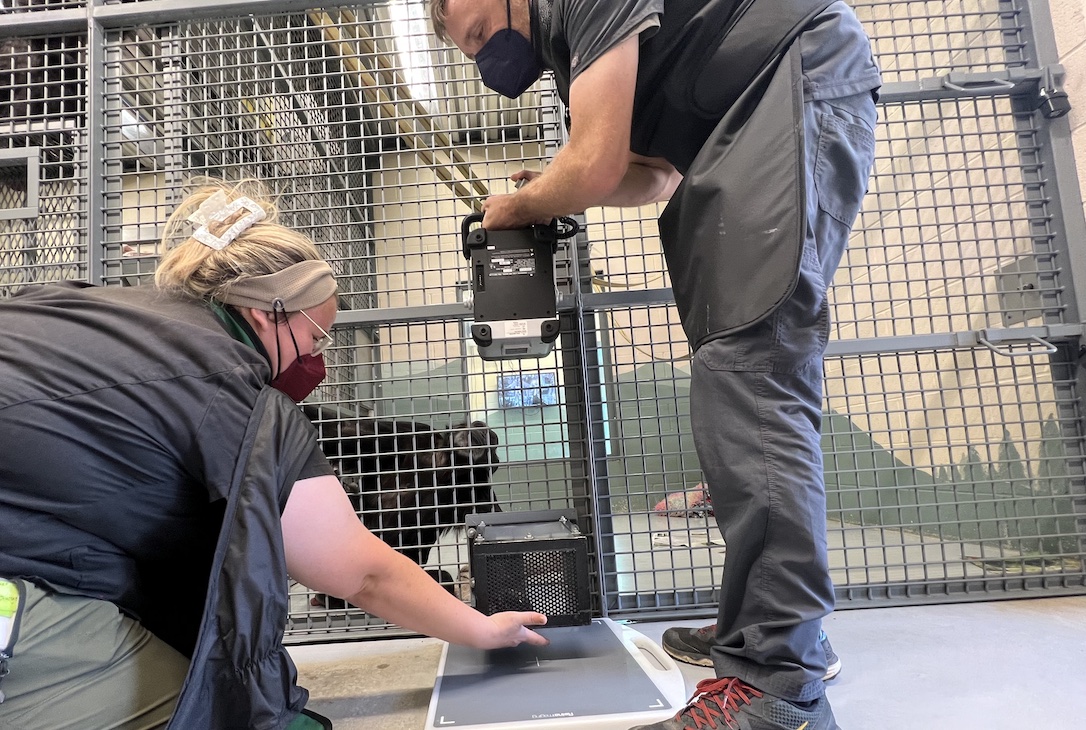
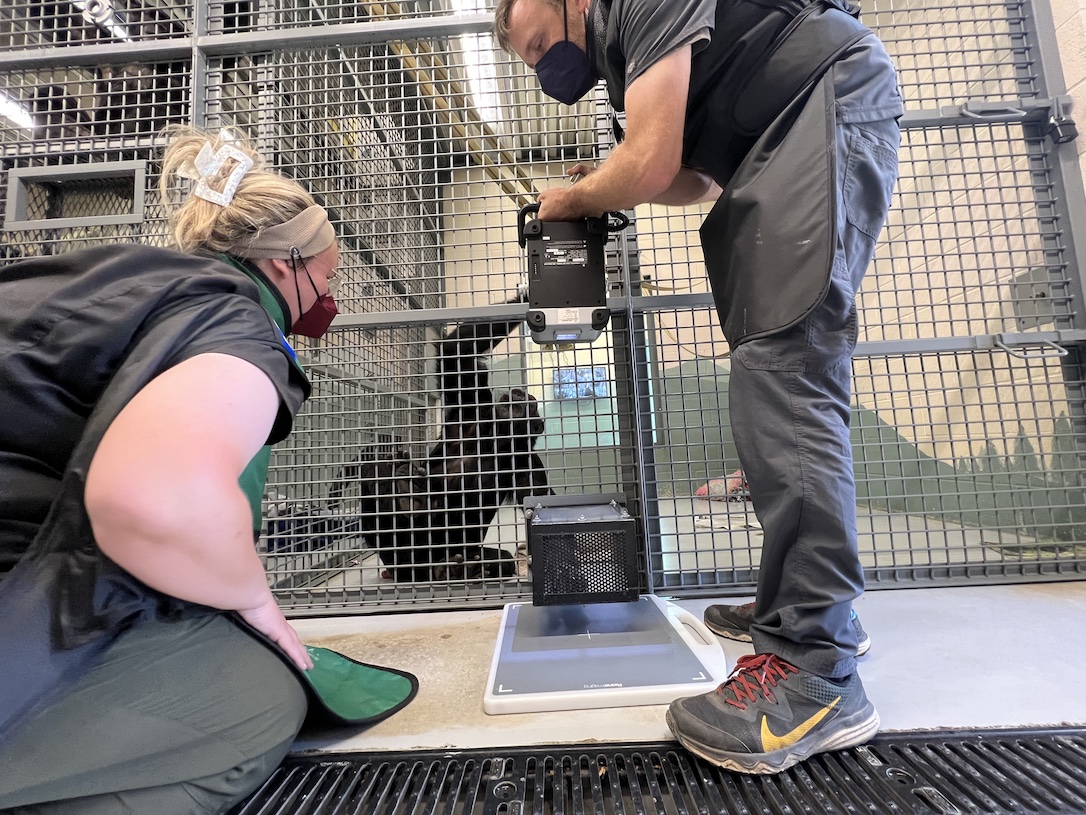
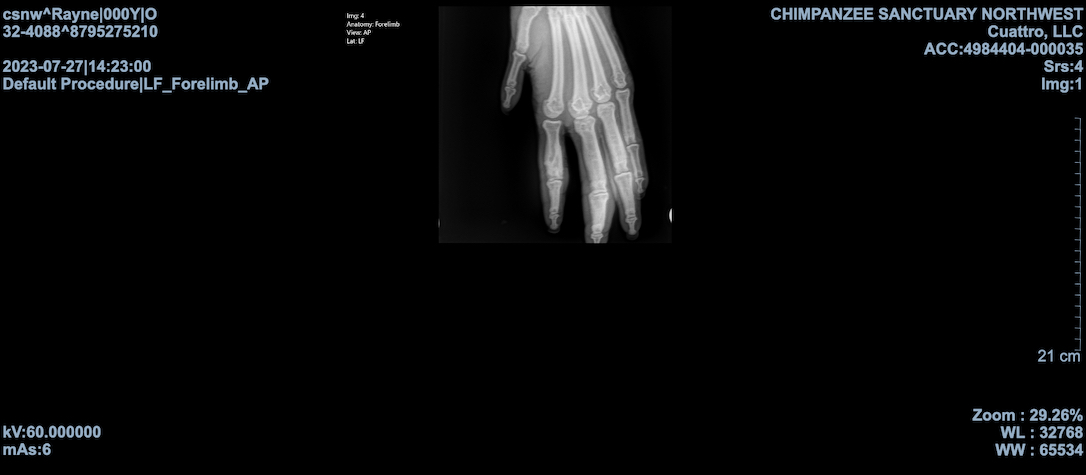
Once and a while, though, there are wounds that require a bit more than the typical conservative approach—like recently, when Rayne received a bite to her third digit (middle finger) that resulted in some swelling. When the swelling persisted even as the wound appeared to heal, Dr. Erin wanted to rule out an underlying fracture. Thankfully, our Positive Reinforcement Training (PRT) team was able to train Rayne to hold her hand in the x-ray box so that we could get some images without the need for anesthesia.

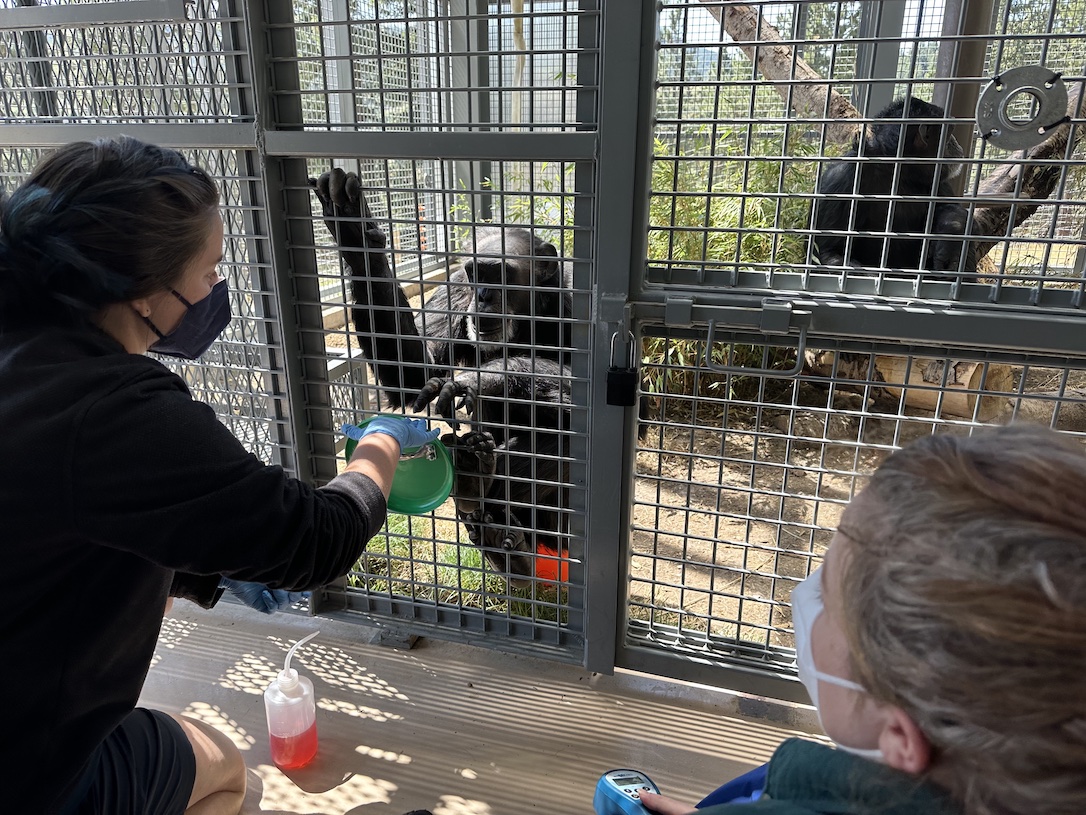
Here, Jenna asks Rayne to hold her hand flat in the box so we could get the first in a series of shots.

Jenna then withdraws her hand and Rayne holds hers still (while that other hand is trying to investigate the x-ray generator!).

The good news is that Rayne did not have a fractured digit. Interestingly, you can see an old healed fracture on her 2nd digit (index finger).

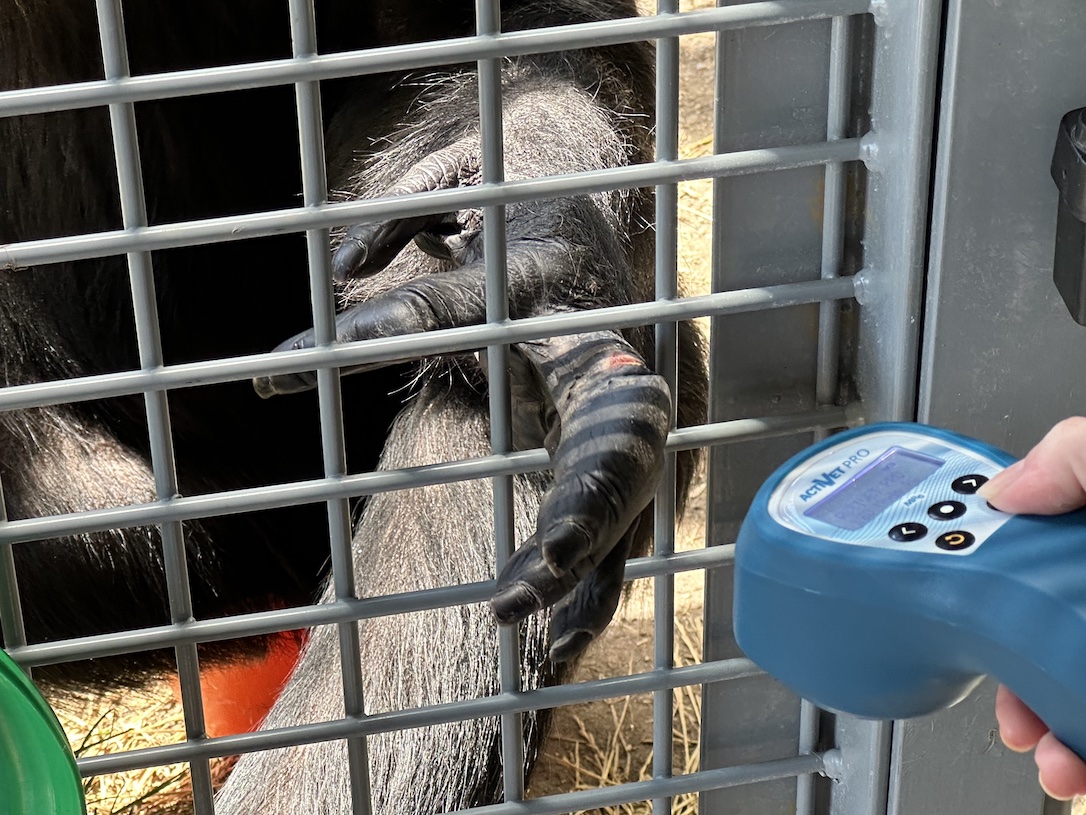
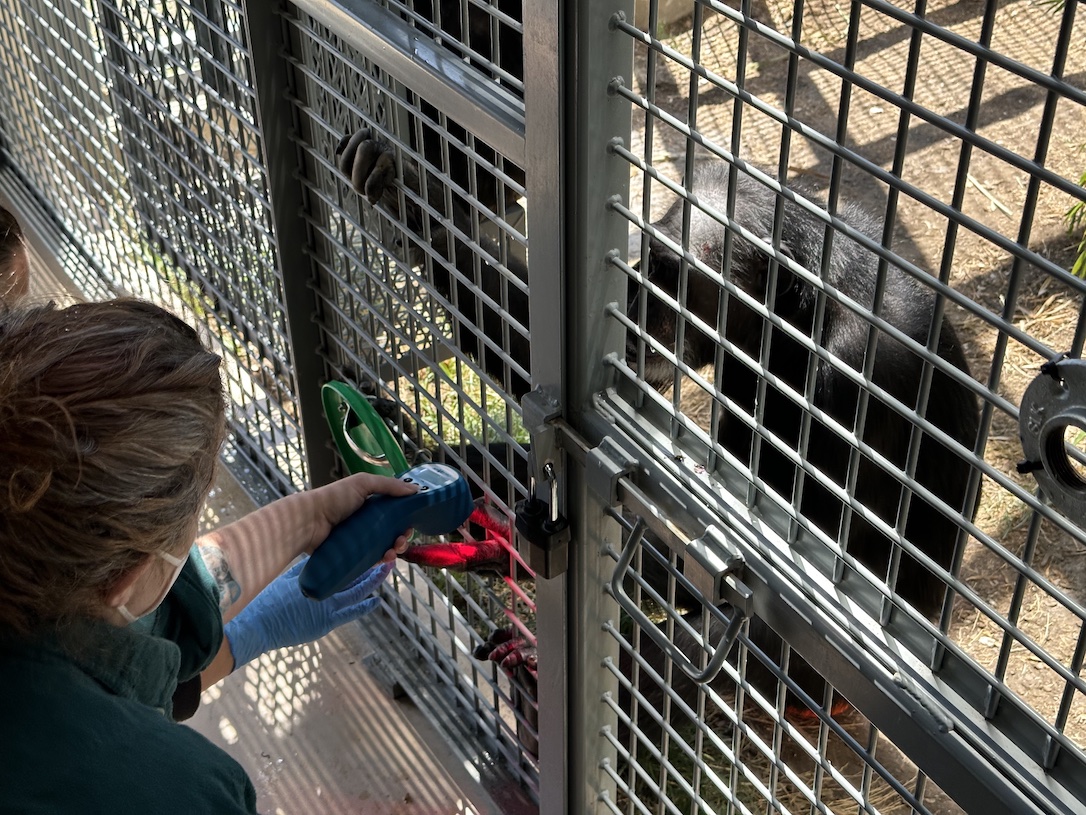
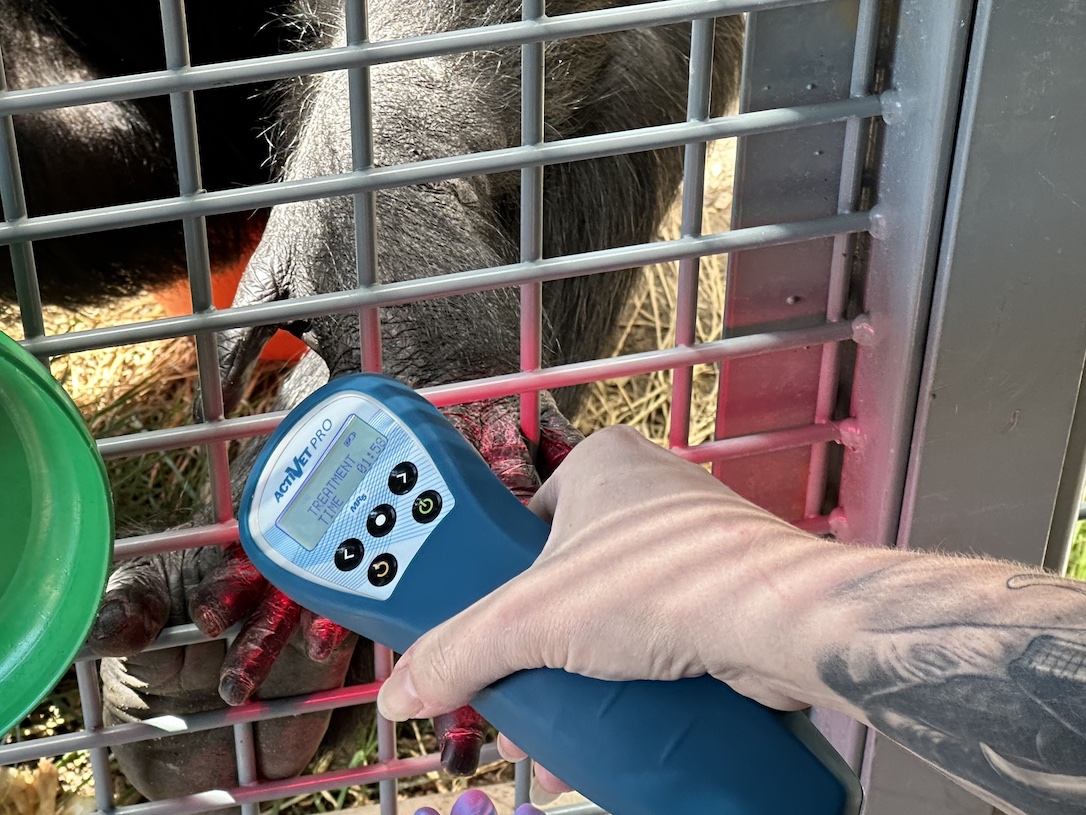
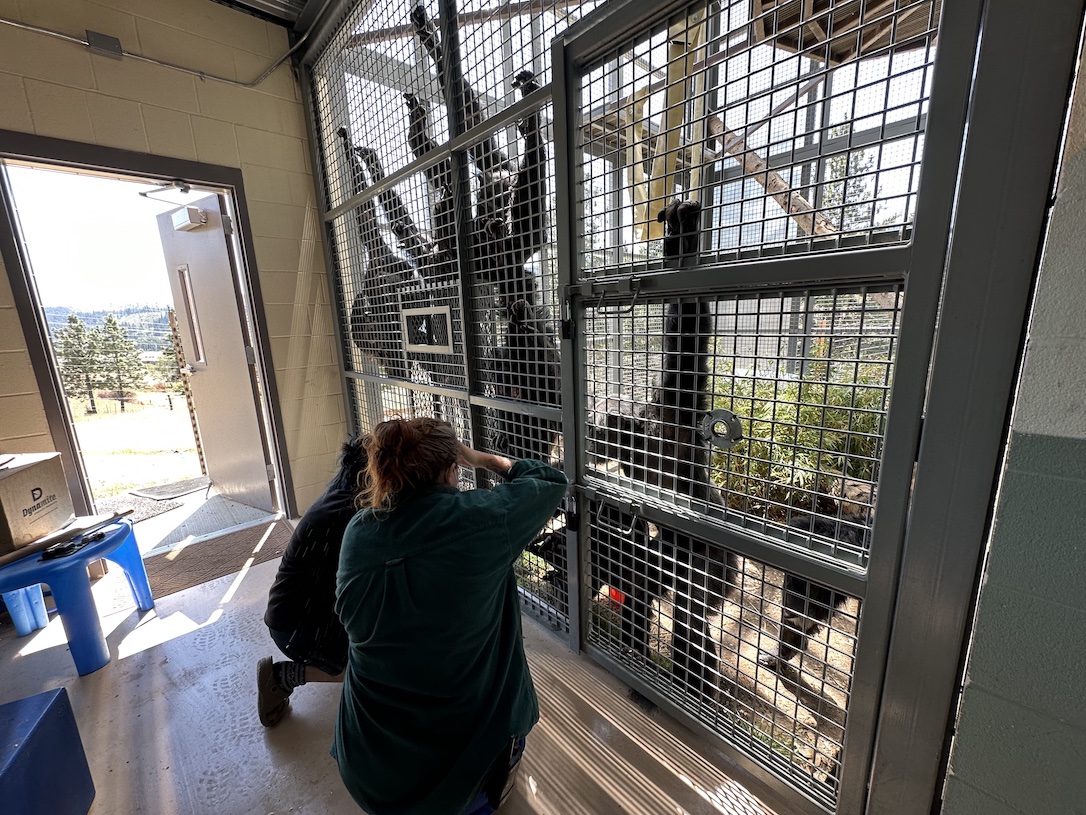
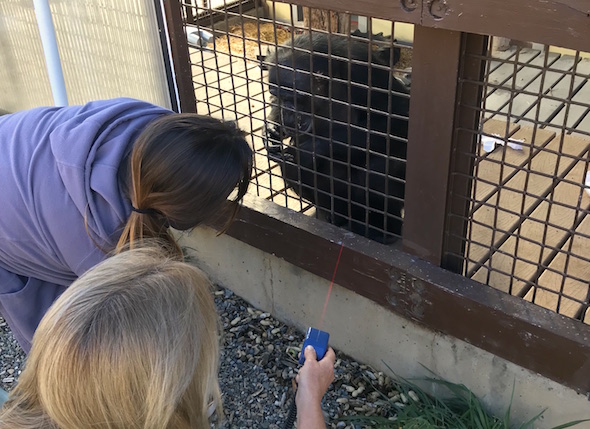
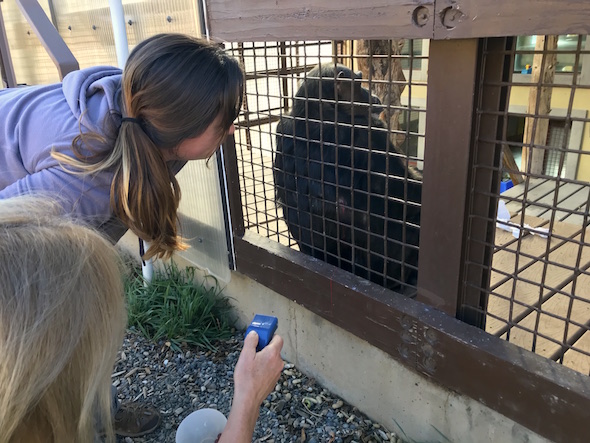
Though the swelling soon began to subside, PRT also made it possible to treat Rayne’s finger with a therapeutic laser to help encourage the healing process. For this, Rayne needs only to sit at her station marker and respond to Grace’s command to present the fingers of her left hand through the mesh. It was Rayne’s choice to pull up the orange ball and sit on it.

Sabrina is then able to program the laser, at Dr. Erin’s direction, and apply it to Rayne’s finger.

The only problem? Everyone wants a turn!

Positive reinforcement training requires a lot of staff time but these little opportunities to apply all that effort can really add up in the form of improved diagnostics, more effective therapies, and fewer trips to the clinic. Even if we learn that a chimp will require a more complex exam or treatment under anesthesia, we can often go in with a head start given the information we are able to obtain.

For her part, Rayne seems pretty happy to participate.

You want me to rotate my hand 90 degrees for a lateral view?

Here, you can laser my feet, too!

Just keep that juice coming.


Filed Under: Rayne, Veterinary Care Tagged With: chimpanzee, injury, laser, medical, northwest, positive reinforcement, prt, radiograph, Sanctuary, training, veterinary, wound, x-ray

Building trust

October 27, 2017 by J.B.

Providing medical care to chimpanzees is always a challenge, but it can be particularly difficult when they have been subject to decades of invasive medical research procedures against their will.

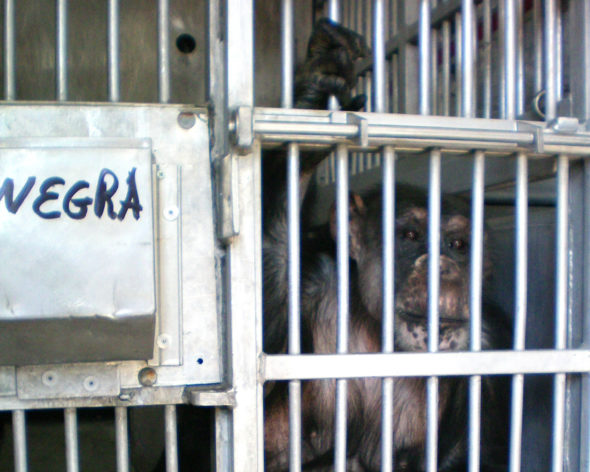
Years ago, we participated in a study that considered whether chimpanzees might exhibit abnormal behaviors that cluster into syndromes similar to posttraumatic stress disorder and depression in humans (you can read it here). Negra was featured in the paper as a case vignette:

A chimpanzee named Negra was a 36-year-old female at the time of the study. Taken from the wild in Africa as an infant, she has remained in captivity since that time. She was used in invasive research, including hepatitis experiments, and for breeding. Each of her infants was removed from her at an early age. During the period in which she was used in research, she was kept in isolation for several years. Approximately 1 year prior to the study, she was transferred to Chimpanzee Sanctuary Northwest in Washington state, where she currently lives with six other chimpanzees.

Negra met alternative criteria for depression and PTSD. According to reports, she had persistent depressed hunched posture, and she was socially withdrawn. Negra slept excessively during the daytime, and she lacked interest in play, food, other individuals, and grooming. She also demonstrated poor attention to tasks. She was described as slow and sluggish, and at times, she appeared anxious. In response to an unexpected touch, she would “threat bark,” scream, or run away. Compared with other chimpanzees, she demonstrated less variability in her facial expressions. Caretakers reported that her face was expressionless, “like a ghost,” for at least a month after she arrived at the sanctuary. She seldom, if ever, exhibited a play face. She was tested for a thyroid disorder and assessed for other medical causes of her clinical presentation, but all laboratory tests were within normal limits. Based on later reports provided by her caretakers, some of her symptoms have improved since she has been living in the sanctuary. She has become more interested in other chimpanzees, including grooming, and the variability in her facial expressions has increased.

Negra’s anxious response to being touched was not just a sad reminder of her earlier trauma; it was a serious impediment to her care at the sanctuary. Chimpanzees routinely receive wounds from fights, they develop dental problems, they get heart disease and diabetes and many other illnesses, and these things often require medical intervention.

There’s always a way to force medical care on an uncooperative chimpanzee, and sadly that is what’s required from time to time. But that can be stressful and even dangerous. They deserve a chance to participate willingly. Giving them that choice, however, requires a lot of time and energy on the part of their caregivers.

For years, CSNW caregivers (first Debbie and now Anna) have been working with Negra to habituate her to basic medical evaluations and treatments as part of our positive reinforcement training program. These efforts have paid off many times over, most recently when Negra received a wound to her back during a fight. Negra let Anna spray the injury with antiseptic solution and she allowed Dr. Erin to follow that up with laser therapy. In cases where antibiotics may be needed, Negra will even let her caregivers swab the wound to culture the infection and determine the best course of treatment.

For some chimpanzees, this kind of cooperation is no big deal. But chimpanzees are individuals – they have unique life experiences and they cope with those experiences in different ways. Negra has never given her trust lightly. It had to be earned through years of persistent efforts on the part of her caregivers.

It has certainly been worth it.

Filed Under: Caregivers, Negra, Veterinary Care Tagged With: care, chimpanzee, injury, laser, northwest, positive reinforcement, prt, rescue, Sanctuary, therapy, training, trust, vet, veterinary, wound

The doctor will see you now

July 11, 2014 by J.B.

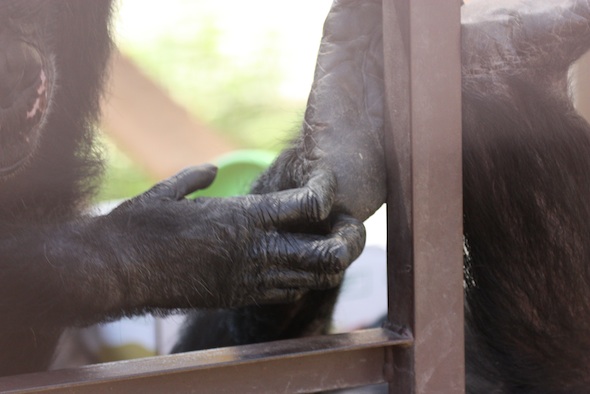
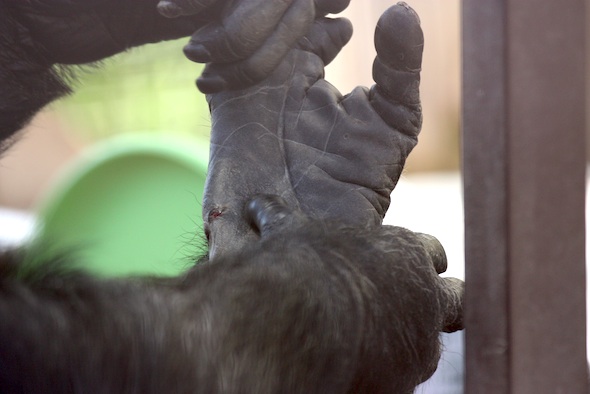
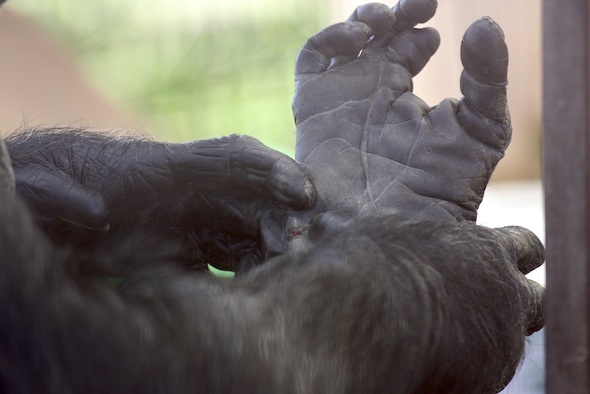
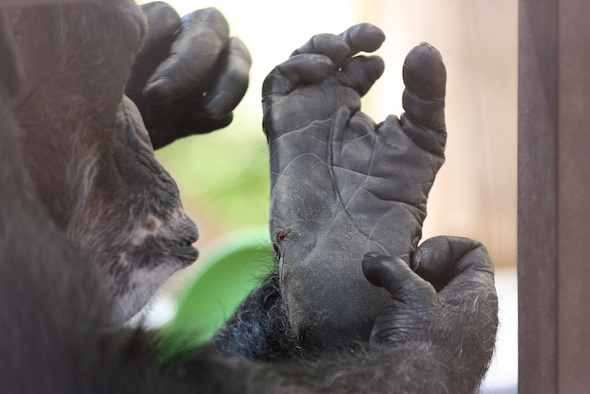
Chimps fight a lot, and occasionally they get wounded. Serious injuries are treated under the direction of a veterinarian, but we leave the smaller stuff to Missy.

web_Missy_grab_jody_feet_GH_jb_IMG_0832

web_Missy_grab_jody_foot_GH_jb_IMG_0814

web_Missy_squeeze_wound_jody_foot_GH_jb_IMG_0823

web_Missy_squeeze_jody_foot_wound_GH_jb_IMG_0825

web_Missy_inspect_jody_foot_wound_blood_groom_GH_jb_IMG_0819

web_Missy_lick_jody_foot_wound_groom_GH_jb_IMG_0820

web_Jody_wound_after_misst_clean_GH_jb_IMG_0828

Filed Under: Chimpanzee Behavior, Fights, Grooming, Jody, Missy Tagged With: chimpanzee, groom, injury, Missy, northwest, rescue, Sanctuary, wound

Fighting

November 15, 2012 by Diana

The chimps had a big fight on Tuesday night during dinner. I haven’t witnessed a fight of that intensity that lasted that long in years. The Cle Elum Seven do have minor conflicts all of the time. If you’re not familiar with chimps, you might think these squabbles are all-out brawls, but after you’ve seen a few, you get accustomed to how chimps fight. Once a quarrel breaks out, generally everyone joins in, so at CSNW, there are seven chimpanzees screaming and running around. Usually it is just a lot of posturing and often very little physical contact (as I mentioned in this blog post). Tuesday was a bit different.

The fight seemed to start between Missy and Annie. Though they really are best friends, Missy is dominant to Annie. Dominance is often asserted around access to food, so sometimes Missy reminds Annie of her lower rank by getting upset if Annie tries to take food. Because of these occasional reminders, Annie can be a little nervous. Annie used to be quite on edge a lot of the time, and if she thought someone was going to become upset by something she was doing, she would have overly exaggerated submissive behaviors, which often included screaming (I found a good description of submissive behaviors on Jane Goodall’s Lessons of Hope website). These days, Annie is much more confident and much less anxious, but a hierarchy among the chimps remains and is frequently reinforced in obvious and subtle ways. So, I can’t say exactly what started the fight, but it was something between Annie and Missy involving food. The start of the fight, however, often doesn’t matter. Once a fight gets going, it’s an opportunity to reinforce rank as well as get out any pent-up anger, so the “target” changes throughout the duration of the conflict. Maybe this sounds familiar? If you’re in a fight with a loved one (or not-so-loved one), I bet you’ve noticed the subject of the fight drifts from the initial topic to anything that been bugging you lately. And if it’s a fight within a group of several people, the person that everyone is focused on can change throughout the quarrel. Chimps aren’t so different.

The fight on Tuesday moved from the greenhouse, to the front rooms, and then into the playroom. There’s really nothing we as caregivers can do to end a conflict among the chimps. Once they’re going, there’s nothing that will take their focus off of the fight. Watching a fight does reinforce why we have such strict safety protocols and why we never share the same space as the chimps without a secure barrier (steel fencing, electric wire or chimp-proof glass) between human and chimpanzee. Chimps can go from peacefully eating dinner to a giant conflict in a matter of seconds.

One thing that we do is make sure there are no areas that would create a “trap” that a chimp could get stuck in without an avenue of escape. So, with that in mind, Elizabeth opened up the doors between each of the front rooms to the playroom even though we had not completed the spot cleaning for the evening. We do not attempt to isolate chimps during or after a conflict – we just give them room and allow them to work things out. Fighting and making up is an important part of living cohesively in a group of chimpanzees.

So, all we could do was watch and wait for the fight to end. Most squabbles last just a minute or two, but this fight went on for at least 15 minutes. One of Negra’s seemingly self-appointed jobs is to let out a loud pant hoot towards the end of the fight. We’ve come to describe this as Negra attempting to end the conflict. With this conflict, Negra let out her “ending pant hoot” at least four times. She seemed ready for the fight to be over and to get on with the rest of dinner; but this fight was intense, and the other chimps just kept going. During the fight, I remarked to Elizabeth how much smarter Burrito has become about conflicts. He used to throw himself in the middle, get all of the girls mad at him, and end up getting beat up. He’s still involved in conflicts, but stays more on the periphery and concentrates on getting reassurance from Foxie, who seems to give reassurance to anyone and everyone who wants it – that’s why we think of her as the mediator of the group. Even though we’re accustomed to the chimps fighting, it’s not a time that we think to break out the cameras, so we don’t have many photos or videos of fights, except for these photos of the end of a squabble that I took a few years ago.

Once the fight finally ended, we looked everyone over for injuries. Jamie’s behind was bleeding, but it didn’t look too worrisome. Jody was the worst off – she had a cut above one of her eyes, a few cuts on her arms, and a very bloody toe. We realized a little while later that one of her toes was severed completely. This probably sounds horrific, but it’s all part of what happens when chimps fight. We’re actually lucky that we don’t see more injuries. During conflicts like this, chimps go for ears, toes, fingers, scrotum – basically parts that stick out that can be bitten.

Jody was taking some time to rest while the other chimps were inspecting their own and each others’ wounds. You might imagine that having a toe bitten off would cause excruciating pain, but chimpanzees’ experience of pain seems to be quite different than that of most modern-day humans. The best example of this among the Cle Elum Seven was a fight pretty early on when Missy’s top lip was split open to the degree that you could see her teeth in between the new two halves of her top lip. Within minutes after the injury, she was pulling on it and biting the rough edges off, and not long afterwards, she eagerly ate several pieces of grapefruit with no signs of pain whatsoever. With no intervention from us, aside from medication (luckily we had seen this type of injury before and knew it could heal on its own), her lip “zipped” back up in a matter of a week or two, and within a month there was barely a trace of the injury.

We have Jody on pain reliever, just in case, as well as antibiotics, and we’re monitoring her toe very closely. We’re sending photos to our veterinarians and keeping them updated several times a day. We’re hoping that Jody’s foot will be able to heal on it’s own. If there are signs of an infection despite the antibiotics, it could be due to bone fragments left in the toe, and we’d most likely have to perform surgery to amputate the rest of the toe – a fairly minor procedure, but it would be the first surgery in CSNW’s history. Let’s hope we won’t have to go that route!

Here’s a photo of Jody from yesterday, the morning after the fight. She wasn’t even favoring her injured foot as she walked all over Young’s Hill:

jody drooped lip face young's hill


Filed Under: Chimpanzee Behavior, Fights, Jody, Sanctuary Tagged With: chimp, conflict, csnw, injury, northwest, nw, Sanctuary

Primary Sidebar

Subscribe To the Blog and Get Notified of New Posts First!

Archives

Calendar of Blog Posts

June 2026
S M T W T F S
 123456
78910111213
14151617181920
21222324252627
282930  
« May    

Categories

SUBSCRIBE TO OUR NEWSLETTER

Footer

PO Box 952
Cle Elum, WA 98922
[email protected]
509-699-0728
501c3 registered charity
EIN: 68-0552915

Official DDAF Grantee

Menu

  • The Chimpanzees
  • Blog
  • About Us
  • You can help
  • Resources
  • Contact
  • Donate

Proud Member of

Connect With Us

Search

Copyright © 2026 Chimpanzee Sanctuary Northwest. All Rights Reserved. Site by Vegan Web Design