In today’s blog video, see how George is navigating the complexities of social life in his new group.
reassurance
With a Little Help From My Friends
Reaching Out
I wanted to do something a little different for today’s blog. I am sorry for such a dark yet important topic. I promise there will be some nice photos sprinkled throughout to give you a serotonin boost. I should also note that this blog isn’t representative of any staff member here, just statistics I pulled from various government and academic sources.

As some of you may know, September is recognized at Suicide Prevention Awareness Month. It’s a month dedicated to raise awareness, promote hope, and normalize seeking help. The reason I want to post about such an important topic is to provide as much insight and resources as I can to all my fellow caregivers out there at other sanctuaries, zoos, clinics, and other facilities that house animals. But this is also for you, the reader, as well if hard times have bestowed upon you.


Mental health is not talked about in the open enough, I feel, and it should. Depression and suicide is high per capita in the animal welfare career field, particularly among veterinarians and veterinarian technicians, which can be anywhere from 2 to 5 times higher than other professions. Though no thorough study has been conducted to date, data from the Bureau of Labor Statistics suggest the rate over of those in animal caregiving/rescue is five times higher that other professions as well. That suggestion should be taken with a grain of salt though as those labeled “animal caregiving/rescue” included the professions of veterinary care, shelter workers, lab scientists, firefighters, law enforcement, zoo keepers, etc. Let this be my call there should be a proper study done on this topic focusing on the animal welfare profession.
Even though no official study has been done on the suicide rate of animal welfare workers, we do know things like compassion fatigue, post-traumatic stress syndrome, and moral injury contribute to burnout amongst caregivers, which then leads to mental health deterioration.

If there is one thing I do know without having to rely on government and academic statistics, is that burnout runs rampant amongst the caregiving community. Burnout in the sanctuary world is like an uncontained wildfire, it spreads at an accelerated rate and leaves ghostly shells of things that were once vibrant. Many of the the facilities in the sanctuary world have been putting forth the effort to try to combat this fire, but it’s still a little too early to see how efforts will play out.

I can’t speak for anyone but myself, but it took me a very long time to admit and acknowledge my burnout. For some, burnout could be caused by things that just keep piling up without trying to acknowledge and work with them. For others it could be a single event that sparks that match. I know for myself, it was when we lost Jody.

For me, Jody’s passing, and subsequently Nutmeg’s passing, were the things that triggered the PTSD that led to my burnout. And yes, as combat Marine veteran, I can and will say PTSD is not exclusive to combat. Really it can be any event that takes you down that rabbit hole and nobody is immune to it. In my time, I have learned there is no cure to PTSD or burnout, but there are ways to cope with it and make sure it doesn’t consume you.

I guess this next part is for any animal caregiver out there whom may read this:
To my fellow caregivers out there, far and wide, I will not claim to be a trained professional in the subject but merely letting you know what helped me to get the burnout monkey off my back. These are the guides I follow:

Be the caregiver you want to be
Remember when you were hired you were taught how to perform the tasks to be a caregiver, but you weren’t taught what kind of caregiver you want to be. You took on this job for a reason. If you get bogged down with everything that isn’t the reason you came onboard, then remember why you came onboard. Though we each have our own way of doing things and our own focuses, circle back to why you wanted to work with the species you work with. For me, even though I have other duties outside of the caregiving, it’s the caregiving aspect that has the most direct impact in their day-to-day lives. Knowing that they’ll have a clean space, as much space as they can have, full bellies, and stimulated minds at the end of the day is what makes me happy.


Talk to each other
You are not alone. There’s a chance your fellow caregivers, whether the ones you work with or ones at another facilitiy. Reach out to each other. Talk to each other. I can’t guarantee results, but you can reach out to me if you aren’t comfortable with someone you work directly with. I’ll at least try to point you in the right direction.

If you are feeling down or are going through a crisis, then please reach out to any of the resources available. Dial the number 988 if you need someone to talk to right away. There are trained professionals that can help you. Or you can go to the Substance Abuse and Mental Health Services Administration to find the resource that is right for you. And just remember, you matter!
And now a series of Burrito playing with Caregiver Ellen!


Adventures with Honey B
In today’s video, watch as Honey B explores her group’s outdoor habitat, the Bray! She seems to be gaining confidence in exploring this large outdoor space every day, and it is wonderful to watch.
Below are some lovely photos shared with us by a supporter, Christiane Leibrandt, who captured these beautiful images of Honey B during a recent visit to the sanctuary.
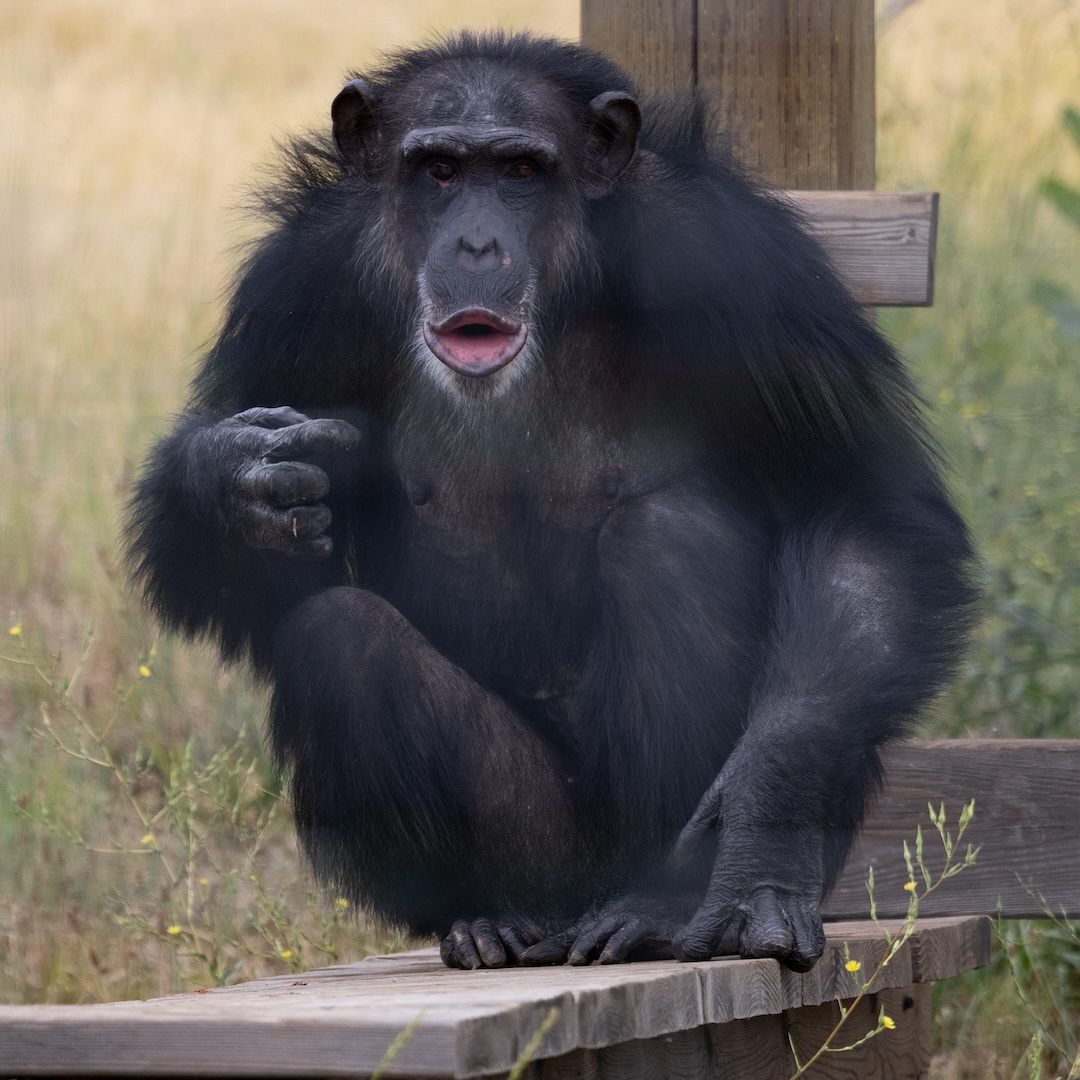
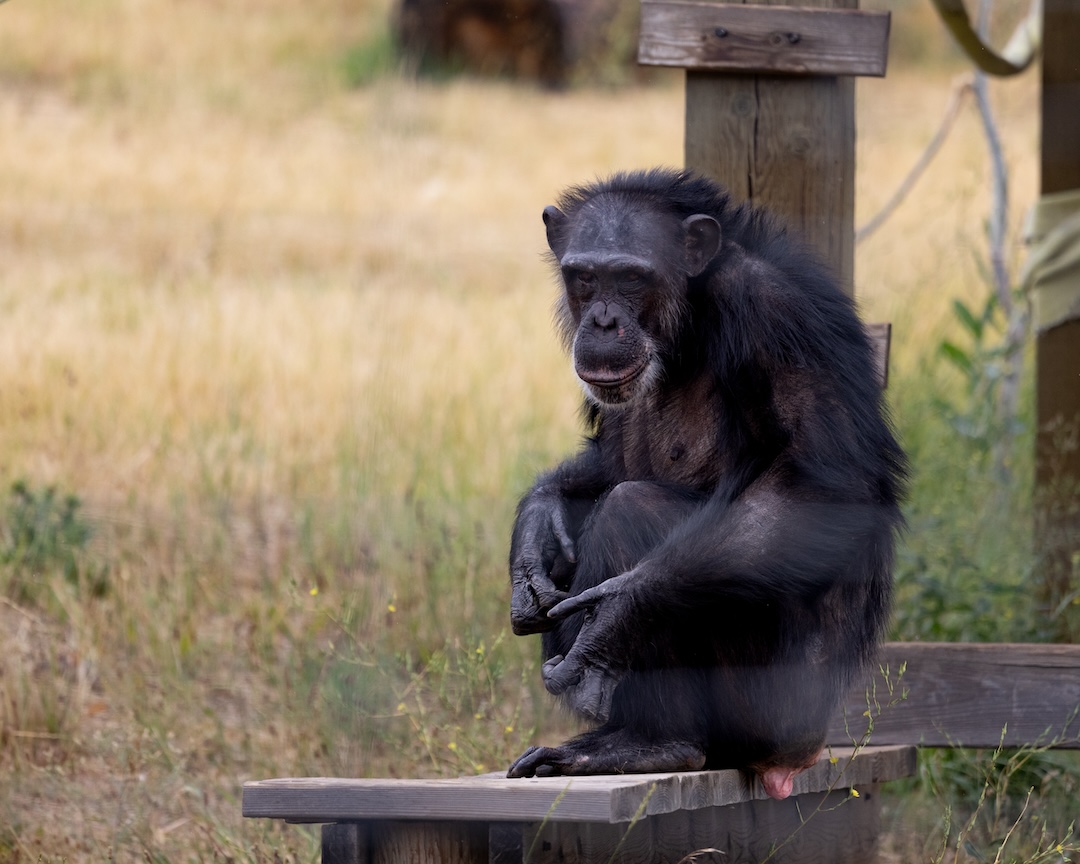
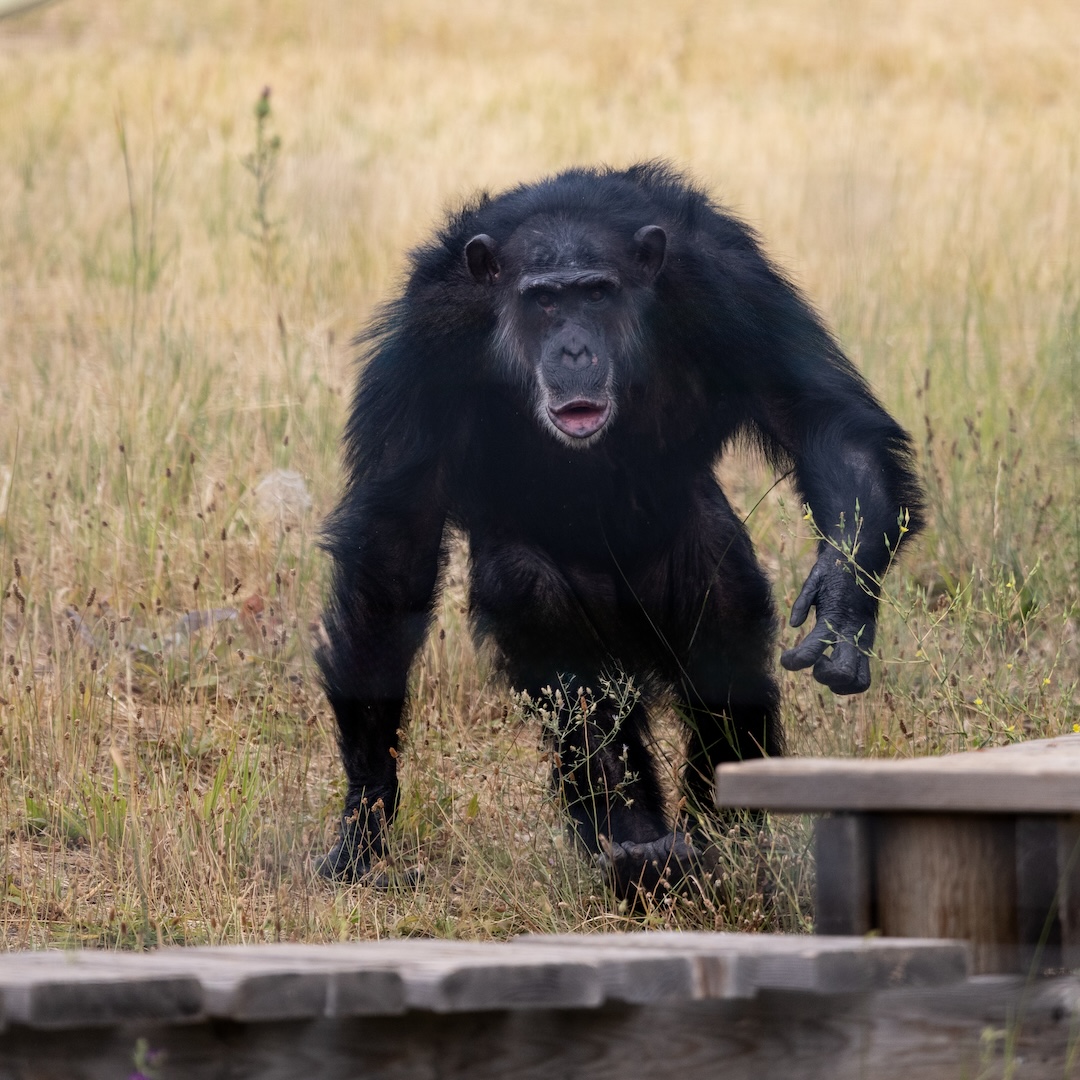
Thank you for these gorgeous photos, Christiane!
Pine cones and Politics
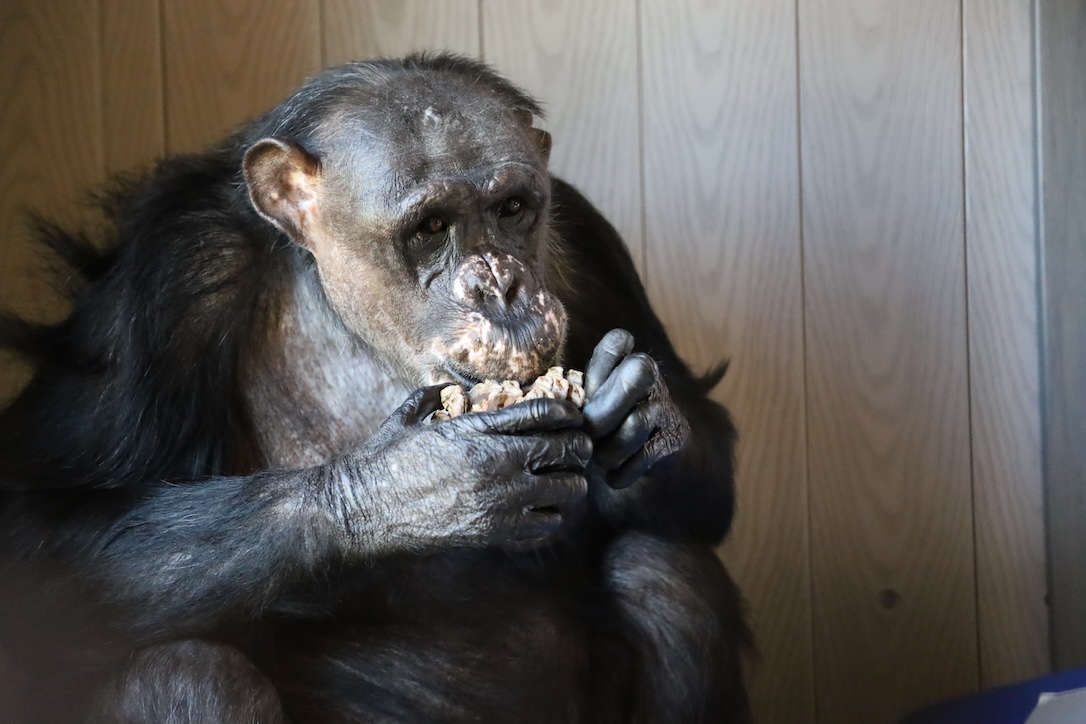
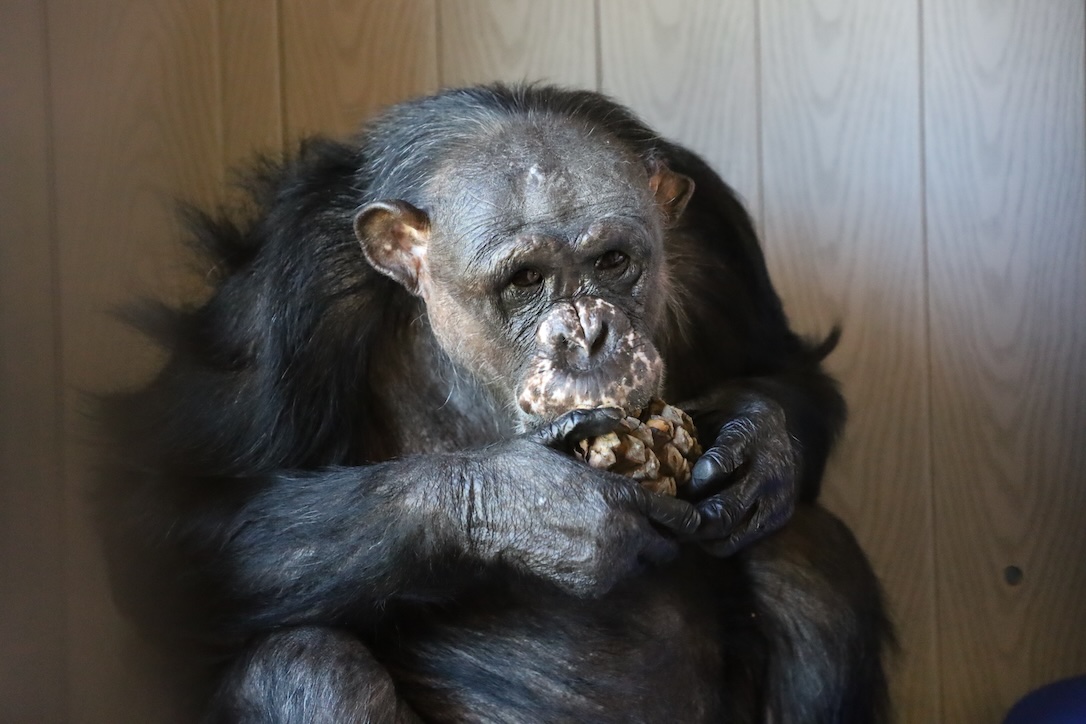
This morning Negra was peacefully enjoying her peanut butter pine cone…
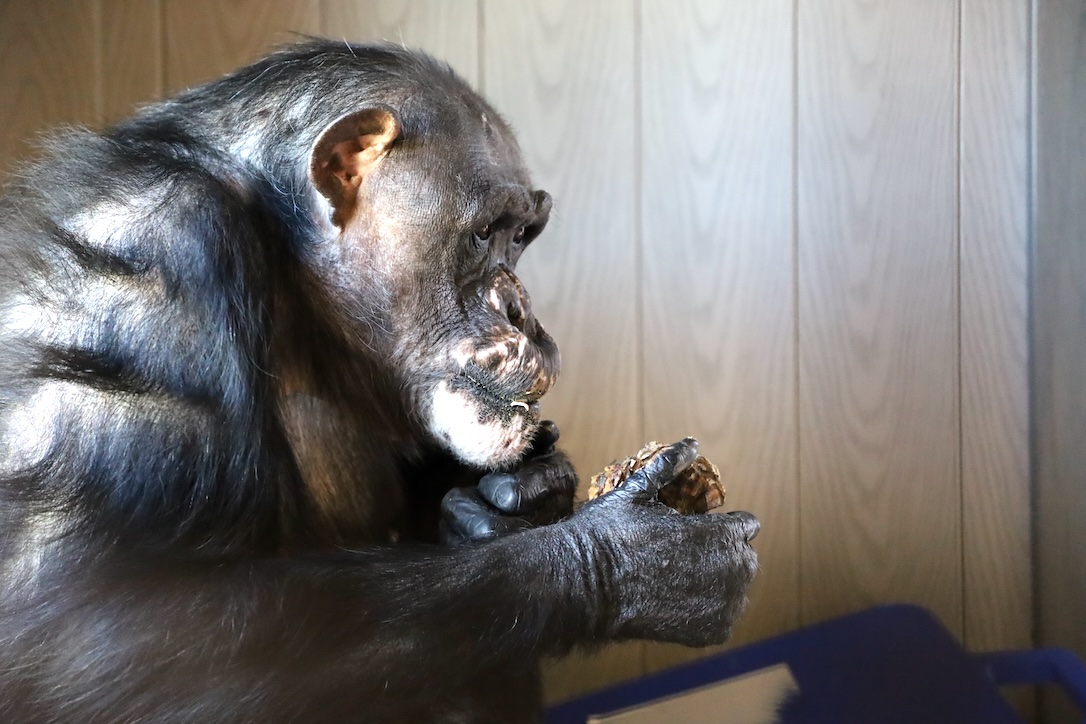
When there arose such a clatter…
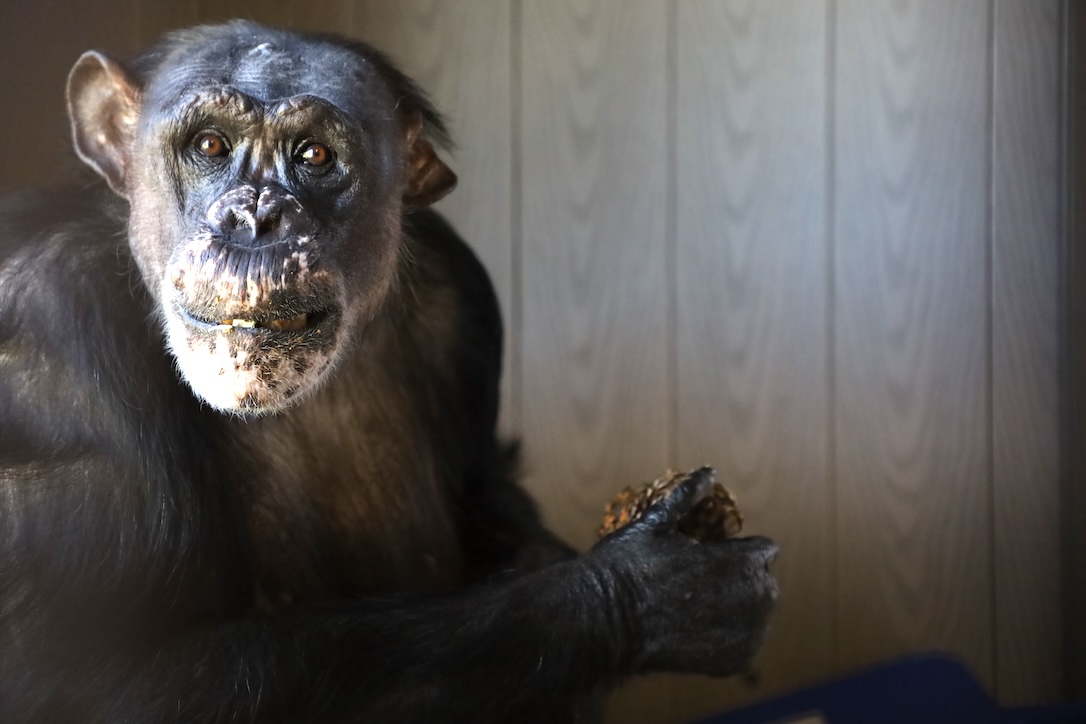
Not pictured: Burrito’s raucous display making the “clatter.”
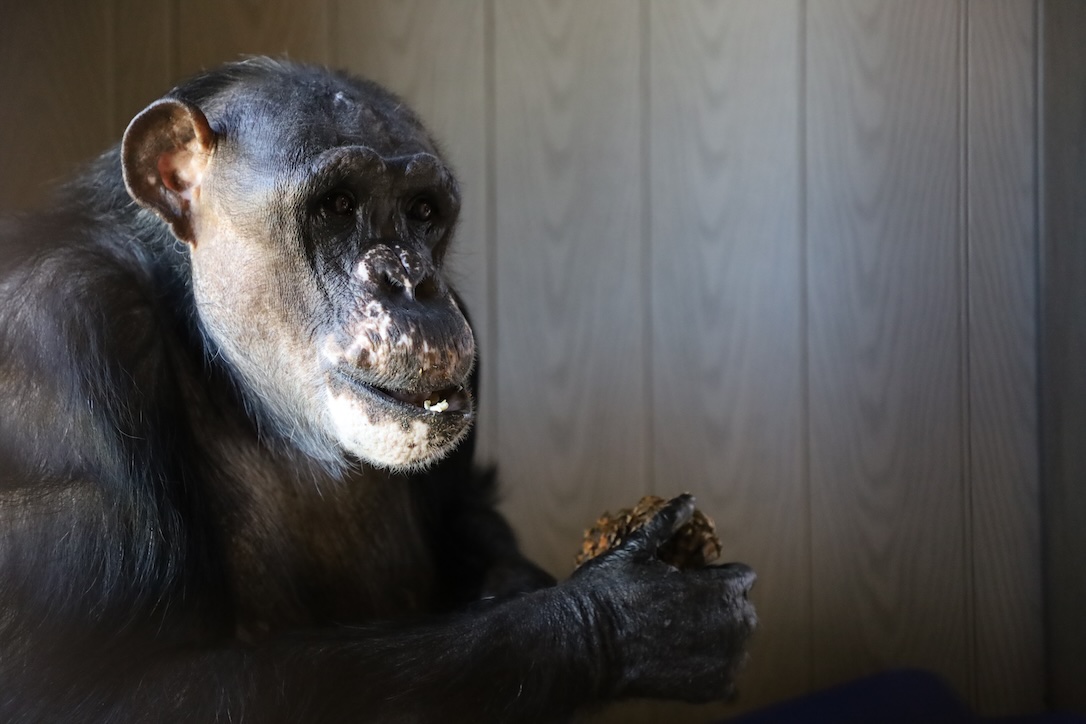
Negra’s whimper of concern
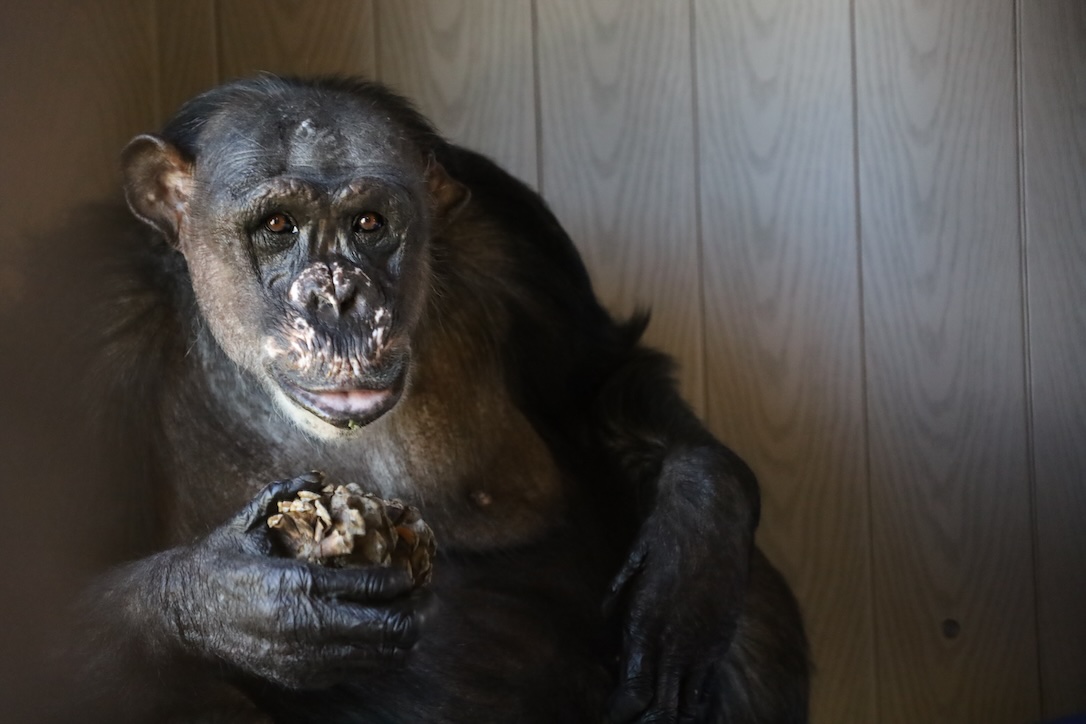
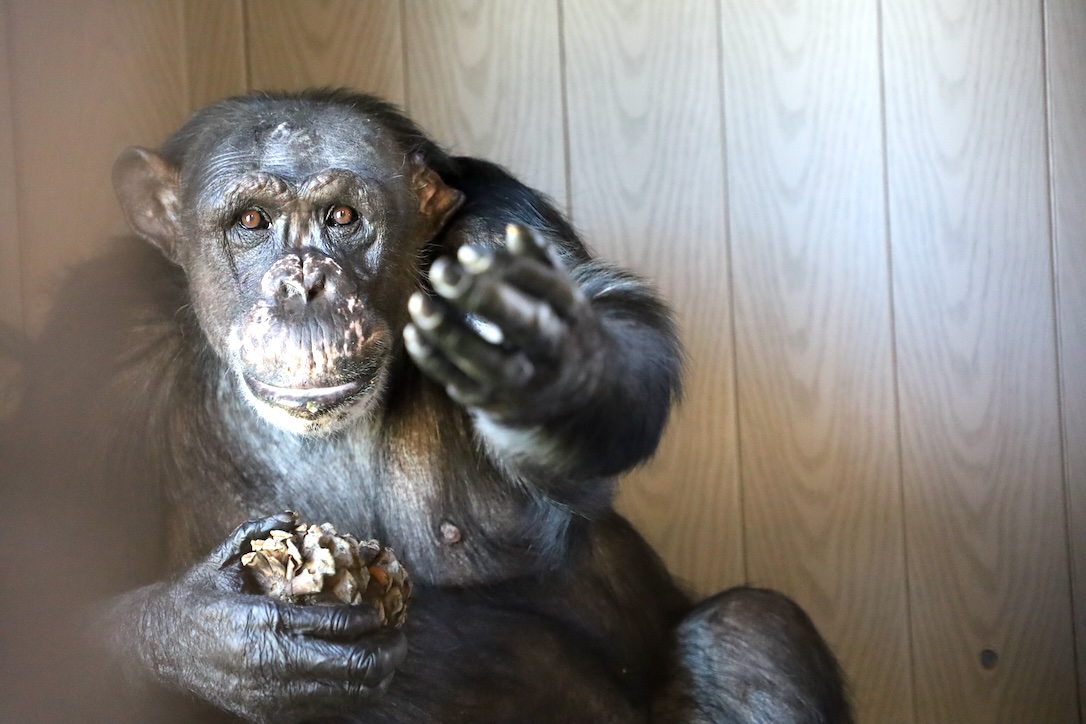
And outstretched hand seeking reassurance from the photographer
Back to business
Still best to keep eyes on that wild roommate…
The Queen Has Spoken
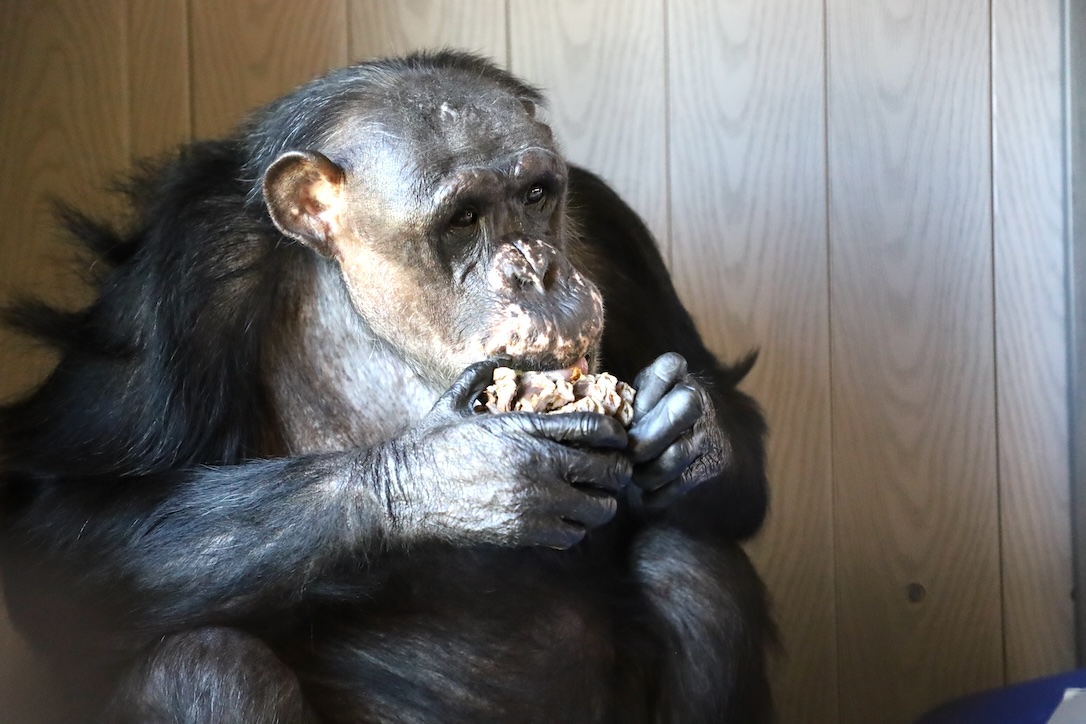
Initially, I had today’s blog all planned out in my head. I was going to write about food peering, a behavior where a chimpanzee stares intensely at the food another is eating in hopes of that individual sending some their way. I was inspired to write about such topic based on this photo I got yesterday of Willy B food peering at Honey B for her coconut.
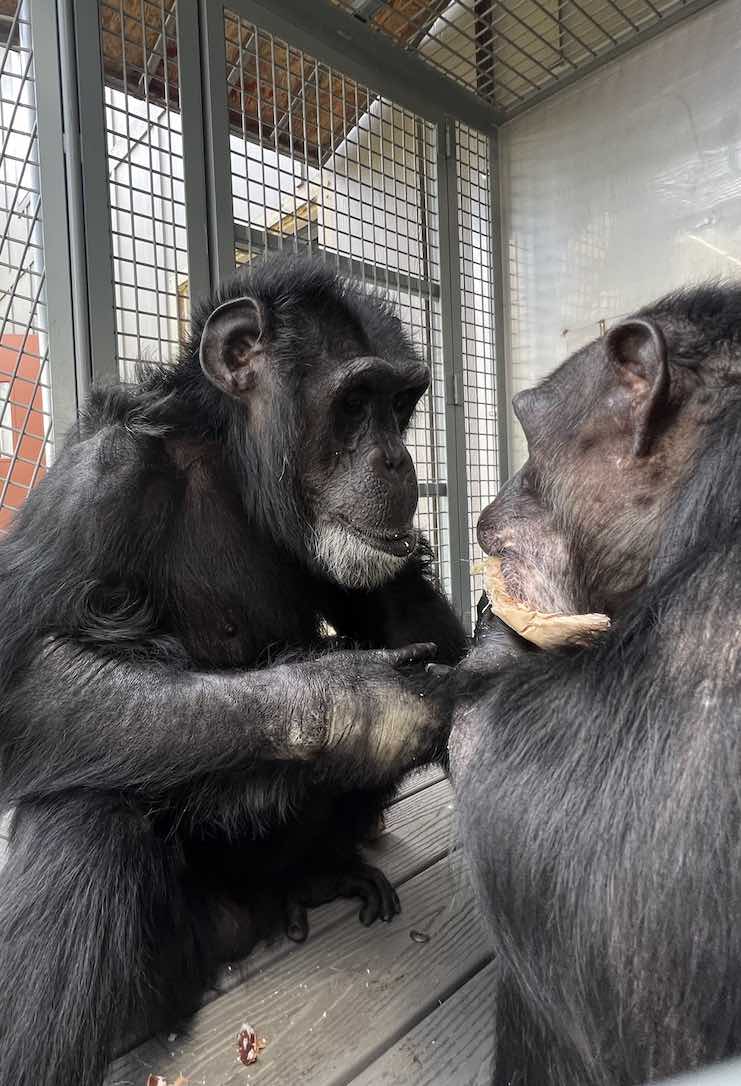
However, as I went to take some photos during lunch service, Negra had other plans for her subject. During lunch, Negra had me stand at the corner and rub her back during the whole lunch service plus some. And to clarify, by “rubbing her back” I mean with one of our approved safe physical contact methods called Knuckle Rub.
That coupled with a biweekly staff meeting, I was not able to have enough time to write out a lengthy blog or get photos of some food peering. The Queen has spoken and I, her dutiful servant, must oblige.
Here are the very few photos I was able to get today:
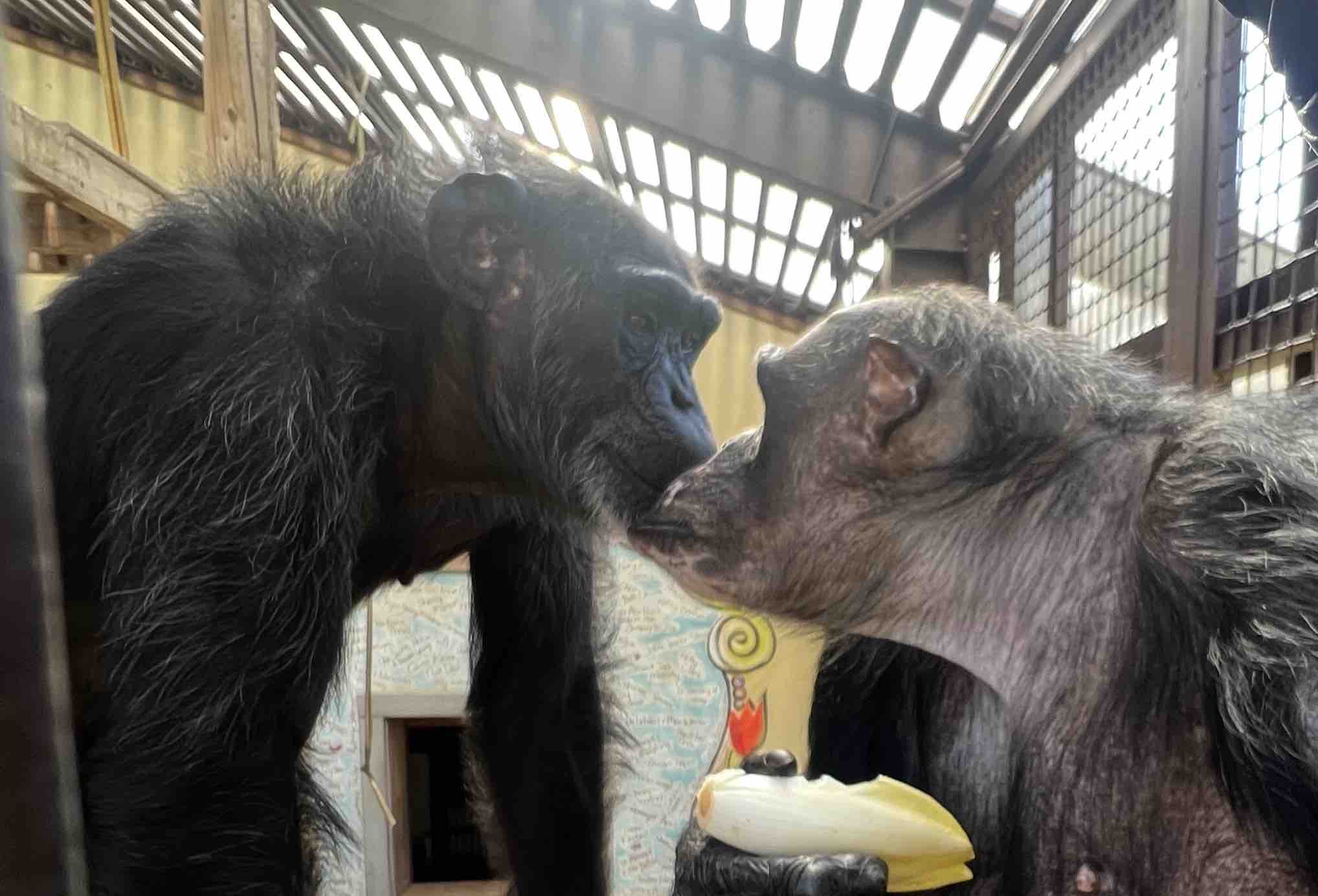
Foxie and Negra giving each other a kiss during dinner
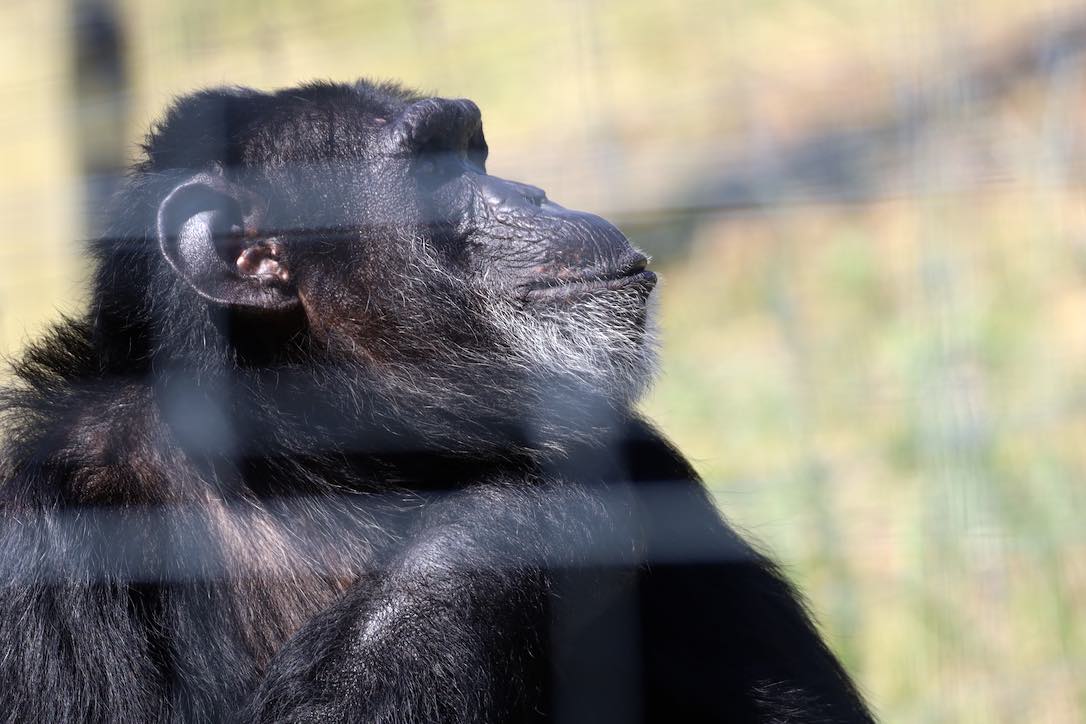
Cy watching Willy B, Rayne, Terry, Gordo, and Lucky out on the Bray
Both Rayne and Gordo were able to find some coconut husks leftover from yesterday’s celebration
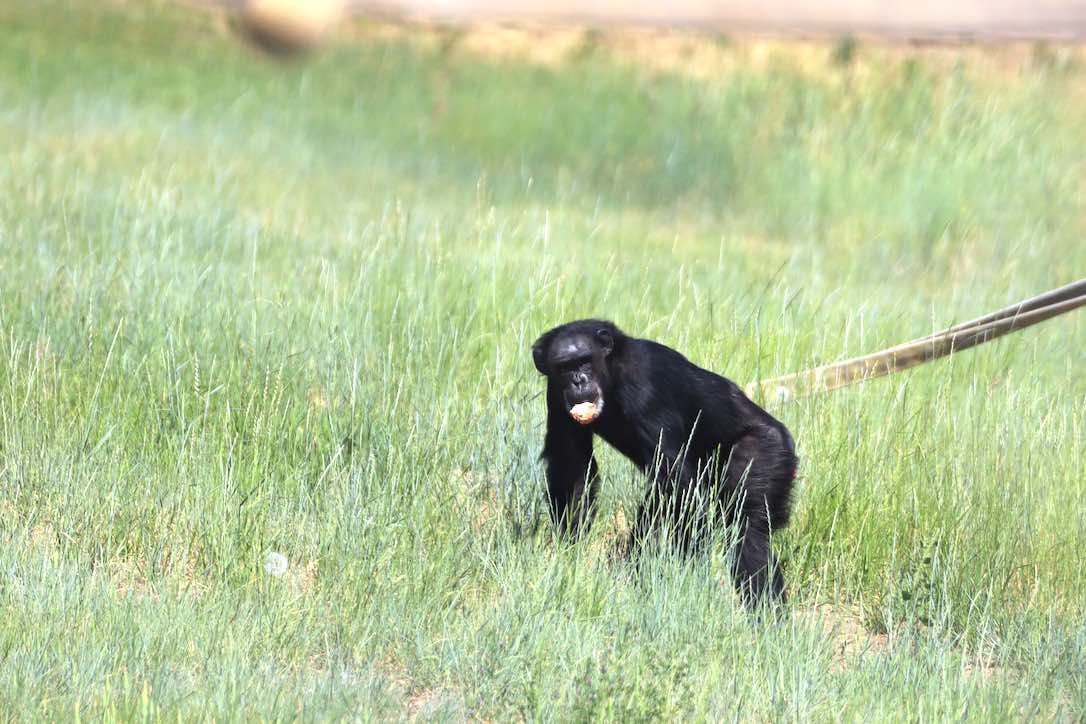
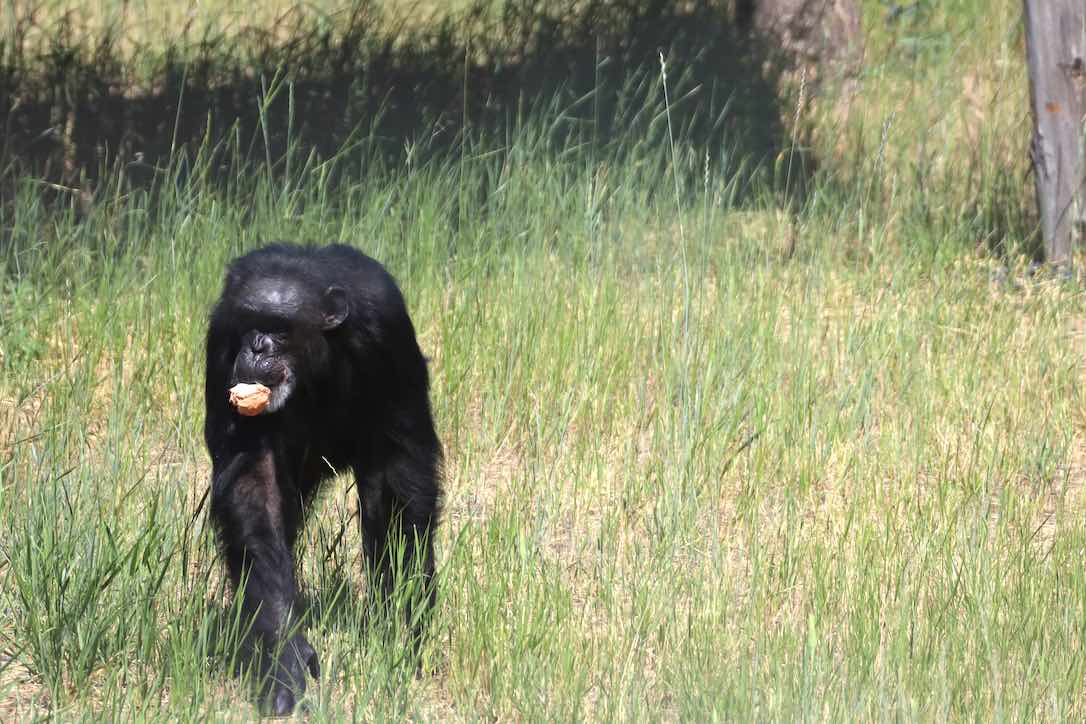
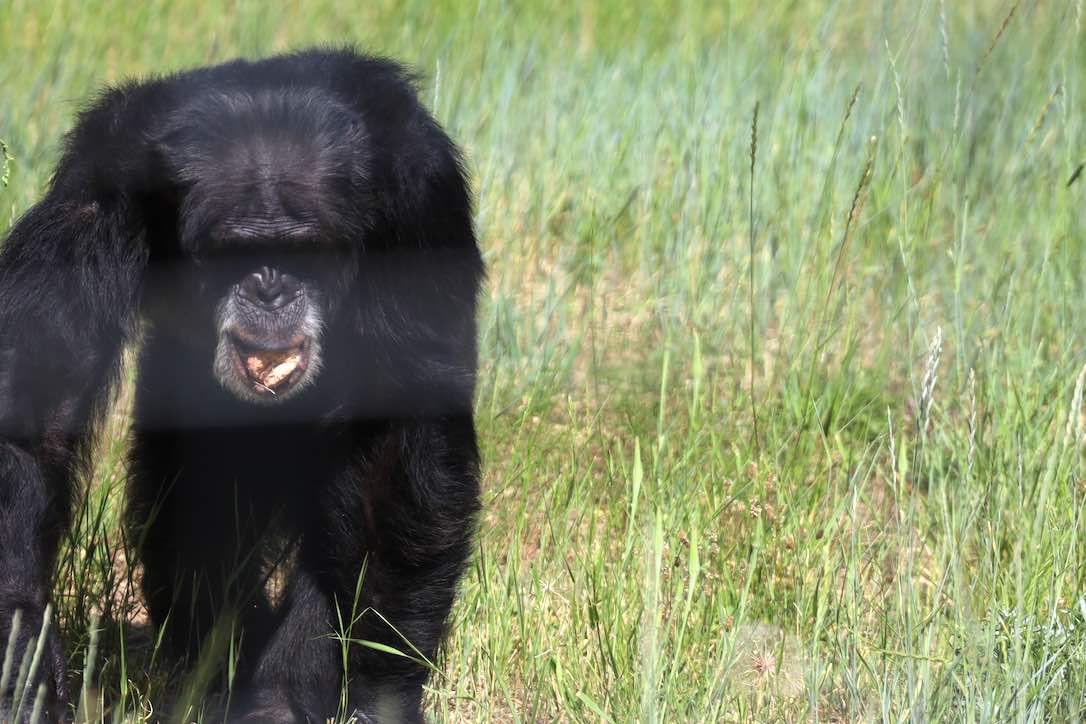
And a photo of the thunderstorm that was rolling in, though it quickly dissipated

Lastly, we added a whole bunch of things to our Wish List ranging from masks for caregivers to keep the chimpanzees safe from human pathogens, two-way radios for staff and volunteers who work in the Chimp House, and new enrichment items for our residents! If you are able and willing to, please take a look at the items needed to help maintain our quality care of these magnificent beings. Any and all help is greatly appreciated!
Mave’s Menace
Something spooked Mave in the Oakwood Greenhouse yesterday. Can you guess what it was?
Here are some bonus photos from today! Today’s was absolutely gorgeous with the weather in the 50s! So Negra’s group had a nice lunch forage on Young’s Hill!
Annie!
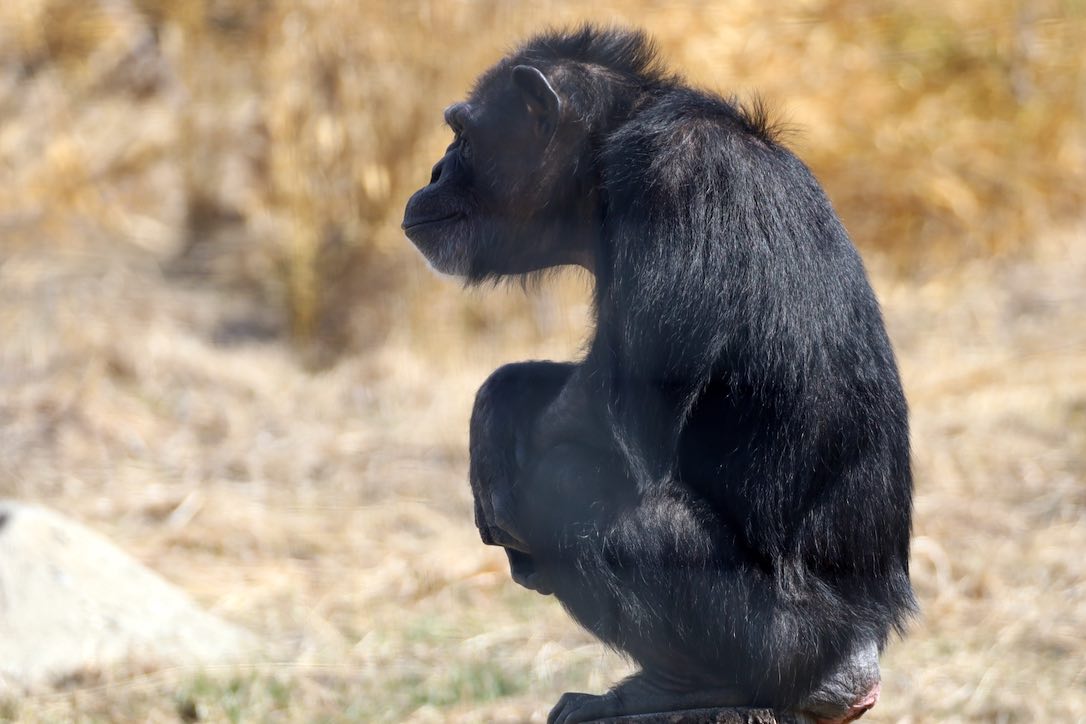
Jody!
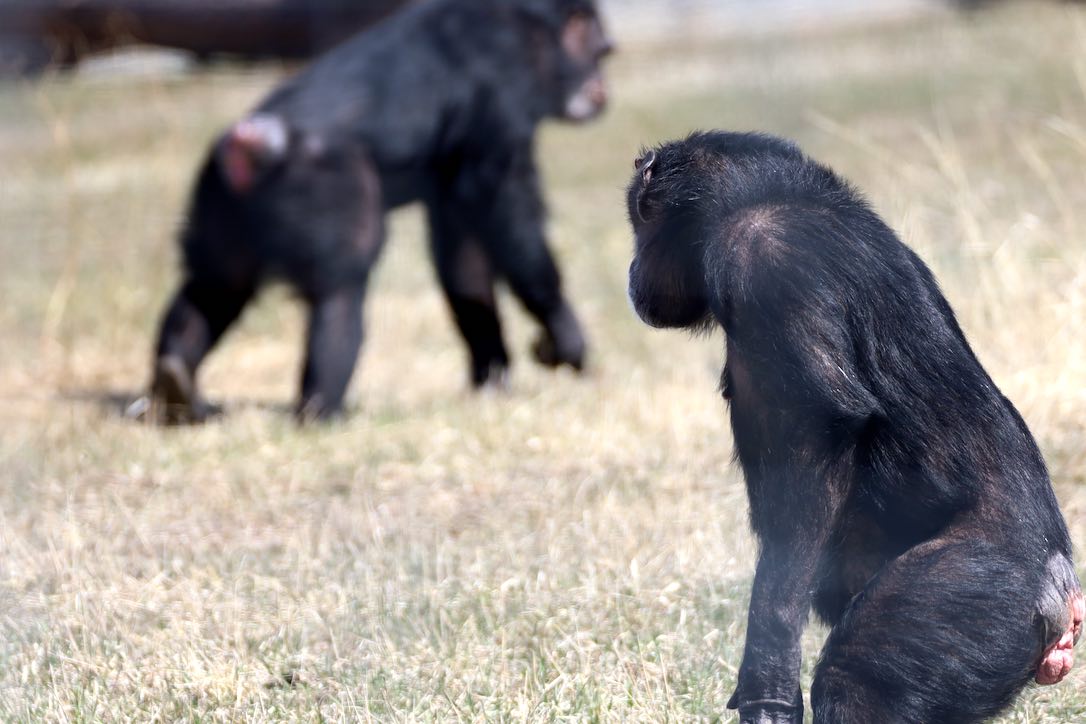
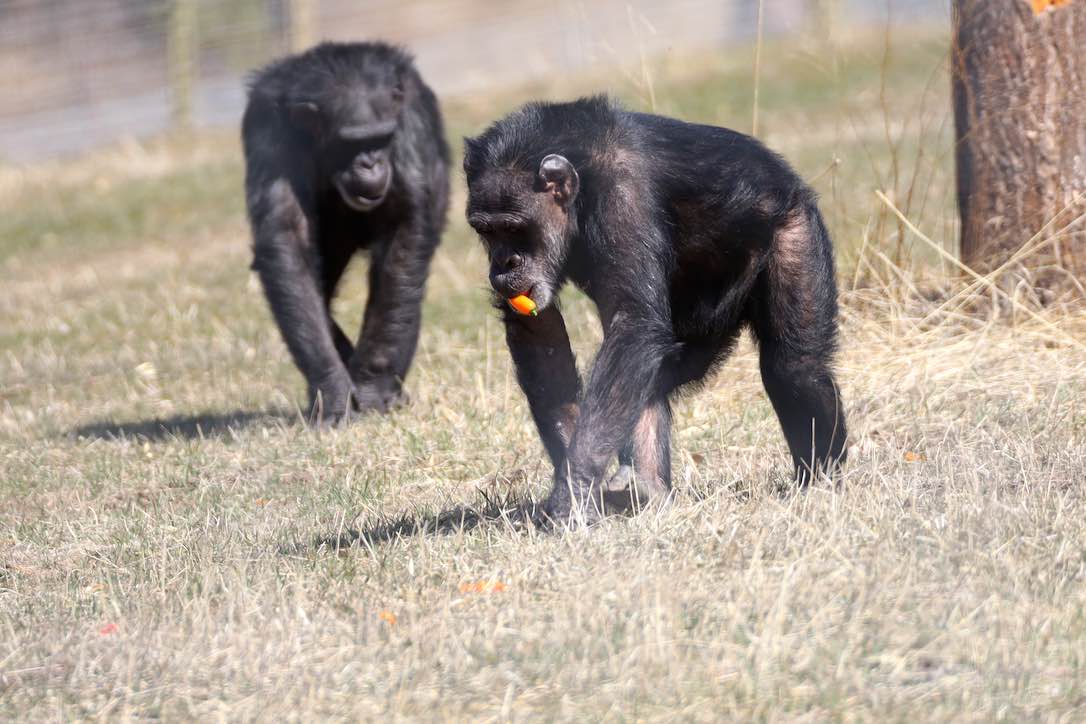
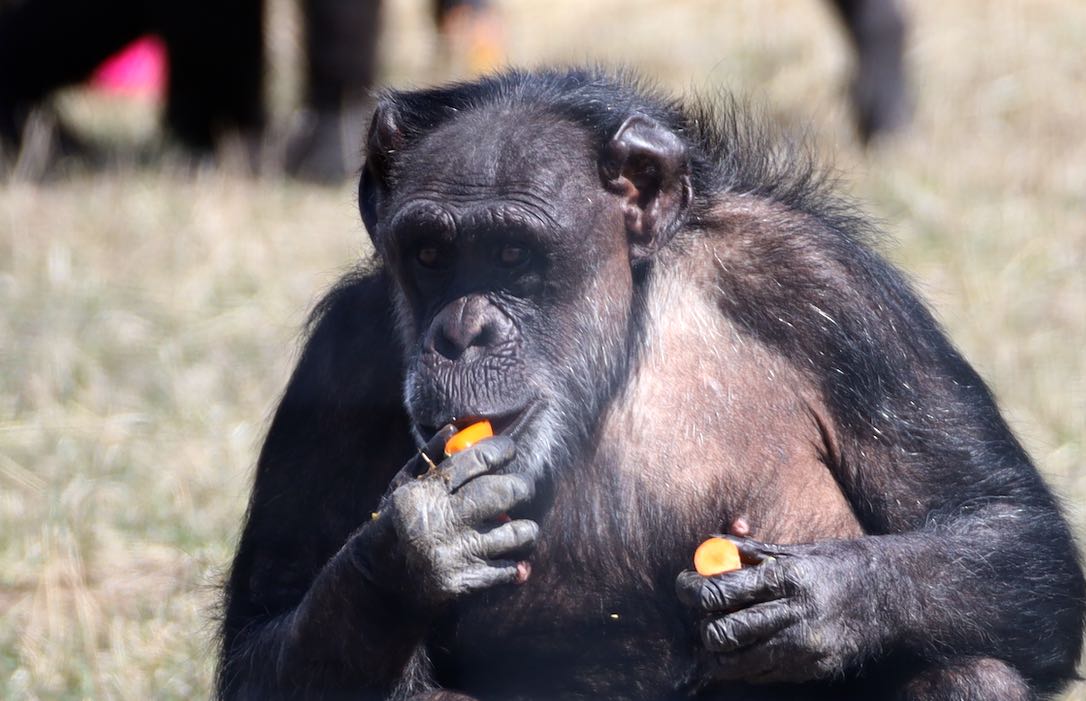
And Queen Negra!


And Nutmeg for good measure!