Caring for a chimp like Negra, who has serious mobility challenges but still spends time with her group, can be a delicate balancing act. We still want to provide her group mates with the chance to forage outside, but that requires that we serve Negra a special lunch, which can upset the other chimps’ sense of fairness or lead to a temptation to steal from her. We’re fortunate that Negra is high-ranking, but sometimes the other chimps are bold enough to test their luck. No one is taking advantage of Negra on Missy’s watch, though…
northwest
The Case of the Not-So-Mysterious Footprints
Ringleader Betsy has Houdini’d her way out of her pastures a couple times over the years, though it seems this time we may have just left the gate incompletely latched. In any case, the grass is always greener on the other side, as they say, so the gang took the liberty of exploring some of the sanctuary’s 113 acres. Thankfully, they were happy to go back home without needing to be bribed…too much.
The Humans Are Alright
For safety reasons, we humans are never inside the enclosures with the chimpanzees, but that doesn’t stop the chimps from considering us part of their social world. A typical day is filled with dozens of delightful interruptions, including requests to walk, play, and groom. Of course, we are happy to oblige (though some days—like today— it can be difficult to get anything done!).
Family Time in the Greenhouse
Today, Negra had a nice, quiet lunch by herself in the greenhouse. Afterwards, her family came to spend the afternoon with her.
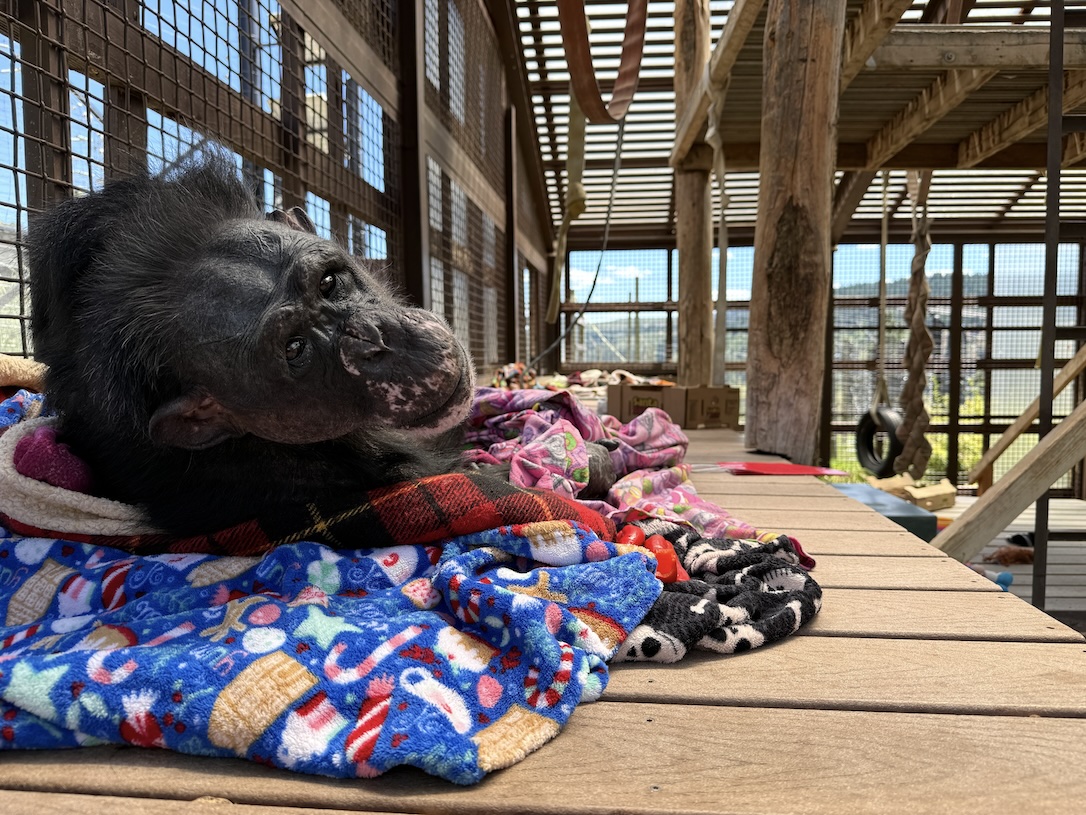
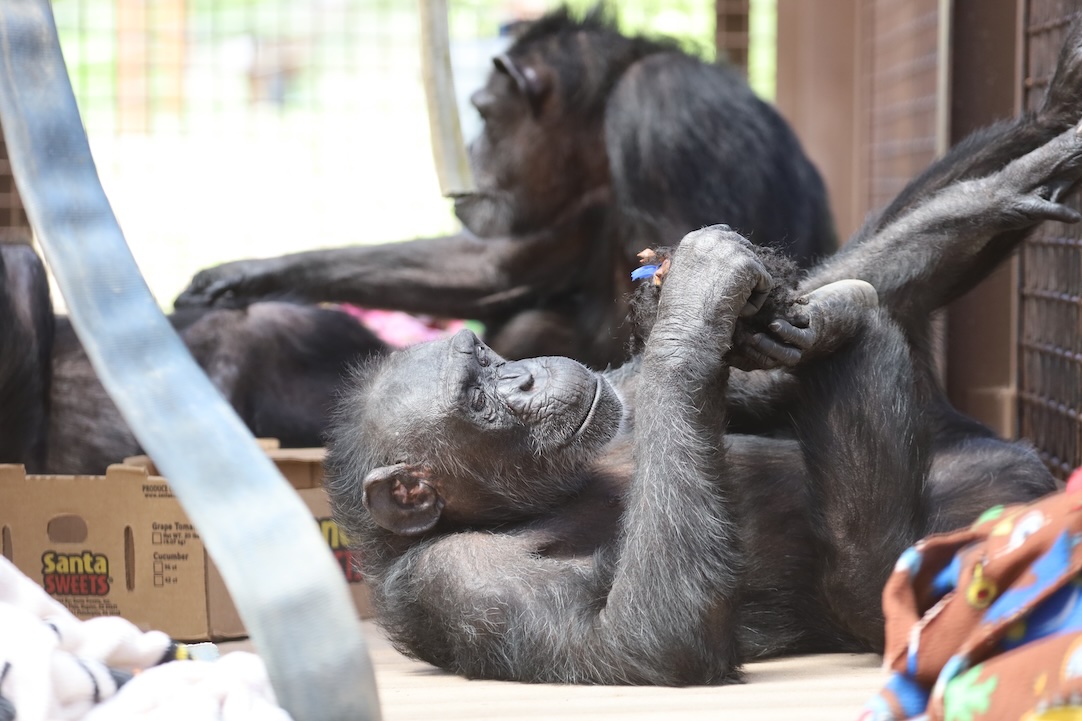
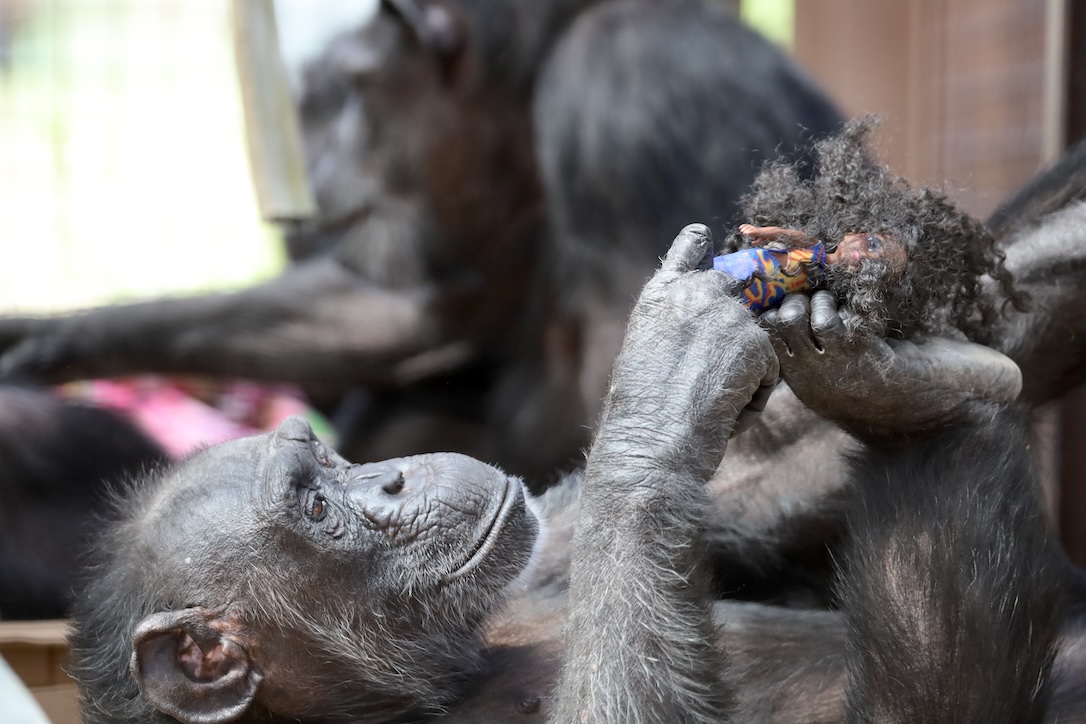
It was a hot afternoon, but pleasant under the diffuse light of the greenhouse. While Annie and Missy groomed Negra, Foxie played with one of her dolls, pausing at times to pass it to her caregivers.
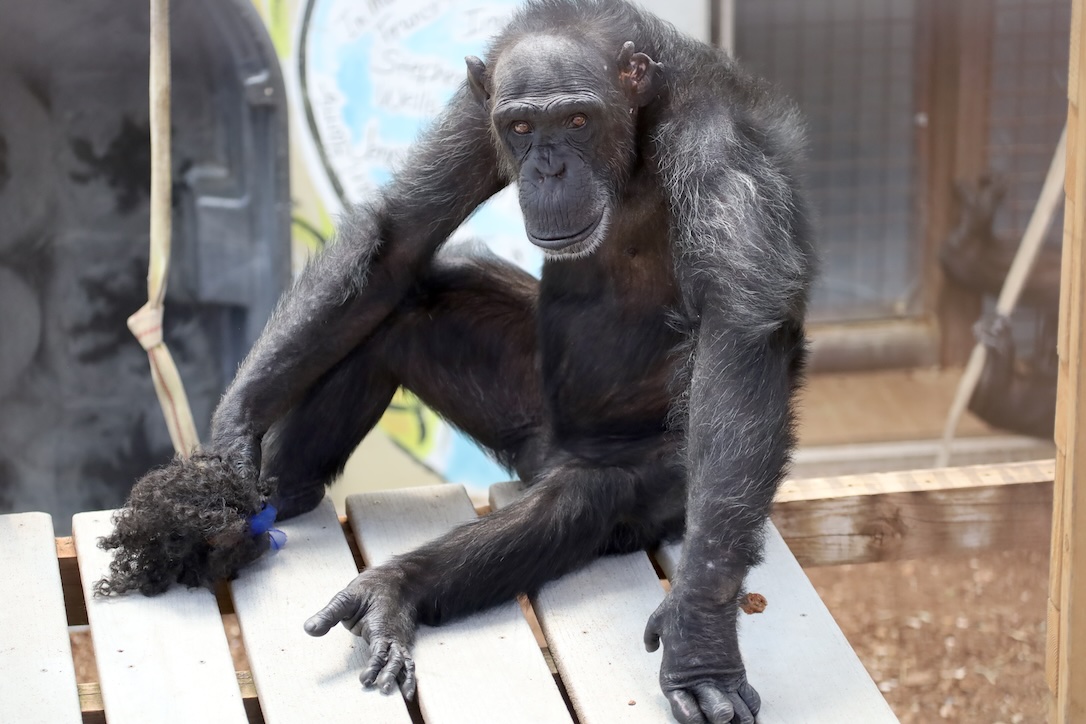
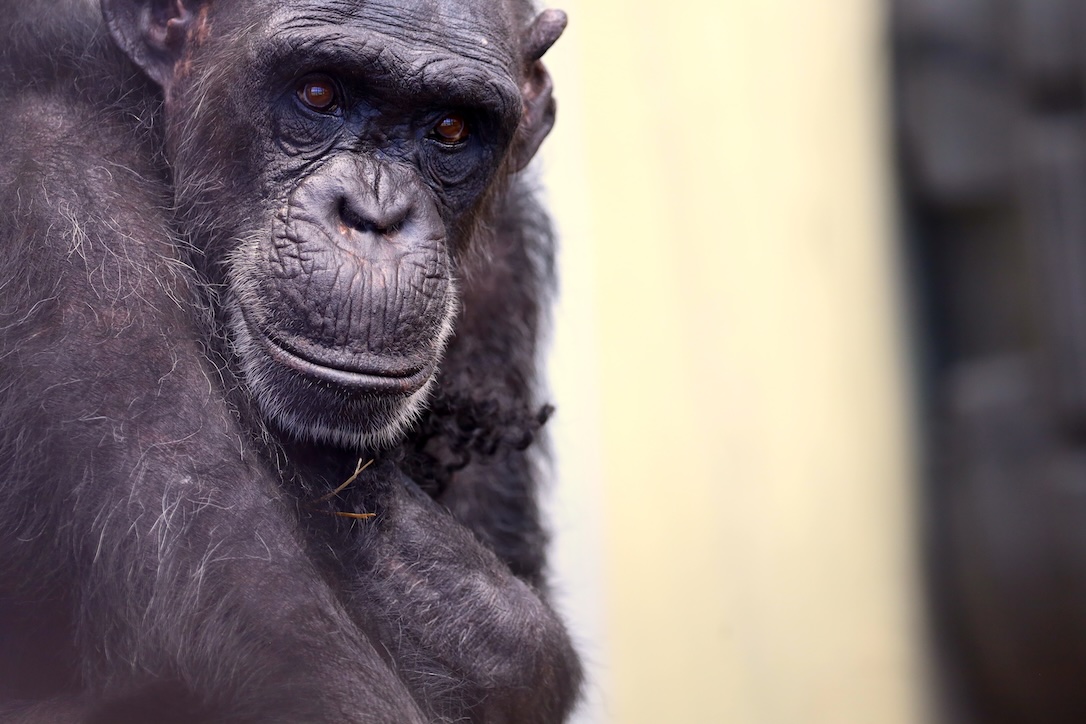
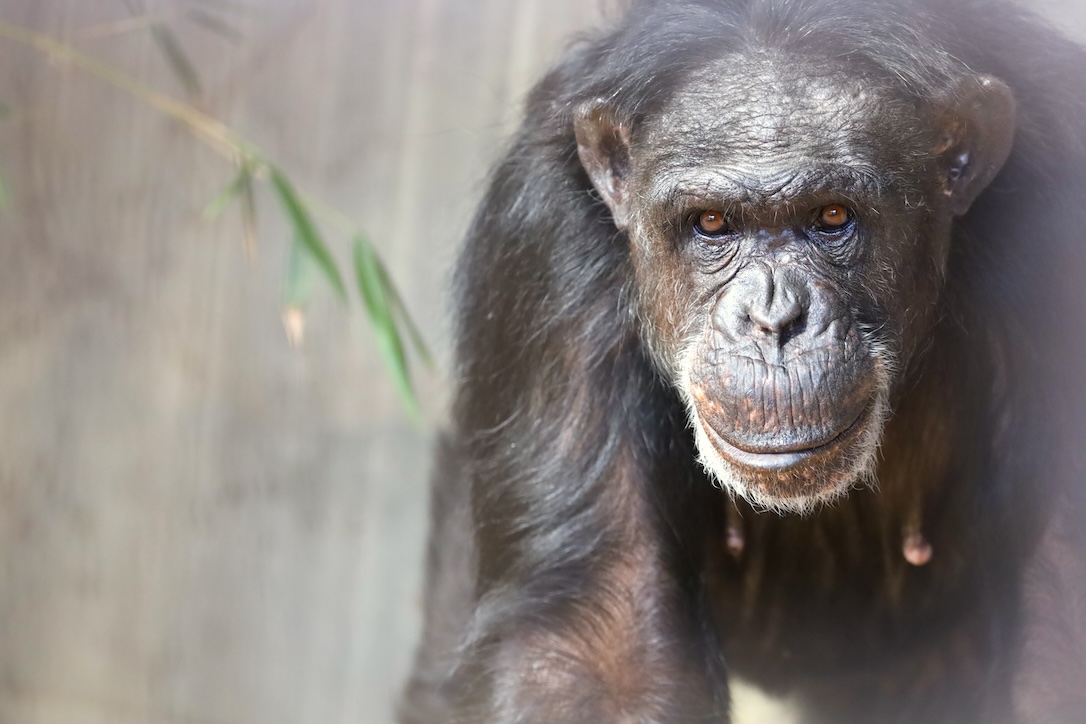
Jamie has been a good sport about these afternoons with Negra. We are trying to navigate the risks of Negra falling or being injured in a fight by restricting these whole-group visits to the greenhouse and Young’s Hill and to times between meals. As many of you know, Jamie doesn’t like having any limitations placed upon her. This is a face that says I am approaching the limits of my patience.
I found it difficult to take photos of Missy and Annie grooming because Missy kept leaving Annie and putting her back against the caging for me to groom. There’s something about the upper level in the greenhouse that elicits more socialization between the chimps and their caregivers. Because the wall panels are only off in the warmer months, these daily invitations from Missy to groom are essentially seasonal. I was happy to oblige, as long as Annie was still included.
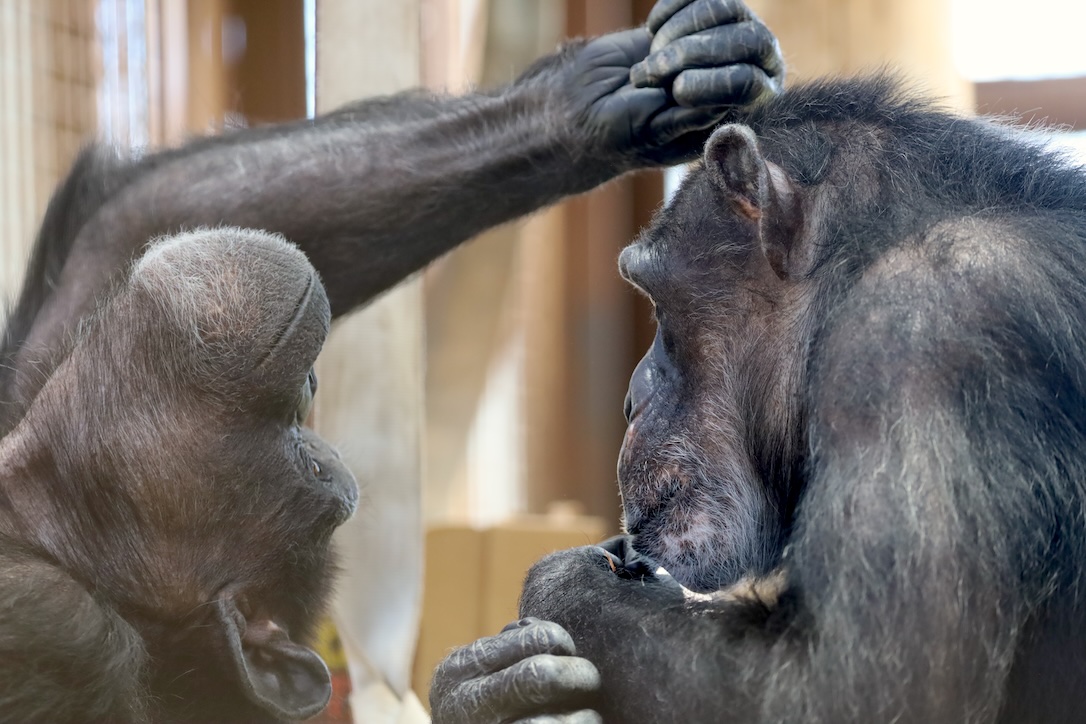
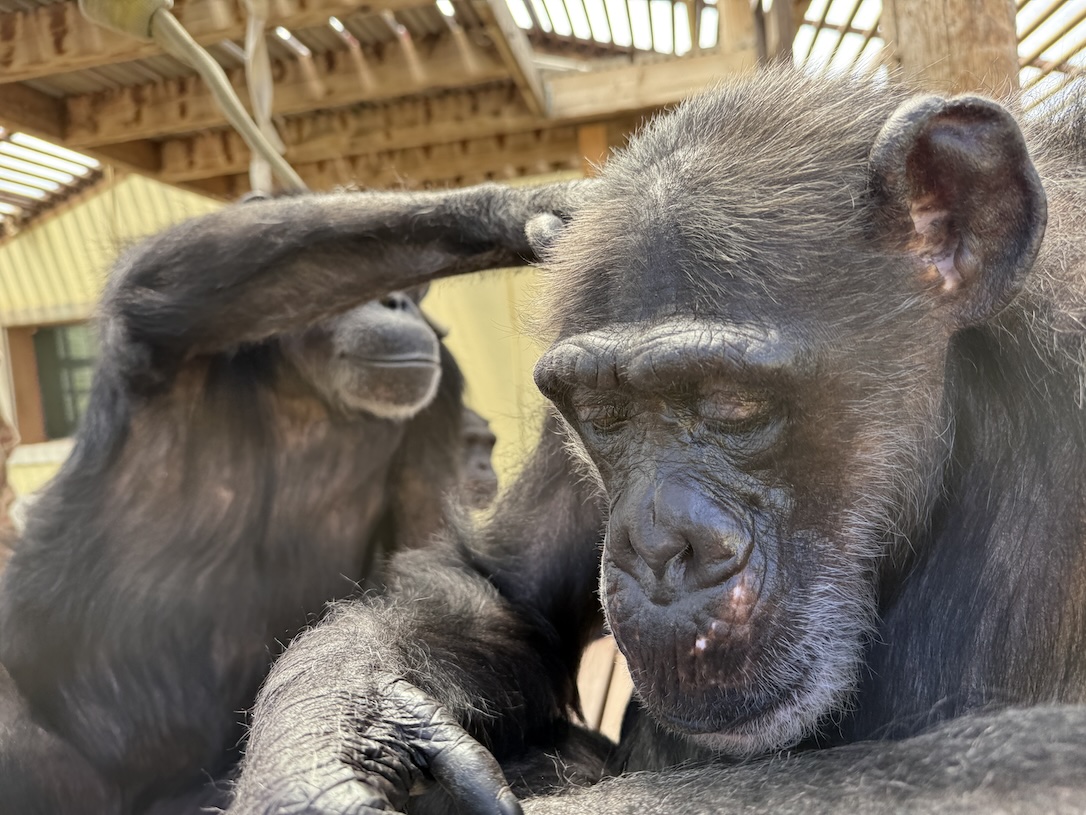
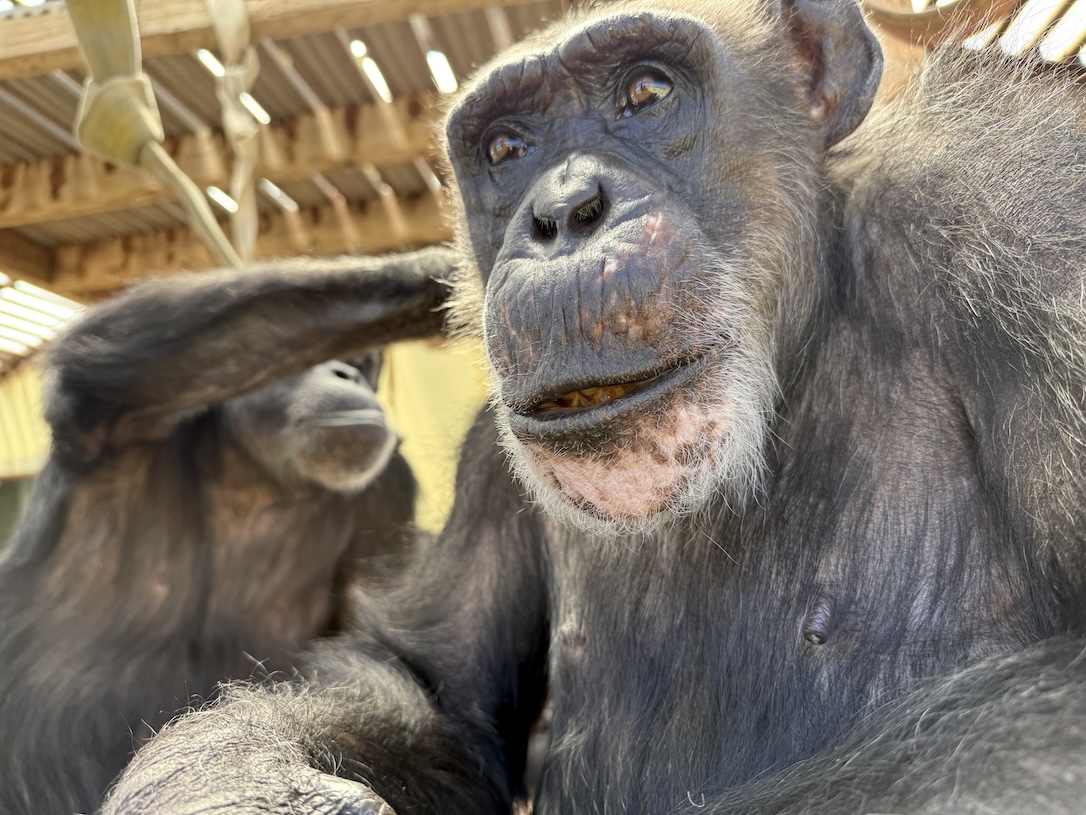
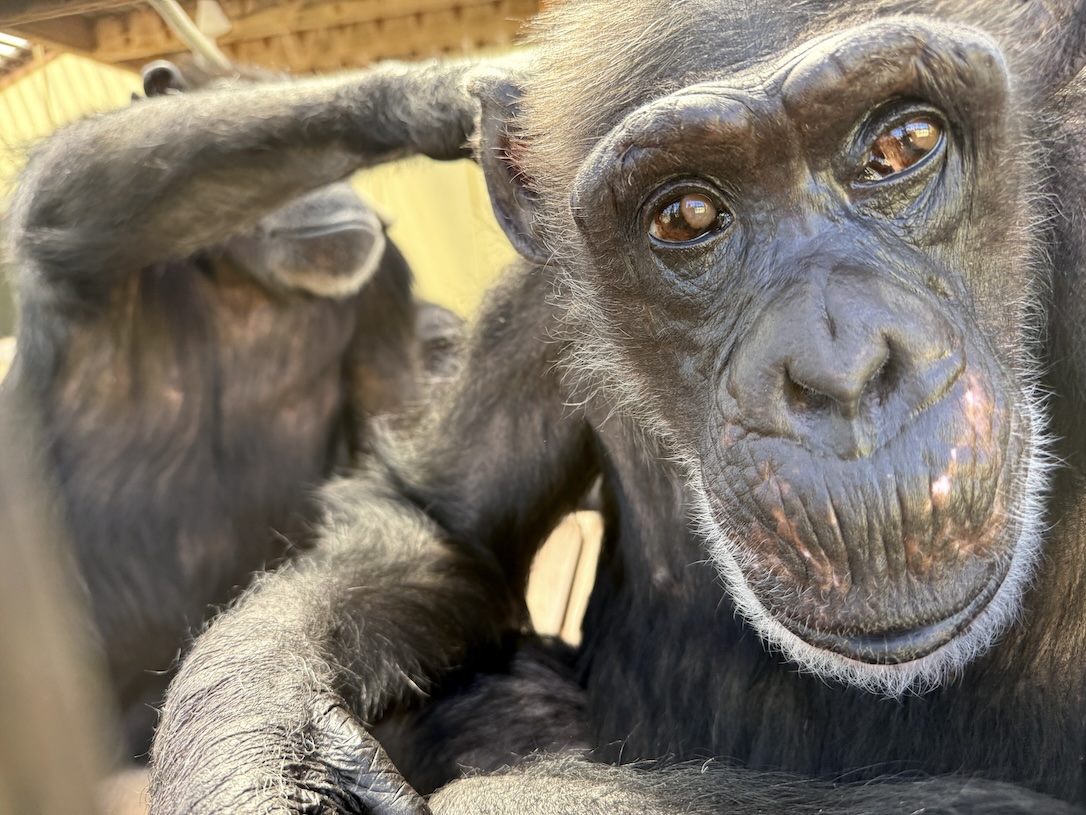
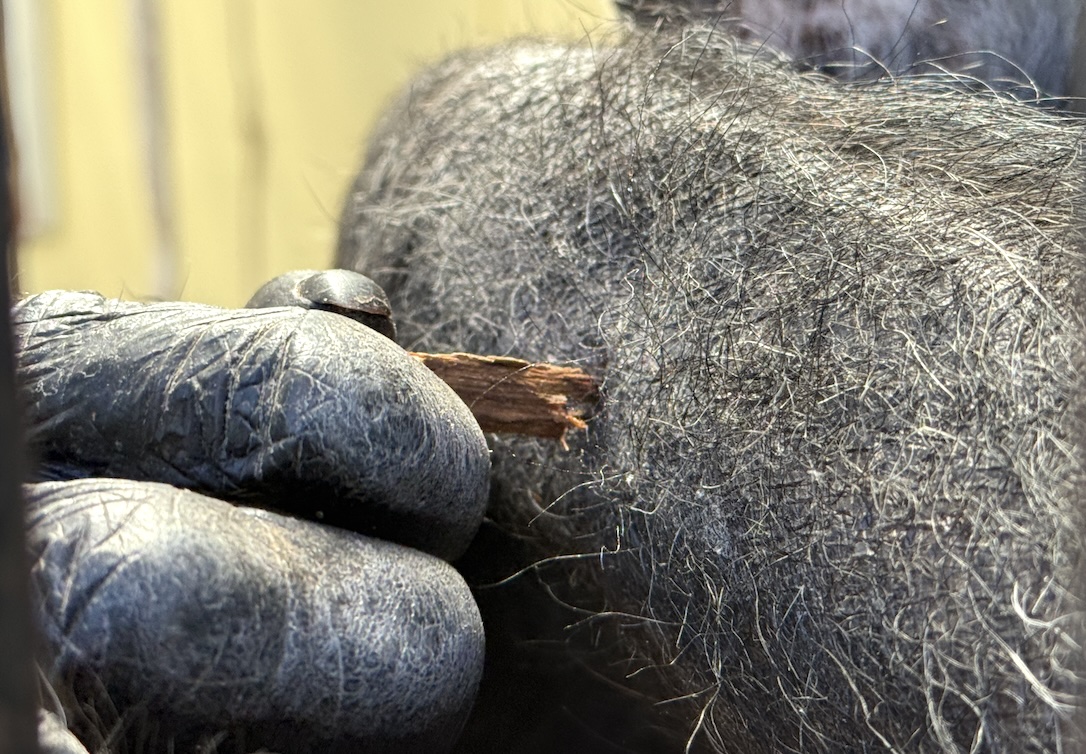
Missy is the kind of chimp that grooms up the hierarchy. I see her directing her grooming toward Jamie, Negra, and Burrito most often. When she is being groomed by Annie, she sometimes reciprocates, but she also tends to focus more on herself. Here she is using a wood chip as a grooming tool.
The chimps have different levels of tolerance for having their photos taken. Burrito and Foxie will do their best to knock the phone out of my hand, while Missy will let me hold the phone in her face for hours on end without complaint.
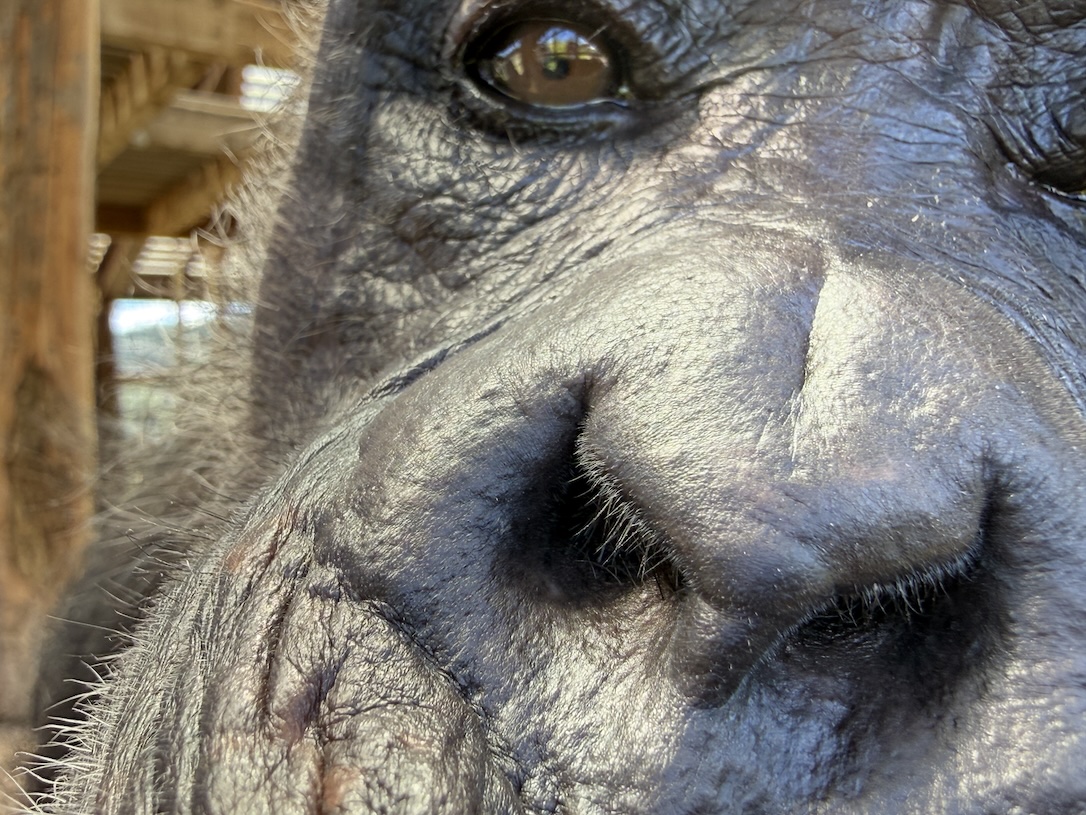
She showed the same level of tolerance for me today, but interestingly, that tolerance did not extend to me taking photos near Negra. The chimps certainly know that Negra is in a more fragile state and Missy, being protective, responded with a threat bark the first time I pulled my phone out next to Negra. It’s nice to know Negra has so many friends looking out for her.
Grooming in the Greenhouse
Of the many reasons why chimpanzees engage in social grooming (also known as “allogrooming”), hygiene is thought to be one of the least important. Grooming appears to be much more about strengthening bonds, lowering stress levels, and gaining favors. But evidence suggests that hygiene still plays an important role, as chimps often concentrate on parts of the body that are less accessible to their grooming partners. Because of this, there generally aren’t any parts of the body that are off limits, including noses and backsides.
Snippets
This compilation of short video clips was really just a way for me to sneak marmot footage onto the sanctuary’s social media feeds. They may leave behind giant holes in the ground and a ton of poop, but they sure are cute.
A Wild Forage
There are few things better than watching the chimps forage on wild plants. They’re abundant, enriching, healthy (the ones they choose to eat, anyway), and in some cases, even medicinal. I’ve always wondered about the way the chimps sometimes consume individual blades on grass. In Gombe, chimps have been seen swallowing the rough, hairy leaves of the Aspilia plant. Researchers believe the leaves contains antibiotic and anti-parasitic compounds and that the hairs on the leaves may work to mechanically remove parasites as they pass through the intestines. Whatever the CSNW chimps are doing, it’s different from the way they eat fruits and vegetables, and even different from the way they eat grass at other times (Burrito often eats spring grass by the handful). Do they know something we don’t? Or are they acting upon an instinct that’s been divorced from its evolved application, like the way they weave secure nests out of blankets even though the don’t sleep up in the trees? Maybe grass just tastes better one blade at a time.