• Skip to main content
  • Skip to primary sidebar
  • Skip to footer

Chimpanzee Sanctuary Northwest

Hope. Love. Home. Sanctuary

  • Our Family
    • The Chimpanzees
    • The Cattle
  • Blog
  • About Us
    • Visiting the Sanctuary
    • Philosophy
      • FAQs
      • Mission, Vision & Goals
      • Privacy Policy
    • The Humans
      • Staff
      • Board of Directors
      • Founder
    • Annual Reports
    • The Future of CSNW
    • CSNW In The News
  • You can help
    • Donate
      • Become a Chimpanzee Pal
      • Sponsor A Day
      • Transfer Stock
      • Be A Produce Patron
      • Be a Bovine Buddy
      • Give from your IRA
      • Personalized Stones
      • Bring Them Home Campaign
    • Leave A Legacy
    • Employment Opportunities
    • Volunteer
    • See Our Wish List
    • Events
  • Resources
    • About Chimpanzees
    • Enrichment Database
    • Advocacy
      • Advocacy Action Center
      • Apes in Entertainment
        • Trainers
        • Role of the AHA
        • Greeting Cards
      • Chimpanzees as Pets
      • Roadside Zoos
      • Chimpanzees in Biomedical Research
      • Conservation
        • African Apes
        • Orangutans
  • Shop
    • Merchandise Store
  • Contact
  • DONATE NOW

northwest

A Natural History of Jerks

August 28, 2023 by J.B.

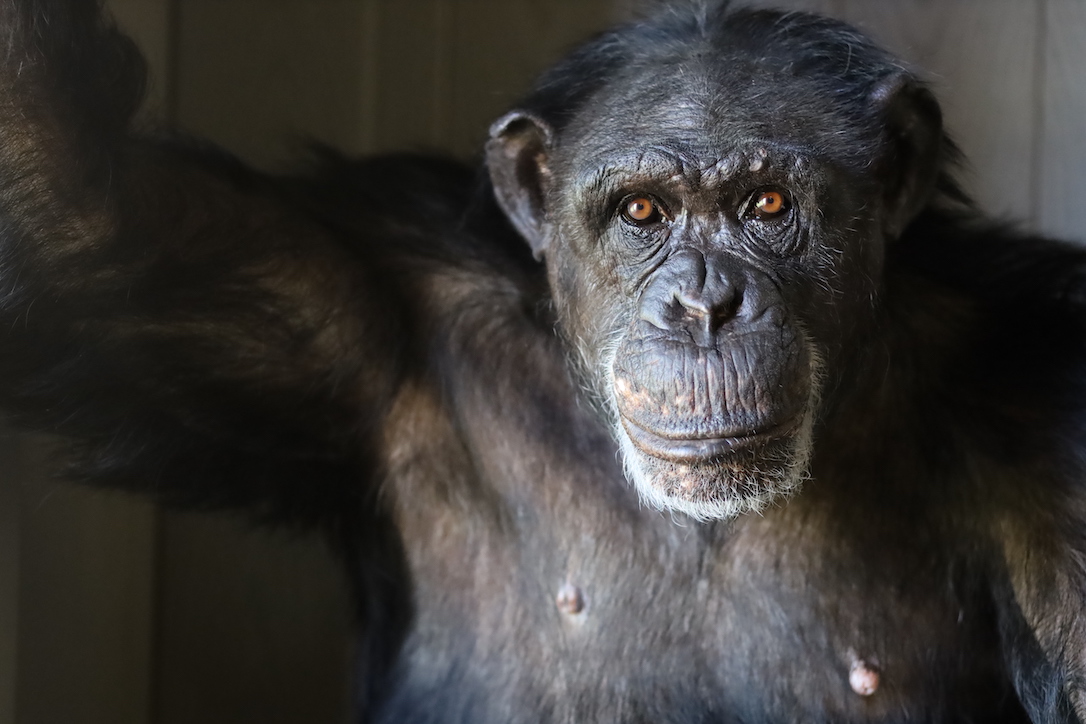
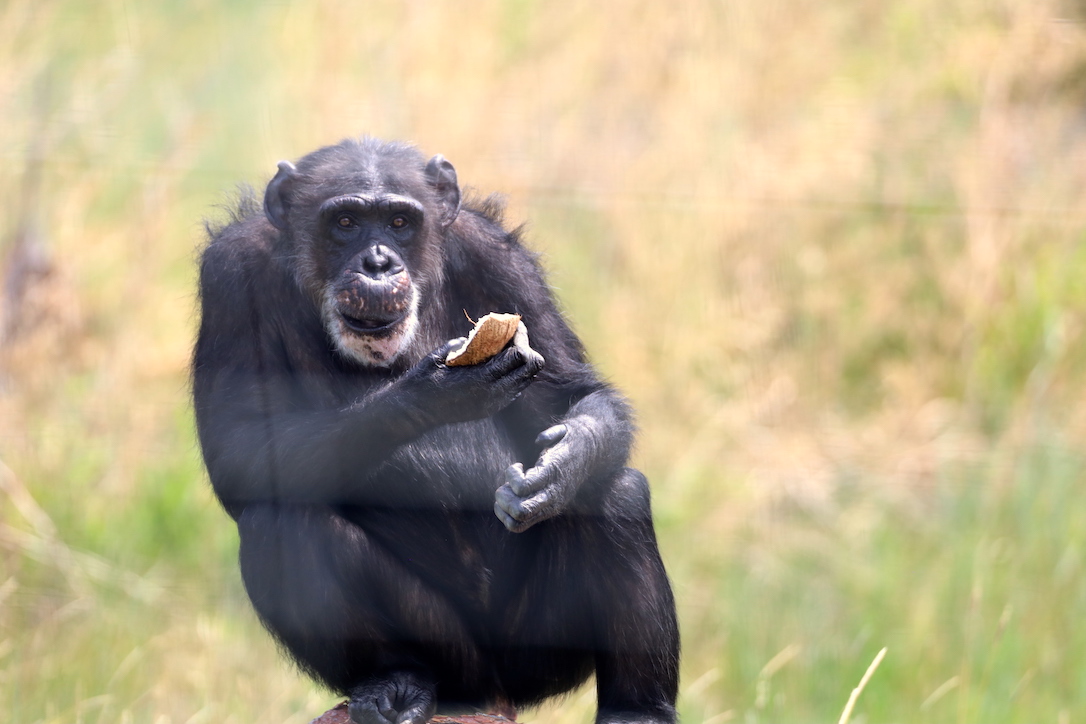
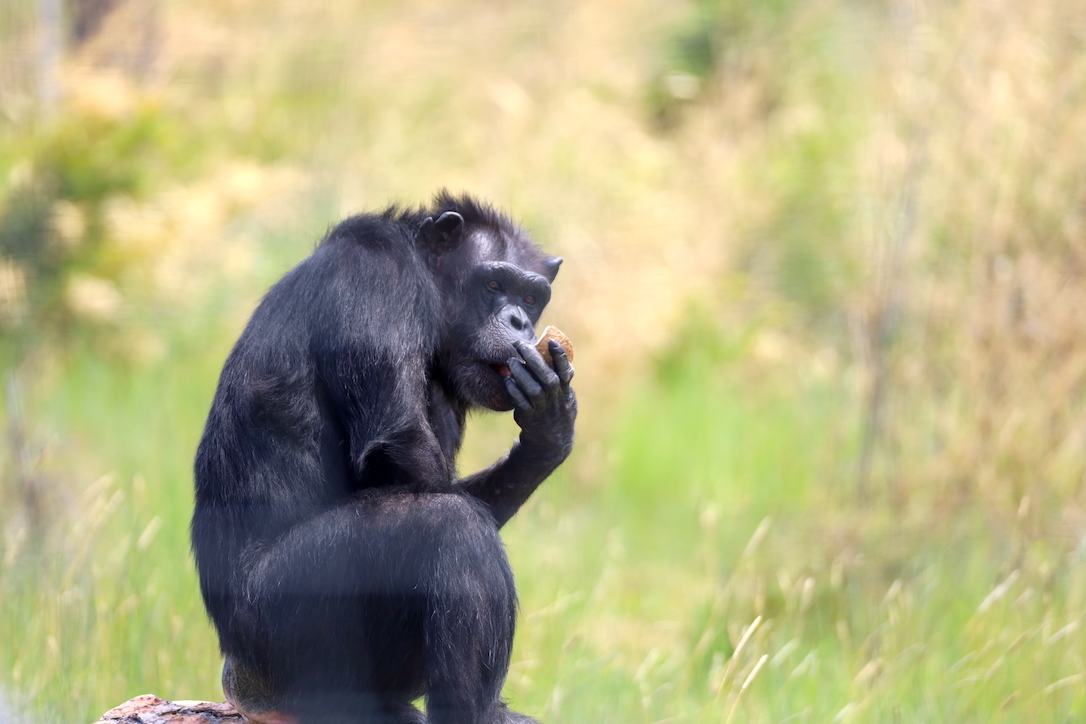
Male chimps can be jerks. True, females can also be jerks (see: Chimpanzee, Jamie), and not all males are jerks (at least not all of the time). There is an exception to every rule. Nonetheless, it is undeniable that chimpanzee jerkishness has a certain maleness to it, just as chimpanzee maleness contains a certain jerkishness.

But just as not all male chimps are alike, so too is it true that not all jerks are alike. While this is by no means an an exhaustive examination of the topic, here we will distinguish between two types of jerk: Those jerks who wreak havoc blindly, as if possessed, and those who inflict their jerkiness with forethought and intention.

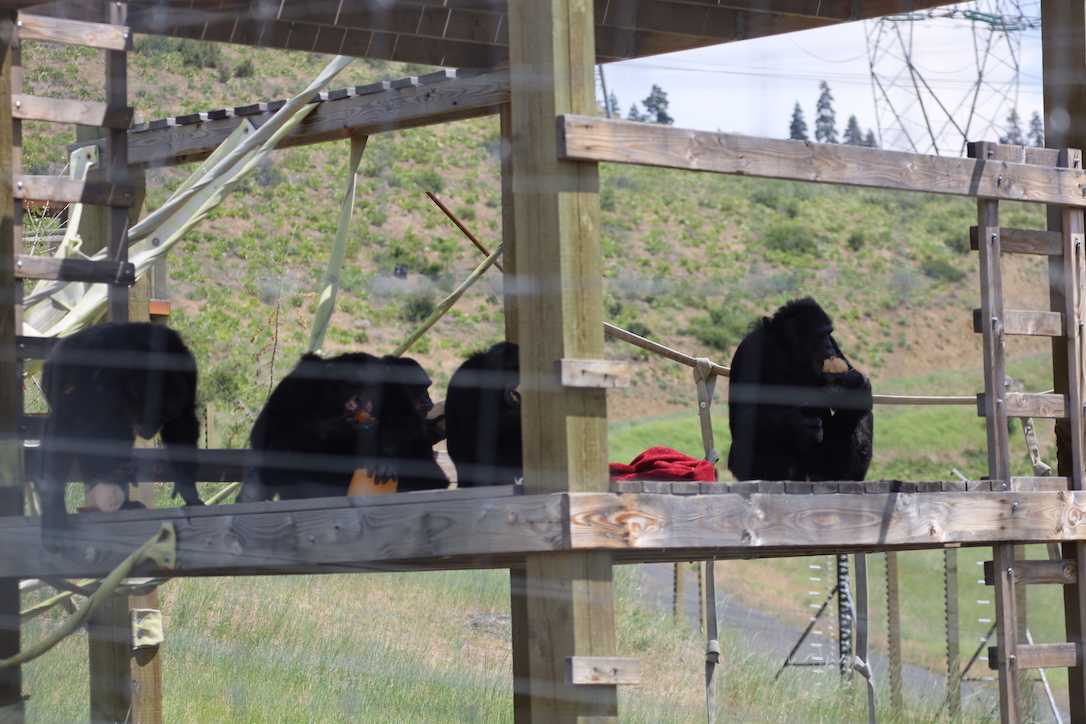
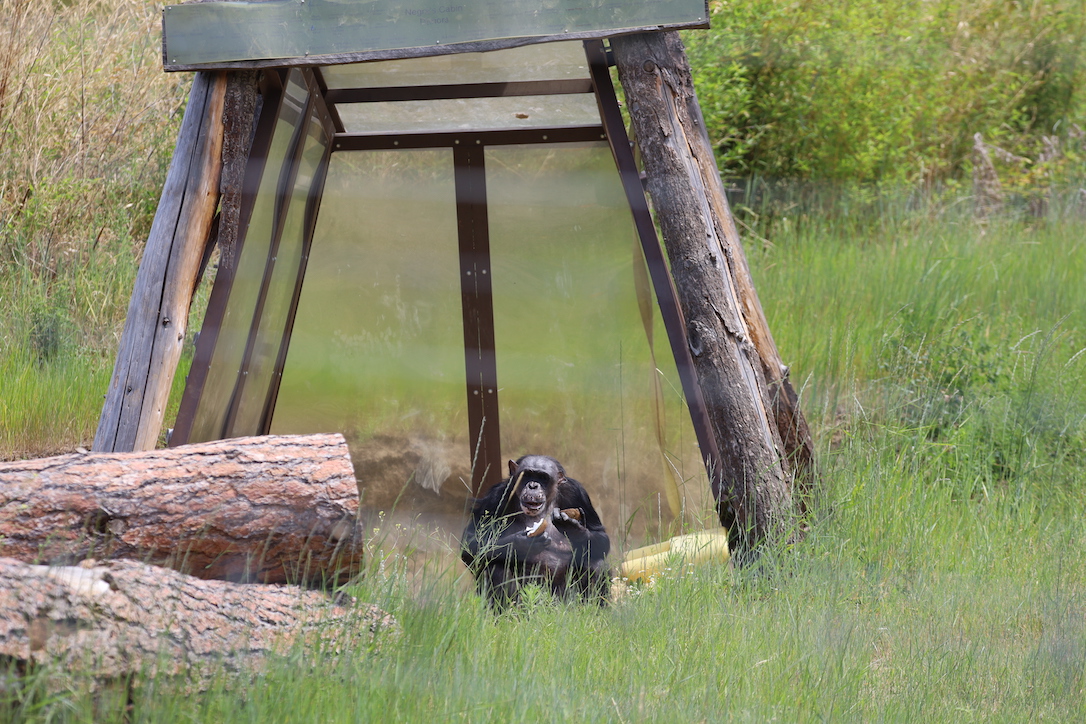
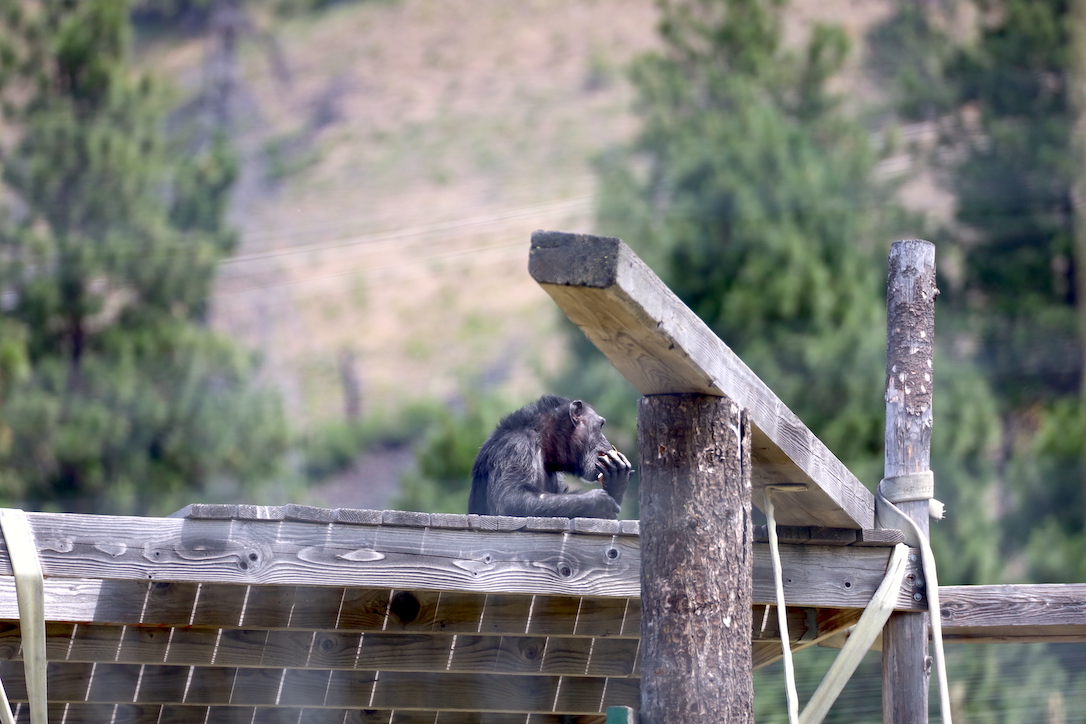
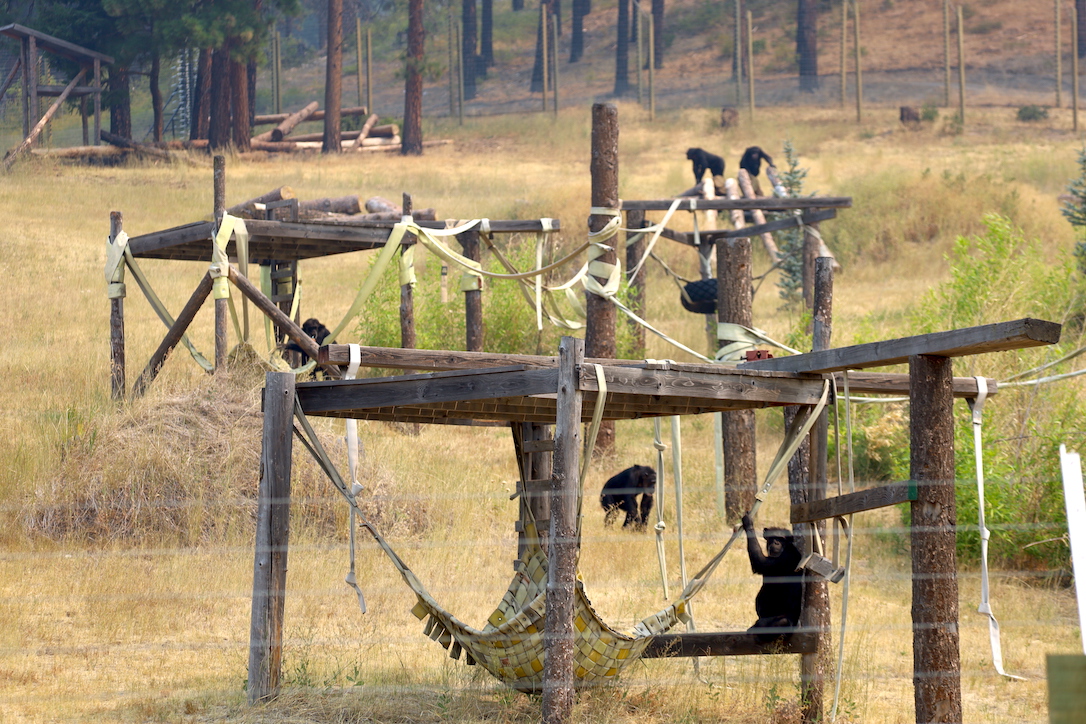
To illustrate the former, let’s turn to our dear friend Willy B. Today I watched him sit peacefully in the shade beneath a climbing structure on the Bray, his 2-acre habitat, surveying the yard for remnants of a the day’s forage. When the forage was finished, he quietly returned to the indoor enclosures. It being mid-afternoon, however, this peaceful Dr. Jekyll was suddenly and inexplicably transmogrified into a raging Mr. Hyde. Apropos of nothing and with no other chimps in sight, he began to bang on the food chute with the back of his wrist. The noise and vibration shattered the calm of the afternoon and soon the others were up from their naps. With hair on end, they circled each other in the confines of the front room area. Some began to pant hoot, which in turn raised the tension in the room even further. Minutes went by. The banging was incessant. Others began to stand bipedally and swagger. Bang, bang, bang. The noise swelled and soon came to fully occupy the space where thoughts would normally occur, making it impossible to do anything but join in the chaos. Bang, bang, bang…

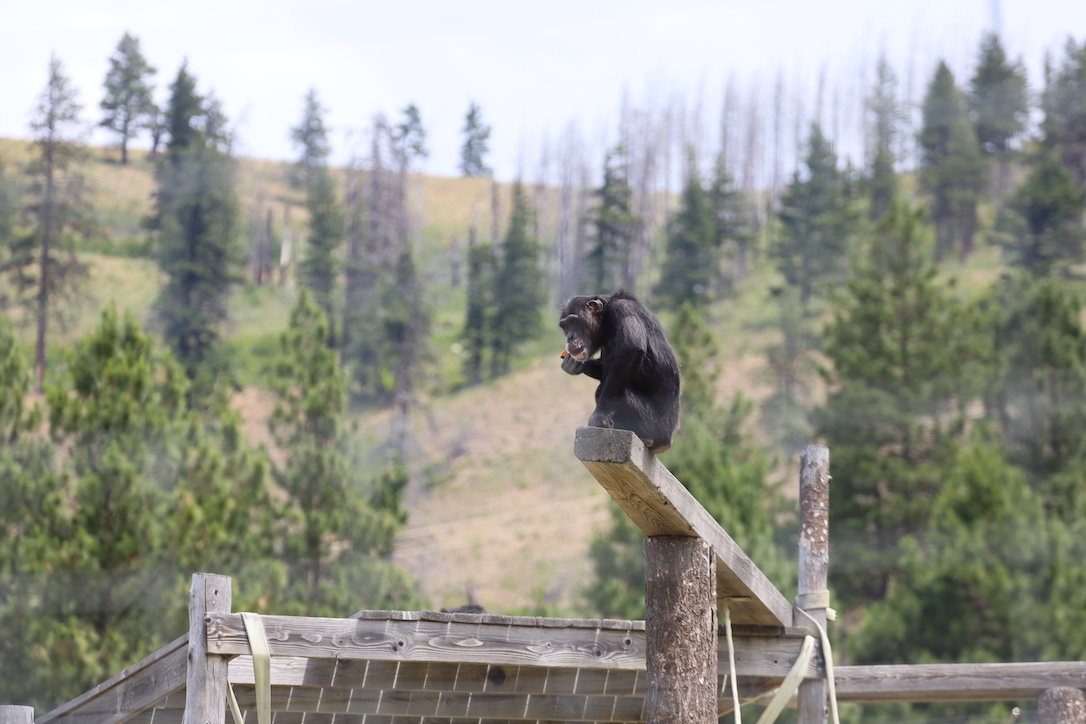
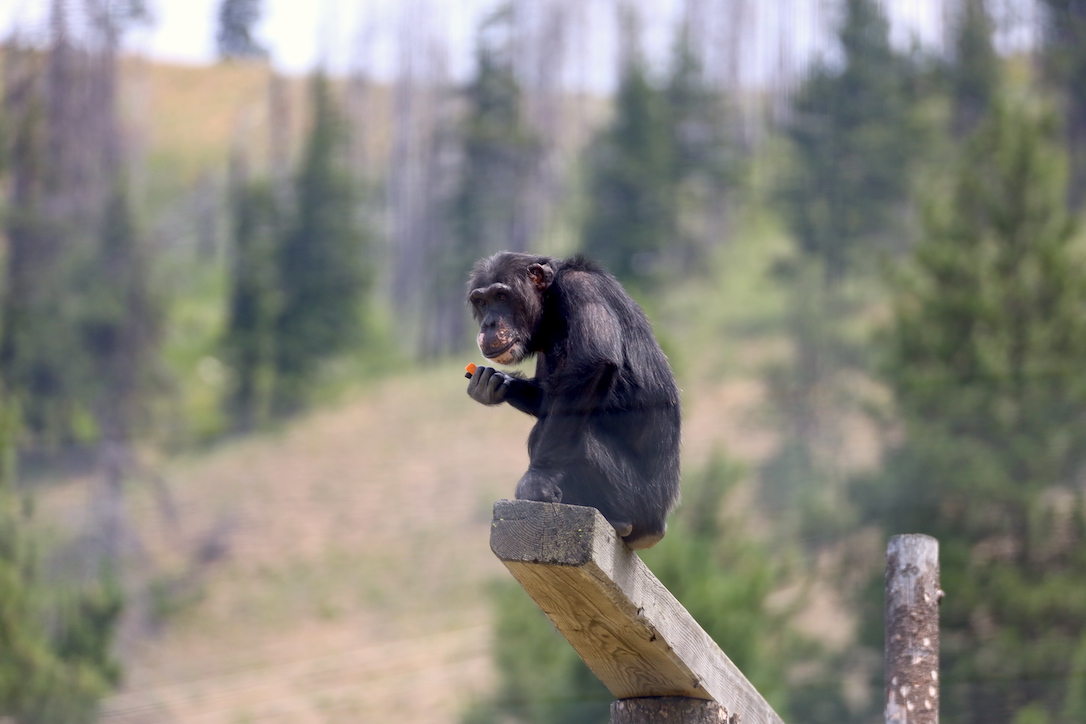
BANG! A fight breaks out. The swirling mass of chimpanzees, now screaming, races from the front rooms through the chute and out to the Bray. Willy B climbs to the top of the tower and, with a fear grimace, watches as the other chimps threaten and hit one another. But he is not angry. Instead, he is scared and confused. Because he is once again Dr. Jekyll, wondering what on earth could have caused such tumult below.
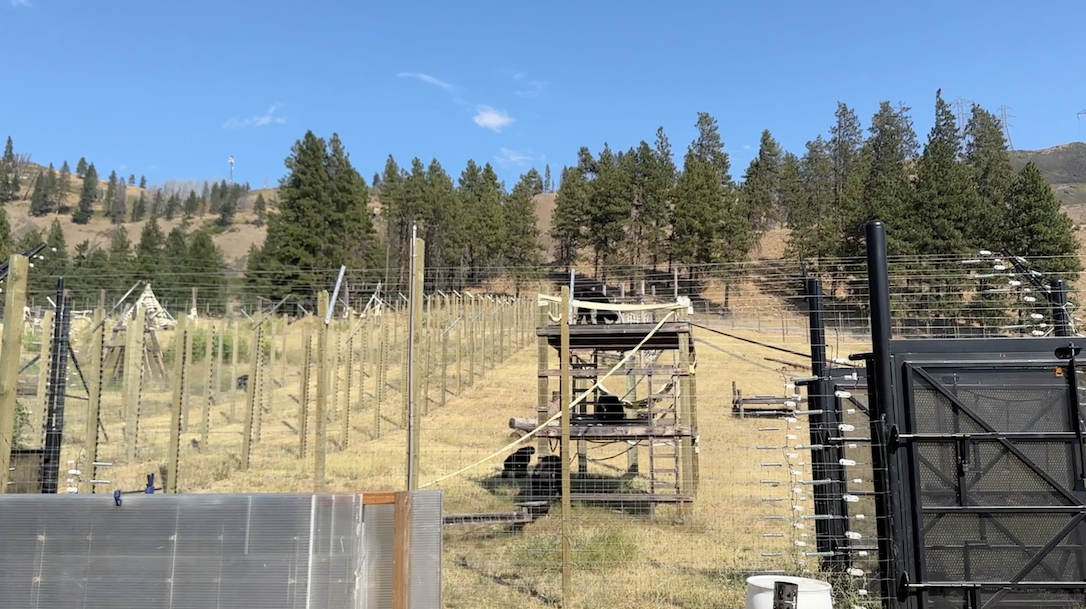
Interestingly, this fight contained within it, and was indeed amplified by, the actions of our second type of jerk. Are you familiar with the admonition, common in both comedy and politics, to never punch down? For male chimpanzees, punching down is not only accepted in certain circumstances but is in fact a right of passage. As Craig Stanford states in The New Chimpanzee,

[Adolescent male chimpanzees] don’t submissively pant grunt to one another, and dominance among them is hard to discern. But once a young male reaches adulthood, he begins to climb to higher rank by taking on and intimidating each adult female. When he has risen in status above the most dominant female, the young male finds himself at the bottom of the male dominance network. Only time and repeated jousts with higher-ranking males will determine his ultimate highest status. (p.42-43)

According to some researchers, adolescent male chimpanzees routinely harass adult females as a low-cost way method of honing their competitive skills before testing them in the much riskier world of male competitive dominance. Gordo is well beyond adolescence, but his actions are often reminiscent of a chimpanzee stuck permanently in the liminal space between the female and male hierarchies. While size does not dictate rank, his more diminutive stature makes it unlikely that would challenge Cy, Terry, or Willy B directly. His social skills are of little help, either. He is able, however, to dominate Honey B. Usually.

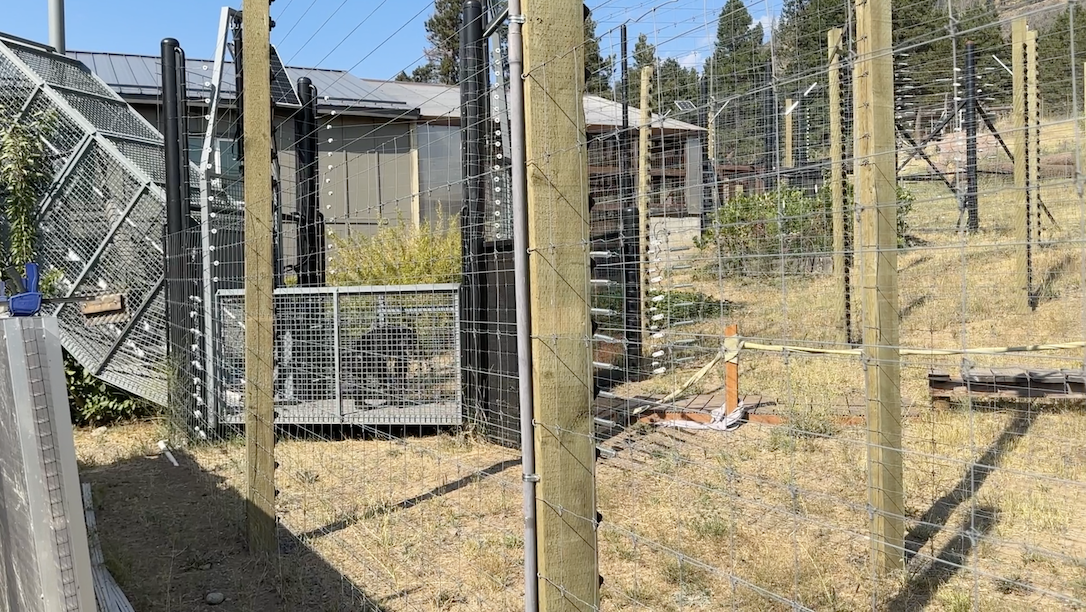
As the dust on the Bray began to settle, the chimpanzees worked their way through the chute and back to the greenhouse. The screams had subsided and all that remained was Honey B’s diminishing whimper. This, thought Gordo, was the perfect time to assert himself. As she approached him, he hit her across the back and ran straight back to the Bray, knowing that she was afraid of the outdoors and wouldn’t have the courage to follow him.
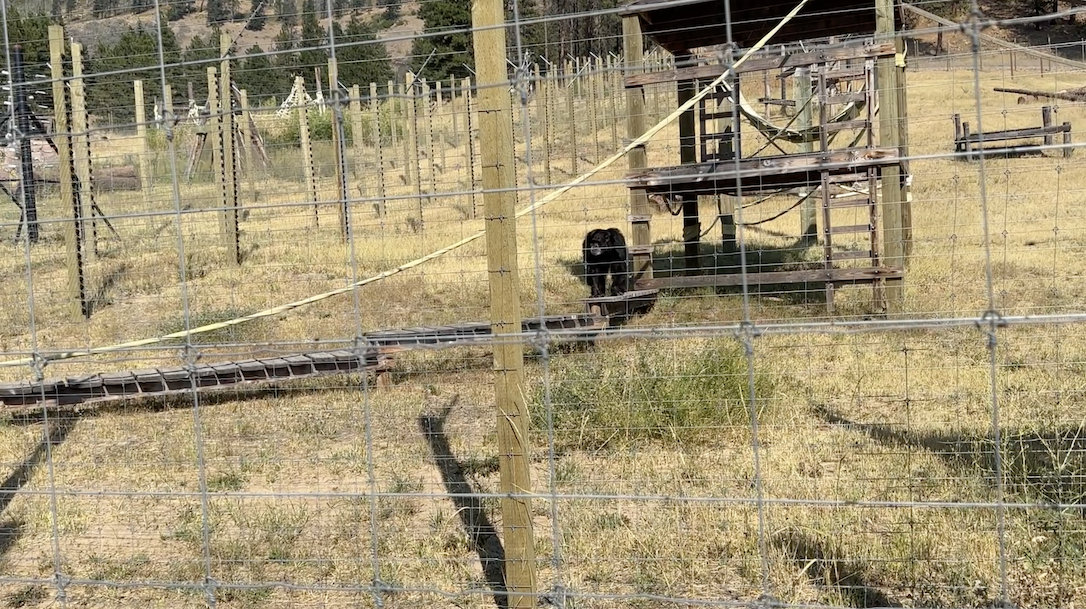
He reached the platform and turned to watch Honey B screaming at him helplessly from the end of the chute.
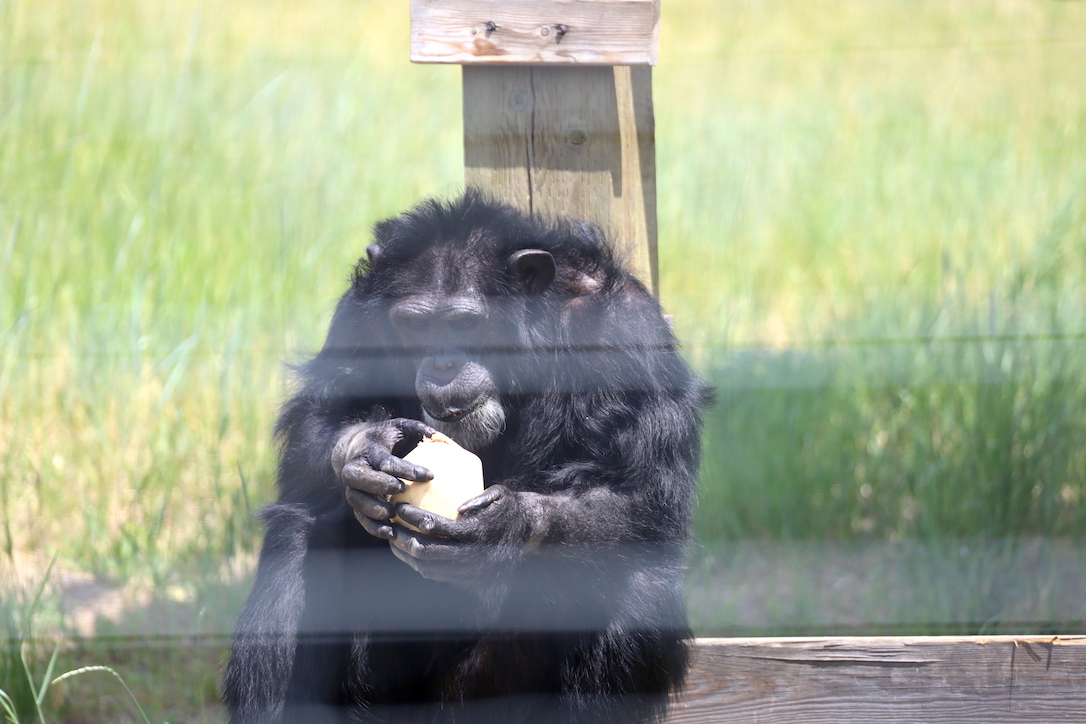
Is it any less indecent for Willy B to cause daily disruptions to the harmony of the group simply because they are born out of blind rage and not malice? I make no claims as to the relative moral status of these two varieties of jerkishness. Nor, again, do I intend to cast all males as irredeemably jerkish. But in my experience, they do seem on average to contain each type of jerkishness in greater proportion than their female counterparts.

And as to whether these same tendencies prevail in my own species, I claim ignorance.
Filed Under: Chimpanzee Behavior, Gordo, Willy B Tagged With: aggression, behavior, chimpanzee, jerk, northwest, rescue, Sanctuary

Caravan

August 19, 2023 by J.B.

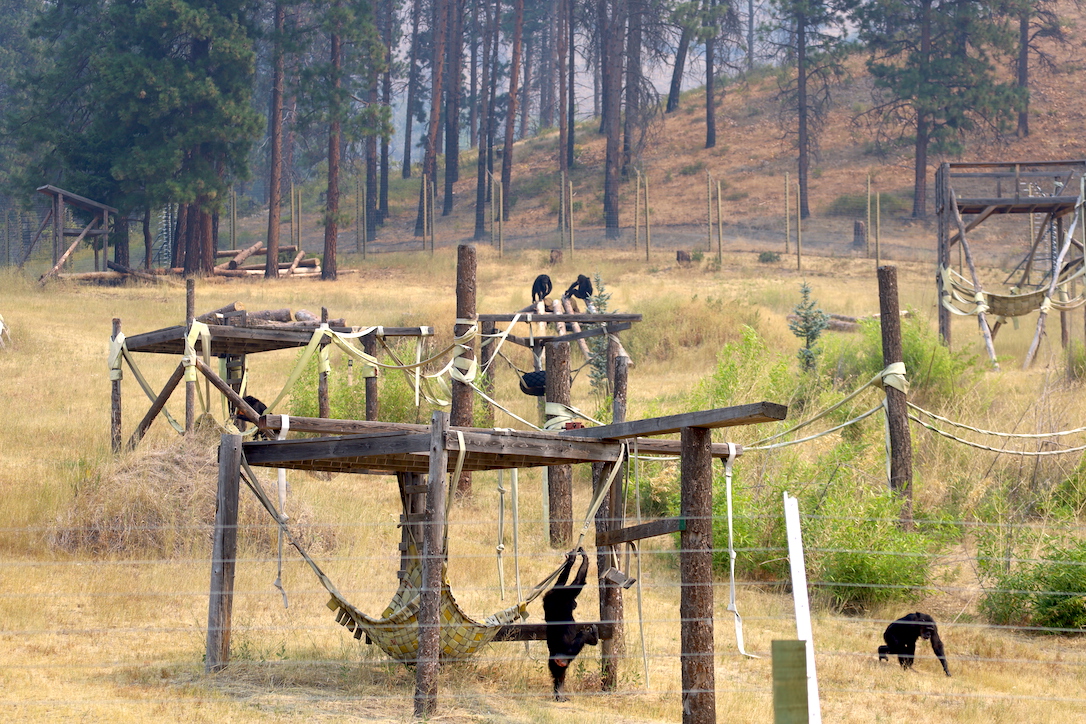
Running an organization with nearly a dozen staff and several dozen volunteers is a difficult task, but Jamie takes it all in stride. Enjoy this video of Jamie mobilizing all of the farm vehicles this afternoon.

Here are some bonus photos from this smokey day:

Filed Under: Books, Enrichment, Jamie, Young's Hill Tagged With: bonobo, book, chimpanzee, Enrichment, gator, habitat, Jamie, john deere, kubota, lucy, northwest, outdoors, rescue, Sanctuary, sidekick

Teamwork

July 30, 2023 by J.B.

Bite wounds are probably the most common injuries we see in chimps. Our treatment protocols for these wounds tend to be fairly conservative: administer analgesics for pain, clean frequently with antiseptic spray, and monitor closely. There are a few reasons for this. First, chimps have a superhuman (literally) ability to heal. Wounds that would send me racing to the ER for stitches will close up on their own in chimps with little to no treatment in a matter of days or weeks, remaining uninfected and leaving no visible trace once healed. Second, because of the frequency of wounding in captive groups, there’s always a risk of antibiotic resistance if antibiotics are over prescribed. And third, many forms of diagnostics and treatment require the chimps to be anesthetized—something we avoid whenever practical out of concern for their overall safety and well being.

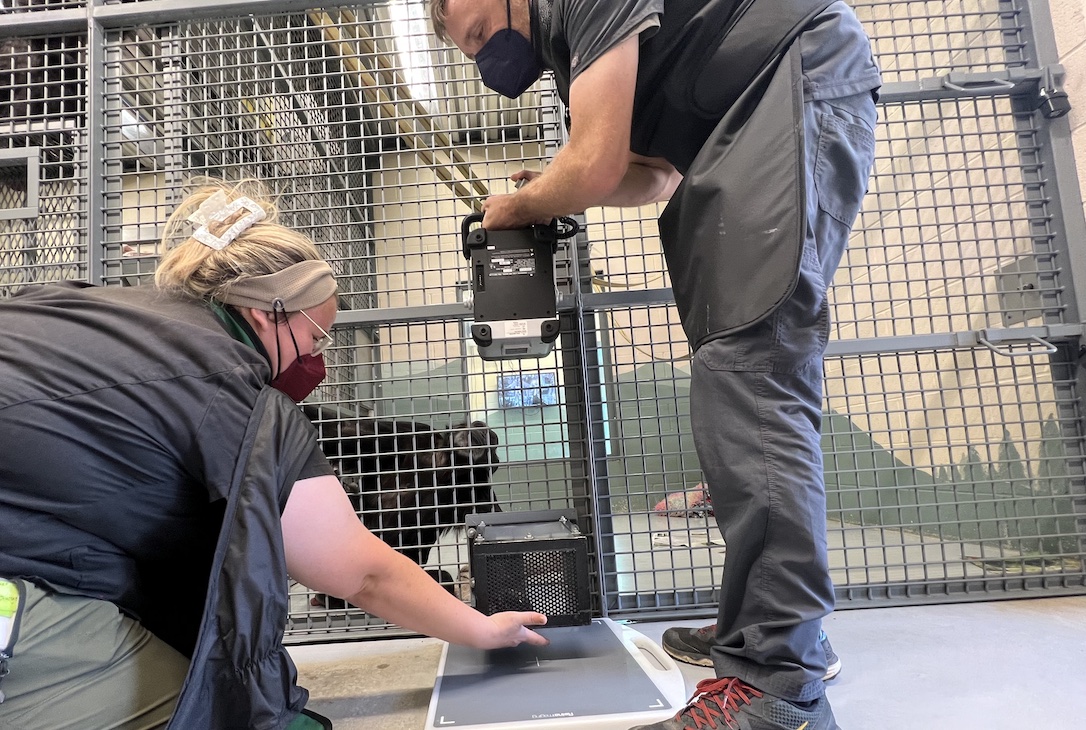
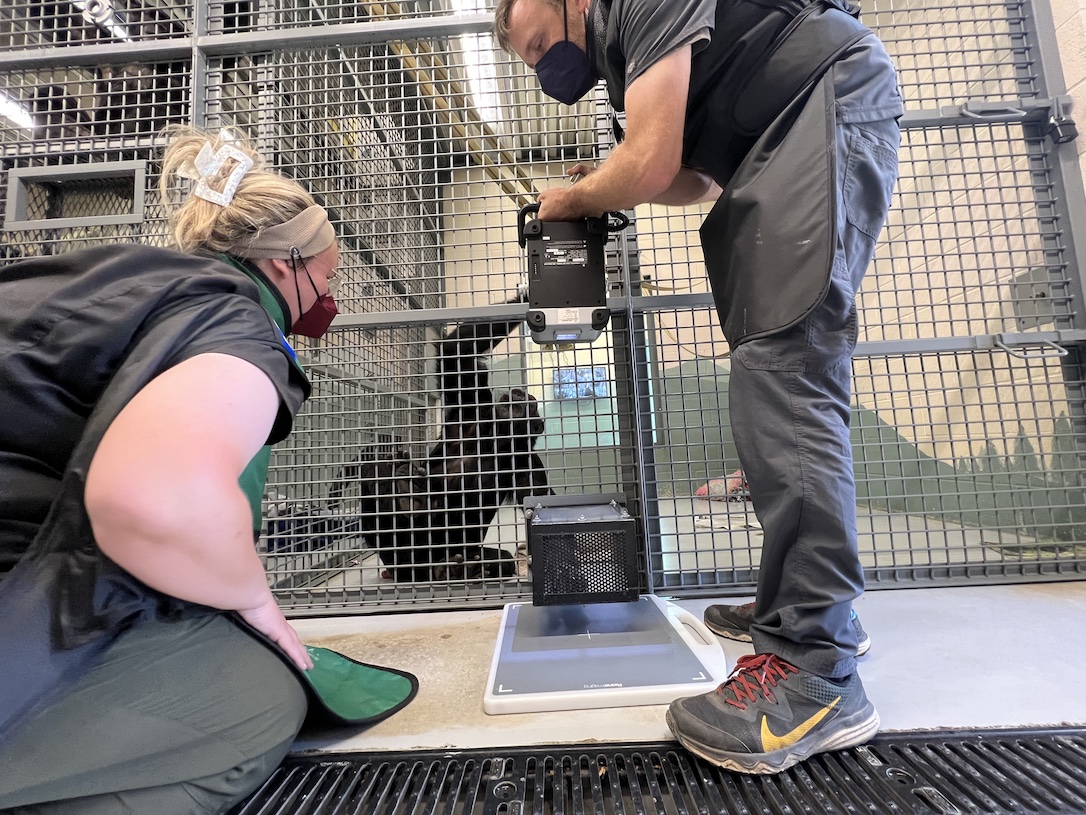
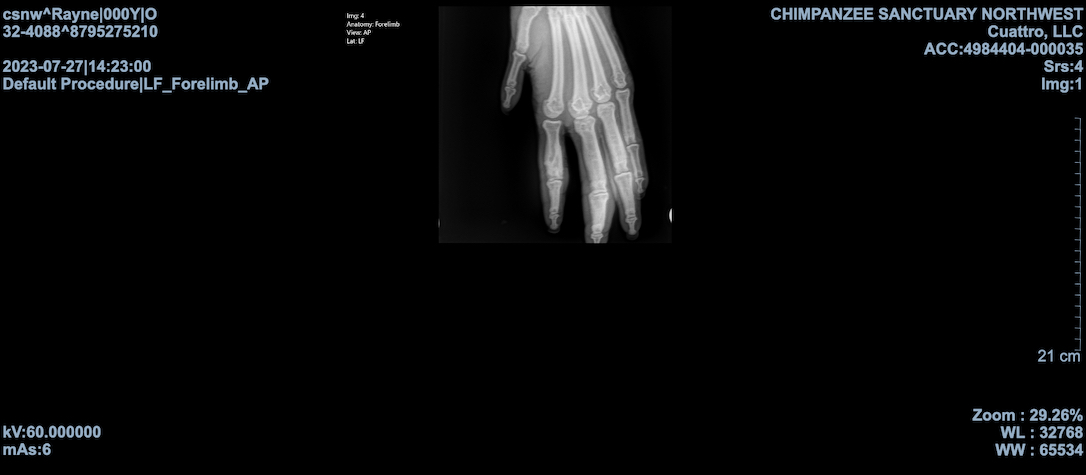
Once and a while, though, there are wounds that require a bit more than the typical conservative approach—like recently, when Rayne received a bite to her third digit (middle finger) that resulted in some swelling. When the swelling persisted even as the wound appeared to heal, Dr. Erin wanted to rule out an underlying fracture. Thankfully, our Positive Reinforcement Training (PRT) team was able to train Rayne to hold her hand in the x-ray box so that we could get some images without the need for anesthesia.

Here, Jenna asks Rayne to hold her hand flat in the box so we could get the first in a series of shots.

Jenna then withdraws her hand and Rayne holds hers still (while that other hand is trying to investigate the x-ray generator!).

The good news is that Rayne did not have a fractured digit. Interestingly, you can see an old healed fracture on her 2nd digit (index finger).

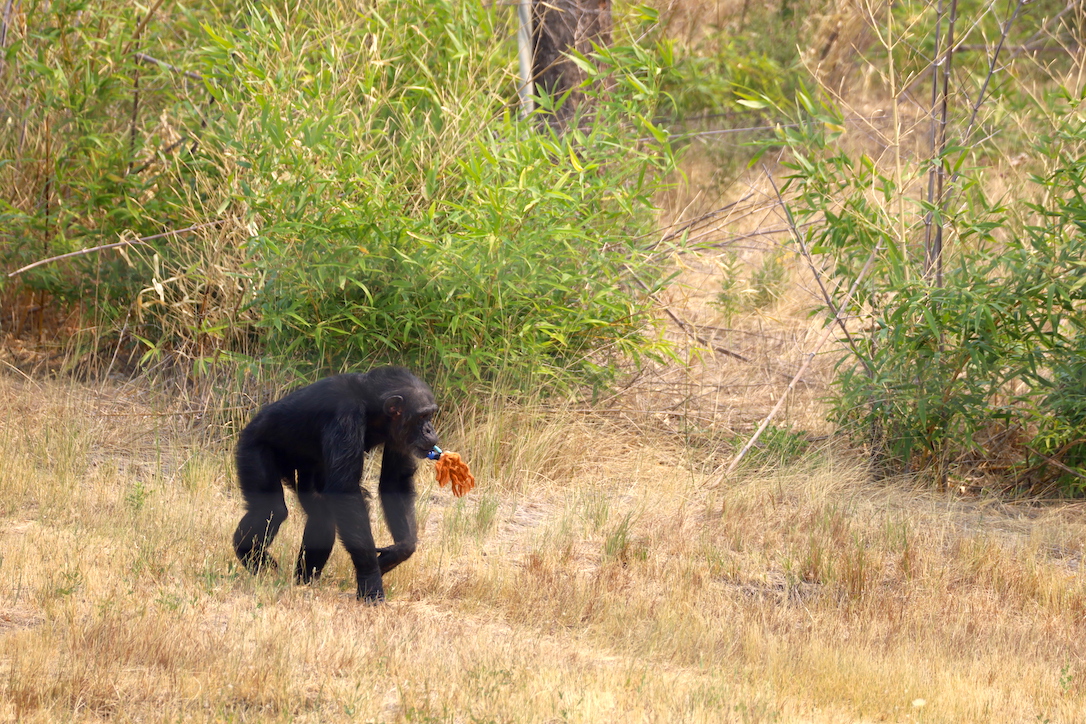
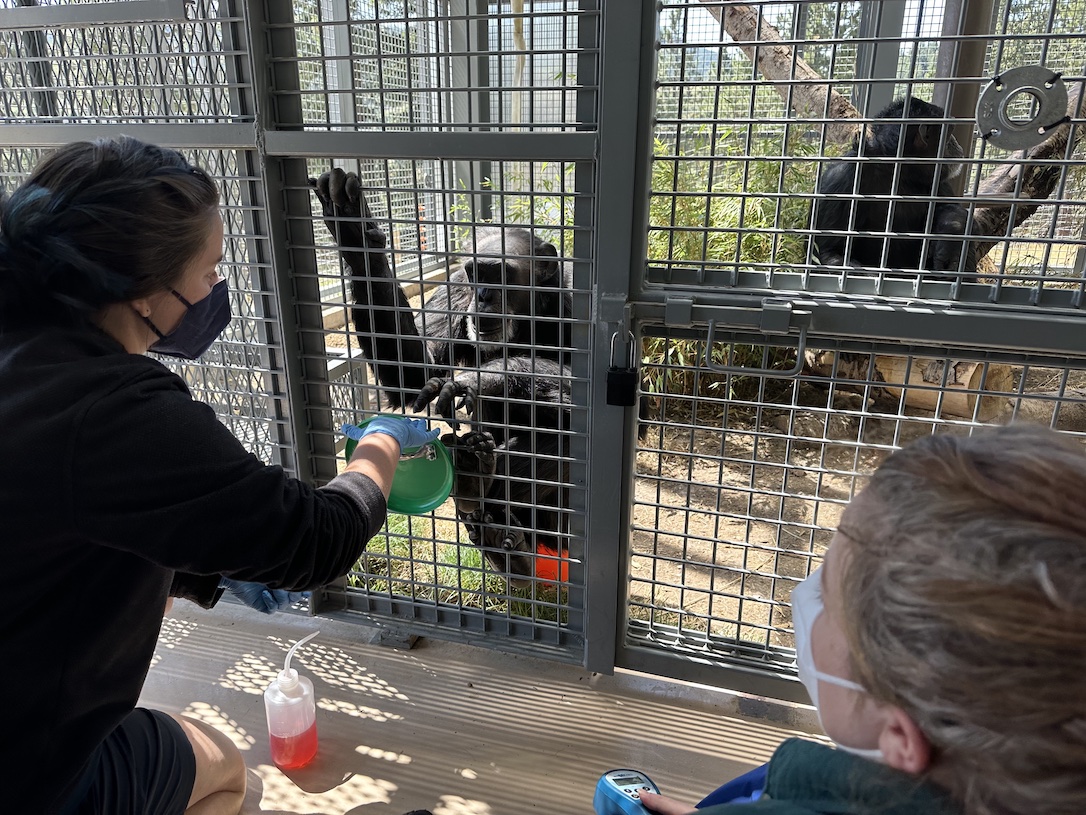
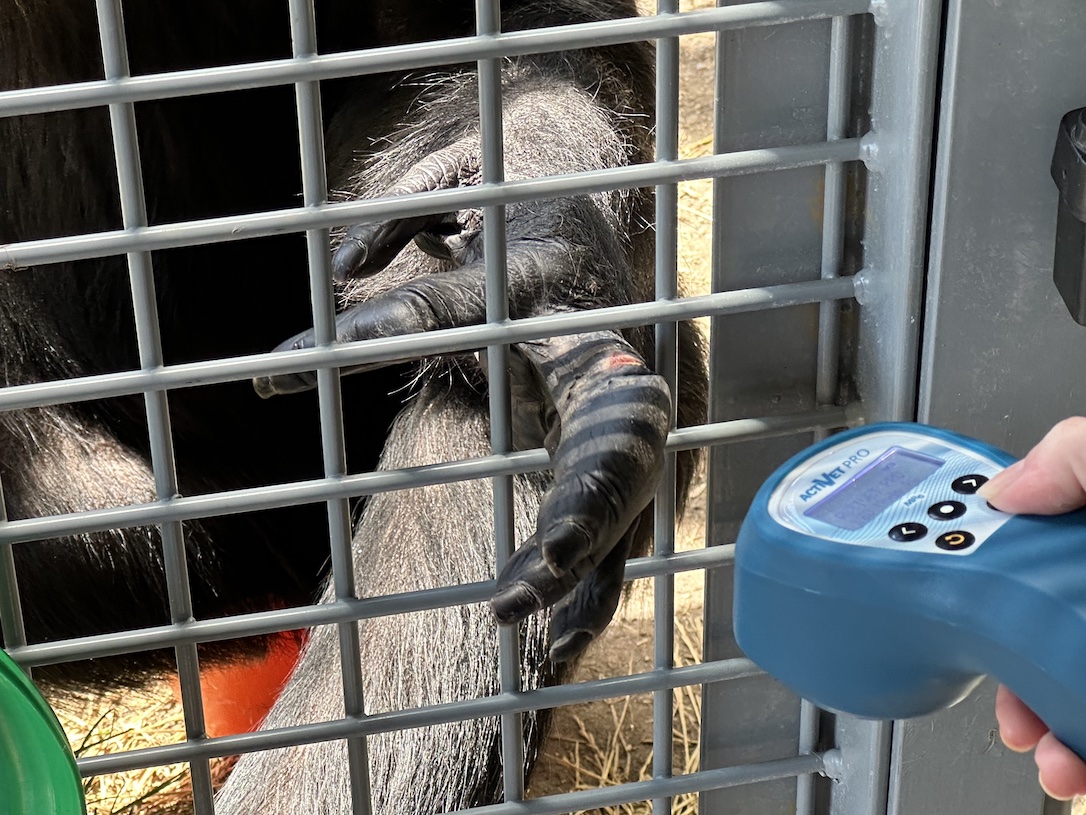
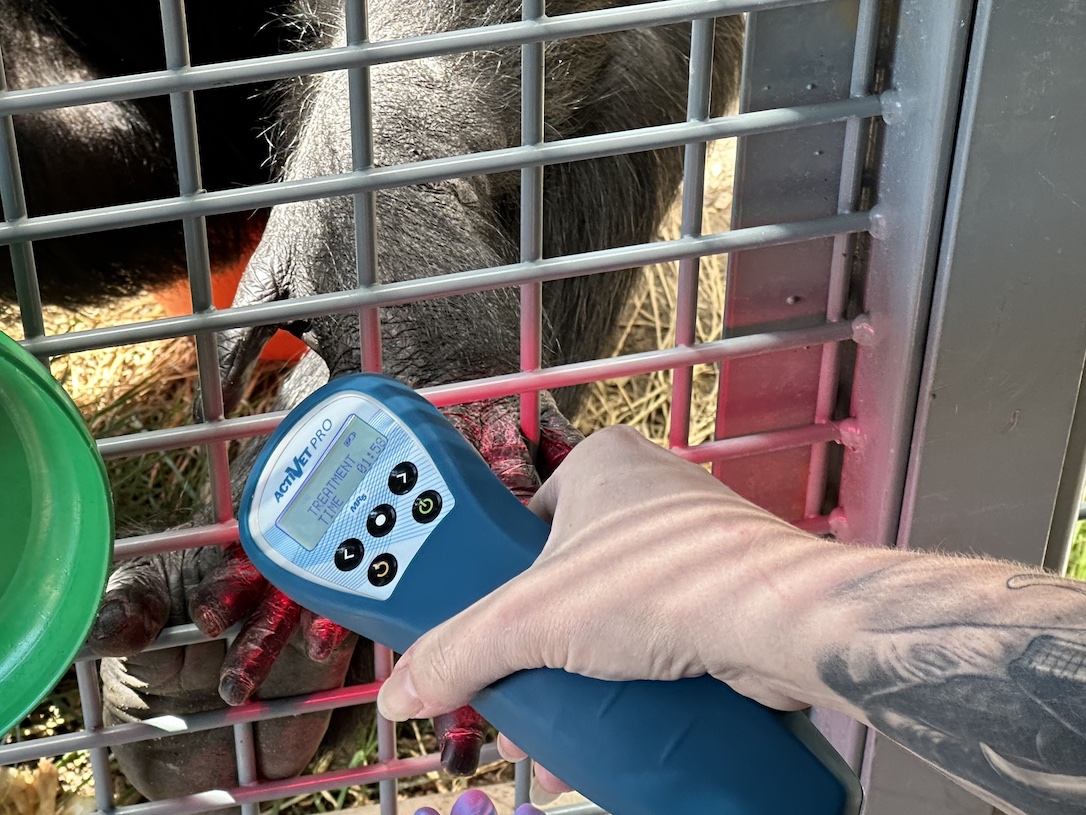
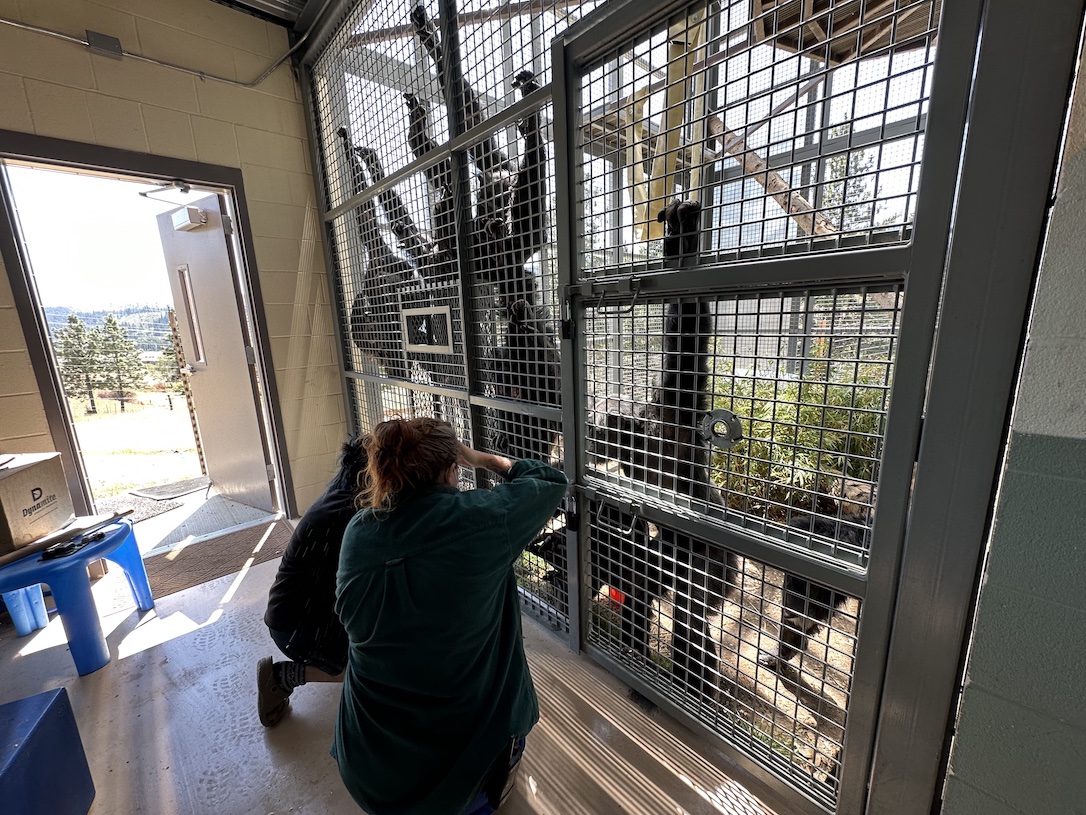
Though the swelling soon began to subside, PRT also made it possible to treat Rayne’s finger with a therapeutic laser to help encourage the healing process. For this, Rayne needs only to sit at her station marker and respond to Grace’s command to present the fingers of her left hand through the mesh. It was Rayne’s choice to pull up the orange ball and sit on it.

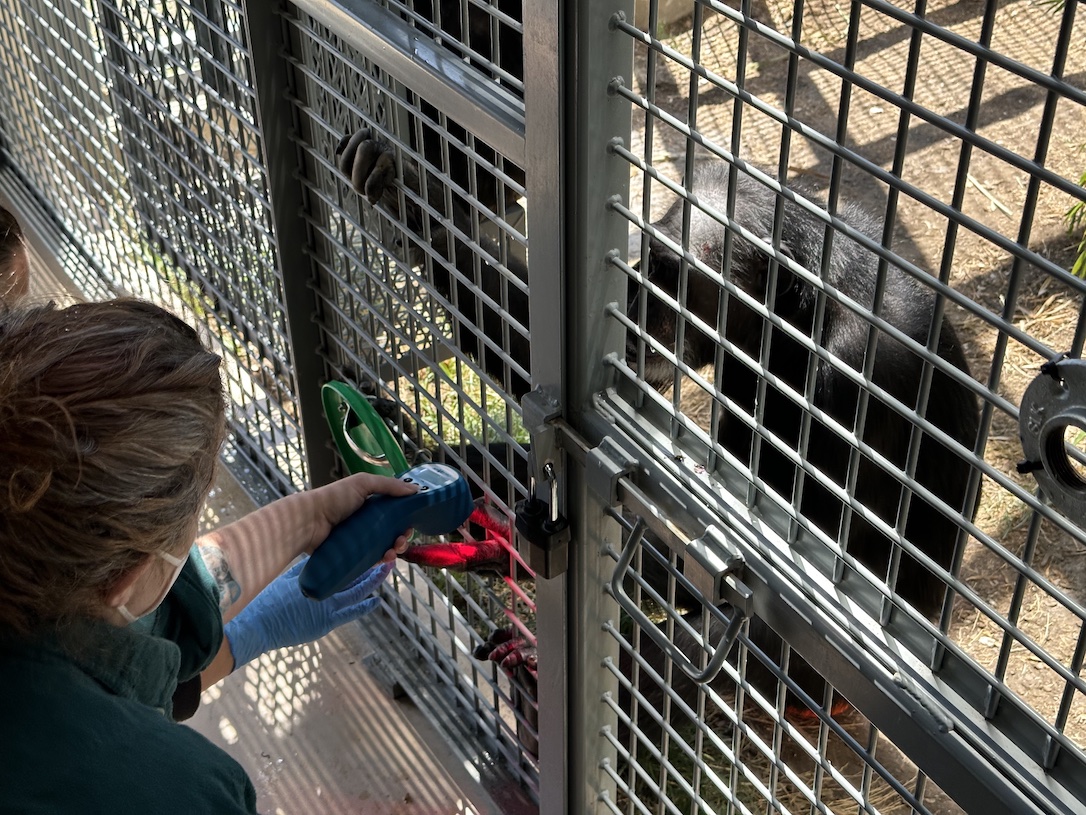
Sabrina is then able to program the laser, at Dr. Erin’s direction, and apply it to Rayne’s finger.

The only problem? Everyone wants a turn!

Positive reinforcement training requires a lot of staff time but these little opportunities to apply all that effort can really add up in the form of improved diagnostics, more effective therapies, and fewer trips to the clinic. Even if we learn that a chimp will require a more complex exam or treatment under anesthesia, we can often go in with a head start given the information we are able to obtain.

For her part, Rayne seems pretty happy to participate.

You want me to rotate my hand 90 degrees for a lateral view?

Here, you can laser my feet, too!

Just keep that juice coming.


Filed Under: Rayne, Veterinary Care Tagged With: chimpanzee, injury, laser, medical, northwest, positive reinforcement, prt, radiograph, Sanctuary, training, veterinary, wound, x-ray

A Trip to the Clinic for Willy B

July 24, 2023 by J.B.

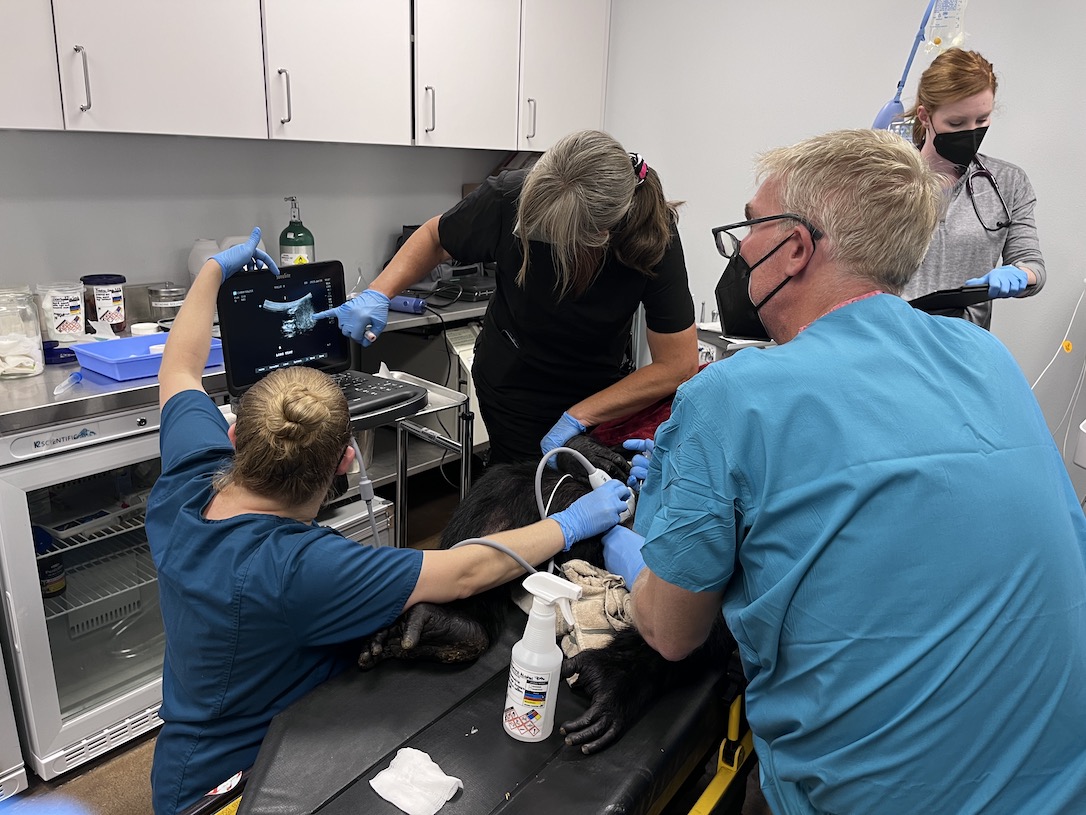
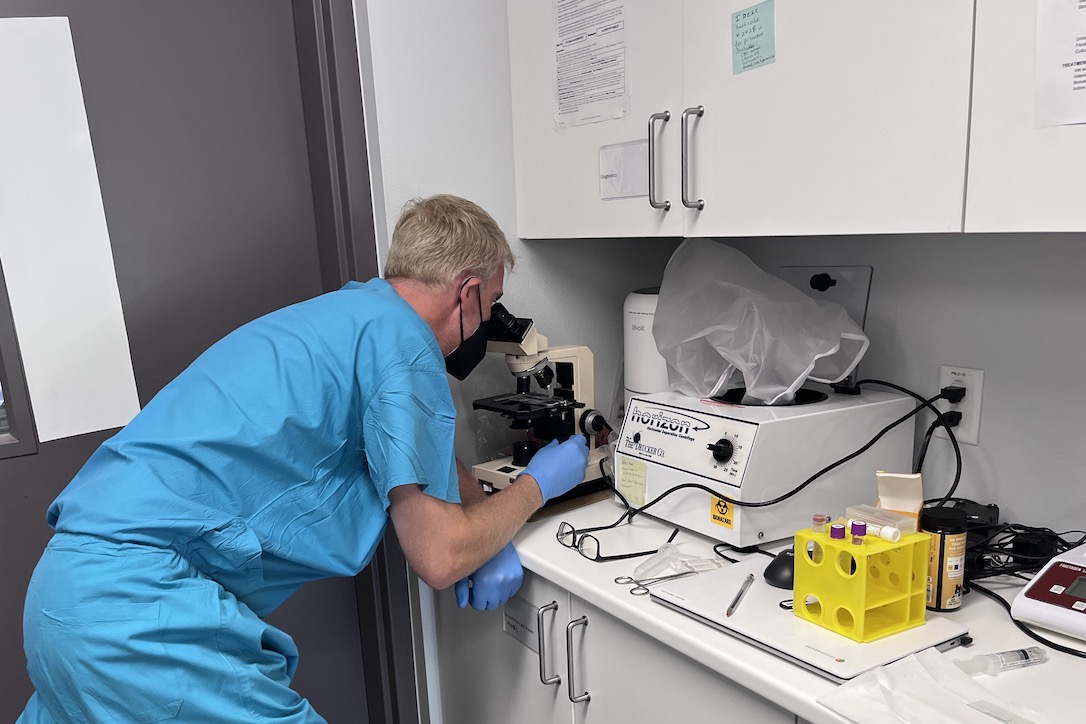
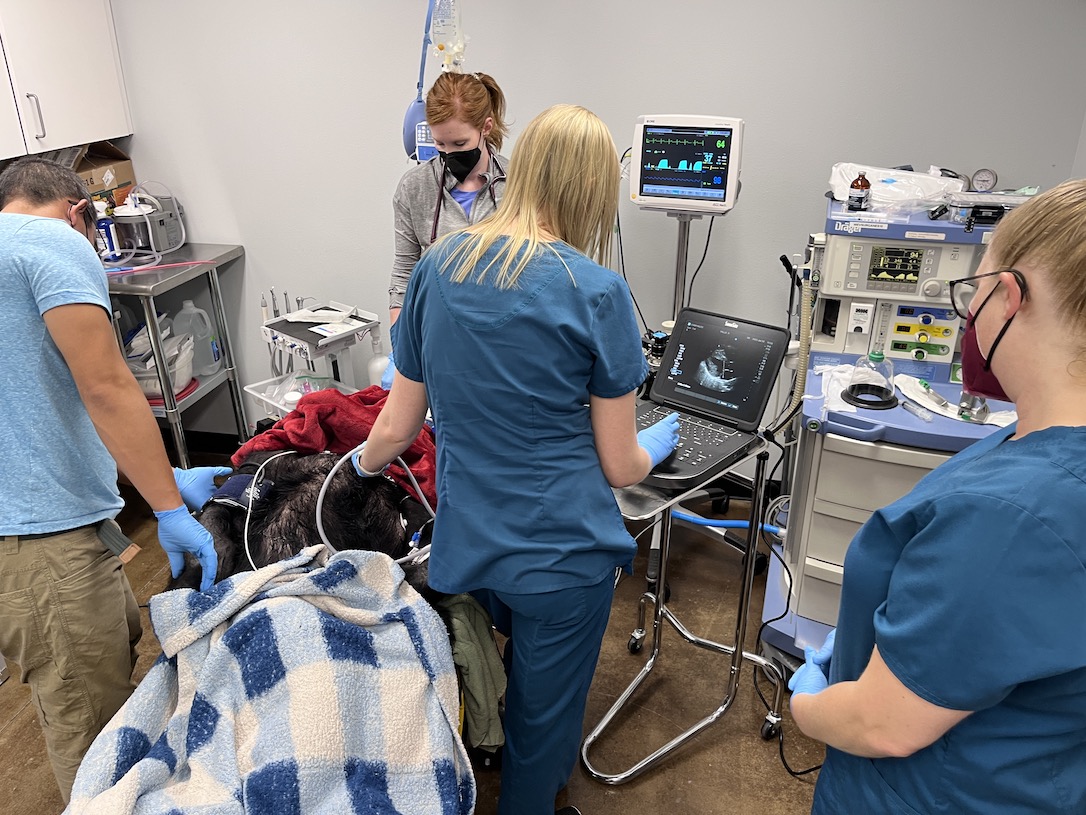
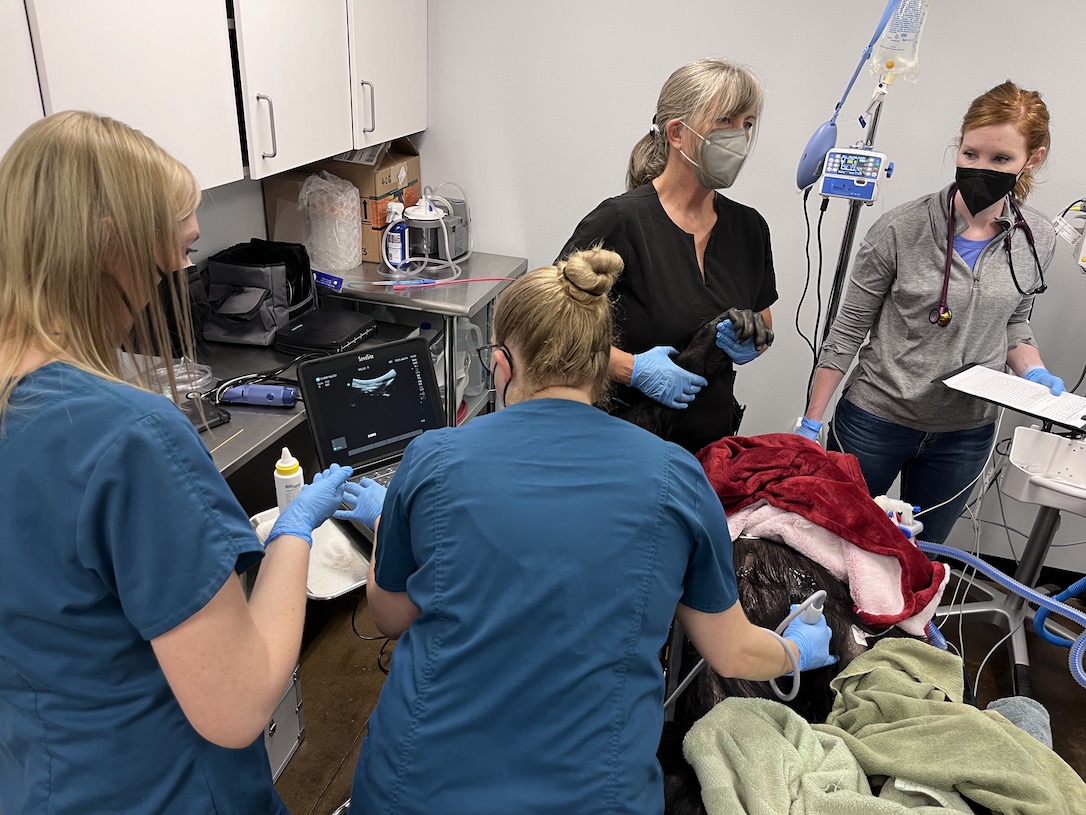
Willy B took a trip to the clinic this morning. The main purpose of the procedure was to investigate some swelling in his scrotum. As usual, Dr. Erin assembled a great crew to ensure that Willy would have the best care possible.

Dan Low, MD and Leah Bezzo, CRNA, both with Seattle Children’s Hospital, kept Willy safely under anesthesia. Tom Lendvay, MD, a urologist with Seattle Children’s, performed the initial evaluation with ultrasound assistance from Korey Krause, RDMS.

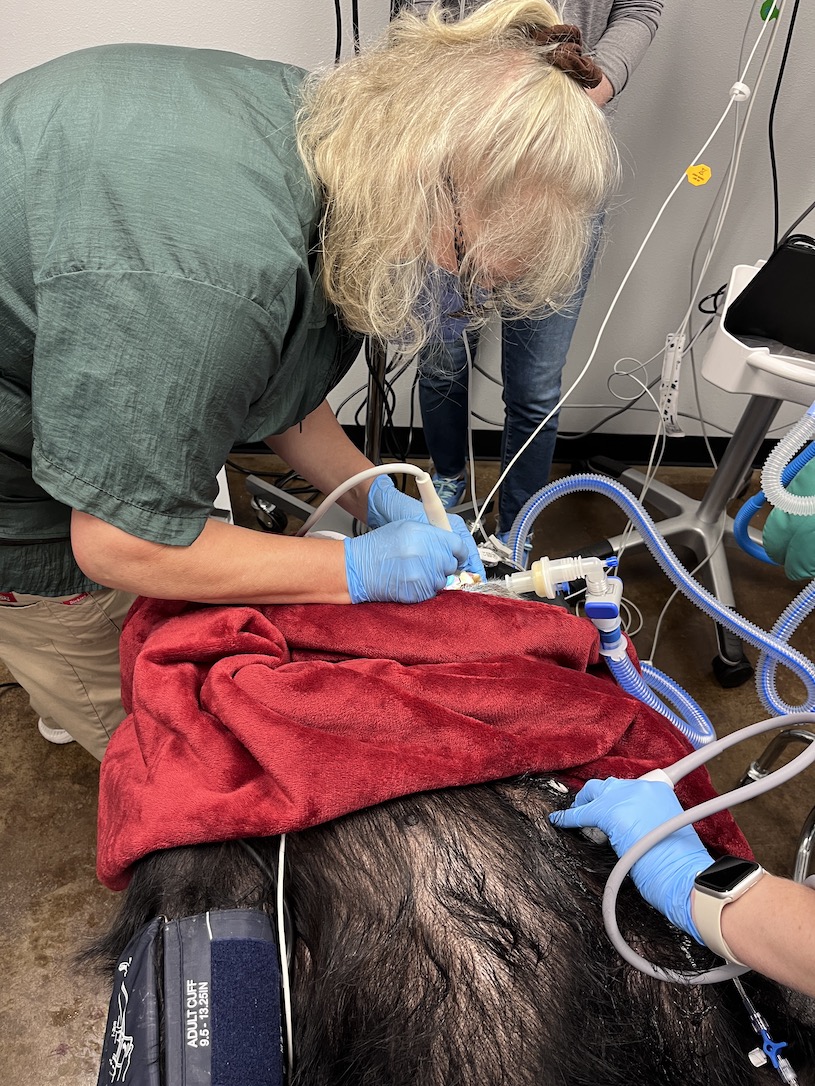
Willy also had a full cardiac workup, including chest radiographs and an echocardiogram by Marneye Driesen, RDCS, since some forms of heart disease can cause fluid to begin backing up in cavities such as the scrotum.

While he was under, Willy was also given a complete abdominal ultrasound.

Echocardiograms require a more powerful ultrasound machine than the one we own, so we are very grateful to the Woodland Park Zoo for once again allowing us the use of their machine. The machine was delivered to the sanctuary by Barbra Brush, LVT, who also participated throughout the procedure, including giving William a thorough dental cleaning.

The results of the echo and samples from his scrotum will have to be sent off for analysis but based on what we’ve seen, Dr. Erin has reason to believe that Willy B will benefit from some cardiac medication, just like his buddy Cy and like good ol’ Burrito across the way.

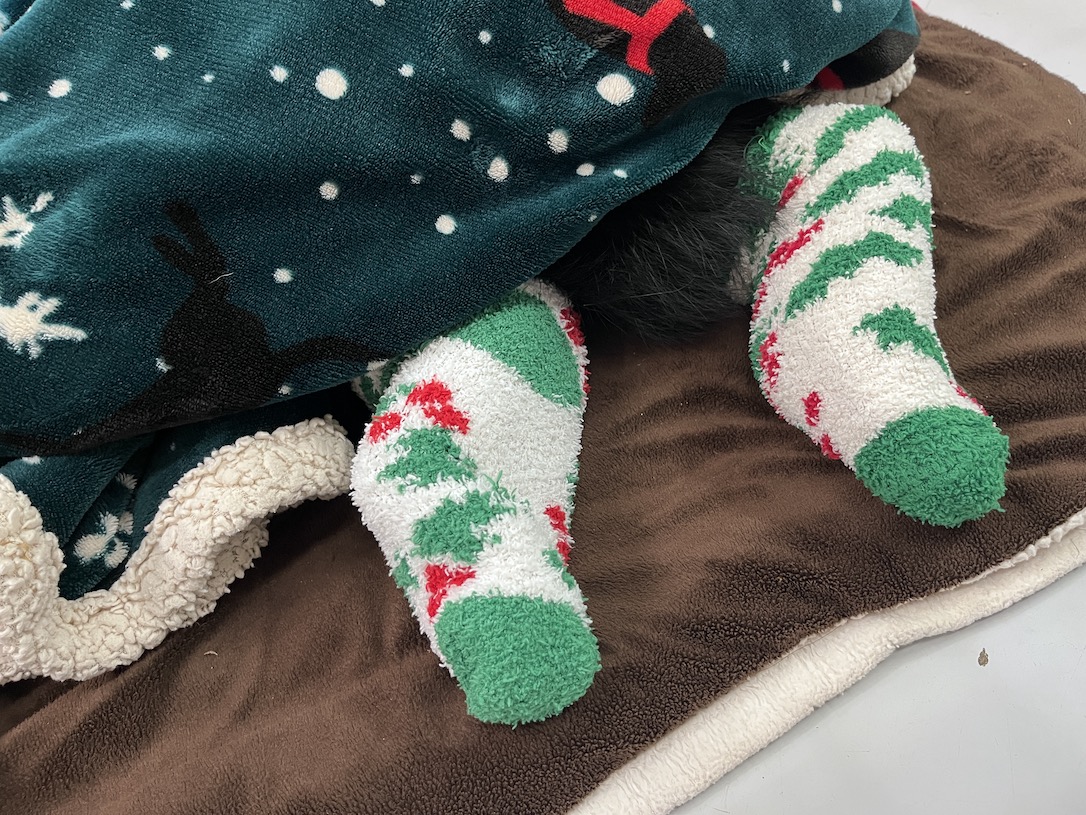
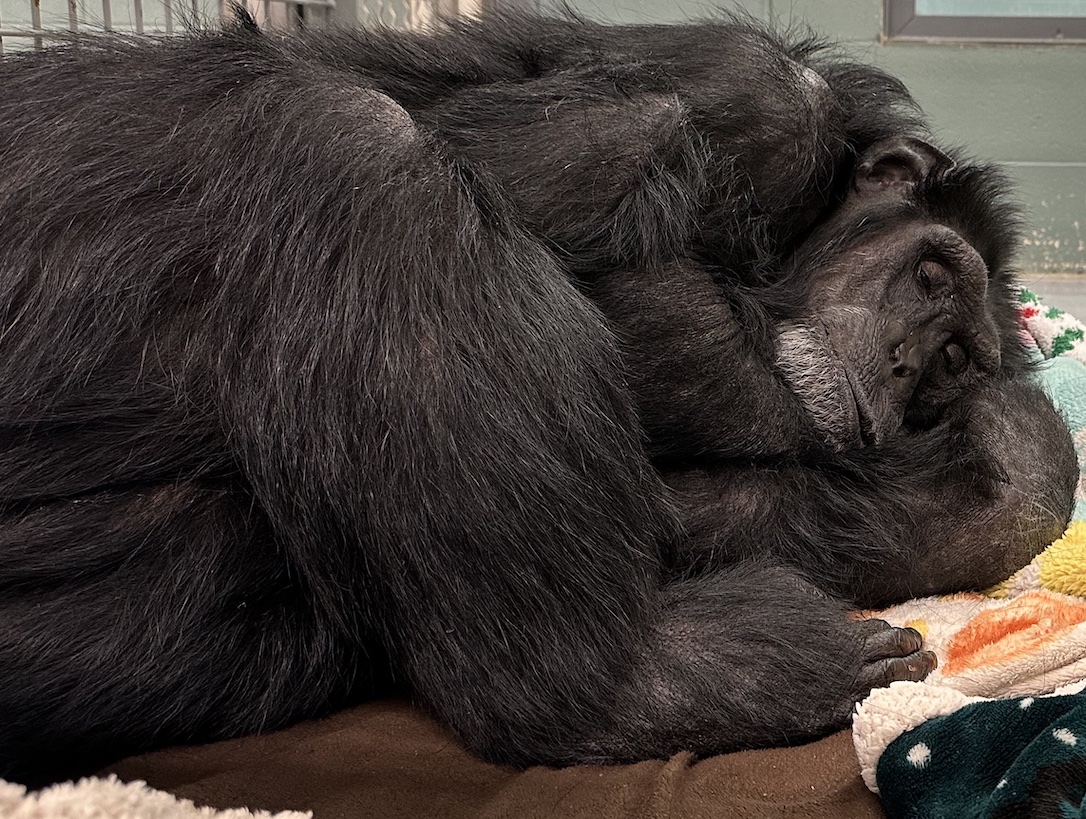
Willy did great throughout the procedure and is recovering quickly – due in part to the fact the we have kept his feet nice and warm and fashionable. We think it’s also due to the fact that he has a standing 2:30pm appointment to display and cause chaos in his group, to which he has never once been late.

Thankfully, he also seems to understanding the importance of getting rest after a clinic visit, so we’re hoping that he’ll take an afternoon off just this once.
Many, many thanks to this amazing team of medical professionals who traveled great distances to join us this morning and of course to our own Dr. Erin and Grace! We will continue to seek the donation of a portable cardiac ultrasound machine but if that is not in the cards, be on the lookout for a fundraiser sometime next year 🙂

We’ll share updates about Willy B when we know more.

Filed Under: Veterinary Care, Willy B Tagged With: cardiac, care, chimpanzee, clinic, echocardiogram, hospital, northwest, radiographs, rescue, Sanctuary, ultrasound, veterinary, x-ray

Mornings

July 17, 2023 by J.B.

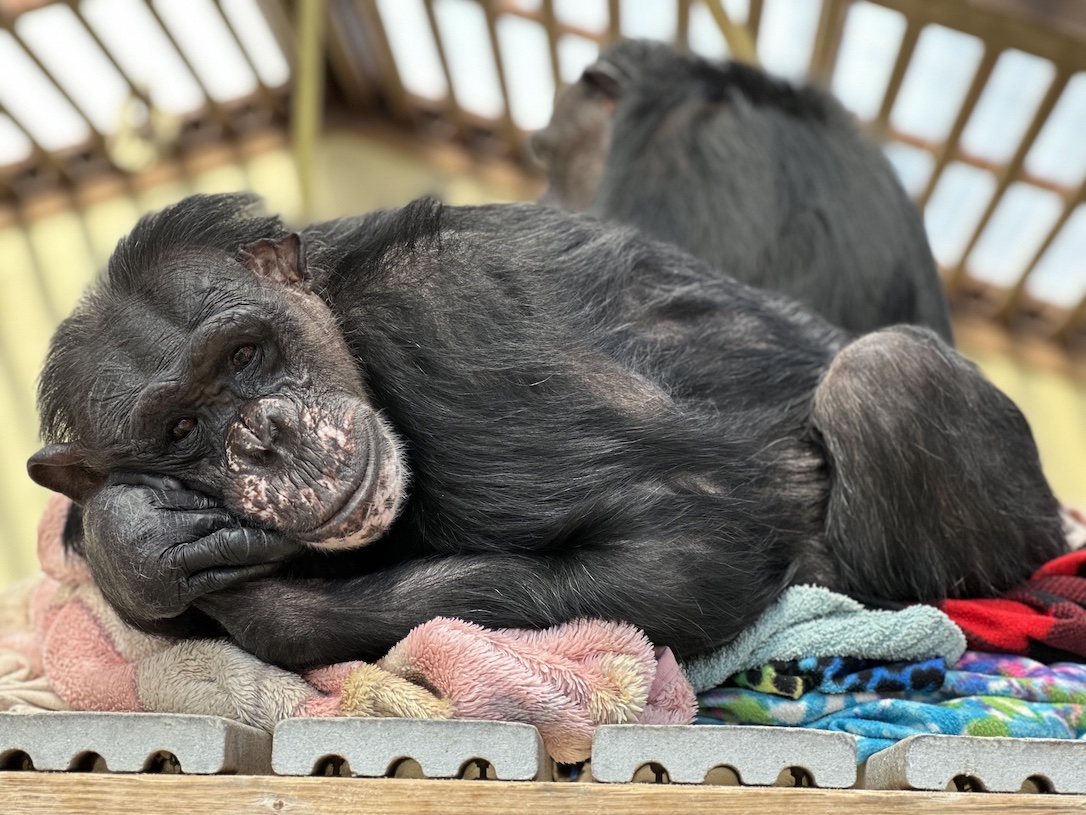
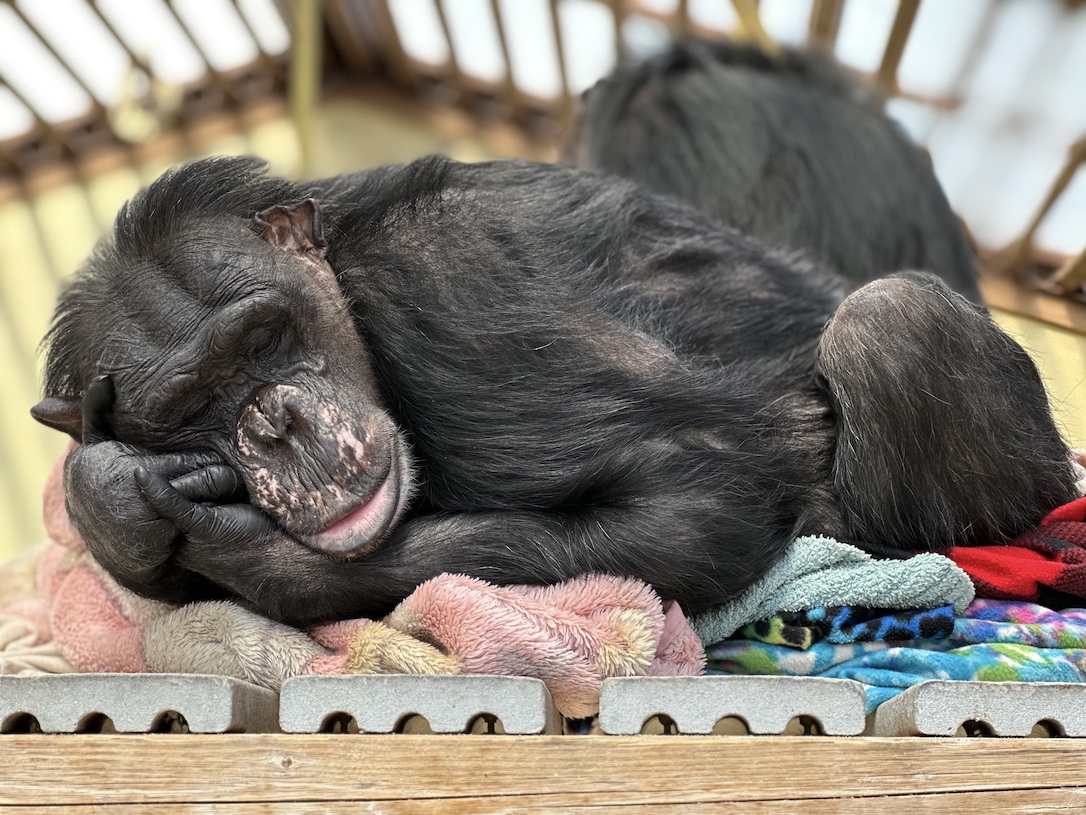
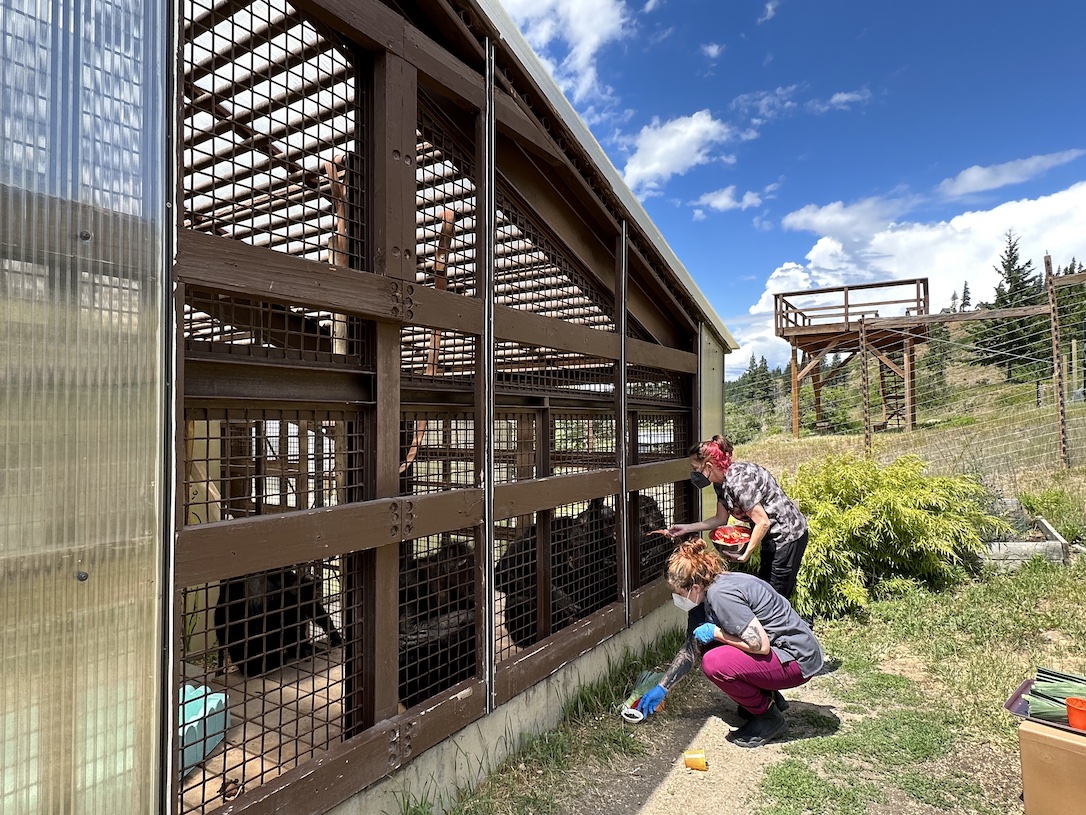
One of the best spots to build a morning nest is the upper platform in Greenhouse 1. From there the chimps can watch the sun rise over the trees above Young’s Hill as they wait for the staff and volunteers to bring them breakfast. Foxie’s nests aren’t really nests, per se, as she doesn’t like to lay on blankets or anything soft, nor does she like anything that even hints of being natural, like leaves or straw. It’s all bare floors and benches for this girl—but she is always sure to have a favorite doll tucked in close to her chest.

Negra, on the other hand, likes her nests well-padded. While her evening nests can be works of art, these morning nests are often hastily arranged. No matter, she barely awake anyway and it won’t take much for her to drift back to sleep.

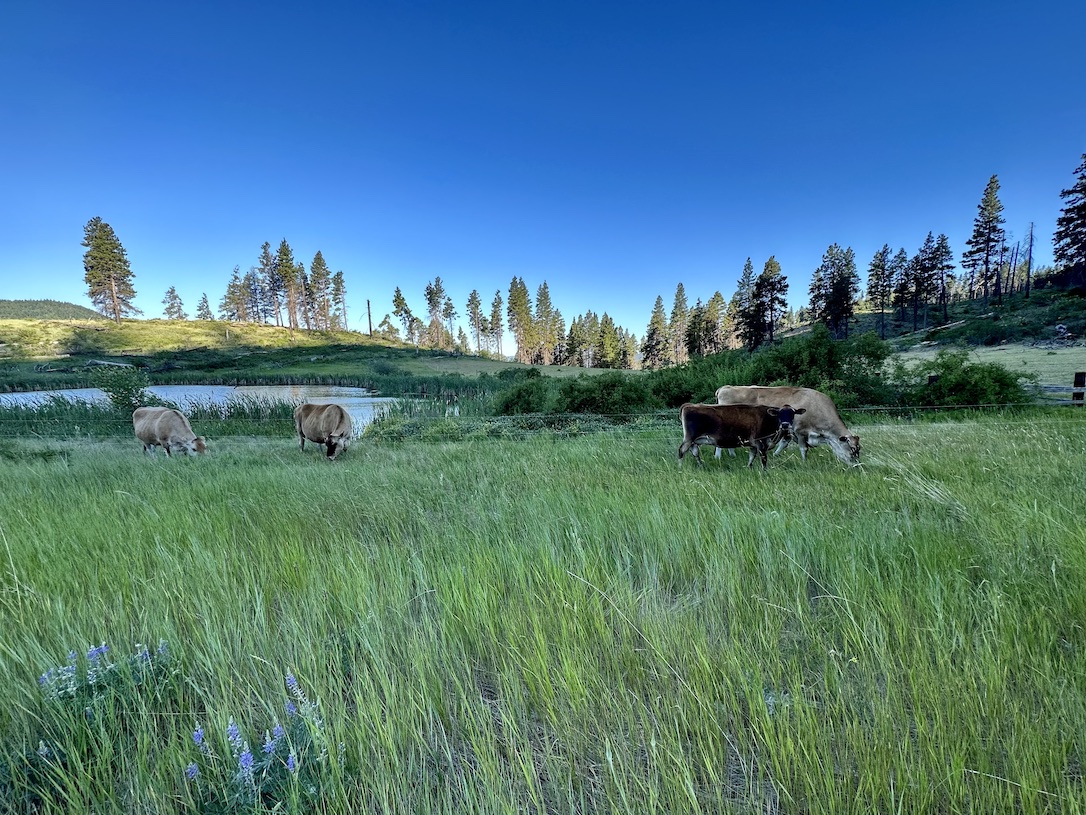
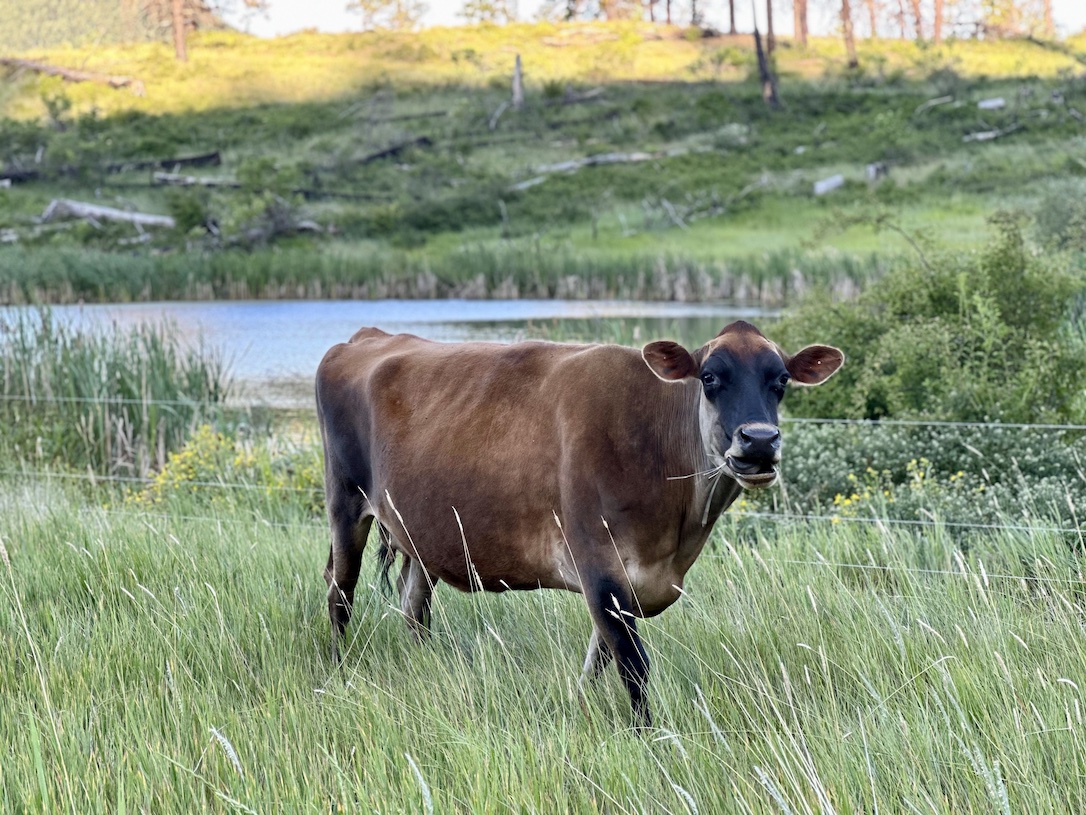
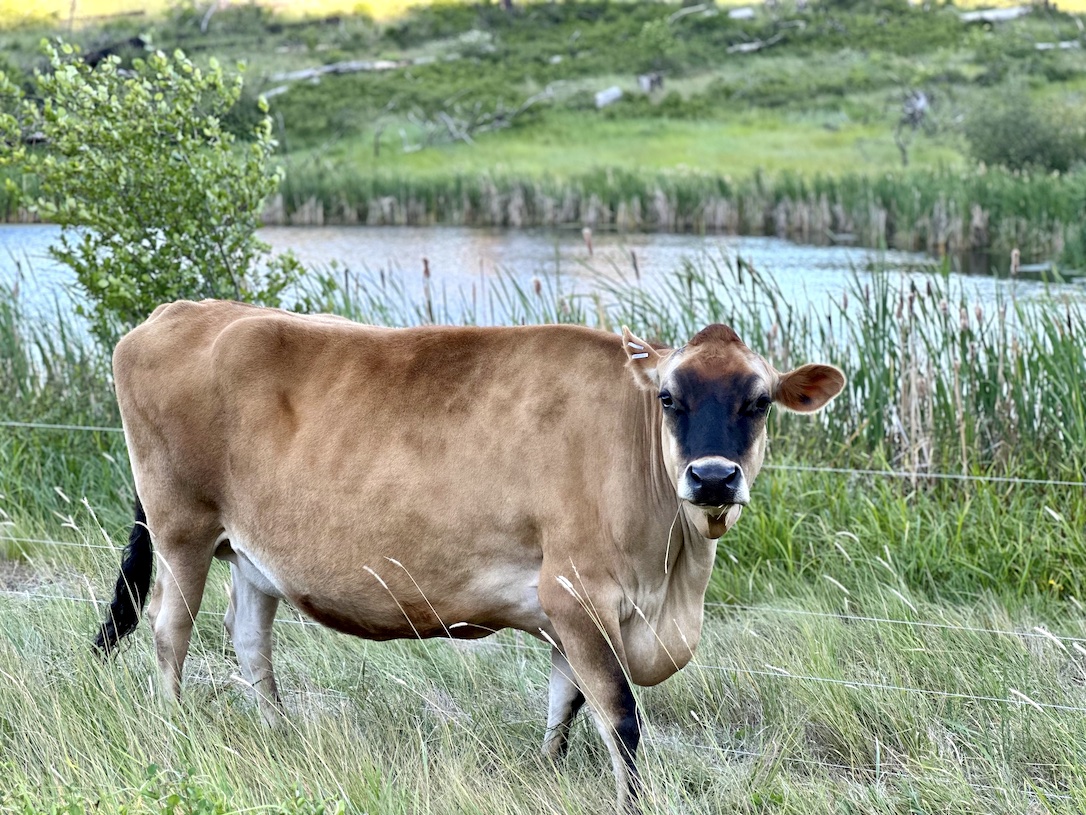
If you climb to the ridge above Young’s Hill, you will find another pasture with a large spring-fed pond. This is where our small cattle herd spends much of their summer, often choosing to sleep under the stars instead of returning to their barn at night. This year I purchased some portable fences, which can be set up on a temporary basis to manage how the cattle graze the pastures. Early one morning I set some up to rotate the cattle through an ungrazed section of this upper pond pasture. It’s always a joy to see the cows run through a new pasture, especially one that still grows some green grass during these dry Central Washington summers.

Betsy:

Meredith:

Filed Under: Cattle, Foxie, Negra, Nesting Tagged With: cattle, chimpanzee, graze, nest, Nesting, northwest, pasture, rescue, Sanctuary

What Makes Us Tick

July 10, 2023 by J.B.

We’ve written a lot about that ways that Positive Reinforcement Training (PRT) can improve the lives of captive animals, including—or should I say especially?— chimpanzees. Chimps are so powerful and so strong-willed that often the only way to get them to reliably engage in certain behaviors, whether it’s allowing the stick of a needle to administer medication or leaving an enclosure so it can be cleaned, is to ensure that it is by their own choice.
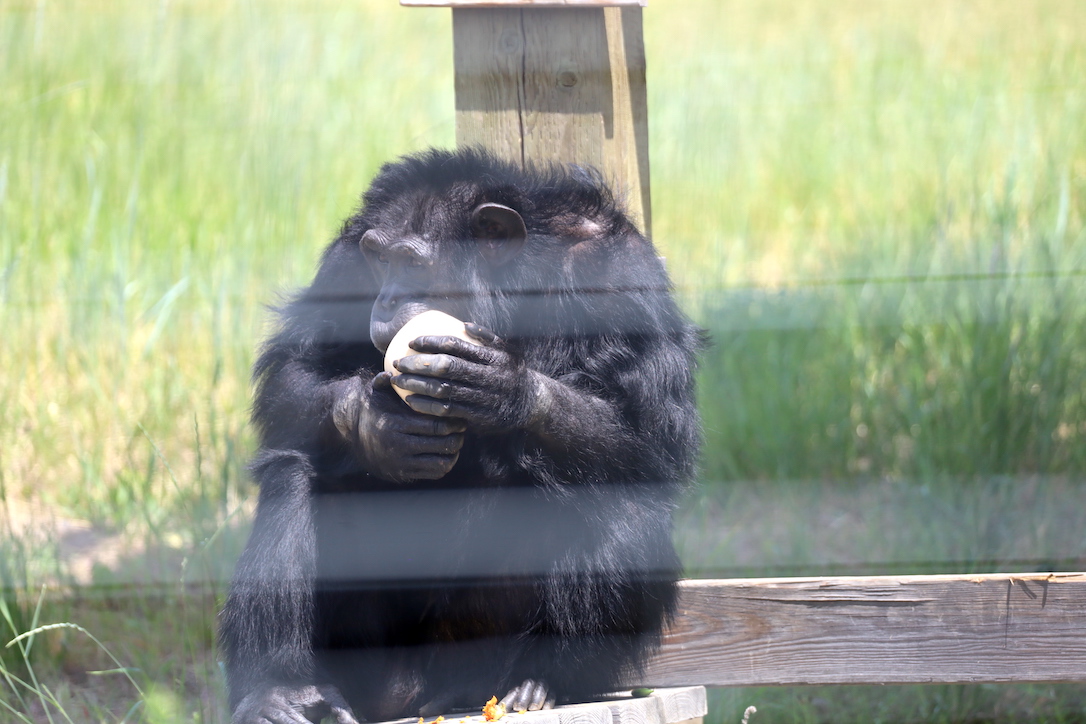
One area where PRT is particularly useful is during meals. Some dominant chimps take a What’s mine is mine and what’s yours is also mine approach to food, leaving other chimps in their group hungry, anxious, or both. A technique known as cooperative feeding can encourage dominant chimps to allow their group mates to eat their meals in peace by rewarding tolerance for others eating nearby. The trick is not to forcefully assert our own sense of fairness but to show certain chimps that it can be worth their while to chill out a bit. Sure, you could steal someone else’s food, but if you allow everyone else to eat you’ll get something even better for a whole lot less effort.

We’ve been using this technique with Jamie lately, as she has been giving both Foxie and Annie a hard time during meals. It’s certainly not unheard of for Jamie to steal food to assert her dominance, but the recent uptick has had her group mates on edge and unwilling to even take certain foods. Why all of a sudden? It’s hard to say for sure, but it’s possible that Jody’s passing left some ambiguity within the hierarchy and Jamie may have been feeling the need to remind everyone that there will be no changes at the top. Subtle, she is not.

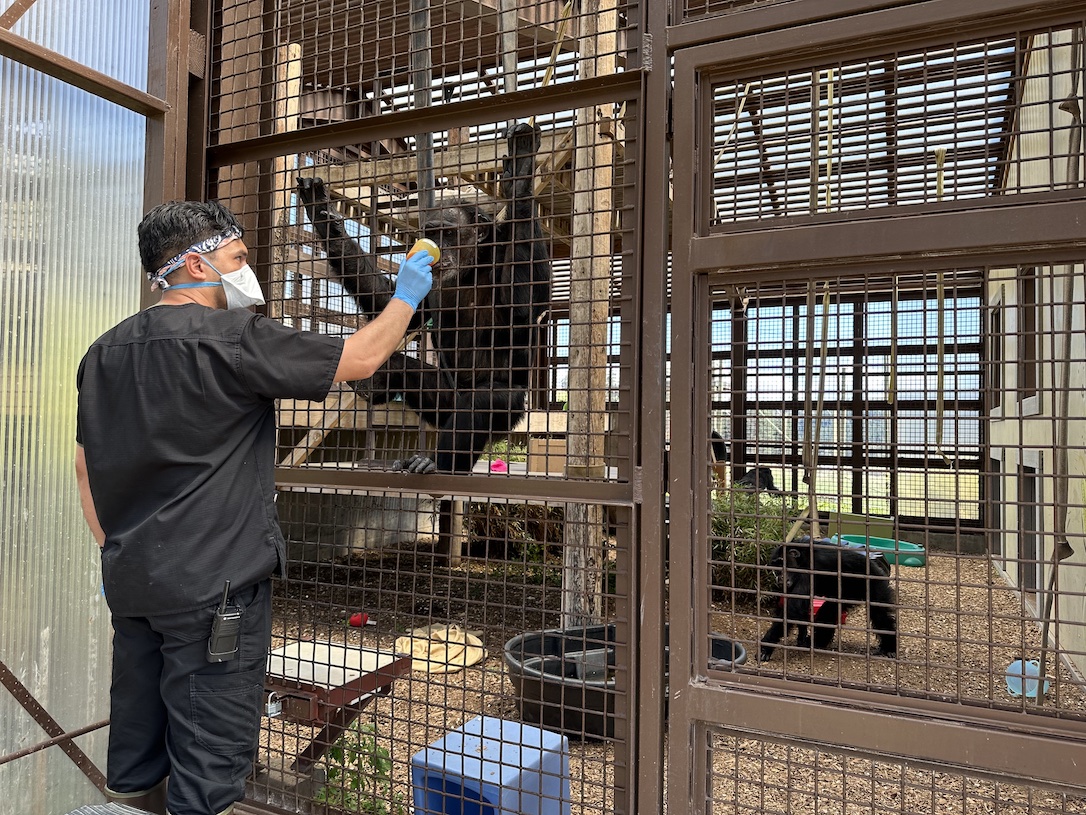
One of the keys to effective training is finding the right unconditioned reinforcer, which is the natural reward that often follows the click or whistle, telling the animal that behavior is worth doing again. In almost all of the training we do—that is, the training the occurs during formal sessions—that reinforcer is food. Sips of juice, pieces of chopped up fruit, and bits of primate chow are all effective, though each individual will be motivated according to their own preferences. For Jamie, that means a click! and a piece of preferred food or drink every time she watches Foxie or Annie receive something she might want to steal. And if she stays at her station throughout the entire meal, she may even get a special treat, such as a whole clementine, at the end.

But food is such an efficient reinforcer that we sometimes forget that it’s not the only one. For Jamie, flattering her ego may be an equal or even greater reward. That’s not to say that Jamie doesn’t appreciate the special treats, but the extra attention from her caregivers and special status at mealtimes may being doing some if not most of the work. Perhaps when you are recognized as the boss by the humans in front of all your group mates, there’s less need to constantly remind everyone.
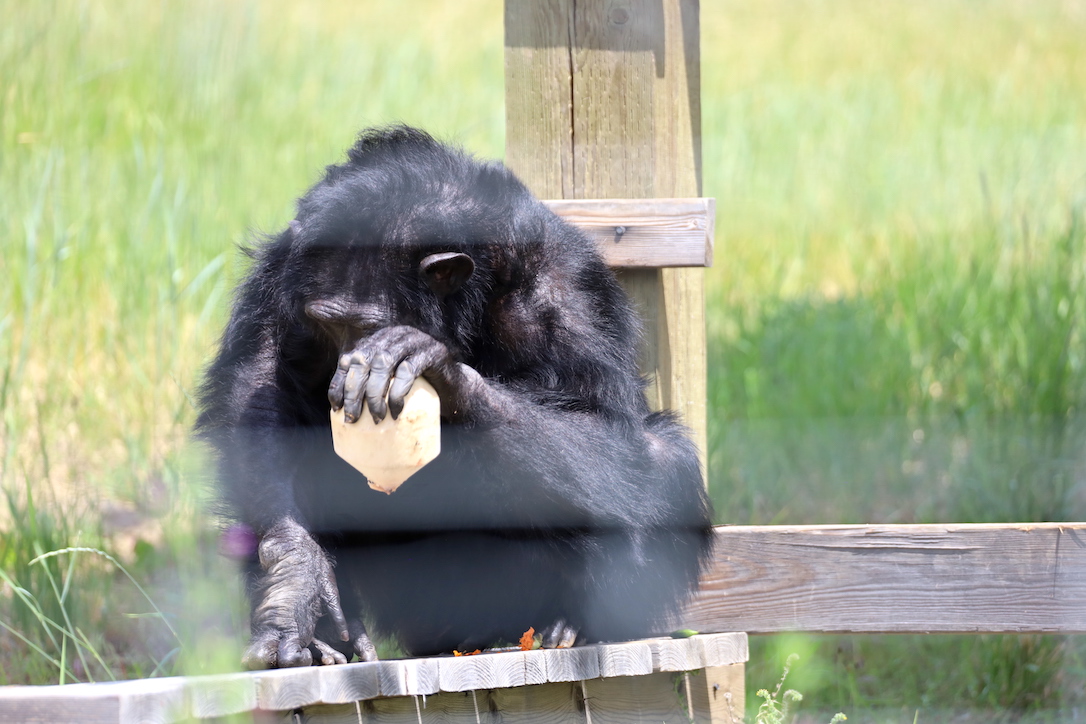
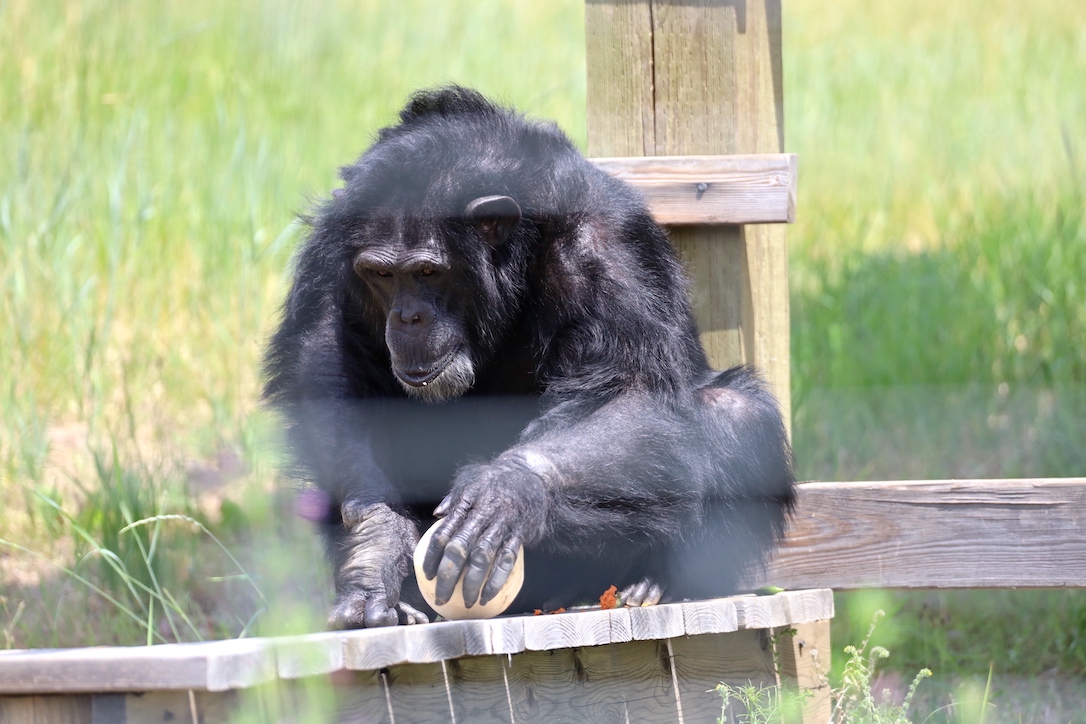
We’re all motivated by a handful of basic desires – to be noticed, to be appreciated, to be respected. Figuring out what makes someone tick can go a long way toward influencing their behavior. Because in the end, Jamie isn’t as complicated as she would appear: all she needs is the unquestioning loyalty, unreserved admiration, and complete and thorough submission of all those around her, human and chimpanzee, at all times. That and a few extra pear slices and she’ll be happy to mind her own business at lunch.

Filed Under: Jamie Tagged With: aggression, chimpanzee, cooperative feeding, Food, Jamie, meals, northwest, prt, rescue, Sanctuary, training

Two Years with the Lucky Six

June 26, 2023 by J.B.

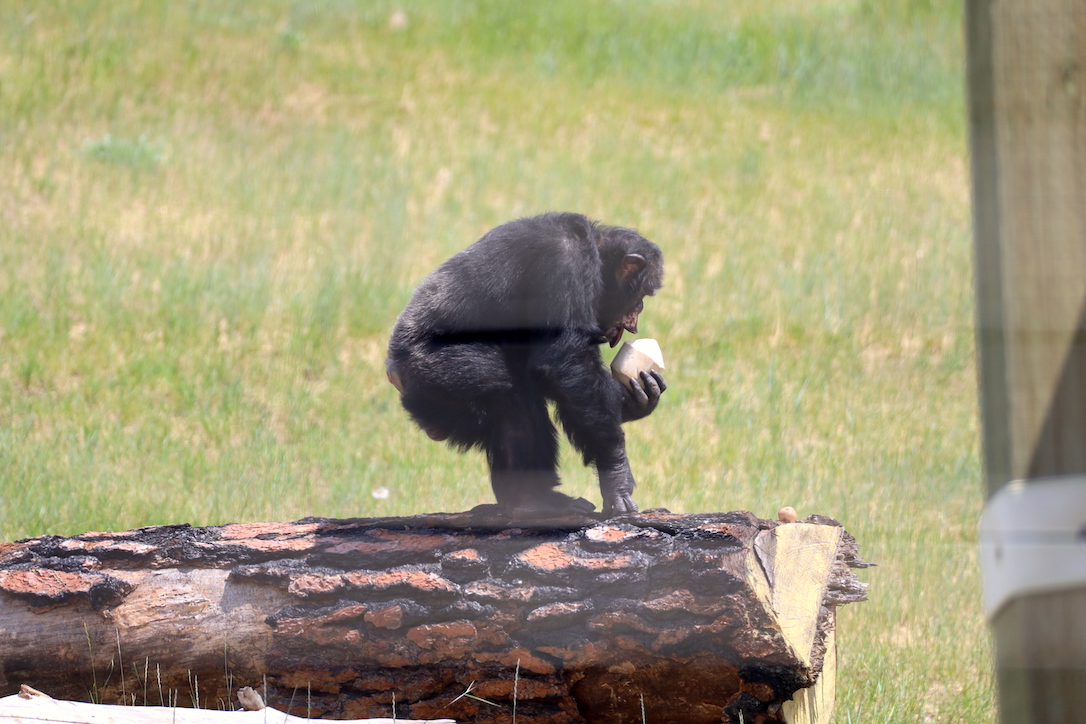
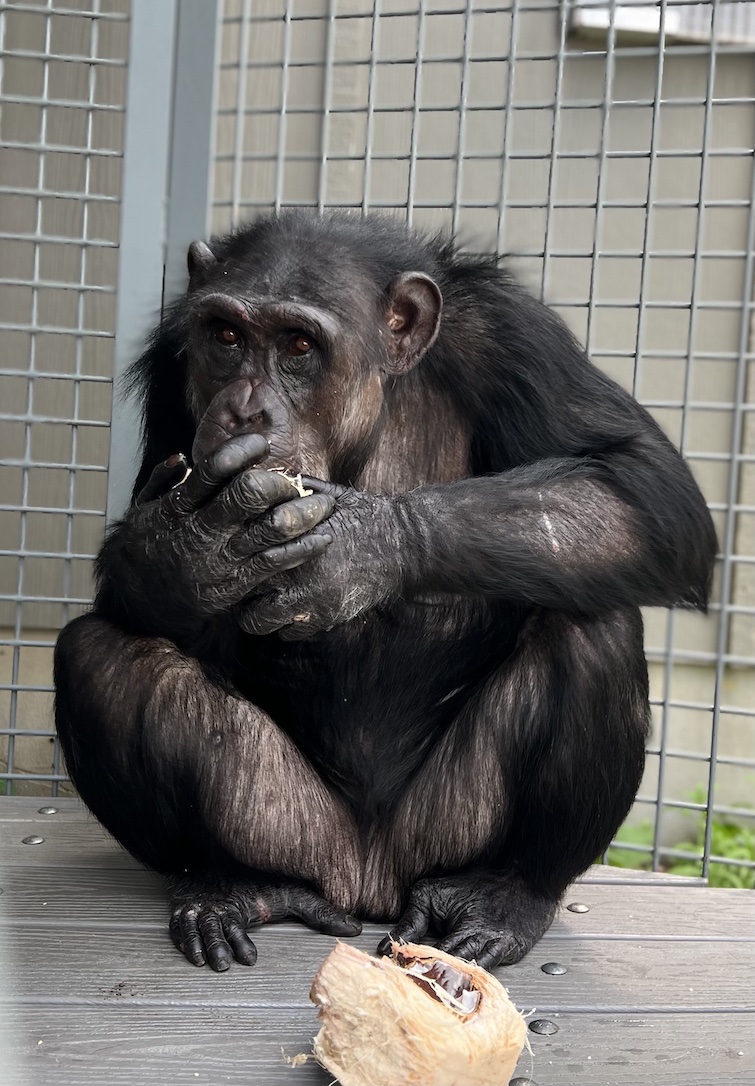
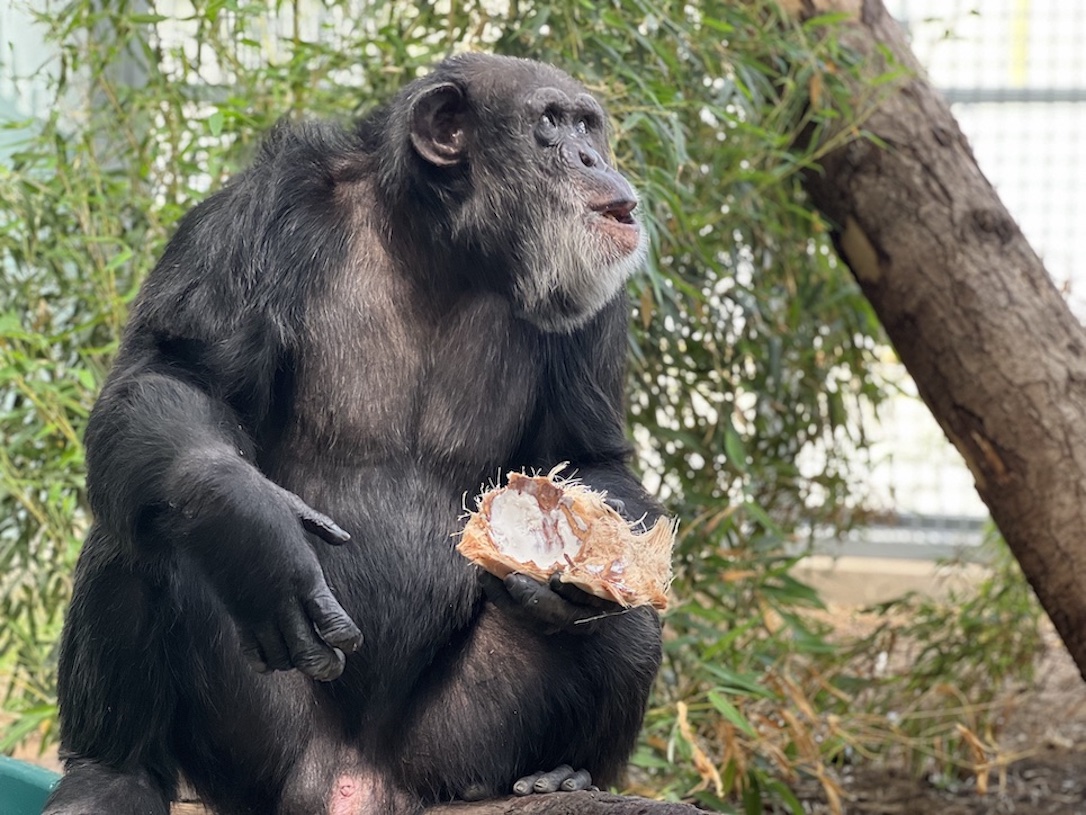
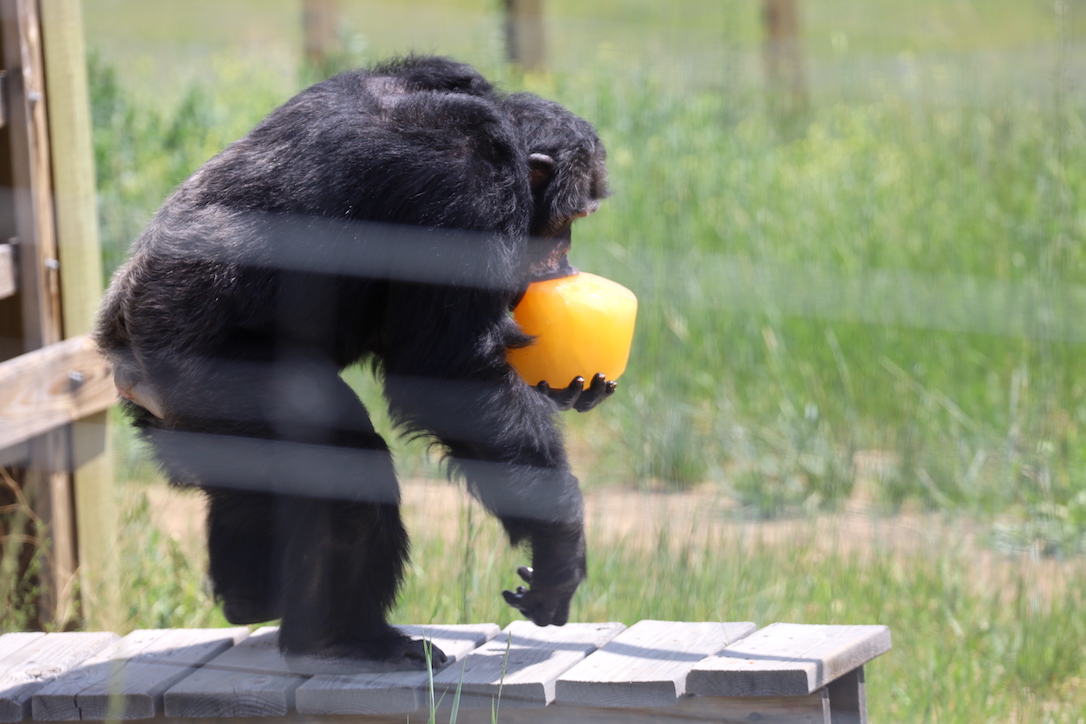
Can you believe it? Today we celebrated the 2nd anniversary of the arrival of the Lucky Six—Cy, Lucky, Terry, Dora, Rayne, and Gordo—from the Wildlife Waystation. As you probably know, the Lucky Six are now part of a group of nine, along with Willy B, Honey B, and Mave, and together they enjoyed a party complete with young coconuts and Gatorade ice blocks.

The day was also sponsored by Rose Mankowski in memory of her mother:

My Mom, Irene Mayes, would’ve turned 96 today – June 26, 2023 – but she died in August 5th, 2022. Irene loved primates, especially chimpanzees, since she was a little girl. Happy Heavenly Birthday, Mom.

Thank you, Rose, for honoring your mom in this way.

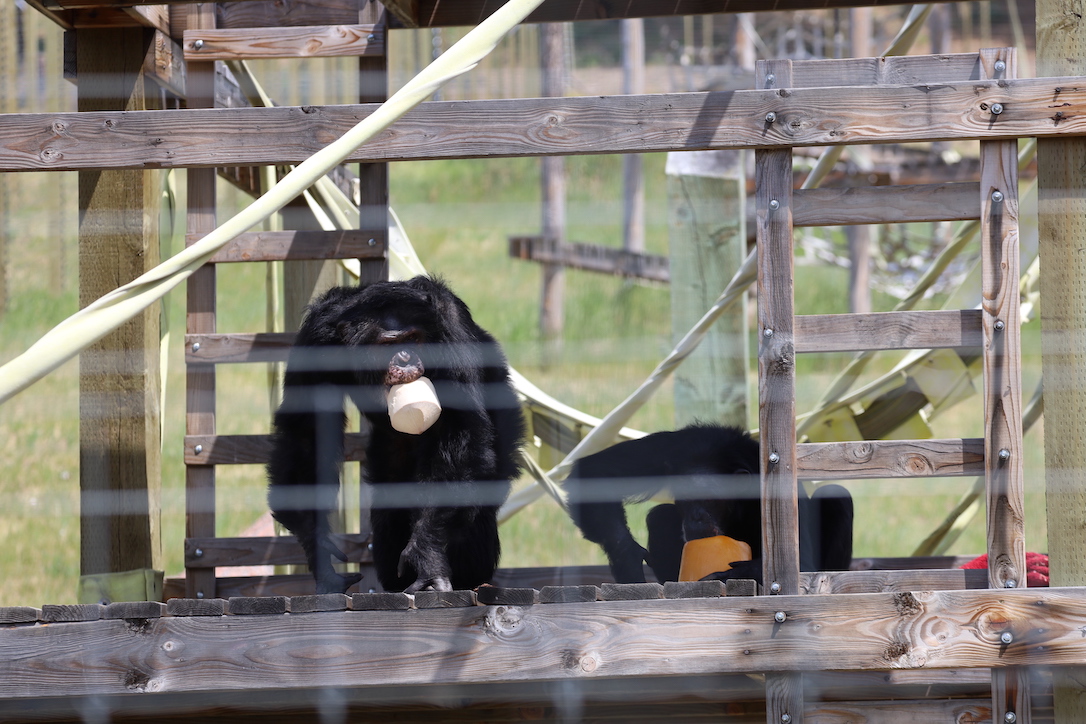
Today’s festivities took place in the playroom, greenhouse, and on the Bray. The chimps screamed in excitement as they watched us put out the forage and treats. As the party began, both Rayne and Terry grabbed what they could on their way out the door and made a beeline straight for the Bray, where a giant Gatorade ice block awaited them.

Within minutes they were joined by Gordo, Lucky, and Cy, who also brought their treats outside.

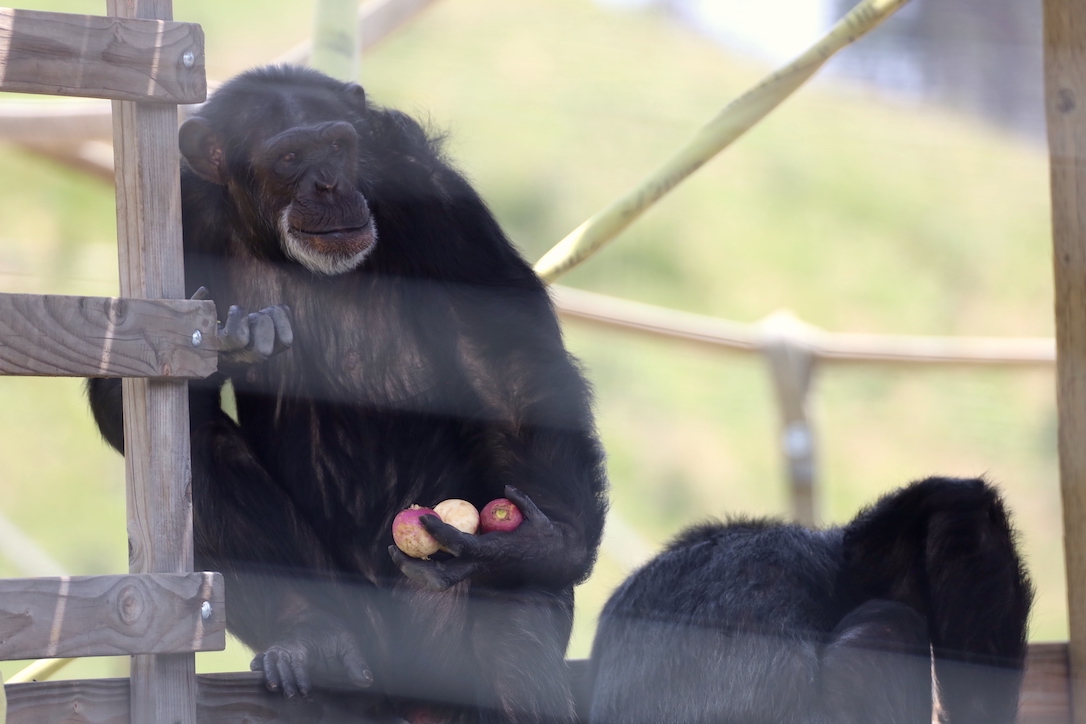
While Lucky did get to enjoy the ice block, she actually seemed to delight in the turnips as well. For a chimp, there’s nothing better than liking food that the others aren’t as interested in.

Ever the explorer, Rayne set out for the other climbing structures on the Bray and ate her way across the habitat.

Terry also went for a walk through the habitat and was rewarded for his efforts with a second coconut.

While the others were outside, Honey B, Mave, and Dora cleaned up the forage inside and in the chute.

Willy B was very happy to have gotten a coconut for himself. There was just one problem…how the heck do you open these things?

Do you bite them?

Smash them?

Not long after the party began, a thunderstorm rolled in, with one particularly loud clap of thunder catching Gordo by surprise.

The rest of the gang took their loot back inside and we closed off the habitat for their safety.

Earlier in the day, the chimps on Jamie’s side had their own party to celebrate their neighbor’s arrival. While they don’t live with the Lucky Six, the presence of another group next door amounts to an ever-evolving soap opera to which they are all glued—and that’s worth celebrating, too.

Negra:

Burrito:

Jamie:

Foxie:

Missy:

Annie:

Filed Under: Party, The Bray Tagged With: anniversary, chimpanzee, lucky six, northwest, Party, rescue, Sanctuary

  • « Go to Previous Page
  • Page 1
  • Interim pages omitted …
  • Page 17
  • Page 18
  • Page 19
  • Page 20
  • Page 21
  • Interim pages omitted …
  • Page 200
  • Go to Next Page »

Primary Sidebar

Subscribe To the Blog and Get Notified of New Posts First!

Archives

Calendar of Blog Posts

June 2026
S M T W T F S
 123456
78910111213
14151617181920
21222324252627
282930  
« May    

Categories

SUBSCRIBE TO OUR NEWSLETTER

Footer

PO Box 952
Cle Elum, WA 98922
[email protected]
509-699-0728
501c3 registered charity
EIN: 68-0552915

Official DDAF Grantee

Menu

  • The Chimpanzees
  • Blog
  • About Us
  • You can help
  • Resources
  • Contact
  • Donate

Proud Member of

Connect With Us

Search

Copyright © 2026 Chimpanzee Sanctuary Northwest. All Rights Reserved. Site by Vegan Web Design