• Skip to main content
  • Skip to primary sidebar
  • Skip to footer

Chimpanzee Sanctuary Northwest

Hope. Love. Home. Sanctuary

  • Our Family
    • The Chimpanzees
    • The Cattle
  • Blog
  • About Us
    • Visiting the Sanctuary
    • Philosophy
      • FAQs
      • Mission, Vision & Goals
      • Privacy Policy
    • The Humans
      • Staff
      • Board of Directors
      • Founder
    • Annual Reports
    • The Future of CSNW
    • CSNW In The News
  • You can help
    • Donate
      • Become a Chimpanzee Pal
      • Sponsor A Day
      • Transfer Stock
      • Be A Produce Patron
      • Be a Bovine Buddy
      • Give from your IRA
      • Personalized Stones
      • Bring Them Home Campaign
    • Leave A Legacy
    • Employment Opportunities
    • Volunteer
    • See Our Wish List
    • Events
  • Resources
    • About Chimpanzees
    • Enrichment Database
    • Advocacy
      • Advocacy Action Center
      • Apes in Entertainment
        • Trainers
        • Role of the AHA
        • Greeting Cards
      • Chimpanzees as Pets
      • Roadside Zoos
      • Chimpanzees in Biomedical Research
      • Conservation
        • African Apes
        • Orangutans
  • Shop
    • Merchandise Store
  • Contact
  • DONATE NOW

veterinary

What Lies Beneath (A Visit From the Dentist)

April 7, 2026 by J.B.

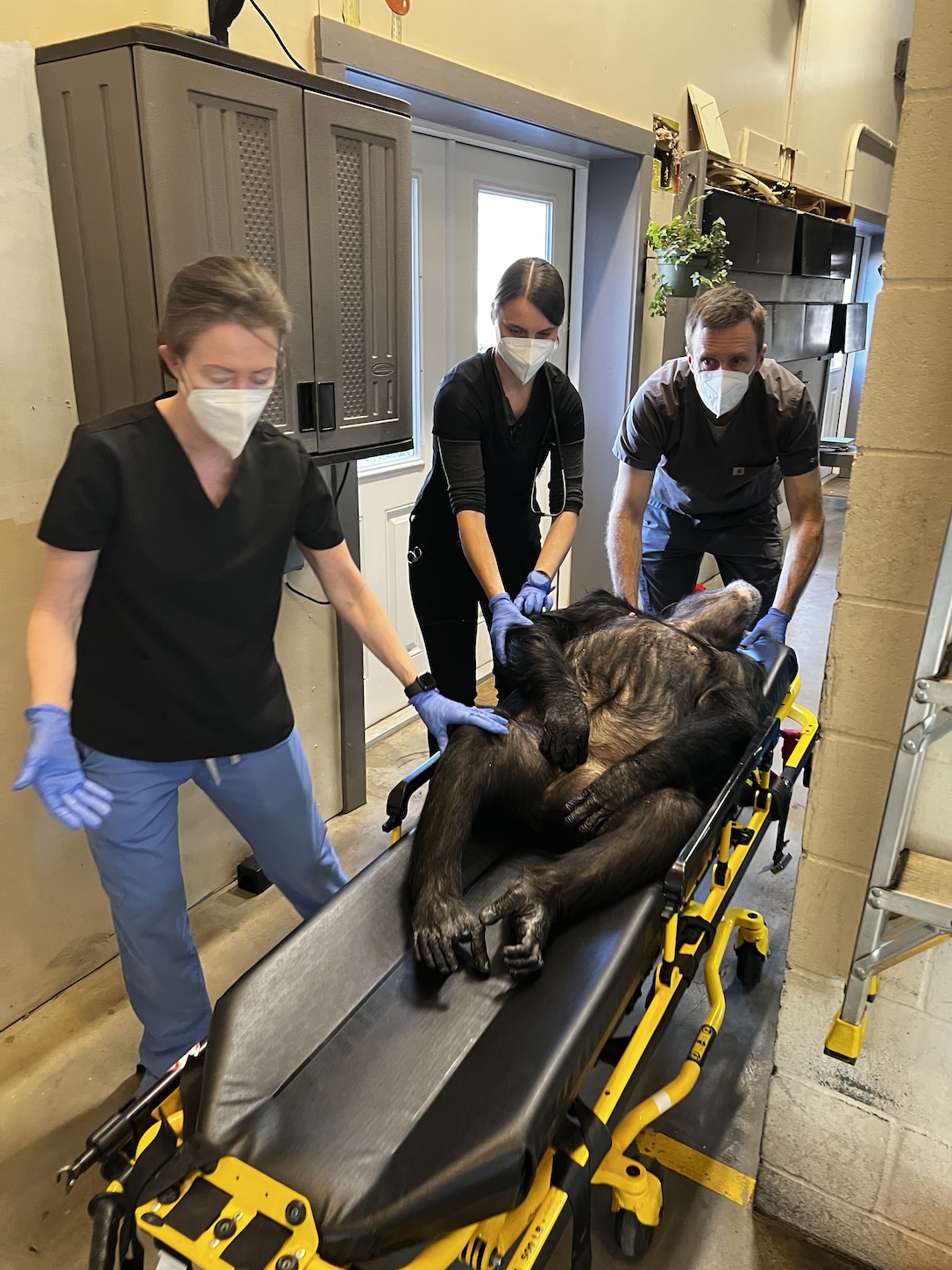
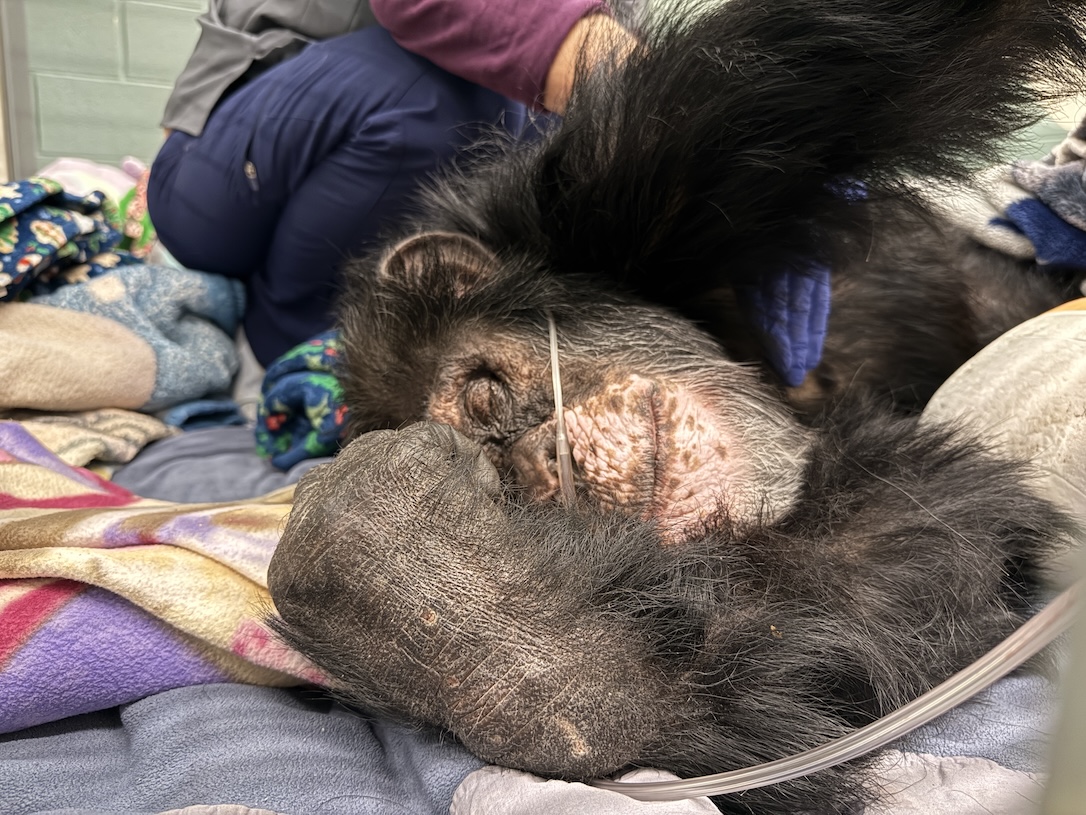
On Sunday morning, Terry was anesthetized and brought into our veterinary clinic for a planned dental check-up and physical exam. Here’s more from Dr. Erin:

Terry managed to sustain injuries to not just one but both of his lower canine teeth in the last three years. The right one was attended to immediately and a follow up exam showed healing and no infection. The missing left lower canine was observed some months later. While things can look okay from the surface and even on follow up x-rays after a tooth is injured, months later, problems can develop. Terry has been on the docket for an exam but knowing that extraction of one or both of the teeth on follow up was a possibility, we jumped at the chance to have a visit from the Dental Coalition for Conservation so Terry could get the expert treatment he deserves. The x-rays did indeed show that it was in Terry’s best interest to have both of these canine teeth extracted. 

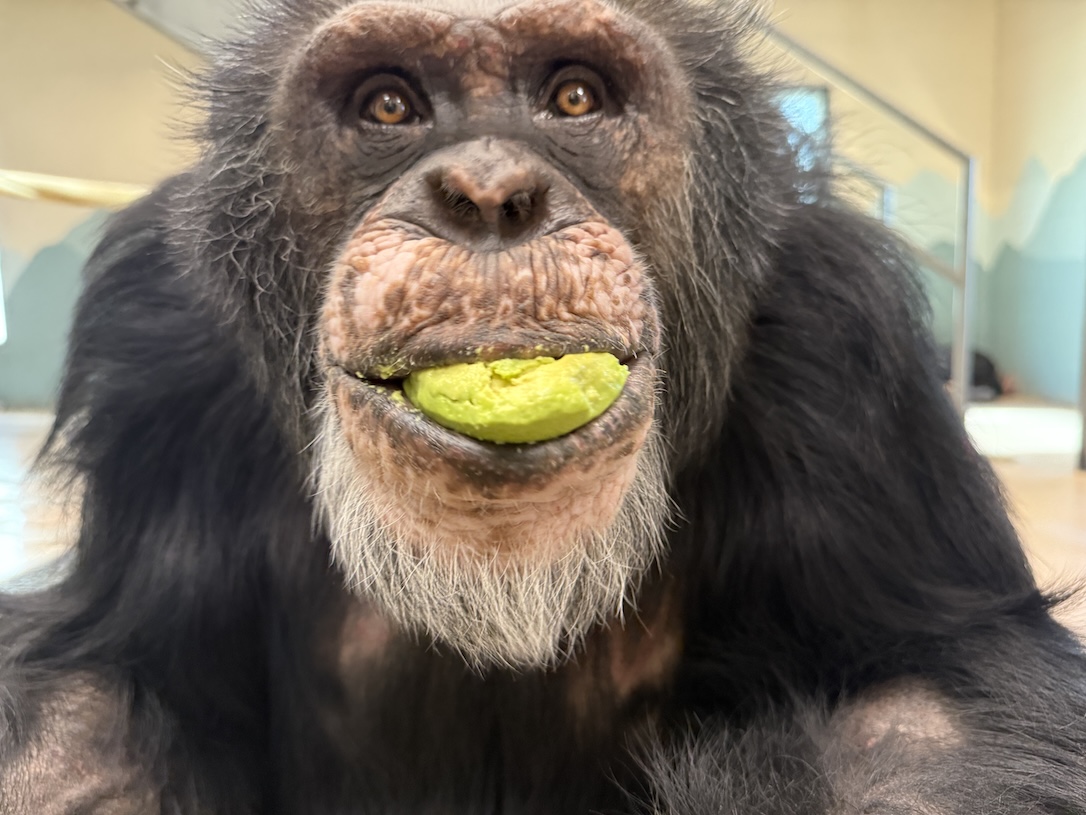
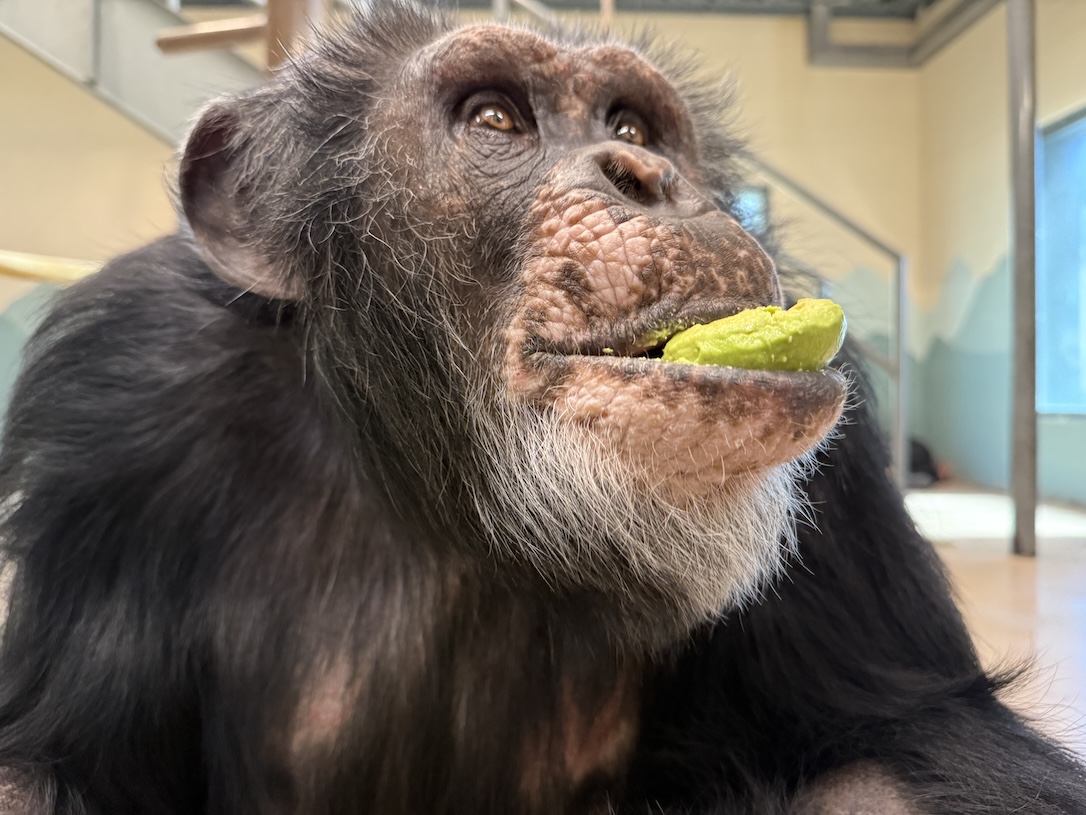
Terry did well throughout the procedure and was back in recovery later that morning. The effects of the anesthesia and pain meds kept him lying low for the remainder of the day but by the following morning he was eating and blowing his iconic raspberries again. Yesterday afternoon, he felt good enough to rejoin his group.

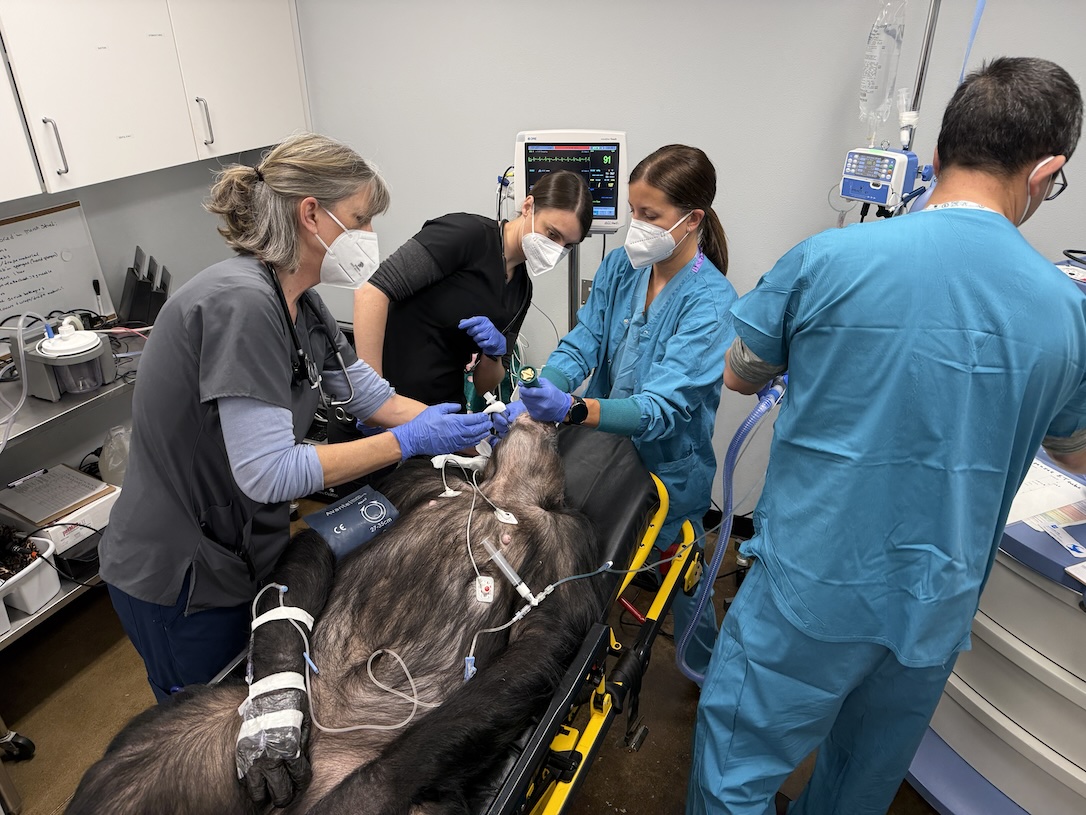
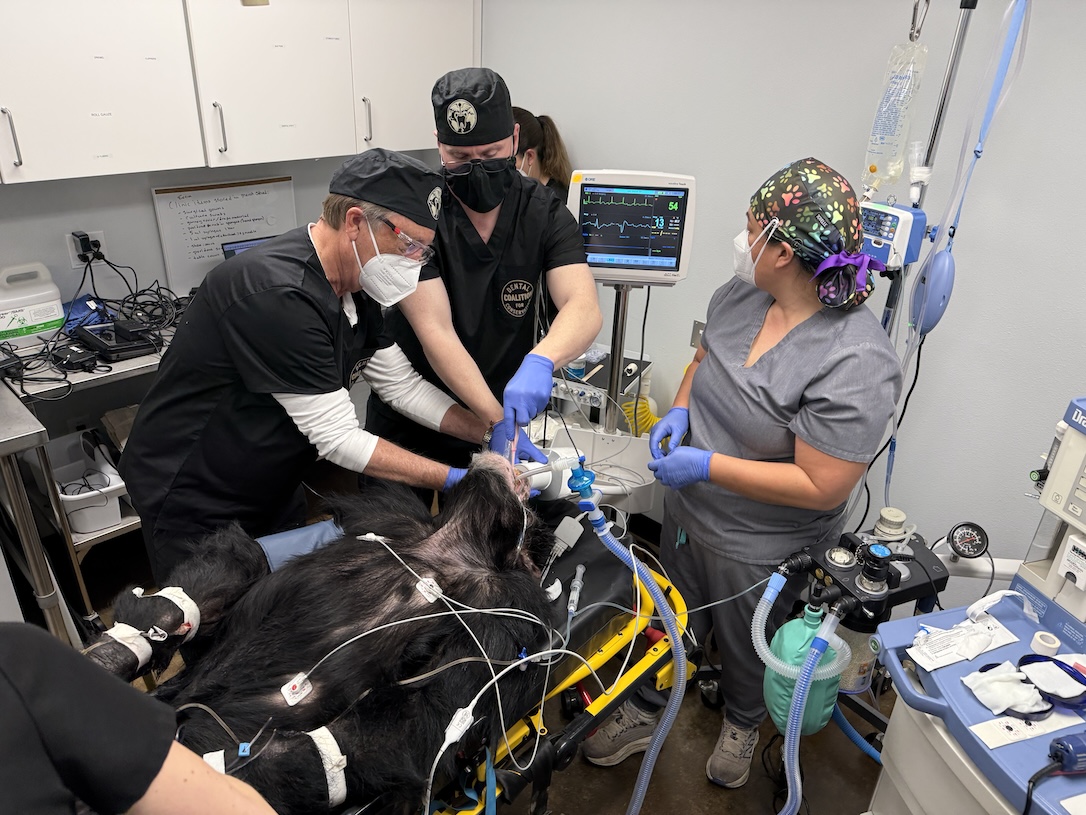
The team prepares Terry for intubation and IV catheters:
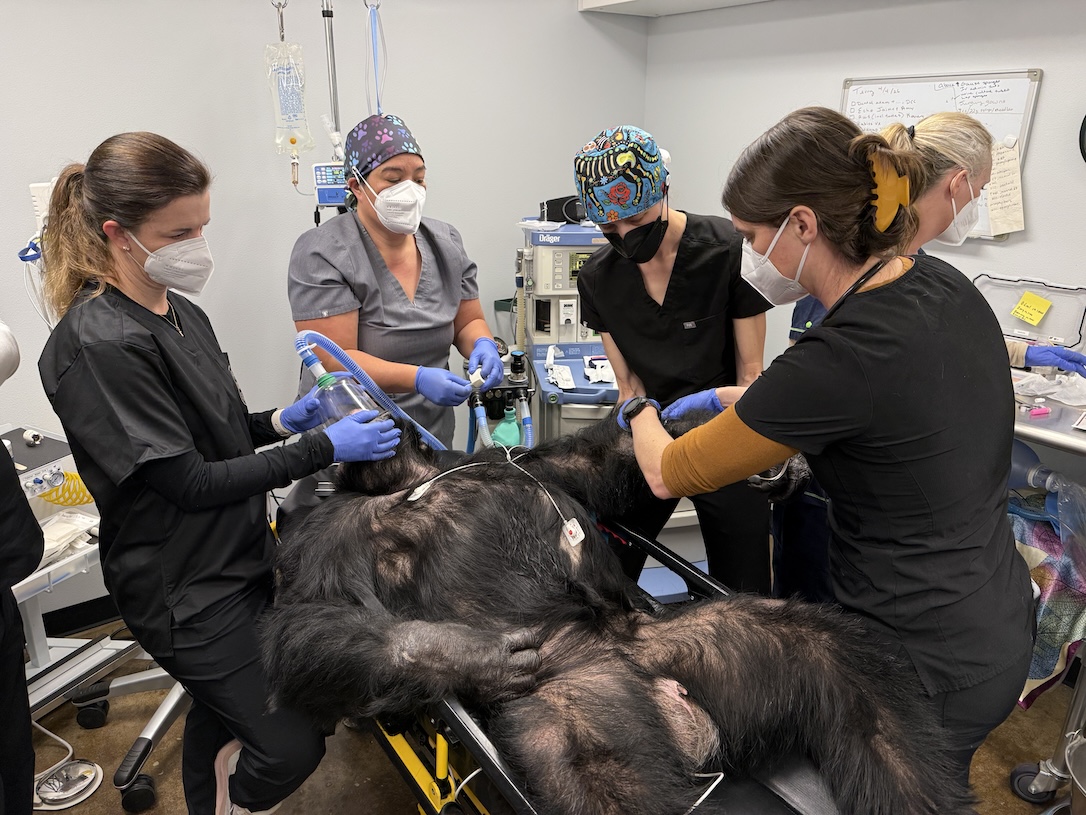
Dentists from the Dental Coalition for Conservation take x-rays:
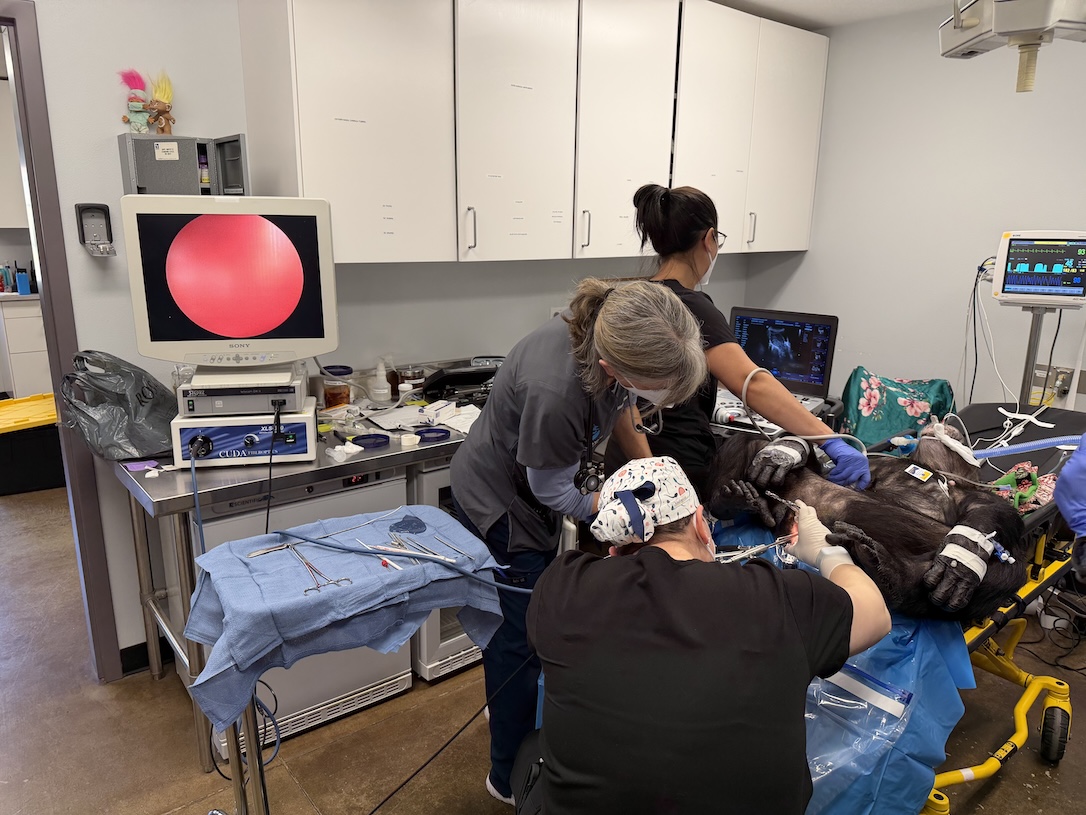
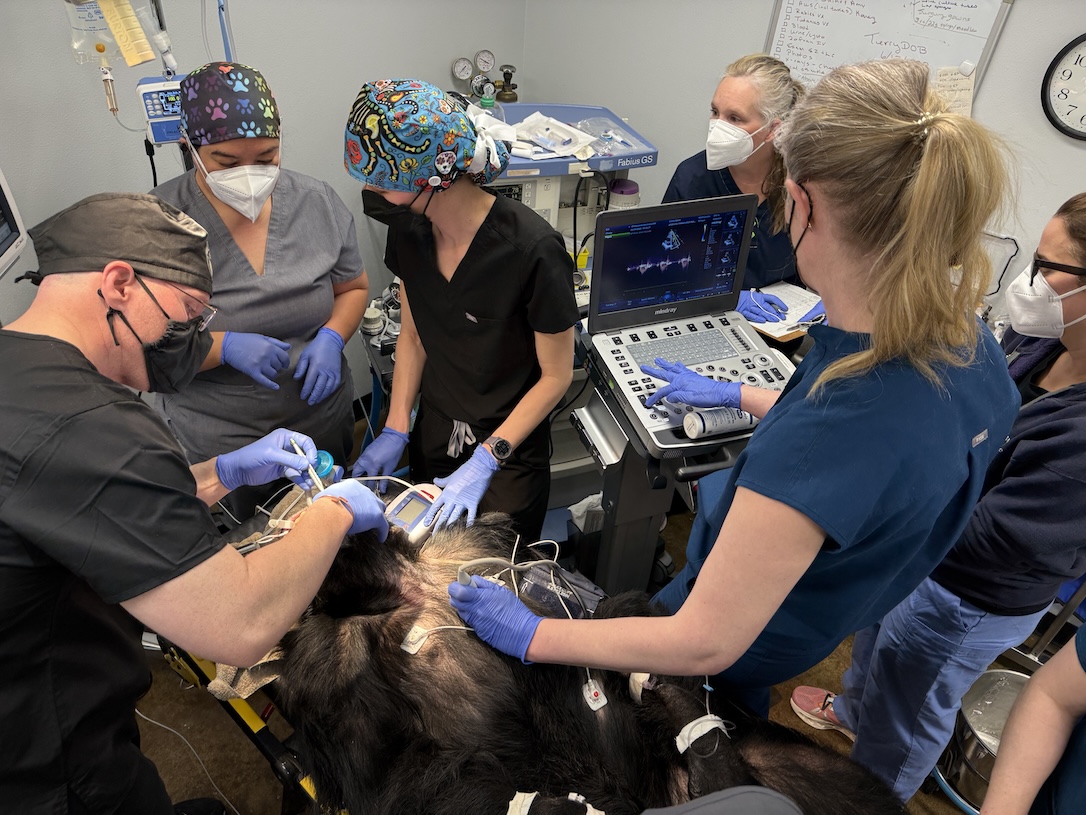
Terry receives an updated echocardiogram while the dental work is being performed:
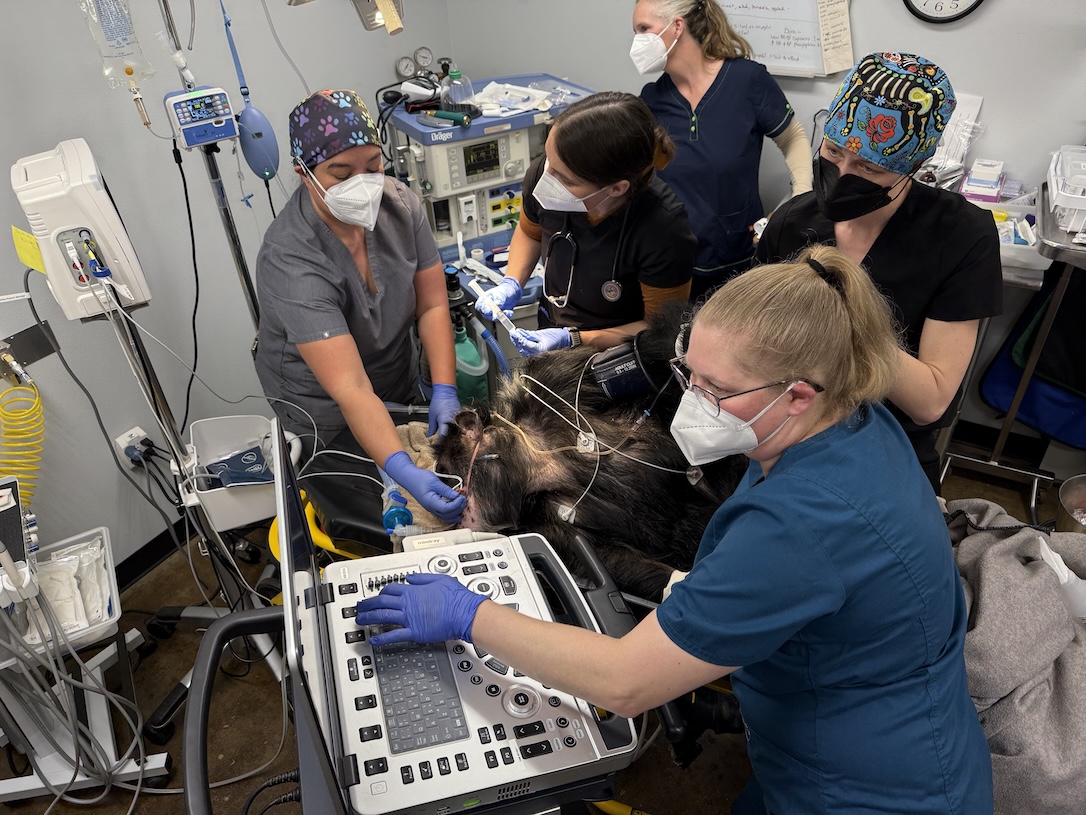
With the dental work complete, he receives an abdominal ultrasound:
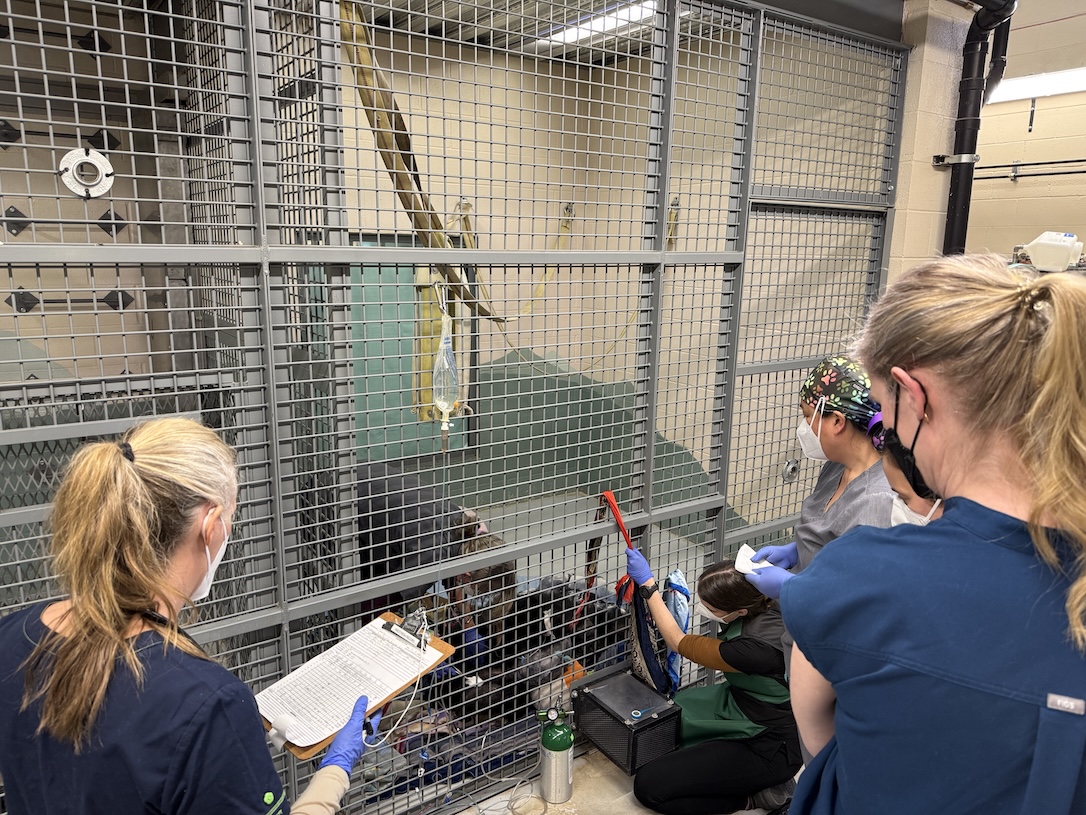
Back in recovery, the team monitors Terry until he begins to emerge safely from his anesthesia:
The chimps are fortunate to have such skilled and caring professionals volunteering to care for them. We are grateful to the Dental Coalition for Conservation, including Charles Dyer, DDS, MS, Lacy Dyer, Founder and Managing Director, and Kerry Robson, DDS; the vet tech team, including Jen Garcia, Jamie Kenfield, and MacKenzie Kantwill; soon-to-be-graduating WSU veterinary student Larrea Cottingham; echocardiogram technicians Jamie Sheehan and Amy Owens; and sonographer Korie Krause.

This afternoon, Terry had lunch with his family, who get to join him in his soft food diet for the next several days:

Filed Under: Sanctuary, Terry, Veterinary Care Tagged With: chimpanzee, dental coalition for conservation, northwest, rescue, Sanctuary, teeth, veterinary

Jamie’s Morning in the Clinic

March 9, 2026 by J.B.

Last fall, Jamie underwent an exam to follow up on concerns about her reduced activity levels and her growing belly. Both are more common with age, but we thought an exam was warranted to rule out other causes. And indeed, ultrasound examination did reveal a possible cause: the presence of uterine fibroids, which have the potential to cause significant pain and discomfort. After much research and consultation, Dr. Erin decided to take a twofold approach to managing Jamie’s condition: First, Jamie would receive a subcutaneous hormonal implant that would help shrink the fibroids. And second, those fibroids that could be removed would be extracted using a procedure (and specialized piece of equipment) known as MyoSure.

After receiving an anesthetic injection, Jamie is wheeled to the clinic.

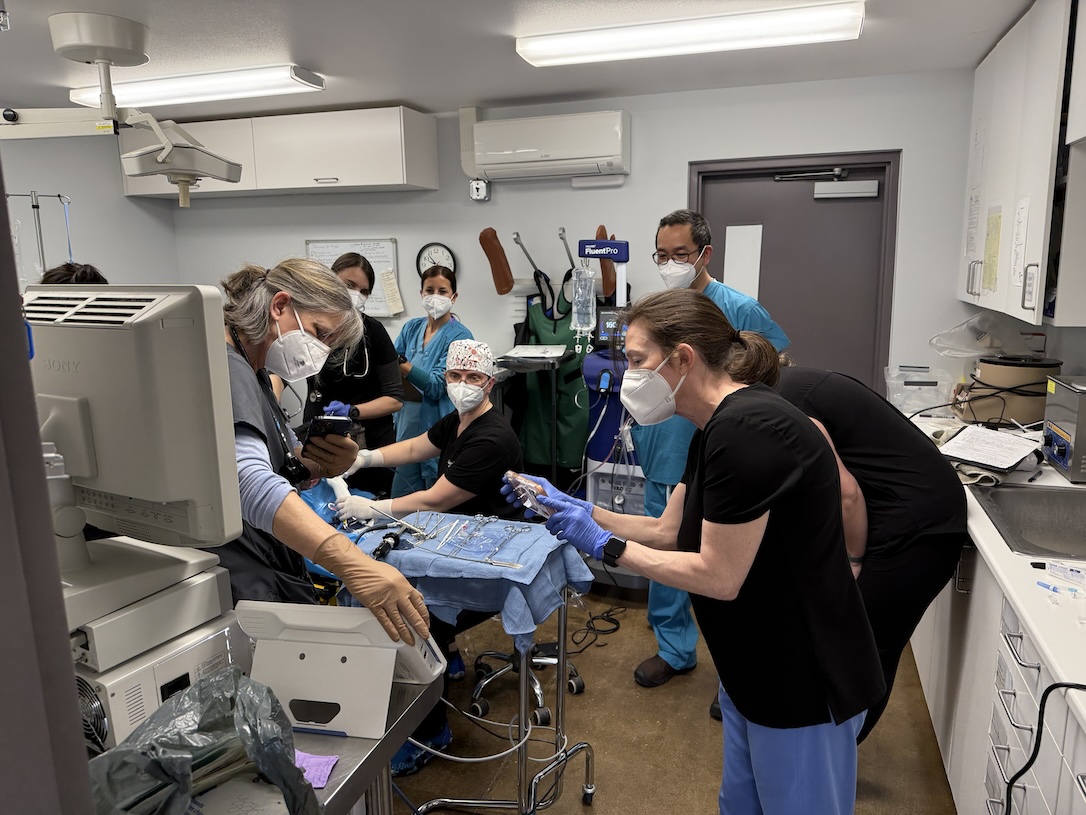
Kate Uselman, CRNA, places an endotracheal tube while 4th-year vet student, Larrea Cottingham, observes—Dr. Erin is always happy to help train vet students who are interested in careers in sanctuary medicine! Dr. Dan prepares Jamie for gas anesthesia.

Dr. Chavez performs the MyoSure procedure while Huong Johnson assists with ultrasonography.

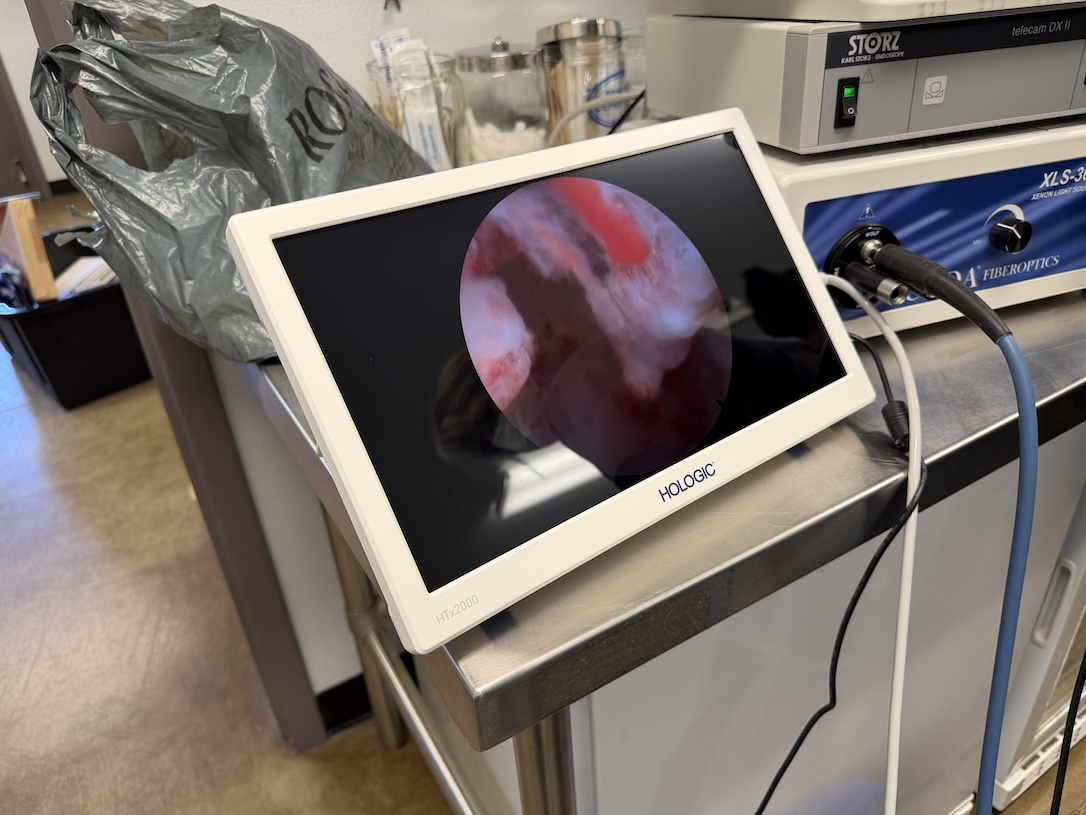
The MyoSure procedure utilizes a hysteroscope and a special cutting and extracting wand to visualize and remove the fibroids. The team watches the procedure on the monitor.

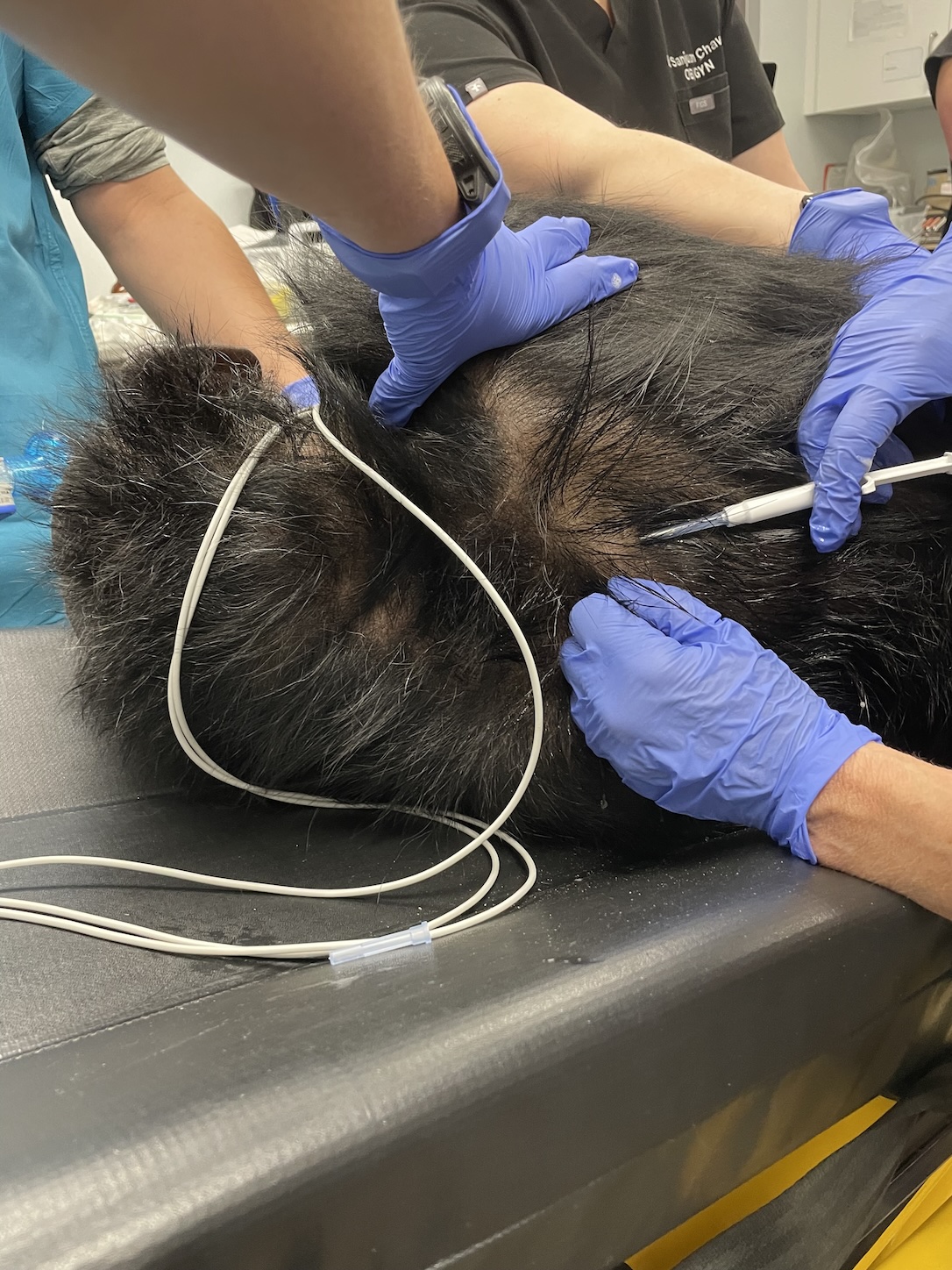
Jamie receives the hormonal implant. With chimps, implants are often placed between the shoulder blades so that they don’t try to remove them.

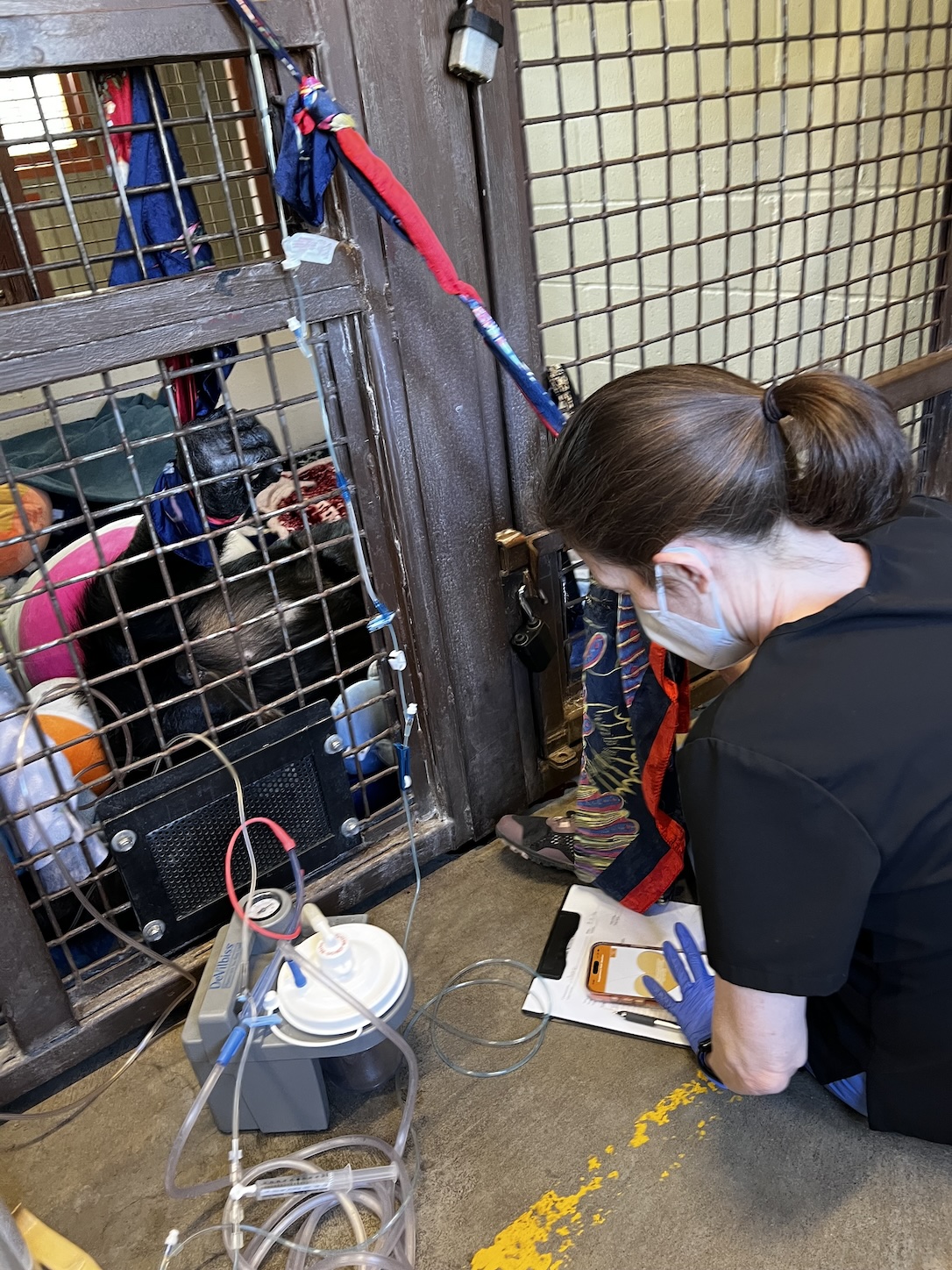
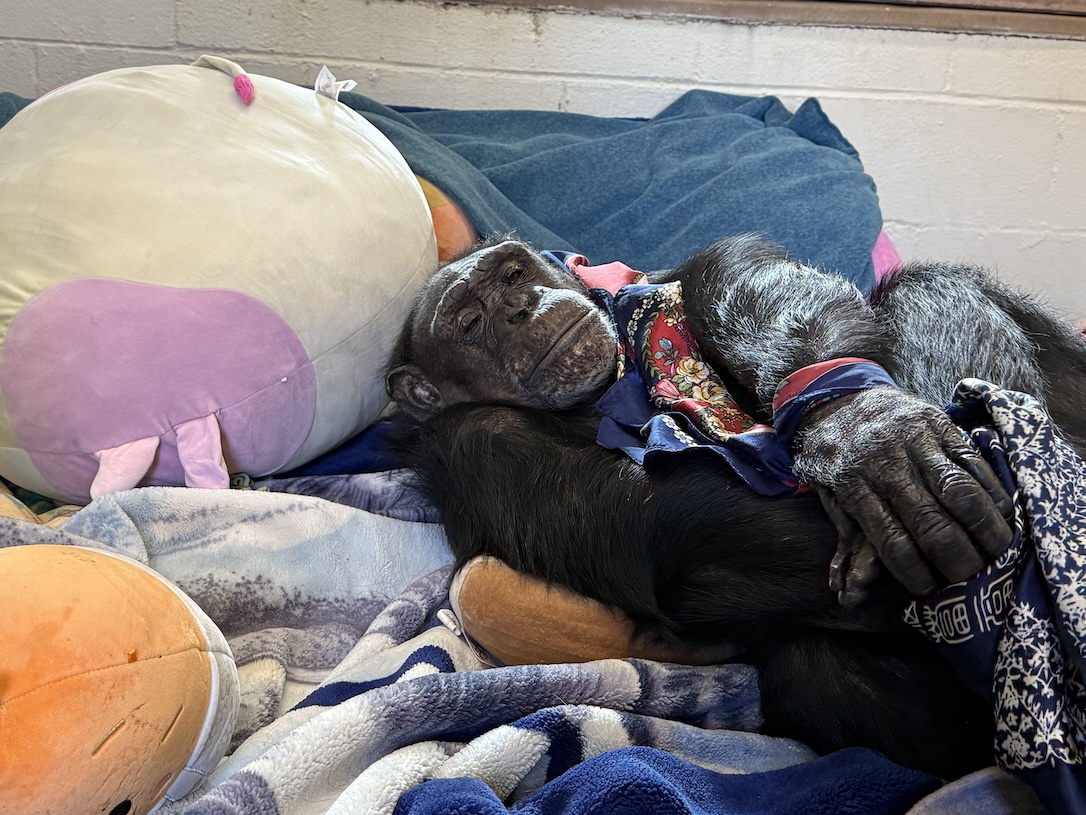
CSNW Vet Assistant, Krissy, monitors Jamie’s vitals as she recovers back in Front Room 1. We loosely ties scarves to the chimps’ wrists and ankles so that they can’t try to climb or walk away before they are coordinated enough to avoid injury. The scarves also help us safely manipulate their body positioning to maintain an open airway. Providing veterinary care to potentially dangerous animals requires creativity!

We’re so grateful to Dr. Dan Low, Kate Uselman, Dr. Chavez, Huong Johnston, Ashley Mellotte, and Larrea Cottingham for volunteering their time and services to help Jamie (and Dan and Kate for also braving a monster snow storm on the pass!). Thanks, as well, to the folks at Hologic for supplying some of the MyoSure equipment. And thanks—as always!—to our own Dr. Erin for all her research, networking, recruiting, and leadership.

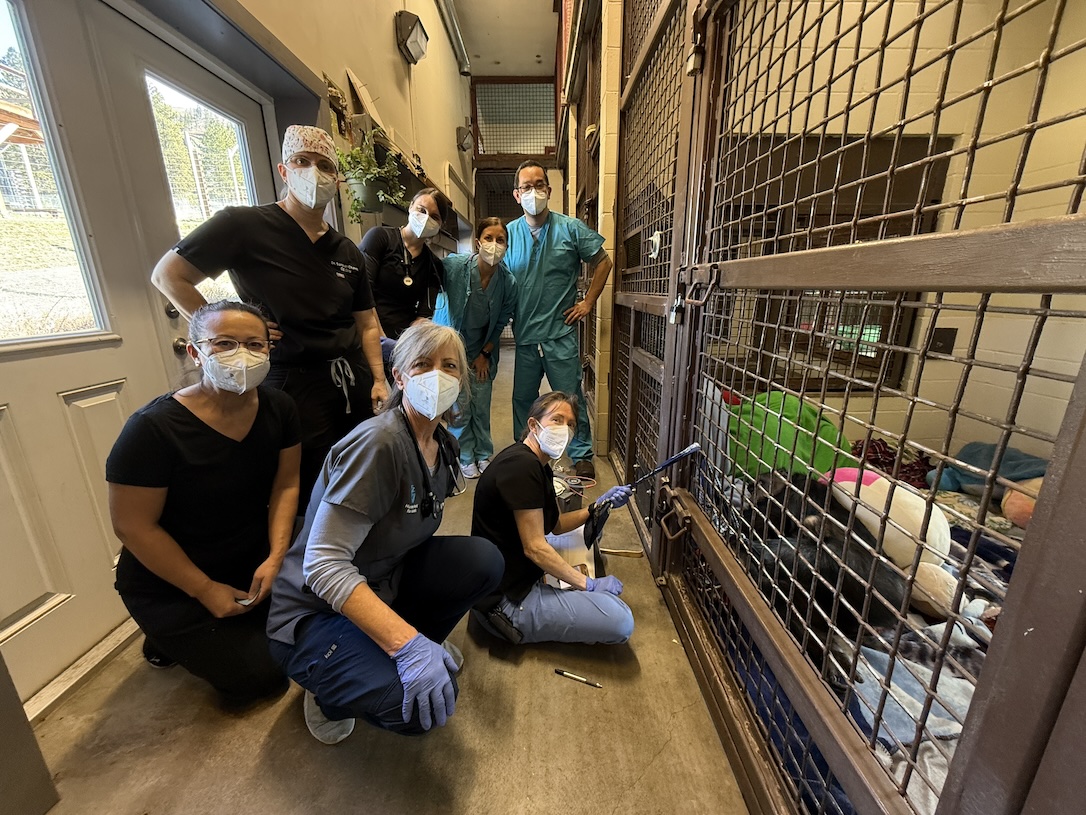
Jamie’s care team (Ashley not pictured) poses for a photo while monitoring Jamie’s recovery.

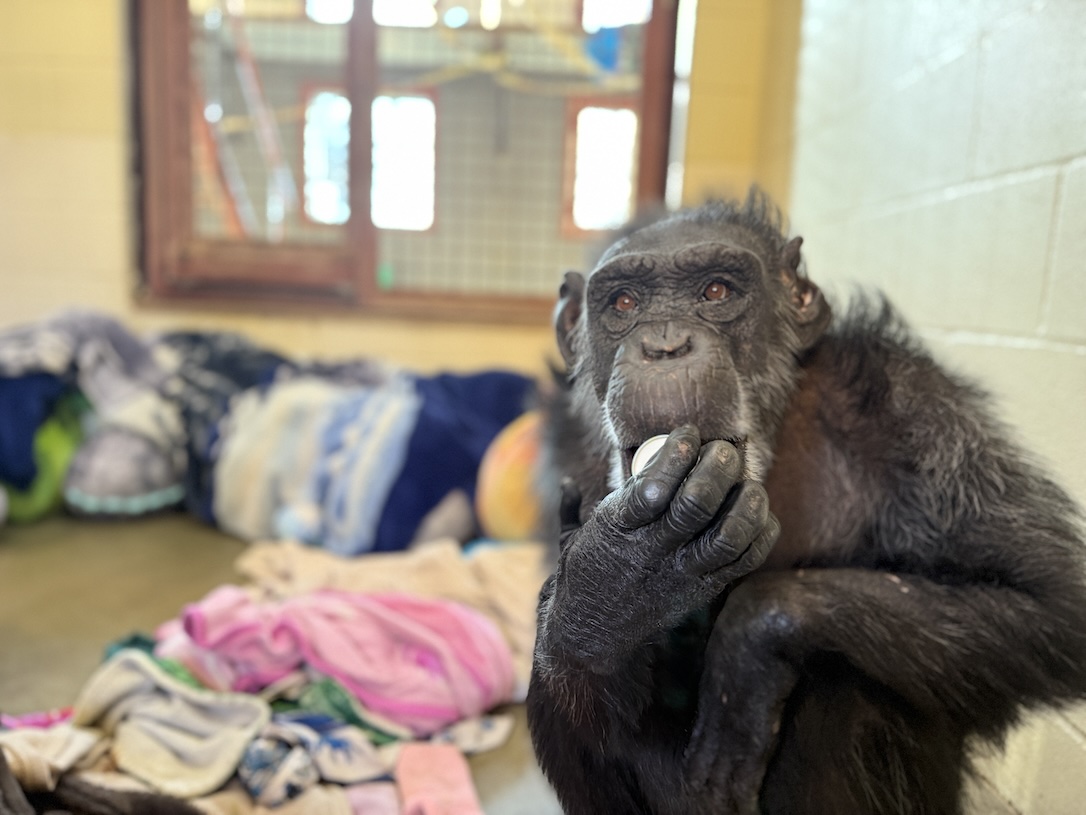
Jamie takes advantage of a Squishmallow-filled nest while recovering—her scarves still tied to her wrists and ankles.

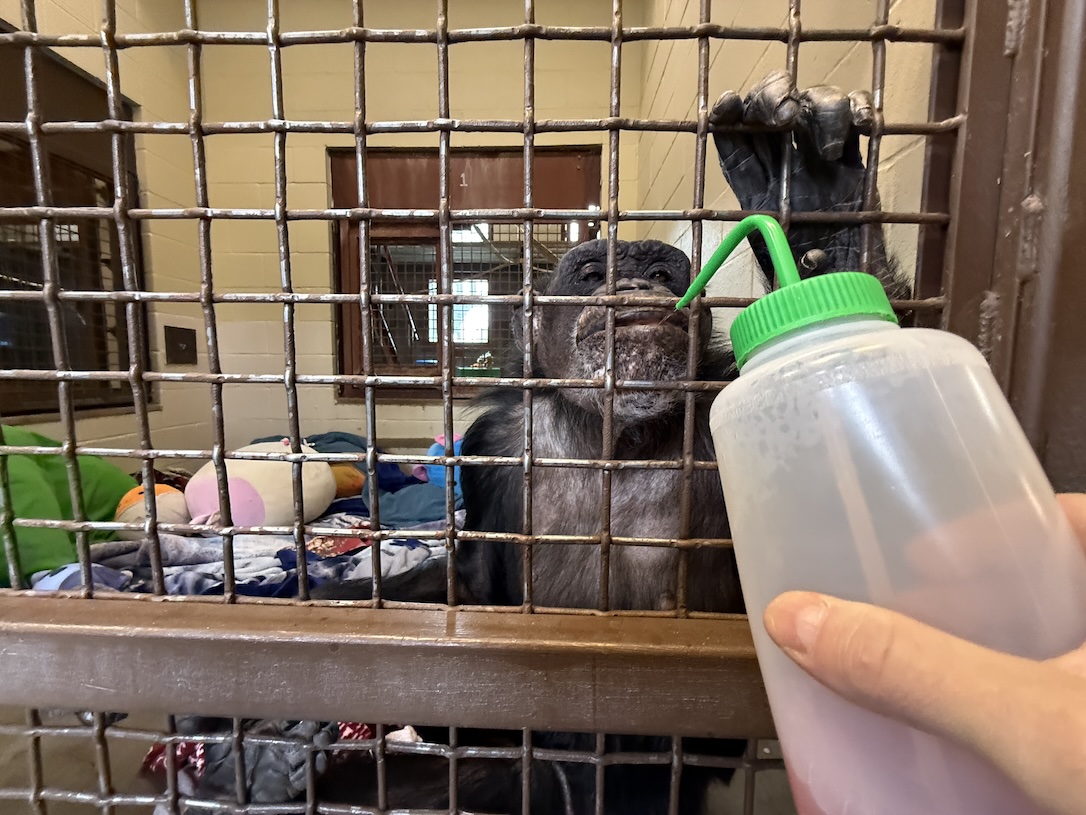
With those pesky scarves untied, it’s time for a drink.

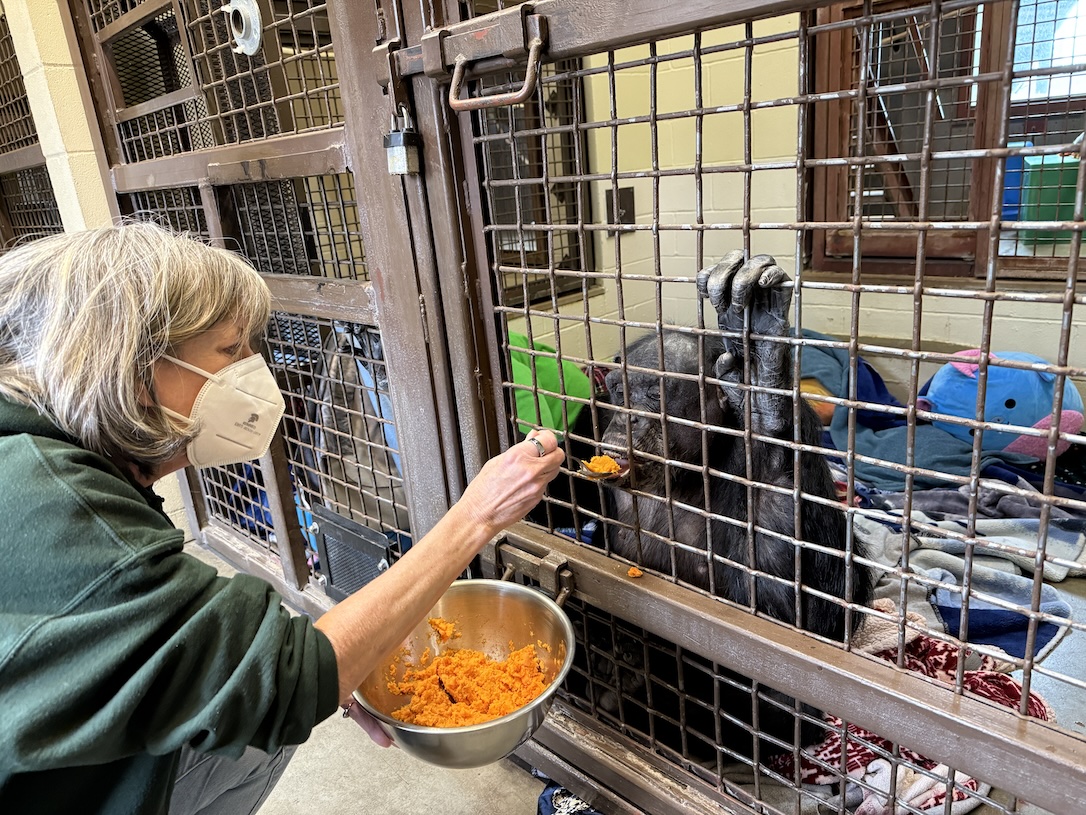
Dr. Erin serves Jamie some baked sweet potato for dinner.

As long as that snow doesn’t hit us down here in the foothills, I’m sure Jamie will be back on her patrols tomorrow—and hopefully, feeling a whole lot better.


Filed Under: Jamie, Veterinary Care Tagged With: chimpanzee, fibroids, Jamie, myosure, northwest, rescue, Sanctuary, surgery, veterinary

Bovine Birthdays, Pasture Pedicures, and a Trip to the Vet

November 10, 2025 by J.B.

Today is Honey‘s 18th Birthday! To celebrate, Diana brought over a basket of special treats from the chimp house, plus some pears from our very own orchard.

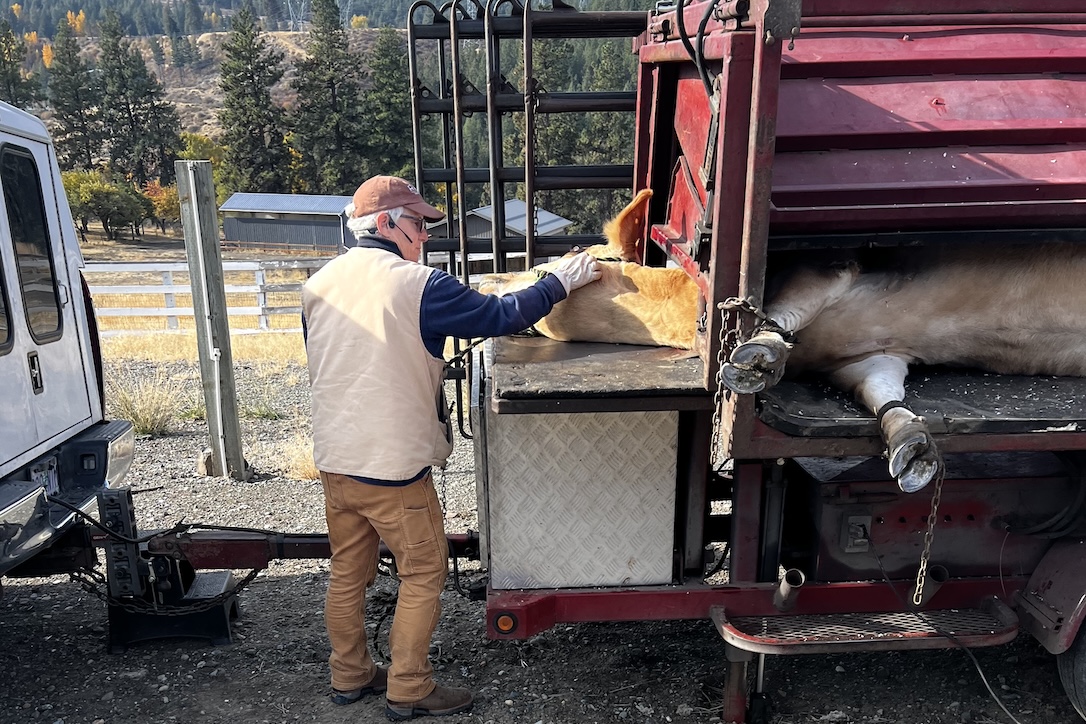
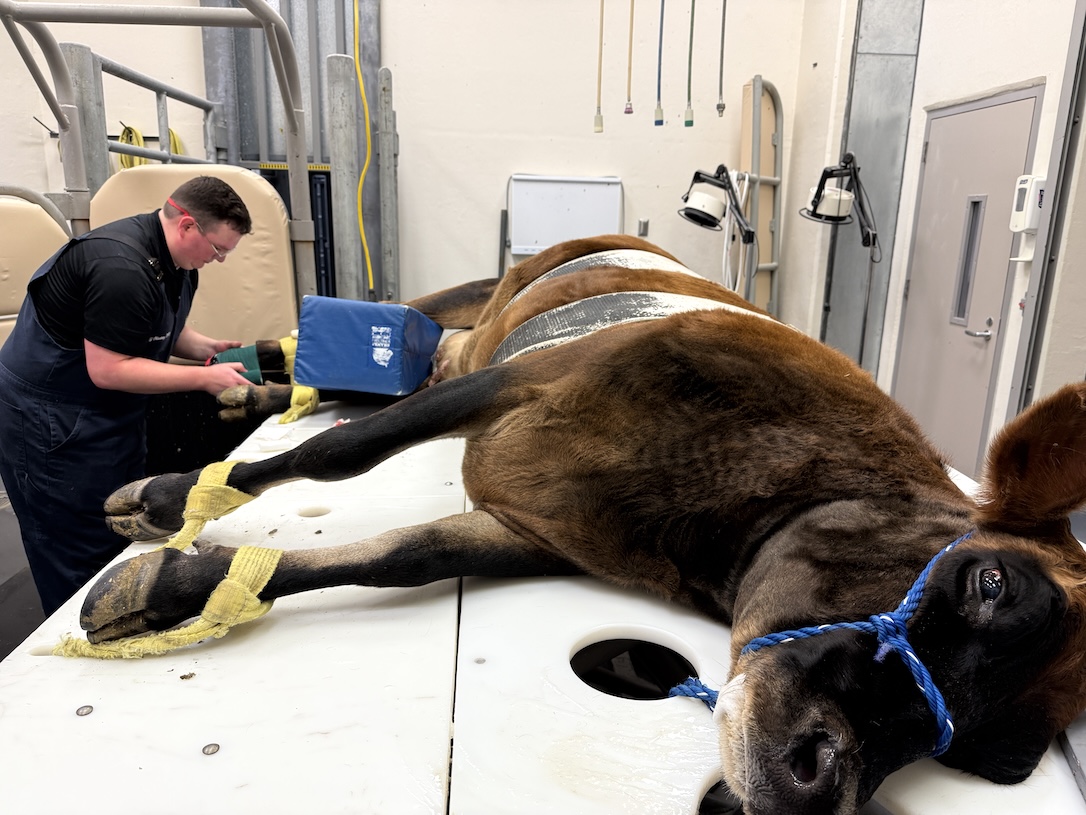
The cattle recently underwent their biannual foot trimmings. To trim our cows’ hooves, we utilize the services of a professional trimmer who brings specialized equipment that lifts the cows onto their sides and briefly restrains their legs. If their feet are in good shape, the trimming takes less than a minute per foot and the cows are quickly back to their normal routine.

Here, Meredith gets medications and vaccinations before being released from the chute:

Facilities and Grounds Technician, Teresa, adjusts Honey’s halter while the trimmer works on Honey’s feet:

Most trimmings are uneventful, but during Betsy’s trim, we discovered an anomaly in the medial claw of her back foot. It turned out to be an abscess—a fairly common injury, but one that would normally result in lameness. Betsy had showed absolutely no signs of discomfort whatsoever. She is one tough cow!

The abscess was opened up and drained and Besty was given medication and a bandage tough enough for a cow (is there anything duct tape can’t do?):

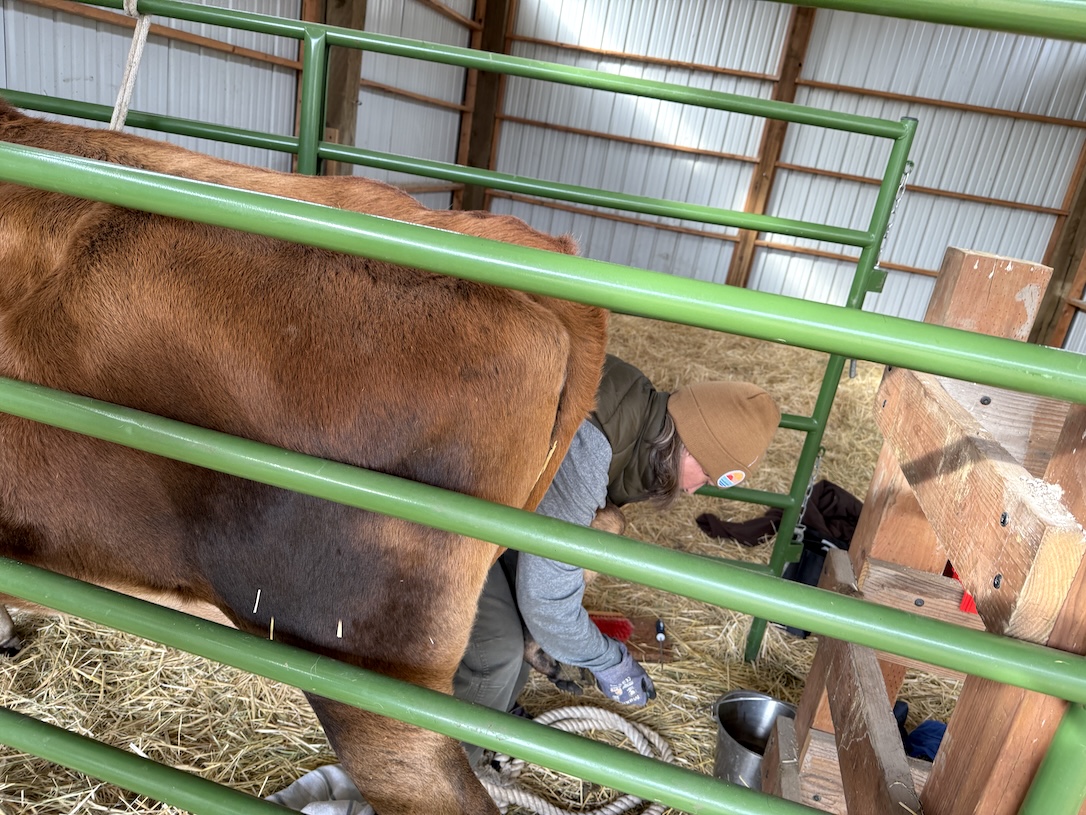
Dr. Erin conducted further exams, complete with x-rays, in the days following. Here, she utilizes standing sedation in one of our barn stanchions to safely treat Betsy’s foot:

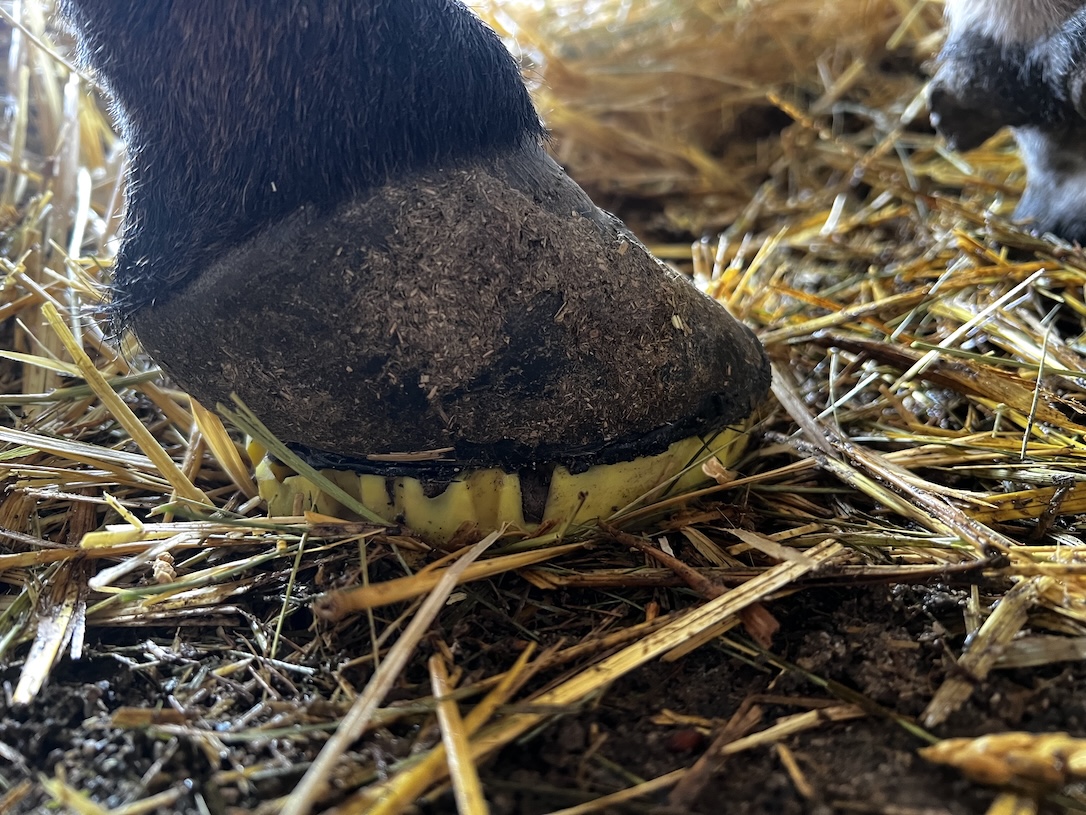
After getting Betsy’s hoof cleaned up and examined, we attached a block for her comfort. Blocks are wood or polyurethane prosthetics thay are applied with a high-strength adhesive to a cow’s good claw when they have an injury which may be painful—this allows their weight to bear on the good side of their foot and relieves pressure on the painful side.

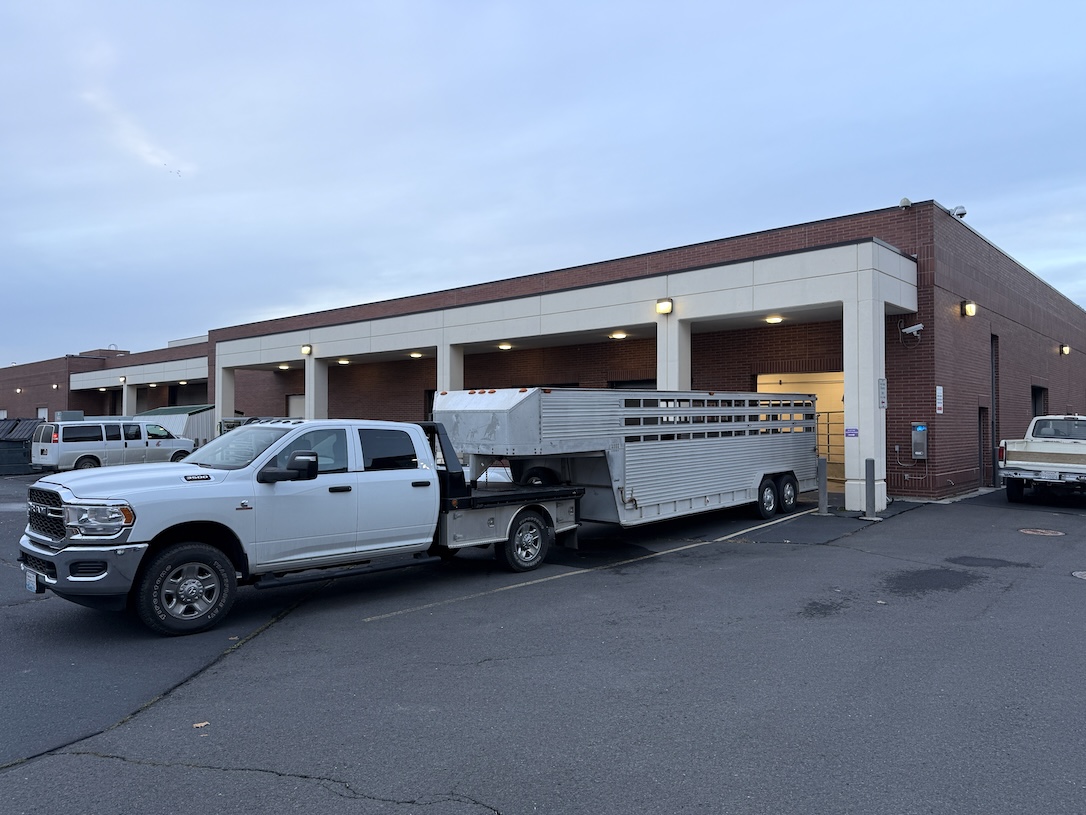
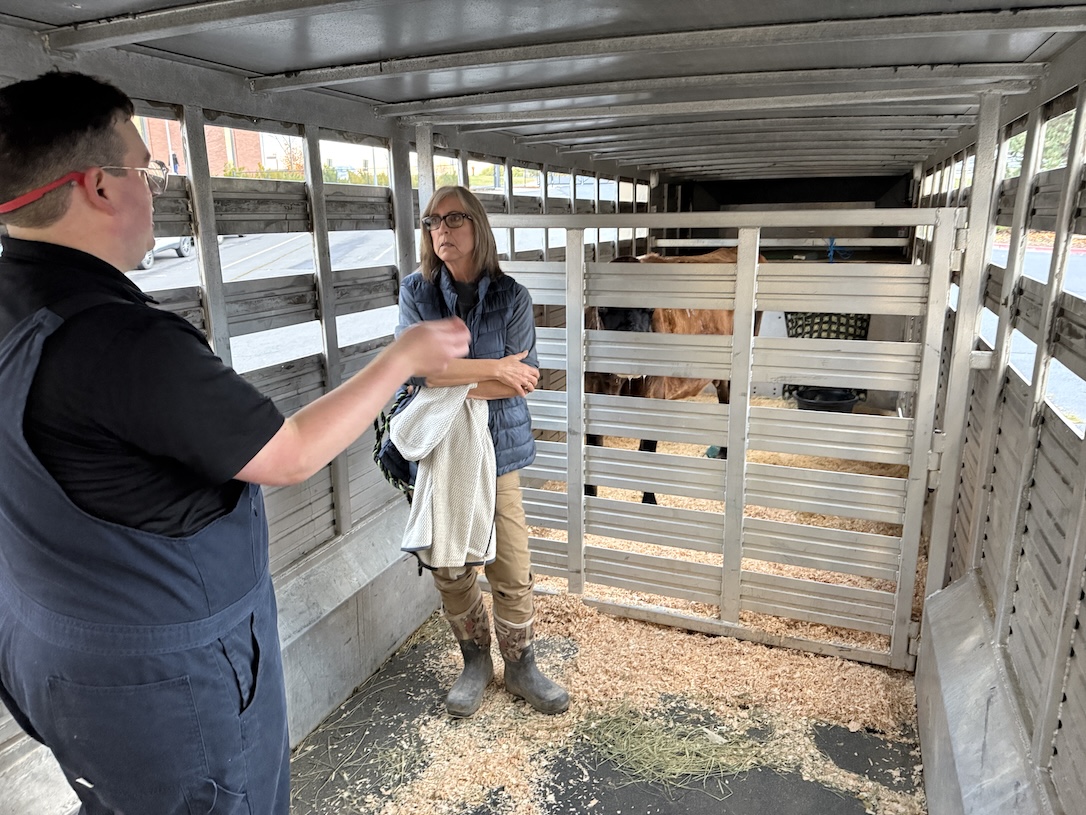
Radiographs of Betsy’s foot showed the possibility of bone changes near the abscess, so Dr. Erin felt a trip to the Washington State University Veterinary Teaching Hospital was warranted, just to be safe. Besty was loaded into our trailer for a trip to Eastern Washington for the afternoon:

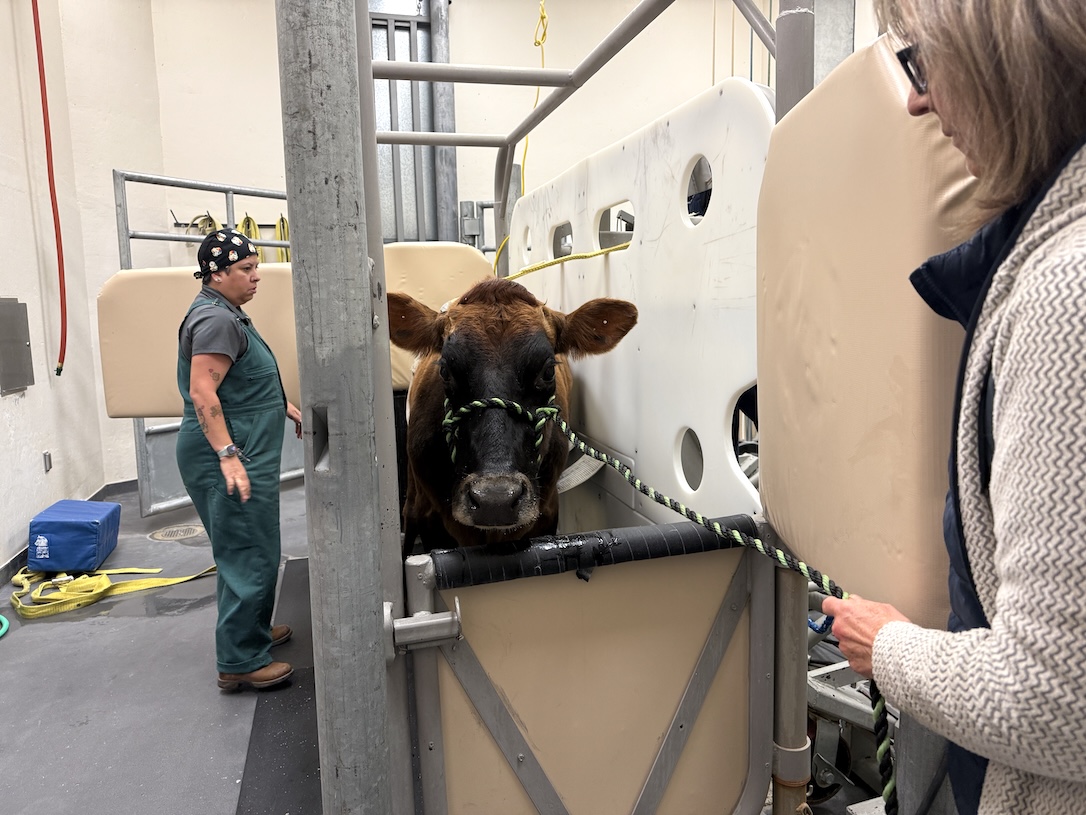
The team at WSU, led by Dr. Olivarez, is highly skilled at bovine medicine and, just as importantly, they are incredibly caring and compassionate:

Once in the hospital, Betsy’s is led down an alley and into a stall:

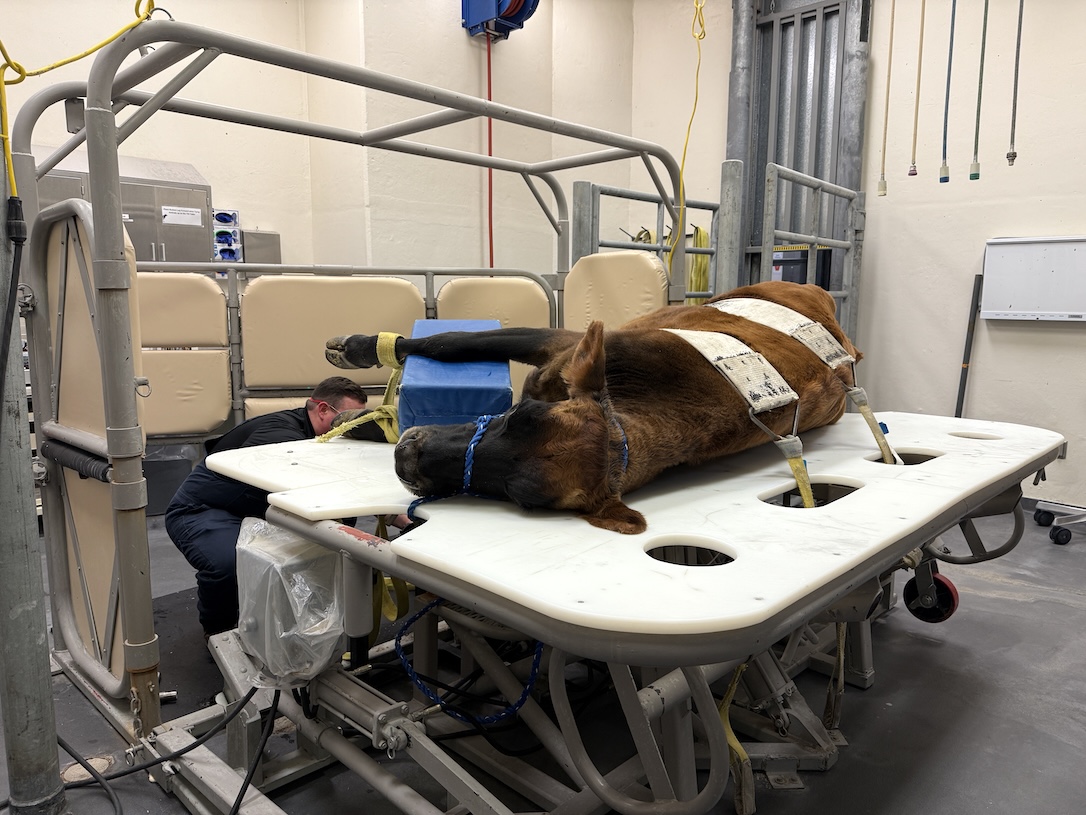
Similar to a foot trim, she is then tilted onto her side:

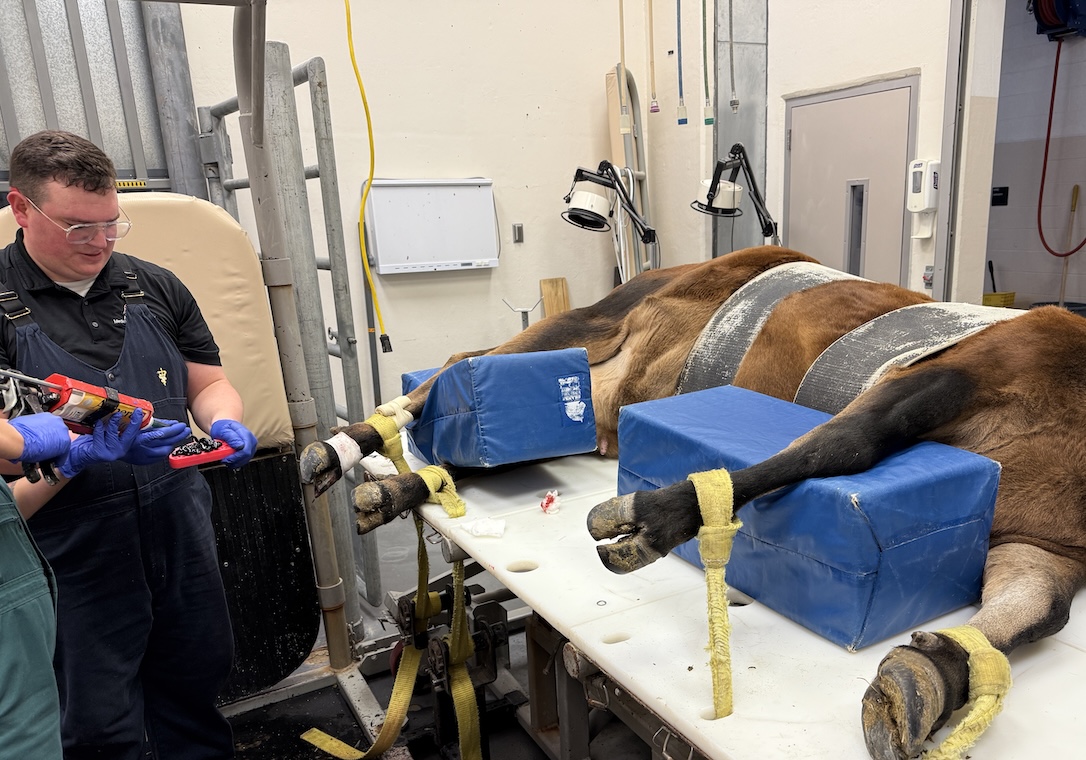
Besty was given a thorough examination and treatment. Thankfully, the pathology was determined to be limited to the hoof and the vet team thought that with a little rest in the barn and proper follow-up care, she would heal just fine. She was then given a new hoof block and bandage:

The folks at WSU thought that Besty, age 18, might have been the oldest cow they had ever treated in the hospital.

When we got back to the barn late that night, Betsy was immediately greeted by her long-time herd mates who very clearly missed her:

We are hopeful that Betsy will be able to rejoin the girls in another week or so. For now, she is happy to eat her extra feed without any competition from her bossy friend, Honey:


Filed Under: Cattle, Sanctuary, Veterinary Care Tagged With: birthday, cattle, chimpanzee, cows, Honey, northwest, rescue, Sanctuary, veterinary

Jamie and Foxie’s Exams

October 20, 2025 by J.B.

From Dr. Erin:

The last few days have been even busier than usual at the sanctuary!

Both Jamie and Foxie had complete exams this week.  The decision to anesthetize any of the chimps is never taken lightly but when it comes to anesthetizing older chimps (Jamie is turning 48 in a couple weeks and Foxie is 49), we are especially careful and consider several factors before making the decision to perform an exam under anesthesia. These factors include what data we can get through positive reinforcement training, how long it’s been since their last exam, as well as any previous health concerns or current changes in behavior or affect that indicates there may be a health concern.

In Jamie’s case, as J.B. noted in a previous blog post, Jamie has been slowing down over the last several months and her belly has become more pronounced.  While the physical changes can certainly be ascribed to aging (ask me how I know) and the change in social structure since Jody’s passing,  we couldn’t be sure and there was something “off” enough about her that an exam was warranted.

With Foxie, we were concerned about a cough that developed this past summer and persisted in spite of various medications to address possible causes.

Both chimps did well under anesthesia and while Jamie wanted an extra day of rest before rejoining the group,  Foxie was clamoring to be back with her family before breakfast this morning.  The procedures consisted of a complete dental exam, including x rays and cleaning, abdominal ultrasound, echocardiogram, head to toe physical, full body x rays, and sample collection for diagnostic tests on blood, respiratory fluid and urine.

Jamie’s team on Friday included local professionals Dan Whitemarsh, DDS and Tanya Hebert, sonographer.  Traveling from west of the Cascades were Jaime Sheehan, echo tech, Milo Torres, LVT & the wonderful Dr. Dan Low and anesthesiology intern Pat Herndon.  Dr. Yousuf Jafarey, an experienced primate vet and dear friend, flew up from California just to participate in the exams!

Jaime Sheehan returned yesterday to perform Foxie’s echo as well. The rest of Foxie’s team consisted of Dr. Charles Dyer, the dentist from the Dental Coalition for Conservation (who performed in Missy’s dental care in July), Korey Krause, sonographer from Kittitas Valley Health, David Liston, MD and Kate Uselman, CRNA from Seattle on anesthesia, as well as Dr. Jafarey and myself.

We have some preliminary information from the exams that will help guide care for both of these amazing older ladies and are awaiting lab results, radiology, and cardiology reviews that will further inform protocols for keeping them as comfortable as possible in their golden years.

I am incredibly grateful to the professionals that lend their time, effort and expertise to these exams, it really is a team effort to ensure the chimps have the safest and most thorough exam possible. I am so appreciative and impressed by the staff and volunteers who rearrange schedules, take on extra work, come in early, deal with clinic equipment spilling into the foyer and all support each other as well as the chimps. I work with the most wonderful people!

And we are so fortunate to work with the incomparable Dr. Erin!

The team prepares blood samples:

Jamie’s teeth are examined and cleaned while she is given an abdominal ultrasound:

The team monitors Jamie during recovery:

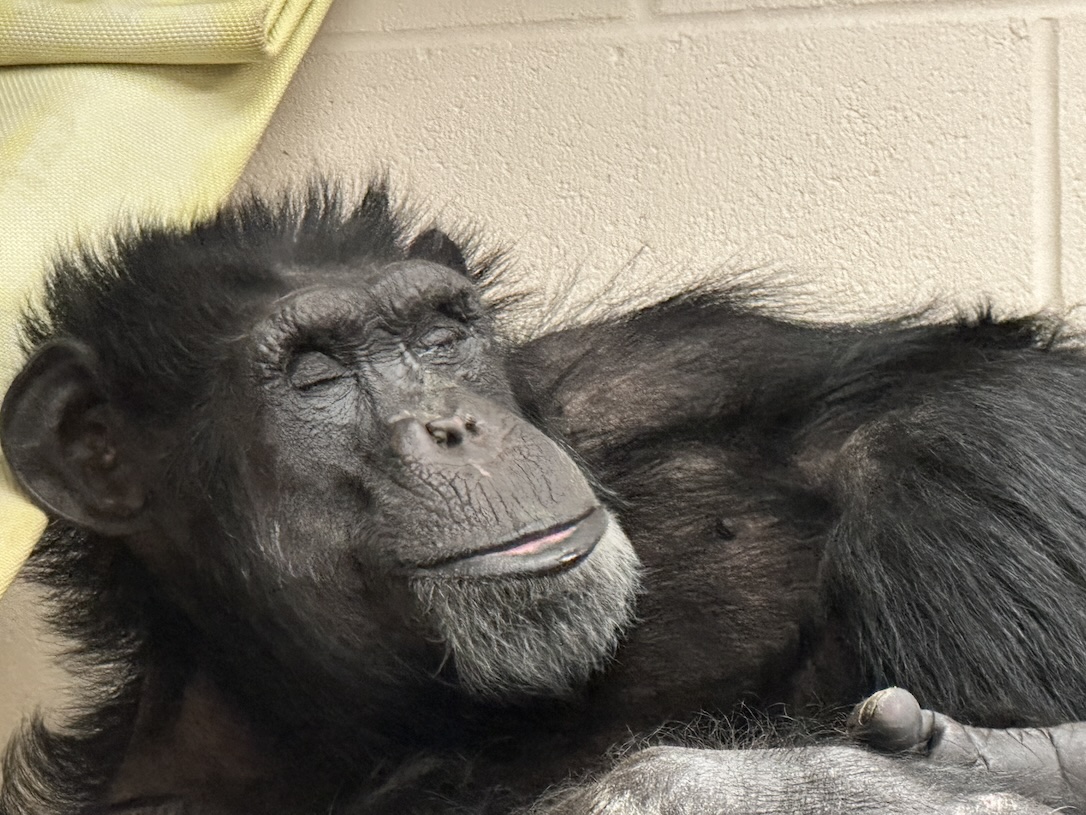
Jamie sleeps off the events of the day:

Foxie receives a dental cleaning and abdominal ultrasound:

X-rays are taken of Foxie’s teeth:

Nothing speeds up recovery like some pudding in a cup:

Jamie and Foxie enjoying a lunch forage on the hill this afternoon:

Filed Under: Foxie, Jamie, Sanctuary, Veterinary Care Tagged With: care, chimpanzee, clinic, dental, medical, northwest, rescue, Sanctuary, ultrasound, veterinary, xray

Medical Mysteries and Miracles

August 25, 2025 by J.B.

Did we ever tell you about the time Willy B went blind?

Caring for chimpanzees is an endless parade of difficult choices, but no decision is more wrenching than choosing when to intervene when a chimp becomes ill. Veterinary care for chimpanzees falls into two distinct categories: those procedures that we can do through the mesh with their cooperation, and those that require anesthesia. Positive reinforcement training broadens the range of diagnostics that can be performed cooperatively, but when a chimpanzee is really sick, its limitations quickly become apparent. If the tests than you can do cooperatively are insufficient or inconclusive, what’s next? How sure are you that the condition is serious enough to warrant further action? Are you willing to dart and sedate a chimpanzee for what could be a bad case of gas?

We find ourselves in these situations far more often than we would like. Like this past January, when Willy went blind.

I remember getting called on the radio a little after 8am. In the course of their opening rounds, the staff had noticed that Willy’s eyes were closed tight and he was having trouble navigating his enclosure. Rayne, Mave, and Gordo were all inspecting his eyes and showing concern for their friend who was in obvious distress. The staff immediately notified Dr. Erin and isolated Willy in the Front Rooms.

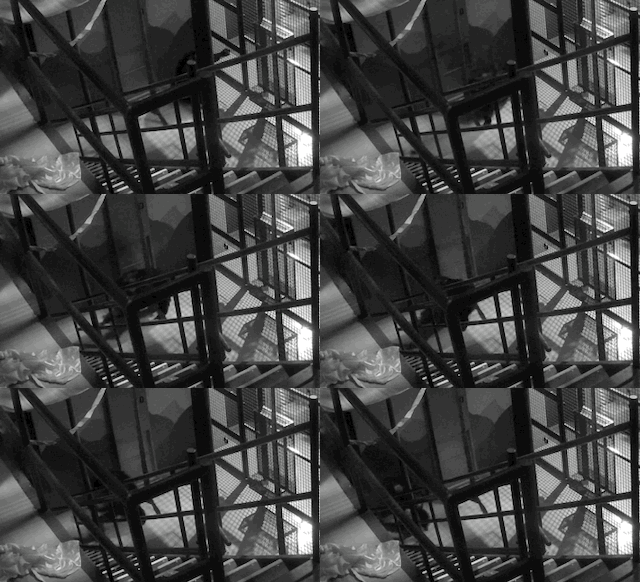
Were his eyes irritated? Could he open them at all? Was he hit in the face? Was it neurological? Other than some very slight discharge from his left eye and some understandable anxiety, he appeared otherwise healthy. We checked the overnight security camera footage, which showed Willy B making his nest as usual the previous night. And as we had thought, the evening was calm and peaceful, with no fights or falls that might have provided the opportunity for a smack to the face or a knock on the head. After he awoke in the morning and descended from the catwalk, however, he could clearly be seen groping his way across the playroom floor. Something had changed while he was asleep.

Dr. Erin was instrumental in creating a working group for veterinarians within the North American Primate Sanctuary Alliance. She queried her colleagues to see if anyone  had ever encountered something like this. Besides their concern and offers of support, the most common response was something to the effect of, “Wow, that’s really weird.”

Willy remained in isolation for the rest of the day while Dr. Erin and the team continued with what tests they could and prepared for everything from neurological consults to a CT scan. Willy went to bed that night without having opened his eyes once.

I went up early the next morning, hoping that his condition would have miraculously improved overnight. But his eyes were still closed and he could only orient towards me by the sound of my voice. He showed no reaction to a floodlight being shined directly at his eyes at close range.

Later, I offered to serve breakfast to Willy. His anxiety had subsided, and was calmly taking his fruit from me through the mesh when I placed it directly in his hand. I left Willy for a brief moment to speak with the staff serving breakfast to the rest of the group, and when I returned, Willy was patiently waiting for the rest of his fruit. With his eyes open.

He reverted to closing his eyes for brief periods throughout the day but by the following morning it was as if nothing had ever happened. He was reunited with his group and the behavior has not returned since.

The most common medical dilemmas we encounter are ones involving fatigue and inappetence. All of us get an upset stomach or cramps from time to time. Food becomes less appealing and all we want to do is lay down and rest. Nothing to worry about, right? Then again, we also get appendicitis, which requires emergency surgery. It’s good to know the difference.

Not too long ago, Burrito was displaying these same symptoms. He was showing up for meals but eating less, and he was overall less active than usual. His condition continued to worsen a bit over the course of 36 hours and the other chimps were starting to notice.

Again, there’s a lot we can do short of anesthetizing a chimp and examining them in the clinic. Dr. Erin immediately works up a differential diagnosis which guides both the things we monitor and measure and how long we wait before intervening more invasively. Food grade glitter comes in handy when you want to know if a particular chimp in the group is having bowel movements (and if you happen to like your poop festive). Remote thermometers and thermal cameras can show hot spots on the body that might indicate inflammation. Heart rate, respiratory rate, and other vitals can be gathered through observation or with devices like KardiaMobile. But sometimes everything looks normal and the chimp is still sick.

One afternoon, a few of us came upon Burrito as he was laying on the floor on Front Room 3. This is not a spot that he would usually rest. Annie and Negra were both hunched over him and Annie was very deliberately pressing on his abdomen with her hands like an doctor testing for abdominal tenderness. While I was grateful to Doctor Annie for investigating his symptoms, the scene was not encouraging. In cases like this, we have a plan put together and ready to implement should we feel the need to intervene with more invasive tests; it seemed like this might be the trigger.

But Doctor Annie was persistent. She turned it into a game and soon he was up and moving around. The two continued to play. Notably, Annie did not take her focus off of Burrito’s belly, which she continued to gently pat as the two hugged and wrestled.

Over the next few days, Burrito’s appetite returned. And like Willy B, he was not inclined to look back. There were meals to be eaten and games of chase to be played.

Every great ape caregiver has dozens of stories like this, because there will always be times when the wisest course of action is to wait and see. Spontaneous recoveries don’t necessarily preclude further action, as veterinarians may have legitimate concerns that an underlying illness or disease, such as a stroke or a partial bowel obstruction, warrants further investigation, even if things appear resolved. But in many cases, we simply thank the chimp gods and move on.

Filed Under: Annie, Burrito, Veterinary Care, Willy B Tagged With: care, chimpanzee, northwest, rescue, Sanctuary, veterinary

Missy’s Trip to the Clinic

July 27, 2025 by J.B.

Recently, during the course of a positive reinforcement training session, Jenna noticed a spot on Missy’s gums that indicated a possible tooth infection. Missy is considered a higher anesthetic risk patient due to her age (less than one month shy of the big five-oh) and a previous adverse reaction to anesthesia, so Dr. Erin assembled an experienced team that could safely diagnose and treat her.

Dr. Erin and Krissy were assisted yesterday by many familiar faces, including anesthesiologist Dan Low, vet tech Jennifer Garcia, echo tech Amy Owens, sonographer Korey Krause, and veterinarians Donna Menshing (also a CSNW board member) and Lexi McGilvray. It was also our first opportunity to work with Dr. Charles Dyer of the Dental Coalition for Conservation.

Preparing a chimp for an exam involves isolating them from their group, typically the night before, and then moving the other chimps to a separate part of the facility in the morning so that we can administer the initial injection safely and without interference.  Negra, Foxie, Jamie, and Burrito were happy to take a walk on Young’s Hill before breakfast but, predictably, Annie would not leave Missy’s side. After some intense negotiation involving bananas and juice, we agreed that Annie could stay and keep watch over Missy but from two rooms down.

The positive reinforcement training team—Sabrina, Jenna, and Ellen—had prioritized Missy’s injection training over the last several weeks and their work paid off, as Missy calmly accepted an injection by hand from Ellen. Once anesthetized, Missy was weighed and brought into the on-site veterinary clinic.

As predicted, Missy kept the anesthesia team on their toes but they were prepared. The decision was made to pull two incisors and slightly narrow the scope of imaging and other diagnostics so as not to prolong the exam any longer than necessary.

Annie was relieved to see Missy returned to Front Room 1 for recovery.

The team, including chimp house volunteer and retired nurse, Nancy, monitored Missy’s vitals closely until she was alert and active. All the while, the chimp house staff and volunteers worked around Missy’s procedure and recovery to keep up with the routine.

This morning, Missy was back with her group and ready to forage.

We’re grateful to Dr. Erin and to her incredible team of volunteer medical professionals for dedicating their time and their hearts to Missy’s care, with particular thanks to Dr. Dyer for traveling all the way from Texas (!) to take part and share his knowledge of exotic animal dentistry.

And as for Missy, I sure hope the Tooth Fairy can pay in tomatoes.

Filed Under: Missy, Sanctuary, Veterinary Care Tagged With: chimpanzee, clinic, dental coalition for conservation, dentistry, Missy, northwest, rescue, Sanctuary, veterinary

Dora’s Check-Up

March 24, 2025 by J.B.

Dora made her first appearance in the veterinary clinic last week for a routine physical exam. Like Rayne, she willingly took the anesthetic injection (this time from Sabrina and Dr. Erin, with a prior assist from the entire positive reinforcement training team). While we have to wait for specialists to review some of the data the team collected, Dora appears to be in perfectly good health.

Many thanks to our great crew of volunteer professionals, from the vet techs, sonographers, and veterinary student extern helping with the procedure to the cardiologists and internists reviewing the results—and of course to our very own Dr. Erin!

Someone recently asked on social media what types of procedures the chimps undergo when they are in the clinic. While the answer depends on many factors, including their age, sex, clinical history, stability under anesthesia, and the amount of time since their last exam, we generally try to do the following:

  • Update Vaccinations (e.g., rabies, tetanus)
  • TB test
  • Glucose Reading
  • Fecal Exam
  • Urinalysis
  • Blood tests
  • EKG
  • Dental Exam and Cleaning
  • Dental X-Rays as needed
  • Echocardiogram
  • Cervical, Chest, and Abdominal X-Rays
  • Joint X-Rays as needed
  • Full Body Exam

Our goal is to perform these exams as infrequently as possible so it’s important to gather all the information we can while they’re in the clinic.

And that requires a great team.

Hopefully Dora will continue to stay healthy and out of trouble so she won’t have to come back to the clinic for a while.

Filed Under: Dora, Veterinary Care, Volunteers Tagged With: chimpanzee, clinic, echo, exam, northwest, physical, rescue, Sanctuary, ultrasound, veterinary, x-ray

  • Page 1
  • Page 2
  • Page 3
  • Interim pages omitted …
  • Page 7
  • Go to Next Page »

Primary Sidebar

Subscribe To the Blog and Get Notified of New Posts First!

Archives

Calendar of Blog Posts

June 2026
S M T W T F S
 123456
78910111213
14151617181920
21222324252627
282930  
« May    

Categories

SUBSCRIBE TO OUR NEWSLETTER

Footer

PO Box 952
Cle Elum, WA 98922
[email protected]
509-699-0728
501c3 registered charity
EIN: 68-0552915

Official DDAF Grantee

Menu

  • The Chimpanzees
  • Blog
  • About Us
  • You can help
  • Resources
  • Contact
  • Donate

Proud Member of

Connect With Us

Search

Copyright © 2026 Chimpanzee Sanctuary Northwest. All Rights Reserved. Site by Vegan Web Design