• Skip to main content
  • Skip to primary sidebar
  • Skip to footer

Chimpanzee Sanctuary Northwest

Hope. Love. Home. Sanctuary

  • Our Family
    • The Chimpanzees
    • The Cattle
  • Blog
  • About Us
    • Visiting the Sanctuary
    • Philosophy
      • FAQs
      • Mission, Vision & Goals
      • Privacy Policy
    • The Humans
      • Staff
      • Board of Directors
      • Founder
    • Annual Reports
    • The Future of CSNW
    • CSNW In The News
  • You can help
    • Donate
      • Become a Chimpanzee Pal
      • Sponsor A Day
      • Transfer Stock
      • Be A Produce Patron
      • Be a Bovine Buddy
      • Give from your IRA
      • Personalized Stones
      • Bring Them Home Campaign
    • Leave A Legacy
    • Employment Opportunities
    • Volunteer
    • See Our Wish List
    • Events
  • Resources
    • About Chimpanzees
    • Enrichment Database
    • Advocacy
      • Advocacy Action Center
      • Apes in Entertainment
        • Trainers
        • Role of the AHA
        • Greeting Cards
      • Chimpanzees as Pets
      • Roadside Zoos
      • Chimpanzees in Biomedical Research
      • Conservation
        • African Apes
        • Orangutans
  • Shop
    • Merchandise Store
  • Contact
  • DONATE NOW

laser

Teamwork

July 30, 2023 by J.B.

Bite wounds are probably the most common injuries we see in chimps. Our treatment protocols for these wounds tend to be fairly conservative: administer analgesics for pain, clean frequently with antiseptic spray, and monitor closely. There are a few reasons for this. First, chimps have a superhuman (literally) ability to heal. Wounds that would send me racing to the ER for stitches will close up on their own in chimps with little to no treatment in a matter of days or weeks, remaining uninfected and leaving no visible trace once healed. Second, because of the frequency of wounding in captive groups, there’s always a risk of antibiotic resistance if antibiotics are over prescribed. And third, many forms of diagnostics and treatment require the chimps to be anesthetized—something we avoid whenever practical out of concern for their overall safety and well being.

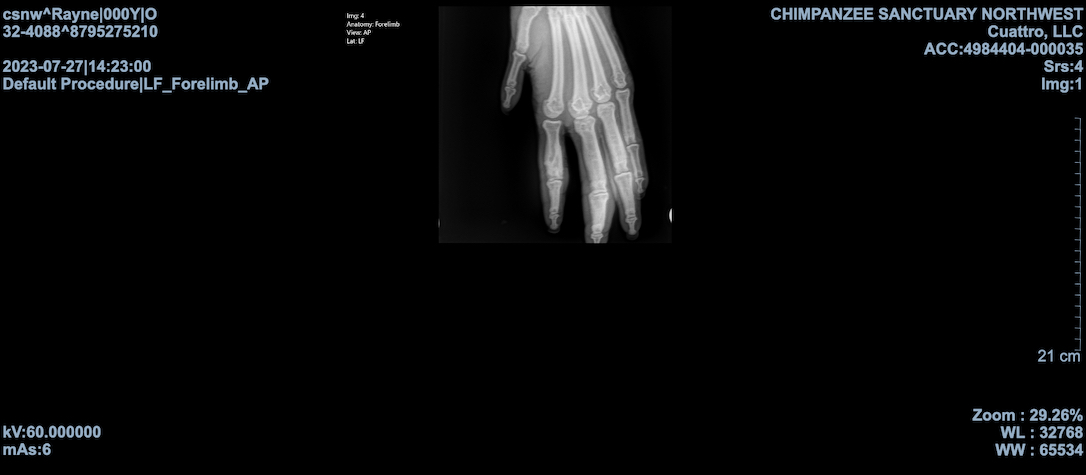
Once and a while, though, there are wounds that require a bit more than the typical conservative approach—like recently, when Rayne received a bite to her third digit (middle finger) that resulted in some swelling. When the swelling persisted even as the wound appeared to heal, Dr. Erin wanted to rule out an underlying fracture. Thankfully, our Positive Reinforcement Training (PRT) team was able to train Rayne to hold her hand in the x-ray box so that we could get some images without the need for anesthesia.

Here, Jenna asks Rayne to hold her hand flat in the box so we could get the first in a series of shots.
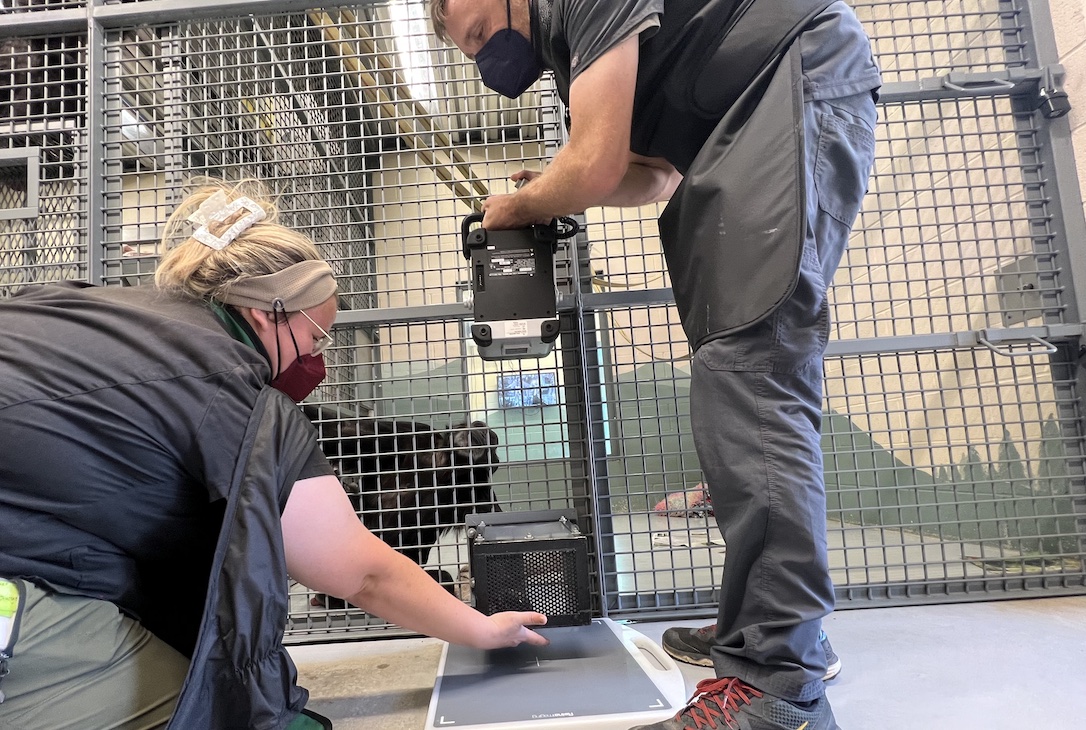
Jenna then withdraws her hand and Rayne holds hers still (while that other hand is trying to investigate the x-ray generator!).
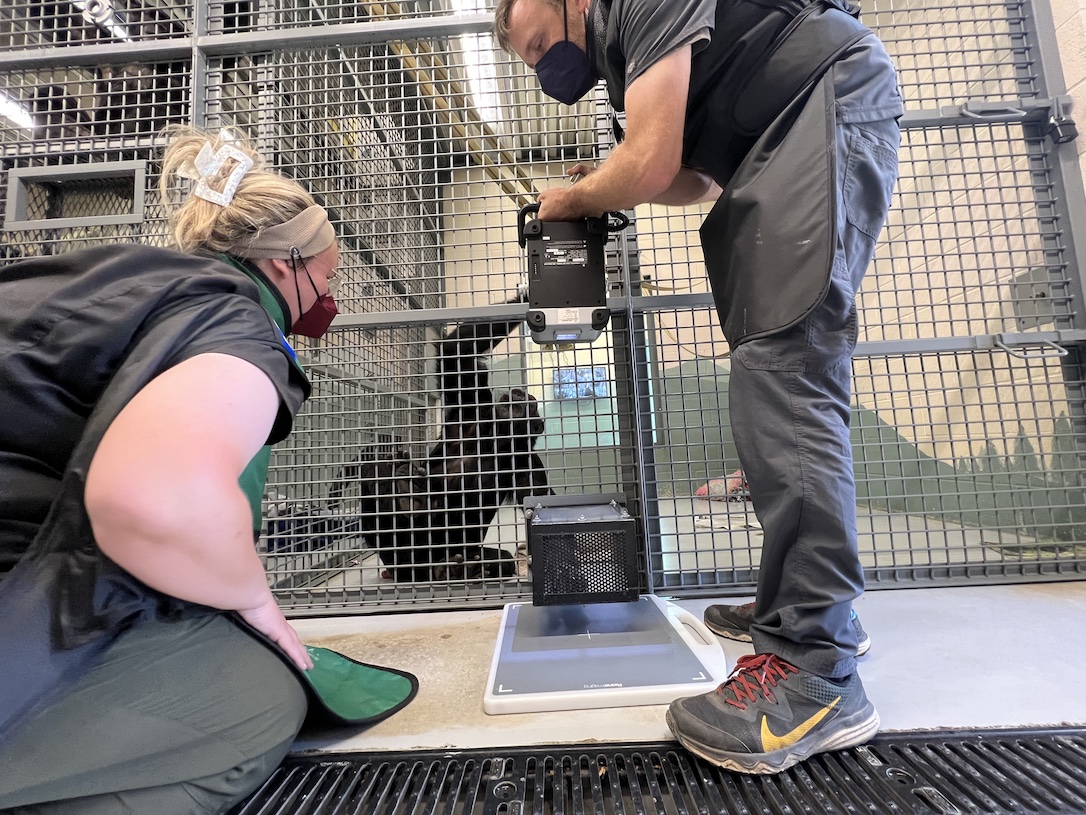
The good news is that Rayne did not have a fractured digit. Interestingly, you can see an old healed fracture on her 2nd digit (index finger).
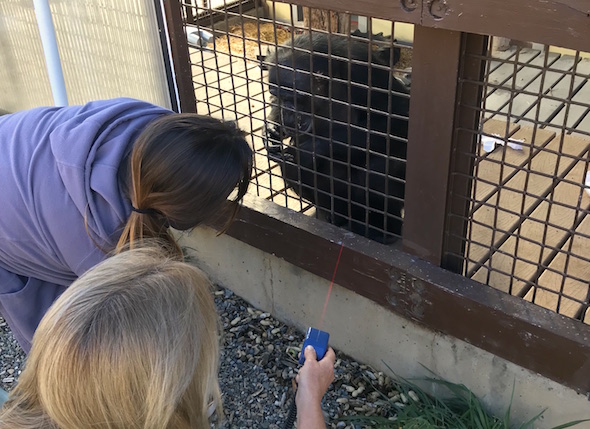
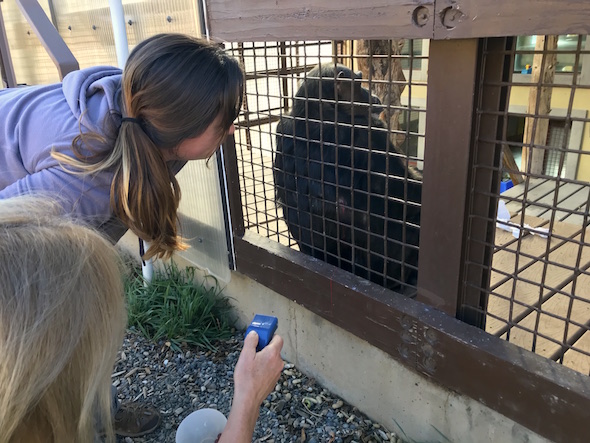
Though the swelling soon began to subside, PRT also made it possible to treat Rayne’s finger with a therapeutic laser to help encourage the healing process. For this, Rayne needs only to sit at her station marker and respond to Grace’s command to present the fingers of her left hand through the mesh. It was Rayne’s choice to pull up the orange ball and sit on it.
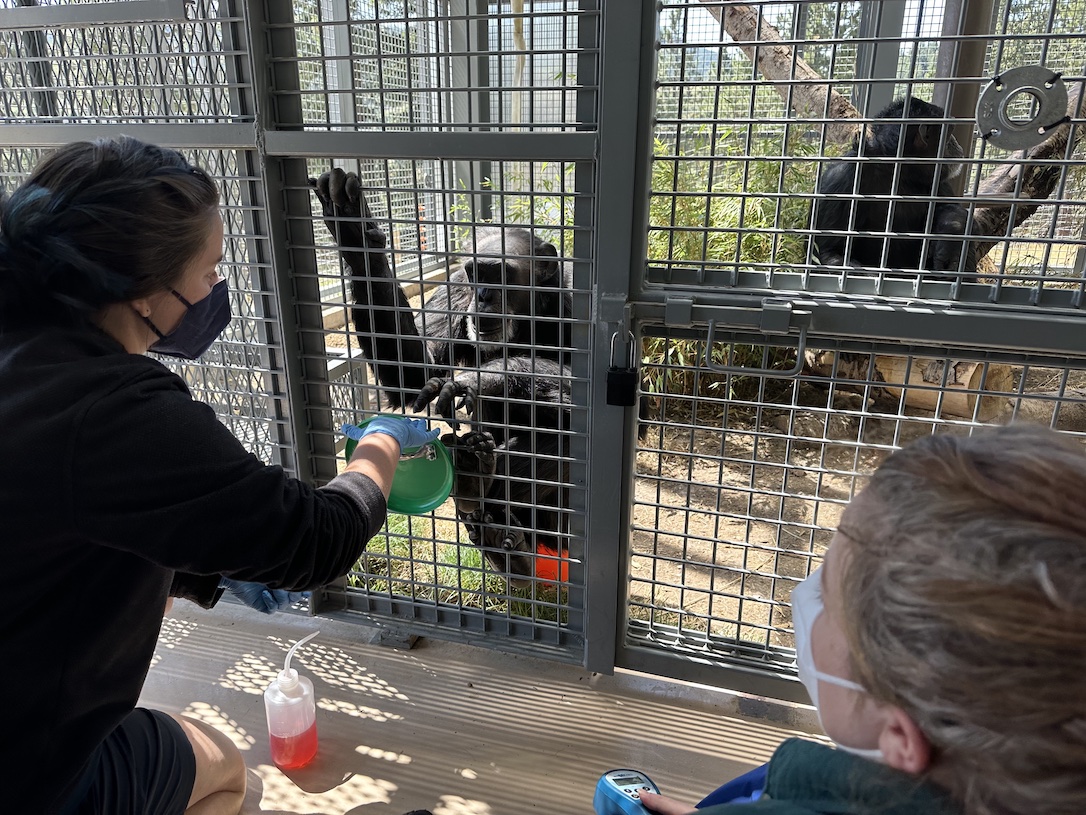
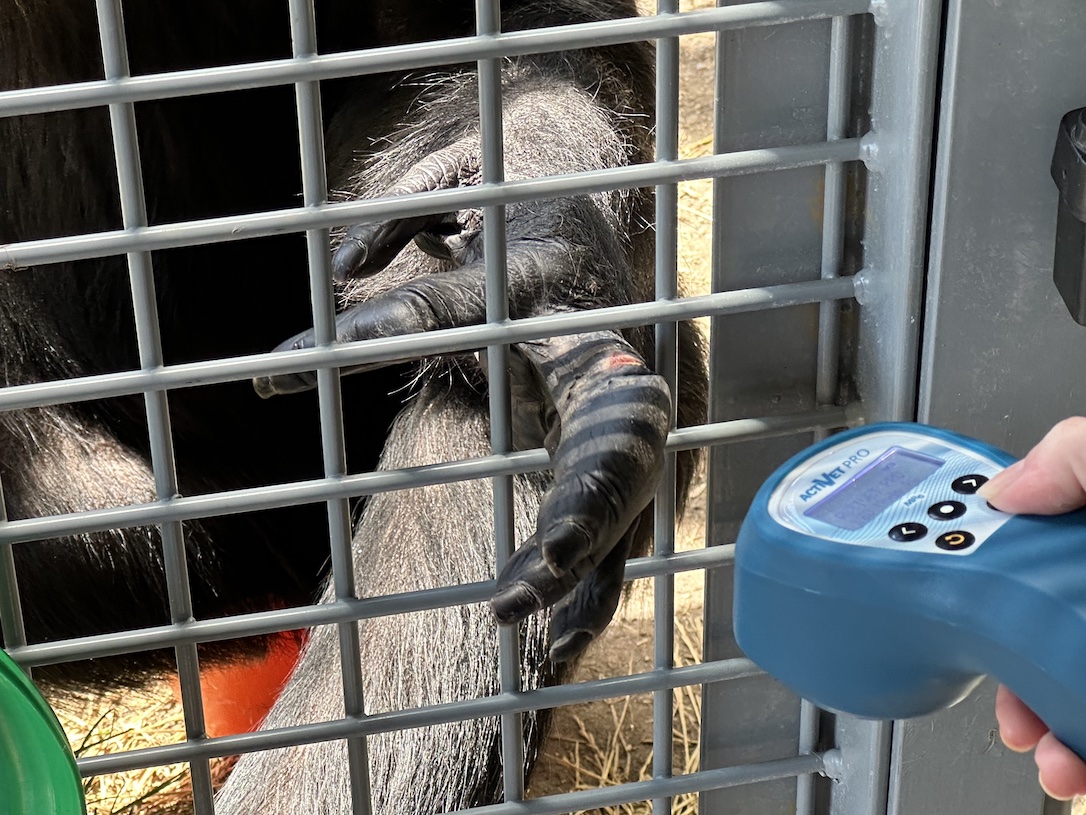
Sabrina is then able to program the laser, at Dr. Erin’s direction, and apply it to Rayne’s finger.
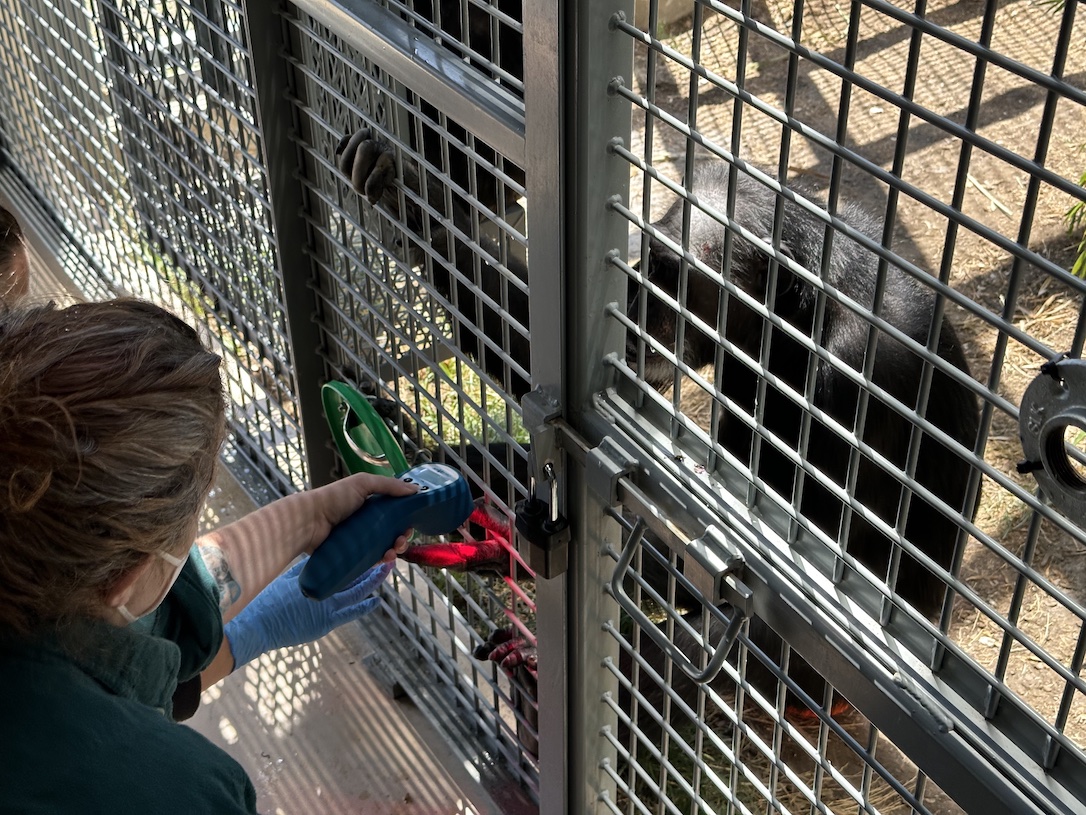
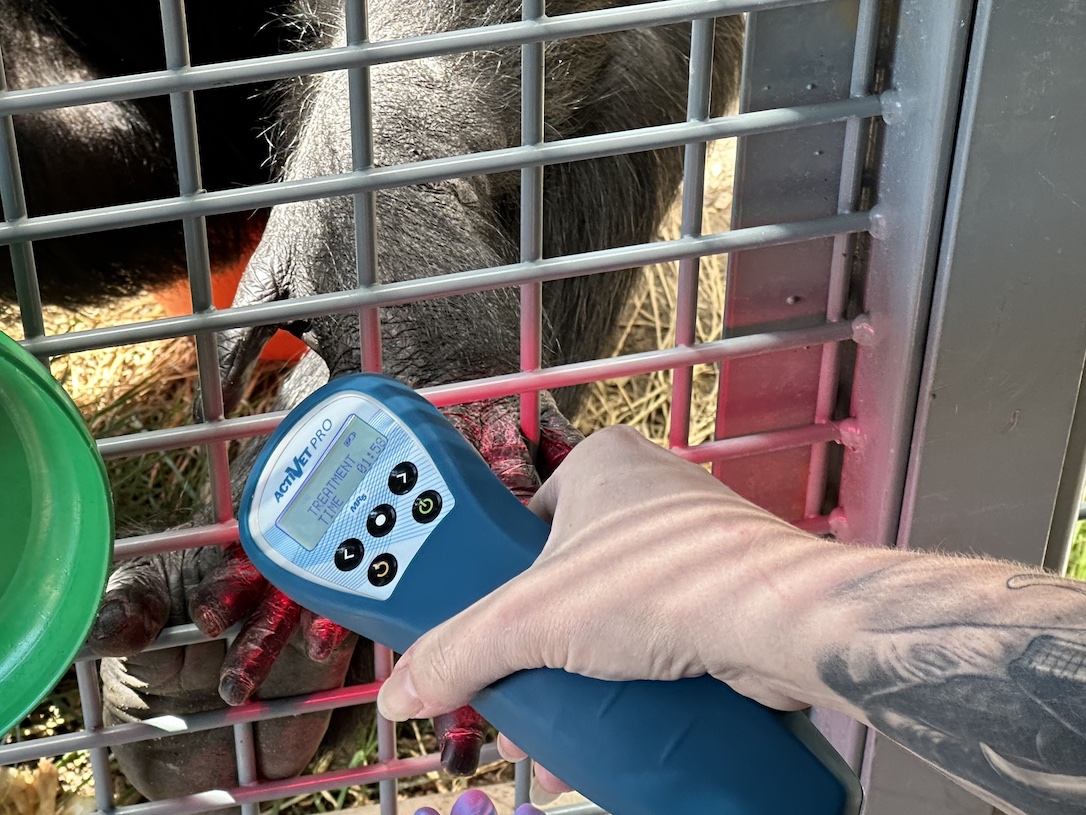
The only problem? Everyone wants a turn!
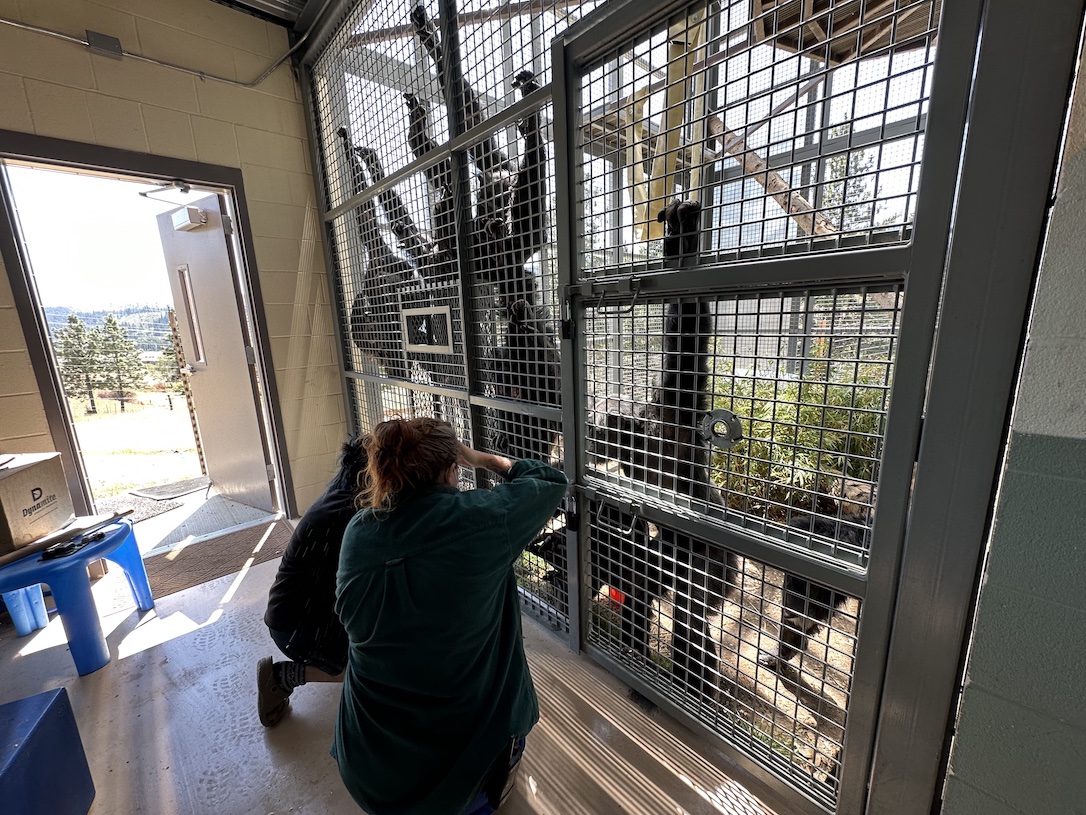
Positive reinforcement training requires a lot of staff time but these little opportunities to apply all that effort can really add up in the form of improved diagnostics, more effective therapies, and fewer trips to the clinic. Even if we learn that a chimp will require a more complex exam or treatment under anesthesia, we can often go in with a head start given the information we are able to obtain.

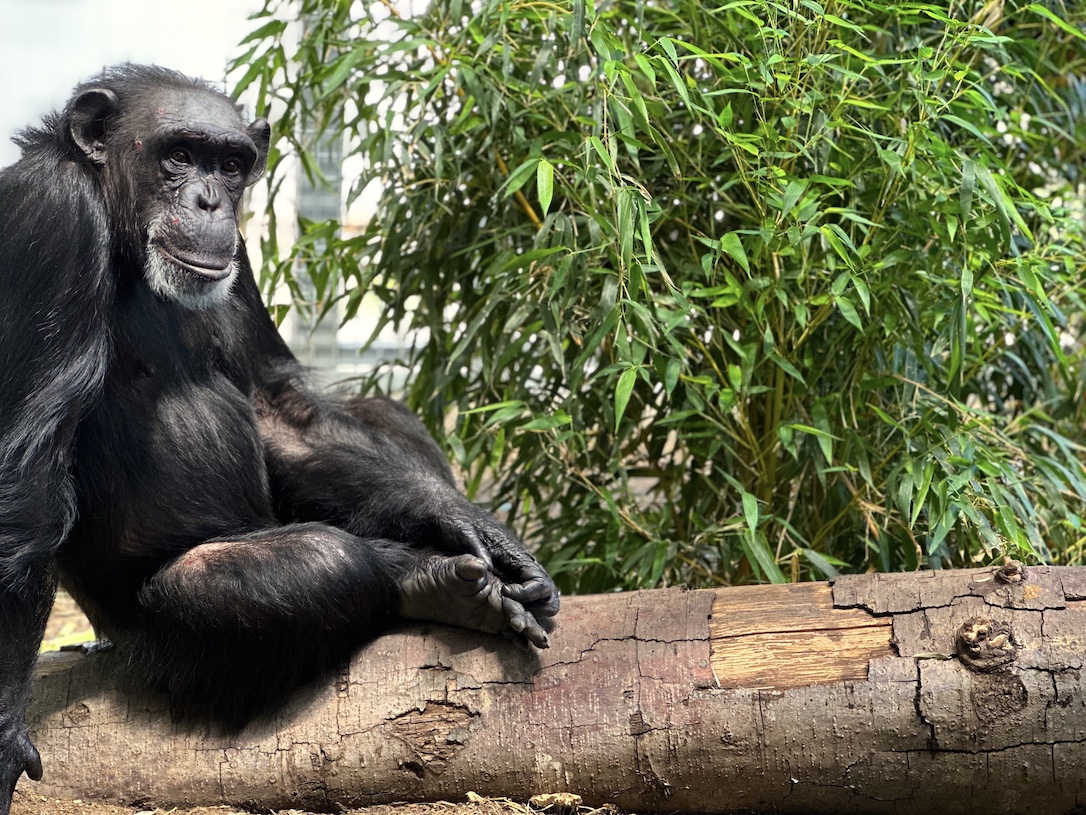
For her part, Rayne seems pretty happy to participate.

You want me to rotate my hand 90 degrees for a lateral view?

Here, you can laser my feet, too!

Just keep that juice coming.
 

Filed Under: Rayne, Veterinary Care Tagged With: chimpanzee, injury, laser, medical, northwest, positive reinforcement, prt, radiograph, Sanctuary, training, veterinary, wound, x-ray

Building trust

October 27, 2017 by J.B.

Providing medical care to chimpanzees is always a challenge, but it can be particularly difficult when they have been subject to decades of invasive medical research procedures against their will.

Years ago, we participated in a study that considered whether chimpanzees might exhibit abnormal behaviors that cluster into syndromes similar to posttraumatic stress disorder and depression in humans (you can read it here). Negra was featured in the paper as a case vignette:

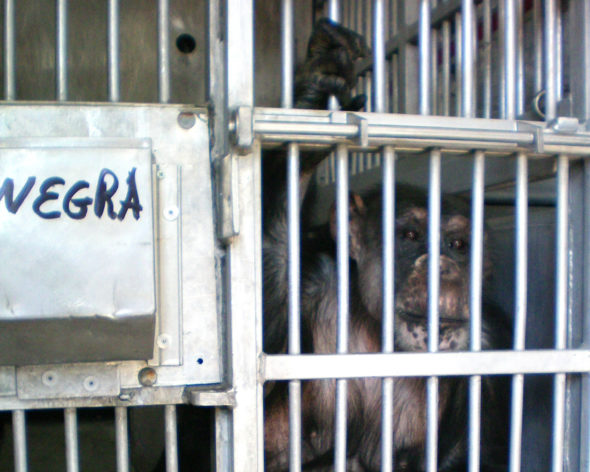
A chimpanzee named Negra was a 36-year-old female at the time of the study. Taken from the wild in Africa as an infant, she has remained in captivity since that time. She was used in invasive research, including hepatitis experiments, and for breeding. Each of her infants was removed from her at an early age. During the period in which she was used in research, she was kept in isolation for several years. Approximately 1 year prior to the study, she was transferred to Chimpanzee Sanctuary Northwest in Washington state, where she currently lives with six other chimpanzees.

Negra met alternative criteria for depression and PTSD. According to reports, she had persistent depressed hunched posture, and she was socially withdrawn. Negra slept excessively during the daytime, and she lacked interest in play, food, other individuals, and grooming. She also demonstrated poor attention to tasks. She was described as slow and sluggish, and at times, she appeared anxious. In response to an unexpected touch, she would “threat bark,” scream, or run away. Compared with other chimpanzees, she demonstrated less variability in her facial expressions. Caretakers reported that her face was expressionless, “like a ghost,” for at least a month after she arrived at the sanctuary. She seldom, if ever, exhibited a play face. She was tested for a thyroid disorder and assessed for other medical causes of her clinical presentation, but all laboratory tests were within normal limits. Based on later reports provided by her caretakers, some of her symptoms have improved since she has been living in the sanctuary. She has become more interested in other chimpanzees, including grooming, and the variability in her facial expressions has increased.

Negra’s anxious response to being touched was not just a sad reminder of her earlier trauma; it was a serious impediment to her care at the sanctuary. Chimpanzees routinely receive wounds from fights, they develop dental problems, they get heart disease and diabetes and many other illnesses, and these things often require medical intervention.

There’s always a way to force medical care on an uncooperative chimpanzee, and sadly that is what’s required from time to time. But that can be stressful and even dangerous. They deserve a chance to participate willingly. Giving them that choice, however, requires a lot of time and energy on the part of their caregivers.

For years, CSNW caregivers (first Debbie and now Anna) have been working with Negra to habituate her to basic medical evaluations and treatments as part of our positive reinforcement training program. These efforts have paid off many times over, most recently when Negra received a wound to her back during a fight. Negra let Anna spray the injury with antiseptic solution and she allowed Dr. Erin to follow that up with laser therapy. In cases where antibiotics may be needed, Negra will even let her caregivers swab the wound to culture the infection and determine the best course of treatment.

For some chimpanzees, this kind of cooperation is no big deal. But chimpanzees are individuals – they have unique life experiences and they cope with those experiences in different ways. Negra has never given her trust lightly. It had to be earned through years of persistent efforts on the part of her caregivers.

It has certainly been worth it.

Filed Under: Caregivers, Negra, Veterinary Care Tagged With: care, chimpanzee, injury, laser, northwest, positive reinforcement, prt, rescue, Sanctuary, therapy, training, trust, vet, veterinary, wound

Primary Sidebar

Subscribe To the Blog and Get Notified of New Posts First!

Archives

Calendar of Blog Posts

June 2026
S M T W T F S
 123456
78910111213
14151617181920
21222324252627
282930  
« May    

Categories

SUBSCRIBE TO OUR NEWSLETTER

Footer

PO Box 952
Cle Elum, WA 98922
[email protected]
509-699-0728
501c3 registered charity
EIN: 68-0552915

Official DDAF Grantee

Menu

  • The Chimpanzees
  • Blog
  • About Us
  • You can help
  • Resources
  • Contact
  • Donate

Proud Member of

Connect With Us

Search

Copyright © 2026 Chimpanzee Sanctuary Northwest. All Rights Reserved. Site by Vegan Web Design