As Katelyn mentioned in her post on Tuesday, Negra has once again taken an interest in Foxie’s dolls. And the other day, she had a little fun teasing Foxie with a game of keep away.
Missy’s new afternoon routine
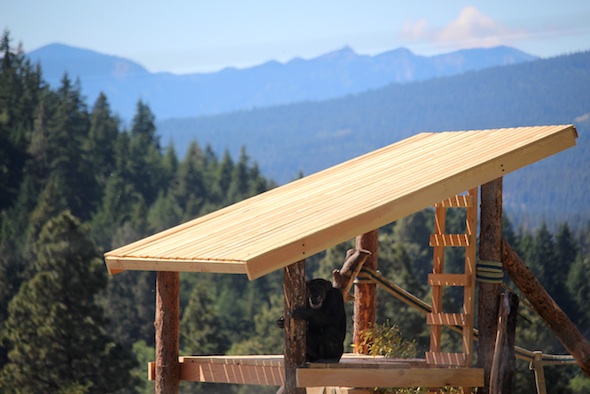
Head to the top of the hill, grab a snack, and then sit back and enjoy the view.
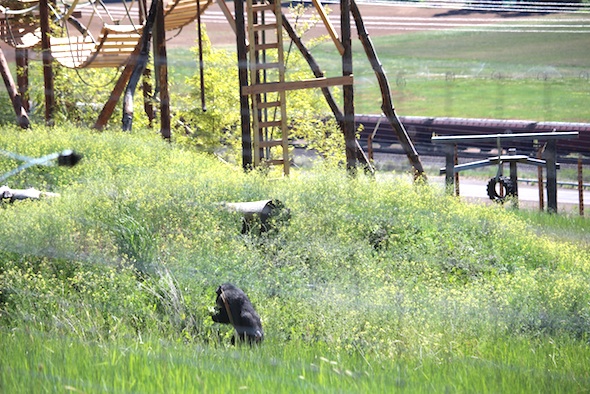
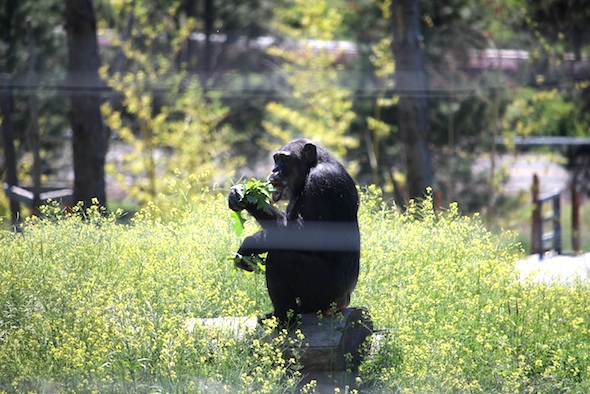
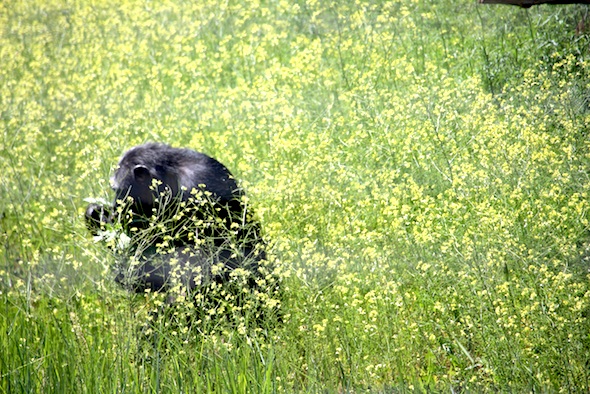
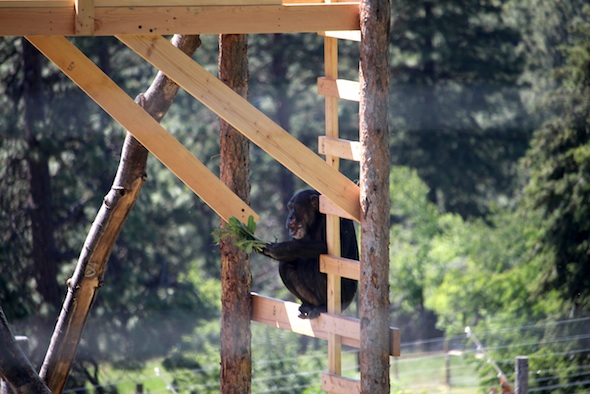

All you can eat
Chimpanzees seem to have a pretty good sense of time. Even if we haven’t started preparing dinner yet, the chimps at CSNW begin to gather near the window to the kitchen around 4 o’clock. They want to see what’s on the menu and remind us to hurry things along. But every once and a while, it remains ghostly quiet as dinner time nears – no one blowing raspberries at us, banging on the caging, clapping their hands, or stomping their feet. When this happens, it usually means one thing: They’ve started on dinner without us.
Chimps in captivity rely on humans for so much. Those who were wild caught, like Negra and Annie, were torn from their families, deprived of their native cultures, and forced into complete dependence on humans. And in some ways, they were the lucky ones, because those born into captivity never even got to experience a moment of independence in their lives. So when they learn to take back a tiny bit of autonomy, as they do when they choose when and what they’d like to eat, it is cause for celebration. And with two acres and a greenhouse full of bamboo and native plants, the chimps are able to make these choices every day.
Eating plants is good for their health, too. Chimps in the wild eat large quantities of rough fiber in the form of shoots, stems, and leaves. And while I don’t think we know yet exactly what role all of these foods play in their diet, we do know that this type if roughage allows captive chimps to snack all they want without putting them at risk for diet-related illnesses like heart disease and diabetes.
There are currently seven species of bamboo growing on Young’s Hill, and the chimps harvest from them year-round. Surprisingly, the bamboo on the hill seems to be prized most for its leaves, and the chimps tend to leave the fragile (but I would imagine tasty) shoots alone.
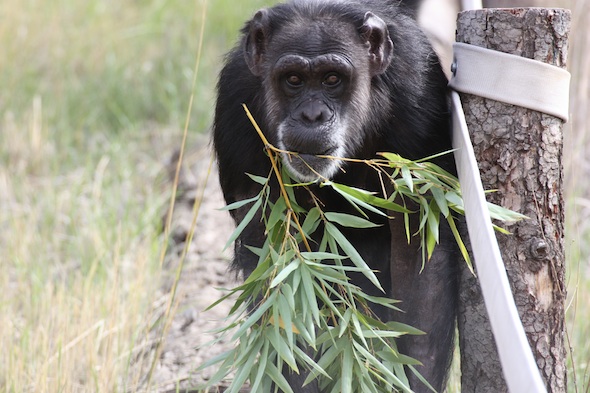
A few other species of bamboo that are more sensitive to Cle Elum’s chilly winters do very well in the chimps’ greenhouse enclosure, and send up their tender shoots (Chusquea gigantea shoots seems to be a delicacy) as early as March.
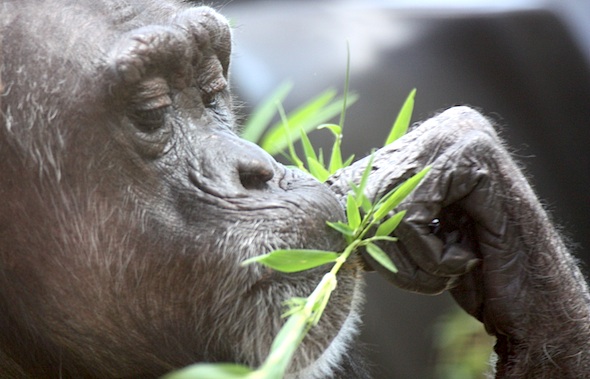
But in May, all of Young’s Hill becomes an all-you-can-eat salad bar. Even Negra will sit outside to snack on fresh dandelion greens.
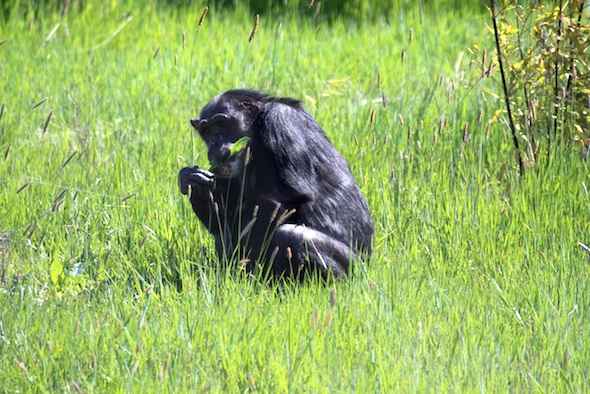
Missy, always on the move, takes hers to go.
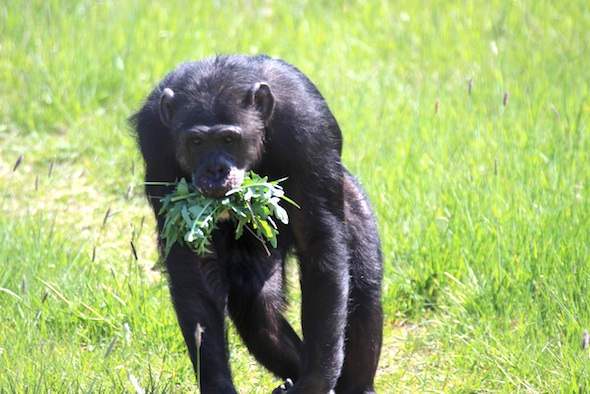
Spring grass is a favorite of nearly all the chimps. Annie collects only the best blades to bring back to the greenhouse.
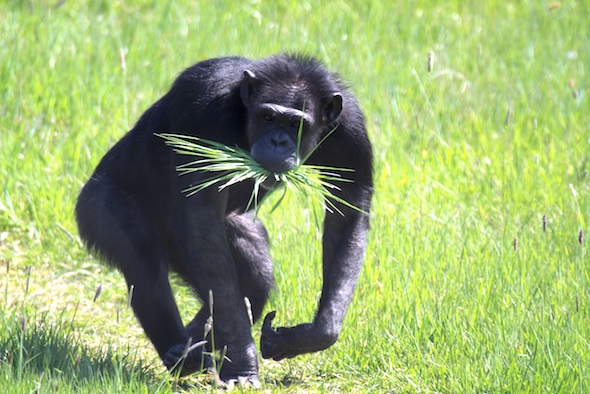
In mid-summer, some larger plants begin to grow. Most people would consider them weeds, but the chimps think otherwise. Jody likes mullein, which I imagine to be the equivalent of eating bitter craft felt, but Jody must have a more refined palette.
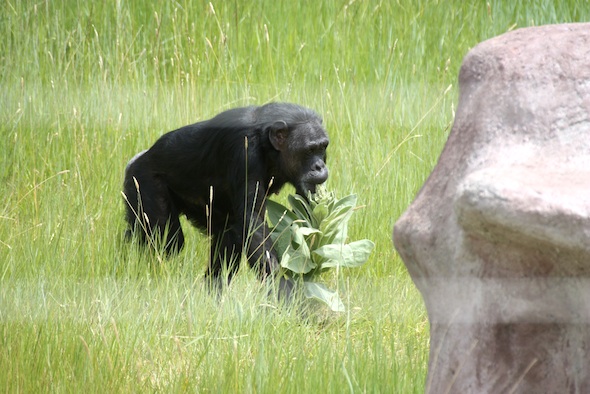
Missy and a few others like prickly lettuce, which we mistook for dandelions for a while until we picked up some of their leftovers – they are just as prickly as the name suggests. Just like in the wild, captive chimpanzees will sometimes eat foods that are physically difficult to ingest. While many of the plants consumed by wild chimps have been shown to have medicinal value, such as the anti-parasitical Aspilia leaves, we don’t know if captive chimps are attempting to self medicate or are just eating adventurously.
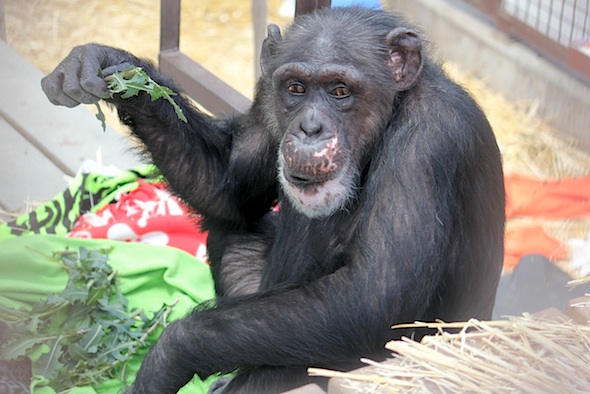
The bane of my existence is this wild mustard. It grows so big and tough that it will break your weed eater. But when it grows inside the chimps’ enclosure, it gets taken care of by nature’s weed eater, otherwise known as Jody.
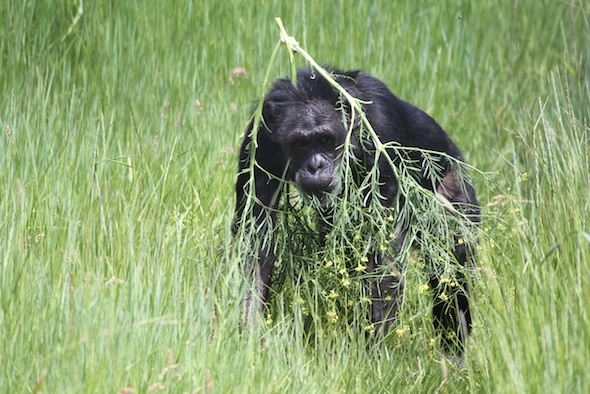
The chimps could never live on these plants alone, even if they do supplement with the occasional live frog like Negra does. But they are important in other ways. Like tonight, when the chimps all disappeared onto the hill just before dinner, you could almost hear them saying:
To heck with the humans, let’s eat!
Green grass, a warm greenhouse, and a comfortable nest
Negra surprised us this morning by spending quite a bit of time foraging on the hill.
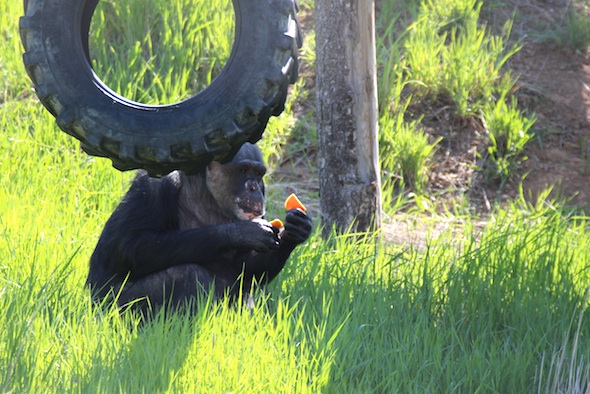
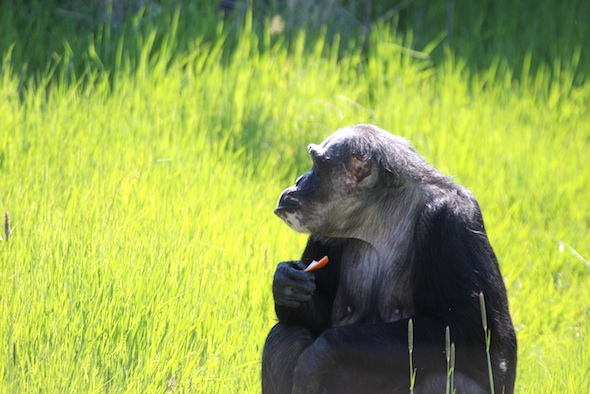
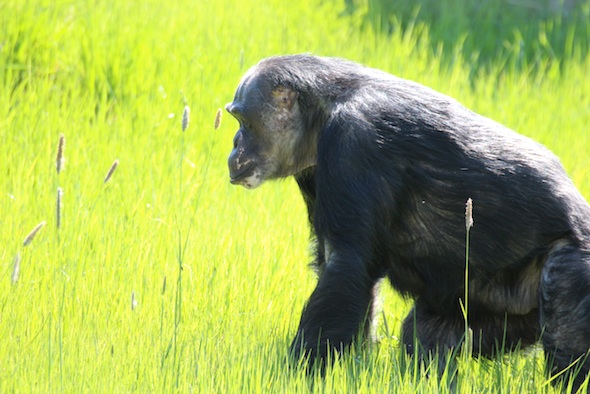
Then, instead of going back to bed for the rest of the day, she spent some time lounging in the greenhouse with the rest of the gang.
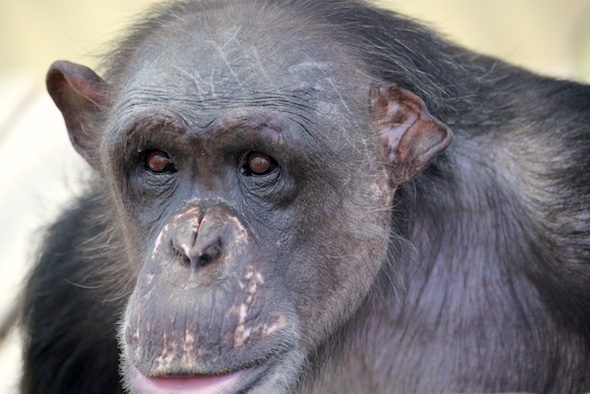
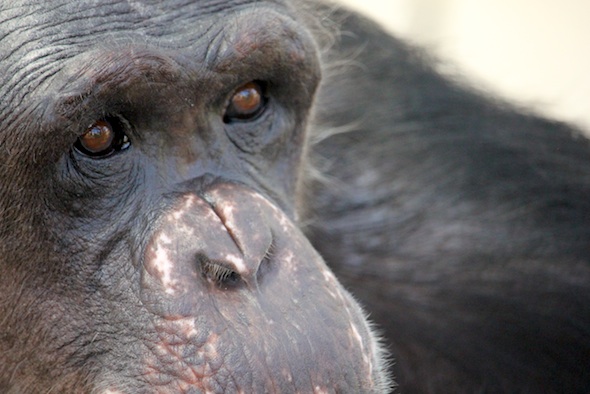
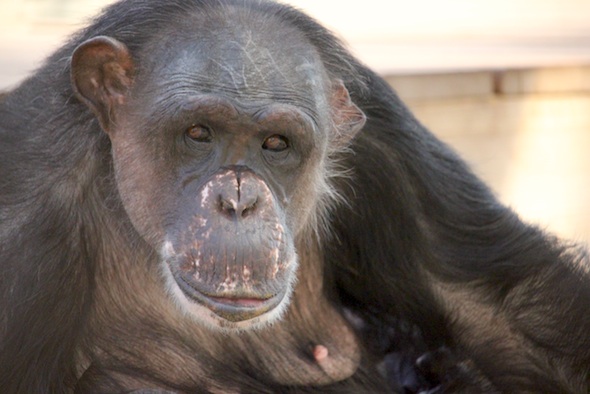
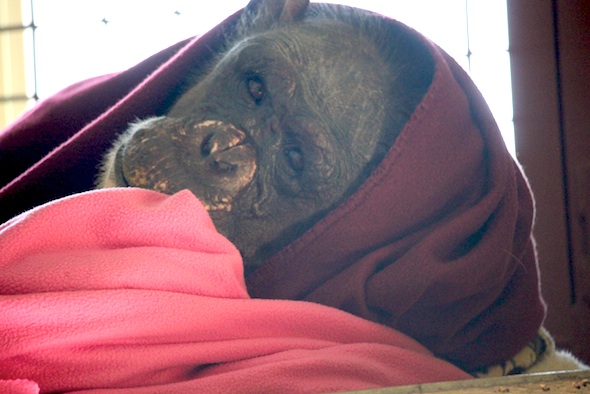
But by mid-afternoon, bed was calling, and she retreated to her nest with a view of the kitchen so that she could keep an eye on dinner preparations. And every few minutes, she would ever-so-thoughtfully bang on the window cage behind her to remind us that she was indeed still alive, but that there was no guarantee that she would continue in that state if dinner didn’t arrive soon.
By the way, if you live in the Seattle area and listen to KIRO radio, keep an ear out for interviews conducted this morning with Co-Director Diana Goodrich and Volunteer Lizz Stewart for Rachel Belle’s Ring my Belle. If you don’t catch it, we’ll post a link as soon as it is available online.
Positive Reinforcement Training
We’re really excited to be embarking on a new program here at Chimpanzee Sanctuary Northwest. Thanks to a generous grant from the National Anti-Vivisection Society Sanctuary Fund, we recently began a Positive Reinforcement Training (PRT) program with the goal of teaching the chimps to participate in cooperative health monitoring.
Many of you reading this are probably familiar with PRT – it’s the “clicker training” that you see used everywhere from teaching dolphins to do flips to teaching your own dog to come when called. It uses positive rewards (usually food) and a “bridge” (a clicker, whistle, or even the word “good”) to reinforce particular behaviors. PRT is a tool, and like most tools, it can be used for good and for bad. So while it may unfortunately be used to teach animals to perform tricks for people’s amusement, it can also have a positive effect on the welfare of chimpanzees in captivity.
In their many decades in different laboratories across the country, the Cle Elum Seven chimps were darted with chemical anesthetics so that the labs could carry out experiments, treat wounds and illnesses, and perform routine physical exams. In some cases, the chimps were forced into small cages and surrounded by technicians with syringes, each one waiting until the chimp moved close enough to the caging to jab them. It’s hard to imagine how terrifying that must have been. And it happened over and over again – for some, well over a hundred times.
Thankfully, life in the laboratory is behind them now, but sanctuaries also have to collect information on the chimpanzees’ health if we want to provide the best care possible. What if there was a way to gain the same information without anesthetizing them at all? And if they did require anesthetization, what if they could learn to willingly participate in the procedure and avoid the pain and trauma of being darted? That’s where PRT comes in.
PRT has been used successfully in zoos, labs, and sanctuaries to teach chimps to cooperate with a host of health monitoring procedures: presenting different body parts for examination, sitting on a scale to be weighed, urinating into a cup, allowing their temperature to be taken, presenting an arm or leg for injection, and even allowing their blood to be drawn.
For us, the real prize is to get a look at Burrito’s heart function using an ultrasound machine. A few years ago, Burrito started showing symptoms of congestive heart failure, and since then we have successfully treated his symptoms with medication. But we’d like to get an echocardiogram to confirm the diagnosis and monitor the disease’s progression, and we’d like it even more if we could avoid anesthetizing him for it.
The grant from NAVS allowed us to bring in Gail Laule from Active Environments for the first of many visits to help create our PRT program and train our staff. Our work with the chimps began last Tuesday, and it’s amazing how much progress the chimps have made in just a little over a week. We began with simple things, like touching a target (just a pvc tube with some tape on the end), and quickly moved on from there.
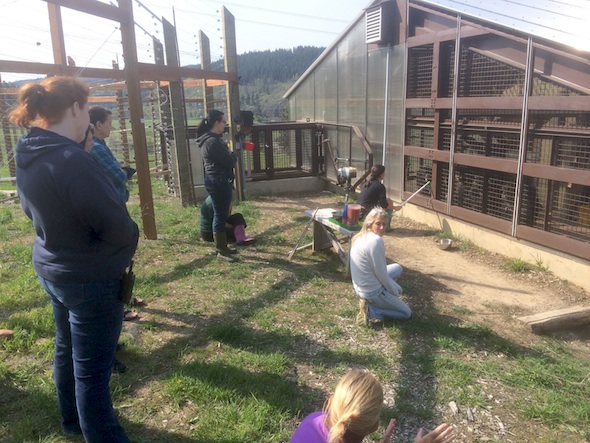
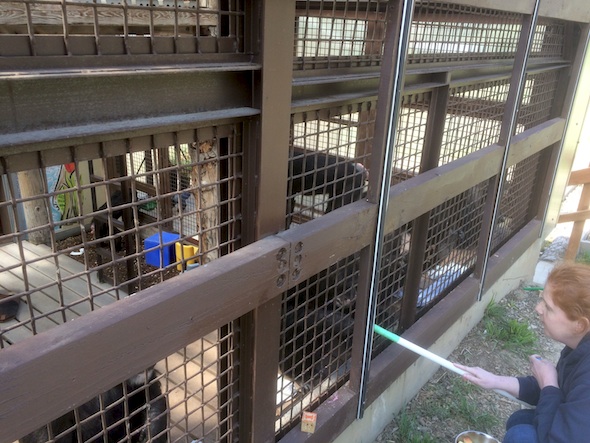
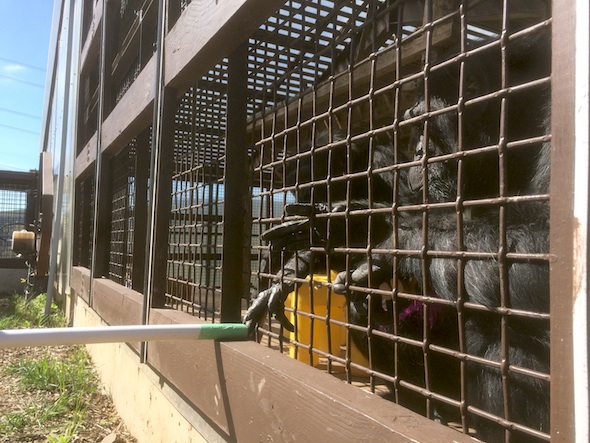
There are some challenges, of course. Jamie likes to be in control, and this new program has got her quite confused about who exactly is in charge here. So for now, the bulk of Jamie’s training consists of teaching her to allow us to work with the other chimps without interference. Negra, who suffered so much in her 35 years in the lab, was scared of the sound of the clicker, so she needed to be eased into training with more sensitivity. But while that first day was a bit of a challenge for Negra and her caregivers, imagine how she would feel if we had to dart her someday when she became ill. The beauty of PRT is that you can slowly and safely desensitize the chimps to frightening interventions so that when they are really needed, they can be performed with less stress and trauma.
But there is one chimp in particular that seems to enjoy training even more than the others, and who seems to have a particular aptitude for it. Any guesses?
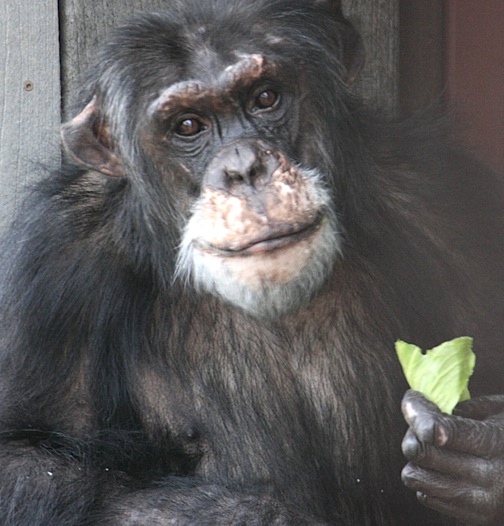
That’s right, Burrito has finally found something that combines his two greatest passions: eating and playing with his caregivers. He is going to ace this program.
All of the chimps are learning to touch a target and to present different body parts for inspection – this is how we might examine and treat wounds, for example, and it also creates the foundation for more complex behaviors. To perform his ultrasound, Burrito will have to hold his chest to the caging for an extended period of time, so our training with him is also focusing heavily on that. Here’s a quick clip to show you how well our star student is doing:
We are so grateful to NAVS for providing the funding for this training, to Gail for getting us off on the right foot, and to all of our supporters who make each day in sanctuary possible for these seven chimps. We are looking forward to sharing our progress with you!
Interning at CSNW
For years, Chimpanzee Sanctuary Northwest has relied on student volunteers from Central Washington University to help us care for the chimps. Last year, we formalized our relationship with the university to allow primate behavior students to gain experience at the sanctuary and learn from our staff as a direct part of their academic training. Students in the undergraduate Primate Behavior & Ecology program and graduate students in the Primate Behavior Master of Science program prepare for their internship at the sanctuary through a course called Procedures in Captive Primate Care, which is taught by CSNW staff. Then, they earn course credits by coming out each week to chop veggies, prepare enrichment, clean enclosures, and in some cases, provide direct care to the chimps. They get a chance to learn about chimpanzee behavior and husbandry while giving back to the chimps they are learning so much from.
All of our staff were trained in one way or another – either through an internship, undergraduate degree, or graduate degree – at Central Washington University, and we are happy to be able to help train another generation of primate caregivers, field researchers, conservationists.
Recently, our local NBC affiliate came out to the sanctuary to do a segment on the internship program:
NBC Right Now/KNDO/KNDU Tri-Cities, Yakima, WA |
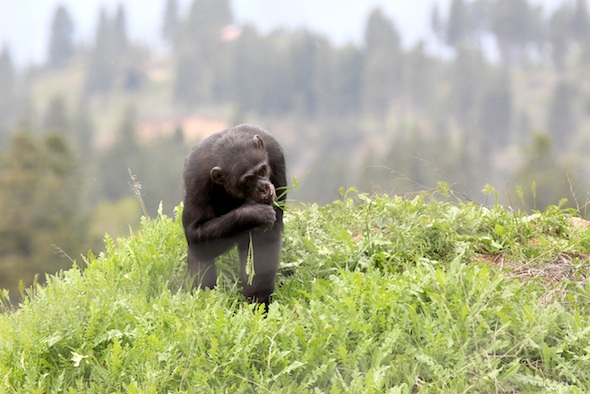
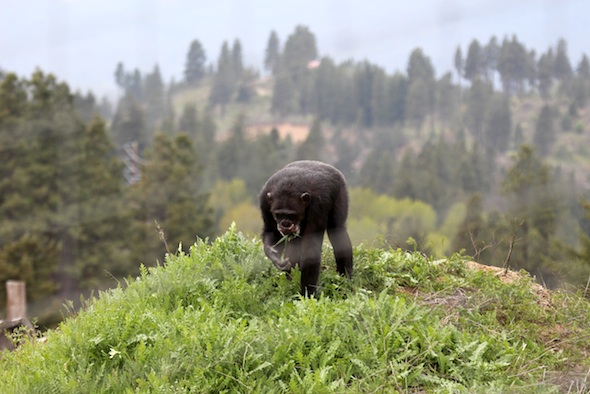
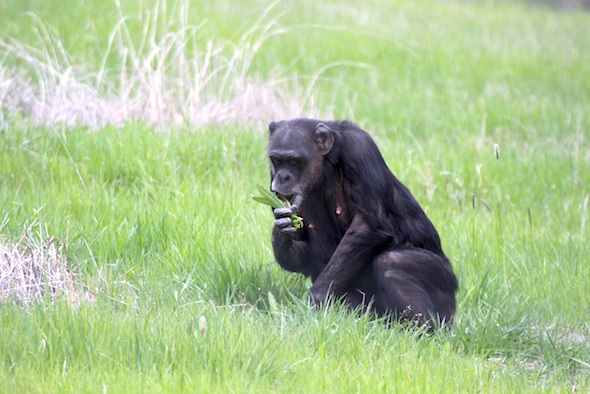
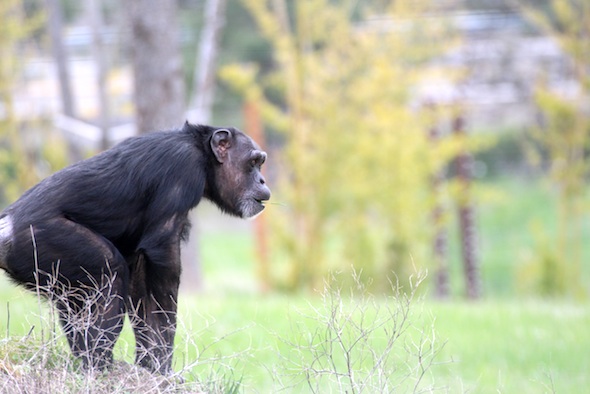
In other news, everything is green here at the sanctuary and the chimps are slowly eating their way through all two acres of grass and weeds on Young’s Hill.
Missy:
Jody:
Foxie:
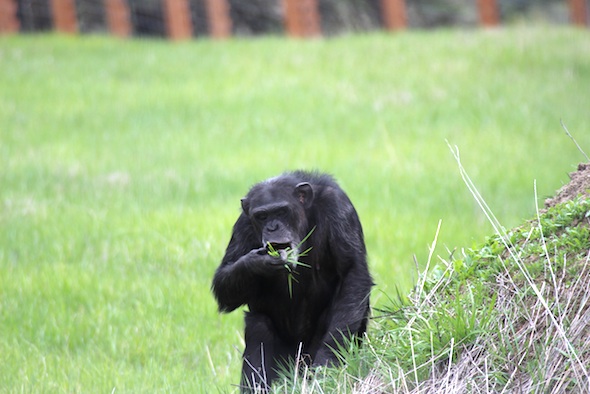
The Real First Day of Spring
March 20th may have marked the first official day of spring, but around here we follow a different calendar. It’s not truly spring until the ever-elusive Negra emerges from her playroom nest to bask in the sun and partake in the delicacy of fresh spring grass.
The first sighting is always accompanied by jubilant announcements over staff radios and a frantic search for cameras to document the occasion.
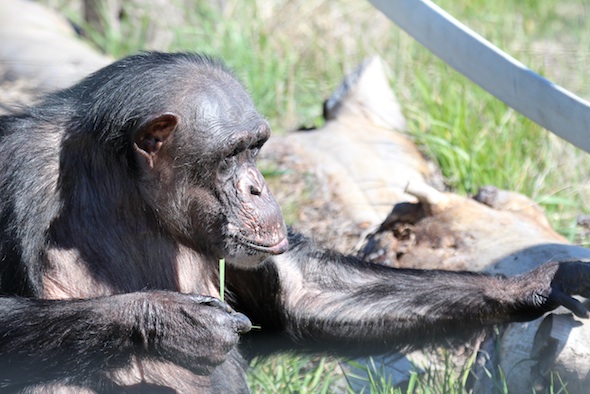
Of course, Negra has already gone out on the hill for forages this year, but always with a laser-like focus on collecting food and going back to bed indoors as quickly as possible. When spring arrives, she savors her time outside.
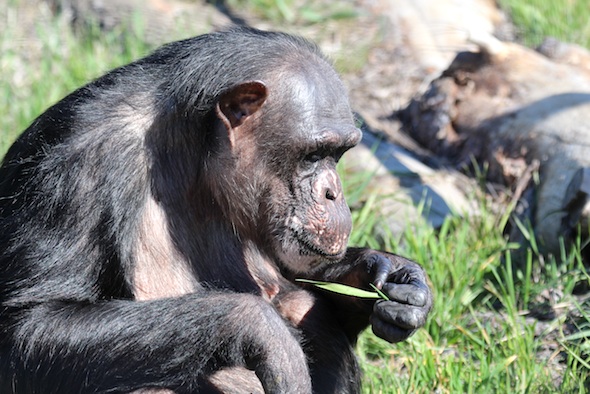
For a few short weeks, the grass will be sweet and tender. The cold winds of spring will begin to relent, and the scorching heat of summer will have yet to arrive.
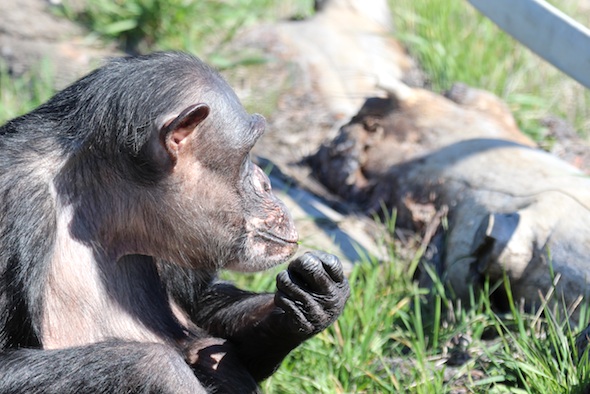
This is Negra Weather™, and we will all relish every minute of it while it lasts. For soon, she will disappear back into the pile of blankets from whence she came, only to reemerge when the conditions are just right.
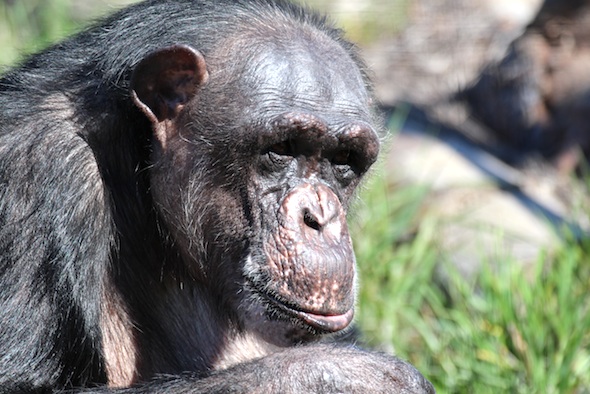
So, from Negra and all of us at CSNW, Happy First Day of Spring!