There are few things better than watching the chimps forage on wild plants. They’re abundant, enriching, healthy (the ones they choose to eat, anyway), and in some cases, even medicinal. I’ve always wondered about the way the chimps sometimes consume individual blades on grass. In Gombe, chimps have been seen swallowing the rough, hairy leaves of the Aspilia plant. Researchers believe the leaves contains antibiotic and anti-parasitic compounds and that the hairs on the leaves may work to mechanically remove parasites as they pass through the intestines. Whatever the CSNW chimps are doing, it’s different from the way they eat fruits and vegetables, and even different from the way they eat grass at other times (Burrito often eats spring grass by the handful). Do they know something we don’t? Or are they acting upon an instinct that’s been divorced from its evolved application, like the way they weave secure nests out of blankets even though the don’t sleep up in the trees? Maybe grass just tastes better one blade at a time.
plants
Jody the Harvester
Jody was quite busy this morning harvesting plants from a mound on Young’s Hill. This particular mound has been producing more and more edible vegetation each year.
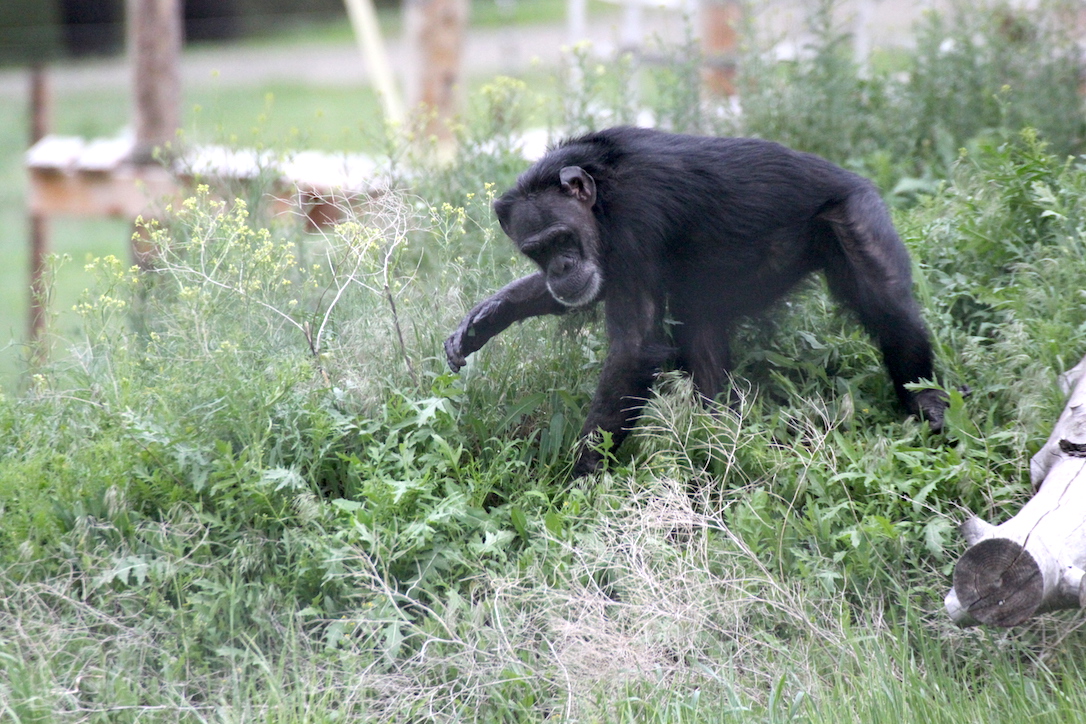
We call Jody “Farmer Jo” mostly because she collects the fruit and vegetable forages that we spread all over the hill and brings her collections in to the greenhouse in large armfuls, but today she was harvesting the natural plants and eating them as she harvested. And she looked quite beautiful while she was doing it.
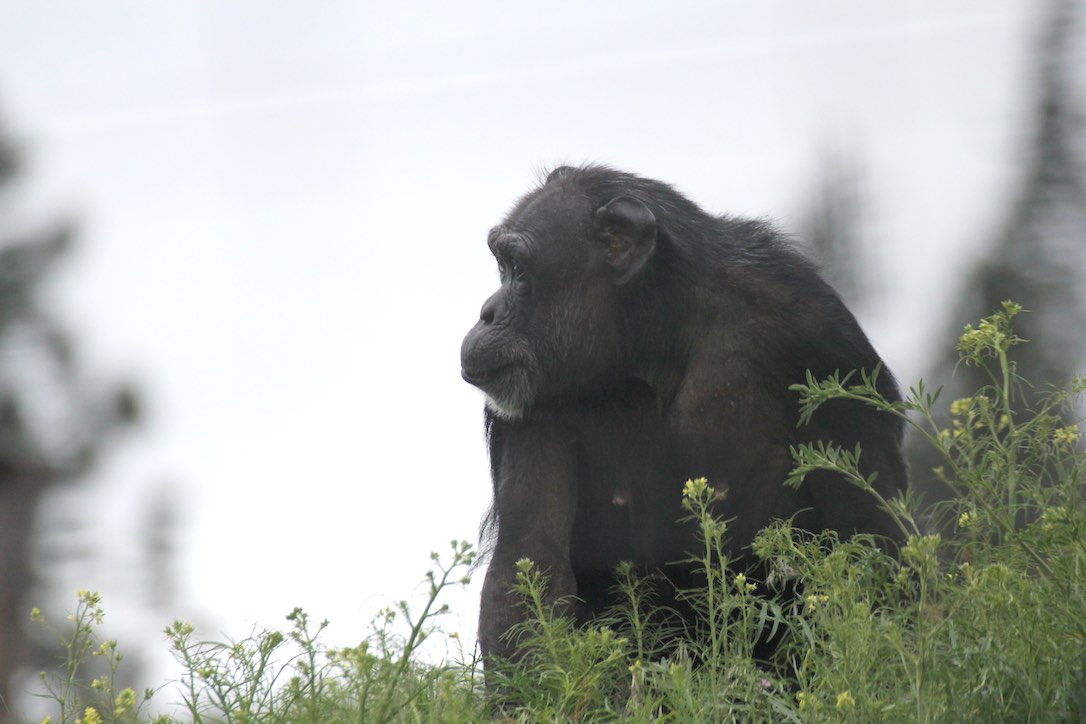
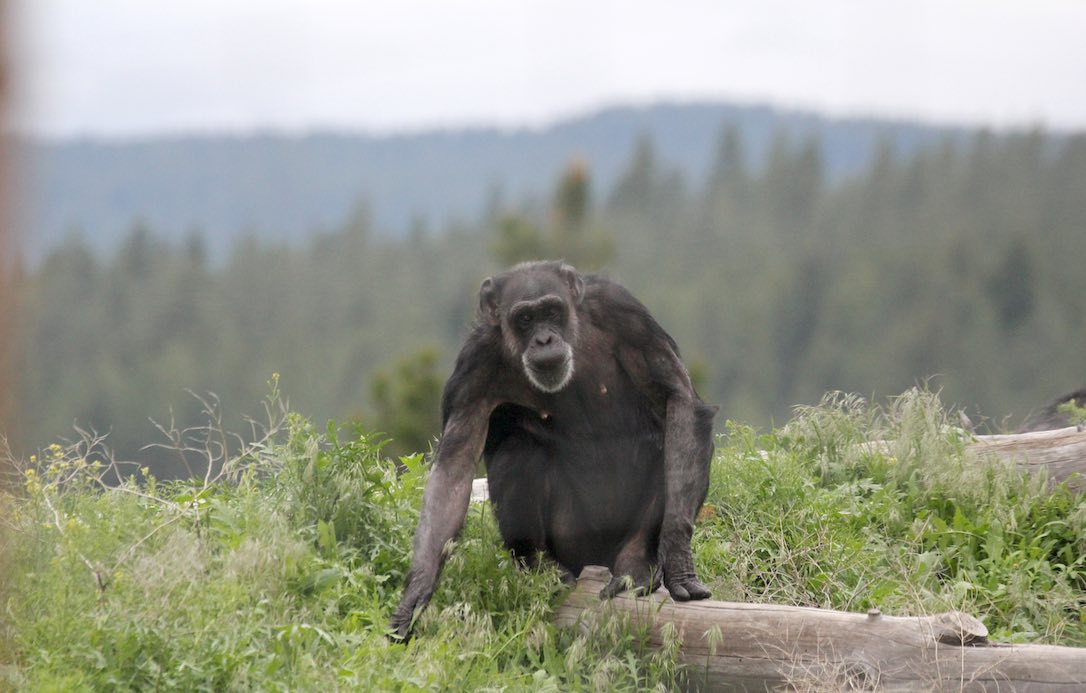
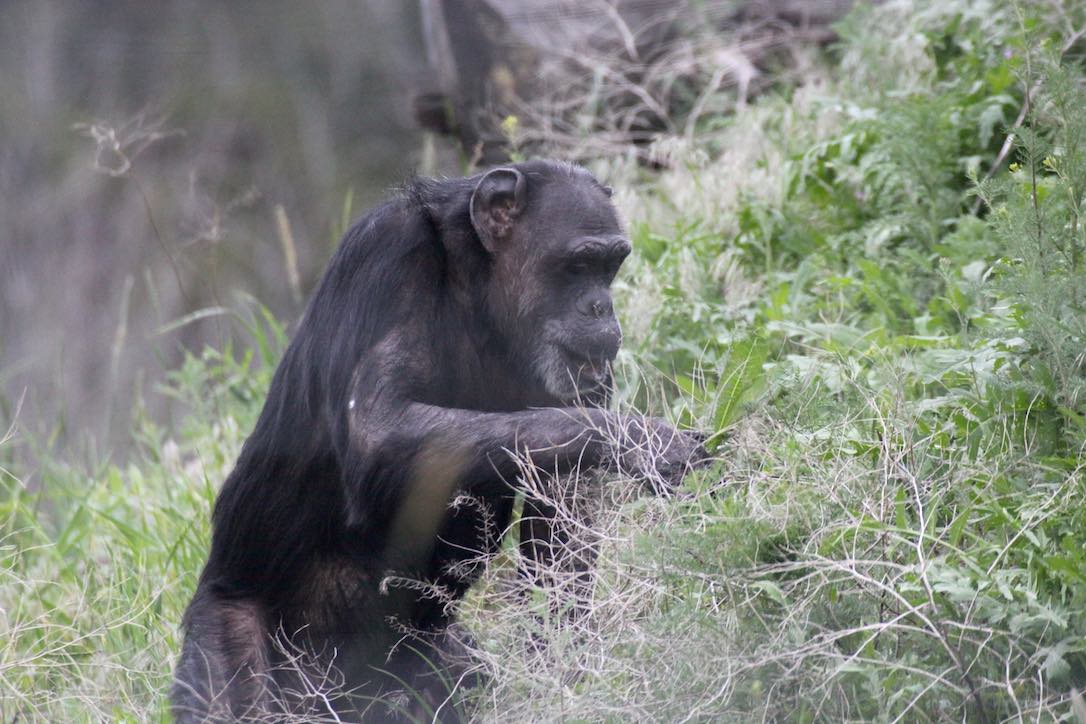
All you can eat
Chimpanzees seem to have a pretty good sense of time. Even if we haven’t started preparing dinner yet, the chimps at CSNW begin to gather near the window to the kitchen around 4 o’clock. They want to see what’s on the menu and remind us to hurry things along. But every once and a while, it remains ghostly quiet as dinner time nears – no one blowing raspberries at us, banging on the caging, clapping their hands, or stomping their feet. When this happens, it usually means one thing: They’ve started on dinner without us.
Chimps in captivity rely on humans for so much. Those who were wild caught, like Negra and Annie, were torn from their families, deprived of their native cultures, and forced into complete dependence on humans. And in some ways, they were the lucky ones, because those born into captivity never even got to experience a moment of independence in their lives. So when they learn to take back a tiny bit of autonomy, as they do when they choose when and what they’d like to eat, it is cause for celebration. And with two acres and a greenhouse full of bamboo and native plants, the chimps are able to make these choices every day.
Eating plants is good for their health, too. Chimps in the wild eat large quantities of rough fiber in the form of shoots, stems, and leaves. And while I don’t think we know yet exactly what role all of these foods play in their diet, we do know that this type if roughage allows captive chimps to snack all they want without putting them at risk for diet-related illnesses like heart disease and diabetes.
There are currently seven species of bamboo growing on Young’s Hill, and the chimps harvest from them year-round. Surprisingly, the bamboo on the hill seems to be prized most for its leaves, and the chimps tend to leave the fragile (but I would imagine tasty) shoots alone.
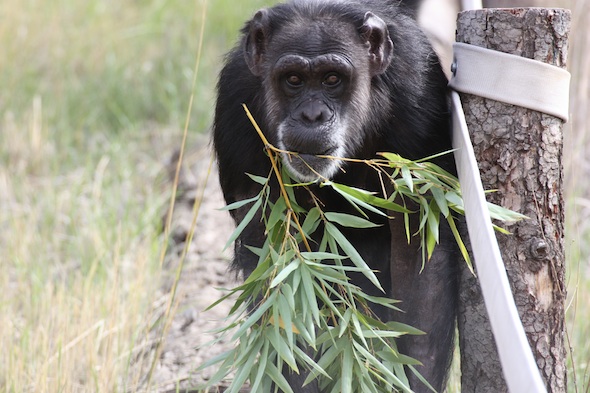
A few other species of bamboo that are more sensitive to Cle Elum’s chilly winters do very well in the chimps’ greenhouse enclosure, and send up their tender shoots (Chusquea gigantea shoots seems to be a delicacy) as early as March.
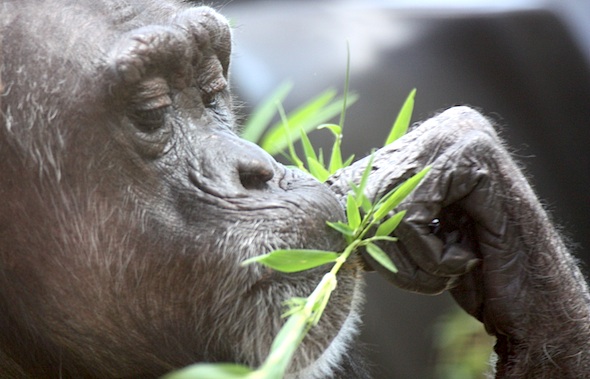
But in May, all of Young’s Hill becomes an all-you-can-eat salad bar. Even Negra will sit outside to snack on fresh dandelion greens.
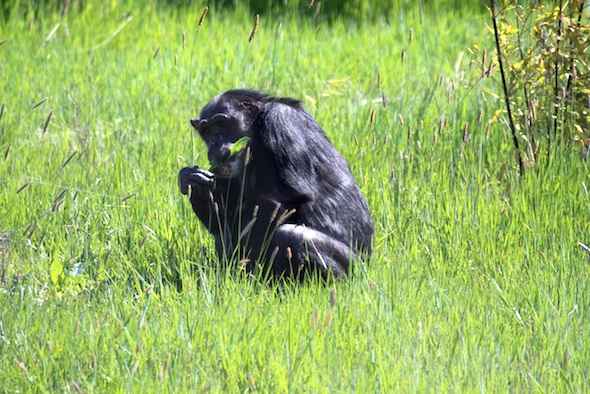
Missy, always on the move, takes hers to go.
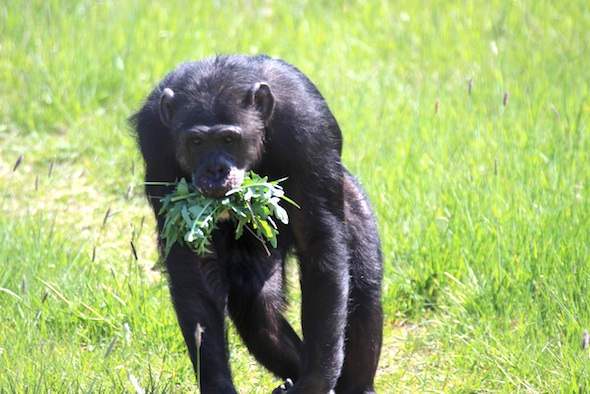
Spring grass is a favorite of nearly all the chimps. Annie collects only the best blades to bring back to the greenhouse.
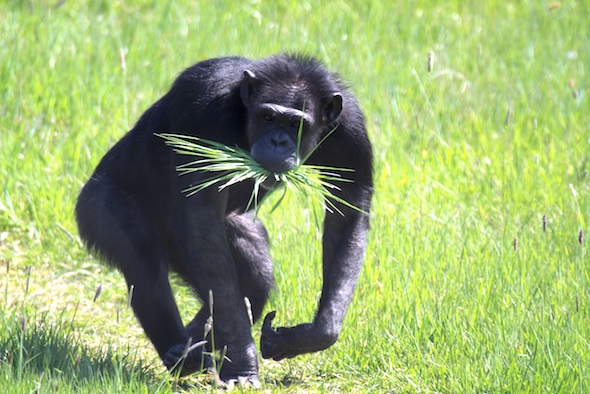
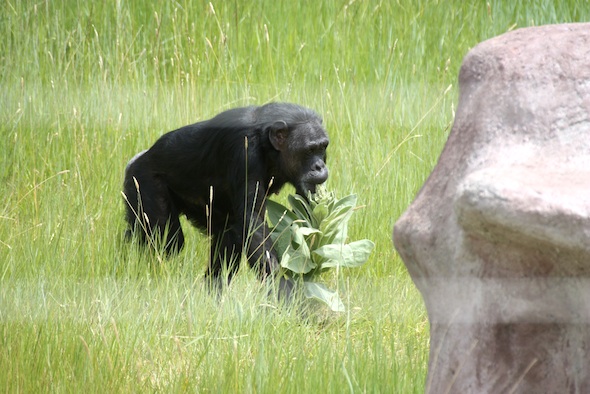
In mid-summer, some larger plants begin to grow. Most people would consider them weeds, but the chimps think otherwise. Jody likes mullein, which I imagine to be the equivalent of eating bitter craft felt, but Jody must have a more refined palette.
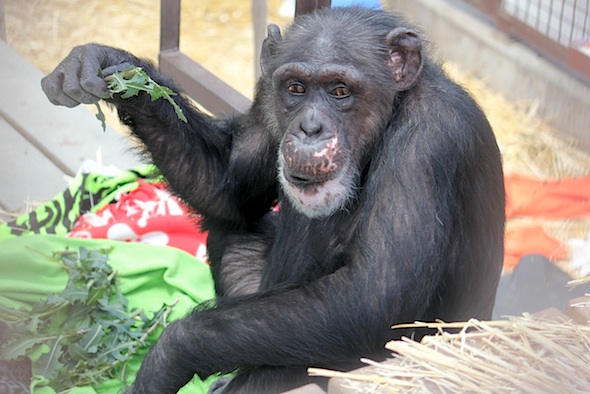
Missy and a few others like prickly lettuce, which we mistook for dandelions for a while until we picked up some of their leftovers – they are just as prickly as the name suggests. Just like in the wild, captive chimpanzees will sometimes eat foods that are physically difficult to ingest. While many of the plants consumed by wild chimps have been shown to have medicinal value, such as the anti-parasitical Aspilia leaves, we don’t know if captive chimps are attempting to self medicate or are just eating adventurously.
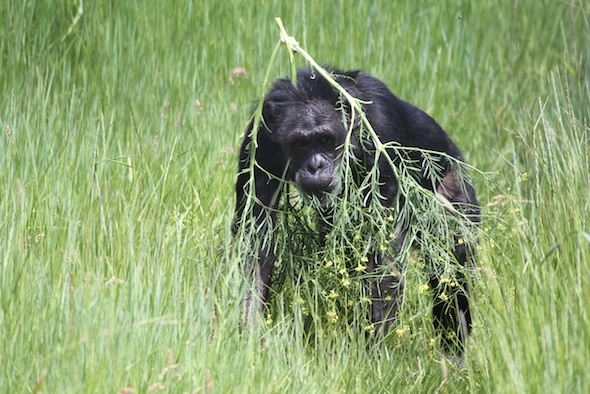
The bane of my existence is this wild mustard. It grows so big and tough that it will break your weed eater. But when it grows inside the chimps’ enclosure, it gets taken care of by nature’s weed eater, otherwise known as Jody.
The chimps could never live on these plants alone, even if they do supplement with the occasional live frog like Negra does. But they are important in other ways. Like tonight, when the chimps all disappeared onto the hill just before dinner, you could almost hear them saying:
To heck with the humans, let’s eat!
Foraging for native plants
One of our goals as a sanctuary is to give the chimps as much independence and autonomy as we can, given the inherent limitations of captivity. So we’re thrilled to see them finding their own food on Young’s Hill. Right now, their favorites include grass, dandelion leaves, and prickly lettuce. There are two bamboo groves on the hill, but the chimps haven’t taken much of an interest in eating them as of yet (climbing them is a different story). Of course, none of this will take the place of the meals we serve throughout the day, but it’s nice that the chimps can head out and grab a light snack whenever they want.