• Skip to main content
  • Skip to primary sidebar
  • Skip to footer

Chimpanzee Sanctuary Northwest

Hope. Love. Home. Sanctuary

  • Our Family
    • The Chimpanzees
    • The Cattle
  • Blog
  • About Us
    • Visiting the Sanctuary
    • Philosophy
      • FAQs
      • Mission, Vision & Goals
      • Privacy Policy
    • The Humans
      • Staff
      • Board of Directors
      • Founder
    • Annual Reports
    • The Future of CSNW
    • CSNW In The News
  • You can help
    • Donate
      • Become a Chimpanzee Pal
      • Sponsor A Day
      • Transfer Stock
      • Be A Produce Patron
      • Be a Bovine Buddy
      • Give from your IRA
      • Personalized Stones
      • Bring Them Home Campaign
    • Leave A Legacy
    • Employment Opportunities
    • Volunteer
    • See Our Wish List
    • Events
  • Resources
    • About Chimpanzees
    • Enrichment Database
    • Advocacy
      • Advocacy Action Center
      • Apes in Entertainment
        • Trainers
        • Role of the AHA
        • Greeting Cards
      • Chimpanzees as Pets
      • Roadside Zoos
      • Chimpanzees in Biomedical Research
      • Conservation
        • African Apes
        • Orangutans
  • Shop
    • Merchandise Store
  • Contact
  • DONATE NOW

Sanctuary

Jody’s story

June 11, 2013 by Debbie

We are continuing with our chimpanzee profiles leading up to Give Five Day and the five-year anniversary of the chimpanzees’ arrival to sanctuary on June 13th. Today we feature Jody.

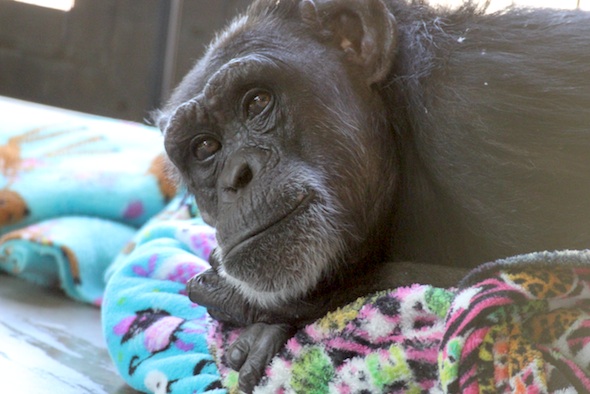
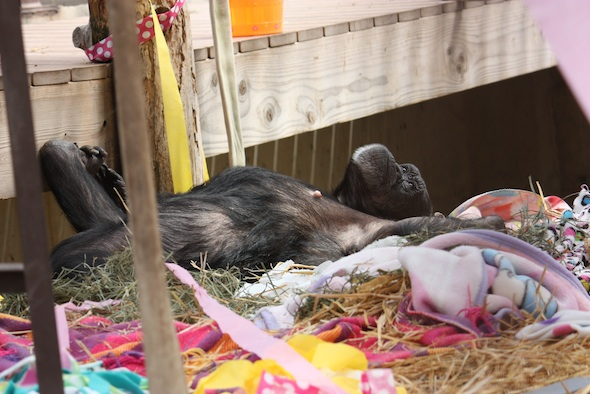
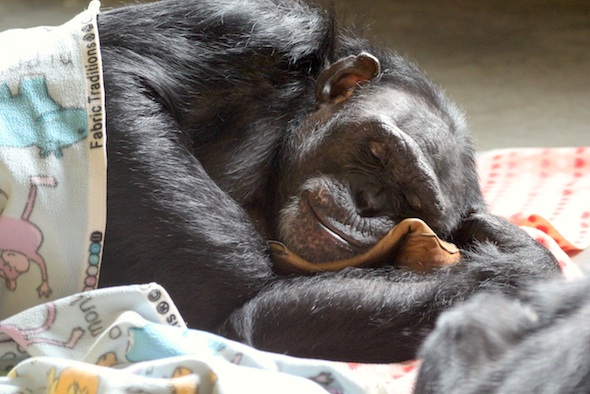
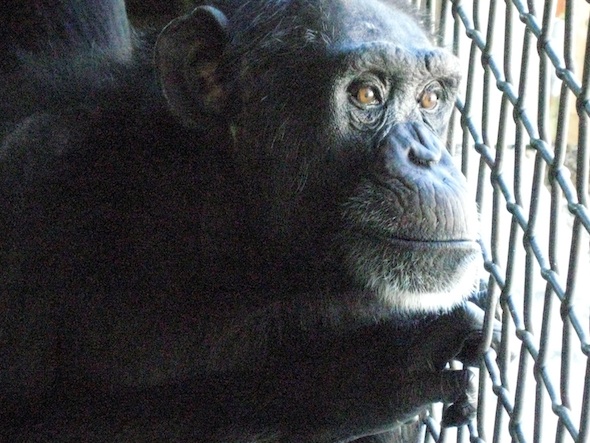
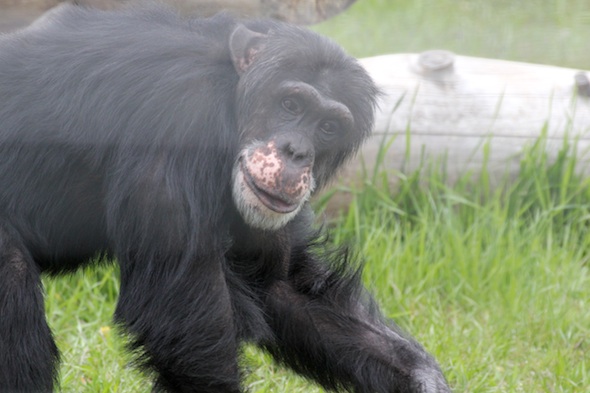
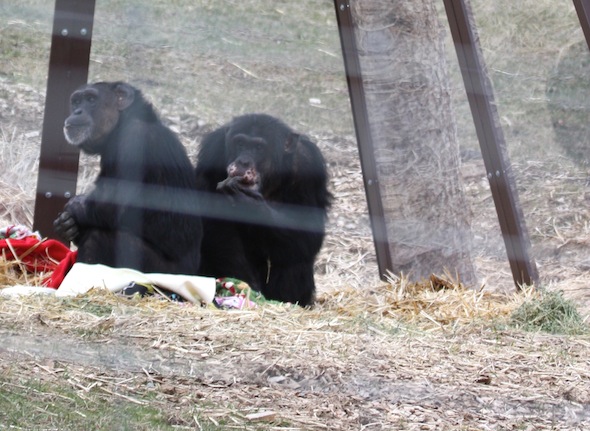
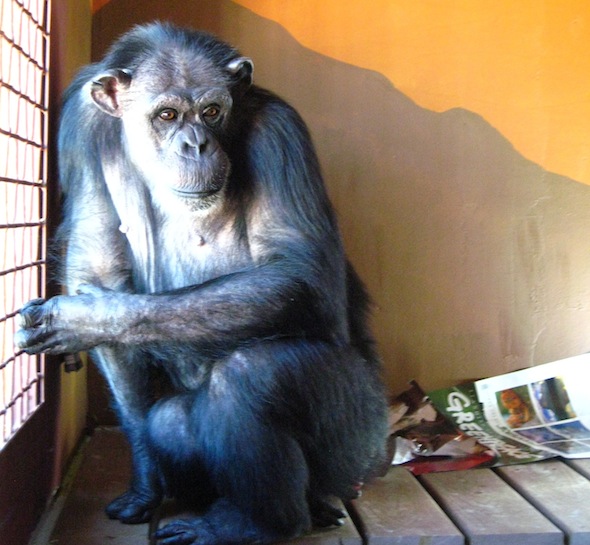
Jody has a unique personality. She’s very serious and independent, but also caring and kind, and will happily greet her caregivers every morning. She has beautiful, soulful eyes (something J.B. noticed when they first met at Buckshire). She loves to lounge around in the afternoon in the warm greenhouse, and builds the most fantastic nests. Seeing Jody nest is really fascinating. She is very diligent in the process—she seems to take it pretty seriously and sometimes she will have very elaborate nests. Lately, she’s been interested in nesting with the bamboo we planted in the greenhouse.

Jody was a little timid to go out on Young’s Hill at first, but after some encouragement she became fearless and will spend a long time out there—sometimes she is hiding behind structures and we have trouble finding her!

She is also very helpful. She will sometimes pull blankets out of doors when we ask nicely so that we can close them, and she will also “round up” stragglers at meal times, to get them to come out to the greenhouse for breakfast.

We celebrate Jody’s birthday on Mother’s Day, in honor of the 9 infants she had but was never able to properly care for as their mother. Jody’s records say that she was born in 1975, possibly from the wild, and that she may have spent a few years in a circus. Buckshire purchased Jody, and then in 1981 she was shipped to White Sands to be used in hepatitis research and for breeding. On her tenth day, she had her first knock-down. If her birth year is correct, she was six years old. She was given a new tattoo – “WSRC #37.”

Over the next year and a half, Jody was regularly transferred between cages. Sometimes she was with another female, sometimes by herself, but usually she was with a male for breeding purposes—Max, Mack, John, Magoo, and others all in an attempt to create the next generation of lab chimpanzees.

In January 1983, Jody gave birth for the first time. She was eight years old. The technician’s notes read:

1/4/83 – 4cc Ketaset IM. Delivered infant baby male – taken away to nursery… Baby – Male WSRC #66 OPY – appears healthy.

Jody never got to nurse Opy, or hold him, or carry him on her back, or teach him about the world. She was immediately knocked down with ketamine (a.k.a. Ketaset) and her baby was stolen. The “IM” in these notes stands for “intramuscular” meaning she—like all the other mothers—was being stabbed with syringes or shot with darts.

Six weeks after delivering and losing her first baby, Jody was put into a cage with a male named Rufus for breeding, and the cycle continued. She would go on to have eight other babies—Levi, April, Cliff, Clay, Adam, Andrea, Bart, and Taylor—as well as two miscarriages in just ten years.

11/23/83 – 4cc Ketaset IM. Delivered healthy infant male #88… removed and taken to nursery (Levi).

6/20/84 – Found approx. 2-month old fetus + placenta in cage this a.m.

4/26/85 – Delivered healthy looking baby at 10:30pm… 3cc Ketaset IM. Not taking care of baby. Infant removed to nursery (#119 April). Animal does not appear to be feeling well. Did not eat any fruit this date.

3/15/86 – Delivered healthy infant early a.m. this date. 3 1/2 cc Ketaset IM. Mother was leaving infant on the floor – infant removed + taken to nursery. Appears to be a healthy animal #142 Cliff, male.

5/20/87 – Delivered healthy male infant between 11:30 and 12:00 pm… 5cc Ketaset IM. Infant male #162 Clay removed and taken to nursery, Mother leaving infant unattended.

4/26/88 – PATHOLOGIST’S NOTE: Bloody mass found in cage – test indicates spontaneous abortion due to acute, hemorrhagic placentitis

1/4/89 – Arrived for night checks at 10:15pm… found infant alive in cage no more than one hour old – mother not taking good care of infant. 4 1/2 cc Ketaset IM. Removed infant male #0187 – appeared healthy.

9/30/90 – Delivered healthy infant female approx. 4 to 6 a.m. this date. Mother not taking good care of infant- leaving infant on floor unattended. 4 1/2 cc Vetalar IM, infant removed to nursery (#215 Andrea).

1/14/92 – Delivered healthy male at approx. 2:50pm this date. Mother not taking good care of baby. Leaving baby on floor unattended. 4.5 cc Vetalar IM Infant removed at 4:05pm, taken to nursery. Drew milk out for baby. (#226 Bart).

2/19/93 – Delivered infant early a.m. this date. 0515 hrs found infant on cage floor. Infant very cold. Removed infant immediately to nursery, mother not caring for infant. Infant male #236 Taylor.

Jody had the potential to be a great mother, but after being stolen from her own mother and forced to live in a lab, where baby after baby were taken from her, she was not attending to her infants the way she would have in a more natural environment. It really isn’t at all surprising that Jody wouldn’t create a bond with her infants when she had never had one with her own mother. She deserved to be raised with her mother and to learn what it is like to be loved unconditionally, and she deserved the chance to show her own children the same love.

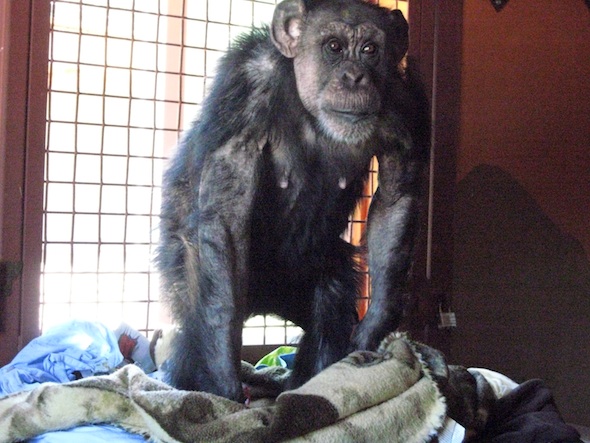
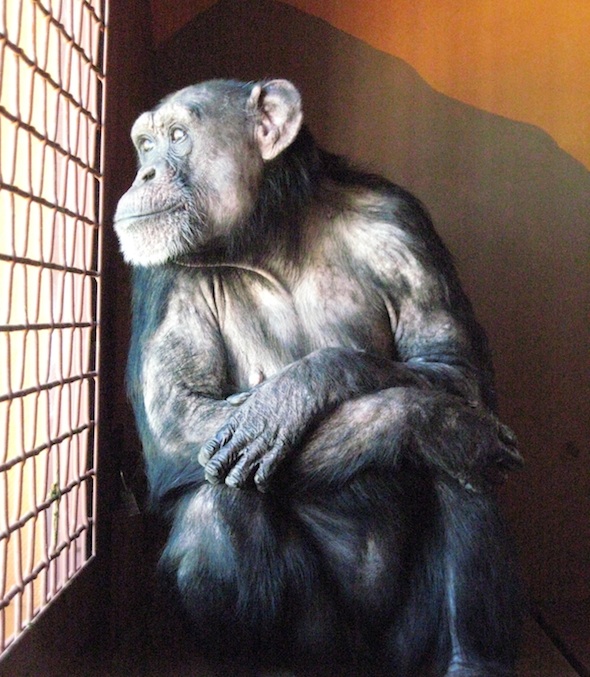
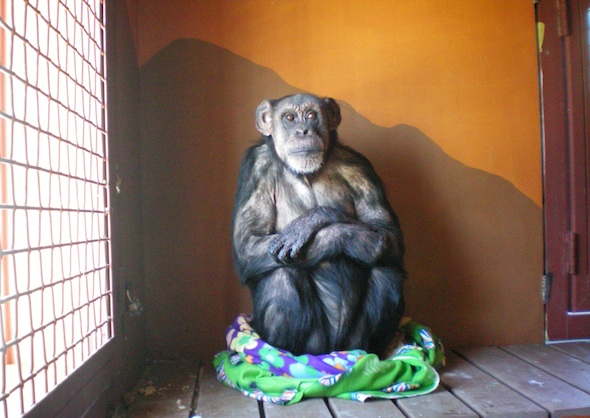
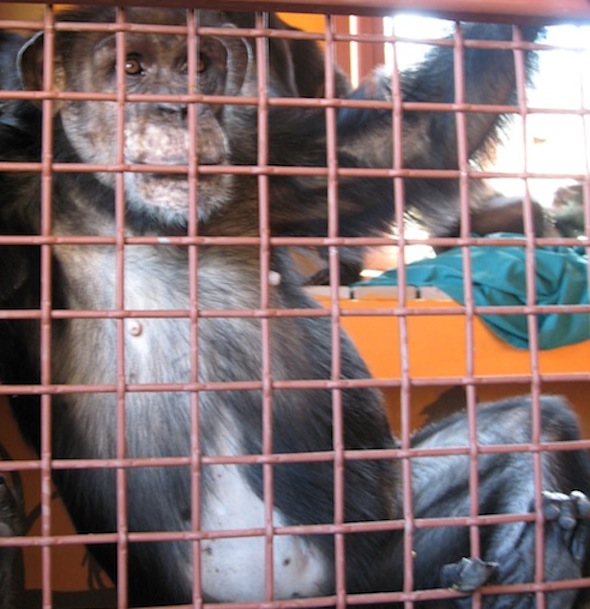
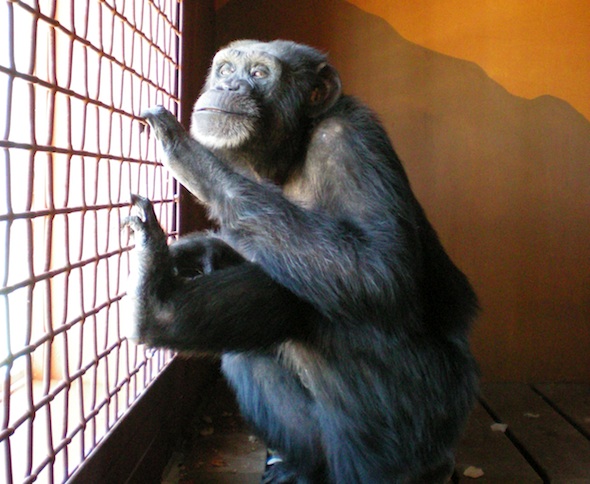
Jody, upon arrival at CSNW:
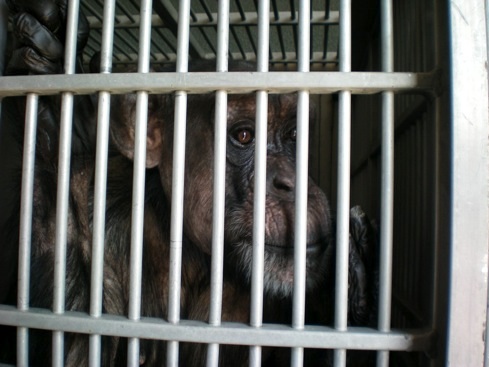
web Jody transfer cage 100_0155

web jody stand in nest blanket FR 4 day 3 Picture 067

web jody look out window 3rd day Picture 054

web jody early FR4 100_0345

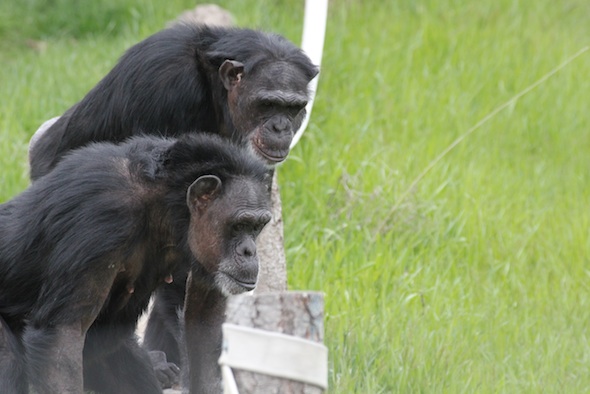
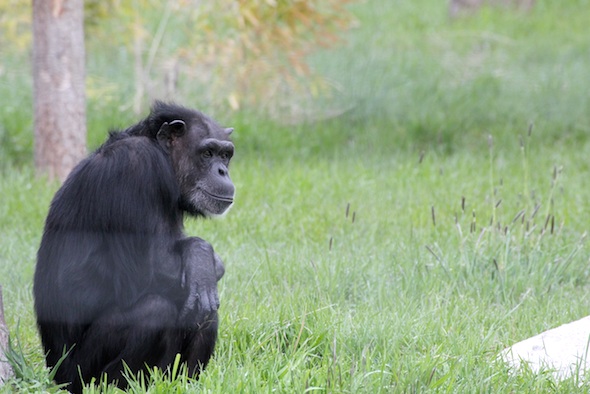
We sadly can’t make everything right again, and we can’t undo what’s been done. But what we can do is honor Jody and make every day more interesting and more exciting than the last. Now she can build elaborate nests with blankets and paper and bamboo shoots if that’s what she prefers, she can play wrestle with chimpanzee friends and groom in the comfort of a safe home, and she can explore her expansive open-air enclosure and feel the sun over her—something she likely hasn’t felt since she herself was a baby in the forests of Africa.

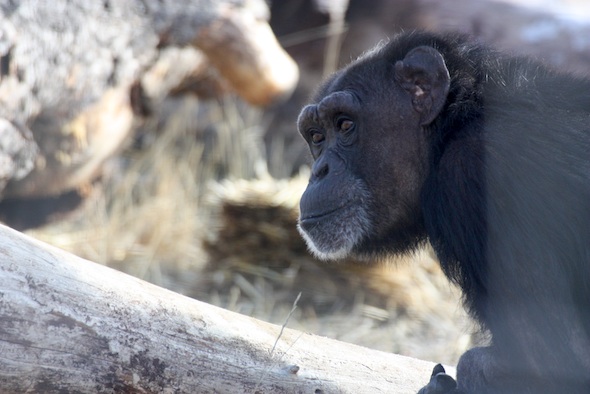
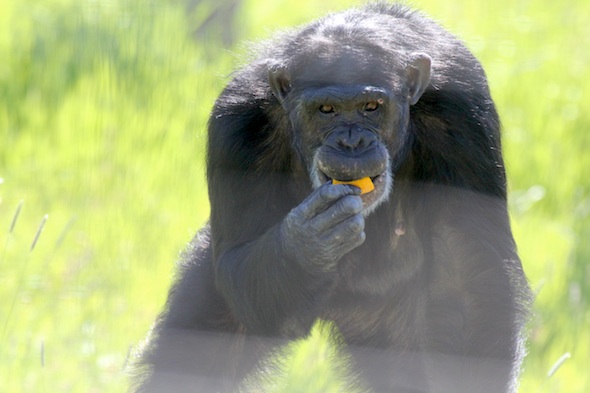
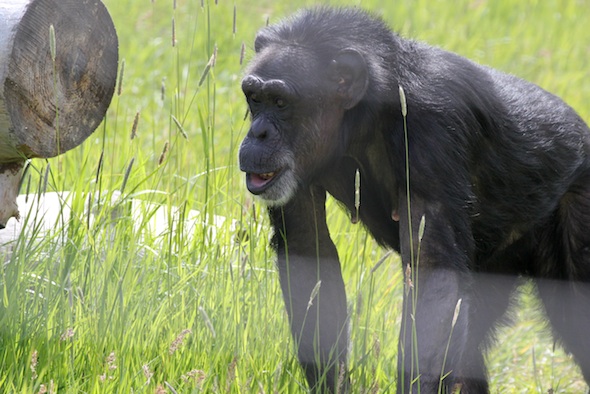
Jody after five years in sanctuary:
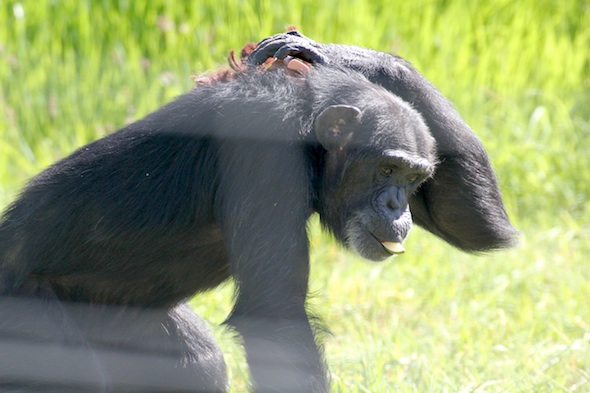
web Jody droopy lip grass yh IMG_8648

web Jody profile YH IMG_2467

web Jody best new blankets nest playroom IMG_2376

web Jody lie in blanket nest birthday party mother's day greenhouse GH IMG_1965 resized for Jody Pals

For five years Jody has been in sanctuary, free from all the horrors of the lab. Give Five in Jody’s honor today.

Filed Under: Chimp histories, Chimpanzees in Biomedical Research, Jody, Sanctuary Tagged With: advocacy, Animal Welfare, biomedical research, Buckshire, chimpanzee rescue, Cle Elum 7, coulston foundation, csnw, Jody, primate protection, Sanctuary, white sands research center

Take Action Tuesday: Split-listing may be removed!

June 11, 2013 by Debbie

EOA take action tuesday

This morning the US Fish and Wildlife Service (FWS)  announced that they are proposing to remove the split listing between captive and free-living chimpanzees, making ALL chimpanzees endangered. This potentially will have a major influence on how chimpanzees are treated in this country. It will certainly have an impact on invasive research and most likely entertainment as well.

Read our press release on the proposal and see this news article featuring a photo of CSNW’s resident, Jody (read her story here).

At this moment, the FWS  has only made a proposal and this does not guarantee that it will be passed.  The FWS is currently accepting public comment, so we need your help! Please leave a comment here to express your thoughts on this issue. Let them know that chimpanzees should be regarded as an endangered species and that the hundreds of chimps still in labs and entertainment truly deserve to be in sanctuaries. Spread the word!


Filed Under: Advocacy, Apes in Entertainment, Chimpanzees in Biomedical Research, Free-living chimps, Sanctuary Tagged With: advocacy, animal protection, animal rescue, animal rights, Animal Welfare, chimpanzee, chimpanzee rescue, chimpanzee retirement, chimpanzee sanctuary, Cle Elum Seven, csnw, endangered, eyes on apes, FWS, Jody, primate protection, primate rescue, Sanctuary, split-listing, US fish and wildlife

Jamie’s story

June 10, 2013 by Debbie

Jamie is probably the smartest primate you’ll ever meet. Her exact birthdate is unknown, but she was likely born in 1977. We celebrate her birthday on Halloween every year – it fits her mischievous personality. Jamie’s early years were spent around humans. She lived with a trainer and was probably used in some form of entertainment. She was clearly exposed to a lot more human-like things than most lab chimpanzees are.

Jamie’s records are really scarce. What we can decipher is that Buckshire likely purchased Jamie in the mid 80s, after she was with a trainer for about nine years. After that, she may have been leased to the Laboratory for Experimental Medicine and Surgery in Primates (LEMSIP) in New York, where she was given the tattoo “#CH522.” She was likely used in hepatitis B vaccine trials, and possibly as a breeder, though we have no records of any offspring.

Jamie’s tattoo on her chest reads “522.” On her first day at CSNW, you could still make it out on her pale skin:

web jamie tattoo early Picture 020

All of the technician notes from Jamie’s physicals including something along the lines of “pulls hair from stomach.” In captivity, and especially in dismal conditions, chimpanzees will develop stereotypic behaviors such as over-grooming by pulling their hair. Diana noted Jamie’s bare belly on their first visit to Buckshire. In the lab, Jamie had very little choices and zero control over her life. She resorted to pulling her hair out due to pure boredom.

web jamie bare belly early

Unfortunately, Jamie still exhibits this behavior. For the first year she was at the sanctuary, we saw no sign of her hair plucking. Now it varies from no sign at all to a small, bare patch. Though her environment has improved exponentially, the habits that chimpanzees pick up in situations of deprivation often continue even when their environment improves. And no captive situation can provide the rich social, emotional, and mental stimulation that chimpanzees evolved to experience. It is unfair that Jamie has to live in captivity, and we think she knows that.

It’s impossible to imagine Jamie in a small biomedical cage with nothing to keep her mind stimulated, and we’re so happy that we can now provide ways for her to stay active. Whether it’s drawing, putting together tools, taking things apart, working on a tricky project, getting a new boot, or expressing her innate chimpanzee-ness on Young’s Hill, these are all things that she did not have during her decades when she was viewed as a mere tool for biomedical progress.

Jamie enjoying a piece of fruit from her breakfast forage:

web Jamie stand eat food orange peel look at camera YH (ek) IMG_8958

Jamie and Jody investigating something on the hill:

web Jamie Jody search for critter log bridge YH IMG_6791

Jamie, quite content, taking a nap with a boot:

Jamie with her boot

Celebrate the “boss lady” and her amazing new freedom she has in sanctuary. Give Five today and share with your friends!

Filed Under: Apes in Entertainment, Chimp histories, Chimpanzees in Biomedical Research, Jamie, Sanctuary Tagged With: advocacy, Animal Welfare, biomedical research, Buckshire, chimpanzee rescue, chimps in entertainment, Cle Elum 7, csnw, Jamie, LEMSIP, pets, primate protection, Sanctuary

Foxie’s story

June 9, 2013 by Debbie

Foxie might be the silliest being I’ve ever met. She truly can brighten anyone’s day with her bouncy head nods and loud laughter—even Jamie—the most serious being I’ve ever met, is entranced with her charm and playfulness. Foxie steals peoples’ hearts with her love of trolls and Dora dolls, especially when she rubs their belly on her own. She’s sweet, kind, and truly resilient. Read what Diana said about Foxie when they first met at Buckshire.

Foxie was born on August 8, 1976 at Southwest Foundation for Biomedical Research in Texas (which became Texas Biomedical Research Institute and still houses chimpanzees for research). Buckshire purchased Foxie in 1983 and then leased her to Michale E. Keeling Center, another biomedical lab also in Texas. She was there for two years before being shipped back to Buckshire in October 1985. We don’t have any records of her early years, just that she was used in hepatitis A vaccine trials. In November 1985, she was shipped down south again to White Sands Research Center in New Mexico. Foxie was known as “#CA0130” at Buckshire and WSRC. At SFBR her tattoo was “#4-051.”

In two years, Foxie moved from one lab to another, back to Buckshire, and then to yet another lab. At WSRC she was used as a breeder. On December 21, 1987, she gave birth to Angie (who now, thankfully, lives at Save the Chimps in Florida) who was taken from her right away. Foxie also gave birth to Kelsey in 1989 and a set of twins, David and Steve. All were taken away from her within days of their births. She left Coulston on August 13, 1996 and remained at Buckshire for the next 12 years.

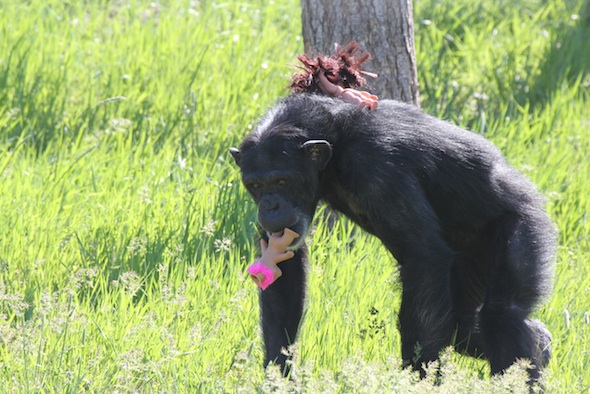
Foxie is known at CSNW for her love of troll dolls (and also Dora the Explorer dolls). Though it can seem endearing how she loves and hugs her dolls, it’s also a sad reminder that Foxie was never able to keep a baby of her own. She would get knocked down, and wake up with her babies stolen from her. After being traumatized in the lab, Foxie not surprisingly has likely suffered some psychological distress. She doesn’t really nest with blankets like the other chimpanzees do, and she doesn’t care about a lot of other enrichment unless they are her dolls that she adores.

Foxie is extremely forgiving. For all that humans have done to her—shipped her around, injected her with vaccine tests, and stolen her babies—she’s surprisingly very energetic and interactive with the humans. She can make anyone smile with her playful spins and pirouettes. She probably would have made an excellent mother if she’d been given the chance, but at least in sanctuary she is able to take her dolls with her outside, forage for fruit which she loves, and do somersaults and acrobatics that she never had the space to do in the labs she was caged in.

web foxie look out window early FR 4 100_0324

When Foxie first came to CSNW she was curious about the outdoors, which she’d never really experienced before.

web foxie look out barn doors curious early Picture 031

Now, Foxie confidently takes her precious dolls with her on adventures around Young’s Hill.

web Foxie walk put dora on back fruit in mouth forage YH (ek) IMG_9106

web Foxie walk YH troll in mouth dora on back IMG_7656

Give Five today to keep Foxie’s belly full of delicious fruit smoothies! (her favorite).

Filed Under: Chimp histories, Chimpanzees in Biomedical Research, Foxie, Sanctuary Tagged With: advocacy, angie, Animal Welfare, biomedical research, Buckshire, chimpanzee rescue, Cle Elum 7, coulston foundation, csnw, Foxie, primate protection, Sanctuary, save the chimps, white sands research center

Burrito’s story

June 8, 2013 by Debbie

Burrito is super goofy. He is often sweet and playful with caregivers – he likes to play chase and tug-of-war (though he does also have other sides to his personality). Seeing him play with his friend Foxie is one of the greatest sites to behold. He’s even goofy when he’s found a toy he decides to play with on his own.

Before the chimpanzees came to the sanctuary, Keith, J.B., Sarah, and Diana all met them while they were still in the basement at Buckshire. Read Diana’s first impressions of Burrito from January, 2008.

It’s easy to forget about Burrito’s past when he’s being happy and goofy, and we hope that he doesn’t think about it much either.

Burrito was born at White Sands Research Center on January 6, 1983. His father Mack was the father to many chimpanzees born within the laboratory.  At birth, Burrito was immediately taken from his mother, Karen, and placed in the “nursery” at White Sands. He was named “WSRC #67 – Raj” and was used in hepatitis B vaccine safety trials beginning in December 1984, when he not even two years old.

Burrito never had a chance to truly be a chimpanzee before coming to the sanctuary.

On August 1, 1986 Raj was shipped to the Buckshire Corporation in Pennsylvania. He lived as a “house chimp” until February 1987 when his named was changed to Burrito, and he was then leased to an “animal act” with Jungle Larry until February 1988. Then he returned to Buckshire.

We don’t have any records for Burrito beyond that point, so it’s possible that he stayed at Buckshire for the next 20 years. Burrito’s early days were absolutely deprived of the nurturing care and attention chimpanzees need from their mothers to learn the skills to make it in the world. It’s not surprising at all that Burrito never really learned how to be a chimpanzee. At CSNW, the first time he swung across the posts in the outdoor area was so moving. Burrito can now, finally, be a chimpanzee. Watch this video of Burrito brachiating.

Burrito, just a few days after arriving at CSNW:

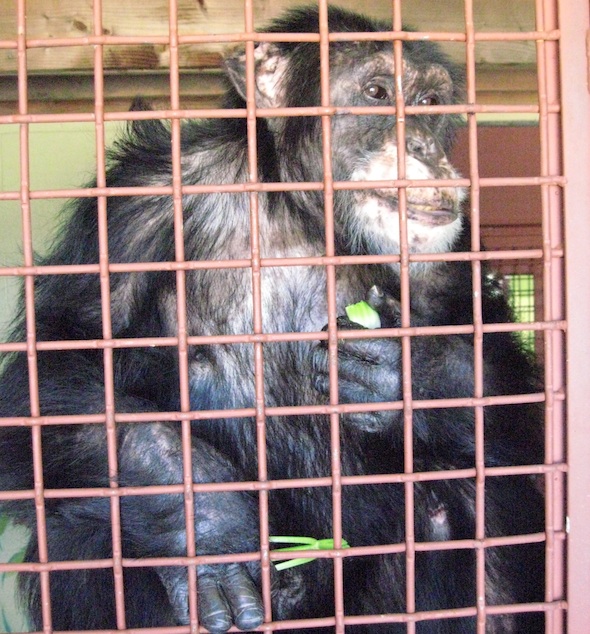
web burrito eat celery FR caging early Picture 009

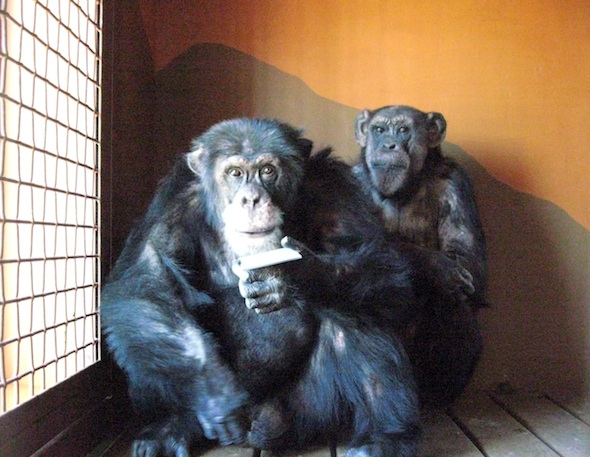
Burrito and Jody in June 2008:

web burrito with mirror jody in back FR 4

Burrito has not always displayed the greatest confidence, especially with new things, but with every day that goes by, Burrito confidence grows and his bravery increases. After all Burrito has gone through, our hearts fill with so much pride when we see him displaying his “chimpanzee-ness” like he should have always been free to do.

Burrito on Young’s Hill:

web Burrito walk face camera Young's Hill YH IMG_6664

Burrito with Jody, nearly five years in sanctuary:

web cropped cabin burrito jody

Celebrate Burrito’s five years in sanctuary: Give Five today!

Filed Under: Apes in Entertainment, Burrito, Chimp histories, Chimpanzees in Biomedical Research, Jody, Sanctuary Tagged With: advocacy, Animal Welfare, biomedical research, Buckshire, Burrito, chimpanzee rescue, chimps in entertainment, Cle Elum 7, coulston foundation, csnw, primate protection, Sanctuary, white sands research center

Annie’s story

June 7, 2013 by Debbie

Leading up to the five year anniversary next week, we wanted to share the stories of each chimpanzee before they came to CSNW. Annie, Burrito, Foxie, Jamie, Jody, Missy, and Negra all were housed in a windowless basement at the Buckshire Corporation in Pennsylvania before they were rescued in June 2008. Buckshire leased their chimps primarily to two laboratories: White Sands Research Center (which later became the infamous Coulston Foundation) in New Mexico, and the Laboratory for Experimental Medicine and Surgery in Primates (otherwise known as LEMSIP) in New York.

Through their decades in research, the chimpanzees were routinely anesthetized, or “knocked down,” for physical exams and to be injected with vaccines or provide blood samples for research. After giving birth to infants, they were anesthetized and their babies were removed from them and taken to a nursery where they would become the next generation of research chimpanzees.

Today, the chimpanzees no longer have to live in fear of being injected with vaccines or undergo invasive exams, they no longer have to sleep in 5 x 5 x 7 foot cages with slatted bars for a floor, and they no longer have to be alone. Now they have the feeling of sun on their backs when on Young’s Hill, they have the choice of what to play with or who to interact with, they get really healthy and delicious fresh fruit and veggies, and they can relax. CSNW has given them what they deserve, a peaceful and comfortable retirement.

Today, we’ll share Annie’s story:

We don’t know a lot about Annie’s infancy. She was reportedly captured from the wild to be used in research and it’s estimated that she was born in 1974. Buckshire purchase Annie from a private breeder and leased her out to White Sands Research Center where she was used in hepatitis vaccine research and also used as a breeder. Records indicate that she arrived at White Sands in late 1981. Ten days after her arrival to White Sands, she was knocked down to have her blood drawn and get a new tattoo—“WSRC #33.” A couple months later she was transferred to her first breeding cage.

Annie would have been a youngster, a merely seven years old when she was forced to breed. She was transferred back and forth for nearly two years and bred with at least seven different males—David, Max, Panchito, Rufus, Mack, Chuck, and Cheetah. In June 1983, she gave birth to her first infant, Tobias, who was immediately removed and taken to the nursery.

6/22/83 – Delivered infant male #78 Tobias, appears healthy – removed to nursery.

In the wild, chimpanzee mothers will nurse their babies for the first four or five years. Just like humans, their bond is incredibly strong. But in the lab, babies were immediately taken away from their mothers and never allowed to make that bond. Annie was never able to truly be a mother, and was instead transferred countless times between even more male breeding partners.

Over the next decade, Annie gave birth to five more babies—Abby, Brooke, Virgil, Mariah, and Damian. In the technicians’ reports she was said to be a good mother, observed nursing and cleaning her infants. In most cases, Annie’s infants were stolen from her within days of giving birth. In each case, she was knocked down and the babies were removed and taken to the nursery.

7/24/84 – Delivered healthy infant female #101 Abby. Removed and taken to nursery – infant appears in good health – mother cleaned very well.

9/12/87 – Delivered healthy infant female… mother taking good care of infant, clean and nursing. Infant #CA0168 (Brooke).

Annie got to care for Brooke for almost a whole week: 9/18/87 – Infant female removed and taken to nursery. Stayed on mother since 9/12 – excellent mother… both infant and mother appear in excellent health.

6/23/89 – Infant taken from mother at this time… to the nursery. Infant named Virgil #201.

9/24/91 – Took infant to nursery. Infant was a girl #224 (Mariah).

5/6/94 – Gave birth at approx. 2:20pm. Mother taking good care of baby. Infant is looking good at this time. (Damian #244)

5/7/94 – Animal anesthetized to remove baby… Baby was not holding onto mother or nursing.

After spending over a decade at WSRC (which became the Coulston Foundation), she finally was shipped back to Buckshire in late 1996. For the next 12 years, she stayed at Buckshire, never getting to be a mother to her babies, never getting to make true friends and never getting to really be a chimpanzee. Read what Diana said when she first met Annie (and Missy).

Annie, on her second day in sanctuary:

web Annie sit on FR4 bench second day before

In June 2008, she was rescued by Chimpanzee Sanctuary Northwest and retired to live with the Cle Elum Seven, where she has had access to sun over her head and grass under her feet for probably the first time since she was captured from Africa.

Annie now, on Young’s Hill:

web Annie sit arms crossed next to treat rock YH IMG_6264

web Annie sit next to treat rock arms crossed YH IMG_6267

To honor Annie’s five years in sanctuary, Give Five today to help give her one meal of delicious fresh fruits and veggies. Share with your friends, too!

Filed Under: Annie, Chimp histories, Chimpanzees in Biomedical Research, Sanctuary Tagged With: advocacy, Animal Welfare, Annie, biomedical research, Buckshire, chimpanzee rescue, Cle Elum 7, coulston foundation, csnw, primate protection, Sanctuary, white sands research center

Negra’s Journey

June 6, 2013 by Elizabeth

One week from today, we will celebrate Negra’s 40th birthday and CSNW’s 5 year anniversary. Due to incomplete lab records, we don’t know Negra’s actual date of birth. To honor her status as the Queen of the Cle Elum Seven, we celebrate her birthday on June 13, the anniversary of the chimpanzees’ arrival to the sanctuary.

Negra is the oldest of the seven chimps here, and it’s easy to tell by looking at her. She is rounder than the other chimps and moves a lot slower. While they’re playing energetic games of chase, she can often be found wrapped in a blanket gazing out the window. Negra has the wisdom and dignity that often come with age. It’s for this reason that we call her our Queen.

One of the things I love most about Negra is that she doesn’t settle. She demands what she thinks she deserves and doesn’t give up until she gets it. Usually, what she thinks she deserves is her night bag, a nightly post-dinner treat of nuts and seeds in a small paper bag. She loves night bags so much that often, mid-dinner service, she claps her hands together imperiously as if to say, “I’ll take that night bag NOW, please.”

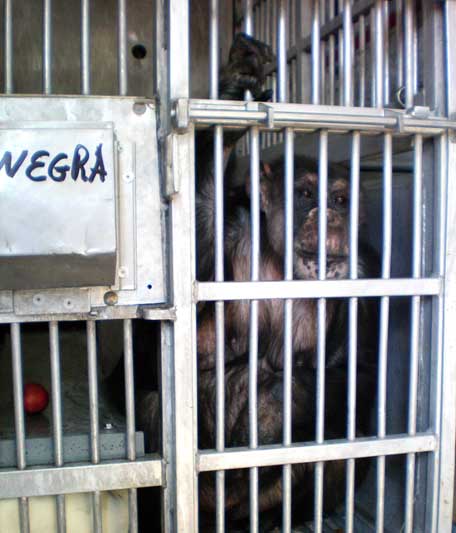
This photo was taken when Negra and the rest of the Cle Elum Seven were en route to CSNW from the laboratory five years ago. I often wonder what Negra was thinking sitting in her cage on the transport truck, leaving over three decades of research labs behind. Of course, she couldn’t have known during that cross-country drive that those days were in the past.

Negra in transport cage

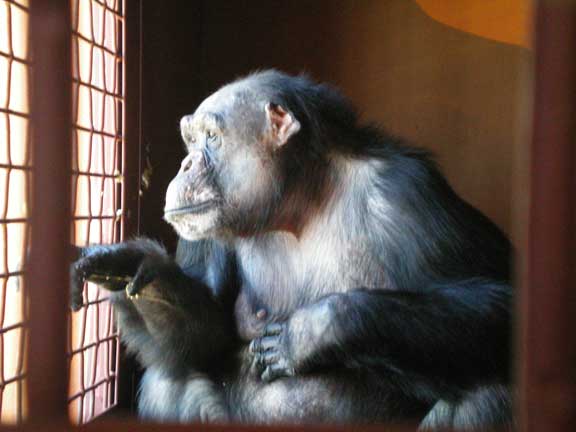
I’d like to think that she started to understand that her life was changing shortly after arriving at the sanctuary. This photo was taken on June 13, 2008, just hours after the transport truck carrying the chimpanzees pulled into our driveway. Negra and the others took turns in front of this window. In the lab they had lived in a windowless basement, so it’s likely that she was seeing outside for the first time in many years, maybe decades.

Negra looking serene

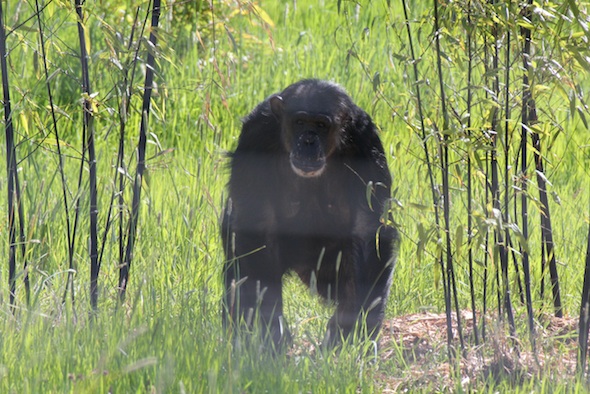
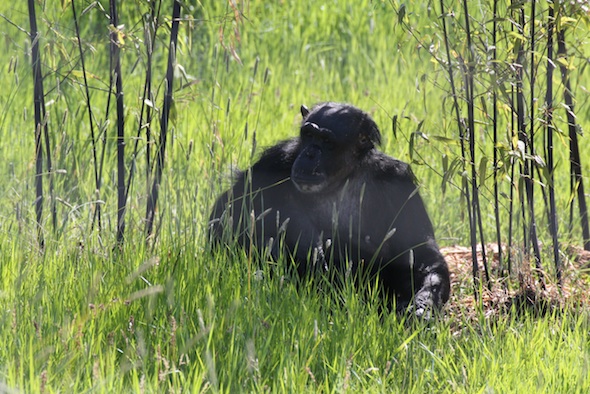
The next two photos were taken this morning, almost exactly five years later. Negra spent the morning foraging for fruit and sitting in the grass on Young’s Hill, the chimps’ two-acre outdoor habitat. I don’t know if Negra will ever get used to the feel of the cool grass under her feet or the sight of the blue sky overhead, but I think that she finally knows that her past is history.

web Negra stand shade green grass bamboo look at camera YH (ek) IMG_9120

web Negra sit shade green grass bamboo YH (ek) IMG_9129

Next Thursday, June 13, please join us for Give Five Day. By donating just $5, you’ll pay for one meal for one of the chimpanzees, show your love for Negra and the others, and enable us to keep serving seven incredible survivors.

Filed Under: Fundraising, Negra, Sanctuary, Young's Hill Tagged With: chimpanzee rescue, chimpanzee retirement, Chimpanzee Sanctuary Northwest, Cle Elum 7, Cle Elum Seven, Sanctuary, young's hill

  • « Go to Previous Page
  • Page 1
  • Interim pages omitted …
  • Page 540
  • Page 541
  • Page 542
  • Page 543
  • Page 544
  • Interim pages omitted …
  • Page 728
  • Go to Next Page »

Primary Sidebar

Subscribe To the Blog and Get Notified of New Posts First!

Archives

Calendar of Blog Posts

June 2026
S M T W T F S
 123456
78910111213
14151617181920
21222324252627
282930  
« May    

Categories

SUBSCRIBE TO OUR NEWSLETTER

Footer

PO Box 952
Cle Elum, WA 98922
[email protected]
509-699-0728
501c3 registered charity
EIN: 68-0552915

Official DDAF Grantee

Menu

  • The Chimpanzees
  • Blog
  • About Us
  • You can help
  • Resources
  • Contact
  • Donate

Proud Member of

Connect With Us

Search

Copyright © 2026 Chimpanzee Sanctuary Northwest. All Rights Reserved. Site by Vegan Web Design