• Skip to main content
  • Skip to primary sidebar
  • Skip to footer

Chimpanzee Sanctuary Northwest

Hope. Love. Home. Sanctuary

  • Our Family
    • The Chimpanzees
    • The Cattle
  • Blog
  • About Us
    • Visiting the Sanctuary
    • Philosophy
      • FAQs
      • Mission, Vision & Goals
      • Privacy Policy
    • The Humans
      • Staff
      • Board of Directors
      • Founder
    • Annual Reports
    • The Future of CSNW
    • CSNW In The News
  • You can help
    • Donate
      • Become a Chimpanzee Pal
      • Sponsor A Day
      • Transfer Stock
      • Be A Produce Patron
      • Be a Bovine Buddy
      • Give from your IRA
      • Personalized Stones
      • Bring Them Home Campaign
    • Leave A Legacy
    • Employment Opportunities
    • Volunteer
    • See Our Wish List
    • Events
  • Resources
    • About Chimpanzees
    • Enrichment Database
    • Advocacy
      • Advocacy Action Center
      • Apes in Entertainment
        • Trainers
        • Role of the AHA
        • Greeting Cards
      • Chimpanzees as Pets
      • Roadside Zoos
      • Chimpanzees in Biomedical Research
      • Conservation
        • African Apes
        • Orangutans
  • Shop
    • Merchandise Store
  • Contact
  • DONATE NOW

northwest

Love for Mave

February 23, 2026 by J.B.

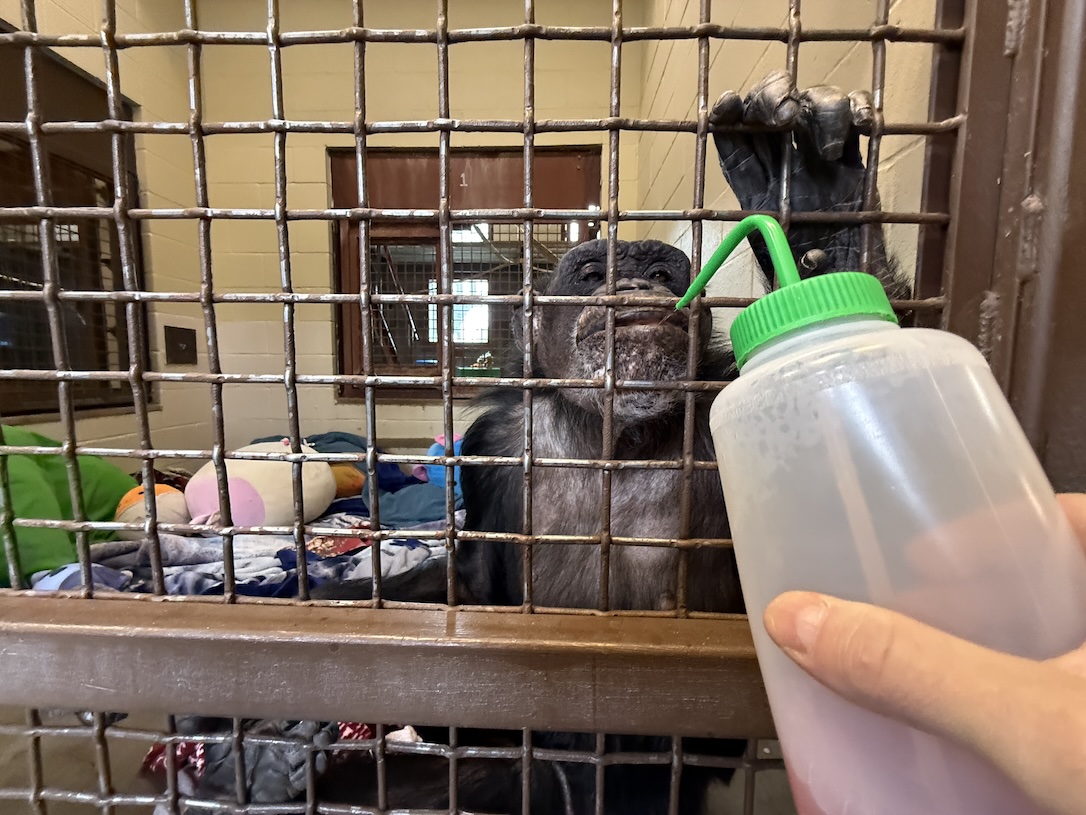
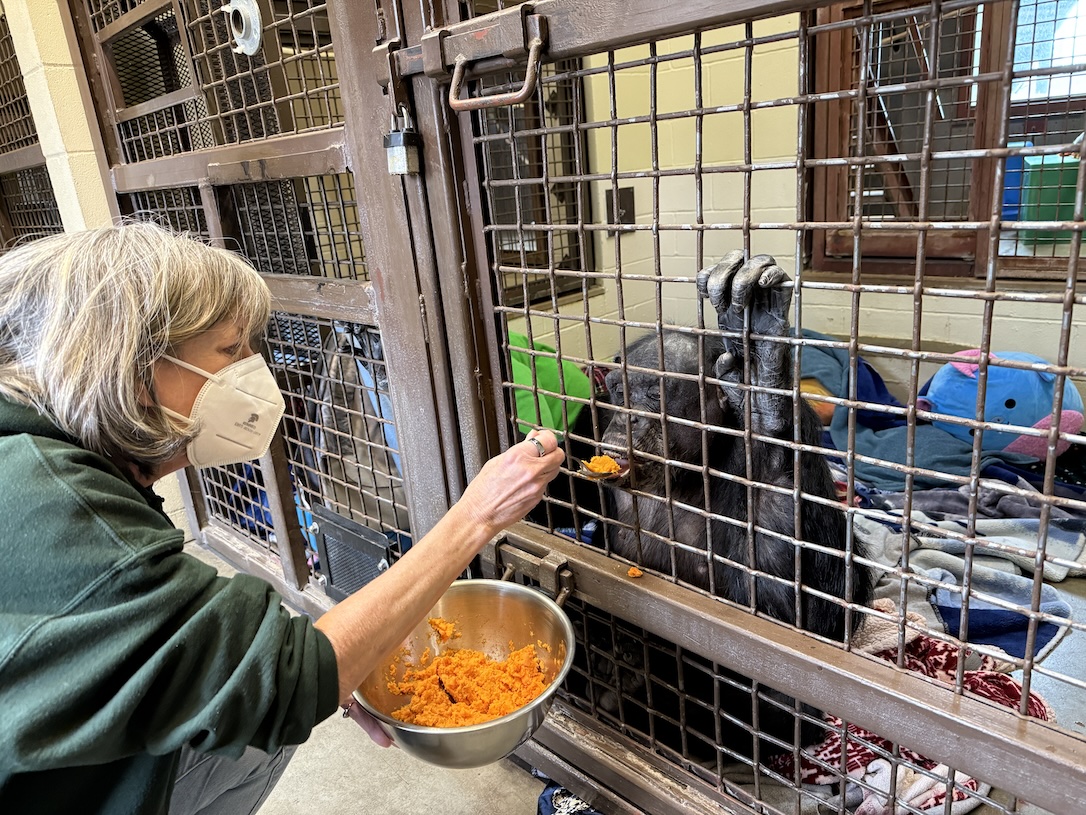
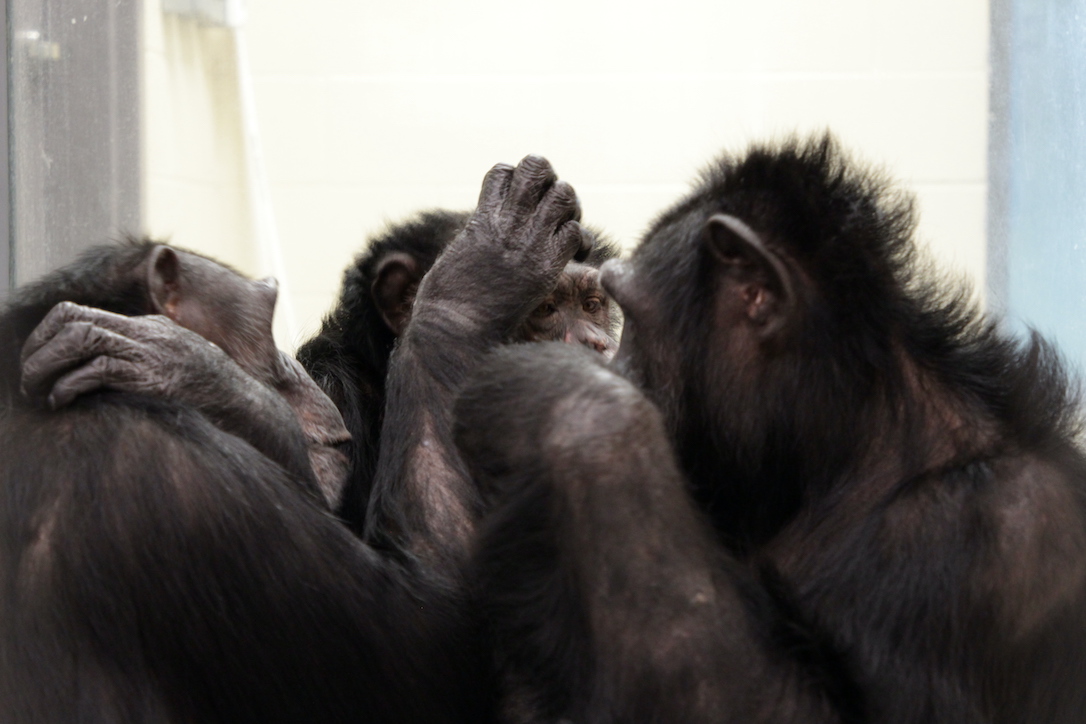
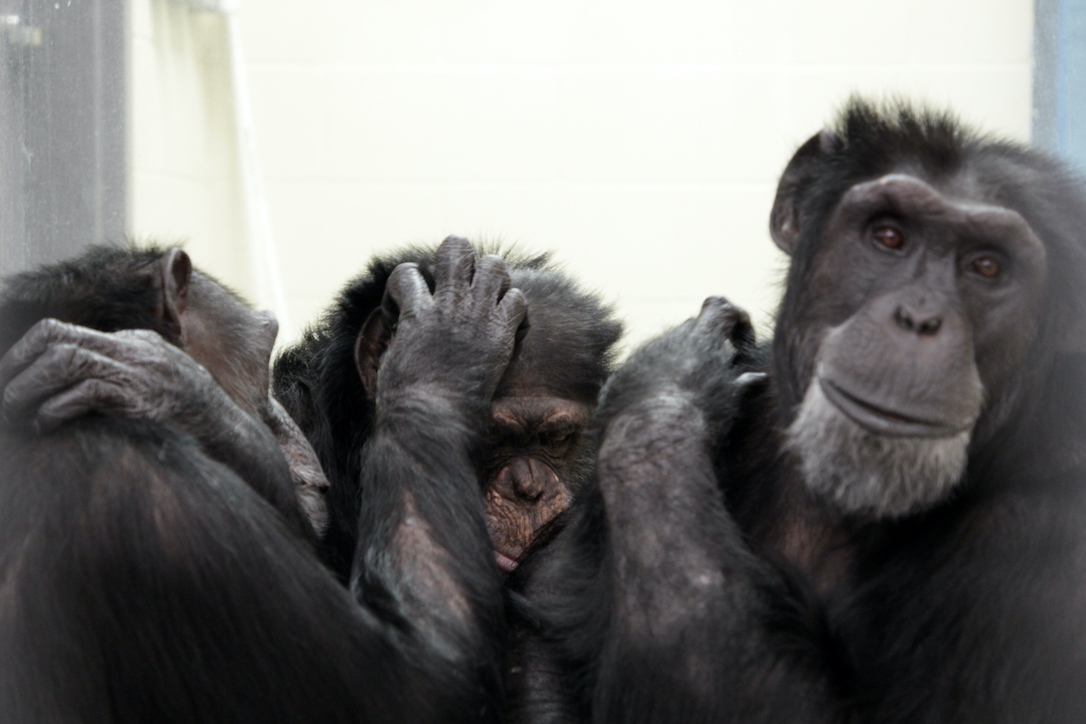
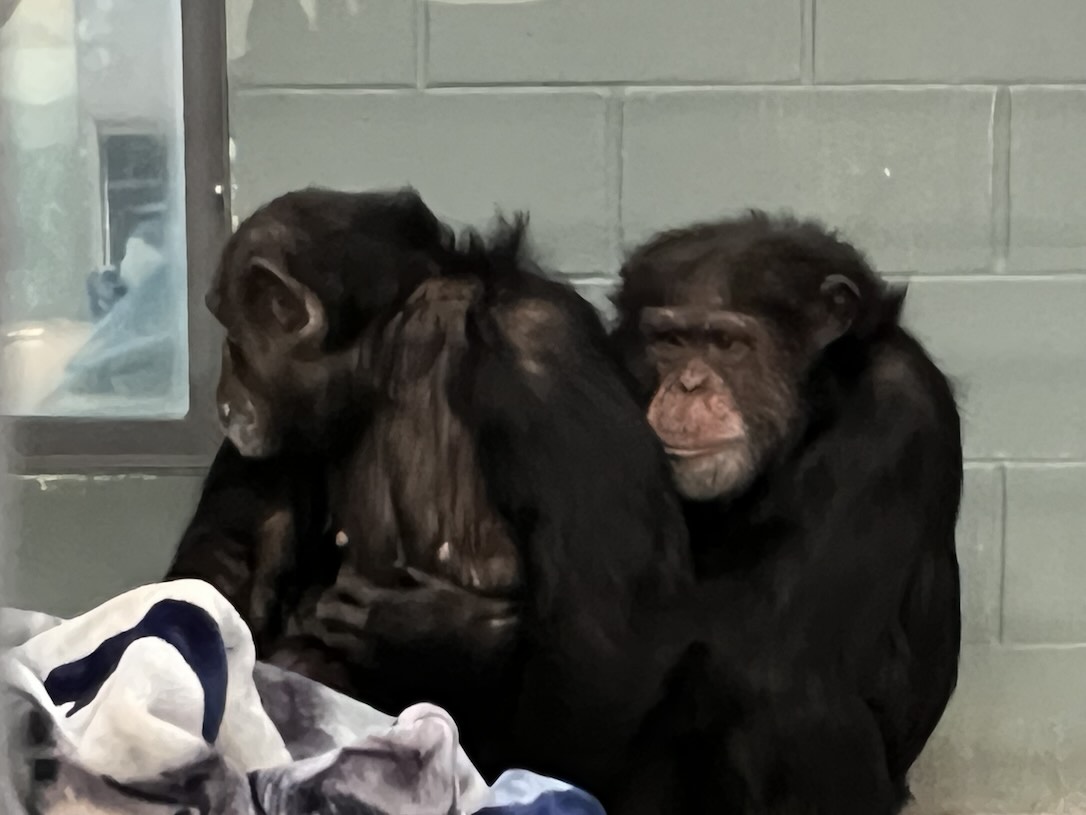
Today we continue our Valentine’s series with some love for Mave.

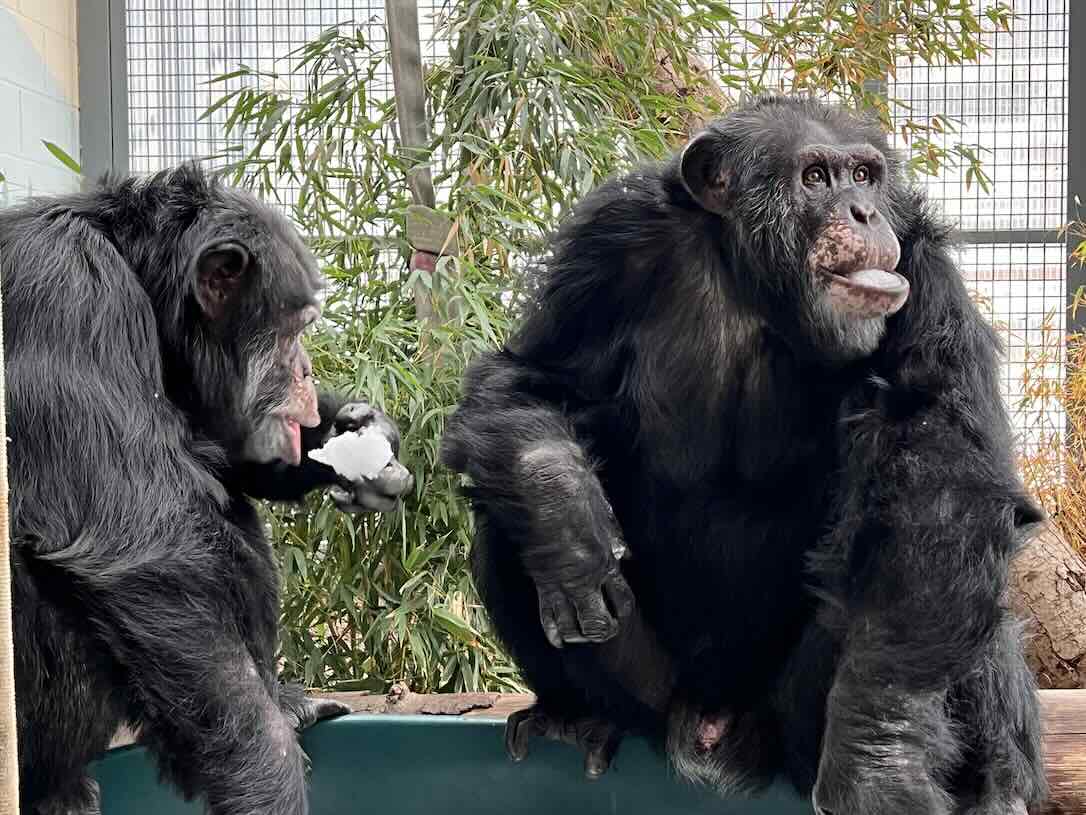
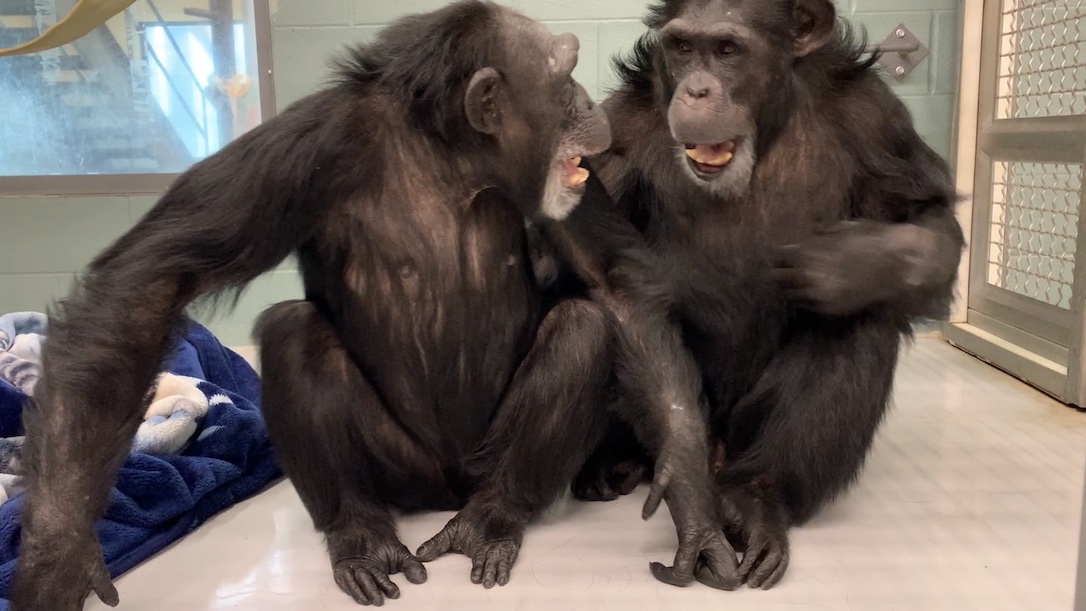
Mave was born on September 25th, 1989  to mother, Lulu, and father, Conrad, at the Laboratory for Experimental Medicine and Surgery in Primates (LEMSIP). She is half-siblings with own very own Terry, whose father was also Conrad. We didn’t know this at first but should have guessed by the floof alone. I can only assume Conrad was rather hirsute, as well.

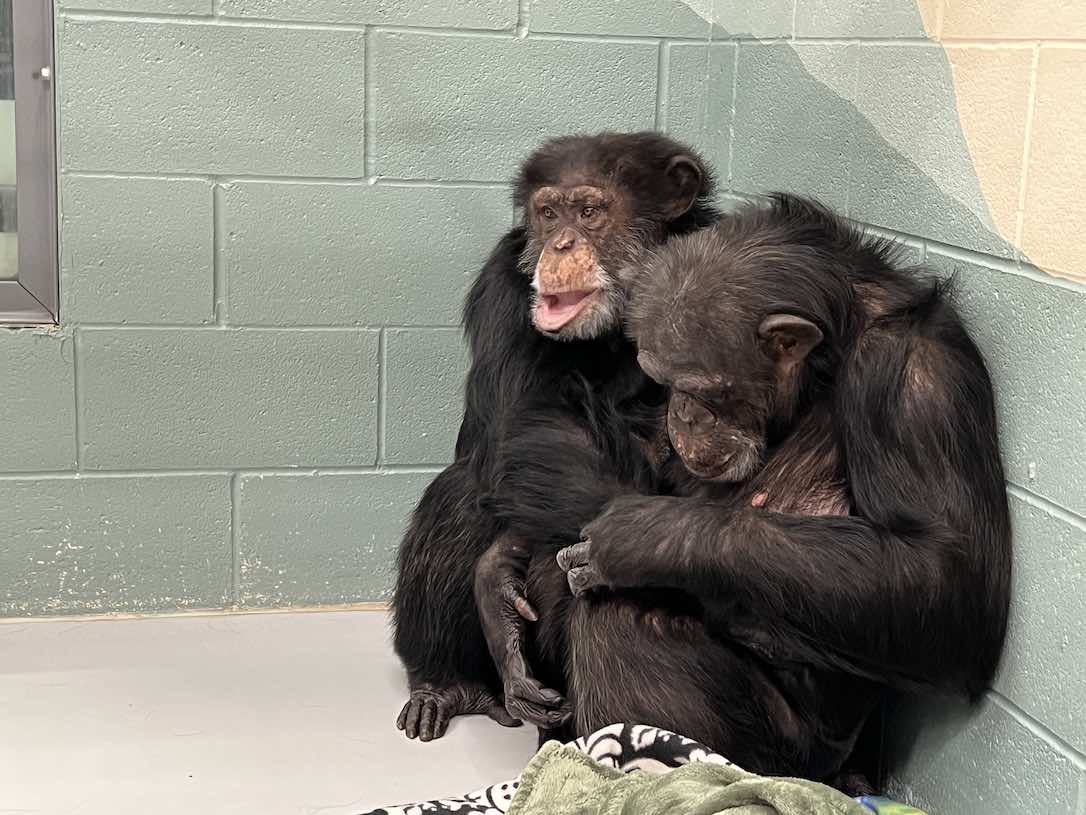
Mave (L) and Terry (R)

Like all laboratory chimpanzees, Mave was taken from her mother at a very young age. She was immediately paired with another infant chimpanzee named Goliath. Mave was reportedly an anxious infant, and Goliath became her rock. Throughout her childhood in the lab, she would continue to rely on Goliath for support.

When LEMSIP ended its chimpanzee program in 1996, Mave, Goliath, and 30 other chimpanzees were transferred to the Wildlife Waystation in California. Mave and Goliath stayed together at the Waystation until Goliath’s death, some time around 2018. I can only imagine how devastated Mave must have been. She was soon moved to live with Willy B and Honey B, and as the Waystation began to close, this unlikely threesome came to live at CSNW.

Despite her upbringing, Mave has a high degree of social intelligence. Anyone who can successfully navigate life with Honey B and Willy B would have to, I guess. She’s the kind of chimp that can fit into almost any group—she knows who to groom, who to console, who to support, and who to put in their place. And she does this all with a quiet ease that belies her anxious childhood.

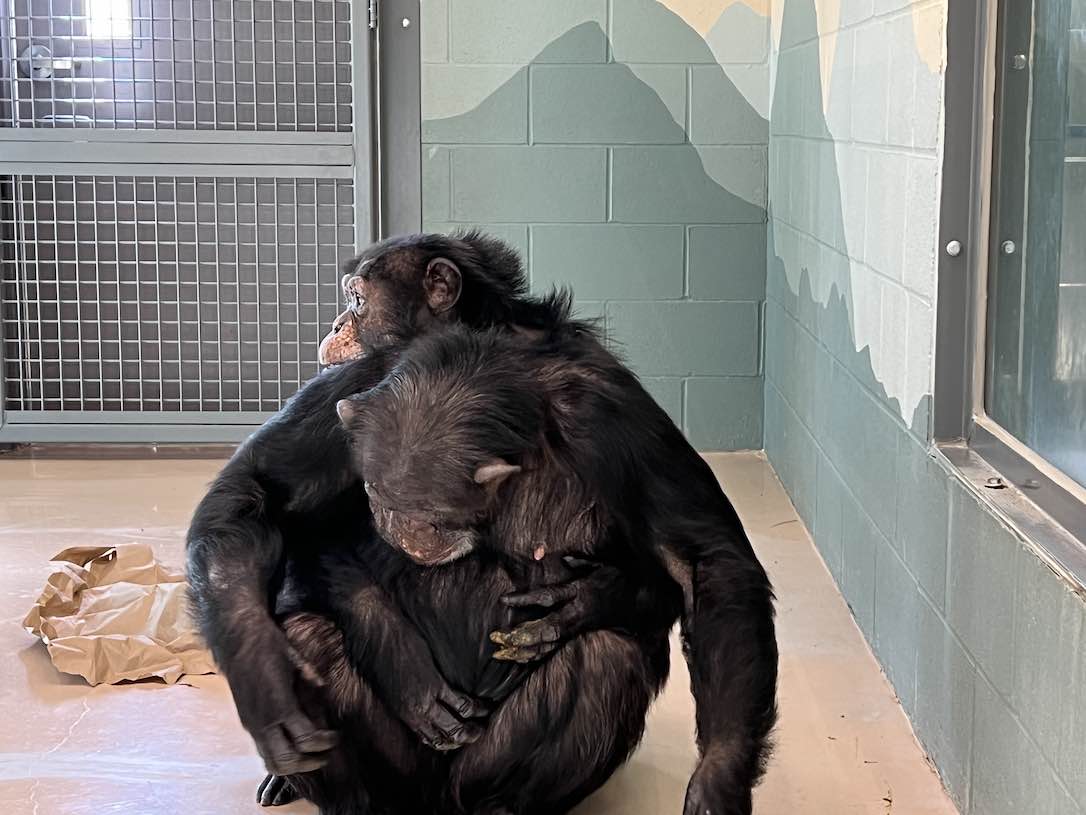
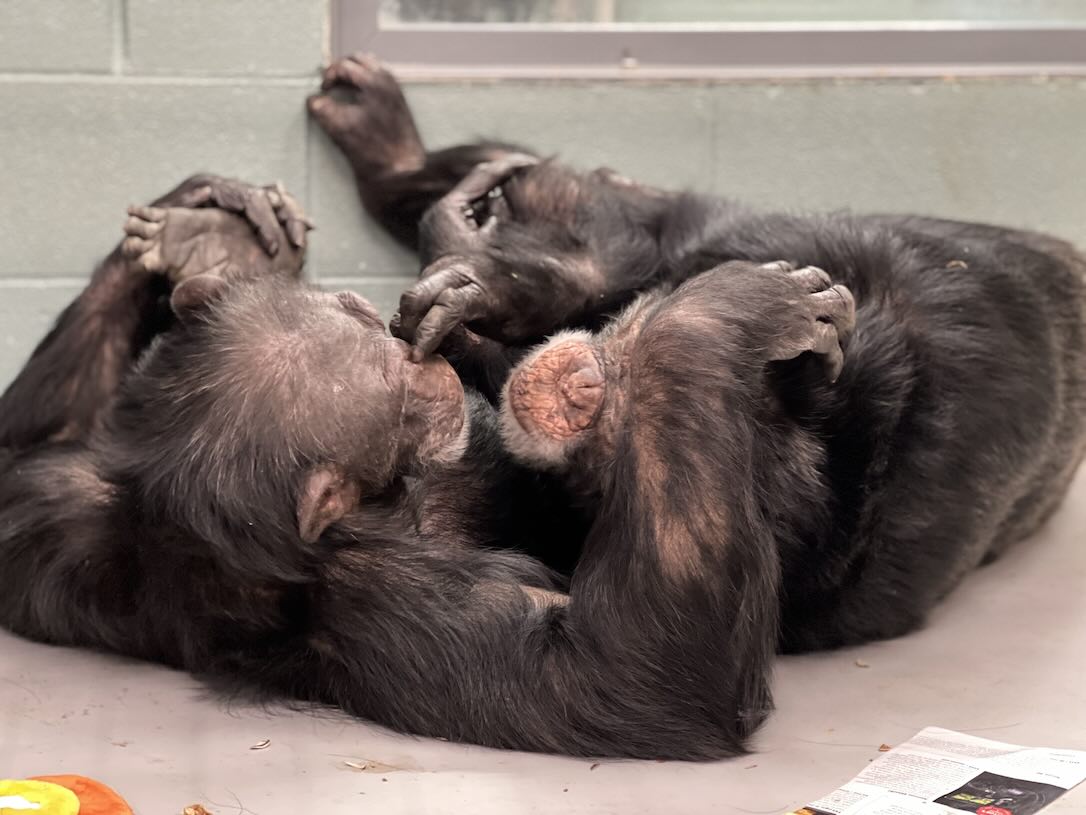
A key to her ability to make friends is the thing I consider to be her superpower: hugging. I have to admit, I sometimes tire of people asking if we wish we could hug the chimps. They are adults, they have each other and don’t need us, it’s far too dangerous…I could go on. I really don’t want to hug the chimps. But if I were a chimp? I’d be first in line for a hug from Mave. Despite the disappointing outcome of our initial effort to integrate Mave’s group with Jamie’s, I wall always remember this hug (and I’m sure Burrito will, too).

Within a couple of years of that first attempt, Mave’s group was once again being integrated with another, and this time she met someone who would take all the hugs she had to give: her new friend, Dora.

These two hit it off instantly. Sometimes I wonder if Dora somehow filled that Goliath-shaped hole in Mave’s heart.

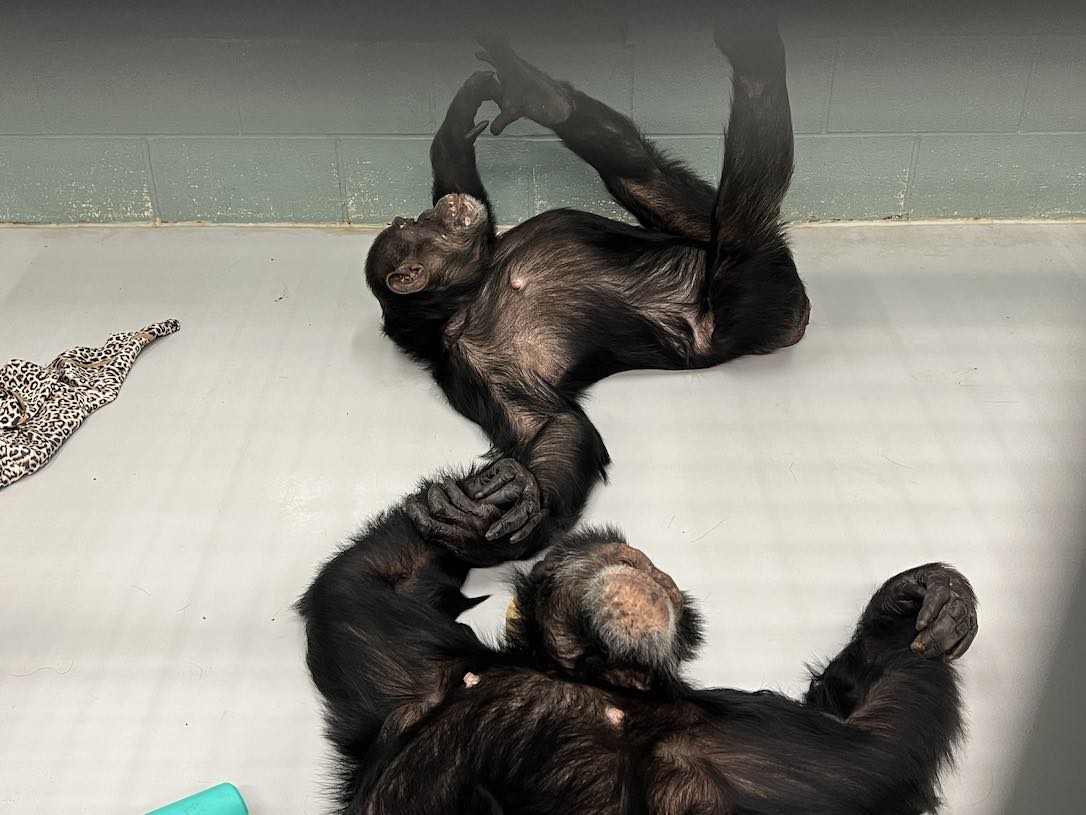
But like so many love stories, this one was complicated, as their families didn’t always get along. And eventually the two groups had to be separated. But while the other chimpanzees at the sanctuary remain in their fixed groups, Mave and Dora (better known as Mora) get to cross back and forth between groups so that their friendship can continue.

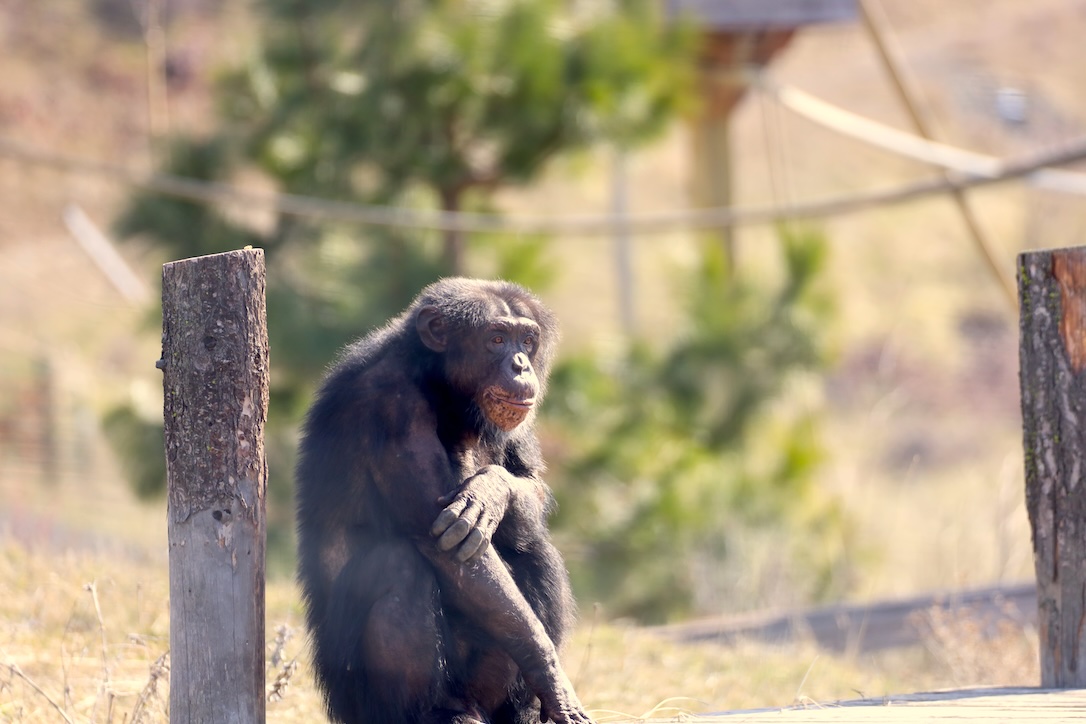
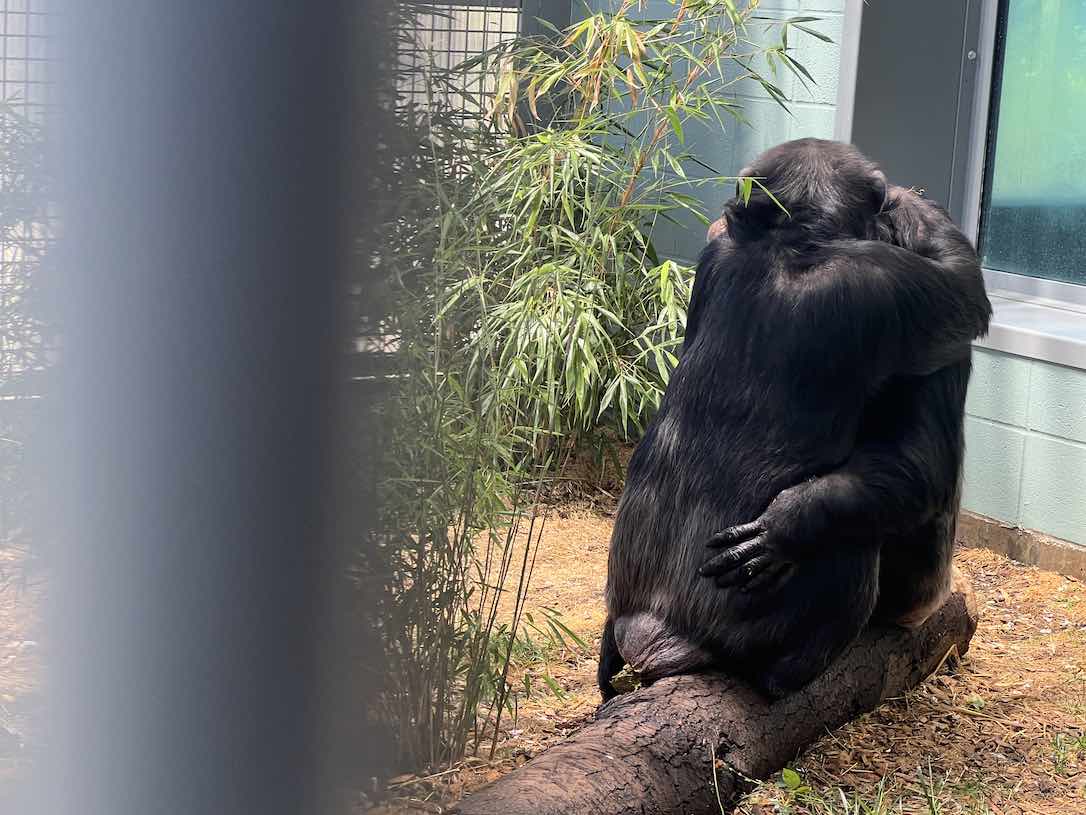
Like her friends Willy B and Honey B, Mave had a difficult time becoming comfortable with the outdoors. But she worked hard to overcome her fears, and now she can often be found soaking up the sun on one of the platforms in her 2-acre habitat known as the Bray.

We’re grateful to Mave’s Pals for supporting her life in sanctuary. If you’d like to give Mave a (virtual) hug, consider being her Pal today!

Filed Under: Mave Tagged With: chimpanzee, love, Mave, northwest, rescue, Sanctuary

Love for Willy B

February 16, 2026 by J.B.

I have to confess, I chose Willy B as my subject for this “Love for…” series on a day that he was being particularly difficult to love. He had woken the other chimps up four times the previous night with his incessant banging and antagonizing, and thanks to the magic of closed circuit camera technology, I’d also had the pleasure of lying awake and listening to his late night performances. The lack of sleep initially made it hard for me to muster up much sympathy for the guy. But isn’t that the perfect time to remind myself—and you—what makes him so deserving of our love?

Willy B was born on November 30th, 1990, at the Laboratory for Experimental Medicine and Surgery in Primates (LEMSIP) in New York. According to his records, his father was Stu. His mother is known to us only by the number that would have been tattooed across her chest: 526. The “B” in Willy B’s name served as a reminder that although he was born at LEMSIP, one or both of his parents belonged to the Buckshire Corporation, making Willy B their property, too. Like his companions, Willy spent much of his childhood in a cage suspended off the floor.

When LEMSIP ended its chimpanzee program in 1996, Willy B was transferred with over 30 other chimpanzees to the Wildlife Waystation in California. He would remain there until 2019, when it too began to close down.

We selected Willy B and his companions, Honey B and Mave, to be the first of the Waystation chimpanzees to move to CSNW due to their small social group and relative isolation at the facility. Willy was our main road trip companion for the 1,000-mile journey, as his transport cage occupied the space just behind the driver’s seat. And I am still feeling the adrenaline from the time he went from sound asleep to trying to topple the van over with his intense cage-shaking on a busy section of I-5 in Central California, all in the blink of an eye.

Little did I know it then, but that incident would be a metaphor for life with Willy. I’ve written about his challenges before so I won’t belabor the point here, other than to say that he has thus far had a hard time remaining in good standing in social groups with anyone other than his two original companions, who have a tolerance for his shenanigans worthy of a Nobel Peace Prize. But knowing how he was raised, we shouldn’t wonder why he struggles with being social. The question is, why don’t they all?

And when you consider how far he has come, Willy’s story is less a tragedy and more a story of hope. Watching him overcome his fear of the outdoors was one of the most inspiring things I’ve been privileged to witness.

And despite the two-year integration of Willy’s group and Cy’s group ultimately ending in failure due to Willy’s chronic self-sabotaging behavior, he managed to make many new friends who often brought out the best in him. He will certainly have more opportunities for additional companionship in the future.

Even when he’s at his most chaotic, you can’t help but love Willy for his endearing quirks. Like the way he plays chase with his caregivers—no eye contact allowed! Or his childlike amusement with Slinkies and bouncy balls. Or his incessant requests to watch videos on our phones, specifically videos of the cute girls (like Jamie) next door. Or the way he is compelled to maximize the crunching sounds when he eats lettuce and celery by chomping down with his molars with his mouth wide open.

It’s true, Willy B can be a but much sometimes. There are times when he is even too much for himself, and he has to find a quiet, secluded place to reset.

I talk a lot about how much I admire Cy and Rayne, and they deserve every ounce of our admiration. But do all of our heroes have to be so noble? What about the guy that was born with the deck stacked against him and gets just a little bit better each day? What about the guy who has to struggle to be good? Isn’t that struggle itself something to be admired? True or not, this is what I will be telling myself when Willy B wakes us up again tonight.

Because I love Willy B, despite who he is and—even more so—because of who he is. We’re so grateful for his Pals who feel the same way, and we hope you will consider sponsoring him, too.

Filed Under: Chimp histories, Willy B Tagged With: chimpanzee, histories, laboratory, northwest, pal, rescue, Sanctuary, sponsor-, valentine's, wily b

Terry, Terry, Big and Scary

February 9, 2026 by J.B.

If you’re Rayne or Lucky, you know that Terry’s a big softy. I mean, he cries every time Willy B makes a face at him! And everyone knows he’s not much of a fighter unless he has a whole crew backing him up. Lots of bark, very little bite.

But if you are Missy or Annie, he’s got to be one of the toughest guys ever. He’s so big and fuzzy! And those chest-beat displays—who does that? A gorilla, that’s who! Who is this guy?
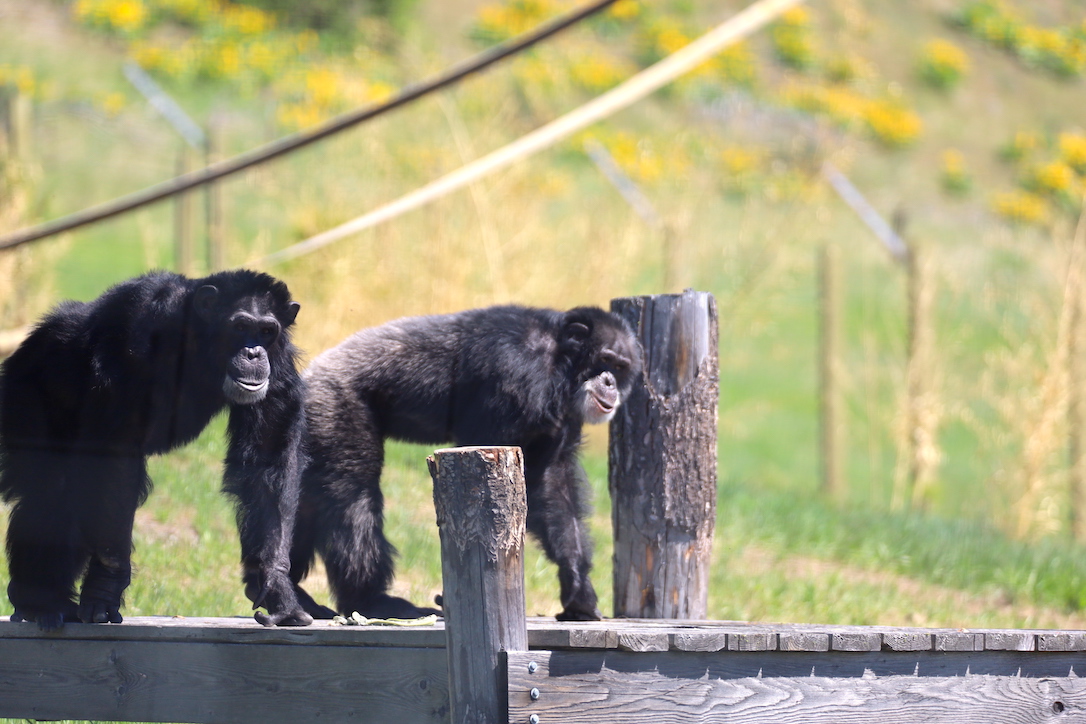
That’s the magic of an electric fence. You can talk a big game and never have to back it up.

Sanctuaries often maintain multiple groups of chimps living within sight of one another. This runs counter to the natural territorial behavior of free-living chimpanzees but is often made necessary by practical considerations such as limited space and the economical advantages of shared infrastructure. Our friends at Fundació MONA in Spain looked at how having close neighbors affected the chimpanzees in their care and, as you might expect, there were some downsides. Increased vigilance and self-directed behaviors during some inter-group encounters were taken as evidence of stress. And while they didn’t find the contagious aggression seen in some other studies, in which conflict in one group makes conflict in another group more likely, we can anecdotally report that is does occur here from time to time.

But, as they noted, there are also a number of advantages to these arrangements. For chimps like Terry, they can offer a way to blow off some steam without stirring the pot within his own group—and if the girls across the way happen to be impressed, all the better. For chimps like Burrito, who is coming up on Season 18 of his own reality show, it can be enriching to have a new show with an entirely different cast to watch through the window. And when the chimps across the way are getting everyone riled up, there’s an opportunity for some affiliative interactions within the group. After all, nothing bonds an in-group like an out-group.

There are days when I think Terry would readily trade Willy B to another sanctuary and never have to see his group again. But what would he do without his legions of adoring fans to the other side, to whom he must certainly be The Greatest Chimpanzee That Ever Lived?

Filed Under: Chimpanzee Behavior, Dispaying, Latest Videos, Terry Tagged With: chest beat, chimpanzee, display, northwest, rescue, Sanctuary, Terry

George, His New Best Friend, and the Third Wheel

February 2, 2026 by J.B.

George engaged in a lot of play during the one-on-one intros, especially with the other boys. These were positive interactions, but not a guarantee that he would fit in once part of the larger group. While all signs so far have pointed towards George’s integration being a success, we have been waiting for the day that he would feel comfortable enough to engage in some roughhousing in the larger group setting. This would be an indication that he felt comfortable and secure with his new family. And today, just two weeks after building up the full group, we got to see George play with his new best friend—and an awkward third wheel.

I have to say, we’re excited for George, but we might be even more excited for Gordo. He’s enjoying this new friendship and really deserves a buddy like George.

Filed Under: Chimpanzee Behavior, Friendship, George, Gordo, Introductions, Latest Videos, Terry Tagged With: bandon, chimpanzee, george, introductions, northwest, oregon, Play, rescue, Sanctuary, west coast game park safari

With a Little Help From My Friends

January 26, 2026 by J.B.

Change can be hard for George, but it’s a little easier now that he has a family. Watch as he relies on his new friends for comfort while navigating a positive but unexpected change in the routine.

Filed Under: Chimpanzee Behavior, George Tagged With: chimpanzee, family, friendship, george, northwest, reassurance, rescue, Sanctuary

The Calculus of Friendship and Aggression

January 19, 2026 by J.B.

If you think too much about the interplay between mathematics and behavior, you start to feel like Neo from The Matrix.* Reality as you know it begins to dissolve and, slowly, something else comes into focus:

Equations. Code. The Matrix. A complex web of ledgers and calculations that influences nearly everything we do.

Some calculations are built into an animal’s DNA and are carried out without conscious awareness. Take kin selection, for example, which explains why we and other animals might act against our own self-interest to help our relatives. We take this drive for granted—of course you help your family!—but at first blush it seems to run counter to the cold, unforgiving calculus of natural selection, in which our own genes have evolved to “selfishly” replicate themselves. That is, until you remember that there’s more than one way for our genes to survive and reproduce. After all, we share roughly half of our DNA with our siblings, a quarter with our nieces and nephews, an eighth with our cousins, and so on. When animals help relatives at cost to themselves, they may still be promoting their own genes’ reproductive success—provided they help the right relatives in the right proportion. Biologist J.B.S. Haldane had his tongue firmly planted in his cheek when he said, “I’d lay down my life for two brothers or eight cousins,” but this same idea, formulated as a biological rule, can be used to predict behavior as disparate as which orphans will be adopted by which red squirrels and how humans will behave in economic games. It’s behavior, explained—in part—by math.

Not all heritable predispositions can be reduced to equations so neatly, but if you squint you can still see the tally marks on the ledger. As I mentioned in a previous post, chimps tend to exhibit different rates of lethal violence depending on whether the victims are members of their community or strangers from a neighboring community. The benefits to killing a neighbor are clear: less competition equals more food and mating opportunities. And the costs are limited to the potential injuries a chimp might sustain during the attack. But what about aggression within the community? If dominance is beneficial, why not kill your way to the top? Well, for one thing, you’d be awfully lonely when you got there. Chimps live in communities because they benefit from group living. Community members help find food and raise offspring, they signal when predators are near, and they assist in territorial defense. To reference another movie: APES TOGETHER, STRONG.** The costs and benefits of aggression relative to the benefits of cooperation in these different circumstances have been calculated over millions of years of evolution and have resulted in feelings, emotions, and tendencies that favor ingroups while treating outgroup members as things to be kidnapped or eliminated.

In these cases chimps are acting largely unconsciously on the math of natural selection, but there are times when they are most definitely doing the calculating themselves. Territorial patrols are a good example of this. As Craig Stanford writes in The New Chimpanzee:

A patrol begins when a group of males breaks off from some other activity and makes a beeline toward parts unknown. The males travel with increasing caution as they approach the territorial border…The males appear to be on edge, freezing at distant sounds to listen intently before continuing. They begin to show intense interest in objects that might be evidence of the enemy, stopping to examine and sniff stick tools, leaf wadges, nests, and feces. But the patrol may penetrate further, making a deep incursion in to enemy territory. The tension is palpable as the males continue for hundreds of meters before turning back. On most of the patrols I accompanied at Gombe in the 1990s, such a deep incursion ended with the males freezing when they heard distant calls from the enemy community, then wheeling around and racing back into the home range, whereupon they hooted and displayed as though venting the emotional tension of their mission.

He writes:

Chimpanzee intercommunity conflicts are really raids. A party from one community attacks one or a few individuals from an adjacent community, usually in the overlap zone of their territorial boundaries. Such attacks may be carried out strategically when the attackers detect an imbalance of power. Ten chimpanzees rarely engage in a battle with ten or more enemies…So male chimpanzees monitor their territorial boundaries, picking and choosing their battles based on their perception of when a critical mass in their ranks can successfully challenge neighbors. [emphasis mine]

Like humans, chimpanzees may be endowed with behavioral predispositions but they don’t act on instinct alone. They are always crunching the numbers—and in the case of patrols, performing calculations based off of evidence, like detectives investigating a crime scene. Nine fresh nests and a chorus of pant-hoots in the distance—we’d better turn back. They may want to attack, but will not do so unless they’ve determined that the odds are in their favor.

This type of calculating behavior is not limited to aggression. Chimpanzees are known to reconcile after conflicts with fellow community members. As we’ve already discussed, community members are valuable. But some are more valuable than others, right? Some are potential allies in an effort to move up in the hierarchy. Some may be regular hunting or grooming partners. Some may even be kin—especially in the case of males, who tend to remain in their natal communities. These relationships are, in a way, investments, in which trust has been built and years of reciprocal favors have been exchanged. These are the relationships worth saving—in primatology lingo, they are valuable relationships. And it’s the Valuable Relationship Hypothesis that is used to explain why chimps tend to reconcile more readily or more frequently with certain individuals. It can even be used to predict their likelihood of reconciliation. Just consult the ledger—how often do they groom, and in which direction is the grooming typically directed? How many times has one supported the other in a fight? How often do they mate?

OK, so to paraphrase a blog commenter from many years ago: BORING DISSERTATION, J.B. Who cares about any of this? Well, George, for one. You can bet that he has been furiously crunching numbers ever since he got here. And we’re fortunate that he seems relatively good at math. You can actually see him update his equations and alter his behavior in real time as he gains new experiences—unlike our arithmetically challenged friend, Willy B.

But we caregivers have our calculators out, too. When starting introductions, our first job is to tackle that unfortunate biological predisposition that says that strangers are enemies. We can’t change their DNA, but we can work to make strangers seem a little less strange. This is why we begin with one-on-one meetings, especially with a lone chimpanzee like George. As mentioned above, chimps are less likely to exhibit lethal violence when they lack support. Put George with a large group too soon and he may fall victim to outgroup violence. Put him with one chimp at a time and, while they may fight, they’re more likely to hold back as a matter of self-preservation. And over repeated meetings, strangers slowly become familiar—not quite members of the group, but not quite enemies, either. The calculus changes, and the behavior follows suit.

When it’s time to move beyond the one-on-one meetings and build up the group, the order—and the math—matters. Based on the outcomes of the dyadic meetings, we get a vague sense of the relationships between each dyad—which ones exhibit trust and which ones show tension, for example. As you add members to the introduction group, you might be tempted to save the tense relationships for last. That could be a mistake, because chimps will assess when they have overwhelming advantage—or critical mass, as Stanford calls it. If Terry and George have some things left to work out, let’s let them work them out with just Cy and Rayne overseeing the process, and hopefully by the time Lucky, Gordo, and Dora are added, Terry and George will have clarified their relationship. Add Terry at the end, and his threat barks could rally the rest of the group to overwhelm Cy’s defenses and gang up on George.

When conflicts do occur, and they inevitably will, it’s important to steal a glance at the chimps’ homework. How are they calculating the value of their new relationships? There’s no use reconciling with an enemy. Enemies are competition, pure and simple, and you’re better off without them. But if a relationship has value—if there’s a good chance of cooperation in the future—you’ll be quicker to repair it when it is strained. Whether chimps reconcile after a conflict, and how soon, can be an important indicator of how integrated a new chimpanzee is into a group. We’ve witnessed only a few conflicts since Terry was added to the intro group. The first was intense but somewhat limited due to a relative balance of power—while Rayne rallied to Terry’s side, Cy was able to fend them off. Terry and George largely avoided each other immediately following the incident. OK, that’s not good. But subsequent conflicts have been less intense as more interactions have been added to the positive side of the ledger, and the reconciliation has been swift, as you can see below. Does this mean that we no longer have to worry about George’s safety? Certainly not. But we can have some hope that future conflicts will more closely resemble ingroup conflicts, in which violence is typically less intense and more ritualized and the chimps actively work to repair and maintain relationships.

There’s a risk that this could all be interpreted as me stating that there is a right way to conduct introductions, or that we know more than we do about how to run them. Our efforts to integrate Willy B should dispel that notion. And even if there were a right way, the outcome is still largely out of our control, regardless of our actions. You’ll rarely feel more powerless than when you are conducting a chimpanzee intro. Nevertheless, it can still be worth occasionally peeling back the curtain and glimpsing the matrix that influences so much chimpanzee behavior.


*A movie that I don’t think I’ve ever seen in full—and yet I will overconfidently cite here as though I have because of its prevalence in American popular culture—in which a programmer named Neo is able to see the code behind a simulation that everyone had until then accepted as reality.

**I did see this one. It was about a group of apes that escaped and took over the world, and we watched it a few days before we let the chimps out into an electric fence enclosure that was the first of its kind in the U.S. and was definitely going to work on paper and hopefully in real life and I hoped that Jamie and company would allow us to live and reside in their kingdom once they took over.

Filed Under: Chimpanzee Behavior, Cy, George, Introductions, Introductions, Latest Videos, Sanctuary, Terry Tagged With: calculus, chimpanzee, group formation, introductions, northwest, politics, rescue, Sanctuary

Snow Snacks in the Rain

January 12, 2026 by J.B.

It takes a lot to keep these Pacific Northwest chimps from enjoying the outdoors. Come with us on a short walk around the 4.5 acres of habitat and let’s see what the chimps are up to this afternoon!

P.S. For all you avid blog followers: Notice anything different?

Filed Under: Latest Videos, The Bray, Young's Hill Tagged With: chimpanzee, display, habitat, northwest, outdoors, rescue, Sanctuary, snow

  • « Go to Previous Page
  • Page 1
  • Page 2
  • Page 3
  • Page 4
  • Page 5
  • Interim pages omitted …
  • Page 199
  • Go to Next Page »

Primary Sidebar

Subscribe To the Blog and Get Notified of New Posts First!

Archives

Calendar of Blog Posts

June 2026
S M T W T F S
 123456
78910111213
14151617181920
21222324252627
282930  
« May    

Categories

SUBSCRIBE TO OUR NEWSLETTER

Footer

PO Box 952
Cle Elum, WA 98922
[email protected]
509-699-0728
501c3 registered charity
EIN: 68-0552915

Official DDAF Grantee

Menu

  • The Chimpanzees
  • Blog
  • About Us
  • You can help
  • Resources
  • Contact
  • Donate

Proud Member of

Connect With Us

Search

Copyright © 2026 Chimpanzee Sanctuary Northwest. All Rights Reserved. Site by Vegan Web Design