• Skip to main content
  • Skip to primary sidebar
  • Skip to footer

Chimpanzee Sanctuary Northwest

Hope. Love. Home. Sanctuary

  • Our Family
    • The Chimpanzees
    • The Cattle
  • Blog
  • About Us
    • Visiting the Sanctuary
    • Philosophy
      • FAQs
      • Mission, Vision & Goals
      • Privacy Policy
    • The Humans
      • Staff
      • Board of Directors
      • Founder
    • Annual Reports
    • The Future of CSNW
    • CSNW In The News
  • You can help
    • Donate
      • Become a Chimpanzee Pal
      • Sponsor A Day
      • Transfer Stock
      • Be A Produce Patron
      • Be a Bovine Buddy
      • Give from your IRA
      • Personalized Stones
      • Bring Them Home Campaign
    • Leave A Legacy
    • Employment Opportunities
    • Volunteer
    • See Our Wish List
    • Events
  • Resources
    • About Chimpanzees
    • Enrichment Database
    • Advocacy
      • Advocacy Action Center
      • Apes in Entertainment
        • Trainers
        • Role of the AHA
        • Greeting Cards
      • Chimpanzees as Pets
      • Roadside Zoos
      • Chimpanzees in Biomedical Research
      • Conservation
        • African Apes
        • Orangutans
  • Shop
    • Merchandise Store
  • Contact
  • DONATE NOW

northwest

Intelligent Life

March 11, 2024 by J.B.

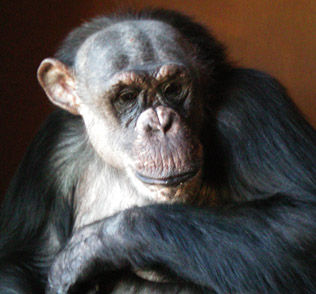
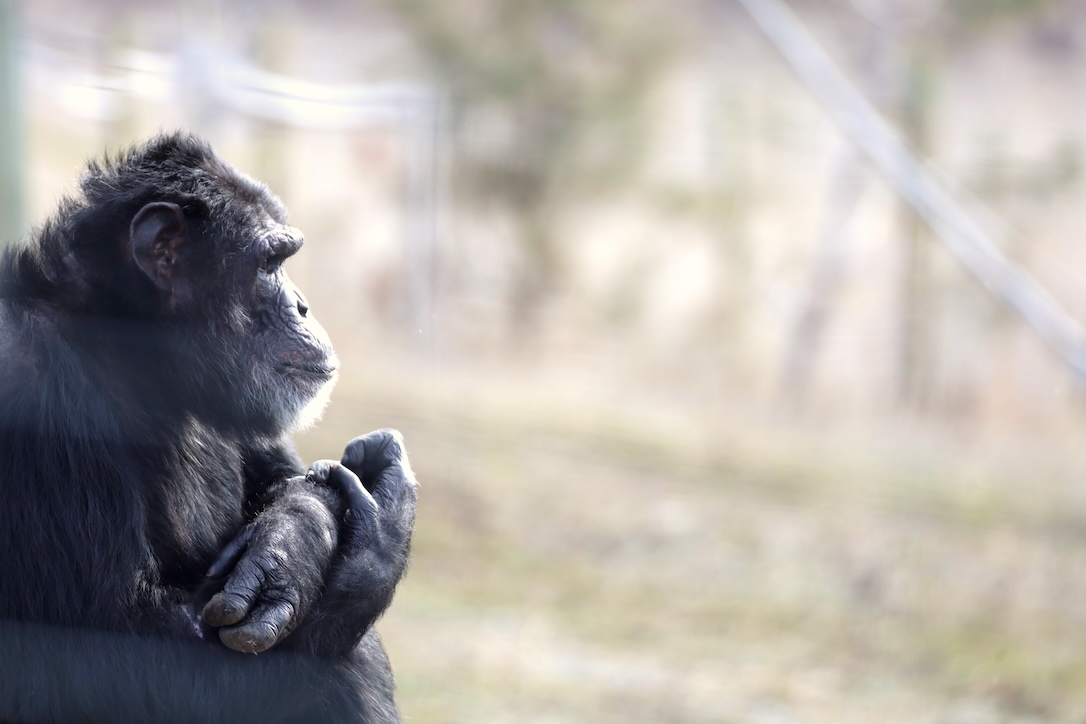
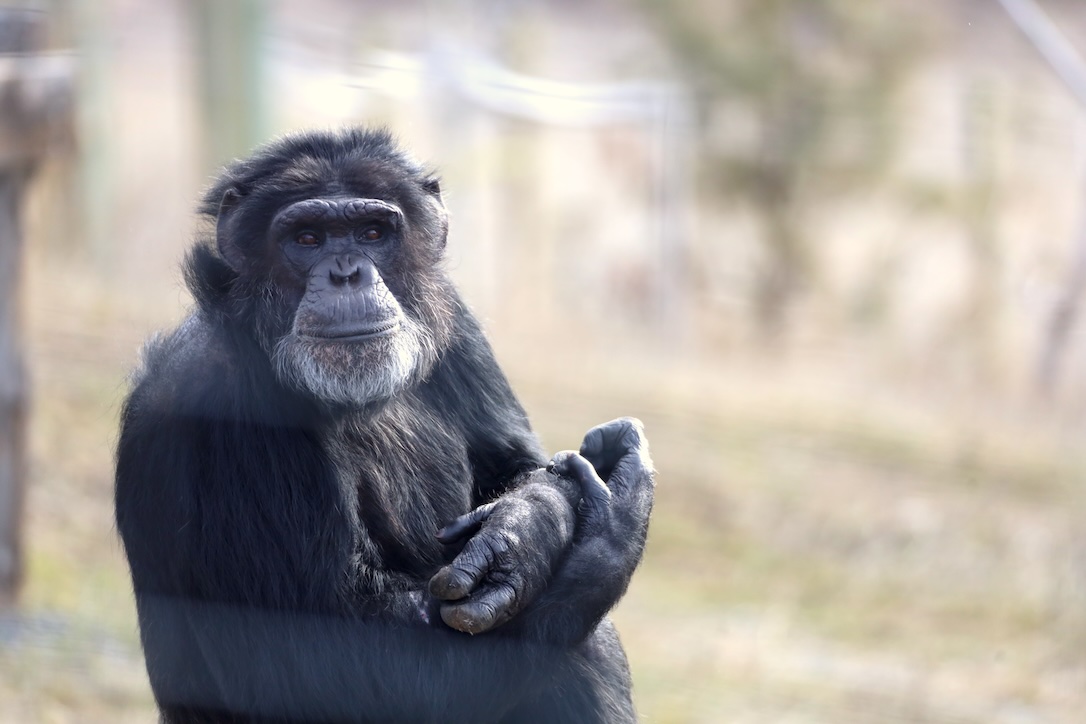
I was initially drawn to chimpanzees for the same reason that people search for life on other planets: The belief that we could not possibly be alone. How strange would it be if, in this vast and complex web of living things, of a nearly infinite variety, we were the only ones with a consciousness of any significance? If we were the only ones that planned for the future, desired for that which we didn’t have, strategized for power, loved our friends and families, or appreciated beauty? If there was evidence of continuity to be found, surely it would be found in chimpanzees. And in many ways, the study of chimpanzees over the last hundred years has in fact been a century-long lesson in humility, for in nearly every domain of human virtue that we once claimed as uniquely our own, chimpanzees have shown at least some degree of proficiency: Tool use, language, cooperation, problem-solving, empathy, memory, perspective-taking…even politics, if politics could still be considered virtuous. All stand as evidence of a complex mind that, when viewed in light of our shared evolutionary history, must operate something like our own, must feel something like our own. Perhaps we are not alone, after all.

This emphasis on the social, cognitive, and ethical qualities that we value was in many ways a necessary correction to the thousands of years of human chauvinism ingrained in our intellectual and popular culture. We have been, in a sense, working to rescue chimpanzees from ourselves by elevating them, albeit reluctantly.

I must admit, though, that somewhere along the way my own perspective started to change. If we are honestly and openly curious about the intelligence and conscious experience of other animals, why search for only those qualities that we exhibit rarely, if ever? Why hold them to a standard that we can only hope to achieve on our best days? If we truly are not alone, we will certainly find them down in the muck with us, too. Because brains do not contain a one-way valve through which our more advanced capacities operate. Once acquired, these capacities are free to operate in every domain and in every direction, for better or for worse. Put simply, a complex brain can do bad things with greater complexity. A mind with the ability to cooperate can also cheat, and has reason to seek retribution against cheaters. A mind that can empathize can also betray. A mind that can long for something or someone is bound to become jealous and resentful. And a mind that can contemplate the future can be stricken with anxiety about things that do not and may not ever exist. Intelligence is not in and of itself a virtue, but merely a scaffold with which to build ever more elaborate behaviors and emotions of all kinds.

To be fair, authors of popular works of primatology have discussed all of these things in detail, from backstabbing political dramas to mother-daughter serial killers. But these lessons feel lost sometimes. So let me share a couple stories about the minds that inhabit this sanctuary and the ways in which their experience of the world is perhaps even closer to our own than we’d care to admit.
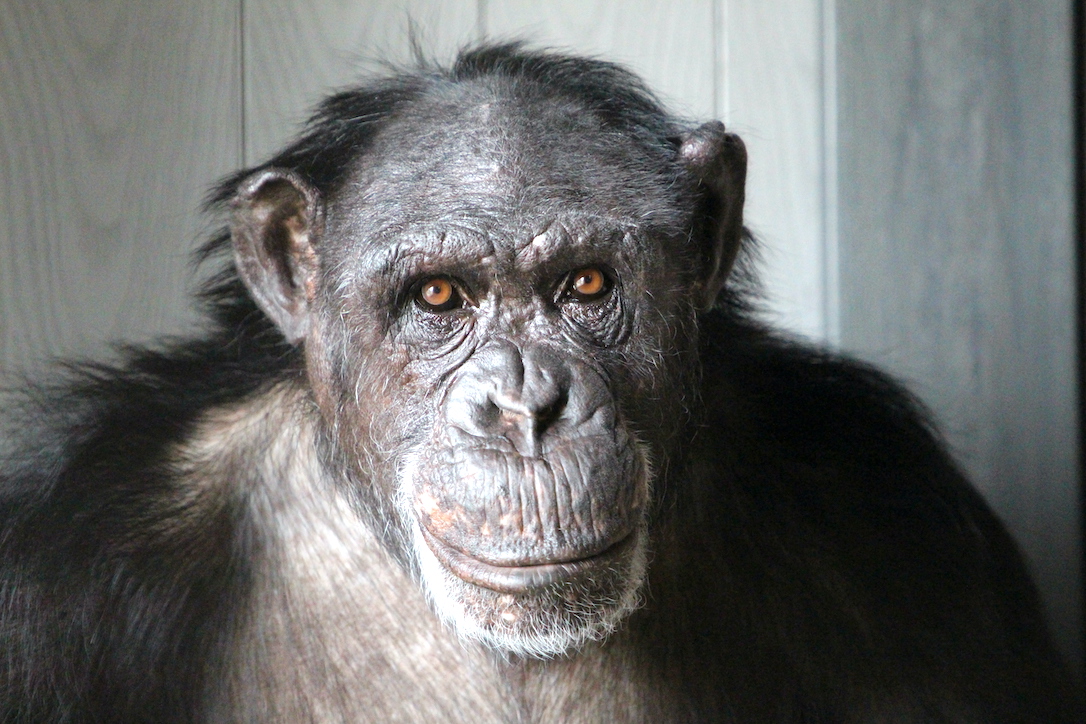
Jamie is an insecure leader. Leader isn’t even the right term, really. Alpha. The Boss. Decider of All Things. A leader inspires trust and support, and exerts power judiciously. A leader seeks stability and order, and strives to protect the less powerful. Jamie, on the other hand…

Jamie’s MO is simple: if she’s not getting what she wants, she either a) throws feces, or b) screams. Throwing feces is reserved for staff, volunteers, and visitors. Some chimps catch on pretty quickly to the fact that most humans would rather have their finger bitten off than be showered in fresh, wet poop. It’s so effective that we are powerless to extinguish the behavior. We encourage people not to react when chimps spit on them, because the reaction only reinforces the behavior. But try not reacting when feces gets in your hair or goes down your ear canal. She’s so aware of her power that sometimes all she has to do is make eye contact, then slowly direct her gaze to a nearby pile, and then once again lock eyes. Step away from the door controls or you and I both know what happens next. Being a sanctuary, our default position is to accommodate the chimps as much as possible, so we follow Jamie’s direction whenever we can. But really, what else are we going to do? On rare occasions, when circumstances required, we have made elaborate ponchos and helmets out of old blankets to withstand the fecal flak coming through the caging as we rushed to operate a door or retrieve an item within her range. But this makes her really mad, because she knows she’s been outmaneuvered. And that makes her feel powerless. And for Jamie, powerlessness is the worst of all feelings.

Screaming, on the other hand, is reserved for her chimpanzee family. Here’s an example: It’s dinnertime, and Jamie has received all of her meal. But Foxie has the gall to also want to eat. When Foxie takes her portion, Jamie summons a scream to wake the dead. Foxie has less than a second to decide whether she should abandon the food and run or take it and risk an aggressive conflict. More often than not, Jamie’s screaming elicits a group-wide melee, with Missy blindly taking Jamie’s side and the others trying in vain to stay out of the fray. Whether Jamie gets the food in the end or not is irrelevant – depriving Foxie was the goal.

Insecurity is a real crap sandwich. First of all, it feels awful. But on top of that it often makes you behave in ways that only feed back into a greater sense of insecurity. It’s the death spiral of emotions. The dynamics of Jamie’s group have changed since Jody’s death. It’s not like it was a fairy tale to begin with, especially back when Burrito was still a testosterone-driven tornado. But they had established a certain order, loose as it was. Jody’s absence should have made Jamie feel more secure, as she seemed to perceive Jody as her greatest rival. Jody was, after all, well-loved and respected by the rest of her group mates. But the vacuum left by Jody’s absence has only resulted in an uptick in Jamie’s, shall we say, darker side, one which our cooperative feeding training struggles to keep up with.

The problem with maintaining power through intimidation, volatility, and capriciousness is that no one is rooting for you to remain in power. What if they’re just waiting for you to slip up? What if they are even silently conspiring against you? All the more reason to remind them who’s in charge.

And down the spiral we go…

I’ve always maintained that if Jamie was a human and was not a member of my immediate family, I wouldn’t want anything to do with her. If any human treated me the way she treats those around her, I’d be out the door. But I love her. More than anything. Maybe more than any other chimp I’ve known, depending on the day you ask. Maybe it’s because she’s been treated so unfairly and remains imprisoned, and this is how she perseveres. Or maybe it’s because, since she’s not human, I’m able to appreciate her as a whole person with less judgment; to admire the directions in which her capacious mind has traveled in its efforts to find meaning and purpose. There’s a richness to Jamie that I can’t help but stand in awe of.
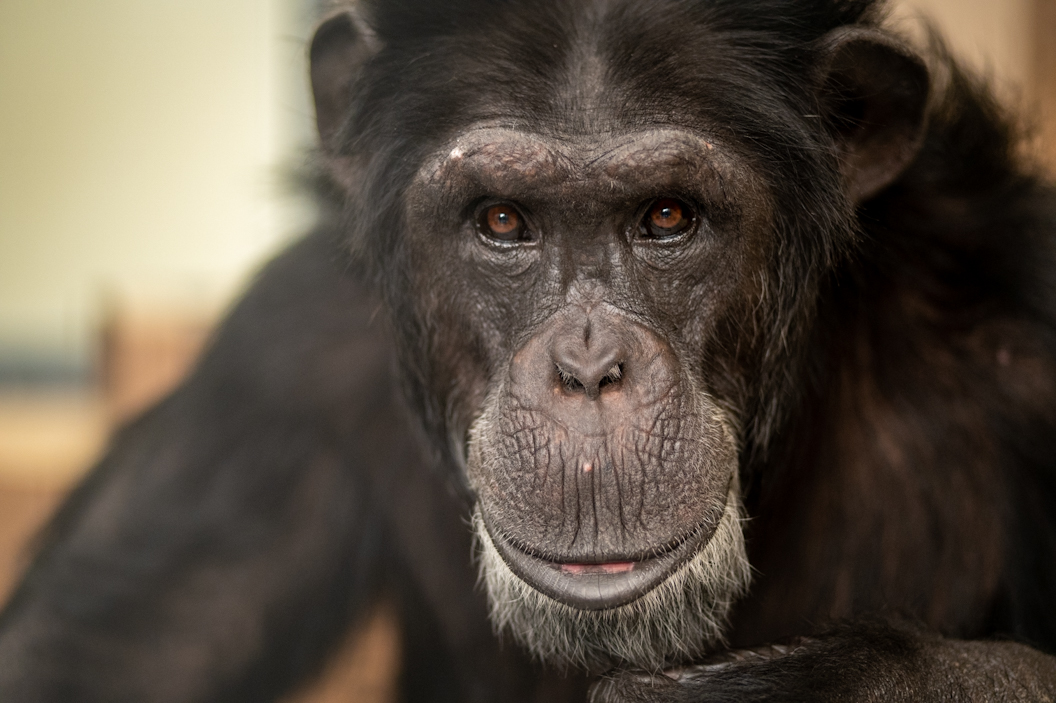
Willy B is a lot of things. He’s big, handsome, intimidating, sometimes playful, sometimes goofy, but mostly…anxious. Anxious and overwhelmed. He’s scared to walk on grass. He’s a wreck in most social situations. He often seeks refuge in quiet, familiar corners where he can just be alone, as if he just needs to press pause on the world for a while so his brain has a moment to settle.

The problem for Willy B is that he is a member of a species for which sociality is everything—for which friendships and alliances are currency. A male like him has to stake out a position in the hierarchy, and that requires one or both of the following: Being tough, or being social.

Willy B is not tough. He looks the part, but in 99% of the conflicts I’ve seen him involved in, he is the one running away screaming. If push comes to shove he can more than hold his own, but he doesn’t want to fight. He just wants you to think he could. And when the tables are turned on him, he usually hides behind someone stronger or braver who is willing to defend him as he prays for the fight to end.

Despite his social difficulties, Willy was fortunate to immediately make the one friend that really mattered: his alpha male, Cy. When they first met, Willy and Cy spent the first couple weeks trying to figure each other out. When they were together during introductions, one-on-one, their relative status was a tossup. But in the greater group, there was no question. Cy had a loyal, established group behind him, and plenty of social skills to boot. Willy had no choice but to submit. But it didn’t seem like something Willy had to work hard to accept. He really admires Cy. And he craves Cy’s attention. Spending time with another male, something he hadn’t been able to do in years, seemed to give Willy new life.

But dyadic relationships, as complicated as they are, are comparatively easy to navigate. There’s me, there’s you, and there’s us. That’s it. Add in a third person and suddenly there’s…them. Add in even more people and you create a dizzying patchwork of coteries, cliques, and communities. Circles within circles. An intelligent mind can’t help but start to ruminate on all the possibilities: What are they doing? Why are they doing it without me? Should I join them? Do they want me to join them? One theory holds that larger brain-body mass ratios evolved to help keep track of these complex social connections. At times this feels like the first frayed thread in the brain’s fabric, and still the most vulnerable to being torn.

Thanks in large part to Cy, Willy has a pretty firm lock on the #2 position in his group. But like Jamie, he can’t seem to leave well enough alone. He appears comfortable in one-on-one interactions with everyone, but as things get more complicated he gets overwhelmed, directing mild but persistent threats to the lower-ranking males in the group, Terry and Gordo. And if Cy isn’t giving him enough attention, or if—God forbid—Cy directs his attention to the other males at the wrong time, Willy launches into a self-defeating fit, seemingly choosing to blow the whole place up rather than attempt the difficult task of finding his own place in the group. In reality, no one has it out for him, and if he could just turn the volume on that big brain down for a second, and literally do nothing, he’d be fine. Instead, he short-circuits, explodes, and then wonders why it’s so damn hard to fit in.

If I ever get frustrated with Willy B, it helps to watch the home movies we have showing him in the laboratory nursery. There he is, in a set of toddler’s overalls designed to keep his diapers in place, looking around nervously for someone to hold him. It’s not that he never stood a chance—somehow, other chimps made it out with far superior social skills—but we each have our unique vulnerabilities. Maybe if Willy had been raised by his mother instead of technicians, if he had lived a life in the wild instead of a cage, he would have an easier time understanding other people. Or maybe not. We’ll never know. That he’s come this far is victory enough.
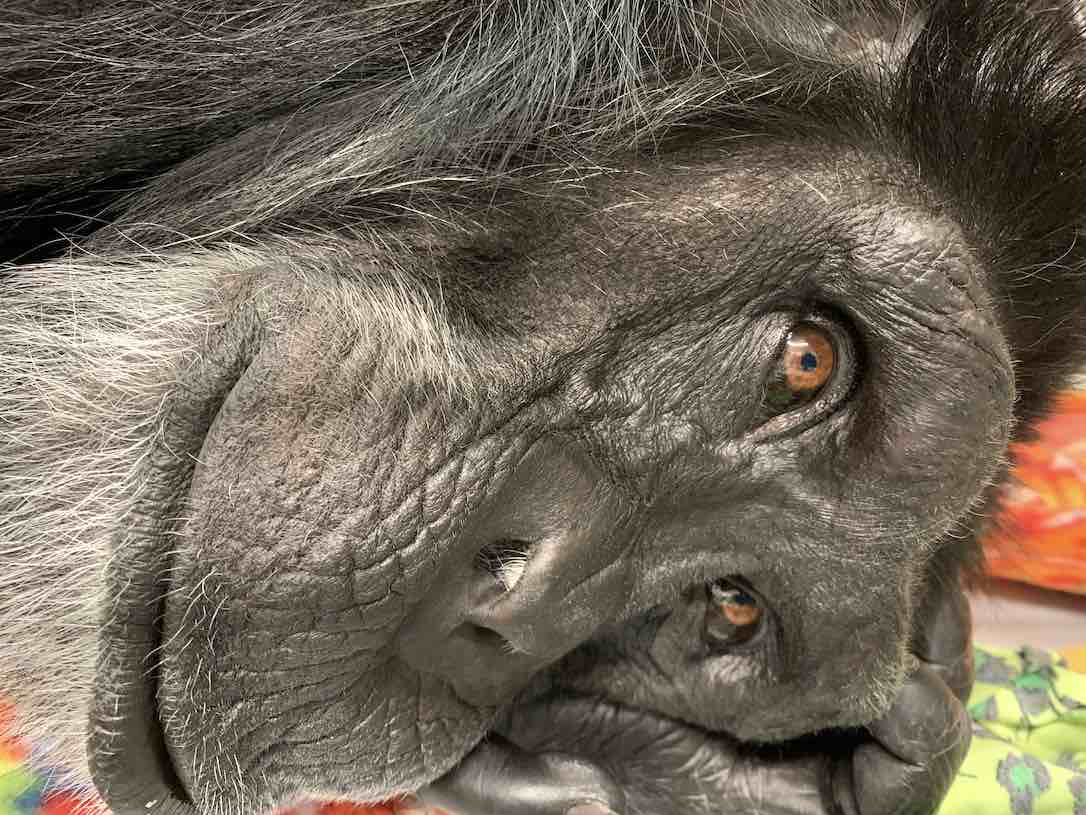
Twenty-five years ago, I began a life and career with chimpanzees with the hope of seeing what new and exciting thresholds they would cross, whether it be in art or technology, culture or cognition, in their race to join our virtuous circle. These days I am just as curious to discover how their own big brains have saddled them with inescapable bouts of sadness, anxiety, pettiness, jealousy, vengefulness, insecurity, and general confusion about how to exist in a hopelessly messy world. Because these are not qualities to be spoken of in hushed tones or swept under the rug in pursuit of discoveries more noble or virtuous. These, too, are signs of intelligent life.

And today I am even more certain of two things. First, we are most certainly not alone. And second, if big-brained aliens do ever visit us, they are sure to be carrying a lot of psychological and emotional baggage, too.
Filed Under: Chimpanzee Behavior, Intelligence, Jamie, Sanctuary, Willy B Tagged With: chimpanzee, emotion, insecurity, intelligence, northwest, rescue, Sanctuary

Be mine, Negra

February 18, 2024 by J.B.

Negra is a grumpy old lady. I have a feeling she’s been a grumpy old lady since she was born.

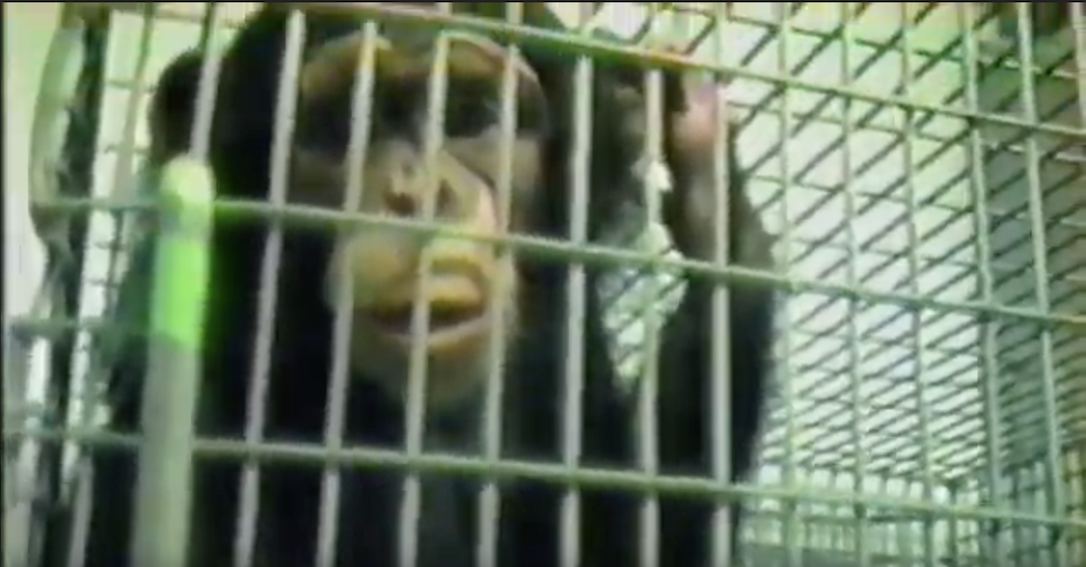
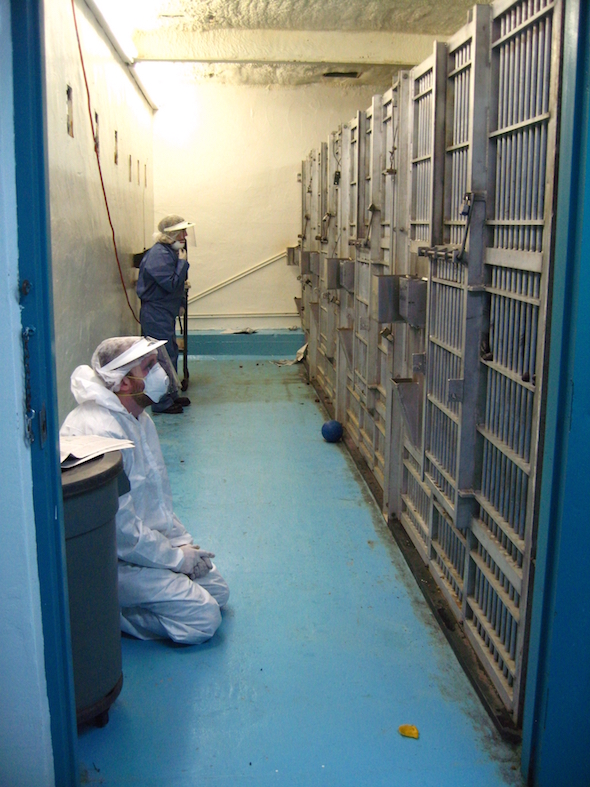
Mind you, we didn’t even know Negra until she was 35 years old. We met during our first trip to the Buckshire Corporation in Pennsylvania, back in 2007. Technically we didn’t even really meet her that time, because she hid behind the solid panel of her cage during most of the visit. My only memory of her from that initial encounter was the sight of her fingers reaching through the food slot, signalling that it was time for more peanuts.

During subsequent trips she started to come out of her shell, but only slightly. She was aloof, overweight, and severely arthritic. Her skin was ashen. In contrast to the others, who studied us intently, spat upon us, and even invited us to play, Negra remained largely disengaged. She seemed to have given up long ago.

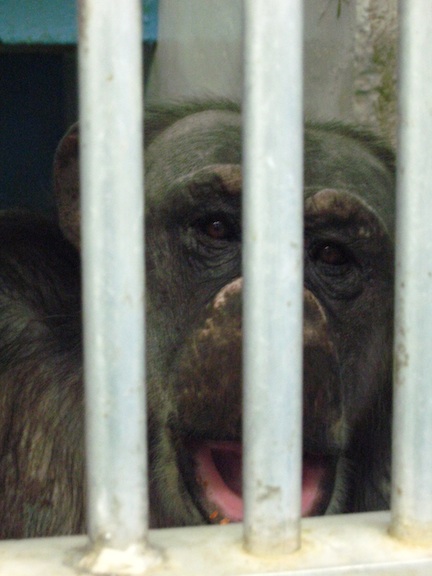
Negra in lab cage

Near the end of our final visit, we emerged from the stuffy, windowless basement in which they were kept and removed our PPE. We sat on a nearby picnic table to cool off and began talking about what we thought life might have in store for Negra and her six companions once they made their cross-country journey to Chimpanzee Sanctuary Northwest. Everyone agreed: Negra was in such a state that if we could just give her one year in sanctuary, we would consider it a victory. It felt like a big if.

For Negra, everything about her life in sanctuary was new. As far as we know, she hadn’t seen the sun or breathed fresh air in decades. As an infant, she had been captured in Africa and shipped to the United States for use as a biomedical research subject. She spent much of her life at the infamous Coulston Foundation in New Mexico, where she was bred to produce more chimpanzees for research and where she underwent regular dartings, biopsies, and surgeries as the subject of hepatitis vaccines safety trials. She had given birth to three children, all taken from her prematurely (and all, thankfully, later released from research as well – Angel and Noah now live at Save the Chimps in Florida and Heidi lives at Chimp Haven in Louisiana). When we met Negra at Buckshire in 2008, she was in a tortuous state of limbo: no longer leased to other laboratories for active research but needlessly confined to a barren cage nonetheless.

The sanctuary in 2008 was still a work in progress. But despite the outdoor area being still unfinished, Negra’s new home gave her room to walk and climb as well as sunshine and nearly endless vistas from every window of her two-story playroom. Somehow, seeing her in the environment of the sanctuary made her sickly state that much more apparent. At the lab, it was to be expected. At the sanctuary, and in the light of day, it was a shocking contrast.

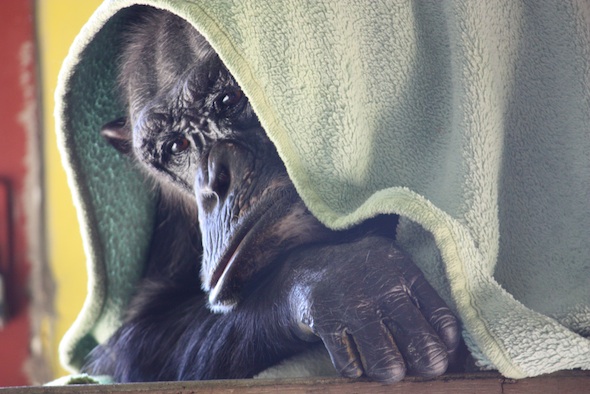
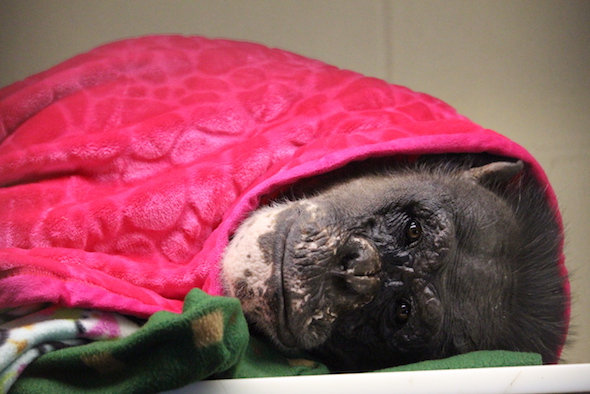
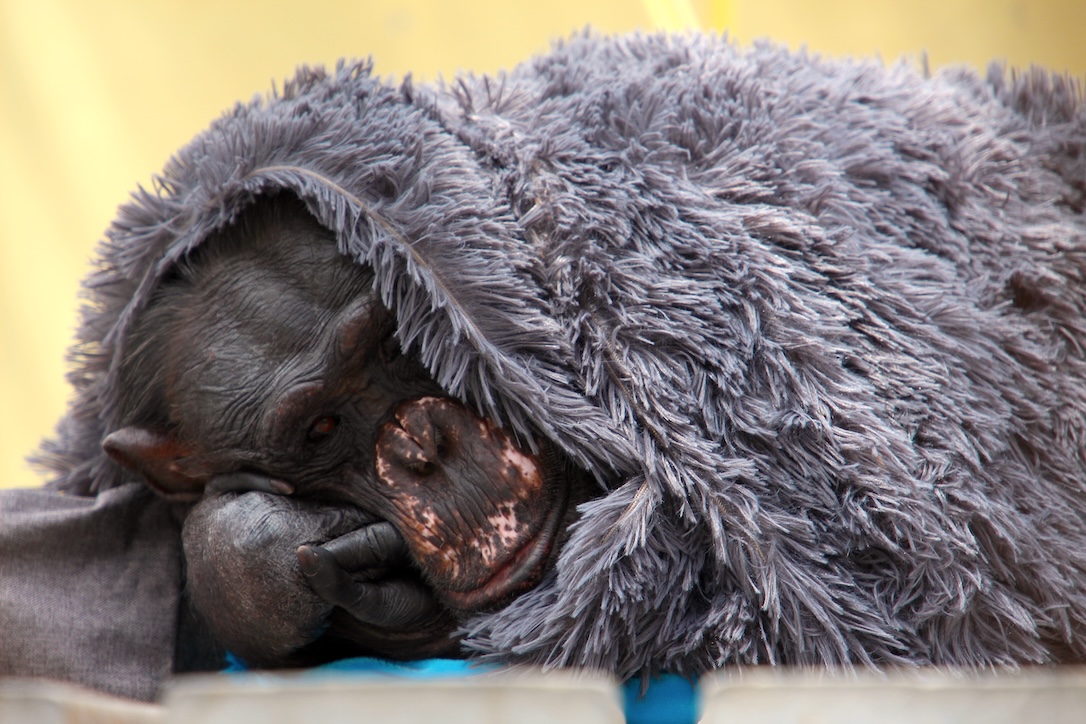
We learned early on that Negra does things in her own time. And by that I mean some other time. Her bed—one of the many simple comforts she was never afforded—became a protective cocoon, the one place where she finally felt safe. We counted ourselves lucky on the rare occasions when she emerged from it to grace us with her presence.

Time passed surprisingly quickly in those early days. As the first anniversary of the chimps’ arrival rolled around, we toasted the fact that Negra had achieved her year in sanctuary. She had done it! And yet, rather than feeling like a the happy ending we envisioned, it started to feel more like a new beginning.

Two years later, we were able to complete the larger outdoor habitat where Negra, at the age of 38, finally stepped all the way outdoors.

It was a big deal to us. Her reaction, on the other hand, was a resounding big whoop…Bed was much warmer and softer, anyway, and far less chimpy and peopley.

But over time she would come to enjoy the outdoors as she does everything else: In her own way and on her own time. She only took advantage of the lower quarter of the 2-acre enclosure, perhaps fearing the thought of being so far away from the comfort and security of the familiar. Still, it was always exciting to catch her outside. Calls could be heard over the staff’s two-way radios whenever she emerged: Negra is outside! Negra is outside! Upon hearing the news, everyone would leave their tasks momentarily to watch her bask, however briefly, in the morning sun.

Negra has now had far more than the single year we had hoped to provide to her in sanctuary. In fact, she has now lived for over 15 years outside that hellish basement. And somehow she actually becomes younger with each passing year.

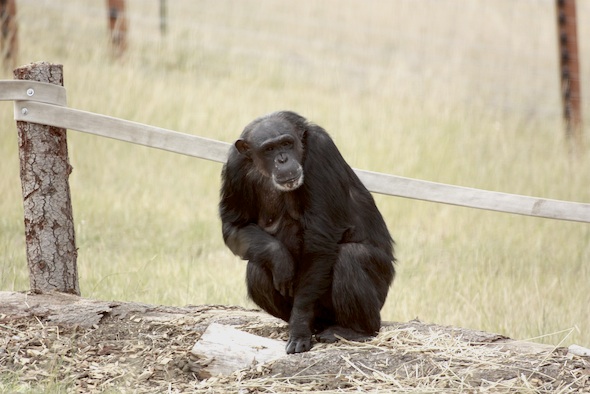
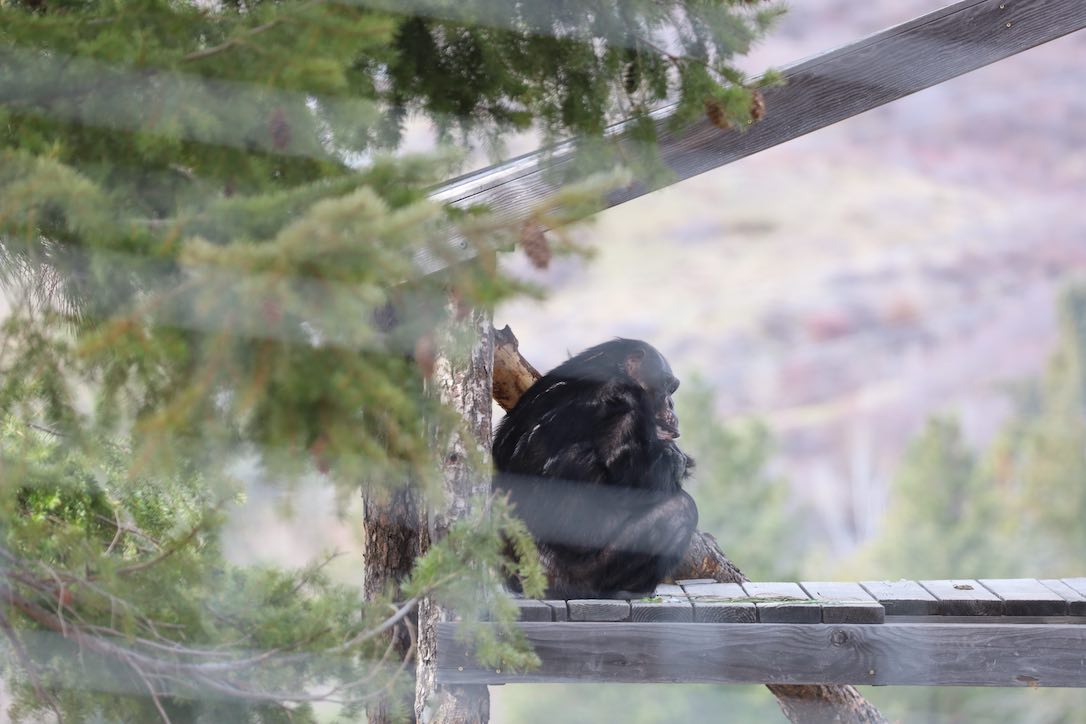
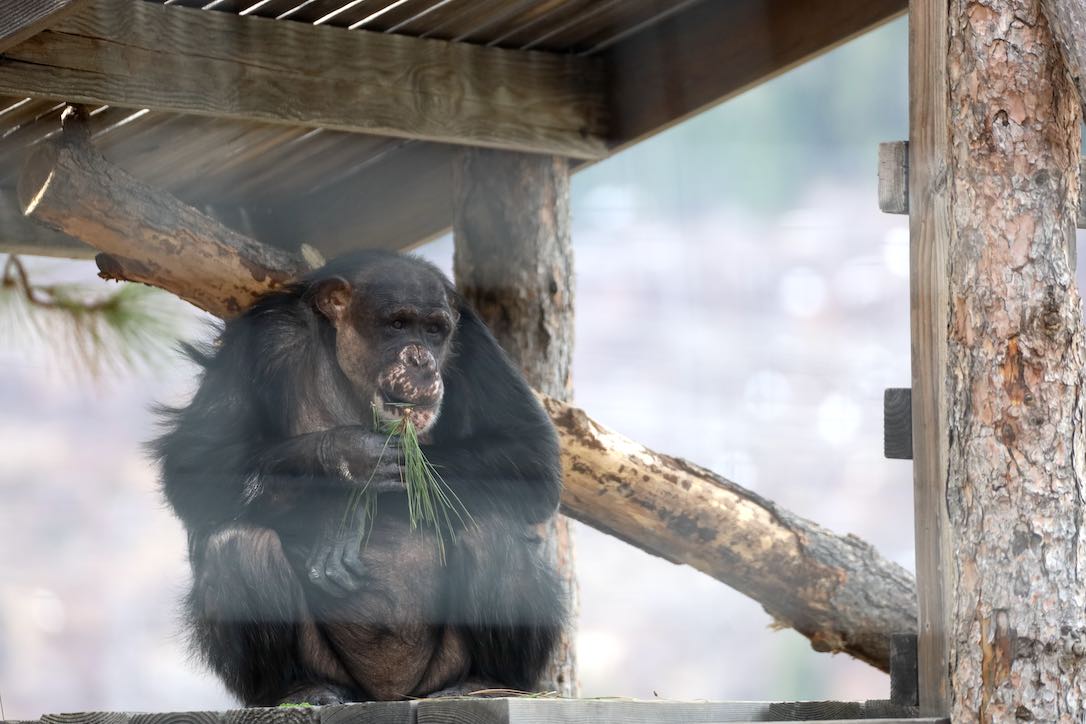
Last spring, as I was walking to the chimp house, I saw a lone figure moving through the tall grass at the very top of the hill, as far away from the building as you can get. I grabbed a camera with a telephoto lens and raced to catch up, partly to document the occasion but mostly because I couldn’t believe my naked eyes. When I reached the top I saw Negra atop the climbing tower, looking out across the Cascade Mountains and nibbling gently on a pine bough. At the age of 49, she was still recovering, still making progress, just as she does everything else: in her own time.

Of course, neither time nor experience in sanctuary have softened the old lady. Negra, now 50, is still a grump. And she’d still prefer the comfort of a warm nest to an outdoor adventure any day.

But who are we to tell a chimpanzee how to live? I’ll always find joy in witnessing those moments of courage but I recognize that sanctuary means different things to different people. For Negra it means peanuts and lettuce, sweet spring grass, a troll doll companion in the summer, peanut butter food puzzles, wrestling with her friend Burrito, a heaping pile of blankets, an occasional walk through the grass, and, perhaps most importantly, the freedom to choose among them as she pleases.

It’s a life made possible by those who have supported this sanctuary, with a special thanks to Negra’s Pals, Vicki, Monica, Chris & Lee Ann, Donna, Kathleen, Sharlene, Star, Stacey, Lorna, Jean, Melissa & Bruce, Jenny, and Alice.

You can be Negra’s Pal, too, and give this grumpy old lady the Valentine she deserves.

Filed Under: Negra Tagged With: be mine, chimp pal, chimpanzee, Chimpanzee Pal, Negra, northwest, pal, rescue, Sanctuary, valentine

Be Mine, Cy

February 12, 2024 by J.B.

Cy is the leader of his family of nine chimpanzees. Contrary to popular myths about alpha male chimpanzees, he is kind, gentle, and caring. He is at times a reluctant leader—one whose dominant status has been bestowed upon him out of admiration and respect rather than being sought after and achieved for its own sake. But when called upon, he never fails to meet the needs and expectations of those who count on him.

Cy was born in 1990 at the Laboratory for Experimental Medicine and Surgery In Primates (LEMSIP). He was taken from his mother and raised by humans, splitting time between the nursery playroom and a small cage suspended off the floor. He would likely have been subject to HIV or hepatitis vaccine trials but LEMSIP closed their chimpanzee research program in 1996 before he could enter the the adult wing of the lab. Cy was then transferred to the Wildlife Waystation in California, where he would live for over two decades. In 2021, he came to Chimpanzee Sanctuary Northwest along with his full sister, Lucky, and his half sister, Rayne, as well as Terry, Dora, and Gordo. A year later they were integrated with Willy B, Mave, and Honey B, who is also Cy’s half sister.

Cy at LEMSIP:

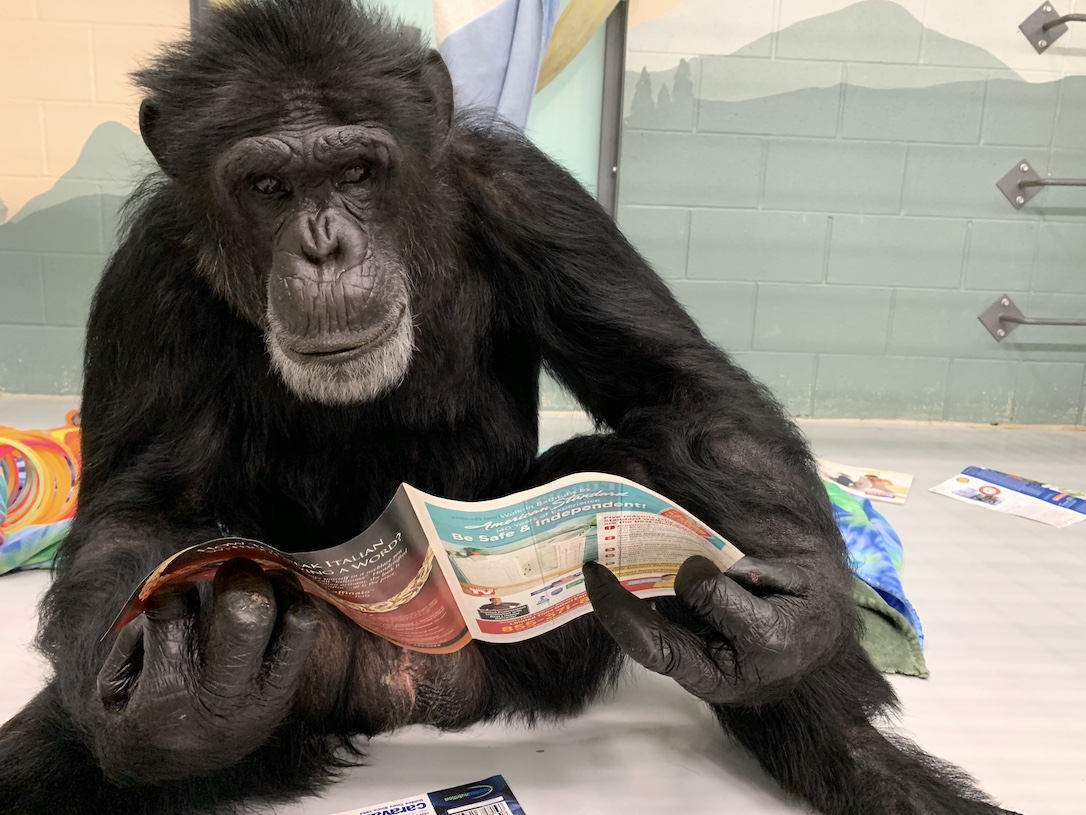
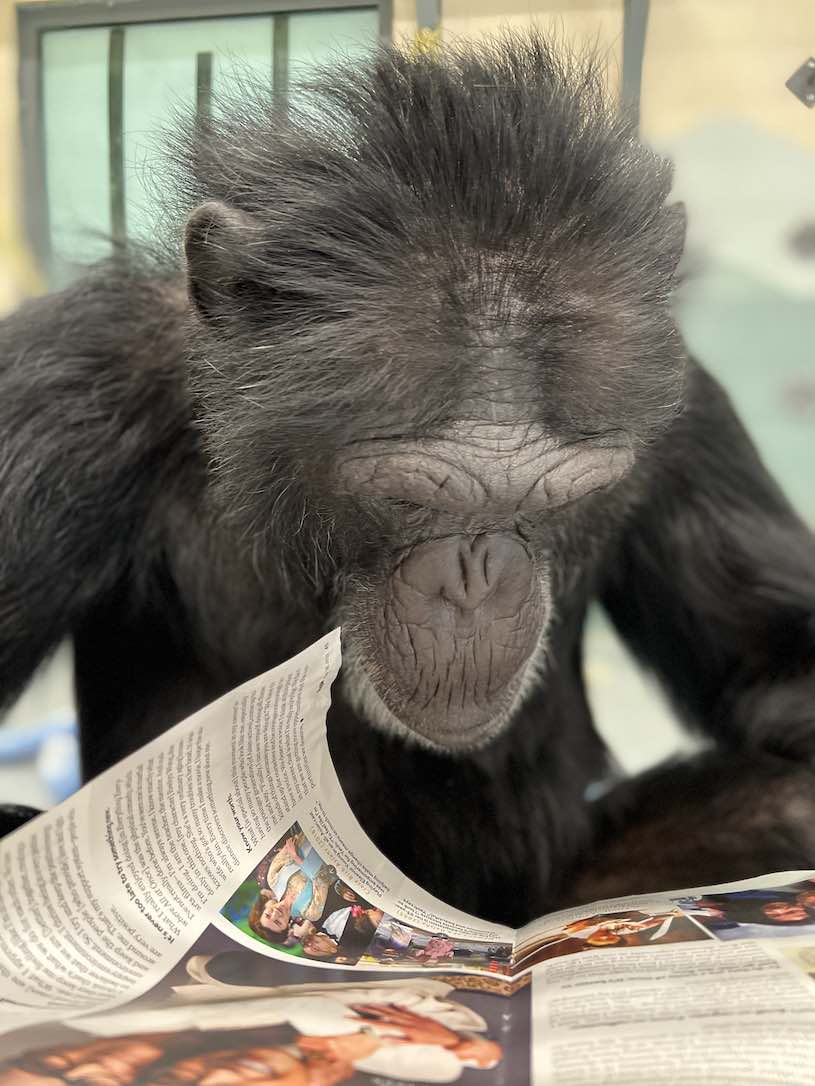
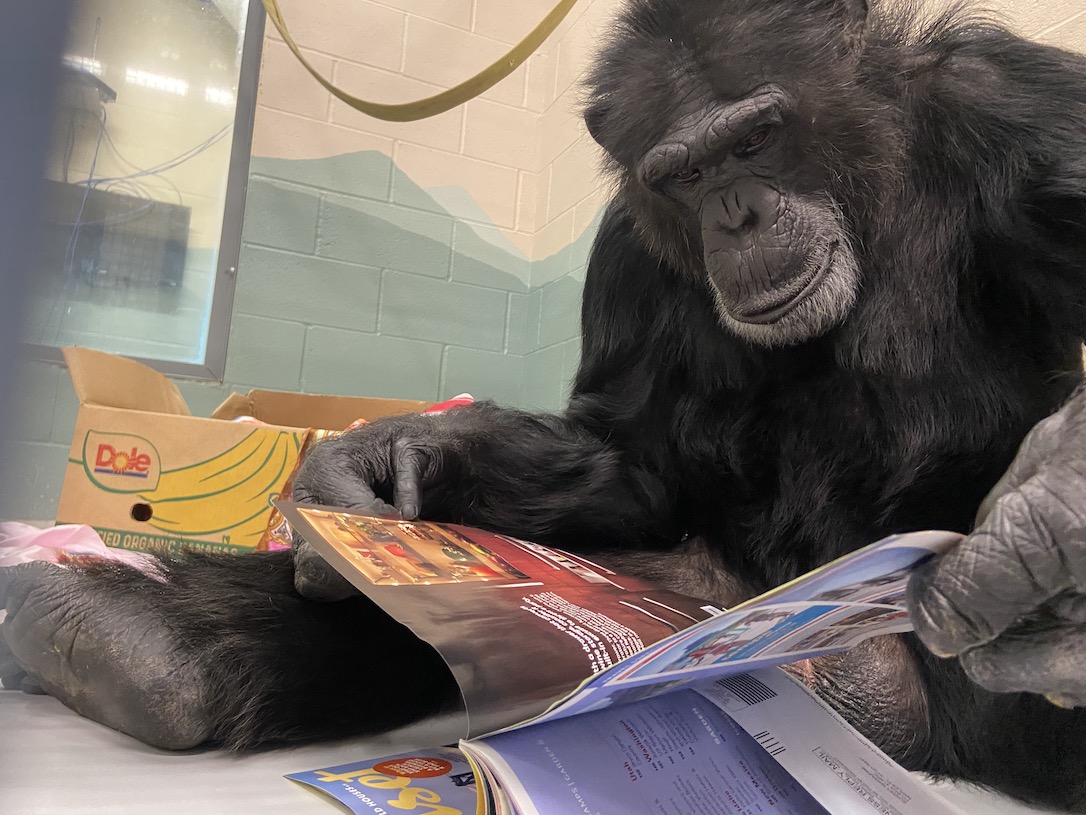
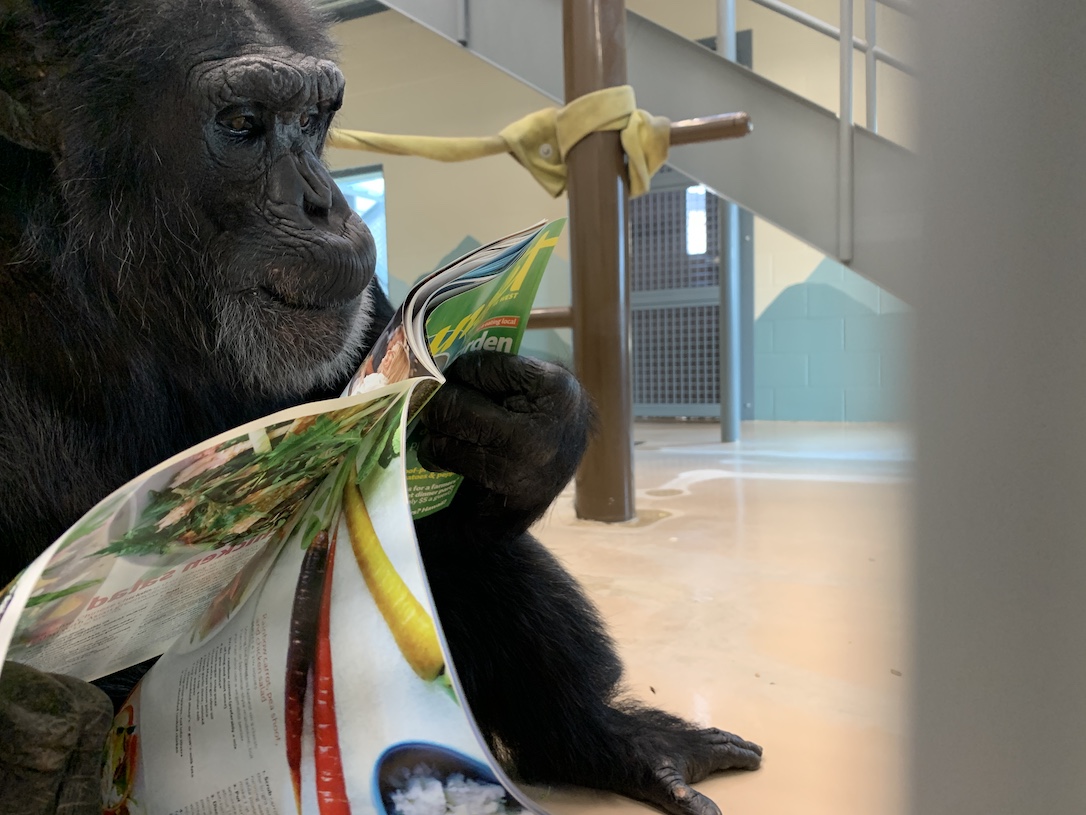
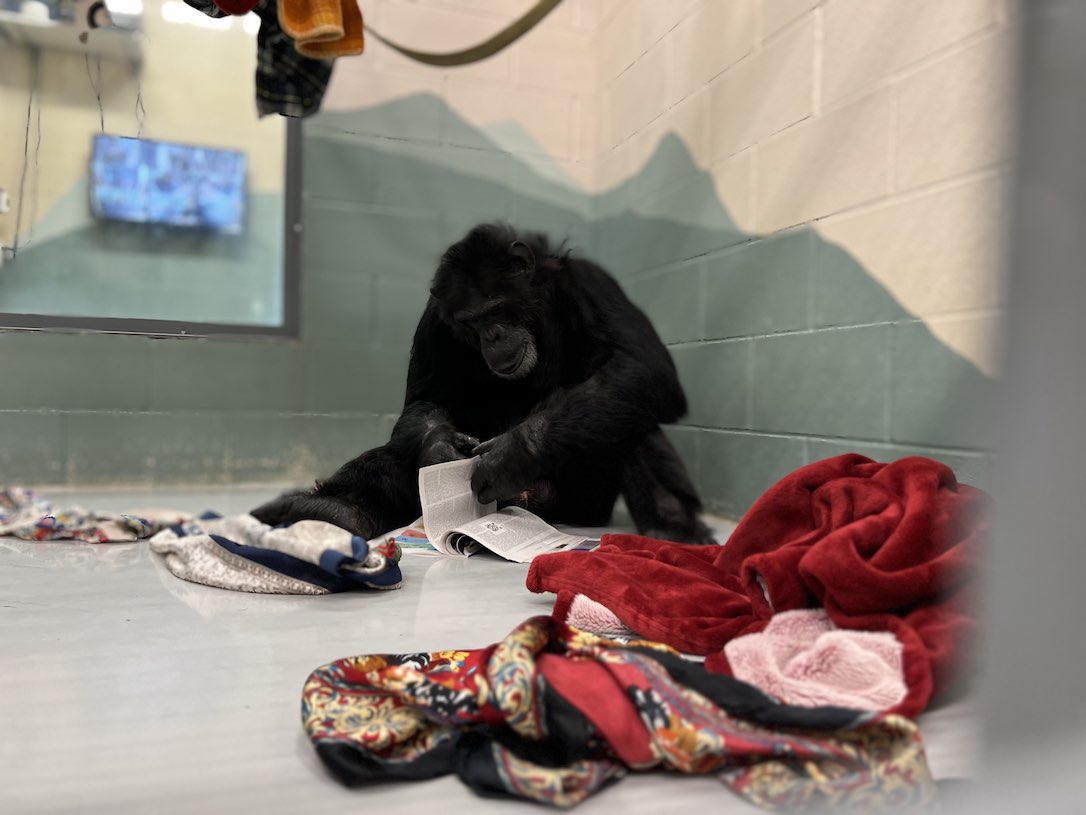
When he is isn’t called upon to lead his family, Cy can often be found sitting by himself in a corner, flipping through magazines. His favorite subjects are animals (but no cows, please!) and the latest celebrity photos from People and Us Weekly. He also loves spending time with his caregivers, playing quiet games of “tickle” or raucous games of chase. Among his favorite foods is corn on the cob—one of the few things for which he will exact a tax on his group mates (but even when he steals food, he does it in a kind and gentle manner!).

One of Cy’s most important roles is that of mentor and protector to his second in command, Willy B. His ability to accept Willy B’s anxieties and social challenges and approach them with patience and understanding is practically saint-like, and almost certainly a primary reason that Willy B has finally been able to live in the larger social group he deserves.

Cy’s new life at Chimpanzee Sanctuary Northwest has been made possible, in part, by his Pals Monica, Daniel, Aprile & Robert, Emily, Thomas & Ranu, Katherine, Matthew, Penelope, Fritzie and Tami, who sponsor his care. You, too, can become Cy’s Pal or give the gift of sponsorship to someone you love.

After all, it’s hard not to fall in love with Cy.

Filed Under: Cy Tagged With: be mine, chimp pal, chimpanzee, Chimpanzee Pal, Cy, northwest, pal, rescue, Sanctuary, sponsor-, valentine's day

Honey B Update and a February Day on the Bray Video

February 5, 2024 by J.B.

Watch the video above to see Cy’s group enjoy another mild February day—a welcome change from January’s relentless cold and snow. Just don’t tell Gordo that I shared that clip of him.

And a quick update on Honey B:

As you may know, Honey B sustained a laceration to her lower right eyelid a couple of weeks ago and Dr. Erin leapt into action to perform an emergency repair that same day. After monitoring the healing process, Dr. Erin thought that it would be in Honey B’s long term best interest to have a surgeon perform a revision to the eyelid to ensure that both the lid and tear duct would continue to function correctly. As she always does, Dr. Erin assembled a great team to not only perform the surgery but also to conduct as much diagnostic evaluation and preventative treatment as possible while Honey B was under anesthesia to reduce the need for further procedures down the road.

We were grateful to have Leah Bezzo, CRNA return to the sanctuary to perform anesthesia along with her colleague Christine Zielke, CRNA. Tyler Sugerman, DVM, another veteran CSNW volunteer, performed an abdominal ultrasound using our new machine. On the other side of the table, Jerry Woodfield, DVM DACVIM (Cardiology), performed an echocardiogram. And after the initial tests were conducted, Karen Brantman-Crosetto, DVM DACVO performed the surgery.

Here’s the good news: Honey B is overall quite healthy and Dr. Brantman-Crosetto did a wonderful job on the eyelid. Honey B will, unfortunately, need some additional time apart from her group while the revision heals but we are optimistic that she’ll be back with her friends soon. And in the meantime she will sit with her chimp friends at the window, spend tons of quality time with her human ones, and receive extra enrichment from Chad, Ellen, and the rest of the team.

As she often does, Dr. Erin served as both orchestra conductor and player, sneaking in joint and dental exams, x-rays, and other tests as her assembled team proceeded through their evaluations. Did you know that the CSNW caregivers also take turns serving as Procedure Manager? This role, filled on this occasion by Kelsi, ensures that the medical team follows a schedule developed in advance by Dr. Erin, keeps notes and records throughout the procedure, makes sure each task is completed, and finds that thing that no one else in the clinic can seem to find when they need it.

Many thanks again to this incredible group of volunteer medical professionals! And keep your fingers crossed that Honey B leaves Dr. Brantman-Crosetto’s beautiful handiwork alone.

Filed Under: Honey B, Sanctuary, The Bray, Veterinary Care Tagged With: chimpanzee, Honey B, northwest, rescue, Sanctuary, surgery, veterinary

Your Questions Answered

January 22, 2024 by J.B.

After posting about Honey B’s trip recent trip to the clinic, many of you on the blog and social media had great questions. I thought we could take this opportunity to answer a few in greater detail here.

How do you isolate a chimp that needs treatment in the veterinary clinic?

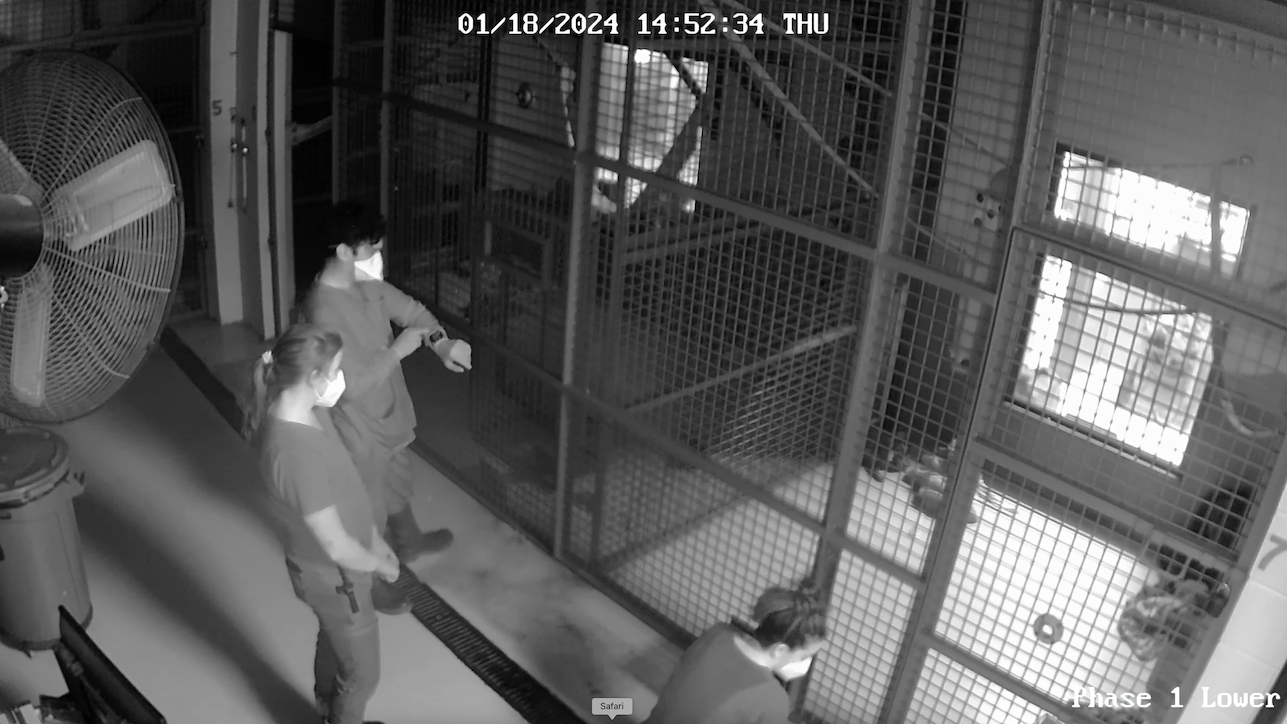
The first step in bringing a chimp into the veterinary clinic for treatment is to isolate them. Each wing of the building contains a series of smaller rooms, which we refer to as “front rooms” due to their proximity to the human areas of the building. The front rooms may not look like the most desirable places for a chimp to spend their time but they are open to the chimps on a regular basis just like the playrooms and greenhouses and are actually quite popular spots for sleeping, monitoring the humans’ activity, watching television, or simply finding a quiet spot away from the rest of the group. They are generally smaller (most are approximately 8’W x 8’L x 10’H) and they have surfaces meant for easy cleaning and disinfection, as opposed to, say, the grass, mulch, and bamboo found in the greenhouses. One front room in each wing lacks the benches, ladders, food chutes, and other more permanent “furniture” found in the others, and these are the rooms where we isolate the chimps for anesthesia. The lack of furniture limits the potential for a chimp to fall as they succumb to the anesthetic, as some chimps may be inclined to climb up and perch if they are feeling sick or scared.

Cy likes to read magazines in the medical room (Front Room 7):

If a treatment or exam is planned in advance, we typically try to get the patient into one of these medical rooms the night before. This is done for two reasons: 1) so that we can begin early the next day, and 2) so that we can restrict their food and water intake. In the new wing, for example, each “lixit,” or water fountain, has its own shutoff so we can turn just their water off a couple hours before the procedure. Of course, some procedures are conducted on an emergency basis and we have no choice but to forego fasting.

Getting the patient into the medical room—and getting the others out!—is the part of the process that strikes fear into the hearts of caregivers everywhere, especially when outside professionals are coming to assist with the procedure (No pressure but the cardiologist will be here promptly at 7am and the dental surgeon has to get back to their practice by 10!). Though it can be a challenge, the staff have always been successful (eventually). It just takes a little patience and a lot of bribery. Honestly, sometimes the cattle are more difficult to sort than the chimps.

Ideally, we end up with the patient in the medical room with the other front rooms empty so that there is no peanut gallery to cause interference and we can safely enter adjoining rooms if necessary. We have found that, contrary to what one might think, there is no reason to restrict the rest of the group from seeing what is happening and in fact letting them observe from afar seems to help ease their concerns. Thus, they can often watch from a nearby window.

How do you get a chimp into the veterinary clinic?

Once the chimps are in the clinic they are usually maintained on a gas anesthetic, but they have to be immobilized before we can safely take them out of the front rooms in the first place. For this we use an injectable anesthetic. And there’s just no getting around it—this part usually stinks.

We often begin with an oral sedative or anesthetic to help reduce their fear and anxiety, and follow this sometime later with an injectable to fully anesthetize them. Many of the chimps have been trained, or in some cases maybe even learned on their own, to cooperate with the injection. Right off the bat this takes 90% of the stress out of the process. For the chimps that do cooperate, our Positive Reinforcement Team works to maintain that cooperation through routine practice with blunt or small-gauge needles—getting the chimps to present an arm or leg against the caging, poking them, and then rewarding them for their participation. For those who don’t, the team meets them wherever they are and works to increase their tolerance without provoking fear or anxiety. Will every chimp that spent decades in a lab getting poked and prodded against their will learn to cooperate? It’s theoretically possible but logistically improbable. Still, it’s a worthwhile goal.

When a chimp doesn’t present for the injection-by-hand, we have to fall back on other methods such as a pole syringe or the dart gun. Ideally, they have enough oral sedative or anesthetic on board that the trauma of the injection is short-lived and quickly forgotten.

Once they’ve been given the injection, we turn the lights down, remain quiet, and monitor them. If we got the full dose in, they are out within 10-15 minutes but sometimes they need to be “bumped up” before we enter the room. We have a number of tests to evaluate their plane of anesthesia so they we don’t get surprised by a seemingly immobilized chimp suddenly jumping off the cot on the way out the door. The staff lift the chimp into the stretcher, roll them onto a scale to quickly check their weight against the last measurement we had on them from the bench scales inside their enclosures, and then it’s off to the clinic, where a team is waiting to start the IV and gas anesthesia.

The staff monitor Honey B with the lights dimmed after her anesthetic induction:

What happens when the procedure is over?

As the procedure is nearing its end, the chimps are taken off the gas anesthetic, which will continue to have an effect, and wheeled back to their room, which in the meantime has been cleaned and set up with piles of blankets for comfort and space heater just outside the caging for extra warmth. Depending on which type of anesthetics they were given and how much, it can take them anywhere from minutes to hours to begin to sit up. During this time we pay close attention to their vitals and their airway since anesthesia continues to present serious risks until they are fully recovered. If the chimp only underwent an exam, they could theoretically rejoin their group as soon as that same evening, provided it is clear they could safely run and climb around the enclosures should the group get a little rowdy. But typically they will get a good night’s sleep and rejoin the group the next day. If the recovery is slow or the chimp underwent a major procedure, staff will either sleep at the chimp house or come up to check on the patient throughout the night, with many photos and status updates shared amongst the staff for peace of mind.

The staff monitor Honey B as she lays in a bed of blankets in the medical room just outside the clinic:

Are you interested in learning more about the veterinary care provided at Chimpanzee Sanctuary Northwest? Check out some of our veterinary blog archives.

Still have questions? Ask away and we’ll do our best to answer in the comments below.

Filed Under: Veterinary Care Tagged With: anesthesia, chimpanzee, health, northwest, rescue, Sanctuary, vet care, veterinary

Caring for Meredith

January 8, 2024 by J.B.

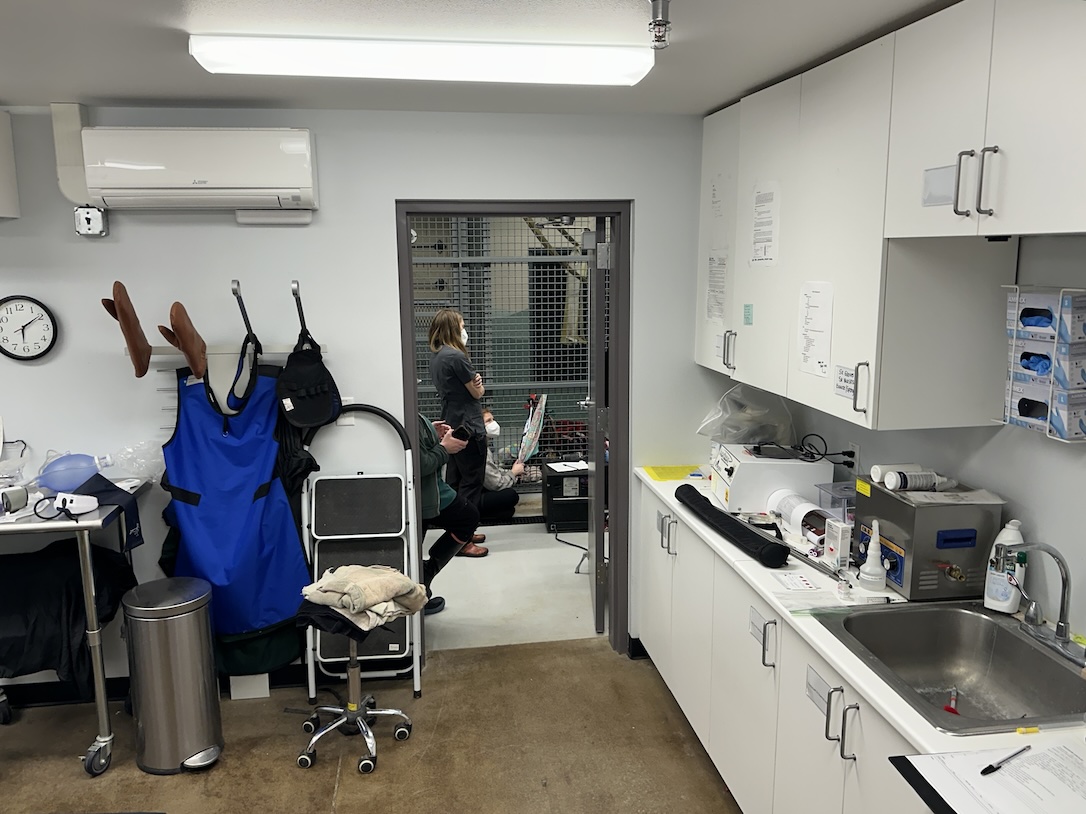
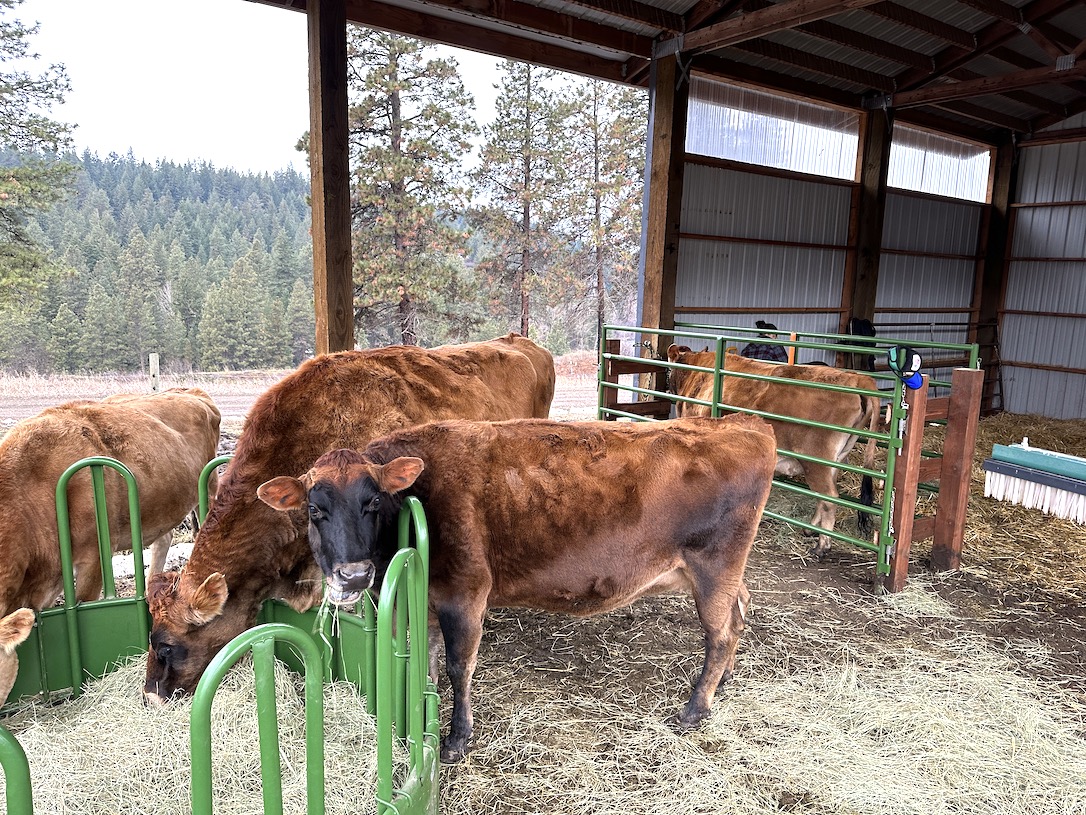
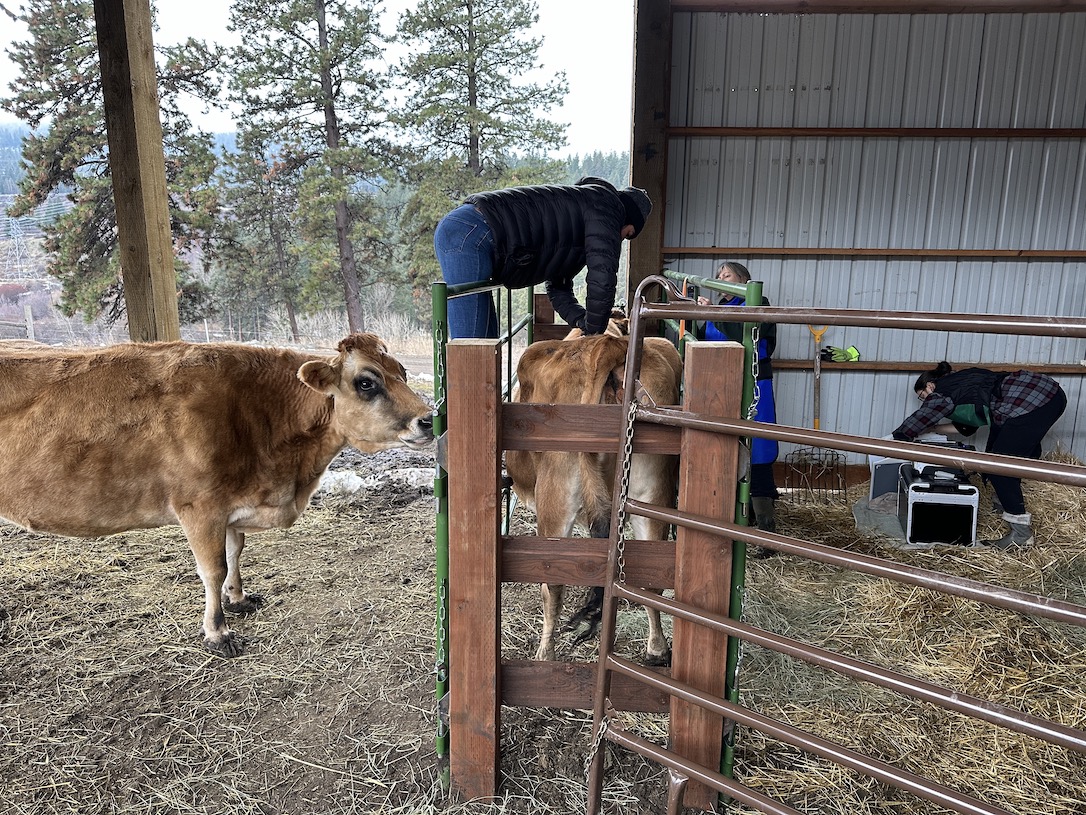
Meredith has always been a bit different from her herd mates — standing up when the others are lying down, facing east when the others are facing west, and so on — but this past summer we noticed that something other than her independent streak was causing her to lag behind her herd as they moved between pastures. By fall, a change in her gait became noticeable. Dr. Erin performed several evaluations, and Meredith even took a trip to the large animal hospital at Washington State University (WSU), but the veterinary team was unable to hone in on a specific diagnosis. Pain management and other therapeutics seemed to help, but not enough.

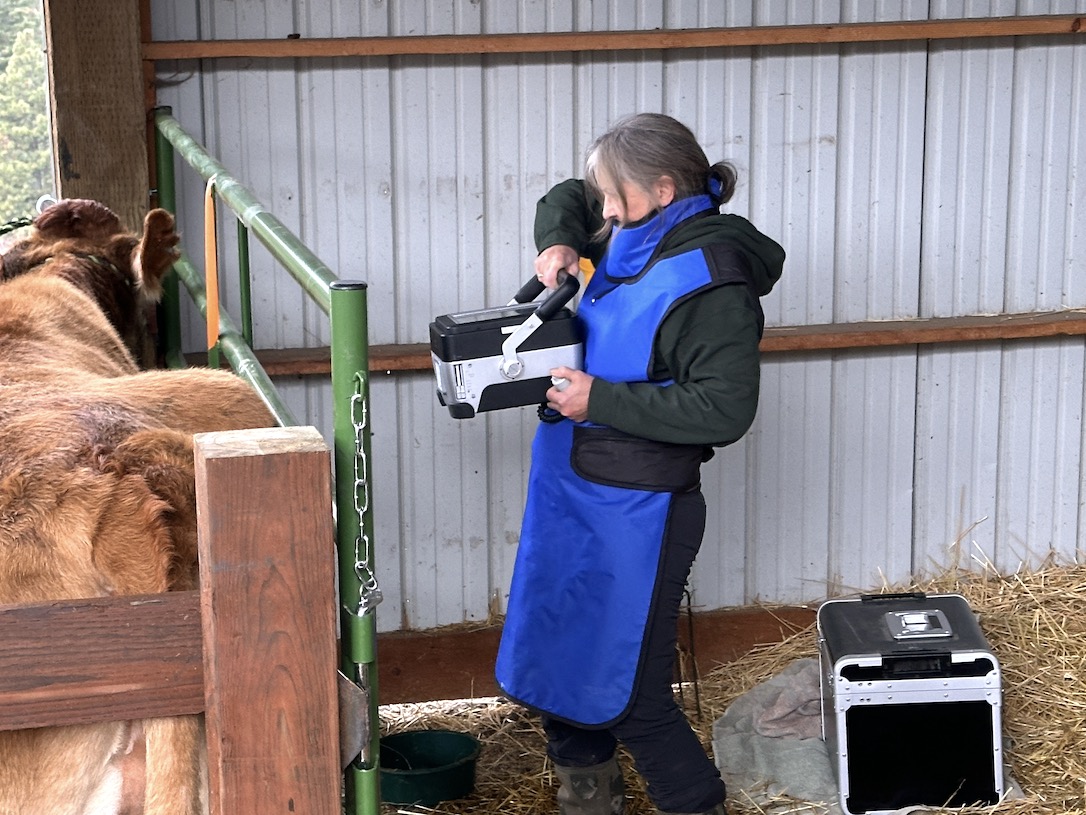
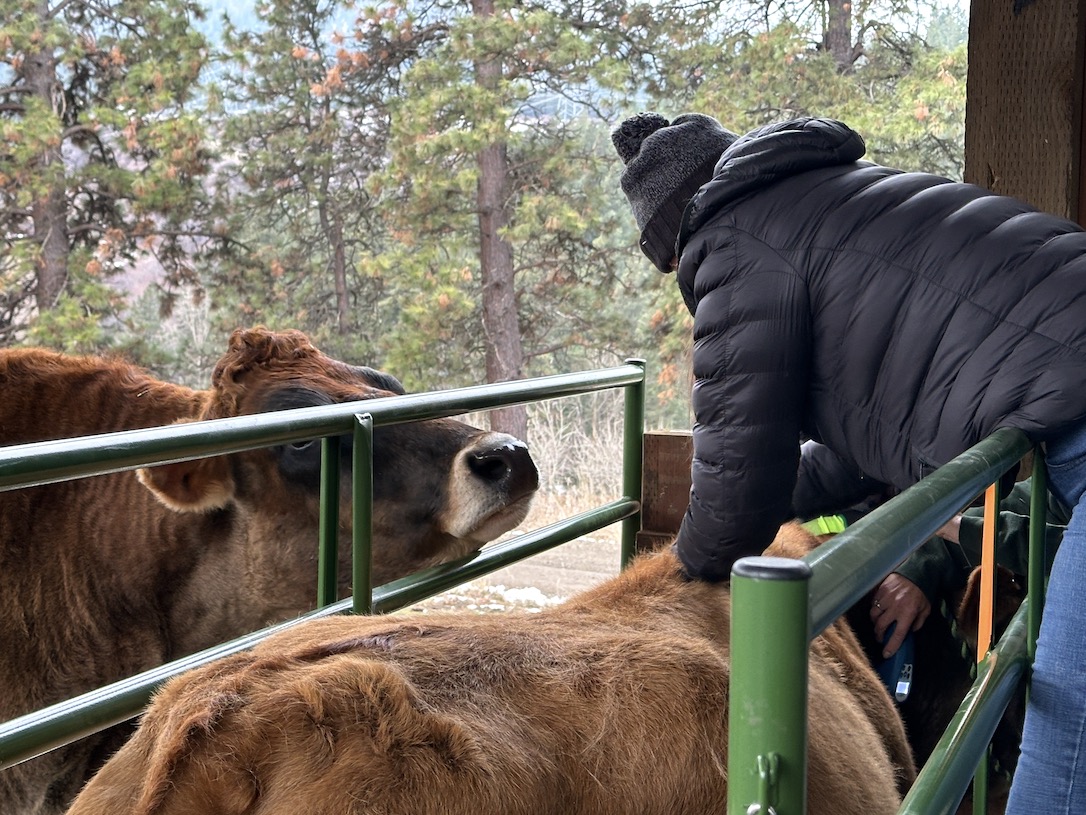
During her most recent exam at the sanctuary, however, Dr. Erin found radiographic evidence of osteoarthritis in Meredith’s front right foot, which meant that we had an explanation for her discomfort and, potentially, something we could treat with greater focus. Dr. Erin consulted with several large animal veterinarians and Meredith was booked for another appointment at WSU.

Meredith, in the chute, undergoing a recent exam:

Dr. Erin obtaining radiographs of the feet and spine:

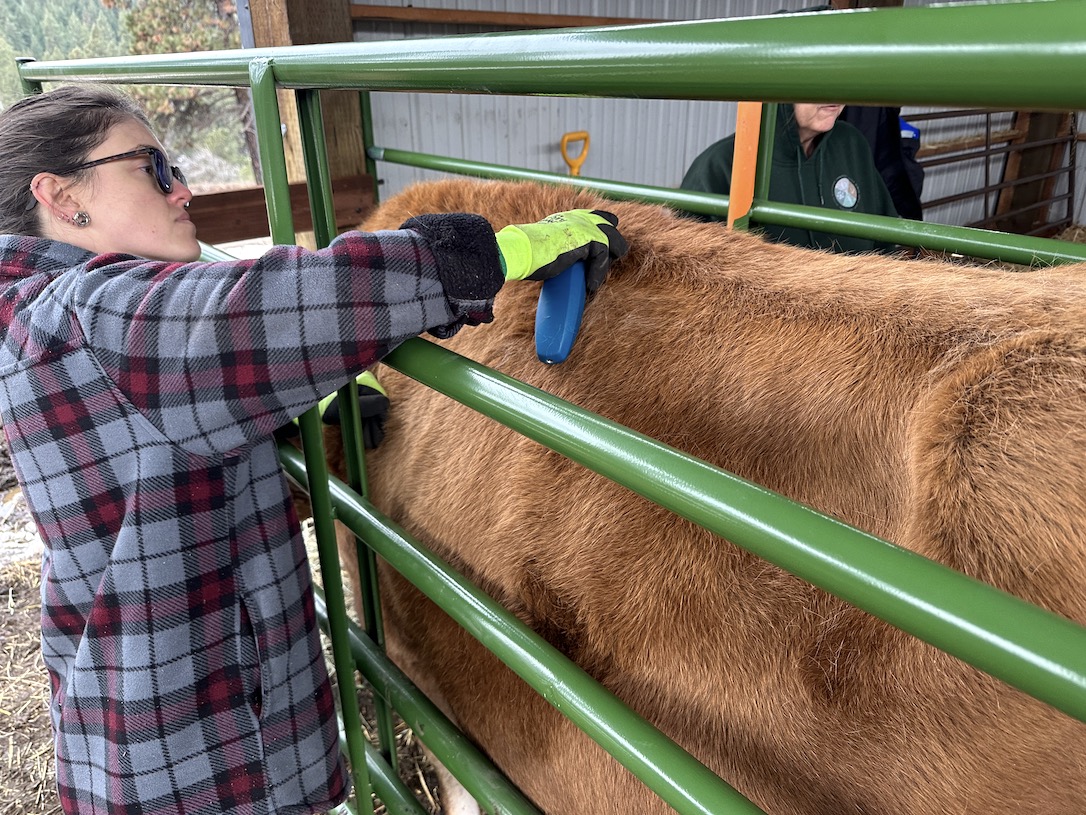
Amanda treating Meredith with laser therapy:

Another Dr. Erin (Erin Thorlakson, Family and Animal Chiropractor), evaluating Meredith, with Honey observing:

Nutmeg, Assistant to the Regional Chiropractor:

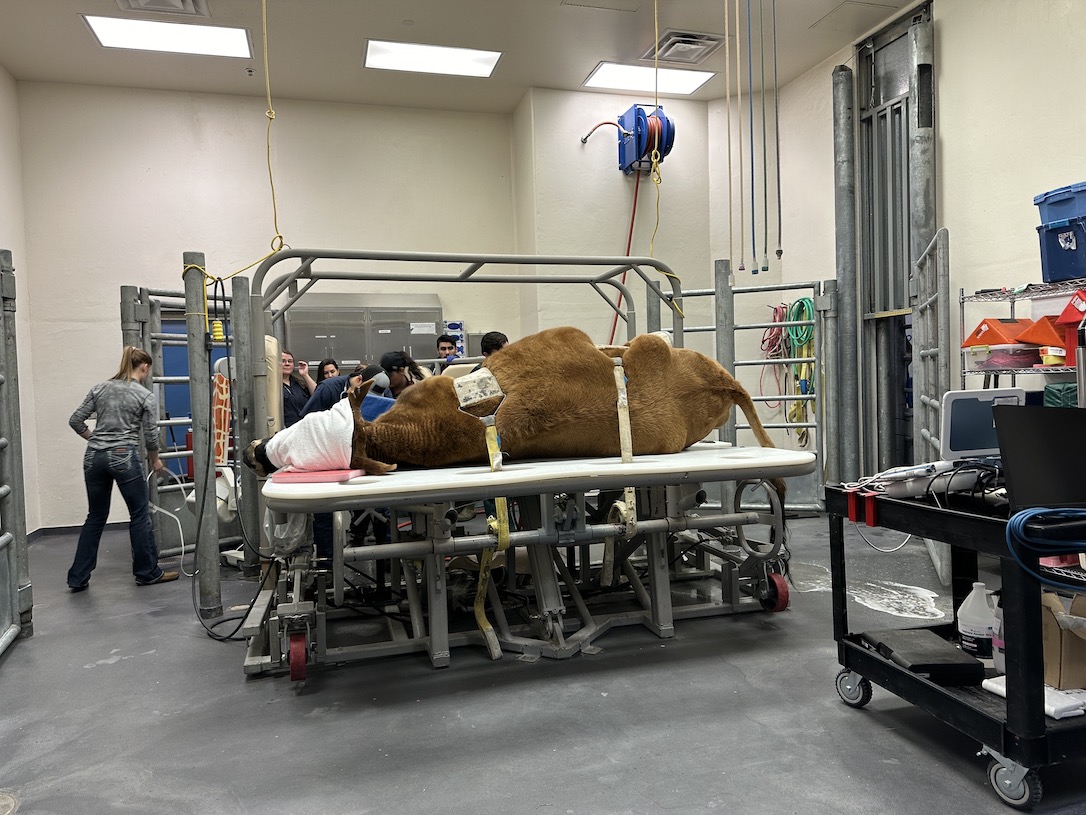
The treatment, known as facilitated ankylosis, would involve fusing the affected joints and would be performed by the veterinary staff at WSU. With everything arranged, we drove Meredith across the state again and the procedure was performed this past Tuesday.

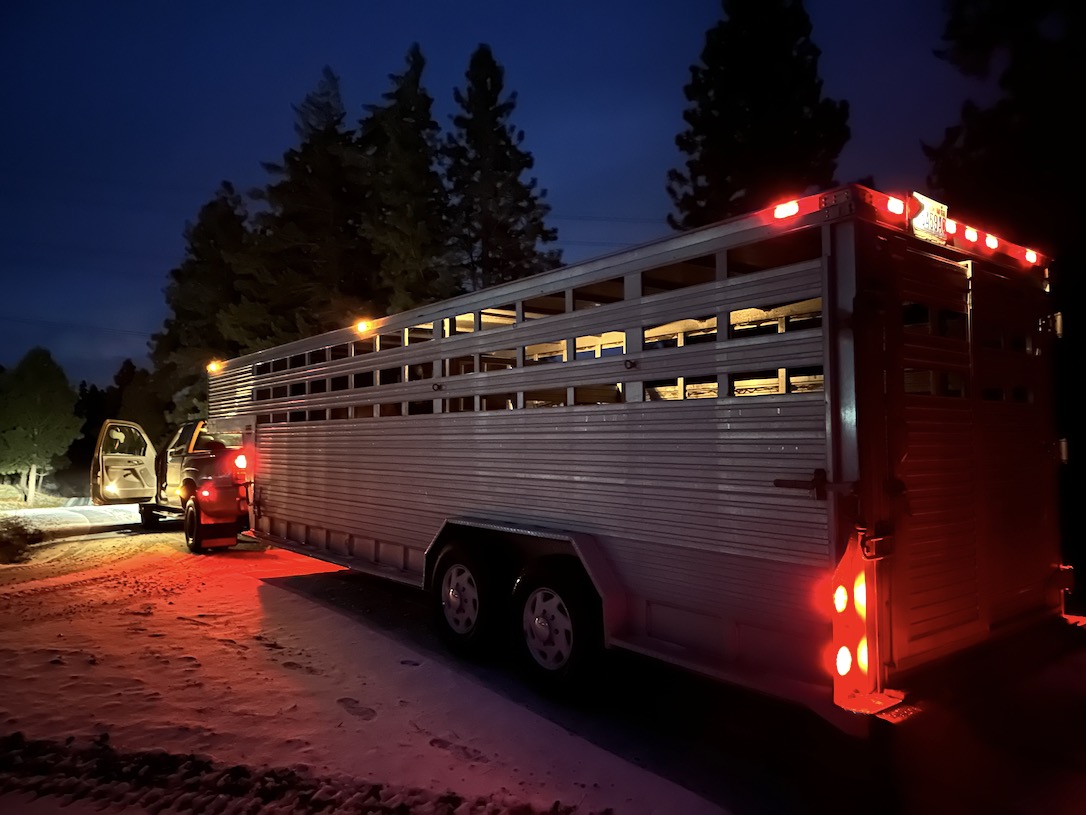
Getting a cow to an appointment 3 1/2 hours away requires starting early, bribing the herd with hay and grain to sort them, and praying to the cow gods that Meredith will load into the trailer without problems:

One last safety check before we depart on our road trip:

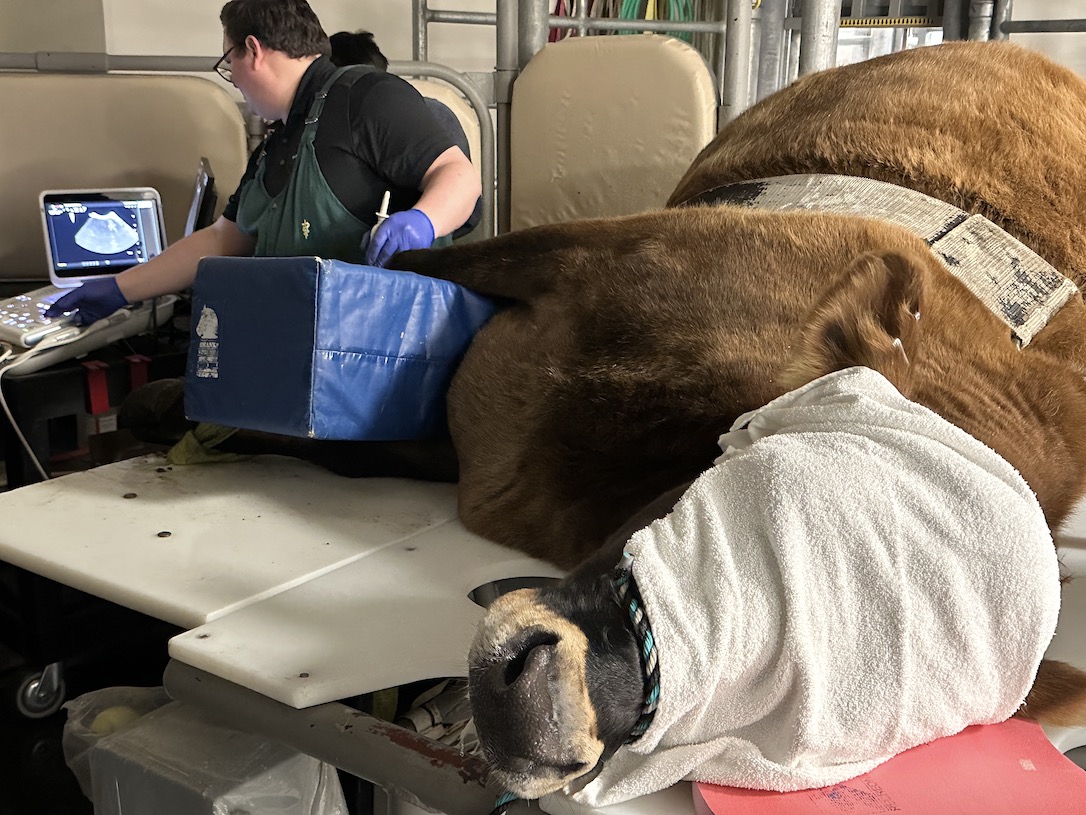
Meredith on the exam/treatment table at WSU, surrounded by faculty veterinarians, residents, and vet students:

Dr. Oliverez performing an ultrasound on Meredith’s foot:

Right now we are making preparations so that Meredith can be on restricted activity for a while within her own cozy section of the barn. Weather permitting, we hope to pick her up on Wednesday and reunite her with her family. It will take some time before we can determine if or how well the procedure has worked, and she will likely have to make repeated trips to see her friends at WSU for follow-ups on this treatment and possibly treatments on other feet, but we are hopeful that she will be able to graze the upper pastures with her herd this spring.

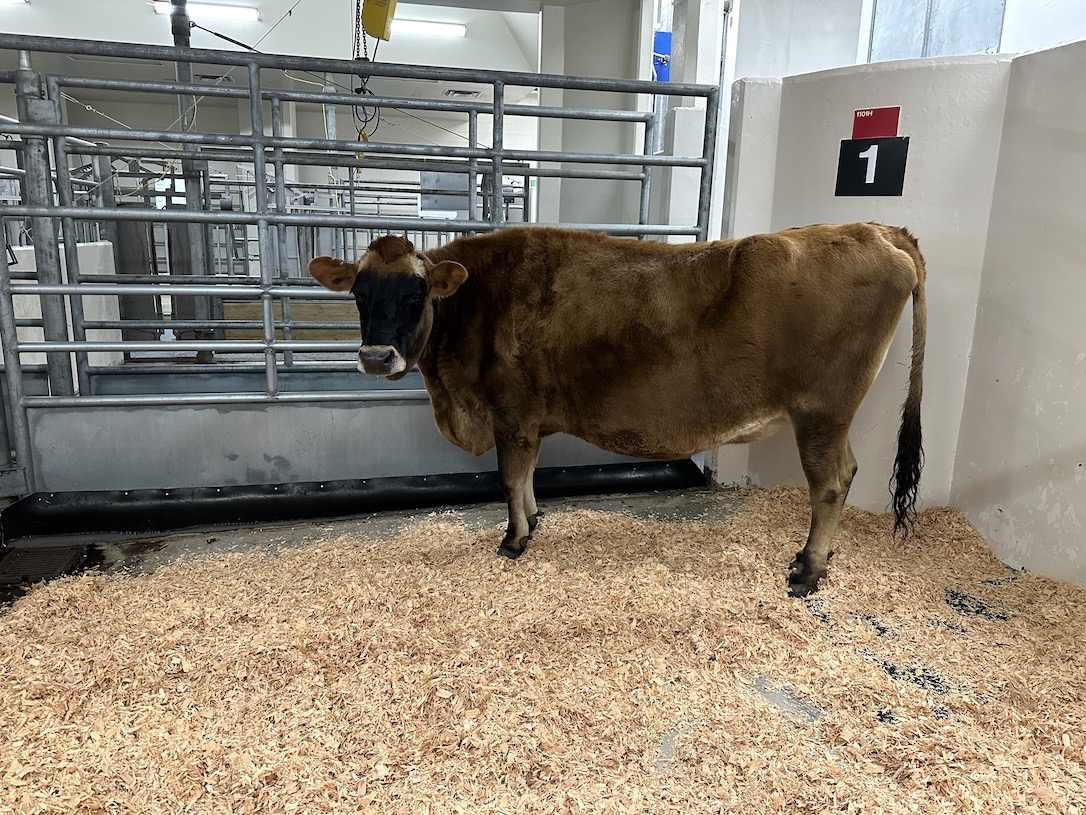
Meredith’s home-away-from-home at WSU while she receives her treatment:

By the way, some of you may know that we’ve been hoping to acquire a more powerful portable ultrasound machine for many years now. Thanks to a a whole team of people, including a wonderful family in Montana, our favorite veterinary cardiologist Dr. Nelson, and supporters Brad and Becky (who generously donated the funds!), we were able to purchase a very lightly used machine from an estate at an amazing price.

Don’t forget to vote in the photo contest – it ends tonight, January 8th at 6:00pm Pacific!


Filed Under: Cattle, Meredith, Sanctuary, Veterinary Care Tagged With: ankylosis, arthritis, cattle, chimpanzee, chiropractor, cow, Meredith, northwest, rescue, Sanctuary, veterinary

Christmas 2023

December 25, 2023 by J.B.

Our thanks, as always, to the dedicated volunteers who give up their own Christmas mornings to provide one for the chimps and to the staff that gladly work for an organization that never takes a holiday.

And Merry Christmas to all of our wonderful supporters! May you sleep soundly tonight atop your own mountain of gifts 🙂

Filed Under: Party Tagged With: chimpanzee, christmas, Enrichment, Food, gifts, northwest, Party, rescue, Sanctuary

  • « Go to Previous Page
  • Page 1
  • Interim pages omitted …
  • Page 14
  • Page 15
  • Page 16
  • Page 17
  • Page 18
  • Interim pages omitted …
  • Page 199
  • Go to Next Page »

Primary Sidebar

Subscribe To the Blog and Get Notified of New Posts First!

Archives

Calendar of Blog Posts

June 2026
S M T W T F S
 123456
78910111213
14151617181920
21222324252627
282930  
« May    

Categories

SUBSCRIBE TO OUR NEWSLETTER

Footer

PO Box 952
Cle Elum, WA 98922
[email protected]
509-699-0728
501c3 registered charity
EIN: 68-0552915

Official DDAF Grantee

Menu

  • The Chimpanzees
  • Blog
  • About Us
  • You can help
  • Resources
  • Contact
  • Donate

Proud Member of

Connect With Us

Search

Copyright © 2026 Chimpanzee Sanctuary Northwest. All Rights Reserved. Site by Vegan Web Design