• Skip to main content
  • Skip to primary sidebar
  • Skip to footer

Chimpanzee Sanctuary Northwest

Hope. Love. Home. Sanctuary

  • Our Family
    • The Chimpanzees
    • The Cattle
  • Blog
  • About Us
    • Visiting the Sanctuary
    • Philosophy
      • FAQs
      • Mission, Vision & Goals
      • Privacy Policy
    • The Humans
      • Staff
      • Board of Directors
      • Founder
    • Annual Reports
    • The Future of CSNW
    • CSNW In The News
  • You can help
    • Donate
      • Become a Chimpanzee Pal
      • Sponsor A Day
      • Transfer Stock
      • Be A Produce Patron
      • Be a Bovine Buddy
      • Give from your IRA
      • Personalized Stones
      • Bring Them Home Campaign
    • Leave A Legacy
    • Employment Opportunities
    • Volunteer
    • See Our Wish List
    • Events
  • Resources
    • About Chimpanzees
    • Enrichment Database
    • Advocacy
      • Advocacy Action Center
      • Apes in Entertainment
        • Trainers
        • Role of the AHA
        • Greeting Cards
      • Chimpanzees as Pets
      • Roadside Zoos
      • Chimpanzees in Biomedical Research
      • Conservation
        • African Apes
        • Orangutans
  • Shop
    • Merchandise Store
  • Contact
  • DONATE NOW

chimp

Roasted pears on snow, a delicacy

December 17, 2014 by Debbie

‘Tis the season for roasting and baking foods for the chimpanzees! They’ve had baked sweet potatoes almost everyday this week and they LOVE it! Food squeaks echo throughout the chimp house when they see the caramelized glaze on the potatoes. Yum! We’ve been experimenting with roasting some other foods, too, to mix things up a bit. Beets, carrots, and pears have all been a huge hit.

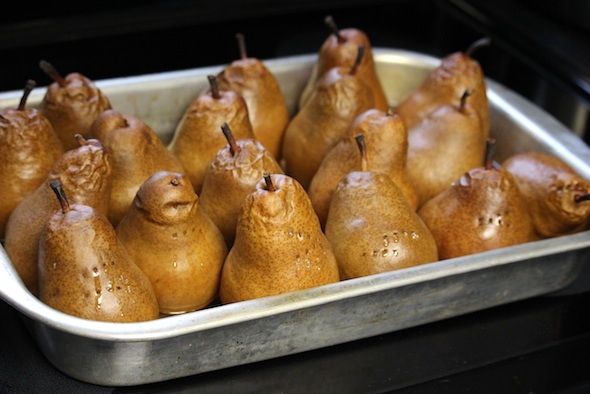
Today volunteer Sandra and I baked some pears with the plan to put a couple out as a forage after we cleaned the chimpanzees’ playroom. Here’s the before and after shots:
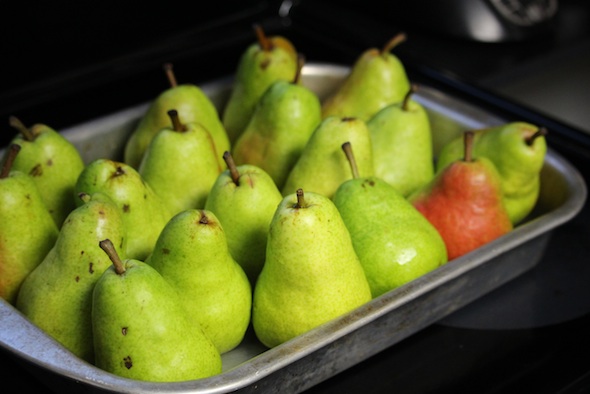
web_pears_pre-baking_dm_IMG_0015

web_baked_pears_dm_IMG_0039

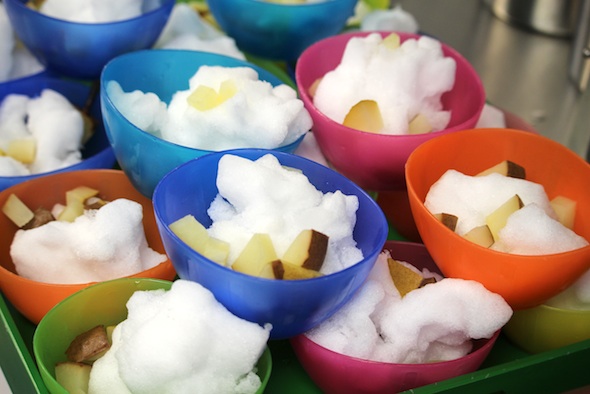
I turned off the oven well before we were done cleaning but the pears were still pretty hot when it was time to set up the forage. So we came up with a nice way to cool them off—use them as a topping on some snow!
web_snow_pear_forage_dm_IMG_0040

Sandra filled bowls up with fresh snow that fell this morning and scattered bits of roasted pear on top. All the chimpanzees huddled around the door as we set up the forage, pant hooting and food squeaking with excitement.

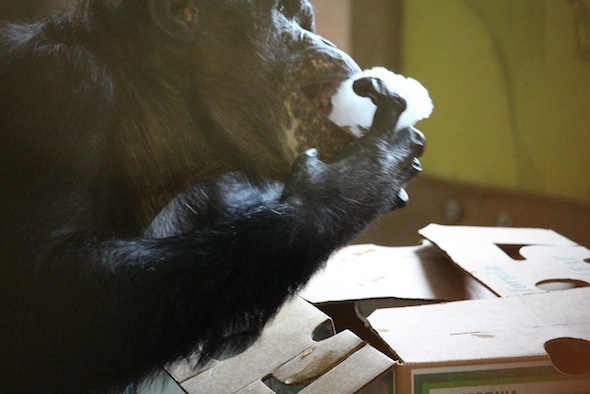
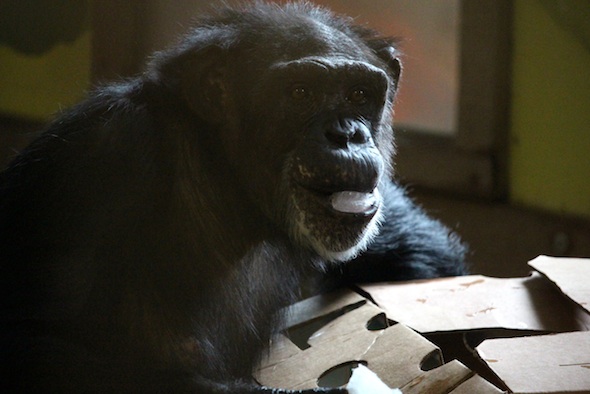
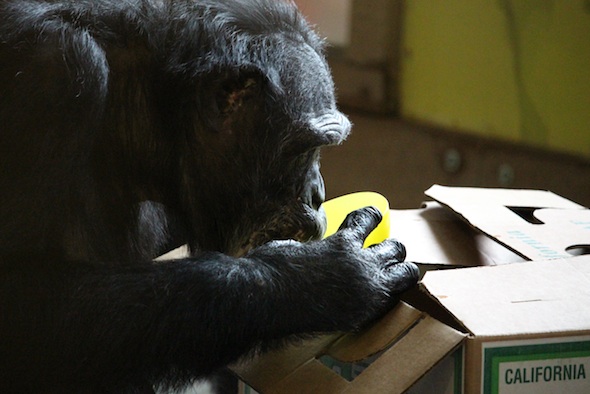
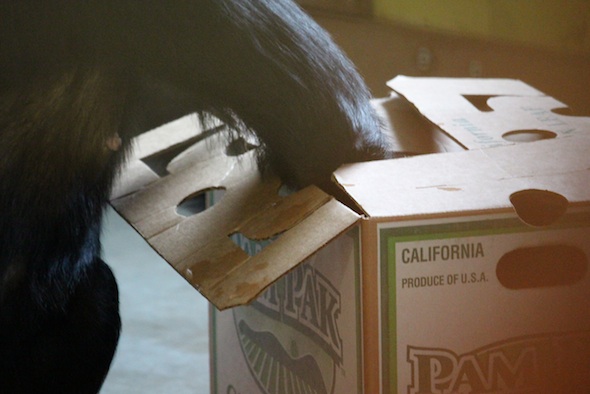
Jamie did not hesitate in grabbing as many bowls as she possibly could. Luckily we scattered many bowls around so everyone got to have a few, but Jamie got the biggest haul. It also helped that she used a box as a collection device. She pulled her box around and added bowls to it as she went through the playroom, as a sort of shopping cart.

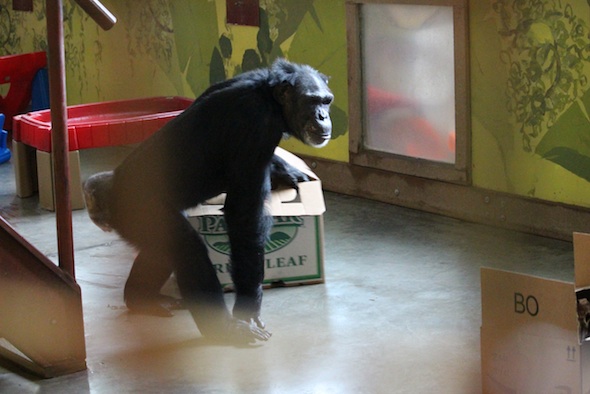
web_jamie_collect_snow_pear_forage_pr_dm_IMG_0044

web_jamie_drag_collection_box_forage_pr_dm_IMG_0068

Once she had collected everything she could, she sat down to enjoy her snow and roasted pear snack.
web_jamie_eat_snow_pears_forage_pr_dm_IMG_0079

web_jamie_reach_inside_box_forage_pr_dm_IMG_0090

web_jamie_eat_snow_pr_dm_IMG_0091

web_jamie_eat_snow_pr_dm_IMG_0097

Filed Under: Enrichment, Food, Jamie, Sanctuary Tagged With: animal protection, animal rescue, animal rights, Animal Welfare, chimp, chimp enrichment, chimp sanctuary, chimpanzee, chimpanzee rescue, chimpanzee retirement, chimpanzee sanctuary, Chimpanzee Sanctuary Northwest, Cle Elum 7, Cle Elum Seven, csnw, Enrichment, forage, Jamie, primate protection, primate rescue, Sanctuary

Ebola and Great Ape Conservation

December 16, 2014 by Debbie

There are many questions about how this year’s Ebola outbreak started, how it spread so quickly, and how to prevent it from spreading further—but what does Ebola have to do with non-human great ape conservation?

It is known that Ebola Hemorrhagic Fever is transmitted by coming into direct contact with bodily fluids of someone infected and showing symptoms of the virus, a cadaver of someone who died from the virus, or the fluids or meat of an infected animal.

Bushmeat is the meat of any non-domesticated animal that is consumed by humans. In Africa, bushmeat is not only consumed locally, but it is exported worldwide. Many bushmeat species are endangered, in which cases the hunting of those species is illegal. Still, these animals are hunted, and their meat is sold on the black market and exported to other countries, including the United States. No one really knows just how many pounds of illegal bushmeat are smuggled into the U.S., because it is believed only a fraction of the imports are confiscated—but estimates range from hundreds of thousands to millions of pounds per year.

While habitat loss is the largest long-term threat to African ape populations, hunting for bushmeat has risen in the last couple of decades as the most significant immediate threat—and could cause species extinction if the practice continues to grow. However, with the emergence of the deadly Ebola virus, more people have begun to tune into the problem. Though research shows that fruit bats serve as hosts to the Ebola virus and are believed to be the direct source of the current outbreak, consumption of infected ape meat has been linked to previous outbreaks since the late 1990s. Primates and other animals can become infected by eating half-eaten fruit that have come in contact with fruit bat saliva, and the virus is passed to humans who eat infected animal bushmeat.

The Ebola virus can also be detrimental to wild ape populations. In 2002, over 5,000 gorillas died from an outbreak. In fact, the threat of imminent Ebola outbreaks (and other pathogens) on already dwindling populations has prompted researchers to propose developing a vaccination for the apes. Before vaccines could be administered to wild apes, however, some researchers feel they would need to be tested on captive apes. As we know, there is a push to end the use of chimpanzees in research altogether, so the topic sparked a debate earlier this year (read more on that here).
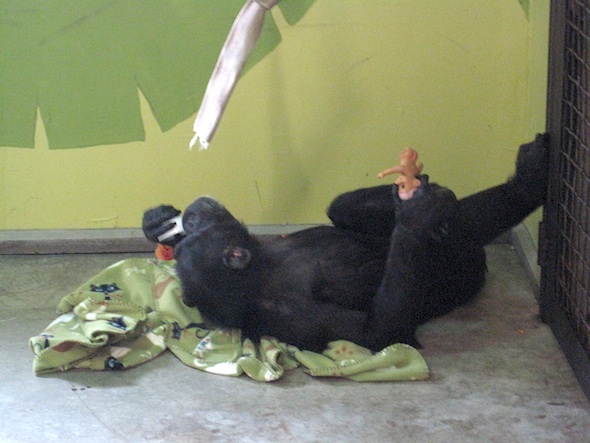
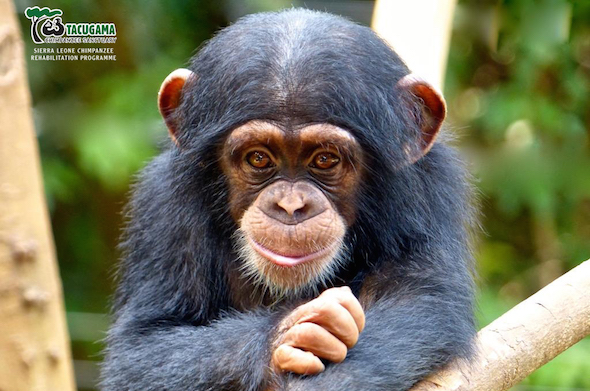
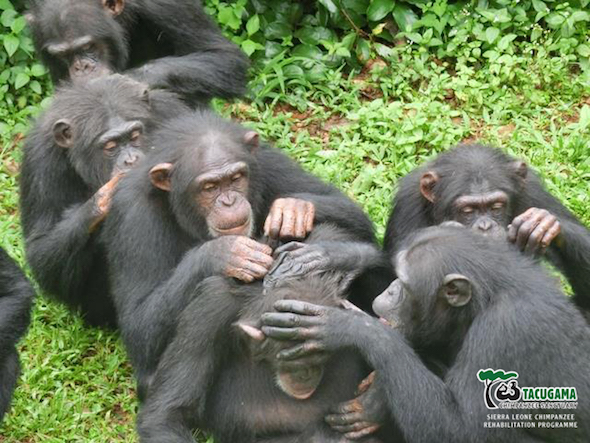
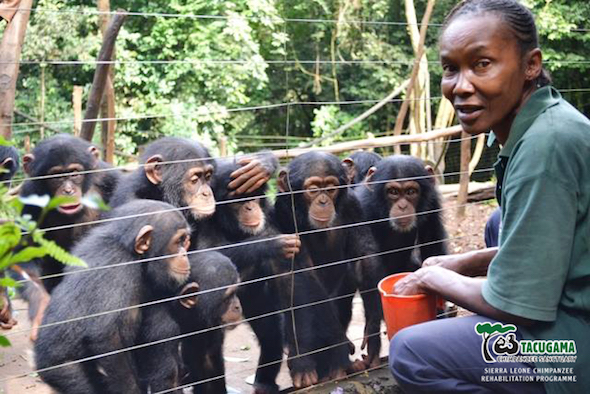
The Ebola scare has also left African sanctuaries in a predicament, such as Tacugama Chimpanzee Sanctuary in Sierra Leone—one of the affected countries.

web-tacugama-baby

web-tacugama-chimps-groom

web-tacugama-rehabilitator

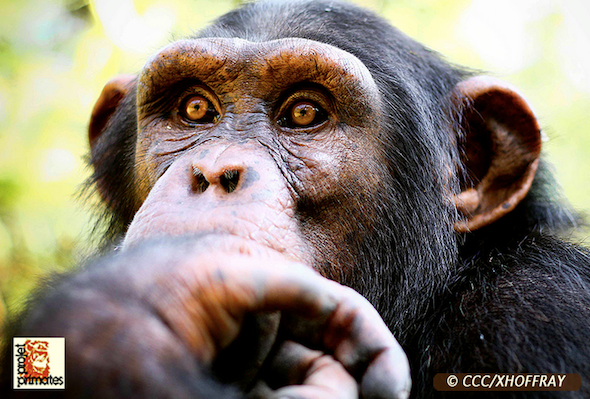
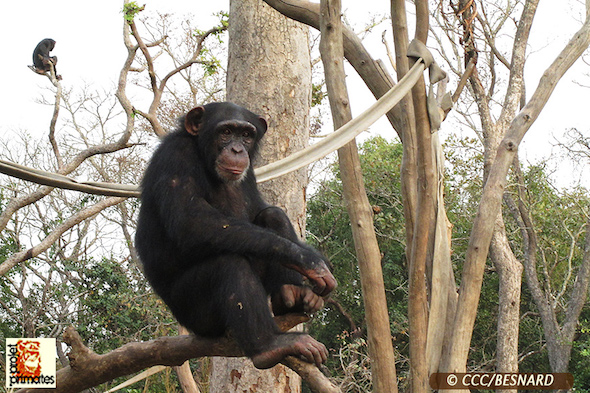
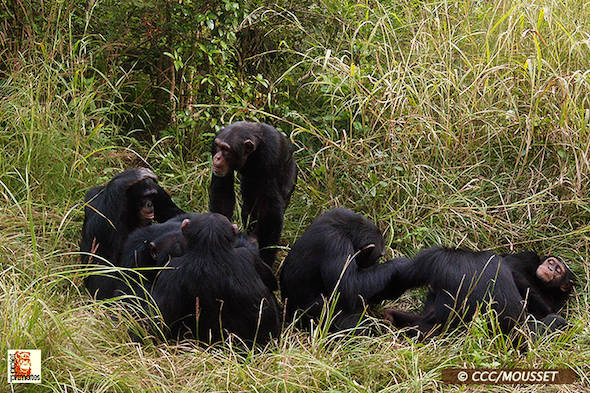
The travel limitations and general panic about the disease have kept people away from the country, and the lack of outreach opportunity has hit the sanctuary and others like them hard. Additionally, with travel restrictions in the affected countries, it is harder for volunteers to help with the day-to-day work. The sanctuaries have had to hire more local staff, causing their funds to be stretched thin. Recently, the Chimpanzee Conservation Center in Guinea has been impacted by this trouble as well. Thankfully, no apes in sanctuaries have contracted Ebola, and all the caregivers have been taking extra hygiene precautions to make sure everyone stays healthy.

Though the direct threat to great apes from Ebola is reason for concern, it’s possible that the attention on Ebola could have a positive impact on ape conservation and help prevent future outbreaks in human populations. Unlike other pandemics and deadly pathogens, which are able to sustain in human populations long-term, Ebola is a unique virus in that it comes and goes sporadically in humans in the form of destructive outbreaks. So far these outbreaks seem to have originated from human contact with infected wildlife. With effective education in local communities, and efforts to take legal action against logging, prevention of hunting and eating bushmeat can save countless lives—of both human and nonhuman apes.

web-ccc-ama

web-ccc-hakim

web-ccc-teenage-group

Filed Under: Advocacy, Free-living chimps Tagged With: advocacy, african sanctuaries, animal protection, animal rescue, animal rights, Animal Welfare, chimp, chimpanzee, chimpanzee conservation center, chimpanzee rescue, chimpanzee retirement, chimpanzee sanctuary, Chimpanzee Sanctuary Northwest, conservation, csnw, ebola, ebola virus, eyes on apes, free-living chimps, free-living gorillas, great ape conservation, guinea, primate protection, primate rescue, projet primates, Sanctuary, sierra leone, tacugama chimpanzee sanctuary, wild apes

Off-balance or perfect ten?

December 14, 2014 by Debbie

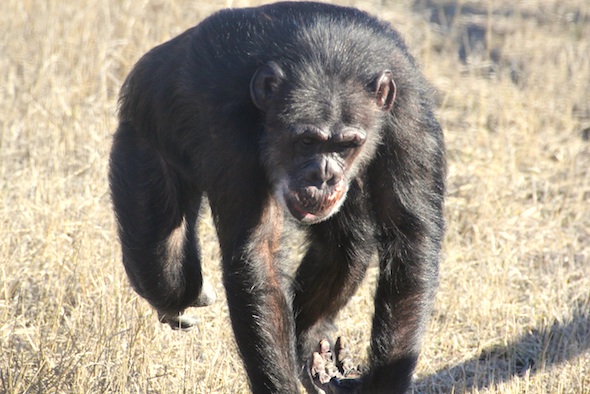
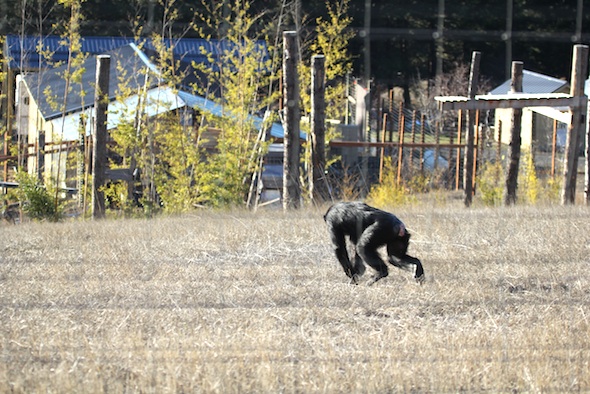
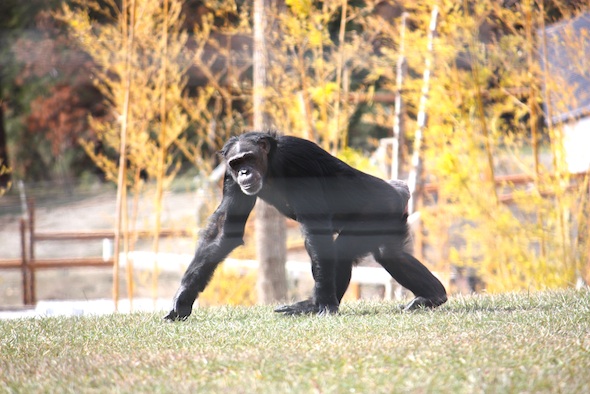
We’ve had some beautiful, sunny, blue sky days this weekend which is unusual for this time of year, and Jamie is certainly taking advantage of it. Diana and Jamie went on at least six walks yesterday! Missy joined a couple of times, but of course opted to run at full speed while Jamie kept to more of a saunter.

web_Missy_run_toward_camera_YH_jb_IMG_7536

web_Missy_run_behind_yh_dg_IMG_7542

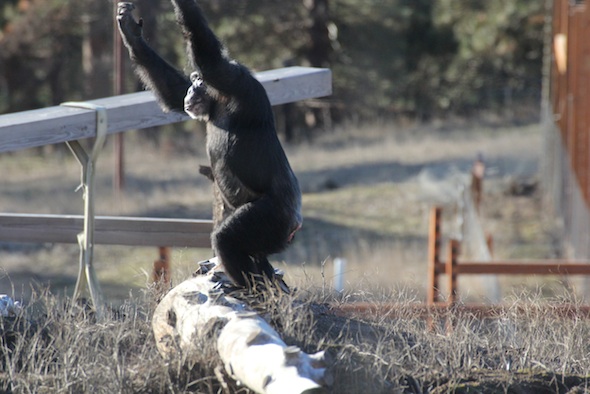
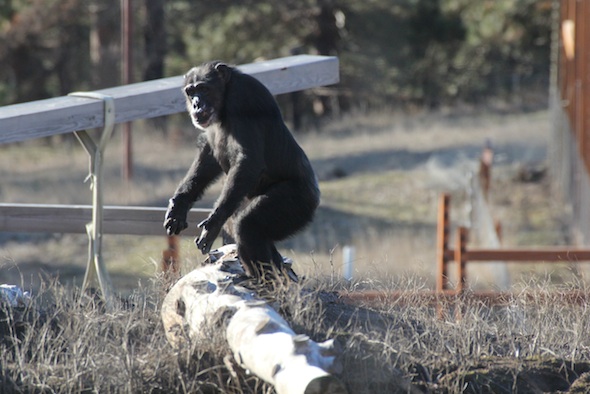
Then Missy decided to sprint toward the log bridge as if it were a vault, and she appeared to lose her a balance a little bit. Or maybe she meant to hurdle herself in that way, and it was actually an intentional landing. So, the question is, did Missy lose her balance or did she totally stick that landing? Let us know what you think in the comments.

web_Missy_off_balance_or_totally_stuck_that_landing_yh_dg_IMG_7545

web_Missy_off_balance_or_totally_stuck_that_landing_yh_dg_IMG_7546

Filed Under: Missy, Sanctuary, Young's Hill Tagged With: animal protection, animal rescue, animal rights, Animal Welfare, chimp, chimp enrichment, chimp sanctuary, chimpanzee, chimpanzee rescue, chimpanzee retirement, chimpanzee sanctuary, Chimpanzee Sanctuary Northwest, Cle Elum 7, Cle Elum Seven, csnw, Missy, Sanctuary, young's hill

From scrawny to brawny

December 9, 2014 by Debbie

When the chimpanzees first arrived at CSNW six and a half years ago, they were frail, weak, almost sickly ghosts of themselves. Through the years we have seen their once physically and mentally deprived selves transform into thriving, healthy, and fit chimpanzees full of personality.

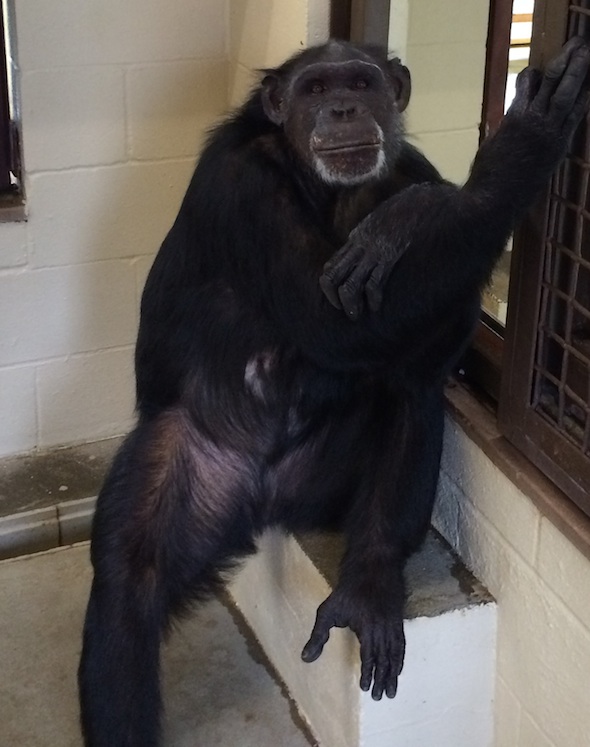
The other day Jamie was sitting on a step in one of the front rooms and it struck me how strong her thigh muscles have become from her daily perimeter walks. It’s really very impressive!

web_jamie_sit_on_step_muscle_fr_dm_IMG_1821

She’s really come a long way. These photos from the first days in sanctuary really highlight her fragile, atrophied leg muscles.

web_jamie_skinny_legs_early_pr_MG_0242

In this photo you can see not only how scrawny and skinny her legs look, but also how much she plucked her hair from her belly while in the lab, likely due to sheer boredom:

web-Jamie-before-bare-belly

Sanctuary has provided Jamie the opportunity to patrol her territory, stretch her legs, and keep her mind active. Her life now is full of so much enrichment—both for mental stimulation and physical activity—that she doesn’t get as bored as she used to.

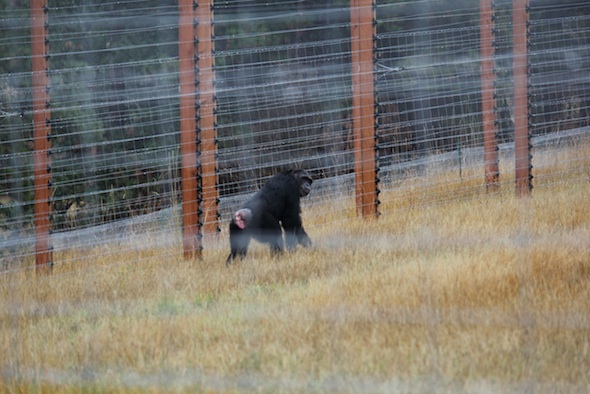
Of course, captivity is not perfect and Jamie still does pluck her belly every now and then, perhaps because it became a habit but also possibly due to periods of boredom. No matter how great we make her environment, we can never recreate the life she and all captive chimpanzees should have had in the wild. But for Jamie, the next best thing is taking walks around Young’s Hill while her caregivers follow along on the other side of the fence—always with at least one of her favorite boots, of course!

web_Jamie_walk_Youngs_Hill_perimeter_rainy_day_YH_kh_IMG_5153

web_ed_Jamie_walk_YH_ek_IMG_5170

web Jamie boot walk bamboo background IMG_0933

Filed Under: Jamie, Sanctuary, Young's Hill Tagged With: animal protection, animal rescue, animal rights, Animal Welfare, chimp, chimp enrichment, chimp sanctuary, chimpanzee, chimpanzee rescue, chimpanzee retirement, chimpanzee sanctuary, Chimpanzee Sanctuary Northwest, Cle Elum 7, Cle Elum Seven, csnw, Enrichment, Jamie, primate protection, primate rescue, Sanctuary, young's hill

Rain, snow or shine

December 7, 2014 by Keri

I’m often asked if the chimpanzees go onto Young’s Hill when it is raining or snowing. The answer is yes, they still venture outside, although I think we can all agree, sunshine is probably preferred.

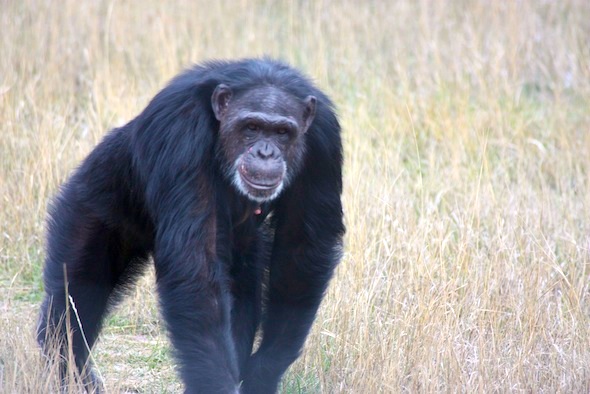
As I’m writing this, Jamie is on her fourth walk around the hill (it’s currently foggy and sprinkling). And she wasn’t the only one to venture outside. Burrito, Missy, Jody and Annie joined her on the hill for a little while after lunch despite the fog and rain.

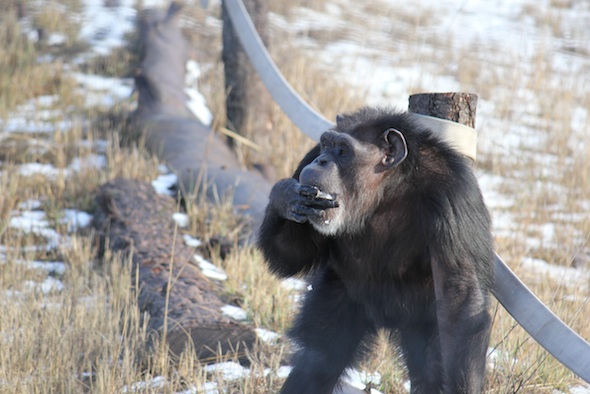
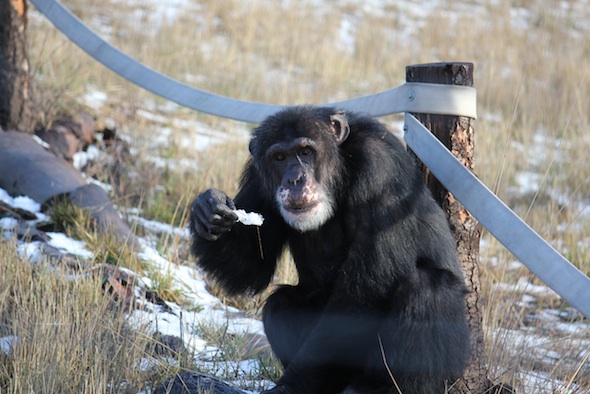
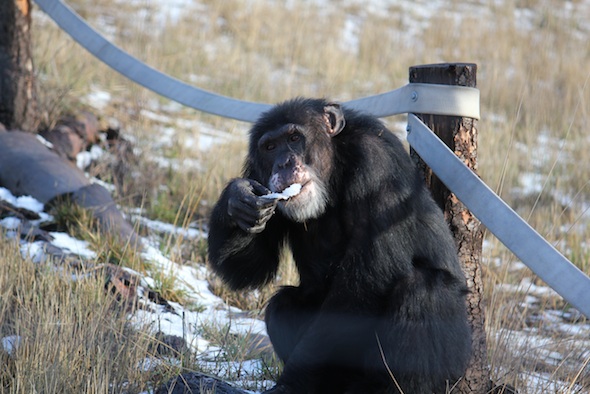
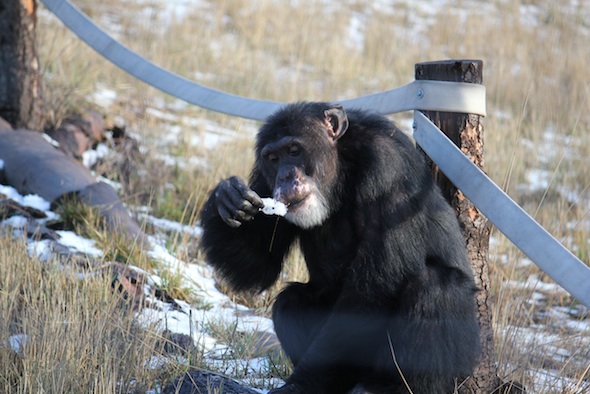
Sometimes the chimps go out to gather a “snowy treat,” as you will see in the some of the following photos.

It seems that no matter what the weather brings the chimpanzees still choose to go outside.

Annie

web_Annie_eat_mouthful_snow_hand_to_mouth_YH_kh_IMG_6229

Burrito

web_Burrito_eat_snow_mouth_hand_sit_on_log_pathway_YH_KH_IMG_6269

web_Burrito_eat_snow_mouth_hand_sit_on_log_pathway_YH_KH_IMG_6266

web_Burrito_eat_snow_mouth_hand_sit_on_log_pathway_YH_KH_IMG_6270

Jamie

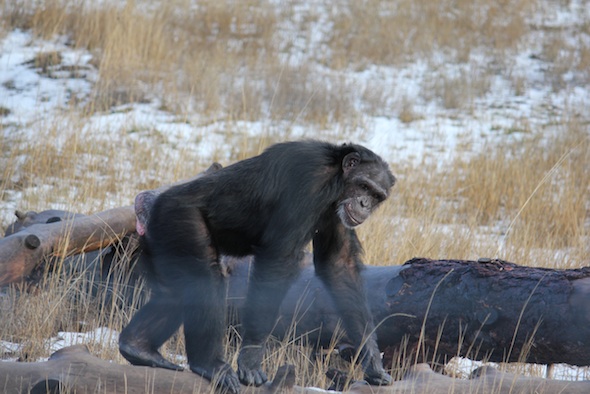
web_Jamie_walk_on_log_first_snow_side_profile_YH_kh_IMG_6238

Missy

web_Missy_quadrupedal_walk_log_pathway_YH_kh_IMG_6218

Filed Under: Annie, Burrito, Jamie, Missy Tagged With: Annie, Burrito, chimp, chimp enrichment, chimpanzee, chimpanzee rescue, chimpanzee retirement, chimpanzee sanctuary, Chimpanzee Sanctuary Northwest, Cle Elum 7, Cle Elum Seven, csnw, Enrichment, Jamie, Missy, northwest, Sanctuary, young's hill

Snuggling up with blankets: A retrospective

December 6, 2014 by Diana

This post may reflect what I would like to be doing on this cold and damp day…

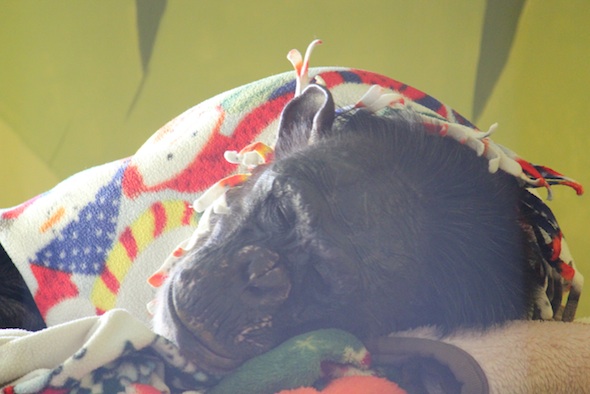
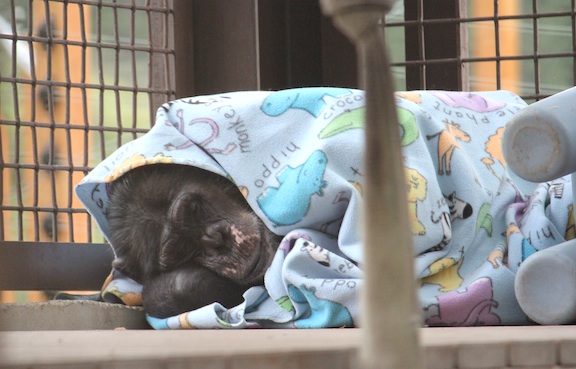
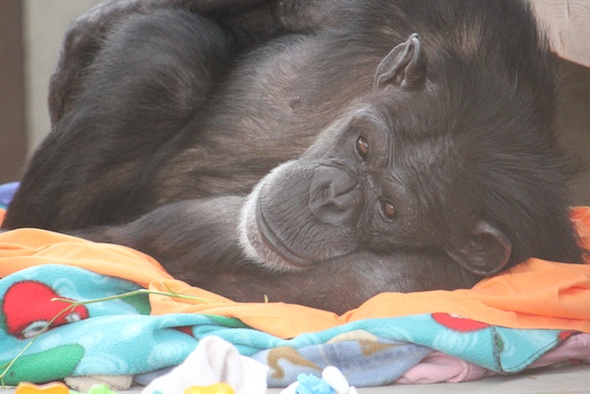
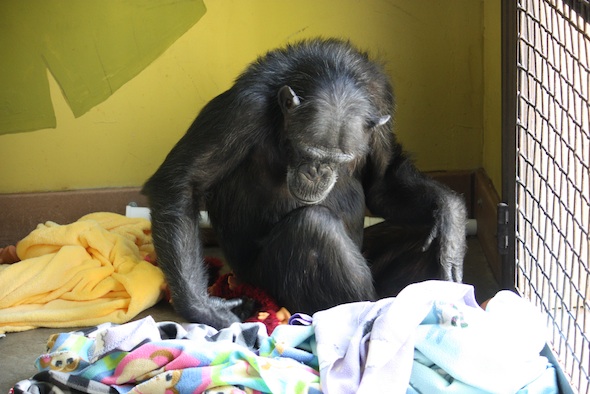
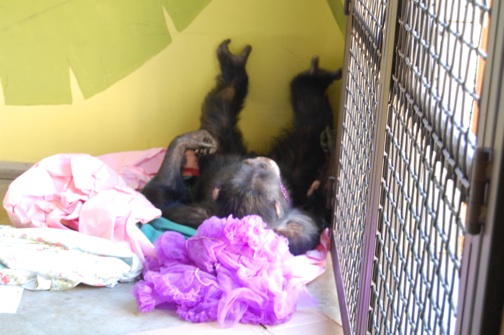
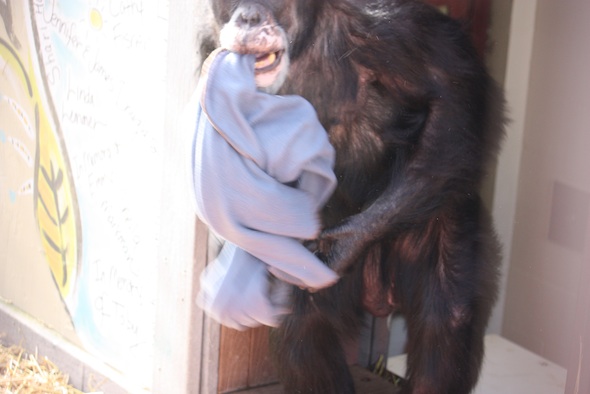
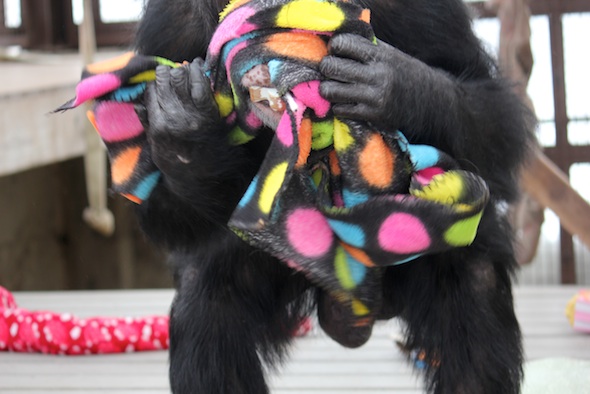
In any case, below are some photos – some oldish and some newish – of the chimpanzees getting snuggly with blankets. We give out at least 60 blankets a day. Sixty is a somewhat arbitrary number, but it’s based on the amount that we can successfully get washed in a normal day with our current washer. We (and the chimps) like fleece blankets, because they are very comfy and the wash and dry fast and easy.

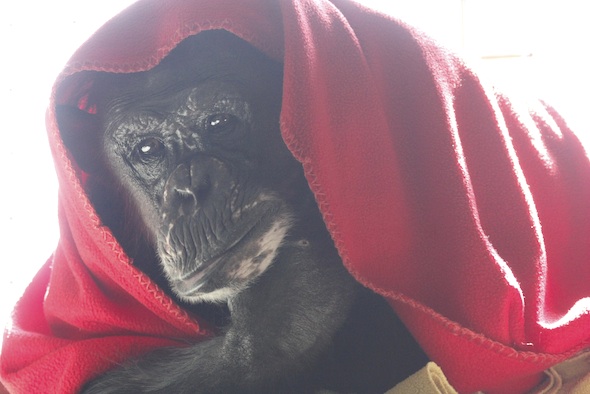
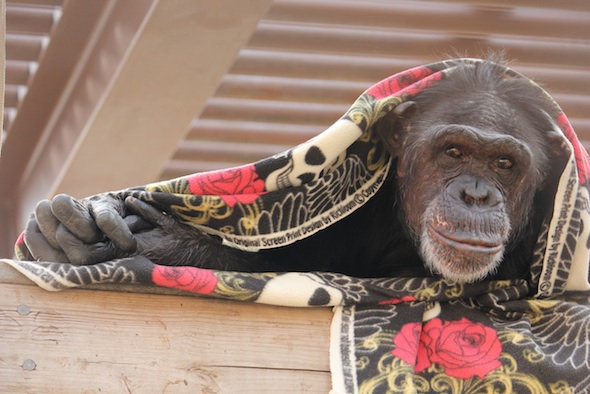
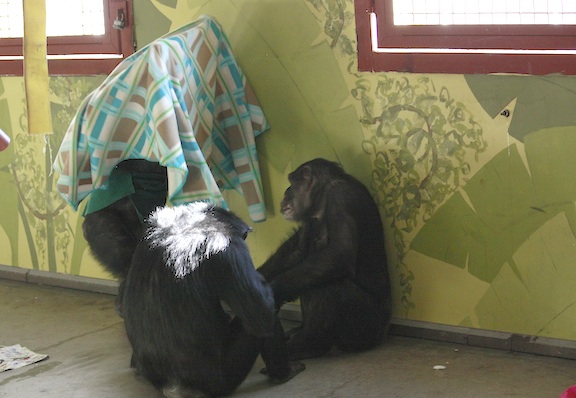
As you probably know, Negra is never far from a blanket, and she often has one draped over her head and/or shoulders:

negra under red blanket 1

The photo above is on the holiday card available for purchase in our Zazzle merchandise store!


Negra blanket covering body


Missy sometimes “imitates” Negra’s blanket style, even nesting in Negra’s usual spots:

Missy under blanket

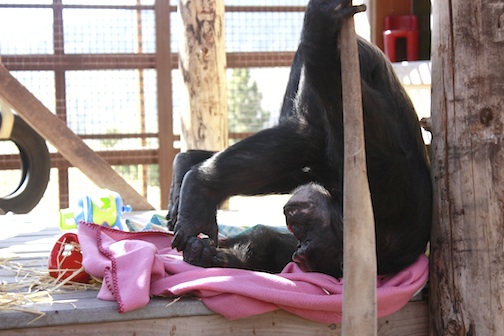
Always the athlete/acrobat, however, Missy incorporates interesting moves when she is nesting. For the full nesting sequence the  photo below was taken from, see this post:

missy headstand in nest


Jamie also occasionally sports a blanket over her head when nesting:

Jamie blanket over body

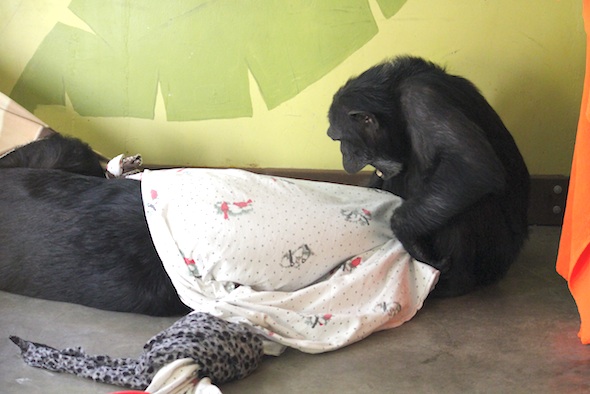
though she often chooses a sheet instead of a blanket for the job:

Jamie under sheet eyes closed


Jody is known for her nest making (she also likes straw nests – see this video from 2009 as an example):

Jody nesting

I don’t think I’ve ever seen Jody with a blanket over her head, but she still looks darn cozy when she’s curled up in her blanket nest:

Jody sleeping


Annie is also a nest builder, and can frequently be found gathering nesting material and moving it to another area:

annie carrying blanket

Once she’s made her nest to her liking, she always strikes me as very satisfied:

Annie nesting


Burrito and Foxie are not much into building nests. Though nesting has a strong instinctual component, it seems there is a period of learning involved. Both Burrito and Foxie do mostly what we call “phantom nesting.” Once in a while, Foxie will actively nest with blankets:

Foxie in nest

but more often than not, she has a more passive relationship with all of the blankets we give out:

Foxie on blankets


Burrito is also more on the passive side of the spectrum when it comes to nesting, though he does like to snuggle up, particularly when someone else has done the work of making the nest:

Burrito on blanket


web Burrito nest paper tutu playroom DSC_0069


Let us not forget, blankets are not just for nesting, but can also be great props when playing too:

Burrito clutching blankets playing

web_Burrito_bipedal_fling_blanket_bite_toy_ghost_enrichment_play_initiation_GH_ek_IMG_9086

ghost play

Burrito blanket play

I hope this inspires you to get snuggled up in your own nest tonight, or maybe play a game of ghost with a friend?

Filed Under: Annie, Burrito, Chimpanzee Behavior, Enrichment, Foxie, Jamie, Jody, Missy, Negra, Nesting, Sanctuary Tagged With: behavior, blanket, blankets, chimp, chimpanzee, Enrichment, instinct, nest, Nesting, northwest, phantom nesting, Play, rescue, Sanctuary, shelter

Video and Image to Share for #GivingTuesday

December 2, 2014 by Diana

If you read this blog, you hopefully also get our e-newsletter, so this video may have landed in your inbox early this morning.

#GivingTuesday is the big kick-off to holiday giving for nonprofits, so we wanted to make sure you didn’t miss out! Please share the video now with your friends via email, Facebook, Twitter, etc!

We’re hoping to get closer to our 50 new sponsor-a-days for 2015 today, so please consider sponsoring a day for yourself or a loved one. It’s a great two-for-one gift: a gift for the chimpanzees and a gift for your honored special someone. What could be sweeter?

Your donation today, whether a sponsor-a-day donation, a chimpanzee pal donation, or a general donation, will receive a special thank you bonus as part of your email confirmation.

Thank you for remembering Annie, Burrito, Foxie, Jamie, Jody, Missy, and Negra in your holiday giving!

Watch and share the #GivingTuesday video below:

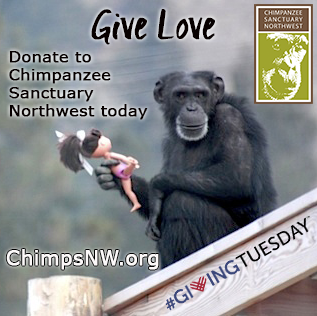
And feel free to share this image too!

Give Love

Filed Under: Fundraising, News, Sanctuary, Sponsor-a-day, Thanks Tagged With: biomedical research, chimp, chimpanzee, csnw, Fundraising, givingtuesday, holiday, northwest, rescue, Sanctuary, shelter, Sponsor-a-day, support

  • « Go to Previous Page
  • Page 1
  • Interim pages omitted …
  • Page 91
  • Page 92
  • Page 93
  • Page 94
  • Page 95
  • Interim pages omitted …
  • Page 174
  • Go to Next Page »

Primary Sidebar

Subscribe To the Blog and Get Notified of New Posts First!

Archives

Calendar of Blog Posts

June 2026
S M T W T F S
 123456
78910111213
14151617181920
21222324252627
282930  
« May    

Categories

SUBSCRIBE TO OUR NEWSLETTER

Footer

PO Box 952
Cle Elum, WA 98922
[email protected]
509-699-0728
501c3 registered charity
EIN: 68-0552915

Official DDAF Grantee

Menu

  • The Chimpanzees
  • Blog
  • About Us
  • You can help
  • Resources
  • Contact
  • Donate

Proud Member of

Connect With Us

Search

Copyright © 2026 Chimpanzee Sanctuary Northwest. All Rights Reserved. Site by Vegan Web Design