• Skip to main content
  • Skip to primary sidebar
  • Skip to footer

Chimpanzee Sanctuary Northwest

Hope. Love. Home. Sanctuary

  • Our Family
    • The Chimpanzees
    • The Cattle
  • Blog
  • About Us
    • Visiting the Sanctuary
    • Philosophy
      • FAQs
      • Mission, Vision & Goals
      • Privacy Policy
    • The Humans
      • Staff
      • Board of Directors
      • Founder
    • Annual Reports
    • The Future of CSNW
    • CSNW In The News
  • You can help
    • Donate
      • Become a Chimpanzee Pal
      • Sponsor A Day
      • Transfer Stock
      • Be A Produce Patron
      • Be a Bovine Buddy
      • Give from your IRA
      • Personalized Stones
      • Bring Them Home Campaign
    • Leave A Legacy
    • Employment Opportunities
    • Volunteer
    • See Our Wish List
    • Events
  • Resources
    • About Chimpanzees
    • Enrichment Database
    • Advocacy
      • Advocacy Action Center
      • Apes in Entertainment
        • Trainers
        • Role of the AHA
        • Greeting Cards
      • Chimpanzees as Pets
      • Roadside Zoos
      • Chimpanzees in Biomedical Research
      • Conservation
        • African Apes
        • Orangutans
  • Shop
    • Merchandise Store
  • Contact
  • DONATE NOW

conservation

The stories we tell

December 18, 2020 by J.B.

Every picture tells a story, but not always the one we intended.

We’ve written before about a 2011 study which found that attitudes about chimpanzee conservation were influenced by how chimpanzees are portrayed in the media. When participants viewed images manipulated to show chimpanzees alongside humans or in human settings, they were less likely to think that chimpanzees were endangered. While any interpretation of the study should be tempered by its inevitable limitations and lack of replication (to date/that I know of), it suggests that the use of chimpanzees in TV, film, and advertising harms wild chimpanzee populations by suppressing public concern for their conservation status. And by portraying chimpanzees as tractable, it may also help drive the trade of chimpanzees in the pet industry.

The results of this study are potentially quite profound and should serve as serve as yet another reason to end the unconscionable exploitation of chimpanzees and other primates in entertainment. But the implications are not limited to the entertainment industry; indeed, the authors suggest that their findings could even apply to images of field researchers working closely with their study subjects. It would stand to reason, then, that certain images from zoos and sanctuaries could elicit a similar response – images that show chimpanzees dressed in clothing or playing with children’s toys, for example. Which means that in promoting our work, we could be inadvertently harming our own cause.

I mention all of this not because I think there’s a simple lesson for sanctuaries like ours to draw from that study, though it did prompt us to engage in some difficult self-reflection. Instead, I think it illustrates just how complicated it can be to share the lives of those in our care. Because an image tells more than one story, and conservation is not our only concern. I am equally concerned about the whitewashing of captivity.


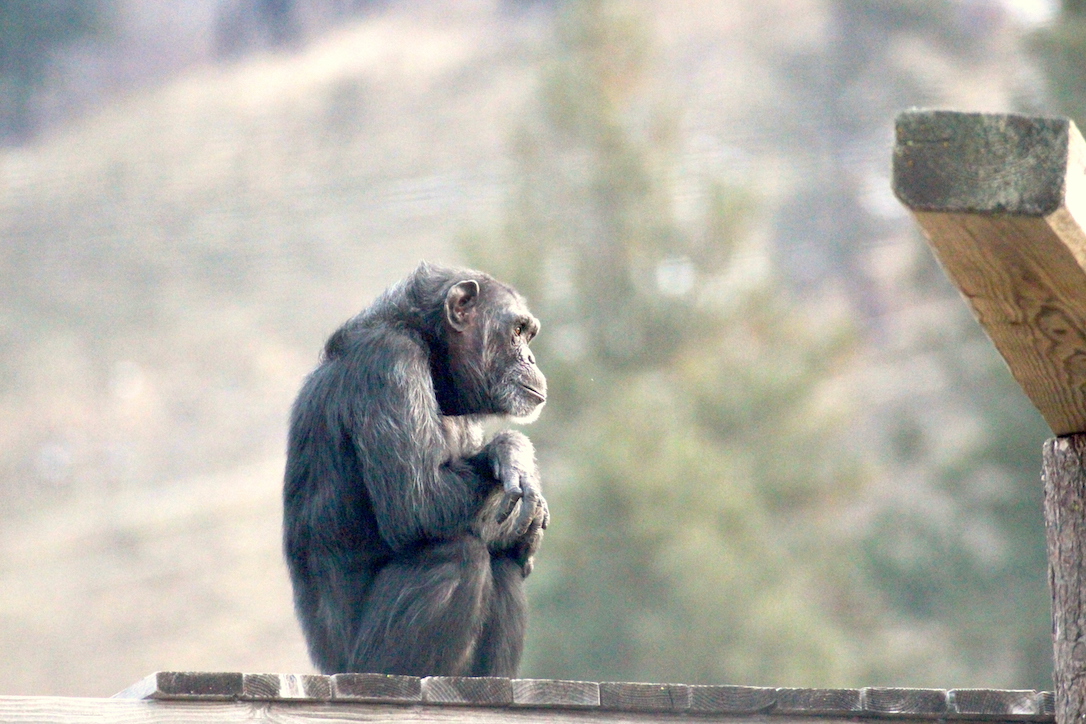
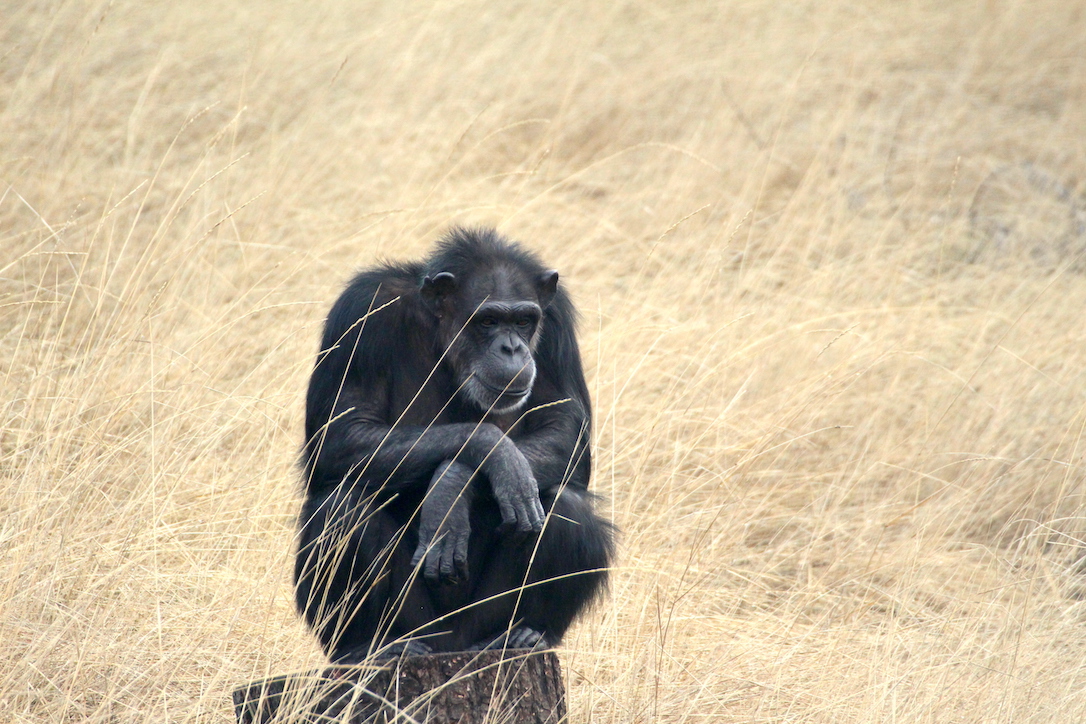
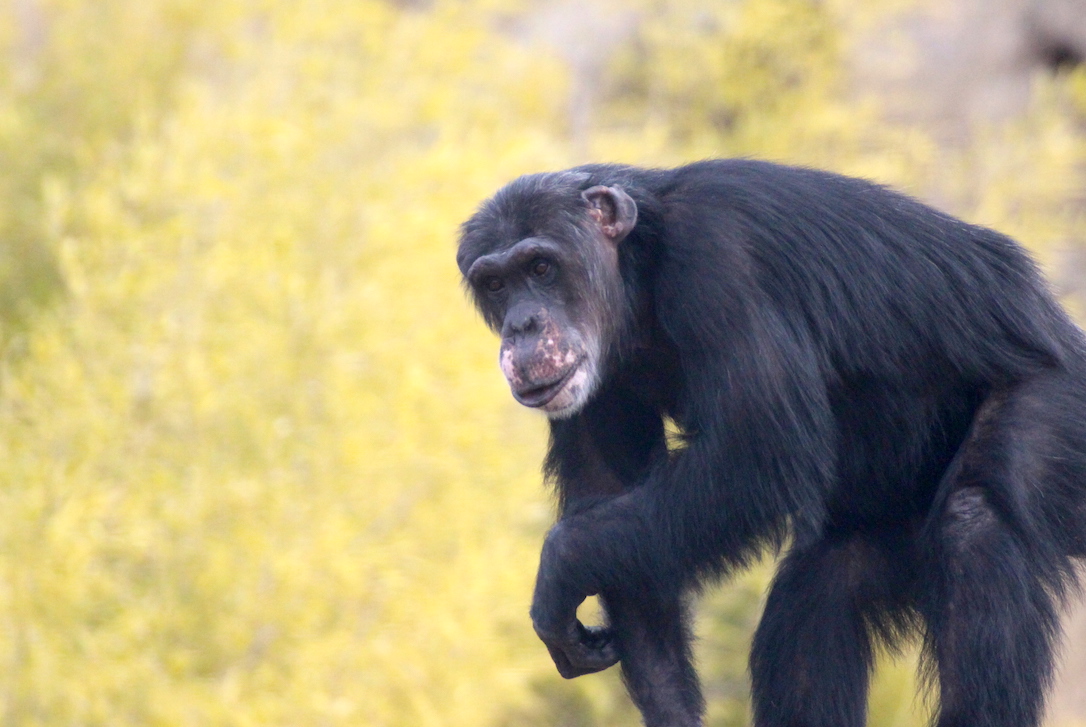
Earlier, I was out taking photos on this rainy but delightfully mild December morning. The chimps were patrolling the hill, walking through the bamboo groves, and climbing high atop the structures to survey the surrounding valley. When I got back to the chimp house I sifted through the photos to choose a few for the blog.
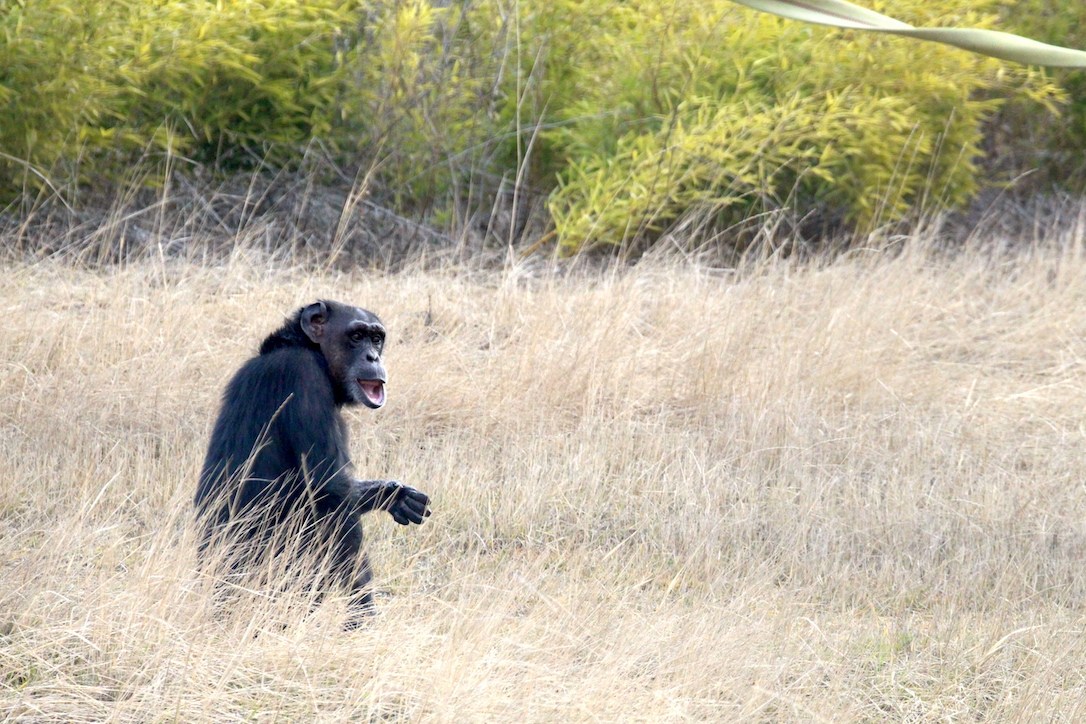
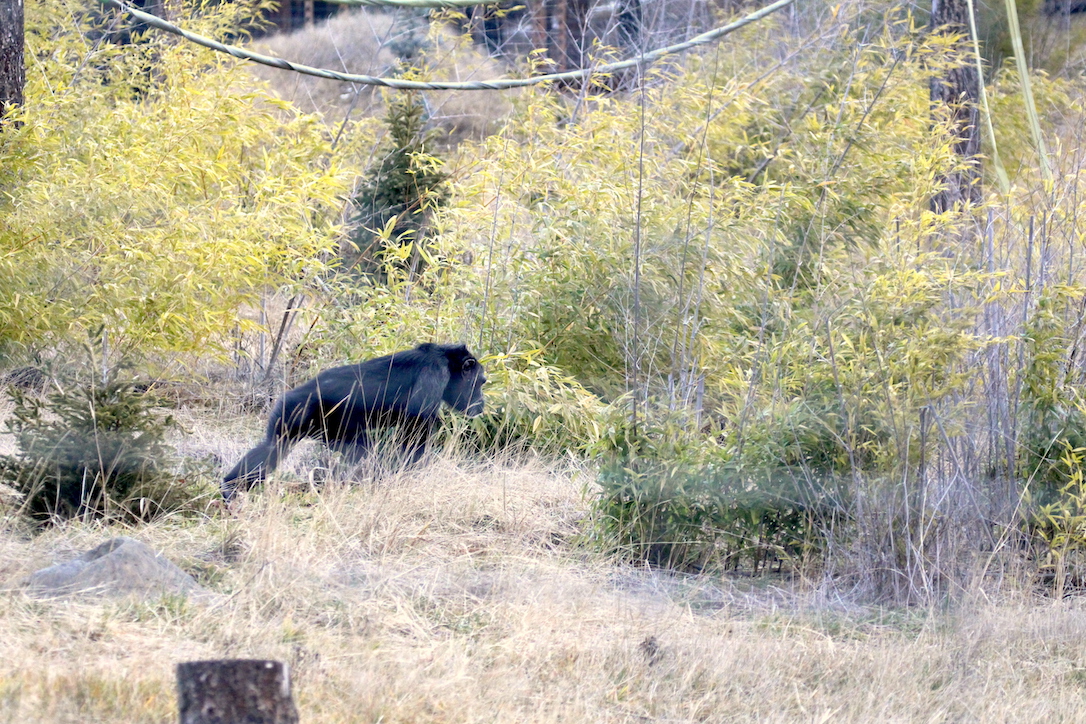
The chimps look as if they are free.
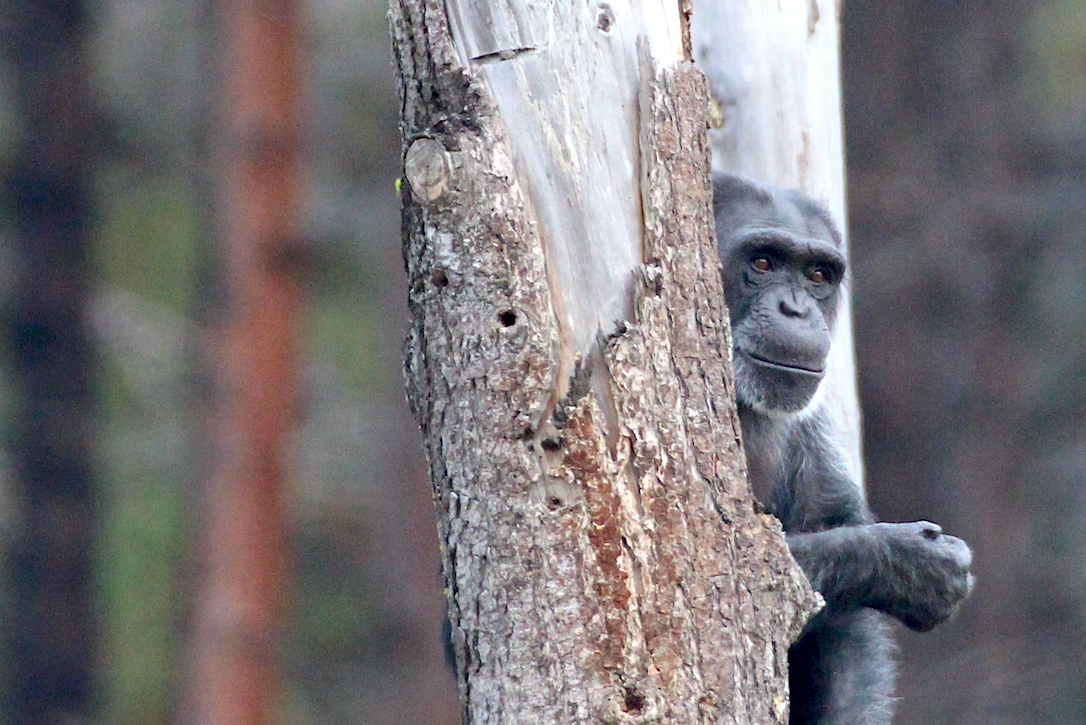
Every time we post to the blog or to social media, we make a choice about how to portray the chimps. There’s every incentive to give people what they want to see – chimps playing, walking outdoors, climbing trees – and to move the camera swiftly past whatever makes us uncomfortable. Showing chimps behind caging upsets some on social media. When chimps are shown laying on concrete floors, people think they are sad or bored. There’s certainly a deliberate, almost cynical aspect to this on our part. After all, LOOK HOW BORED OUR CHIMPANZEES ARE! is not a brilliant marketing strategy for a nonprofit. But it’s more than that. We as caregivers have those same unconscious preferences. But caging, concrete, and bullet-proof glass are all part of captivity, and we should know better. I guess even we want to believe sometimes.

Oftentimes the chimps have access to a two-acre habitat but still hang out by the caging inside to watch the humans work.

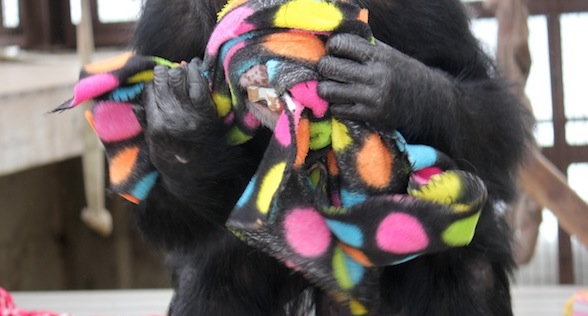
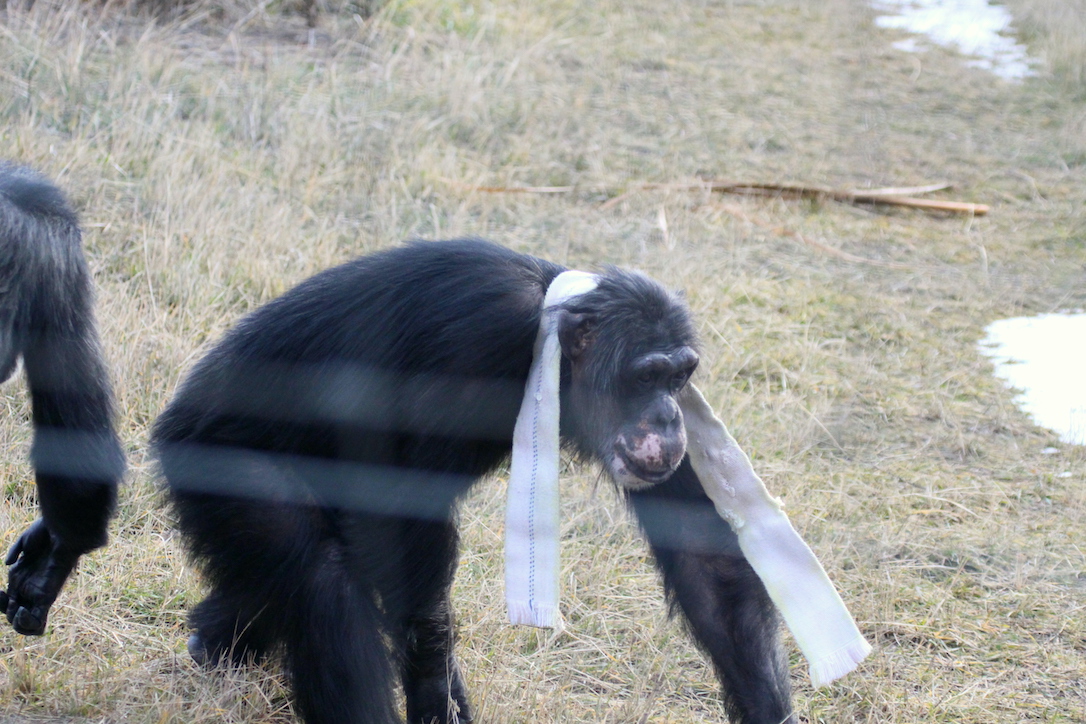
Beyond how they live, there’s also the matter of who they are. The chimpanzees in our care are not wild, nor could they be at this point in their lives. They carry troll dolls and cowboy boots, build giant nests from fleece blankets, and wear fanny packs. They drink warm tea from cups and insist that their carrots be peeled. At times they prefer the company of humans over that of their fellow chimpanzees. They are messy and complicated, fully chimpanzee but also not quite – a result of traumatic histories, for sure, but also an inevitable product of captivity. Ignoring the human-like aspects of their personalities ignores the very essence of their being.
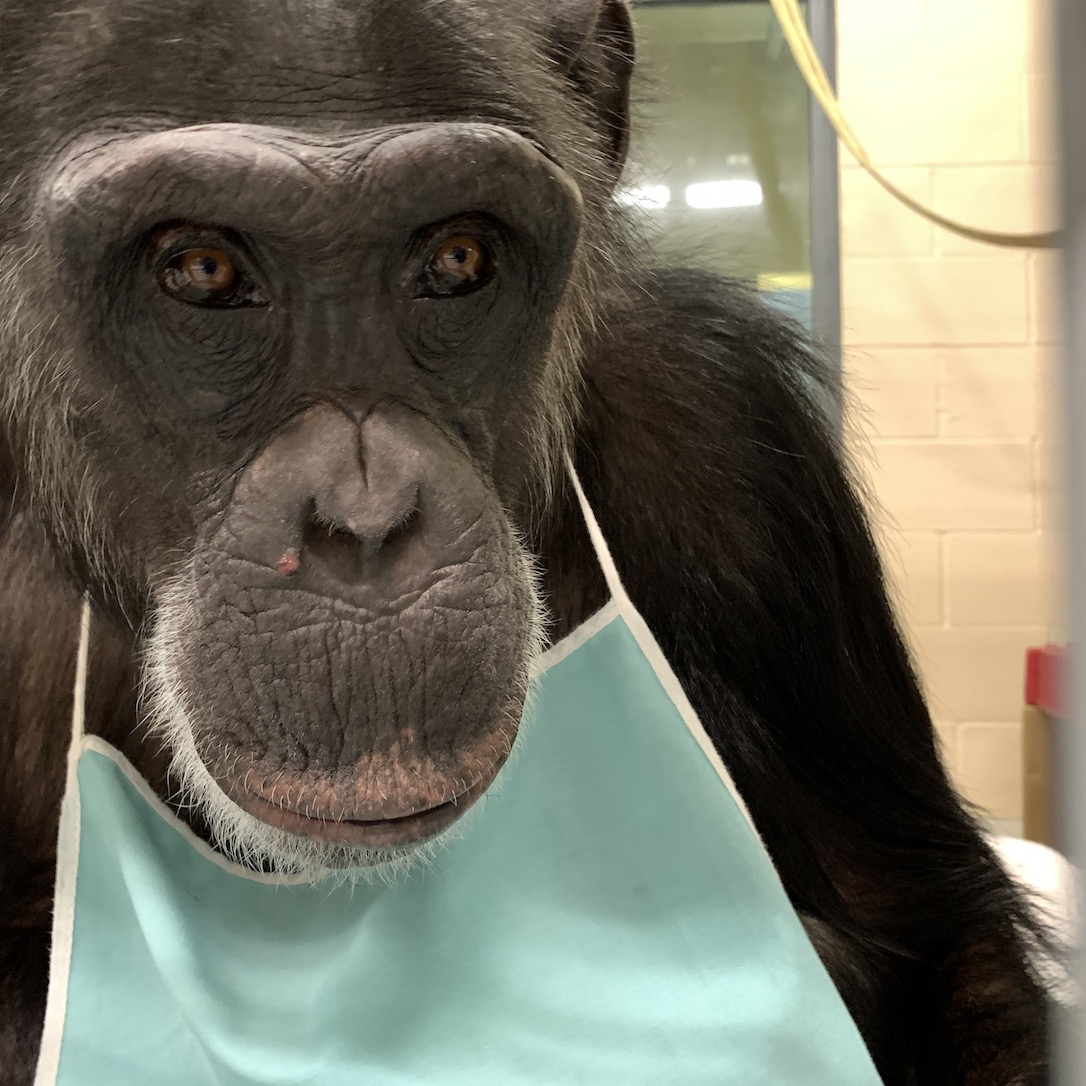
Honey B, delighted with her new apron.
Burrito, accessorizing with a fire hose scarf.

Sometimes I worry what effect our collective obsession with minimizing captivity has on animals. I’m concerned about what the faux naturalization of so many zoo exhibits, with their trees fenced off with hot wire and their concrete and metal walls painted to resemble forests, makes people think (or not) about how it feels to live within them. I wonder if our own reluctance to show caging and concrete in photos fuels the false notion that chimpanzees in sanctuaries are now living happily ever after. And I fear that if we censor ourselves too much, we risk diminishing the very individuals whose stories we are trying to tell.

Reconciling these various concerns is not easy. We made a concerted effort a while back to share fewer photos that show the chimps wearing clothing. It may be cute or funny, but it generally does little to advance the chimps’ cause and, as we have seen, may have unintended consequences. That said, if the clothes-wearing is incidental to some other activity or if it helps highlight the value of enrichment or tell a story about a chimp’s personality, then perhaps it has a place. Would you understand Honey B or Burrito at all if we didn’t share all of their peculiarities? And we try not to let caging, or concrete, or the size of the enclosure that the chimps have chosen to be in at the time dictate which aspects of their lives get shared. We shouldn’t intentionally promote a fantasy.

I hope this doesn’t sound too sanctimonious because I am constantly censoring the photos I share to tell a story – or in some cases to avoid a story. You may have noticed in Wednesday’s post that Jamie has been picking more of the hair from her belly. We don’t know why. Sometimes these self-directed behaviors are old habits, unconnected to a chimpanzee’s current state, but they can indicate stress. I’m sure I’ve scrapped a photo because of how prominently it displayed her growing bald patch, not wanting to broach the subject at that moment. In any case, caring for chimpanzees is difficult and not always straightforward, and that should be part of the conversation, too.

In the newspaper world, there’s a phrase that says a journalist’s job is to uncover “the best obtainable version of the truth.” I like this phrase because it acknowledges limitations without rejecting an objective reality. Zoos and sanctuaries are in the PR business, not journalism, which imposes its fair share of limitations. But perhaps we can at least aim for a better version of the truth.
Filed Under: Sanctuary Tagged With: attitudes, chimpanzee, conservation, images, northwest, rescue, Sanctuary

Ebola and Great Ape Conservation

December 16, 2014 by Debbie

There are many questions about how this year’s Ebola outbreak started, how it spread so quickly, and how to prevent it from spreading further—but what does Ebola have to do with non-human great ape conservation?

It is known that Ebola Hemorrhagic Fever is transmitted by coming into direct contact with bodily fluids of someone infected and showing symptoms of the virus, a cadaver of someone who died from the virus, or the fluids or meat of an infected animal.

Bushmeat is the meat of any non-domesticated animal that is consumed by humans. In Africa, bushmeat is not only consumed locally, but it is exported worldwide. Many bushmeat species are endangered, in which cases the hunting of those species is illegal. Still, these animals are hunted, and their meat is sold on the black market and exported to other countries, including the United States. No one really knows just how many pounds of illegal bushmeat are smuggled into the U.S., because it is believed only a fraction of the imports are confiscated—but estimates range from hundreds of thousands to millions of pounds per year.

While habitat loss is the largest long-term threat to African ape populations, hunting for bushmeat has risen in the last couple of decades as the most significant immediate threat—and could cause species extinction if the practice continues to grow. However, with the emergence of the deadly Ebola virus, more people have begun to tune into the problem. Though research shows that fruit bats serve as hosts to the Ebola virus and are believed to be the direct source of the current outbreak, consumption of infected ape meat has been linked to previous outbreaks since the late 1990s. Primates and other animals can become infected by eating half-eaten fruit that have come in contact with fruit bat saliva, and the virus is passed to humans who eat infected animal bushmeat.

The Ebola virus can also be detrimental to wild ape populations. In 2002, over 5,000 gorillas died from an outbreak. In fact, the threat of imminent Ebola outbreaks (and other pathogens) on already dwindling populations has prompted researchers to propose developing a vaccination for the apes. Before vaccines could be administered to wild apes, however, some researchers feel they would need to be tested on captive apes. As we know, there is a push to end the use of chimpanzees in research altogether, so the topic sparked a debate earlier this year (read more on that here).

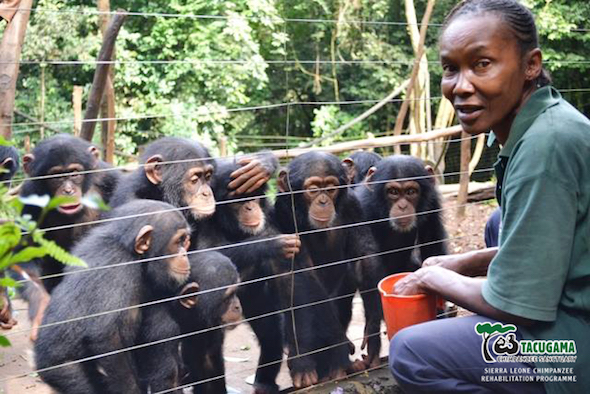
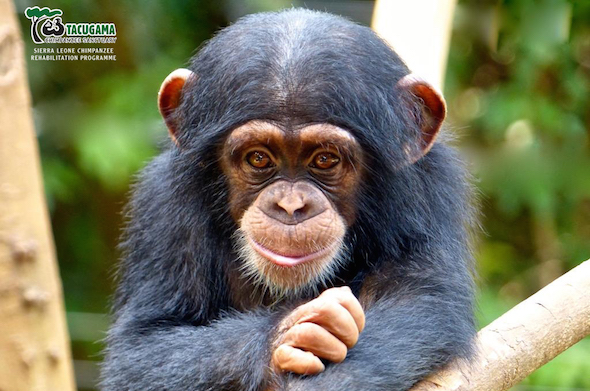
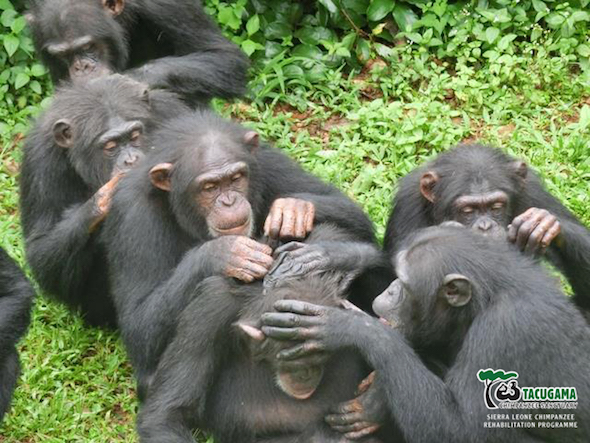
The Ebola scare has also left African sanctuaries in a predicament, such as Tacugama Chimpanzee Sanctuary in Sierra Leone—one of the affected countries.

web-tacugama-baby

web-tacugama-chimps-groom

web-tacugama-rehabilitator

The travel limitations and general panic about the disease have kept people away from the country, and the lack of outreach opportunity has hit the sanctuary and others like them hard. Additionally, with travel restrictions in the affected countries, it is harder for volunteers to help with the day-to-day work. The sanctuaries have had to hire more local staff, causing their funds to be stretched thin. Recently, the Chimpanzee Conservation Center in Guinea has been impacted by this trouble as well. Thankfully, no apes in sanctuaries have contracted Ebola, and all the caregivers have been taking extra hygiene precautions to make sure everyone stays healthy.

Though the direct threat to great apes from Ebola is reason for concern, it’s possible that the attention on Ebola could have a positive impact on ape conservation and help prevent future outbreaks in human populations. Unlike other pandemics and deadly pathogens, which are able to sustain in human populations long-term, Ebola is a unique virus in that it comes and goes sporadically in humans in the form of destructive outbreaks. So far these outbreaks seem to have originated from human contact with infected wildlife. With effective education in local communities, and efforts to take legal action against logging, prevention of hunting and eating bushmeat can save countless lives—of both human and nonhuman apes.

web-ccc-ama

web-ccc-hakim

web-ccc-teenage-group

Filed Under: Advocacy, Free-living chimps Tagged With: advocacy, african sanctuaries, animal protection, animal rescue, animal rights, Animal Welfare, chimp, chimpanzee, chimpanzee conservation center, chimpanzee rescue, chimpanzee retirement, chimpanzee sanctuary, Chimpanzee Sanctuary Northwest, conservation, csnw, ebola, ebola virus, eyes on apes, free-living chimps, free-living gorillas, great ape conservation, guinea, primate protection, primate rescue, projet primates, Sanctuary, sierra leone, tacugama chimpanzee sanctuary, wild apes

Protecting Mountain Gorillas through Community Involvement

May 13, 2014 by Debbie

This is our first guest blog post about gorilla conservation, written by Gretchen Clymer. Gretchen first became passionate about primate conservation after reading Gorillas in the Mist by Dian Fossey as a teenager. She went on to complete undergraduate and graduate studies in Biological Anthropology, conducting behavioral research on different primate species, including golden lion tamarins, rhesus macaques, and chacma baboons. She has worked for the Dian Fossey Gorilla Fund International (DFGFI) in both Atlanta and Musanze, Rwanda. As a primatologist, she has remained active in primate conservation and welfare, including currently working with Chimpanzee Sanctuary Northwest.

—

bwindi impentrable forest gorillas
Bwindi Impenetrable Forest, Uganda. Photo: Ian and Kate Bruce, 2013.

The threats to the survival of mountain gorillas, and all of the great apes, are severe and multi-faceted. Habitat loss due to logging and industry, armed conflict, the illegal bushmeat and pet trades, and infectious disease represent significant threats to the populations of chimpanzees, gorillas, and orangutans. Over the past 50 years, approaches to ape conservation have shifted as conservationists understand more and more that survival of ape populations is inextricably linked with the welfare and involvement of the communities that live near chimpanzee, gorilla, and orangutan habitats.

Early approaches in conservation

The pioneering research conducted by Jane Goodall, Dian Fossey, and Birut? Galdikas in the 1960’s-1970’s brought the world’s attention to the fascinating behaviors of the great apes. Their work also brought to light the pressures that threatened the very survival of chimpanzees, gorillas, and orangutans. Conservation approaches at that time were largely focused on preservation of habitat, and the assumption that conservation of apes and their habitat was primarily realized through enforcement. Dian Fossey, in particular, championed methods she called “active conservation,” that were often antagonistic towards communities residing on the fringes of mountain gorilla habitat. This method of conservation focused only on protecting mountain gorilla populations while failing to take into account that poachers, loggers, and encroachers were not motivated by maliciousness, but rather the simple and stark need to provide for themselves and their families.

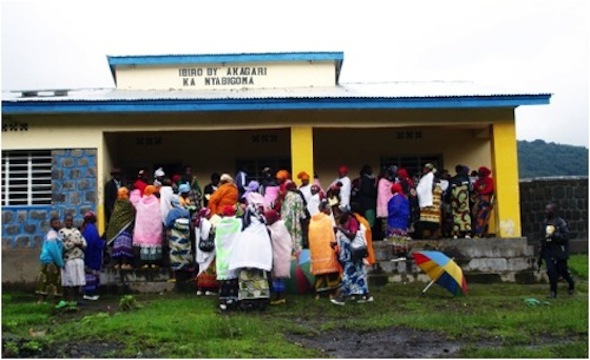
bisate health clinic
Bisate Health Clinic, Musanze, Rwanda. Photo: Gretchen Clymer, 2007.

The shift towards community-involved conservation

Habitat preservation is certainly paramount in working for the survival of the great apes, and this requires legislation to protect habitat as well as enforcement of existing legal protections for ape habitat and poaching bans. However, as approaches in ape conservation have been refined over the last 50 years, conservationists have learned the importance of embracing local communities in conservation, and of the intertwined relationship between human welfare and ape conservation.

Since Dian Fossey’s untimely and tragic death in 1985, the Dian Fossey Gorilla Fund International (DFGFI) and other mountain gorilla conservation groups have taken a different approach to conservation, focusing on including the local community into conservation efforts, through community programs, research, and eco-tourism.

It is estimated that “gorilla tourism may exceed $30 million USD shared between Rwanda, Uganda and the Democratic Republic of Congo (DRC)” (International Gorilla Conservation Program, 2014). Gorilla and other great ape eco-tourism not only brings money directly to conservation efforts by providing funds for anti-poaching patrols and research studies, but also helps to create a link to the local community by establishing a tourism industry, which in turn provides financial security to the area while actively discouraging unsustainable poaching and deforestation practices. Providing social services for population areas where community needs are great and currently unmet is an additional effective strategy to involve the community in conservation efforts. For example, the DFGFI, partnering with other organizations, provides funding for the Bisate Health Clinic, a rural health clinic in Musanze, Rwanda, by helping to promote health, education, and economic growth in an attempt to provide these communities with the opportunities to become more self-sufficient and less dependent on resources gathered from within the boundaries of the park.

Another program, in the Bwindi Impenetrable National Forest of Uganda, is Conservation through Public Health, which has focused on preventing “the spread of disease from wild animals to humans, and vice versa, by improving primary healthcare for people and animals in and around protected areas in Africa” (Whitley Fund for Nature, 2011). The program has sought to engage the local community by enlisting their help with gorilla population surveys and monitoring, as well as devoting efforts to community-led outreach and education. Conservation through Public Health also strengthens eco-tourism programs by improving facilities for this important conservation sector and ensuring that disease from visiting guests is not then spread to vulnerable mountain gorillas.

virungas
Virungas Volcanic Range, Rwanda. Photo: Gretchen Clymer, 2007.

Educational programs and support are another important realm in community-involved conservation. Practical education programs on health and sustainability can support local communities and ease resource or ecological pressures on ape habitat resources. Conservation education (from primary through graduate education levels), fosters local pride and involvement in conservation and can be hugely impactful in ongoing conservation efforts for apes. The Dian Fossey Gorilla Fund International is active in nearly every level of educational opportunity in the communities near mountain gorilla habitat – from health education programs in local communities, to conservation education in local schools, up through graduate research training at the Karisoke research center. These efforts not only demonstrate that conservation is beneficial to the local communities, they show respect to communities as key stakeholders in conservation.

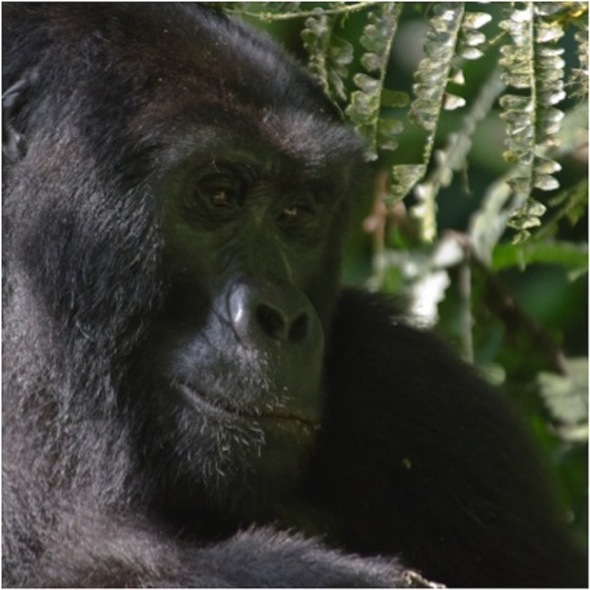
bwindi gorilla
Bwindi Impenetrable Forest. Photo: Ian and Kate Bruce, 2013.

Signs for Hope

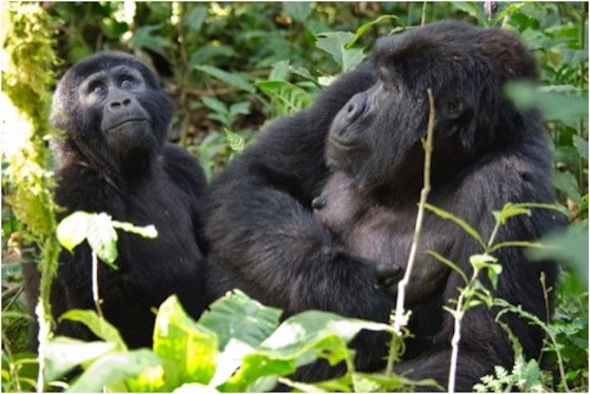
In the past decade, it appears community-outreach focused conservational approaches show promising signs of success for the mountain gorillas. A 2010 census of mountain gorillas showed a ~26% increase in their numbers in the Virungas since the prior census in 2003 (Gray et al, 2010). While still critically endangered, an increase in population – particularly with ongoing conflict in the region – is a significant victory for the efforts of conservationists and the local communities.

The close proximity between human populations and endangered great apes is undoubtedly a factor in the threat to ape survival. However, fifty years of conservation efforts have demonstrated the importance of protecting apes with the cooperation and support of the populations that reside in proximity to ape habitat. Providing training and material support in sustainable agriculture helps to mitigate the need to log or hunt in critical ape habitat. Using ape conservation funds to provide basic health services such as clean water and medical clinics makes ape conservation beneficial to both the apes and humans in the area. Lastly, educational outreach can instill a sense of local pride in the majestic gorillas, and will hopefully bring about the next generation of conservationists sharing a common homeland with the apes, who will then strive to increase mountain gorilla populations to sustainable levels.


Works Cited:

International Gorilla Conservation Programme (IGCP). 2014. “Tourism.”

Whitely Fund for Nature, 2011. “Mountain Gorilla Conservation through Public Health, Uganda.”

Gray, M. Fawcett, K., Basabose, A., Cranfield, M., Vigilant, L., Roy, J., Uwingeli, P., Mburanumwe, I., Kagoda, E., Robbins, M. 2010. Virunga Massif Mountain Gorilla Census — 2010 Summary Report.

Filed Under: Advocacy Tagged With: advocacy, animal protection, animal rescue, animal rights, Animal Welfare, Chimpanzee Sanctuary Northwest, conservation, csnw, dian fossey, gorilla, gretchen clymer, primate protection, rescue

How Apps for Apes helps conservation

April 15, 2014 by Debbie

In his first post, Rich Zimmerman introduced us to the plight of free-living orangutans in Indonesia. Here he tells us how his program, Orangutan Outreach, has helped with some of the issues orangutans face and how Apps for Apes helps raise awareness for those efforts.

—

How has your work with Orangutan Outreach influenced conservation efforts in Indonesia?

Since its inception, Orangutan Outreach has been able to make a notable impact in the ongoing struggle to save the orangutans. Over the past few years we’ve been able to make substantial financial contributions to our strategic partners in the field, including Borneo Orangutan Survival (BOS), IAR, Center for Orangutan Protection (COP) and SOCP. These funds go to rescuing, caring for, relocating, rehabilitating, and releasing individual orangutans back to the forest in Borneo and Sumatra. Working with our partners in the field, we’ve helped fund the rescue of individuals who, without our help, would otherwise have perished or been smuggled out of Indonesia by illegal animal traders. Our support has contributed immensely to the success of the BOS Nyaru Menteng orangutan releases. This release program is the first of its kind in history. BOS is literally re-creating a genetically stable population of orangutans in the wild and we are honored to be able to help them.

In addition to the work on the ground, Orangutan Outreach does a lot of online advocacy on behalf of the orangutans via our website, and our social media networks: Facebook, Twitter, Pinterest, and YouTube. We’ve been able to bring people together from all over and create hubs of support among our fans and followers.

OO-rich-speaking

Rich helping to educate the public about the plight of orangutans. Photo © Orangutan Outreach.

Tell us a little bit about the Apps for Apes program and how this helps both captive and wild orangutans.

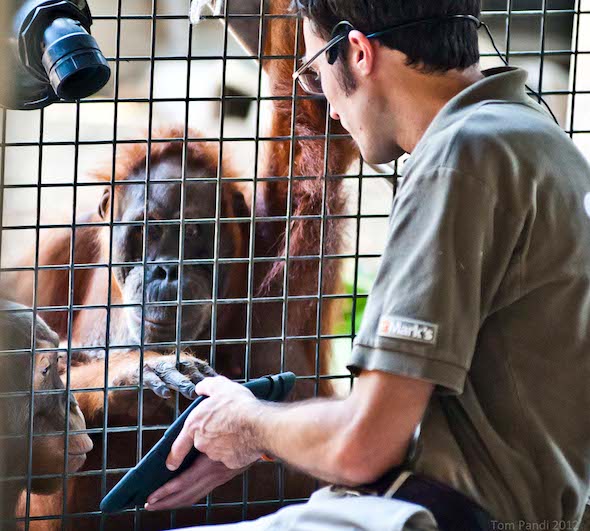
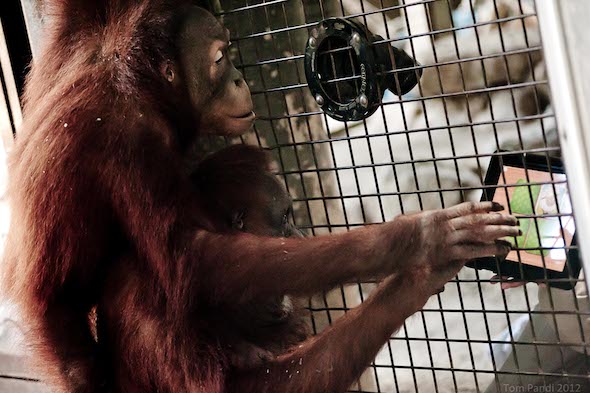
Apps for Apes was started a few years ago as a way to provide enrichment to orangutans in zoos and sanctuaries—and has now expanded to include chimpanzees! Apes are highly intelligent creatures who require mental stimulation to keep from growing bored and depressed. Every ape is a unique individual with his or her own particular likes and dislikes, and the quality of life of apes living in zoos and sanctuaries is highly dependent on the amount and type of enrichment they receive on a daily basis. With the Apps for Apes project, we are providing iPads to ape caregivers in order to provide them with unlimited enrichment opportunities. They have access to music, musical instruments, cognitive games, art, painting, drawing, photos and videos. I should also point out that we do not spend a penny on Apps for Apes. All iPads are donated. NatGeo gave us several dozen last year when they upgraded their field staff!

Apps for Apes has three goals: 1) to provide stimulating enrichment & immediate gratification for the apes using iPads, 2) to raise awareness among zoo visitors of the critical need to protect orangutans in the wild, and 3) to promote the conservation efforts of Orangutan Outreach. For Apps for Apes to be truly successful we need to achieve ALL the goals. It’s wonderful to provide something fun for a captive ape, but we want to take it further. We want the iPad enrichment sessions to become ‘teachable moments’. Whether via live caregiver talks or stories on the news, we have a golden opportunity to get people to think about orangutans—to see them as amazing, intelligent beings who are being brutally killed in the wild—and to help them! That’s our larger goal of Apps for Apes—for the apes in captivity to truly become ambassadors for their cousins in the wild.

oo-a4a-toronto-pandi-4

oo-a4a-toronto-pandi-3

Puppe and her son Budi at the Toronto Zoo with their keeper Matthew Berridge.  Photos © Tom Pandi for Orangutan Outreach.

What can we do at home to help with conservation efforts?

People should try their best to avoid products that contain palm oil—and spread the word to all their friends. While boycotting all products that contain palm oil is not feasible, one can always make choices in what they buy. Consumers have power. By letting companies know you won’t buy products that contribute to the destruction of orangutan habitat you are making a powerful statement! Hopefully soon—but only with outside pressure from environmental groups—there will be products that only contain palm oil that is certifiably sustainable and that has not led to the deteriorating population of orangutans. Until then, use extreme caution when shopping, and read those labels!

A really fun way for people to get involved with orangutan conservation is by adopting an orangutan on our website. The adoptions are virtual—the orangutans stay at the care center (Believe me… people ask!). Adopting an orangutan is a great way for someone to follow along as their adoptee grows up. Donations are critical to keep the projects going, but spreading awareness is also key. People can’t act if they don’t know what’s happening far away in Borneo and Sumatra. We need people to share our website with their friends, join us on Facebook and spread the word. We have lots of online materials for young people to use in school. We cannot save the orangutans alone—only together can we make a difference!

CSNW was fortunate enough to be included in the Apps for Apes program and very much appreciate the iPad we received. Since then, we also got one from Shari H. so now the chimpanzees have two iPads! Now one person can keep Jamie occupied and someone else can play with the other chimps—perfect! Here’s a video of the chimps with their iPads:

Filed Under: Advocacy, Enrichment, Sanctuary, Thanks Tagged With: advocacy, animal protection, animal rescue, animal rights, Animal Welfare, apps for apes, Chimpanzee Sanctuary Northwest, conservation, csnw, Enrichment, ipad, orangutan, orangutan outreach, rich zimmerman, Sanctuary

More ways to follow us

February 25, 2014 by Debbie

If you are on Facebook, you’ve probably seen a few pictures posted from our new Instagram account. If you have Instagram, please start following us @chimpsanctuary! Today, I posted this picture, with the caption “Guess who?” And I’d like to pose that question to our blog readers as well. So, go ahead and guess! After you figure it out, I will post more pictures of that chimp later today!

UPDATE: It’s Burrito 🙂 Scroll down to see his pretty cute face.

web-guess_who

If you aren’t on Facebook or Instagram, but you regularly read the blog, you might have noticed on the right hand sidebar that there’s a new link to a page called News on Apes. This is simply a feed of news stories (with links to the original articles) all in one place for any issue apes are facing in the news. If something noteworthy comes out on chimps in entertainment or biomedical research, or conservation issues for wild gorillas, chimps, and orangutans—we will post it there. Subscribe to get an email notification any time we post a link to a new article, to stay updated on what is going on with apes around the world.

web_Burrito_chin_on_hand_sit_on_bench_FR_ls_IMG_9107

web_Burrito_bite_hand_look_toward_window_FR_ls_IMG_9110

Filed Under: Advocacy, Burrito, Play, Sanctuary Tagged With: advocacy, animal protection, animal rescue, animal rights, apes, Cle Elum Seven, conservation, csnw, eyes on apes, instagram, News, Sanctuary

Take Action Tuesday: Chance in Wolf of Wall Street

December 10, 2013 by Debbie

EOA take action tuesday

This action alert went out earlier today. Not on the mailing list? Sign up for Eyes on Apes Take Action list today to get these alerts straight to your inbox!

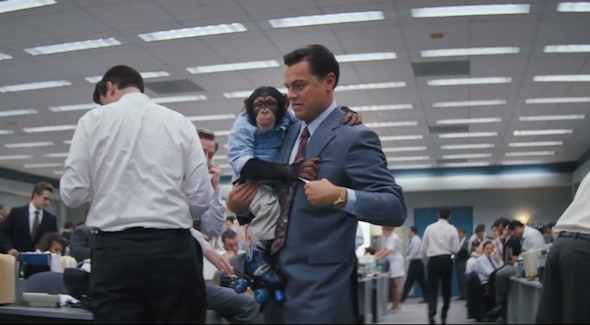
In the upcoming movie Wolf of Wall Street, Leonardo DiCaprio is seen holding an infant chimpanzee, Chance. It is especially disappointing because Mr. DiCaprio is known for his passion for animal conservation—most recently he supported conservation efforts to save tigers in Nepal.

Animal advocacy groups have contacted Mr. DiCaprio and the movie producers, however our efforts to reach out have not resulted in Chance’s scenes getting removed from the movie. Now it is time for the public to speak up!

wolf-of-wall-st-screen-shot

Chance was once a pet, and his previous owners discarded him to a pseudo-sanctuary called the Big Cat Habitat and Gulf Coast Sanctuary. The animal attraction claims to be a reserve for animals, but they regularly exploit their residents for entertainment purposes. In fact, Chance’s owners (the Rosaire-Zoppe family) are the only remaining trainers that continue to use chimpanzees in circuses. No respectable reserve or animal sanctuary would lease out their animals for media productions such as this movie.

Even if the AHA was present for filming, they have no authority over Chance’s treatment off-set, making the “no animals were harmed” disclaimer misleading.

Portraying chimpanzees as cute and cuddly attractions seriously misinforms the public on the true nature of these beings and perpetuates the pet and entertainment industries. Studies have shown that showing chimpanzees alongside humans in film and TV mask their endangered status, and these scenes hurt conservation efforts.

Despite hearing these facts from advocacy groups, the Wolf of Wall Street producers have not removed Chance’s scenes from the movie, which will be released on December 25. We encourage you to please post on the movie’s poster on their Facebook page and Twitter to let them know that because of the issues with Chance’s scenes you will not be going to see the movie, and you will tell all your friends to boycott it with you.

Sample Facebook Post:

I’m boycotting Wolf of Wall Street because of the chimpanzee scenes! Even Hollywood knows that abuse occurs when animals are used in movies (hollywoodreporter.com/feature). Chimpanzees don’t belong in movies unless they are CGI. Chimpanzees are an endangered species and showing them as cute and cuddly props hurts conservation efforts and perpetuates the pet trade.

Sample Tweets:

Pls RT! Join @EyesOnApes and tell @LeoDiCaprio chimps should not be in movies & you won’t see @TheWolfofWallSt!

RT! @LeoDiCaprio I will boycott @TheWolfofWallSt because of Chance’s scenes. Chimps do not belong in movies! EyesOnApes.org

Don’t support animal abuse. Refuse to see @LeoDiCaprio in @TheWolfofWallSt and tell all your friends. EyesOnApes.org Pls RT!

The final thing you can do to help Chance is to spread the word! Please share this alert on social media and encourage your friends to boycott the movie with you.

Filed Under: Advocacy, Apes in Entertainment, Sanctuary Tagged With: advocacy, animal protection, animal rescue, animal rights, Animal Welfare, boycott, chance, chimpanzee, chimpanzee rescue, chimpanzee retirement, Chimpanzee Sanctuary Northwest, chimps in entertainment, conservation, csnw, dicaprio, leo, leo dicaprio, leonardo dicaprio, primate protection, primate rescue, Sanctuary, take action, wolf of wall st, wolf of wall street, WoWS

Take Action Tuesday: Help save chimpanzees in Cameroon!

August 27, 2013 by Debbie

EOA take action tuesday

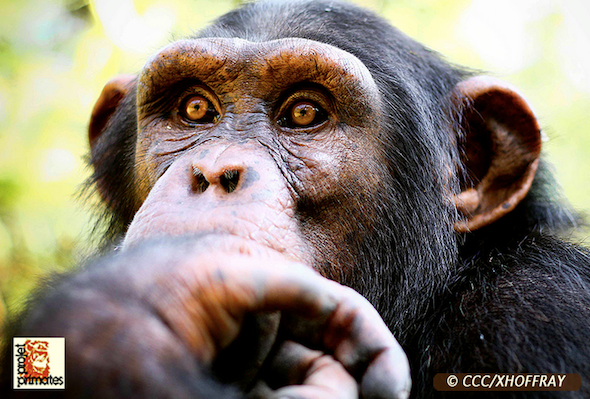
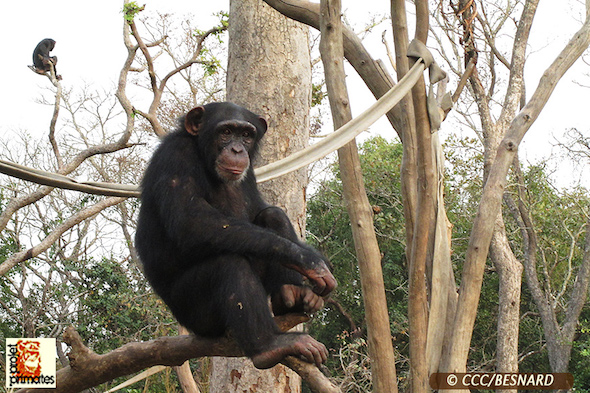
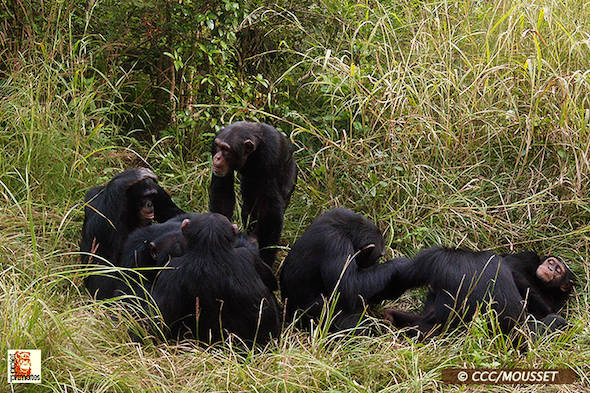
A U.S. company called Herakles Farms is planning to begin a palm oil plantation in Cameroon near the border of Nigeria. Chimpanzees and gorillas live in these forests, and in fact the most endangered subspecies of each ape are living in that region. The Nigeria-Cameroon chimpanzee population (a.k.a. Elliot’s chimpanzee) is estimated to be approximately 3,500 individuals remaining. The Cross River gorilla population is estimated to be fewer than 300 individuals.

Endangered chimpanzees, forest elephants, and monkeys all live within the Herakles Farms concession. These already diminishing populations need our help!

Chimpanzee, Nigeria

This form letter has been put together to make it very easy for us to lend our voice in support of the apes, courtesy of Greenpeace. Although it is very convenient to just fill in your name and email and hit “send”—it really helps to make your letter unique. Tell the CEO of Herakles Farms why it is important to you that their plans for a palm oil plantation in Cameroon be canceled immediately.

We know from the plight of orangutans in Southeast Asia that palm oil directly negatively affects their population, sometimes driving orangutans and other forest dwellers to starvation when their homes are slashed and burned to the ground to make room for the plantations. In your day-to-day life, try to be a conscious consumer and avoid palm oil where you can. You can help be an advocate for apes every day by taking this extra effort to check the ingredient list of products you buy!

After sending your letter, take a few minutes to watch the second installment of a video interview with Dr. Debra Durham, where she talks a little bit about her conservation efforts with wild chimpanzees. Her current project is called Compassion in Action Mushroom Project (it’s a really innovative plan to help protect wild chimpanzees—be sure to check it out!)

Filed Under: Advocacy, Free-living chimps Tagged With: advocacy, animal protection, animal rescue, animal rights, Animal Welfare, cameroon, chimp, chimpanzee, chimpanzee rescue, chimpanzee retirement, chimpanzee sanctuary, Chimpanzee Sanctuary Northwest, Cle Elum 7, Cle Elum Seven, compassion in action mushroom project, conservation, dr. debra durham, herakles farms, palm oil, pan troglodytes ellioti, primate protection, primate rescue, rescue, Sanctuary

  • Page 1
  • Page 2
  • Go to Next Page »

Primary Sidebar

Subscribe To the Blog and Get Notified of New Posts First!

Archives

Calendar of Blog Posts

July 2026
S M T W T F S
 1234
567891011
12131415161718
19202122232425
262728293031  
« Jun    

Categories

SUBSCRIBE TO OUR NEWSLETTER

Footer

PO Box 952
Cle Elum, WA 98922
[email protected]
509-699-0728
501c3 registered charity
EIN: 68-0552915

Official DDAF Grantee

Menu

  • The Chimpanzees
  • Blog
  • About Us
  • You can help
  • Resources
  • Contact
  • Donate

Proud Member of

Connect With Us

Search

Copyright © 2026 Chimpanzee Sanctuary Northwest. All Rights Reserved. Site by Vegan Web Design