• Skip to main content
  • Skip to primary sidebar
  • Skip to footer

Chimpanzee Sanctuary Northwest

Hope. Love. Home. Sanctuary

  • Our Family
    • The Chimpanzees
    • The Cattle
  • Blog
  • About Us
    • Visiting the Sanctuary
    • Philosophy
      • FAQs
      • Mission, Vision & Goals
      • Privacy Policy
    • The Humans
      • Staff
      • Board of Directors
      • Founder
    • Annual Reports
    • The Future of CSNW
    • CSNW In The News
  • You can help
    • Donate
      • Become a Chimpanzee Pal
      • Sponsor A Day
      • Transfer Stock
      • Be A Produce Patron
      • Be a Bovine Buddy
      • Give from your IRA
      • Personalized Stones
      • Bring Them Home Campaign
    • Leave A Legacy
    • Employment Opportunities
    • Volunteer
    • See Our Wish List
    • Events
  • Resources
    • About Chimpanzees
    • Enrichment Database
    • Advocacy
      • Advocacy Action Center
      • Apes in Entertainment
        • Trainers
        • Role of the AHA
        • Greeting Cards
      • Chimpanzees as Pets
      • Roadside Zoos
      • Chimpanzees in Biomedical Research
      • Conservation
        • African Apes
        • Orangutans
  • Shop
    • Merchandise Store
  • Contact
  • DONATE NOW

captivity

Chimp-Specific Vocalizations

January 28, 2025 by Jenna

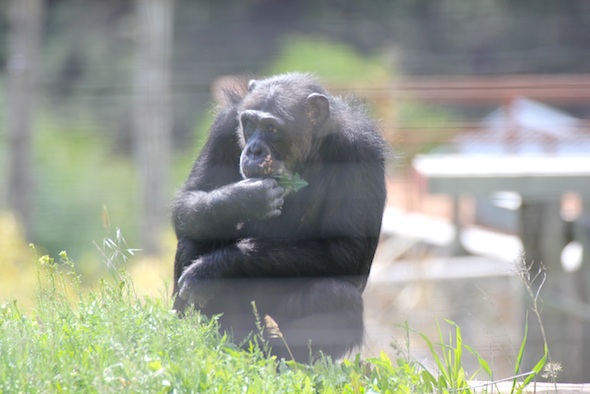
Chimpanzees have a variety of vocalizations: some to warn their group members of potential danger, some when they’re excited, some when they’re anxious or scared, some when they’re happy, playing, or greeting someone… In the captive world, the chimpanzees also use vocalizations to express their specific needs/wants to their caregivers. As CSNW caregivers, we have been conditioned to know what certain vocalizations are, based on who they come from and what the context is.

For today’s blog, I have compiled 6 of the top sounds you would hear from our chimp residents and I explain their special meaning.

Enjoy!

Filed Under: Caregivers, Chimpanzee Behavior Tagged With: captivity, caregivers, communication, hidden meaning, vocalizations

The Chimps Aren’t Alright

October 9, 2023 by J.B.

In 2011, primatologists Lucy Birkett and Nicholas Newton-Fisher conducted a study that sought to shed light on a simple yet provocative question: How abnormal is the behavior of captive, zoo-living chimpanzees? I encourage you to read the paper but I’ll spare you the suspense:

Very.

Their treatment of the issue was only slightly more nuanced. Captive chimpanzee behavior is normal, the authors say, in that they display many of the same behaviors as their wild counterparts—behaviors that we refer to as species-typical. As we know, captive chimpanzees tend to run, climb, groom, and use tools, just like wild chimps. The problem is that they also display a wide range of behaviors that are only rarely, if ever, seen in wild chimpanzees, such as hair-plucking, regurgitation and re-ingestion, coprophagy (eating feces), urophagy (drinking urine), pacing, rocking, self-clasping, and self-biting, which are commonly understood to be a reflection of poor welfare at some stage of life, and perhaps even mental illness. After observing the behavior of 40 chimpanzees at six accredited zoos in the U.S. and Europe, the authors came to the conclusion that abnormal behavior was not only present but endemic in these populations, regardless of group size, composition, and housing. Every single chimpanzee subject exhibited at least one abnormal behavior during the study period, with an average repertoire of five abnormal behaviors and an average frequency of once every forty minutes. This, it should be noted, was in contrast to the whopping total of zero instances that they recorded in over 1,023 hours observing wild chimpanzees in Uganda.

Researchers within in the zoo community rejected this characterization. They conducted their own study, which utilized a larger sample size but substituted surveys of zoo staff for direct behavioral observation, and concluded that only 64% of chimpanzees displayed abnormal behavior. And after excluding coprophagy, which some argue can be considered abnormal without necessarily being reflective of poor welfare, the overall prevalence of, shall we say, meaningfully abnormal behavior in their study dropped to a somewhat lower but still shockingly high 48%. As a rebuttal to the use of the term endemic, the paper may have succeeded, but it should provide little consolation.

Why would half or more of all chimpanzees in accredited zoological institutions exhibit abnormal behavior, in such stark contrast to their wild counterparts? Why, in light of decades of rigorous animal welfare science and the best efforts of hundreds upon hundreds of experts, do captive chimpanzees continue to regurgitate and pluck themselves bald?

One thing I discovered shortly after entering this field is that there is little agreement as to what it means for an animal to have a good life. To some, a good life is one in which one’s basic needs are met. As Dr. Dave Hone argues in an article entitled Why Zoos are Good:

…[zoo animals] will not suffer from the threat or stress of predators (and nor will they be killed in a grisly manner or eaten alive) or the irritation and pain of parasites, injuries and illnesses will be treated, they won’t suffer or die of drought or starvation and indeed will get a varied and high-quality diet with all the supplements required. They can be spared bullying or social ostracism or even infanticide by others of their kind, or a lack of a suitable home or environment in which to live. A lot of very nasty things happen to truly ‘wild’ animals that simply don’t happen in good zoos and to cast a life that is ‘free’ as one that is ‘good’ is, I think, an error.

There’s no question that the best zoos attempt to do all of this and more for the chimpanzees in their care. Why, then, does abnormal behavior persist?

The answer is that chimpanzees are more than just bundles of basic needs. They are complex social and emotional beings with highly intelligent and inquisitive minds. Moreover, chimpanzees are adapted to employ these traits in the environments in which their species evolved—a diverse range of environments, it should be said, from rain forest to savanna, which altogether actually have relatively little in common, save for one thing: their complete lack of resemblance to an urban zoo exhibit.

Should we be surprised that animals whose home ranges are measured in square miles in the wild feel frustrated in zoo exhibits? Should we expect animals that evolved dynamic fission-fusion communities of up to 150 individuals to thrive in relatively static groups of a dozen or less? Do we believe that members of a species that exhibits a predictable pattern of migration, in which males remain in their natal communities while females generally emigrate upon reaching adolescence, would not experience prolonged stress when groups are broken up and reorganized in violation of those patterns? This mismatch between the captive environment and the environment in which chimpanzees evolved both denies them the opportunity to express behaviors that are biologically and psychologically fulfilling and introduces stressors for which they have no innate coping mechanisms. And, importantly, it exists to varying degrees in every situation in which chimpanzees live under human care, from laboratory to zoo to sanctuary.

Regarding Dr. Hone’s point, I would never argue that life for wild chimpanzees is perfect. But I don’t think it requires a defense, either. It very well may be nasty, brutish, and short (actually, wild chimpanzees that reach adulthood live nearly as long as captive chimpanzees), but it is theirs, and has been for millions of years. It would be strange, and perhaps too convenient, to think we could improve upon it.

If we accept that all is not well for captive chimpanzees, we must then ask ourselves why we continue to breed them in captivity. I, for one, am not against all forms of captivity, as for the better part of the last 25 years I have worked to keep chimpanzees behind bars and electric fencing. Sanctuaries are necessary for chimpanzees who have been raised in captivity or who cannot be returned to the wild. And in fact many zoos have, to their great credit, provided homes for chimpanzees from laboratories, the pet trade, and various failed and shuttered institutions. But intentionally breeding and keeping animals in a way that denies their autonomy and restricts the full repertoire of their behavior, and which results in the proliferation of myriad abnormal behaviors despite our best efforts to enrich their environments, requires justification or, at the very least, a bit more reflection.

The modern defense of maintaining chimpanzees in zoos rests on two assumptions. The first is that the captive chimpanzee population serves an important role as a reservoir for one day restoring declining wild populations—the ark strategy, if you will. Given what we know about captive chimpanzees’ behavioral abnormalities and the absence of any kind of culturally-transmitted knowledge that would permit them to survive independently, this is unlikely to succeed and is generally accepted as such, even within the zoo community. The second is that zoo chimpanzees help educate the public and inspire support for conservation efforts. For this there is at least a somewhat more robust debate. But even if we were to accept that these benefits could only be achieved by maintaining chimpanzees in exhibits, our rightness in doing so would depend largely on how we measure the costs on the other side of the ledger; namely, those borne by the captive chimpanzees themselves.

The degree to which abnormal behavior correlates to the internal experience of suffering in captive chimpanzees is difficult to define with precision and we must be careful not to lump all abnormal behaviors together as though each is indicative of the same degree of compromised welfare. But the data appear to support what many of us have experienced professionally and what many others know intuitively: The chimps aren’t alright. And the reason for their troubles, it seems, has less to do with the way in which we keep them than with the very fact that we keep them at all. Our society is just now beginning to wrestle with the fact that, at least for some species like elephants and cetaceans, captivity is simply incompatible with good welfare. If we care enough about chimpanzees to conserve their wild populations, it’s time we think critically about the well being of the individuals serving on their behalf.

Filed Under: Advocacy, Chimpanzee Behavior, Sanctuary Tagged With: abnormal, behavior, birkett, captivity, chimpanzee, coprophagy, Enrichment, ethics, newton-fisher, northwest, rescue, ross, Sanctuary, sterotypie, urophagy, zoo, zoos

Emotional Beings and Where to Find Them

November 22, 2022 by Chad de Bree

Before we get into the thick of it, let’s play a game!

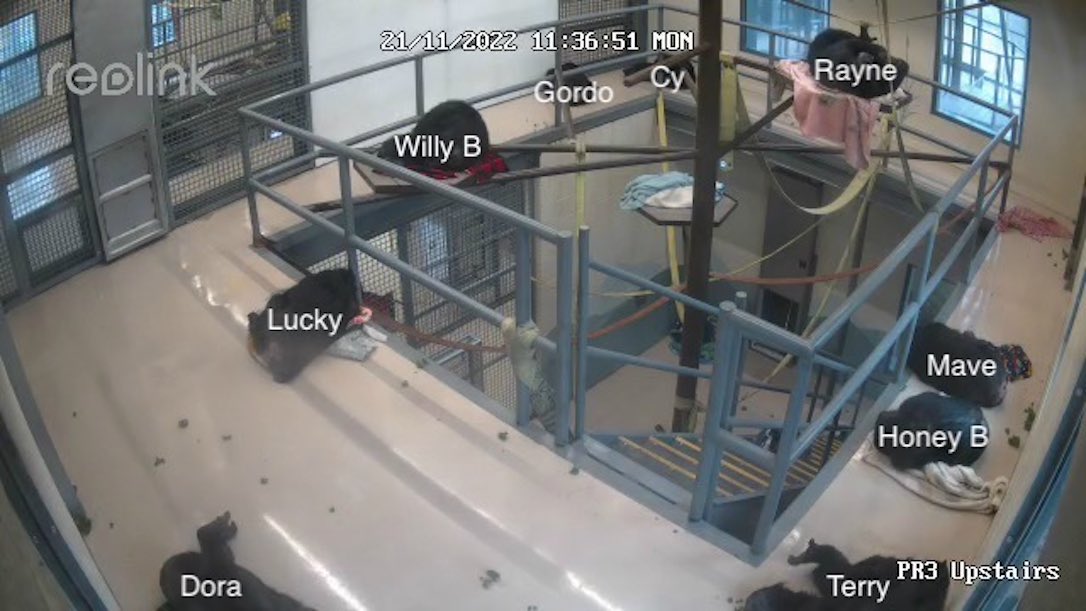
This is an identification game: super hard expert level! All nine in Cy’s group were caught napping on the second floor of the Marmot Mountain Playroom! Even some of the staff couldn’t get the correct answer. I admit, I would probably be wrong too had I not been cleaning in the adjacent Lupine Playroom to see who is who at the time. I would be pretty astound if somebody can get them all identified correctly!

Good Luck!

There has been video circling around on the internet recently that has been gaining popularity. The video is of Mahale, a female chimpanzee from the Sedgwick County Zoo in Kansas, being reunited with her new born son, Kucheza. It is such a sweet and endearing video. I personally have probably watched it maybe 100 times, and that’s the low estimate. I was taken aback when I read some of the comments, however.

Perusing through the comments, I was astonished that it seemed a lot of people were just now seeing a species outside of Homo sapiens can experience emotions such as compassion or motherly love. I know I’m in a unique position where I have studied chimpanzees for several years and worked with them for a few, so the concept of them having emotions is not a foreign concept to me. I am excited, however, that video has generated the discussion and awareness of animal emotions.

Let’s face it, it is a very emotional video. Mahale was giving birth when there were complications. The veterinarian staff decided and emergency c-section had to be performed to save Kucheza. After two days in intensive, Kucheza was finally given back to his mother. And the rest is history, as they say. I am really happy for Mahale and Kucheza, and applaud the care and veterinarian staff of the Sedgwick County Zoo. But where there is a bright side, there is a dark.

After a few more watches, hit it me thinking about this type of situation with our residents and how they were never afforded the opportunity to be reunited with their child and raise their children. What kind of mother would Jody really have been? Would Foxie still be famous if she had the opportunity to raise her children instead of bonding with a Troll doll? Would Negra have a less grumpy attitude if she was able to raise her children? Would Annie be as sweet and caring as she is with her friends? Would the first rounds of integrations a few years ago be different if Missy was able to recognize Honey B as the daughter she gave birth too? There are a lot of what ifs that can play out, but I find it best to just focus in the present time.

In any case, they are here, now, living the best life they possibly can with such a horrid pasts behind them. I think we are all just thankful and relieved Mahale and Kucheza are able to spend all the time they can together and not suffer the same fate.

I wasn’t able to get any good photos today since it is now snowing and the chimpanzees spent nearly the whole day in those out of reach spots. Luckily enough though, I had some I almost forgot about!

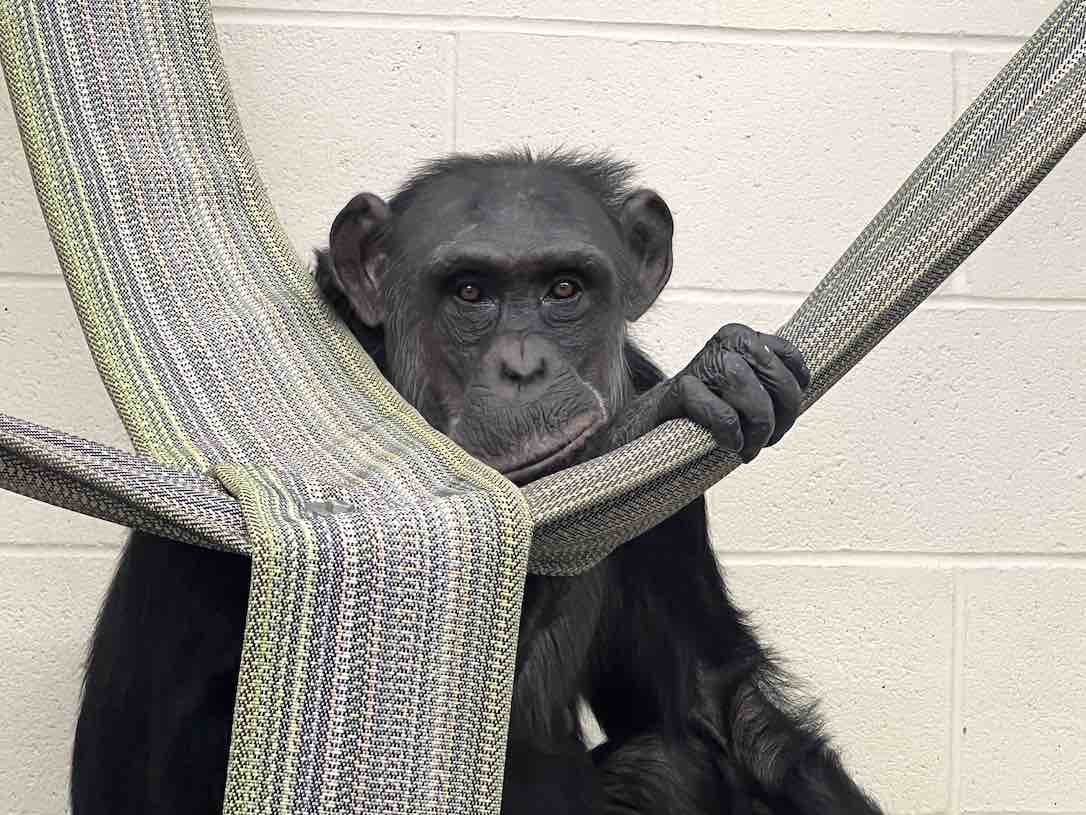
The ever adorable Honey B
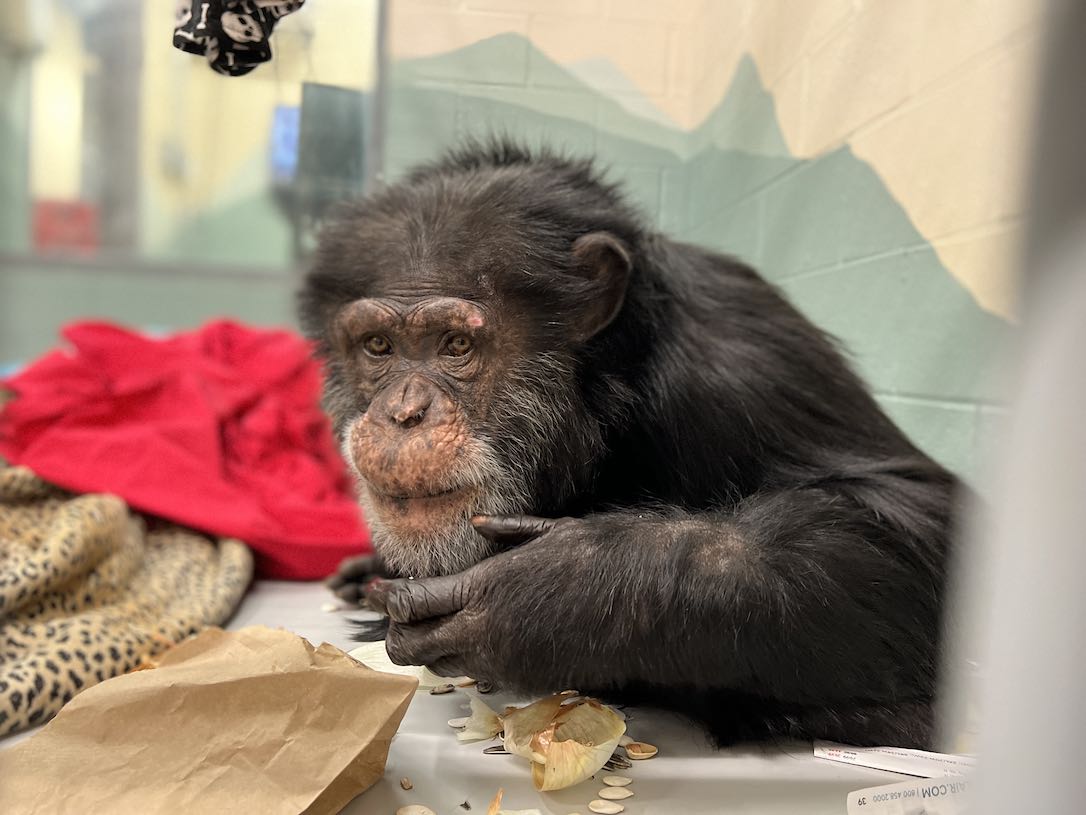
Mave working through her night bag
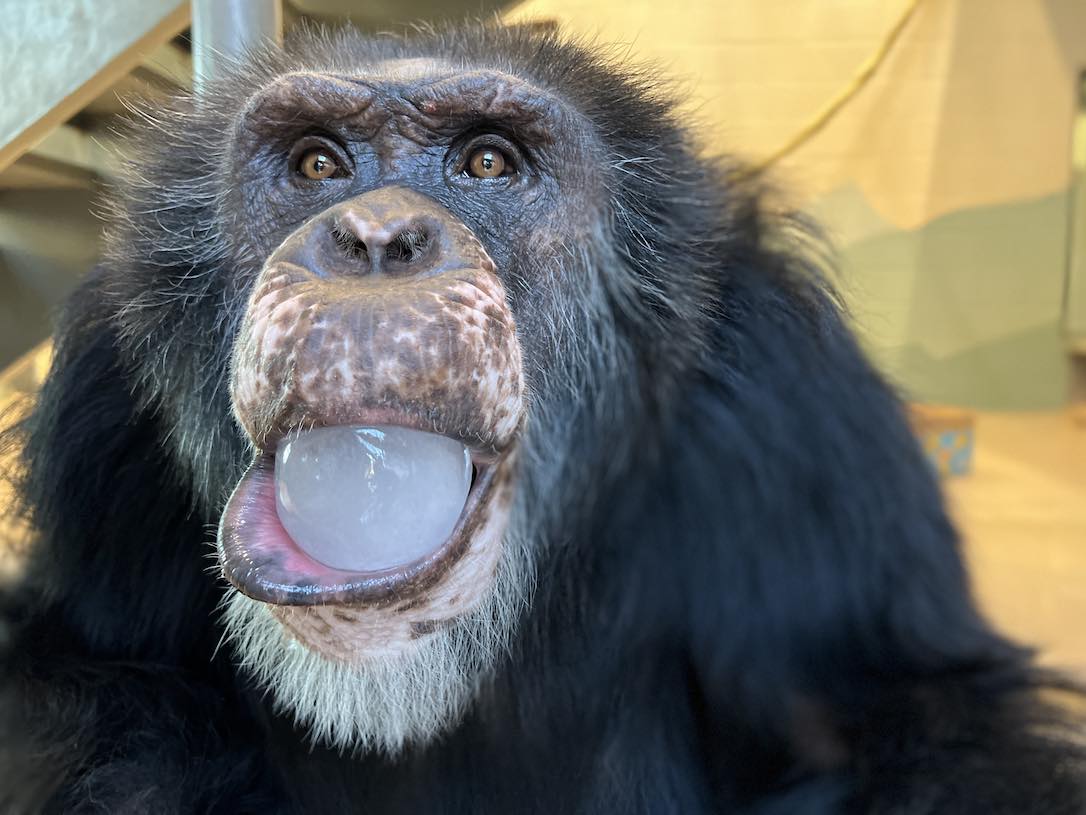
Terry enjoying an evening ice egg
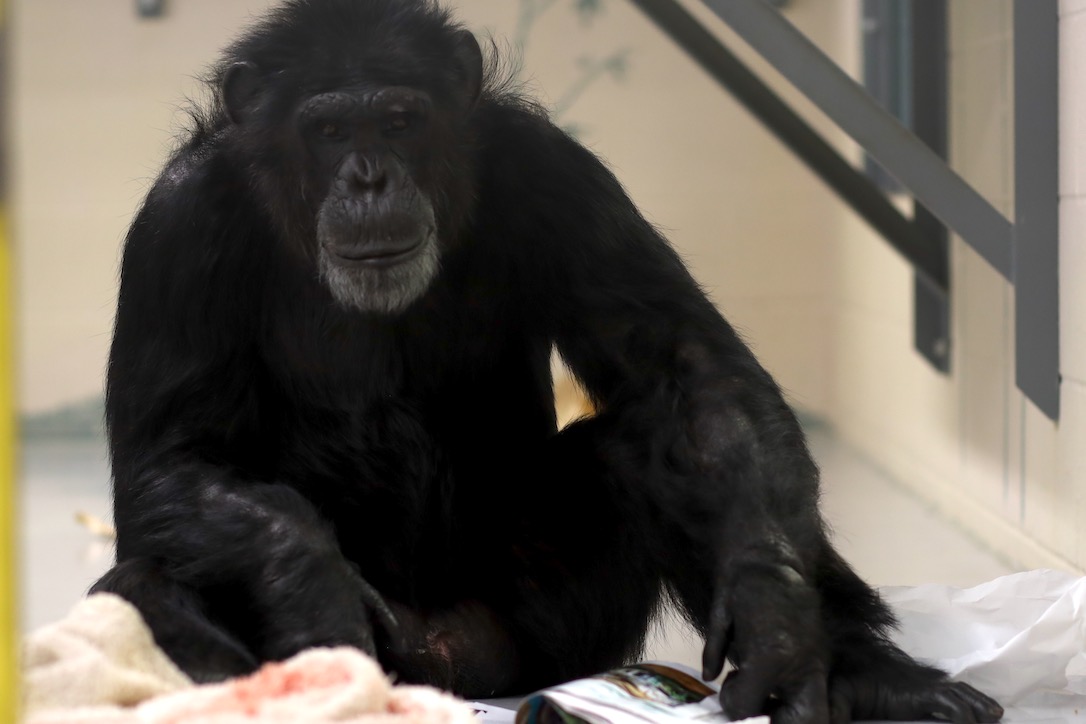
Cy and his afternoon reading material

Have you guessed who is who in Marmot Mountain Playroom?

.

.

.

.

.

.

.

.

.

.

.

.

.

.

.

.

.

.

.

.

.

.

.

.

.

.

.

Here is the answer!

Filed Under: Advocacy, Sanctuary Tagged With: Annie, captivity, children, Foxie, guessing game, Jody, Missy, motherhood, Negra

This Life of Fortune

July 29, 2022 by Diana

Two fundraising updates and a story about our bovine friends today.

First, yesterday alert blog readers took it upon themselves to start a group fundraiser for a much-desired, literally named “Big Ass Fan” evaporative cooler. Right now we have $895 pledged towards the $1,899 cost of the fan, with $1,004 left to raise. I myself have pledged $100 and have been having pleasant visions of receiving that cooler.

If you would like to participate, you can email me ([email protected]) and let me know your pledge amount. Donations towards the fan can be made online on our donation page (just specify in the gift note section it’s for the cooler), or you can mail a check to the sanctuary at PO Box 952, Cle Elum, WA 98922. You can donate now or pledge first and donate once I let you know that the total has been reached. Thank you all so much!!

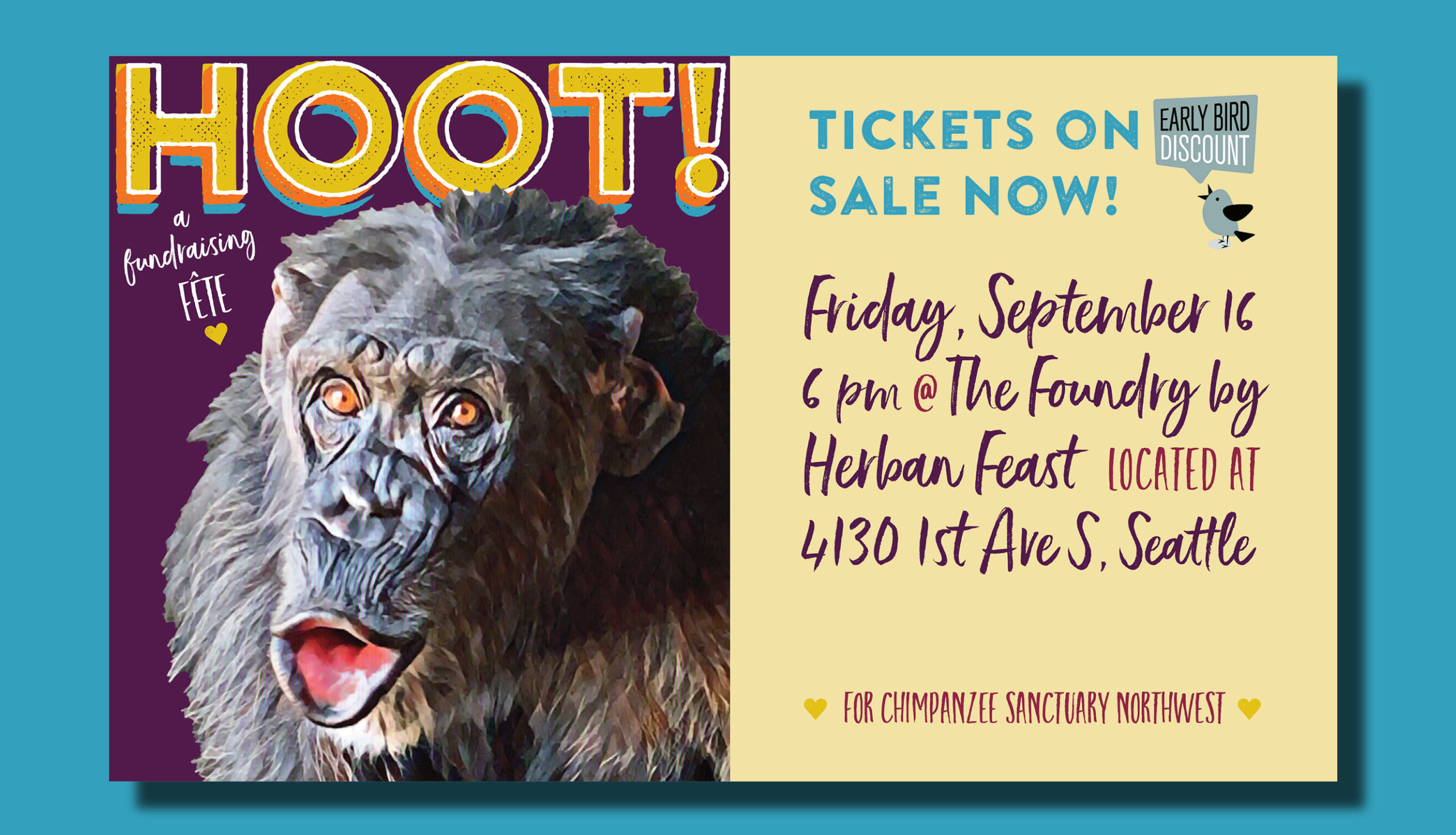
Second, counting today, there are only three days left to take advantage of Early Bird pricing for the HOOT! gala! The gala is a pretty big deal in terms of fundraising but also in terms of connecting with supporters. We are hoping to see many familiar and new faces in-person in Seattle on September 16th!

For those not in this area or otherwise unable to attend the fundraising fête, you can still participate! We’ll be having an online auction open to anyone, and for those who buy a virtual VIP ticket for just $20, you will also receive a special invitation to an exclusive Zoom tour of the sanctuary to take place on Sunday, September 11th at 2pm.

A big shout-out goes to our sponsors of HOOT! 2022. Numerous individuals are now sponsors in addition to generous Gala Sponsor Concord Construction. What would we have done without them these last few years with all of the expansion!! We are so grateful to have worked and continue to work with them to expand the lives of the chimpanzees and beyond honored to have their sponsorship for the gala.

Also a big thanks to Happy Hour sponsor Martha Faulkner Real Estate. Martha was a very helpful board member for years and is an all-around animal lover, giving part of her commission to multiple animal groups through her business, hence her website: homes4petlovers.com.

If you are interesting in sponsoring as a business or an individual, you can do that directly here or if you’d like more information, don’t hesitate to reach out!

Third, it’s hot, ya’ll.

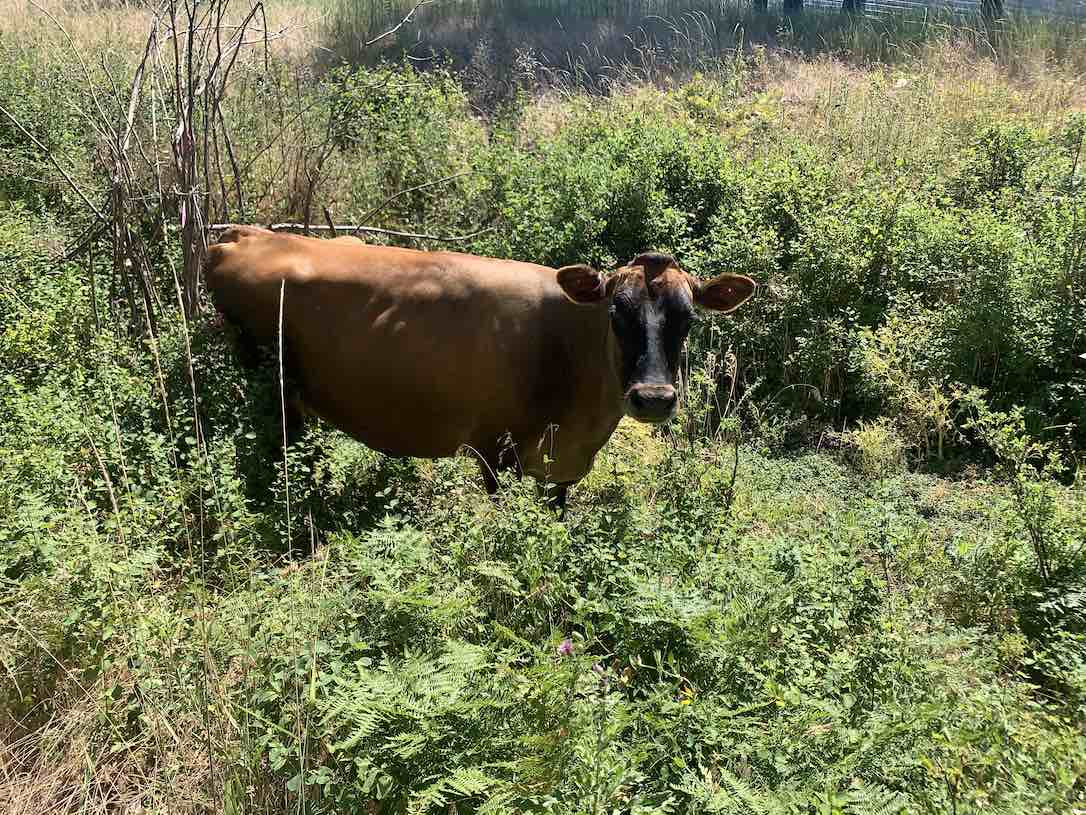
Today was my day to do “cattle care”. In the winter, that means giving our four bovine friends hay, mucking out the barn, and making sure there is an ample supply of water.

In the early summer they are able to free-feed in the pastures, helping us with fire control, so we don’t need (yet) to supplement their food. They aren’t spending as much time in the barn, so there’s less mucking to do, though we do try to pick up in areas where they congregate to keep the fly population under some control.

With the addition of the large pasture on the property above the original sanctuary property this year, you just never know where you are going to find the cows.

Today, I couldn’t find them at all.

They weren’t at the barn, where I stopped to make sure the water trough was full.

And they weren’t in the pasture by the pond, where I have been finding them on most Fridays since they’ve been given access over a month ago.

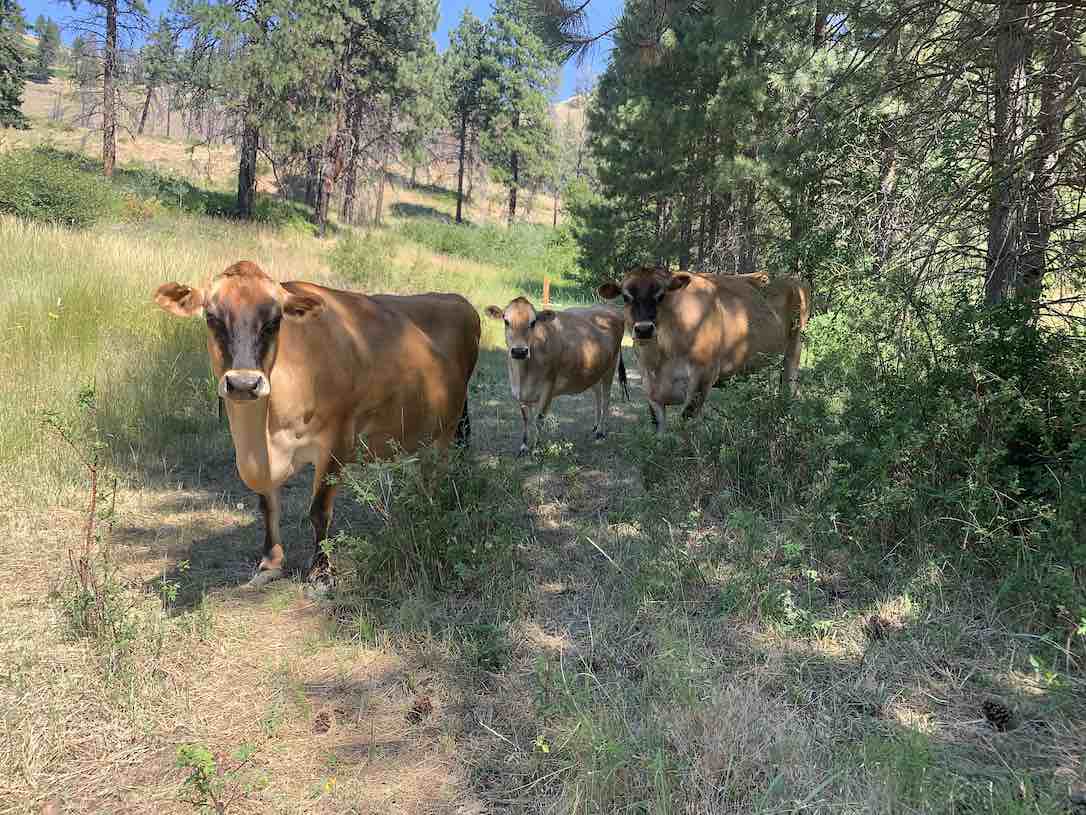
I followed their well-worn path down towards the spring, and found them doing exactly what they should be doing in 100+ degree weather, hanging out in the shade, ready to stare me down.

But wait, where was Betsy?

Seriously, where was Betsy? I called her name. No response. I called louder. Still nothing.

Despite my best efforts at self-mind-control, I can be prone towards thinking the worst and I was starting to get nervous. Betsy is not usually away from her herd.

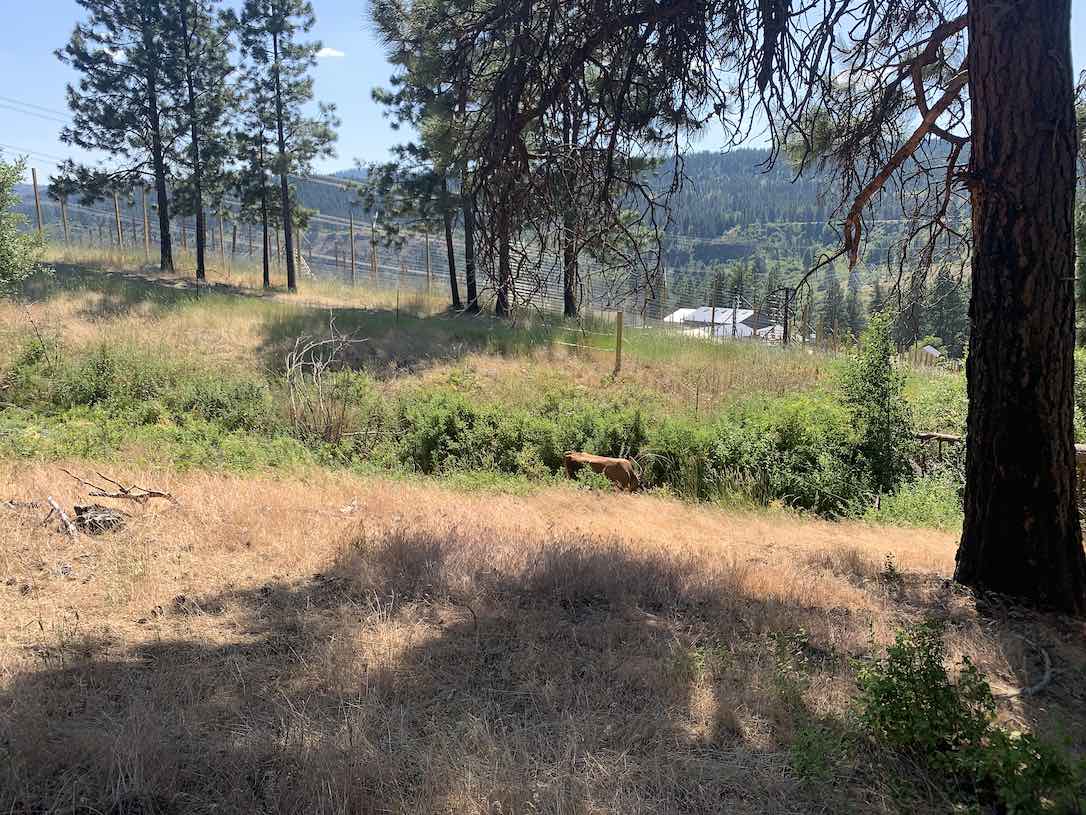
I walked further down the path adjacent to the spring. Ahhhh. There she was.

In the patch of lush greenery at the edge of the spring.

She too was keeping cool right near the water.

On my way back across the property, I spied another mom laying low in some shade.

It makes me so happy that Betsy, Meredith, Honey, and Nutmeg can, like momma deer, follow their instincts and choose the smartest spot to be on the property.

They are no longer beholden to the humans making all decisions for them or viewing them as a means to their own ends. They are residents of this land. Not as unlikely as the chimpanzee residents across the way, but, like the chimps, while not free, definitely freer than many of their species who have been forced into a life of servitude.

By luck or by fate (if you believe in that kind of thing), we get to be a part of their lives.

Celebrate this gift with us by participating in HOOT!, online or in-person. We have a lot to celebrate!

Filed Under: Betsy, Chimpanzee, Construction, Farmed Animals, Fundraising, Honey (Cow), Meredith, Nutmeg, Sanctuary, Thanks Tagged With: captivity, cattle, Chimpanzee Sanctuary Northwest, cows, freedom, Fundraising, hoot, rescue, Sanctuary

Speaking on Captivity

June 4, 2016 by Diana

Captivity. It’s been in the news a lot, and I know on a lot of our minds.

It is simply a fact of everyday life and work when your occupation is caring for chimpanzees in a sanctuary. We go to great lengths to ensure that the chimpanzees are unable to breach the barriers we have constructed to contain them, and while we do it for both their own safety and the safety of those on the other side of the barriers, it doesn’t change the reality of the situation–the steel caging, bullet-proof glass, electric fence, and many, many locks of which only the humans have the keys.

As a sanctuary, our aim is to attempt to right what we perceive to be a wrong and to give back some measure of what our species has taken from another species, but we don’t view this second chance for the chimpanzees living here as the ideal life, and our friends behind bars often remind us of this. A few years ago, I wrote about my perception of Jamie’s awareness of her own captivity in the context of the shift in how we as a society view what chimpanzees deserve and what our obligations are towards them. You can read that post here.

I am buoyed by the positive events that have occurred for chimpanzees just since writing that post three years ago. We are closer than ever – maybe we are even there – to the end of chimpanzee biomedical research in this country. How did we get here? How did we get to this moment in history where the practice of using chimpanzees in biomedical testing is widely seen as abhorrent from a society that thought it was entirely permissible and within our rights as humans to slaughter chimpanzee families, collect the infants, and ship them across the world to use them in experimentation? There are many specific answers to that question, but the general answer, I think, can be explained by a formula that applies to progress towards greater human rights as well: knowledge + people speaking out + time = societal shifts.

These shifts don’t happen overnight and they don’t happen without resistance. By definition, it takes the majority of people who held onto an “old way” of thinking to either no longer be a part of society or it takes individuals to change their own stance. We all know how stubborn our species is, so the former is often the key factor and is really built into the formula under “time.” But our modern age has given us the ability to gain information and collect knowledge in an instant, and we are quickly made aware of more people speaking out. This allows shifts to happen faster.

As uncomfortable and impassioned as some discussions can get around the practice of keeping great apes and other non-human animals in captivity, I choose to view it as very positive sign that these discussion are happening in a very public way. The proverbial and literal elephant in the room is being pointed out, making it almost impossible to ignore the bigger ethical questions of holding intelligent, highly social, long-lived species in captive environments, generation after generation. What truly justifies this activity?

The thing about societal shifts in thinking, though, is that when you’re in the middle of them, there will be individuals and institutions on both sides. Looking back at shifts that have happened in the past, it’s really difficult to understand how so many people were involved in something that is now viewed as unjust, but that’s the benefit of hindsight. There is no “new way” without an “old way” and the “old way” is something that the majority of people likely had few qualms about, but that doesn’t mean they had some sort of flaw in their character. I applaud the individuals and institutions that are at the forefront of rejecting old, unfair, and unjust ways of doing things, but I understand that some will invariably be slower to adjust–that’s all part of a shift.

Let’s keep talking. Let’s not be afraid of our convictions and our desire for a more just world. And let’s also remember that each of us have different levels of knowledge, exposure to different voices, and may have developed our opinions in a different period of time and societal-wide mentality than ourselves.

In the meantime, let’s be thankful, on behalf of seven chimpanzees in Cle Elum, Washington, that societies do indeed shift towards greater understanding and compassion, and it happens one person at a time. Though we are unable to give the chimpanzees true freedom, we can give them something closer to it than they’ve ever experienced before.


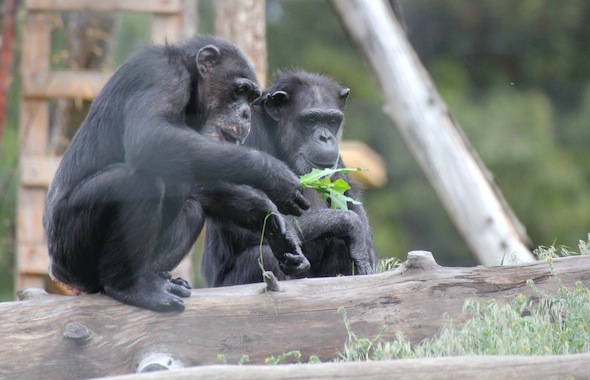
Here’s Missy and Annie enjoying the wild prickly lettuce that they harvested:

Missy eating prickly lettuce

Missy and Annie with prickly lettuce

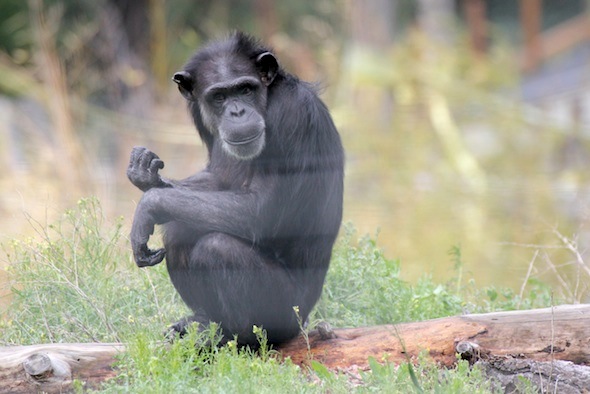
Annie sitting on a log


Filed Under: Annie, Missy, Sanctuary, Young's Hill Tagged With: animal rights, Animal Welfare, biomedical research, captivity, chimp, chimpanzee, Cle Elum, csnw, Sanctuary, societal shifts, zoos

Choices

May 10, 2013 by J.B.

You’ve probably noticed that all of us here at CSNW get excited when the chimps are out on Young’s Hill. Knowing that they lived for decades in small cages in a windowless basement, we celebrate every minute that they can feel the warmth of the sun on their backs, the dampness of the grass beneath their feet, or the cool breeze through their hair.

This year, it’s been all about Negra. Every chimpanzee does things in her own way, and in her own time, and Negra tends to approach things much more slowly and cautiously than the others. But this spring, she has found her confidence out on the hill. She is often the first one out the door in the morning, and sometimes the only one out in the afternoon. She loves eating her breakfast, or handfuls of spring grass, in the shade of the bamboo or one of the many climbing structures.

web Negra eat forage under platform YH IMG_7568

This morning, we were thrilled to see her try something she hasn’t done before. She crawled into the underground tunnel and stayed there for about 15 minutes while snacking on grass and dandelion leaves. Every once and a while she’d pop out to grab more grass and then retreat to her hiding spot.

web Negra peek out of Missys tunnel YH IMG_7627

web Negra in Missys tunnel YH IMG_7621

Sometimes, when you provide captive chimpanzees with choices, they’ll surprise you. For a while, we thought that Negra would choose to stay indoors in bed as the other chimps frolicked outside. But when she was ready, she chose to join them.

But as Negra spends more and more time on the hill, it’s worth noting that none of the Cle Elum Seven spend their entire day outside.

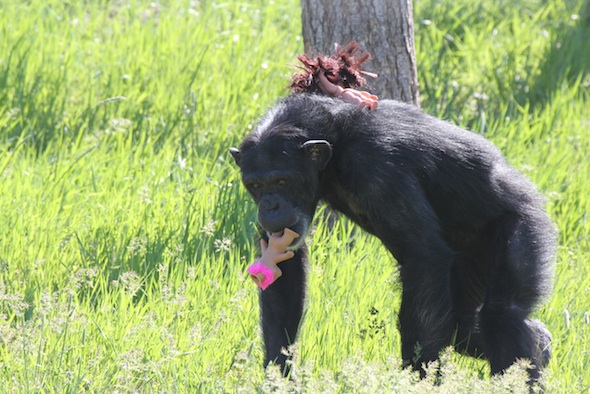
In the morning, it’s common to see all seven chimps on the hill, whether we put their breakfast out there or not. Today, Foxie took a Dora and a troll on her morning adventure.

web Foxie walk YH troll in mouth dora on back IMG_7656

And Missy defied gravity, as she often does.

Missy tightrope YH IMG_7583

But when they’ve had enough playing and exploring, the chimps usually head back inside for a nap. They could choose to build a nest outside, but they seem to prefer napping indoors.

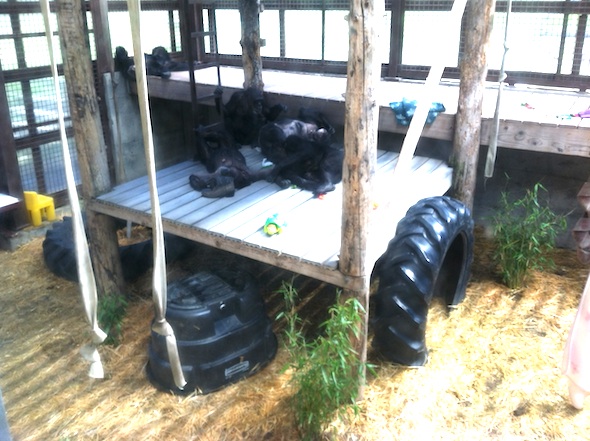
The greenhouse is everyone’s favorite spot year round. In the winter, they might wrap themselves up in a blanket on the second level of the platform, where it is warmest. But on a hot day like today, it’s common to see most of the group sprawled out on the lower platforms. They don’t like to be outside in the direct sun for too long, but they love the heat in the greenhouse. It’s like a sauna.

When the chimps want to relax and let their guard down, I think they feel more secure in an environment that is more familiar to them – one that has four walls and a roof.

web Jody Burrito Annie Negra Missy GH platform

And I think they also like to keep an eye on what the humans are doing. While we clean the playroom in the morning, Burrito often sits in the window of the greenhouse, watching us. Burrito was raised by humans, so it’s no surprise that he likes to be part of our world and keep up with what we’re doing. But more importantly, he wants to see what kind of food we are going to put out in the playroom once it’s cleaned. One track mind, that guy.

web Burrito in window PR to GH

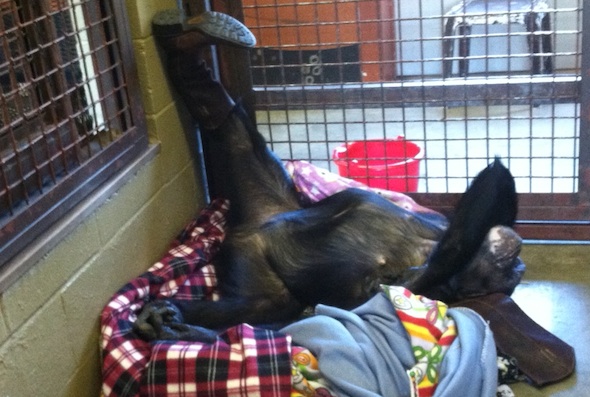
Sometimes the chimps just want to be alone, so you will occasionally find someone in the front rooms while we are cleaning the playroom. This morning, Diana put on some boots for Jamie, and after they walked around the hill she gave them to her. Jamie wore one of the boots to bed and rested her head on the other.

web Jamie nest with boot on foot up in the air room 3 FR

It can be hard to separate your own ideas of what’s best for the chimps from their ideas of what’s best for themselves. On days like today, when it’s 86 degrees and sunny and Jamie is sleeping on the floor inside, I feel like a parent whose kids are inside playing video games on a beautiful day. But that’s a silly way to think. The chimps are most certainly not our kids; in fact, most of them are older than me. And after all, what’s the point of sanctuary if not to give them choices?

Filed Under: Boots, Burrito, Chimpanzee Behavior, Foxie, Jamie, Negra, Sanctuary, Trolls, Young's Hill Tagged With: boots, captivity, chimpanzee, choices, dora, enclosures, Foxie, Jamie, Negra, northwest, rescue, Sanctuary, troll

How long do chimpanzees live?

March 8, 2013 by J.B.

It’s one of the most commonly asked questions about chimpanzees and for most of the last 15 years I’ve been answering it incorrectly. In my defense, I was not alone. Search the internet for “chimpanzee lifespan” and you will often read that chimpanzees live 40-50 years in the wild and 50-60 years in captivity, or something to this effect. This was the standard line when I first started to learn about chimps, but it now appears to be wildly inaccurate. How could this be?

For such a simple question, the answer for many years was difficult to come by. If, for example, you asked, “How long do fruit flies live?” the answer would be cut and dried. Just follow a bunch of fruit flies from birth to death and record their lifespan, which is measured in days. But for a species like the chimpanzee that has only been studied on a large scale for a handful of generations and whose lifespan is measured in decades, good data was hard to come by. Over the years, however, researchers have collected more and more data on captive and wild chimpanzees and a new picture has emerged, one which has drastically changed my own understanding of chimpanzees.

So…how long do chimpanzees really live?

For chimpanzees in captivity, the best information we have is this: For those who survive to their first birthday, median life expectancy is 31.7 years for males and 38.7 years for females. These figures were provided to us by Lincoln Park Zoo’s ChimpDATA as part of a unique program we participated in to help project future demographic trends in sanctuaries, and are based on 35 years of records from Association of Zoos & Aquariums (AZA) institutions.

A couple of technical points, if you’re interested: First, you’ll notice that this excludes infant mortality. If infant deaths were included, life expectancies would be even lower (closer to 32 years for males and females combined, I believe). The reason why infant deaths are excluded is because infancy remains a particularly high-risk period, even in captivity. If we want to know how long a yet-to-be-born chimpanzee might live, we might include it. But most of the time we are trying to determine the expected lifespan of chimpanzees who are already young adults or adults (typical of chimpanzees coming to sanctuaries), who by definition have already beaten the odds of that early high-risk period. Second, these figures are median ages. The way to interpret this is that for a given figure, half of all chimpanzees in that category will die before that age, and half will die after that age. So you would expect to see many chimpanzees live past the median age – in fact, one chimpanzee in the AZA group lived to 72. However, you would also expect an equal number to die before the median age. Finally, we don’t know how different captive environments and life histories affect life expectancy, so it’s possible that future data from sanctuaries will change our understanding of this unique population.

Life expectancy in wild chimpanzees tends to be the same or lower than in captive chimpanzees. One study found that average life expectancy for chimpanzees across five field study sites was only 15 years. But for those chimpanzees who survived to adulthood, which in this study was defined as 12 years old, their life expectancy was an additional 15 years. Of course, many wild chimpanzees live well beyond 27 years – the oldest wild chimpanzee was estimated to be about 63 years old when she died. Direct comparisons between these types of studies can be difficult because they use different methodologies and analyses, but it gives you a rough idea.

The importance of this issue is not just academic – it has the power to shape the way we think about many different aspects of captive chimpanzee care. As we learned through ChimpDATA, information about life expectancy can help us predict future capacity in sanctuaries, as well as the costs associated with caring for a chimpanzee across his or her lifetime. But just as importantly, it can help give us more realistic expectations about the lives of the chimpanzees that we all care for and support.

Filed Under: Chimpanzee Behavior, Sanctuary Tagged With: age, captivity, chimpanzee, life expectancy, lifespan, northwest, rescue, Sanctuary, wild

  • Page 1
  • Page 2
  • Go to Next Page »

Primary Sidebar

Subscribe To the Blog and Get Notified of New Posts First!

Archives

Calendar of Blog Posts

July 2026
S M T W T F S
 1234
567891011
12131415161718
19202122232425
262728293031  
« Jun    

Categories

SUBSCRIBE TO OUR NEWSLETTER

Footer

PO Box 952
Cle Elum, WA 98922
[email protected]
509-699-0728
501c3 registered charity
EIN: 68-0552915

Official DDAF Grantee

Menu

  • The Chimpanzees
  • Blog
  • About Us
  • You can help
  • Resources
  • Contact
  • Donate

Proud Member of

Connect With Us

Search

Copyright © 2026 Chimpanzee Sanctuary Northwest. All Rights Reserved. Site by Vegan Web Design