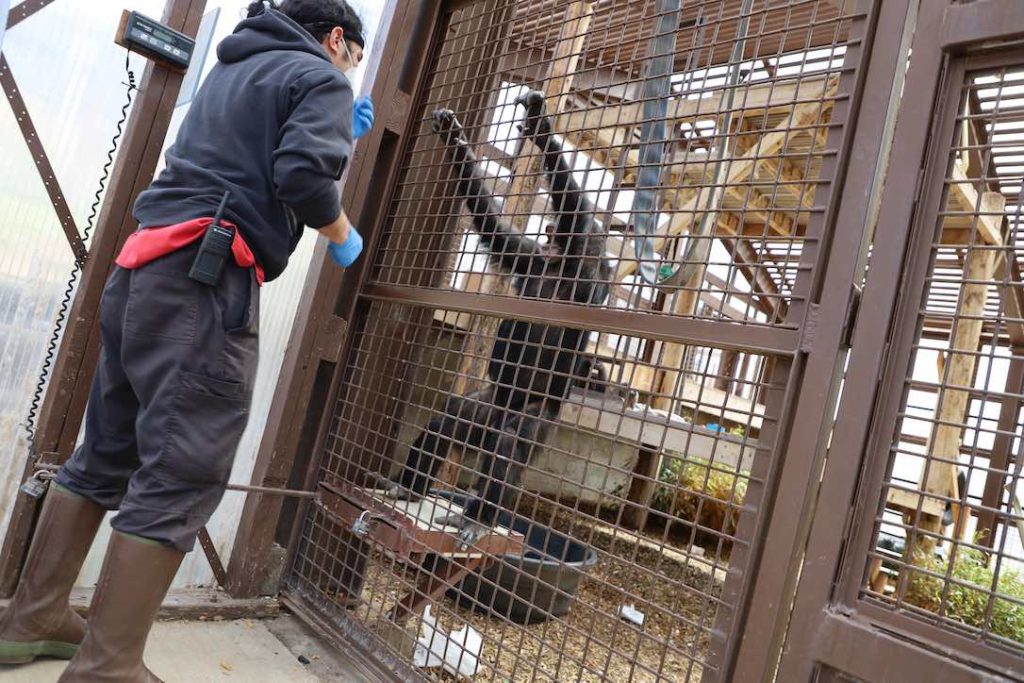
For safety reasons, we humans are never inside the enclosures with the chimpanzees, but that doesn’t stop the chimps from considering us part of their social world. A typical day is filled with dozens of delightful interruptions, including requests to walk, play, and groom. Of course, we are happy to oblige (though some days—like today— it can be difficult to get anything done!).
caregivers
Animal Sanctuary Caregiver Day 2026
Please join me, in the comments, in honoring the Chimpanzee Sanctuary Northwest staff caregivers: Amanda, Anna, Chad, Dusty, Ellen, Katelyn, Kelsi, Krissy, and Sabrina and our two brand new temporary caregivers Sophia and Cristina!
Caregiving is a challenging and sometimes exhausting job that requires dedication, flexibility, and most of all, resiliency. As Chad shared in his recent mental health awareness blog post, it’s not the kind of job you leave behind at the end of the day. Navigating self care and teamwork during daily stressors and uncertainty is as much of the job as is cleaning, serving, and monitoring the animals under our care.
Each staff caregiver brings their own important perspective and personality that helps create the best care possible for all of the chimpanzees and cows at the sanctuary.
Amanda Pauli, part-time caregiver, hasn’t yet written a blog post, so that’s something you can look forward to! Amanda has experience working at several different sanctuaries. At CSNW, she is also leading the sanctuary’s renewed advocacy program, which you will be hearing more about soon. Amanda brings curiosity and a desire to improve processes and increase efficiency–something every organization needs! Plus, she can use her artistic talents for multiple purposes, including, with Ellen, creating snow people:

Anna Wallace, after a few years working at the Fauna Foundation, has been in various roles over the years at CSNW, and is now the Volunteer Manager, bringing non-staff caregivers and new friends into the sanctuary fold. I describe her as a being a solid person, in so many aspects of her life. She gets things done and always moves forward. This approach serves her well as a caregiver who has to navigate ever-changing circumstances. She also makes a great “Vanna White” at auctions (is that an outdated reference?):

Chad de Bree was a dedicated volunteer before filling a staff role. From enrichment to research coordinator, he’s been able to prove himself to be a great chimpanzee party-planner as well as a dedicated data collector. Chad brings order and thoroughness to his job as a caregiver, which helps keep routines and ensures important policies are not forgotten. Burrito makes sure he lets loose and gets some downtime to play:
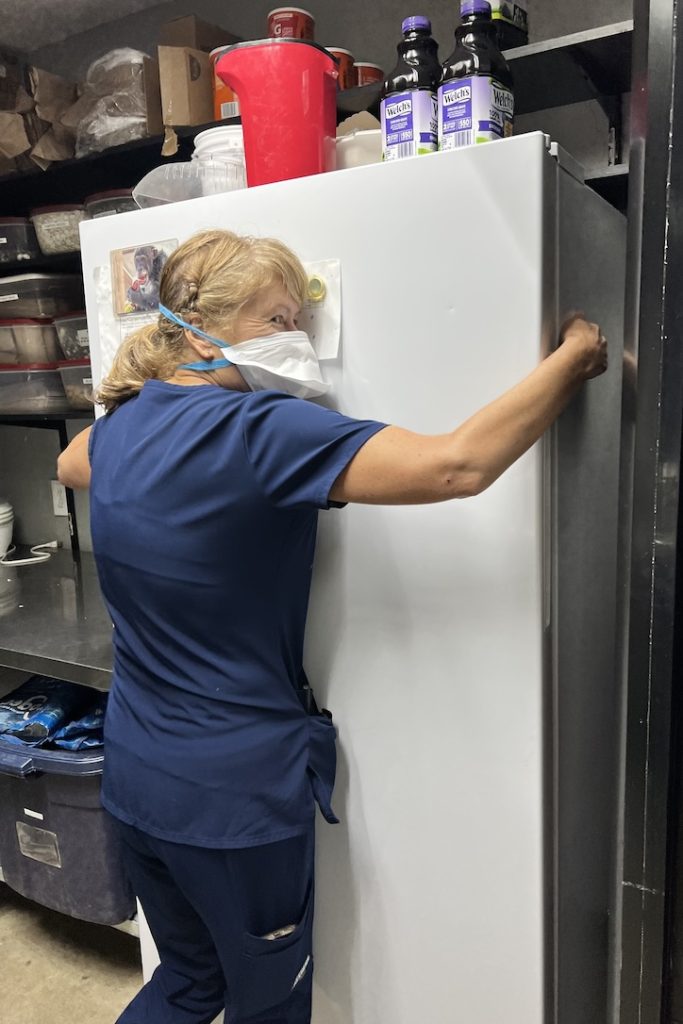
Dusty Cavaliere is a volunteer-turned-part-time caregiver who brings a lightheartedness to her shifts, sometimes playing fun pranks on fellow caregivers. She asks questions that help all of us think about situations in different ways, and she’s not afraid to belt out a tune for the cows or hug a new appliance:
Ellen Brady-McGaughey started her sanctuary career at Chimp Haven. Ellen is known for having a smile and a kind word for her fellow team mates. As a caregiver, she brings a combination of diligence and creativity that aids in all aspects of care, including her current role as enrichment coordinator and member of the positive reinforcement training team.
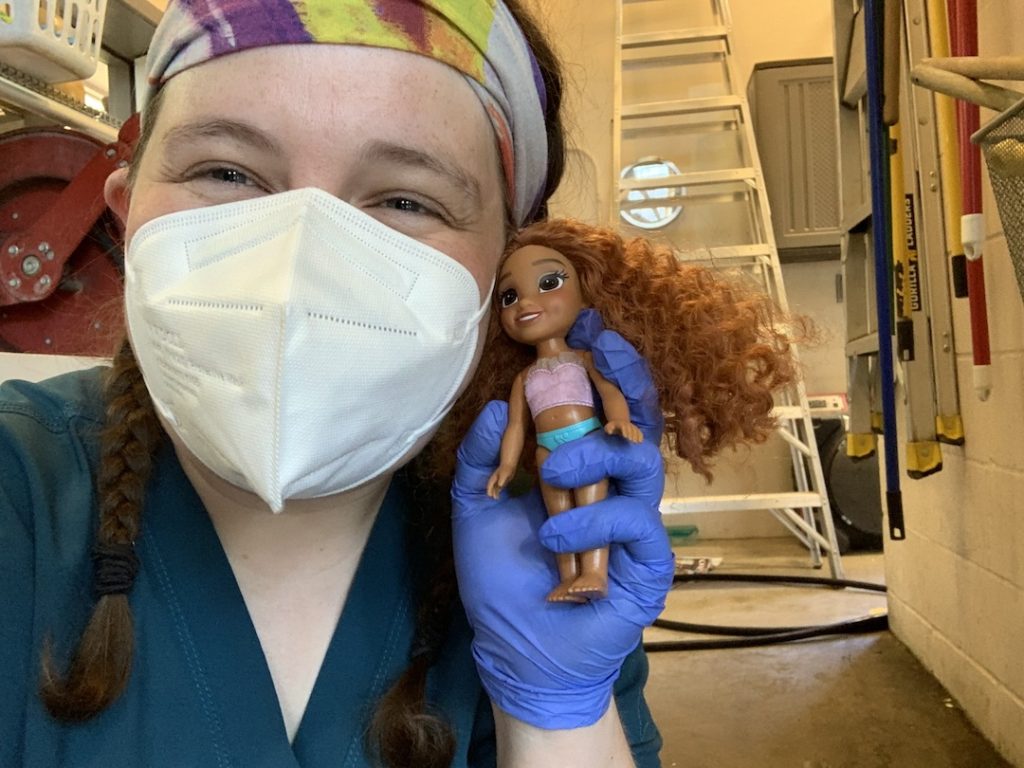
Katelyn Daugherty has been with the sanctuary longer than any other staff member aside from us old-timers (me and J.B.). Much of Katelyn’s work as office manager is behind a computer doing a lot of data entry and connecting with donors. She balances that work with leading summer visits, directly caring for the chimpanzees, and training new Level I volunteers. She imbues everything she does with her love of the chimpanzees. Foxie is her soul mate:
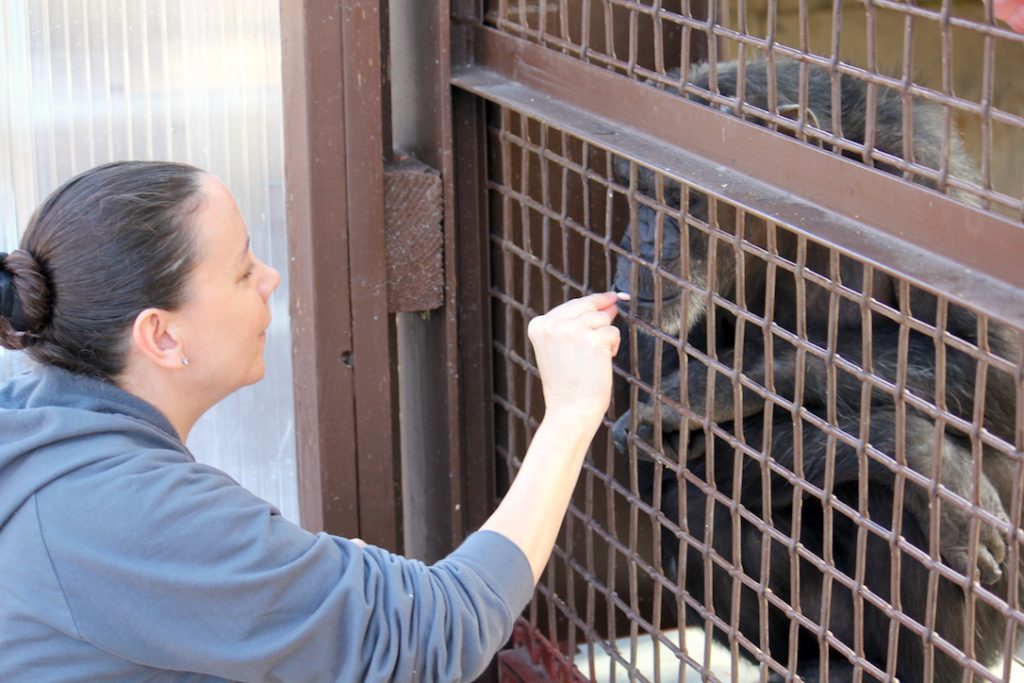
Kelsi Breen worked at the Fauna Foundation before starting as a part-time staff member many years ago, and we quickly made sure she found a full-time role at the sanctuary. Kelsi is the brains and brawn behind visitor and outreach events and juggles that important work connecting others to the sanctuary with her many duties as a direct caregiver, including ordering the chimpanzees produce deliveries twice a week. Kelsi’s infectious laugh raises everyone’s spirits, and the ideas she brings to all of her roles has helped improve the sanctuary. She’s also a great “aunt” to dogs Benny, Abbey, and Nala.
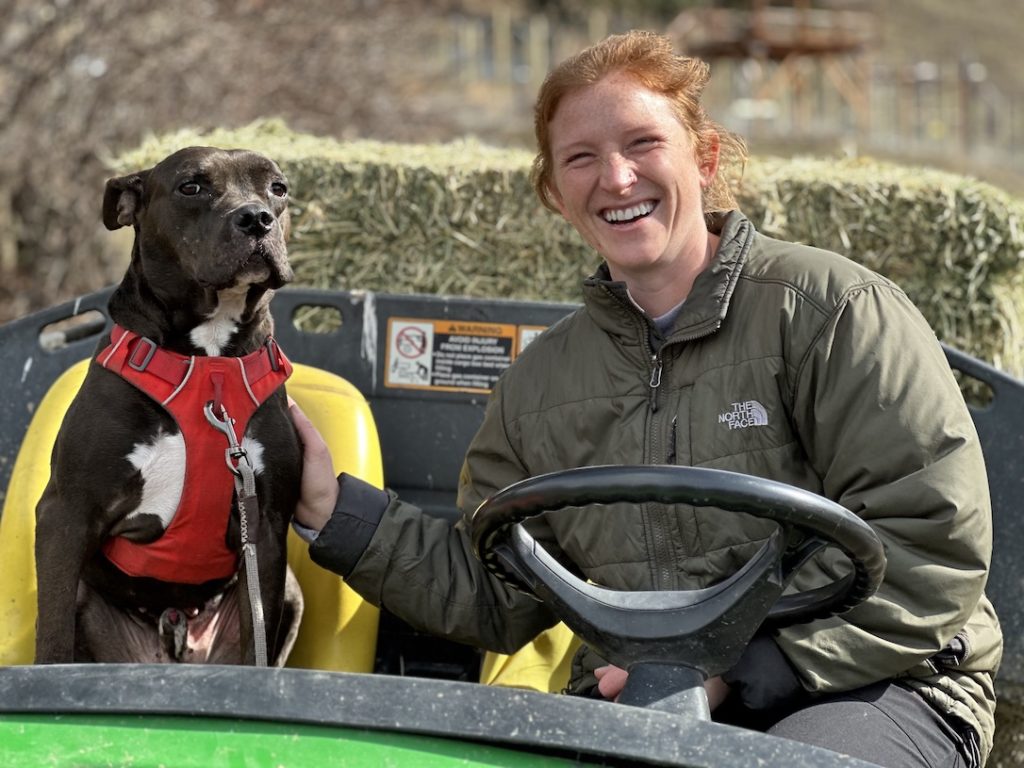
Krissy Brasfield was one of our most dedicated volunteers—so much so that we worried about loosing her as a volunteer when we hired her as a staff member. But we’ve never looked back. Her eagerness to learn and her heart as big as the moon make her a great caregiver and friend to the chimpanzees. In her role as veterinary assistant, she keeps the clinic in tip-top shape and is also learning positive reinforcement techniques that allow us to gather medical information about the chimpanzees with their cooperation. Krissy’s willingness to be vulnerable and see things from multiple perspectives helps everyone.
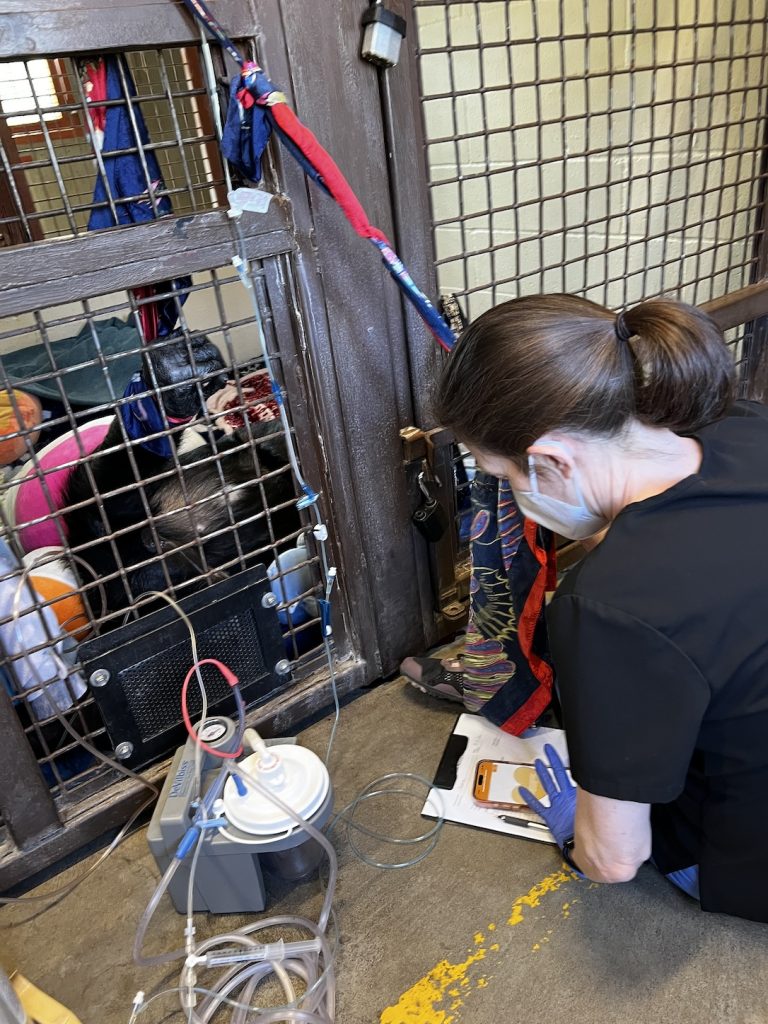
Sabrina Boyd, like Ellen, came to us with significant experience at Chimp Haven. As the Positive Reinforcement Coordinator at CSNW, she plays an important role in the care of the chimpanzees and the operations of the sanctuary. As a caregiver, she knows what needs to be done and does it (shout out for checking things off the daily checklist!), and she is also able to adjust as the chimpanzees assert their own ideas for how a day is going to go. Sabrina’s unflappability is invaluable in high-stress situations like introductions or in medical emergencies.

Thank you to all of the staff and volunteer caregivers, past and present!
Winter Volunteers in Action
Spring is definitely in the air in Cle Elum, so much so that I can even hear the frogs making a ruckus in the pond by the cattle pasture! Let’s bid adieu to winter with a look back at some of the volunteers and interns who helped make the colder months more comfortable for the chimpanzees and our grateful staff. We included these photos in our weekly “Thank You” email updates to our volunteers throughout the winter and I thought it would be nice to share them as a collection.
Parker, Jay, Jordan and Nancy giving Honey B something to intensely stare at during her lunches.


Brandon keeping on top of the laundry folding:

Cristina scrubbing smoothie splatter off the walls in the kitchen:

Debbie sorting Foxie’s dolls:

Parker squeegeeing Playroom 3:

Lori showing off her sweeping skills:

Burrito playing tug-o-war with one of his best caregiver friends Elizabeth.

To learn more about our volunteer program or fill out a volunteer application, check out our website!
Preparing for an Intro
Yesterday, Kelsi shared Cy and George’s all day intro from last Saturday. She talked about how challenging it can be to isolate a chimp when preparing for an introduction.
“Setting up introduction days is a lot of work. Behind the scenes, getting the chimps to shift and move where they need to be can be quite challenging. Not everyone is always eager to cooperate (cough, cough — Honey B, Terry, and now Rayne). Sometimes, if the chimps don’t shift, it can really affect the whole day, and we have to get creative with our shifting plans. Mentally, it can be extremely taxing.” See the rest of the blog here.
Today, you get to see a glimpse of what it can take to separate a chimp. Some days are better than others, and some days we need to get creative. This was one of those “let’s get creative” days. In today’s video, Ellen’s goal is to isolate Cy into the chute, which connects to George’s front rooms. She has already separated Cy from his group, but Gordo tagged along and they are both now in Greenhouse 3. Ellen now needs to distract Gordo so she can move Cy into Greenhouse 2 and then into the chute.
Ellen decides to recruit some help, come along to see how it goes.
Oh! Jamie’s birthday is right around the corner! Check out our wish lists if you’d like to help us with the biggest celebration of the year…JAMIEWEEN! We’ve also added some fun items for Willy B’s birthday and Christmas. Thank you!
Gordo Goofin’
See today’s blog video to learn more about some of the many ways we safely interact with the chimpanzees while coming along for a morning of play with Gordo!
Reaching Out
I wanted to do something a little different for today’s blog. I am sorry for such a dark yet important topic. I promise there will be some nice photos sprinkled throughout to give you a serotonin boost. I should also note that this blog isn’t representative of any staff member here, just statistics I pulled from various government and academic sources.

As some of you may know, September is recognized at Suicide Prevention Awareness Month. It’s a month dedicated to raise awareness, promote hope, and normalize seeking help. The reason I want to post about such an important topic is to provide as much insight and resources as I can to all my fellow caregivers out there at other sanctuaries, zoos, clinics, and other facilities that house animals. But this is also for you, the reader, as well if hard times have bestowed upon you.


Mental health is not talked about in the open enough, I feel, and it should. Depression and suicide is high per capita in the animal welfare career field, particularly among veterinarians and veterinarian technicians, which can be anywhere from 2 to 5 times higher than other professions. Though no thorough study has been conducted to date, data from the Bureau of Labor Statistics suggest the rate over of those in animal caregiving/rescue is five times higher that other professions as well. That suggestion should be taken with a grain of salt though as those labeled “animal caregiving/rescue” included the professions of veterinary care, shelter workers, lab scientists, firefighters, law enforcement, zoo keepers, etc. Let this be my call there should be a proper study done on this topic focusing on the animal welfare profession.
Even though no official study has been done on the suicide rate of animal welfare workers, we do know things like compassion fatigue, post-traumatic stress syndrome, and moral injury contribute to burnout amongst caregivers, which then leads to mental health deterioration.

If there is one thing I do know without having to rely on government and academic statistics, is that burnout runs rampant amongst the caregiving community. Burnout in the sanctuary world is like an uncontained wildfire, it spreads at an accelerated rate and leaves ghostly shells of things that were once vibrant. Many of the the facilities in the sanctuary world have been putting forth the effort to try to combat this fire, but it’s still a little too early to see how efforts will play out.

I can’t speak for anyone but myself, but it took me a very long time to admit and acknowledge my burnout. For some, burnout could be caused by things that just keep piling up without trying to acknowledge and work with them. For others it could be a single event that sparks that match. I know for myself, it was when we lost Jody.

For me, Jody’s passing, and subsequently Nutmeg’s passing, were the things that triggered the PTSD that led to my burnout. And yes, as combat Marine veteran, I can and will say PTSD is not exclusive to combat. Really it can be any event that takes you down that rabbit hole and nobody is immune to it. In my time, I have learned there is no cure to PTSD or burnout, but there are ways to cope with it and make sure it doesn’t consume you.

I guess this next part is for any animal caregiver out there whom may read this:
To my fellow caregivers out there, far and wide, I will not claim to be a trained professional in the subject but merely letting you know what helped me to get the burnout monkey off my back. These are the guides I follow:

Be the caregiver you want to be
Remember when you were hired you were taught how to perform the tasks to be a caregiver, but you weren’t taught what kind of caregiver you want to be. You took on this job for a reason. If you get bogged down with everything that isn’t the reason you came onboard, then remember why you came onboard. Though we each have our own way of doing things and our own focuses, circle back to why you wanted to work with the species you work with. For me, even though I have other duties outside of the caregiving, it’s the caregiving aspect that has the most direct impact in their day-to-day lives. Knowing that they’ll have a clean space, as much space as they can have, full bellies, and stimulated minds at the end of the day is what makes me happy.


Talk to each other
You are not alone. There’s a chance your fellow caregivers, whether the ones you work with or ones at another facilitiy. Reach out to each other. Talk to each other. I can’t guarantee results, but you can reach out to me if you aren’t comfortable with someone you work directly with. I’ll at least try to point you in the right direction.

If you are feeling down or are going through a crisis, then please reach out to any of the resources available. Dial the number 988 if you need someone to talk to right away. There are trained professionals that can help you. Or you can go to the Substance Abuse and Mental Health Services Administration to find the resource that is right for you. And just remember, you matter!
And now a series of Burrito playing with Caregiver Ellen!


On Resiliency
Our big celebrations on June 13th got me thinking, once again, about resiliency.
I was thinking about Negra and Terry and their resiliency, and the incredible resiliency we have witnessed in all of the chimpanzees who arrived seventeen years ago after decades of use in biomedical research.
This was the first time Animal Sanctuary Caregivers Day fell on June 13th, so that caused me to think about the resiliency that is required of caregivers who work in animal sanctuaries.
The caregivers at Chimpanzee Sanctuary Northwest are incredible human beings in all regards and would be regardless of where they worked. Working as a caregiver, however, has a way of testing a person in numerous ways.
A lot of what caregivers do is very physical work, so being in good physical shape and bouncing back from inevitable injuries becomes more important than in other occupations.
Keeping in shape mentally and emotionally is perhaps even more important.
Caregivers are faced with many challenges in a given day that are often decisions that don’t have right or wrong answers. Caregivers are constantly weighing different welfare considerations against each other (for example, do I take more time scrubbing to provide an extra clean environment or do I do a quick clean so the chimpanzees can have access to the space sooner?). Living in gray areas can be uncomfortable, and it takes a lot of communication and ability to see fellow caregivers’ perspectives to avoid misunderstandings or division.
That’s just the day to day. Then there are the really big events like chimpanzees getting injured, sick or passing away that is part of the job of a caregiver. There’s the worry and grief and doubt that comes with that, and then there’s having to continue on with the daily routines for the sake of those who are still relying on that daily care.
It’s a joyful, uplifting, satisfying job; and it’s a hard job. There’s no way to do it long term without developing resiliency.
Huge kudos and gratitude and admiration and love to all of our caregivers at the sanctuary, our current staff especially, and also all of our past staff and volunteer caregivers. I have learned, and continue to learn, so much from all of you. I truly and deeply appreciate all that your bring and give to this work.
The chimpanzees are able to be their amazing selves and build their resiliency every day because of you. It’s a loop of resiliency from them to you and back again, and it spreads outward from there.
In addition to hundreds of other moments, today Negra was able to forage on Young’s Hill and bring some celery to the greenhouse to crunch, on her 6,207th day of sanctuary.