• Skip to main content
  • Skip to primary sidebar
  • Skip to footer

Chimpanzee Sanctuary Northwest

Hope. Love. Home. Sanctuary

  • Our Family
    • The Chimpanzees
    • The Cattle
  • Blog
  • About Us
    • Visiting the Sanctuary
    • Philosophy
      • FAQs
      • Mission, Vision & Goals
      • Privacy Policy
    • The Humans
      • Staff
      • Board of Directors
      • Founder
    • Annual Reports
    • The Future of CSNW
    • CSNW In The News
  • You can help
    • Donate
      • Become a Chimpanzee Pal
      • Sponsor A Day
      • Transfer Stock
      • Be A Produce Patron
      • Be a Bovine Buddy
      • Give from your IRA
      • Personalized Stones
      • Bring Them Home Campaign
    • Leave A Legacy
    • Employment Opportunities
    • Volunteer
    • See Our Wish List
    • Events
  • Resources
    • About Chimpanzees
    • Enrichment Database
    • Advocacy
      • Advocacy Action Center
      • Apes in Entertainment
        • Trainers
        • Role of the AHA
        • Greeting Cards
      • Chimpanzees as Pets
      • Roadside Zoos
      • Chimpanzees in Biomedical Research
      • Conservation
        • African Apes
        • Orangutans
  • Shop
    • Merchandise Store
  • Contact
  • DONATE NOW

Anthony

The Tough Questions

January 5, 2020 by Anthony

The common phrase “sharing is caring” doesn’t always ring true.

Those of us who work with wildlife in any capacity have to be cautious about the ways in which we publicize our work. In the modern age of consumerism and social media, organizations need to share compelling content to generate financial support and advocate for their respective causes. Although they can inspire people to take action, pieces of visual media can easily be taken out of context and may contribute to the suffering and exploitation of nonhuman animals elsewhere. This is one of the greatest challenges facing organizations like ours as we advance further into the 21st century.
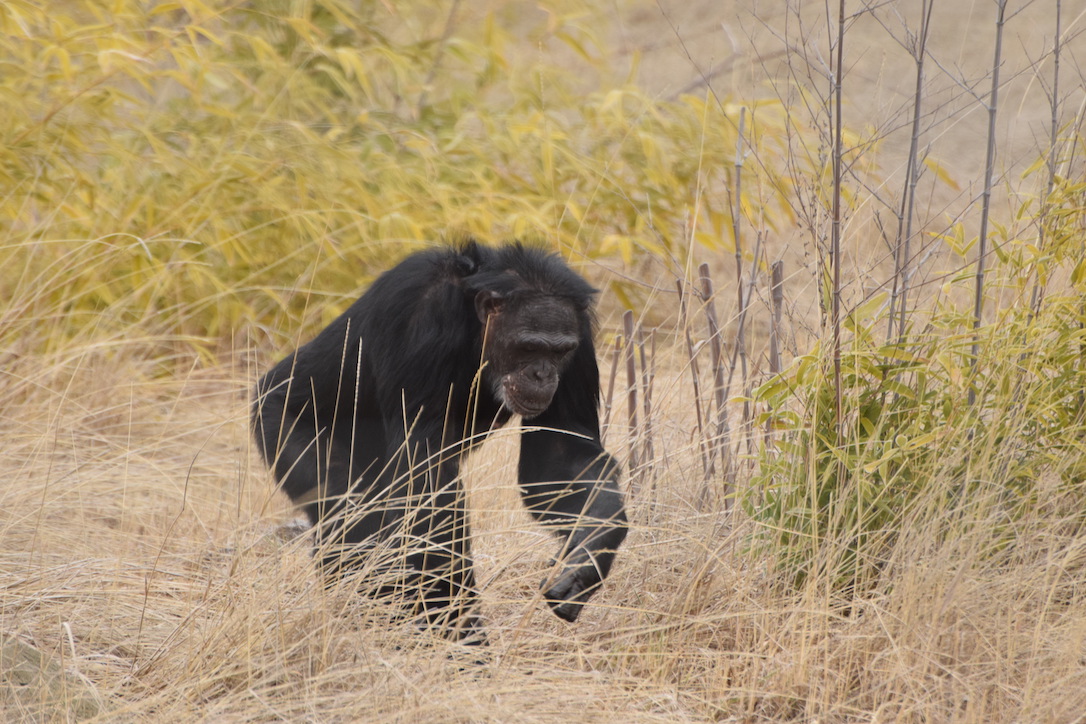
Jamie

A new piece co-authored by a diverse group of esteemed scientists and conservationists is making waves for attempting to address this issue. The commentary, published last month in the American Journal of Primatology, urges researchers to be selective and judicious when sharing images and locations of the nonhuman individuals that they study.

This piece was spurred by emerging findings that irresponsible or inaccurate representations of nonhuman primates provide fuel for the wildlife trade. For example, Dr. Anna Nekaris and the Little Fireface Project have found strong links between viral videos featuring endangered slow lorises and the popularity of that species in the global wildlife trade. Contemporary organizations around the world have also uncovered similar links between social media content and the trafficking of wild primates. Notably, images featuring celebrities posing with primates (like this one of pop star Rihanna) wrongfully propagate their perceived value as pets. It seems likely that a selfie taken by a common researcher or tourist with a wild animal would have a smaller but similar effect. With so many of these images being circulated by well-meaning individuals and organizations, it is difficult to quantify just how big of an impact they have. Given that so many of the world’s primate species are at risk of extinction due to human activity, it is critical that those who study and protect wild primates do not accidentally create additional demand for their exploitation.
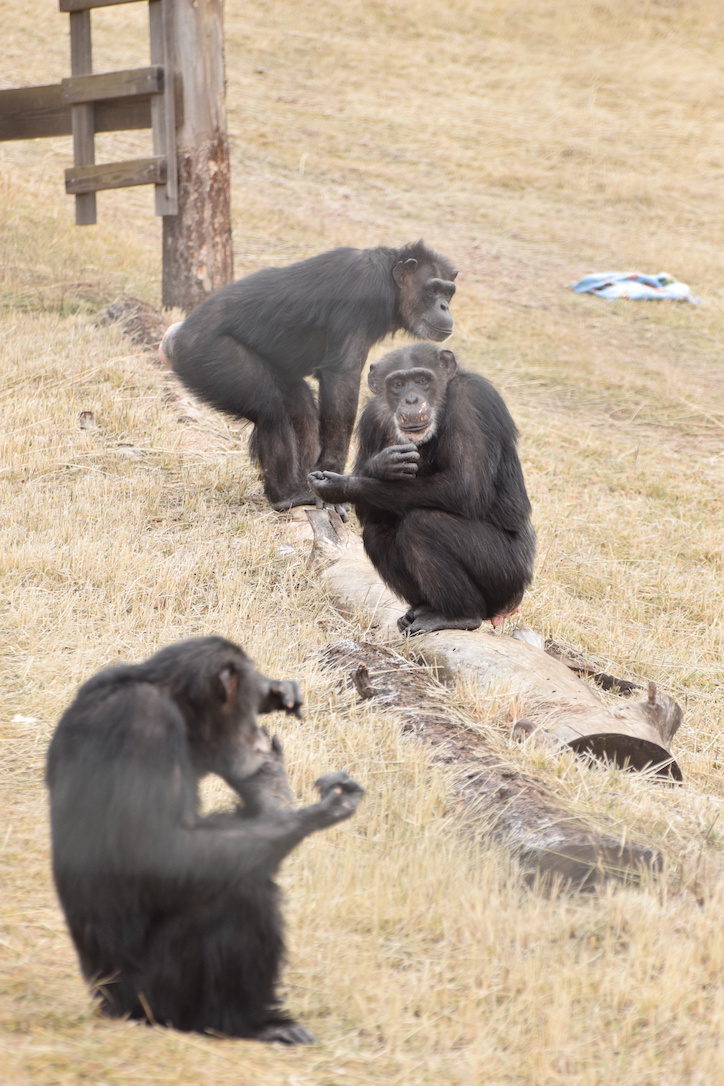
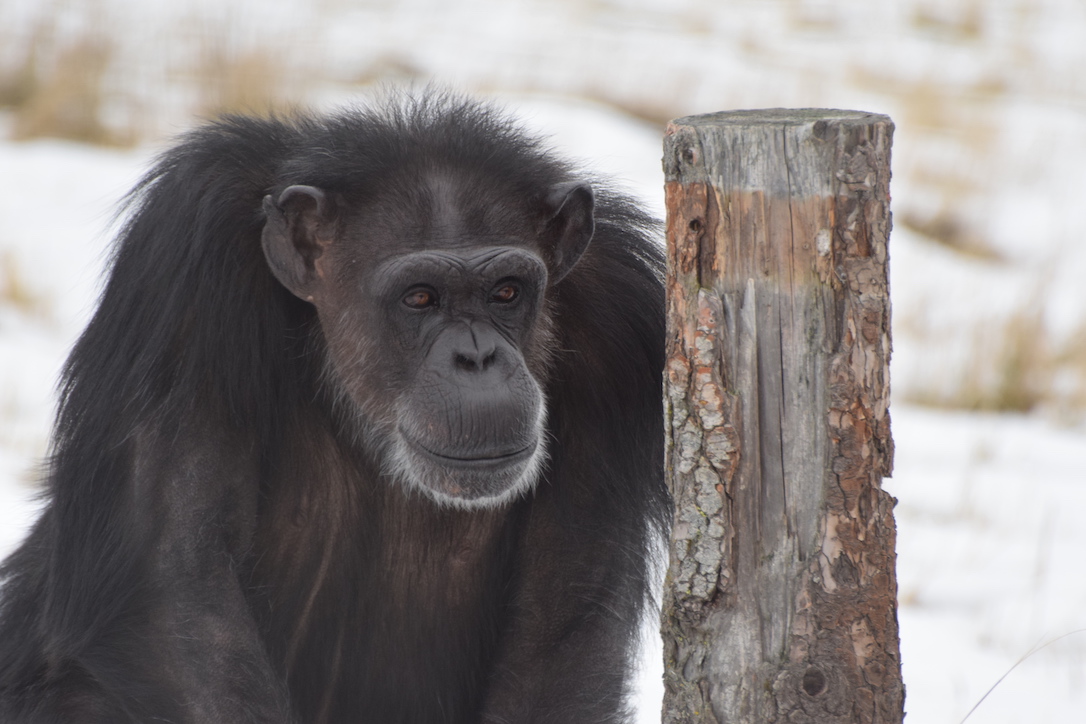
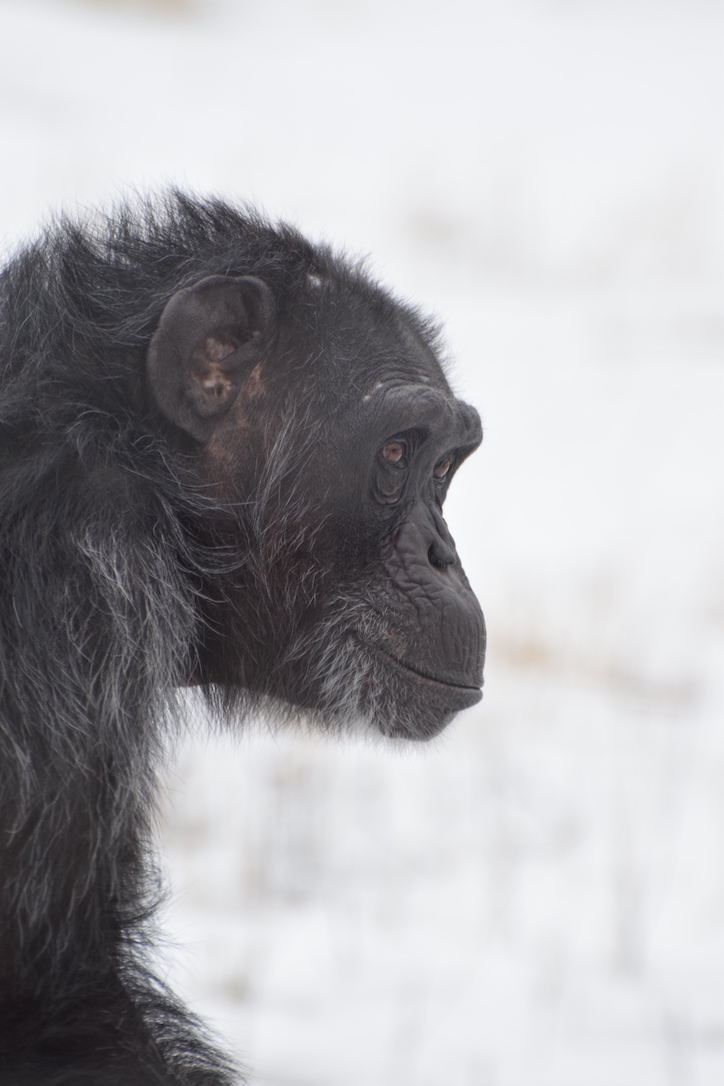
Burrito (foreground), Missy (center), and Annie (rear)

For those of us who advocate and care for captive primates, however, the relationships between shared images and potential outcomes are not as clear. Within the community of North American primate sanctuaries and zoos, sharing visuals that showcase the value of our work is part of our strategic plan. For example, our team at Chimpanzee Sanctuary Northwest inspires compassion for chimpanzees by writing and sharing daily blog posts that portray the lives of the chimpanzee residents. The goal is to highlight their emotions, intelligence, and social relationships. This collection of images and stories has, over time, amassed a tremendous community of supporters that directly benefits the chimpanzees.

However, we simultaneously take care to only share content that positively impacts primate individuals, populations, and species. Social media is truly a double-edged sword, and those who wield it carelessly may cause more harm than good. A video of Foxie playing with dolls, for example, could be woefully misunderstood if the provided contextual details are removed or ignored. An uninformed viewer may begin to wonder: Is she a trained performer? Does she have access to the outdoors? Does she have other chimps to play with? Is she privately owned and being bred for human entertainment? In the absence of critical information, such misconceptions may become widespread attitudes and beliefs.
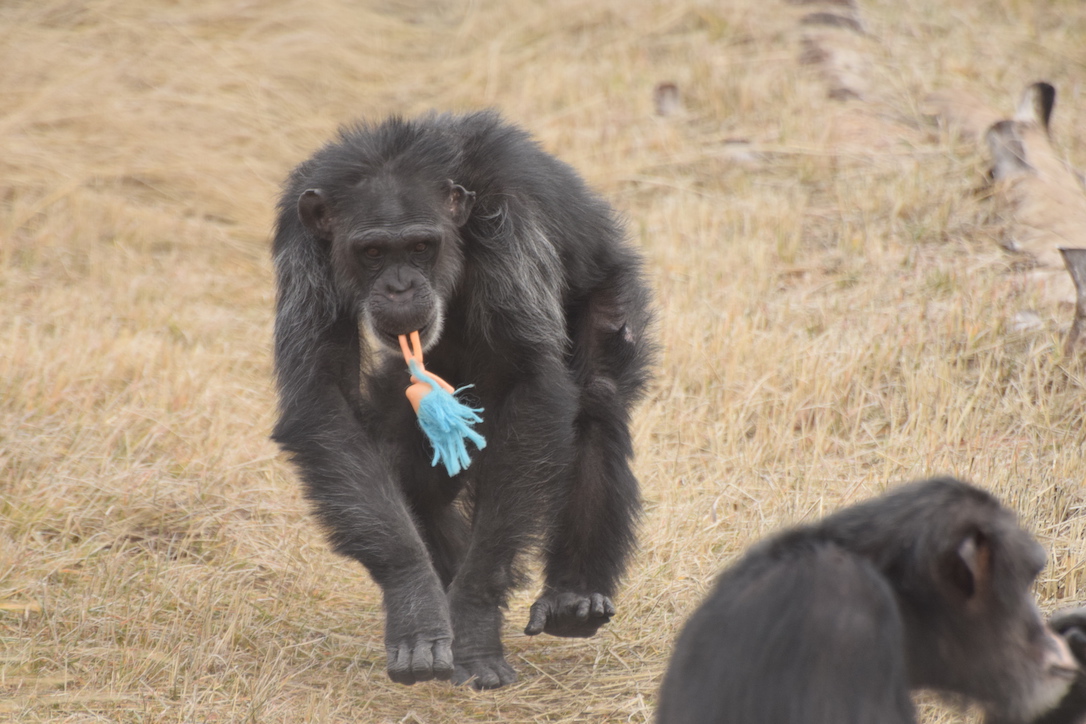
Foxie

As a true sanctuary, we attempt to combat harmful misinformation. One of our objectives is to demonstrate that chimpanzees, as individuals and as a species, suffer immeasurably from exploitation. This claim sharply contrasts how nonhuman apes have been utilized and portrayed in recent decades. Thousands of chimps were housed in menageries, shot into outer space, dressed up as human children, infected with diseases and coerced to perform for our amusement. Thankfully, this pattern of abuse seems to be ending. With public opinion now favoring chimps, the last chimpanzee actor, an adolescent male named Eli, recently retired and will soon be transferred to an accredited facility. (Eli is the subject of an upcoming documentary.)

Even though the era of chimpanzees on the big screen seems to be over, the myth that chimpanzees belong in captivity is likely to perpetuate as long as people see chimpanzees in captivity. For example, seeing performing chimps on greeting cards, in commercials, or interacting closely with humans can shape how the public perceives them. Researchers affiliated with North American zoological parks have even found evidence that viewing images of nonhuman primates in humanized settings can influence how people interpret their conservation status, suitability as pets, and well-being. From this evident pattern emerges a multi-faceted dilemma.

The most difficult of these questions, in my opinion, is whether we can accurately tell the stories of captive chimpanzees without showing the less natural aspects of their daily lives. Should we use Photoshop to remove the electrified barriers on Young’s Hill, which are necessary to keep humans and chimpanzees safe? Should we hide that the chimpanzees prefer to nest with blankets or sleep on cement floors because that’s all they had access to during the decades that they spent in laboratories? Should we ignore that Jamie has fascinations with cowboy boots and various human accessories, likely shaped by her background as a performer? Sure, we attempt to focus or crop out the steel caging because it ruins our photographs, but should we be avoiding the same metal bars because they send the wrong message about chimps? On the other hand, if we only show photos of chimps frolicking outside in a green meadow, will people start to believe that keeping chimps in captivity is good for them? Are we on the verge of whitewashing the history of our relationship with chimpanzees?

There are no easy answers.
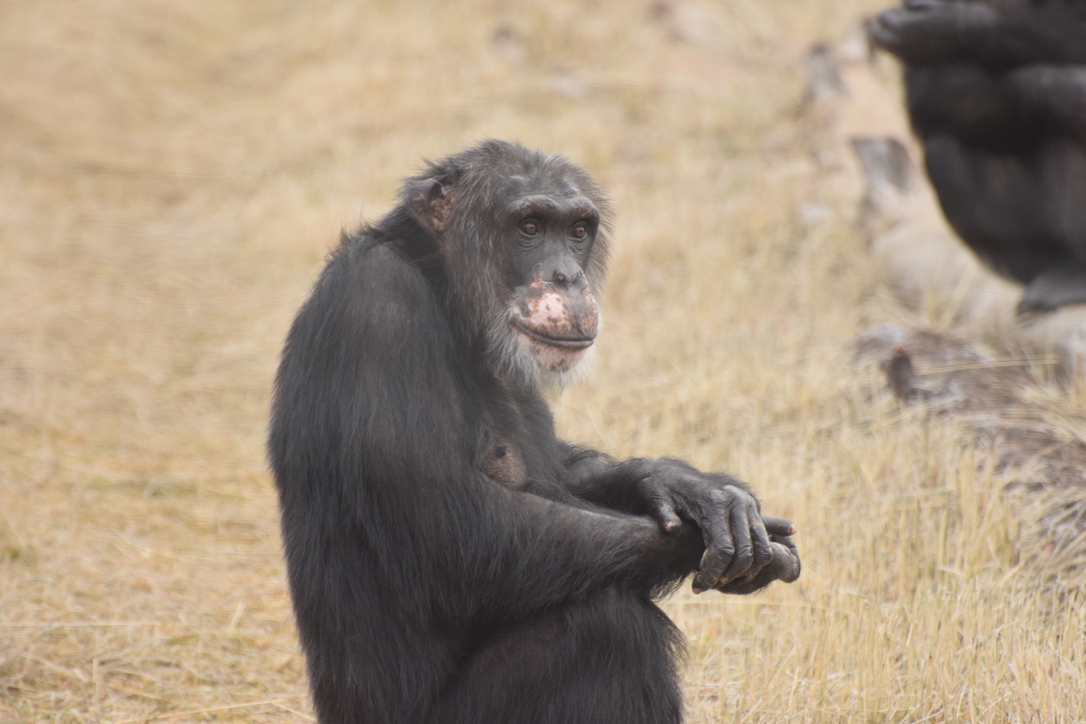
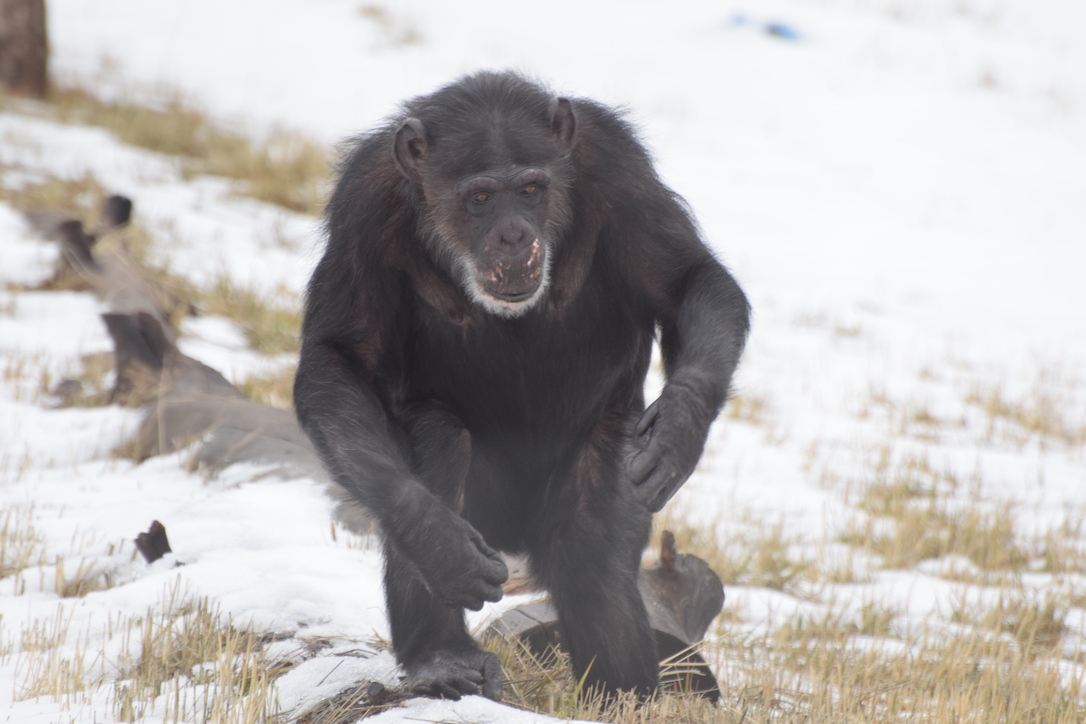
Burrito

Organizations are each free to respond to these new challenges in their own way. To lessen the risk of misinterpretation, we try our best to create content that prioritizes education and empathy over aesthetics and humor. We’ve found that most of our followers are invested in the chimpanzees’ well-being and, fortunately, thoroughly read and understand our captions. This gives us confidence that we can maintain transparency, and even occasionally be brutally honest, regarding the challenges of providing sanctuary care for chimpanzees. We caregivers remain impressed by how aware and understanding our supporters have been despite our sanctuary’s recent growing pains. Rather than just respond with emojis and ‘likes,’ our followers weigh in on the management of our social groups, suggest new enrichment ideas, and comment on the health of the individual chimps. This degree of engagement and awareness tells us that it is possible to share revealing content without necessarily spreading the wrong ideas.

That does not mean that we are all blameless. I recently went through my personal Facebook profile and erased many photos of me interacting with captive wildlife (including some of orphaned spider and howler monkeys using me as a climbing structure). It’s not that my actions were inherently irresponsible; in most cases, I was serving as a trained caregiver and the interactions were a necessary aspect of each individual’s rehabilitation and development. The real problem is that these photos are difficult to explain and the chances of them sending the wrong message are too high. If someone was scrolling too fast to read my captions, all they would see is a naive white backpacker holding a baby monkey. Some would even comment that they wanted me to bring one home so they could play with it. I have gladly hidden these photos  No amount of attention is worth putting an animal or human in danger.
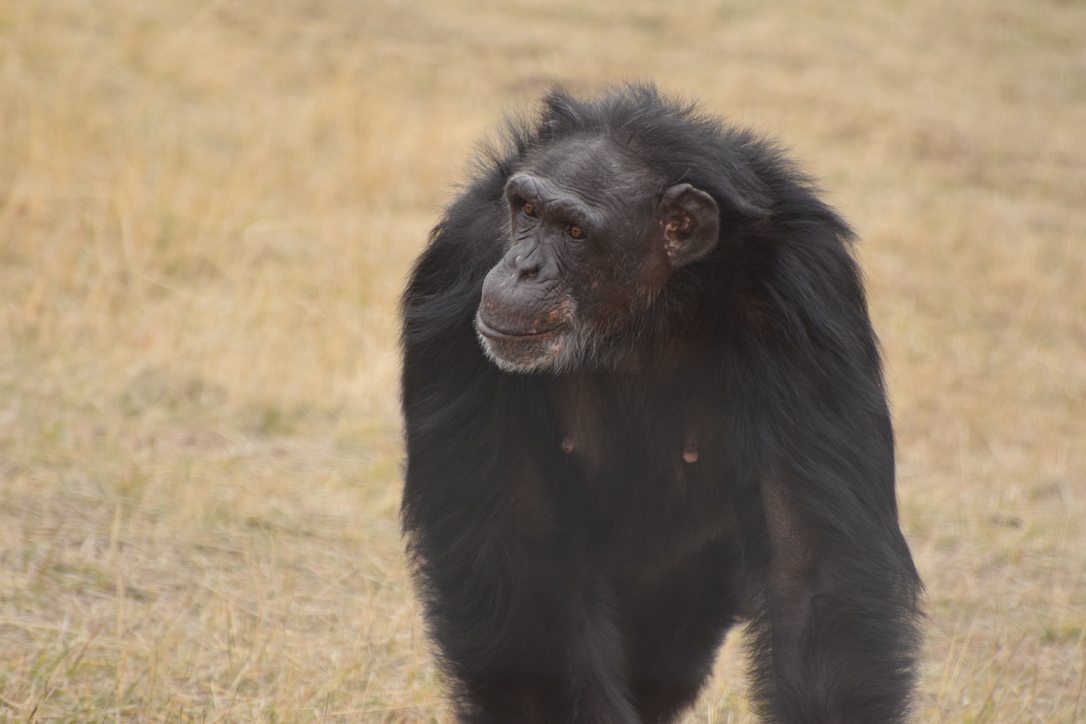
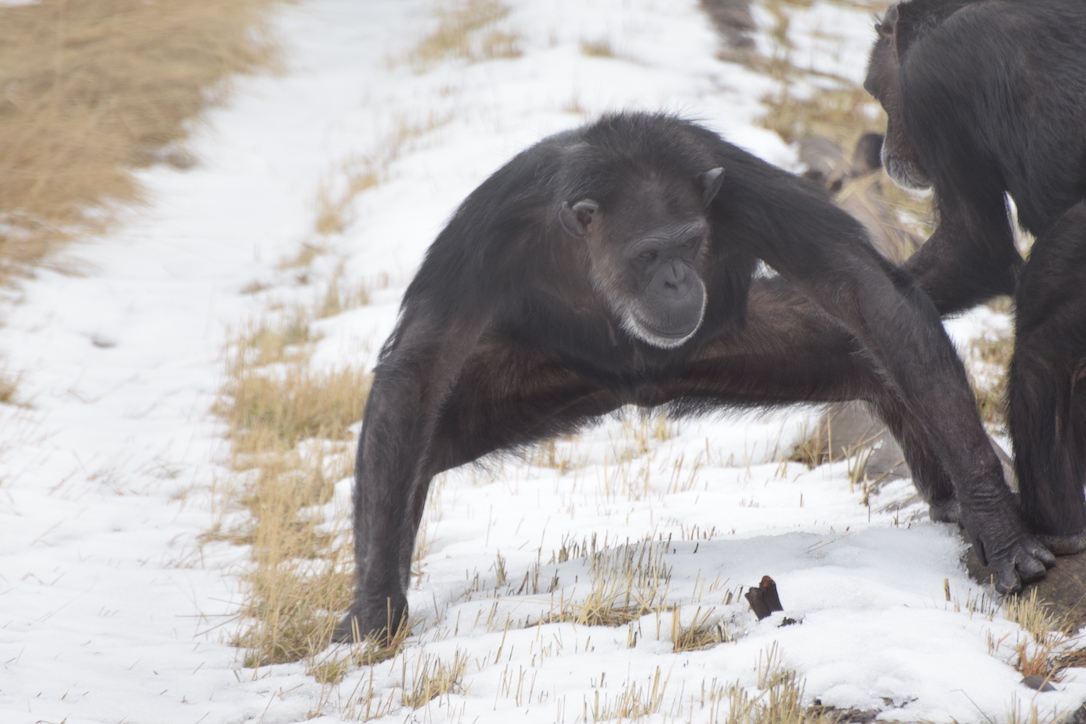
Jamie

With this new paradigm in mind, please continue to enjoy and share our frequent and intimate portraits of the chimpanzee residents. We hope that they inspire you to care about and act on behalf of disadvantaged nonhuman primates. They need advocates, now, more than ever.

However, never forget that all chimpanzees are strong, intelligent, emotional, and adapted for their ancestral homes and complex societies. They do not belong in captivity and they do not thrive here. Sanctuaries like this one were created to mitigate the errors of the past and provide a better alternative for retired chimps, but they are not designed to exist indefinitely. All chimpanzees are unique individuals and valuable members of an endangered species that may be gone within the next century, and their exploitation takes more away from them than it gives to us.

Please share responsibly.
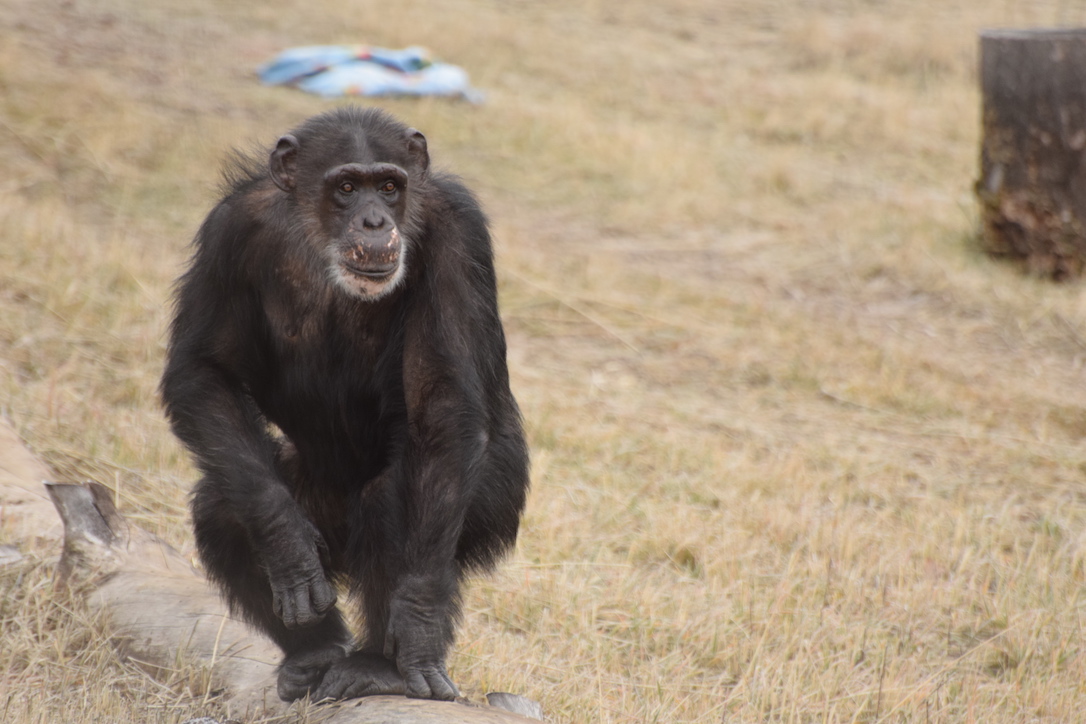
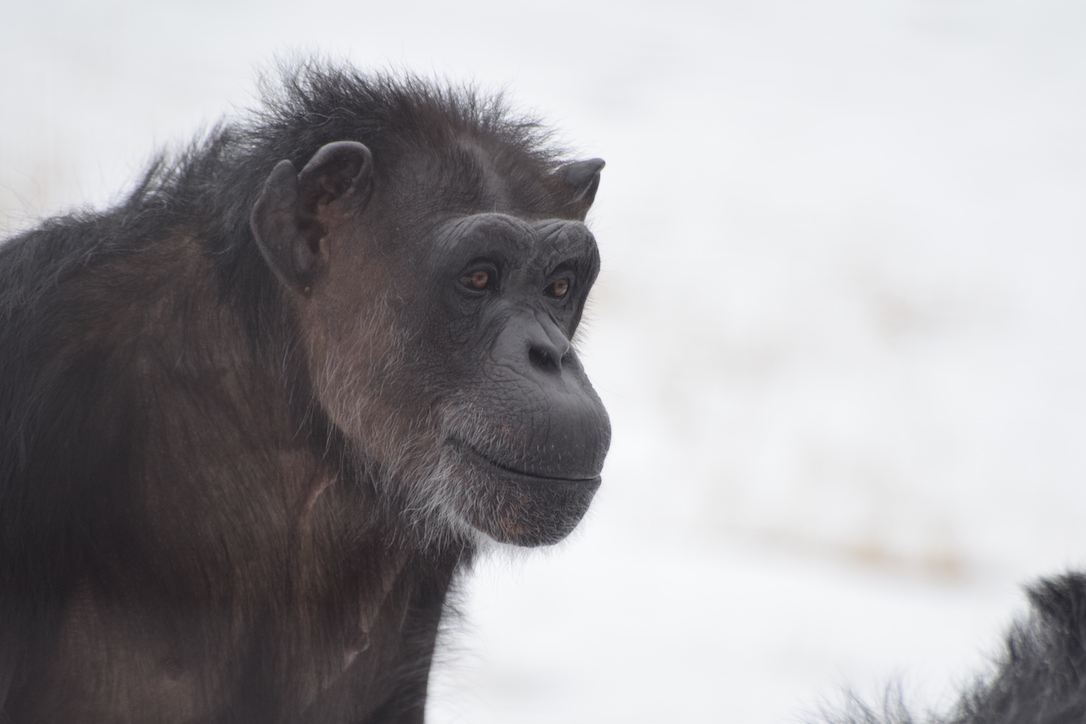
Missy

Filed Under: Advocacy, Apes in Entertainment, Chimp histories, Free-living chimps, News, Sanctuary Tagged With: Animal Welfare, apes in entertainment, chimpanzee actors, chimpanzees, chimps, entertainment, great apes, large apes, performing chimps, pet trade, pets, primate conservation, Primates, primatology, public perception, social media, wildlife trade, wildlife trafficking

What’s Your Favorite (Nonhuman) Animal?

December 29, 2019 by Anthony

Texas, of course, is a long way away from Washington state. Heck, West Texas is a long way away from East Texas. (In case you were wondering, Cuba, Guatemala, Idaho and Michigan are all closer to the nearest point in Texas than that location is from the farthest point in Texas. Let that simmer, folks.)

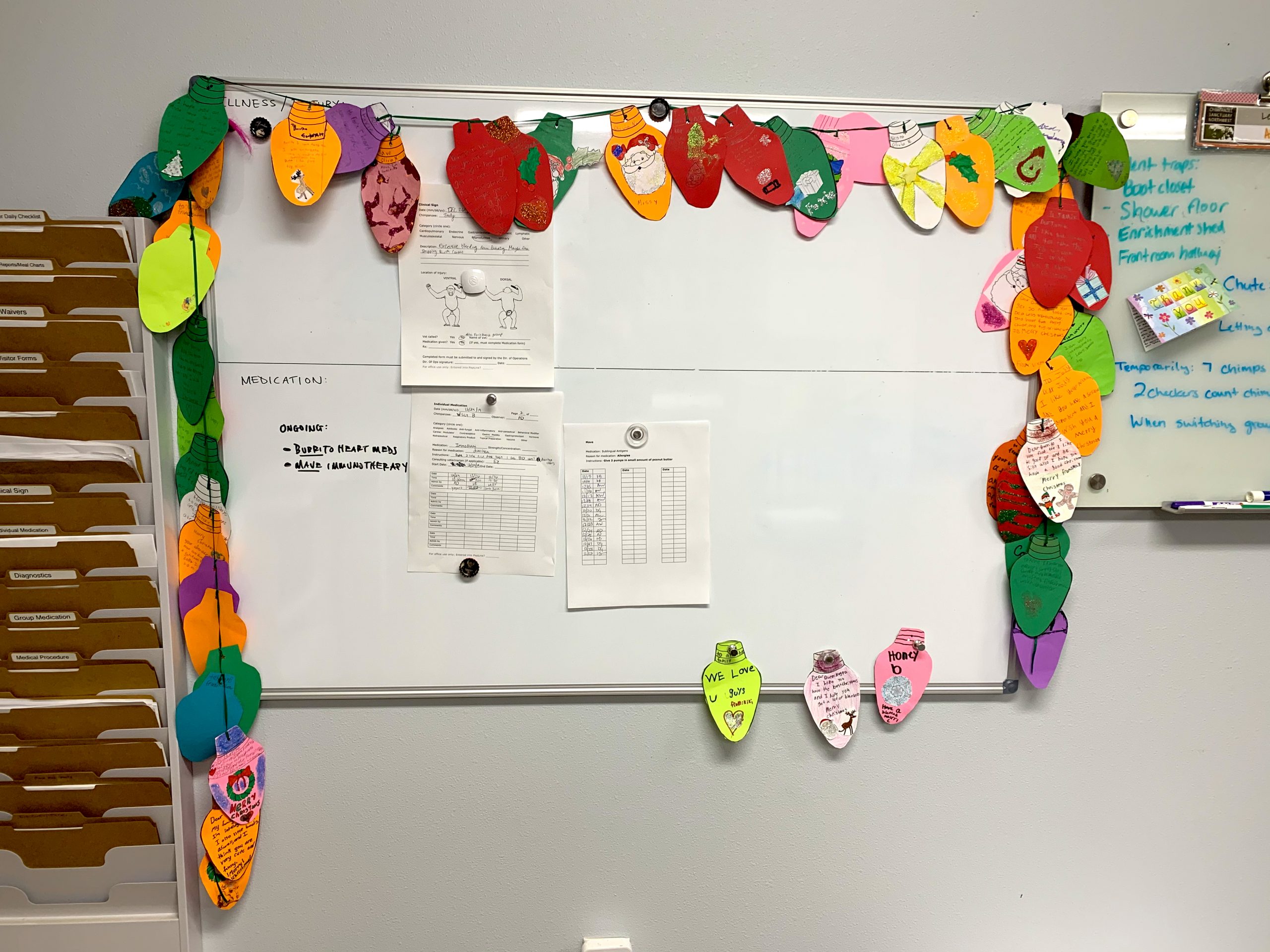
That piece of geographic knowledge is one of the reasons why we caregivers were both impressed and thrilled to receive holiday cards from some very thoughtful elementary students who live, of all places, on the plains of Odessa, Texas.

None of these amazing young people in Mrs. Bille’s fifth grade class at Travis Magnet Elementary have ever been to the sanctuary. I’m not sure if any of them have ever seen a chimpanzee. Still, they have enabled us to decorate our veterinary whiteboard with colorful cards filled with holiday cheer, encouragement, and kindness. Their messages really warm up the foyer. For example, students wished that Missy enjoys lots of tomatoes this year, that Honey B. stays brave about all the new things in her new home, and that Burrito has lots of fun playing tug-of-war with J.B. With their help, we will do our best to make these things happen.

In my opinion, Mrs. Bille deserves some sort of award for organizing such an exceptional gift to the sanctuary (and for being one of our biggest supporters and fans, year after year).

All of the messages are directed towards individual chimpanzees and demonstrate how each student is familiar with the personalities and backgrounds of their respective favorites. It’s comforting to see young people from far away expressing empathy for and interest in the chimps, and it amazes me how much individual students seem to identify with individual chimps. It seems that they are well on their way to becoming bright and responsible adults, and I’m sure they would all make amazing chimpanzee caregivers someday.

When I was their age, I used to pester my parents constantly because I was so interested in animals, nature and science. Luckily, my family was supportive. They bought me used zoology textbooks and atlases, took me to educational programs at the local zoo, purchased a subscription to National Geographic and even sponsored sanctuary animals for my annual Christmas gift. My parents still love to joke about the night almost three decades ago when I tiptoed into their bedroom, opened my father’s eyelids with my stubby toddler fingers, and barked “Dad, what’s your favorite jungle animal?!” When he responded that he liked lions and instructed me to go back to bed, I informed him that lions inhabit open savannas and aren’t adapted to live in jungles. I didn’t go back to my room until he changed his answer to tigers.

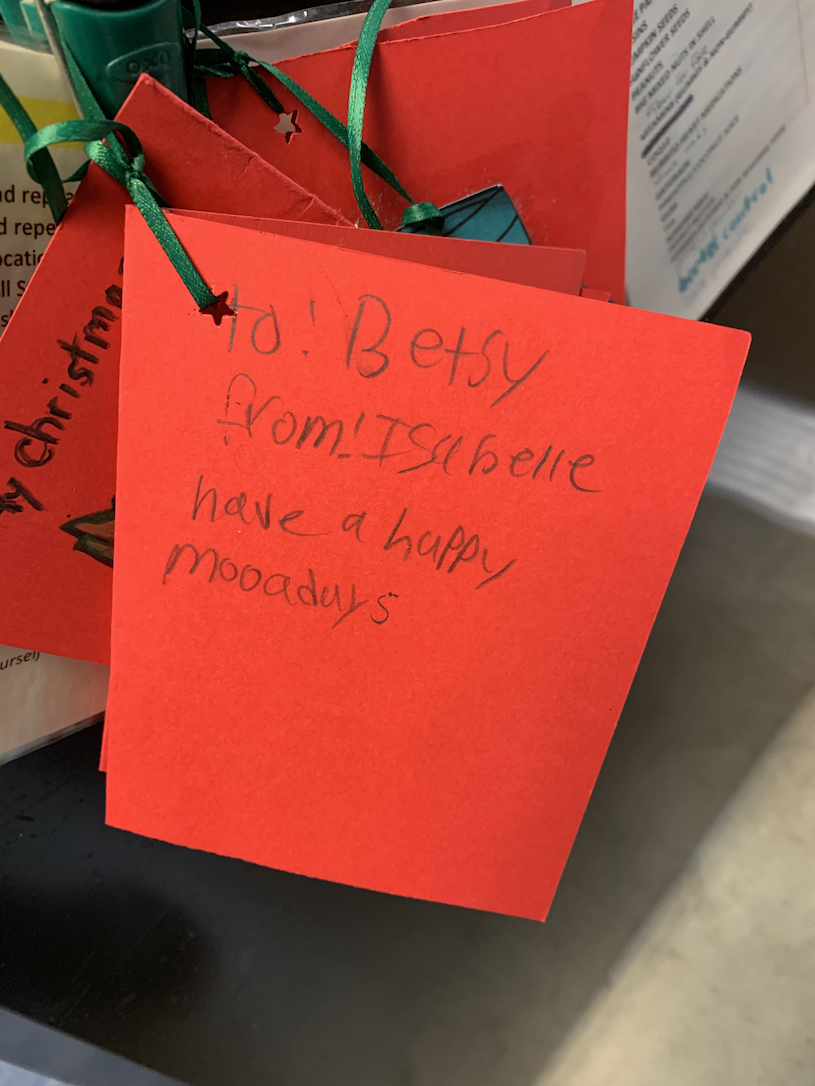
Perhaps this is why one holiday card in particular made me smile. The bright red, glittery card reads:

To: Betsy
From: Isabelle
Have a happy mooadays.

Dear Betsy, I love your name. And I love cows. They’re my 6th favorite animal. I hope you have a very Merry Christmas.

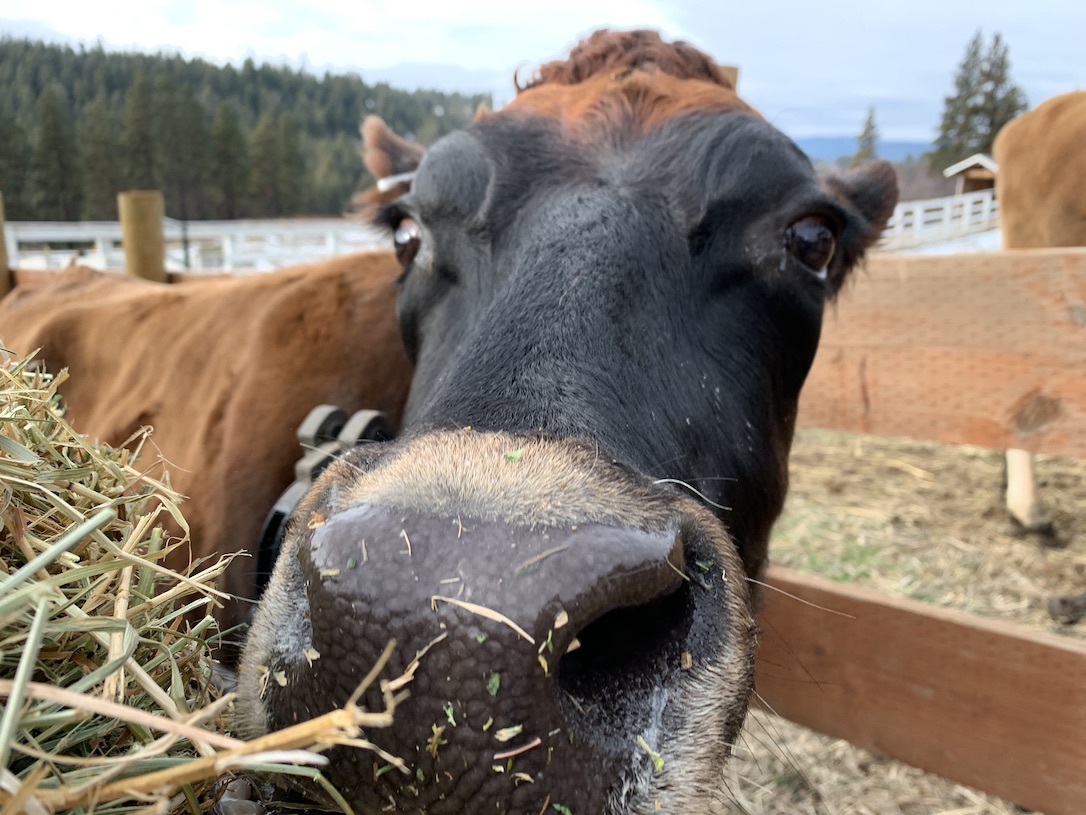
Well, Isabelle, you should know that Betsy had an outstanding Christmas. She and the other cattle got alfalfa and minerals, two of their favorite winter treats. She held still while I brushed her fuzzy winter coat, and then licked all of the salty minerals off of my sleeves. We’re excited for the new year because Betsy and the others will get a huge new pasture with lots of green grass after the snow melts. It’s because of people like you and your classmates that cows, chimpanzees, and all the other nonhuman animals out there have a chance at a good life after being wrongfully used by humans. Keep up the good work, Isabelle.

Betsy.

Also, Isabelle, I am shocked that cows are only your 6th favorite animal. Why are they so low on the list? Which animals are ranked 1-5? Feel free to send us another card with your faves.

Here are my zoological power rankings:

  1. Spider monkeys. They’re a lot like chimpanzees AND they have amazing tails.
  2. Cows, obviously. This includes all cattle because Nutmeg is a steer, not a cow.
  3. Chimpanzees. They would be higher on my list if I didn’t have to clean up their messy playroom every morning.
  4. Trash pandas (also known as raccoons).
  5. Goats.
  6. Quahogs (a type of clam). They live longer than any other animal and they remind me of the place where I grew up, by the ocean.
  7. Wolverines. Their scientific name means “the gluttonous glutton” and I identify with that. They’re also stocky, athletic and fierce, like Missy.
  8. Spotted hyenas. They got a bad reputation from the Lion King, but they’re very smart and have an interesting society. The female hyenas are in charge of the whole group.
  9. Red pandas. They’re super chill. If taking care of primates ever becomes too stressful, a friend and I plan to start Red Panda Sanctuary Northwest (RPSNW). Stay tuned.
  10. Leaf-cutter ants.

Thank you all for your support and for loving the chimps (and cows).

Happy Mooadays to all of you and a Happy Moo Year to everyone! Feel free to comment with your favorite nonhuman animal species.

Filed Under: Advocacy, Cattle, Sanctuary, Thanks Tagged With: advocacy, animal protection, animal sanctuary, Animal Welfare, cattle, chimp, chimpanzee, chimpanzee retirement, cool animals, coolest animals, cows, elementary school, farm animals, favorite animals, happy holidays, merry christmas, outreach, Sanctuary

A Traffic Jam in the Snow

December 22, 2019 by Anthony

Sharing space with other people can be difficult, especially when one of those people is Jamie.

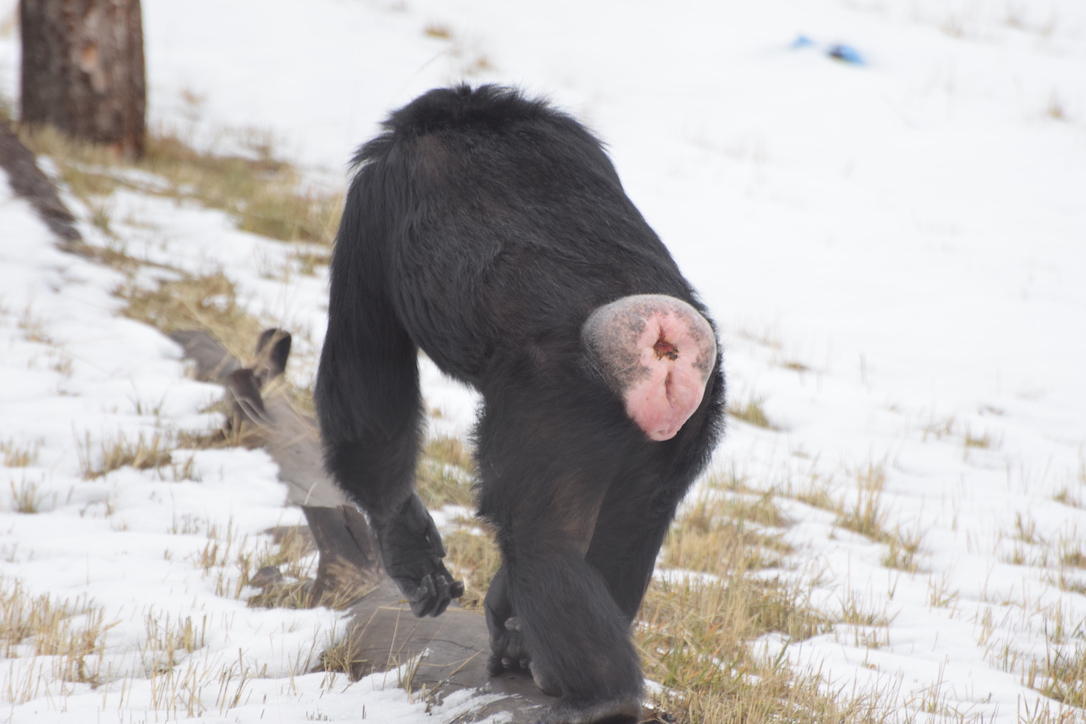
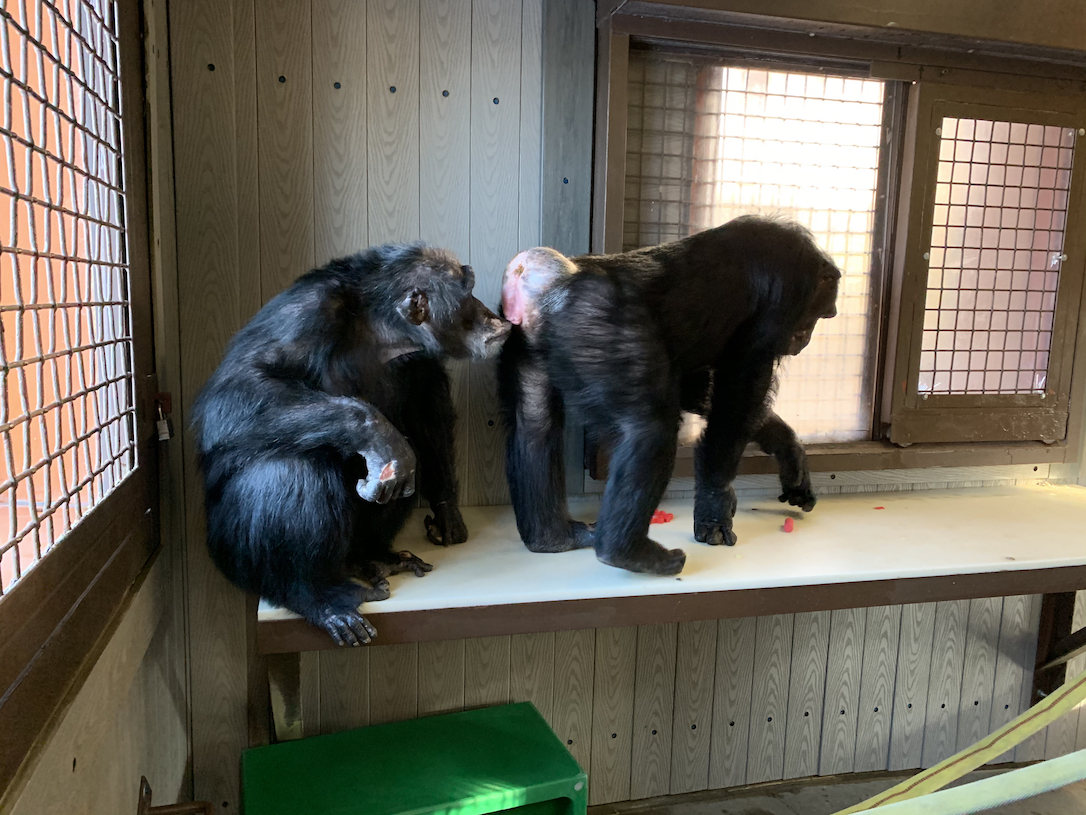
This week, Jamie has been a little bit more irritable than her usual baseline. This may be because we have just finished weaning her off of the contraceptive that we used as a safeguard during social integrations. Jamie’s genitalia have consequently resumed their regular cycle and are presently enlarged, presumably altering her mood. She’s even more dramatic, determined, and dominant than her normal self. She’s even grown possessive over snow despite the fact that it will be practically unlimited over the next few months.

Jamie
Jamie’s swollen genital area acts as a rosy, heart-shaped beacon to male chimpanzees.

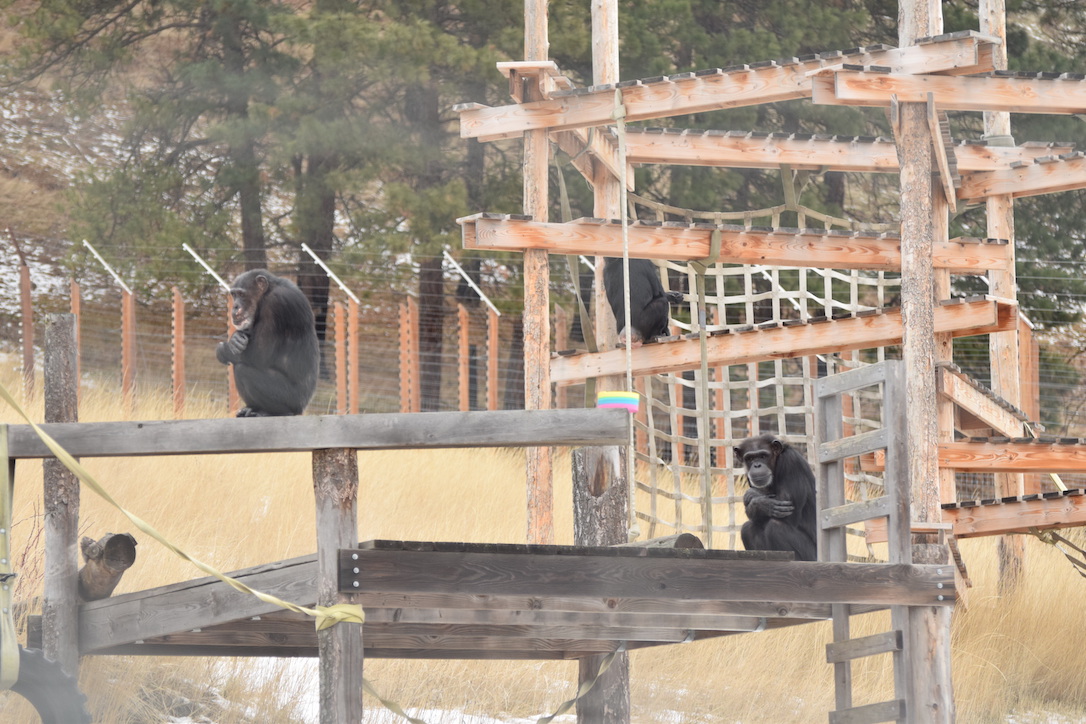
The other females have been giving Jamie a wide berth to stay clear of her path. Today, when Chad and I gave the chimpanzees access to Young’s Hill, she was the first one out into the slushy yard. A few of her female peers followed her out at a safe distance. Annie, Missy, and Jody wanted to explore the snow-covered meadow, too.

Annie
Missy
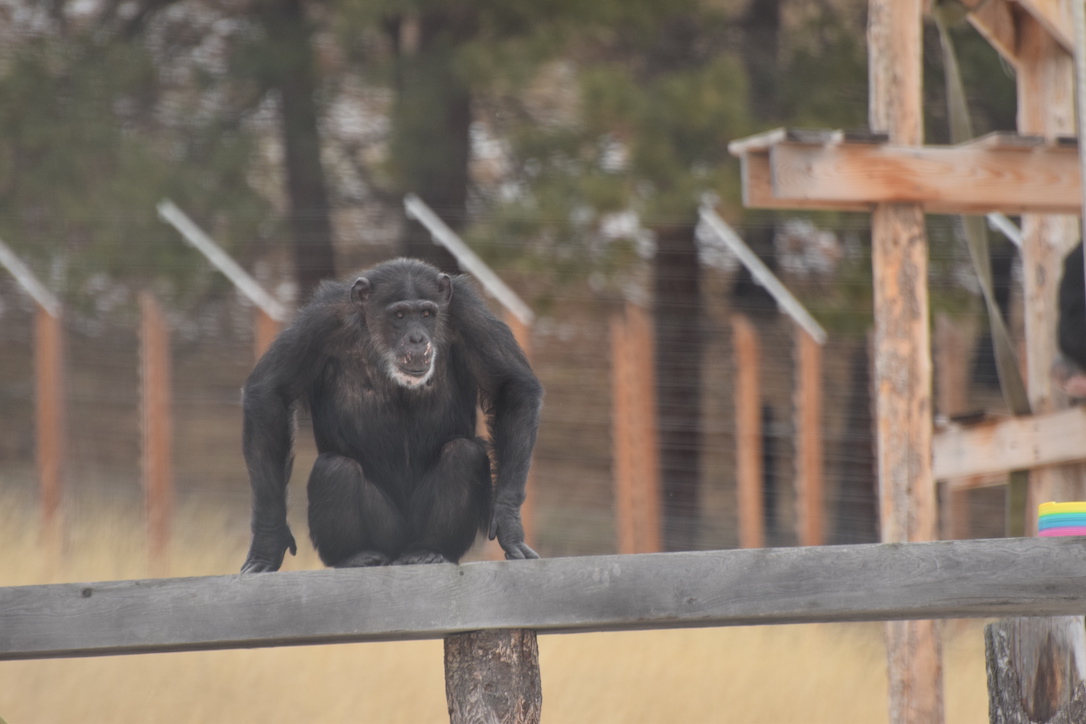
Missy (left) and Annie (right) with Jamie on the structure in the background

The four girls dispersed out onto the wooden structures that watch over the sanctuary. They had been taking in the winter scenery and dining on wet snow for a few minutes when Foxie poked her head out of the Greenhouse and tip-toed out onto Young’s Hill to join them. Chad and I had just seen Foxie playfully twirling and bouncing around the warmer indoor spaces, but we were surprised to see her outside. To be honest, she did not seem to enjoy being outdoors in the cold. Her hair stood out straight and her face contorted into a tense sneer. She was only brave enough to venture out onto the bridge of fallen logs that forms a solid path between the Greenhouse and the closest structures. She sat there quietly for several minutes.

Foxie

Of course the other females did not want to remain outside in the damp mist for very long, either. Missy was the first to make her way back, followed by Annie and Jody. However, Foxie was still perched on the log bridge and seemed to be blocking their path. The ground on either side of the bridge was soggy and cold, so Missy and Annie seemed determined to get around Foxie somehow. Annie even tried to walk with one foot on the fallen logs and the other on the tiny islands of dry earth. Her flexibility and determination were impressive but unsuccessful.

Missy…
… and Annie…
… who tries to use gymnastics to get back down the Hill.

This subtle drama unfolded gradually and quietly, but everyone started to look more panicked when Jamie came trudging down the Hill, hauling an enlarged backside and an inflated attitude along with her. Missy desperately tried to get Foxie to move as if Jamie was a freight train that was about to run them over. Eventually, after some coarse vocalizations and physical pushing, Foxie turned around and the chimpanzee pile-up was cleared just as Jamie arrived. The imminent crisis was averted.

Jamie saunters down the log bridge towards the Greenhouse.
Missy (left) and Annie (behind) try to push past Foxie (right).

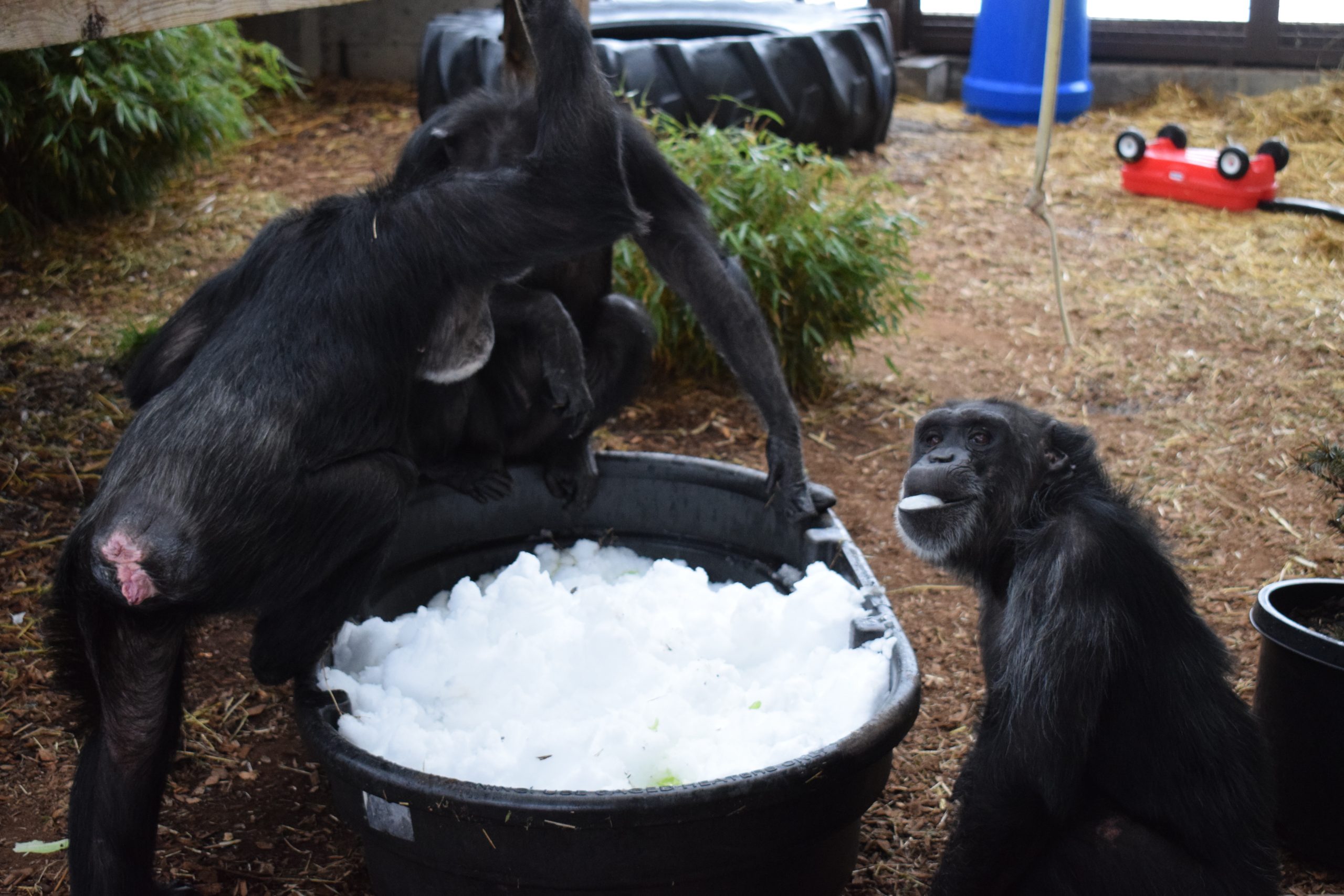
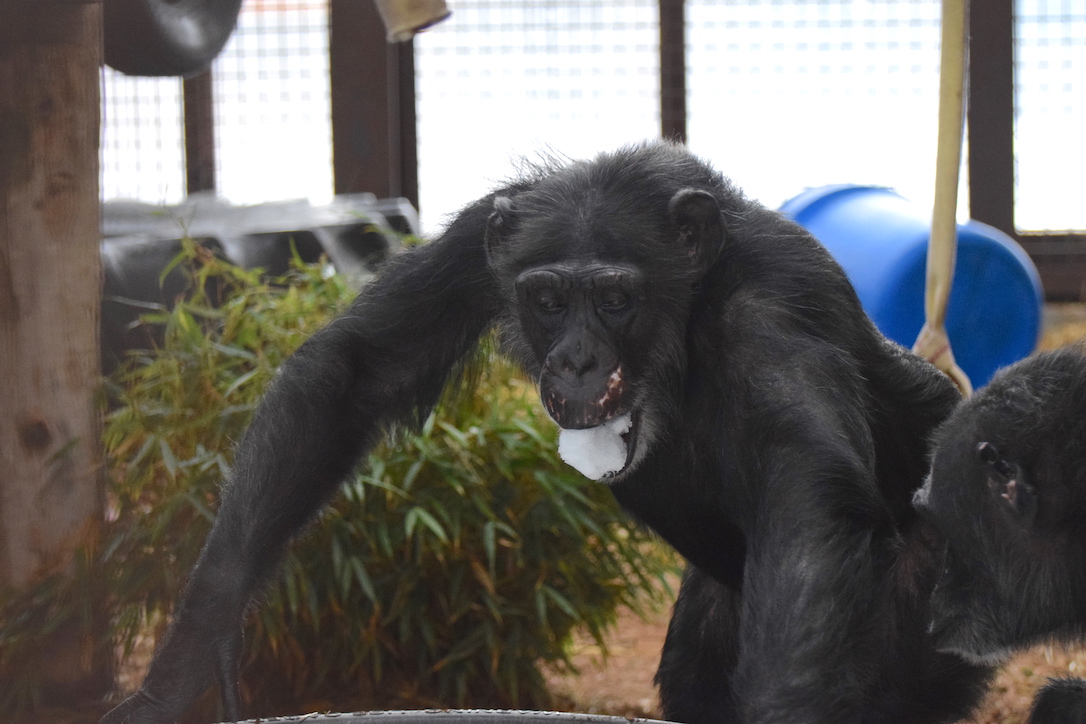
Back in the building, we have been provisioning all of the chimpanzees with plenty of fresh snow. Even Willy B and Honey B have been sampling this Washingtonian delicacy and seem to be developing a taste for it. This way, even those who don’t want to brave the cold can still get some of this seasonal treat and partake in the winter fun.

Missy, Annie and Foxie eat snow on Friday
Foxie
Missy
Foxie

Filed Under: Annie, Enrichment, Foxie, Jamie, Missy, Young's Hill Tagged With: Animal Welfare, Annie, Burrito, chimp, chimp enrichment, chimp sanctuary, chimpanzee, chimpanzee retirement, chimpanzee sanctuary, chimpanzees, Sanctuary, young's hill

A Chimp Named “Burrito”

December 20, 2019 by Anthony

Today, instead of a lengthy blog post, I am leaving you all with a simple image of Burrito.

I hope you all appreciate Bubba’s zesty personality, goofy antics, and youthful heart as much as we do. He’s a helluva guy.


Filed Under: Sanctuary

Snow Days and Play Dates

December 15, 2019 by Anthony

Well, here it is.

I created this video a few days ago to highlight some ways in which the chimpanzees are spending the shortened days of early winter.

In addition to their usual smorgasbord of foods, an abundance of fuzzy nesting materials and a variety of challenging enrichment puzzles, the chimps now have daily opportunities to harvest armfuls of delicious, powdery snow from Young’s Hill.

Even Mave, Willy B and Honey B, who aren’t as habituated to the cold weather as the seven original residents, seem interested in their outdoor courtyard. The courtyard is an alcove of the Hill that has recently been sectioned off to create a safe, isolated area for the newbies to gradually acclimate to open spaces on their own terms. For the most part, though, they prefer the safety and comfort of the indoor spaces and understandably only go out in the chute when it is sunny and dry. Of the three, Willy seems to be the most cautious about the cold. During his infrequent forays into the chute, Jody, Missy, Annie and the other females make a huge commotion. Their chorus of pant-grunts and unbridled excitement reminds me of teenage girls during Beatle-mania. It’s justifiable, given Willy’s confidence and charm.

It is Burrito, however, who seems the most eager for attention now. He’s recovered in terms of spirit and mobility, so now we are just waiting for him to finish his medication before we reunite him with the full group. In the meantime, he’s enjoying afternoon play-dates with individual companions, and we are ecstatic to see him back to his old ways. Today, for example, he spent time with Jody and then followed Jamie around (inspecting her swollen genitalia incessantly).

I hope you all enjoy the video and the rest of your weekend!

We’re looking forward to giving you some exciting updates soon regarding several new developments at the sanctuary!

Filed Under: Burrito, Chimpanzee Behavior, Enrichment, Friendship, Grooming, Nesting, Play, Sanctuary, Veterinary Care

Snow Day

December 12, 2019 by Anthony

First and foremost, I want to apologize for not putting together a real blog post.

Today was exciting and productive, but the afternoon disappeared and I soon realized that the video montage I made for you all would not finish uploading until late in the evening. My attempts to finish it were met with further technical difficulties, so I am regretfully abandoning my efforts.

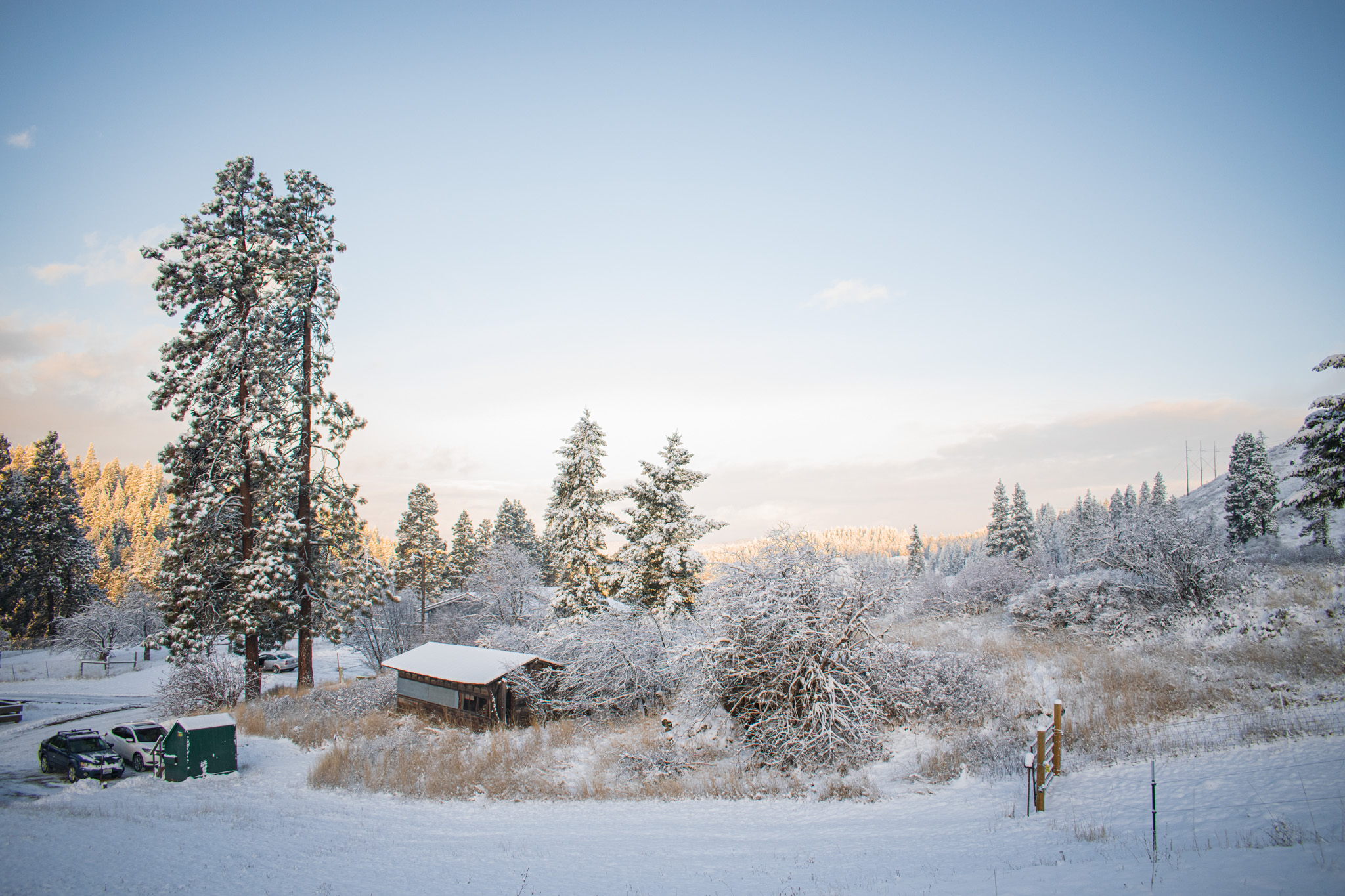
Instead, please enjoy these images of the great snowfall that we experienced this week. The prepared video, which showcases how Burrito and the other chimps are remaining busy during the onset of winter, will be uploaded by me on Sunday.

Have a great weekend, everyone!

Filed Under: Sanctuary

The Winds of Winter

December 1, 2019 by Anthony

It was weird to join the CSNW staff in the middle of summer.

Although many features of the sanctuary felt familiar, there was one aspect of the return that felt foreign: warm, sunny weather. Strangely, I had never actually spent time at the sanctuary during the summer. I began to intern here in the fall of 2015, was away for the entire summer of 2016, and only volunteered during the following fall and winter before accepting an employment offer from another sanctuary in early 2017. Because of this patchwork timeline, my earlier experiences here were largely characterized by damp weather and cold temperatures. Until this year, I had never experienced the wonders of summer in the Pacific Northwest and witnessed the amazing opportunities that the season provides for the chimpanzees.

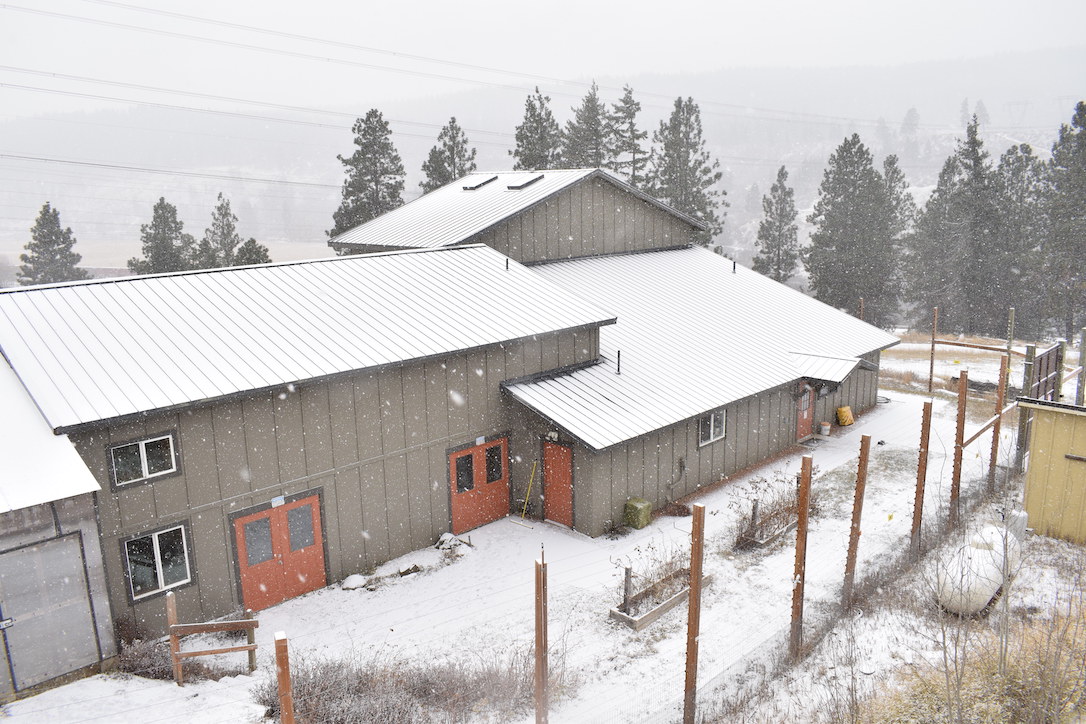
The Chimp House looked cozy this morning.

Those golden summer days are long gone, and they won’t be back for a long while. Winter is here. Without the ex machina heroism of Arya Stark, we have no reason to believe that it will end early.

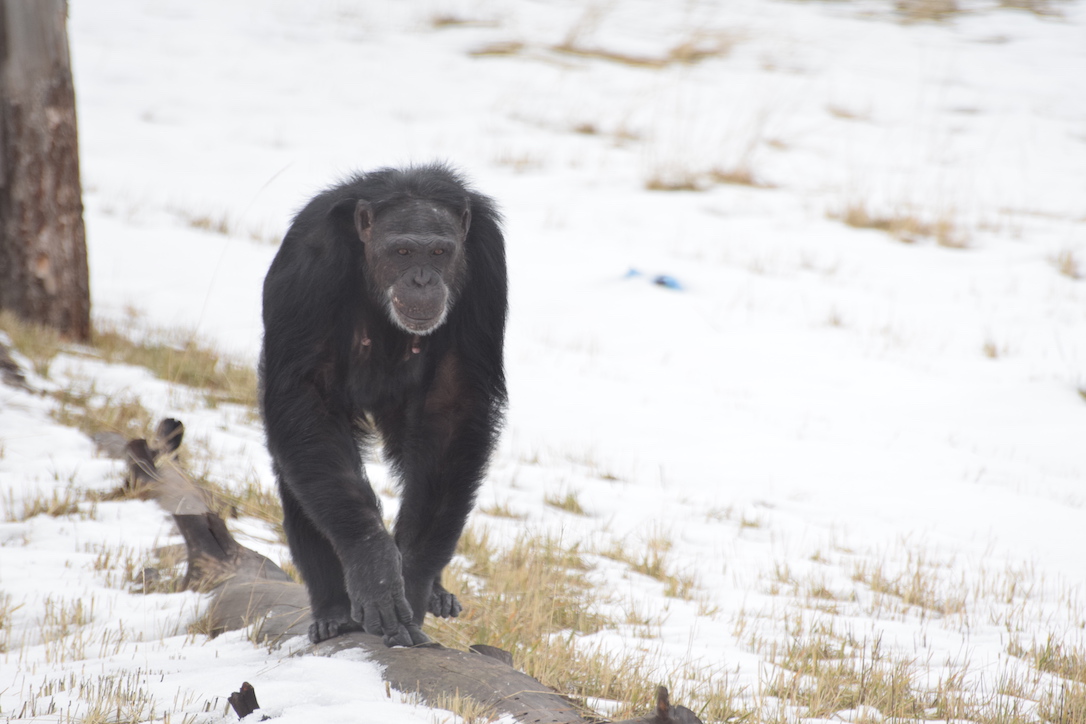
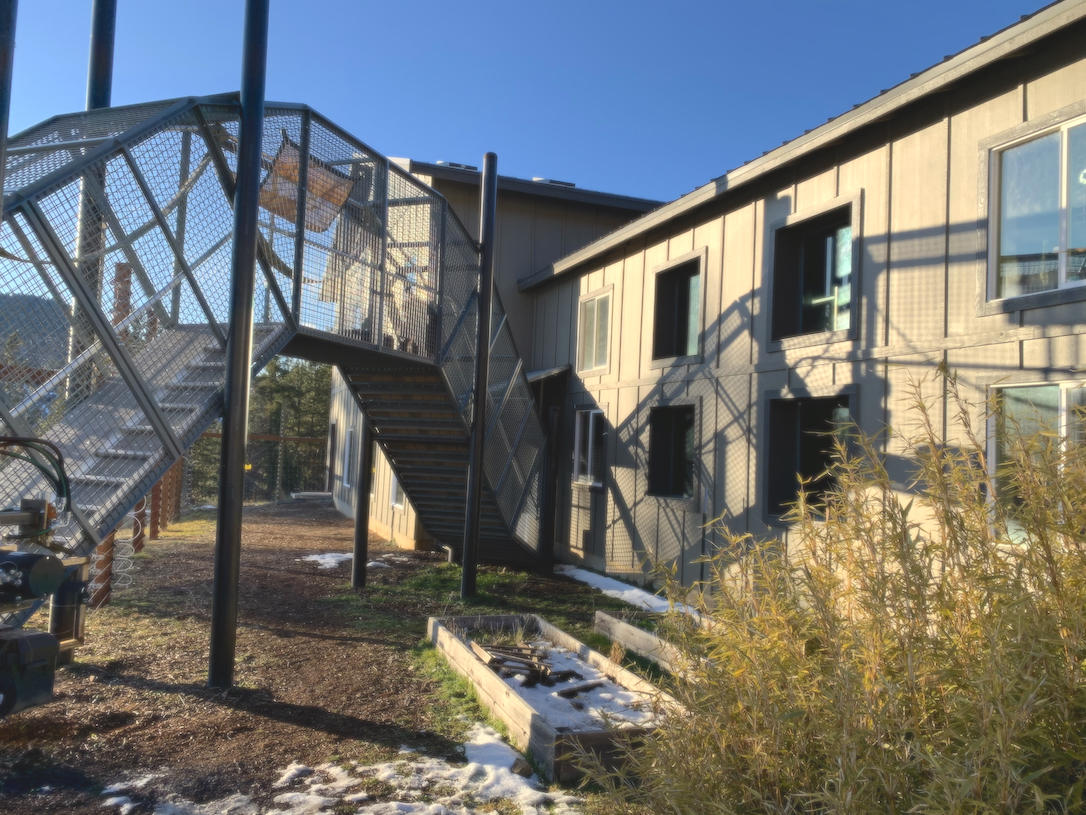
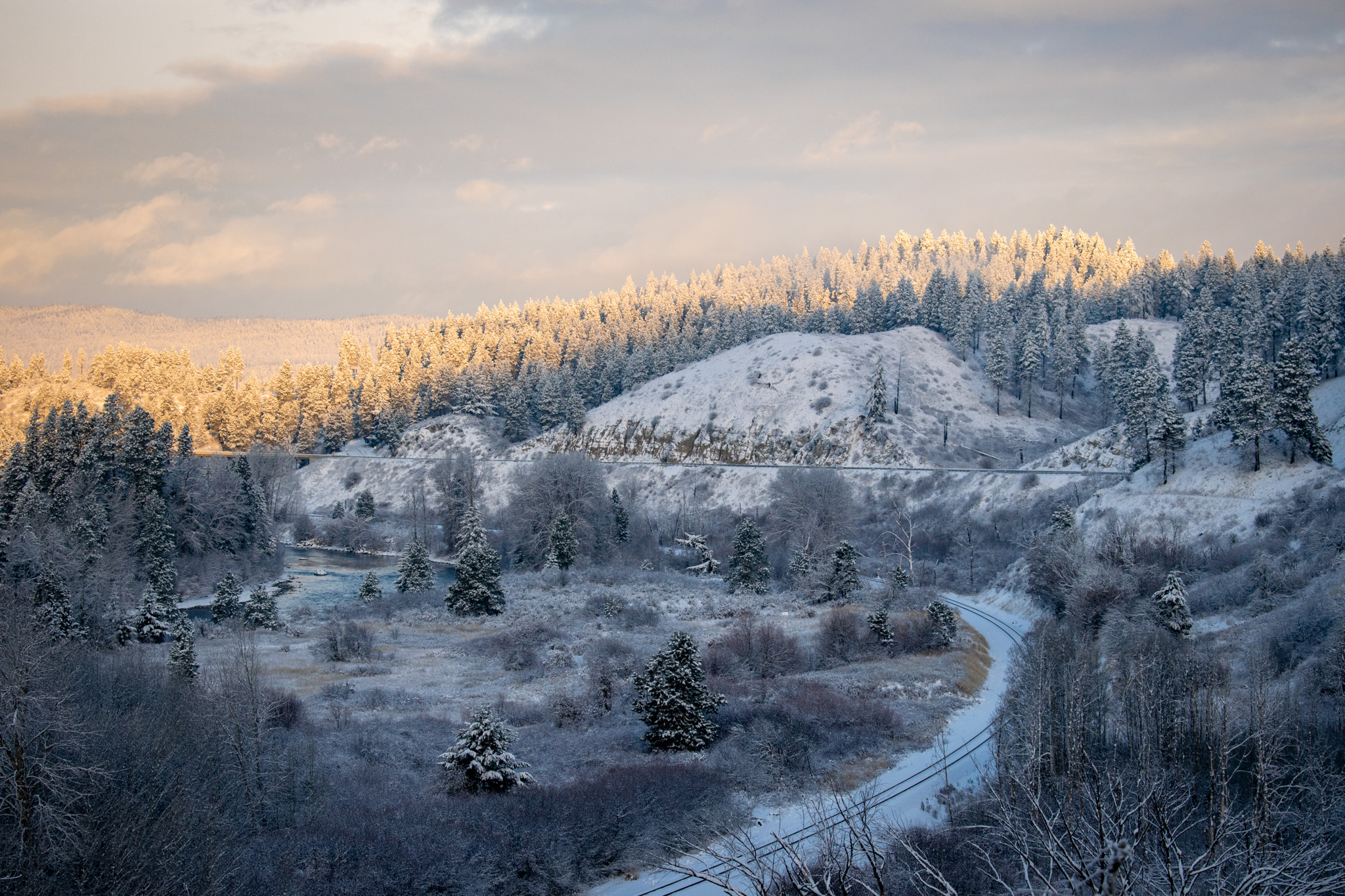
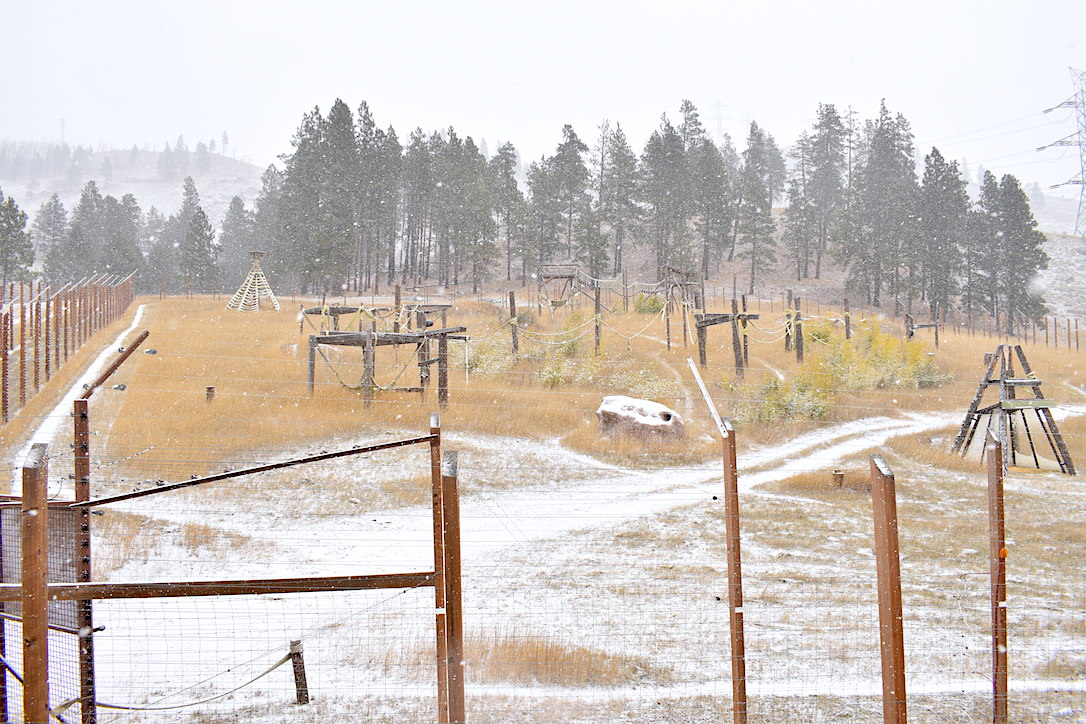
Last night, the skies began their annual efforts to cover this half of the state in a blanket of snow and ice. As I trudged up the sanctuary driveway this morning, I saw that Young’s Hill, the chimpanzees’ outdoor enclosure, was covered in a film of white powder that gradually thickened over the course of the day. Within a few weeks, the structures and grass will be hidden under perhaps several feet of snow that won’t fully melt until the spring. Given that chimpanzees have evolved to live in tropical forests, one would think that this climate would be detrimental to their well-being. Indeed, it creates many challenges for us caregivers, such as keeping the building warm at night and finding other ways to occupy the chimps besides repeated walks around the Hill. Despite its hassles, however, winter also allows the chimpanzees to have novel and exciting experiences, adding to the overall quality of their sanctuary life. Just as the human residents of the Pacific Northwest make the most of each season, so do the chimps.

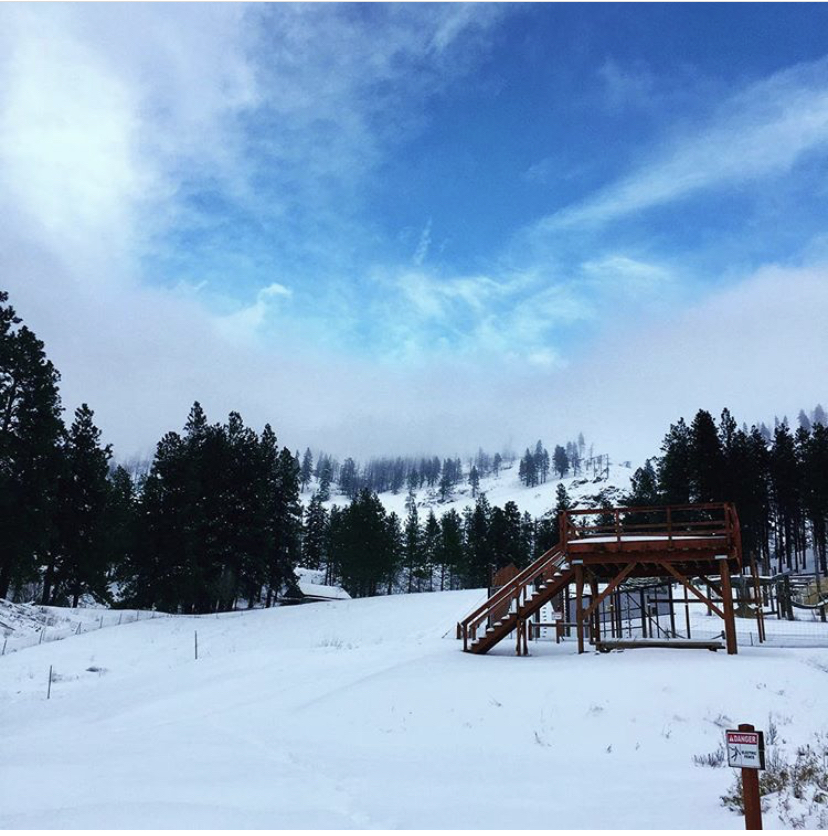
I took this photo of rare patch of blue, clear sky during the winter of 2016.

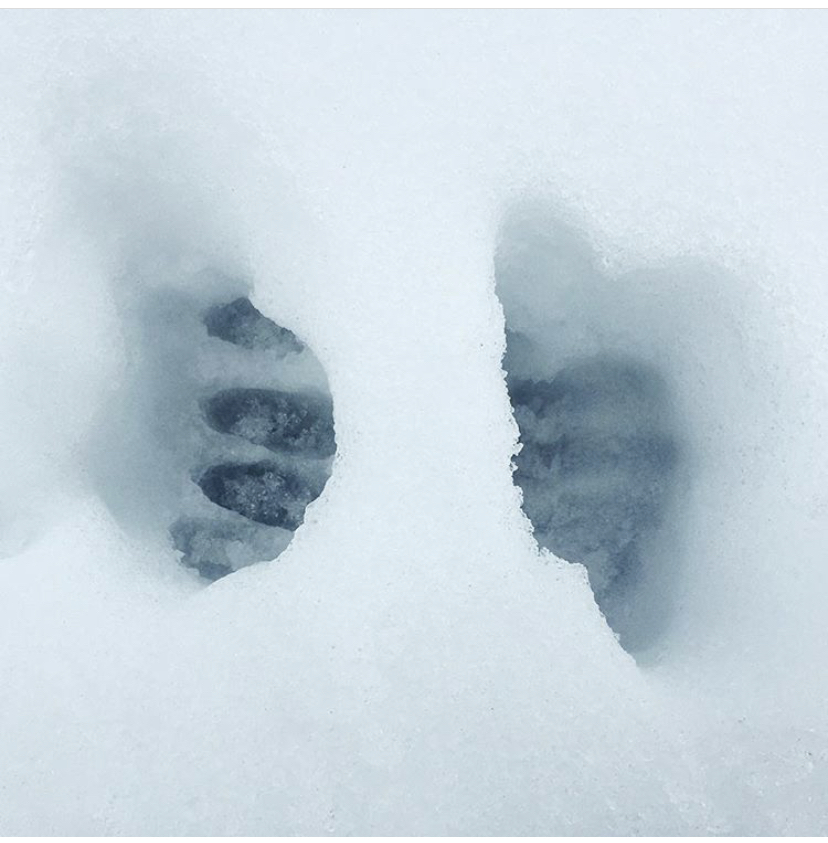
On one January morning a few years ago, the other interns and I were helping J.B. to move thick, wet snow in order to make paths for the chimps. J.B. was using the tractor to bulldoze through the snow around the perimeter of the Hill, thereby creating a route for Jamie to patrol. The rest of us had shovels and were tasked with creating trails up to the nearest structures and bamboo forest. Nobody had seen the chimpanzees out on Young’s Hill since the last snowfall, so our goal was to give them a way to access their favorite spots without wading through the deeper drifts. I was halfway up the Hill, slinging the snow aside, when I noticed an odd pattern cutting through the smooth white surface off to my right. There, winding their way up the slope, were a set of chimpanzee tracks. They were unmistakably chimpy; each foot-print featured a conspicuously large thumb and each hand-print was really just a set of four knuckle-prints. I was in complete awe that one of the chimpanzees had, without any coaxing, ventured out alone into the icy landscape in search of some bamboo shoots. I placed my fist in the snow next to one print, snapped a photo with my phone, and returned to my labor.

I placed my fist in the snow (right) next to an existing chimpanzee hand-print (left). Note that my clunky human thumb got in the way.

Although chimps are often afraid of new or unpleasant sensations, sometimes they can surprise us by being brave and adventurous. In this way, even the most experienced caregivers can occasionally underestimate their adaptability, audacity, and determination.

Young’s Hill is slowly beginning to disappear under snow.

With winter now upon us, I am looking forward to spending more time observing the sanctuary’s residents making the most of it. The cattle seem to be frustrated that the green grasses of early summer have desiccated until next year, but they seem to enjoy the extra hay and alfalfa that we provision. They’ve certainly changed quite a bit since their arrival here last winter, and it seems like they have grown more adaptable and independent. They’re also looking fuzzy and warm in their dense winter coats, so perhaps they won’t mind hanging out in their lower pasture until spring comes. Perhaps they can even dream of grazing in bright green fields as they lay in their barn this winter.

Honey (C.) awaits her bale of hay this morning.

I am also eager to see how Willy B, Honey B, and Mave adjust to the seasons. They just had their first CSNW Thanksgiving with us a few days ago, and they may be given buckets of snow to eat and play with before the end of the week. Although they’re not regularly getting access to Young’s Hill after their first attempts to venture outside weren’t very successful, they will have plenty of opportunities to experience the winter season from the security of the outdoor chute. We’re not sure if the “Californian” chimps have ever seen snow before, but I’m confident that, like the seven chimps before them, they will embrace the new experiences with gusto.

Willy B. Chimpanzee

P.S. Burrito had another good day today. He’s definitely itchy and possibly a bit bored, but he’s healing nicely. Bubba spent the day eating normal foods, picking at his scabs, and playing with vigor. We’ll hopefully have more updates soon.

Filed Under: Cattle, Sanctuary, Young's Hill Tagged With: Animal Welfare, chimp, chimp sanctuary, chimpanzee, chimpanzee retirement, chimpanzee sanctuary, Chimpanzee Sanctuary Northwest, chimpanzees, Cle Elum, csnw, northwest, Sanctuary, young's hill

  • « Go to Previous Page
  • Page 1
  • Interim pages omitted …
  • Page 21
  • Page 22
  • Page 23
  • Page 24
  • Page 25
  • Interim pages omitted …
  • Page 27
  • Go to Next Page »

Primary Sidebar

Subscribe To the Blog and Get Notified of New Posts First!

Archives

Calendar of Blog Posts

June 2026
S M T W T F S
 123456
78910111213
14151617181920
21222324252627
282930  
« May    

Categories

SUBSCRIBE TO OUR NEWSLETTER

Footer

PO Box 952
Cle Elum, WA 98922
[email protected]
509-699-0728
501c3 registered charity
EIN: 68-0552915

Official DDAF Grantee

Menu

  • The Chimpanzees
  • Blog
  • About Us
  • You can help
  • Resources
  • Contact
  • Donate

Proud Member of

Connect With Us

Search

Copyright © 2026 Chimpanzee Sanctuary Northwest. All Rights Reserved. Site by Vegan Web Design