• Skip to main content
  • Skip to primary sidebar
  • Skip to footer

Chimpanzee Sanctuary Northwest

Hope. Love. Home. Sanctuary

  • Our Family
    • The Chimpanzees
    • The Cattle
  • Blog
  • About Us
    • Visiting the Sanctuary
    • Philosophy
      • FAQs
      • Mission, Vision & Goals
      • Privacy Policy
    • The Humans
      • Staff
      • Board of Directors
      • Founder
    • Annual Reports
    • The Future of CSNW
    • CSNW In The News
  • You can help
    • Donate
      • Become a Chimpanzee Pal
      • Sponsor A Day
      • Transfer Stock
      • Be A Produce Patron
      • Be a Bovine Buddy
      • Give from your IRA
      • Personalized Stones
      • Bring Them Home Campaign
    • Leave A Legacy
    • Employment Opportunities
    • Volunteer
    • See Our Wish List
    • Events
  • Resources
    • About Chimpanzees
    • Enrichment Database
    • Advocacy
      • Advocacy Action Center
      • Apes in Entertainment
        • Trainers
        • Role of the AHA
        • Greeting Cards
      • Chimpanzees as Pets
      • Roadside Zoos
      • Chimpanzees in Biomedical Research
      • Conservation
        • African Apes
        • Orangutans
  • Shop
    • Merchandise Store
  • Contact
  • DONATE NOW

animal sanctuary

Graze Anatomy

September 12, 2022 by Anthony

Before I dive into today’s blog, I have an exciting update to share: The HOOT! 2022 online auction started today!

You can visit the online-only page to decide which amazing items to bid on. Tickets are still available for the live event which will be held on Friday, Sept. 16 at The Foundry by Herban Feast in Seattle! You can learn more about the event by clicking here and buy tickets here.

We caregivers also enjoy viewing (and occasionally bidding on) items that commemorate our favorite sanctuary residents. Although there are some great chimpanzee-themed items, I must admit that I am quite partial to the plush Cuddle Clone of the Jersey cow, Meredith.

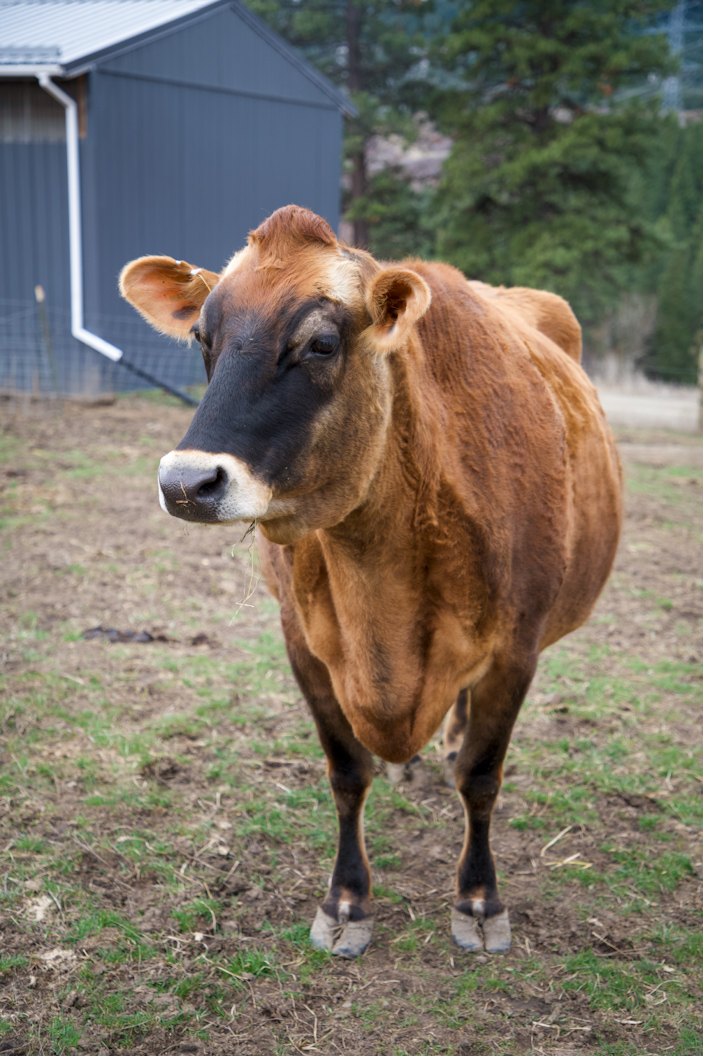
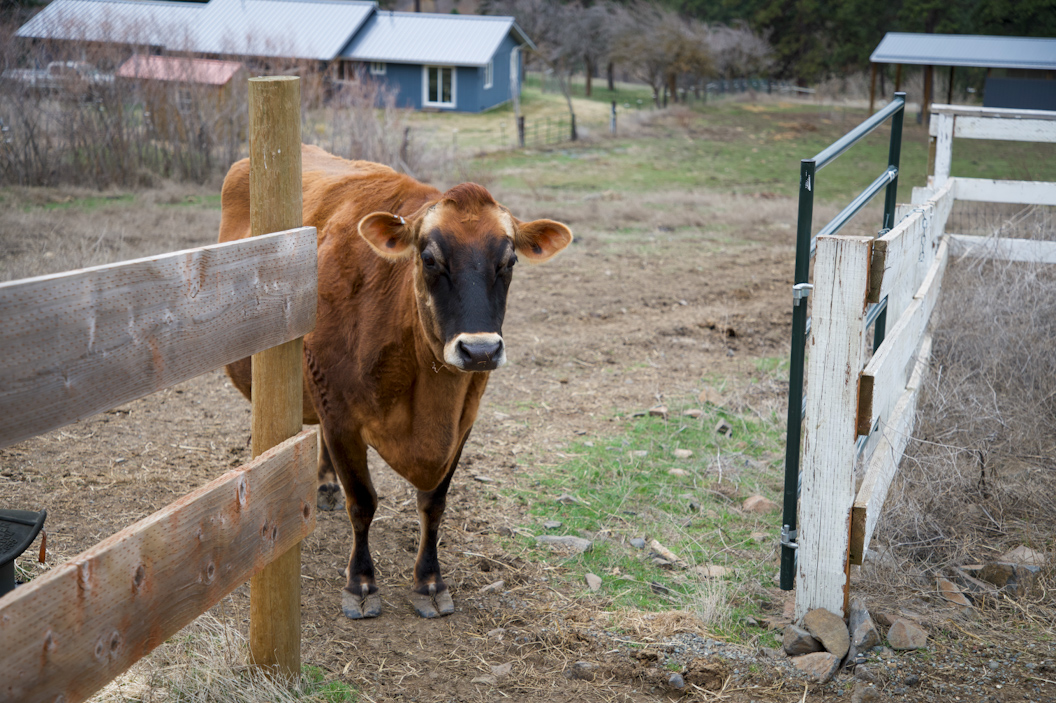
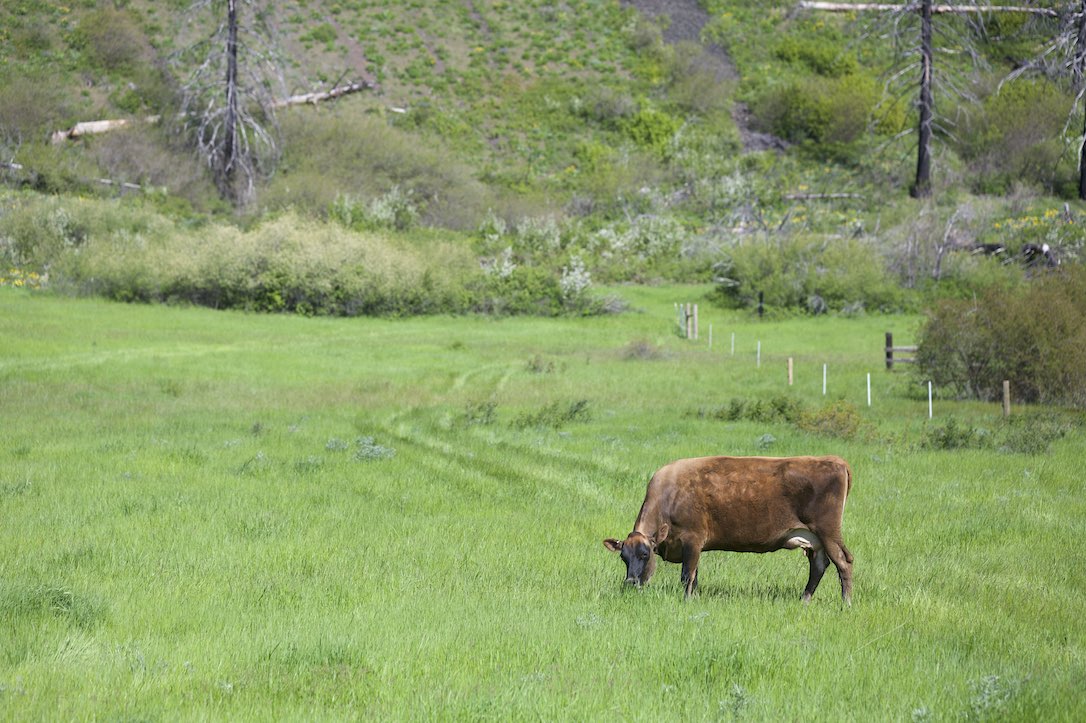
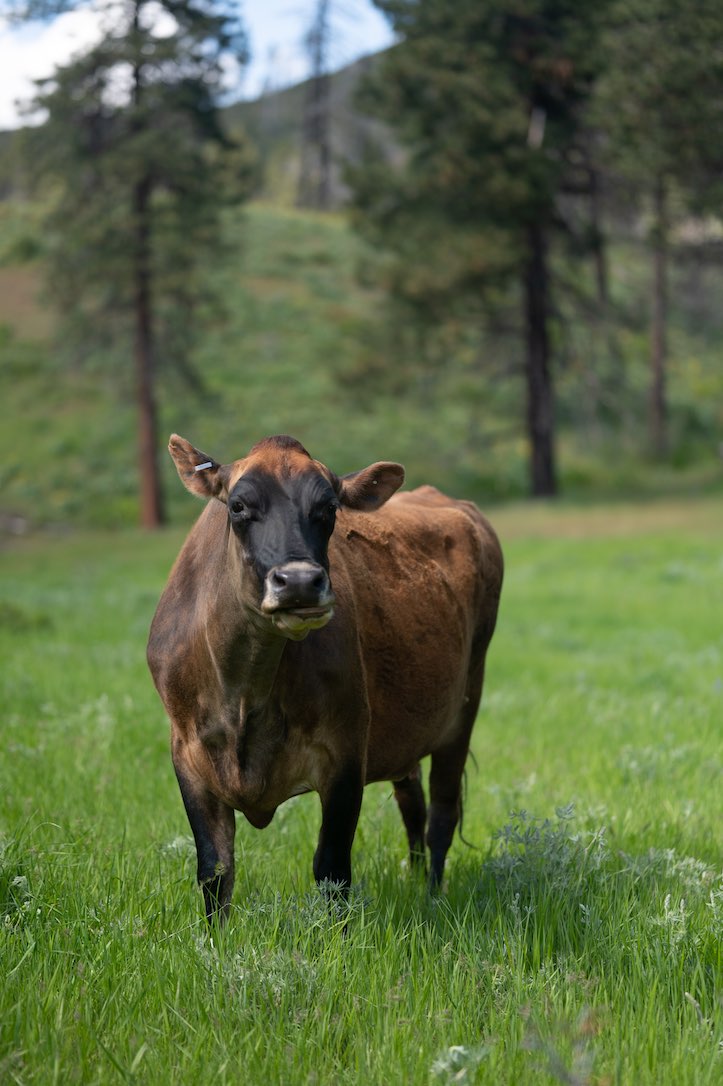
As many of you already know, the pastures that surround the sanctuary’s Chimp House provide a home to four rescued cattle: Betsy, Honey, Meredith and Nutmeg. This little herd helps the sanctuary by consuming vegetation that could potentially fuel wildfires. In turn, we give them food, water, shelter, enrichment, veterinary care, and everything else they need to thrive. Caring for these creatures is often quite different from the work we do with chimpanzees, so I’m taking a moment to share some interesting trivia about the sanctuary’s lovable, living lawnmowers.

  • Domestic cattle (Bos taurus) are often called bovines because they belong to the subfamily Bovinae. This group also includes bison, buffalo, yaks, and other species of wild cattle. Sheep, goats and antelope are their closest living relatives and belong in the same family: Bovidae.
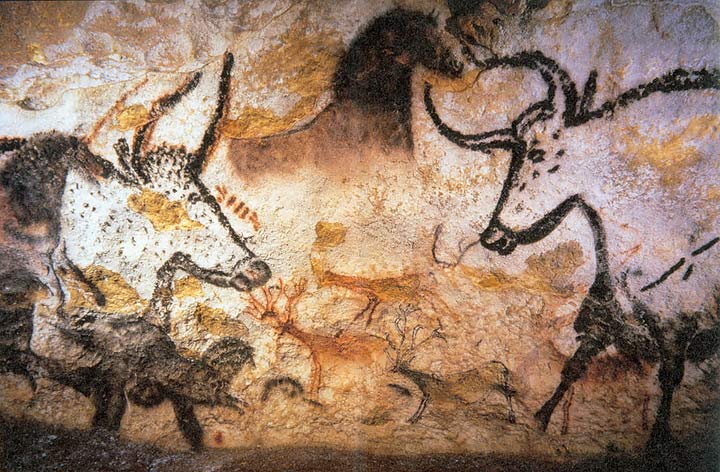
  • The ancestor of all living cattle is the extinct aurochs (B. primigenius). Aurochs once ranged across Eurasia and North Africa and were commonly depicted in prehistoric art (e.g. the Lascaux cave painting shown below). People across the Roman Empire commonly used them in bullfights, but they likely went extinct due to deforestation, over-hunting, and competition with domestic cattle. The last known aurochs cow lived in Poland and died in 1627.
  • Jersey cattle are specifically adapted to life on Jersey, one of the United Kingdom’s Channel Islands. The island’s human inhabitants carefully bred these cattle to yield milk with a high percentage of butterfat, and even prohibited the importation of foreign cattle in order to maintain this quality.
  • Jerseys are not the most popular dairy breed in North America. That title belongs to the black-and-white Holstein-Friesian, which are larger and produce more milk per cow.
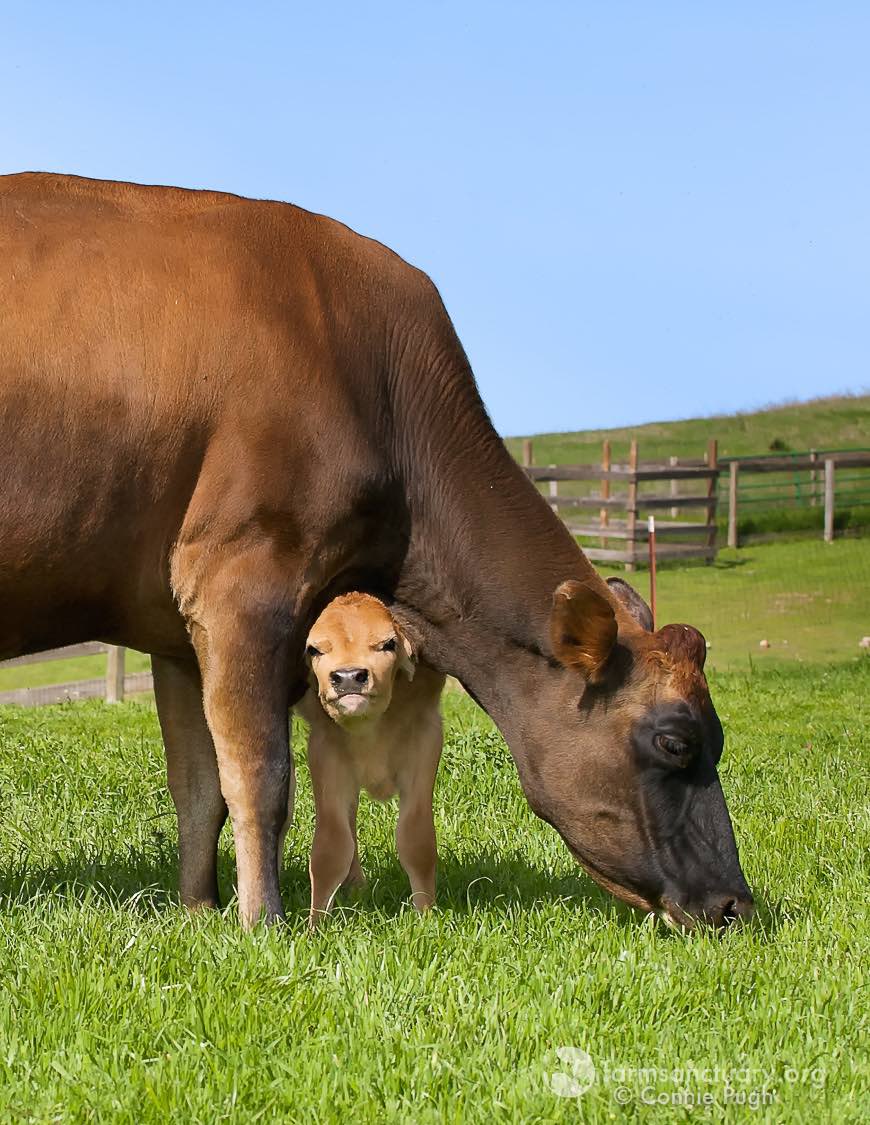
  • Newborn cattle are called calves (e.g. newborn Nutmeg with mother Betsy, shown in the Farm Sanctuary photograph above). Immature females are called heifers and are only considered cows after birthing their first calf. Calves gestate for nine months and typically remain dependent on their mother’s milk for ten months before naturally weaning.
  • Ranchers often castrate male calves so they don’t develop into adult bulls, which are difficult to house and manage. Young castrated males are called steers until they eventually mature into fully-grown oxen. Historically, humans utilized oxen as draught animals for pulling plows and carts. Even though they are a relatively small cattle breed (females are usually around 800 pounds), Jersey bulls and oxen can grow up to 1,800 pounds.
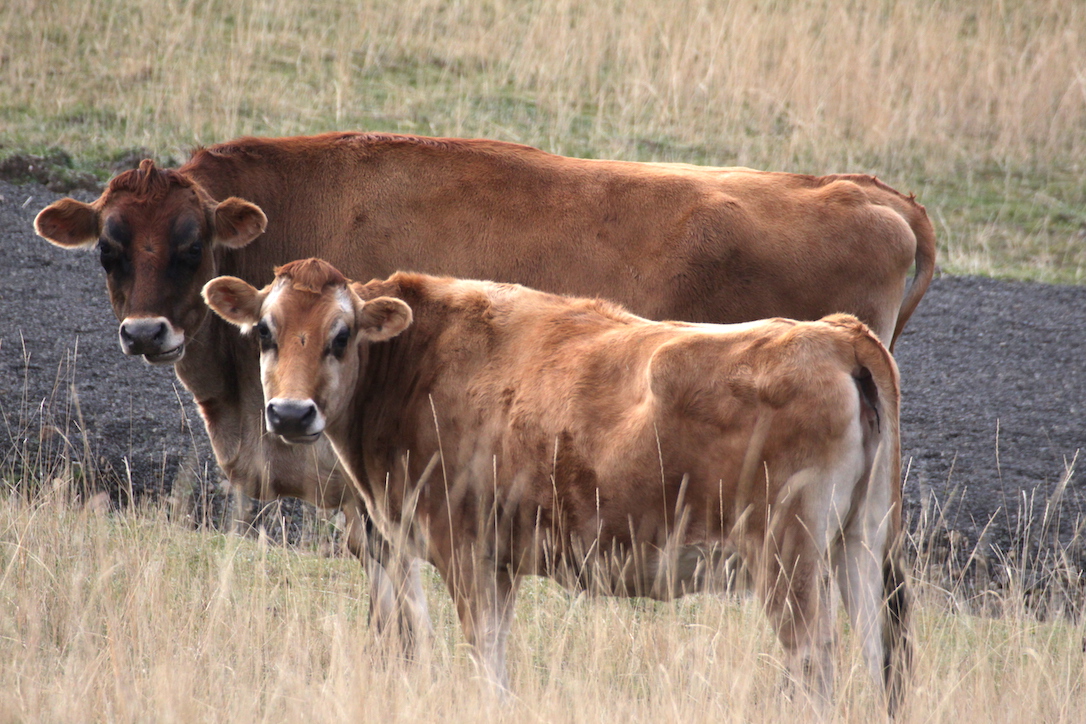
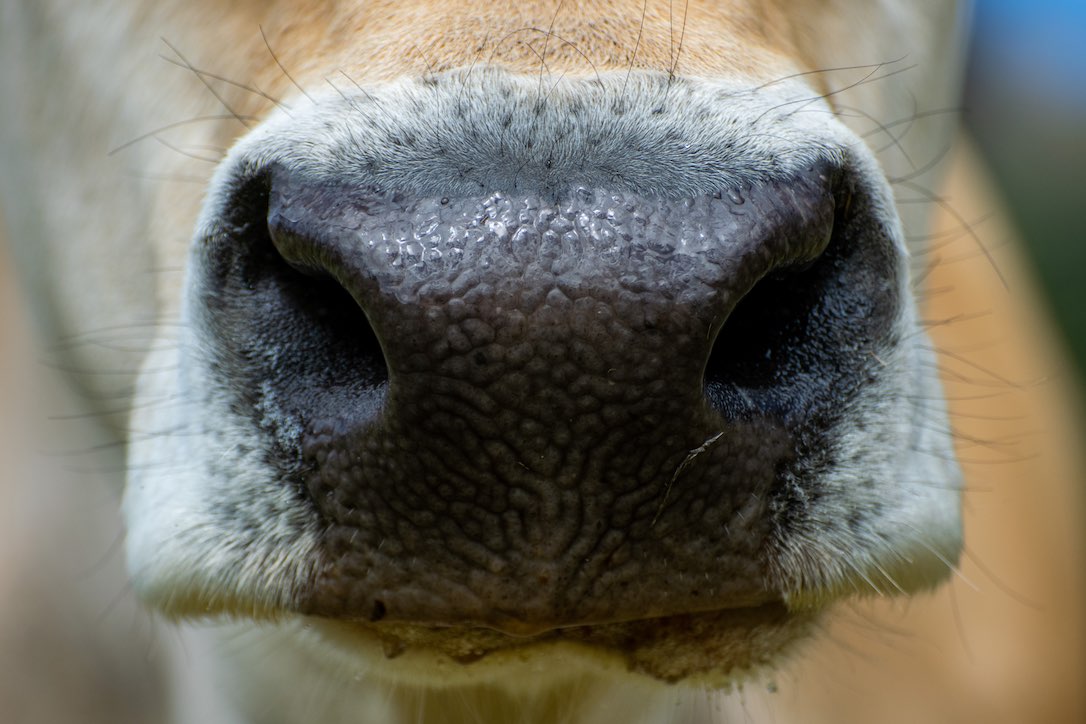
  • The glands on cattle noses make distinct patterns that are as unique as human fingerprints.
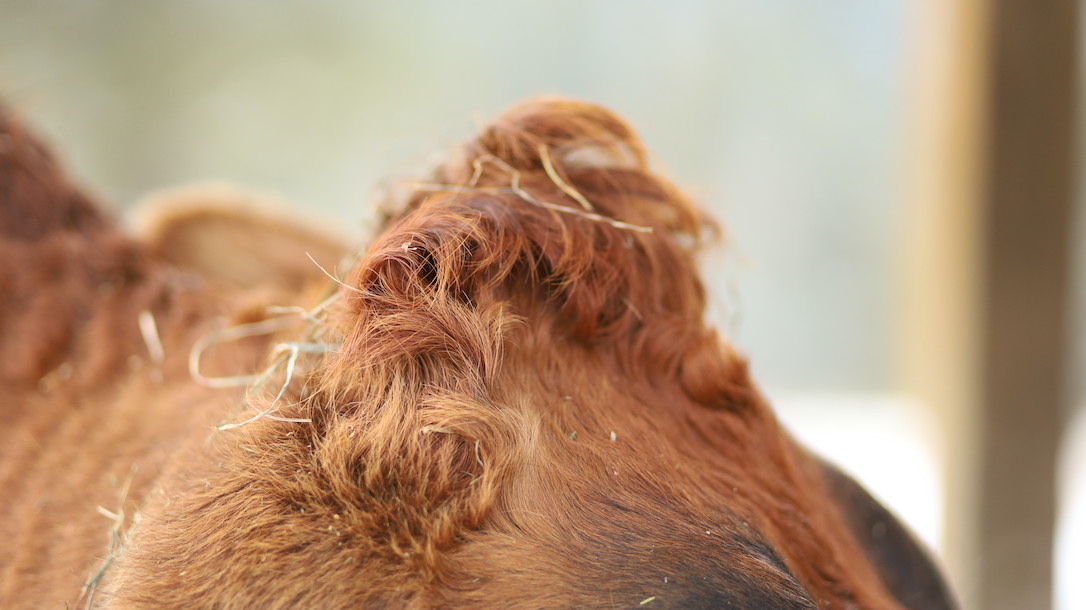
  • Cattle horns and hooves are bony structures encased in sheaths of keratin, the same protein that makes up human nails and hair. Hooves generally grow ⅕ -¼ of an inch each month. The hooves of domestic cattle must be trimmed periodically to prevent a variety of health issues (below).

  • The common safety practice of horn removal is called polling. The remaining knob is called a poll and any subsequent horn growths are called scurs.
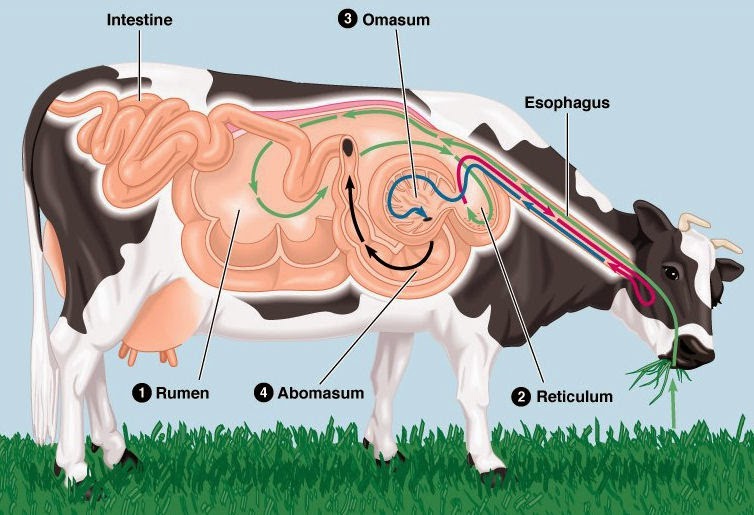
  • Cattle and other ruminants have a complex, multi-chambered stomach that specializes in breaking down fibrous plant matter. They do not have four stomachs. The chambers are called the rumen, reticulum, omasum and abomasum (diagram below)  . The rumen alone can hold up to 25 gallons of plant material. Each chamber contains a unique microbiome that is critical for proper digestion and overall health.
  • Cattle regurgitate chunks of semi-digested food called cud. They chew these again before re-ingesting them. This process is called “rumination” or “chewing the cud.” They chew in a conspicuous circular motion, grinding the forage against a leathery dental pad that they develop in place of upper incisors
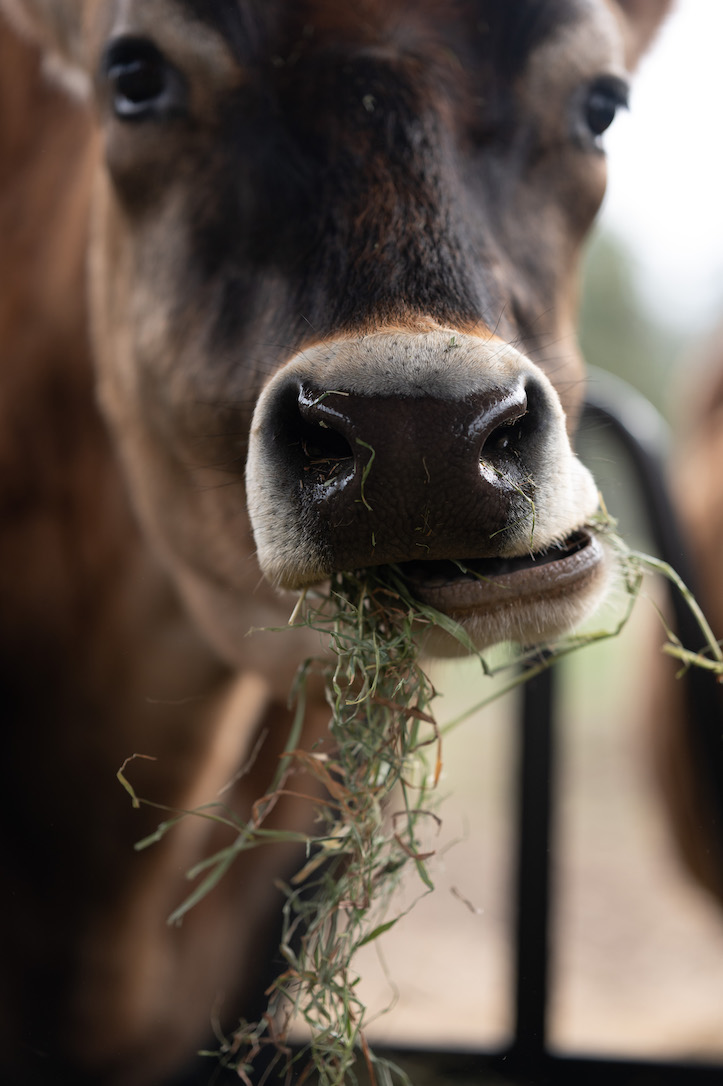
  • Bovines are quite intelligent and have excellent long-term memories. Experiments show that cattle can discern between individual humans and learn to avoid humans who treat them roughly and trust humans who treat them kindly.
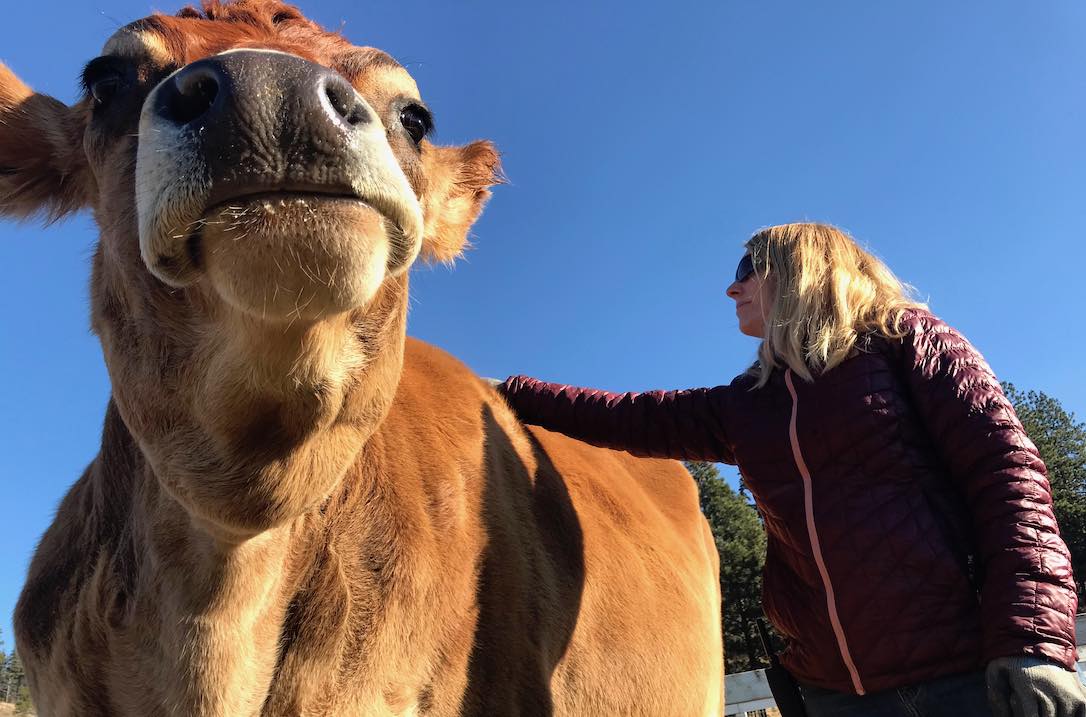
  • Cattle herds are complex societies that regularly split up and reunite (fission-fusion behavior). When not managed by humans, cattle form matriarchal hierarchies where bulls only associate for competition and breeding.
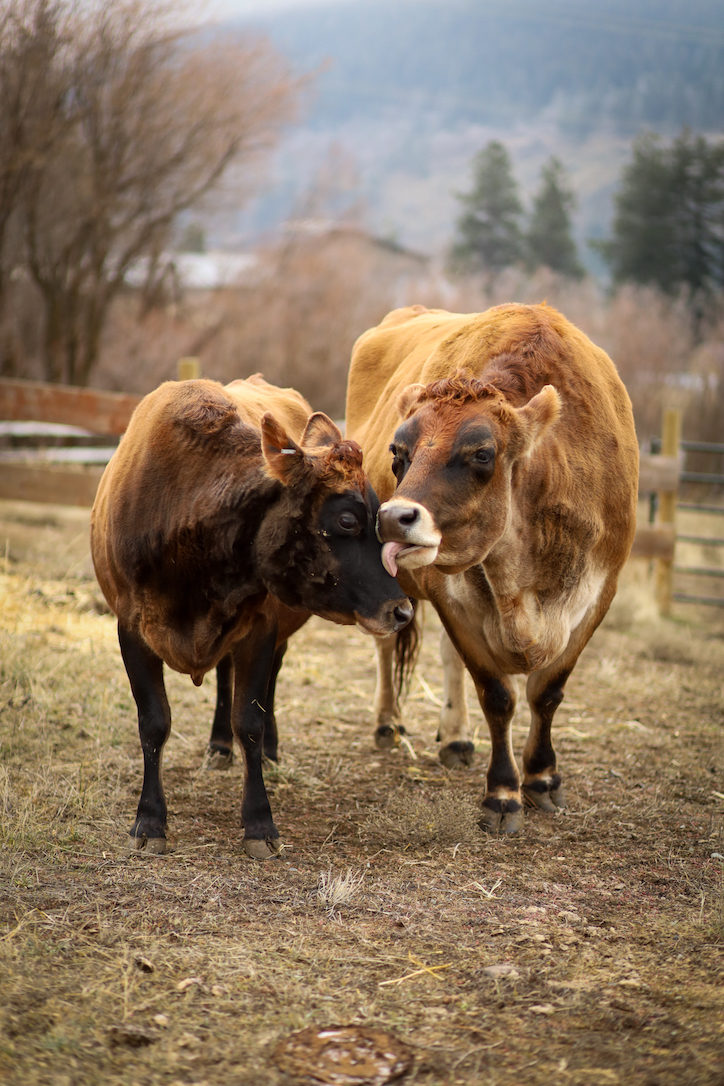
  • Domestic cattle can run up to 17 miles per hour (for short distances).
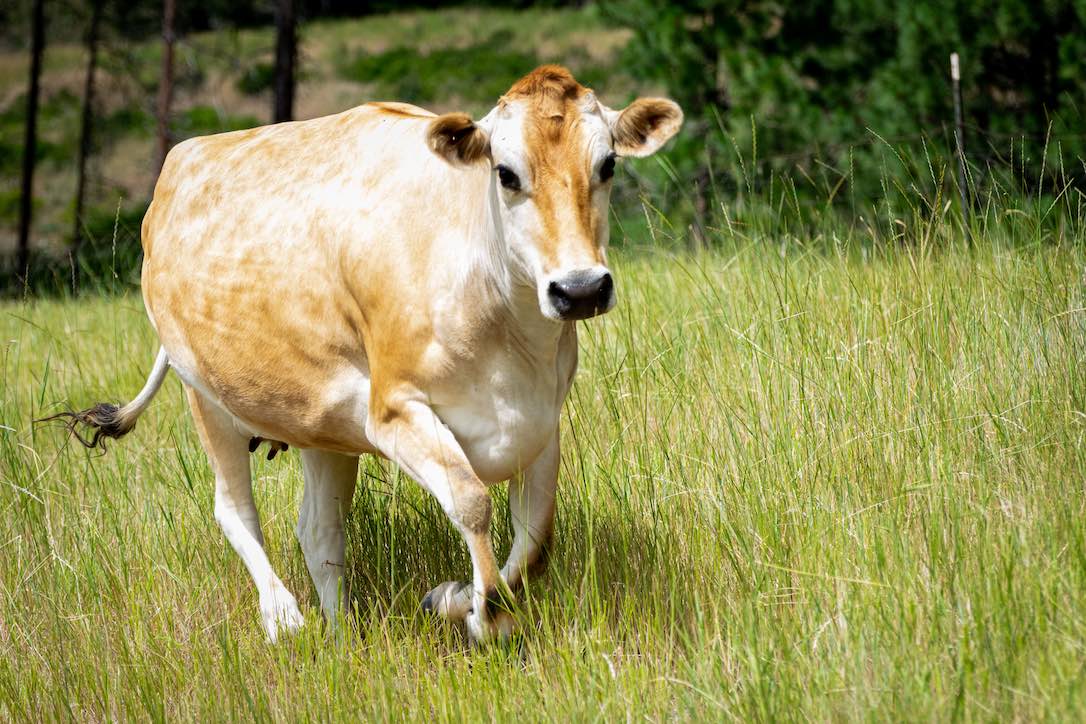
  • Cattle develop friendships with familiar individuals and reinforce their social bonds through grooming. Their preferred method of grooming is to lick each other with their raspy prehensile tongues (which also help them to grab food).
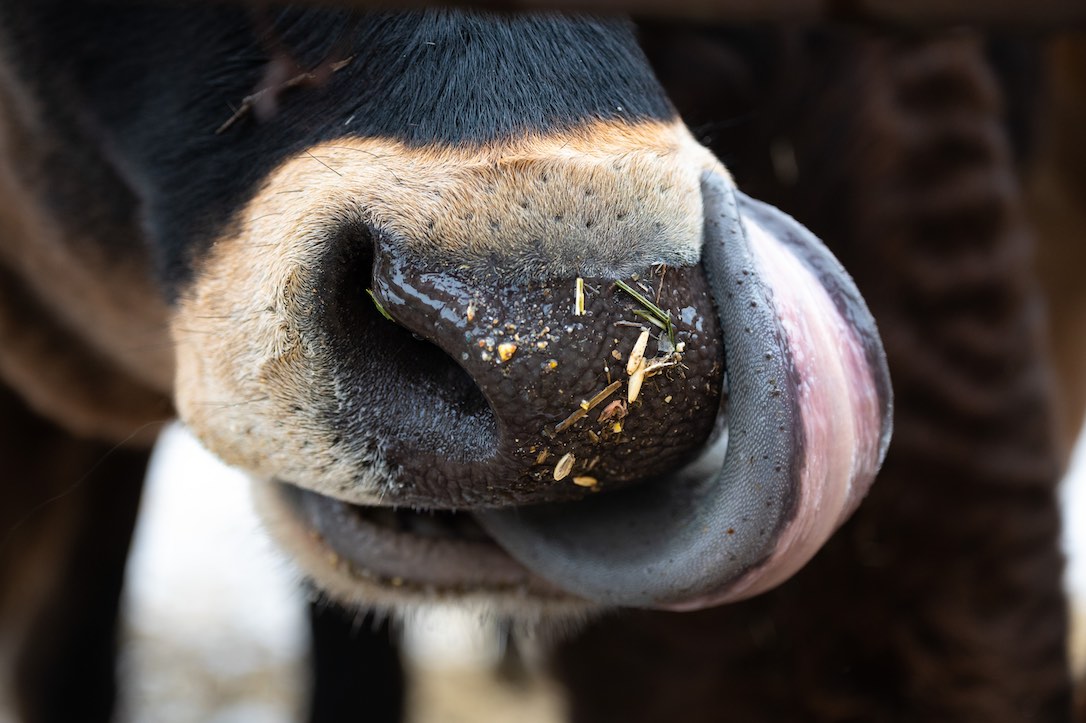
  • The USDA estimates the current global population of domestic cattle to be over one billion head (individuals), up 13.2 million from the previous year. These populations contribute significantly to anthropogenic climate change. The methane released from cattle ranches accounts for around 14% of global emissions.
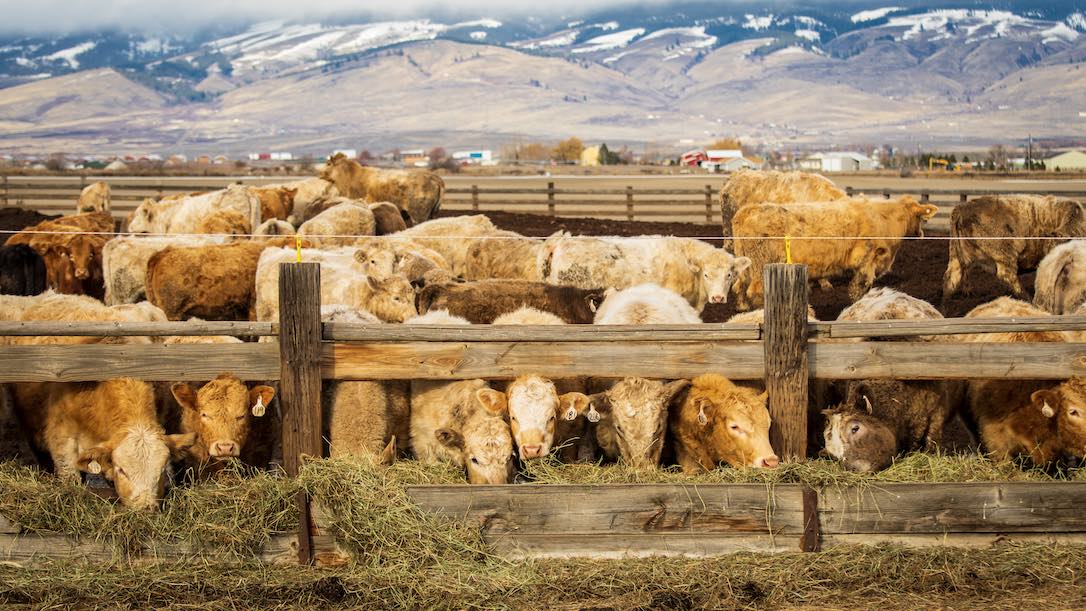
  • Red meat consumption peaked in 1976 and has fallen dramatically since, but the average American still consumes around 57.2 pounds of beef each year. Ranching remains a key industry in the communities near the sanctuary (below). Recently, the availability of plant-based meat substitutes, the rising costs of beef production, and the recent drought in the American West may all be contributing to this decline.
Now you’re all prepared to absolutely slay a Jeopardy category on the subject of bovines. You’re welcome.

Don’t forget to check out the HOOT! page to get your bovine collectibles and contribute to their sanctuary home!
Filed Under: Cattle, Farmed Animals, Fundraising Tagged With: animal rescue, animal rights, animal sanctuary, Animal Welfare, chimp, chimpanzee, chimpanzee sanctuary, Chimpanzee Sanctuary Northwest, cows, farm animals, jersey cattle, Sanctuary

A Glass Hoof Full

April 25, 2022 by Anthony

Chad wrote yesterday about our ambitious plans for this week which will likely impact the blog in the coming days. This afternoon’s post is just a brief update on the sanctuary’s bovine residents.

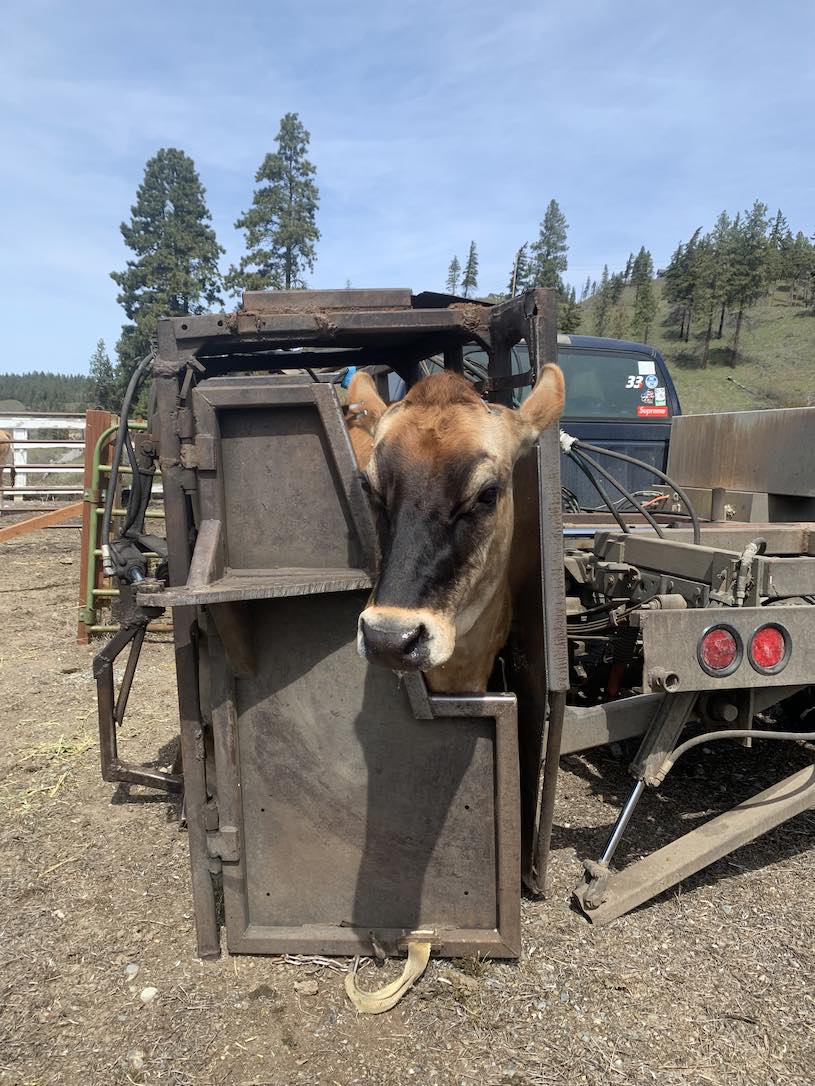
Every year, the hoof trimmer swings by to give the cattle their spring “pedicures.” Bovine hooves grow continuously like human fingernails and a trained professional must trim them on an annual basis to minimize the risk of injury and disease. Dr. Erin and Sofia also take the opportunity to administer their annual vaccinations. Ideally, we try to schedule this trimming before the cattle rotate out to pasture for the summer and become even more difficult to corral in the lower paddock.

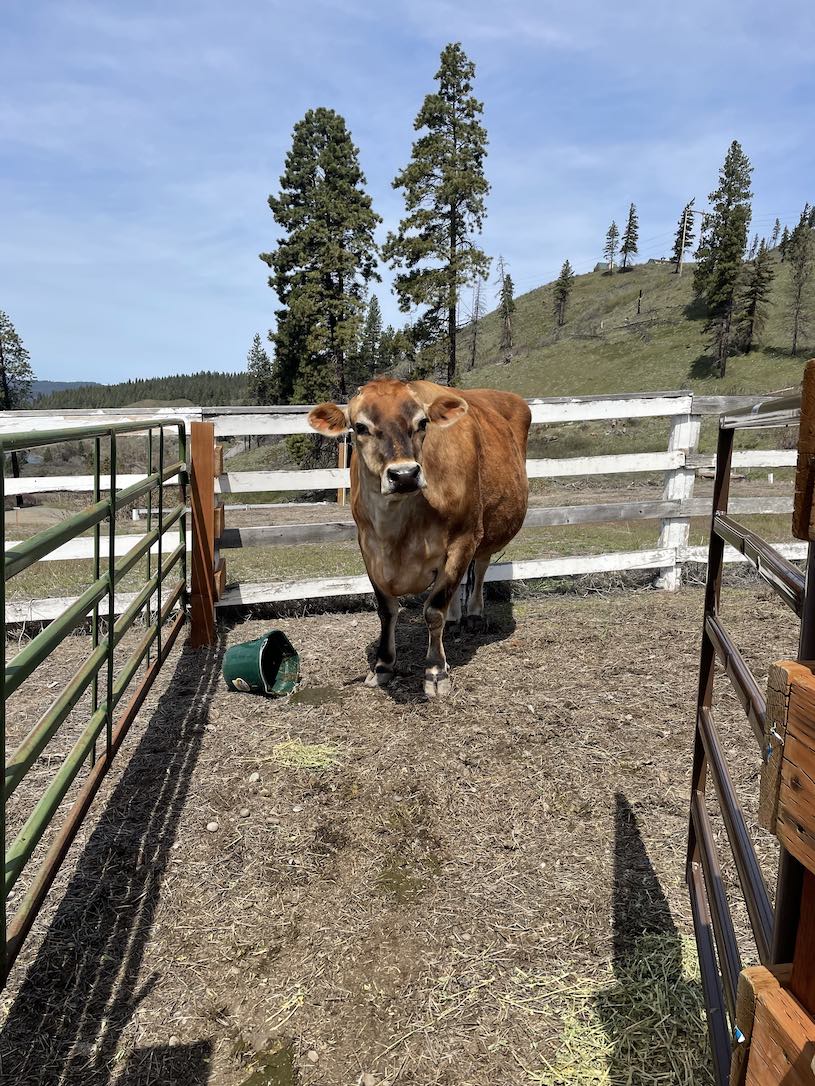
Yesterday, our friend Gates brought his specialized equipment to the sanctuary with the intent of getting all the cattle taken care of in one brief visit. Meredith bravely entered the chute first and got her hooves cleaned and trimmed, then Honey followed without issue. Nutmeg proved to be more difficult; the massive steer has actually grown too tall and wide for the hydraulic device that Gates uses to safely restrain the cattle. Betsy also missed her appointment after declining to get into the pen altogether. Because of these challenges, we’ll have to schedule a follow-up visit once we’ve made some adjustments to our setup.

Meredith waits in the squeeze after getting her hooves trimmed
Nutmeg waits for his appointment with the trimmer

Importantly, all of the cattle look just as healthy- if not healthier- than when they arrived (which isn’t bad for a bunch of reality TV stars from California). Evidently, life in the mountains has been quite good for them, and we’re happy to have them mowing the sanctuary lawn.

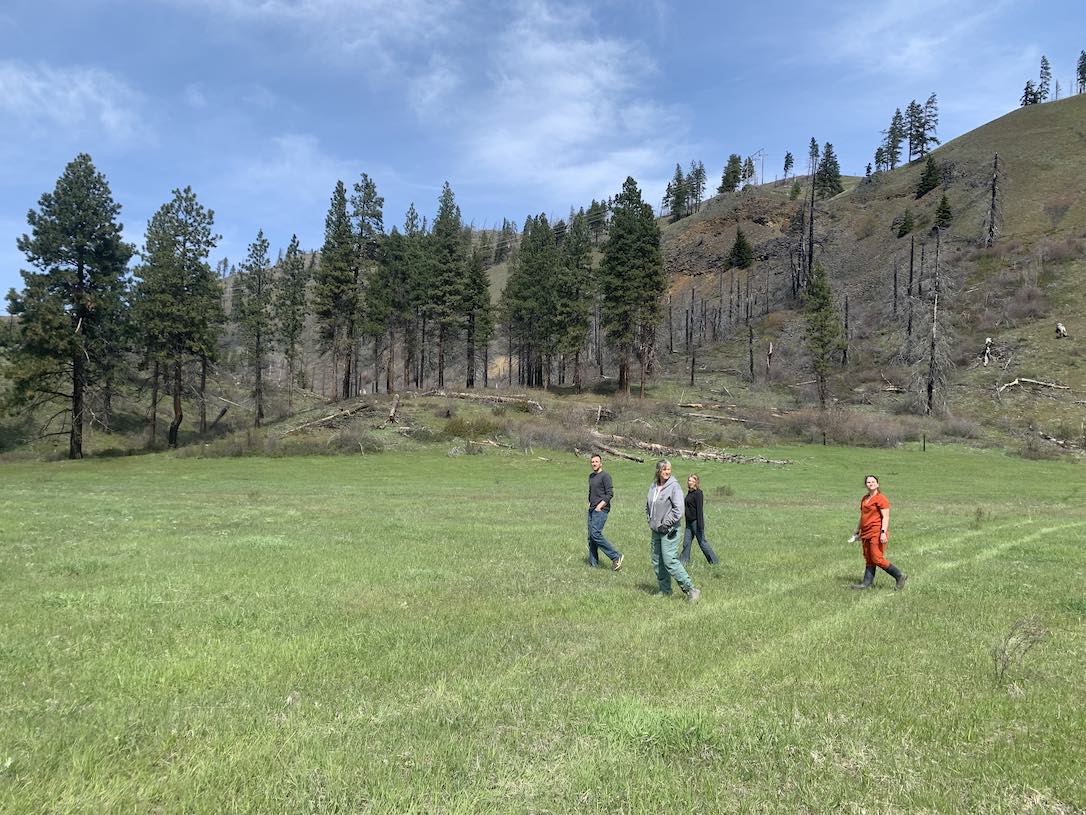
After the hoof trim event, the crew took a walk around the property to discuss our fencing and grazing plan for this year. It was exciting to see the more secluded areas where the cattle will be spending their summer!

J.B., Erin, Diana and Sofia walk through the upper pasture


Filed Under: Cattle, Construction, Farmed Animals Tagged With: animal sanctuary, cattle, chimpanzee sanctuary, Chimpanzee Sanctuary Northwest, dairy cattle, jersey cattle, northwest, Primates, Sanctuary

Full Hearts

July 3, 2021 by Diana

Getting to know the new Lucky Six chimpanzees is an incredible experience. In some ways, it seems like they’ve been here much longer than one week. But it’s true that we barely know them. So each new observation, every moment spent with them, fills our hearts.

The thing is, it’s still the same with all of the other non-humans in our care. They are all such interesting and unique beings; we can never know everything there is to know about them, and we still delight in the little moments.

I’ve been reflecting on little moments lately because our dog Wilson, who I’ve written about on the blog before, passed away this week. He had numerous medical issues over the years, and far outlived anyone expectations. His end was sudden, but not surprising, and J.B. and I were both with him. Though his body, specifically his heart, was failing him, it never slowed him down or changed the goofy, lovable, big-headed, empathetic dog that he was. Our hearts are broken, but that’s because they were filled with so much love.

We’re surrounded by life at the sanctuary. Grief is a strange bargain we make, but it’s worth it to feel so much love.


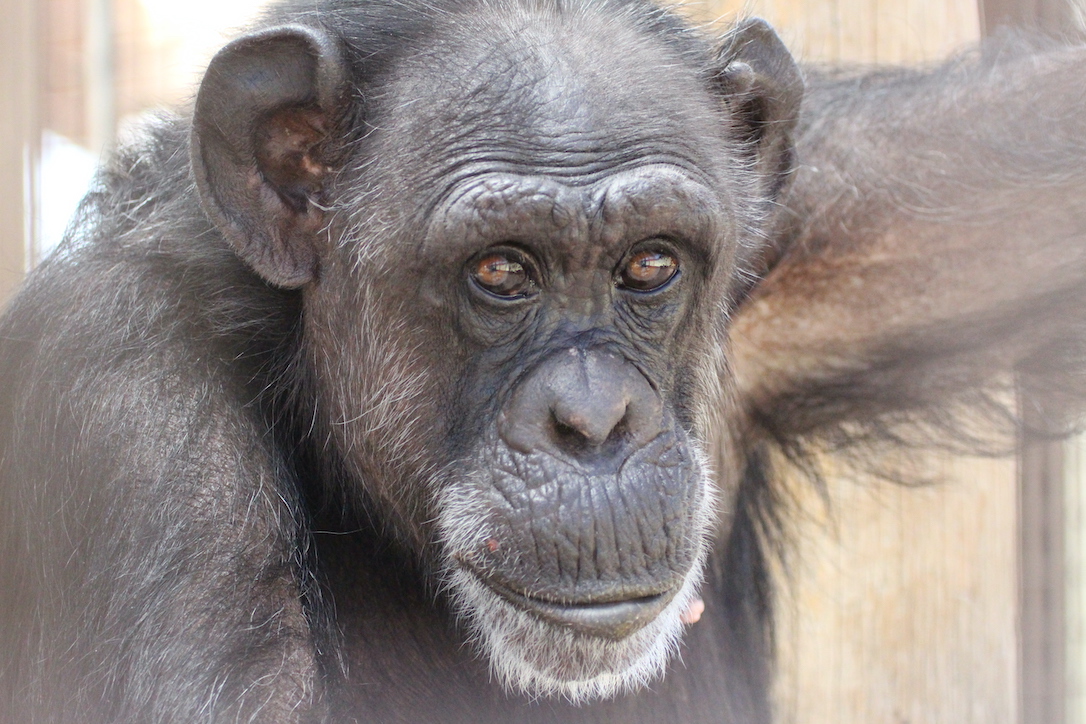
Dora Chimpanzee
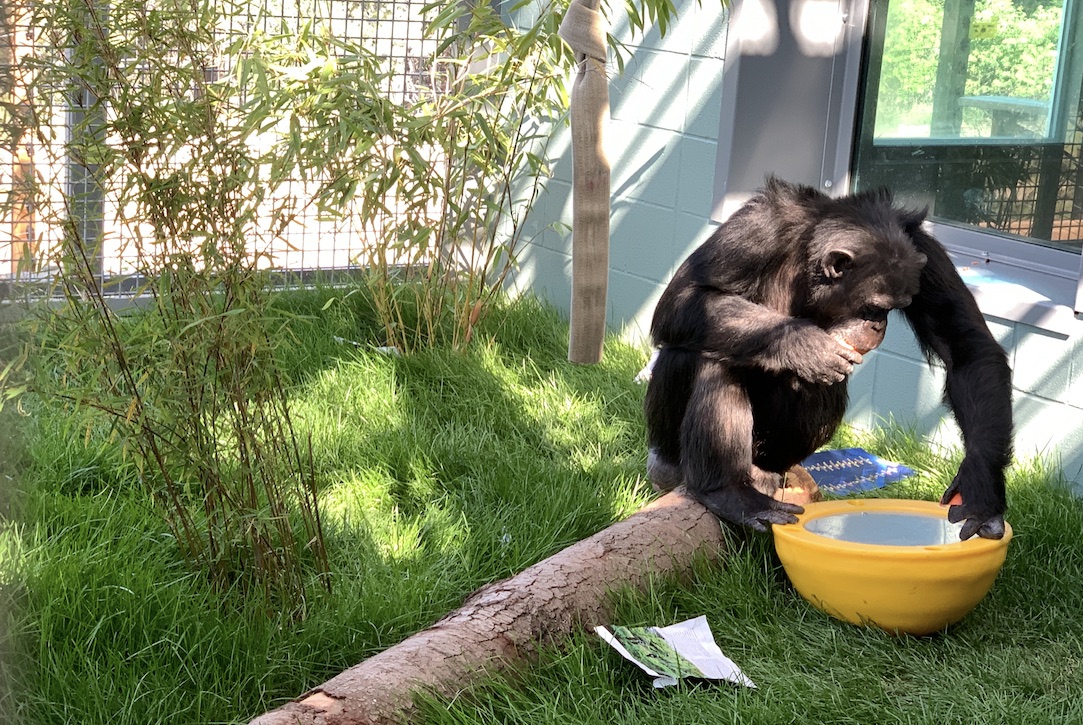
Dora watching herself eat dinner
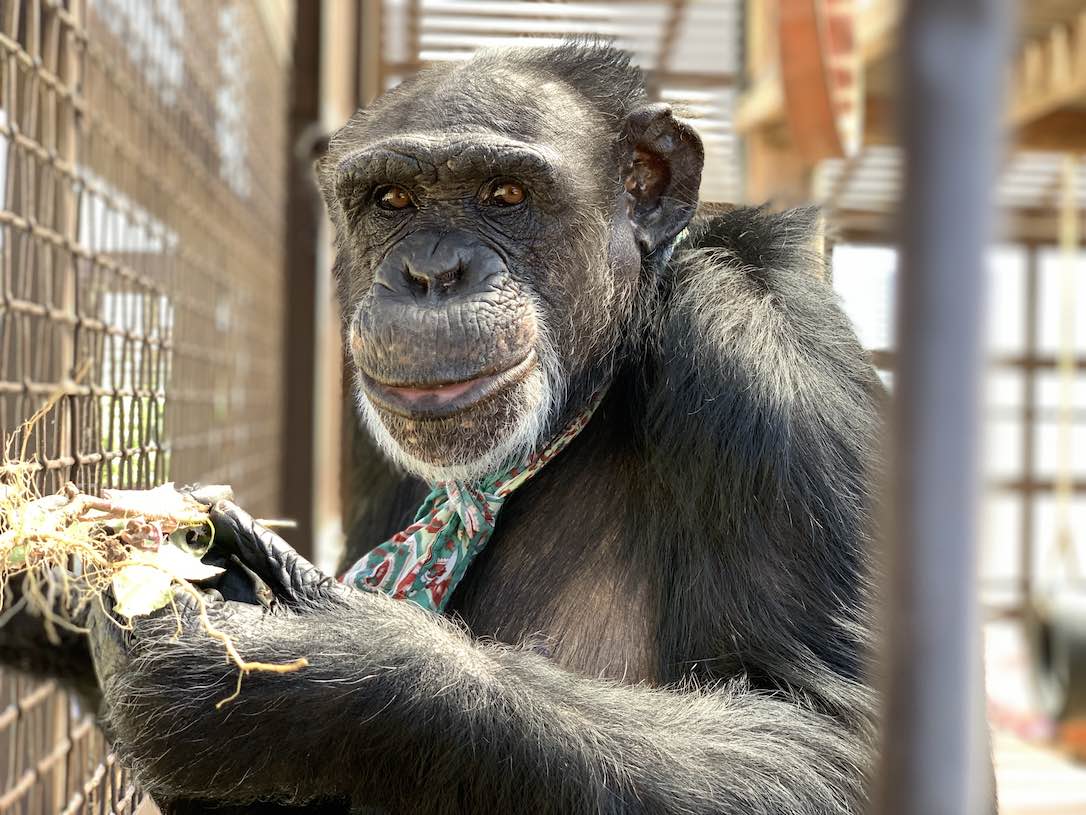
The one and only Jamie. She tied this scarf on with purpose and wore it all afternoon.


Jody


Wilson


Filed Under: Cy, Dora, Foxie, Gordo, Honey (Cow), Jamie, Jody, Latest Videos, Lucky, Rayne, Sanctuary, Terry Tagged With: animal rescue, animal sanctuary, ape sanctuary, chimpanzee sanctuary, Chimpanzee Sanctuary Northwest, chimpsnw, drinks from the hose, grief, love, peanut butter pinecones, video, wilson

50 Shades of Hay

April 26, 2021 by Anthony

A friend of me recently told me that they find observing cattle to be emotionally grounding. For sure, a serenely grazing cow radiates peace.

It’s difficult to tell when cattle are truly happy since they express their emotions in a way that seems alien to most humans. Still, there is a notable contrast between a calm bovine and an excited or anxious one. We who work with these creatures learn to differentiate between these various behavioral states and use this wisdom to safely provide optimal care.

In a more spiritual sense, I also love to watch the Moo Crew peacefully munch on a bale of grass hay, browse through the willows along the creek, or mow down an overgrown pasture like a band of professional landscapers. They bring me joy.

Today, we’re sharing the Jerseys and their zen-like bliss with you all. Please feel free to hop in your Gator, grab a bale of your own, and join in.

Filed Under: Cattle, Food, Sanctuary Tagged With: animal rescue, animal rights, animal sanctuary, Animal Welfare, cattle, chimp, chimp sanctuary, chimpanzee, chimpanzee sanctuary, Chimpanzee Sanctuary Northwest, chimpanzees, Cle Elum, cow sanctuary, cows, Enrichment, jersey cattle, jersey cows, northwest, Sanctuary

Meredith

March 21, 2021 by Anthony

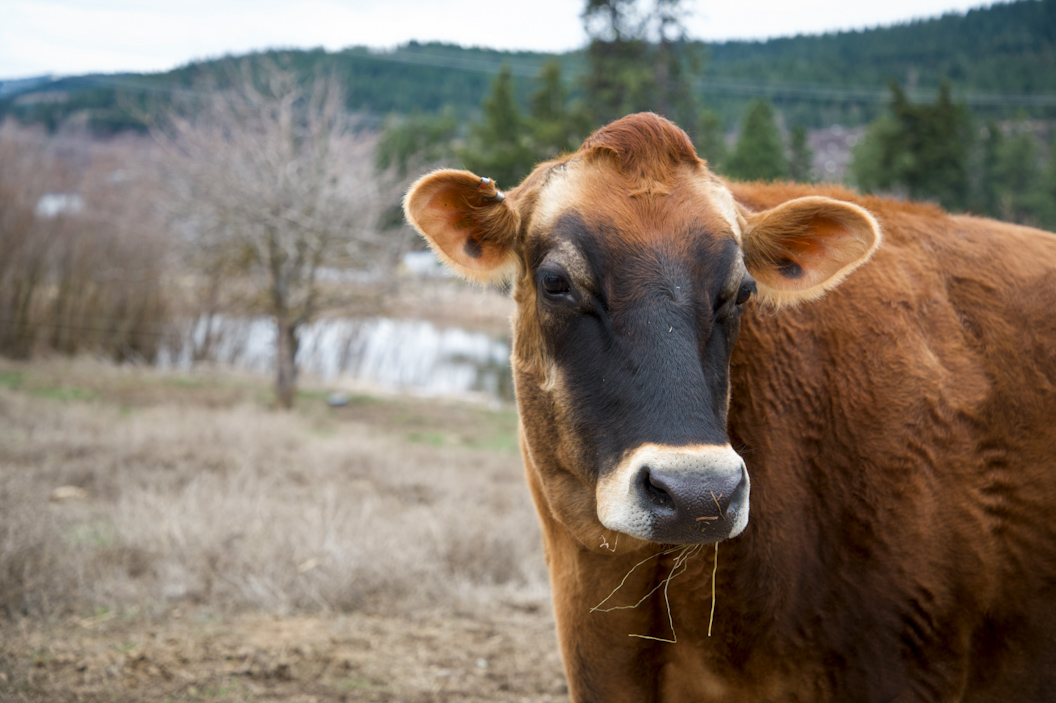
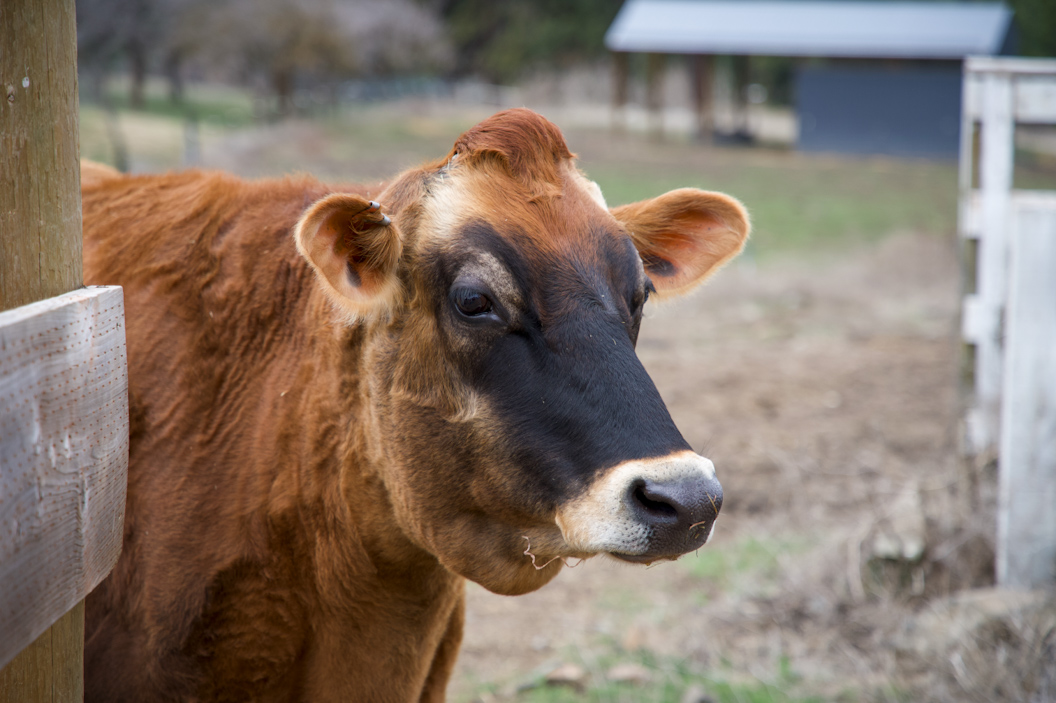
Those of you who follow CSNW on Instagram may have noticed that we regularly feature images of the four rescued Jersey cattle who graze the pastures around the sanctuary. Since these herbivorous creatures are so different from their chimpanzee neighbors, focusing on the cattle can be a welcome change of pace for the sanctuary staff and social media followers alike.

In the recent “Bovine Break” post from a couple days ago, we shared a photograph of the four Jersey cattle resting together in their winter paddock. They have formed a tightly-knit herd and are rarely seen apart, which is justified given their history and family bonds. Still, they each have their own colorful personality and quirky tendencies, and the image highlighted one of these characteristic traits.

While Betsy, Honey and Nutmeg were all aligned so they could view the hills and forests to the north of the sanctuary, Meredith was turned completely around and facing the other direction, chewing her cud without any indication that she wanted to conform with the others. We always joke that she has idiosyncratic tendencies, but it was nice to capture it visually for all to see. Standing while the others lay down, laying down while the others stand, facing the opposite direction, lagging behind the group… such is Meredith’s nature.

I used her peculiarity to my advantage when I went out to photograph the cattle this afternoon. The other three acted inconvenienced and trotted away, but Merry quietly waddled alongside me at her own pace. She’s not always in an affectionate mood, but she occasionally paused to suspiciously sniff my muck boots and gently lick my hands. We stopped at the paddock gate where she stood and watched the others (who had nonchalantly strolled through together). Eventually, I left them to their own endeavors. Apart from the satisfaction of capturing some nice portraits, I was also content to share a peaceful moment with this odd individual.

Filed Under: Cattle, Sanctuary Tagged With: animal personalities, animal rescue, animal rights, animal sanctuary, Animal Welfare, animals, cattle, cattler, chimpanzee sanctuary, Chimpanzee Sanctuary Northwest, Cle Elum, cows, dairy cows, farm animals, jersey cattle, jersey cows, Sanctuary, seattle

Doll Wars: The Chimpire Strikes Back!

March 7, 2021 by Anthony

A long time ago in a sanctuary far away…

The story begins with the great hero: Fox Hillwalker.

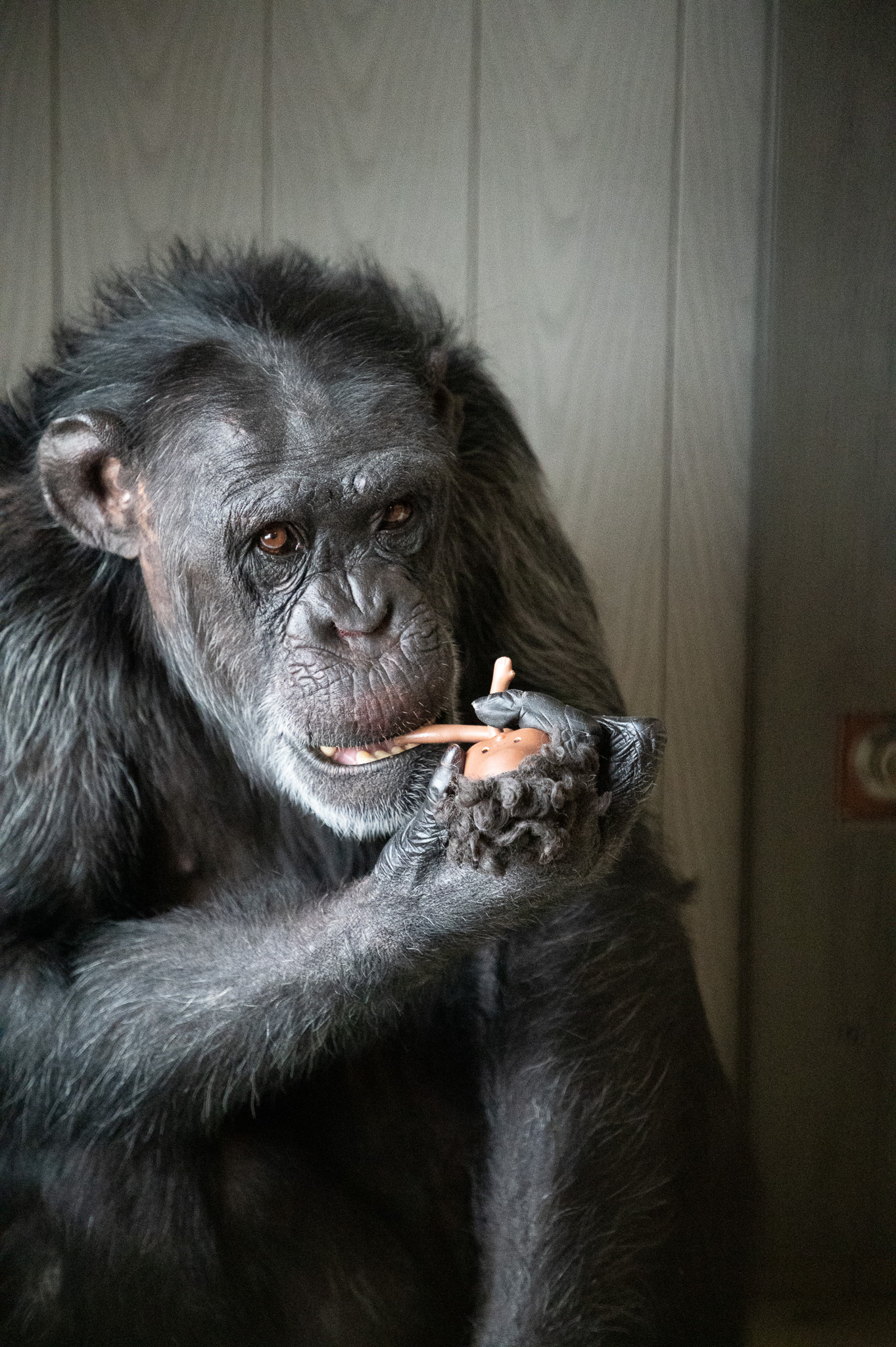
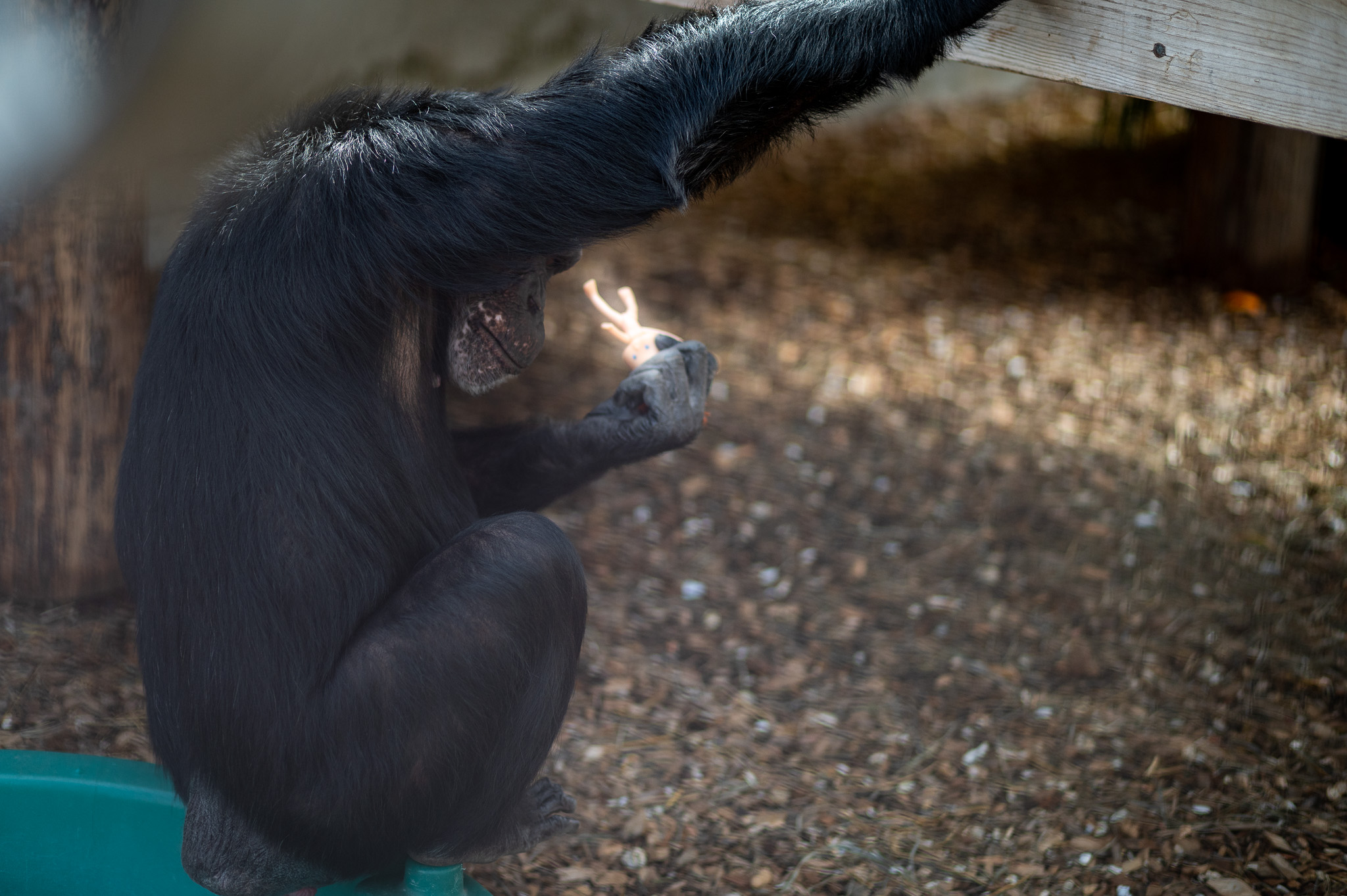
As a fearless defender of the Sanctuary Republic, Fox had learned the ways of the Enrichment Force, mastering this ancient art in order to maintain good chimpanzee welfare across the galaxy. Her weapon of choice was the Doll Saber, an elegant instrument of comfort and cheer that could be tossed, carried, and even used to scout distant worlds inhabited by strange creatures. Across the stars, Fox and her Doll Sabers were known for their extraordinary enrichment potential.

“I am no monkey!”

All was in balance until, one day, the ferocious leader Darth Jamie secured an especially powerful Doll Saber for herself.

Darth Jamie had already bent the peoples of the known universe to her will, offering them order and security in exchange for their obedience. (Those who did not submit met a messy and smelly fate.) By wielding the other side of the Enrichment Force, she trained an army of loyal boot-wearing caregivers to patrol the furthest reaches of the galaxy at her side, thus creating the First Galactic Chimpire.

“I find your lack of cool footwear… disturbing.”

Fox knew that the Doll Saber could not remain in the hands of such a powerful leader, but Darth Jamie was too powerful to take on alone, and her Chimperial associates would not turn on her lightly. Knowing that she would need friends if she hoped to win a rebellion, Fox ventured out in search of allies…

“I’m one with the Enrichment Force. The Enrichment Force is with me.”

First, she visited the palace of Negra the Hutt, a respected local warlord. Because she preferred dimly-lit comfort, Negra’s Palace was located near the galaxy’s heated core. When the bright sun rose above her planet that day, Negra grumbled something in her native tongue and closed the blanket shields, indicating that she wanted no part in the drama unfolding elsewhere. Fox knew she would have no success persuading Negra to leave her stronghold, and left alone.

“Ko rahto kama wahl bak? Bring me peanuts or leave my Playroom now!”

Further out in the galaxy, Fox encountered the charming renegade smuggler Han JoJo, but the latter had better things to do than get involved in politics. JoJo was more interested in pulling off unlikely stunts to acquire more vegetables. This was another dead end for Fox.

“Never tell me the odds.”

In the Greenhouse System, Fox ran into Annie-Wan Kenobi, a wise old master of the Enrichment Force. Annie-Wan advised Fox that Darth Jamie had become too powerful, and counseled that she let the Doll Saber go. She would not join Fox Hillwalker’s rebellion.

“Oh, I’m not brave enough for politics…”

Fox then reached out to an old friend, the bounty hunter Bubba Fett, who was cruising the Greenhouse System in his new spaceship. Despite biting off the tip of Fox’s ear long ago, the two were still friends. However, Fox was dismayed to find out that Bubba had recently aligned himself with Darth Jamie and was reluctant to join the rebellion. He briefly considered his friend’s intriguing proposal, but was quickly distracted by a passing caregiver and decided to play tickle instead. This is the way.

“I’m just a simple chimp trying to make my way in the universe.”

Fox’s last hope was Lando CalMissyan, a Chimperial magistrate who she hoped to turn against Darth Jamie. CalMissyan had grown rich in tomatoes by willfully submitting to Darth Jamie and enforcing her rule.

“Yeah, I’m middle-ranking these days. It’s the price you pay for being successful.”

When Fox went to CalMissyan begging for aid, the latter immediately went to the newly-crowned Chimperor and told her everything, reaffirming her boss’s trust. Darth Jamie was pleased.

“I am altering the deal. Pray I don’t alter it any further.”

The tables were turned. Fox now knew that she would have to face Darth Jamie alone if she wanted to wrest the Doll Saber from her grasp.

“I am a chimpanzee, like my ancestors before me!”

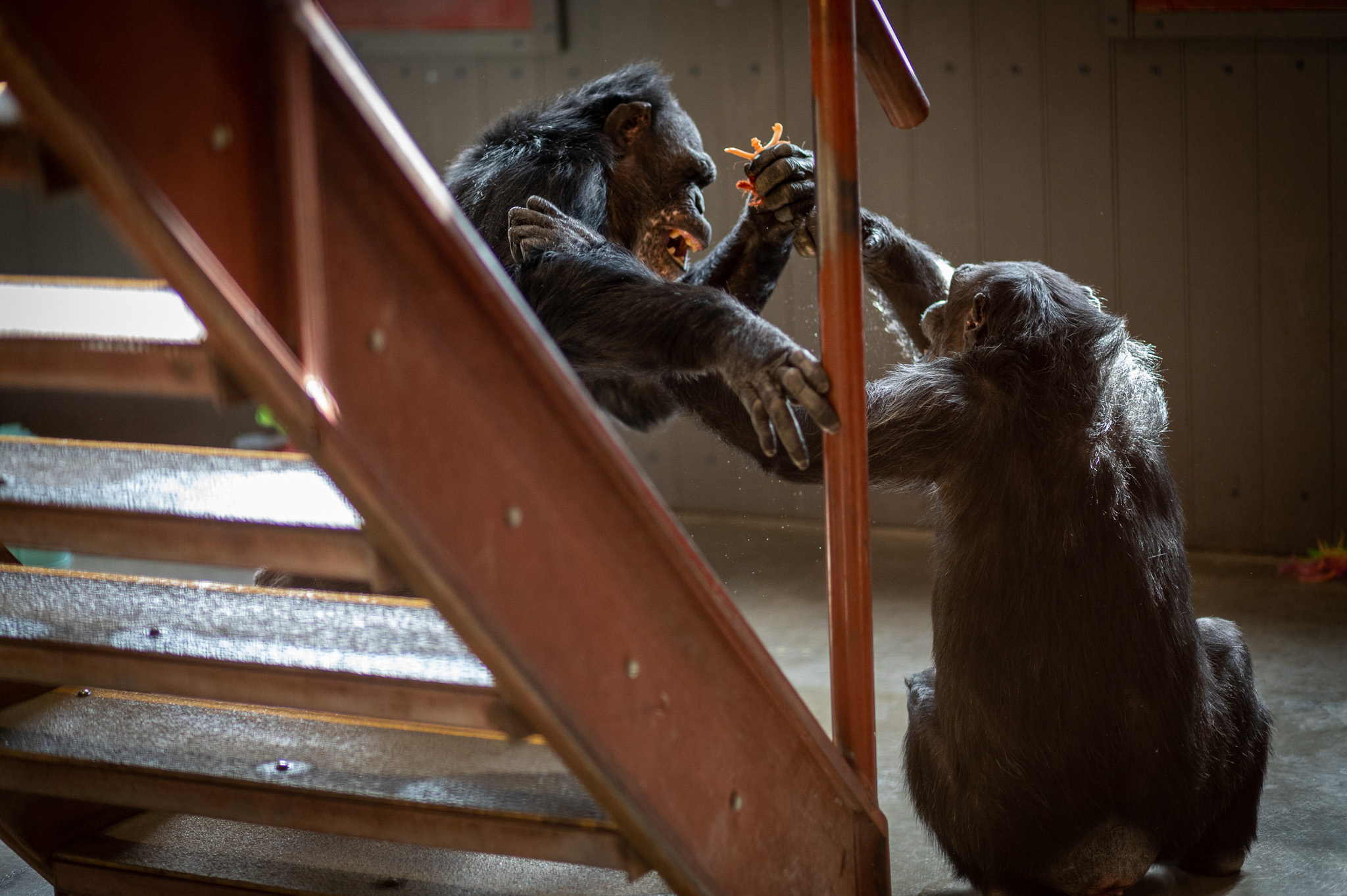
The two met in the Playroom Temple, a sacred place in which the Enrichment Force flows strongly, and began “aggressive negotiations.” Fox seized control of the Doll Saber, forcing Darth Jamie’s hand. There, they dueled for control of the sanctuary galaxy.

“Let her go, Fox!
“Let… her… go!”
“You turned her against me!”
“You have done that yourself!”
“You will not take her from me!”
” Your anger and your lust for power have already done that… now, you have become the very thing you swore to destroy.”
“I have brought peace, freedom, justice, and security to my new Chimpire!”
“Your new Chimpire?”
“Don’t make me tickle you!”
“…my allegiance is to the chimpanzees, to sanctuary!”
“If you’re not with me, then you’re my enemy!”

The duel seemed like it would never end, until Darth Jamie took the high ground.

“I will do what I must!”
“You will try!”
“It’s over Fox, I have the high ground!”
“You underestimate my power!”
“Don’t try it!”

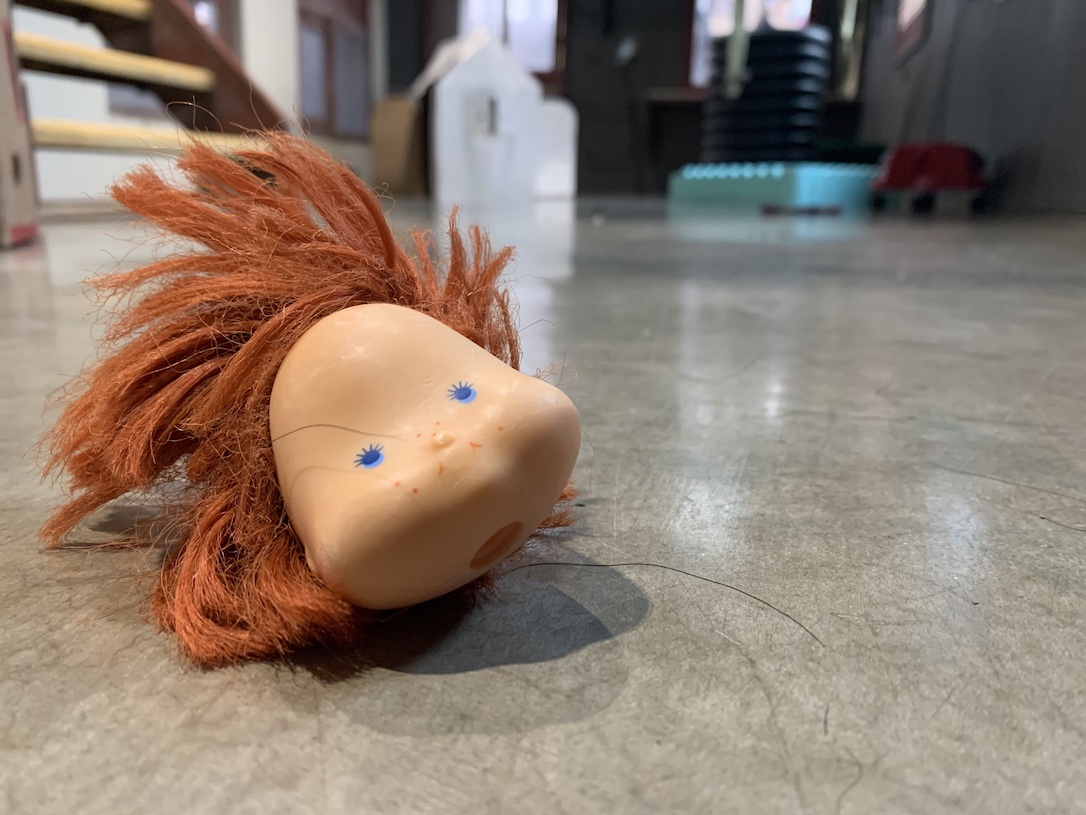
Suddenly, as the two were embroiled in the throes of combat, their combined power separated the head of the Doll Saber from its body. Just like that, the weapon no longer had any connection to the Enrichment Force, and both Fox Hillwalker and Darth Jamie lost the will to possess it as their own.

Soon after, the Sanctuary Republic and Galactic Chimpire began an era of peace and restoration. Former rivals met in the Greenhouse System to forgive each other and engage in affiliative rituals to rebuild their friendships. Once again, the chimps had brought balance to the Enrichment Force.

Little did Darth Jamie know, Fox Hillwalker was recruiting an army of Doll Clones to join her cause and overthrow the Chimpire!
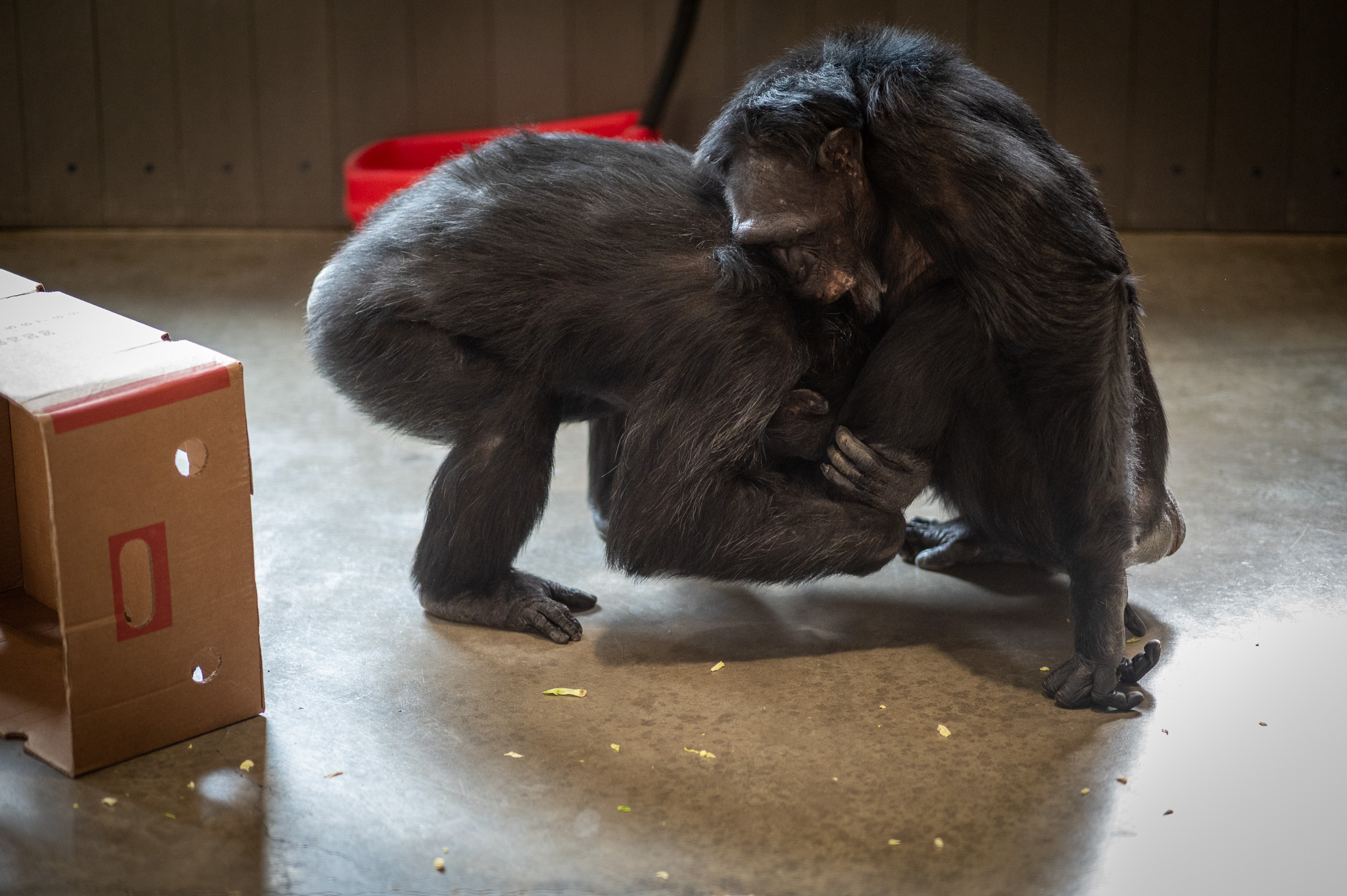
The saga continues…

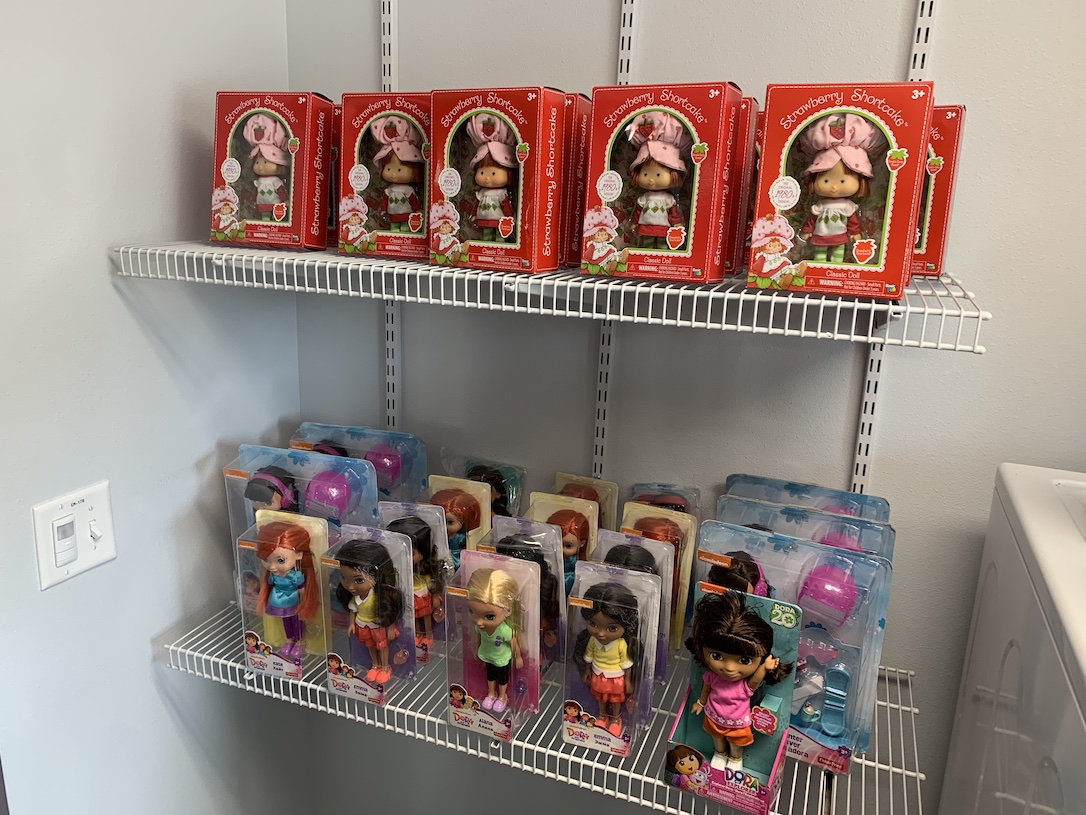
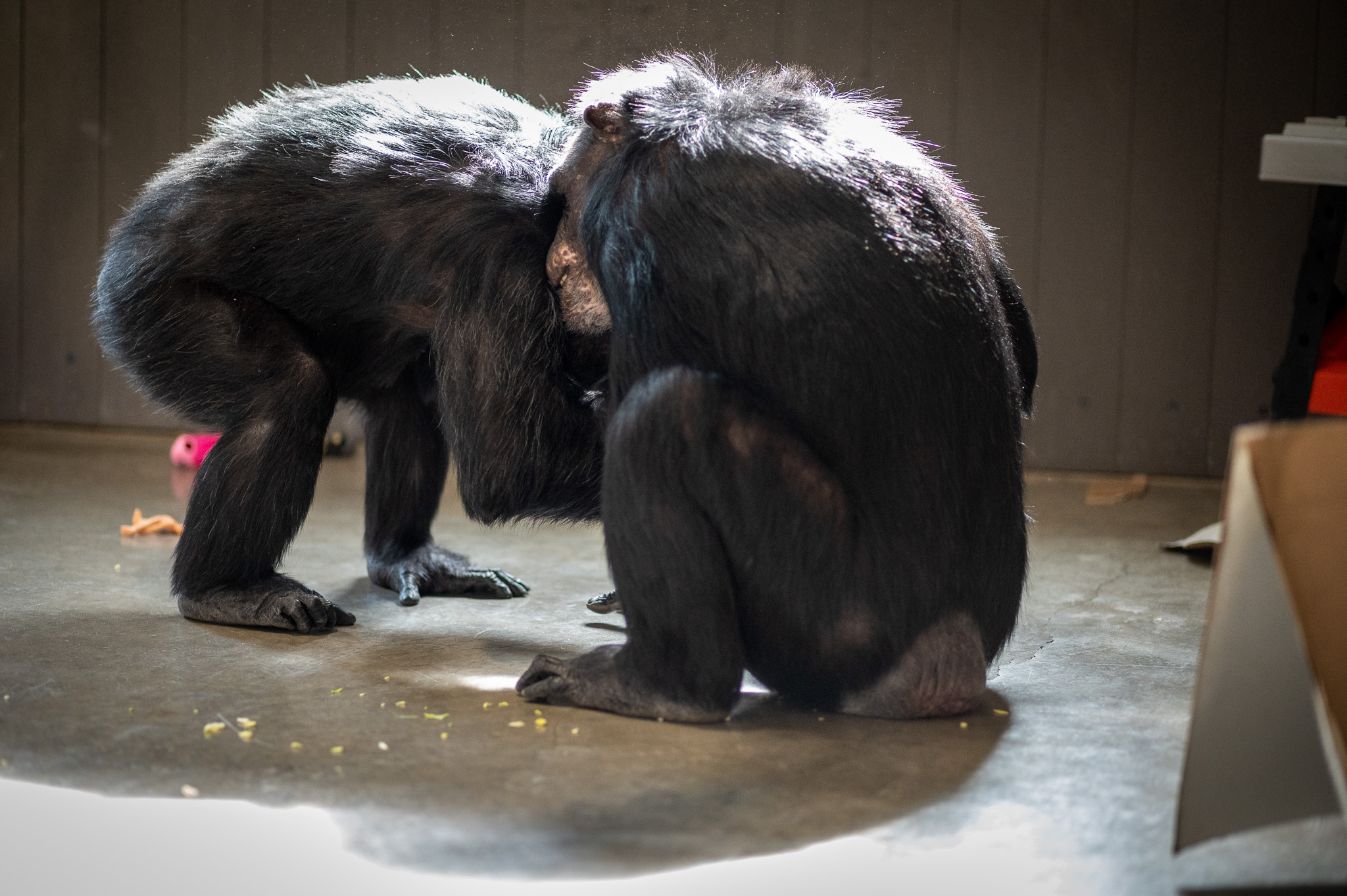
[Also, if you still haven’t figured it out, this post is a Star Wars parody, then I apologize. It’s mostly fiction. The chimps weren’t really fighting over dolls (or waging war on a galactic scale, for that matter), but Jamie and Foxie really did have an epic wrestling session this morning that resulted in a Strawberry Shortcake doll being decapitated! That’s actually pretty normal around here.]
Filed Under: Dolls, Enrichment, Foxie, Jamie, Play Tagged With: animal sanctuary, Animal Welfare, behavioral enrichment, chimp sanctuary, chimpanzees, chimps, csnw, Enrichment, environmental enrichment, primate sanctuary

(Banana for Scale)

February 28, 2021 by Anthony

Today’s blog is dedicated to our favorite fruit: bananas. Humans first domesticated these plants on the island archipelagos of Southeast Asia between 10,000 and 6,500 years ago. Ancient voyagers carried these remarkable berries with them around the globe, cementing their status as a staple crop for people living in tropical Africa, Asia, Oceania, and eventually the Americas.

Cavendish bananas are now the most popular cultivar worldwide despite actually being less than two-hundred years old. Bundles of these green bananas are shipped to regional warehouses where they are ripened in sealed rooms, resulting in the artificial yellow color that appeals to consumers in grocery stores. (Without the intermediate step, most Cavendish bananas will go from green to rotten without ever “ripening.”)

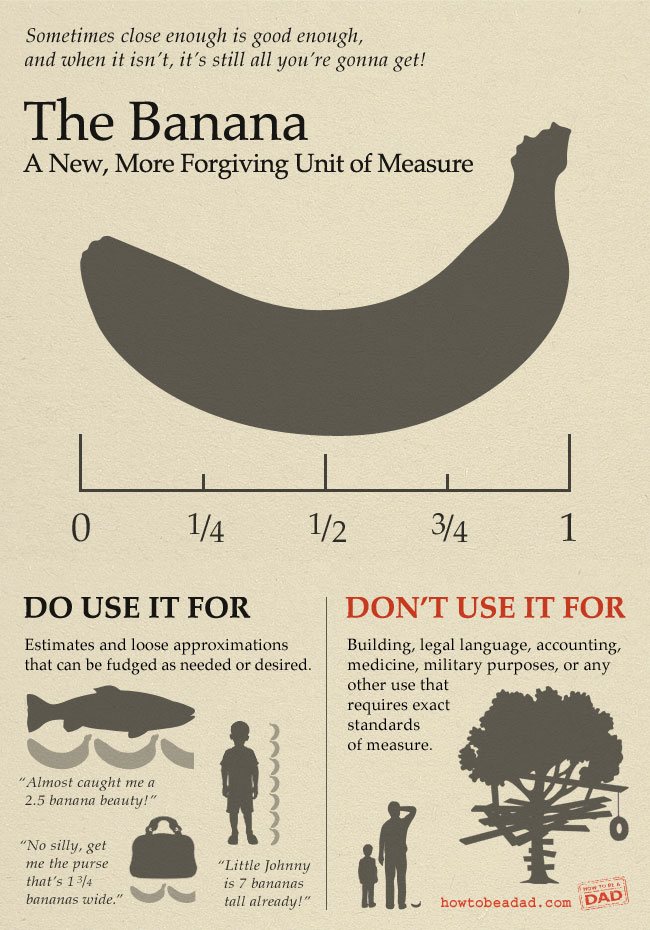
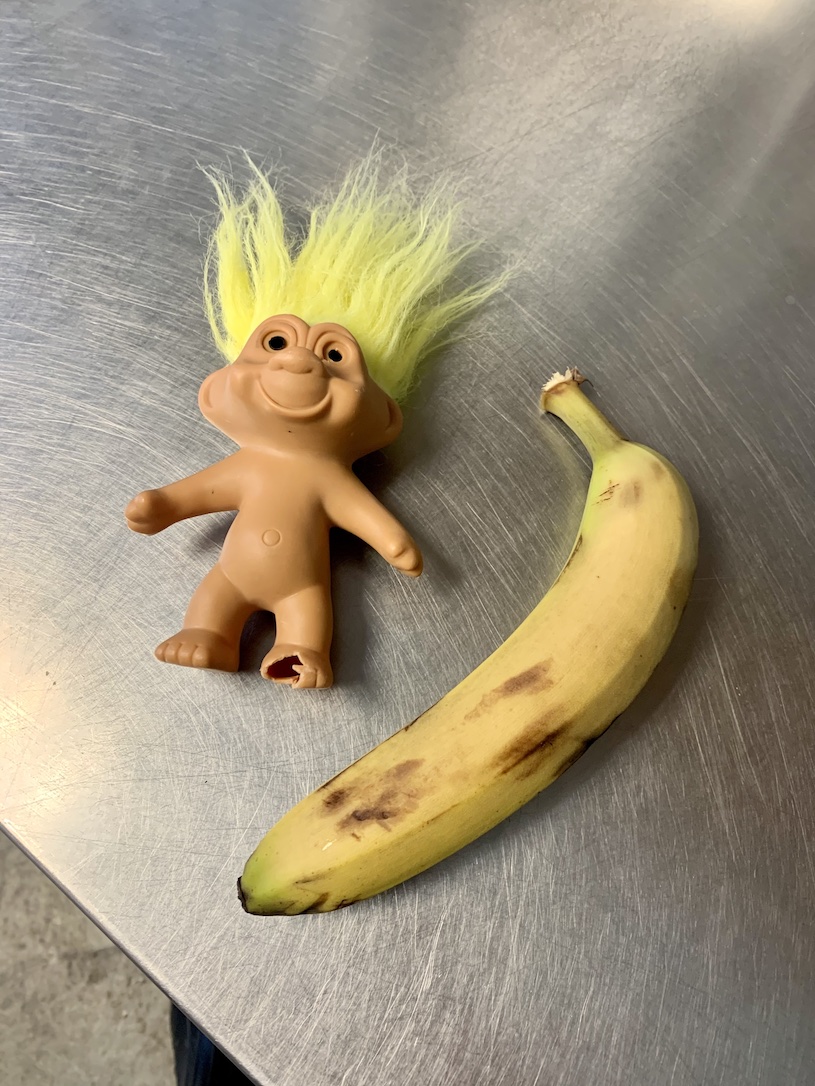
Besides simply cultivating and eating them, we humans have cemented a place for this fruit in pop culture. We refer to historically colonized nations as “Banana Republics,” laugh at people slipping on banana peels, and wear stupid banana costumes to parties. Spectacularly, people even began to include bananas in online images to provide the viewer with a sense of scale. (In fact, bananas may be a better unit of measurement than stoats.)

For a CSNW example, here’s an image of a Troll Doll (banana for scale):

Somehow, we also learned to associate bananas with our nonhuman ape and monkey relatives. (Thanks a lot, Donkey Kong!) As much as sanctuary caregivers may resent this overdone stereotype as we work hard to give the residents a wide variety of species-appropriate foods, even we cannot deny that chimpanzees really do love bananas. In fact, we almost always have them in stock as each chimp eats an average of one or two bananas each day. The reliance on bananas is normal for sanctuaries. At fellow NAPSA member sanctuary Chimp Haven, the enthusiasm with which each of their 300+ residents demands two bananas each morning has inspired a line of merchandise (and I have one of the mugs).

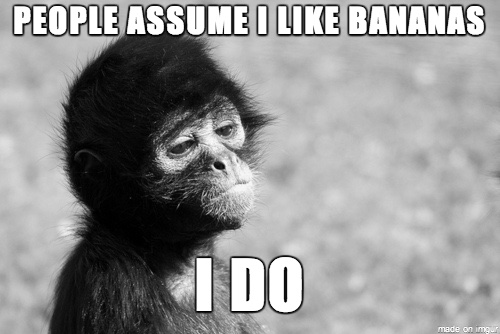
Note: The following meme depicts a young spider monkey, not a chimp, but it holds the same weight:

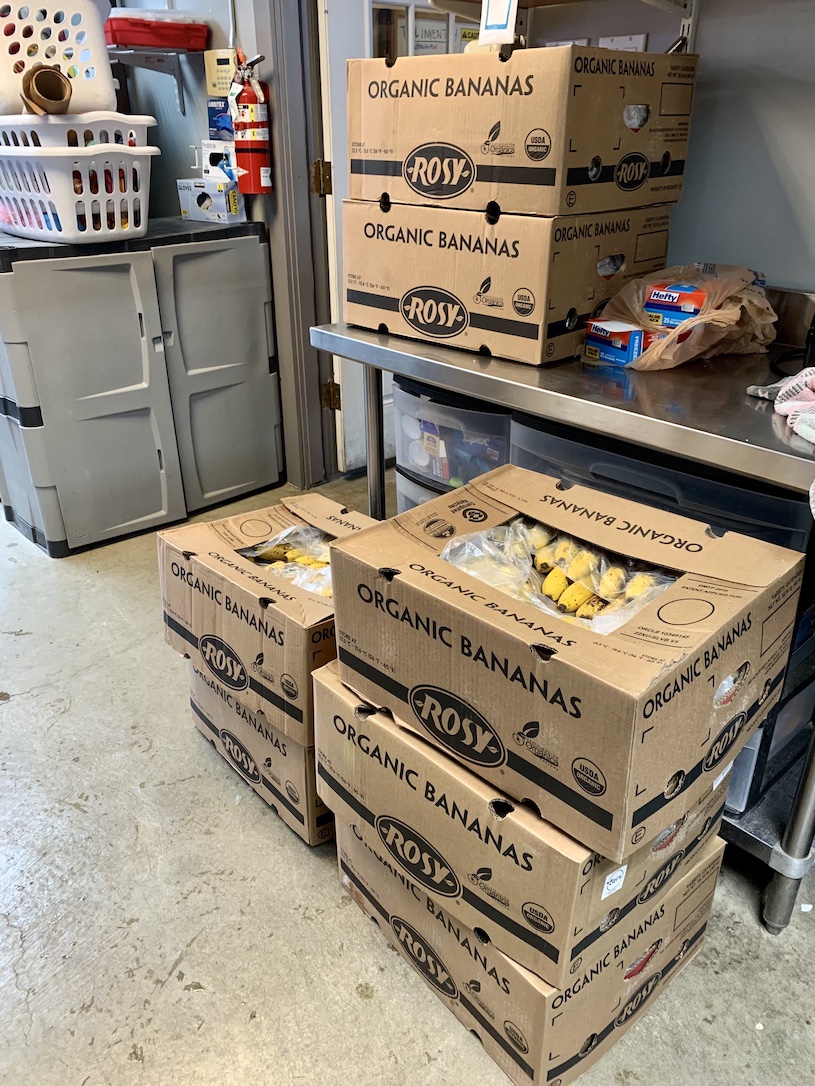
Fortunately for the sanctuary’s ten chimpanzee residents, we recently received an unexpected donation of bananas from the faith-based FISH Community Food Bank in nearby Ellensburg. Thanks, FISH!!!

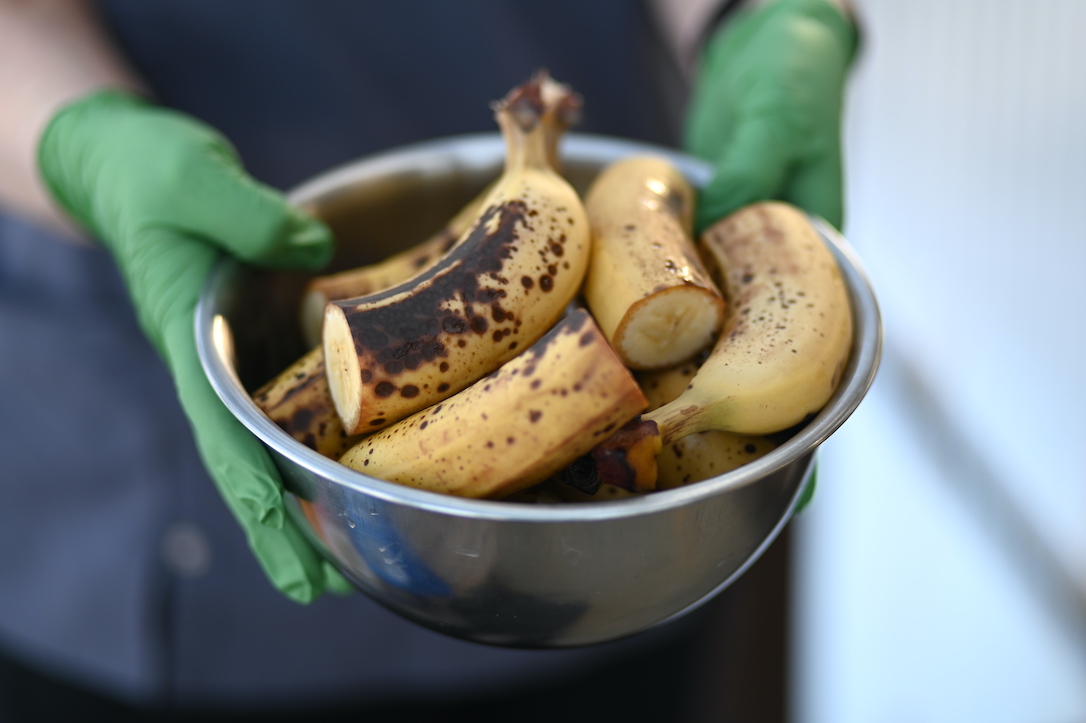
The bananas were perfect– canary yellow with coffee-colored spots, firm but not starchy, and pungently sweet- and the generous people at the food bank gave us SEVEN CASES of these things to dole out to the chimps.

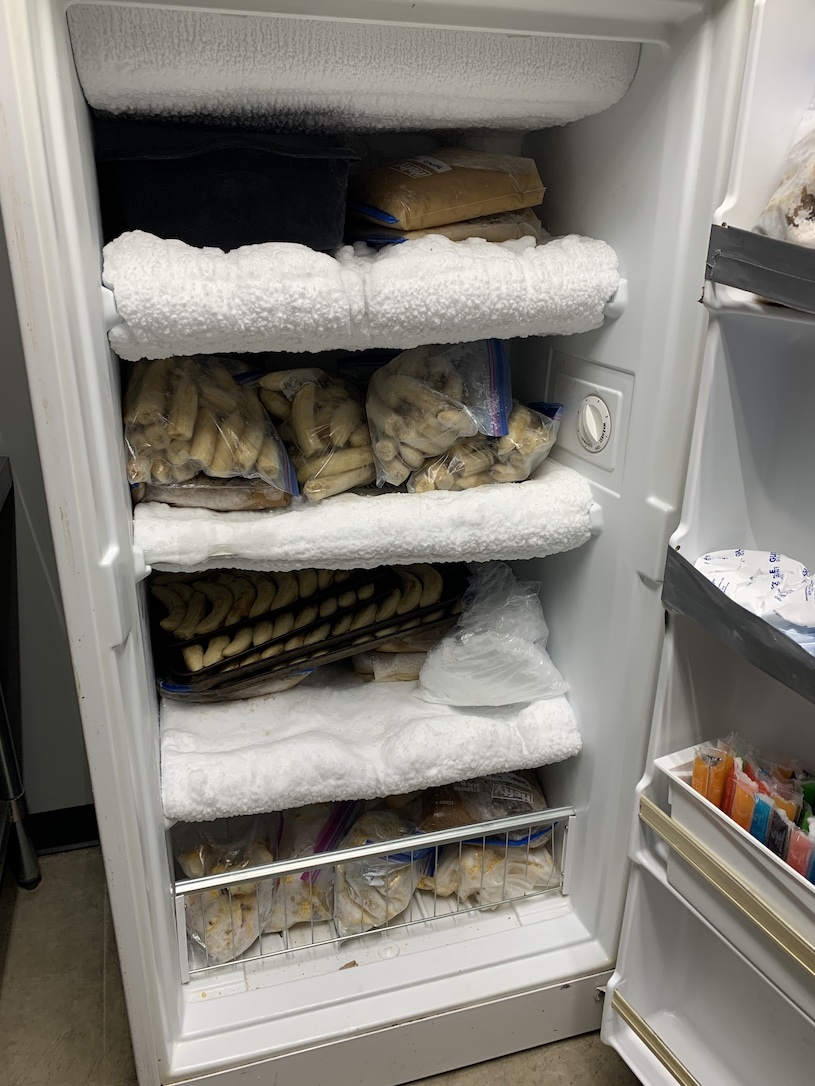
As Diana pointed out yesterday, the event was not quite a lagniappe, but it had a similar vibe. As a nonprofit organization, we rely on generosity and thoughtfulness to keep the sanctuary running. Every contribution matters. To make sure that we wouldn’t waste a donation like this, the staff got to work freezing peeled and blended bananas for use in future smoothies, dehydrating bananas to make chips for night bags, and washing bananas for immediate meal service. Processing new produce is one of my favorite weekly tasks, so this past week has been quite the thrill.

The chimps have not been complaining about receiving bananas more frequently. They demand their bananas first (because fruit is always the highest priority) then scarf them down with gusto. Lately, I’ve been trying to get a passable photo of any chimpanzee eating a donated banana to send to the team at the food bank, but the chimpanzees eat them too fast and I miss each narrow window of opportunity.

This pattern continued through today. During breakfast, I stood in front of the indoor enclosures and waited for the chimps to bring their bananas in from the Greenhouse (just as Jody did on Friday). They all inhaled their first course on the spot instead of taking it to go, so I squandered that chance by planning poorly. Then, at dinner, the bananas were almost entirely gone by the time I had carried out my other duties and arrived in the Greenhouse with a camera.

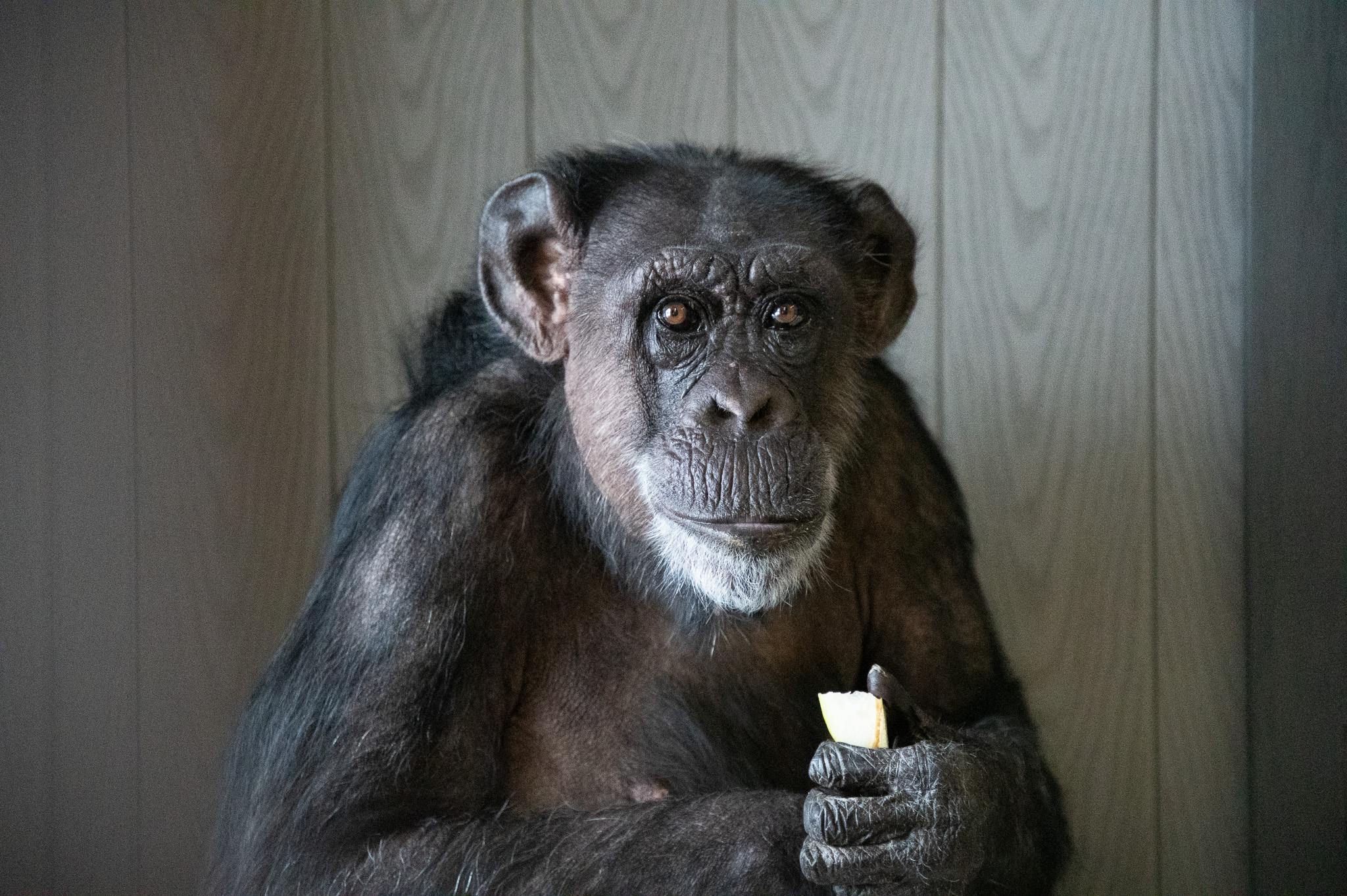
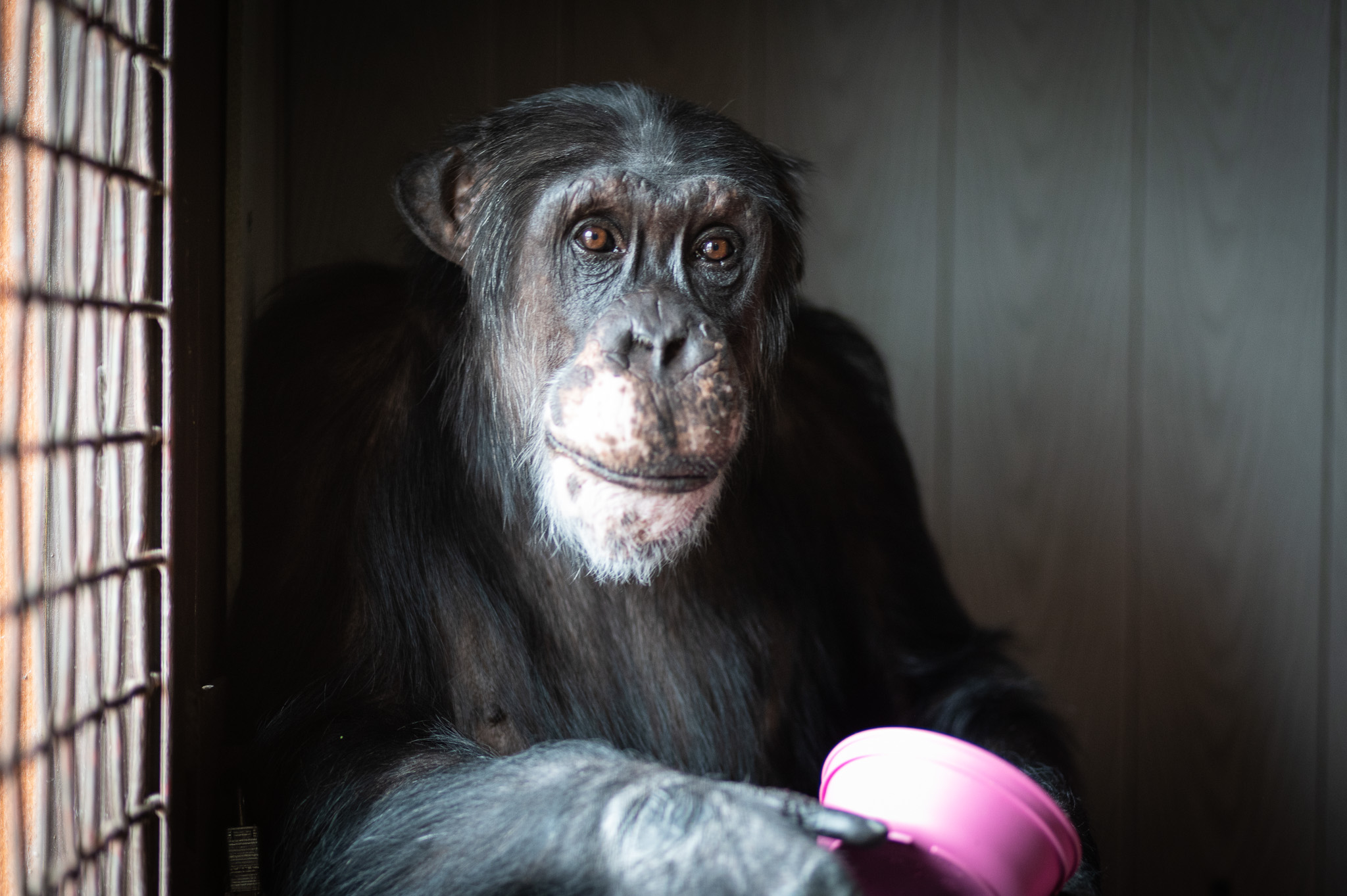
I did manage to salvage a few photos from breakfast, however. In particular, Jamie was overwhelmed by the amazing banana smoothie that the care team had prepared for both groups of chimps. She used her fingers to scrape every last bit of it from the plastic cup.

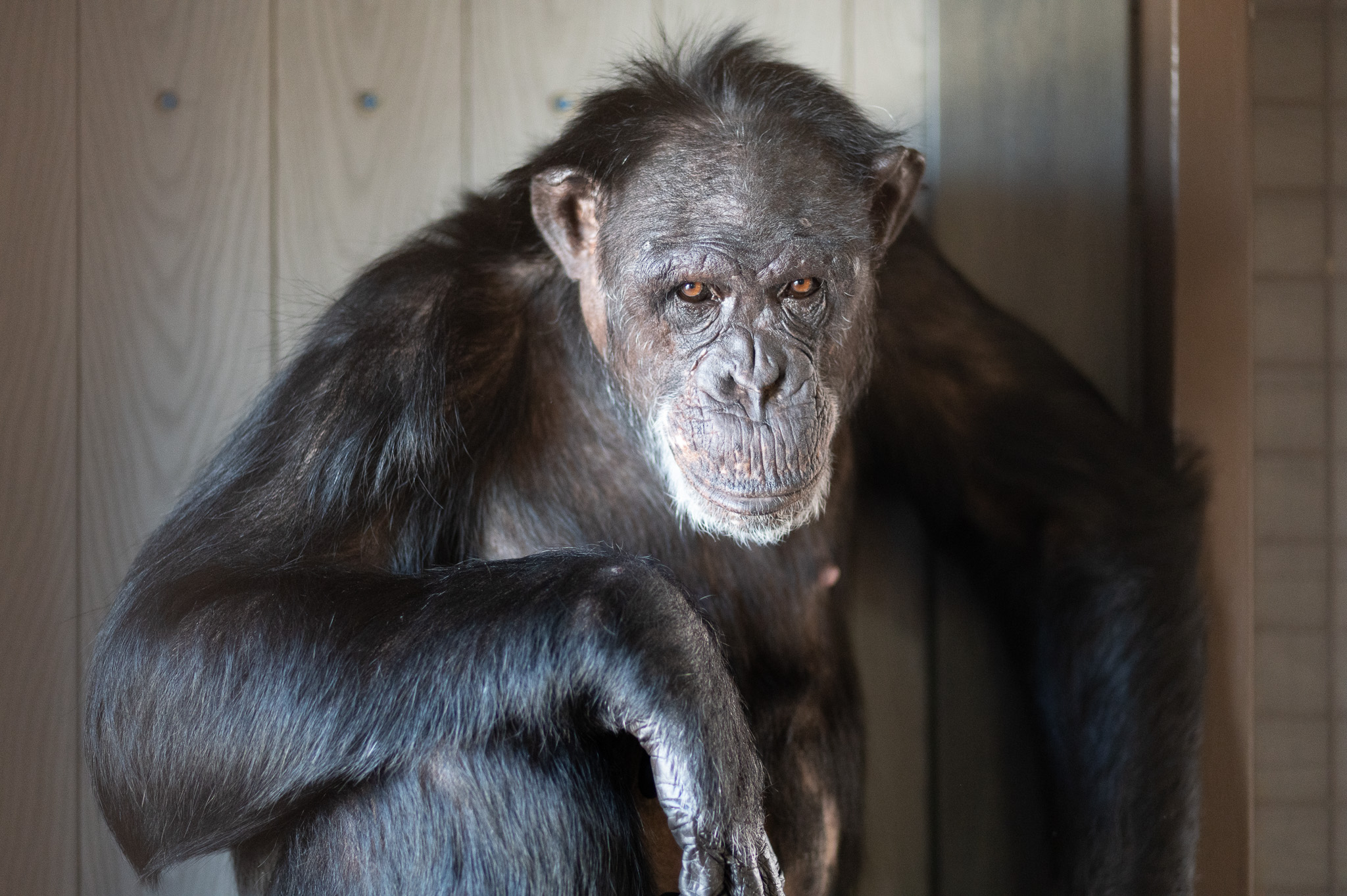
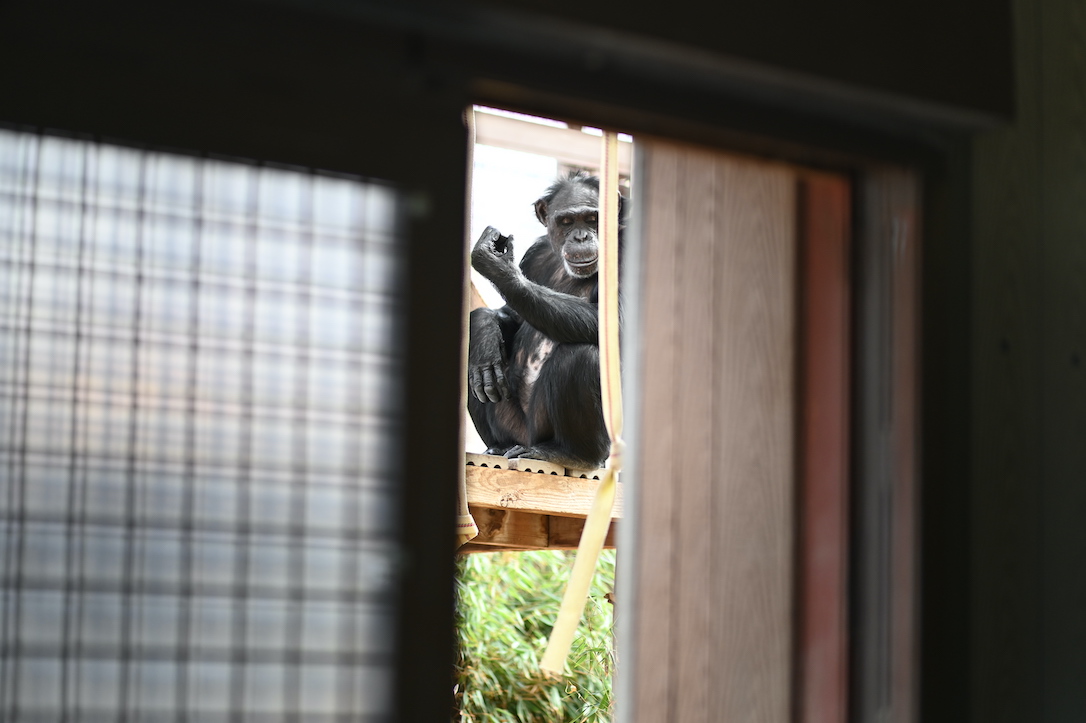
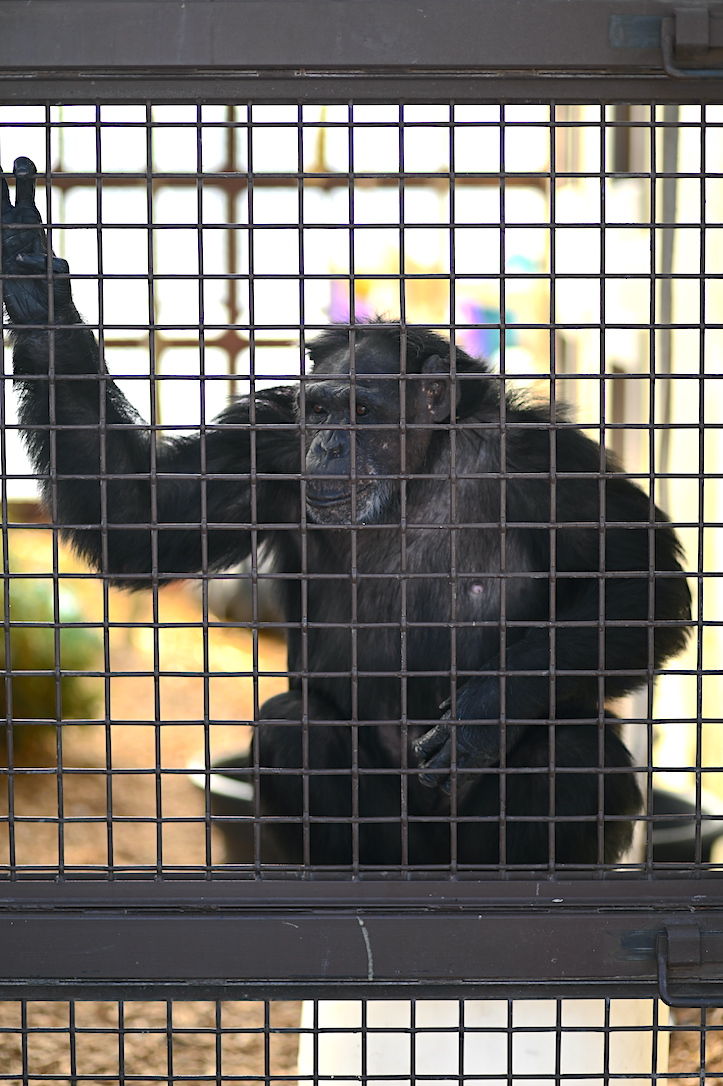
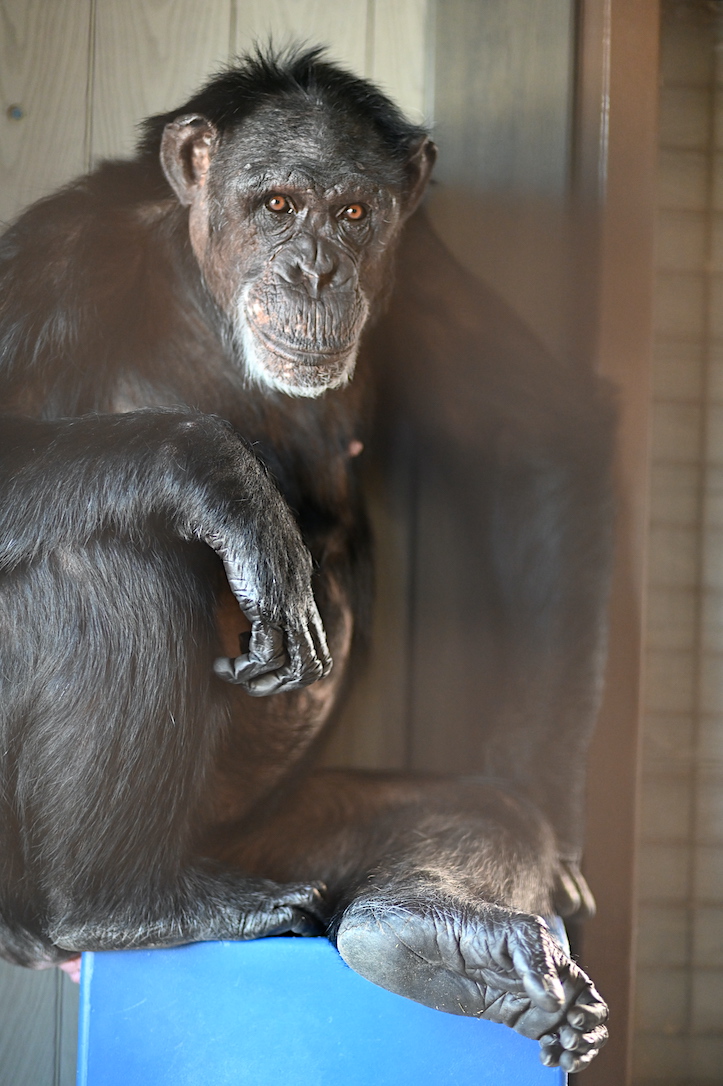
After breakfast, Jamie finally went into the indoor rooms and sat on a bench. I still had the camera hanging from my neck, so I asked her if I could take some portraits. She mostly ignored me (except for an occasional nod that I interpreted as “affirmative”), and kept looking over my shoulder. Her attention evidently went down the hall toward the kitchen. I turned to follow her gaze. Through that narrow doorway, we could both see straight through to the transparent refrigerator door where hundreds of bananas sat on brightly-lit shelves.

I doubt that Jamie knows the natural history of bananas or that the people at FISH supplied us with the ones she ate for breakfast, but it’s a safe bet that she’ll be expecting one on her breakfast tray tomorrow morning.

She’s in luck.

We have, like, a thousand of them.

P.S. If you’re interested in helping us to get fresh produce to the chimps every day, you should consider being a Produce Patron!

Filed Under: Food, Jamie, Thanks Tagged With: animal sanctuaries, animal sanctuary, chimp sanctuary, chimpanzees, chimps, csnw, donate, fish community food bank, fish ellensburg, food bank, food bank ellensburg, nonprofit, northwest, primate sanctuary, seattle

  • Page 1
  • Page 2
  • Page 3
  • Interim pages omitted …
  • Page 5
  • Go to Next Page »

Primary Sidebar

Subscribe To the Blog and Get Notified of New Posts First!

Archives

Calendar of Blog Posts

June 2026
S M T W T F S
 123456
78910111213
14151617181920
21222324252627
282930  
« May    

Categories

SUBSCRIBE TO OUR NEWSLETTER

Footer

PO Box 952
Cle Elum, WA 98922
[email protected]
509-699-0728
501c3 registered charity
EIN: 68-0552915

Official DDAF Grantee

Menu

  • The Chimpanzees
  • Blog
  • About Us
  • You can help
  • Resources
  • Contact
  • Donate

Proud Member of

Connect With Us

Search

Copyright © 2026 Chimpanzee Sanctuary Northwest. All Rights Reserved. Site by Vegan Web Design