The girls have been so sweet towards Burrito during his recovery. You know things are returning to normal when they stop doting on him and start trying to take advantage of him.
northwest
Trending Upward
I must admit that I got quite sentimental in my latest blog post. I even tried to be insightful.
Today’s entry will contain nothing of the sort.
Instead, here is a dry update on everyone’s progress accompanied by images from my phone camera.
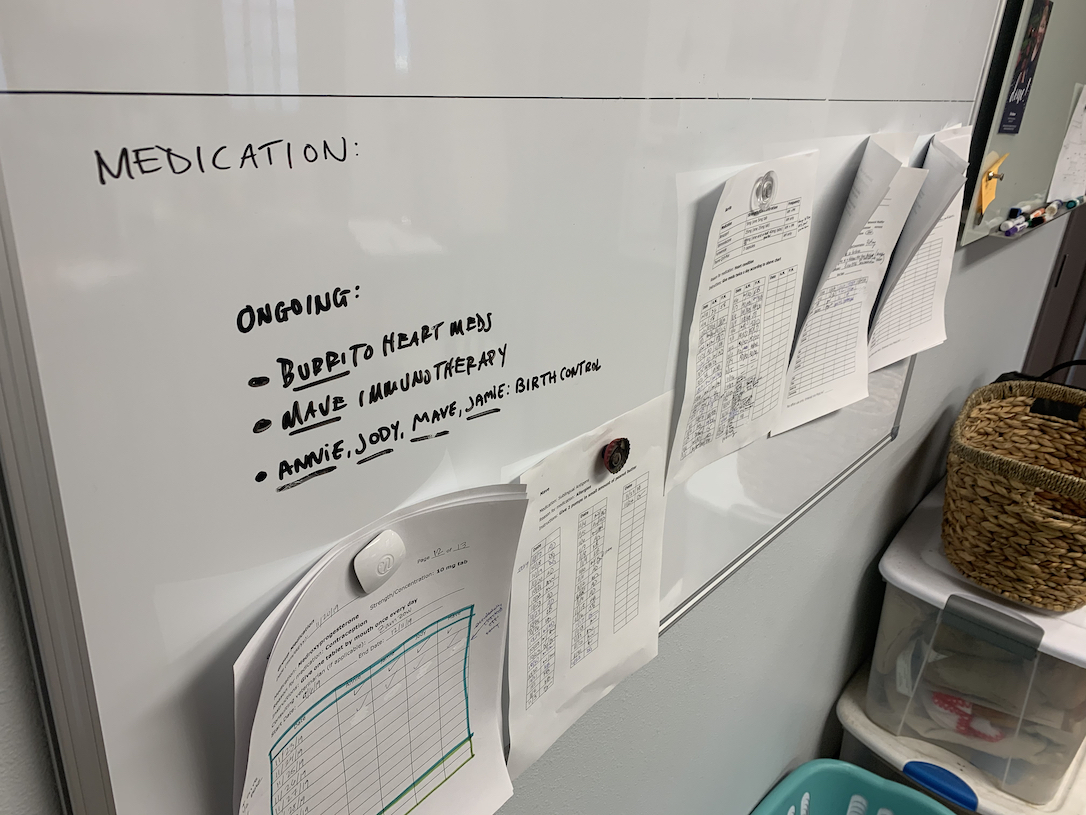
Burrito continues to heal and appears more active by the day, but he is still nursing some ugly wounds. We continue to monitor him for potential complications (including but not limited to bacterial infection). Getting him to take meds is a full-time job, so caregiver Katelyn had the tedious task of preparing various foods and trying to sell him on each. As J.B. recently explained, this has been the most challenging aspect of Burrito’s treatment plan. He did get a few bursts of energy today and spent quite a bit of time interacting with the female chimps through the mesh windows separating him from the Playroom. He even climbed up onto his favorite bench, although his movement was a bit shaky and he appears to only have a fraction of his normal strength. Still, it was good to see Bubba being Bubba.
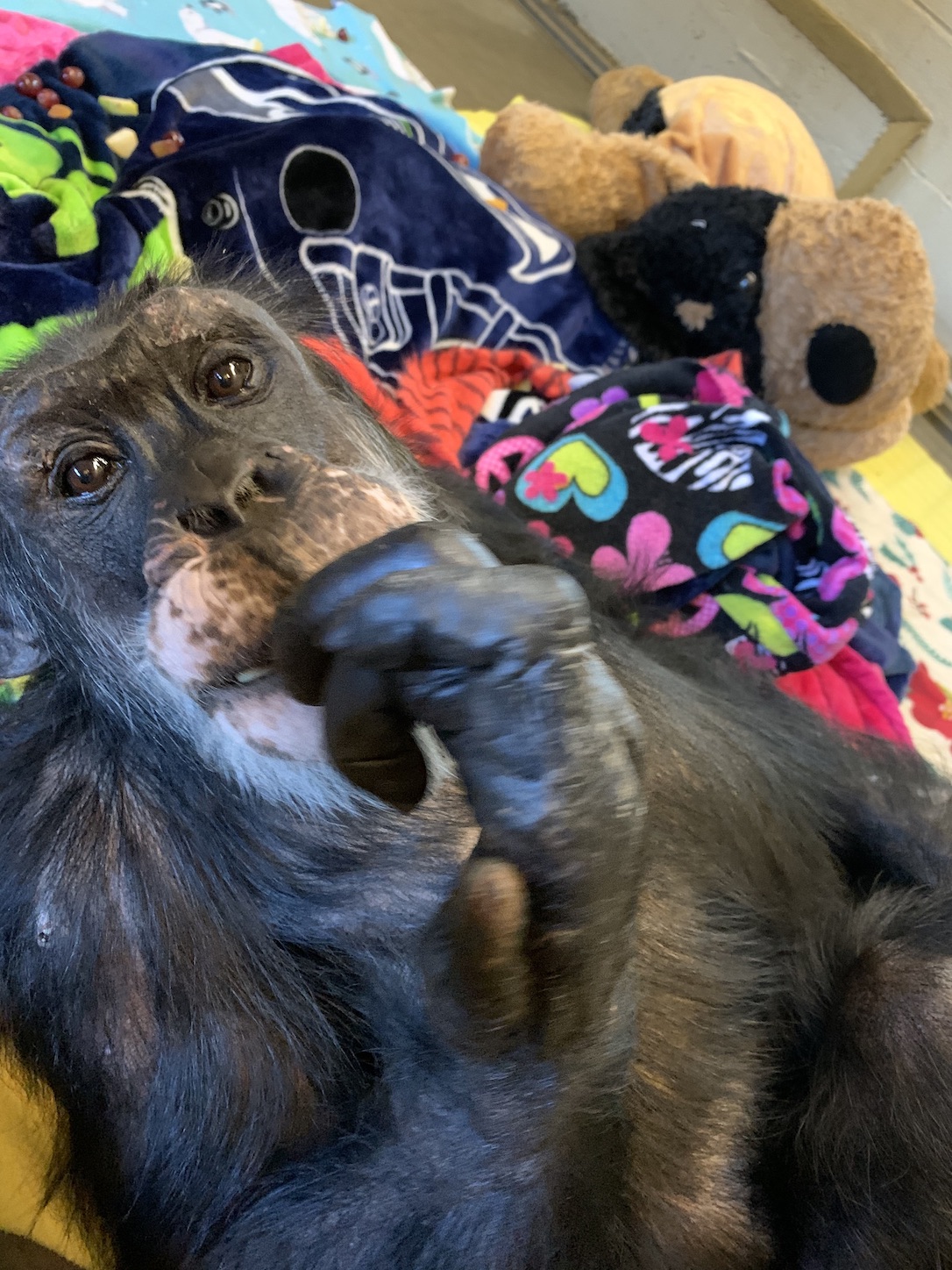
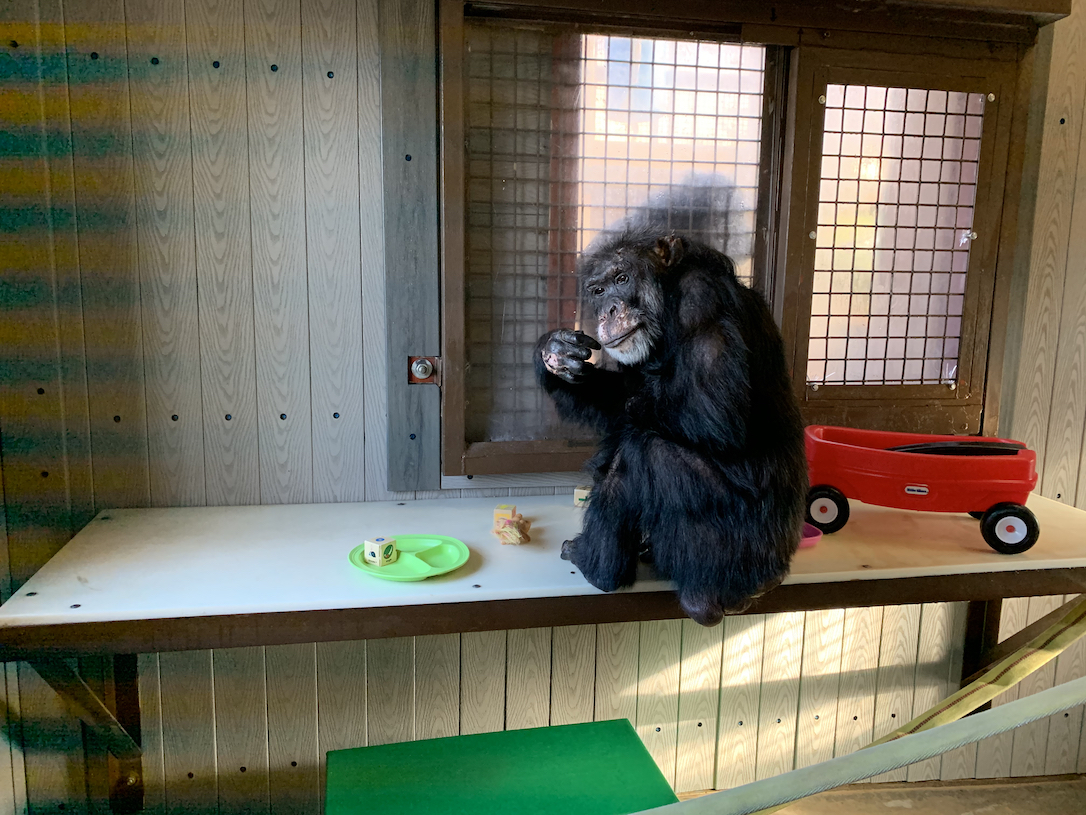
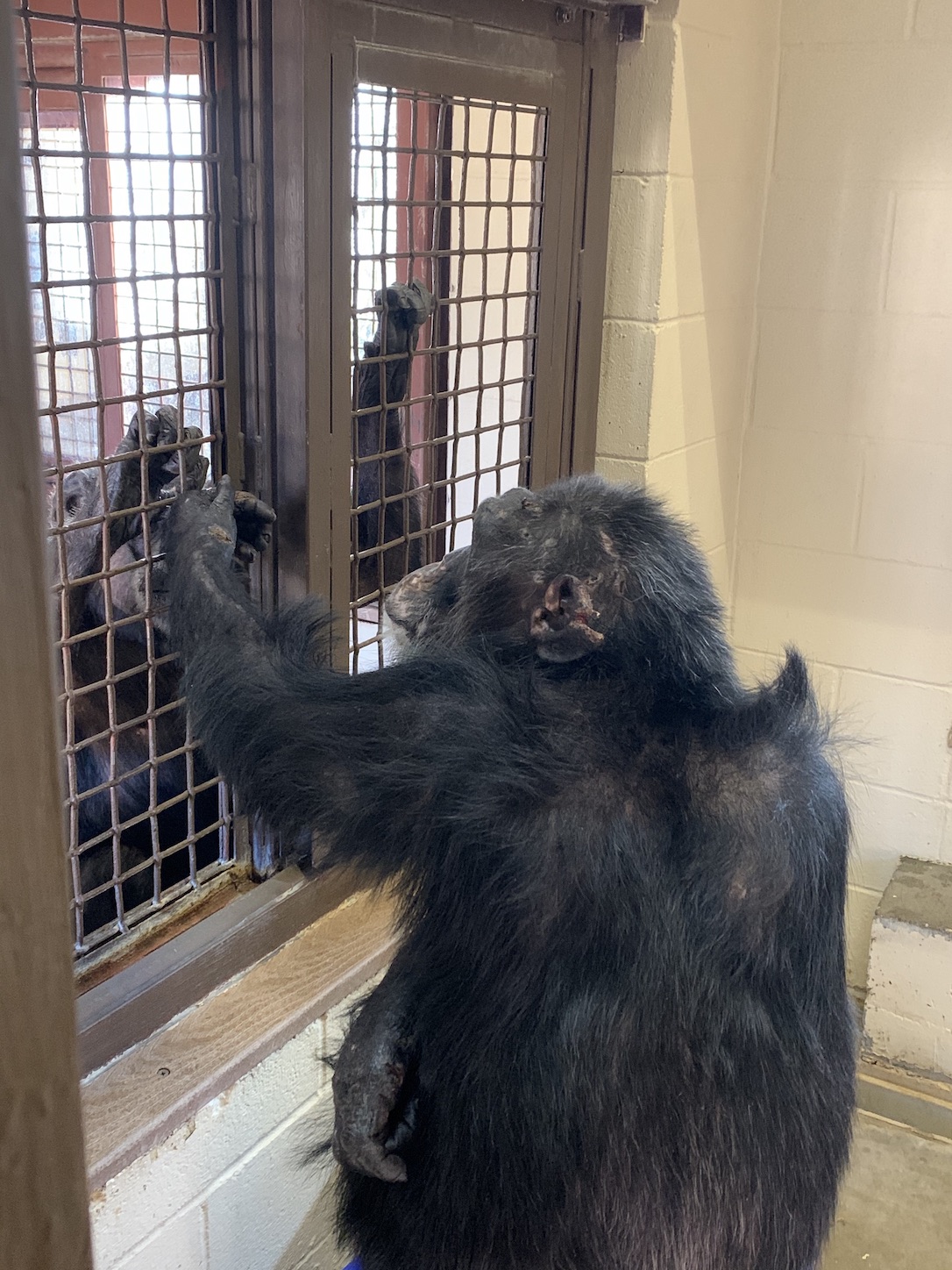

The girls (Annie, Foxie, Jamie, Jody, Missy and Negra) have been back to business as usual. They seem to appreciate a return to routine, although they spend a lot of time monitoring Burrito and watching the windows and doors for signs of their chimpanzee neighbors on the other side. Whenever Willy B makes an appearance, they shower him with submissive pant-grunts and excited gestures. The weather was chilly and windy today, minimizing the appeal of Young’s Hill, but Jamie recruited volunteer Chad to walk the boundary with her anyway. When not patrolling and policing, Jamie has been enviously watching us give all sorts of foods to Burrito and has been asking for similar treatment. Jody has been obsessively helping Burrito to groom his wounds and he seems glad to have such an attentive nurse.
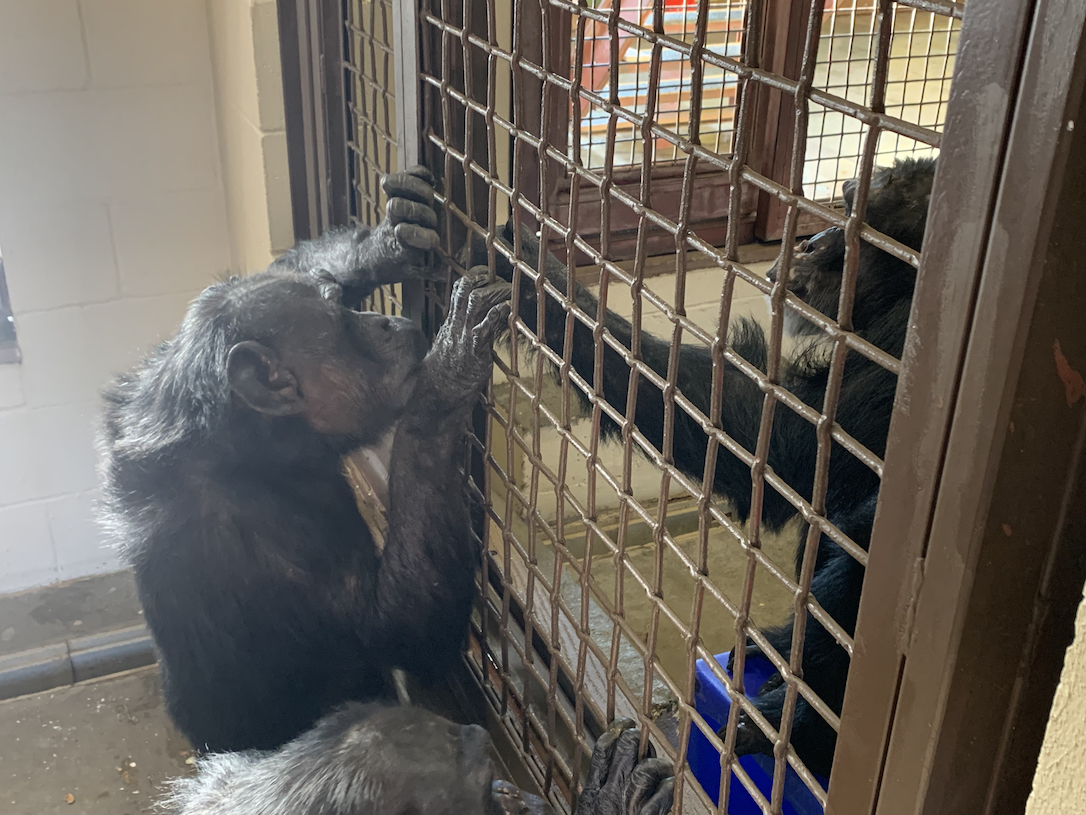
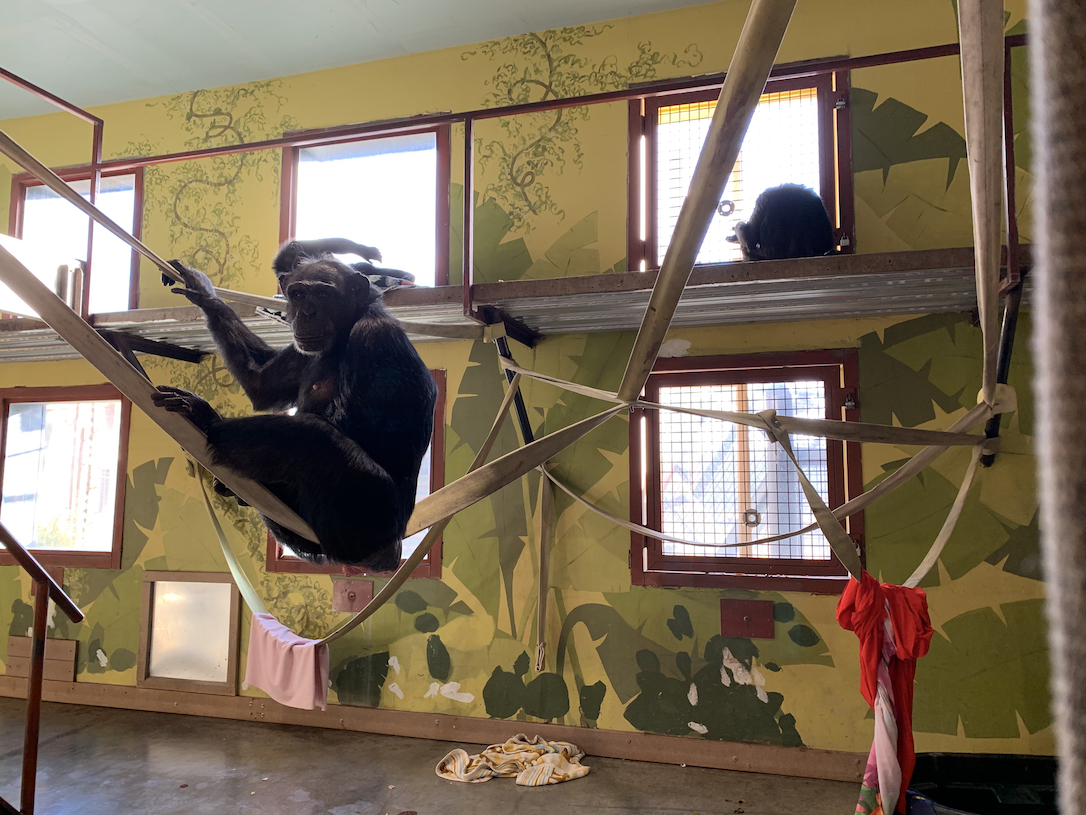
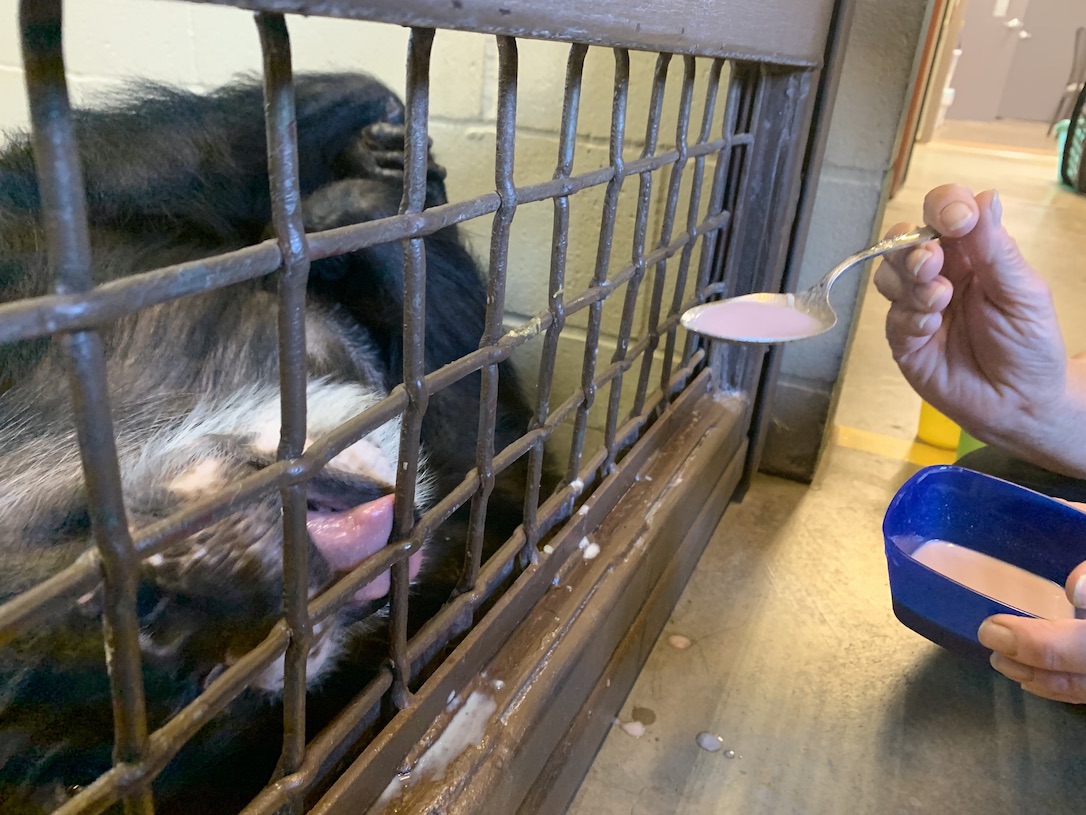
Honey B has been an absolute star when asked to present her wounds for inspection and treatment. Her toe and backside are healing well and she is behaving like her normal self. She’s been more interested in grooming my freckles than she has been in her own injuries, so our concern for her recovery is minimal even though we continue to treat her lacerations with topical and oral medication. Honey B is an ideal patient because she is comfortable with our presence close to the steel caging and she is generally accepting of any flavor of yogurt, even if it tastes like antibiotics or Ibuprofen. As long as she gets to hold the spoon and hang out with caregivers, she’s happy.

Willy B and Mave have been dealing with the unfortunate loss of their new social partners now that the groups have been split up and integration efforts have been halted. Instead, they’ve been focusing on reinforcing their bonds with each other (and with Honey B, to a lesser extent). We’ve also been showering them with enrichment and allowing them to sunbathe in the outdoor chute during the afternoons.
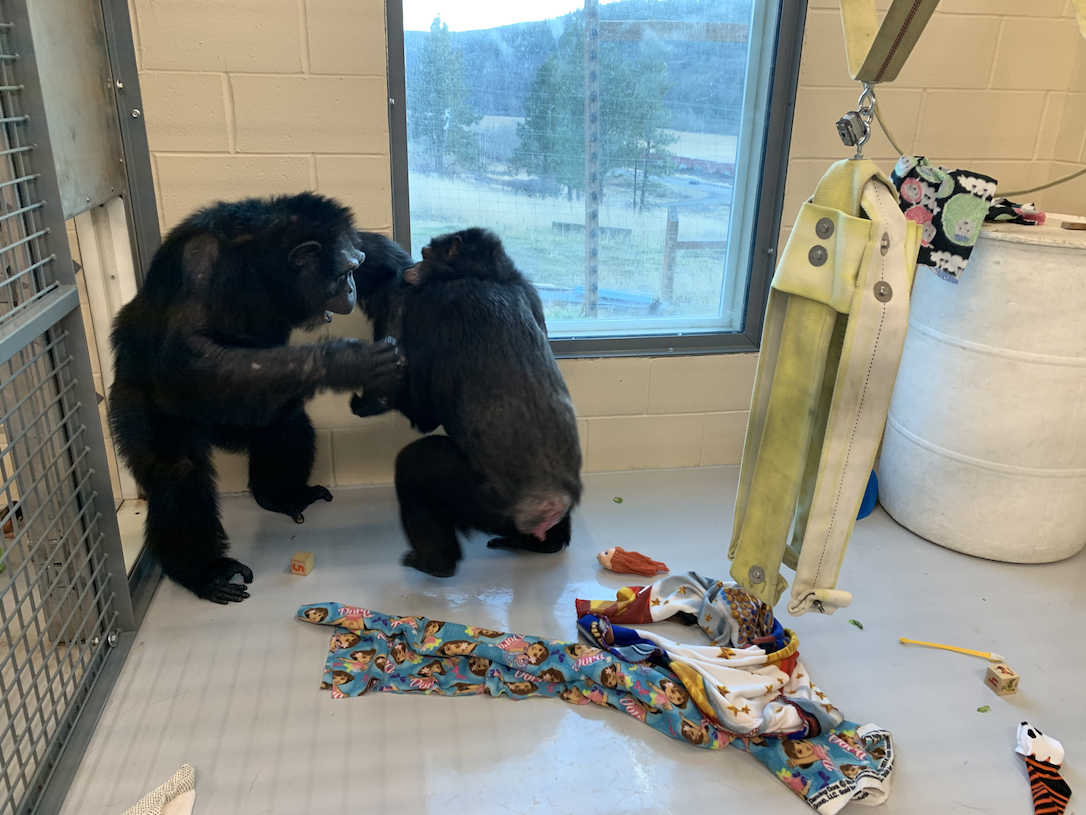
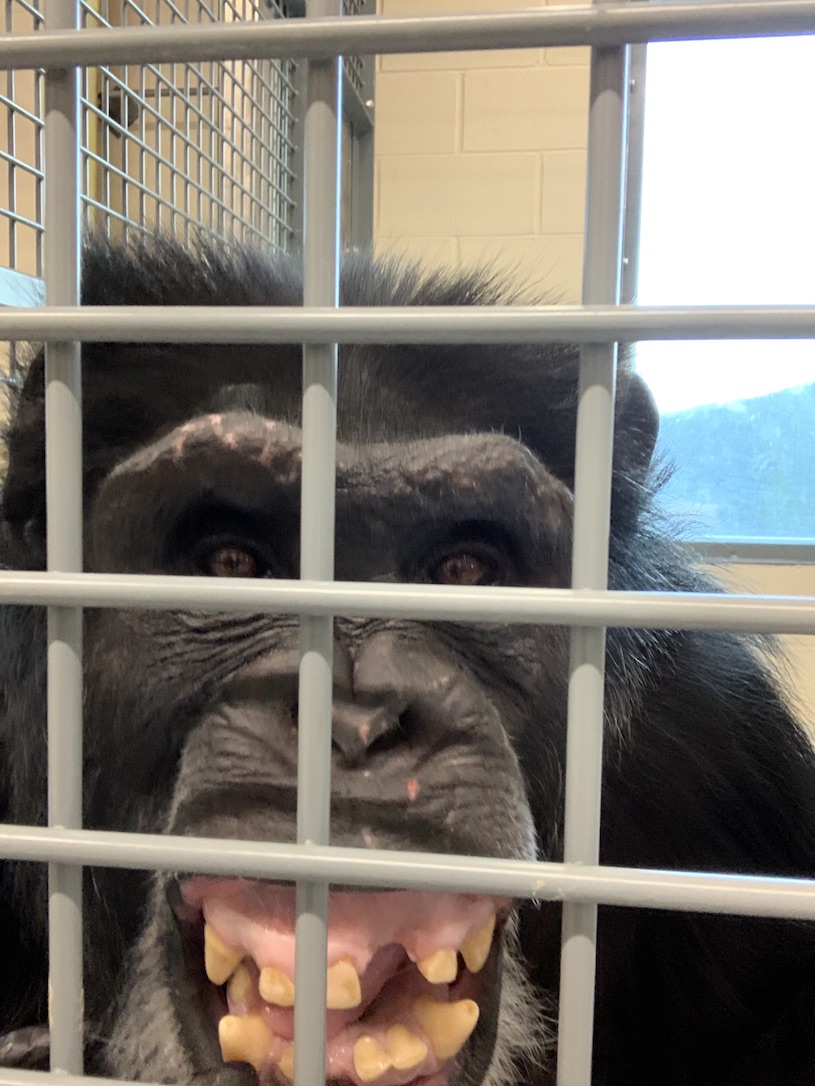
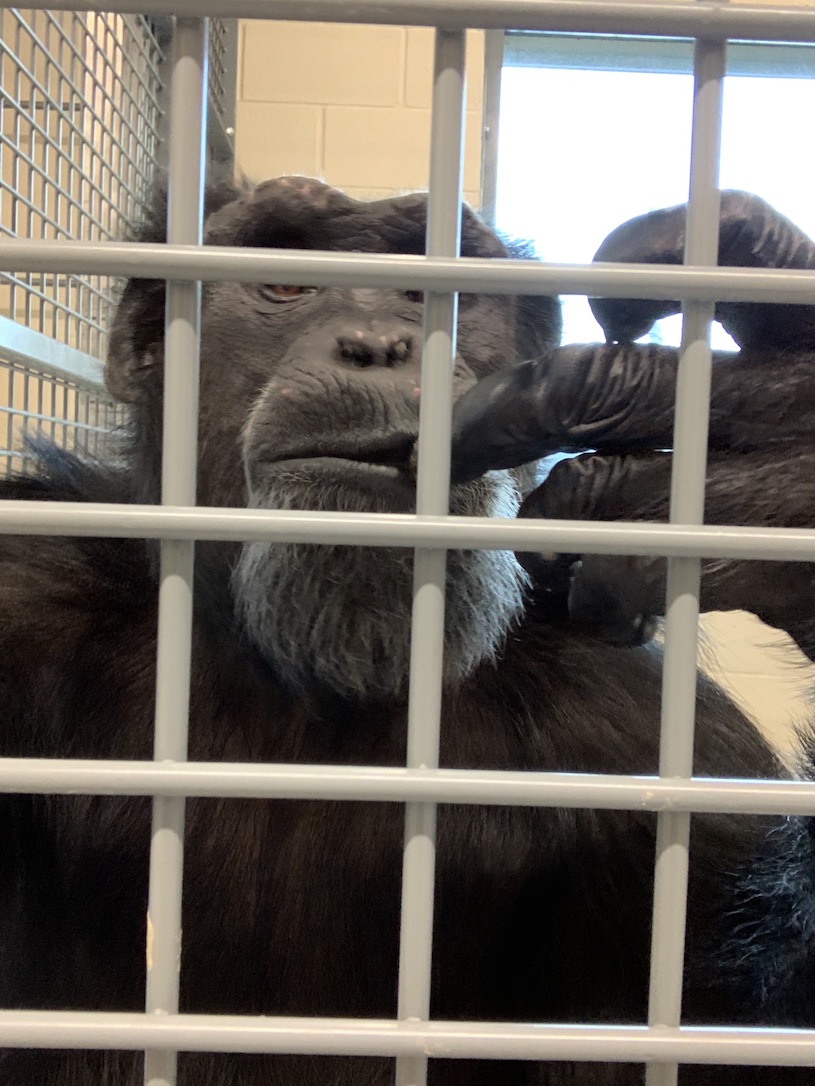

Overall, everyone is trending upward. However, we continue to place an emphasis on helping Burrito to recover while keeping the other chimps busy and comfortable as the fall weather gradually fades into winter.

Midnight bagels
Whenever a chimp is in the clinic for a procedure, I can’t wait for it to be over so we can put them back into the recovery room.
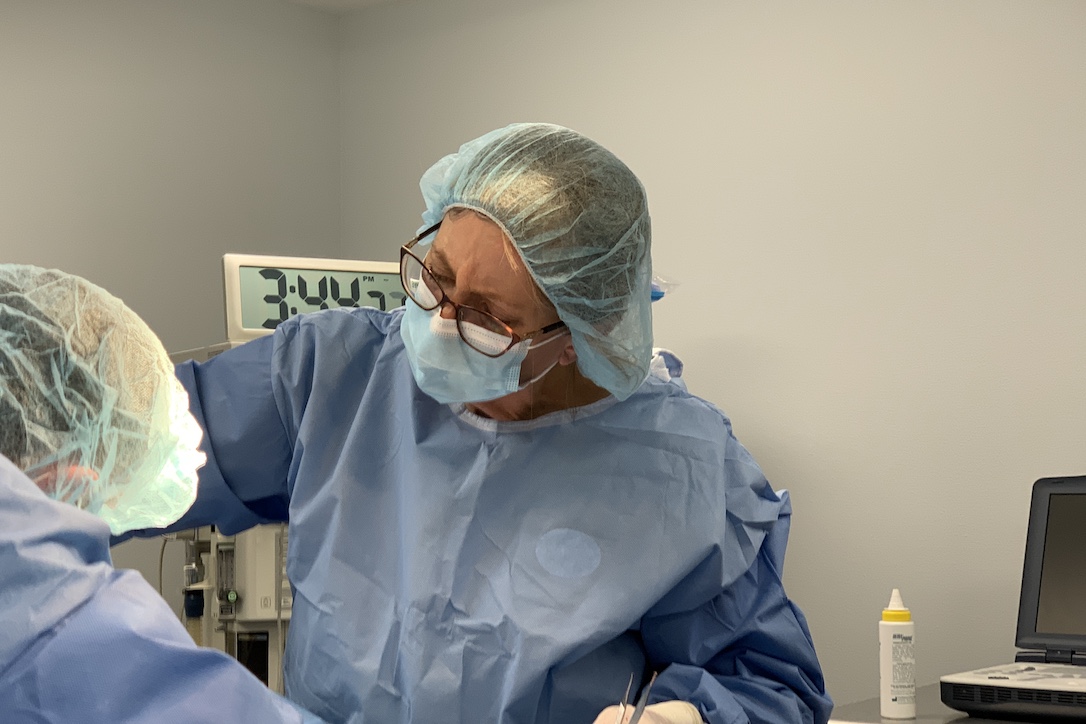
But as soon as we get them in the recovery room, I almost wish they were back in the clinic.
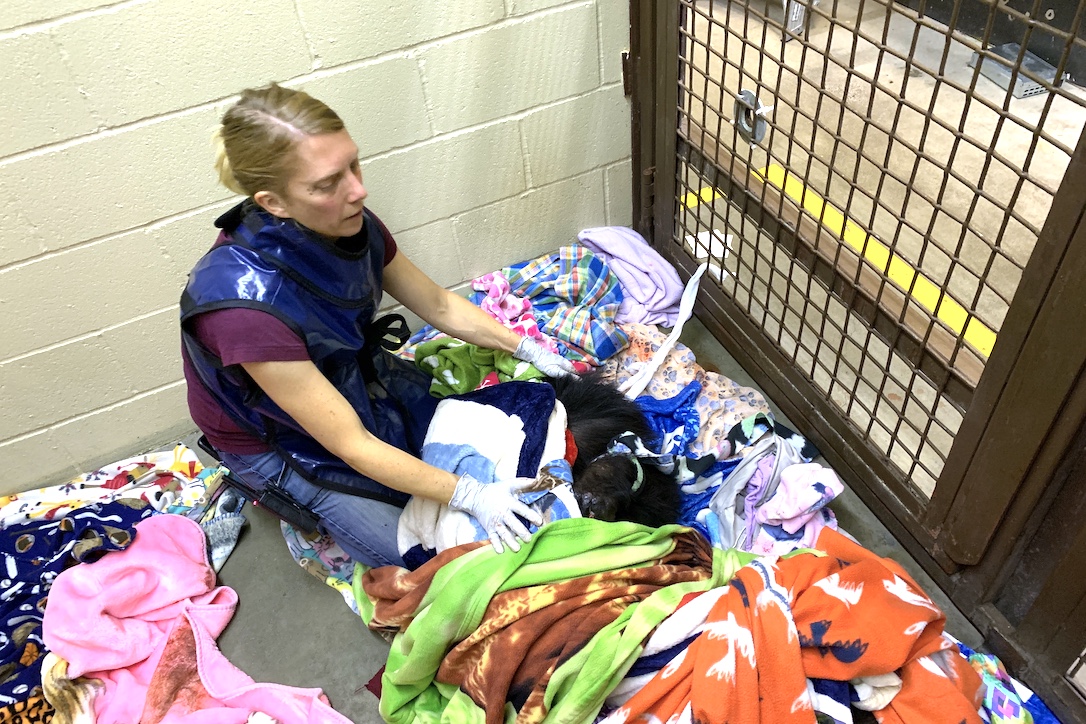
That’s because in the clinic, we have tons of information about their vitals and far more control over the administration of analgesics, antibiotics, and other drugs that are essential for well-being and even survival. Once they’re in recovery, we have to hope for a cooperative patient. And chimpanzees are not known to be very cooperative under even the best of circumstances…
If a chimpanzee has a major surgery or shows difficulty recovering from anesthesia, we will stay with them overnight – sometimes for nights on end. We’ll monitor their respiration, give medications, and in some cases just nudge them to get up in order to promote circulation and deeper breathing. Our recent sleepovers with Burrito were actually pretty quiet, though the other chimps occasionally had something to say about the cornucopia of food available only to Burrito.
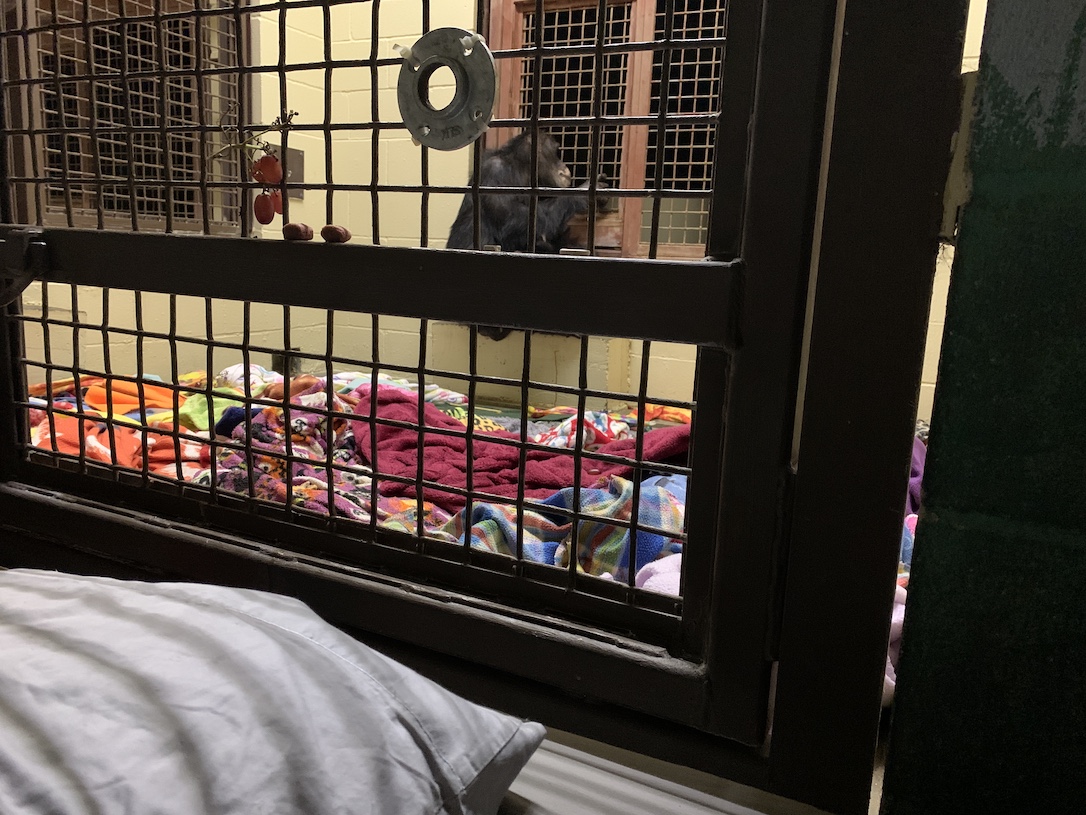
Some of the behaviors we work on in positive reinforcement training come in handy in times like these. While a no-contact thermometer isn’t very scary to begin with, it helps that Burrito is used to holding his temple to the caging while we get a reading.
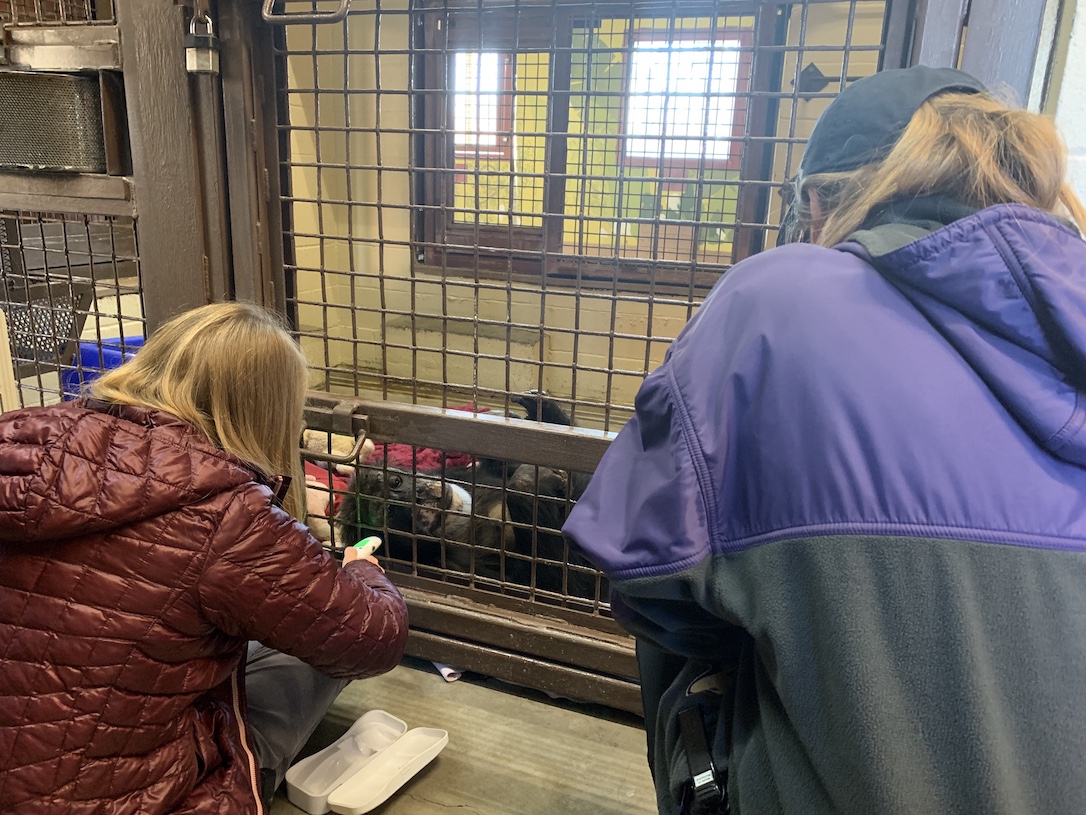
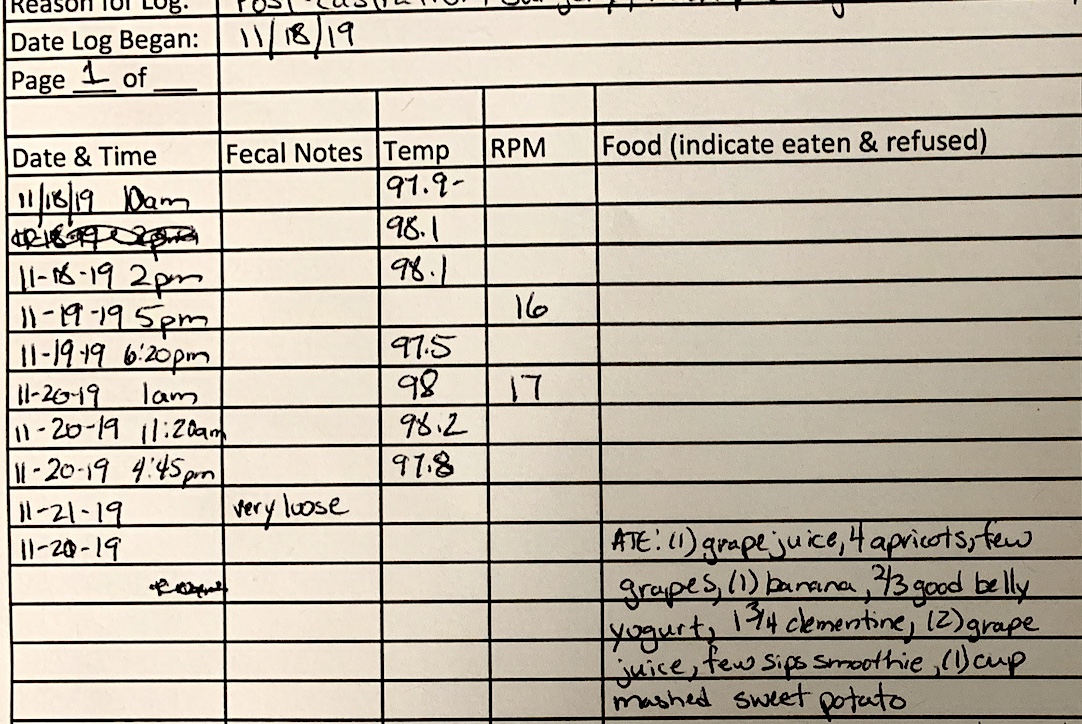
Administering meds is the most difficult part by far. Anesthesia and medications can make a chimpanzee lose his appetite – even a professional eater like Burrito. And some medications taste and smell disgusting. So whenever a chimp is on medication after a procedure, you will find the counters filled with all sorts of goodies – pudding, applesauce, juice, yogurt, soda, smoothie, bread, bagels, baked goods, jam, honey, syrup, dried fruit…anything that will mask the pill or liquid. And in many cases it only works once, so next time it’s back to the drawing board. But they have to take their meds, so there’s no giving up.
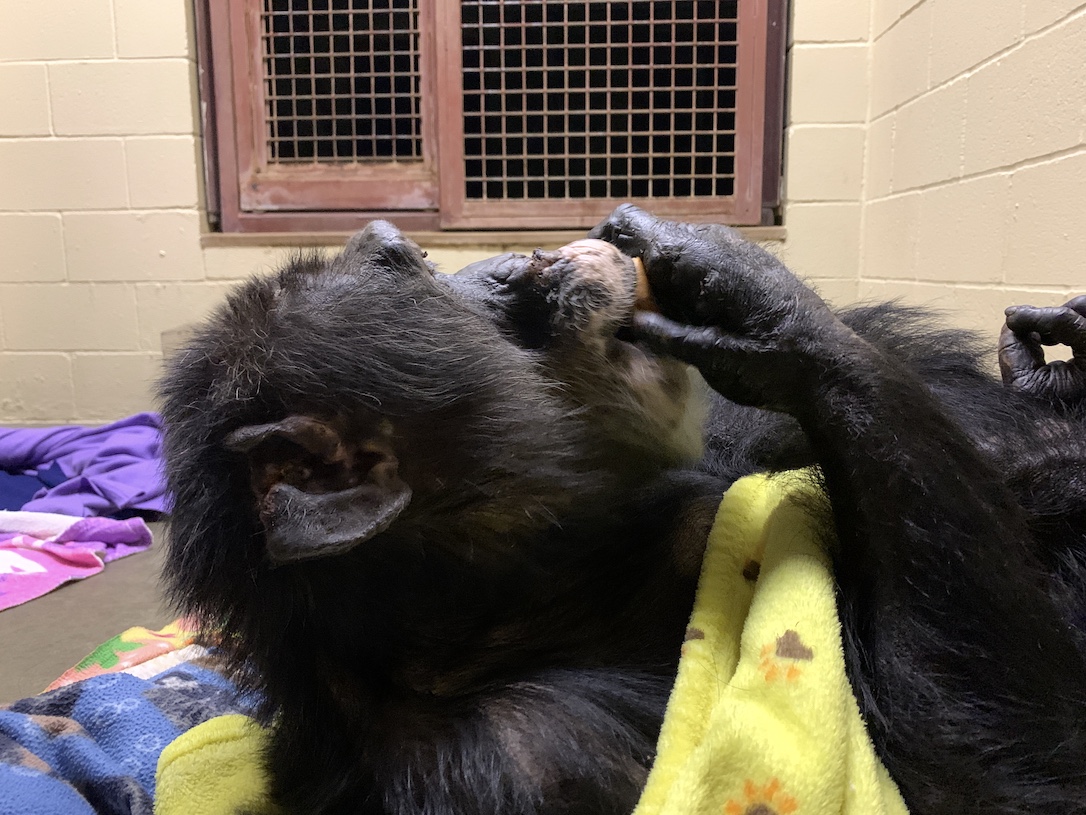
We’re so grateful that Burrito’s world-famous appetite is beginning to return and his suspicion of being surreptitiously medicated is starting to wane. In the not-too-distant future, he will be back to his old routine. And while I’m sure he’ll be thrilled to go back, I know he’ll miss those midnight bagels…
Thank you
We just wanted to take a moment to say how grateful we are for the support you have shown us.
In the chimp sanctuary world, we tend to have two different types of conversations. With our colleagues, we are blunt and direct. We talk about illness, conflict, injury, and death, and the constant challenge of caring for powerful animals with the capacity for intense physical violence. We speak freely about these things because we’ve all experienced them directly and come to terms with them as best we can. With those outside of our profession, however, we are more guarded. Whether it’s to protect the image of chimpanzees or that of our own sanctuaries, we have a tendency to gloss over some of the less cheerful aspects of our work. In a way, it’s only natural to want to share more of the things you are most proud of, but there’s also a constant concern that events will be misinterpreted. And if I’m being honest, it’s a bit calculated as well. We are nonprofits, after all, and we rely on your approval (in the form of donations) to do our work.
Over the years, we’ve tried, with varying degrees of success, to be more honest with our supporters. Sometimes we don’t really have a choice – once you get to know Foxie through our more cheerful blog posts, you are probably going to wonder where her ear went, and that would be a difficult subject to avoid for any length of time. The same is true of Burrito and Honey B’s ordeal, as well as the larger fate of our integration efforts. But we’ve also found our supporters to be both understanding and appreciative of increased transparency, even when the news is uncomfortable or upsetting. And at times like this, you are also a great source of comfort for the staff and volunteers that have worked so hard and worried so long only to have their hearts broken.
Your ultimate concern, I know, is for the chimps, so let me give you a quick update. Burrito is still isolated in Front Room 1. He has been quite groggy, swinging from anesthesia hangover to narcotic haze, but he is making progress and beginning to eat more regularly. The girls spent the first day watching him closely and occasionally spitting on him through the door to try to wake him up. When he finally got up, they greeted him enthusiastically, as you can see in the video above. Every few hours, he heads over to the mesh to be groomed by them. But he will need much more time to heal before he can be with them – their drama is difficult enough to deal with when you are at the top of your game.
Honey B spent a couple days in Front Room 7 in the new wing to recover, with Willy B and Mave on the other side of the mesh. She likes to show us her injuries, even those as small as a paper cut, and she seemed very proud of her own progress. We agreed, so much so that she was reunited with Willy B and Mave this evening.
It’s a challenge to care for chimps, and there’s no way to hide that fact. Thanks again for being there for us during the more difficult moments.
Update
When you begin the process of chimpanzee group formation, you do so knowing that 10-20% of all introduction attempts do not succeed. Sadly, this is the fate that we have now come to accept for our efforts to integrate Willy B, Honey B, and Mave with the Cle Elum Seven.
For the last week, Burrito and Negra had been living in relative harmony with the newcomers, and further introductions were planned for next week. Unfortunately, we were awoken yesterday at 4:30 a.m. to the sounds of screams from our closed circuit camera system. Minutes later, we arrived at the chimp house to find this group engaged in a very serious conflict. We believe it started between Burrito and Honey B but we can’t be sure. Burrito sustained some significant trauma, most notably to his scrotum. Due to the substantial risk of infection and the presence of an existing mass on one of his testicles, our veterinary team decided that castration was the best course of treatment for his injury. Honey B also sustained a serious bite to her small toe, which was later amputated. Both did well during their procedures and are recovering uneventfully thus far.
Conflicts and injury are part and parcel of the introduction process. If we took a zero-tolerance approach to injuries during integration attempts, we would almost never integrate captive chimpanzees. But there is a limit to what we should tolerate on their behalf, based on the extent of the injuries, what we think we can realistically hope to achieve for them from the process, and, ultimately, what is fair to the chimps involved. While it is still true that this group of ten could eventually be formed, to everyone’s ultimate benefit, we feel that the chimps have done all they can for now. Each chimp’s individual safety must remain the top priority.
We are disappointed and heartbroken, because there was so much potential. But we are also reminded once again to be grateful for just how much support these chimps have. Our veterinarian, Dr. Erin, immediately rushed to the sanctuary for what would become an incredibly stressful 16-hour day. Our staff, most of whom were enjoying some well-earned sleep on their days off, each responded to a 5:45 a.m. text without question and with a simple message: on my way. Other members of our veterinary team, Dr. Jen and Dr. Erika, came from the Seattle area on a moment’s notice, and we were fortunate to have surgical and ultrasound support on site from Dr. Khachatryan from Sumner Veterinary Hospital and x-ray equipment from Best Friends Mobile Veterinary Care. Board member and volunteer caregiver Jessica even covered our normal produce run while we were otherwise occupied. There is nothing that our friends and colleagues won’t do for these chimps.
We obviously didn’t hope for this outcome, but we did plan for the possibility. In the short term, Burrito and Honey B will return to their original groups, just as they were all living in the weeks following Willy B, Honey B, and Mave’s arrival. It’s possible that in time some chimps will be able to cross back and forth between groups so that the relationships they had been forming can be maintained. In early spring we plan to break ground on Phases 2 and 3 of our facility expansion, which will allow us to take in more chimps in need and create other opportunities for Willy B, Honey B, and Mave to live in a larger group that can meet all their social needs.
It may seem strange that chimps who can groom and play with one another the instant they meet or live together in a group for a week without incident would suddenly engage in such violent conflict. All I can say is that there are some things about chimpanzee behavior that you never fully understand but instead, simply come to accept. And we accept that our particular efforts in this case have, regrettably, not been successful. We’ll all take some time to heal, and then focus on creating the best sanctuary possible for these two groups of chimpanzees, as well as those to come.
The Hug
Burrito and Willy B have now been together for nine days. This past Tuesday, we added Negra and Honey B – who get along unexpectedly well – creating a group of four. Upon entering the group, Negra did as Negra does, which is to say that she waltzed back into the playroom and made a nice comfy nest while pestering her caregivers to start dinner, as if nothing had changed. Honey B, on the other hand, came out of the gate with a message for Burrito: don’t mess with the little girl. On two occasions, as Burrito started to display, Honey B pounced on him, leaving him with a couple minor bites. Burrito seemed to be immediately overcome with the realization that the girls that had dominated him for so long were not an anomaly – they are all this way. Willy B stayed out of it entirely, as though he had received the same message from Honey B in the past and took it to heart.
With her point made, Honey B spent a considerable amount of time trying to get Burrito to groom and play. He has so far declined most of her offers, understandably. But they have maintained a peaceful relationship since.
So yesterday it was time to add Mave to the group. We had a strong feeling that Mave and Burrito would get along, based on their brief encounter in the group of ten and their interactions through the lexan as they have been housed in adjacent enclosures. And Mave seems to be a very stabilizing force wherever she goes, with her keen social awareness and penchant for giving out hugs when they are needed most. But given that Burrito was already working on a challenging relationship with Honey B, we thought it would suit him best to spend time with Mave one-on-one. As you can see, they hit it off right away and within a couple hours, both were introduced into the group with Willy B, Honey B, and Negra. This is how things will likely stay for a little while, so that Burrito can continue to build on his friendship with Willy B, work out his differences with Honey B, and find comfort in the warm fluffiness of Mave’s hugs. Negra will continue to play with her new friend Honey B and keep track of mealtimes for the staff. When the time is right, we will begin to engage Foxie with some of the newcomers so that she, like Burrito, can overcome her fears and forge new relationships.
Getting along
At this point some of you may be wondering what it is exactly that makes the process of captive chimpanzee group formation so difficult, so I thought we could take a step back and look at some of the challenges.
It starts with biology. Free-living chimpanzees live in large communities ranging from just over a dozen to nearly two hundred individuals. The dynamic structure of these communities, a system known as fission-fusion, allows for regular changes in group size and composition in response to factors such as the abundance of food or the presence of females in estrus. This form of social organization enables chimpanzee communities to adapt to variations in resource availability by temporarily splitting into smaller parties while retaining the protection and other benefits of living in a large group.
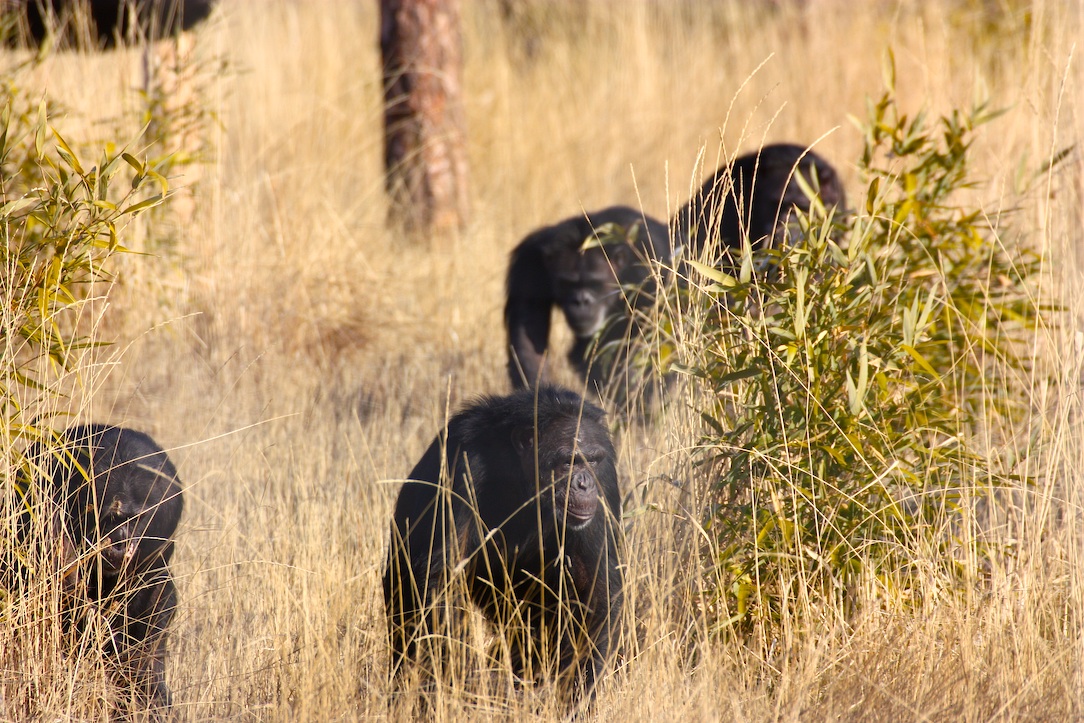
But while subgroups are free to split off from and later rejoin the community, only certain individuals are generally allowed to leave their community entirely to join another. To do this successfully, it helps to be young and female.
Chimpanzee communities as a whole are understandably protective of what is most important to their survival and reproductive success; namely, access to food and potential mates. Neighboring communities threaten to compete for these scarce resources, which is why chimpanzees often exhibit such fierce territoriality. Groups of males, and in rare cases both males and females, will coordinate patrols of their territorial boundaries and attack, often lethally, lone individuals or small groups from neighboring communities that have wandered too close.

As Anthony mentioned previously, males remain in their natal groups for life and form lifelong bonds with one another. Consequently, there is no biological or cultural mechanism to facilitate the transfer of males from one community to another. Nor is there a straightforward path for adult females to transfer. But as adolescent females reach sexual maturity, they generally leave their natal communities and seek out new one. This instinctual emigration is assumed to be an evolved mechanism to prevent inbreeding within the community and the timing of their departure is anything but arbitrary. While fear of outsiders remains the general rule, males are typically welcoming of young immigrant females, especially ones who arrive with estrus swellings. Resident females are not always as welcoming to the newcomers who, bear in mind, will be eating from the same fruit trees and potentially competing for the attention of resident males, but the newcomers can rely on protection from the resident males as they assimilate into the new community.
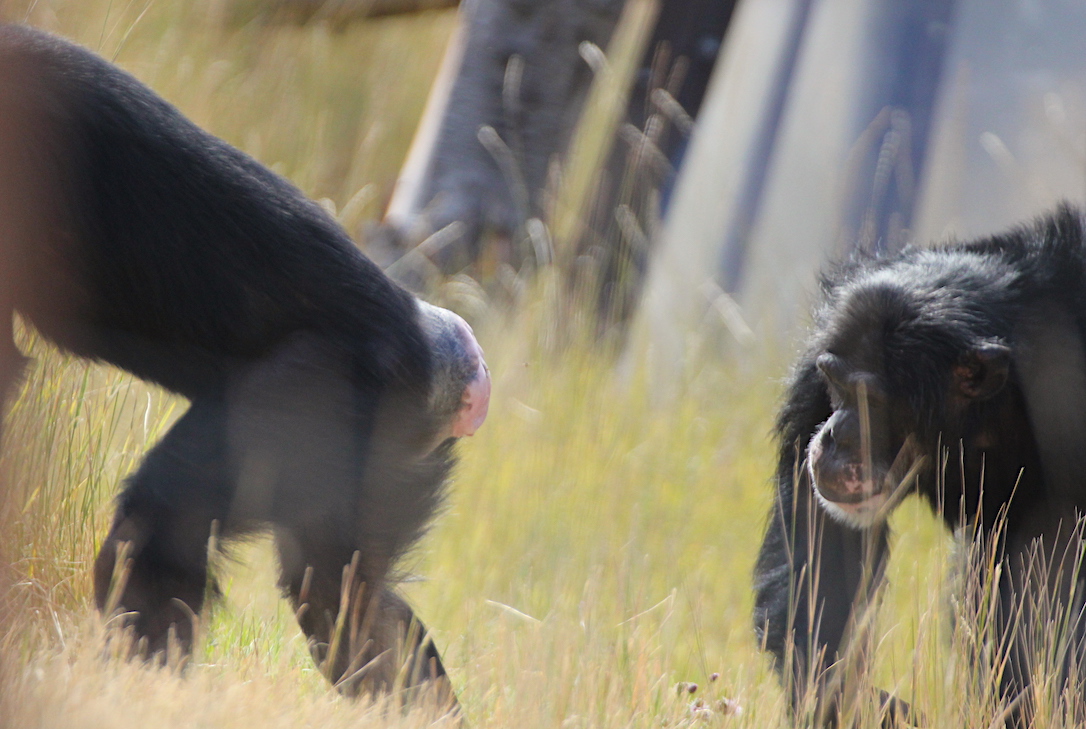
So there is a clear pattern, with limited exceptions, across nearly all chimpanzee communities in Africa: There is only one reliable ticket to move between communities, and it is determined by the immutable characteristics of age and sex and to a large extent reliant on the selfish desires of the males who hold power. When we form groups in captivity, we are almost always fighting against millions of years of natural history.
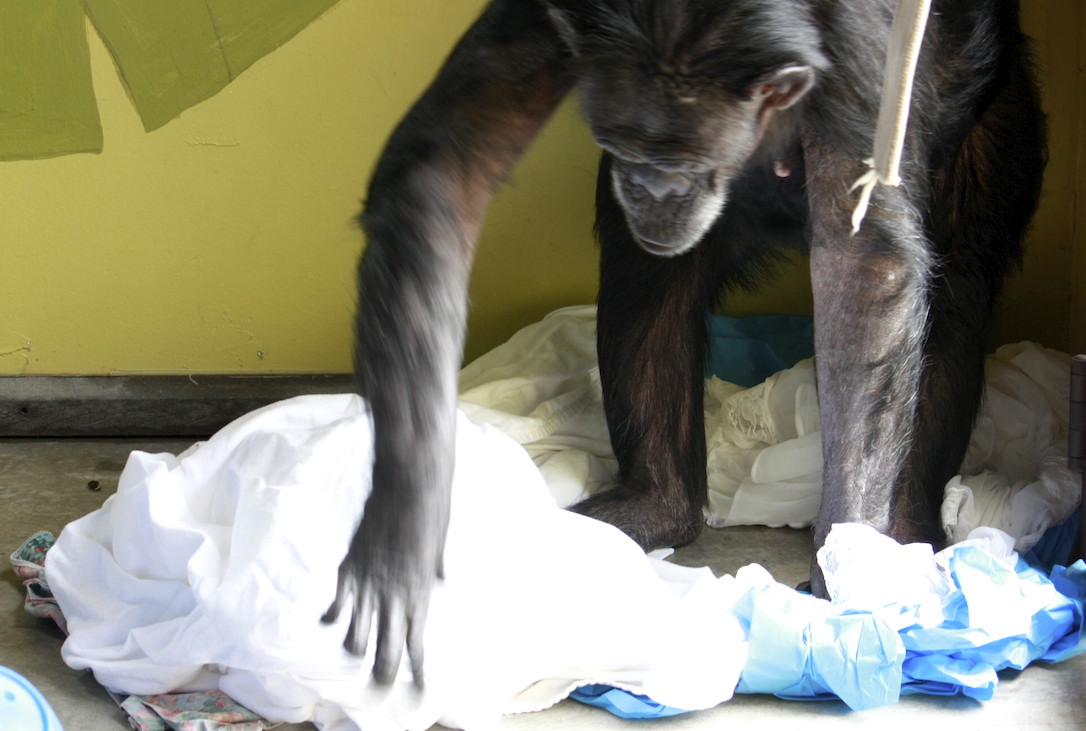
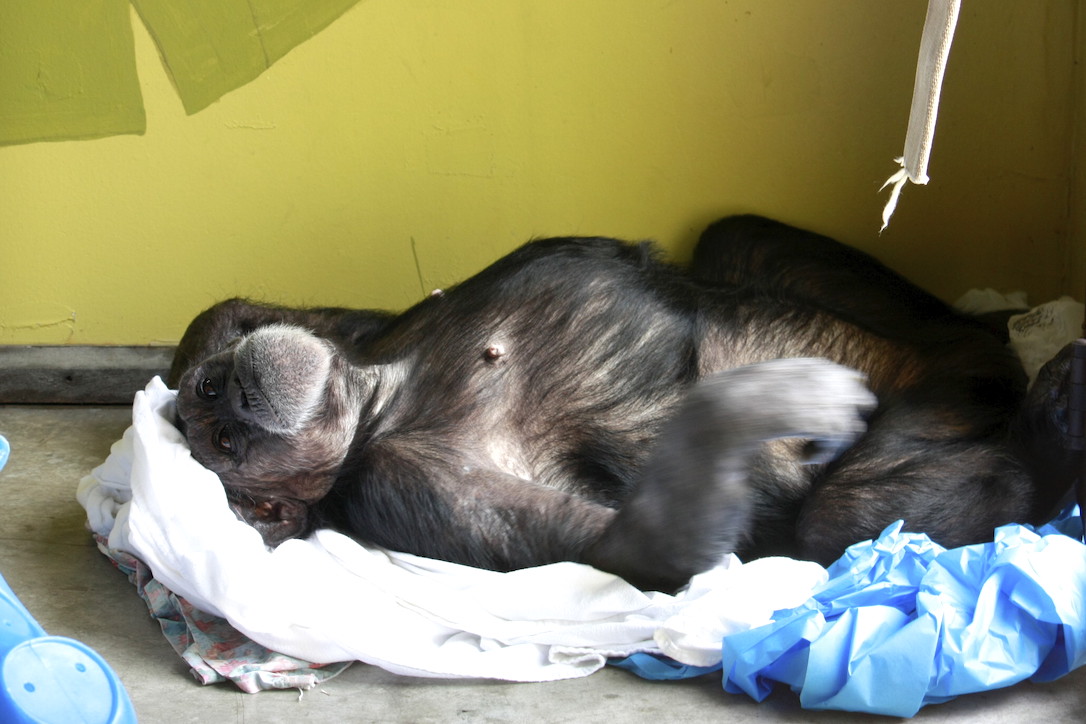
Of course, chimpanzees are not products of instinct alone, but beneath the layers of culture there remain a number of instinctual tendencies that stand out in the captive environment. An example: When captive chimpanzees go to bed at night, they typically make nests just like their wild cousins. These nests may be made out of straw, wood wool, or blankets instead of branches, but they generally share one trait in particular with those of their wild counterparts: they have high sides to hold them in. For wild chimpanzees, the nest serves as a cradle to keep them from plunging dozens of feet to the ground while they slumber. Perhaps it would only make sense for captive chimpanzees to do the same, except that they create the same doughnut-shaped nests even when sleeping in the middle of a concrete floor. In fact, sometimes they sleep directly on the concrete with all of the blankets arranged into a ring around them. It’s a bit of security-seeking encoded in the biology of a species far removed from the environment in which they evolved. Instincts can be attenuated by both learning and the environment but they remain a powerful driving force in our behavior.
To some extent, the nurture side of the nature-nurture influence probably does mitigate some of these xenophobic tendencies. Lab-reared chimpanzees are regularly moved between pairs or small groups throughout their lives, and they do not grow up in a culture that systematically reinforces their biological predispositions towards outsiders as their wild counterparts do. In a way, captive-born chimpanzees are trained to ignore their biology. Sadly, their upbringing presents its own set of problems.
Maintaining peace and order in a chimpanzee community requires strict adherence to certain social norms and conventions. If you watch the video of Burrito and Willy B meeting alone for the first time, you can see the delicate communication required to navigate such a perilous moment. To facilitate the encounter, Willy B covers his top teeth with his upper lip and shows only his lower ones. This signals an intent not to harm – specifically, not to bite – much in the same way that a dog’s bow signals an intent to play. At the same time, he engages in vigorous “breathy panting,” a vocalization that conveys friendliness and interest. He senses Burrito’s fear and as a result he gives Burrito a wide berth. Burrito, for his part, conveys to Willy B that despite his fear he would like to get closer by extending an arm toward him. One misstep by either party and the entire process could unravel into outright aggression, as it did during their group encounter two weeks prior.
And while they overcame the risks of this initial encounter, the challenge of actually living together has, unfortunately, only begun. Sustaining friendships and alliances is difficult and constant work, and studies show that chimpanzees separated from their mothers at an early age and raised by humans exhibit social deficiencies that make group living harder as adults. These chimpanzees fail to develop the knowledge and skills required to navigate the complex and often subtle rules of chimpanzee social life. As a result, they are more likely to have to live in small groups or in some cases, alone.
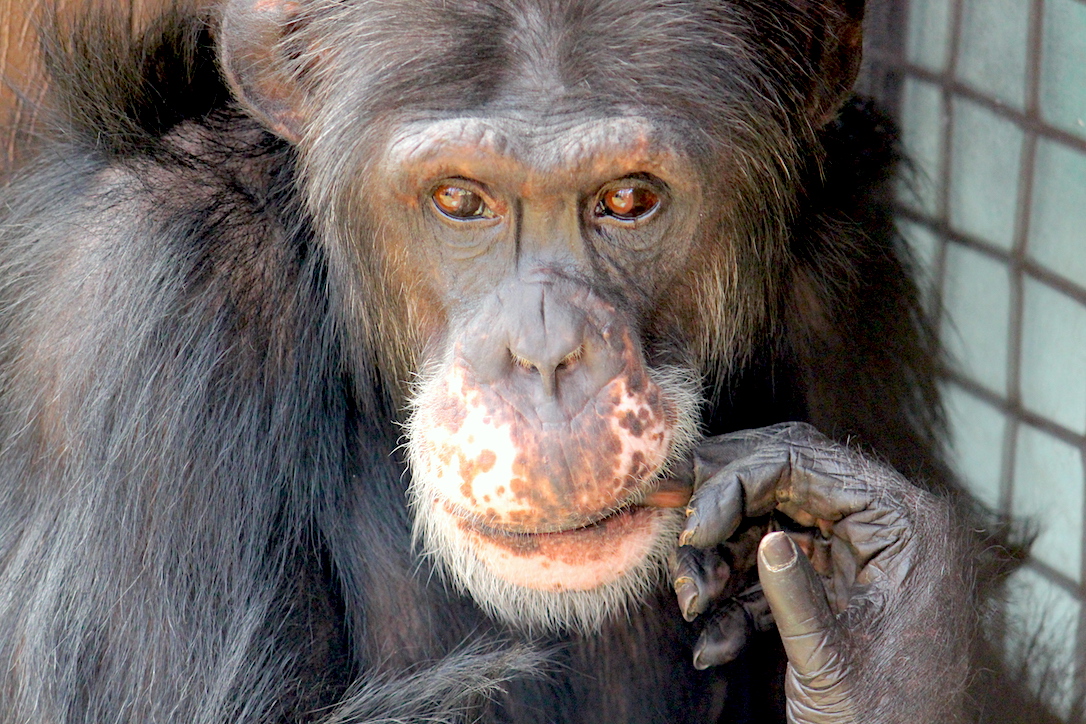
Despite all of this, most chimpanzees in sanctuaries, zoos, and laboratories can and do live in groups. As they should, because the benefits of a large social network are immeasurable. But we need to keep in mind what we are asking of them: to plunge ahead, ill-equipped and unprepared, and with almost no control at all, into a process that goes against their very instincts. This is one of the many sad realities of captivity for chimpanzees.
So despite our setback with the group of ten, I am, at the moment, hopeful. Burrito and Willy B have been living together since Wednesday, grooming regularly and playing with one another on occasion. These two guys overcame their fears and are experiencing the initial whispers of a bond that should have been their birthright as male chimpanzees. Whether it will be sustained over time, and amidst the turbulent influence of other group members, remains to be seen. But it’s a promising start.