• Skip to main content
  • Skip to primary sidebar
  • Skip to footer

Chimpanzee Sanctuary Northwest

Hope. Love. Home. Sanctuary

  • Our Family
    • The Chimpanzees
    • The Cattle
  • Blog
  • About Us
    • Visiting the Sanctuary
    • Philosophy
      • FAQs
      • Mission, Vision & Goals
      • Privacy Policy
    • The Humans
      • Staff
      • Board of Directors
      • Founder
    • Annual Reports
    • The Future of CSNW
    • CSNW In The News
  • You can help
    • Donate
      • Become a Chimpanzee Pal
      • Sponsor A Day
      • Transfer Stock
      • Be A Produce Patron
      • Be a Bovine Buddy
      • Give from your IRA
      • Personalized Stones
      • Bring Them Home Campaign
    • Leave A Legacy
    • Employment Opportunities
    • Volunteer
    • See Our Wish List
    • Events
  • Resources
    • About Chimpanzees
    • Enrichment Database
    • Advocacy
      • Advocacy Action Center
      • Apes in Entertainment
        • Trainers
        • Role of the AHA
        • Greeting Cards
      • Chimpanzees as Pets
      • Roadside Zoos
      • Chimpanzees in Biomedical Research
      • Conservation
        • African Apes
        • Orangutans
  • Shop
    • Merchandise Store
  • Contact
  • DONATE NOW

chimpanzees

Running Toward The Future

December 1, 2020 by Chad de Bree

Before I get into the happenings of today, there was some BIG news announced today in our newsletter and social media sites (here is the Instagram post). Today, we announced the names of the group of six who will hopefully be able to call Chimpanzee Sanctuary Northwest home next year! We are all beyond excited to meet Cy, Lucky, Rayne, Terry, Dora, and Gordo! We are also truly grateful to all of you, the followers of this sanctuary, who have donated and spread the word about us on Giving Tuesday! All of your donations will help us continue to complete our expansion as quickly as possible so they can arrive next year! We all know this year has not been the easiest on anybody, but your constant generosity not only helps us provide care for our current residents, but also plan to bring more home! So thank you! Thank You! THANK YOU!

Lately, both Jamie and Burrito have been inviting caregivers to races around Young’s Hill. Some of you already know, Missy is not one to pass up a good run around Young’s Hill. Sometimes she just seemingly appears out of nowhere and passes you within a blink of an eye!

I am truly convinced she waits for everybody to leave first, so she can catch up! I found her today waiting at the bottom of the hill as Burrito and J.B. raced around.
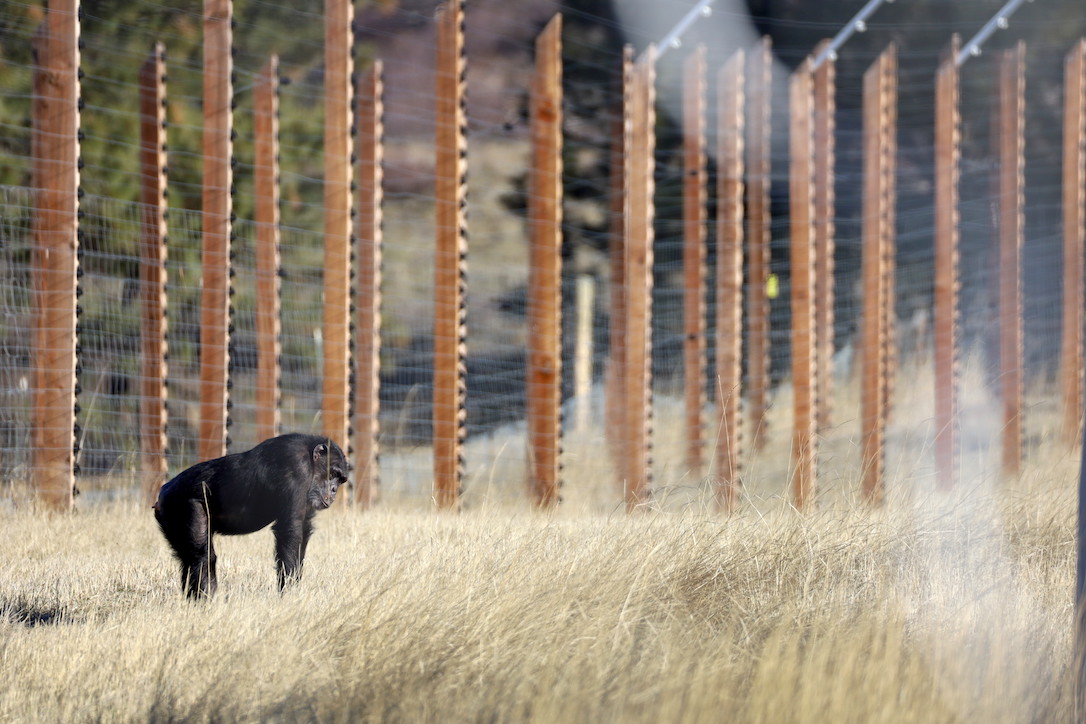
She even found a place to stake out where on the hill Burrito and J.B. were.
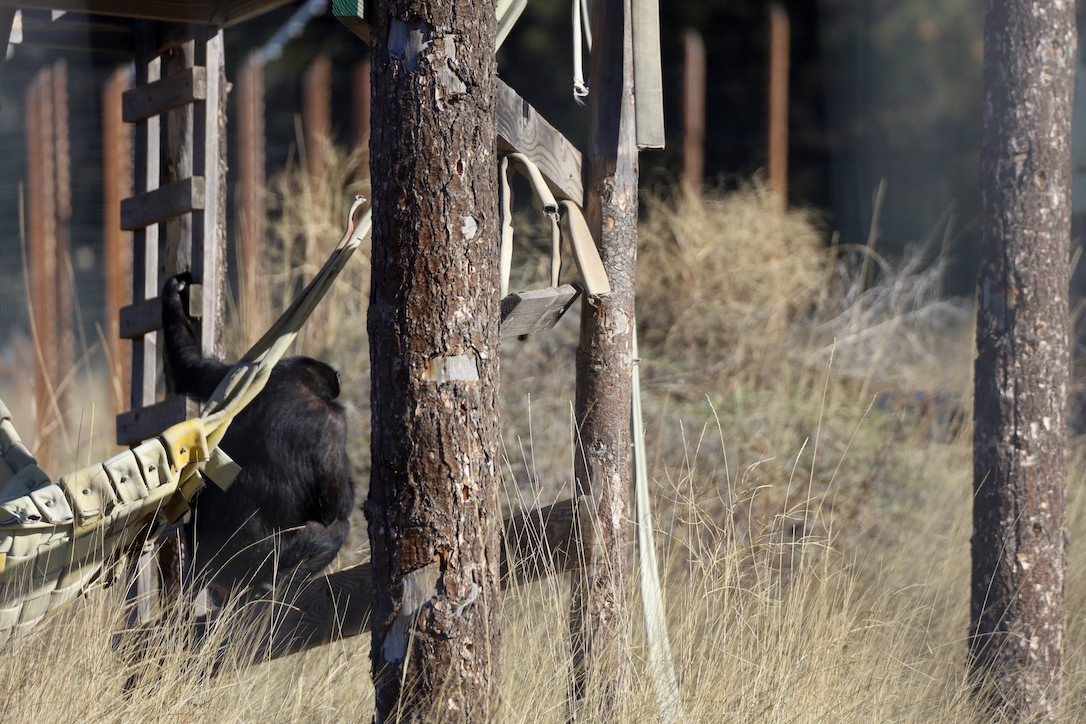
And like a bolt of lightening, she was off! (Long before I could bring the camera up and realize she was gone!)

Missy even likes to take her lunch on the go!
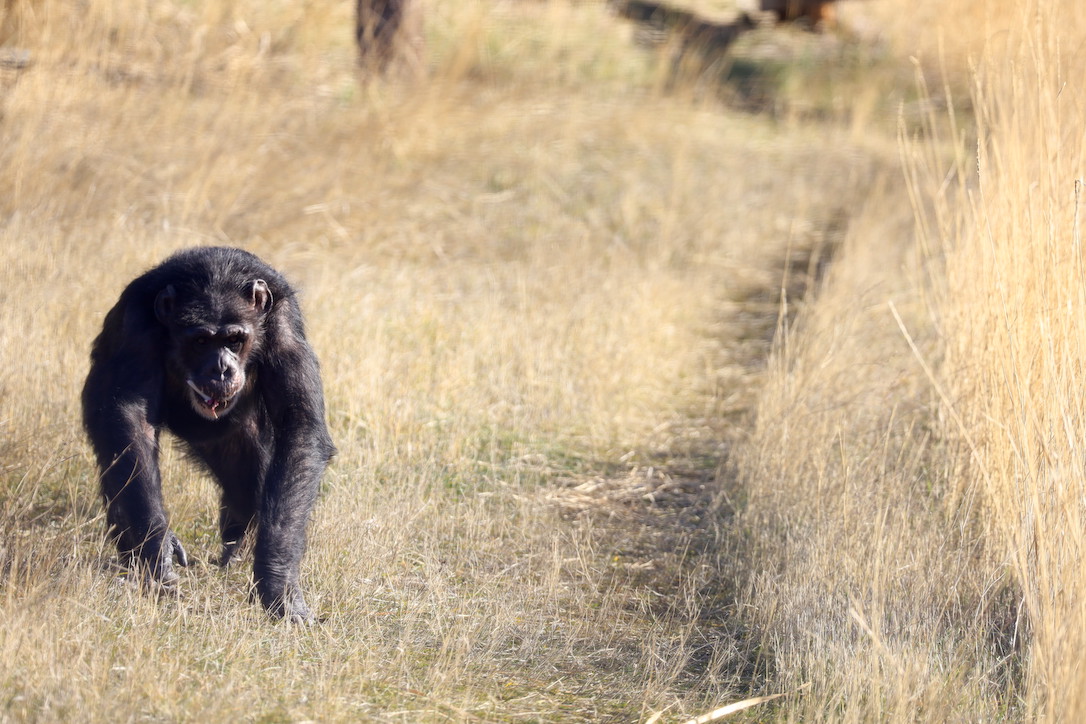
Missy is known to have two speeds: 0 and 100. When she isn’t a chimpanzee pinball, darting and bouncing around Young’s Hill, she likes to take in the sights and sounds usually from the tallest structures.
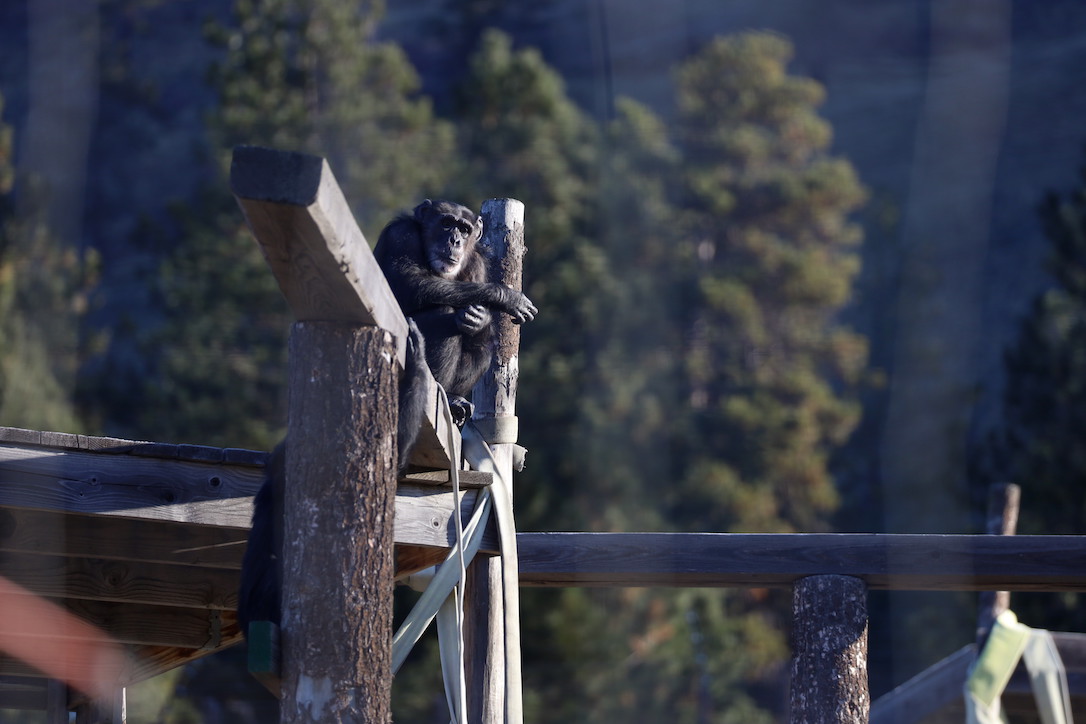
Missy is amazing and we couldn’t imagine a life without her here!

BONUS PHOTOS:

Here are a couple extra photos of some other adventures today.

After breakfast, Negra was one of the first people to go out onto Young’s Hill, even before Jamie!
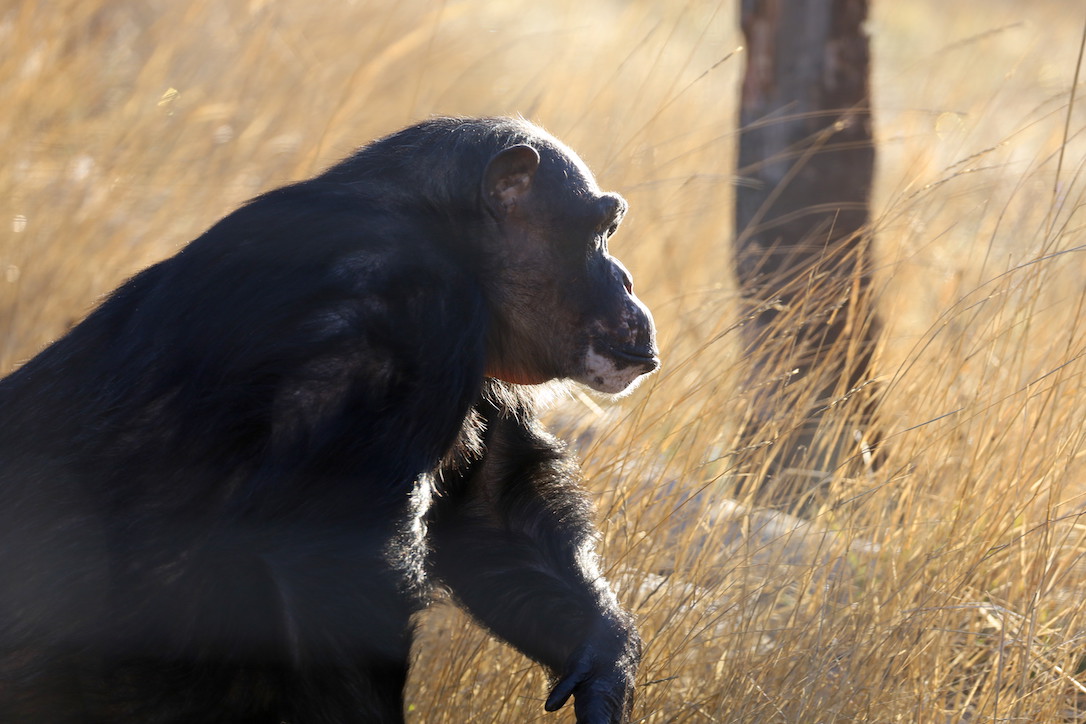
After she had her moment of basking in the morning sun, it was back to her nest.
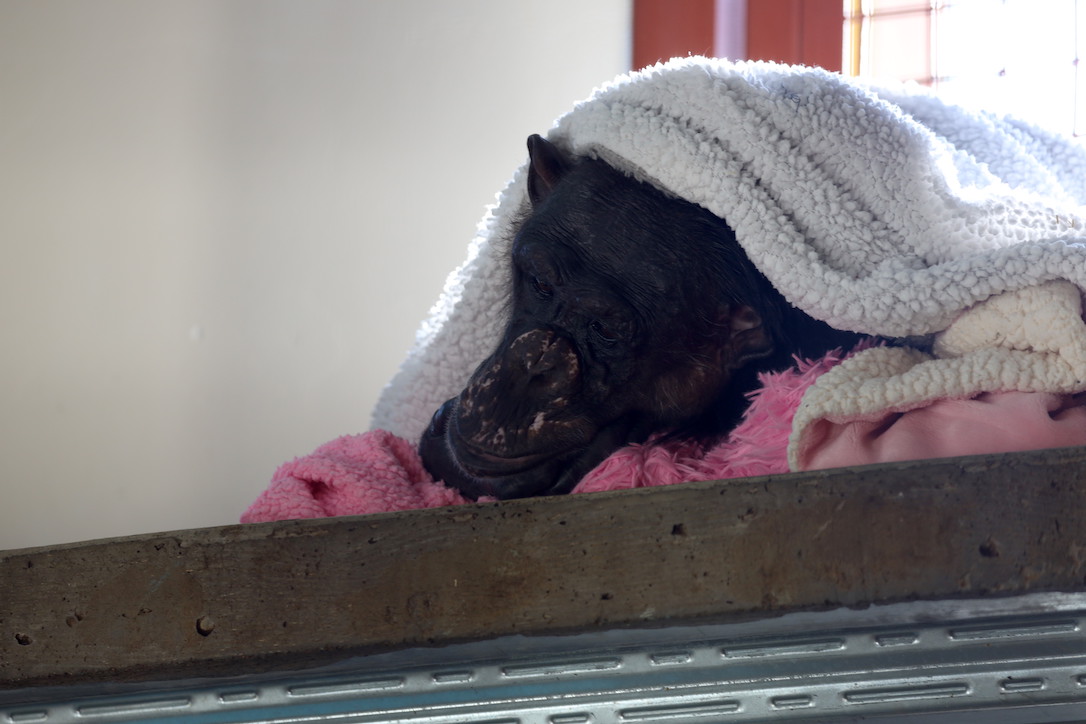
Foxie decided today called for not one, but TWO dolls!
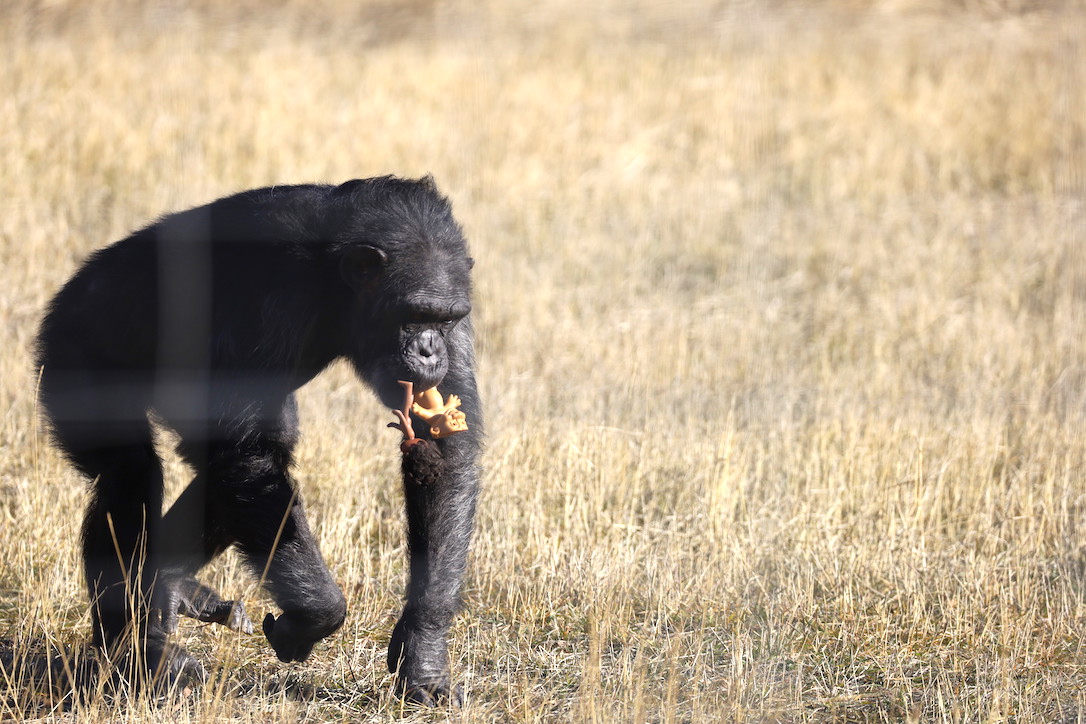
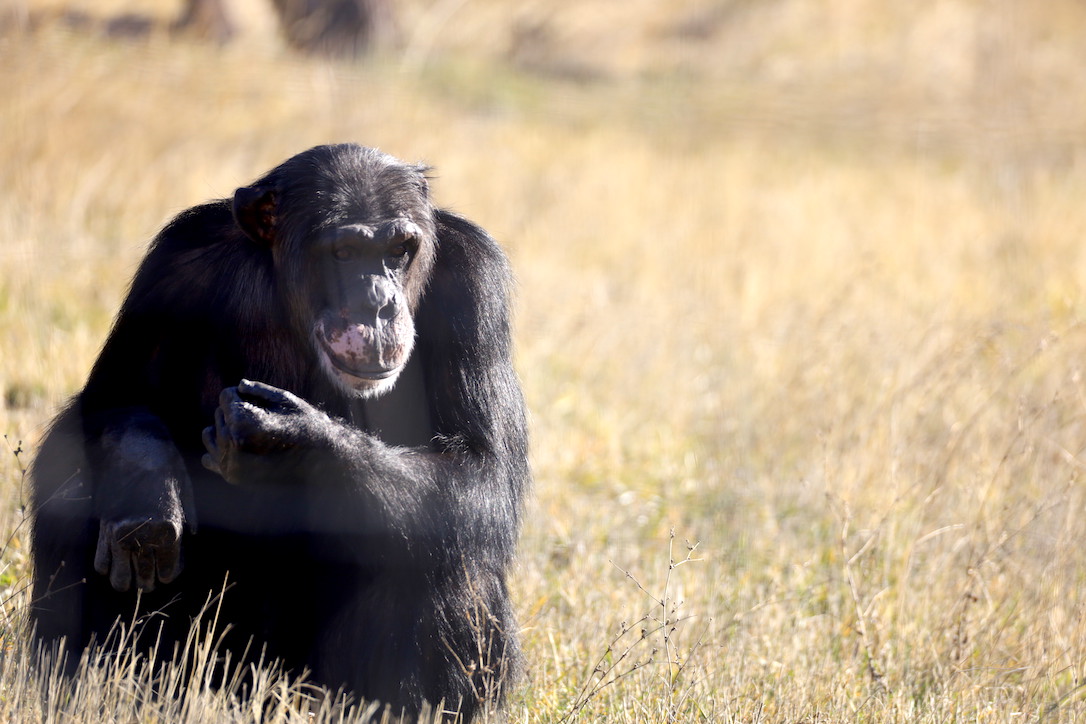
And Burrito pondering if this outing on Young’s Hill will be a race or stroll. (Luckily for this human, this time was just a stroll!)
Filed Under: Burrito, Jamie, Latest Videos, Missy, Young's Hill Tagged With: Animal Welfare, chimpanzee, chimpanzee rescue, chimpanzee sanctuary, Chimpanzee Sanctuary Northwest, chimpanzees, Sanctuary

Bovine Thanksgiving

November 29, 2020 by Anthony

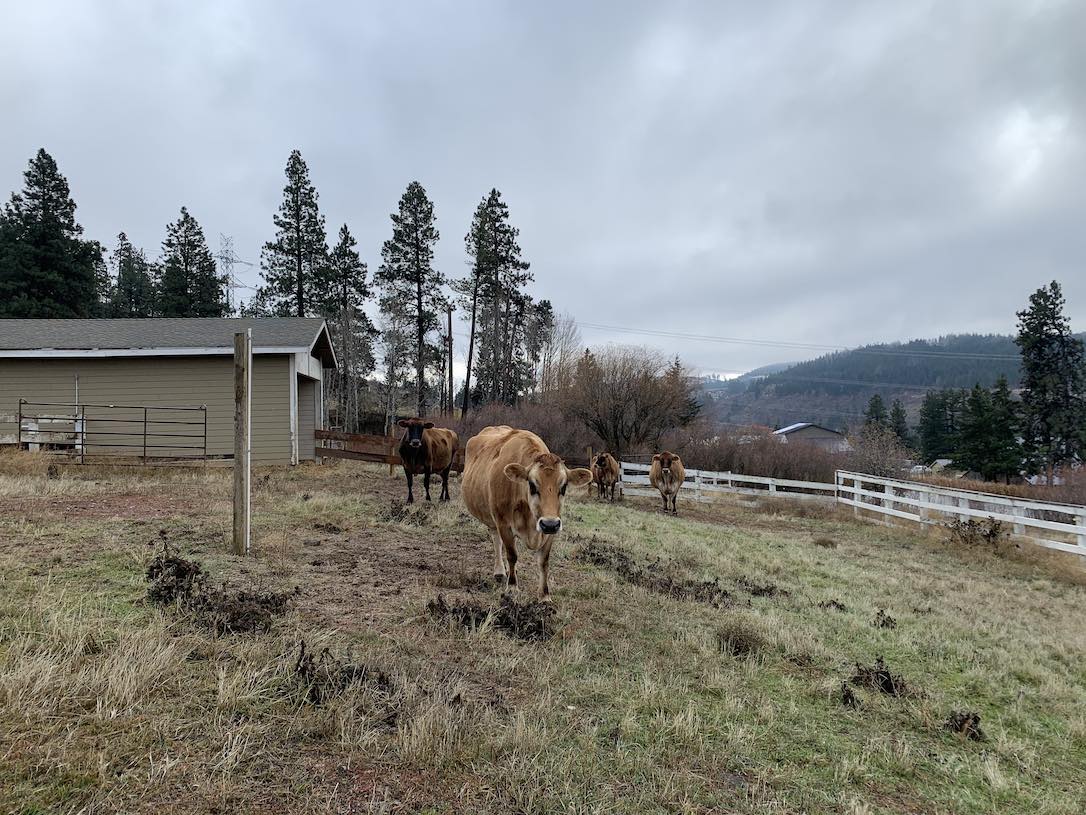
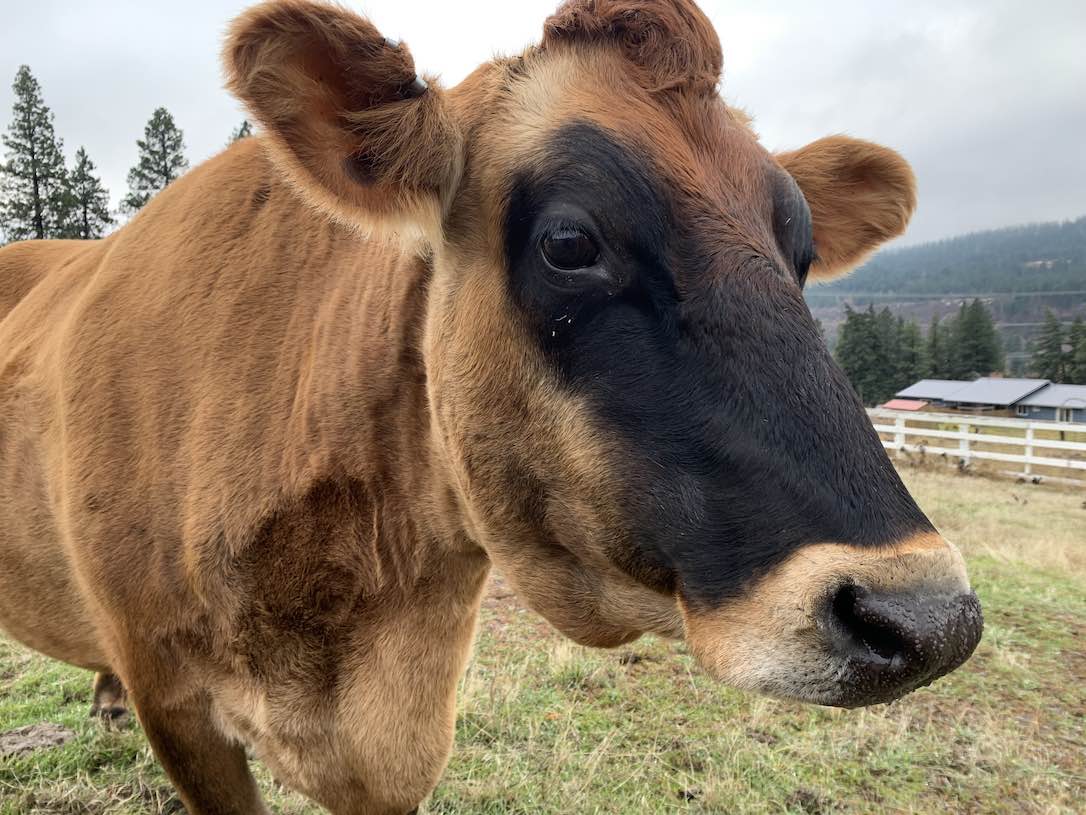
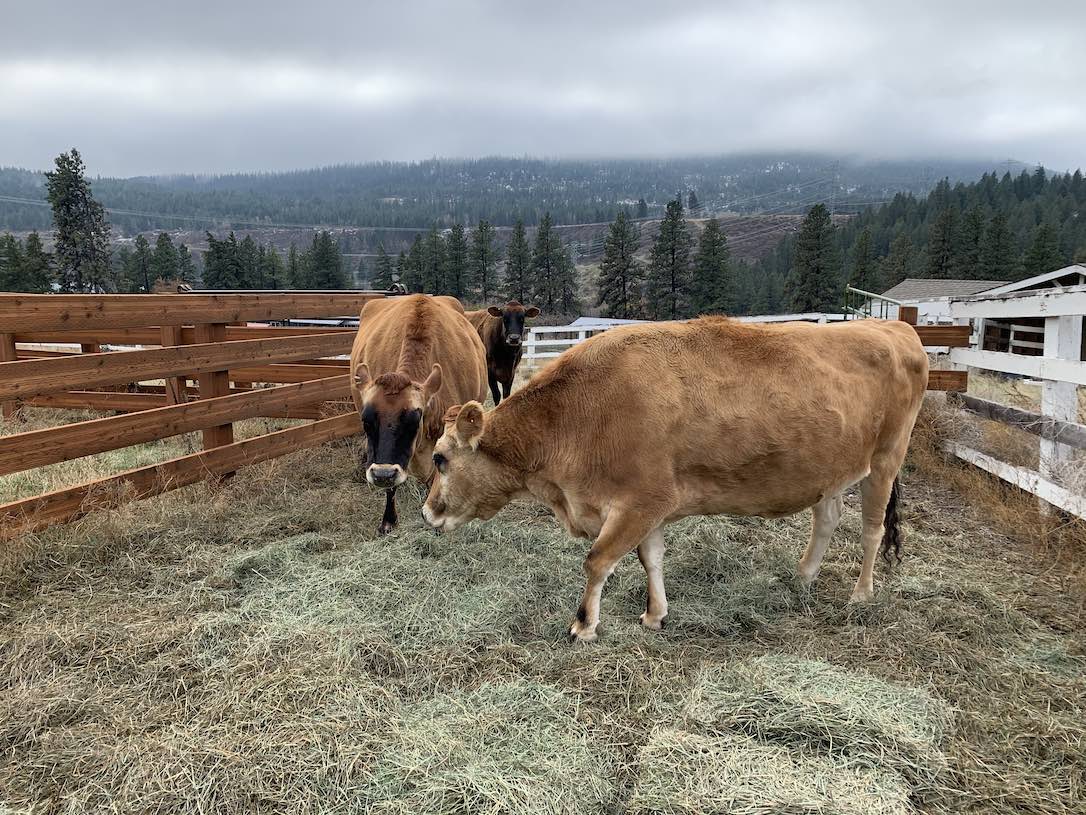
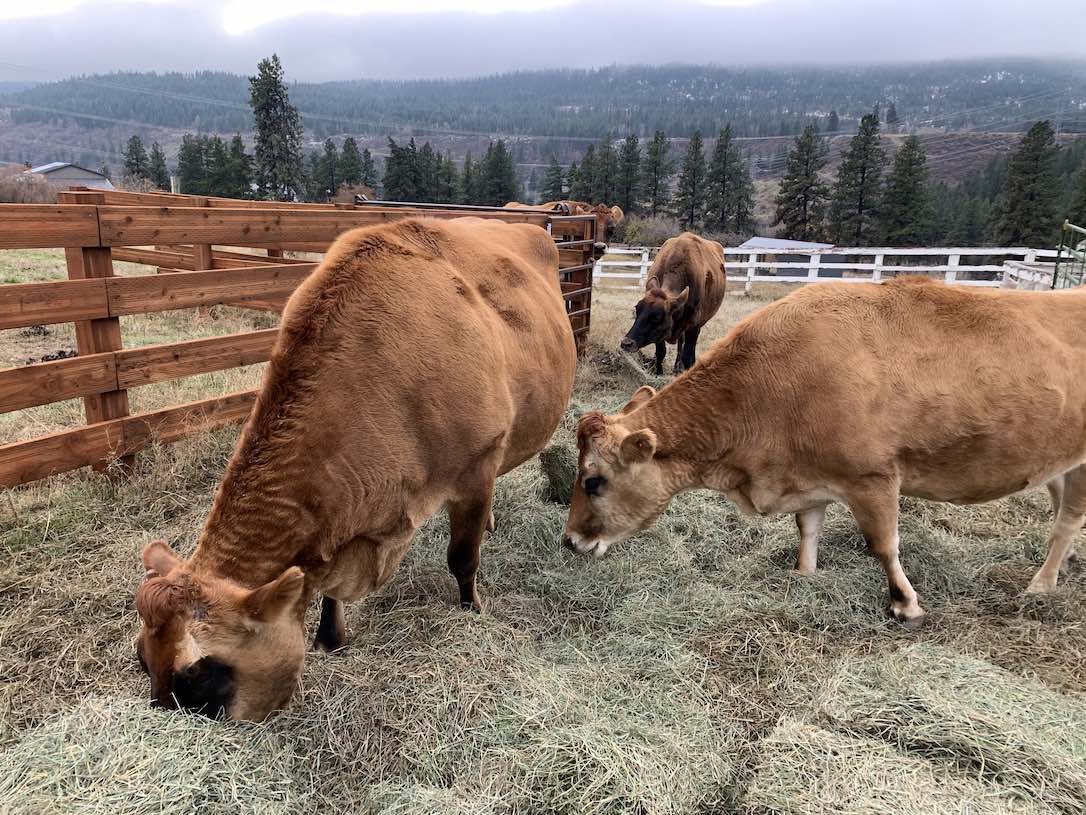
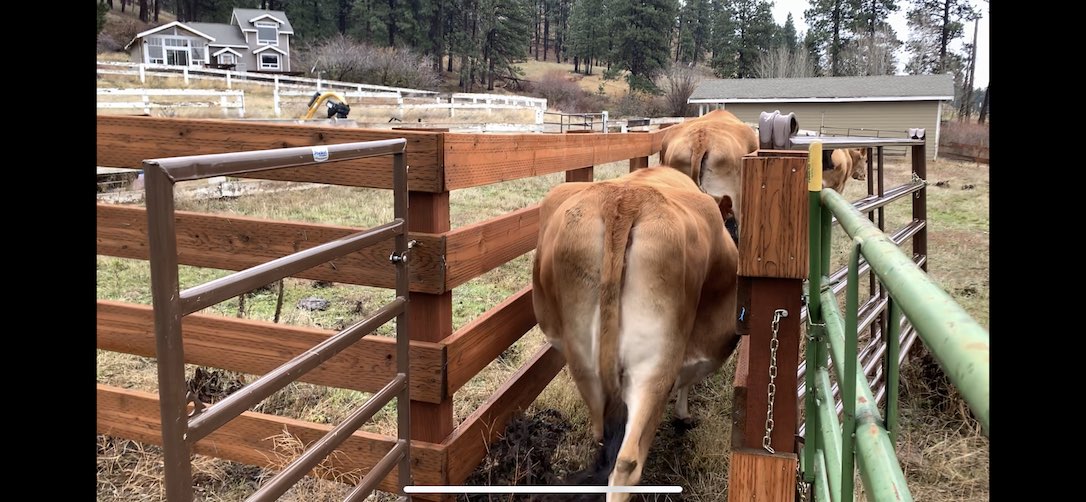
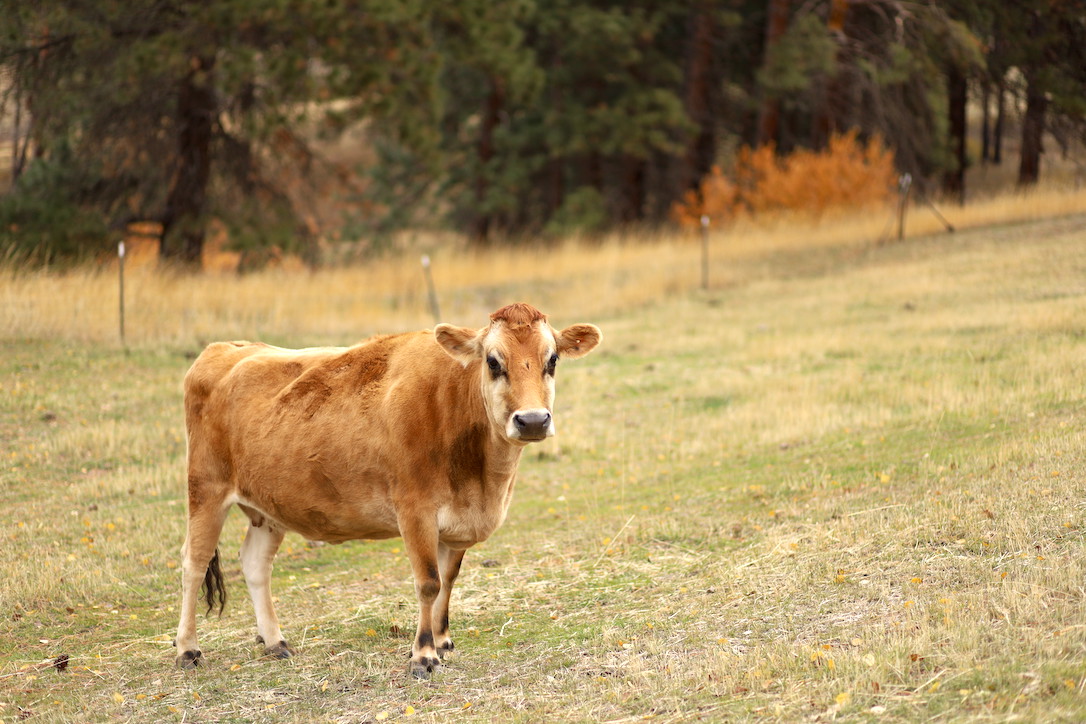
The sanctuary’s four rescued cattle have a pretty good life.

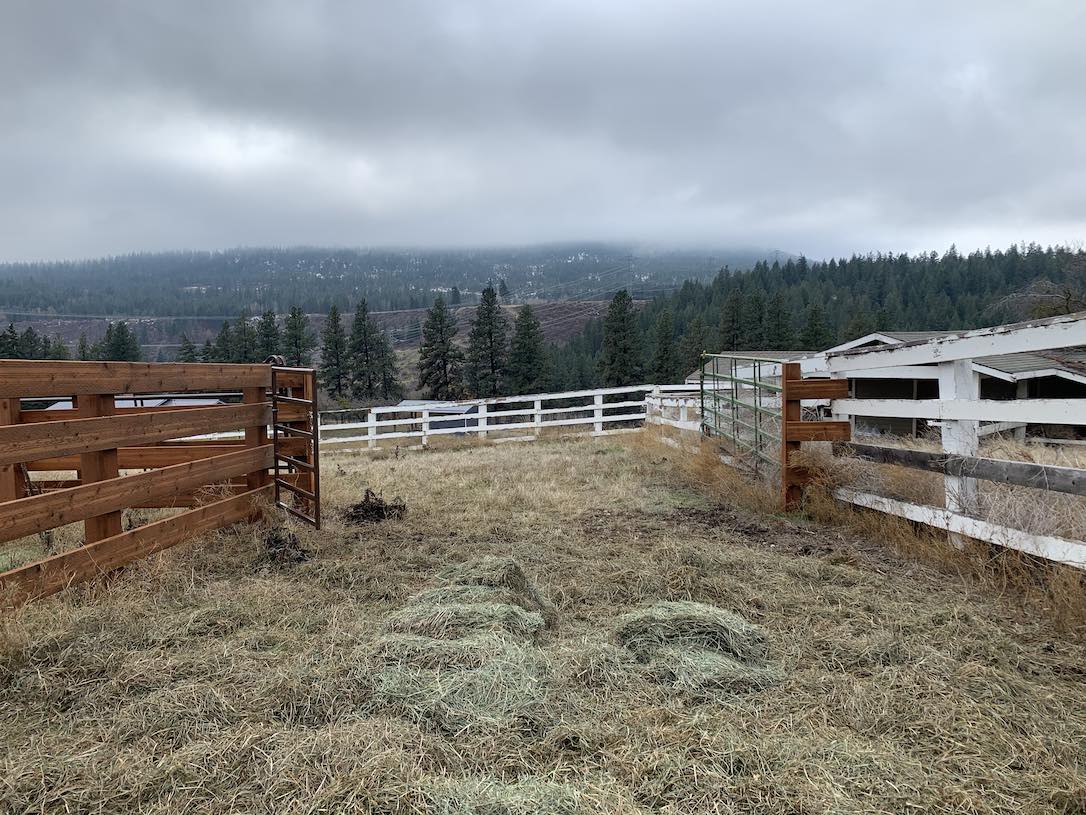
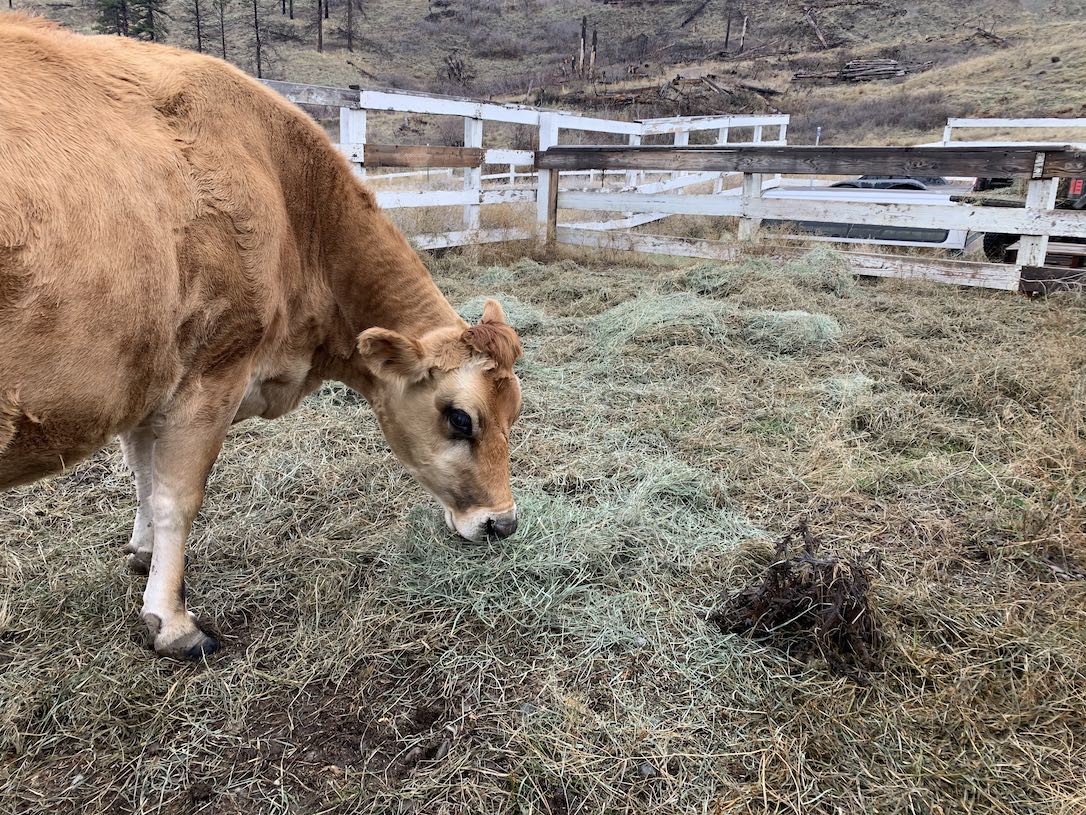
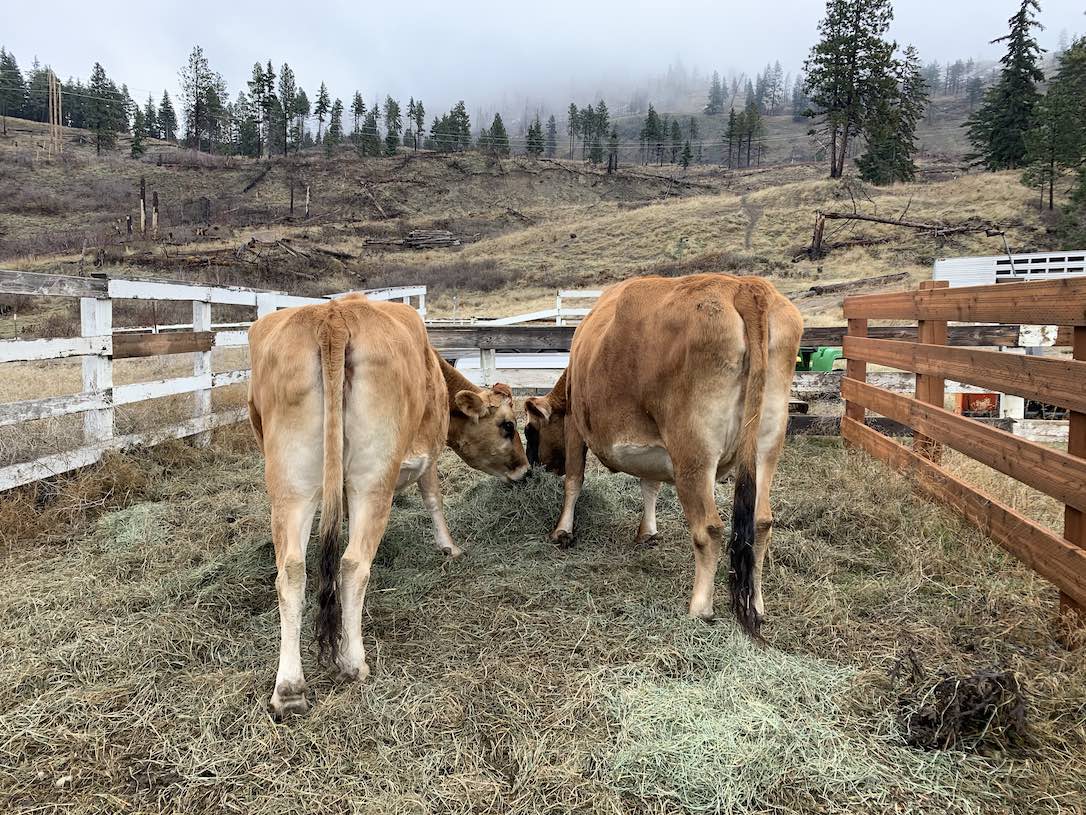
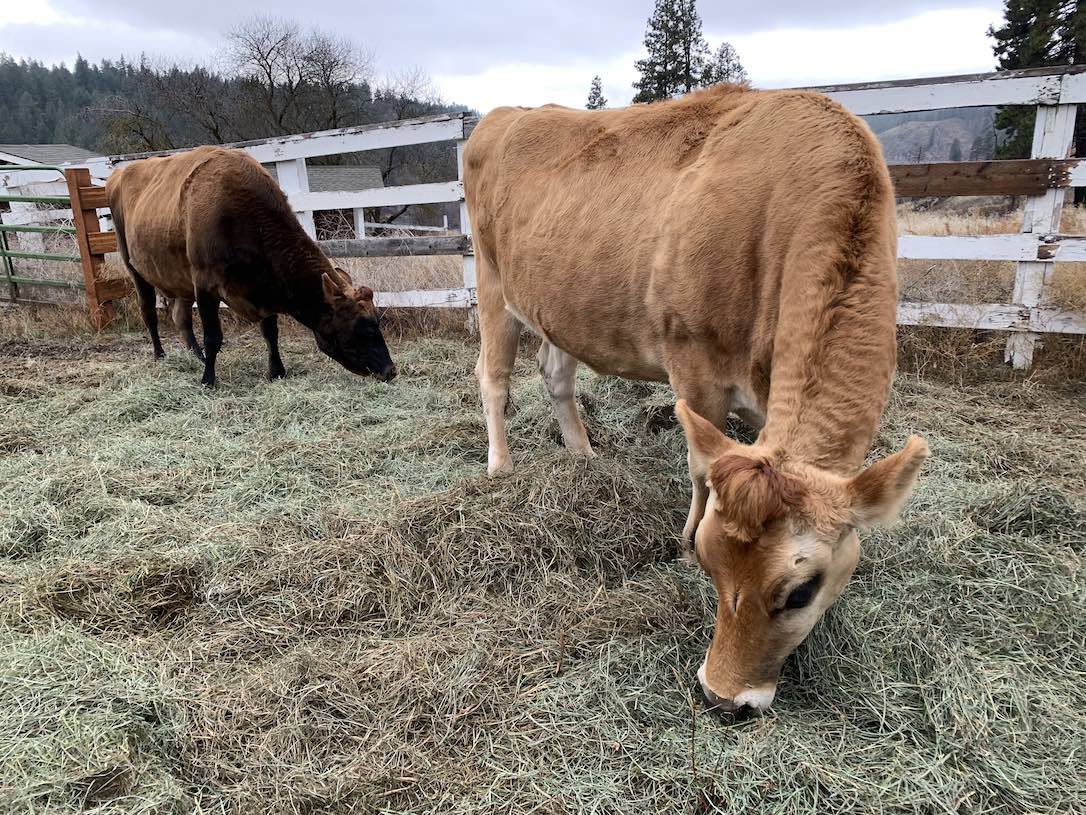
During the colder months, the bovines live in the winter paddock. Although it’s not as expansive as their full complex of pastures, this smaller area contains everything they need to stay happy and healthy. They have 24/7 access to fresh hay, heated water, and a couple of warm, straw-lined shelters. (Caregivers, on the other hand, have to muck these areas each day. That’s a story for another blog post.)
In the warmer seasons, they roam the grassy hillsides without much need for human interaction. You’ve probably seen a lot of this idyllic lifestyle on the blog. As with the chimps, we don’t always emphasize the barriers that contain these individuals, but we don’t want you to forget about them, either. The picturesque backdrops and dedicated caregivers cannot change that these four domestic cattle are living in captivity against their will. At times, it may even be necessary to confine them for their own safety. To offset the injustices of captivity, we are obligated to give them more freedom in whatever way we can, facilitating a lifestyle of relative comfort and choice.

For the cattle, the ability to roam around at will is paramount. Each winter, we typically keep the bovines in the paddock because the steep trails that lead to the other pastures turn into muddy slush. This slick terrain is not ideal for four Jersey cattle, so we close off the pastures to be safe. This year, we had to shut the gates in the middle of November, much earlier than we’d normally prefer.

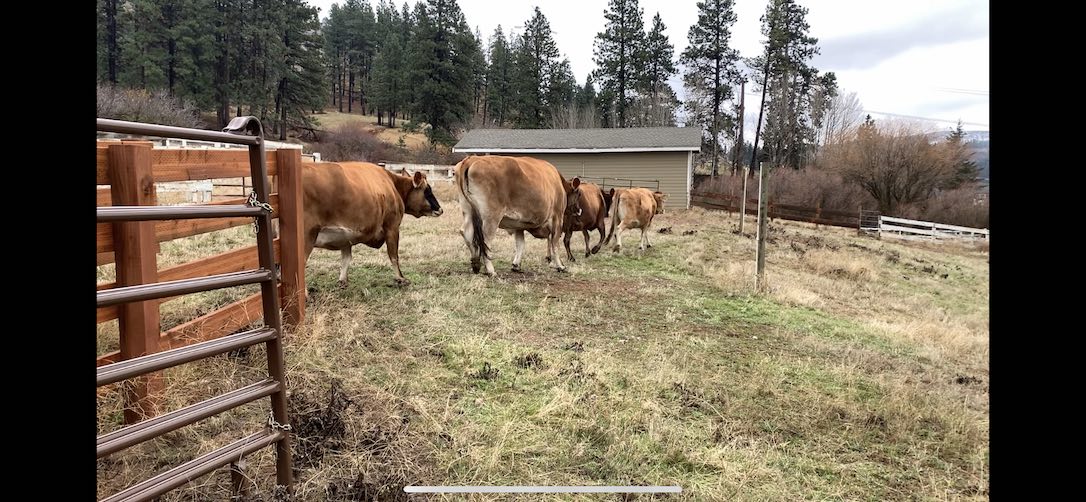
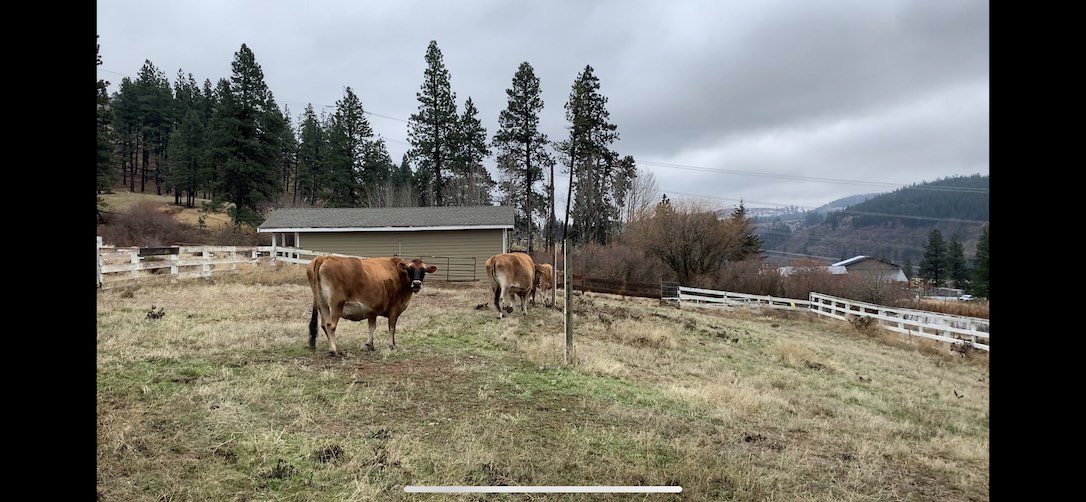
Fortunately, the weather dried out and warmed up a bit last week; Thanksgiving brought us sunny and clear blue skies. While the chimps were napping off their holiday feast, we decided to open the swing gates to let the cattle back out onto their pastures.

When bovines get excited, they will trot, gallop and buck until they are content. The best time to see this behavior is when they get access to a new pasture. Even though it’s almost winter and it had only been a few weeks, they still seemed to appreciate having their familiar pastures once again.

P.S. Thanksgiving may be behind us, but there’s a lot to be excited about. In just a couple of days, we will be participating in Giving Tuesday and we have some exciting news to share!

Filed Under: Cattle, Farmed Animals, Latest Videos, Sanctuary, Thanks, Weather Tagged With: animal rescue, animal rights, Animal Welfare, bovines, cattle, chimp, chimpanzee, chimpanzee sanctuary, Chimpanzee Sanctuary Northwest, chimpanzees, Cle Elum, cows, farm animals, jersey cattle, jerseys, Sanctuary

The Bud Box

November 22, 2020 by Anthony

Primates and Bovines

Most of our staff were, at one point or another, either primatology students at nearby Central Washington University (CWU) or interns at the university’s Chimpanzee and Human Communication Institute. People are often surprised to learn that CWU students can specialize in primate behavior at the undergraduate, graduate, or professional certificate level. It’s quite the niche.

We sometimes joke about our research-oriented backgrounds whenever we catch ourselves doing strange tasks around the Chimp House (like fishing stray troll dolls out of the septic tank filter, perusing Amazon for Jamie’s next favorite picture book, or shoveling chimp-size paths through the snow on Young’s Hill). Irony aside, the people who use their Primate Behavior degrees exclusively for studying primate behavior are the true anomalies. The skills developed while studying primatology are widely applicable to a variety of different career paths, and most of us end up doing things we never even dreamed of when we were students.

This point was reiterated when I remotely interviewed for a caregiver position at CSNW. One of the topics that came up was that of cattle care, which is quite different from the other Chimp House duties and may have turned off some candidates. When J.B. asked if I had any familiarity with bovines, I responded that “I have never cared for cattle.” The phone went awkwardly silent for a second, and I quickly realized my strange wording suggested I didn’t like cows. Of course, I actually meant that I had literally never worked with them before, and I tried my best to convey that I was in no way prejudiced against cattle. In fact, I knew little about bovine health or behavior but was super stoked to learn.

Shifting For Safety

In some respects, taking care of chimpanzees is vastly different from managing domesticated animals such as cattle. Sometimes, though, the overlap is considerable. From my perspective, one similarity shared by all species is the tendency to not go where you want them to, making their care more difficult.

We’ve recently discussed the challenges of shifting chimps around the building so that we can safely unlock areas for cleaning. In some cases, such as Willy B’s epic filibusters in the Courtyard and the chute, we can make alternate plans that align with the chimps’ preferences. However, we don’t always have that luxury. On rare occasions, we encounter situations when we need the chimpanzees to leave an area for their immediate safety. These improbable events may be related to extreme weather, enclosure maintenance, or dangerous wildlife. In these critical moments, confused chimpanzees tend to pay less attention to their caregivers and are less likely to cooperate.

One example is that of Burrito’s rattlesnake encounter in Young’s Hill back in September. On that day, the chimps voluntarily came inside, letting us administer antivenom to Burrito and remove the snake from the habitat. In the weeks after, we prioritized recall training. To execute a recall, we invite the the chimps to return to the building, letting us close the doors in exchange for high-value treats. In a couple of cases, this proactive cooperation helped us to humanely relocate non-venomous snakes that had mistakenly found their way into the chimps’ outdoor enclosure. Once the warm weather returns in the spring, we will surely resume this training.

Note: We are frequently asked whether we intervene in fights by splitting the chimpanzees up. We usually do not. Separating a frenzied group of chimps during an altercation is extremely difficult since they are so focused on each other during these moments. They almost always resolve the conflict and reconcile without our assistance.

Other institutions do similar activities for the sake of their chimpanzee residents. At the closed Wildlife Waystation (from whence came Honey B, Mave and Willy B), caregivers are currently teaching the chimps to willingly shift into transport cages in case nearby wildfires threaten the facility again. This ongoing effort recently garnered some well-deserved media attention. As the sanctuary community works to re-home the remaining chimps, it’s good to know that their immediate wellbeing is still a top priority. When those chimpanzees make their way to accredited facilities like ours, hopefully they’ll be like Honey B and bring their cooperative attitudes with them.

The Bud Box

Of course, the chimpanzees aren’t the only CSNW residents who need this kind of training. The sanctuary’s four cattle are also managed using positive reinforcement, and training them to voluntarily enter a smaller corral is one of our top priorities. Plausible scenarios in which we would need to confine the cattle would be to address individual health concerns, to make repairs to the pasture fences, or to evacuate the herd due to a nearby wildfire. We also use a similar process to isolate them for their annual hoof trims and vaccinations. In all of these cases, the first step is to get them out of the larger pasture and into a smaller corral. From there, we herd them into an even smaller pen and then into a narrow chute that allows for safe handling. Cattle are naturally skeptical of anything that seems different (and for good reason), so anything we can do to familiarize them with this process has a positive effect on their welfare.

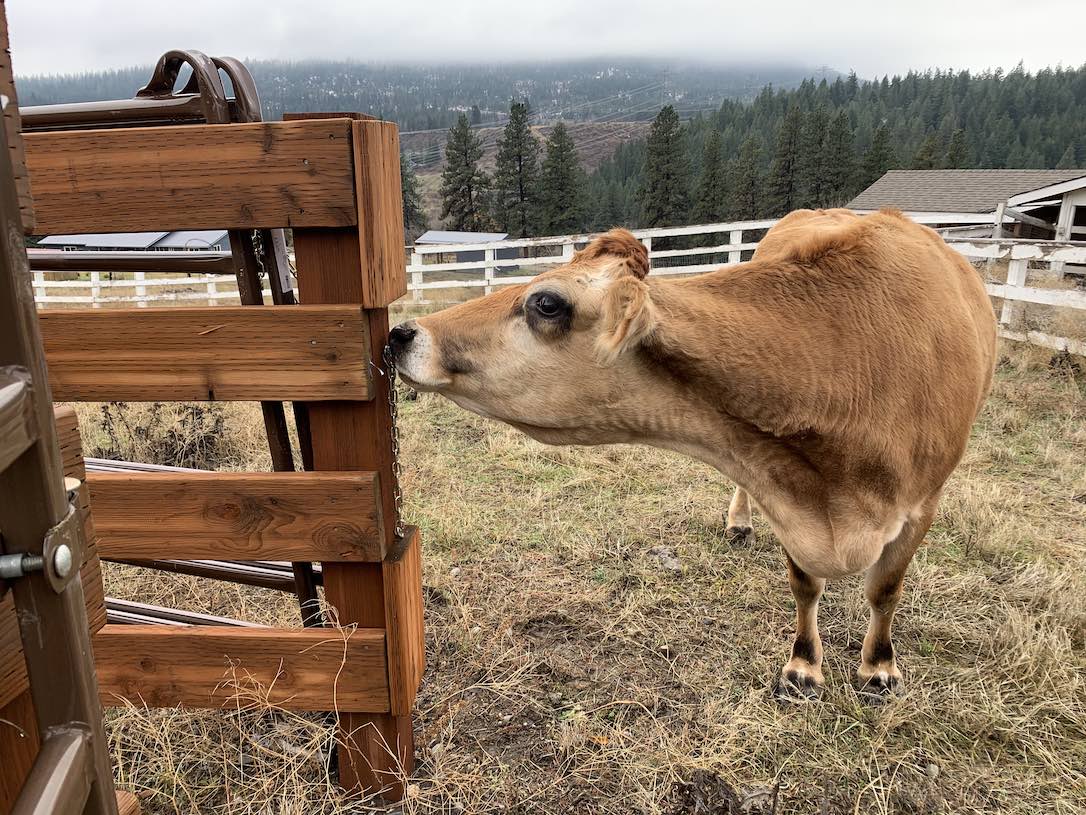
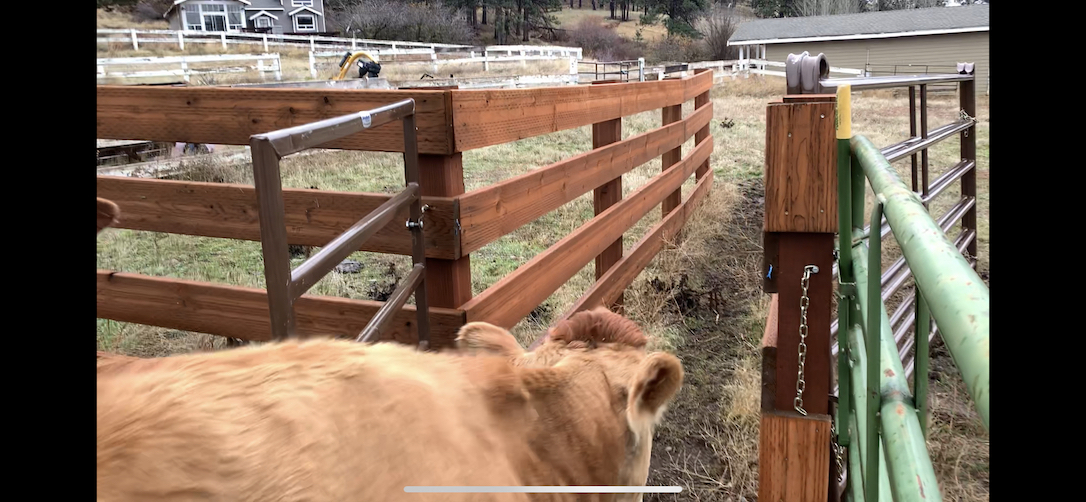
The key to all this is the Bud Box. Although it sounds like a monthly subscription service for cannabis enthusiasts, the Bud Box is actually a type of cattle pen named after its late inventor, Bud Williams. Bud’s design was (and remains) quite simple: a rectangular enclosure that has one or more outflows located near the main entry gate. Cattle will often turn back once they encounter a dead end, at which point they easily divert into a narrow chute for veterinary care or transport. This relatively cheap design is wildly effective and popular. J.B. built our sanctuary’s Bud Box shortly after the cattle arrived, and it’s already proving to be worth all of his hard work.

Source: Michelle Proctor, University of Missouri

As the above diagram shows, the Bud Box is designed to keep the cattle “flowing” into the chute without much human participation or promise of reward; their aversion to containment drives them through. Ideally, all the human operator has to do is close one gate and open another. Still, it can work better if the animals are familiar with the pen and relatively relaxed. Training is one way to achieve this.

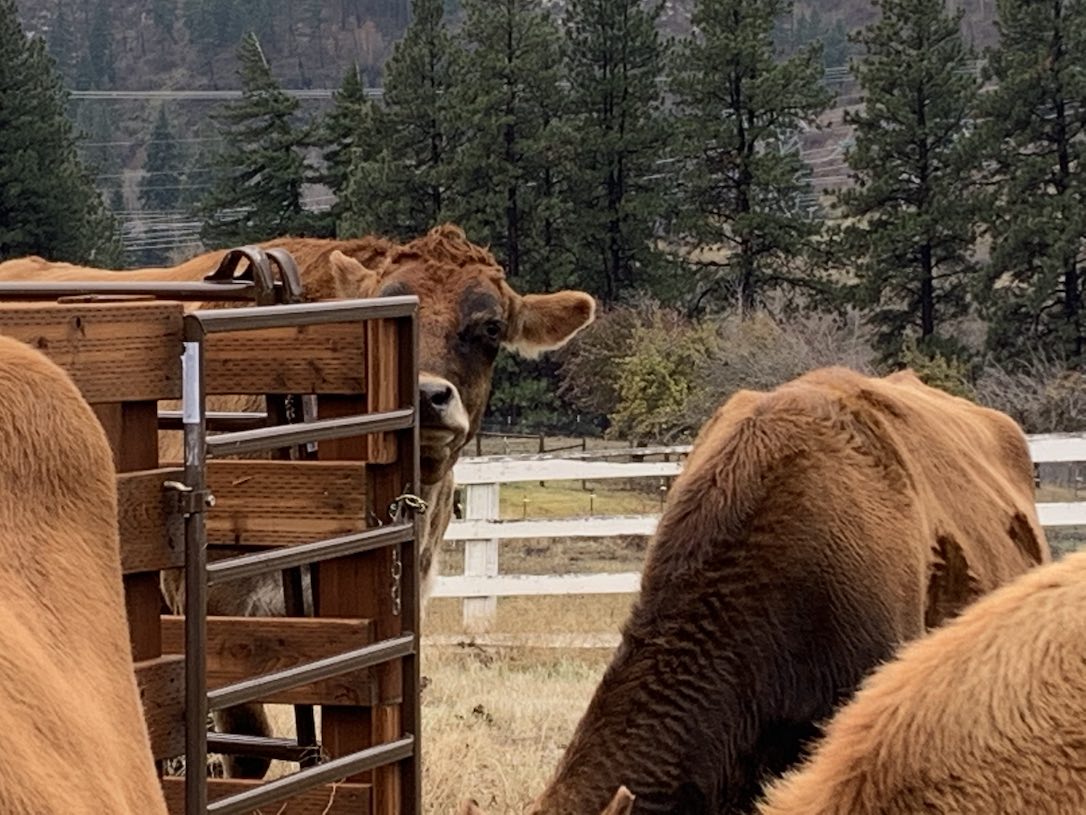
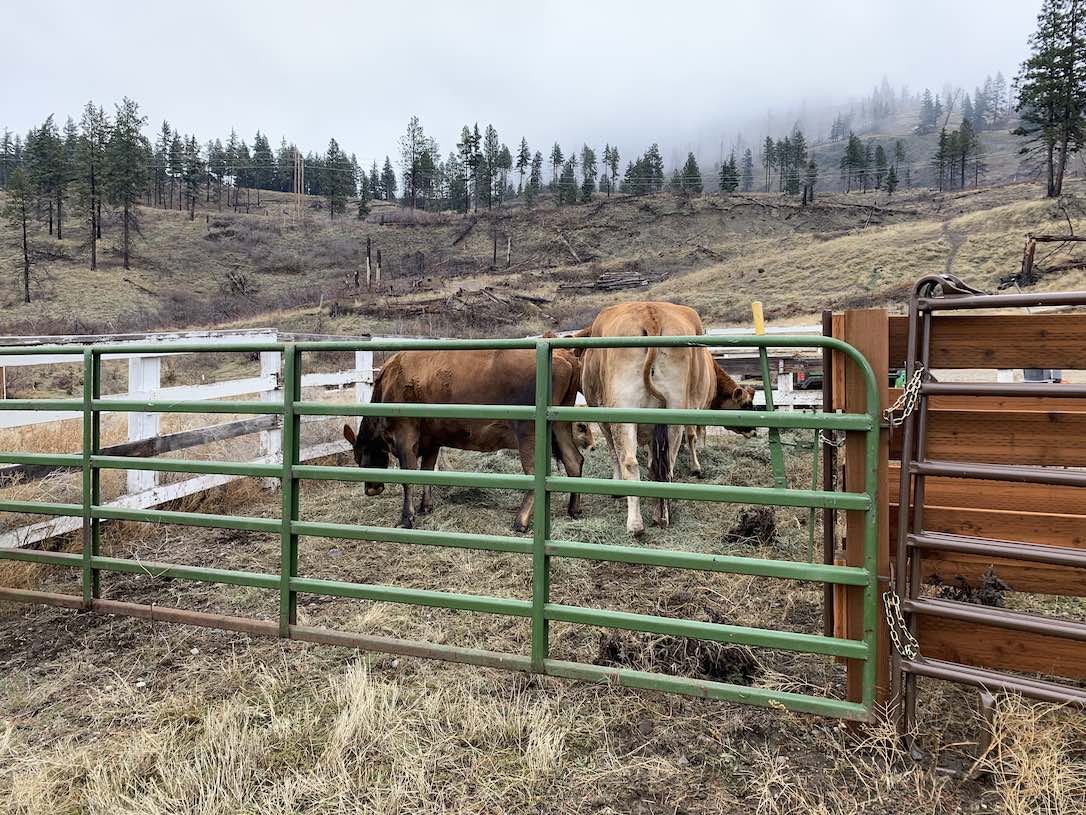
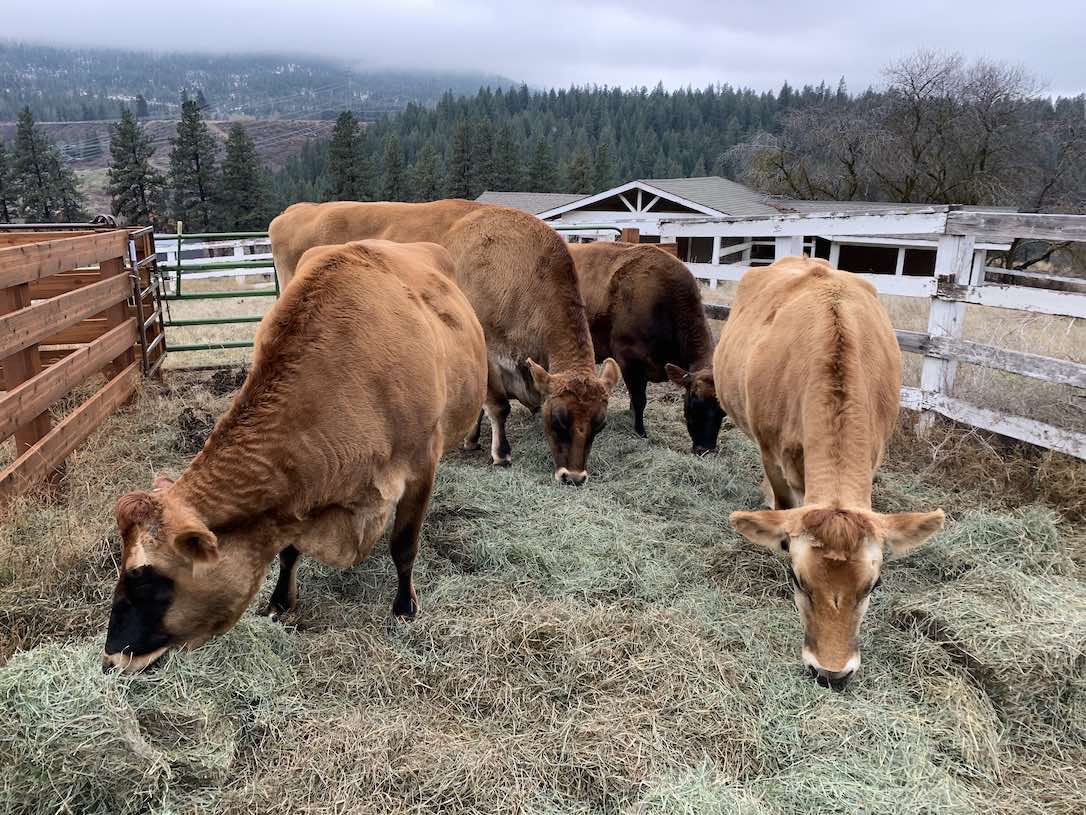
Erin and I have been doing some Bud Box training recently. During these sessions, we put some of the bovines’ regular hay into the box and then briefly close them inside. Then, we open the side gate so they exit through the corresponding chute, receiving the rest of their hay as a reward. Afterwards, we leave the swing gate wide open so that they can re-enter the Bud Box for any leftovers. The following photos show a step-by-step record of the entire process (in case you want to try it with your beloved Jersey cattle at home).

1. With the swing gate open and the chute gate closed, we place an alfalfa/grass hay mixture into the Bud Box and call the cattle over.
2. The cattle come into the corral voluntarily and slowly walk toward the Bud Box. We close the pasture gates behind them.
3. Honey is the bravest. She takes a good sniff of the Bud Box before entering.
4. Honey settles and begins to forage.
5. More skeptical individuals tend to hang back. Meredith need a moment to observe her mother eating safely.
6. The number of cattle in the Bud Box suddenly doubles as Meredith joins Honey inside.
7. Betsy comes over, too.
8. Betsy begins to eat. Nutmeg is the last one to arrive.
9. Nutmeg needs to lick things.
10. With the cattle happily filling their bellies, I close the swing gate behind them.
11. Nom nom nom nom nom
12. Once they’ve eaten a bit, I open the side gate so they can exit via the chute.

13. Although they eagerly leave the Bud Box, they soon decide to go back to it and scarf down the remaining hay.

Our plan is to continue this training on a weekly basis until the cattle calmly enter the Bud Box and exit via the chute with only a tiny bit of coaxing. It may seem like a lot of work now, especially for a bunch of primatology nerds like us, but this training could prove invaluable if we ever have to round up the cattle in a hurry.

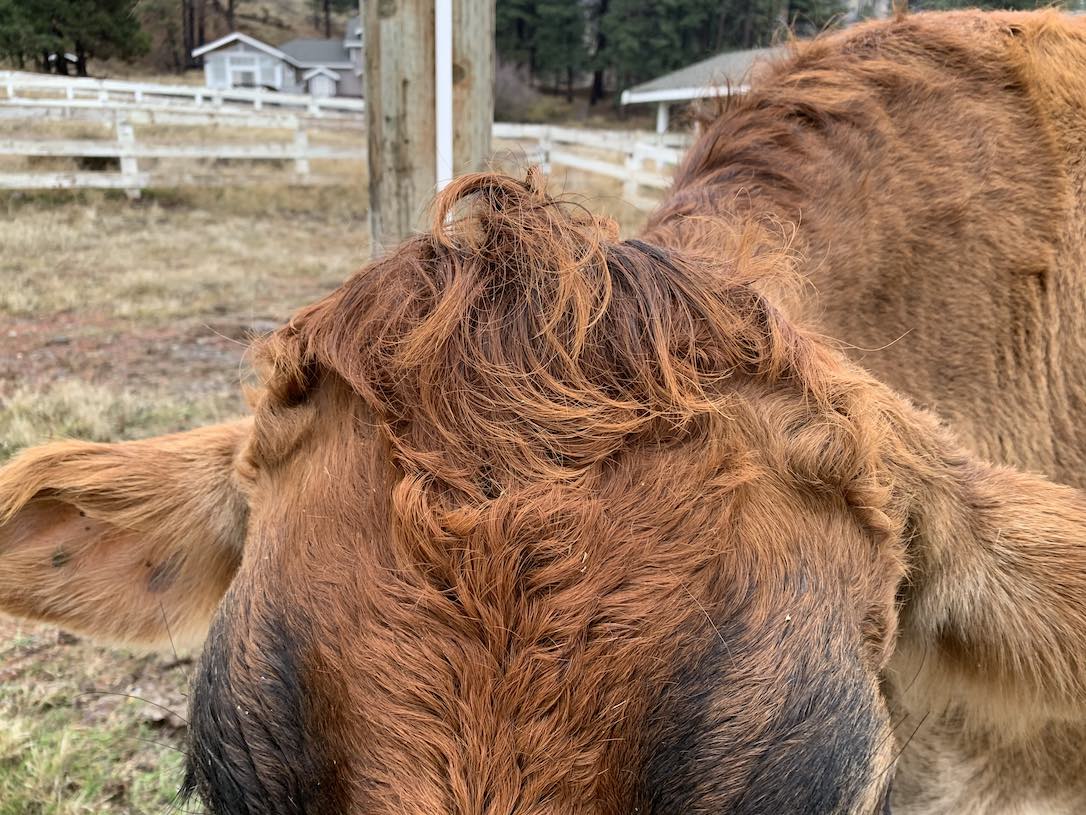
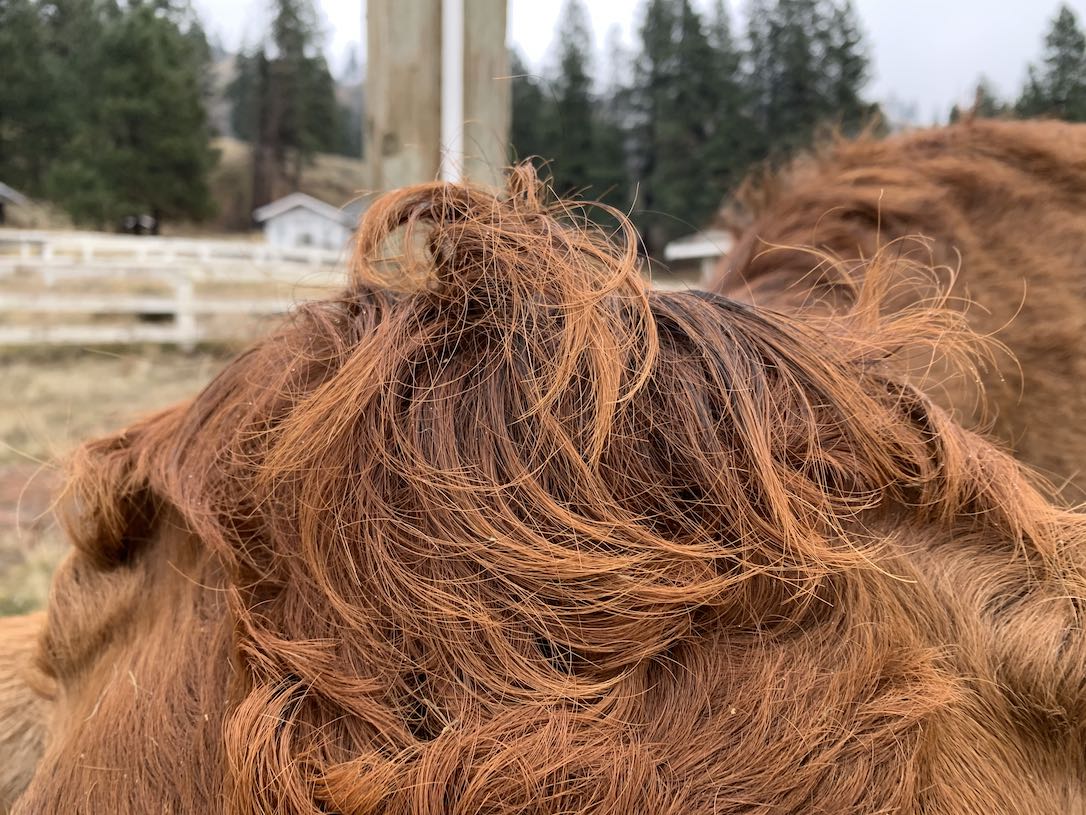
In the meantime, I think we all need to appreciate how awesome Nutmeg’s hairstyle is. This anatomical feature is actually an occipital protrusion called a poll, but I think it looks more like a messy man-bun. Either way, he rocks it.

Filed Under: Cattle, Farmed Animals, News, Training, Weather Tagged With: animal behavior, animal rights, animal training, Animal Welfare, animals, bovines, bud box, cattle, chimpanzees, cows, emergency management, jersey cows, livestock, positive reinforcement, ranching

man of mystery

November 21, 2020 by Diana

If you tuned in yesterday, you read that Willy B has been asserting his desire to disrupt the routine and, instead of shifting for meals, he has one thing on his mind – keeping tabs on the neighbors, we suspect Annie in particular.

Today was a continuation of this trend. Anna, J.B. and I put our heads together yesterday to attempt to problem solve and try to give Willy B what he wants but also ensure we are able to clean their house.

I think I mentioned this a couple of weeks ago, but I have a blog post percolating in my brain all about how much of what we do in caring for captive chimpanzees is balancing different aspects of welfare and safety.

I don’t know if I’ll ever write that grand post. There’s a hundred examples of this sometimes difficult balancing that we do throughout each day. Rarely are there clear right or wrong answers.

Willy B’s new defiance to the routine illustrates several examples.

Because of the construction happening right now that will give Willy B, Mave, and Honey B more space and variety, we decided to not give them access to the courtyard when construction workers are on site.

There are a few reasons we landed on that decision, but mainly it was about safety. Willy B is still getting used to the courtyard and Honey B and Mave are still curious but not curious enough to take steps outside. The Courtyard is right next to where the construction is taking place. We certainly don’t want any incidents while strangers are in the vicinity.

So, this means that Willy B’s Courtyard time has been lessened and we aren’t actively working on encouraging Mave and Honey B to be adventurous, but rather leaving it up to them for the time being.

Also, the Courtyard was a bit of a quick construction project. It’s not their final outdoor space, rather it’s a stop-gap that we created after the integrations didn’t work out so that Willy B, Mave, and Honey B could have an open-top outdoor space while we continue to work on the expansion for them and for another group of chimpanzees coming from Wildlife Waystation.

In order to create the space quickly, there’s just one electric fence running between the Courtyard and the rest of Young’s Hill – the outdoor habitat that the group of seven access. With just one fence between them, we don’t have both groups outside at the same time. This means we have to balance the needs, desires, and welfare of each of the individuals in the two groups when allocating outdoor access.

This is temporary. Both groups will one day have large open-top habitats, but right now we have to work with what we have. And there’s always the possibility of Mave and Honey B never (or take years to) get accustomed to the big open outdoors. So, part of our future plans include a large enclosed outdoor space too. Balancing. Balancing.

Our routine lately has been going along swimmingly for the most part. There was that one day a couple of weeks ago when Willy B decided to camp outside. Anthony’s post that day covers some of this same material I’m relaying here. At the time, that incident was an anomaly and didn’t impact the cleaning routine. Willy B’s decisions this week, however, are putting a wrench in the routine.

Today, I opened up the Chute first thing in the morning, hoping that Willy B would get his fill of monitoring the other group / watching Annie, and would then come in for breakfast so we could clean. I realized at the time, of course, that this was wishful thinking. He chose not to shift for breakfast. And today Honey B decided to join him in his keeping-the-humans-on-their-toes mission. Mave had a fabulous breakfast and was in high spirits all day, inviting the humans to play chase whenever she could catch our eye.

Based on Willy B and Honey B’s decision, I changed up the routine a bit, eventually closing Willy B in the Chute so that we could clean all of the front rooms. Happily for everyone, it was a beautiful sunny day, and he was quite content napping at the top of the Chute.

With the construction crew off, I decided to wait until after lunch to open up the Courtyard so that Willy B could have some extra time out there, if he chose.

He chose.

Anna and I took turns hanging outside with him most of the afternoon.

It wasn’t so much that he wanted to be in the Courtyard as he did not want us to eliminate the option of him being in the Courtyard, so the few times Anna or I approached the controls to close the door, he would move from the Chute to the Courtyard.

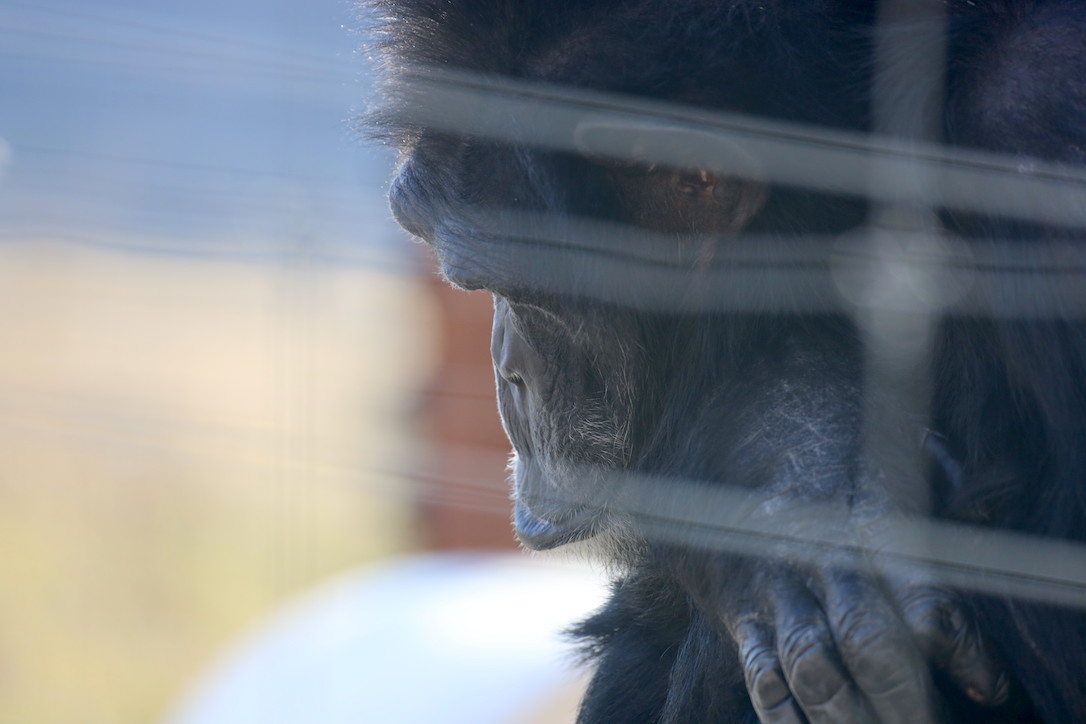
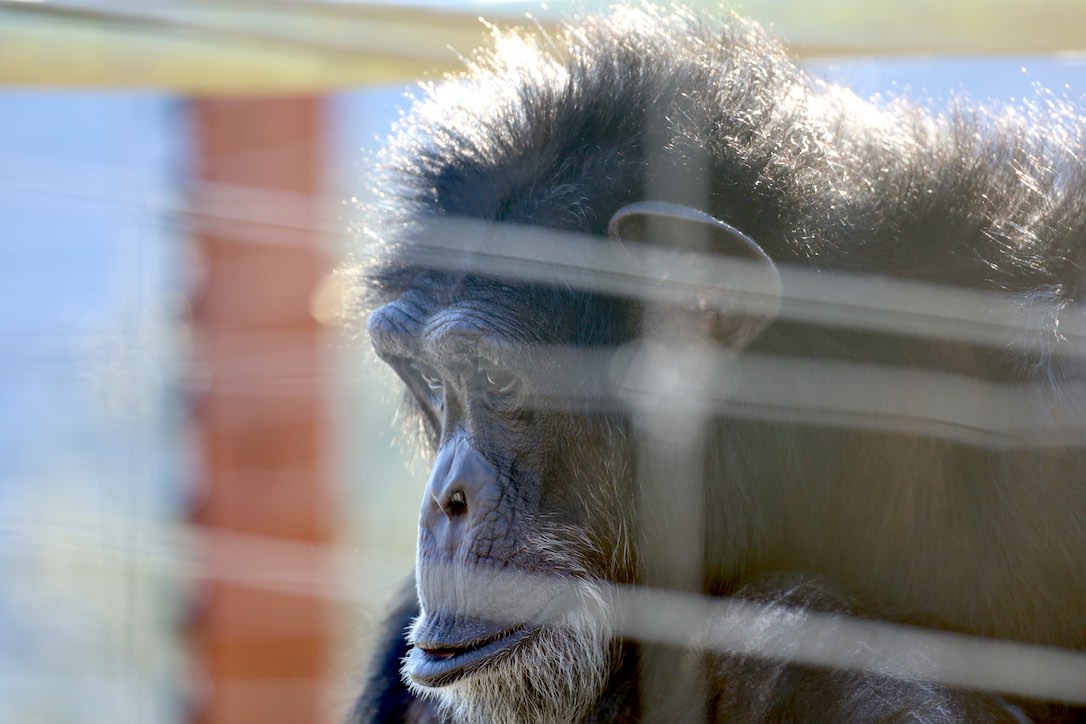
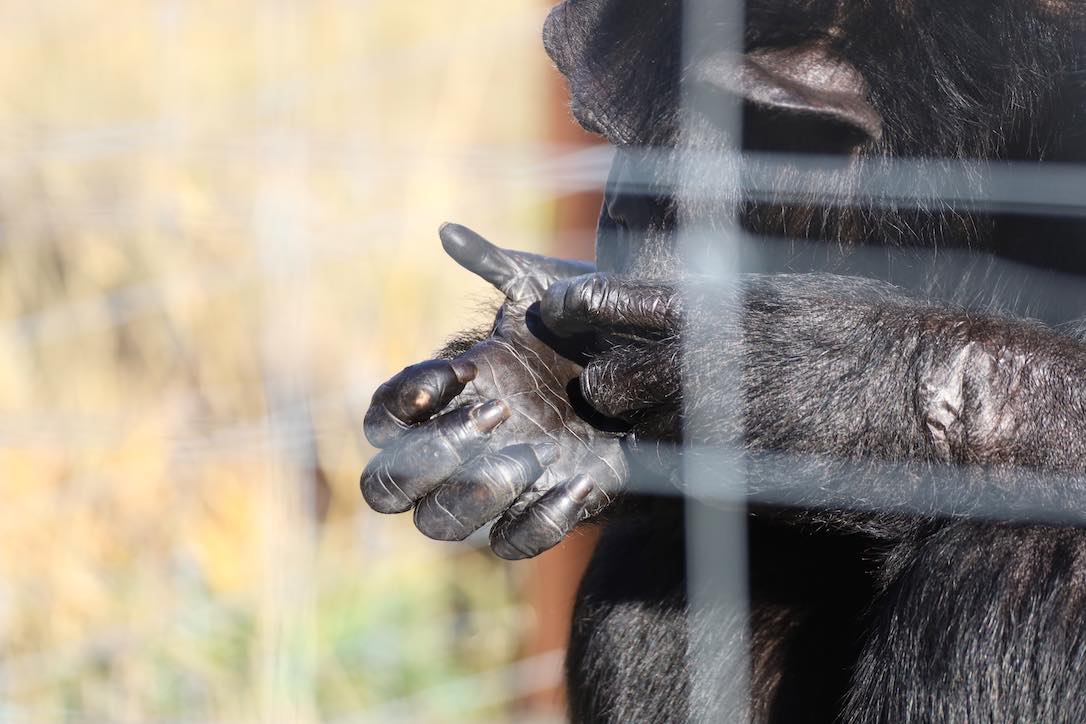
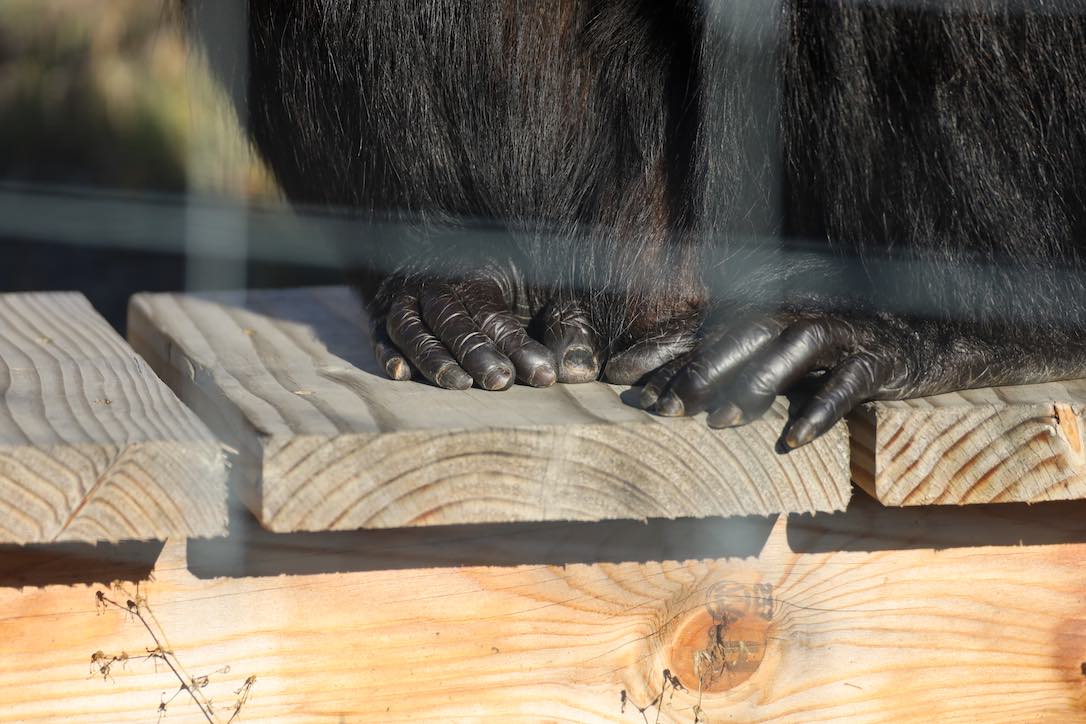
It was nice to be able to give him this choice and it allowed me to do a little photo study of this man of mystery.

Eventually, he let Anna close the door and he came inside just before dinner. Whew!

I had a decision to make now. It was right before dinner, but the seven hadn’t been outside on the hill since this morning. They probably would have been just fine getting dinner and ending the day, which would make things easier on the humans. On the other hand, if they could have twenty minutes or so of outside time, that would be nice.

You can probably guess what I decided to do.

The question now was whether Jamie would allow me to close the hill after dinner. Jamie is controlling by nature and often chooses when the caregivers go home by sitting in the doorway to the hill, knowing full well that we won’t leave until all of the chimps are inside for the night.

After dinner, Jamie looked at me and ran outside. The gig was up, there would be no closing of the door; we were going to walk. Actually, a walk was not exactly what she had in mind. I had to get the gator from the barn so we could race.

I have to hand it to Jamie, she knows how to end a day.

Willy B also did not want a door closed during dinner – the door to the Chute. Eventually his stomach and curiosity made the decision for him and I closed the door while Anna passed out grab bags.

Now everyone is tucked in and sleeping soundly, and I’m awake-dreaming about the new spaces taking shape for Willy B, Mave, and Honey B and new chimpanzees and all of the ways they will be able to choose to keep the humans on their toes.

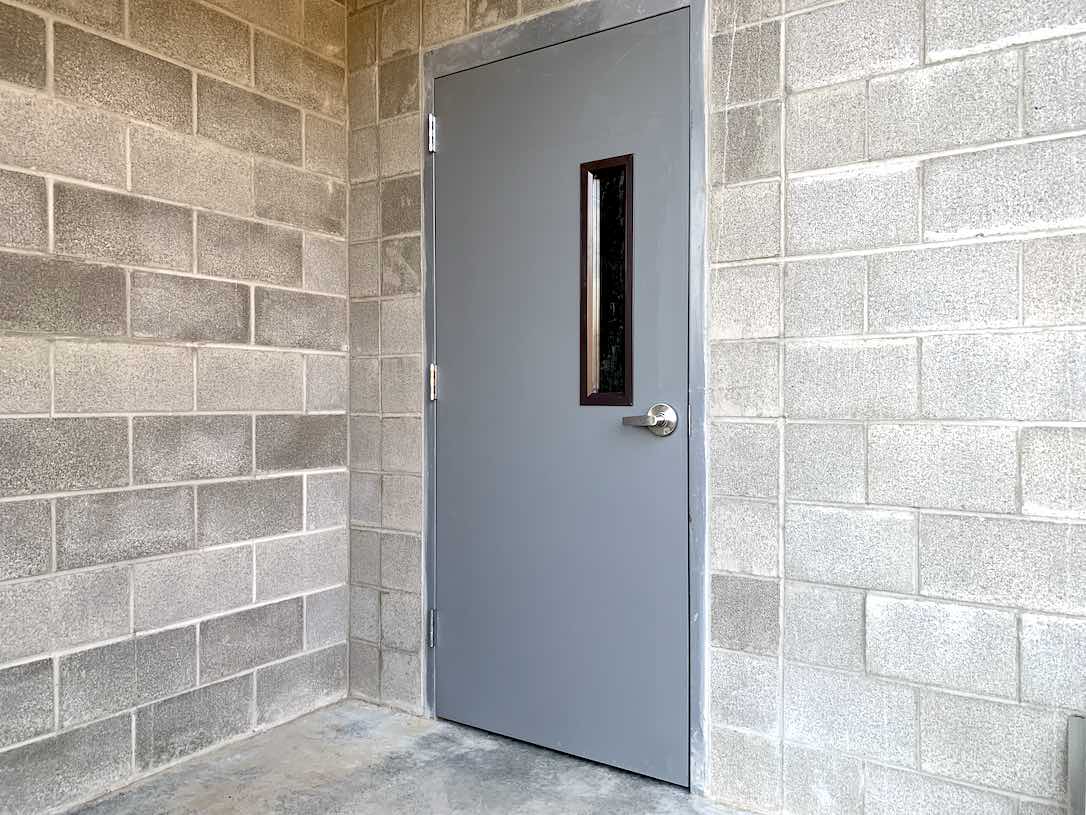
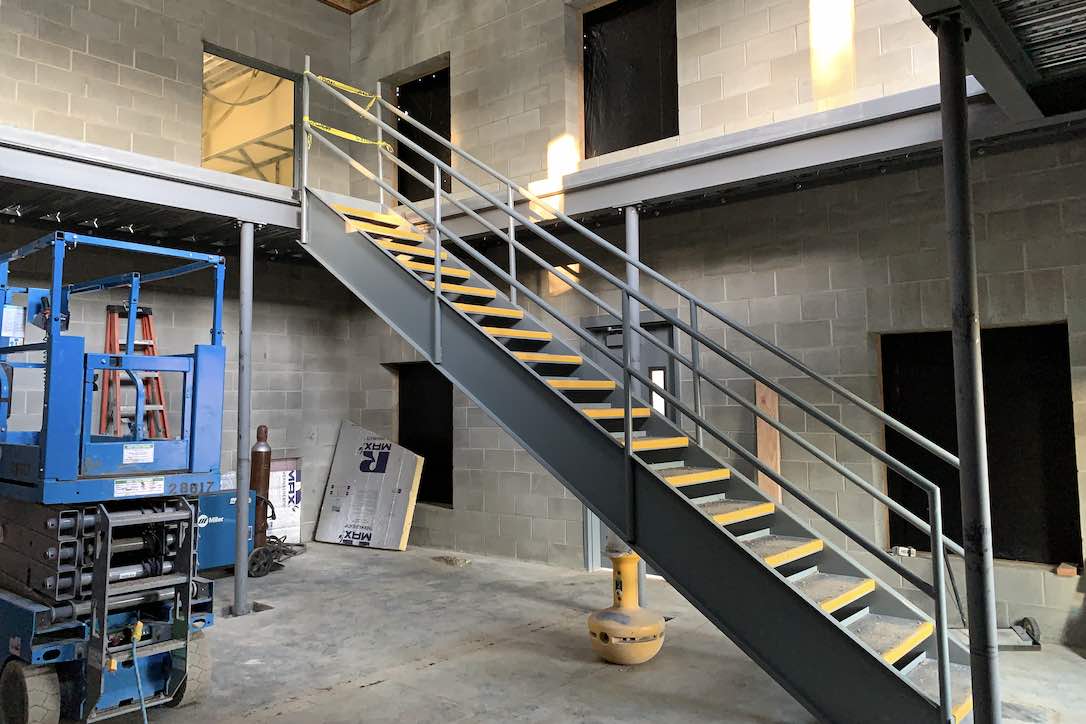
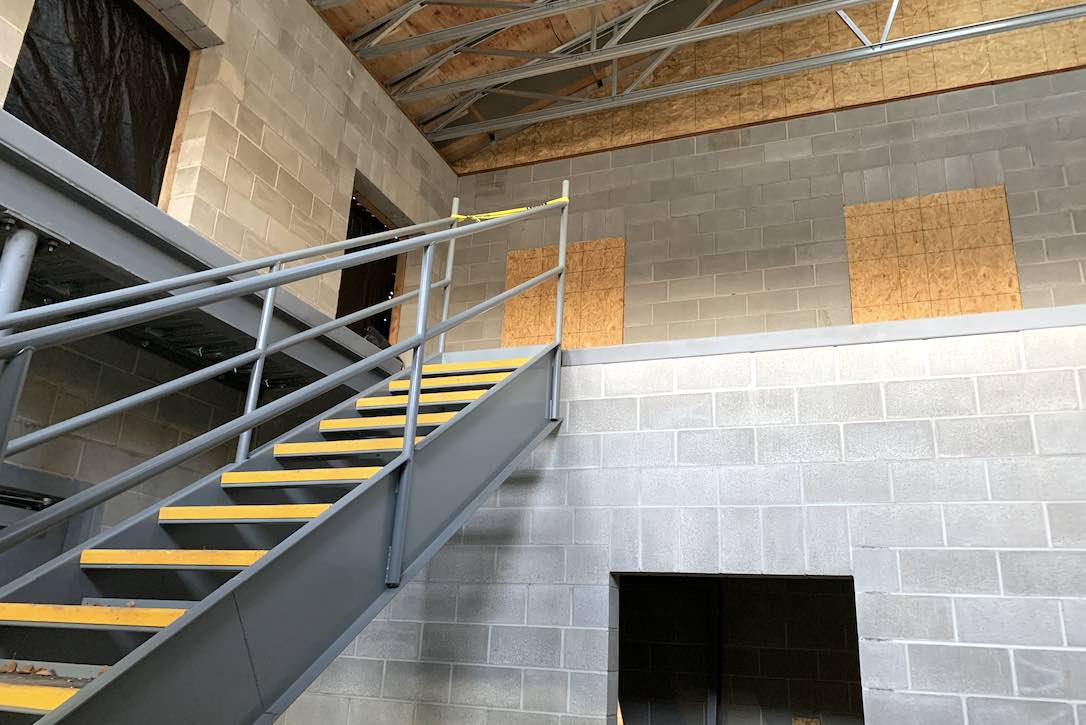
Here’s some exciting progress on the construction.

Doors!

Stairs!

Thanks for tuning in to today’s blog! Happy Thanksgiving week to everyone.

Filed Under: Chimpanzee Behavior, Courtyard, Sanctuary, Weather, Willy B, Young's Hill Tagged With: animal protection, animal rescue, animal rights, Animal Welfare, chimpanzee, chimpanzee rescue, chimpanzee sanctuary, chimpanzees, primate protection, primate rescue, Primates

The Reflection of Oneself and Others

November 17, 2020 by Chad de Bree

Chimpanzees are an highly intelligent species. You probably know this by now if you have been following the blog for a while. One test chimpanzees have passed numerous times is the Mirror Self-Recognition Test. This test simply shows that an individual knows that the reflection they are looking at in a reflective surface (i.e. mirror) is in fact their own and not a separate individual. Only a handful of species have passed this test to date, including all the large-bodied apes (including humans), elephants, dolphins, orcas, and magpies.

The chimpanzees here are no exception. They all seem to like to look at their reflections. Willy B absolutely loves staring at himself in the mirror!

While Willy B, and most of the other residents, like to stare at their reflection, Honey B uses it a tad differently.

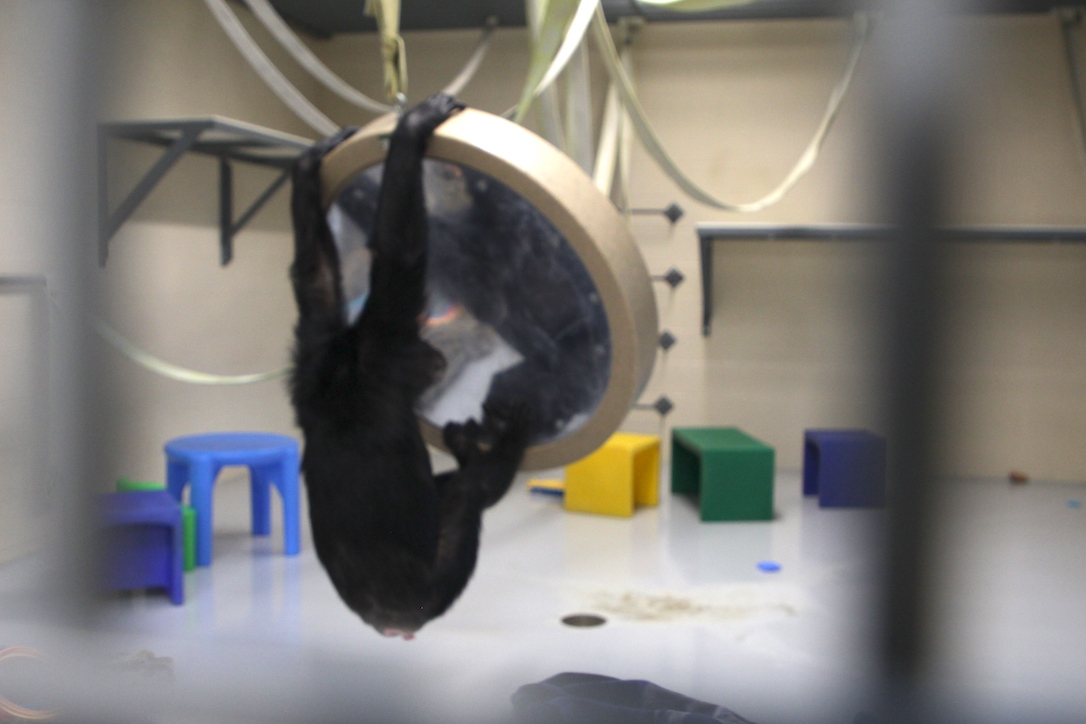
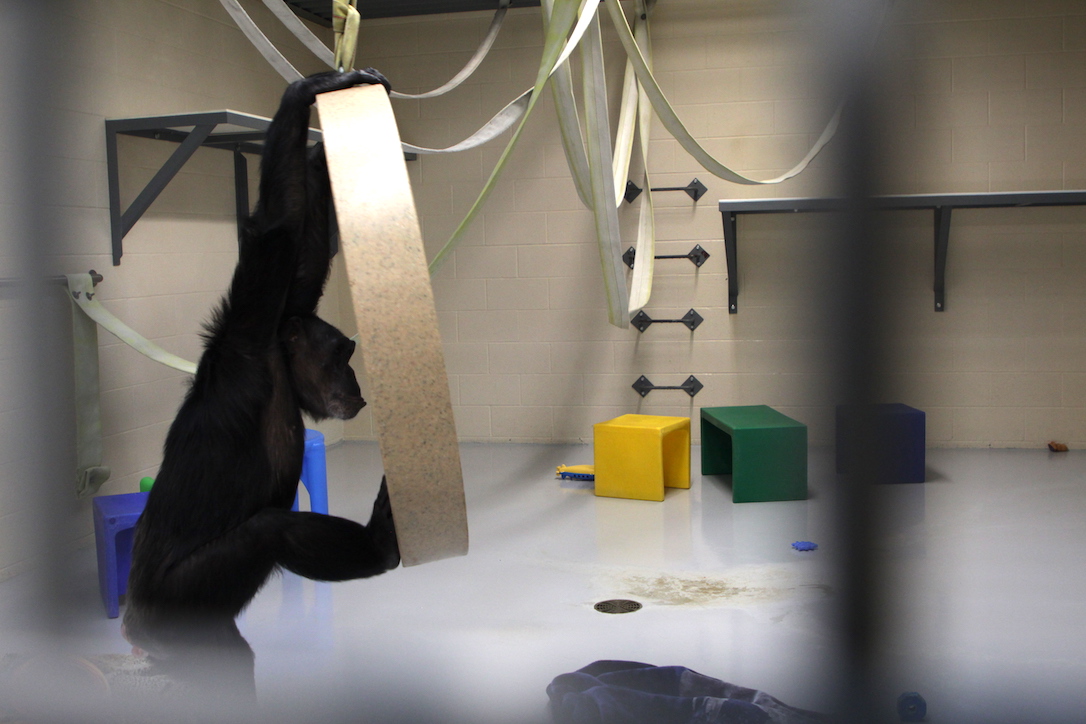
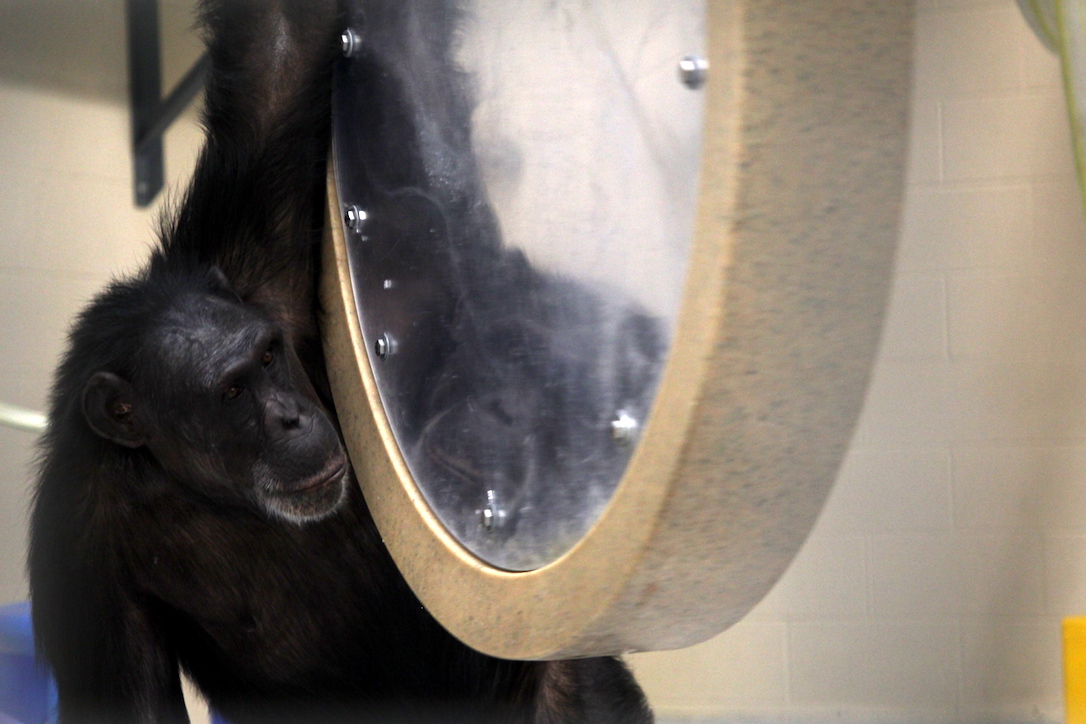
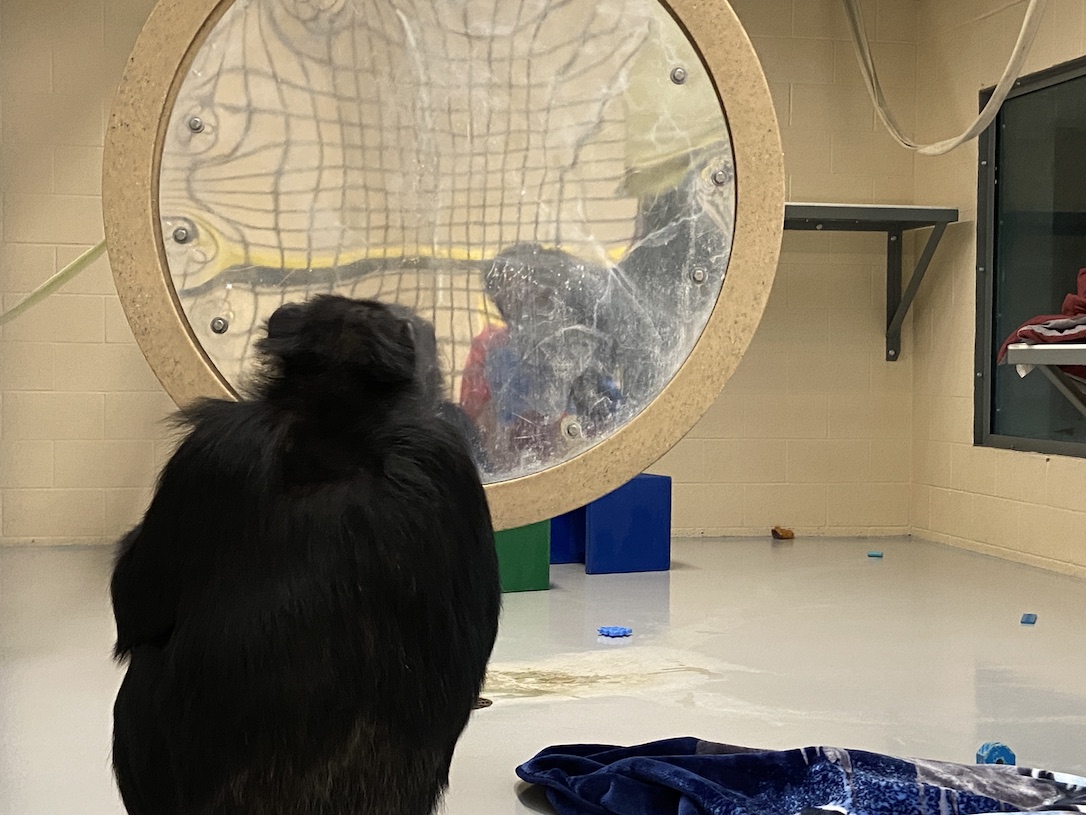
First and foremost, the large Looky Lou mirror in the Mezzanine is a giant swing toy!

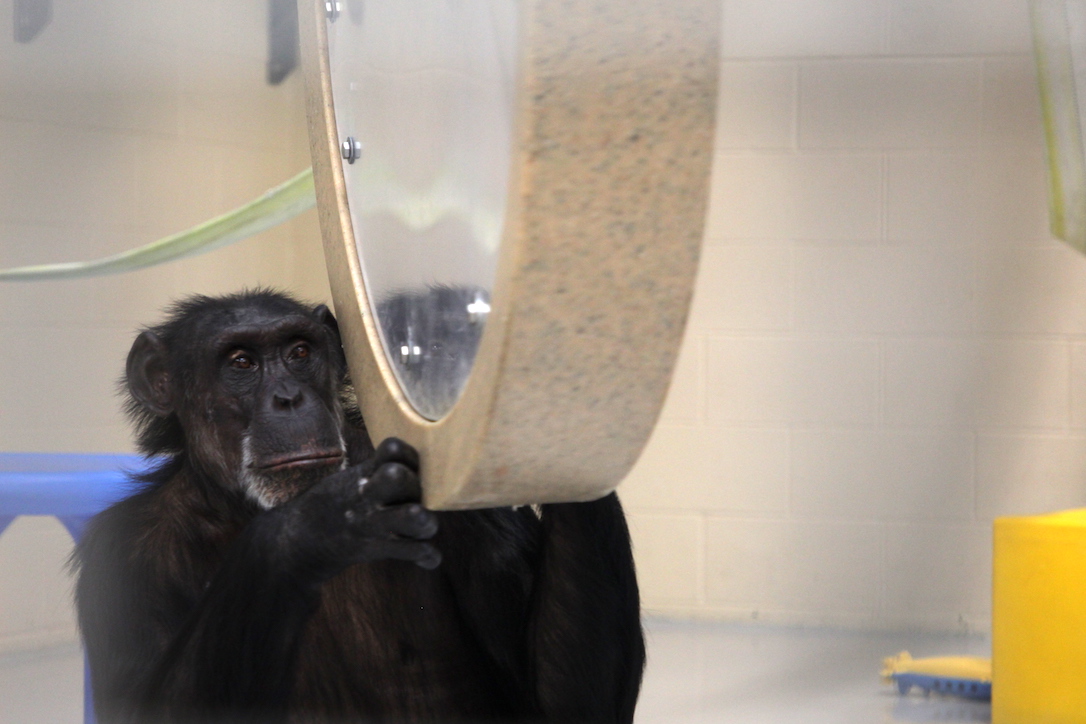
Once she has her fun swinging on this giant pendulum, she will stand there holding it. Then ever-so-slightly, turn it to make sure the humans watched her “coming in like a wrecking ball.”

And she will make sure we were watching from multiple angles.

Even when we arrive with camera in hand, she will watch us intently taking pictures, but through the reflection of the mirror.

Honey B is so clever and fun spirited. Her intelligence never ceases to amaze us, as do all the residents here! Just the other day I was quickly reminded of how clever they really are, especially with the use of mirrors and other reflective surfaces. As I was in a (what I thought was) blindspot in the kitchen, I heard Burrito Bronx cheering and banging on the mesh from one of the front rooms. This is usually Burrito talk for, “Hey you! It’s play time!” I didn’t think it was possibly directed to me because how could he see me? Then it hit me! The door leading to the chimp area was positioned ever-so-right that he could see me through the reflection of the window on the door! Since this discovery, I’ve noticed he will position himself in the front rooms if he has the slightest hint any of us are in this blindspot trying to get some work done. “Silly humans!”

As a bonus to end the day, here are some photos of Negra and Jody today!


Filed Under: Enrichment, Honey B, Jody, Negra, Sanctuary, Willy B Tagged With: Animal Welfare, chimp enrichment, chimpanzee, chimpanzee rescue, chimpanzee retirement, Chimpanzee Sanctuary Northwest, chimpanzees, Enrichment, Sanctuary

Terroir

November 15, 2020 by Anthony

As I drove through the canyon on my way to the sanctuary this morning, I thought of a passage from science-fiction author Jeff VanderMeer.
Natural places are no different than human cities. The old exists next to the new. Invasive species integrate with or push out native species. The landscape you see around you is the same as seeing an old cathedral next to a skyscraper.

VanderMeer’s work, perhaps best described as ecological horror, explores how humans perceive and withstand environmental changes. Watching their surroundings undergo both subtle and dramatic transitions, no matter how neutral they are at their core, alters the emotional fibers of his characters.

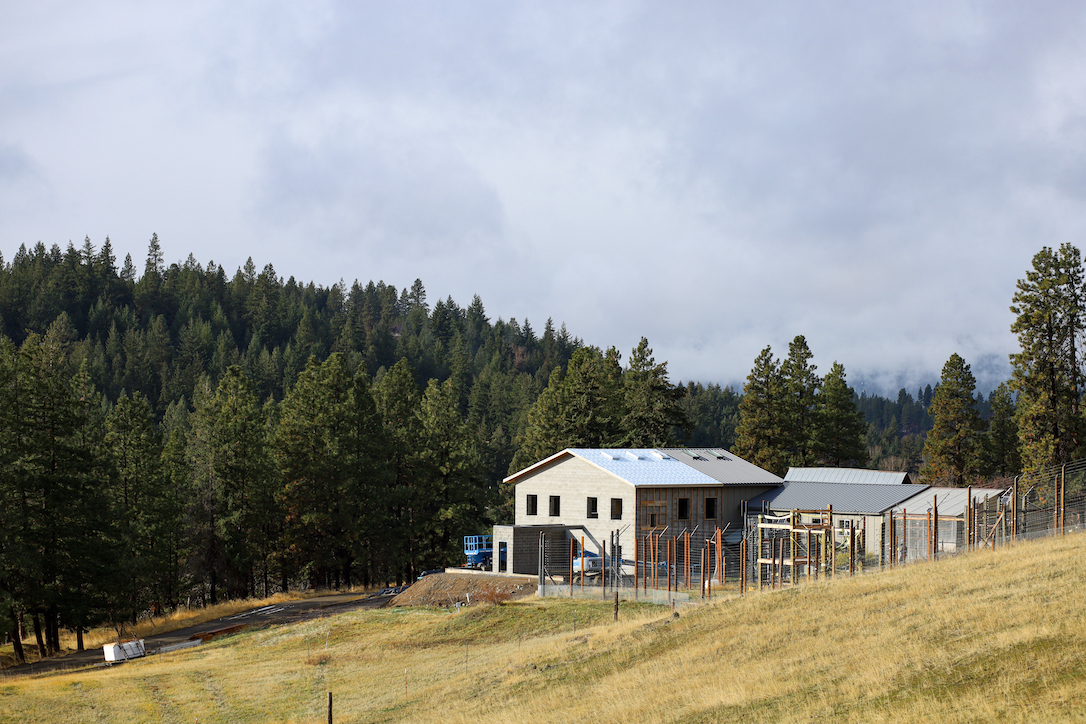
Driving up the sanctuary’s driveway, I could see that the contractors had just finished covering the new wing of the chimpanzee building, which is hopefully just a few months away from completion. I reminded myself that I was an intern here just a couple years ago. Now everything looks a bit different. We have a new driveway, new barn, new structures, and new wing of enclosures. There are new residents (both bovine and chimp), new staff, and new protocols. It’s hard to believe that sanctuary itself hasn’t even existed for two decades yet because it hasn’t stopped evolving.

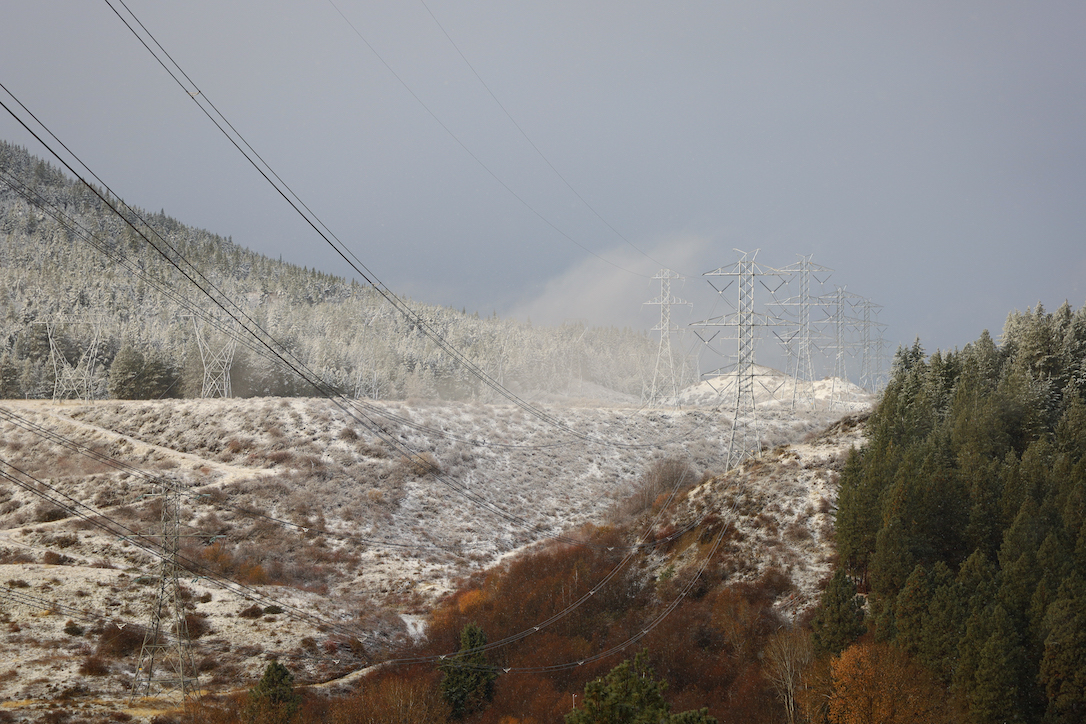
The land where the Chimp House sits was once an uninteresting pasture, but there were saloons and homesteads all along our stretch of highway. The nearby towns were base camps for coal miners and pioneers, and the surrounding forests have been sculpted by the flames of many wildfires and saws of many loggers. If you go back far enough, the Yakima and Snoqualmie people served as stewards of these lands for thousands of years. On a grander scale, massive herds of prehistoric bison and elk grazed the icy tundra that existed before humans arrived on the scene. Now, in a plot twist that would be just as confusing to the coal miners as it would to the prehistoric bison, ten retired chimpanzees call this place their sanctuary home.

What has not changed, in my lifetime at least, is the terroir of this place. For those of you who share my apathy for wine, terroir is a French word used to describe the suite of environmental and agricultural factors contributing to a wine’s quality. Importantly, though, terroir is not something that can be measured. It’s not just a composite of rainfall, or soil, or topography. It is an amalgamation of all these things into one noticeable character, and it can only be sufficiently experienced via taste.

One of the ecologists in VanderMeer’s novels uses the concept when describing a mysterious landscape, the feeling of which he cannot sufficiently explain using scientific language alone. It resonated with me when I first read it because it makes so much sense. I thought of all the places I’ve been lucky enough to live and work in, including this sanctuary, and recalled the unmistakable terroir of each. I wish the followers and donors, many of whom have never even visited this part of the country, could all come to this place and (without disturbing the residents) experience it for themselves. There’s nothing quite like walking around a dew-covered Young’s Hill in the morning and hearing a chorus of anticipatory pant-hoots rise up from the Chimp House, and words don’t do that experience any justice.

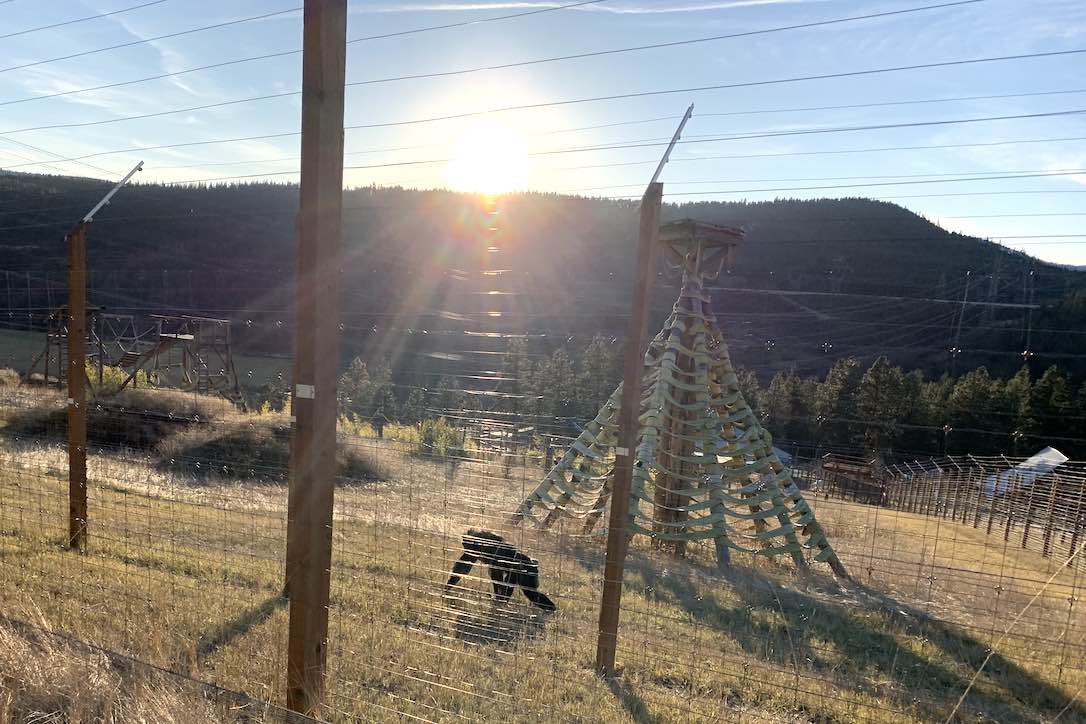
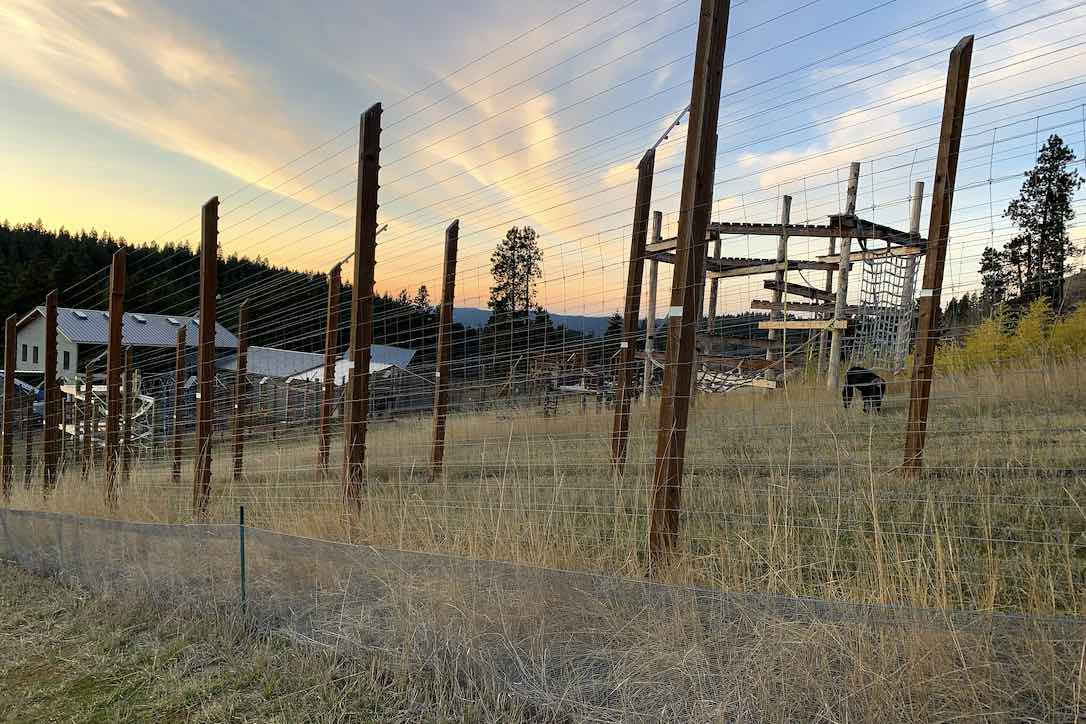
I know that having you all visit wouldn’t be possible, even in the absence of a global pandemic, so I hope you will all be content to view some photos that I’ve recently taken of this beautiful place as it continues to evolve into something else.


Filed Under: Construction, Sanctuary, Weather, Wildlife, Young's Hill Tagged With: animal rescue, Animal Welfare, chimp sanctuary, chimpanzee, chimpanzee retirement, chimpanzee sanctuary, Chimpanzee Sanctuary Northwest, chimpanzees, Primates, Sanctuary, seattle

Riding the Waves

November 8, 2020 by Anthony

The chimpanzees began their morning with a raucous exchange of displays between the two neighboring groups. Screams, barks, drumming and hoots reverberated throughout the Chimp House. The neighbor effect is very real.

The following breakfast services were predictably tense. On one side of the building, Jamie was irate that the poor human caregiver wouldn’t give her someone else’s chow bag. The white paper bag sat awkwardly in the bottom of the food chute as Jamie loudly won the ensuing argument, but Negra quietly absconded with the prize during the chaos. In the Mezzanine, Willy B flexed his dominance by intimidating the female chimps and claiming Mave’s chow bags. Willy has grown more patient and tolerant in his time here, possibly due to our efforts to promote cooperative feeding. However, like all high-ranking chimps, he still needs to assert himself occasionally. This morning was one of those moments.

Generally speaking, chimpanzee behavior is characterized by short chaotic episodes during which the social hierarchy is challenged. These conflicts can either reform existing relationship dynamics or reinforce them. Instability and tension, however, are not just unpleasant; they’re downright exhausting. Adrenaline is unsustainable and requires a long reset afterwards. For this and many other reasons, chimps spend most of their time engaged in relatively peaceful activities such as grooming, foraging, and rest. I don’t know if chimpanzees have a “love language,” but low-key quality time would probably be it.

Given today’s hectic beginning, it was not surprising that the sanctuary’s residents had calmed down by lunch. The Seven were all about doing laps around Young’s Hill, while Honey B and Mave spent a large chunk of the day grooming and playing chase. Once our team was finished scrubbing enclosures for the day, I took a moment to go sit just outside the caging in the Mezzanine and observe the chimps. Willy B was the only chimp up there, lazily turning over some blankets and toys that had just been distributed by caregivers.

Willy B stared at me for a second, made a gentle hoo, and retrieved a fluffy blue blanket that had been draped over the nearby bench. He dragged it towards me with his knuckles, stopping only when the edges of the blanket were pushed up against the bottom of the steel mesh that separated us. Willy then leaned forward and, like a collapsing Imperial AT-AT, took a gargantuan nose dive into the shaggy pile.

He laid there for some time, face buried in the folds of the blanket. It was difficult to tell if it was a moment of pure exhaustion or zen-like bliss. I followed suit, sprawling out on the smooth heated floor. He lifted his head to reveal his brown eyes, which briefly showed a flash of skepticism, before apparently deciding that it was okay for me to join him on the floor. As I laid on my back, looking up at the passing clouds through the Mezzanine’s skylights, Willy began to take longer and longer blinks until he slowly fell asleep.

Even though I’m used to the routine by now, I noted how odd it felt to see Willy B gradually drift off into a light nap. He seemed to be at ease amid his surroundings despite being a hurricane of hair and muscle just hours earlier. I also felt slightly honored that he had chosen to be in my proximity without asking for anything else. I reminded myself that the never-ending waves of chimpanzee emotion, with peaks of chaos and troughs of serenity, are not something to be necessarily battled against. Rather, they are all part of the chimpanzee experience, adding value to each other. As Anna once told me when I was learning to manage the complex dynamics among these unique chimp individuals, “you’ve gotta ride the waves.”

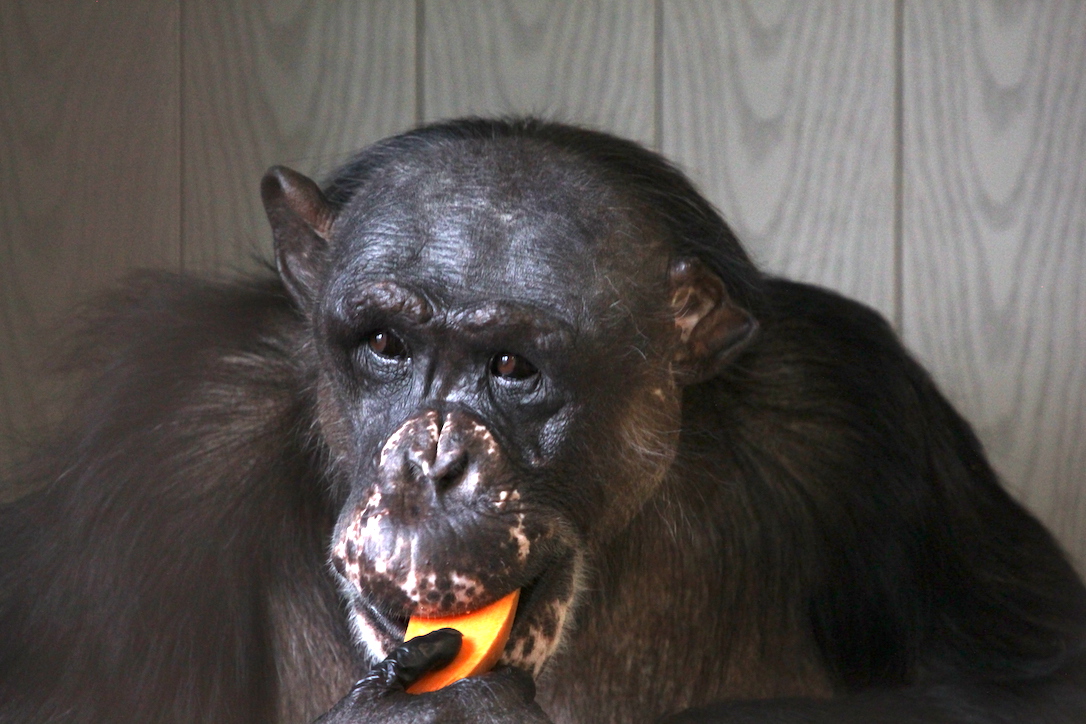
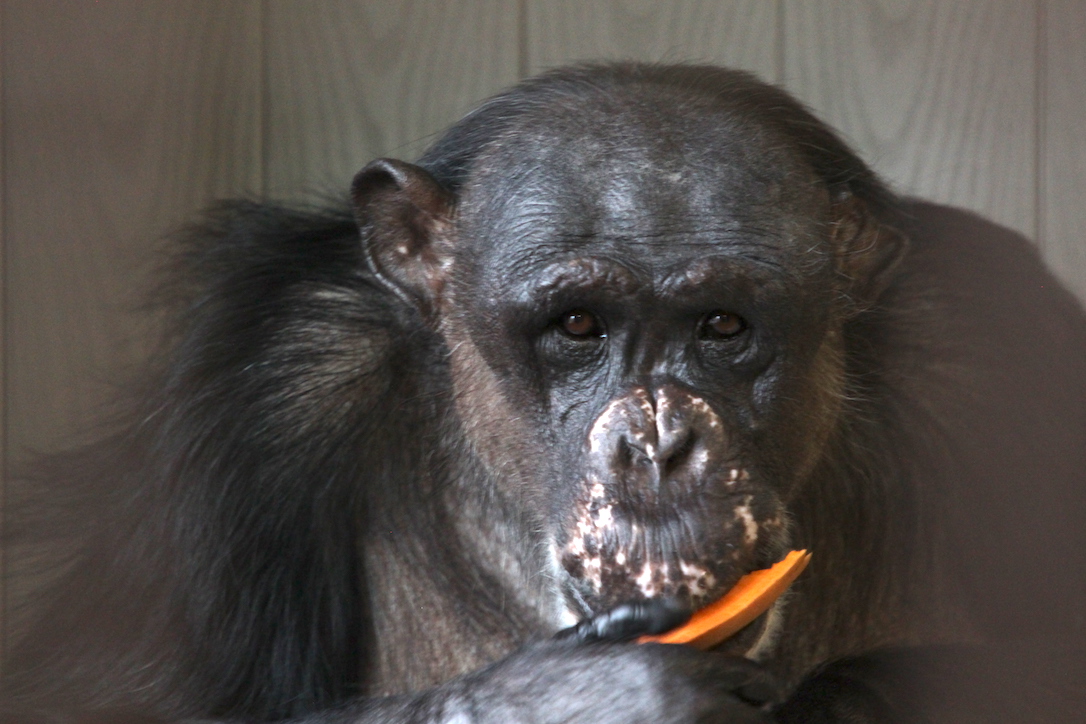
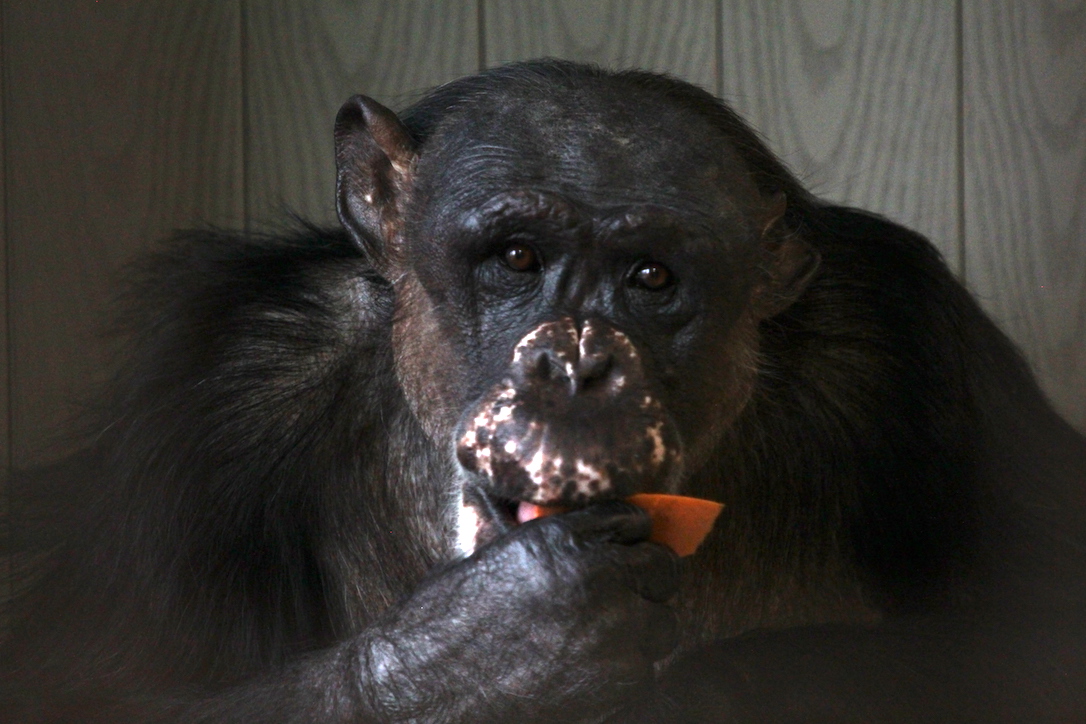
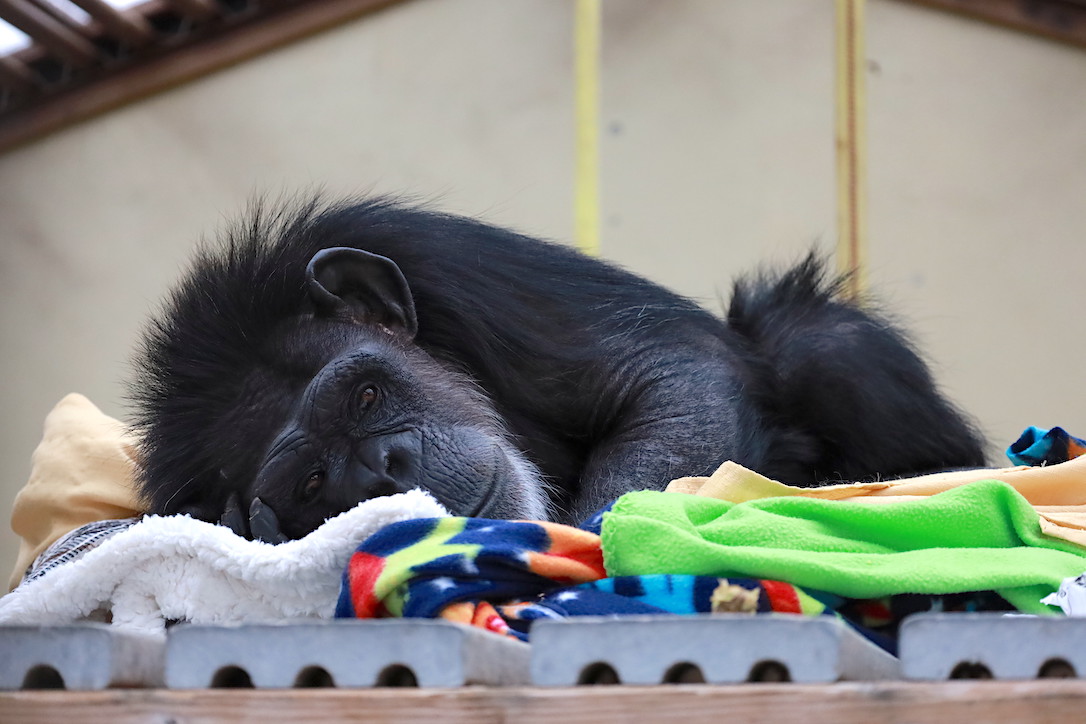
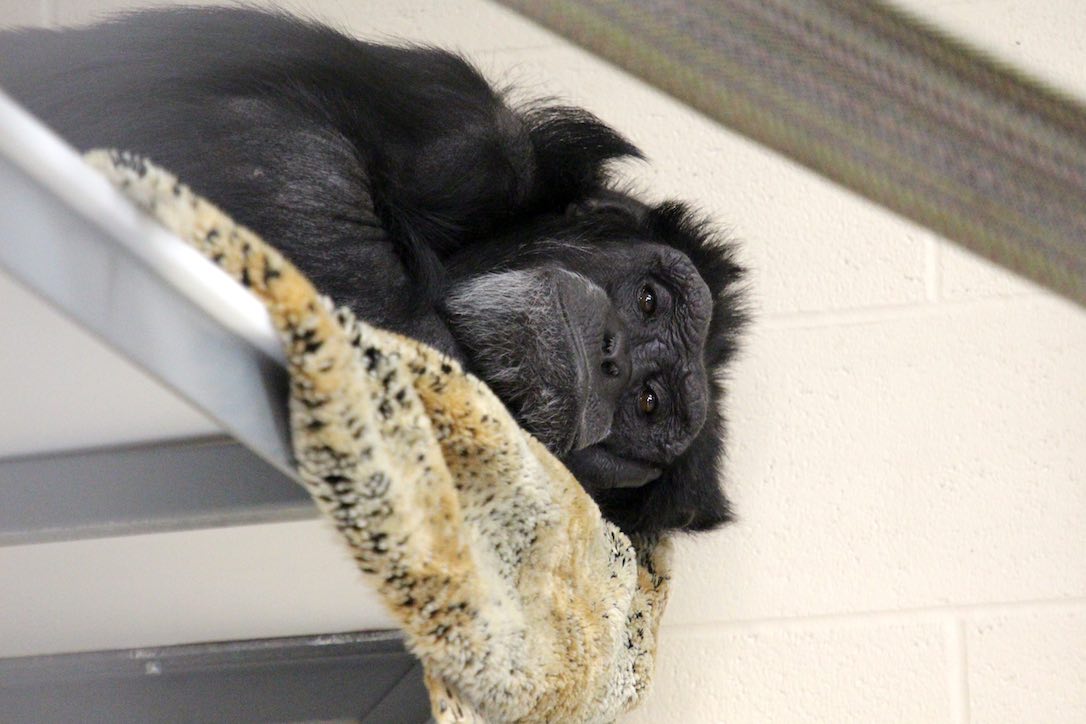
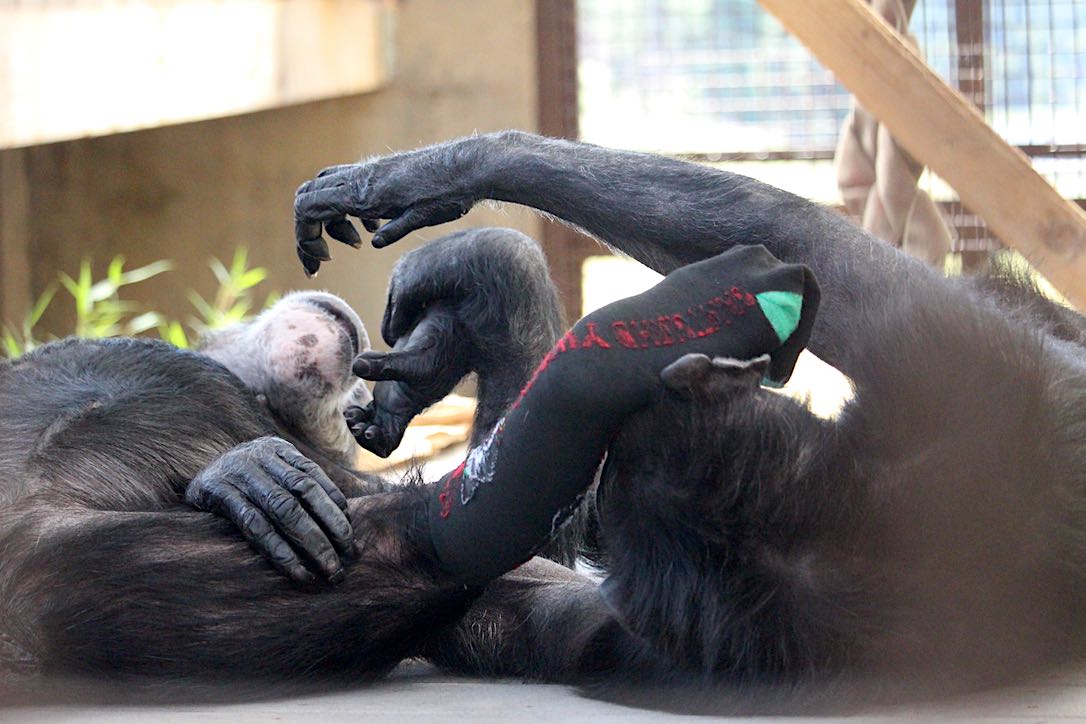
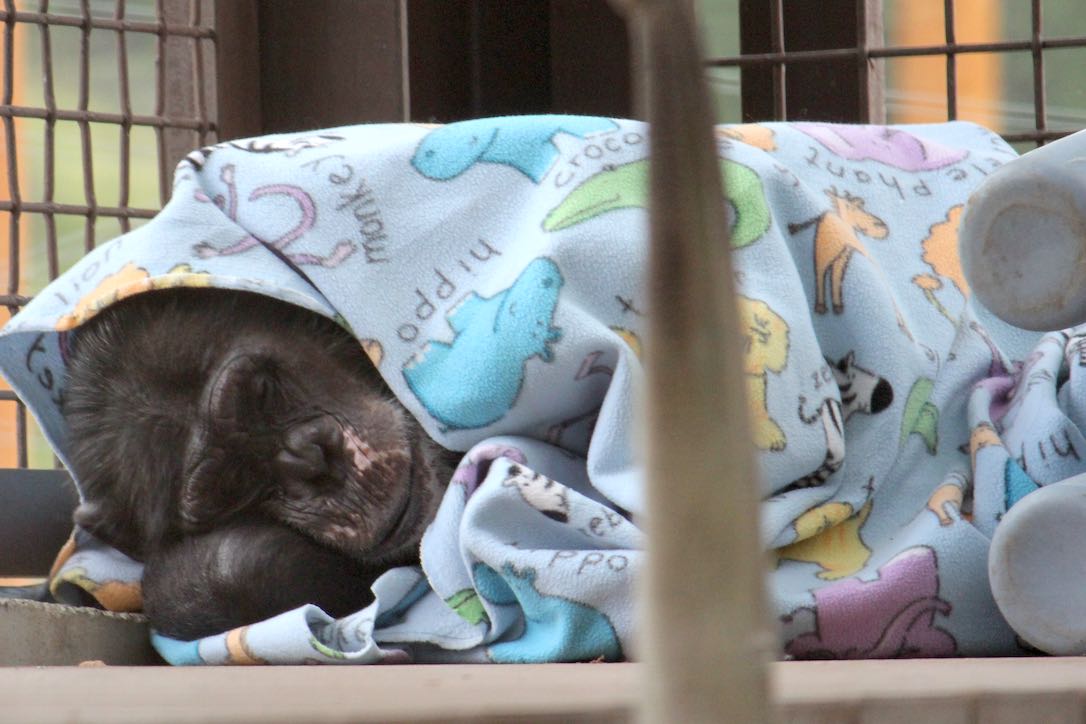
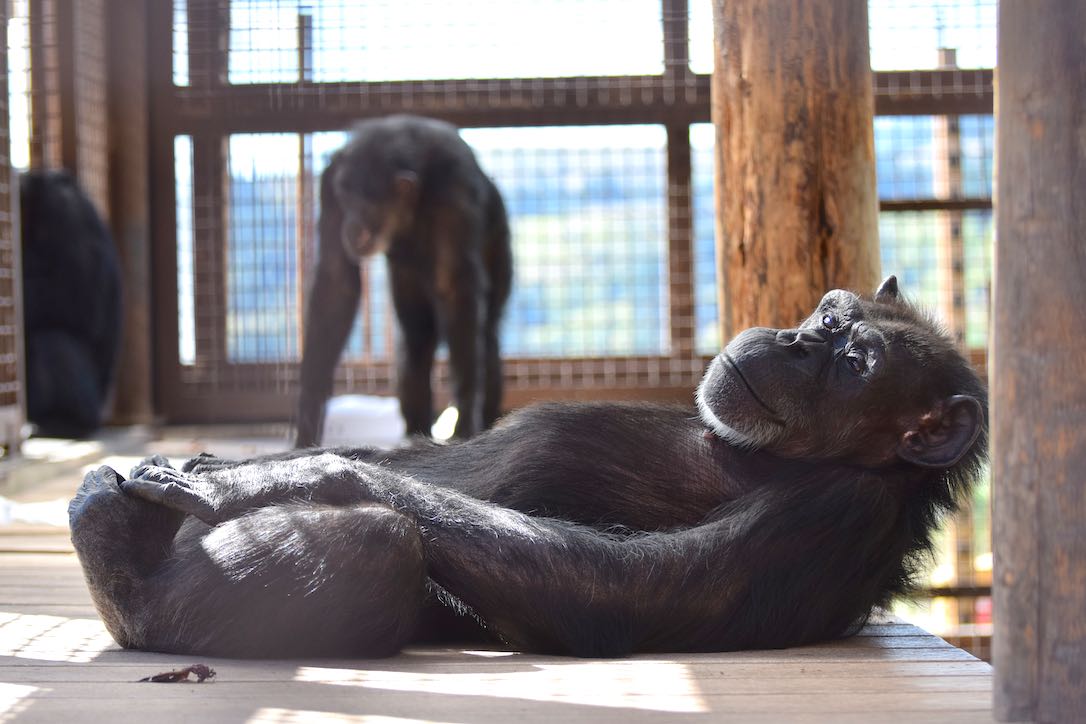
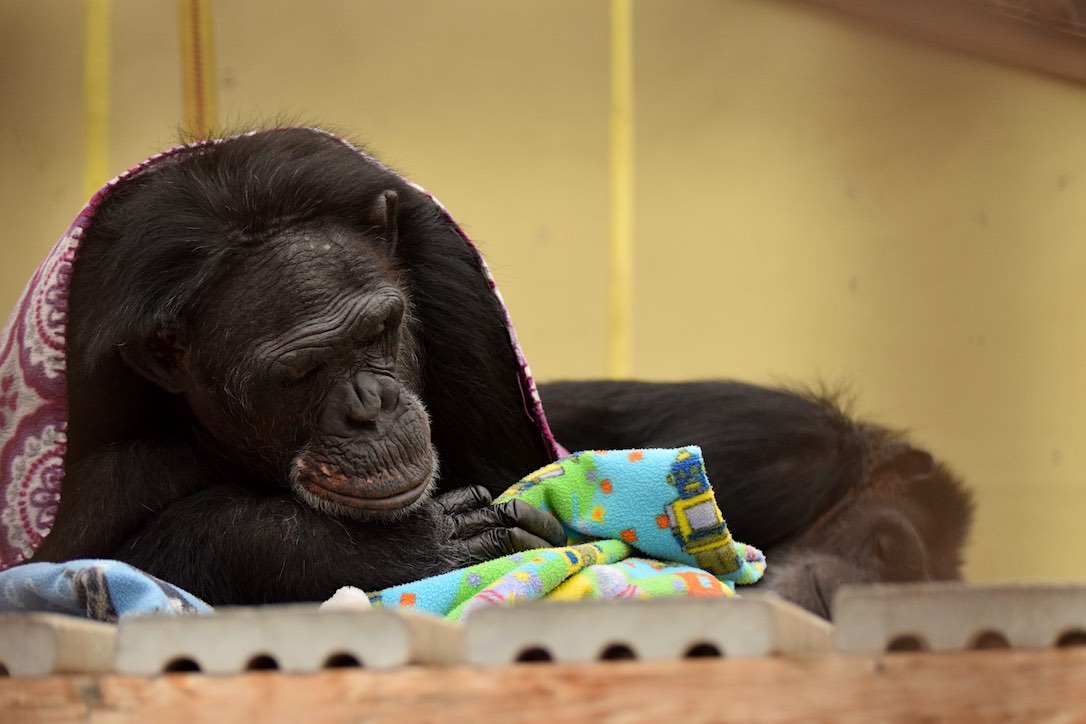
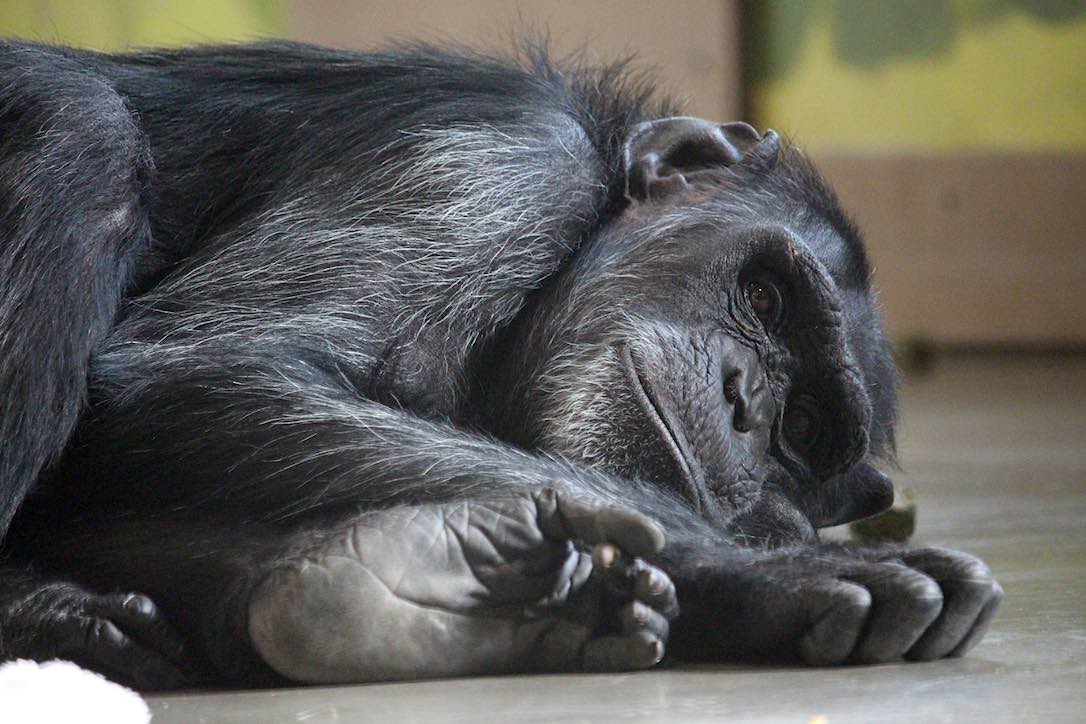
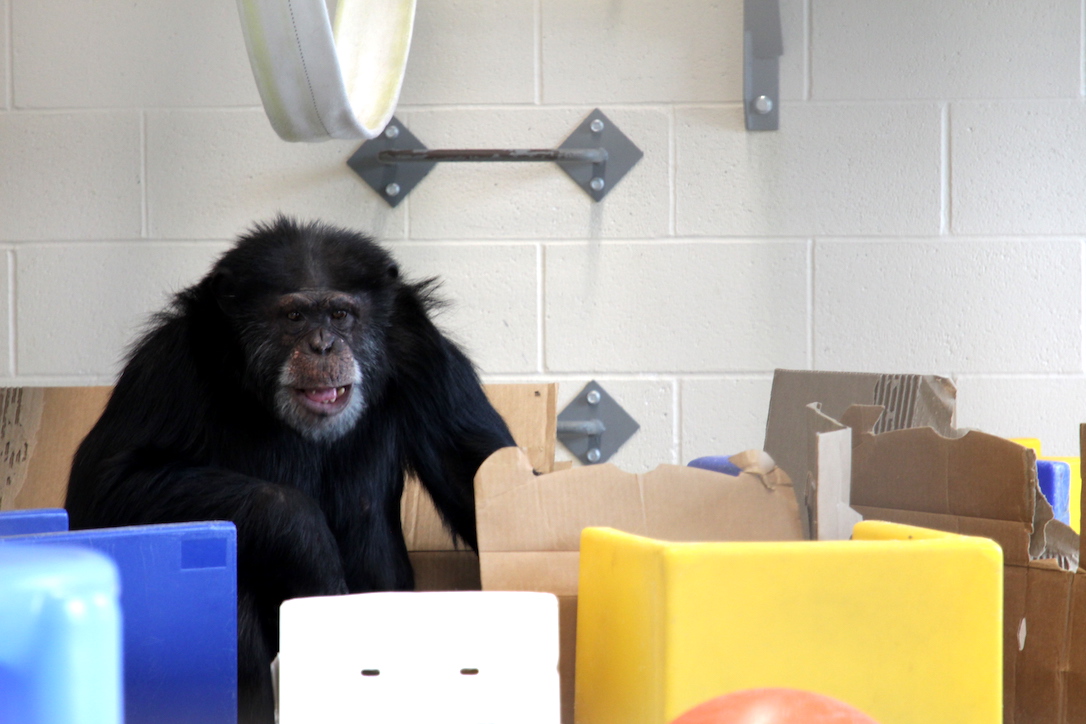
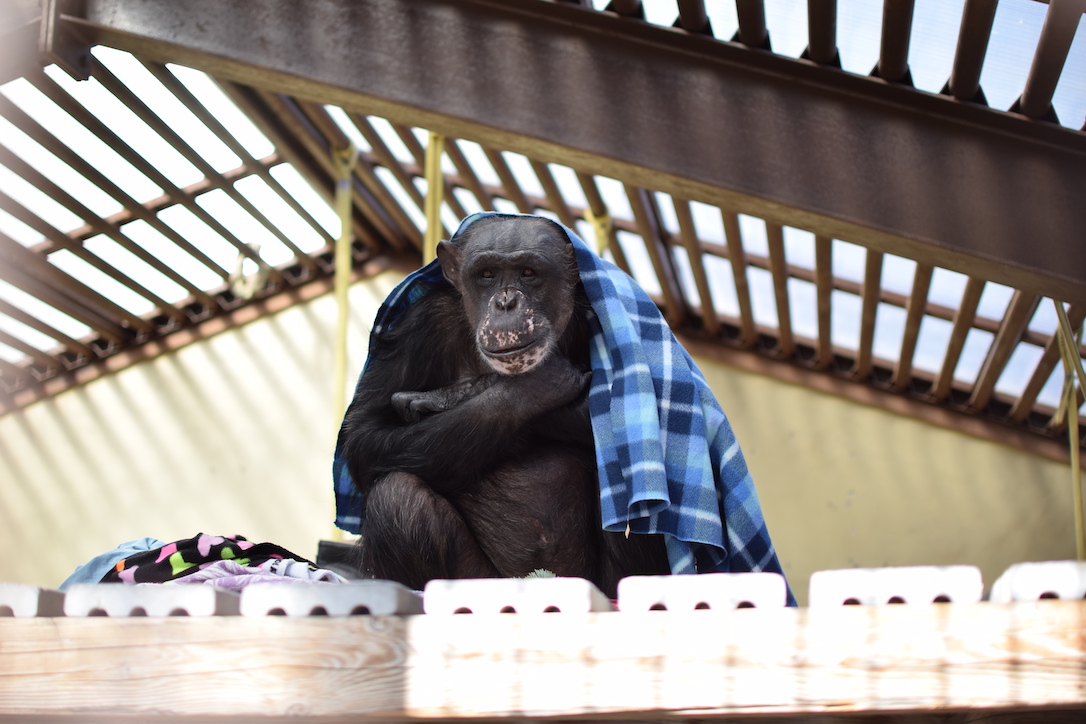
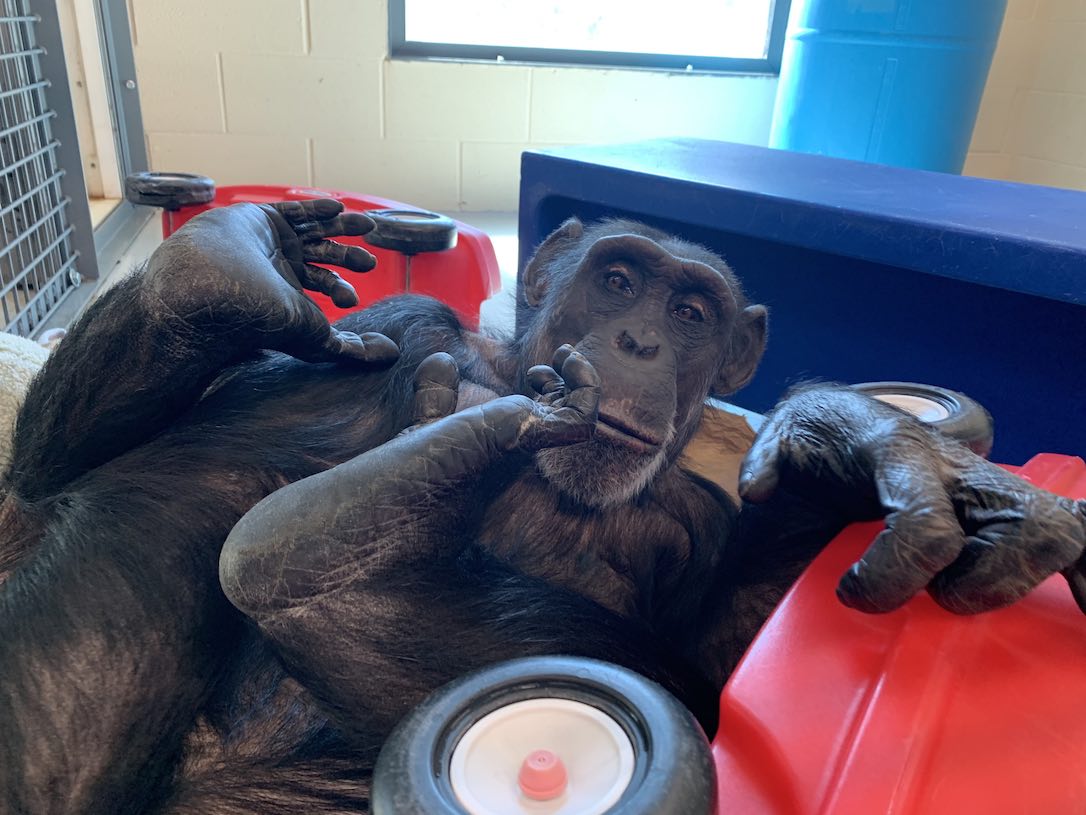
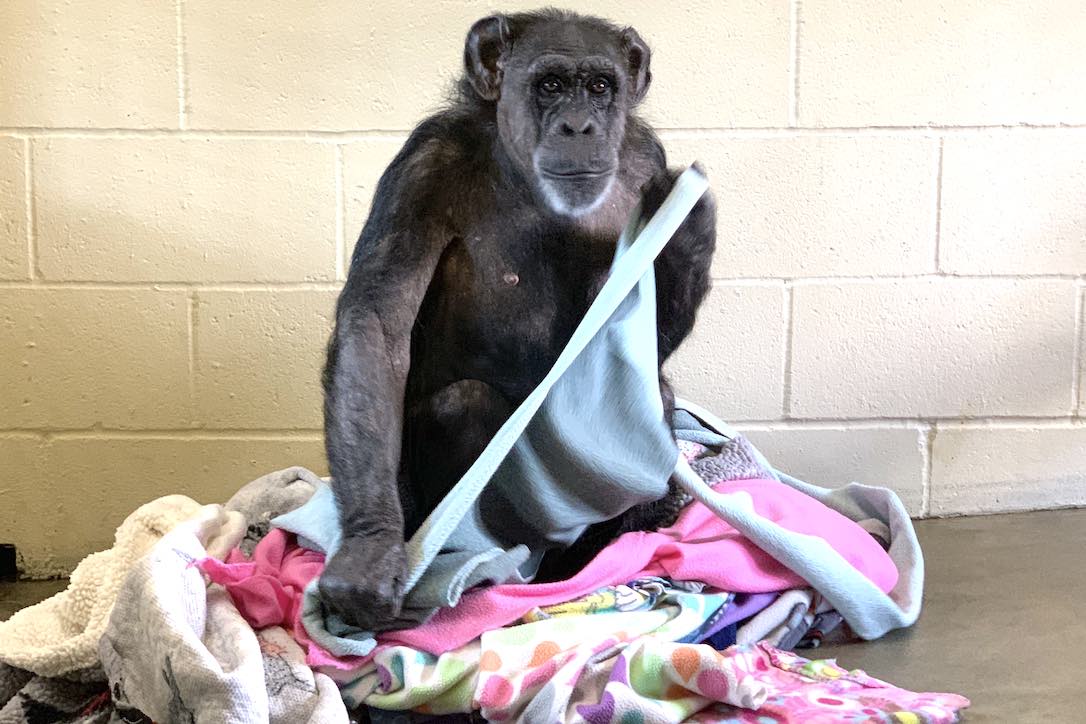
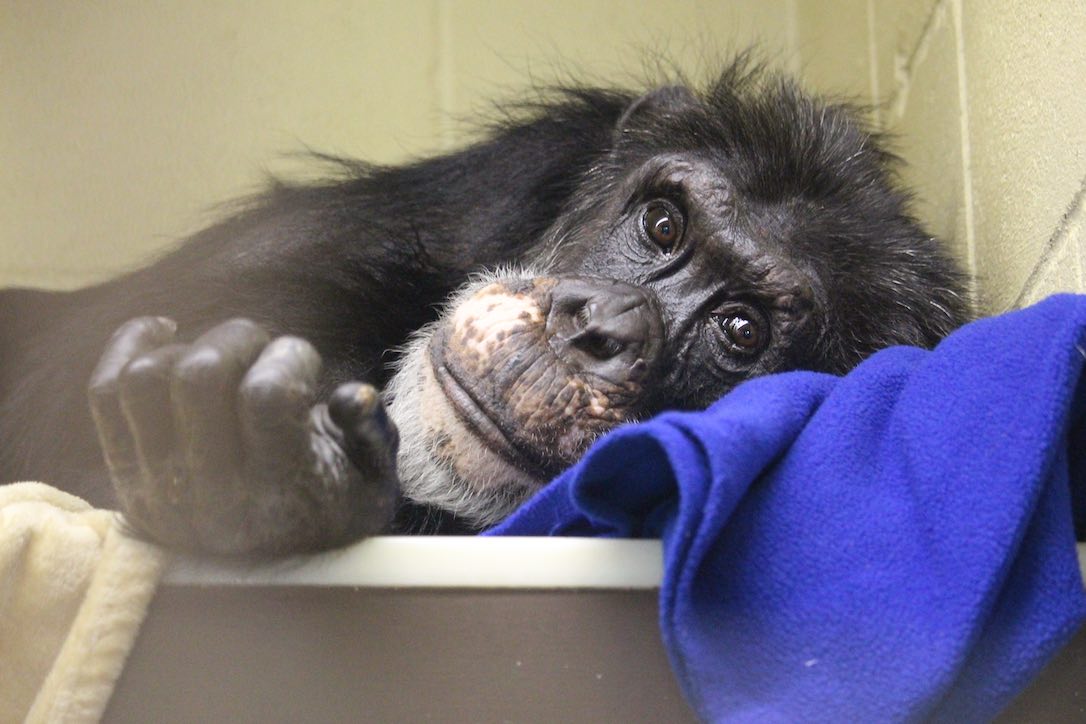
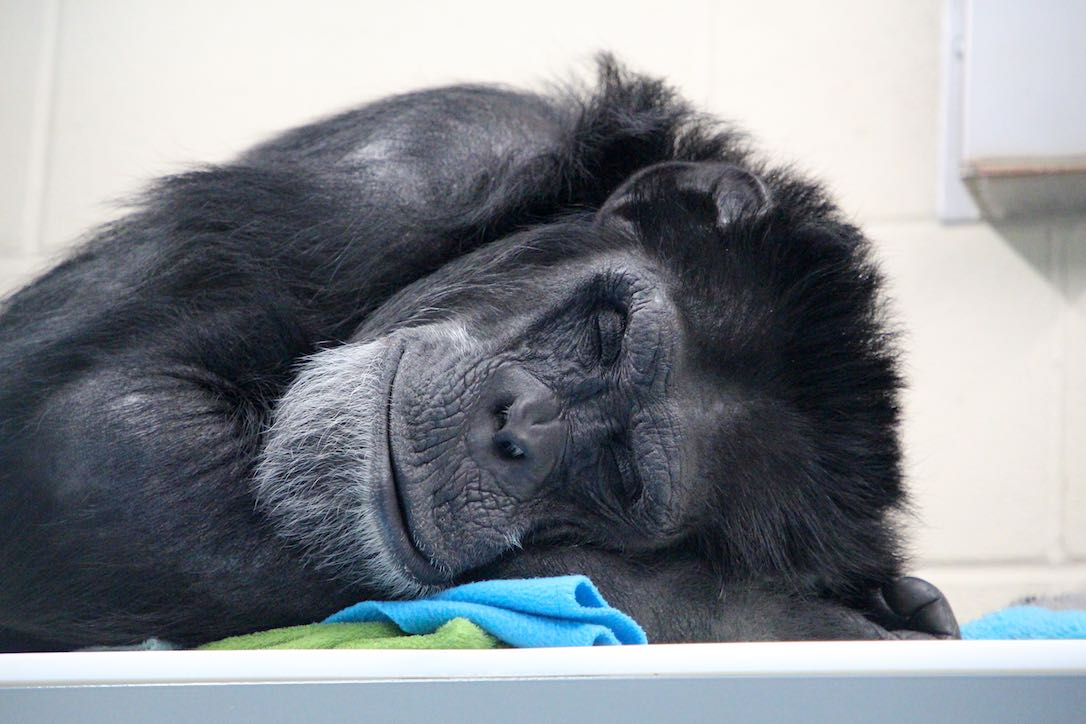
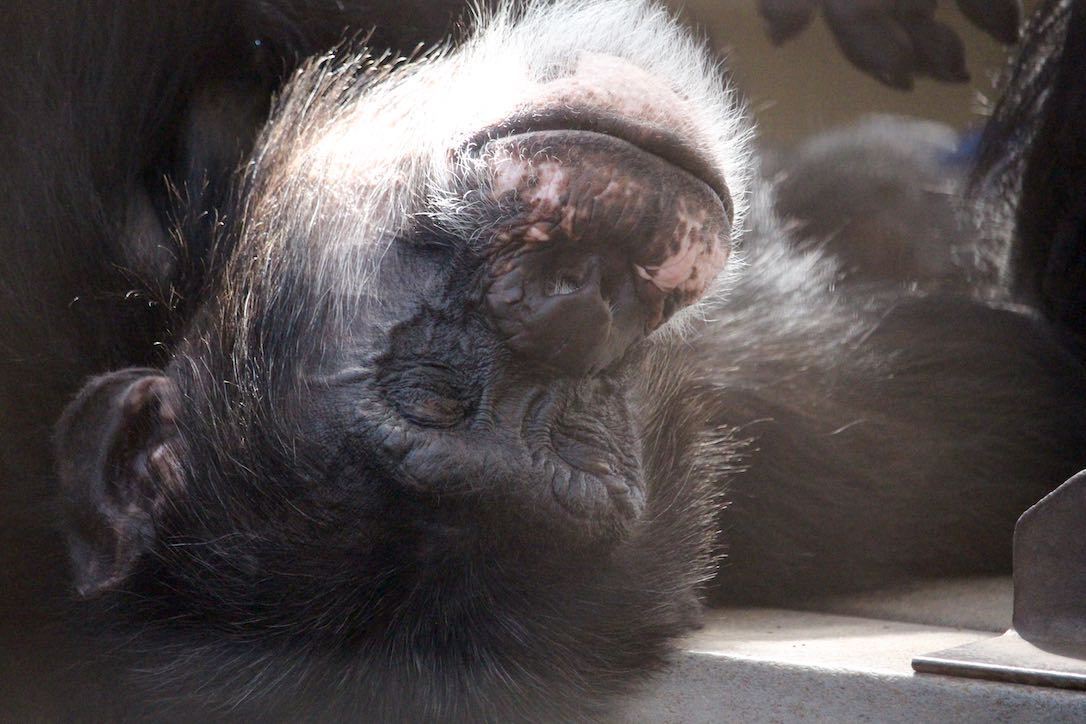
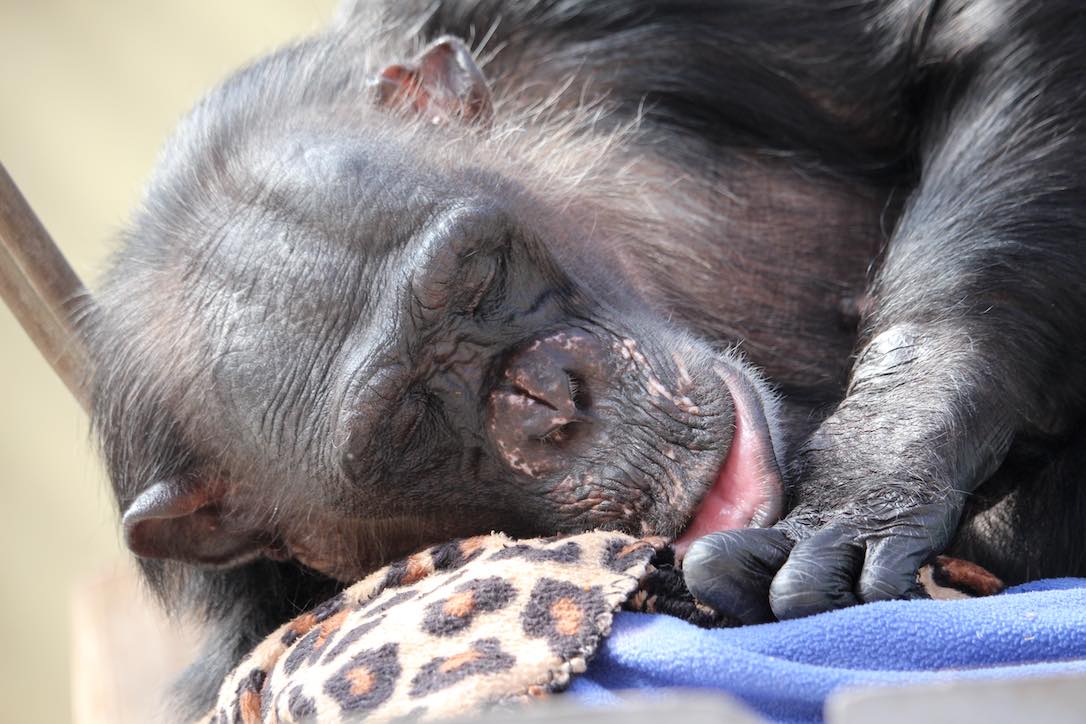
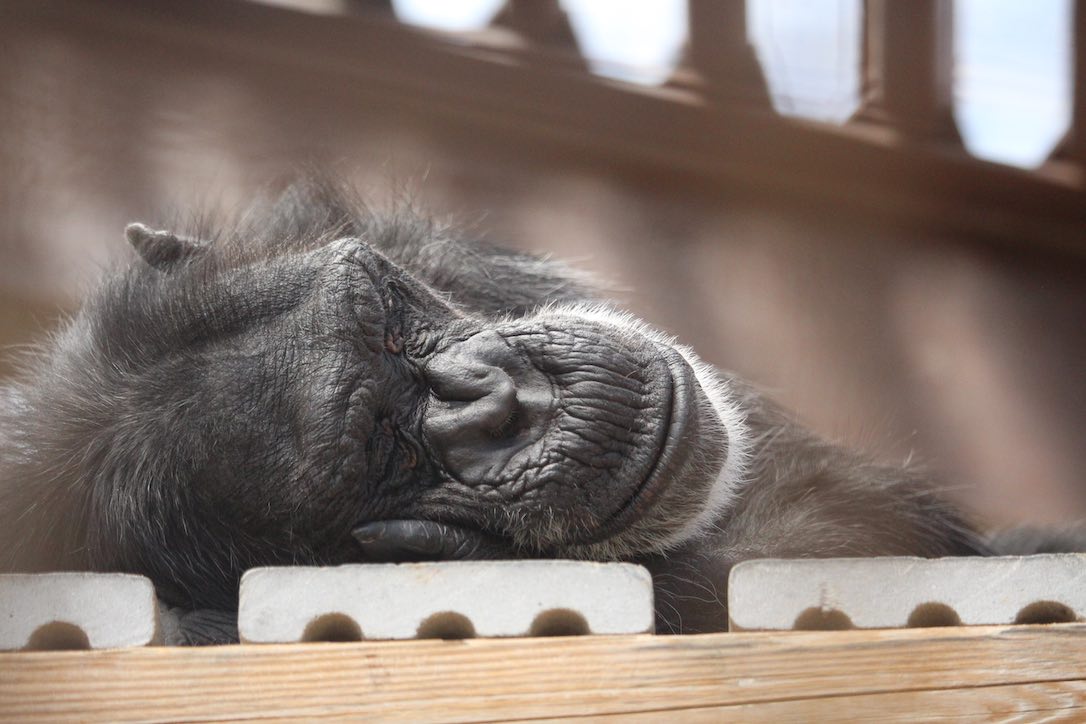
I decided not to take any photos of Willy B’s nap; doing so would have likely caused him to sit up and stare into the camera lens. Instead, here are some photos our team has taken of chimpanzees resting during the peaceful eyes that separate many tumultuous storms.


Have a great night, everyone!

Filed Under: Chimpanzee Behavior, Dispaying, Fights, Friendship, Willy B Tagged With: Animal Welfare, chimp, chimp behavior, chimp enrichment, chimp rescue, chimp sanctuary, chimpanzee, Chimpanzee Behavior, chimpanzee rescue, chimpanzee retirement, chimpanzee sanctuary, Chimpanzee Sanctuary Northwest, chimpanzees, chimps, Sanctuary, social dynamics, wildlife waystation, Willy B

  • « Go to Previous Page
  • Page 1
  • Interim pages omitted …
  • Page 41
  • Page 42
  • Page 43
  • Page 44
  • Page 45
  • Interim pages omitted …
  • Page 74
  • Go to Next Page »

Primary Sidebar

Subscribe To the Blog and Get Notified of New Posts First!

Archives

Calendar of Blog Posts

June 2026
S M T W T F S
 123456
78910111213
14151617181920
21222324252627
282930  
« May    

Categories

SUBSCRIBE TO OUR NEWSLETTER

Footer

PO Box 952
Cle Elum, WA 98922
[email protected]
509-699-0728
501c3 registered charity
EIN: 68-0552915

Official DDAF Grantee

Menu

  • The Chimpanzees
  • Blog
  • About Us
  • You can help
  • Resources
  • Contact
  • Donate

Proud Member of

Connect With Us

Search

Copyright © 2026 Chimpanzee Sanctuary Northwest. All Rights Reserved. Site by Vegan Web Design