• Skip to main content
  • Skip to primary sidebar
  • Skip to footer

Chimpanzee Sanctuary Northwest

Hope. Love. Home. Sanctuary

  • Our Family
    • The Chimpanzees
    • The Cattle
  • Blog
  • About Us
    • Visiting the Sanctuary
    • Philosophy
      • FAQs
      • Mission, Vision & Goals
      • Privacy Policy
    • The Humans
      • Staff
      • Board of Directors
      • Founder
    • Annual Reports
    • The Future of CSNW
    • CSNW In The News
  • You can help
    • Donate
      • Become a Chimpanzee Pal
      • Sponsor A Day
      • Transfer Stock
      • Be A Produce Patron
      • Be a Bovine Buddy
      • Give from your IRA
      • Personalized Stones
      • Bring Them Home Campaign
    • Leave A Legacy
    • Employment Opportunities
    • Volunteer
    • See Our Wish List
    • Events
  • Resources
    • About Chimpanzees
    • Enrichment Database
    • Advocacy
      • Advocacy Action Center
      • Apes in Entertainment
        • Trainers
        • Role of the AHA
        • Greeting Cards
      • Chimpanzees as Pets
      • Roadside Zoos
      • Chimpanzees in Biomedical Research
      • Conservation
        • African Apes
        • Orangutans
  • Shop
    • Merchandise Store
  • Contact
  • DONATE NOW

biomedical research

Missy’s 2nd Chance & Those Left Behind

September 30, 2016 by Diana

This year for Great Apes Giving Day, I decided to highlight Missy’s story. If you are new to Chimpanzee Sanctuary Northwest or haven’t been following every single blog post, you may have missed the story of how Missy almost didn’t make it to her sanctuary home. Take a minute to read this story on our Great Apes Giving Day page here.
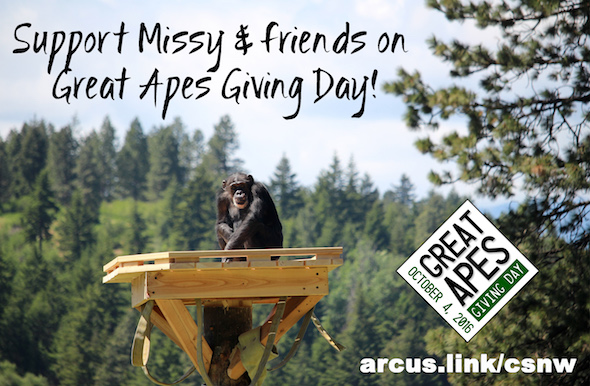
 

support Missy


There’s another story that we don’t tell very often.

The Cle Elum Seven should have been the Cle Elum Eight. There was an eighth chimpanzee living at Buckshire with Missy, Burrito, Negra, Jody, Annie, Foxie, and Jamie who died two years before the Cle Elum Seven came to Chimpanzee Sanctuary Northwest. He was a male chimpanzee and we believe his name was Ceaser.

I never met him, but I think about him, and what he represents, all of the time.

It is such an amazing time in history right now with the end of biomedical testing on chimpanzees in the United States. And it’s a frustrating time because there are hundreds of chimpanzees who are waiting for their opportunity to live out the rest of their lives in a sanctuary home where the only mission is to provide them with the best care possible.

And I know there will be chimpanzees like Ceaser who won’t have this chance because they will die before they are released from their laboratory life.

It’s a fact that not all laboratories are like Buckshire, where the Cle Elum Seven lived. Most modern laboratories holding chimpanzees have some sort of outdoor space, even if it’s a small concrete fenced in area, and most chimpanzees living in laboratories now live with other chimpanzees rather than in single cages.

I would guess that the majority of people who are directly caring for chimpanzees in laboratories really care for, and even love, the chimps. This may seem strange to those who have never met someone who works in a laboratory as a caregiver, but I have met many people who have held those positions in their past or still do now. Sometimes they didn’t really know what they were getting into, and they are awakened to the injustices of using chimpanzees in biomedical testing after they came to know the chimps in labs first-hand. Often they stay in those positions because they want to make a difference in the day-to-day lives of those under their care.

Philosophically, though, laboratories and accredited sanctuaries are worlds apart. How you view a person or an animal affects how they are cared for. For accredited sanctuaries, the one and only aim is to provide the chimpanzees with a good home full of choices and social interactions and the space to figure out who they are. For laboratories, even if they are not actively using the chimpanzees in testing, the chimps are valued and viewed in terms of their contribution (for which they did not give their consent) to humans and their research questions.

This is a fundamental difference; and it’s the reason why it pains me to think about the chimpanzees, like Ceaser, who will die in laboratories even though the research has ended.

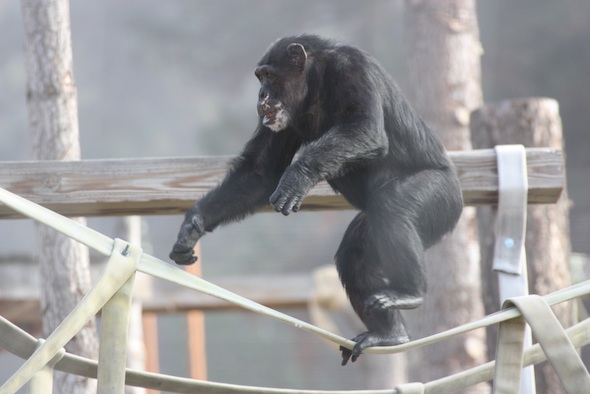
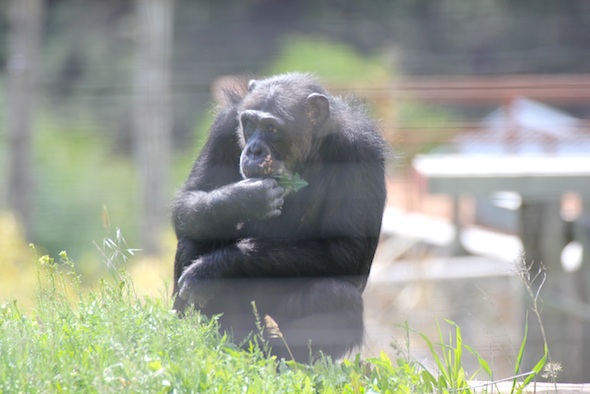
And then I think about Missy, who almost didn’t have the last eight years of her life at Chimpanzee Sanctuary Northwest.
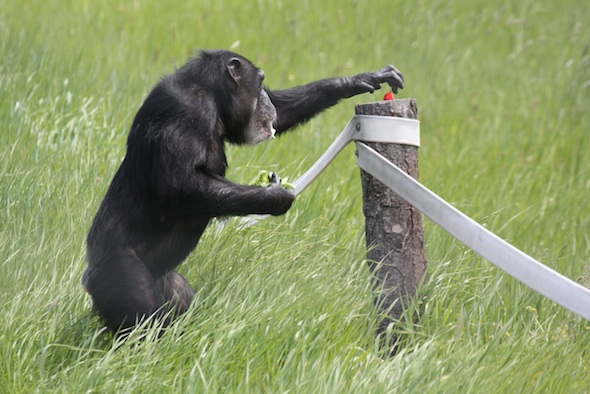
web_Missy_bipedal_reach_for_forage_food_in_hands_mouth_green_grass_YH_kh_IMG_2745

web_Missy_tightrope_fire_hose_YH_fog_jb_IMG_5443

web_Annie_groom_Missy_close_up_eyes_closed_GH_ek_IMG_4117

Every day is about making sure that the chimpanzees in our care fully experience a life that’s all about them. It’s our moral obligation to try to give back to them at least some of what we, as a society, have taken. And we want to be able to do this for other chimpanzees coming out of laboratories.

This is why fundraising days like Great Apes Giving Day mean so much to us, and to other sanctuaries and rescue centers.

Please consider making a donation to Chimpanzee Sanctuary Northwest, learn about all of the organizations participating in this global day of giving for great apes, and watch this Tuesday (October 4th) when the competition for the prize money heats up.

In the end, the chimpanzees and other great apes that you give your donation towards are the big winners.
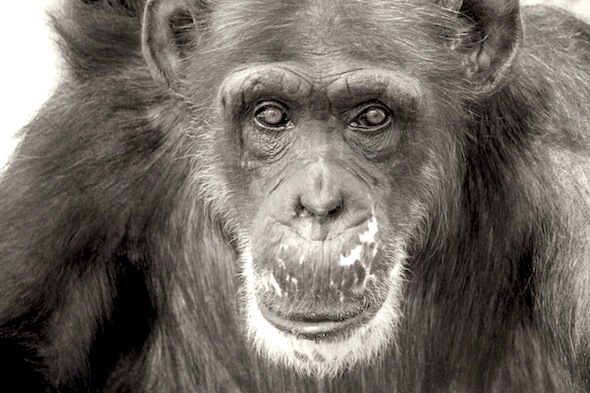
missy sepia

Filed Under: Fundraising, Missy, Sanctuary Tagged With: animal rights, Animal Welfare, biomedical research, chimp, chimpanzee, chimpanzee sanctuary, great apes giving day, Missy, northwest, release, Sanctuary, testing

Speaking on Captivity

June 4, 2016 by Diana

Captivity. It’s been in the news a lot, and I know on a lot of our minds.

It is simply a fact of everyday life and work when your occupation is caring for chimpanzees in a sanctuary. We go to great lengths to ensure that the chimpanzees are unable to breach the barriers we have constructed to contain them, and while we do it for both their own safety and the safety of those on the other side of the barriers, it doesn’t change the reality of the situation–the steel caging, bullet-proof glass, electric fence, and many, many locks of which only the humans have the keys.

As a sanctuary, our aim is to attempt to right what we perceive to be a wrong and to give back some measure of what our species has taken from another species, but we don’t view this second chance for the chimpanzees living here as the ideal life, and our friends behind bars often remind us of this. A few years ago, I wrote about my perception of Jamie’s awareness of her own captivity in the context of the shift in how we as a society view what chimpanzees deserve and what our obligations are towards them. You can read that post here.

I am buoyed by the positive events that have occurred for chimpanzees just since writing that post three years ago. We are closer than ever – maybe we are even there – to the end of chimpanzee biomedical research in this country. How did we get here? How did we get to this moment in history where the practice of using chimpanzees in biomedical testing is widely seen as abhorrent from a society that thought it was entirely permissible and within our rights as humans to slaughter chimpanzee families, collect the infants, and ship them across the world to use them in experimentation? There are many specific answers to that question, but the general answer, I think, can be explained by a formula that applies to progress towards greater human rights as well: knowledge + people speaking out + time = societal shifts.

These shifts don’t happen overnight and they don’t happen without resistance. By definition, it takes the majority of people who held onto an “old way” of thinking to either no longer be a part of society or it takes individuals to change their own stance. We all know how stubborn our species is, so the former is often the key factor and is really built into the formula under “time.” But our modern age has given us the ability to gain information and collect knowledge in an instant, and we are quickly made aware of more people speaking out. This allows shifts to happen faster.

As uncomfortable and impassioned as some discussions can get around the practice of keeping great apes and other non-human animals in captivity, I choose to view it as very positive sign that these discussion are happening in a very public way. The proverbial and literal elephant in the room is being pointed out, making it almost impossible to ignore the bigger ethical questions of holding intelligent, highly social, long-lived species in captive environments, generation after generation. What truly justifies this activity?

The thing about societal shifts in thinking, though, is that when you’re in the middle of them, there will be individuals and institutions on both sides. Looking back at shifts that have happened in the past, it’s really difficult to understand how so many people were involved in something that is now viewed as unjust, but that’s the benefit of hindsight. There is no “new way” without an “old way” and the “old way” is something that the majority of people likely had few qualms about, but that doesn’t mean they had some sort of flaw in their character. I applaud the individuals and institutions that are at the forefront of rejecting old, unfair, and unjust ways of doing things, but I understand that some will invariably be slower to adjust–that’s all part of a shift.

Let’s keep talking. Let’s not be afraid of our convictions and our desire for a more just world. And let’s also remember that each of us have different levels of knowledge, exposure to different voices, and may have developed our opinions in a different period of time and societal-wide mentality than ourselves.

In the meantime, let’s be thankful, on behalf of seven chimpanzees in Cle Elum, Washington, that societies do indeed shift towards greater understanding and compassion, and it happens one person at a time. Though we are unable to give the chimpanzees true freedom, we can give them something closer to it than they’ve ever experienced before.


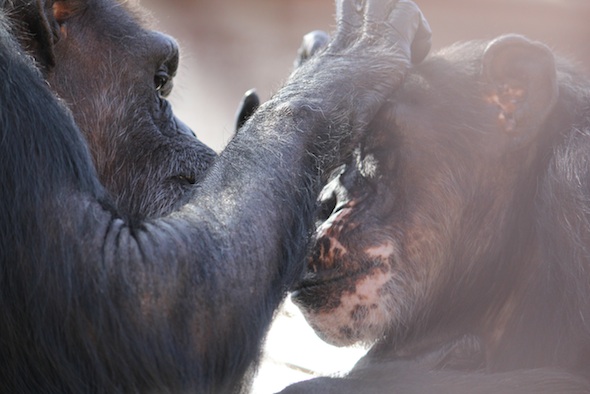
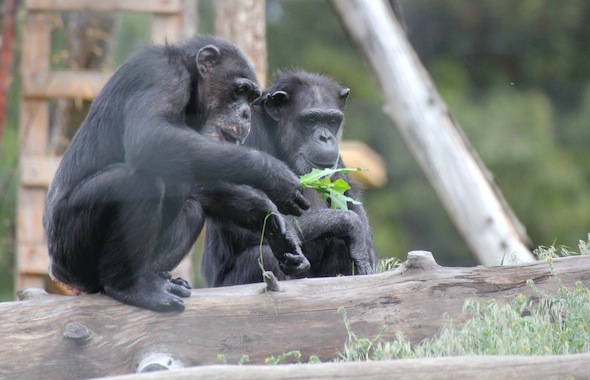
Here’s Missy and Annie enjoying the wild prickly lettuce that they harvested:

Missy eating prickly lettuce

Missy and Annie with prickly lettuce

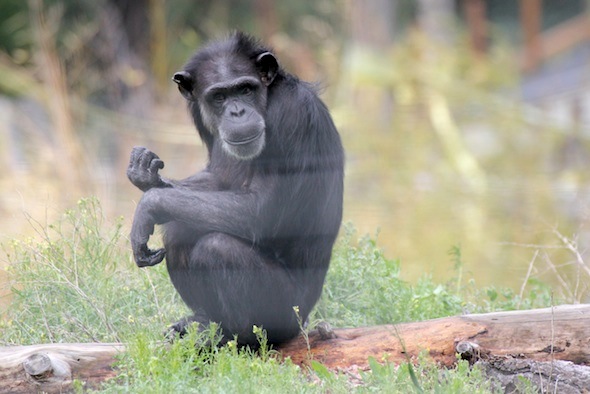
Annie sitting on a log


Filed Under: Annie, Missy, Sanctuary, Young's Hill Tagged With: animal rights, Animal Welfare, biomedical research, captivity, chimp, chimpanzee, Cle Elum, csnw, Sanctuary, societal shifts, zoos

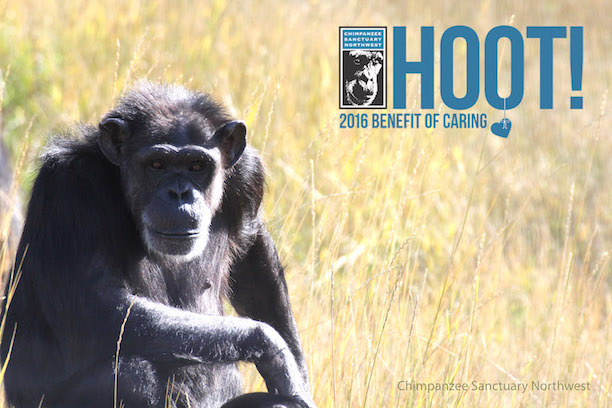
ANNIE and Family for the 3rd day of HOOT!

April 26, 2016 by Diana

J.B. and I met Annie eight and a half years ago, along with the rest of the chimpanzees who were to become The Cle Elum Seven.

From the very first blog post we wrote about her (read it here), when we talked about Annie, we talked about her friendship with Missy. Her clear love for and reliance on her friend Missy was her defining characteristic.

But Annie is coming into her own.

While some of the chimpanzees are taking advantage of the sanctuary and living out the childhood that they never had (notably Foxie – just watch the video re-posted to the blog yesterday), I think Annie has been experiencing a bit of a rebellious adolescence lately.

It was clear from day one that Annie was at the bottom of the hierarchy of the seven chimpanzees. We’ve written about her anxiety and lack of confidence in social situations many times. And we’ve told you that her confidence has skyrocketed in the last few years. What we might not have mentioned is that she’s moved beyond confidence to downright moxie.

As a general rule, timidity is not a trait that is revered in the chimpanzee social world. Chimpanzees can be a rough bunch, and if you’re not prepared to walk your talk (or would that be walk your pant-hoot?), you might find yourself in a perilous situation.

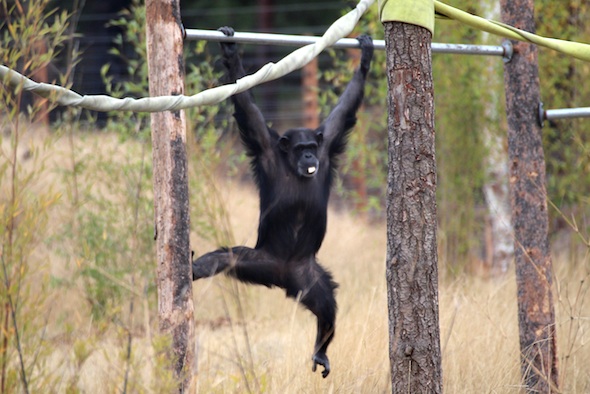
While Annie remains sweet and soulful, she is learning that she can be just as tough as the other ladies and gent, and she is much less likely to back down during conflicts now. In fact, sometimes she is the one starting them. If she feels wronged, she won’t just have a self-directed anxiety-laden outburst as she did in the past, she will let the group know she’s not only upset, but she’s not putting up with it.

web_Annie_hang_bar_YH_jb_IMG_0020

On Saturday, we will be raising funds at HOOT! for our Expansion Fund. We have some big dreams for the future of the sanctuary, and we will be sharing these, including a surprise announcement, at the gala.

We have received a matching grant pledge from the Chimpanzee Sanctuary Fund for $50,000. Laura Bonar, Fund Advisor for the Chimpanzee Sanctuary Fund and Chief Program & Policy Officer at Animal Protection of New Mexico, will be one of our special guests at the event!

That grant and the matching funds that we will raise on Saturday will go towards our first phase of expansion. This means that we will be adding more chimpanzees to the group in the near future.

We are still seeing the individual personalities and the group dynamics of the Cle Elum Seven change after almost eight years, and this will be a whole new and thrilling chapter in the lives of Annie and her six family members.

Who knows how we will be describing Annie’s position three or four years from now. What I do know is all of the chimpanzees will continue to change and grow and experience life in new ways.

I can’t wait to tell you all about it.

Annie hoot image

Filed Under: Annie, Chimpanzee Behavior, Events, Friendship, Sanctuary Tagged With: #hoot2016, animal rights, Animal Welfare, Annie, biomedical research, chimp, chimpanzee, csnw, hoot, northwest, Sanctuary

Chimps and Dolls

March 12, 2016 by Diana

Chimpanzees are powerful, intelligent, adaptable, and sometimes aggressive wild animals. They do not belong in people’s homes as pets. They do not belong on training compounds used for television shows, music videos, movies and advertisements.

They belong in equatorial Africa where they live in large social groups, foraging and hunting their own food.

When that’s not possible, when where they belong has been taken away, and when they have been born into and grown up in captivity, a sanctuary is the best option for them. And sanctuary means taking the individual chimpanzees on their own terms and letting them find things they enjoy – things that may be very far from the image of the wild animals who they are.

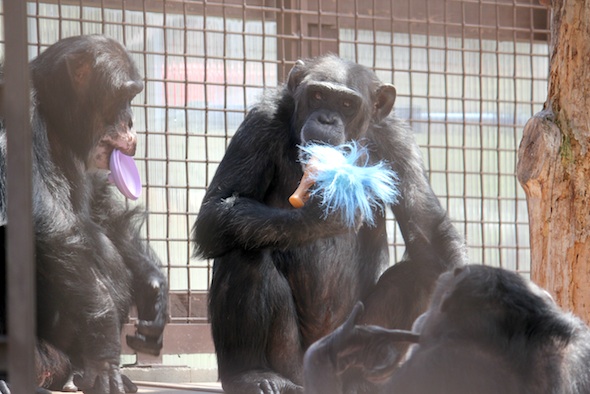
For Foxie, that means dolls. It’s not that she is like a human child, or even that she’s using the dolls as substitute children (though maybe that’s part of it, given her history). Foxie has found something she likes, something that entertains and comforts her.

Foxie is still very much a powerful, intelligent, adaptable, and sometimes aggressive chimpanzee.

Foxie with red haired doll


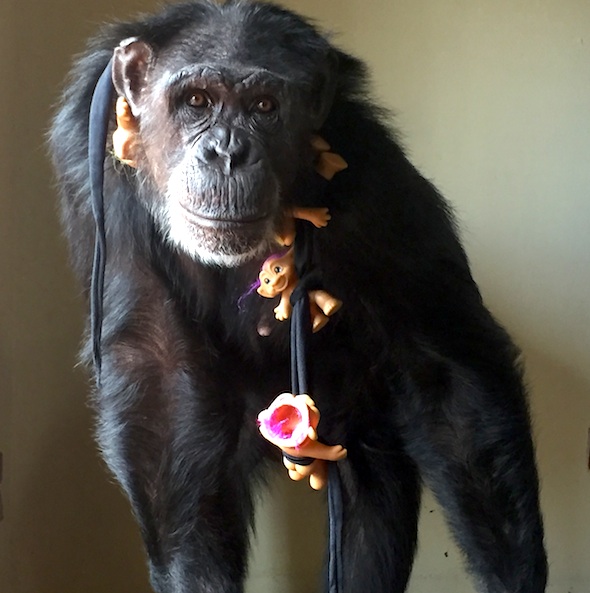
And Jamie too. I can’t imagine too many things more silly than a troll scarf, but Jamie manages to wear a troll scarf while at the same time projecting the strong chimpanzee that she is.

Jamie wearing troll scarf

Filed Under: Chimp histories, Chimpanzee Behavior, Dolls, Enrichment, Foxie, Intelligence, Jamie, Sanctuary, Trolls Tagged With: animal rights, Animal Welfare, biomedical research, chimp, chimpanzee, Chimpanzee Sanctuary Northwest, csnw, doll, Enrichment, Foxie, Jamie, northwest, Sanctuary, troll

Why are the Chimps in Cages?

November 21, 2015 by Diana

You may have heard that Foxie has become a bit of a celebrity due to this The Dodo article and a follow up story and video on the Huffington Post.

Publicity for the sanctuary is so wonderful! New amazing people with gigantic hearts find out about the work we do and all of the chimpanzees in our care, and the world overall becomes a better place with more like-minded people connecting with causes that speak to them.

And then there are the comments on the internet…

As a general rule, it’s a bit disheartening to read internet comments, no matter the subject, but when people are commenting on something so close to your heart and making assumptions that are wildly inaccurate, it can sting.

However, it can also be somewhat enlightening.

One theme to the comments of late has been questioning why Foxie is “still in a cage.”

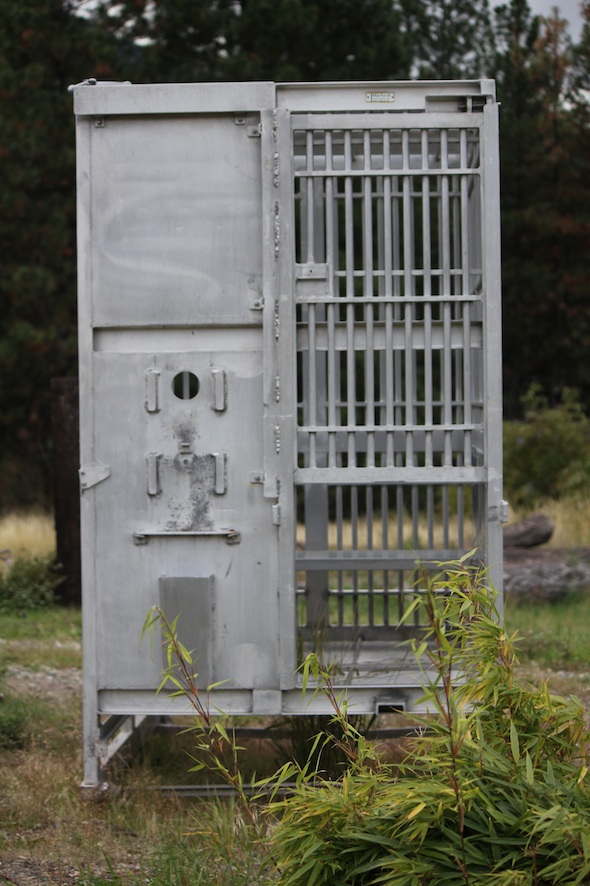
Here’s the truth about keeping chimpanzees in captivity – you have to put measures in place to contain them in order to keep them and the humans safe. And captive facilities, whether labs or zoos or sanctuaries, utilize concrete and steel to some extent.

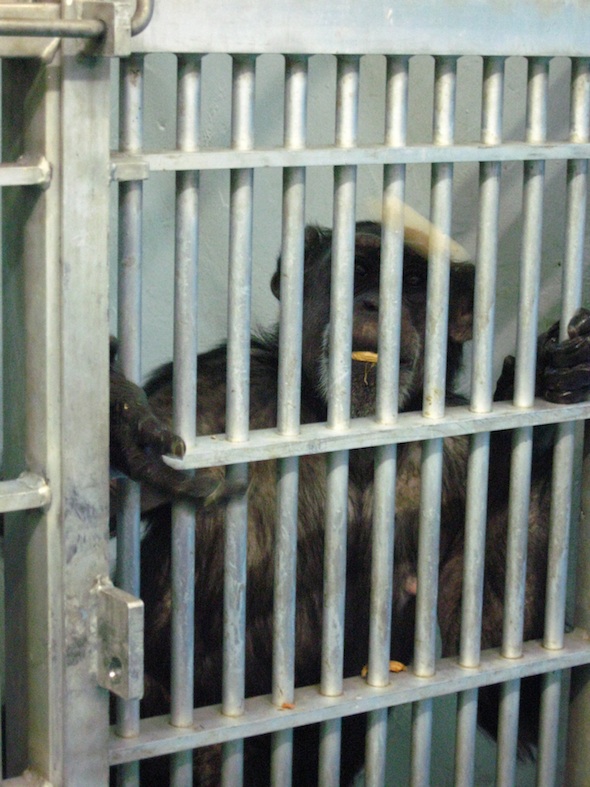
Below is a photo of the type of cage that most of the chimpanzees living at Chimpanzee Sanctuary Northwest spent years and years living in while in laboratories:

cage outside

Jody in buckshire cage


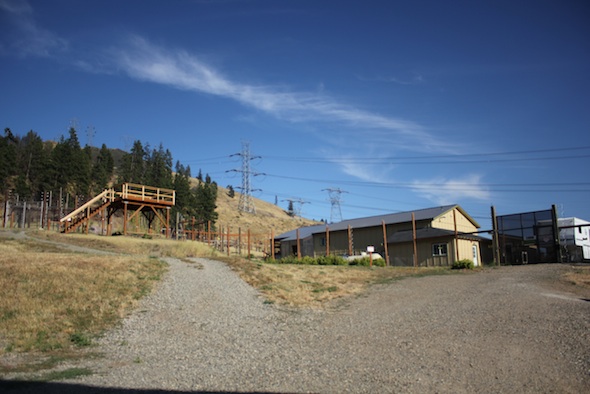
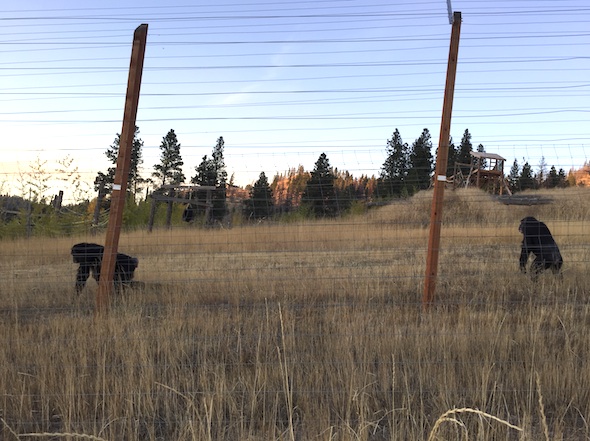
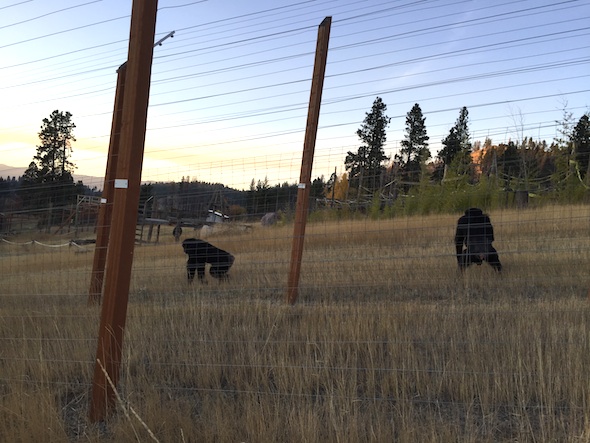
This is their sanctuary home now (the building and the hill inside the electrical fence):

chimp house


I am here to tell you right now that some of the enclosures at the sanctuary are primarily caging.


The next few photos are of the greenhouse, which is the chimpanzees’ favorite area year round. It is basically a large cage.

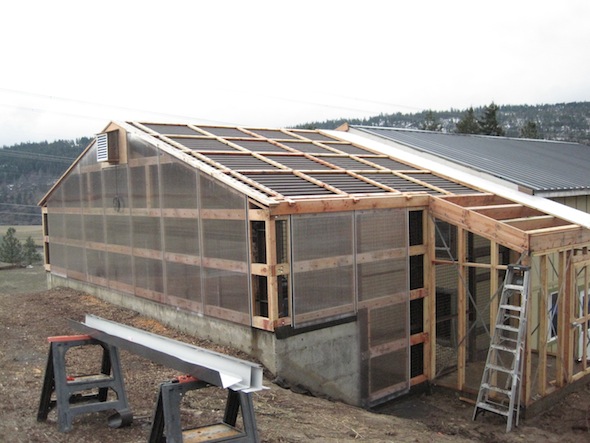
The greenhouse was the chimpanzees’ original “outdoor” area, and was caging that was open to the elements. Greenhouse panels were added to make it a usable space year round. Here are the panels going up:

greenhouse construction

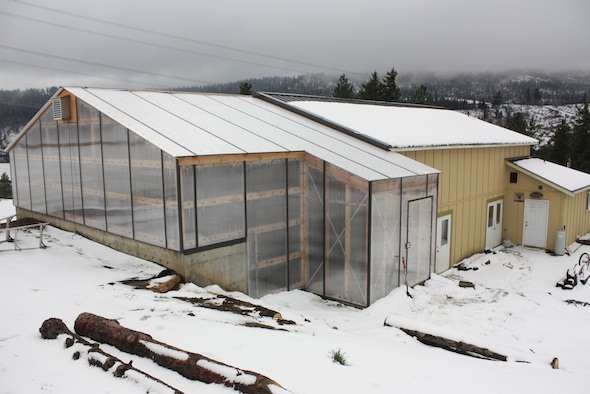
And here is what it looks like in the winter. It’s pretty toasty in there when there’s even a little bit of sun to heat things up.

greenhouse in snow


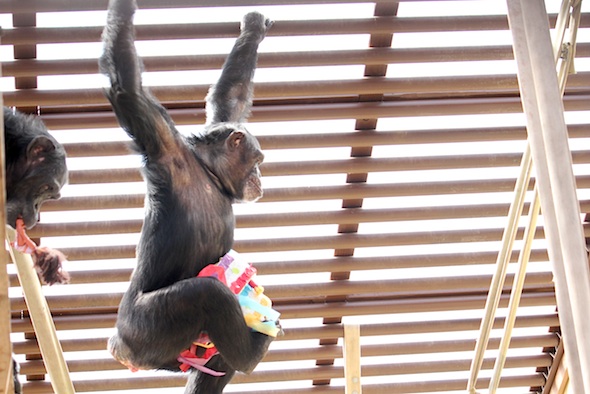
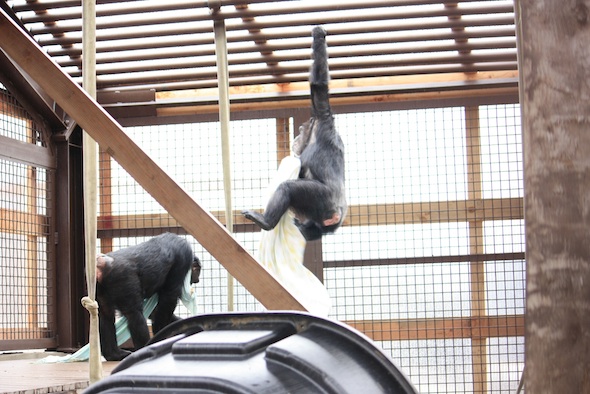
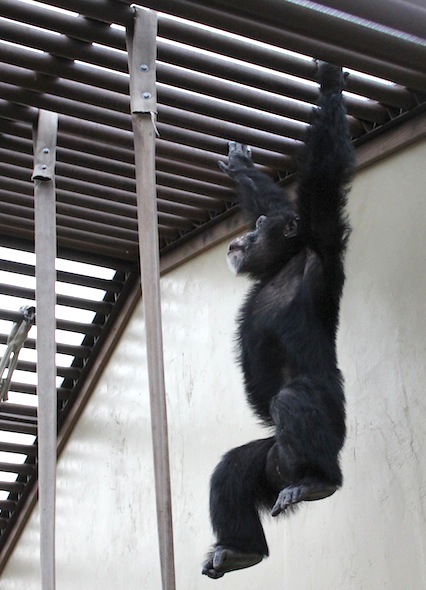
The greenhouse is an incredibly usable space – chimpanzees, being strong and dexterous and having opposable toes, can easily climb up the walls, and the ceiling is made up of bars where they can hang from and brachiate, whether just to get across the room, when absconding with a prize, during play, or just for fun. I wish all enclosures could be as usable.

jamie with pinata in legs

Jamie and Missy brachiate

Burrito brachiating

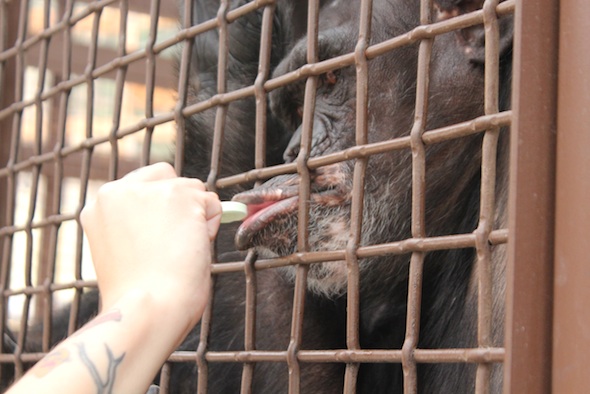
The caging also allows caregivers to directly interact with and serve the chimpanzees (unlike other methods of containment that we also use at the sanctuary such as electric fencing and bullet-proof / chimp-proof glass).

serve vitamin


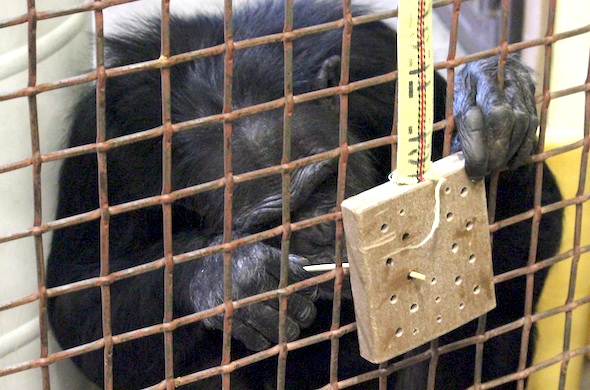
Caging is also handy for hanging food puzzles, like this raisin board that Jamie enjoyed tonight:

Jamie with food puzzle


But take another look at that photo above of Jamie with her raisin board.

If you didn’t know that this:

Jamie and Missy on patrol

and this:

Jamie on shakey bridge

and this:

Jamie look into distance

was also a part of Jamie’s everyday existence, what would you think?


We considered this when we started the blog before the chimpanzees arrived. Would we avoid posting photos of the chimpanzees behind bars, or play sessions that were filmed in the smaller front room area? We decided we would share it all, with the idea that those who were truly concerned or curious would look into things further, find out more, and then, of course, fall in love with the chimpanzees.

And for those who simply made an assumption about the sanctuary and never delved further, well, maybe they weren’t our “target audience.”

So, for those who are reading this, thank you. Thank you for taking the time to learn and wonder and question and care.

Anyone who works at Chimpanzee Sanctuary Northwest will tell you that our ultimate goal is to put ourselves out of business. We don’t like the fact that there is a need for sanctuaries for chimpanzees. We don’t like the fact that there are chimpanzees in captivity anywhere.

We don’t want our chimpanzee friends to be living behind bars – we want them to be wild and free in their native habitat. But that is not possible. As we explain on our FAQ page, there are many reasons why captive chimpanzees in North America cannot be released into the wild, but one of the most significant reasons is that chimpanzees rely heavily on cultural knowledge for survival in the wild. Having been raised in captivity, the chimpanzees at CSNW lack the most basic skills for survival such as finding and procuring food and protecting themselves from the dangers of their environment.

We wish that Foxie had been born in Africa into a huge and thriving population of chimpanzees. We wish that she had children and grandchildren that surrounded her and enriched her life. But she was born in a laboratory. And that is tragic.

What we get to do, though, is tell the other side of her story. The story about her falling in love with troll dolls, and being the 98-pound mediator within her group of chimpanzees, and playing wild games of wrestle and troll keep-away with Jamie.

Some of this is done on the other side of steel caging, and we will continue to show those moments.

Burrito and Foxie

Filed Under: Featured Post, Foxie, Jamie, Sanctuary, Trolls Tagged With: biomedical research, cage, caging, chimp, chimpanzee, csnw, doll, Foxie, northwest, Sanctuary, troll, troll doll

Startling Adventures

October 24, 2015 by Diana

If you’ve been following along for a while, you know that Jamie loves her walks around Young’s Hill. She’s definitely not the only one, though.

The other night I was walking around the hill with Jamie (me on the outside of the electric fence, of course) for what was probably the fifth or sixth time after dinner, and I heard something rapidly approaching us from behind. I will admit to being a bit startled. The evenings are usually very quiet and serene around here, and I was sure all of the other chimpanzees had gone to bed.

My temporary flight or fight reaction quickly turned to pure happiness when I whipped around to see who or what was rushing at us from behind. Apparently, from her nest in the loft of the playroom, Missy noticed that Jamie was on another walk, and she must have jumped out of bed and ran at full speed to catch up to us.


Missy is behind Jamie in the following two photos:

Missy and Jamie on the hill

Missy behind Jamie on the hill

How fun to be able to jump out of bed to go on an adventure! I could genuinely feel Missy’s joy in surprising us.

Sometimes I forget the stark contrast between the lives the chimpanzees have now compared to where they came from. How many times would Missy have longed to get out of bed to run around when she was living in the few square feet of a laboratory cage?

Freedom is relative, and the chimps’ freedom at Chimpanzee Sanctuary Northwest is definitely not absolute, but their existence is worlds apart from what it was the first few decades of their lives. You can read about Missy’s past here.

And we have you – those who support the sanctuary – to thank for that. So, on behalf of Missy and her sense of adventure –  Thank You!


Filed Under: Missy, Sanctuary, Young's Hill Tagged With: adventure, biomedical research, chimp, chimpanzee, csnw, habitat, northwest, rescue, Sanctuary, young's hill

Jody Harvesting in the Greenhouse

February 21, 2015 by Diana

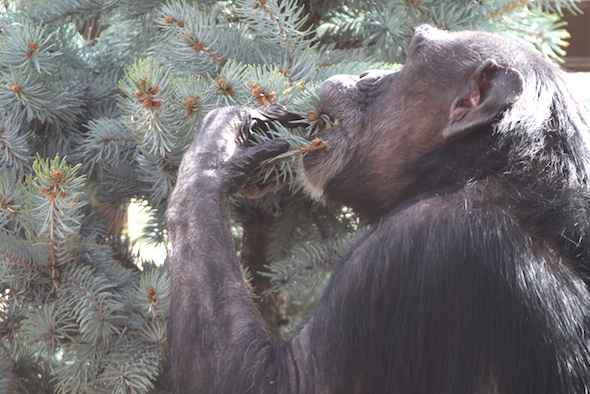
As Katelyn mentioned in her post the other day, Jody is known as Jody the Harvester.

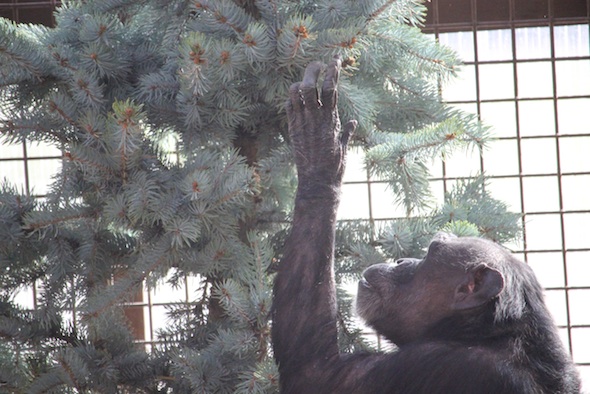
Though we have been having a very mild winter, there isn’t much new to harvest on Young’s Hill yet. Today, instead, Jody turned her harvesting attentions to the Christmas tree.

We’ve been getting a lot of use out of that Christmas tree – using it to hide goodies during various foraging parties. It’s in a big pot right now in the Greenhouse, and we are hoping to plant it on the hill in the spring, but we weren’t sure if the chimps would allow it to survive until we can plant it.

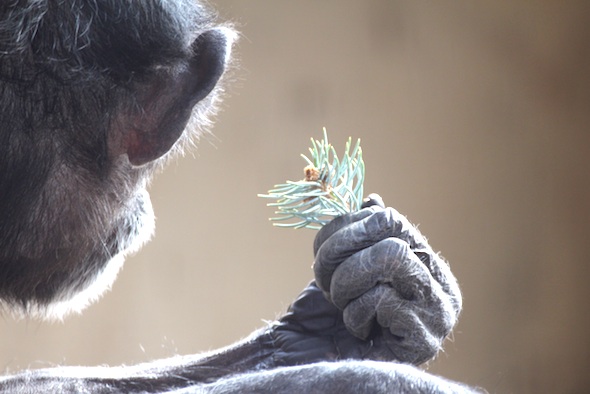
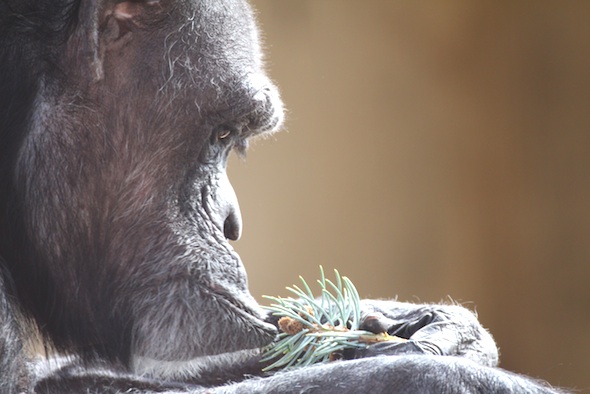
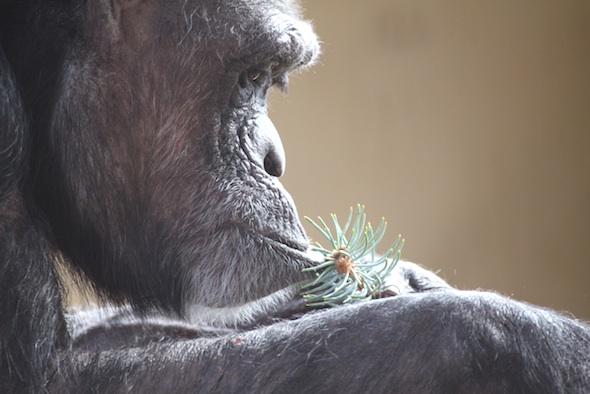
For the most part, they’ve ignored it, aside from getting treats out of it during parties. Every once in a while, however, Jody decides to take a few samples:

Jody harvesting the Christmas tree

Jody biting tree

Jody holding tree bit

Jody inspecting tree bit

Jody eating tree bit

Jody eating tree bit

Jody inspecting tree bit

Jody eating tree bit

Lazy forage

Filed Under: Chimpanzee Behavior, Jody, Sanctuary Tagged With: behavior, biomedical research, chimp, chimpanzee, Chimpanzee Sanctuary Northwest, Cle Elum Seven, csnw, forage, harvest, Jody, northwest, release, rescue, Sanctuary

  • « Go to Previous Page
  • Page 1
  • Page 2
  • Page 3
  • Page 4
  • Interim pages omitted …
  • Page 8
  • Go to Next Page »

Primary Sidebar

Subscribe To the Blog and Get Notified of New Posts First!

Archives

Calendar of Blog Posts

June 2026
S M T W T F S
 123456
78910111213
14151617181920
21222324252627
282930  
« May    

Categories

SUBSCRIBE TO OUR NEWSLETTER

Footer

PO Box 952
Cle Elum, WA 98922
[email protected]
509-699-0728
501c3 registered charity
EIN: 68-0552915

Official DDAF Grantee

Menu

  • The Chimpanzees
  • Blog
  • About Us
  • You can help
  • Resources
  • Contact
  • Donate

Proud Member of

Connect With Us

Search

Copyright © 2026 Chimpanzee Sanctuary Northwest. All Rights Reserved. Site by Vegan Web Design