• Skip to main content
  • Skip to primary sidebar
  • Skip to footer

Chimpanzee Sanctuary Northwest

Hope. Love. Home. Sanctuary

  • Our Family
    • The Chimpanzees
    • The Cattle
  • Blog
  • About Us
    • Visiting the Sanctuary
    • Philosophy
      • FAQs
      • Mission, Vision & Goals
      • Privacy Policy
    • The Humans
      • Staff
      • Board of Directors
      • Founder
    • Annual Reports
    • The Future of CSNW
    • CSNW In The News
  • You can help
    • Donate
      • Become a Chimpanzee Pal
      • Sponsor A Day
      • Transfer Stock
      • Be A Produce Patron
      • Be a Bovine Buddy
      • Give from your IRA
      • Personalized Stones
      • Bring Them Home Campaign
    • Leave A Legacy
    • Employment Opportunities
    • Volunteer
    • See Our Wish List
    • Events
  • Resources
    • About Chimpanzees
    • Enrichment Database
    • Advocacy
      • Advocacy Action Center
      • Apes in Entertainment
        • Trainers
        • Role of the AHA
        • Greeting Cards
      • Chimpanzees as Pets
      • Roadside Zoos
      • Chimpanzees in Biomedical Research
      • Conservation
        • African Apes
        • Orangutans
  • Shop
    • Merchandise Store
  • Contact
  • DONATE NOW

Animal Welfare

What’s in a Name?

October 7, 2019 by Diana

One question that we receive pretty frequently is whether the chimpanzees had their names before coming to the sanctuary. The answer, for all of them, is yes. The laboratories or other facilities where they were born or who acquired them, gave them both numbers and names. The numbers were tattooed somewhere on their bodies, often across their chest or inside of their thighs. These numbers are surprisingly large, but we don’t see them very often because their hair has grown over the tattoos.

With Annie, Missy, Jamie, Jody, Burrito, Foxie, and Negra, their names followed them from one laboratory to another. For Mave, Honey B, and Willy B, they were named at the laboratory LEMSIP and their names stayed with them when they went to Wildlife Waystation when they were around five years old. All of the chimpanzees have been referred to by these names for most or the entirety of their lives.

The “B” after  Honey B and Willy B’s names signified that they were the children of chimpanzee mothers who were owned by the Buckshire Corporation, the same facility that owned Annie, Missy, Jamie, Jody, Burrito, Foxie, and Negra.

Upon learning this, some people have asked if we might drop the “B” from Honey B and Willy B’s names. I have definitely thought about this. But then I think about three things…

First, they have always had and been called these names. A name is just a word, but it does provide a part of their identity. I honestly don’t know whether the chimpanzees would be bothered if we started calling them different names, but I would find it strange for people I just met to call me by a name that was different than what I had been referred to for decades. (That said, we do have nicknames for everyone that we use interchangeable with their given names, like JoJo for Jody or Bubba for Burrito. I think this is different since nicknames develop over time.)

Second, one of the tragedies that occurred in their previous lives was being separated from their mothers and/or separated from their children. It’s possible to piece together relationships and genealogy when names have not changed. An ambitious project that demonstrates this is The Last 1,000 which is chronicling the last 1,000 chimpanzee used in biomedical research and identifying when they move from laboratories to sanctuaries or when they pass away. We knew Missy’s daughter Honey B was at Wildlife Waystation because Honey B’s name had not changed. Keeping their names, in my mind, respects relationships that were torn apart and helps us remember that behind each of those names, however the names came about, is or was a unique individual.

Third, why would we change Honey B’s name but not Burrito’s or Negra’s? Burrito is a very silly name. I don’t know who named him that or how that name came about, and I don’t really care to know. I don’t think I would ever name a chimpanzee Burrito. But Burrito is Burrito. He’s grown into the chimpanzee person he is over the last eleven years at the sanctuary. His name very uniquely identifies him, but you all know him because of the colorful personality behind his name.

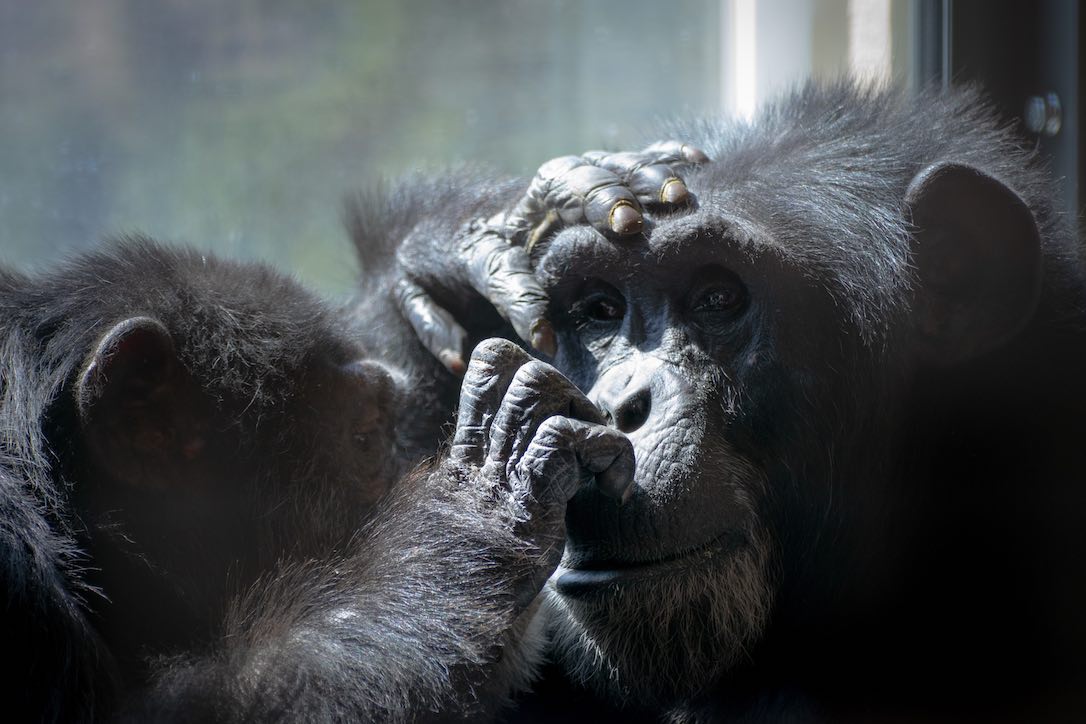
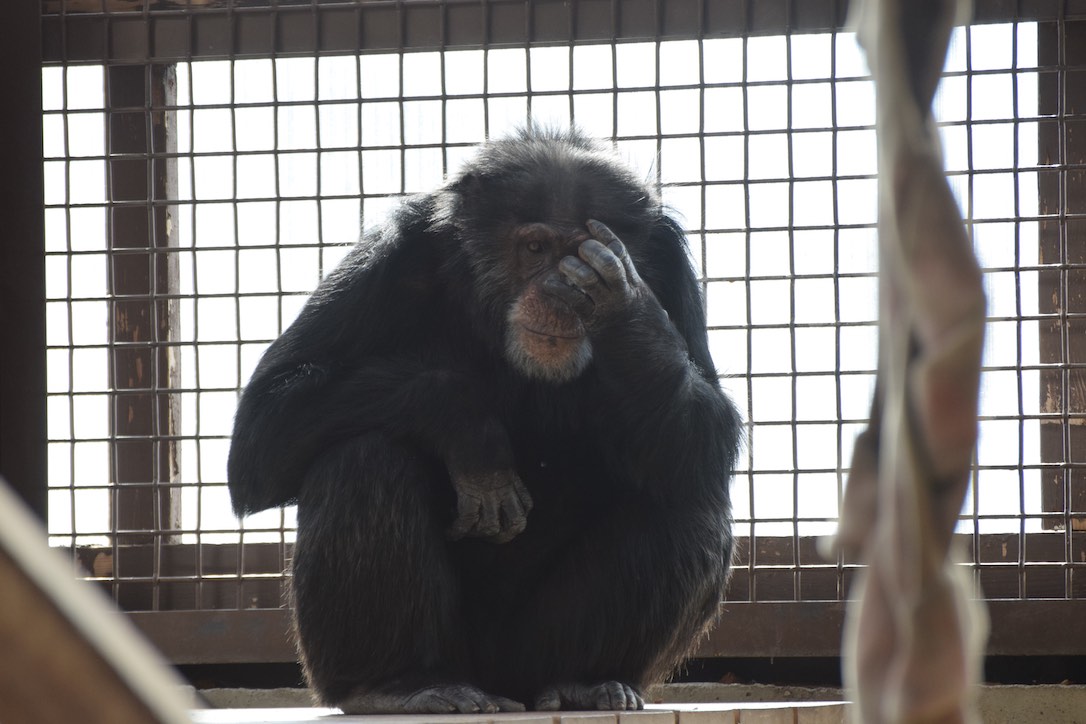
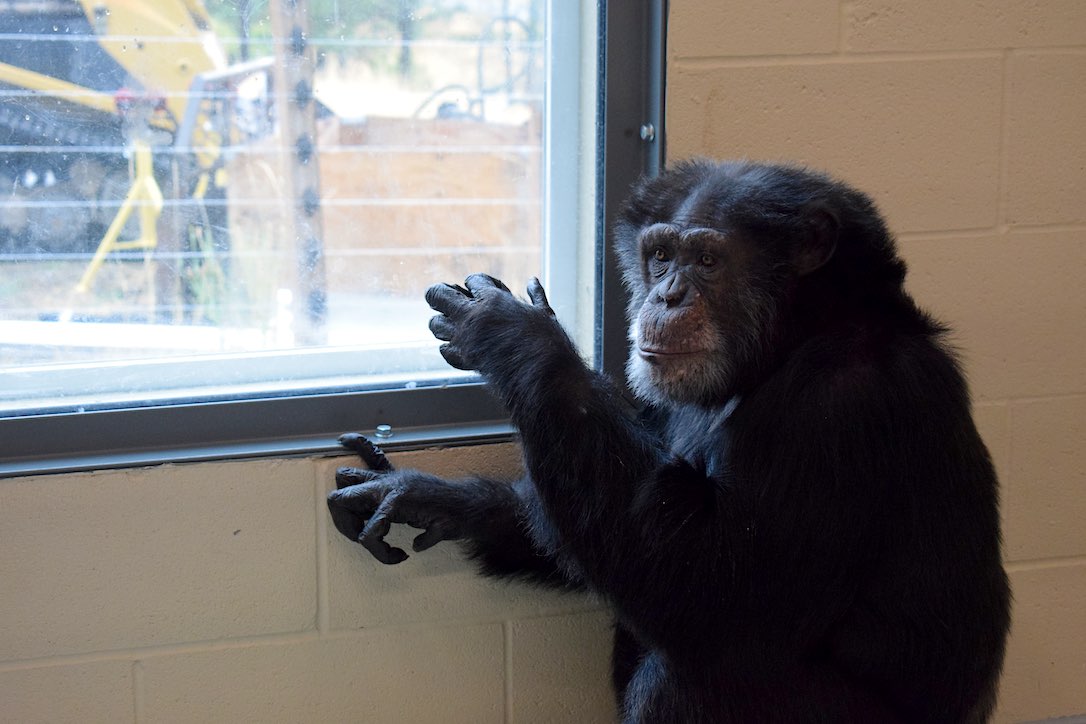
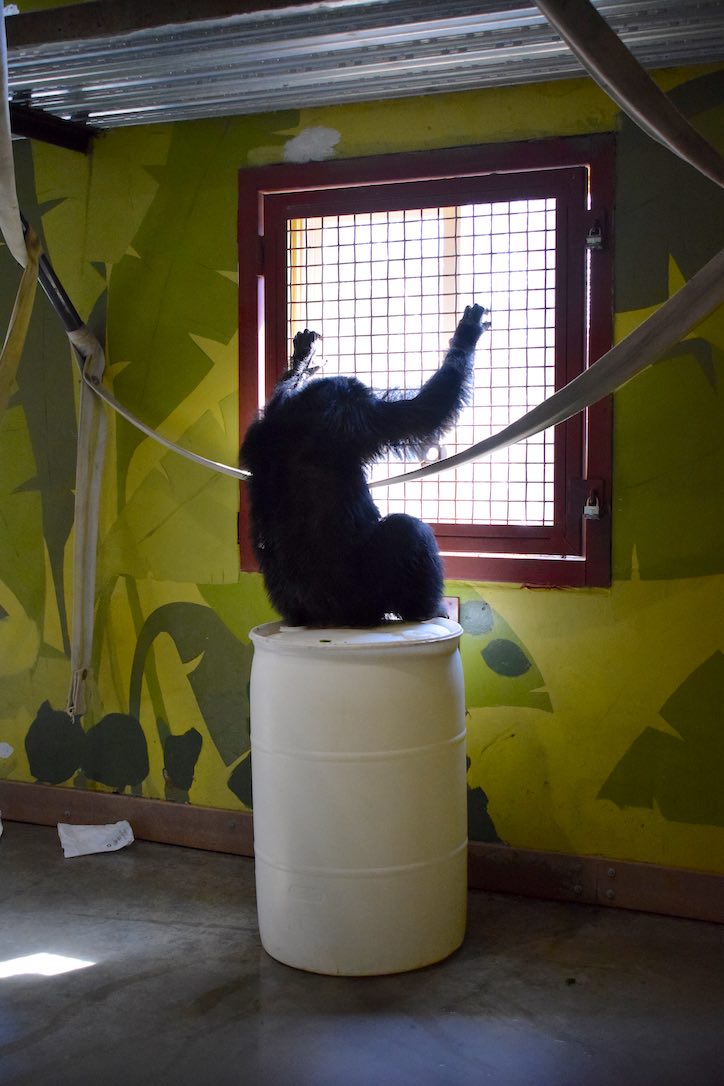
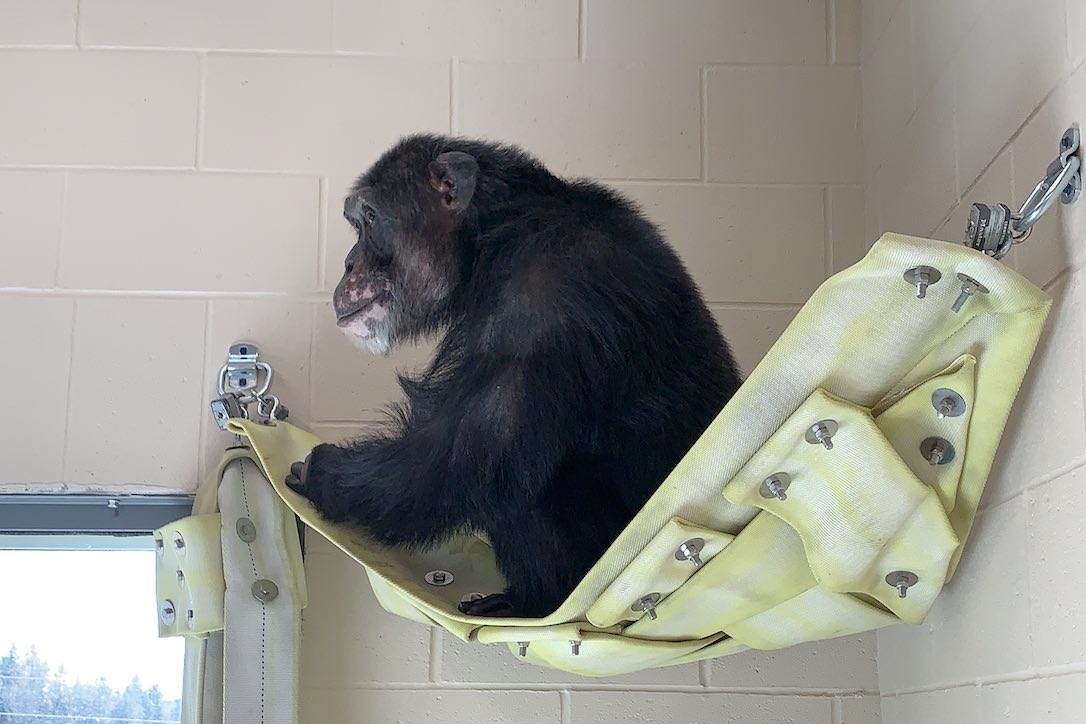
Here’s Burrito looking out some windows in Phase 1, the new part of the building where he’s currently living:
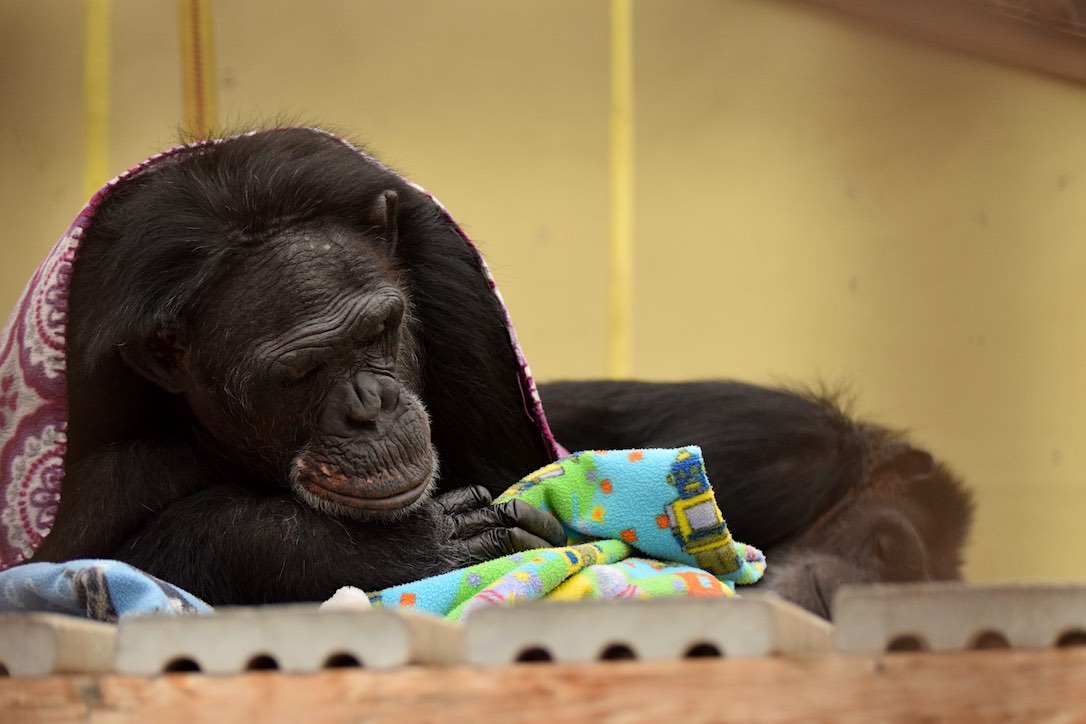
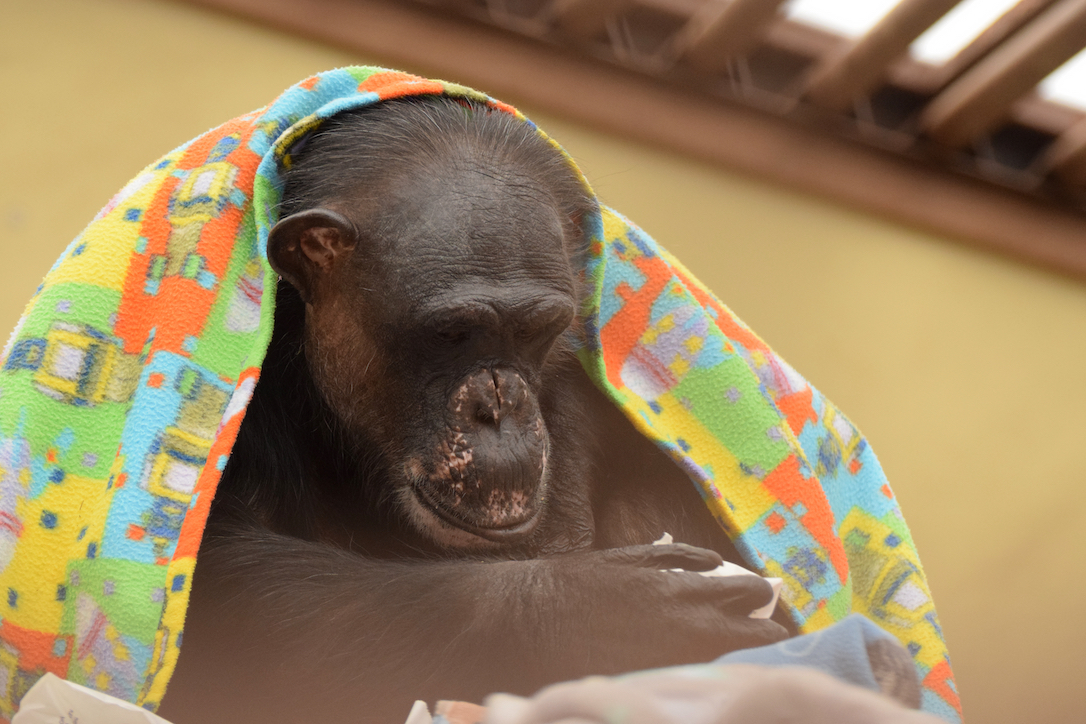
Negra, the word for “black” in Spanish, is an equally strange and sometimes awkward name. But when I think of Negra I don’t think about the word negra, I think of a somewhat grumpy chimpanzee with blankets over her head who is asking me for her night bag. Or I think of this Negra, who had some serious all-over-body bedhead on Saturday:

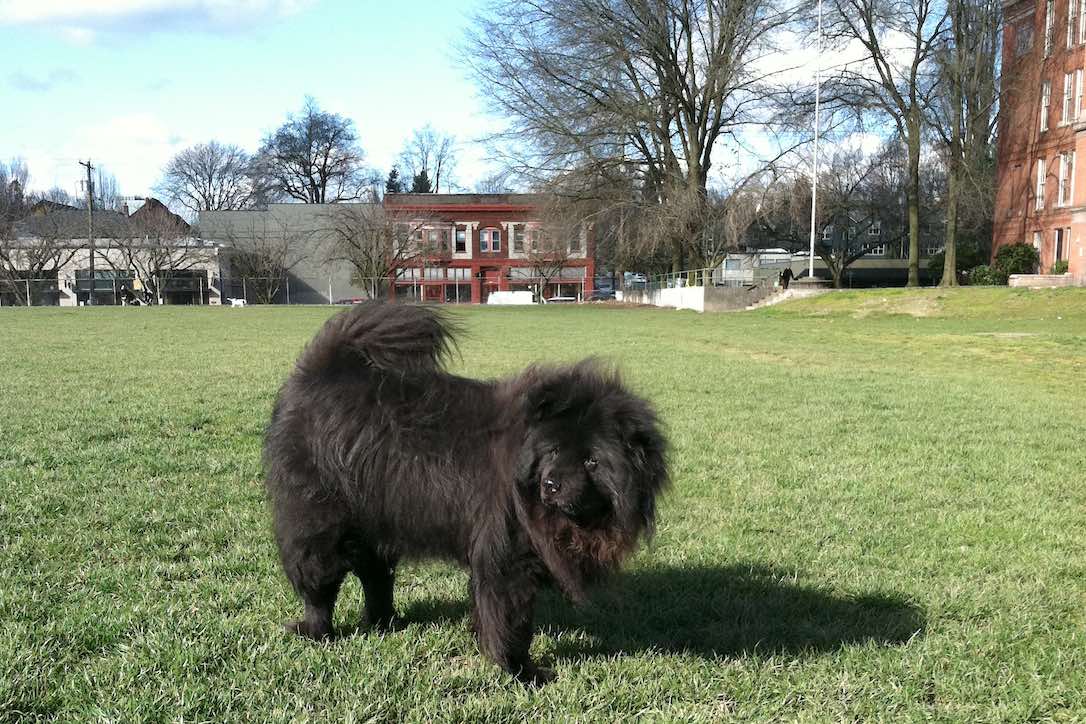
If you read my blog post a couple of days ago, you know that I had a certain connection specifically to Honey B’s name before ever meeting her, having just seen her name on a piece of paper. The dog I named Honey B after her will always remain a part of my heart. Honey B the dog somehow grew into her name almost immediately. I don’t think she had a mystical connection to the chimpanzee Honey B, but I am so glad she carried her name. Here’s a photo of Honey B the dog, in case you are curious:
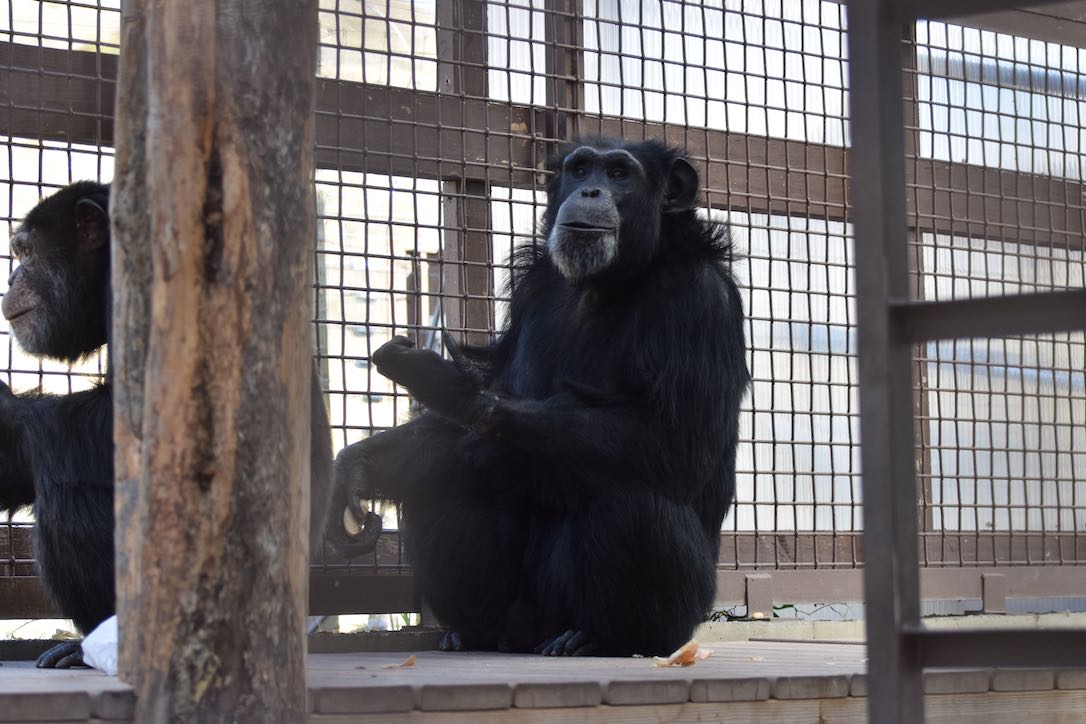
Willy B, Mave, and Honey B Chimpanzee have the opportunity to create new identities at Chimpanzee Sanctuary Northwest, but I would like to honor who they are and all the people who have known them over the years by keeping the names they’ve always had. They will reveal who they are little by little and we will know them for the unique and very special chimpanzee people they have always been.

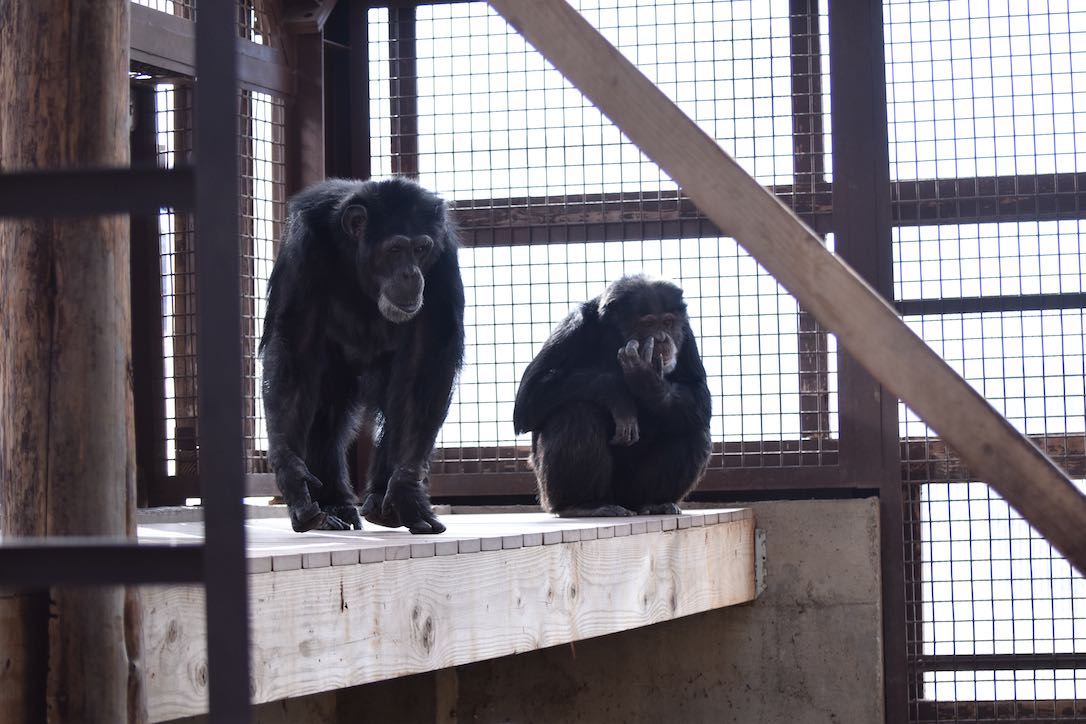
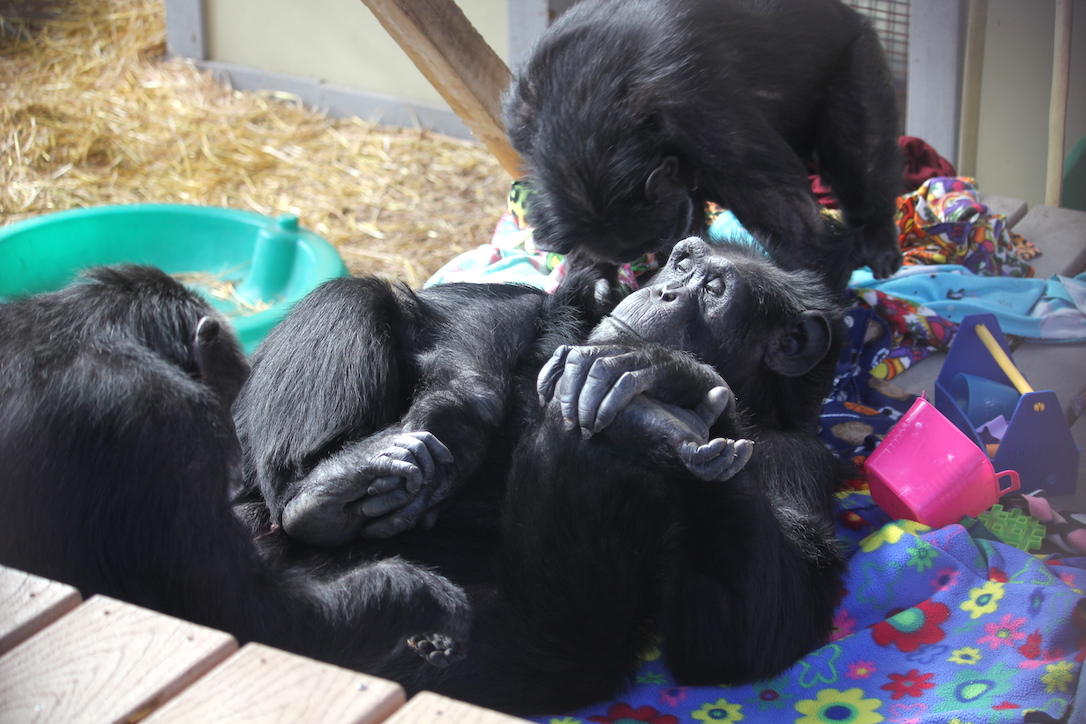
So far, even though they are still at times anxious, Jody and Missy seem to appreciate getting to know the one and only Willy B. I found them both grooming him at the same time in the greenhouse on Saturday. He doesn’t look like he’s hating this attention….
Filed Under: Burrito, Chimp histories, Honey B, Mave, Negra, Sanctuary, Willy B Tagged With: Animal Welfare, chimp, chimpanzee, chimpanzee rescue, chimpanzee retirement, chimpanzee sanctuary, Chimpanzee Sanctuary Northwest, Sanctuary

Dominance(?)

October 6, 2019 by Anthony

Among captive chimpanzees, the concept of dominance can be a bit of an enigma. As we attempt to integrate the two groups of chimpanzee residents here at the sanctuary, we are having many discussions about the dominance hierarchy. Dominance isn’t the only important thing during this stressful time, but it’s still important.

In the Merriam-Webster dictionary, the adjective dominant can be defined as:

  1. commanding, controlling, or prevailing over all others
  2. very important, powerful, or successful
  3. overlooking and commanding from a superior position

These definitions, among others, can each paint a different picture of what it means to “be dominant.” Primatologists tend to use the word in relation to social rank (i.e., where an individual fits within their group’s hierarchy in relation to other individuals). In primates and many other social animals, there is abundant research on the topic of social rank and the benefits that a high rank confers. By having more opportunities to mate and obtain resources, higher-ranking individuals tend to have a greater chance at reproducing and passing on their genetic material. In this way, traits that help an individual achieve a higher social rank can be heavily advantageous. In most primate species, males and females form separate hierarchies and compete within, not between, the sexes. although the resulting structure is often clear, the mechanisms by which dominance hierarchies develop and change are complex.

Studies of free-ranging chimpanzees (e.g., Dr. Jane Goodall’s) have revealed that males and females have somewhat separate social hierarchies. Generally, adult males vie for higher rank using a combination of physical aggression, explosive displays and tactful cooperation. Adult females develop higher rank through experience and tenure. The lowest of the adult males is still usually higher than the highest female. In a community of chimps, males seem to figure out their place in the social hierarchy during adolescence.

Dominance isn’t everything though. A chimpanzee who has a dominant personality may be deficient in other aspects. There’s another component of social rank, perhaps best described as leadership, that seems to affect how long a chimp can hold the rank of alpha after climbing their way to the top. Without an ability to gain the trust of others and manage friendships, a quick, brutal ascension may result in a tragic end. Deposed alpha males can be killed or driven out by their former peers. (For more on this topic, I recommend the fascinating talk by author and primatologist Dr. Frans de Waal.)

If chimps always fought each other in peer-to-peer physical combat, dominance would be easier to study. However, chimpanzees have many ways of diffusing tension and avoiding conflict. They often do this by communicating with one another, thereby establishing boundaries and outlining expectations for how their relationships are going to be in the near future.

Instead of focusing on rare acts of violence, scientists can usually infer social rank by observing pant-grunts. A pant-grunt is a guttural vocalization, often accompanied by an exaggerated bow and/or submissive hand gesture, that is specifically directed from a subordinate towards a perceived superior. It’s a conspicuous overture and leaves little room for debate. When a mother chimpanzee pant-grunts at an adult male, her dependent infant will sometimes pant-grunt in synchrony while clinging to her belly. When a former alpha male concedes that he has lost his position to a rival male, the passing of the torch is usually marked by a conciliatory pant-grunt. Although chimps have numerous cultural traditions that vary between populations, pant-grunts can be heard in almost every chimpanzee social group, captive or otherwise.

Willy B watches another interaction while eating his own food

The Cle Elum Seven are no different. Burrito, although he lacks a dominant personality and seems uninterested in leadership, sporadically receives pant-grunts from the females (even Jamie). Pant-grunts between the six females are rare, although I sometimes see Negra receive them from her peers. Aside from Negra, who generally avoids drama, we usually infer that Jamie is the most dominant female based on her aggressive demeanor and possessiveness. When a situation gets hairy, Jamie’s side is usually the side to be on. Like Burrito, though, Jamie appears to be a poor leader. As Jake’s study of their dominance hierarchy indicated, Jamie’s excessive dominance and unusual social behavior may actually prevent her from being a good leader.

Negra peruses a magazine for peanut butter smears

Rather than constantly beating back rivals and taking their food, an effective leader quashes conflicts before they start and often allows minor transgressions to slide. For example, when the new three arrived, Willy B showed tolerance and tenderness towards his female companions. They, in turn, groomed and acknowledged him. That’s why, as J.B. has often said, we’re hoping that Willy B will step up to be a good alpha, thus providing some stability. So far, Willy B has not revealed himself to be a tyrant or a bully, so he may be the keystone individual that CSNW needs to have a cohesive, stable chimpanzee community.

Mave grooms Willy B the day after their arrival.

With Jody, Annie and Missy now in a state of cohabitation with the new three, they have all been cautious and submissive towards Willy B. In turn, Willy has remained stoic amid all the drama. He seems to be equally interested in the new surroundings and still focuses on his favorite foods. He’s observant and reserved, but not overly reactive. All he has to do is sit there and the females will pant-grunt at him anyway. Of course, it sometimes helps to acknowledge their efforts, but he certainly doesn’t over-do it.

Willy B investigates the Greenhouse

Somewhat surprisingly, the other females have also been submissive towards Mave. It’s possible that, in the absence of fellow males, Mave has evolved into Willy’s biggest supporter. She is definitely playing a peacekeeper role, and may be helping Willy B to keep his alpha status. It will be interesting to see whether Burrito and Jamie, who are both relatively dominant, recognize Willy as their leader. There may be some drama before we get to that point, but the goal is to give the chimps what they need to form a sustainable and healthy social group.

Willy B (male, left) and Mave (female, right)
Mave
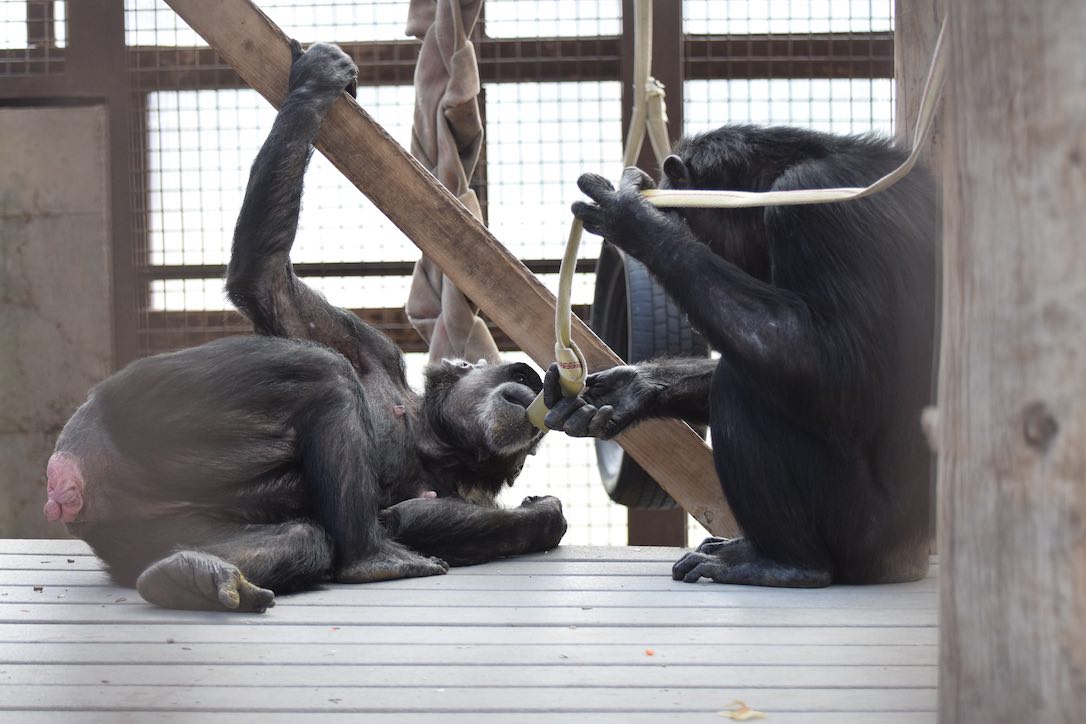
During a sweet moment, Honey B gingerly places the end of a firehose vine in Jody’s mouth. Two two seem to view each other as peers and have been exchanging frequent overtures

Filed Under: Chimpanzee Behavior, Fights, Free-living chimps, Grooming, Introductions, Introductions, Mave, Sanctuary, Willy B Tagged With: animal behavior, Animal Welfare, chimp, chimp sanctuary, chimpanzee, chimpanzee retirement, chimpanzee sanctuary, Chimpanzee Sanctuary Northwest, chimpanzees, dominance, dominance hierarchy, primatology, Sanctuary, social behavior, social rank

Nobody Puts Bubba in a Corner!

September 29, 2019 by Anthony

Today was a chilly autumn Sunday. Many parts of the Inland Northwest received their first snowfall last night, and much of the Cascades was covered in a dusting of white powder. Down here in the canyon, the weather was damp and cool and the skies were gray.

The chimps were slow to perk up this morning and seemed a bit groggy, making me think that they might spend the whole day napping and grooming in the Playroom. I watched Burrito for a bit before breakfast; he had a difficult time keeping his eyes open as he sat on one of the benches, and it made me smile. He lazily rolled over and drifted off several times, only regaining his alertness each time he heard promising sounds from the kitchen. It felt oddly familiar.

Negra even stopped by to participate in a quick session of grooming, but Burrito only gave her a few minutes of attention before redirecting his gaze out the window and returning to his solitude.

Everything changed when we walked around the building to open the door to Young’s Hill. Burrito and the others immediately got excited. His sideburns stood on end and his demeanor changed completely.

Lately, the seasonal shift has not deterred the Seven from enjoying Young’s Hill. Instead, they seem to relish the outdoors even more now that the weather is gloomy and wet. After being here for over a decade, the Seven are true residents of the Pacific Northwest and seem to embrace the mild temperatures of spring and fall. As I recently overheard one Washingtonian say, “I’ll pass on snow and heat, but I’ll hike in the rain all day.”

In true Northwest fashion, the Seven set out into the wilderness of Young’s Hill. Burrito led the way.

We have been excited to let the chimps go outside for the past few days because we just completed a modest expansion of the Young’s Hill enclosure. J.B. led the extension of the electric fencing downhill so that the perimeter now links up to the end of the shiny new chute (and the recently-constructed wing that houses Willy B, Mave and Honey B). We will soon be updating our followers about the new three and their gradual introduction to the outdoors, but for now the Seven long-time residents are exploring the additional space and using it to get a better view of their new surroundings

Today, Missy and Burrito each spent some time in front of the steel gateway leading into the chute. Burrito displayed and Missy even attempted to open the hydraulic door to crawl inside. Both seemed to be eager to get inside the building and come face-to-face with their new neighbors. (Fortunately for us, the doors are sturdy and didn’t budge in either scenario.)

Back in the Chimp House, the new arrivals (“The Californians”?) spent most of the day playing and lounging but immediately peered out of their bedrooms each time that one of the seven walked by. Willy B seemed most interested in Jamie and her foraging skills, while Mave tried to pant at Burrito through the sealed window. Honey B was more focused on the caregivers and kept nodding at us and soliciting attention as we completed tasks nearby.

It’s always interesting to see how quickly chimpanzees can alter their mood, thereby exhibiting a completely different set of behaviors. It still amazes me to see all ten of them snoozing in various corners of the Chimp House then suddenly hear a thunderstorm of pant-hoots, drumming and screams resonating throughout the building.

Even as the mornings get colder and the chimps spend more time in their overnight nests, it’s reassuring to see that they can still make a little excitement for themselves on a gloomy autumn day.


Filed Under: Burrito, Chimpanzee Behavior, Construction, Sanctuary, Young's Hill Tagged With: Animal Welfare, Burrito, chimp, chimp sanctuary, chimpanzee, chimpanzee retirement, chimpanzee sanctuary, Chimpanzee Sanctuary Northwest, Cle Elum Seven, csnw, northwest, Sanctuary, young's hill

A Faster Way to Forage

September 21, 2019 by Diana

If this video doesn’t make you smile, I don’t know what will. Honey B continues to reveal more and more of her unique personality.

Filed Under: Chimpanzee Behavior, Honey B, Intelligence, Latest Videos, Most Viewed Videos, Sanctuary Tagged With: animal protection, animal sanctuary, Animal Welfare, chimpanzee rescue, chimpanzee retirement, Chimpanzee Sanctuary Northwest, Enrichment, Sanctuary, scooter

Honey B’s Style

September 16, 2019 by Anthony

As highlighted in a recent post, Honey B is already known for her intelligence, energy and creativity. Not only is she an engineer and a philanthropist, but she is also a fashion enthusiast.

Yesterday, she decided that the cloth headbands we provide as enrichment are better suited as waistbands. Interestingly, she isn’t the first chimp to have this innovative idea! As caregiver Kelsi showed us last month, Annie has been wearing headbands around her waist for years.

It would be tempting to suspect that Honey B learned the behavior from Annie, which would be great evidence of cultural transmission between groups of chimpanzees. In the wild, chimpanzee communities across Africa have cultural traditions (i.e., their own ways of doing things) that spread among individuals via social learning. Chimpanzee cultures are rich and fascinating, but may be disappearing. This year, scientists published a paper about the negative effects that human activity may have on the cultural diversity of wild chimpanzees. As chimpanzee numbers dwindle and we degrade and fragment their forested habitats, their capacity for culture catastrophically decreases.

Although the process of cultural transmission certainly exists among groups of captive chimpanzees, it has been difficult to document and is seldom reported. In the case of Honey B and the waistband, it seems unlikely that she learned it from Annie. Annie only wears the improvised belt for a few days or weeks and then ignores them for the rest of the year, and she had already stopped wearing this summer’s edition before Honey B and her friends arrived from Wildlife Waystation last month. It is possible that one of the many videos we showed to the new trio features a scene of Annie sporting the headband-waistband look, but it’s more likely that they both just have similar taste in enrichment and utilize what we give them in novel ways.

With that being said, it will be interesting to see if any behaviors do cross over from one group to the next! Chimpanzees are brilliant and creative, and never stop surprising us.


Filed Under: Annie, Chimpanzee Behavior, Enrichment, Free-living chimps, Honey B, Play Tagged With: Animal Welfare, Annie, chimp, chimp enrichment, chimp sanctuary, chimpanzee, chimpanzee sanctuary, Chimpanzee Sanctuary Northwest, chimps, csnw, Enrichment, Honey B, Primates, Sanctuary

Summer’s End Begins

September 15, 2019 by Anthony

The rain today did not feel like a passing summer shower. It felt like summer’s end.

Besides the rain, many smaller changes have become evident this weekend. As the temperature dipped, the mountains shrouded themselves in chilly fog and gray drizzle. The larches are abandoning their greenish hue in favor of warmer tones. The bucks that inhabit the woods around the sanctuary are showing off their new antlers, while this spring’s fawns are losing their spots and grow more independent by the day. The tourists in nearby Roslyn are sporting flannels and hoodies, not sunglasses and flip flops (and our staff and volunteers had to say a sad goodbye to this year’s edition of the Roslyn Farmer’s Market). In neighboring Ellensburg, new students are flocking to campus to begin classes next week; a handful of them will compose our next cohort of interns starting at the end of this month. The air itself seems to call for coffeehouse folk music and pumpkin spice everything. Autumn has made its first appearance of its three-month residency.

Meanwhile, the chimps are embracing the cooler surroundings in their own way.

Jamie spent this morning huddled under a makeshift tent of blankets, taking in the crisp morning air and watching the caregivers go about their morning rounds. She even snoozed for a bit before breakfast (as did Annie, in the background).

Over in the new wing, things went similarly. Lately, the new three have been chilling out in the new archway tunnel almost constantly. However, today’s weather made the uncovered chute less appealing and the trio spent more time grooming and nesting in their sheltered indoor spaces. From her secluded corner in one of the bedrooms, Mave made sure to keep looking out the window at the surrounding pastures, passing rail cars and two-lane highway far below.

Because of the drizzle and dew, we only scattered a small portion of their lunch on Young’s Hill. Even so, the seven long-term residents made the best of the conditions and found all of the carrots and walnuts that Level II volunteer Dusty placed among the tall grass and wooden structures. Of all the chimpanzees, Annie seemed to enjoy foraging in the damp prairie grass, always watching her surroundings for potential competitors and new opportunities to obtain more food.

Today’s only drama was centered around corn. Erin and Miranda, two of our dedicated Level III volunteers, served breakfast and lunch, respectively. All went smoothly until Jamie decided to get upset every time one of the lower-ranking females received an ear of corn-on-the-cob. Either she was being possessive (likely) or she’s terrified of things on cobs (slightly less likely). She kept her eyes on everyone else while she munched on her own corn, as well as poor Foxie’s.

Annie, Foxie, and Missy all processed their remaining corn and potatoes with trepidation, frequently pausing to monitor Jamie’s expression.

Missy even had a swollen eye this morning. It was not a grievous wound by any means, but served as a potential artifact of recent conflict within their social group (Note: Missy didn’t seem to care and even made J.B. playfully chase her around the Hill in the rain).

Only Negra and Burrito were left out of the corn fiasco. Negra opted to sift through her chow bags from the safety of her fleece blankets, while Burrito spent more time gazing over at the adjacent tunnel and neighboring chimps.


Filed Under: Chimpanzee Behavior, Fights, Food, Jamie, Nesting, Sanctuary, Young's Hill Tagged With: Animal Welfare, chimp, chimp sanctuary, chimpanzee, chimpanzee retirement, chimpanzee sanctuary, Chimpanzee Sanctuary Northwest, chimpanzees, csnw, Food, forage, Primates, Sanctuary, young's hill

Great Expectations

September 12, 2019 by Anthony

We caregivers have been incredibly busy lately, but we make a point to read comments on our social media content and we attempt to respond appropriately whenever possible. Lately, most of our followers, donors and volunteers have been overwhelmingly focused on one topic in particular: social integrations. More specifically, everybody wants to know about our plan for introducing the three new individuals (Honey B., Willy B. and Mave) to our existing social group of seven resident chimpanzees. Diana described the situation eloquently in her recent post, which is a “must-read” for anyone trying to follow the action here at the sanctuary.

Willy B. and Mave listen to the other group of chimpanzees in the adjacent Playroom.

As stated previously by the other staff, the incoming trio are about to clear their four-week quarantine period and we are formulating a loose plan to begin the introduction process. All members of our care staff are experienced in chimpanzee care and management, but we have never conducted a merger of two social groups in this unique facility or with these individual chimpanzees. Therefore, it is impossible to write a detailed, step-by-step description of our introduction plan. We are committed to remaining flexible and open-minded from start to finish, and will make whatever changes are needed to ensure the safety and well-being of all chimpanzees throughout the process. As with the outdoor tunnel, The chimpanzees will let us know how they feel about each step and we will adjust our plan to reflect their choices. At this point in time, all we can say is that we have scoured the written literature on chimpanzee social integrations, consulted with experienced personnel from other facilities and organizations, and aggregated our own observations in order to make the best decisions for these individual chimps.

The existing scientific reports of first meetings between unfamiliar chimpanzees have somewhat helped us to set our expectations. Chimpanzee social behavior is by far the most thoroughly studied of all wild primates, and there are substantial bodies of work on their behavior in captivity as well. What we see around the sanctuary is often paralleled by what scientists have seen at other locations and in other populations of chimpanzees. To illustrate this point, let’s consider Burrito’s behavioral changes since the new three entered his world, both audibly and visibly.

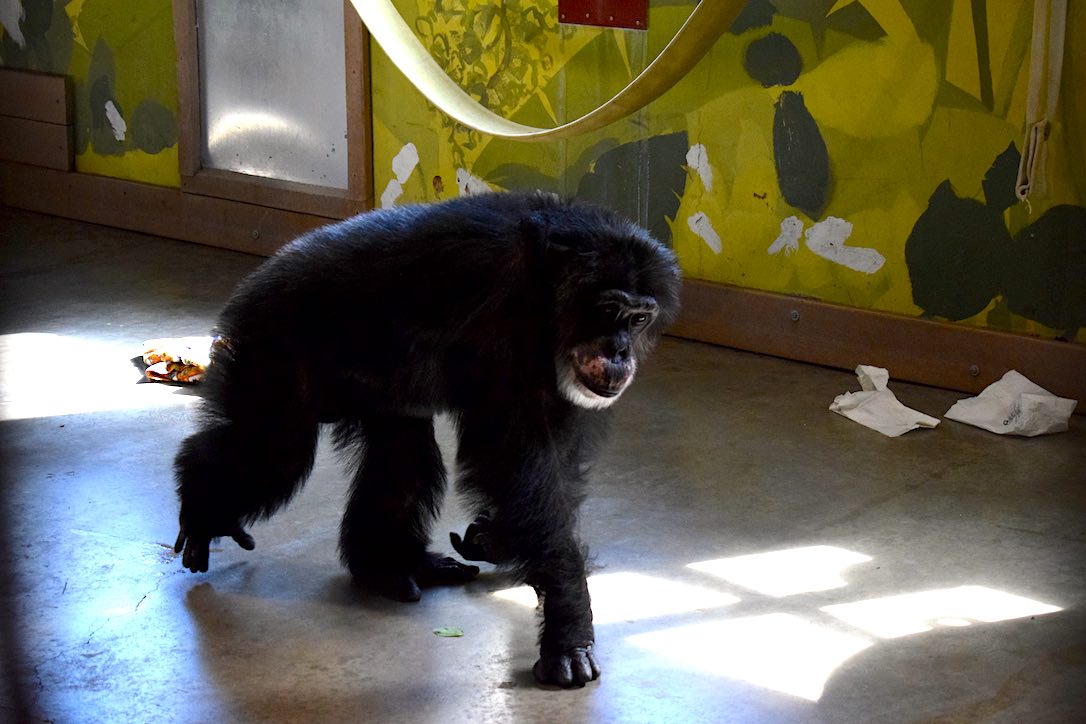
Burrito Chimpanzee stomps around the Playroom.

In general, Burrito has been more alert and agitated than usual. He has conducted more forays onto Young’s Hill to monitor the section of fence closest to the new expansion, spends more time gazing towards the neighboring enclosures, and creates more noise by drumming and throwing objects around the Chimp House. He has been uncharacteristically late for some meals and even skipped a couple courses entirely. During these absences, we hear him getting rowdy by the Playroom windows, usually within sight of the three new arrivals who can watch the spectacle from the safety of their outdoor tunnel. Once his displays and hoots reach their inevitable crescendo, he leaps towards the window and stares intently, apparently waiting for a response. When he does show up tardy for meals, he has been swaggering up to the Greenhouse deck and then charging through the females, scattering them and causing a ruckus. This is an edgier version of Bubba than we have seen previously.

Burrito looks out of the Playroom window after completing a display.

This change in Burrito’s behavior is evidence of what some primatologists have called the neighbor effect. In their 1996 study of chimpanzees housed at a large research facility, Dr. Kate Baker and Dr. Filippo Aureli observed captive chimpanzees to determine whether noise from neighboring groups had an observable effect on each individual’s behavior. To summarize their findings, chimpanzees tended to perform more pant-hoots, displays and outright physical aggression when neighboring groups did the same. Aggression outside of social groups was related to aggression within groups. For captive chimpanzees, rowdiness and instability are apparently contagious. Right now, we are witnessing a similar pattern of behavior here at CSNW.

Willy B. watches Burrito from across the yard.

Other aspects of captive chimpanzee behavior have been studied at facilities around the globe. For example, recent studies have investigated how chimpanzee behavior varies in relation to temporary space restrictions, permanent relocations, different enclosure types, and atypical rearing histories. One study even asked whether chimps find music enriching (results: “meh”). Most of these papers were produced from data collected at no more than a few facilities, and many publications are mere case studies of single groups of chimpanzees. Each facility is unique and groups of chimpanzees can vary greatly depending on social structure, cultural variation, and context. Thus, even though there is a good deal of information out there, it requires a good deal of sifting and speculating to apply it to our chimpanzee residents here at the sanctuary.

Missy Chimpanzee monitors the neighboring chimps.

In a couple of situations, we have invited graduate students to conduct noninvasive applied welfare studies at the sanctuary. We are definitely not a research facility and do not profit from scientific investigations, but collecting systematic observations can generate information that can then be used to optimize our care of the chimpanzee residents. Central Washington University (CWU) is located in nearby Ellensburg and contains the nation’s only Graduate Program in Primate Behavior, so a handful of committed CWU students have helped us to answer key questions about the Cle Elum Seven. Most recently, a collaborative team led by Jake Funkhauser published his analysis of the sanctuary’s chimpanzee social network and dominance hierarchy. This report, although only based on a summer’s worth of observations, produced insight that has proved valuable as we prepare to add three new individuals into the mix.

Foxie Chimpanzee expressed her arousal and uncertainty during one of Burrito’s displays.

Additionally, we recently hosted Chimp Haven’s Director of Behavior and Research, Amy Fultz, who observed the chimps and inspected the facility. Amy has coordinated countless introductions between unfamiliar chimpanzees and numerous mergers of large social groups, thereby developing an immense body of knowledge and wisdom that she was generous enough to share with our team. Even as she gave us some useful tips and relayed some incredible stories, she also emphasized a few points that we already knew: that each chimpanzee is a unique individual, that each facility offers its own advantages and challenges, and that any introduction between two groups can take a surprising turn at any moment. It’s best to have a plan, of course, but the plan will inevitably change as we acquire new information about the chimps and their preferences.

Burrito Chimpanzee watches his neighbors through the caging of the Greenhouse.

Even with a wealth of available data and input from various sources, we know that this is unfamiliar territory for these ten chimpanzees and is a big step for our team as well. Ultimately, we will put these two groups together in our own way, the CSNW Way, which will be whichever way works best at that moment in time. For now, our staff is continuing to observe how the chimpanzees react to each small change in their environment and we will continue to share those moments with you whenever possible. We certainly appreciate all of your interest and support as we help the new three to acclimate to their new home, new lifestyle, and new neighbors, who will hopefully become their seven new friends. Shortly, we hope to have some updates for you all!

Filed Under: Burrito, Chimpanzee Behavior, Introductions, Sanctuary Tagged With: animal behavior, Animal Welfare, behavior, Burrito, captive chimpanzees, chimp, chimp sanctuary, chimpanzee, Chimpanzee Behavior, chimpanzee sanctuary, Chimpanzee Sanctuary Northwest, chimpanzees, Sanctuary, social integration, social networks

  • « Go to Previous Page
  • Page 1
  • Interim pages omitted …
  • Page 53
  • Page 54
  • Page 55
  • Page 56
  • Page 57
  • Interim pages omitted …
  • Page 235
  • Go to Next Page »

Primary Sidebar

Subscribe To the Blog and Get Notified of New Posts First!

Archives

Calendar of Blog Posts

June 2026
S M T W T F S
 123456
78910111213
14151617181920
21222324252627
282930  
« May    

Categories

SUBSCRIBE TO OUR NEWSLETTER

Footer

PO Box 952
Cle Elum, WA 98922
[email protected]
509-699-0728
501c3 registered charity
EIN: 68-0552915

Official DDAF Grantee

Menu

  • The Chimpanzees
  • Blog
  • About Us
  • You can help
  • Resources
  • Contact
  • Donate

Proud Member of

Connect With Us

Search

Copyright © 2026 Chimpanzee Sanctuary Northwest. All Rights Reserved. Site by Vegan Web Design