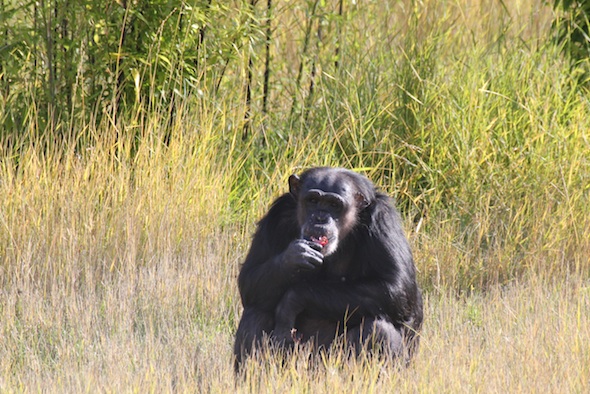
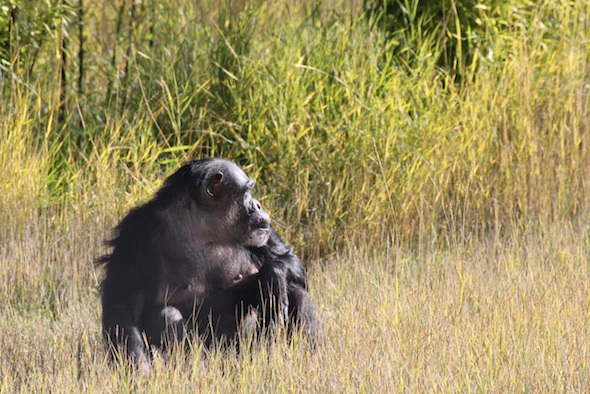
There’s nothing better than watching Negra sit outside and soak up the sun.
Chimpanzee Sanctuary Northwest
Hope. Love. Home. Sanctuary
There’s nothing better than watching Negra sit outside and soak up the sun.
A couple weeks ago, Debbie posted about the difference between chimpanzee fear grimaces and chimpanzee smiles. This afternoon, Missy and Annie decided to demonstrate the many things that might elicit a smile, otherwise known as a play face.
For example, you might smile if your friend leaped out of the grass and tried to wrestle you to the ground.
Or, you might smile if you were the one doing the leaping.
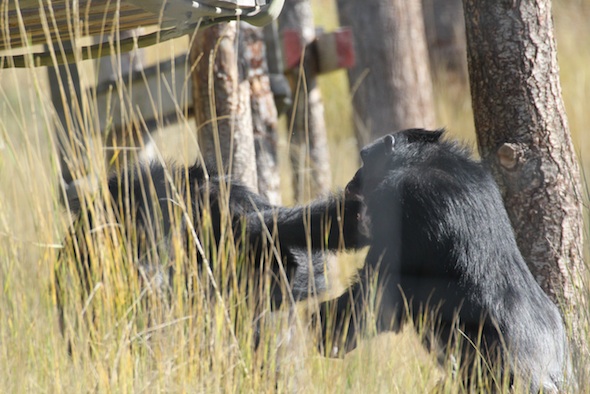
You might smile if your friend was tickling your toes.
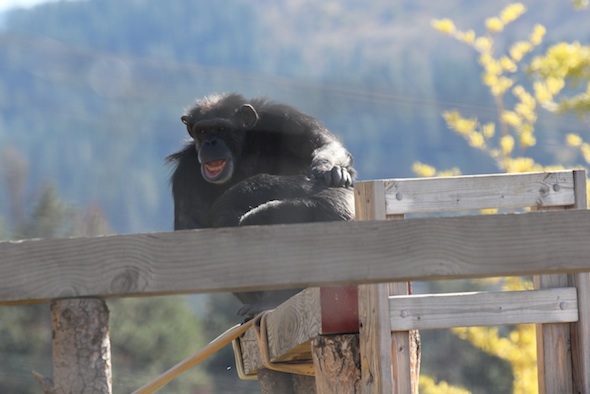
And you might smile if you tickled her right back.
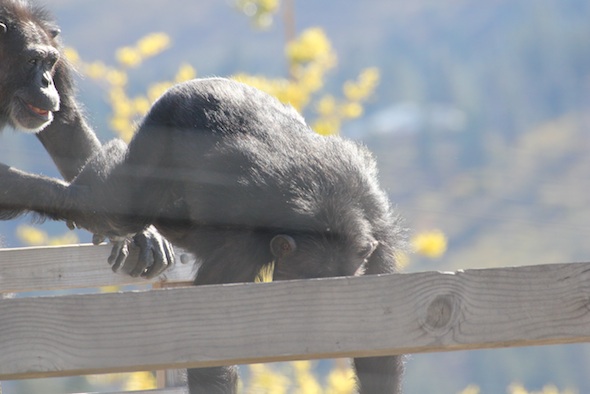
You might smile if your friend chased you across a fire hose bridge.
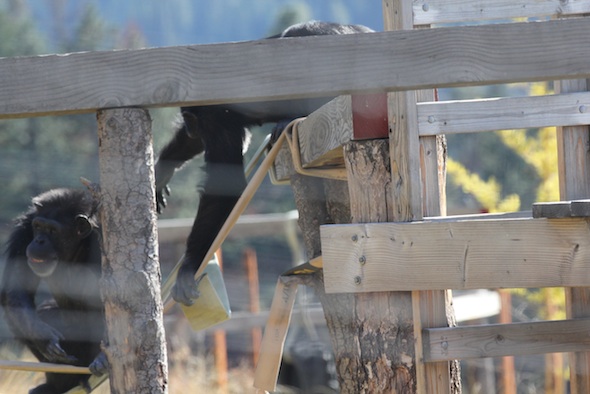
You might also smile if you were the one doing the chasing. Especially if you went too fast…
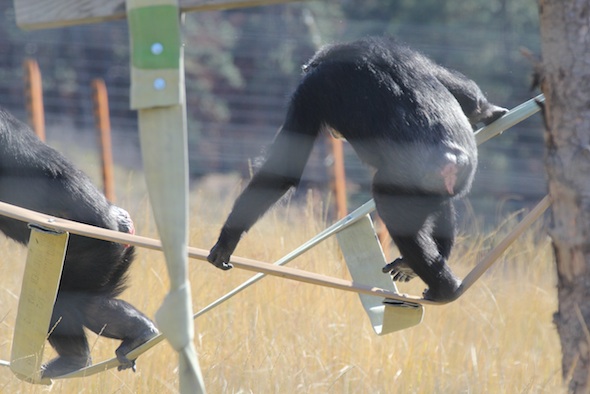
…fell off…
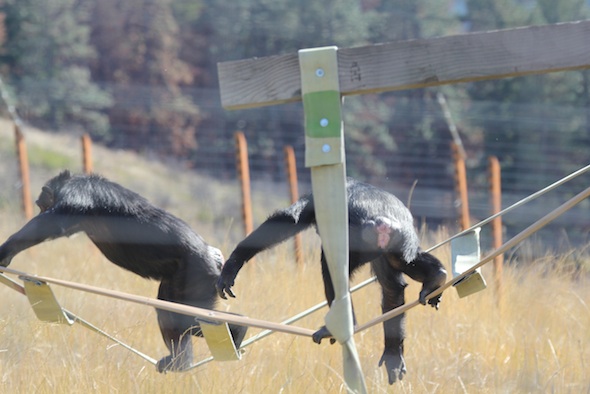
…hung upside down…
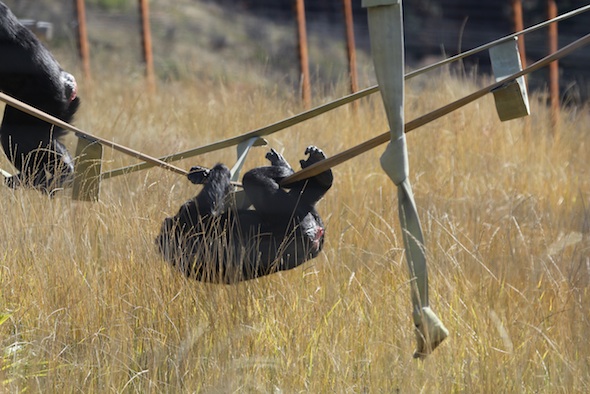
…and kept right on chasing.
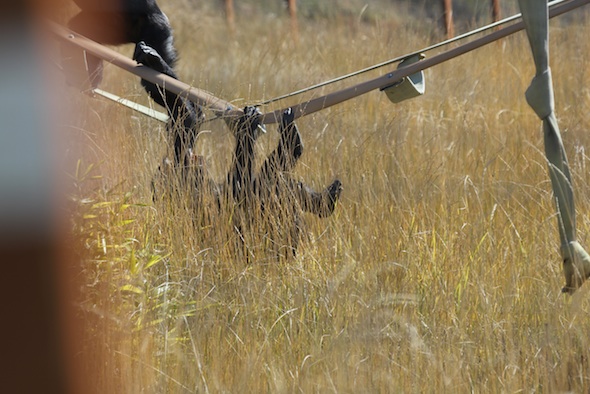
You might even walk away smiling after a move like that.
This summer, we tried something new at CSNW – we invited small groups of supporters to the sanctuary to see in person how their contributions have improved the lives of the Cle Elum Seven. Guests were treated to a light lunch in the barn as they learned more about the chimpanzees and the history of the organization. Then they received an orientation on safety and etiquette, so that they could be considerate guests when they were near the chimpanzees’ home. Finally, they got to observe from a distance while the chimps enjoyed a forage on Young’s Hill.
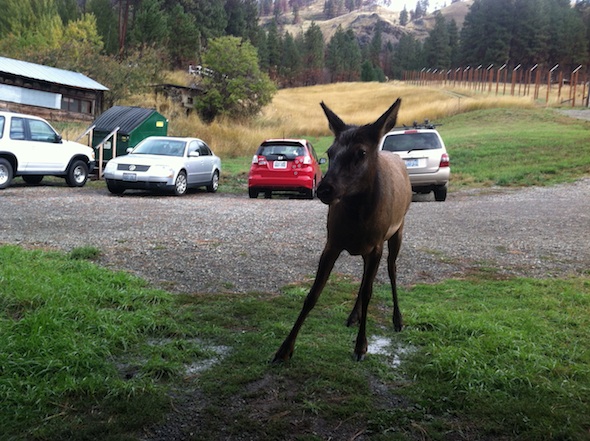
Yesterday was the last day of visits, and we were treated to a surprise guest – a wild elk:
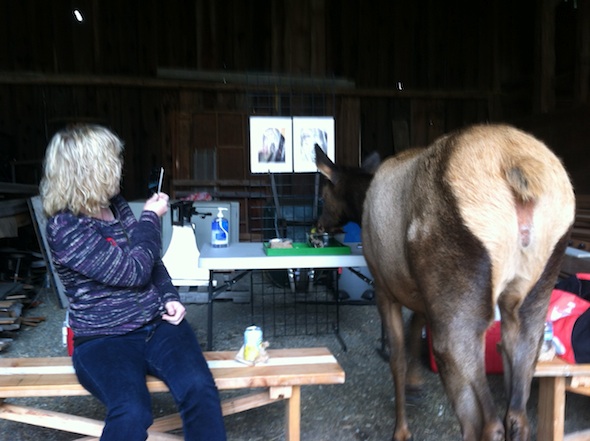
She quickly grew bored with my presentation and skipped straight to lunch:
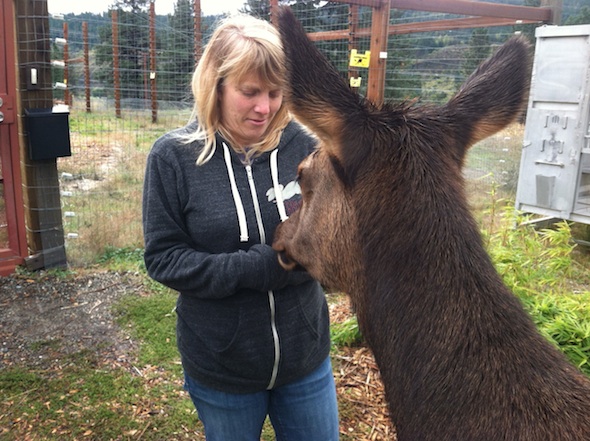
But she was extremely attentive during Diana’s lecture on safety and etiquette:
With that out of the way, the group proceeded to the observation area:
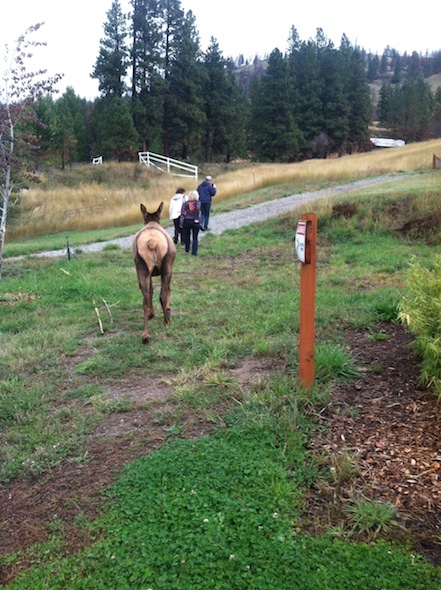
And we quietly observed the chimps eating their lunch on Young’s Hill:
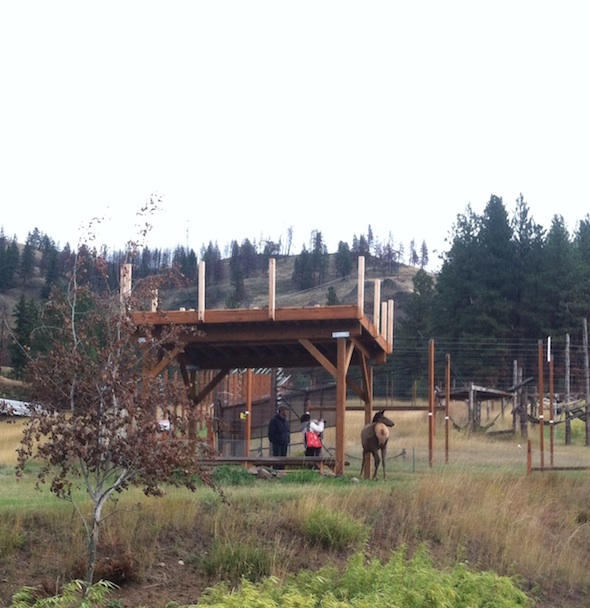
All guests – elk included – learn that if the chimps grow upset with anyone’s presence, the visit will be cut short. The chimps’ well being is always the top priority. The chimps normally ignore visitors and go about their business, but Jamie draws the line at elk:
We, too, had to draw the line when she asked to come in the house. Sorry, elk:

As it turns out, this elk was separated from her family some time ago, and she has been living in the neighbor’s pasture, eating grass and hay with the horses and cattle and doing great under the circumstances. She’s still a wild animal and she’s free to come and go as she pleases, but without a family, she’s chosen to stay where the food is. Yesterday, she decided to stretch her legs and check out the neighborhood. At the end of the day, she headed back to her pasture, but I’m sure she’ll be back. She obviously likes to watch the chimps. Will Jamie ever accept her presence? I guess we’ll find out.
I will never forget the first time the Cle Elum Seven chimps saw rain.
Central Washington is very dry in the summer, and a couple of months had gone by after their arrival without any significant precipitation. Every day was hot and sunny. Imagine this from their perspective. They had lived for decades in windowless rooms. Some hadn’t been outside since they were infants; others may have never seen the outdoors in their entire lives. As far as they knew, this is how the outside world was and always would be.
Then one day, the skies opened up and it poured.
The chimps were in the playroom at the time, and they ran to the doors and windows to see what was happening. Missy and Jamie started to alarm call, alerting the others to this frightening and confusing turn of events. Jamie was brave enough to go outside, but she immediately turned around and dried herself off head to toe with a towel. When it was over, they cautiously ventured out to inspect the aftermath.
It’s both heartbreaking and awe inspiring to watch a 35-year-old learn about basic things like rain. As the years went by, the chimps grew accustomed to the sight and sound of rain, but they still didn’t like to go outside in it. They’d spend rainy days indoors in their nests, and if they were unfortunate enough to get caught outside in the rain, they’d run as fast as they could to get back inside.
But this year, Jamie decided that a little rain wasn’t going to keep her from walking around Young’s Hill. And as I watch her walk, drenched from the rain but determined to carry on, I can’t help but admire her.
Burrito is known for is love of food, but there is one thing that has an even greater power to capture his attention…
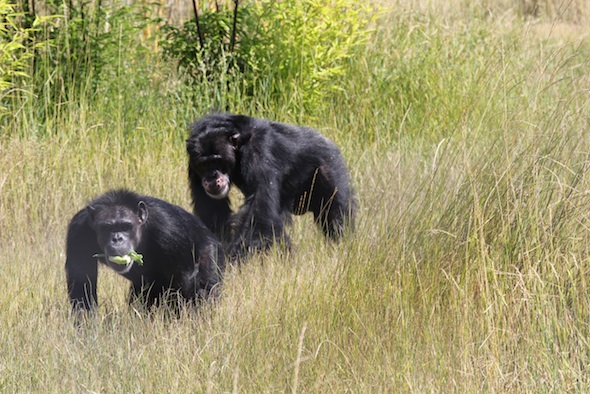
Girls.
Specifically, tumescent girls.
Female chimpanzees have a menstrual cycle that is very similar to humans, but with one important difference: they advertise their fertility. Throughout their 36-day cycle, changes in hormone levels cause visible changes in the skin of the anogenital region. As they approach ovulation, this area swells and the skin becomes taut and pink, a condition known as tumescence. Male chimpanzees find this very attractive and the tumescent females find themselves at the center of a lot of male attention.
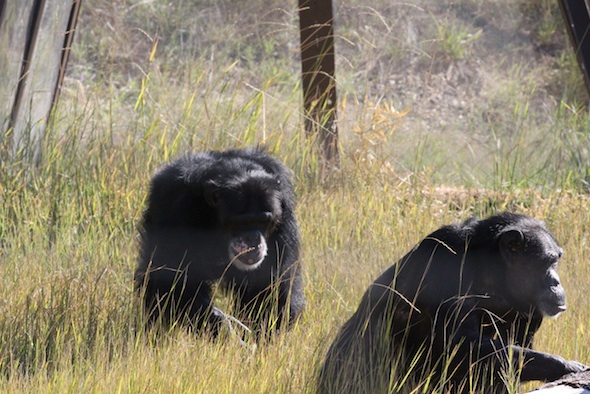
The females’ swellings have great power over the males, like an invisible tractor beam pulling them along. During the lunch forage today, Burrito got so distracted that he barely picked up any food.
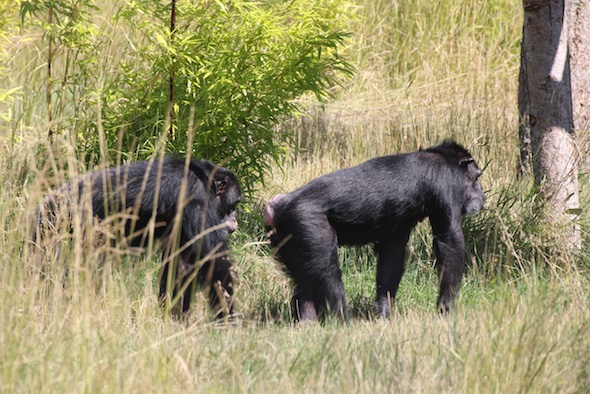
Normally, males would mate more often with the tumescent females. But Burrito doesn’t exhibit normal mating behavior. And sadly, this isn’t all that uncommon in captive chimpanzees.
Many chimpanzees born in laboratories are taken from their mothers shortly after birth, either because their mothers aren’t taking proper care of them (they themselves were probably stolen from their mothers), because hand-reared chimpanzees are seen as easier to manage, or because the labs intend on breeding the mother again shortly (the normal birth interval for chimpanzees is about 5 years, but if the baby is taken away the mother will enter into estrus again within months). Laboratory born chimpanzees are also denied the opportunity to grow up in a traditional social setting, where they would learn from family members, other adults in the community, and their peers.
The result of this unnatural upbringing is a chimpanzee that is culturally adrift and frequently frustrated. Not only do chimpanzees like this lack a knowledge of societal customs and traditions, but even basic biological functions are left undeveloped without opportunities for social learning.
Maybe Burrito doesn’t know what he doesn’t know. He finds other ways to deal with his urges, and life goes on. But it is a daily reminder that so much was stolen from these chimpanzees that they can never recover.
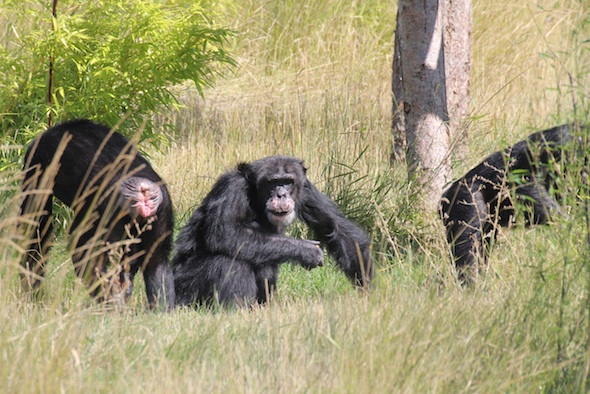
A while back, we told you about Annie’s habit of washing her face.
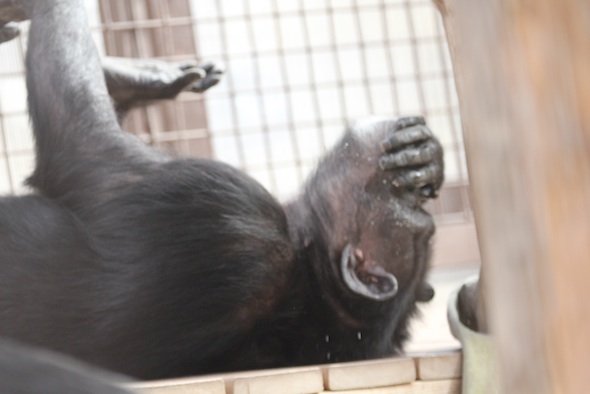
I finally managed to catch it on video. Whether she’s actually cleaning herself or she just finds it refreshing, we can’t really say. But it is fairly unique.
The chimps all have different ways of interacting with the natural world. Jamie seems to revel in the opportunities that nature provides. If the rest of the gang would join her, she’d stay out all day hiking, climbing, exploring. There is territory to defend and there are squirrels to hunt (she hasn’t caught one outside yet, not for lack of trying).
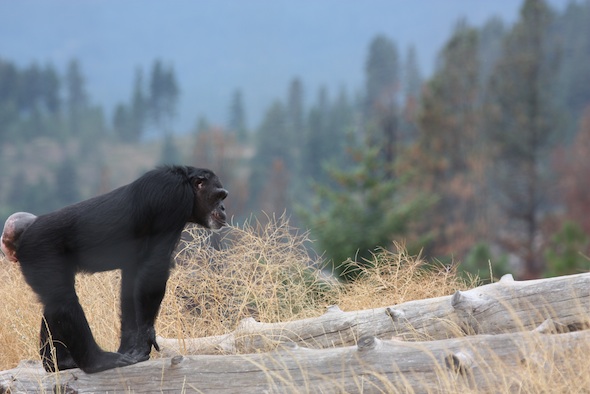
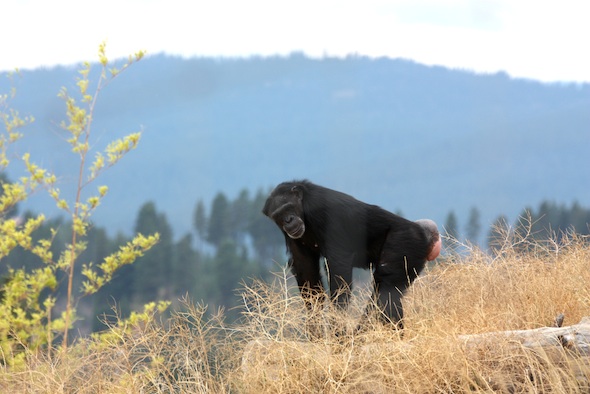
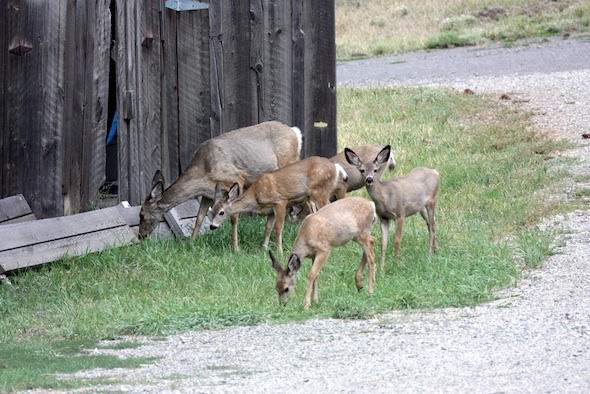
Unfortunately for Jamie (but fortunately for the deer), some parts of nature will always be out of reach. When that happens, the best you can do is sit back and observe.
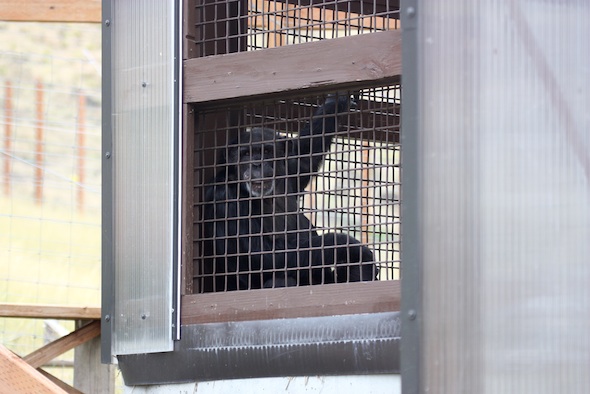
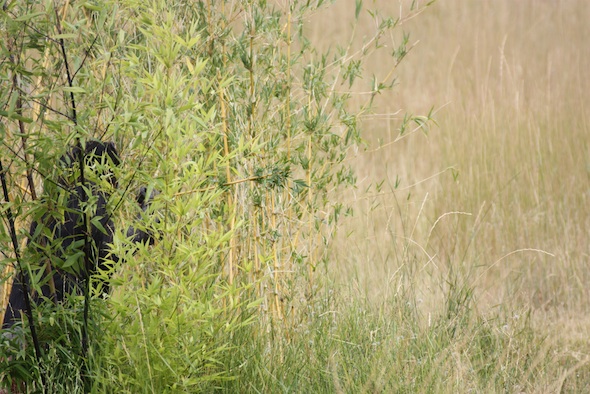
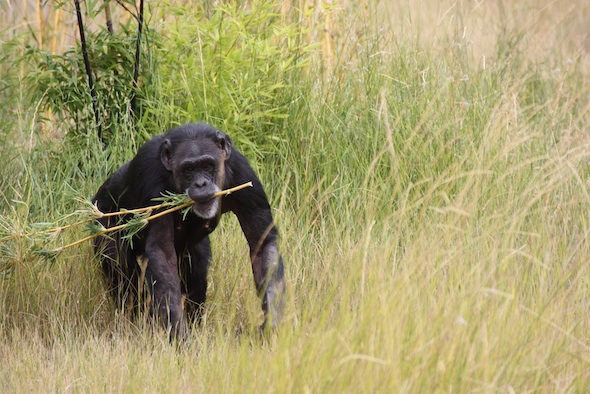
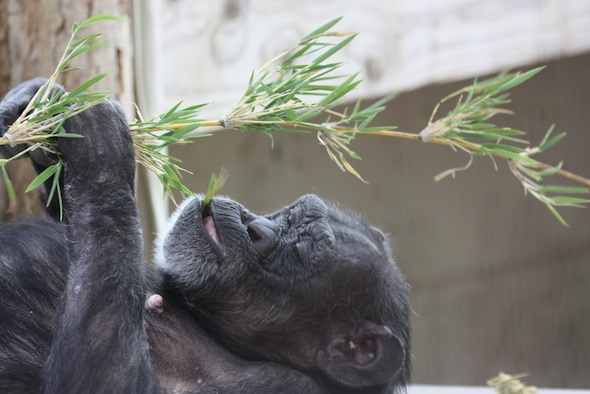
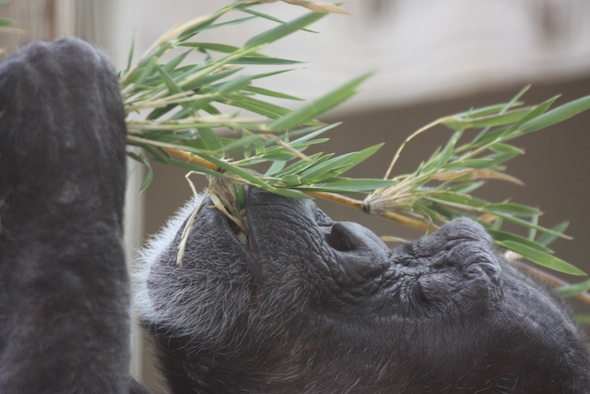
Jody loves being outside in the natural world, but sometimes she’d rather take hers to go. Every day, she breaks off a piece of bamboo and drags it inside so that she can enjoy it from the comfort of the greenhouse. To each her own.