• Skip to main content
  • Skip to primary sidebar
  • Skip to footer

Chimpanzee Sanctuary Northwest

Hope. Love. Home. Sanctuary

  • Our Family
    • The Chimpanzees
    • The Cattle
  • Blog
  • About Us
    • Visiting the Sanctuary
    • Philosophy
      • FAQs
      • Mission, Vision & Goals
      • Privacy Policy
    • The Humans
      • Staff
      • Board of Directors
      • Founder
    • Annual Reports
    • The Future of CSNW
    • CSNW In The News
  • You can help
    • Donate
      • Become a Chimpanzee Pal
      • Sponsor A Day
      • Transfer Stock
      • Be A Produce Patron
      • Be a Bovine Buddy
      • Give from your IRA
      • Personalized Stones
      • Bring Them Home Campaign
    • Leave A Legacy
    • Employment Opportunities
    • Volunteer
    • See Our Wish List
    • Events
  • Resources
    • About Chimpanzees
    • Enrichment Database
    • Advocacy
      • Advocacy Action Center
      • Apes in Entertainment
        • Trainers
        • Role of the AHA
        • Greeting Cards
      • Chimpanzees as Pets
      • Roadside Zoos
      • Chimpanzees in Biomedical Research
      • Conservation
        • African Apes
        • Orangutans
  • Shop
    • Merchandise Store
  • Contact
  • DONATE NOW

Anthony

An Introduction to Introductions

August 9, 2021 by Anthony

We’re happy to announce that our team has begun the process of integrating the six newest arrivals with the three individuals in who arrived in 2019.

This development means that, if all goes according to plan, we’ll be forging a new social group consisting of nine chimps: Cy, Dora, Gordo, Honey B, Lucky, Mave, Rayne, Terry and Willy B.

This will not be easy. As others have explained here in the past, chimpanzees are not biologically predisposed to accept strangers into their group. Although free-living chimpanzees have fluid social dynamics with other members of their community, they can be brutally xenophobic towards outsiders. Males stay with cohorts of related males who frequently wage war on rival communities. Meanwhile, females can only transfer between communities during the brief window of young adulthood when they are sexually mature but have not yet conceived their first infant. Therefore, asking a chimp to become friends with an unfamiliar neighbor is challenging, and asking entire groups to do so is nearly impossible.

With all that being said, merging two groups of chimpanzees is possible in captivity, and it’s often worth the effort; Large, mixed-sex living arrangements give chimps more social partners to choose from, thereby giving each individual more freedom to regulate their social relationships as they wish.

Although it would never occur in the wild, most captive chimpanzees have undergone some sort of social integration at least once in their lives and are somewhat familiar with the process. Because of this, chimps who were raised in labs, zoos and sanctuaries are often more welcoming of new partners than their free-living relatives tend to be. Even so, they’re still generally skeptical and nervous about interacting with chimps outside of their usual configurations and even the best integration methods can go awry.

Many of you probably remember that, in late 2019, we unsuccessfully attempted to integrate Honey B, Mave and Willy B with the group of seven long-time residents that now live on the other side of the building. At that time, we employed an approach that has been successful at several other facilities: we opened the doors, let some chimps into a big room, and hoped for the best. Merging two groups in this manner allows for them to have lots of space during the initial meeting and keeps each chimp close to their established social partners. When this method works, it works well and it works quickly. However, this also creates situations where multiple chimps can form coalitions against their rivals, occasionally leading to chaos and injury for the chimps involved. Unfortunately, that’s what happened here, so we abandoned those integration efforts until circumstances changed.

This time around, we’re going to utilize a slower approach that will likely involve dozens of short, controlled introductions between pairs of chimps while they are separated from their respective groups. First, the participants must be separated from their current partners and shifted into a quiet, restricted space (e.g., the new front rooms). Then, they can have a supervised “howdy” at the caging. If this goes well, caregivers can open the doors and let them interact for a short amount of time before they return to their existing groups.

In these situations, individuals are more likely to behave in a friendly manner because options for forming coalitions and inciting conflicts are both limited. Over time, the chimps will become familiar with each other’s tendencies through these regulated meetings, thus facilitating a smoother transition to a mixed, cohabitating social group when the time is right. Doing these quick introductions is a repetitive and tedious process, but we believe that such a gradual transition will be better for these individuals given their unique personalities and backgrounds.

To coordinate the integration of the two groups, we’ve brought in our friend and colleague Jen Feuerstein as a consultant. Jen is a biologist with twenty years of experience caring for and socializing captive primates, so she’s exactly the person we want to guide us through ambitious endeavors like this one. This week, Jen traveled to Washington from her Florida home to help us with the first round of introductions (which began this afternoon).

Both introductions that occurred today went smoothly!

For the initial icebreaker, we isolated Mave and Lucky in the new wing of the building and then let them meet in new front rooms. These two “hit it off” relatively quickly and spent a good chunk of time hugging, grooming, and playing with each other. Mave was clearly the best chimpanzee to pilot the introduction strategy as she exhibited patience and tenderness at each moment. Lucky was also her usual sweet and goofy self.

When Mave and Lucky appeared done with the initial meeting, we rotated Lucky out and allowed Terry to come in. Terry is a testosterone-driven bruiser of a male chimp, and we weren’t shocked when he immediately barreled around the room and drummed on the caging. Even so, Terry simmered down and showed his gentler side by inviting Mave to meet him at the barrier. She approached and they inquisitively touched each other through the mesh before Mave grew anxious and retreated.

At this point, Jen gave us the signal to open the hydraulic door between the chimps and let them interact freely. Terry charged in and displayed again before settling. Mave kept squealing and jumping back but the two gradually calmed down enough to investigate each other. after a few minutes, Terry began to playfully stomp and skip around, beckoning for Mave to chase him. She hesitantly joined in, and it was only moments before they were laying on the floor grooming each other. This session went on for another thirty minutes or so before we broke it up; Terry didn’t want to leave her side but Mave seemed ready to meet the next chimp in the queue.

These two meetings went well, but we have an arduous road ahead. We expect to do more introduction sessions over the next few days and not all of them will be this easy. Even by conservative estimates, we’ll continue introducing pairs and trios for several weeks before we begin assembling these individuals into larger subgroups. Given the sheer amount work that we have to do, it’s unlikely that we’ll be posting comprehensive updates on a daily basis. Of course, we’ll continue to share the highlights when time allows, but it may be some time before we can share a definitive progress report.

Thank you all for caring about the chimps and for being as invested in their emotional well-being as we are! Feel free to leave comments and ask questions below. 🙂
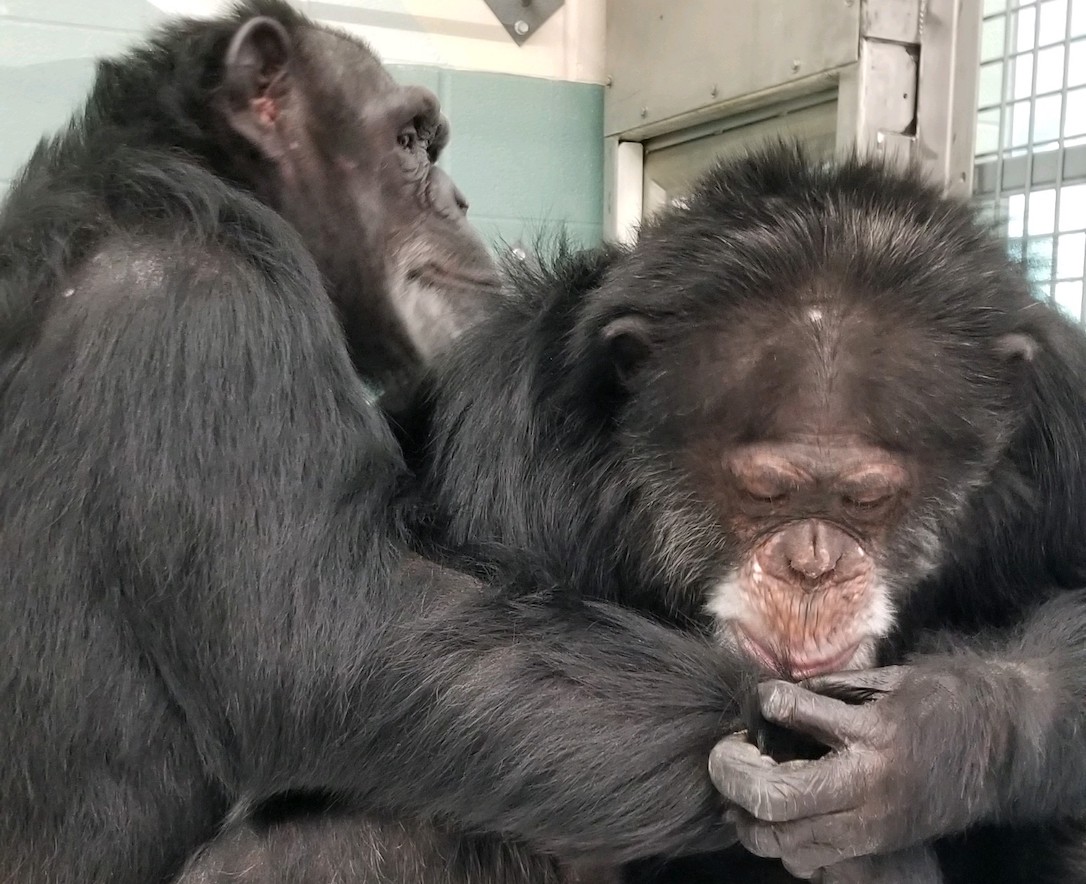
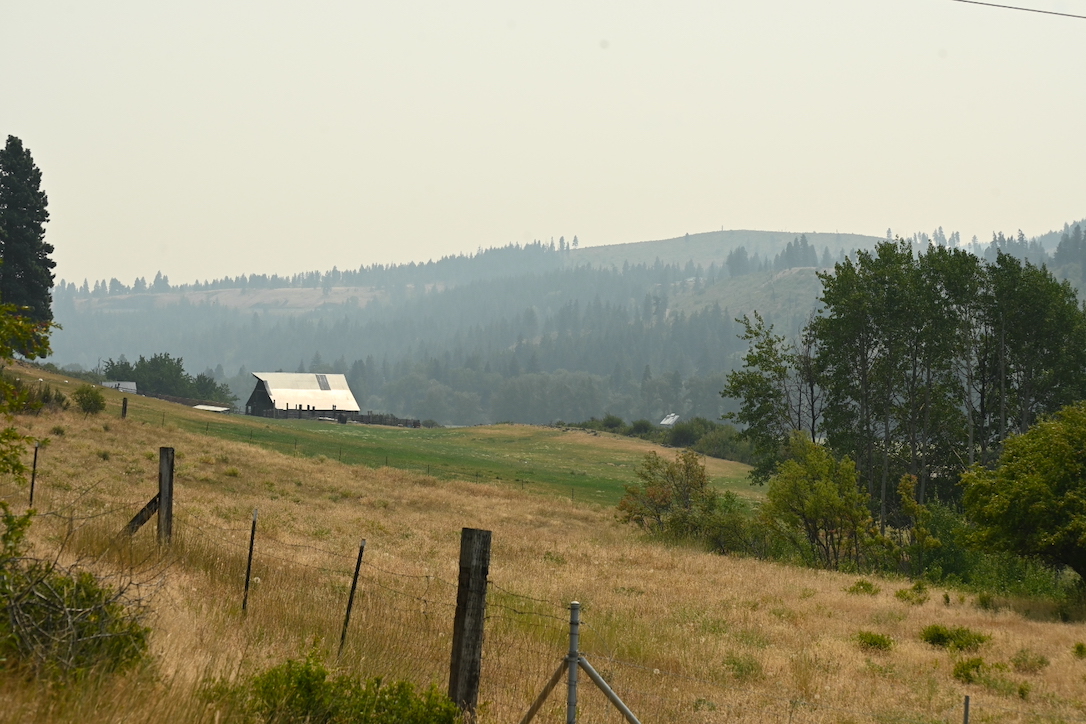
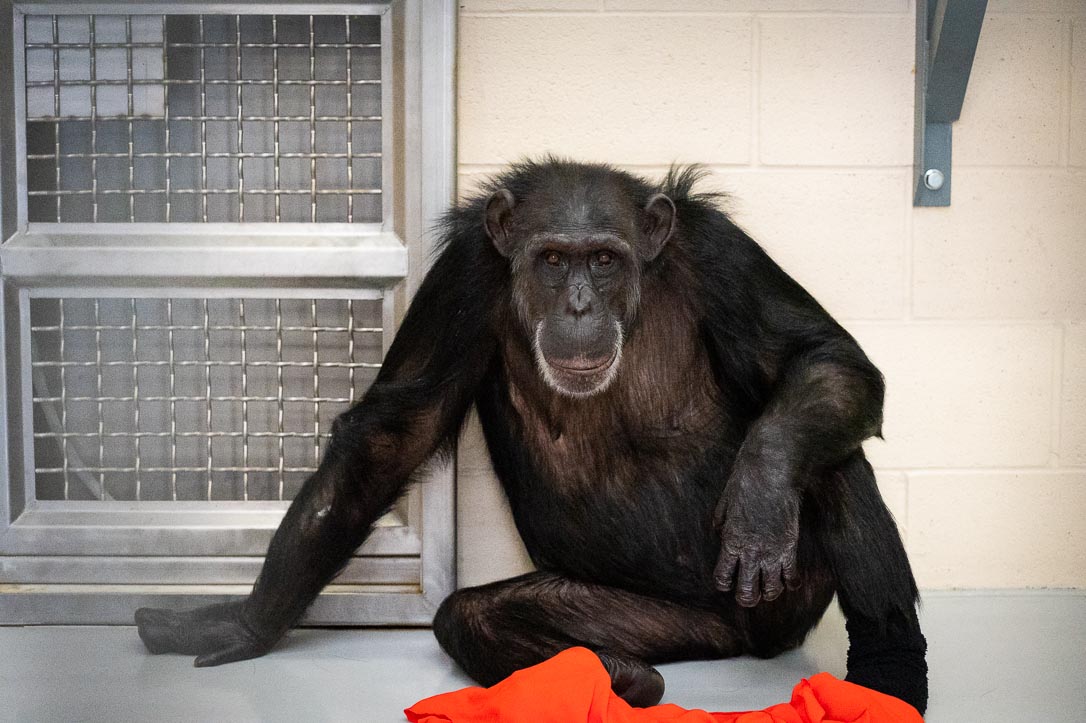
Image of Lucky (left) and Mave (right) by Jen Feuerstein


Filed Under: Friendship, Grooming, Introductions, Latest Videos, Lucky, Mave, Sanctuary, Terry Tagged With: Animal Welfare, chimpanzee, chimpanzee sanctuary, Chimpanzee Sanctuary Northwest, chimpanzees, csnw, Primates, Sanctuary

Hazed and Confused: Coping With Nearby Wildfires

August 2, 2021 by Anthony

When the wind picked up the fire spread
And the grapevines seemed left for dead
And the northern sky looked like the end of days
The end of days…
– “Grapevine Fires” by Death Cab for Cutie

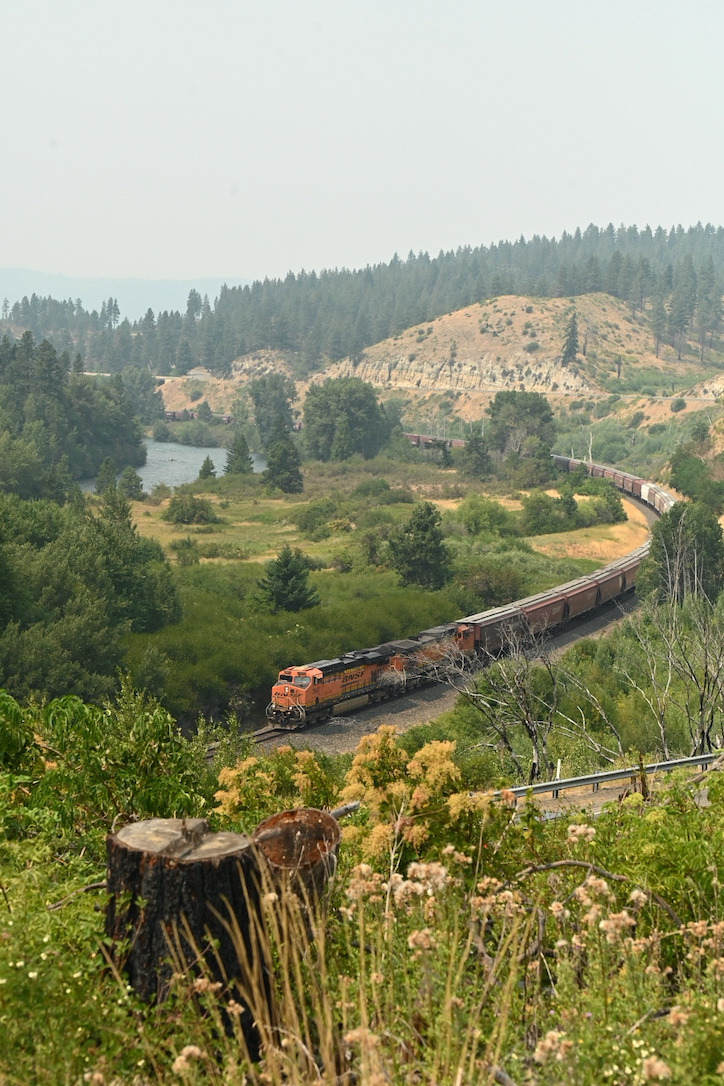
Once again, Earth’s inhabitants are suffering through yet another record-breaking wildfire season. Forests are ablaze from Turkey to Siberia and almost everywhere else, sending clouds of haze over the northern hemisphere from the burroughs of New York to the ice sheets covering the North Pole.

Here in the American West, a combination of social and environmental factors has resulted in several consecutive years of devastating wildfires and oppressively hazy conditions.

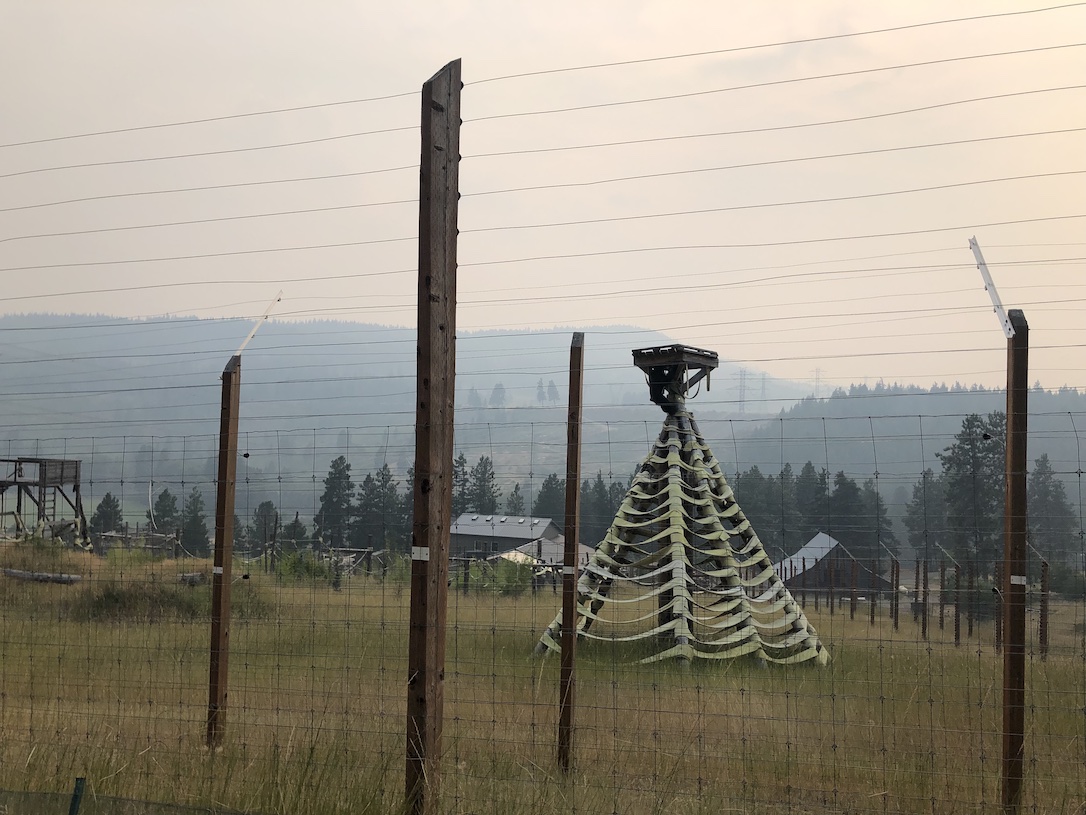
The surrounding valley blanketed in a smoky haze

As with many ecosystems around the globe, the continent’s prairies and boreal forests have depended on periodic fires to recycle nutrients since before humans even existed. However, the current frequency, intensity and duration of large fires is unprecedented and concerning.

As of yesterday, there were 91 active wildfires in the continental United States and another 241 fires burning in the Canadian province of British Columbia (just across the border from Washington State). The monstrous Bootleg Fire in southern Oregon has been sustaining itself for over a month and has charred half a million acres of land on its own. Thanks to high winds, prolonged drought and excessive heat, some of the region’s larger fires may continue to burn for several months.

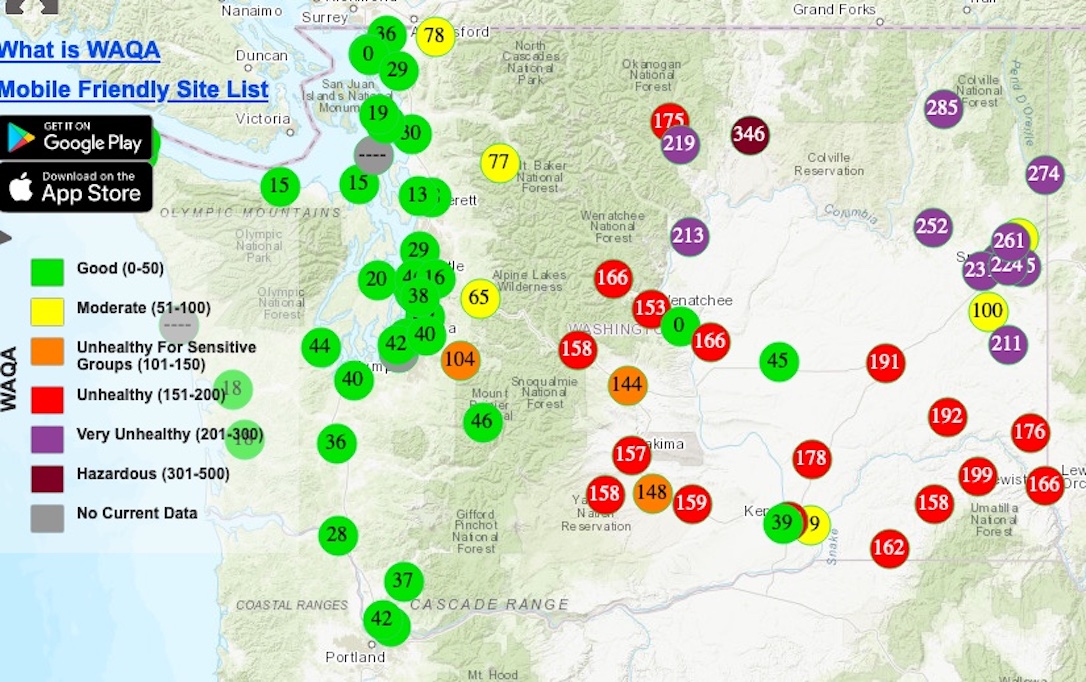
Currently, the sanctuary is covered in a dystopian fog that obscures the horizon and, much like that of a smoggy urban area, could be unhealthy if breathed in for prolonged periods of time. As with past summers, the chimps will continue to have access to the outdoors unless conditions worsen to “Hazardous.” The air quality hasn’t dipped as low as it did last September, but we still have several months left before we’re literally out of the fire. Thankfully, the forecast indicates that atmospheric conditions should improve over the next few days, giving us some relief from the haze.

The “158” in the center of the map is the closest data point to our location

In the past, the sanctuary team has had some close calls with brush fires. The scariest experience was the Taylor Bridge Fire, which ignited near the sanctuary in August of 2012 and almost reached the Chimp House before firefighters could get it under control. If you’d like to read the harrowing story from several different perspectives, you can still read the blog posts from that nightmare of a week almost a decade ago: The Story of the Fire (Part 1), Part 2, Part 3 and Part 4.

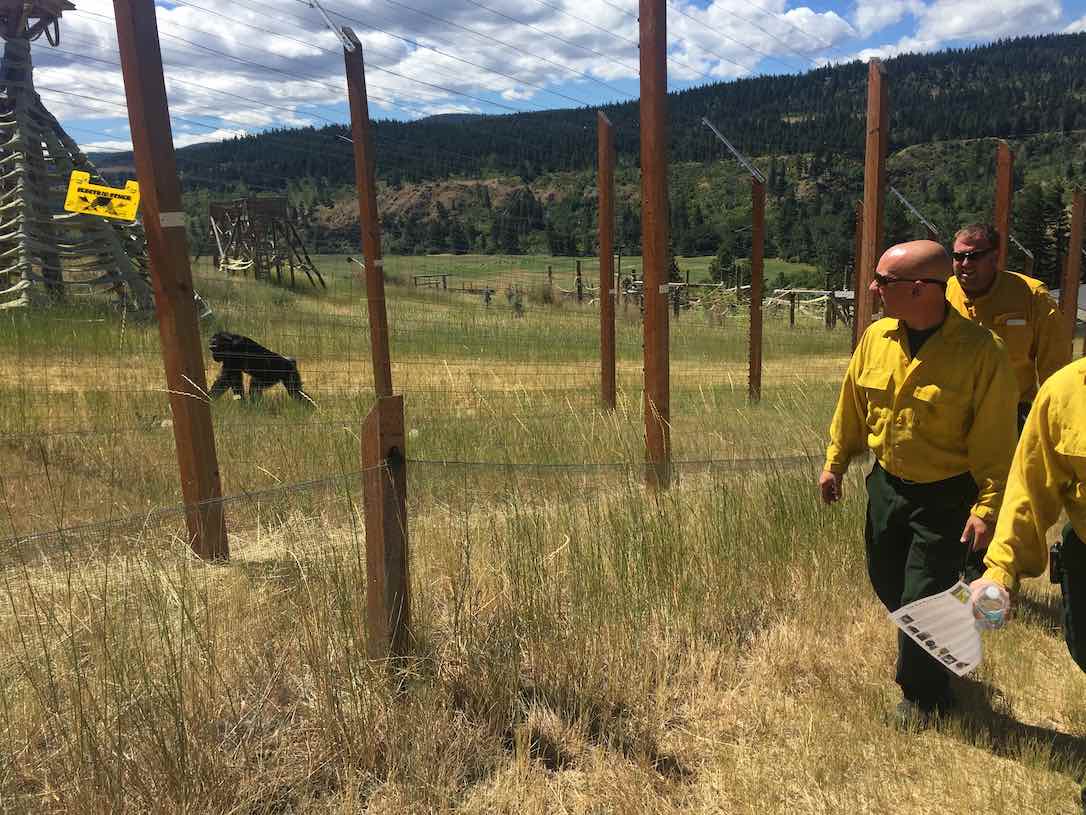
Another close call occurred in 2016 when Jamie, a proactively vigilant chimpanzee, notified her caregivers that a brush fire had ignited within sight of the Chimp House. Thanks to Jamie’s efforts, local firefighters were able to extinguish the blaze and subsequently gave her the title of Honorary Firefighter in 2017.

Sam took this photo of the haze before leaving last night

Given the ubiquitous threat of wildfire in our region, several of our dedicated blog readers have recently asked how we protect the sanctuary and its residents. Today’s post will review our strategy for coping with these dicey conditions so that you can all stay informed.

First and foremost, here’s an elementary chemistry lesson: fires need fuel, heat and oxygen. The ideal strategy minimizes these three components.

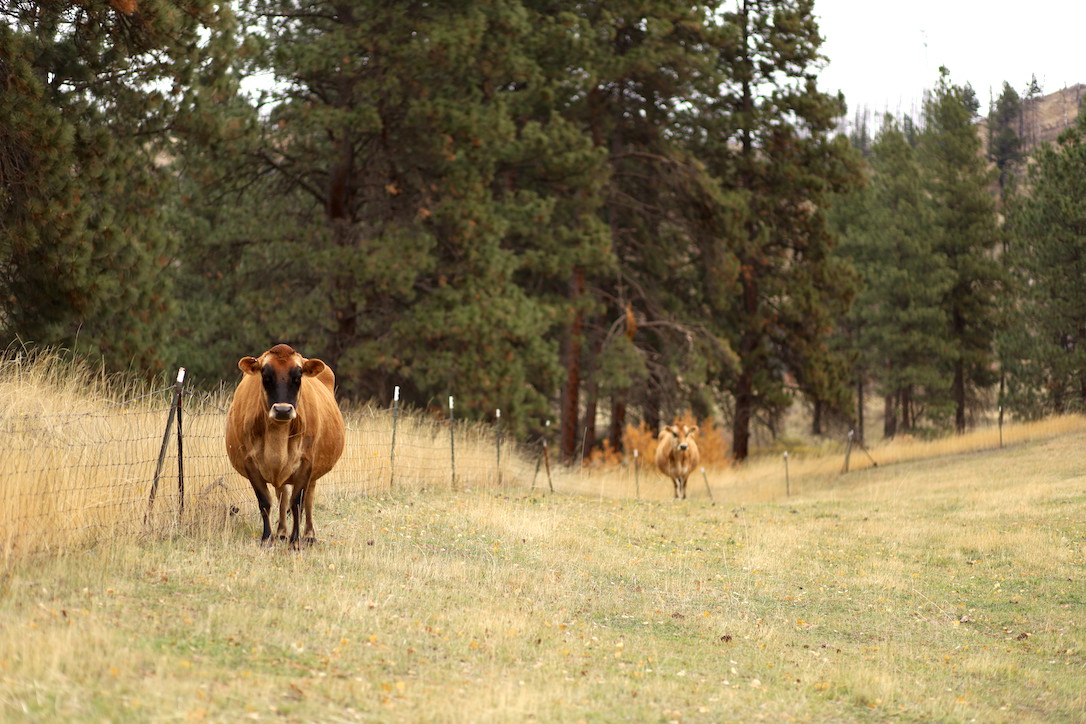
We can’t rid the sanctuary of oxygen (for obvious reasons), but we can lessen the amount of combustible material around the property so that any nearby fires have less to consume. When it comes to weed control, bringing in natural grazers can be a sustainable long-term solution. Since 2018, our unofficial fire prevention squad has consisted of four rescued Jersey cattle who subsist on seasonal vegetation that would otherwise become a fire hazard when it desiccates in late summer.

You can observe the difference between areas grazed by the cattle and those that they cannot reach.

The staff take care of the rest by mowing, trimming, and spraying weeds. Importantly, we avoid any activities that could accidentally ignite a new fire. For example, our crew avoids using machinery (tractors, vehicles, mowers) in tall grass during the summer and restricts outdoor welding to the cooler and wetter months.

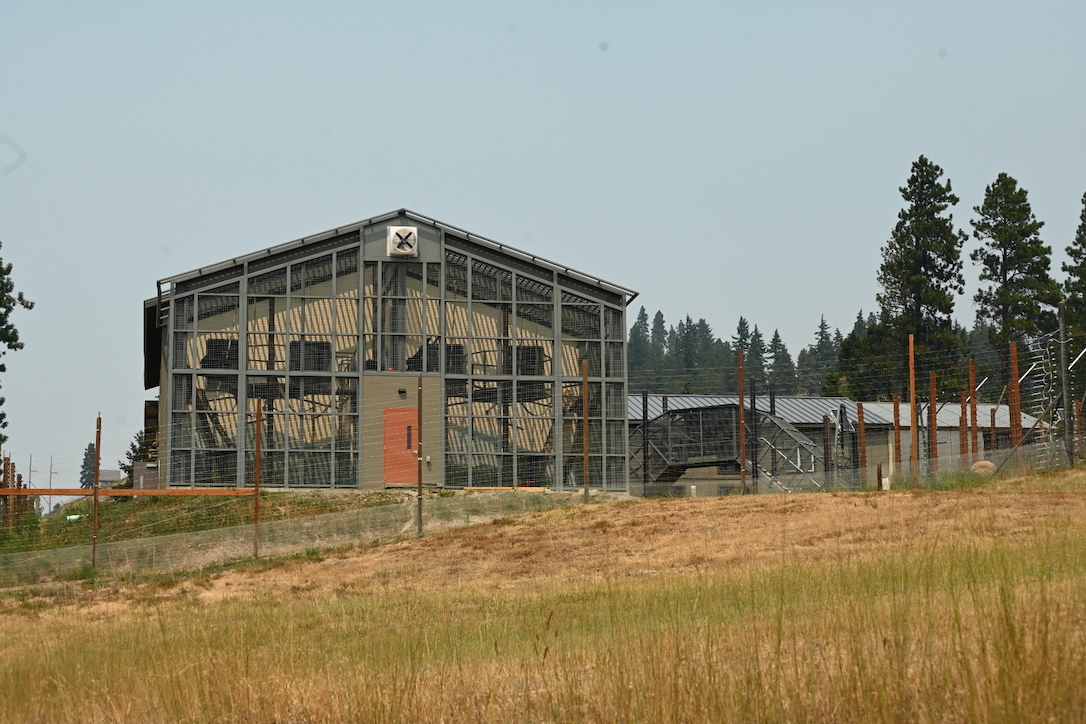
Additionally, we make sure that there are no large trees or shrubs within a certain radius of the Chimp House so that it would be difficult for a fire to jump closer to the main building. This perimeter of defensible space is mandated by our county’s regulations, but we would gladly maintain it even if it weren’t. In the case of the aforementioned Taylor Bridge Fire, such a boundary enabled the firefighters to safely protect the building with the chimps (and human) safely inside. The building itself is predominantly built from concrete and steel and is covered with a metal roof, so it’s unlikely that the structure itself would catch fire. The interior is also constructed to code and has a sprinkler system that would activate if we had a fire inside the building. The chimps always have access to outdoor enclosures like the greenhouses and chute to which they could escape if the indoors were filled with smoke.

The Chimp House is now surrounded by a system of wildfire sprinklers that J.B. built in 2014. In just a few seconds, any staff member can start a propane-fueled pump that collects water from a nearby pond and sprays it into the air around the building. This mist creates a humid microclimate which effectively dampens any airborne embers, converting the building’s immediate surroundings into a fire-resistant oasis. Our staff regularly tests and maintains the sprinkler system during the late spring and summer.

Finally, local firefighting departments know the sanctuary well, have visited the site and the chimps, and consult with the sanctuary’s leadership on issues related to fire prevention. In turn, we use their social media channels to stay informed about local conditions.

Firefighters thanking Jamie for her assistance back in 2017

Even at our maximum level of preparedness, there are limits to our defenses and we will remain open to contingency plans. For example, we have the capacity to evacuate all humans, canines, felines and bovines from the property if another evacuation order is given, but we would be less likely to evacuate the chimps. Many supporters have asked if we have ever, or would ever, evacuate the Chimp House in one of these situations, and the answer is complicated. As J.B. explained in the aftermath of the Taylor Bridge Fire, keeping the chimps in their defensible home has always been the safest option for them and for us. This statement is more true than ever given the upgrades to the facility and additions to our chimp family in recent years; loading sixteen chimps onto a trailer would be a big challenge.

While we may encounter a scenario that causes us to do otherwise, we hope we never have to resort to such extremes.

It’s almost certain that our fire prevention and emergency response strategies will continue evolving as new technology and information become available, we continue the ongoing expansion of the facility, and the regional climate shifts further into precarious territory. Through all this and more, we will keep doing whatever is needed to keep the sanctuary’s beloved residents safely out of harm’s way.

Filed Under: Construction, Sanctuary, Weather Tagged With: animal rescue, Animal Welfare, chimp, chimp sanctuary, chimpanzee, chimpanzee retirement, chimpanzee sanctuary, Chimpanzee Sanctuary Northwest, chimpanzees, csnw, northwest, rescue, Sanctuary

Block You Like a Hurricane

July 26, 2021 by Anthony

This morning, supporter Kathy Benson swung by to drop off some new enrichment items for the chimpanzees.

Kathy has been giving to the sanctuary since 2008 and avidly follows the daily blog. Over the years, she’s donated enrichment items which were so cool that they made it onto the daily blog. Kathy’s always friendly to the care staff and enthusiastic about helping the sanctuary, so we’re happy to meet her at the gate and accept her gifts on behalf of the chimpanzees!

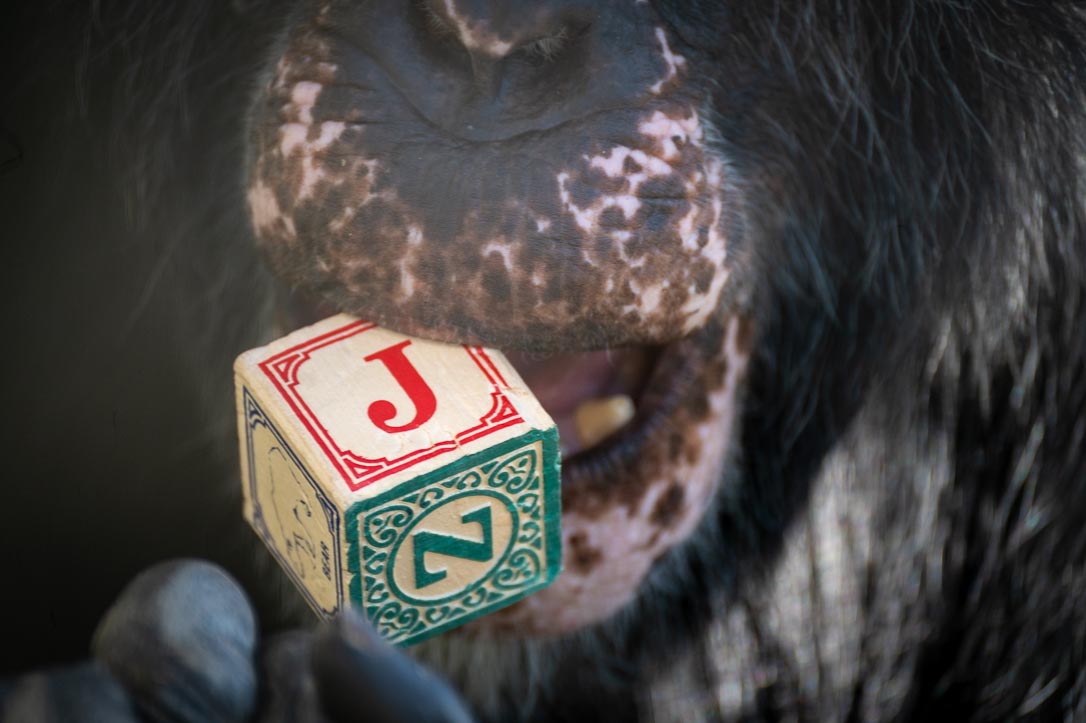
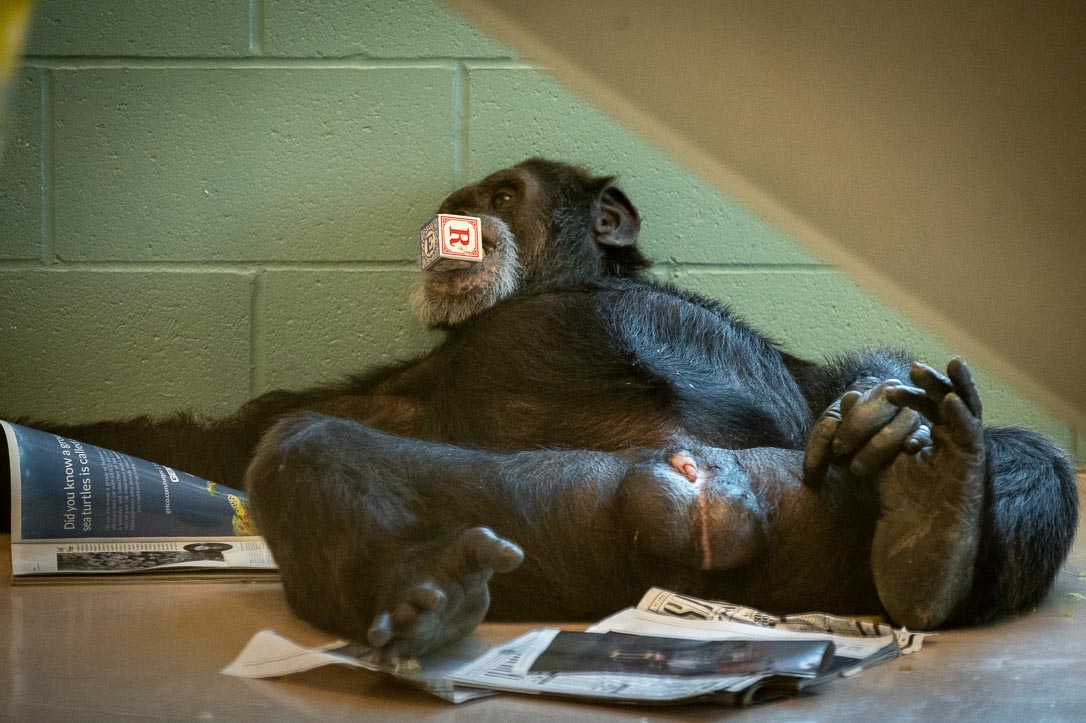
Today, Kathy’s bag of donated goods contained some new books for Jamie and brand new wooden toys for all the chimps, including some of the same painted blocks that Burrito famously totes around.

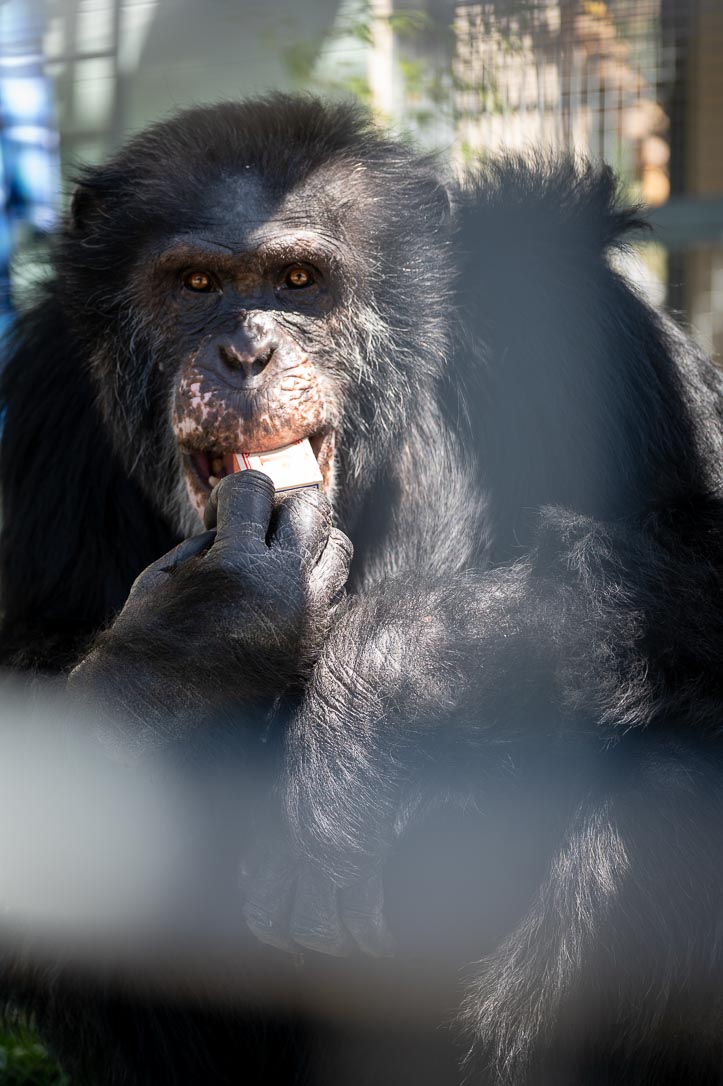
Since they’ve proven to be a bit more destructive than the other chimps, we decided to give the toy blocks to the new group of six chimpanzees to see if they would pass their inspection. We weren’t sure how it would go, but it’s safe to say that the blocks were a big hit. So far, they seem durable enough for the chimps living in that wing of the building.

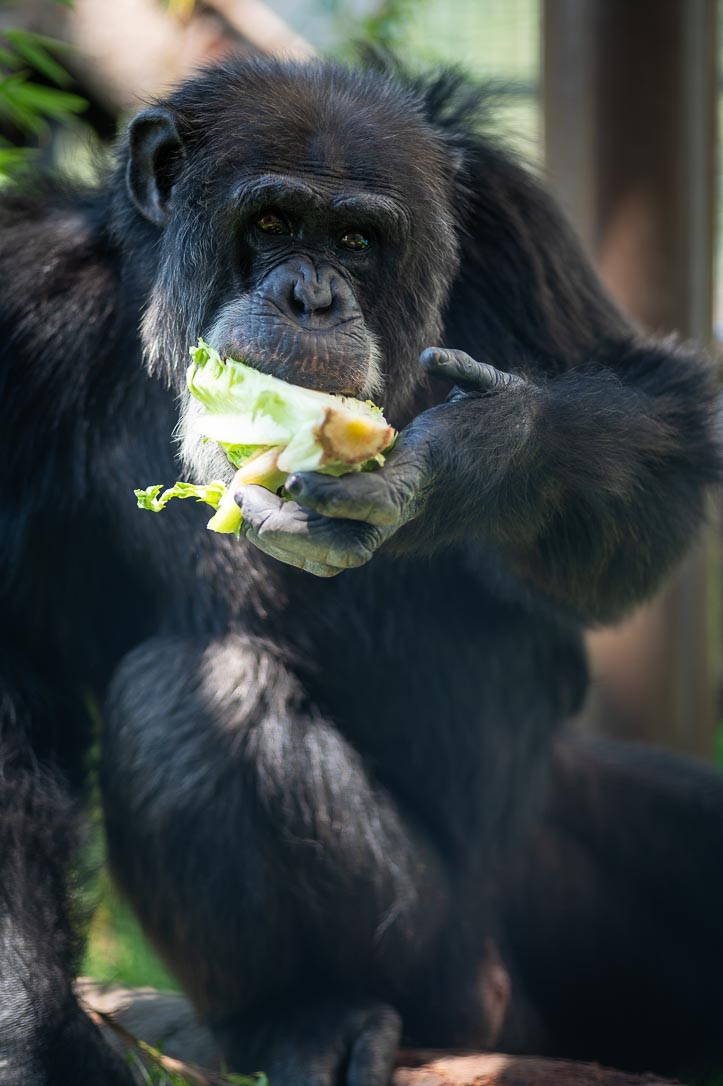
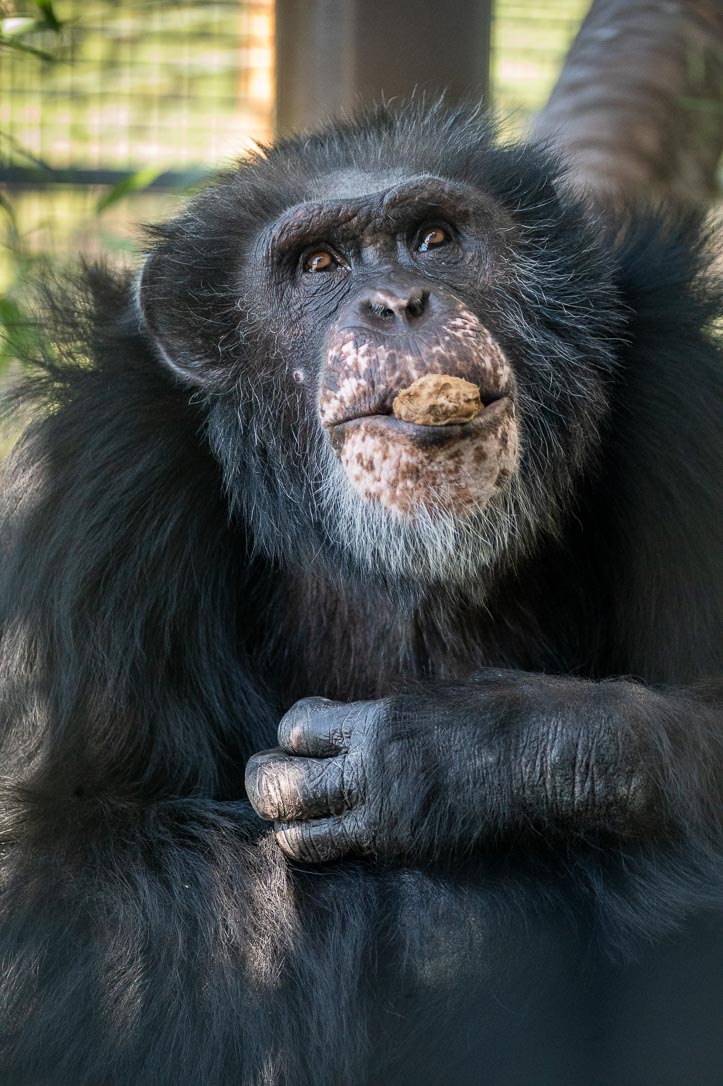
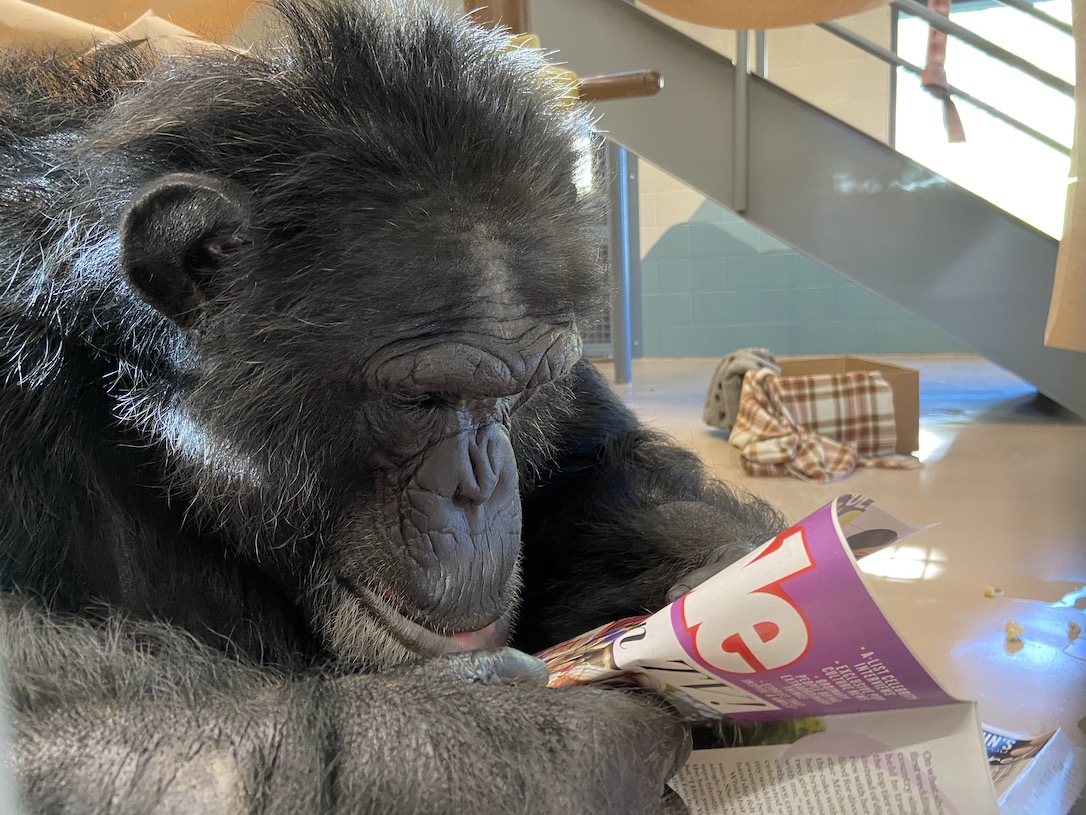
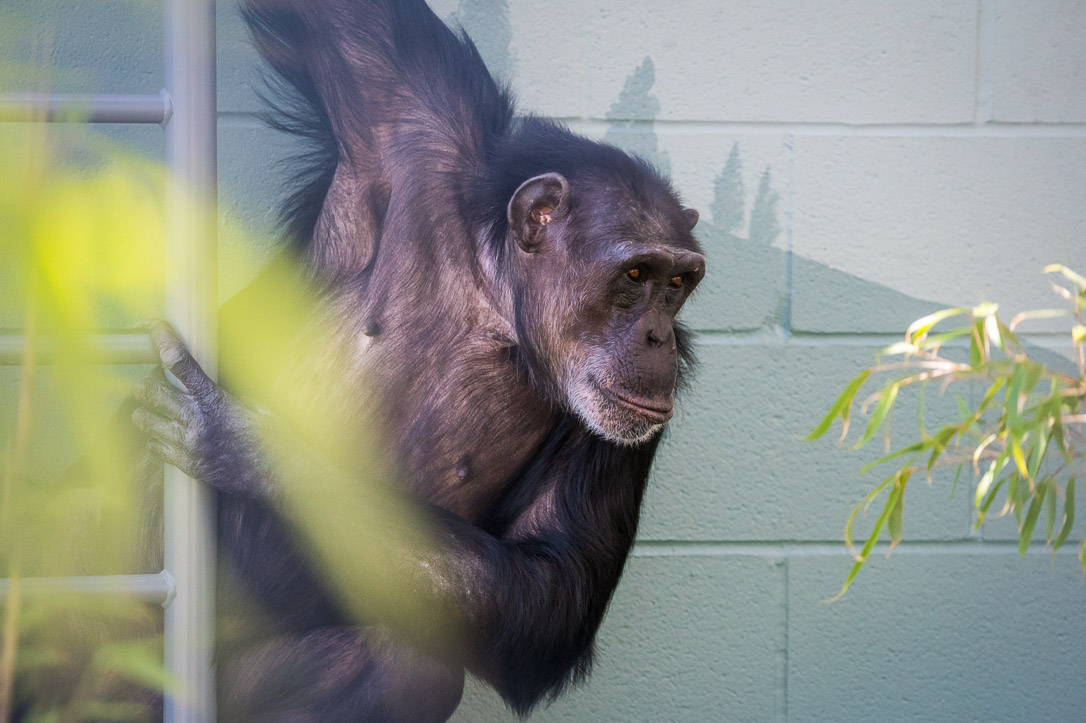
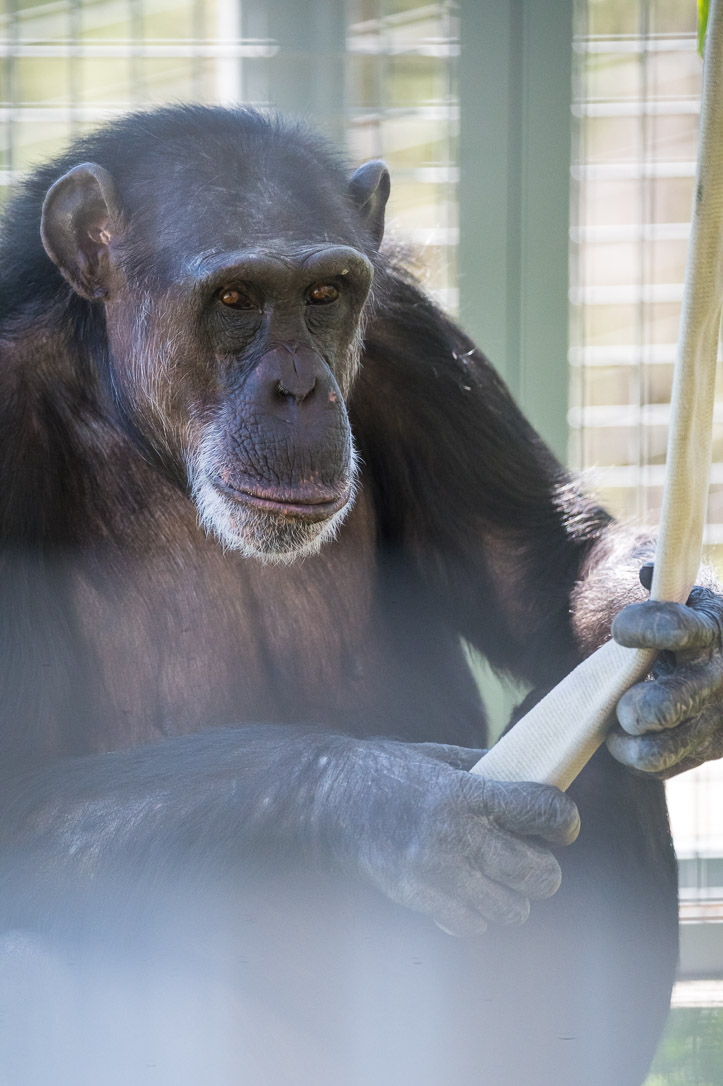
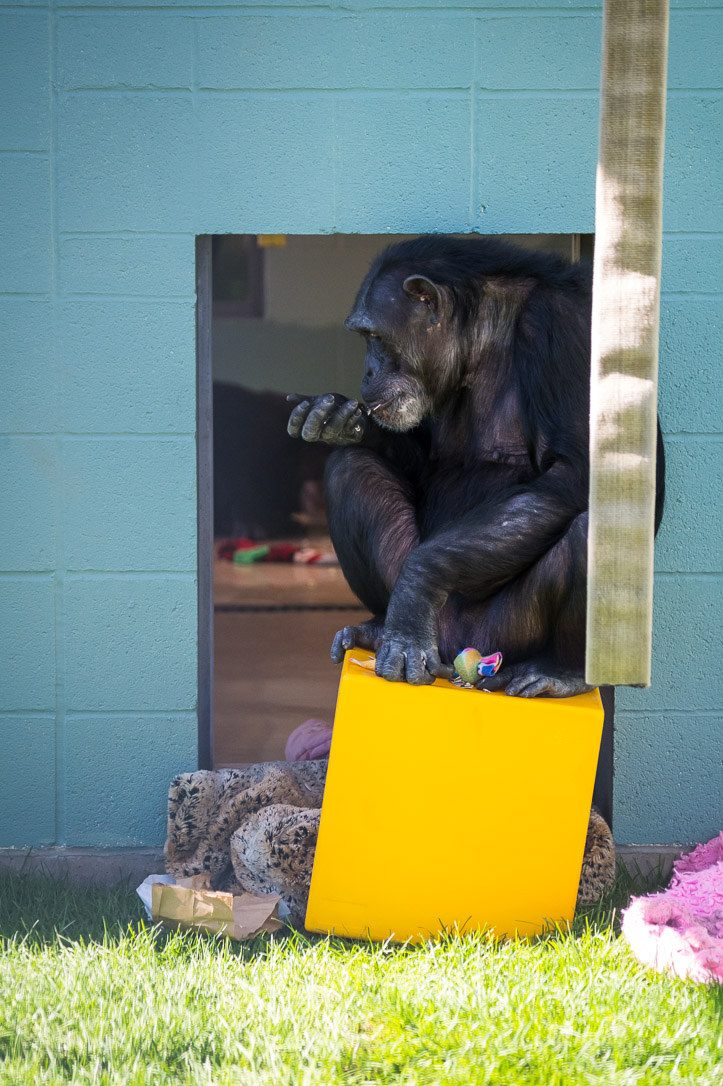
Throughout the late morning and afternoon, the chimps were all seen carrying the little wooden cubes in their hands, mouth and feet. Only Cy seemed completely uninterested in the blocks (in favor of his beloved magazines). The following images (from a couple hours ago) show some of the inquisitive chimps hanging out with these new enrichment items.

Terry (close-up!)
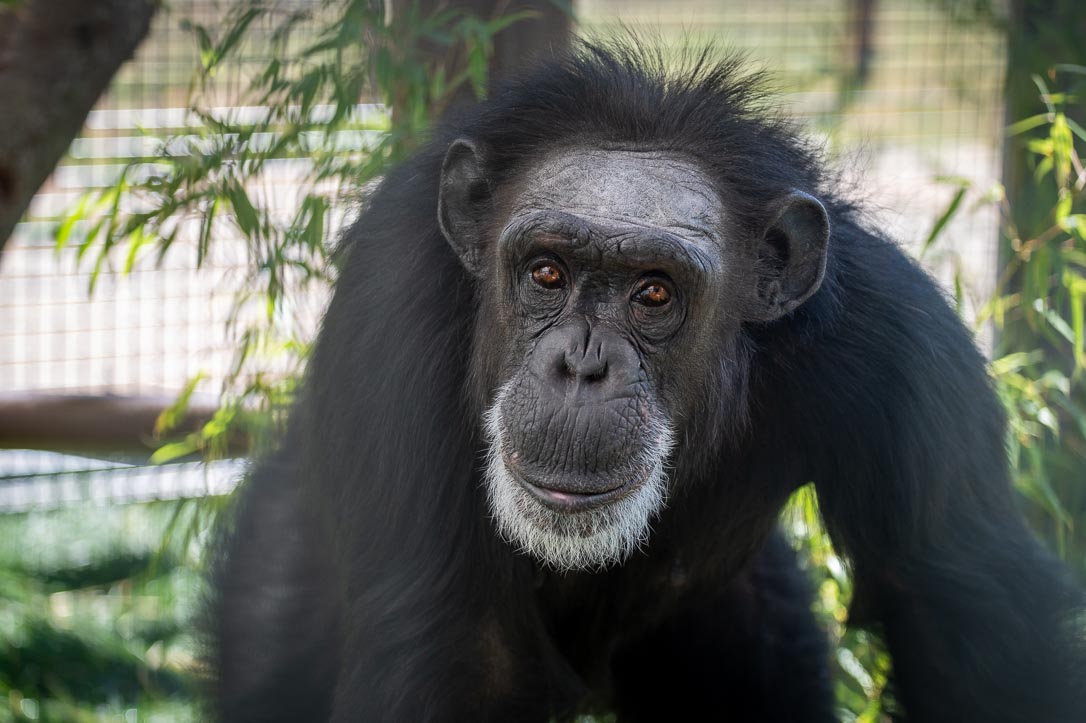
Terry
Gordo
Cy

Even though the chimpanzees provided me with ample inspiration, I still had to think of a catchy title for the blog post. According to J.B., Chad and I are developing a reputation for egregiously using puns in our titles and captions (even roping Sam and Kelsi into our corny games). As someone who likes to casually “rock the boat” around here from time to time, I’m not about to let a controversy like this just fade away.

Naturally, I spent the afternoon turning the word “block” over in my brain until something came to mind. I kept gravitating towards songs and movies featuring words that rhyme with “block.” The winner, of course, ended up being “Block You Like a Hurricane.” I knew it was perfect when I suggested it to caregiver Sam and she wordlessly walked out of the room.

(For the record, “We Will Block You / We Are the Chimp-ions” was the runner-up.)

Now that you’ve seen the cool new blocks and read the not-so-cool puns, here are some additional portraits that I’ve collected over the last couple weeks. Thanks for your continued attention and support!

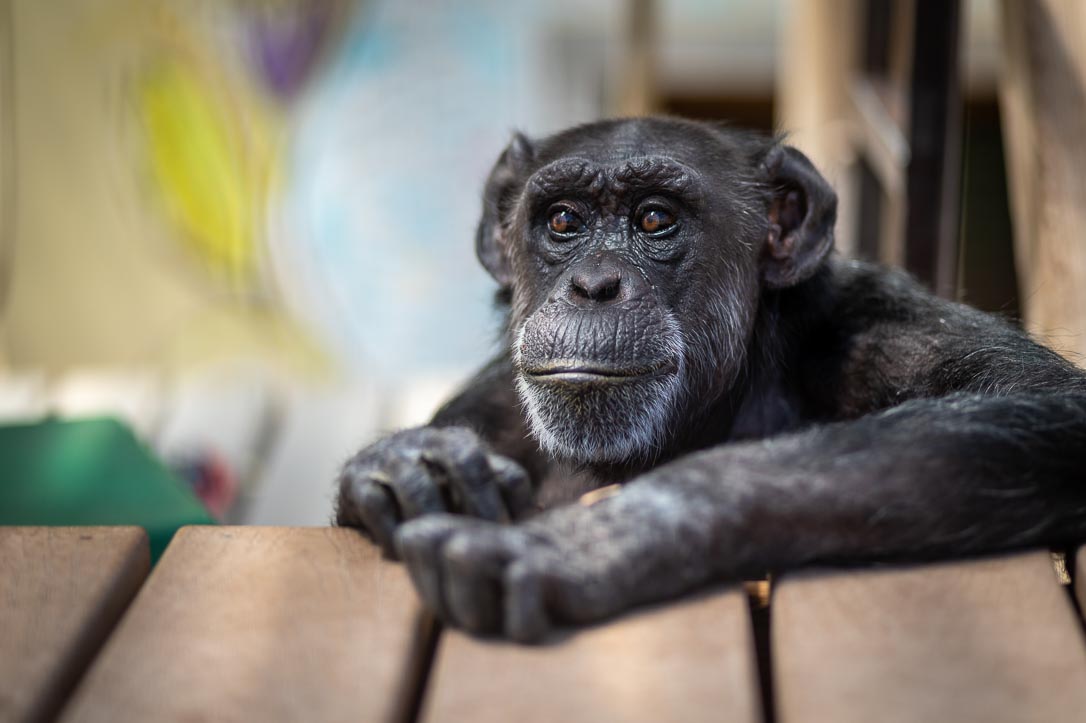
Annie
Gordo
Honey B
Lucky
Gordo
Cy (watching a video on a caregiver’s phone)
Gordo
Jody
Rayne
Gordo
Cy
Terry

Filed Under: Enrichment, Play, Sanctuary, Thanks Tagged With: animal rights, chimp sanctuary, chimpanzee, chimpanzee rescue, chimpanzee retirement, chimpanzee sanctuary, Chimpanzee Sanctuary Northwest, chimpanzees, northwest, Primates, Sanctuary

Here’s Luckin’ At You, Kid.

July 12, 2021 by Anthony

The “Lucky Six” chimpanzees just arrived a few weeks ago, but they already feel like part of the sanctuary’s family.

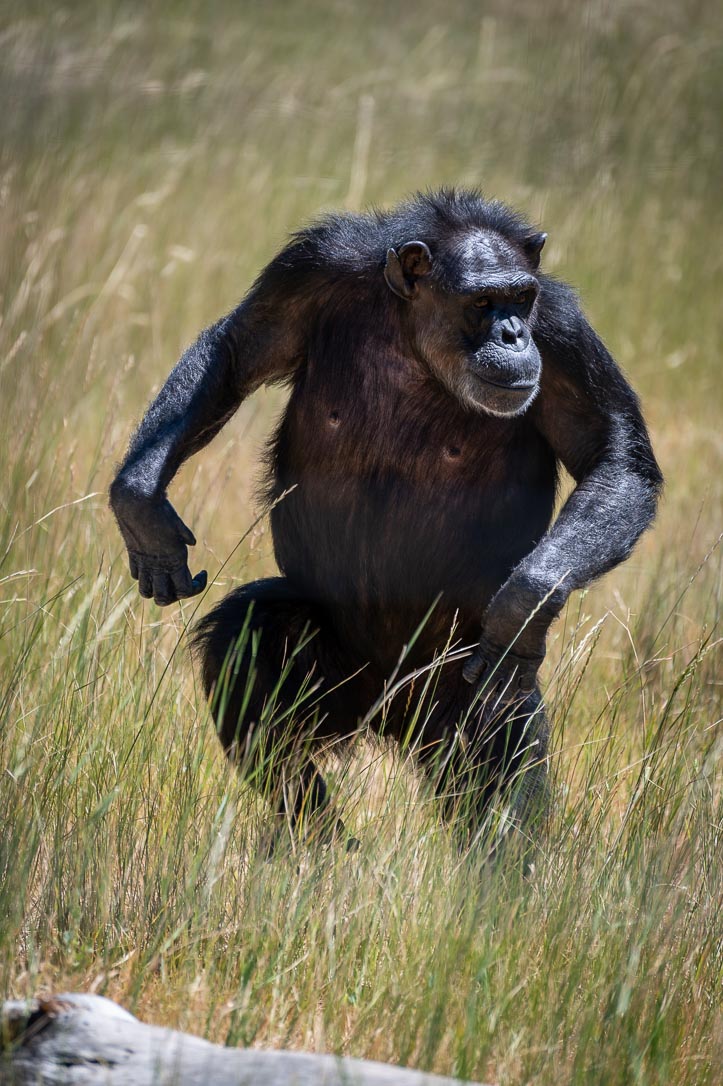
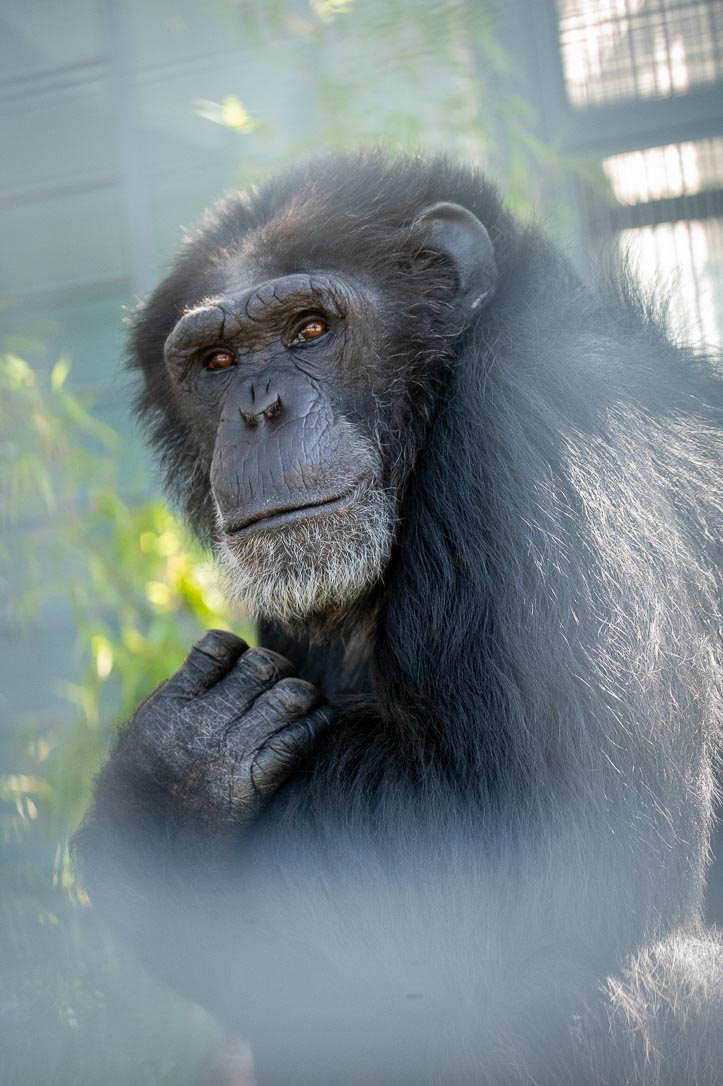
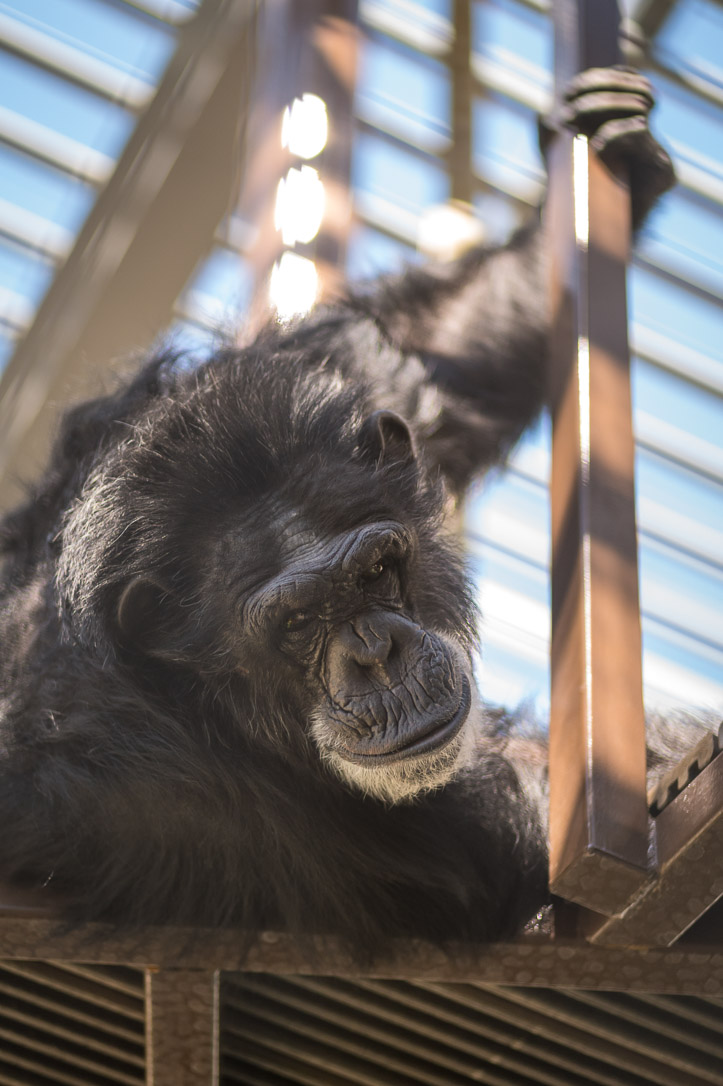
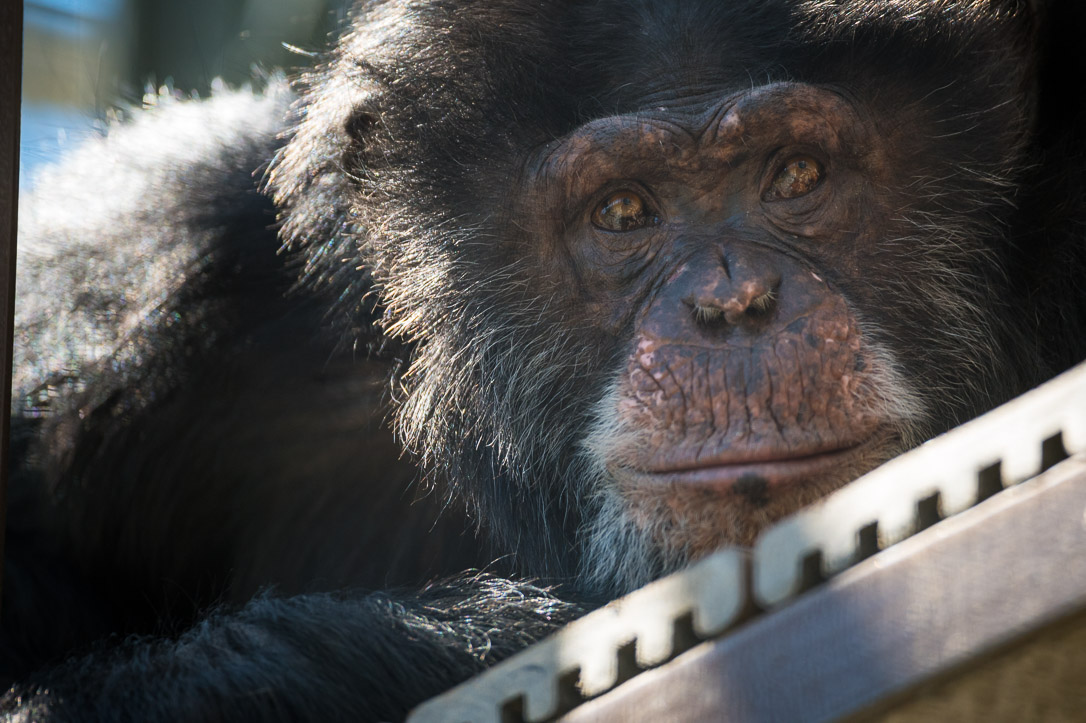
Within this charismatic group, Lucky stands out for being vigilant, independent, and strong-willed. Although she is a female chimpanzee, Lucky shares many physical traits with her brother, Cy: a dark face, intense stare, and bulky frame.

So far, she has generally maintained a serious demeanor with the humans and often observes us from afar. Even so, she occasionally “breaks character” to playfully present her belly, inquisitively examine our footwear, and demand cool drinks from the cleaning hose.

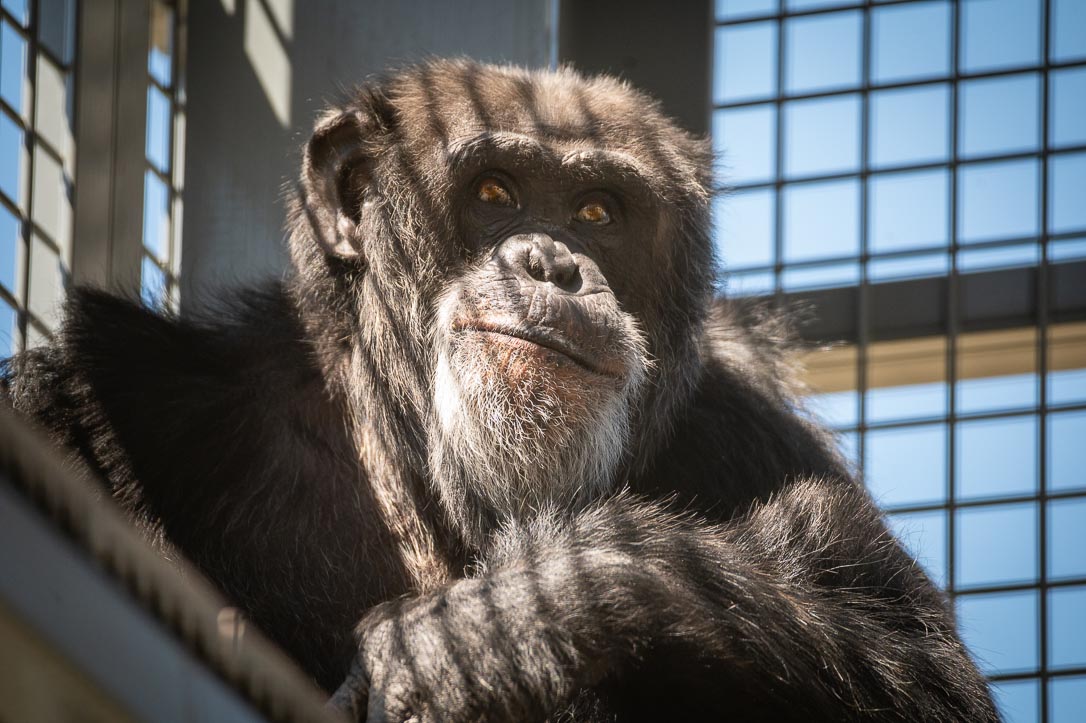
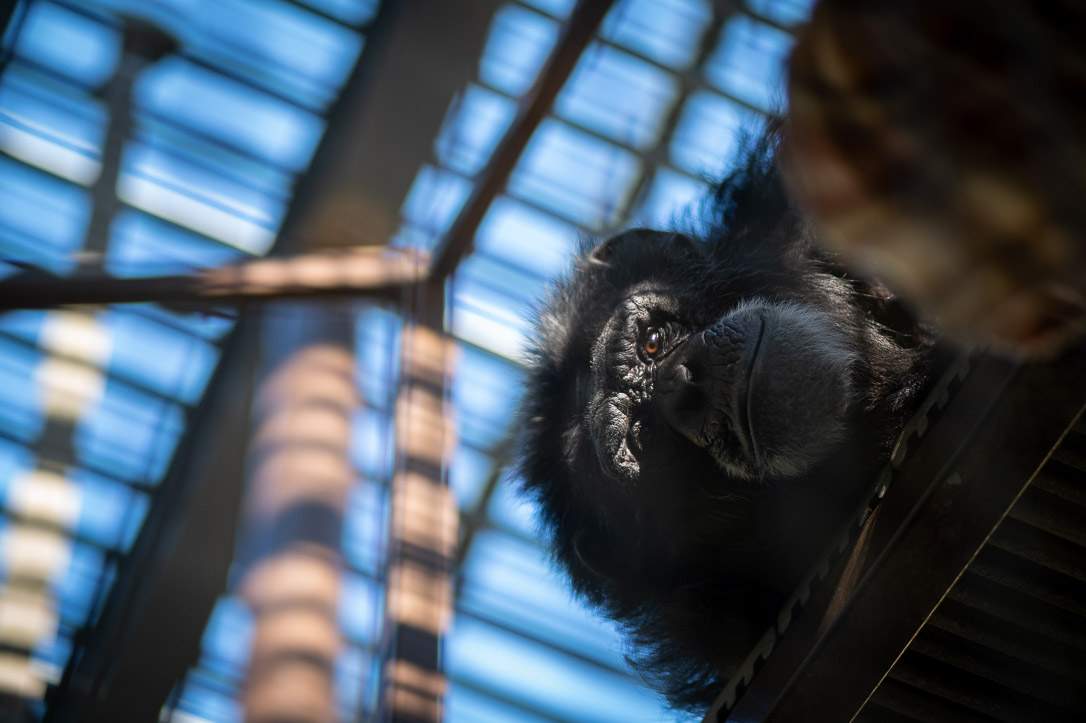
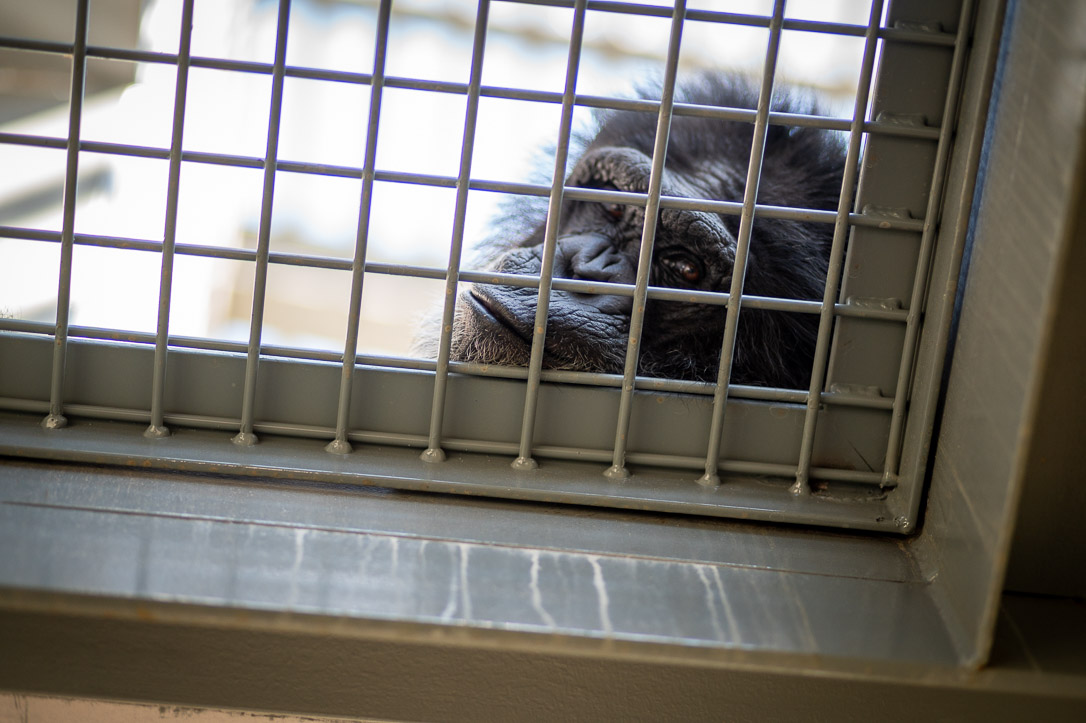
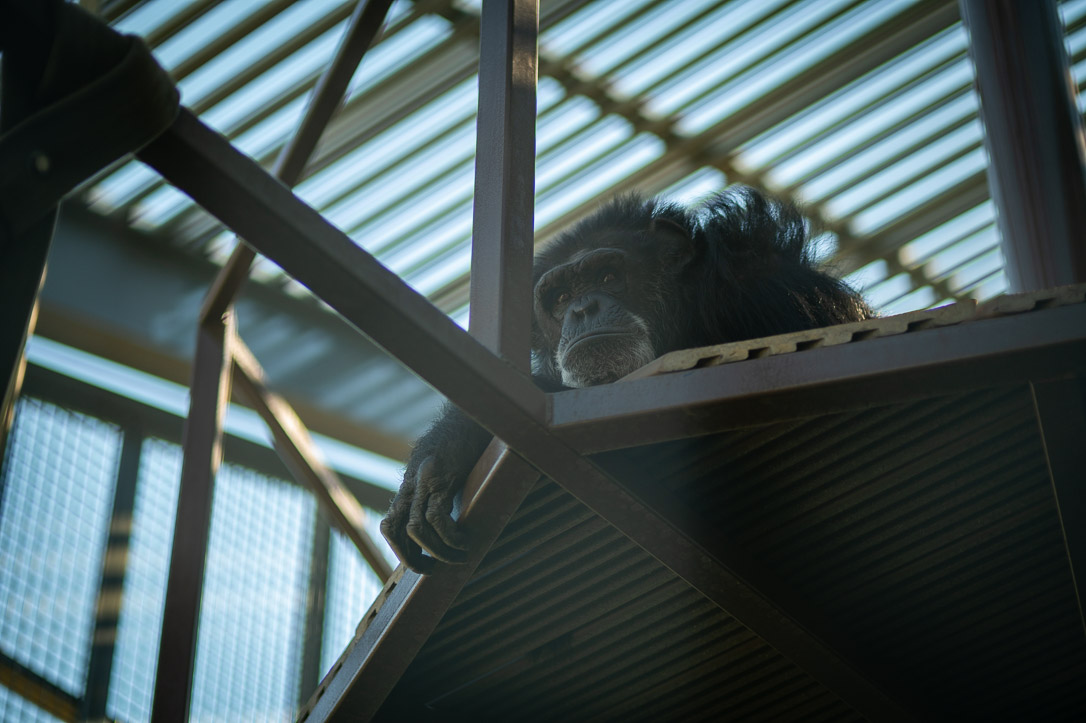
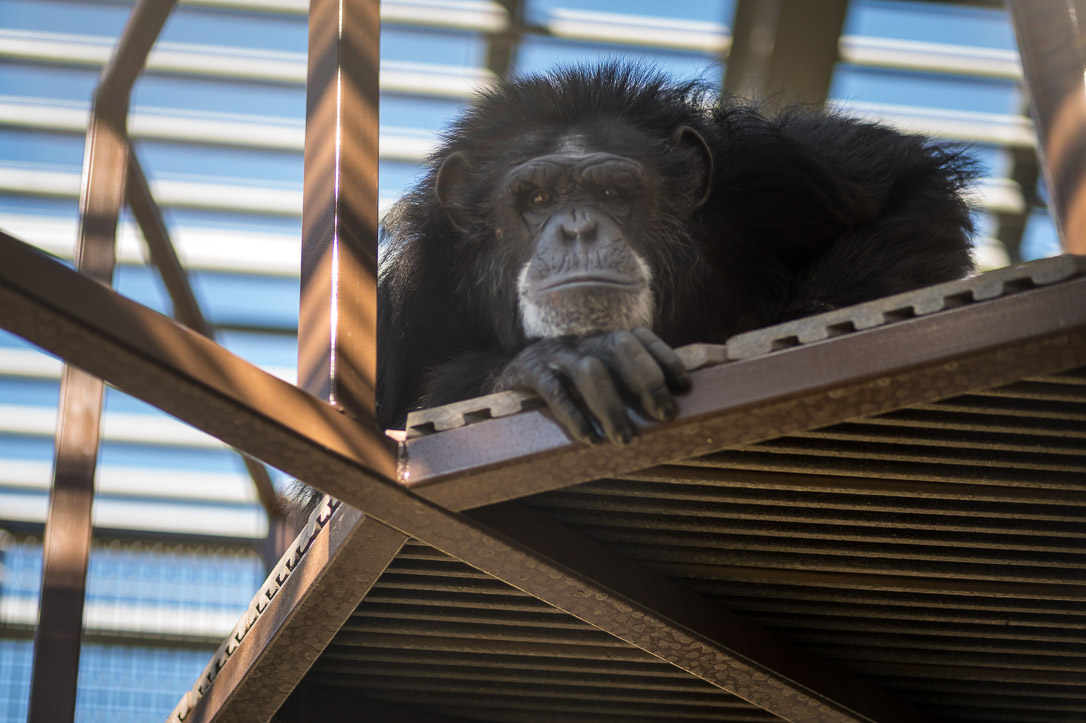
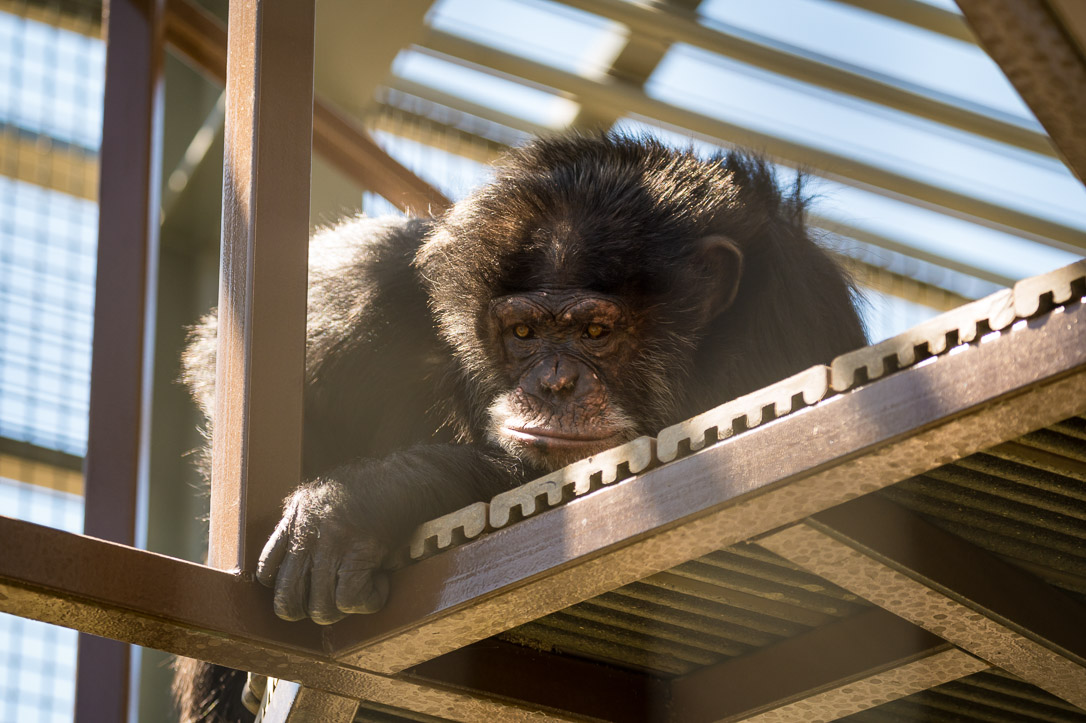
Given that Lucky likes to monitor her surroundings, it’s not surprising that she has taken to the upper levels of the multi-tiered greenhouse enclosures. Diana wrote Saturday’s blog post about these innovative spaces and how they give the chimps many opportunities to be comfortable and entertained. The blog entry also included the following photo of Lucky peeking through the upper caging.

It’s a familiar look for Lucky. From that secure and elevated vantage, she can look down on the human staff as we go about our chores, waiting for the right time to swoop down and let loose. In just a couple of weeks, I’ve already taken several photographs of her staring down at me from the platforms above.

Filed Under: Chimpanzee Behavior, Lucky, Sanctuary Tagged With: Animal Welfare, chimp, chimpanzee, chimpanzee rescue, chimpanzee retirement, chimpanzee sanctuary, Chimpanzee Sanctuary Northwest, chimpanzees, csnw, northwest, Sanctuary

Popular Cy-ience

July 5, 2021 by Anthony

Today’s blog is all about magazines.

This may seem like an odd topic, but please bear with me. There’s a cute chimp video at the end. I promise.

As one would expect, a quick dive into the various Wikipedia pages for the term “magazine” is quite enlightening. The modern English version of the word derives from medieval predecessors like magasin (French), magazzino (Italian) and makhazin (Arabic) all of which were generally used to refer to one or more warehouses or storehouses.

Essentially, a “magazine” is just a place to put stuff. Hypothetically, a pantry could be a magazine for food, a garage could be a magazine for vehicles, and CSNW could be a magazine for rescued cattle and chimpanzees. However, for some strange reason, humans in English-speaking cultures stopped using it for almost everything except firearms, artillery, ammunition, film cameras, and periodicals. Huh?

It wasn’t until the 1700s that the term was first used to describe a collection of printed articles published on a regular schedule and distributed for a fee. It’s easy to confuse magazines with journals, although the latter are usually peer-reviewed and typically feature some sort of academic content. Since the earliest versions appeared on street corners, these printed “magazines” have become a widespread cultural phenomenon. Current variations range in scope from celebrity gossip to international affairs. Although the era of print journalism has been cut short by social media, magazines are still ubiquitous in some corners of society; they can be found in dentist’s offices, airport bookshops, and even your grandparents’ coffee table (next to the bowl of hard candies and the cookie tin that actually contains knitting supplies).

Ironically, everyone seems to have collections of magazines but few people have a good place to store them.

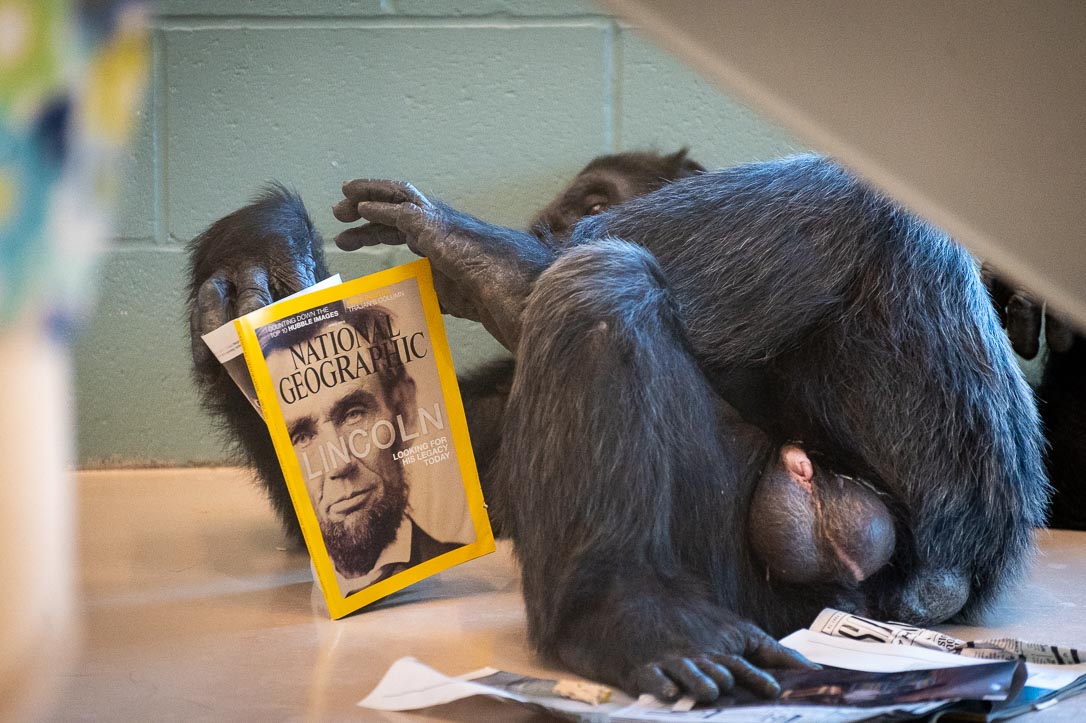
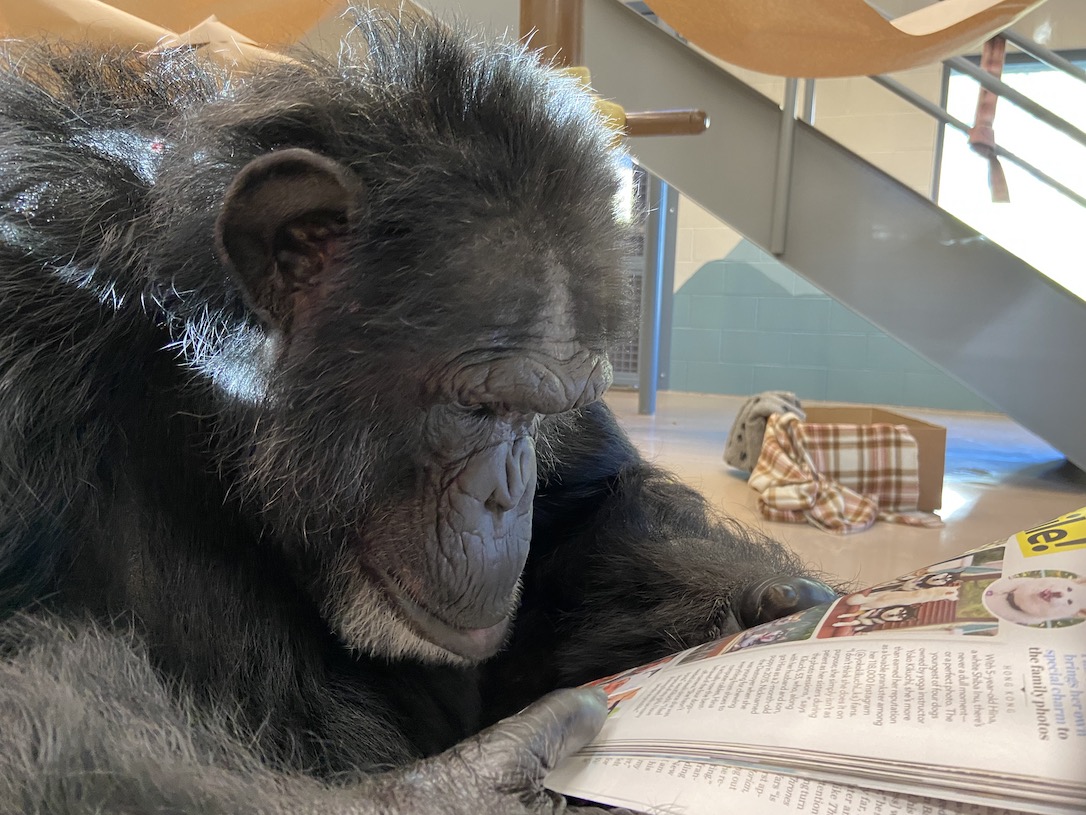
Fortunately, we at Chimpanzee Sanctuary Northwest make good use of donated magazines by giving them to the chimpanzees as enrichment. Usually, we smear peanut butter or mashed banana in between some of the pages, leading the chimps to flip through the periodicals in search of an unpredictable treat. Sometimes, they shred the magazines and use the scraps as nesting material. Eventually, they all get destroyed, but it’s nice to see them have a second purpose instead of immediately going in the trash.

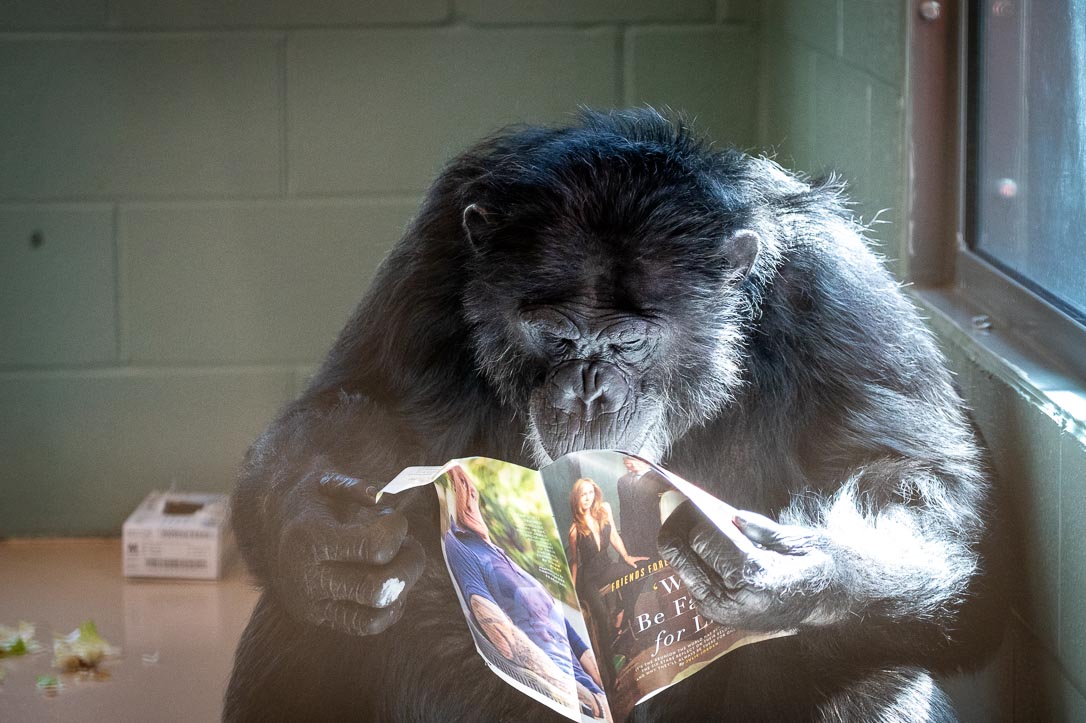
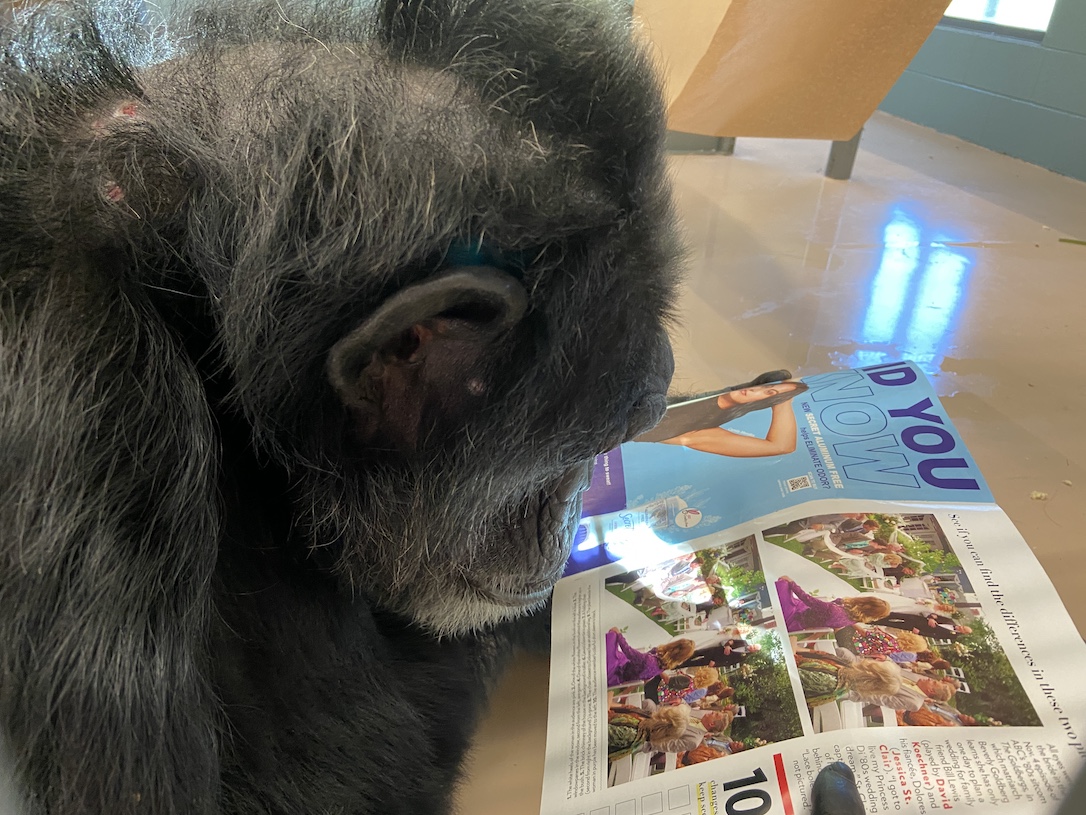
It’s one thing to skim a magazine in search of peanut butter and another to genuinely peruse the imagery inside. Of all the sanctuary’s resident chimps, only Jamie has ever appeared to enjoy flipping through books and magazines for entertainment’s sake, so we don’t expect the others to follow suit.

However, we were intrigued when one of the new group’s former caregivers told us that adult male Cy loves to look at magazines. Shortly after they arrived and began settling in, we were able to give his group a whole stack of publications, ranging from sensationalist tabloids to issues of Popular Science and National Geographic. His response was overwhelmingly positive, to say the least. The embedded video shows his reaction, including some of the funniest little chirps I have ever heard from a chimpanzee. Cy was so excited that he kept gesturing to his caregivers to reassure him and even asked us to add more magazines to the pile.

Finally, at the end of the day, Cy threw some magazines in his nest and settled down for the evening.

~~~~~~~~~~~~~~~~~~~~~~~~~~~~~~~~~~~~~~~~~~~~~~~~~~~~~~~~~~~~~~

Note: We’re all stocked up on magazines at the moment (our magazine magazine is full), but we’ll let you all know if we have a need for more!

Filed Under: Chimpanzee Behavior, Cy, Enrichment, Intelligence, Latest Videos Tagged With: Animal Welfare, chimp, chimp sanctuary, chimpanzee, chimpanzee sanctuary, Chimpanzee Sanctuary Northwest, chimpanzees, Primates, Sanctuary

Comin’ in HOT

June 28, 2021 by Anthony

Hey everyone! It’s been a long week so far.

For one thing, the scorching heat is  r e l e n t l e s s .

Today brought record-setting temperatures to Oregon and Washington. Tomorrow will have more of the same. For comparison, it’s hotter than Guy Fieri’s wardrobe over here.

For actual quantitative reference, tomorrow’s forecast shows Cle Elum being 110 degrees Fahrenheit, which is hotter than it’s ever been in the state of Florida (109F).

That’s correct. Our town nestled among the snow-capped Central Cascades will have higher temperatures than they’ve EVER HAD on ANY DATE in FLORIDA. It will also be hotter than it’s ever been in Puerto Rico, Hawaii, and at least fifteen other U.S. states and territories. Tomorrow would be the hottest day ever in Washington… if we hadn’t already broken that record today.

To cope, our staff has been closely monitoring the doors and windows, cranking all the electric fans, and consuming a steady stream of popsicles, sports drinks, and good ol’ fashioned water. As all the smart people say, hydrate to dominate, baby!

Despite the sweltering heat, we’re excited to report that all SIXTEEN chimpanzee residents are doing well, staying hydrated, and keeping cool. Of course, those sixteen residents include the six newest arrivals: Cy, Dora, Gordo, Lucky, Rayne and Terry.

This group of adult chimps has been called “The Lucky Six” during the campaign to send them to sanctuary, but we’ll also likely refer to them as “Cy’s Group” since he seems to be their undisputed chief. While our own medical and caregiving records have less mutable designations for each group (e.g., Group C), it will be nice to have an informal and familiar way to specify which group we’re talking about.

We’re still getting to know the six chimps in Cy’s group, but it’s already evident that they all have unique personalities and complex social dynamics. As is tradition, we’ll be shining a virtual spotlight on each individual over the next few months so that you can all get to know them as well. In case you missed it, Kelsi announced their arrival and posted a few portraits on Saturday, and Katelyn followed up with more photographs in yesterday’s post (which was dedicated to those who cared and advocated for the six newcomers at their previous home). For now, we’ll continue to share what we can on the blog when we’re not busy taking care of chimps!

For today’s blog, I threw together a video using clips that our staff have recorded over the past few days. We look forward to sharing more in the near future, so please stay tuned and be patient! The new guys are amazing and we can’t wait to tell you more about them!

Filed Under: Cy, Dora, Gordo, Lucky, Rayne, Sanctuary, Terry, Weather Tagged With: animal rescue, Animal Welfare, chimp, chimp sanctuary, chimpanzee, chimpanzee rescue, chimpanzee sanctuary, Chimpanzee Sanctuary Northwest, chimpanzees, chimps, chimps in need, napsa, Primates, Sanctuary, wildlife waystation

Two Blogs

June 20, 2021 by Anthony

First of all, HAPPY FATHER’S DAY to all of you dads out there.

In case you missed it, two of our supporters sponsored this day of sanctuary in honor of their own fathers. Thank you for this generous and thoughtful gift, Sharon and Marya!

Just as we had dual sponsors for this warm summer day, I also had two distinct ideas for today’s blog.

Initially, I wanted to continue our coverage of Honey B, Mave and Willy B’s acclimatization to the new greenhouses. Kelsi posted a great video of their first forays into the unknown on Wednesday and new staff member Sofia added some amazing photos in her follow-up on Friday. Yesterday, Diana wrote a reflective, insightful and pertinent post about how chimpanzees cope with new experiences (which will likely be a common theme over the next few months!). My plan for today was to share additional photos of the chimps hanging out in the new greenhouse enclosures.

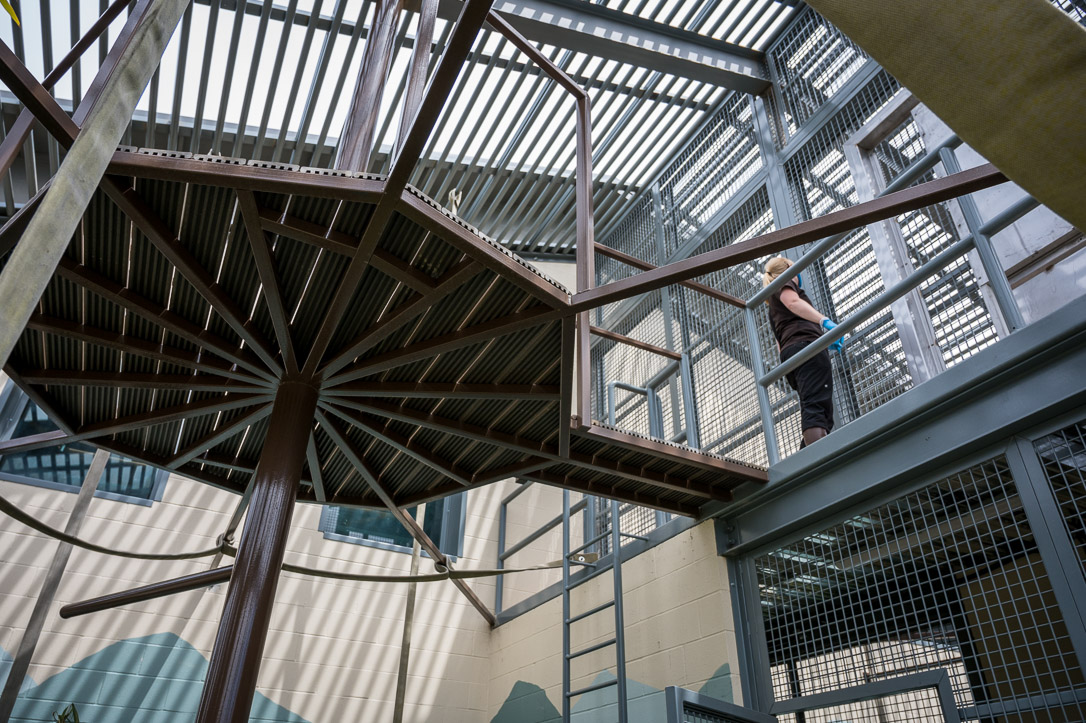
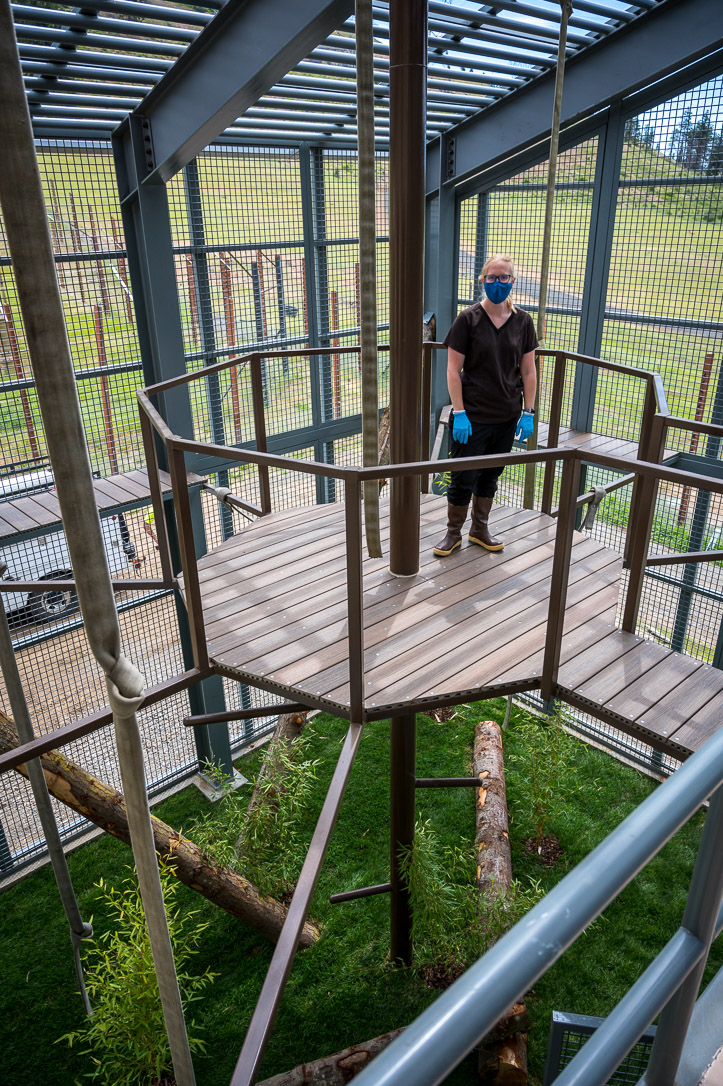
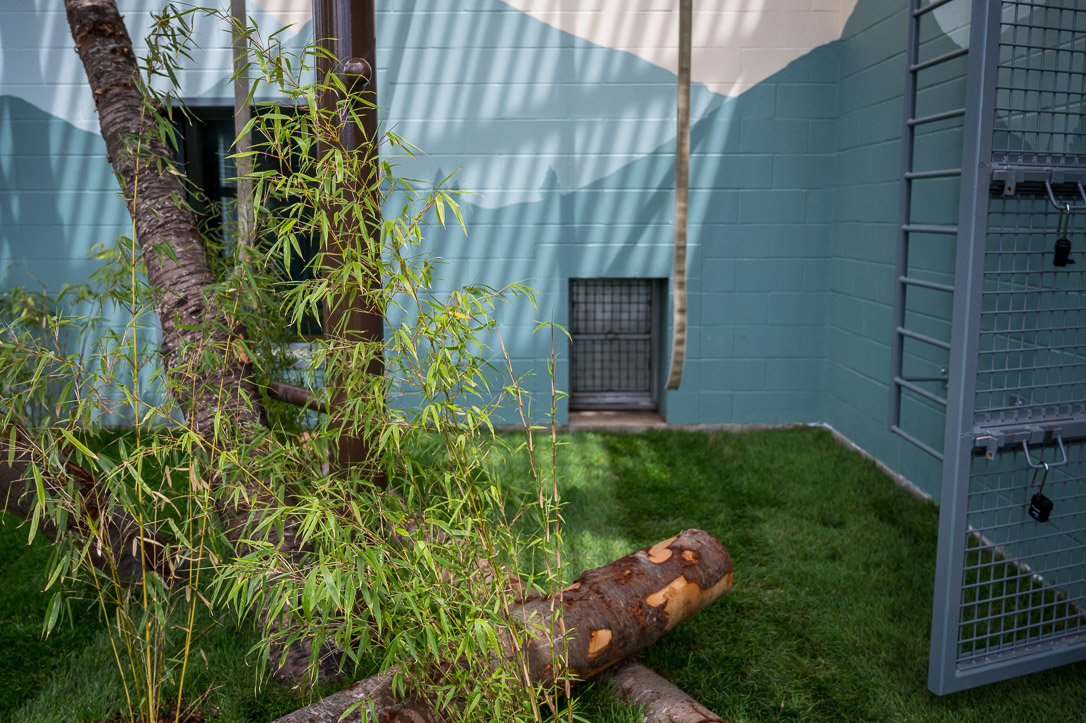
The new enclosures (featuring new caregiver Sam, for scale):

However, I also took a look at some photographs I created while strolling through the woodlands and pastures that surround the sanctuary. I feel like I should share them with all of you, too.

Since I couldn’t pick one theme over the other, I am going to “finance two birds with one loan” (as the common idiom goes) and combine them into this mega-post.

First, here are some images of the “California Three” enjoying their new digs.

Honey B (“Beezy” “Beesus” “Chickpea” “Honey Badger” “Bee”):

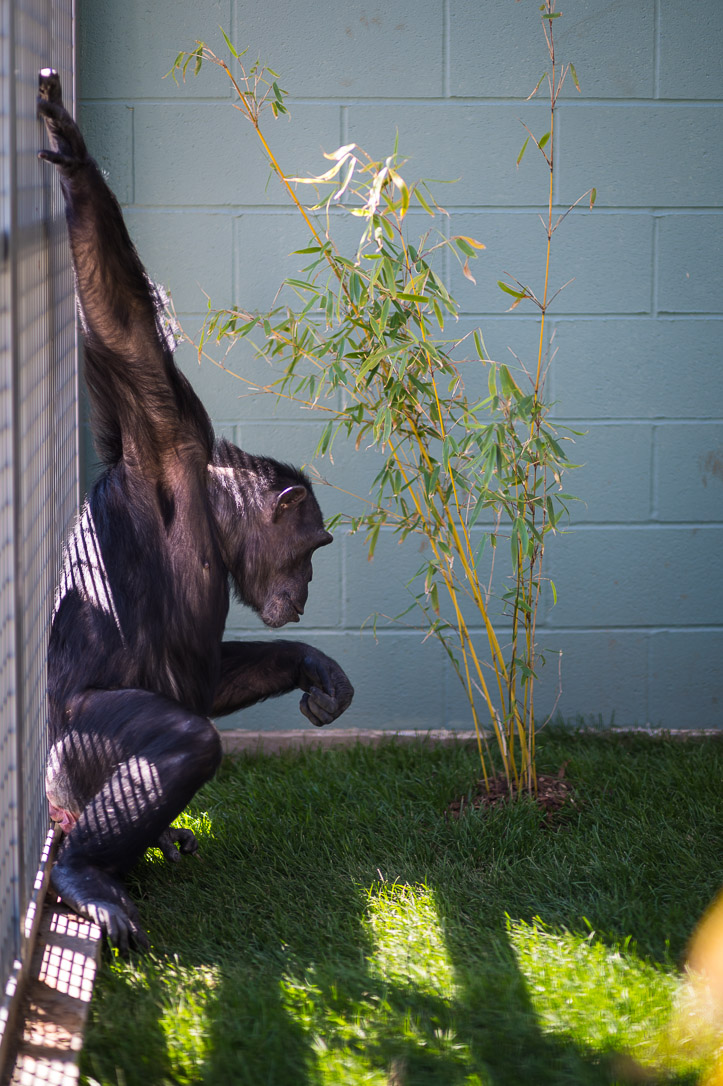
Mave (who had to investigate the bamboo before settling down for a nap):

Willy B:

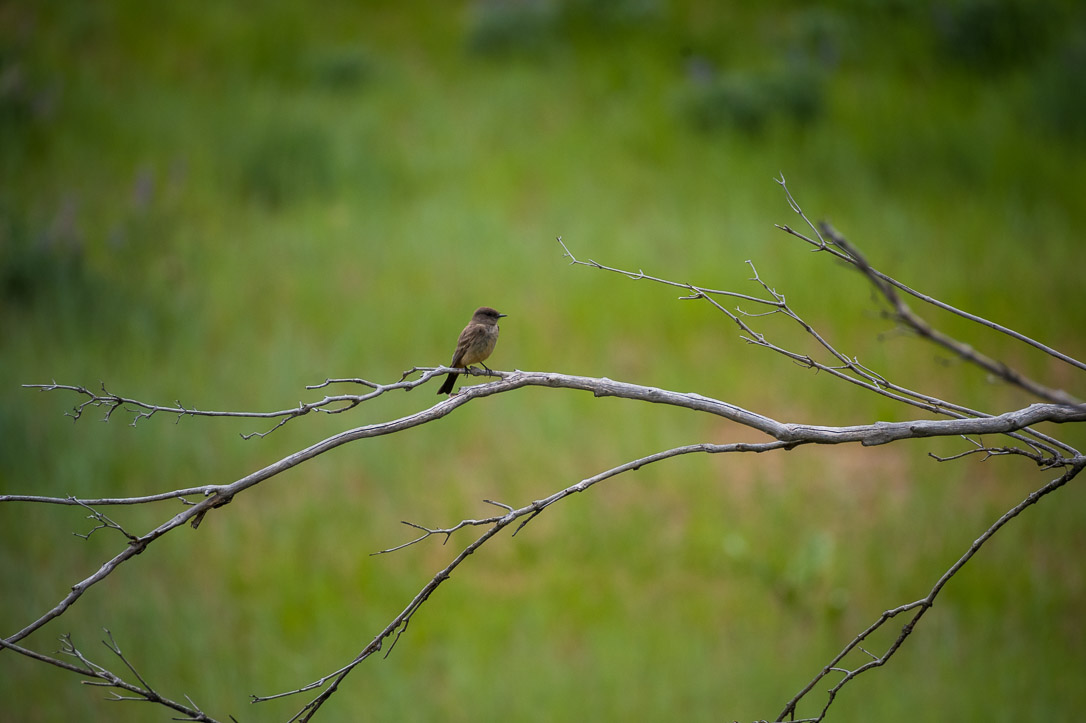
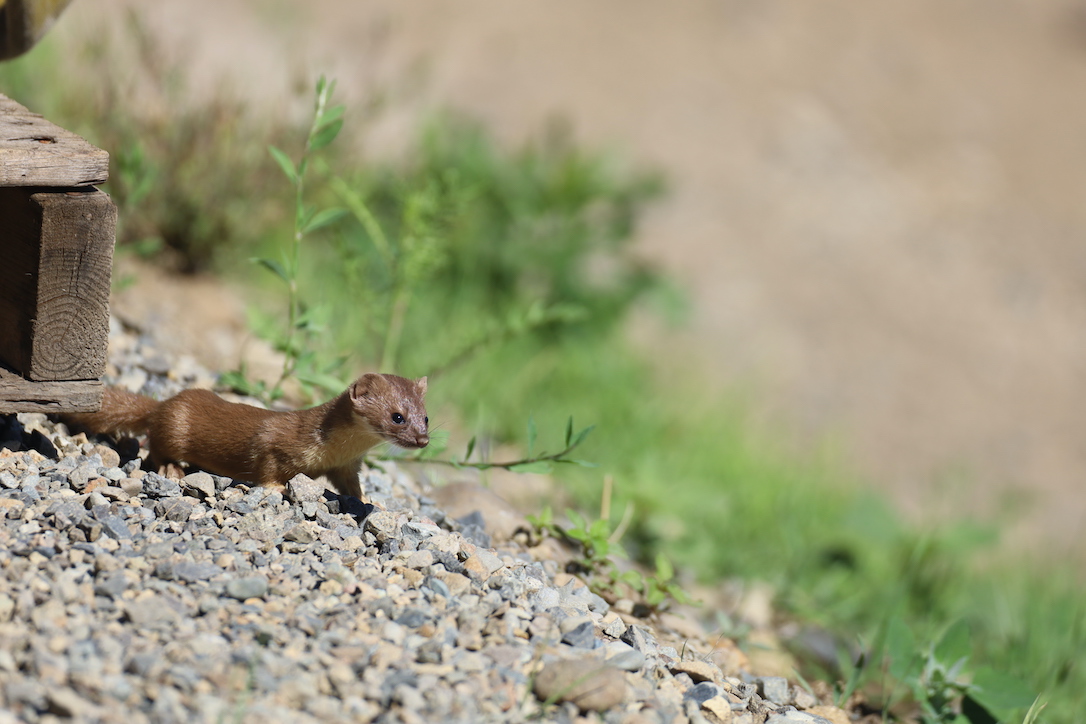
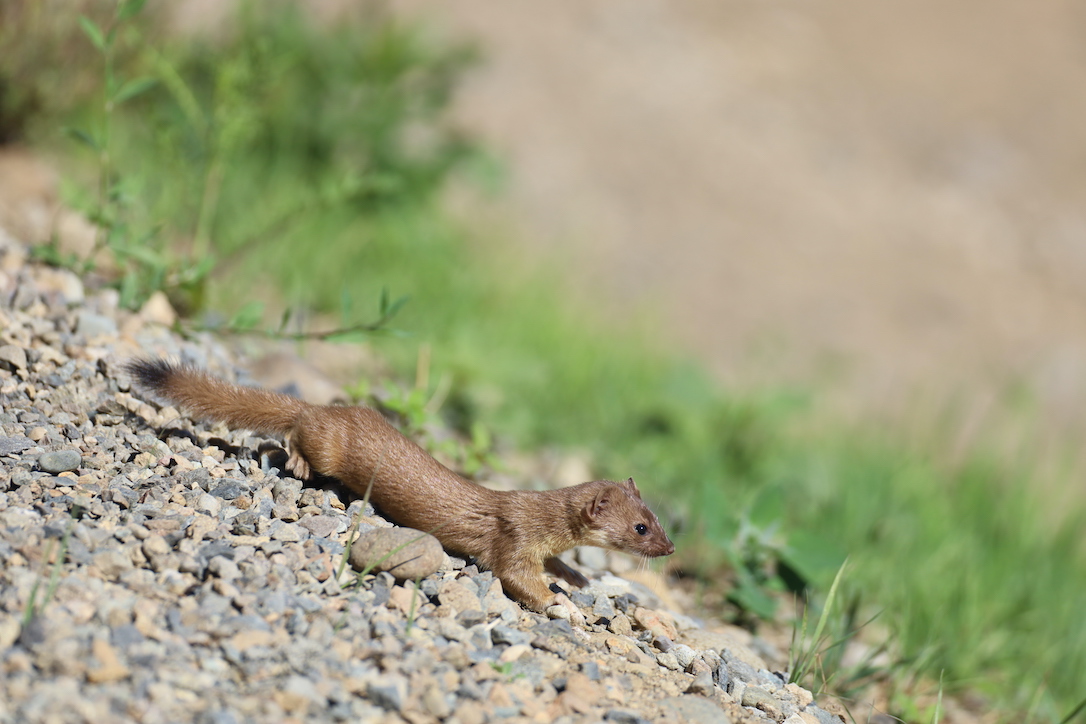
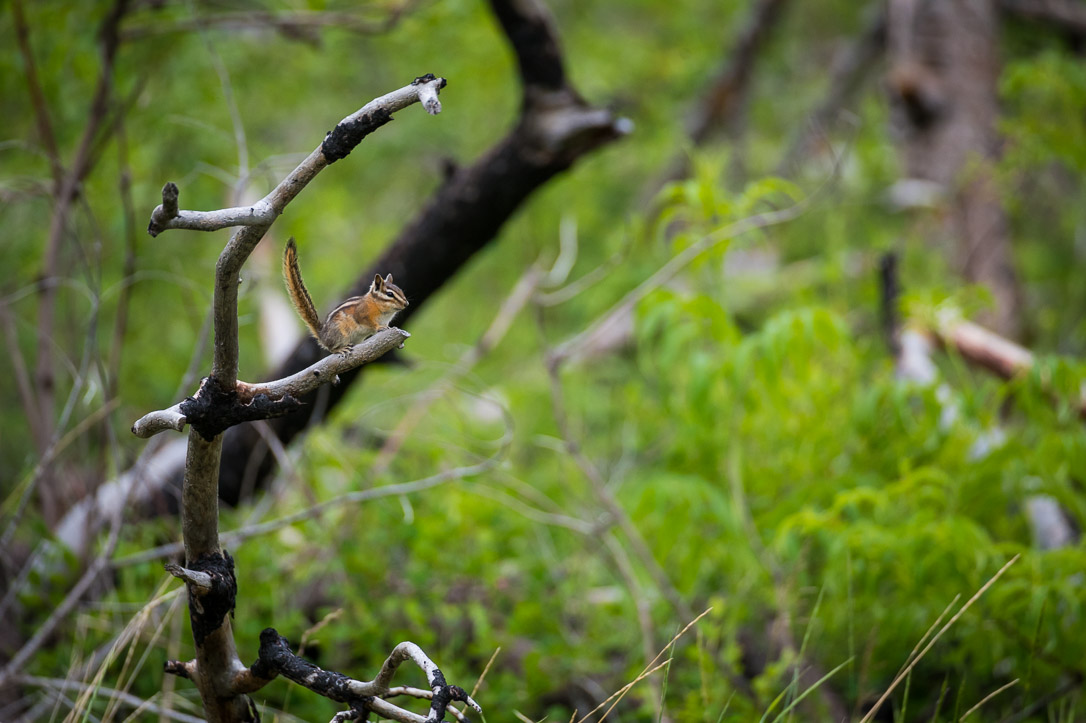
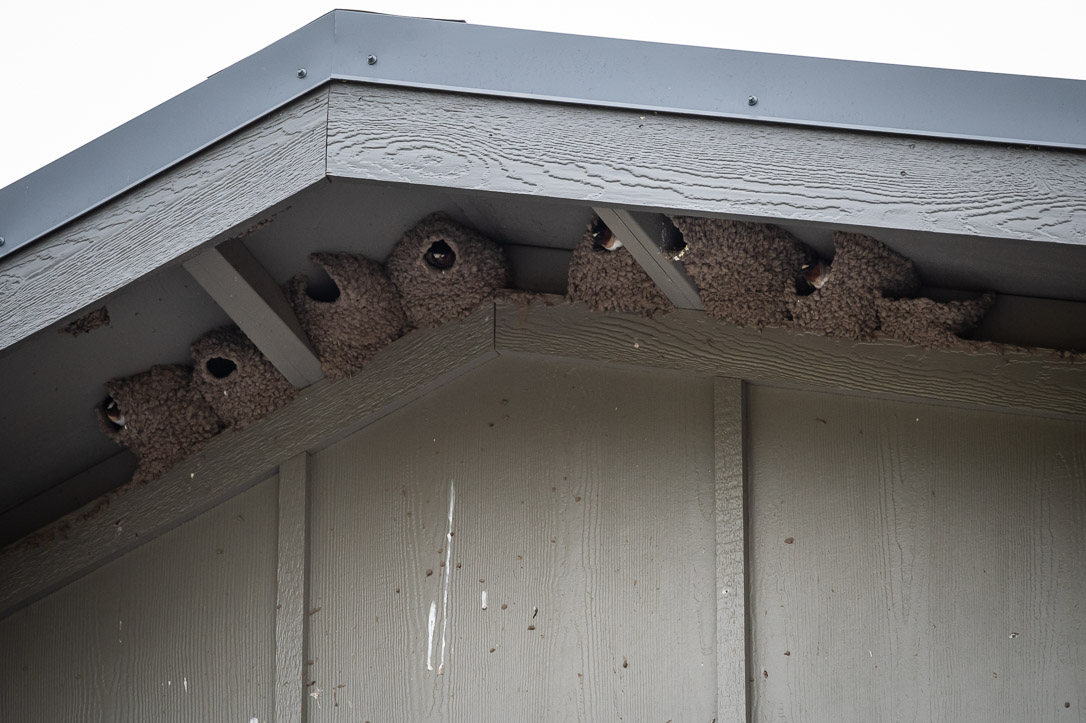
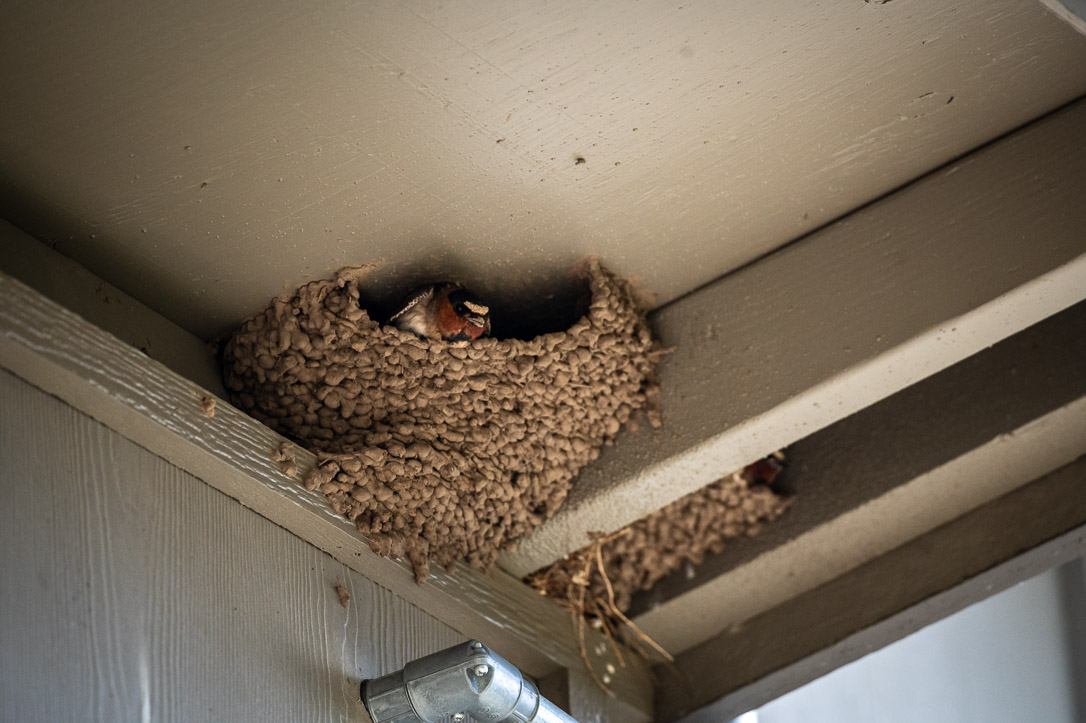
Then, as promised, here are some cool nature shots from around the property.

This may be a Say’s Phoebe, although Katelyn would have to confirm that since she is our resident wildlife expert:

A long-tailed weasel (also known locally as a stoat):

A chipmunk:

The cliff swallows that have taken over the eaves of the Chimp House this summer:

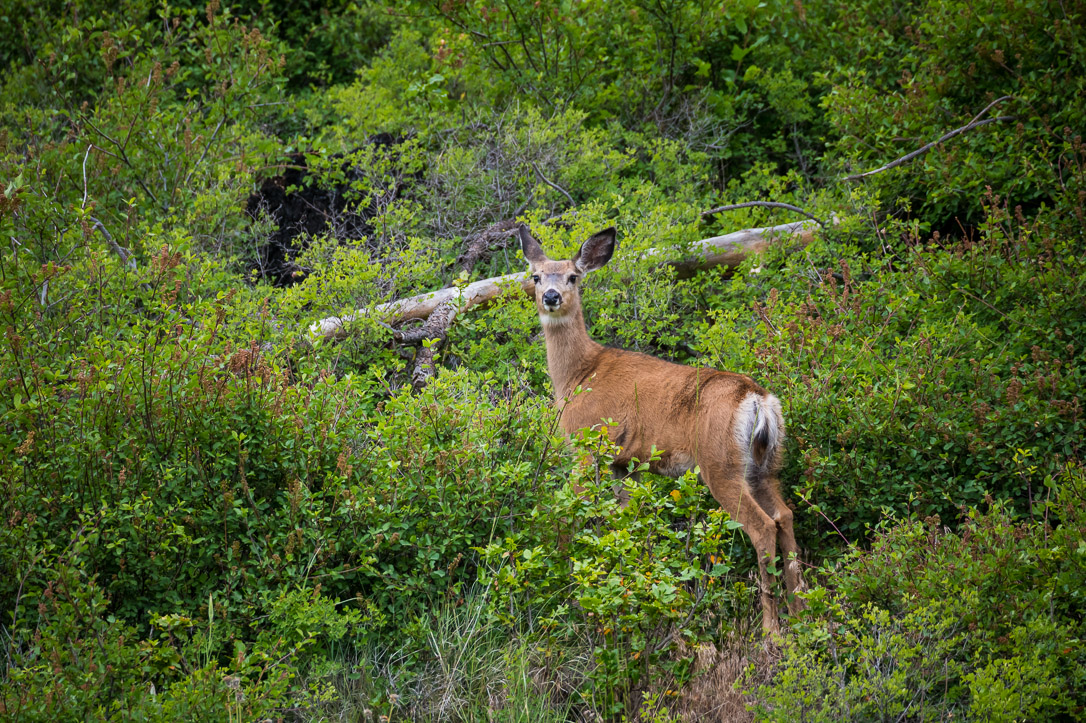
One of the many black-tailed deer that frequent the property:

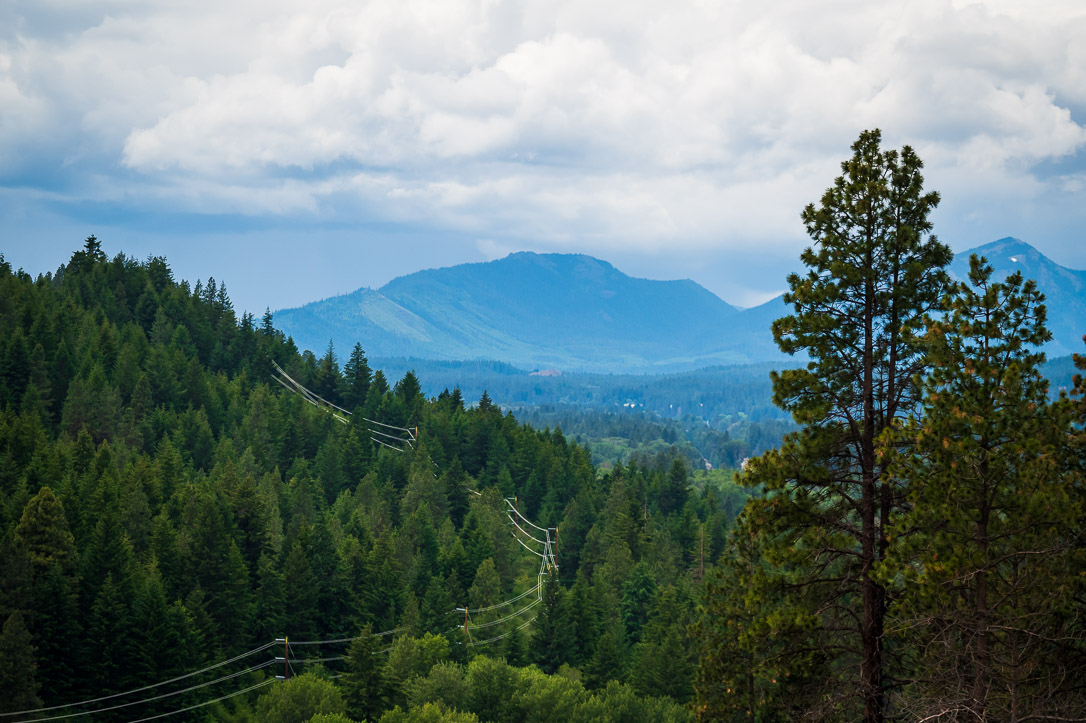
The view of Cle Elum from the higher area of the property:


Filed Under: Construction, Honey B, Mave, Sanctuary, Wildlife, Willy B Tagged With: Animal Welfare, chimp, chimp sanctuary, chimpanzee, chimpanzee sanctuary, Chimpanzee Sanctuary Northwest, chimpanzees, csnw, Sanctuary

  • « Go to Previous Page
  • Page 1
  • Interim pages omitted …
  • Page 8
  • Page 9
  • Page 10
  • Page 11
  • Page 12
  • Interim pages omitted …
  • Page 27
  • Go to Next Page »

Primary Sidebar

Subscribe To the Blog and Get Notified of New Posts First!

Archives

Calendar of Blog Posts

June 2026
S M T W T F S
 123456
78910111213
14151617181920
21222324252627
282930  
« May    

Categories

SUBSCRIBE TO OUR NEWSLETTER

Footer

PO Box 952
Cle Elum, WA 98922
[email protected]
509-699-0728
501c3 registered charity
EIN: 68-0552915

Official DDAF Grantee

Menu

  • The Chimpanzees
  • Blog
  • About Us
  • You can help
  • Resources
  • Contact
  • Donate

Proud Member of

Connect With Us

Search

Copyright © 2026 Chimpanzee Sanctuary Northwest. All Rights Reserved. Site by Vegan Web Design