• Skip to main content
  • Skip to primary sidebar
  • Skip to footer

Chimpanzee Sanctuary Northwest

Hope. Love. Home. Sanctuary

  • Our Family
    • The Chimpanzees
    • The Cattle
  • Blog
  • About Us
    • Visiting the Sanctuary
    • Philosophy
      • FAQs
      • Mission, Vision & Goals
      • Privacy Policy
    • The Humans
      • Staff
      • Board of Directors
      • Founder
    • Annual Reports
    • The Future of CSNW
    • CSNW In The News
  • You can help
    • Donate
      • Become a Chimpanzee Pal
      • Sponsor A Day
      • Transfer Stock
      • Be A Produce Patron
      • Be a Bovine Buddy
      • Give from your IRA
      • Personalized Stones
      • Bring Them Home Campaign
    • Leave A Legacy
    • Employment Opportunities
    • Volunteer
    • See Our Wish List
    • Events
  • Resources
    • About Chimpanzees
    • Enrichment Database
    • Advocacy
      • Advocacy Action Center
      • Apes in Entertainment
        • Trainers
        • Role of the AHA
        • Greeting Cards
      • Chimpanzees as Pets
      • Roadside Zoos
      • Chimpanzees in Biomedical Research
      • Conservation
        • African Apes
        • Orangutans
  • Shop
    • Merchandise Store
  • Contact
  • DONATE NOW

Anthony

Extra! Extra! Read all a-sprout it!

October 18, 2021 by Anthony

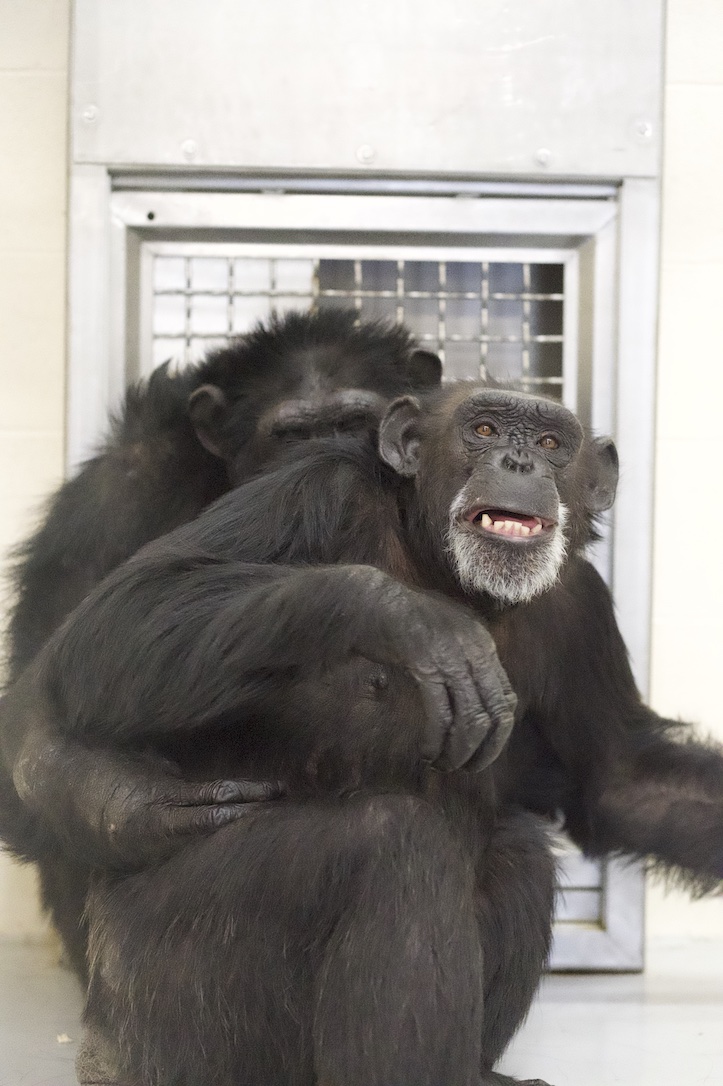
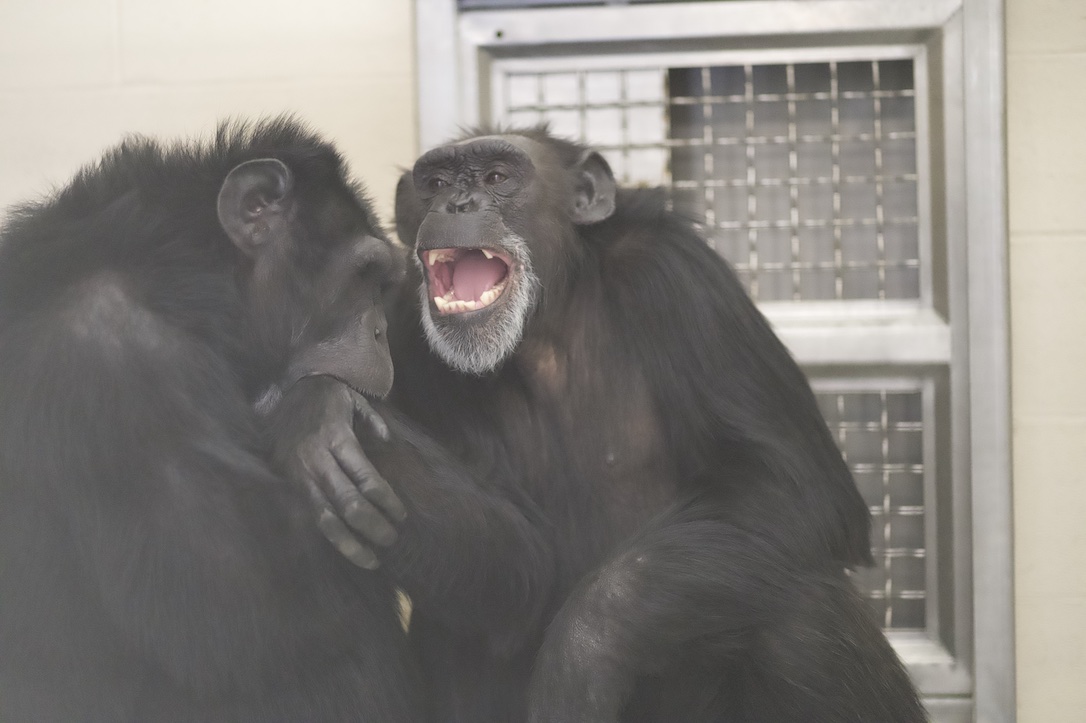
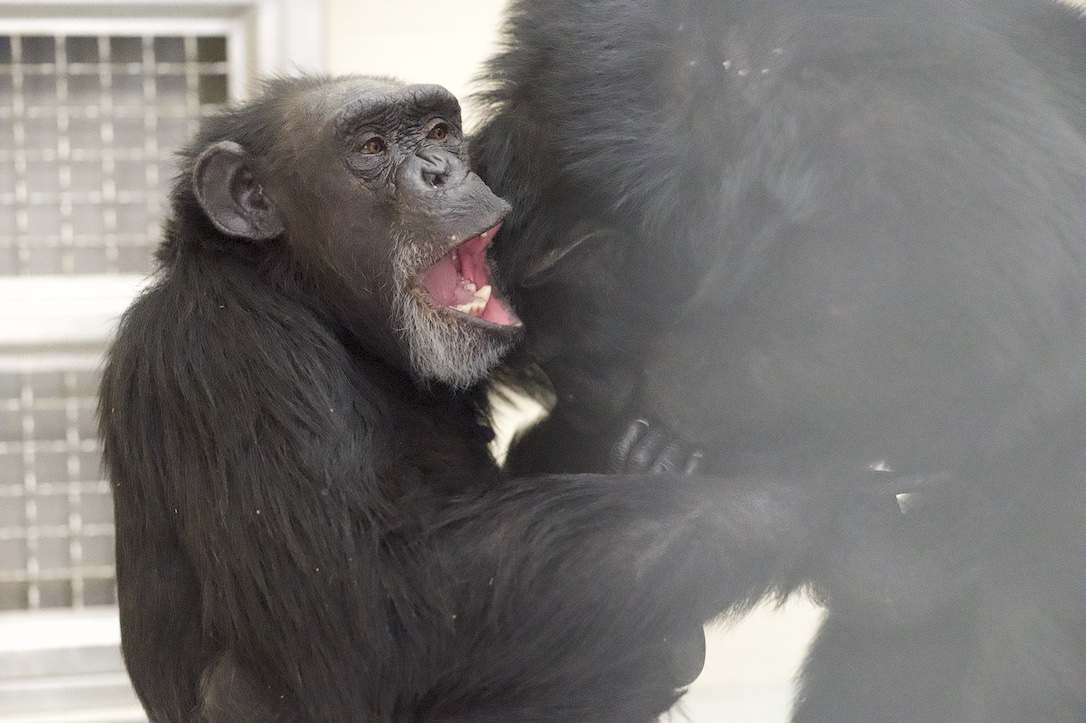
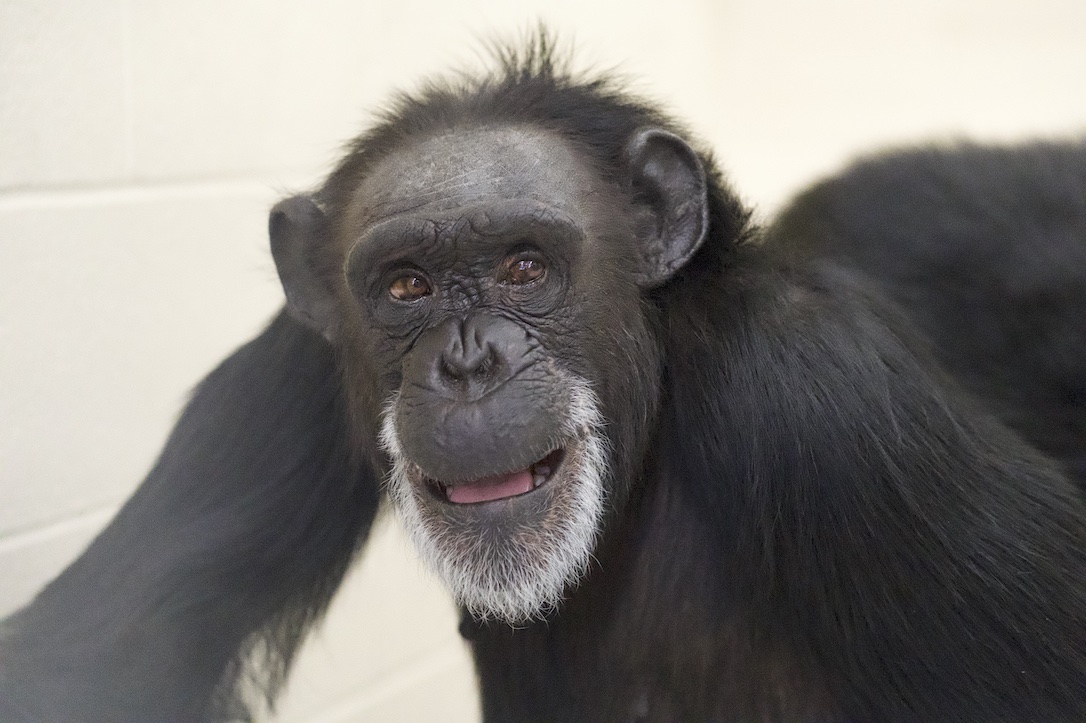
This post is all about Brussels sprouts. In particular, it’s all about how much Honey B loves those little green things.

Humans began cultivating this unique cultivar of cabbage almost two millennia ago. They eventually became popular in northern Europe, including around the Belgian city of Brussels, given them their distinct name. They were brought by European settlers and immigrants to the Americas and retained their status as the most hate-it-or-love-it vegetable. Today, they’re grown in massive quantities in the low countries of Europe and in cool, coastal regions of the American West.

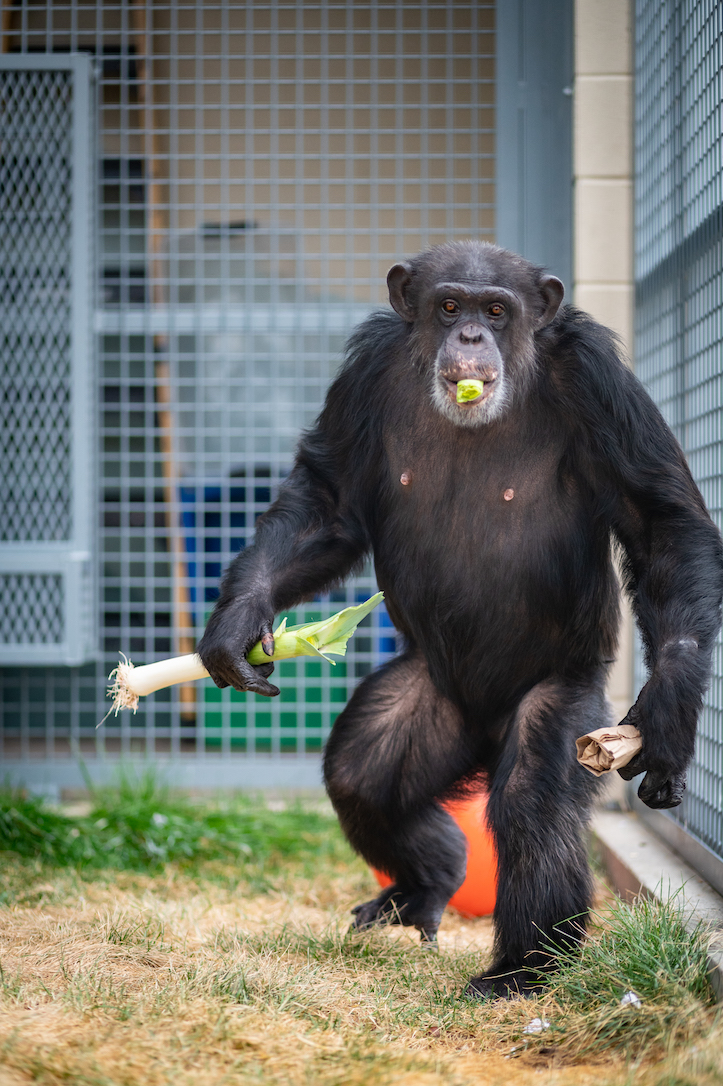
Usually, sprouts are the kind of food that the chimps only pick at once everything else has been served or foraged. Sometimes, certain individuals will show more of an appetite for them than usual. For example, Negra made sure to “harvest” them first during her group’s forage on Saturday. (You can see Diana’s post about it by going to: Queen of Brussels (Sprouts).

The chimps’ preferences for Brussels sprouts increase substantially when they’re still on the stalk, so Kelsi has been ordering them in that form for the past few weeks. Although it doesn’t contain quite as much fiber as one would expect, a Brussels stalk is like a green ice cream cone made of 86% water and only negligible amounts of fat. Each sprout also contains about 16mg of vitamin C, meaning that just a cup of these things contains all of this vitamin that you’ll need in a day. Take that, scurvy.

Today’s video shows Honey B munching on some of these tasty buds. Bone-apple-teeth!
Filed Under: Food, Honey B, Latest Videos, Sanctuary

Micro/Macro

October 4, 2021 by Anthony

Photographing chimpanzees is challenging.

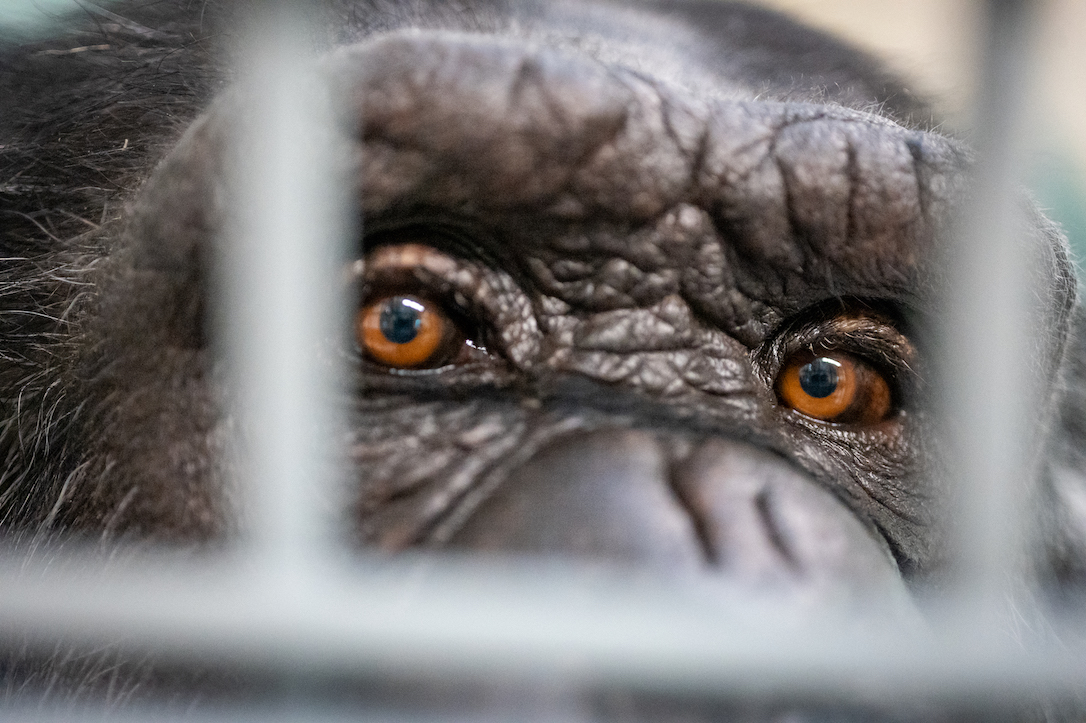
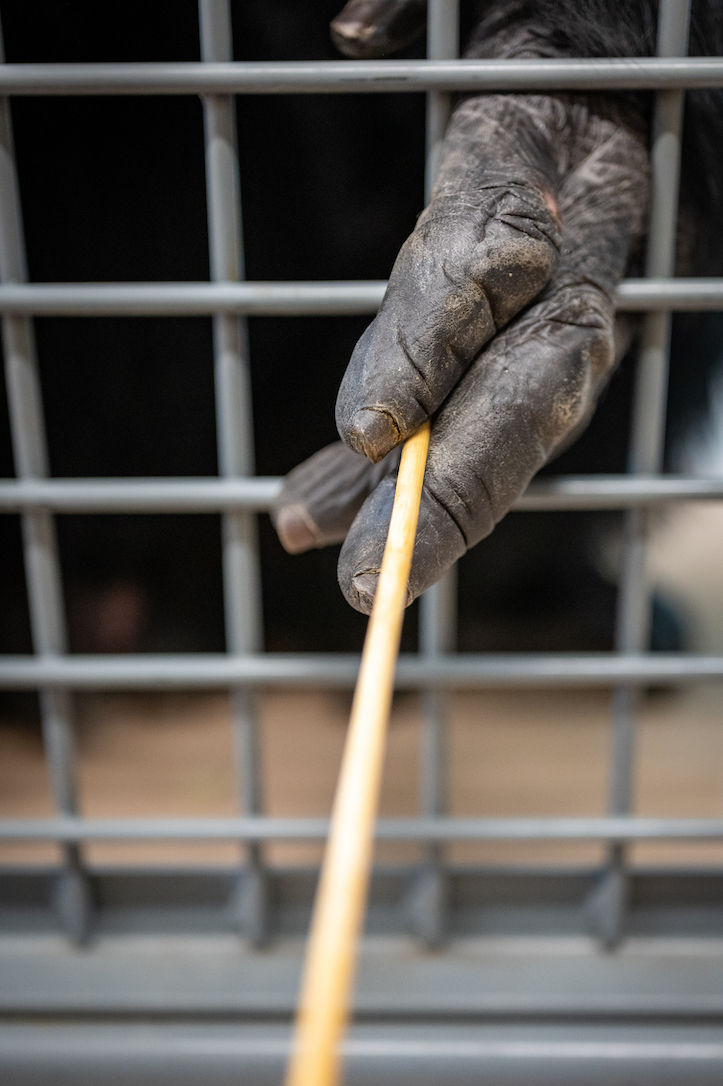
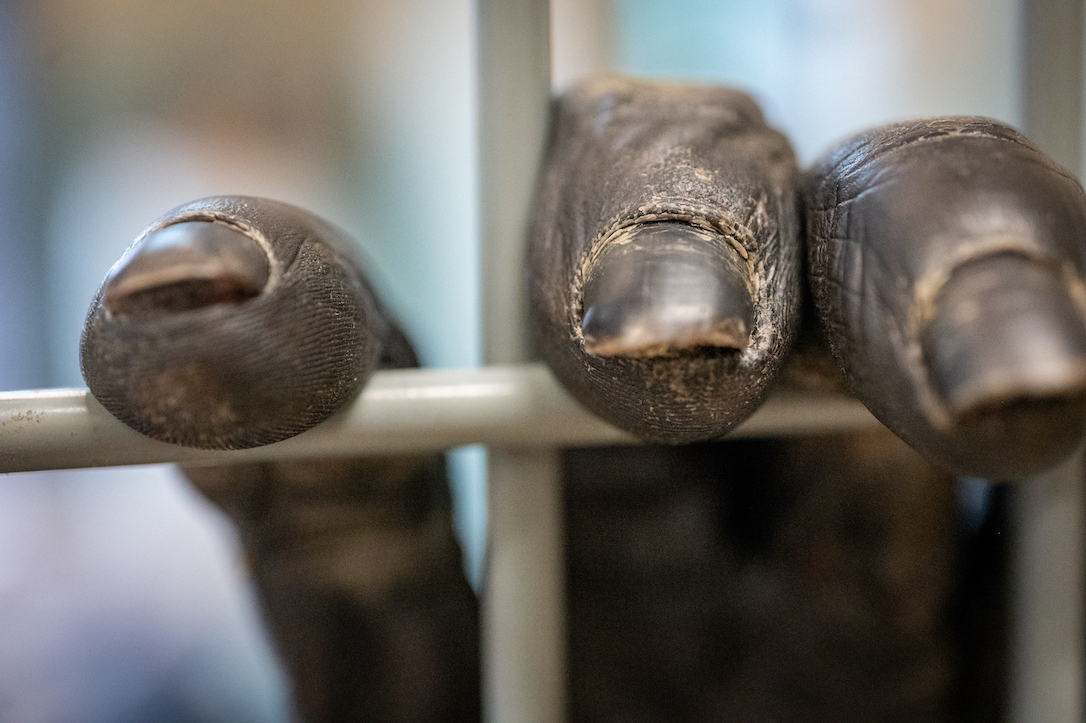
To help us create images worthy of sharing with our followers, the sanctuary has a small collection of donated cameras and lenses (some of which were items on our Amazon Wish List). Unlike those versatile zoom and prime lenses, macro lenses are specialized for close-up photography and are currently absent from our regular kit. In order to play around with one at work and in the field, I personally rented a compatible one from an online retailer and brought it to the sanctuary for a couple days.

Macro lenses are functionally unique because they can zoom in on things close to the lens, yielding a final image that is literally larger than life. This practice is generally known as “macro-photography” and gives the associated lenses their descriptive name. (Perplexingly, “micro” and “macro” lenses are the same thing; Nikon uses the former prefix for their lenses while Canon and Sony employ the latter).

A macro image of Lucky’s fingernails
A close-up of Lucky’s face, focused on her left eye. The scale is larger than 1:1, making this a true “macro” image.

If this is a topic that piques your interest, I highly recommend going to Instagram’s feed for the popular hashtag: #macrophotography. Some of the most common subjects include insects, eyes, flowers, mushrooms, water droplets, and food items.

Conveniently, most macro lenses also take sharp portraits of larger subjects (even though many of these are technically not “macro” images).

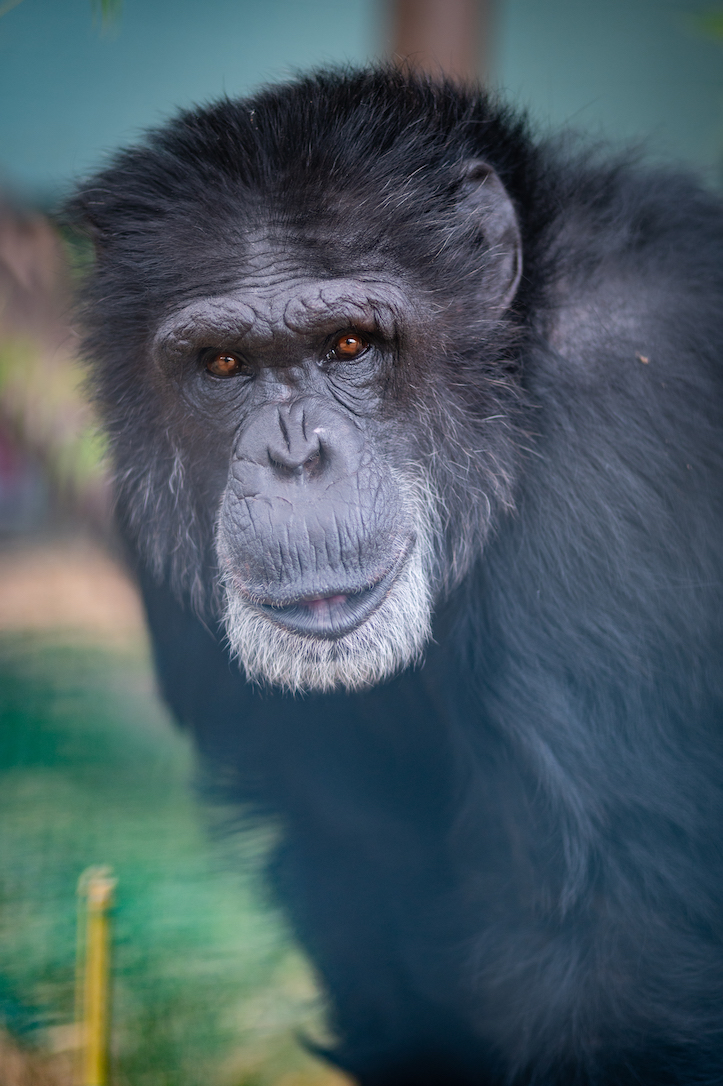
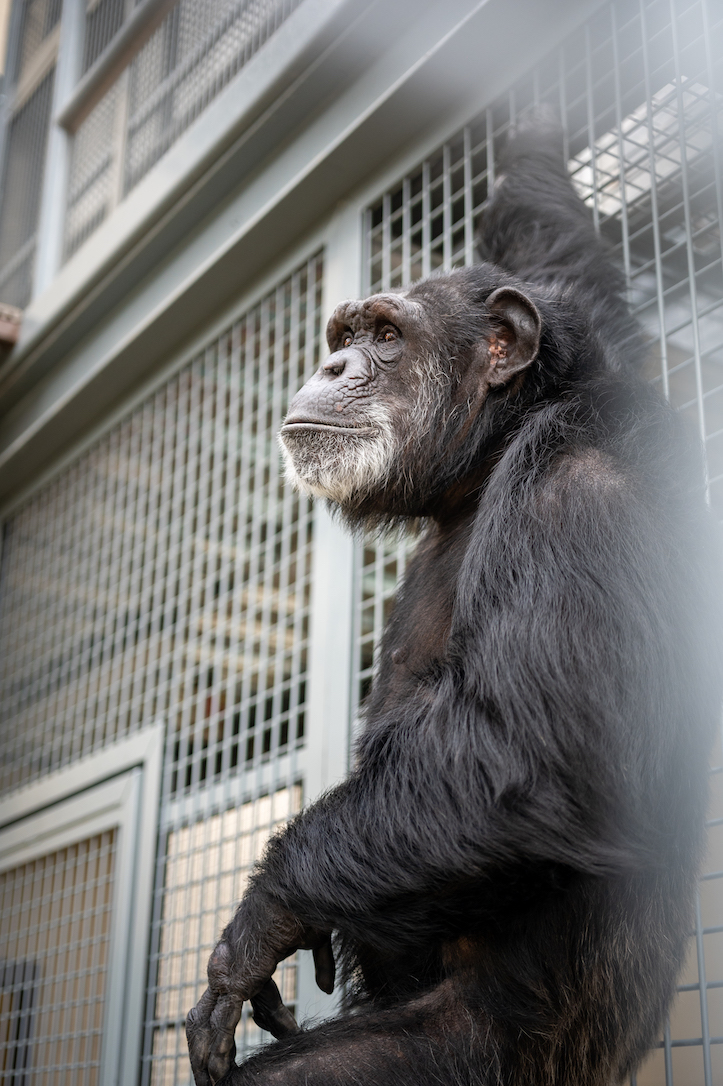
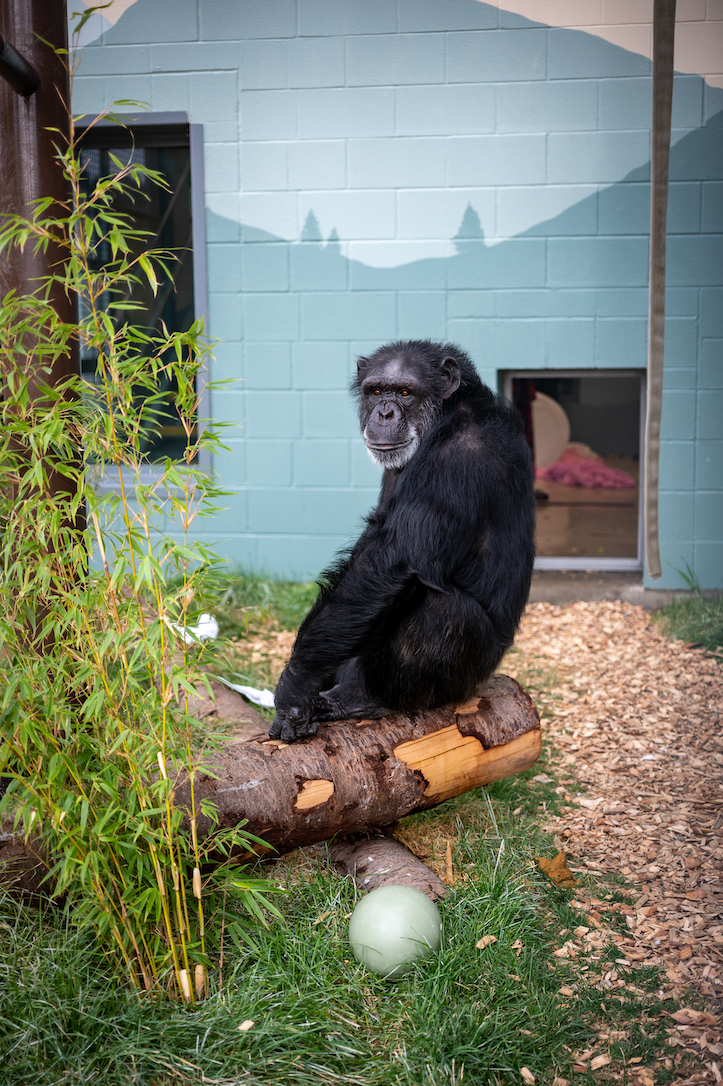
I have included some of the portraits I opportunistically captured of the chimps with the borrowed macro lens. I hope you all enjoy them!
Cy
Dora
Gordo
Lucky
Rayne
Terry
Willy B
Cy
Dora
Lucky
Terry’s fingers holding a chopstick
Lucky

Filed Under: Art, Cy, Dora, Gordo, Lucky, Rayne, Terry, Willy B Tagged With: Animal Welfare, chimp, chimpanzee, chimpanzee sanctuary, Chimpanzee Sanctuary Northwest, chimpanzees, macro, macrophotography, photography, primate rescue, Sanctuary

Twinkle, Twinkle (Lots of Stars)

September 13, 2021 by Anthony

Although the sanctuary is located in a moderately-populated valley, the skies here are still dark enough for stargazing on moonless nights.

I get excited about this lack of light pollution because of my newest hobby: astrophotography. This genre of photography encompasses any imaging of objects and phenomena in space. Those celestial subjects can include the moon, the sun, the other planets, meteors, auroras, Imperial battle stations, neighboring galaxies and stars, and anything else that emits or reflects detectable electromagnetic waves.

Like many who dabble in this art form, I began by taking long exposures of the night sky with terrestrial landscapes in the foreground. It might sound expensive and difficult, but taking these wide shots only requires a hobby camera, a sturdy tripod, and relatively dark skies.

While the techniques do require some patience and persistence to master, you can learn the basics by watching tutorials on YouTube. The most tricky step in the process is tinkering with the camera’s exposure settings. Most importantly, the shutter needs to be open for the right duration to let the perfect amount of starlight reach the sensor. I typically leave the shutter open for 10-20 seconds. Then, I manually focus the lens on the stars (which is practically focusing “to infinity”), set a delayed shutter timer, and make sure the white balance is capturing the scene’s colors with the appropriate warmth or coolness. From there, photographers can create more artistic, difficult or unique shots (e.g., by blending multiple captures into composite images), but this certainly isn’t required.

For months, I’ve dreamed of photographing the chimpanzees’ home under the Milky Way, capturing their little world in the same frame as countless others. The proverbial stars aligned around Labor Day; I volunteered to watch the sanctuary at night in place of Diana and J.B. (who took a much-deserved weekend vacation) and was lucky enough to have a clear, moonless night during my tenure as the overnight watchman.

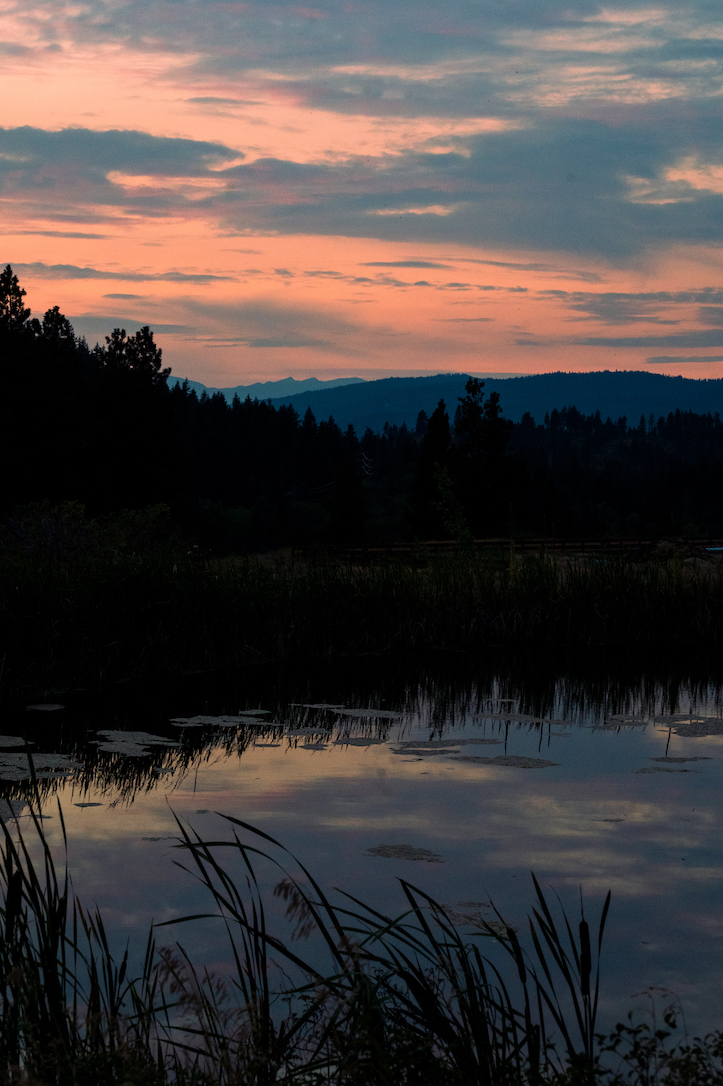
I set out just after sunset and admired the silhouettes of the forested hills against the rose-colored sky. Eventually, the scene darkened and rendered the Milky Way visible with the naked eye. I trekked around the perimeter of Young’s Hill, trying not to annoy the nearby cattle with my headlamp or step on any nocturnal critters that might be lurking in the prairie grass. Eventually, I picked a good location where the Ponderosa pines made a natural frame around my window into the cosmos.

I wondered if any of the chimps were still awake or if all sixteen were blissfully curled up on piles of fleece blankets in the heated playrooms. From what we’ve seen, they’re mostly heavy sleepers. (Burrito, for example, picks his sleeping spot right after dinner is served.) Still, it’s possible they occasionally venture out into the greenhouses long after the humans have left and watch the Milky Way turn overhead as the coyotes yip in the distance.

We humans know what the stars are but that doesn’t make them any less wonderful. I like to think the chimps are awestruck by them, too.

The following are my favorite images from my nocturnal hike around the sanctuary. I hope you all enjoy them!

“Blue hour” sunlight illuminated one of the sanctuary’s several ponds.
The sunset provided a fitting backdrop for the silhouettes of trees scorched by past wildfires.
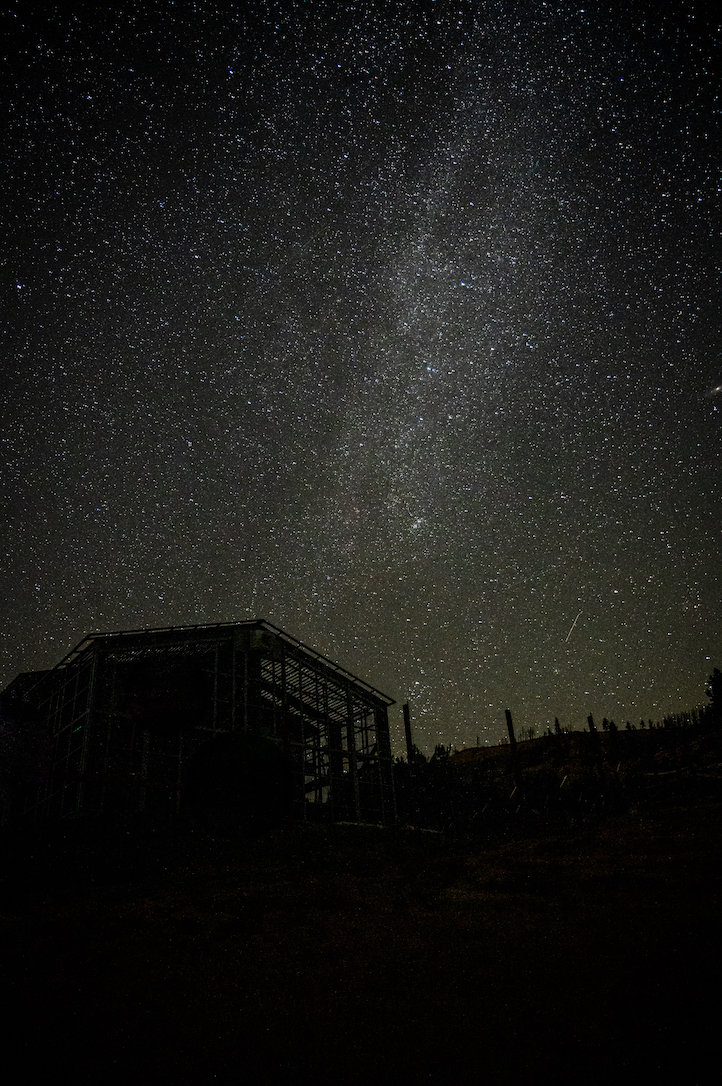
This 15-second exposure shows one arm of the Milky Way galaxy over the new wing of the sanctuary’s Chimp House
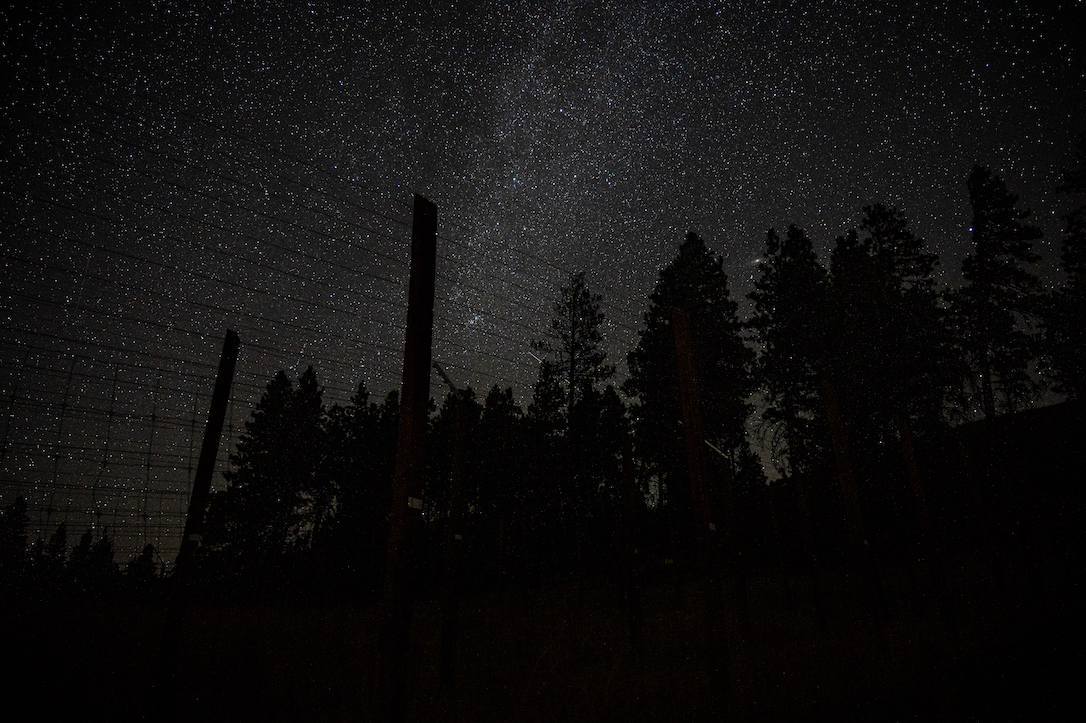
You can see the fences of Young’s Hill, the chimps’ outdoor habitat, in the foreground of this 15-second exposure.
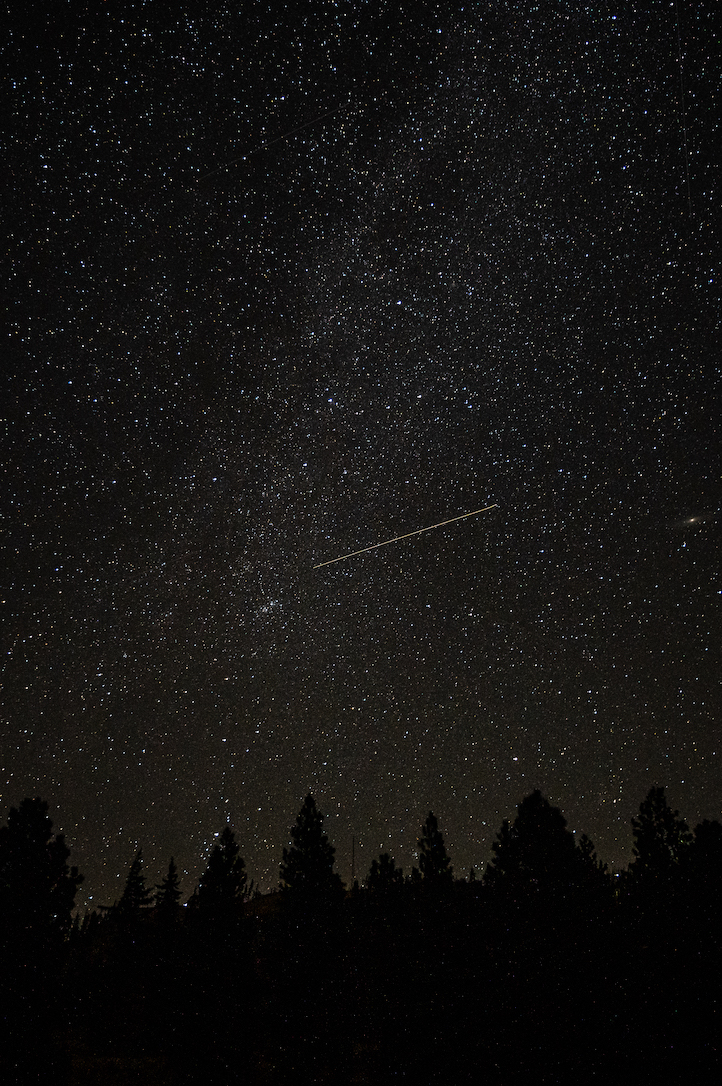
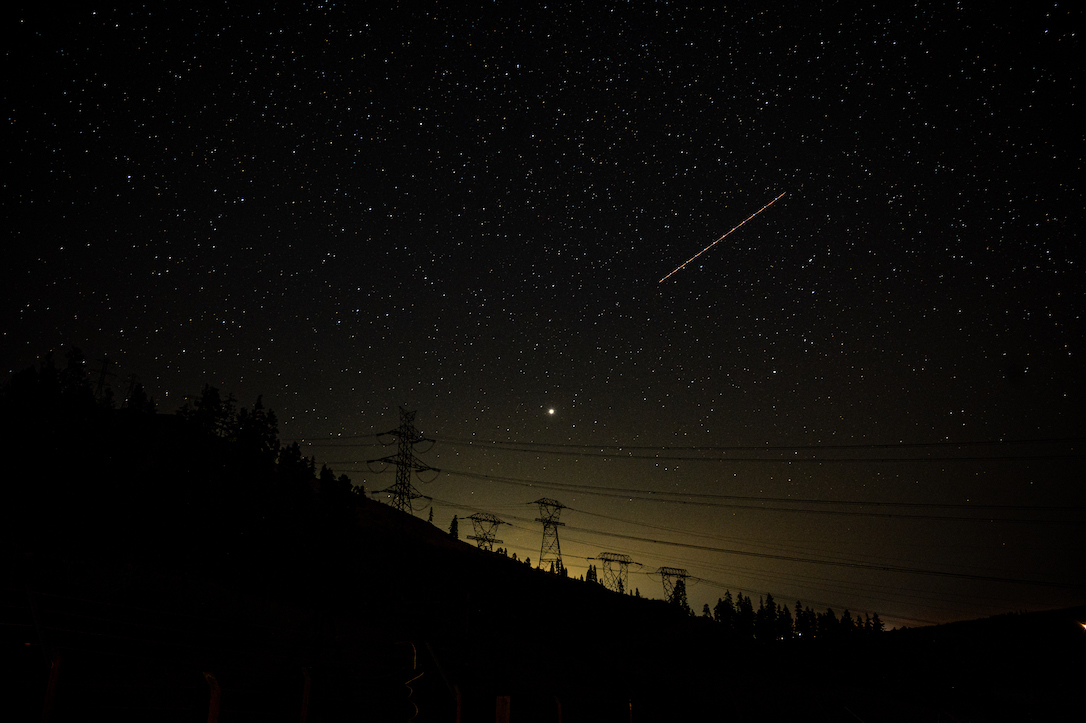
A Starlink satellite crossed the frame during this 20-second exposure taken behind Young’s Hill.
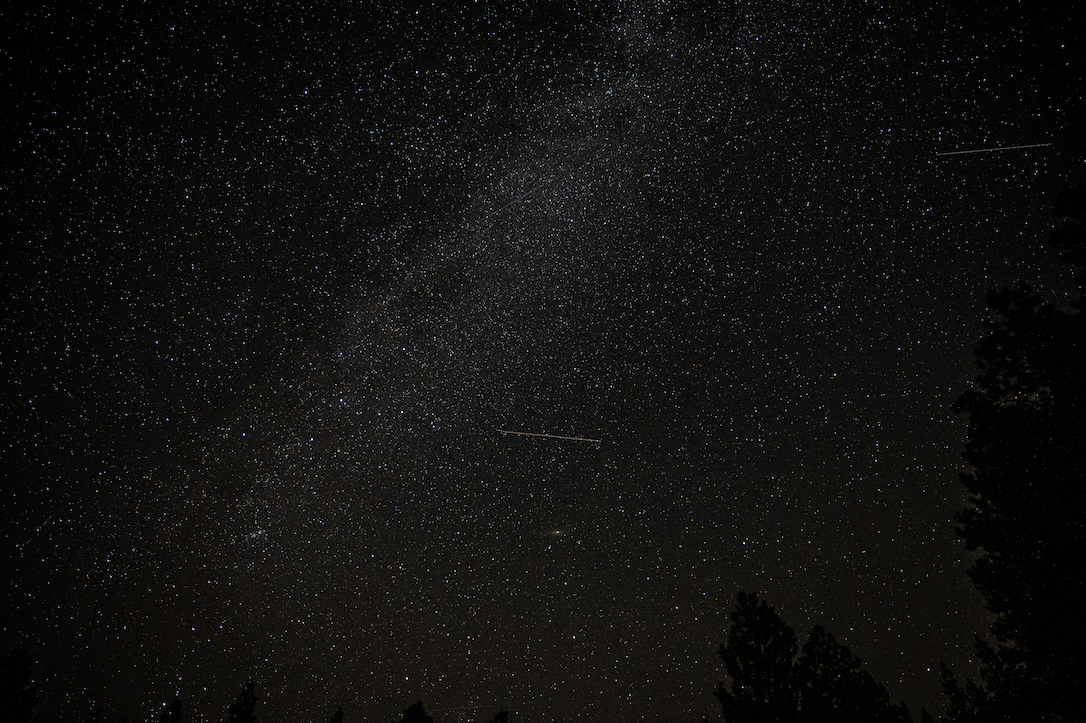
I tilted the lens upward for this 15-second exposure that shows three of SpaceX’s Starlink satellites. There are currently ~1600 of them orbiting the Earth, with thousands more to be launched soon.
This 15-second exposure shows the light pollution from nearby Ellensburg, the largest city in our county. It also captured the star Enif (known as the “front hoof” in the Pegasus constellation) and the lights of a passenger plane leaving Seattle. (Note: the blinking red light on the plane’s left wing and white light on the tail tell you the plane was traveling from right to left when this image was taken.)
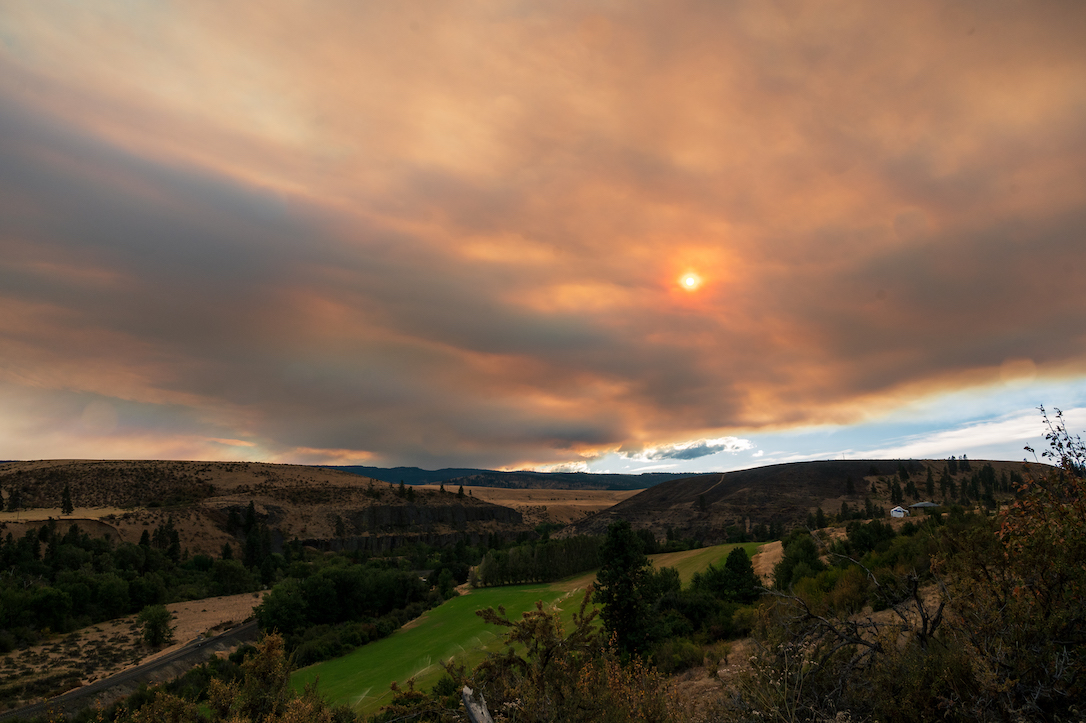
Bonus Photo: the smoke from the 100,000-acre Schneider Springs fire drifted towards our valley over Labor Day weekend, creating a gnarly afternoon sky.


Filed Under: Sanctuary, Weather, Young's Hill Tagged With: Animal Welfare, chimpanzee, chimpanzee sanctuary, Chimpanzee Sanctuary Northwest, northwest, Sanctuary, young's hill

Reminder: Chimps Don’t Belong in Captivity

September 6, 2021 by Anthony

For today’s blog post, I thought it would be worthwhile and prudent to review some of our positions and policies for anyone who may be new to our content.


First, I hope that everyone takes the time to find out why we exist, how we do what we do, and why we do it that way. The quickest way to familiarize yourself is to visit the Mission, Vision and Goals page on our organization’s website.

You’ll quickly see that we’re extremely opposed to practice of keeping nonhuman primates in captivity. Unfortunately, many chimpanzees were taken from the forests of Africa years ago and have been bred and behaviorally conditioned for use in research and entertainment. The majority of these individuals were deprived of the irreplaceable maternal bonds and complex social networks that free-living chimpanzees depend on for survival, essentially rendering the entire captive population incapable of a reintroduction into the wild.

As a response to these past injustices, the sanctuary provides a permanent retirement home for these individuals where they are free from further exploitation and can have some degree of self-determination.

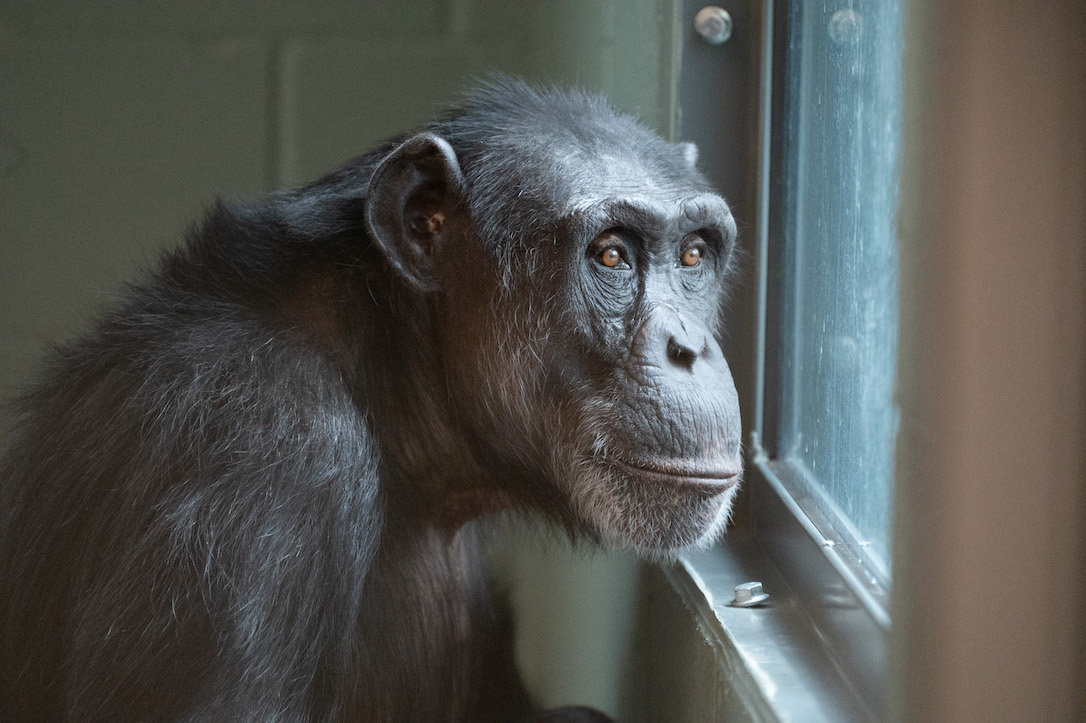
Mave looks out from one of the new indoor playrooms.
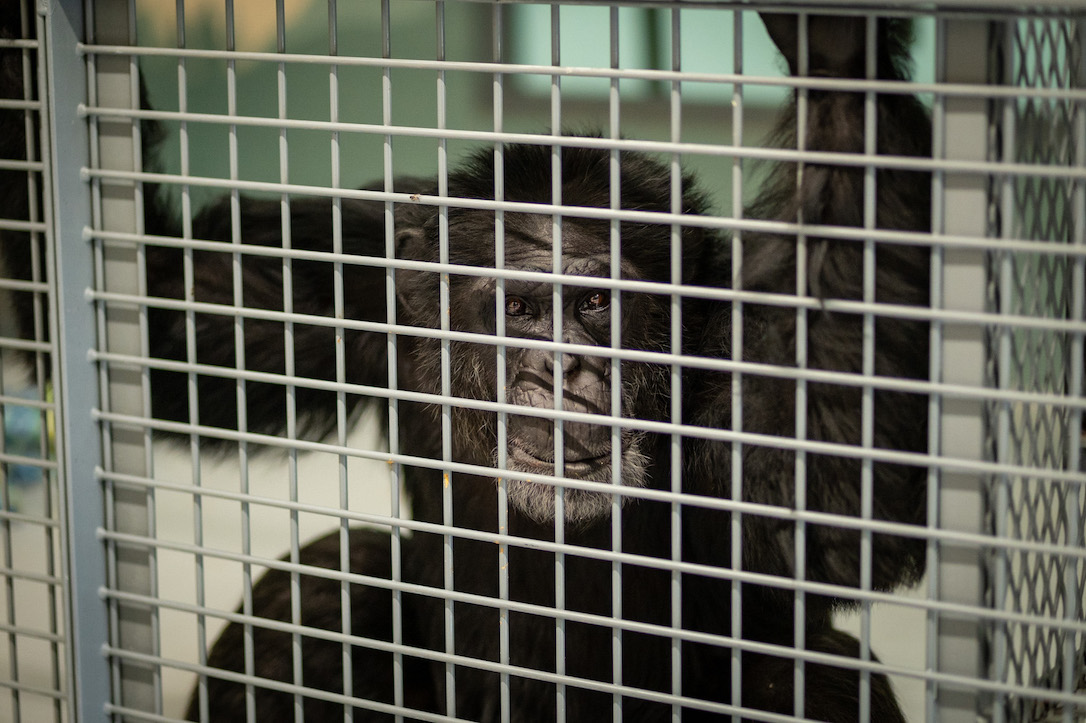
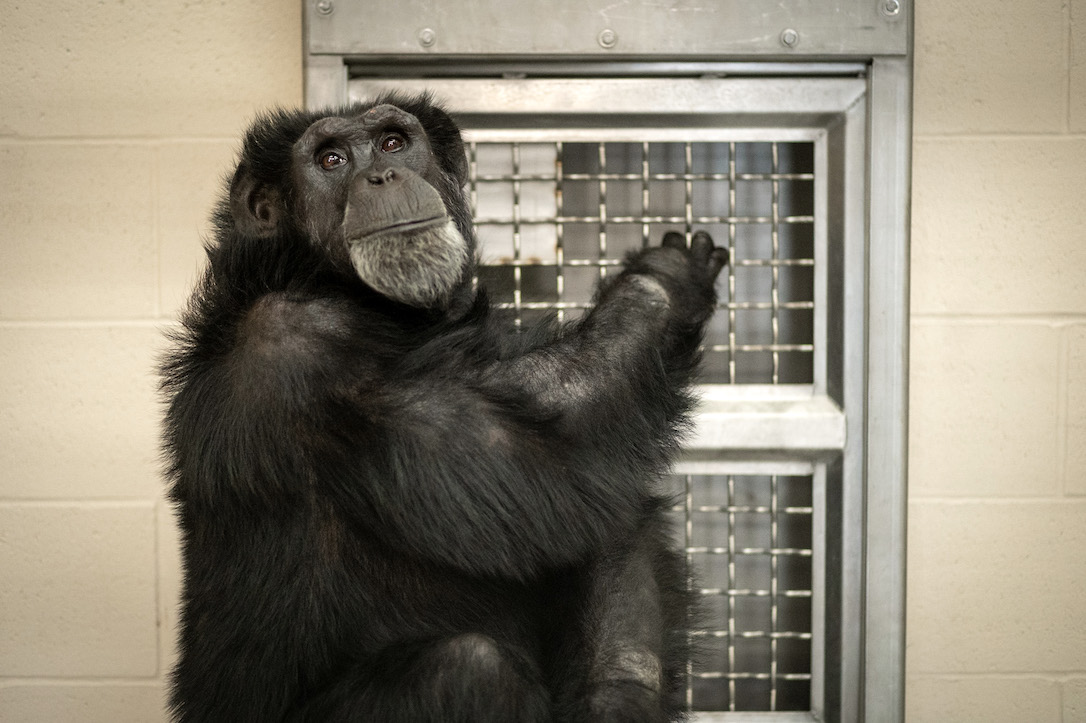
Cy watches the caregivers from behind the steel mesh caging.

This protection from harm does not, however, come with absolute freedom from captivity. Each group of chimps has regular access to several different enclosures, but they must stay within these areas for their own security (and for human safety). Chimpanzees are not a domesticated species and the individuals we care for are not tame, so it would be irresponsible and dangerous to let them out of their enclosures to interact with humans in any capacity. Likewise, we never enter an enclosure occupied by chimpanzees; Before staff can unlock a space for cleaning or repairs, multiple trained personnel must confirm that all the chimps are accounted for elsewhere and that all the barriers between the areas are secure.

Willy B watches a caregiver operate the hydraulic doors while safely outside the enclosure.
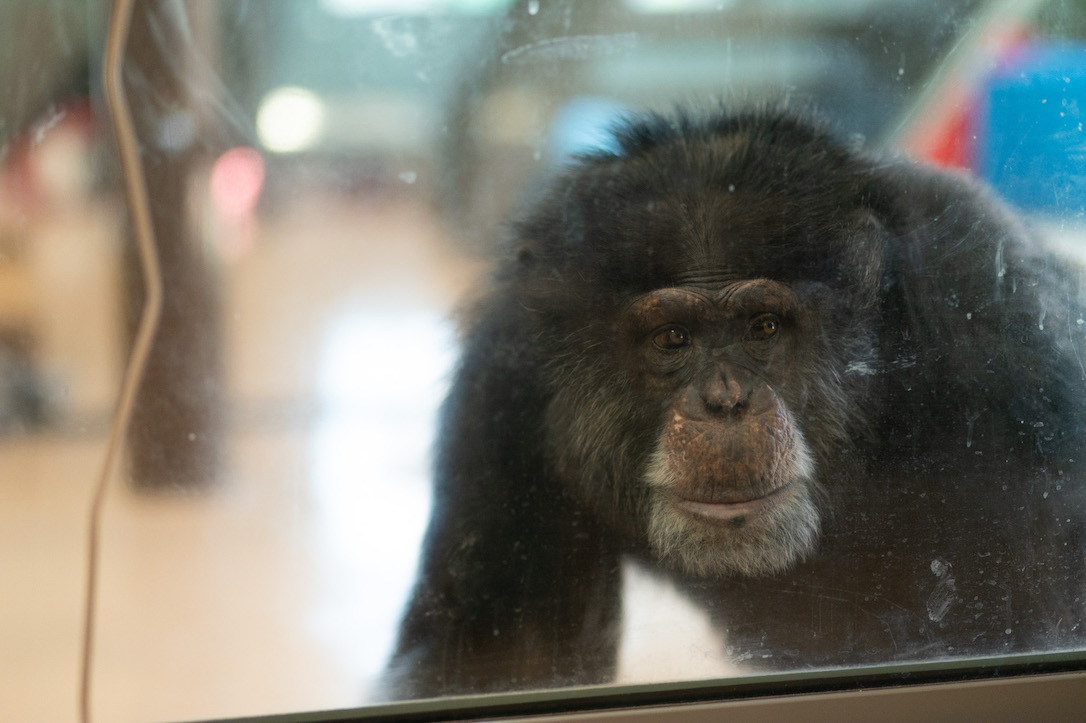
Caregiver Sofia interacts with Gordo across a chimp-proof window in the new indoor areas.

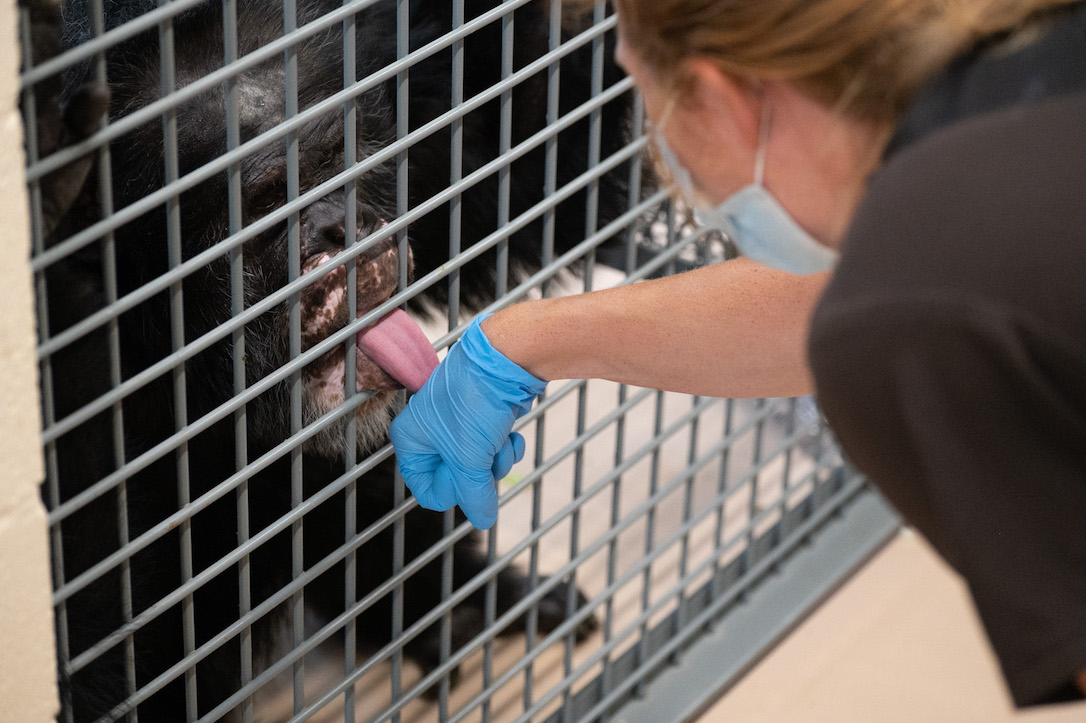
If a staff member or experienced volunteer wants to have a social interaction with a chimpanzee (e.g., playing, grooming, serving food), the human must follow our protected contact protocols which minimize the risk of physical injury. This policy also requires us to wear appropriate protective equipment, such as masks and gloves, in order to protect the chimps from any respiratory illnesses that we may be carrying.

When we share photographs or videos of humans and chimpanzees engaging in these activities, we add a disclaimer that provides key contextual details and reiterates our philosophy on captivity. Otherwise, we’d risk spreading the harmful myth that chimps can be safely handled.

Caregiver Kelsi allows Terry to “kiss” the back of her gloved hand.
Volunteer Lizz grooms Jamie with piece of browse.

Similarly, imagery of nonhuman primates situated in artificial environments (or provisioned with similarly anthropogenic objects) may cause people to wrongly believe that they are meant to be in proximity to humans. As advocates for these individuals and their species, this puts us in an awkward place. Are we better serving the chimpanzees if we portray them as they should be or as they currently are?

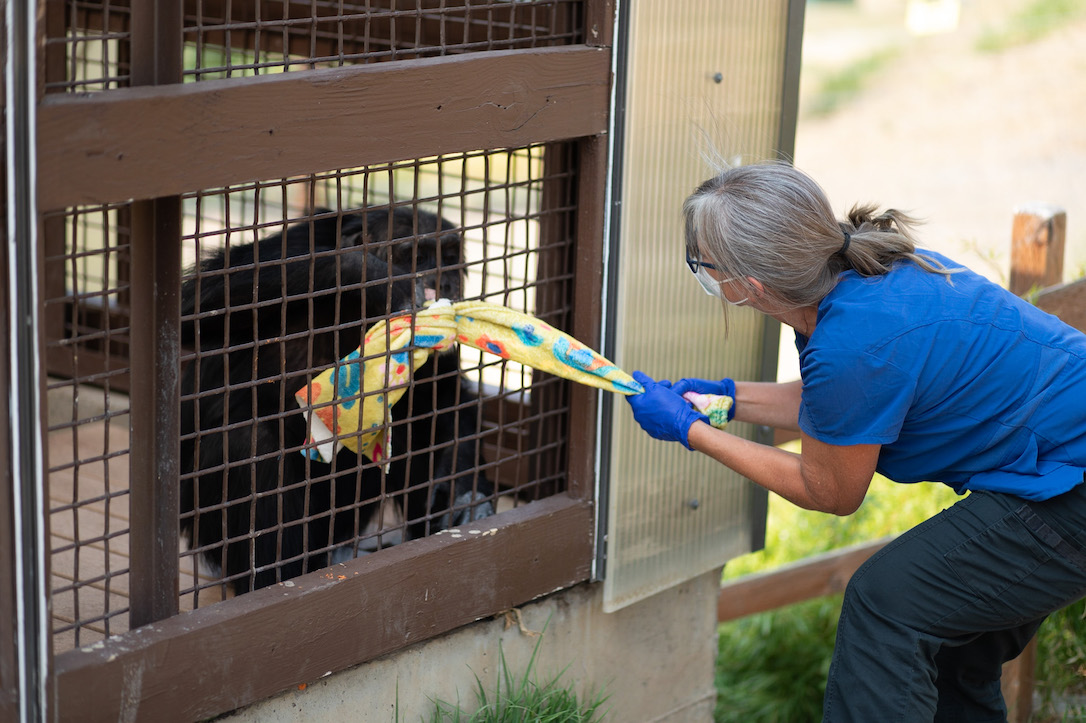
Dr. Erin plays “tug o’ war” with Burrito.

When sharing any content online, our team also has to consider the aesthetics of our facility and how it may be perceived. While we prioritize the design and regular enrichment of these enclosures in ways that maximize their suitability for the chimpanzees, they still have some unmistakable hallmarks of captivity: cement floors, industrial architecture, steel caging, and giant padlocks. For this reason, we often belabor the fact that the chimps have access to various indoor and outdoor areas throughout the day (except for the brief periods when we’re cleaning each of those spaces) but often choose to hang out inside regardless of the other options made available to them.

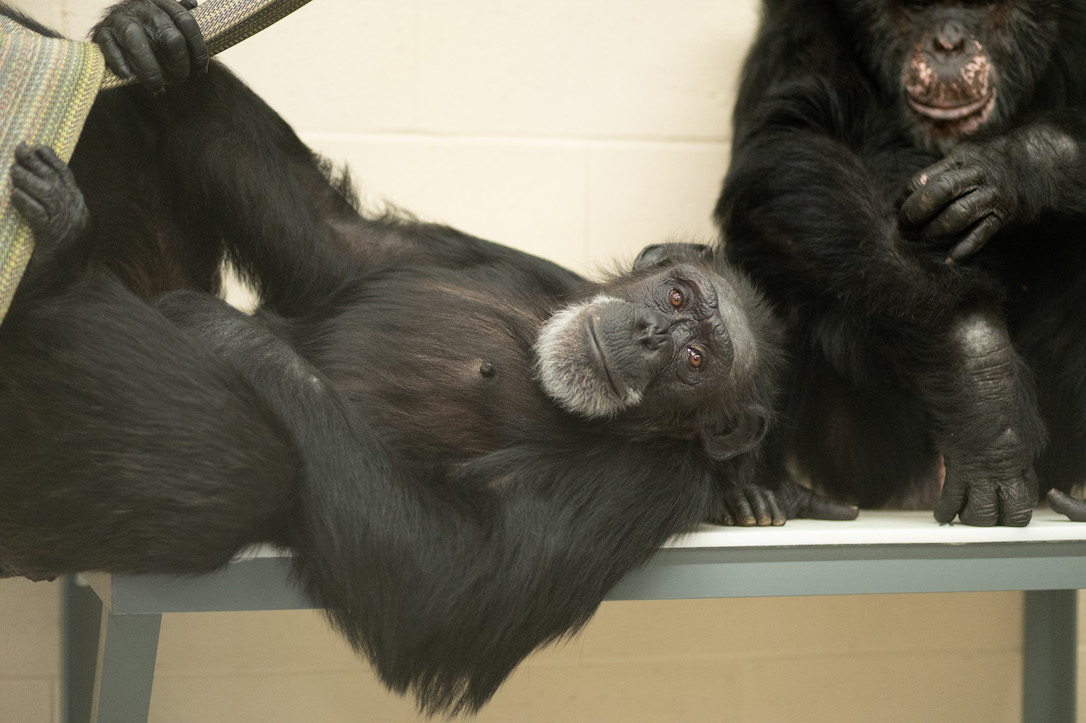
Rayne lounges on a bench in one of the indoor “front rooms.”
Honey B watches the other chimps from the comfort of an indoor playroom.

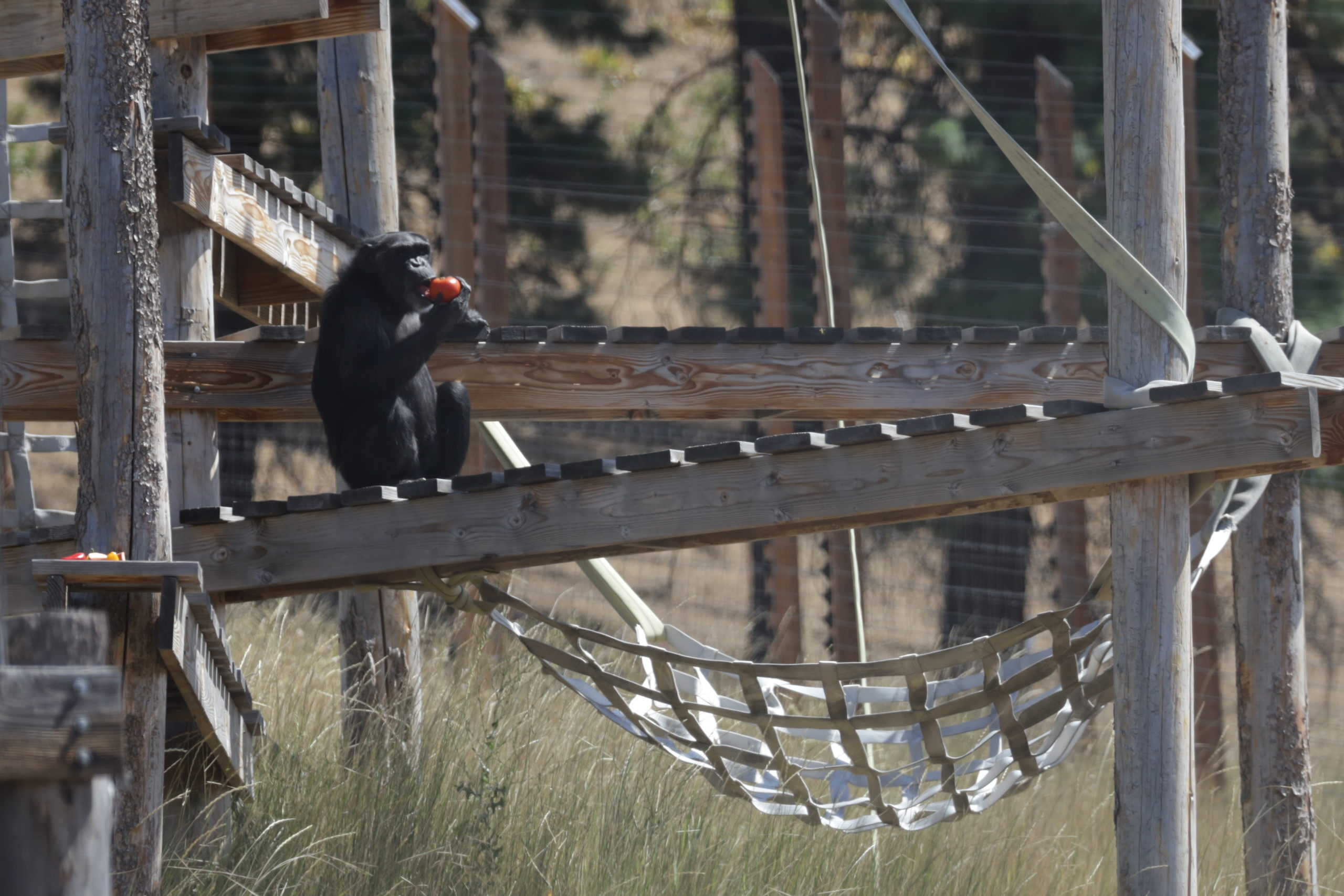
The facility’s largest (and most “natural”) enclosure is Young’s Hill, a two-acre meadow furnished with wooden climbing structures and surrounded by a perimeter of electrified fences. The chimps frequently explore and patrol this space and we look forward to having another outdoor area for additional group of chimps to use simultaneously. Even so, the chimpanzees who reside at the sanctuary choose to spend only a small fraction of their time out there (despite the unique opportunities that such a habitat gives them). Instead, the chimps generally prefer to socialize and lounge in the semi-enclosed “greenhouses” throughout the day and make their nests in the elevated portions of the climate-controlled “front rooms” and “playrooms” each night. Some even choose to sleep on the heated cement floors.

The truth is that these chimps have lived most of their lives in artificial spaces like these. Apparently, they feel more comfortable in them.

Who would we be if we forced them to do anything different?

Lucky watches the passing caregivers from an elevated platform in one of the new greenhouses.
Willy B sits outside but is partially obscured from the camera by the electrified wires.
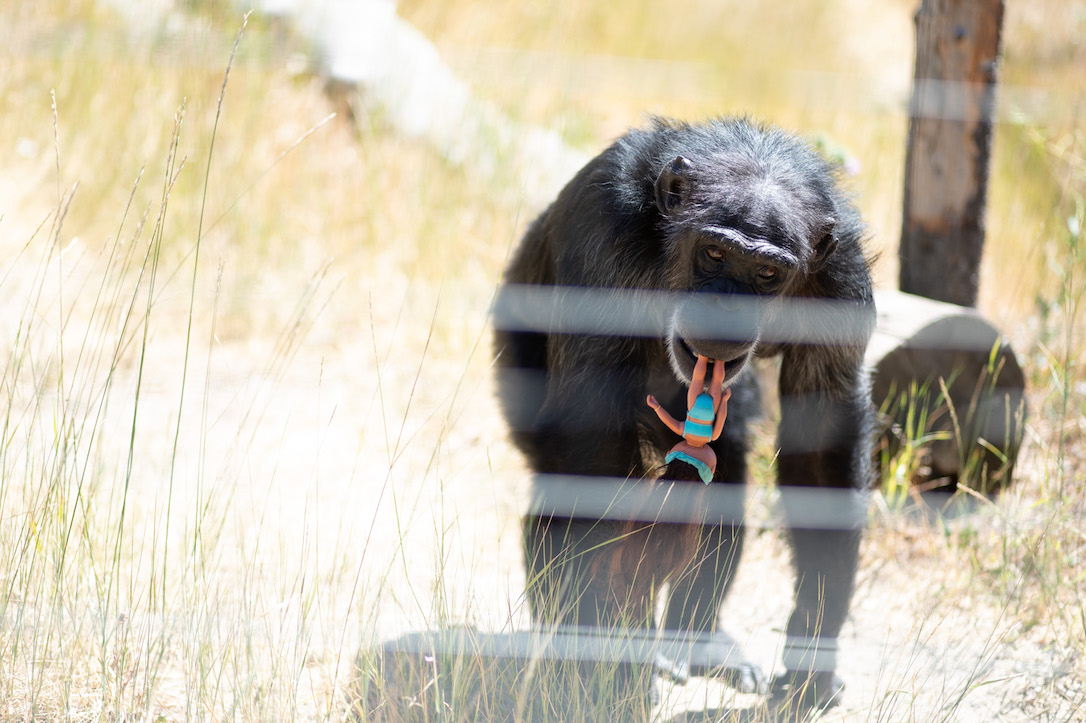
Foxie (with one of her dolls) looks out from within the perimeter fence of the Young’s Hill enclosure.

Last year, Diana wrote some words that, in my opinion, say it best.

We’ll continue to blur the fencing out of some photos and put the cameras up to the caging for an unobstructed view, but it’s not because we want you to forget that it’s there; it’s so you can fully see the unique and wonderful chimpanzees who are choosing to do whatever they are doing in the moment when the camera shutter closes.


I compiled an assorted reading list for anyone who wishes to read more about these nuanced issues (and hopefully get some perspectives besides my own)!

From our website:

CSNW FAQs page

CSNW Blog: “Why are the Chimps in Cages?” (by Diana, 2015)

CSNW Blog: “The Tough Questions” (by Me, 2020)

CSNW Blog: “Caging is OK” (by Diana, 2020)

From other sources:

Study: Impact of Visual Context on Public Perceptions of Non-Human Primate Performers

IUCN’s Best Practice Guidelines for Responsible Images of Nonhuman Primates

North American Primate Sanctuary Alliance’s Position Statements

Thank you all for caring so much about chimpanzees!

Filed Under: Advocacy, Caregivers, Featured Post, Sanctuary, Young's Hill Tagged With: animal rescue, animal rights, Animal Welfare, chimp sanctuary, chimpanzee, chimpanzee retirement, chimpanzee sanctuary, chimpanzees, Cle Elum, Sanctuary, young's hill

Can’t Help Falling In Love (With Fall)

August 30, 2021 by Anthony

For those of you who aren’t acquainted with this slang term, a “basic” person has uninteresting interests.

To be fair, being labeled as basic isn’t necessarily bad. Basic things are, by definition, quite popular.

In a way, basic people are anti-hipsters. Rather than having eclectic or unique tastes, they enjoy activities that are universally-liked by everyone else. The cliché basic person is a 20-something educated female who listens to Taylor Swift, uses TikTok, watches The Office, and drinks pumpkin spice lattes in August. Oddly, a common stereotype is that these people all LOVE autumn and anything even loosely associated with the season. (Of course, fall is also the perfect time to show off a diverse collection of flannel shirts and take artsy photos of fallen leaves.)

While the term has only been applied to humans, I’d like to argue that even chimps can be basic.

For example, Negra’s hobbies include eating spring grass, eating peanuts and chow, watching the caregivers work, and napping peacefully on high platforms. None of these interests are avant-garde, and Negra seems totally fine with that. She doesn’t want to be surprised, shocked, or inconvenienced; she just wants to enjoy the simple, familiar pleasures. She’s basic to the core and seems to be proud of it.

Perhaps the world would be a better place if we were all, like Negra, comfortable with our own basicness.

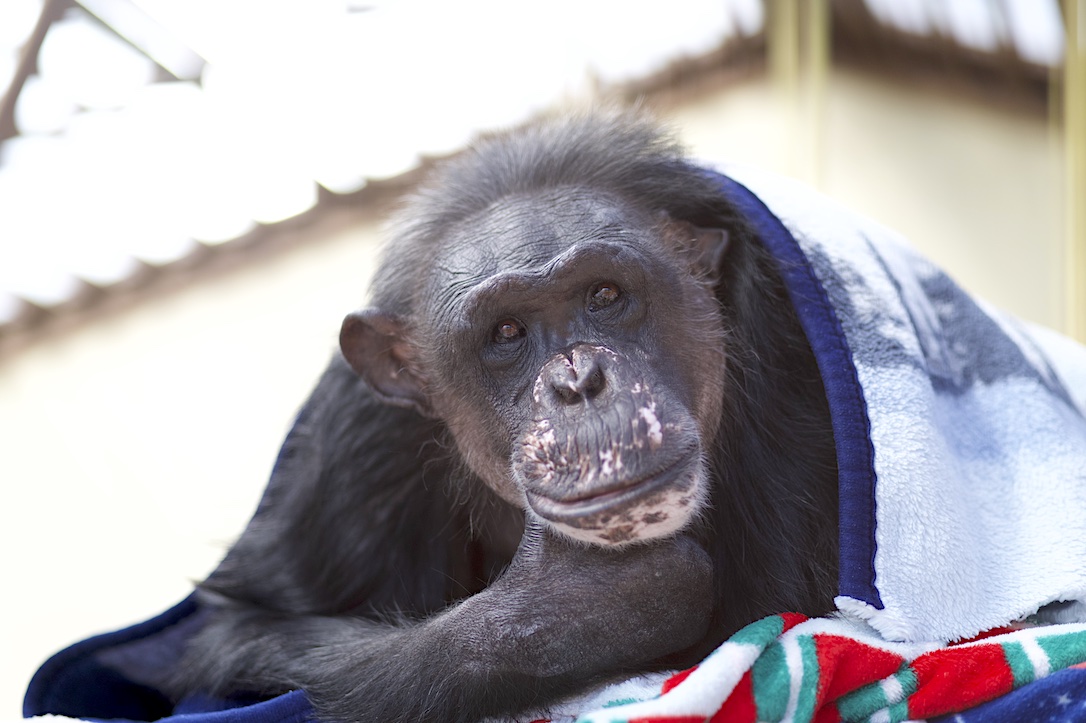
I’m sure that if Negra had her own Instagram, she’d be posting selfies of herself enjoying the cool autumn breeze under a pile of fleece blankets today. Since she doesn’t have her own social media, I decided to post on her behalf today.


#PumpkinSpice #FallMeMaybe #FallmostHere #AutumnVibes #FleeceBlankets #Basic

Filed Under: Enrichment, Negra, Nesting, Weather Tagged With: Animal Welfare, chimp enrichment, chimpanzee sanctuary, Chimpanzee Sanctuary Northwest, chimpanzees, csnw, northwest, Sanctuary

Soup of the (Birth)Day

August 23, 2021 by Anthony

Today, we celebrated Missy’s 46th birthday with a tomato-themed bash.

Paulette Wrisley made us smile by generously sponsoring this day of sanctuary in Missy’s honor. To make today even more special, our good friend Monica Best also sponsored this day of sanctuary for the same reason! Thank you for thinking of Missy, Paulette and Monica!

As many of you already know, tomatoes are Missy’s favorite food and she gets unashamedly excited about them. In fact, Missy’s love of tomatoes has single-handedly convinced the aforementioned Monica to give these odd fruits another chance (with some success).

Keeping this in mind, Enrichment Coordinator Chad created a chimp-friendly menu of fresh produce centered around whole beefsteak tomatoes. The meal even had an appetizer: a zesty gazpacho-like soup consisting of red bell peppers, celery, coconut milk, garlic, sweet onions, and tomatoes.

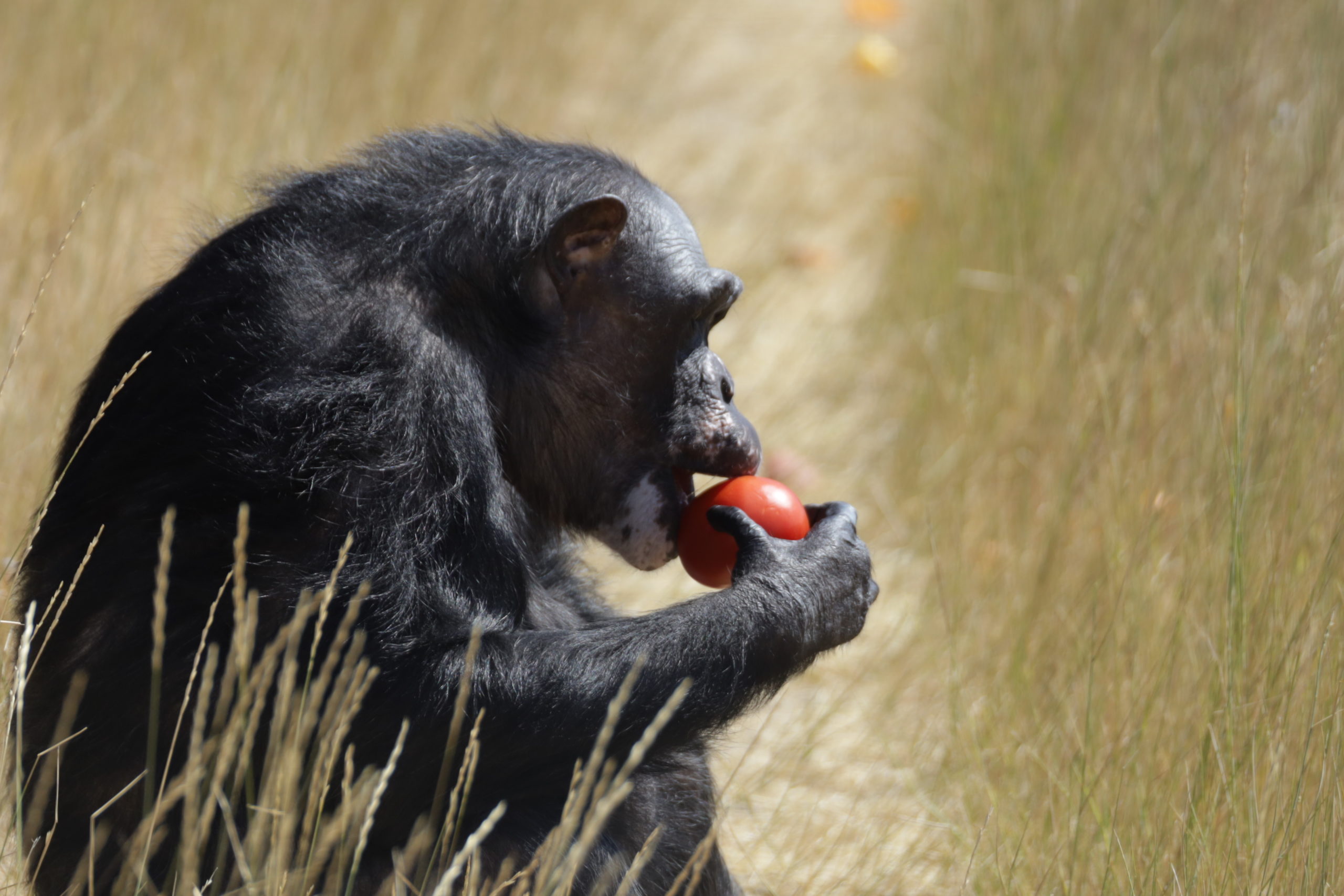
All three groups of chimpanzees enjoyed their own parties with the same menu, and the soup was an unexpected hit with some individuals while others ran around gathering sweet peppers and tomatoes. Of course, Missy seemed to have the best day of all. She zoomed around the Greenhouse and Young’s Hill, scarfing down dozens of treats and devouring several large beefsteak tomatoes on her own.

Chad took the following photos and I asked him if I could include them in today’s post! Even if Chad had said “no,” I would have stolen the images from him and taken credit anyway.

Negra
Missy
Burrito
Foxie
Burrito (doing his best impersonation of Missy)

We’re so lucky to have such amazing supporters who make days like today possible, and we can’t possibly express our full appreciation for Paulette, Monica, and everyone else. Thanks you all for loving Missy and her companions as much as we do!

~~~~~~~~~~~~~~~~~~~~~~~~

P.S. I wanted to title this blog post Soups!… I Did It Again but I did some research and that pun is already in use. Apparently, there’s a Wisconsin company using that name for their brand. They actually make soups. I’ve been bested at my own game. Soups.

Filed Under: Food, Latest Videos, Missy, Party, Sponsor-a-day, Thanks, Young's Hill Tagged With: Animal Welfare, chimp, chimp sanctuary, chimpanzee, chimpanzee sanctuary, Chimpanzee Sanctuary Northwest, chimpanzees, csnw, Sanctuary, Sponsor-a-day, young's hill

The Rayne Attraction

August 16, 2021 by Anthony

Last week, I introduced you all to… uh… well… introductions.

You can read that blog post here if you need to catch up. Since then, we’ve posted the following updates related to social integrations: Chad’s Today’s Forecast: Rayne, Kelsi’s Exhilarating Day, J.B.’s Ups and Downs, Diana’s Play During Intros, and Sam’s The Introductions Continue!

Well, today was another exciting day…

Rayne met Willy B in a controlled introduction session!

Willy B
Rayne

They took a few minutes to warm up to each other, but they both behaved in a friendly and respectful manner. Eventually, they “broke the ice” and began to playfully stomp around and wrestle. It’s remarkable how two chimps who have never been together before can suddenly decide to inundate each other with goofy gestures of affection. Their exuberant facial expressions and thunderous chuckles lit up the indoor area where their meeting was staged.

We’ve learned that Willy B has a tendency to start introduction sessions with enthusiasm but quickly grows bored. In today’s meeting, the opposite happened; Willy wanted to keep playing but Rayne eventually grew tired and began to watch the humans expectantly.

Rayne and Willy B amicably separated shortly before dinner and voluntarily returned to their respective social groups in the new playrooms and greenhouse enclosures.

Tomorrow, we hope to continue the integration process by facilitating more introductions!

Filed Under: Introductions, Latest Videos, Play, Rayne, Willy B Tagged With: Animal Welfare, chimp, chimp sanctuary, chimpanzee, chimpanzee retirement, chimpanzee sanctuary, Chimpanzee Sanctuary Northwest, chimpanzees, Play, Primates, Sanctuary

  • « Go to Previous Page
  • Page 1
  • Interim pages omitted …
  • Page 7
  • Page 8
  • Page 9
  • Page 10
  • Page 11
  • Interim pages omitted …
  • Page 27
  • Go to Next Page »

Primary Sidebar

Subscribe To the Blog and Get Notified of New Posts First!

Archives

Calendar of Blog Posts

June 2026
S M T W T F S
 123456
78910111213
14151617181920
21222324252627
282930  
« May    

Categories

SUBSCRIBE TO OUR NEWSLETTER

Footer

PO Box 952
Cle Elum, WA 98922
[email protected]
509-699-0728
501c3 registered charity
EIN: 68-0552915

Official DDAF Grantee

Menu

  • The Chimpanzees
  • Blog
  • About Us
  • You can help
  • Resources
  • Contact
  • Donate

Proud Member of

Connect With Us

Search

Copyright © 2026 Chimpanzee Sanctuary Northwest. All Rights Reserved. Site by Vegan Web Design