The chimpanzees recently had some visitors from KIRO 7 News in Seattle, who put together this great piece about the sanctuary and the plans for expansion. Below is the video and here’s the link to the page on the KIRO 7 News page.
Chimpanzee Sanctuary Northwest
Hope. Love. Home. Sanctuary
The chimpanzees recently had some visitors from KIRO 7 News in Seattle, who put together this great piece about the sanctuary and the plans for expansion. Below is the video and here’s the link to the page on the KIRO 7 News page.
The chimps are constantly snacking on grass this time of year. Despite having access to two acres of the stuff, the best grass seems to grow just outside the greenhouse, which means that the humans have to do all the work and the chimps don’t have to get up and walk anywhere.
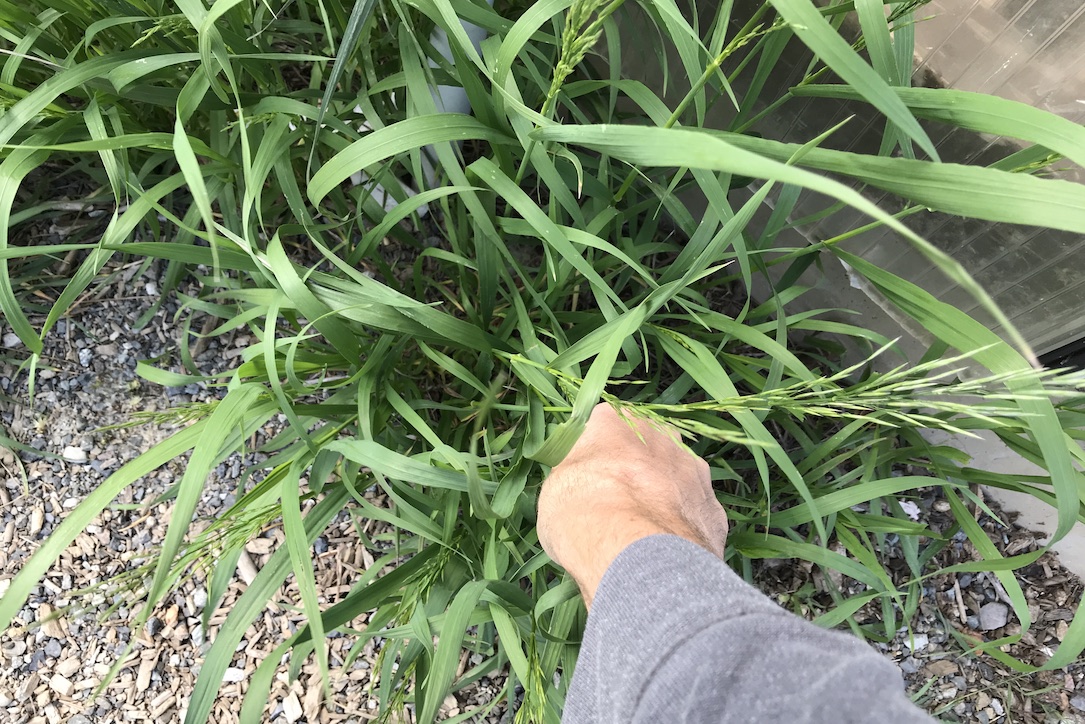
Convenient, isn’t it?
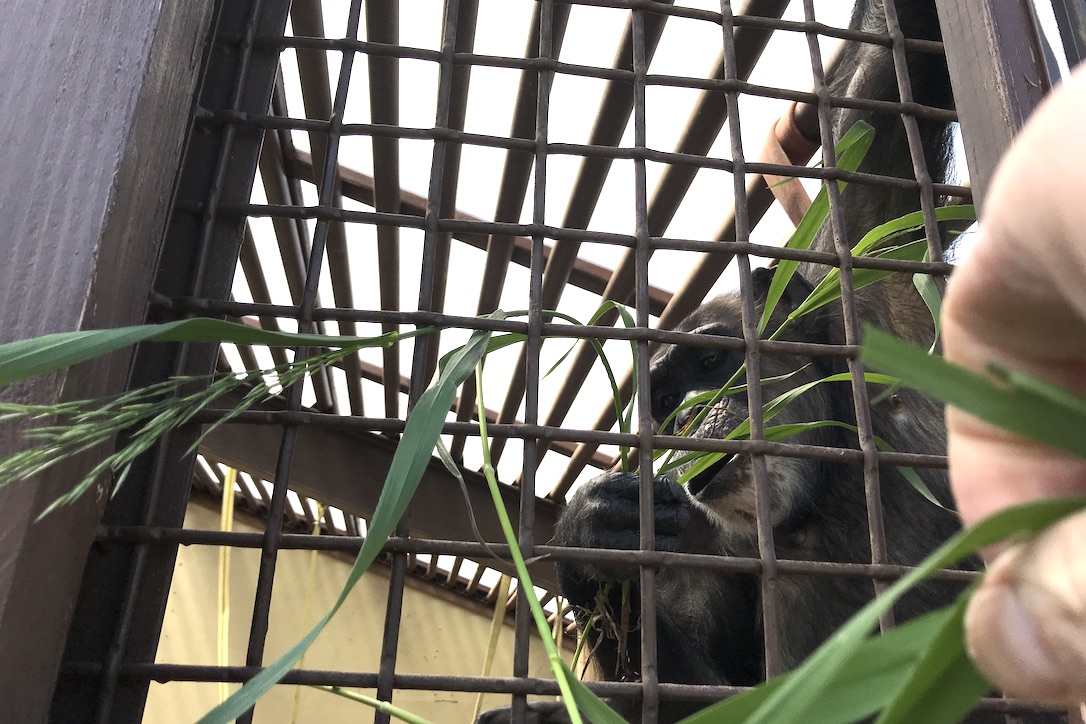
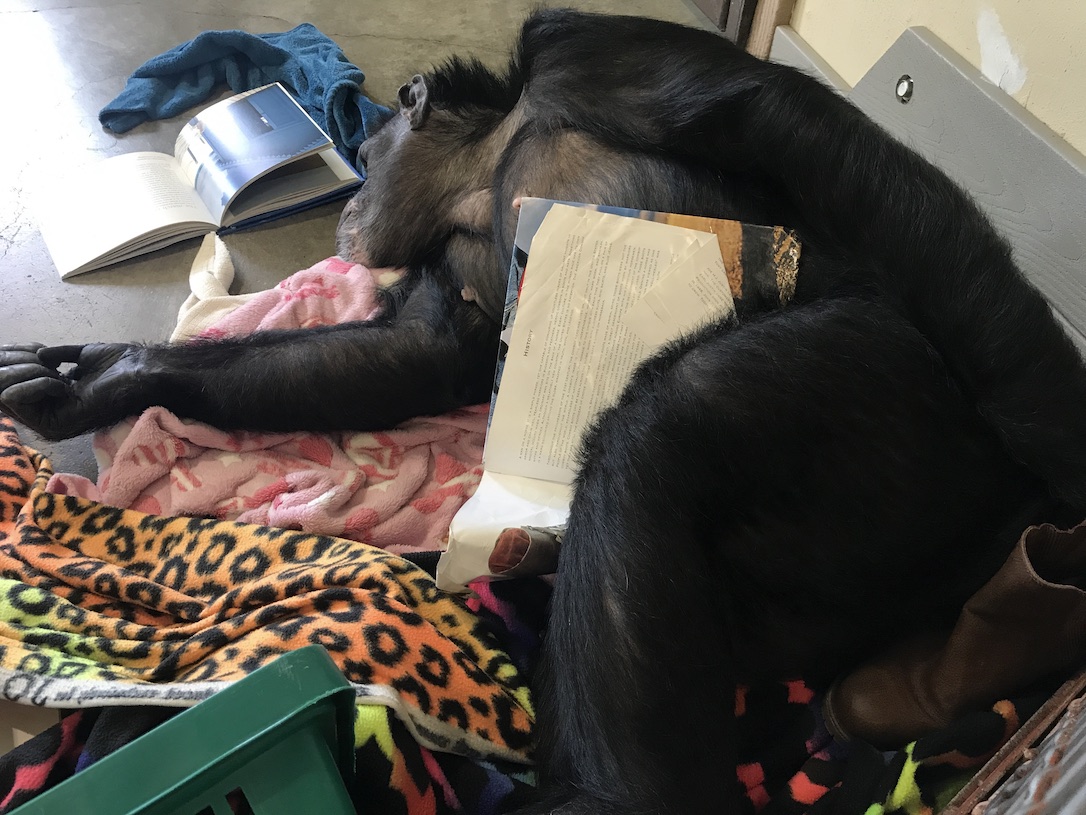
Missy requested a couple of bunches this afternoon and proceeded to make a nest on the greenhouse platform. This is quite common – when the chimps receive something they know they will enjoy, like when Jamie gets a new book or pair of boots, they often choose to make a nest before settling down with their new treat.

Sometimes the chimps shove handfuls of grass into their mouths all at once, while other times they take a more delicate approach, carefully separating each blade from the stem and eating them one by one.
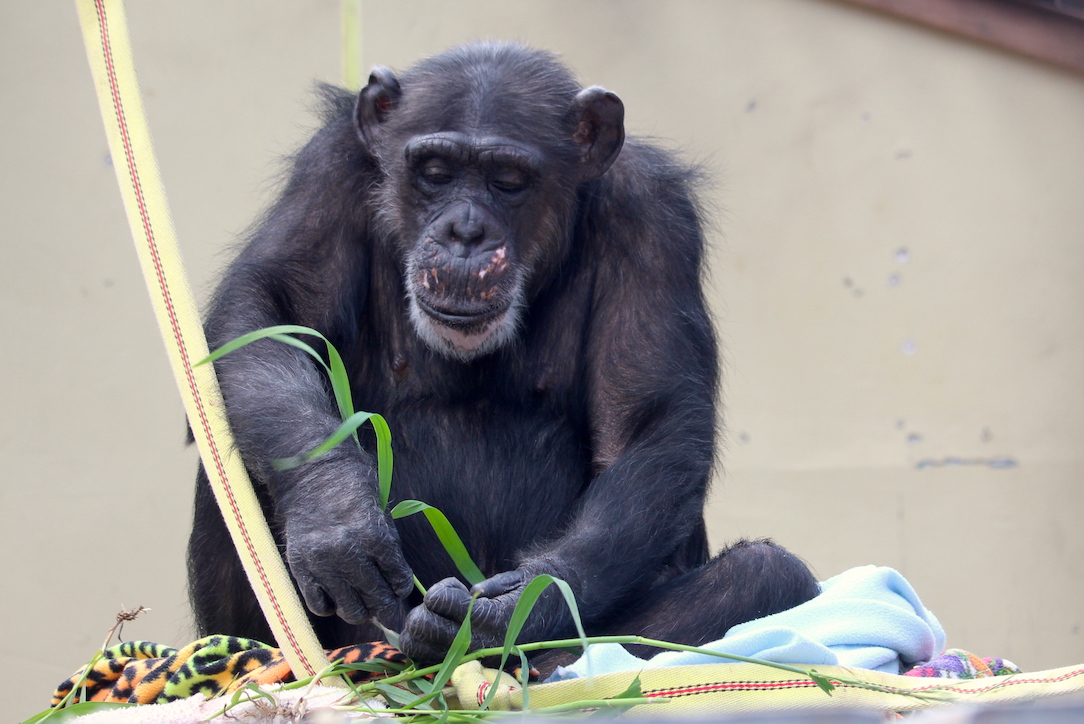
Using their lips and tongue, they fold the blade up like an accordion and swallow it with minimal chewing.
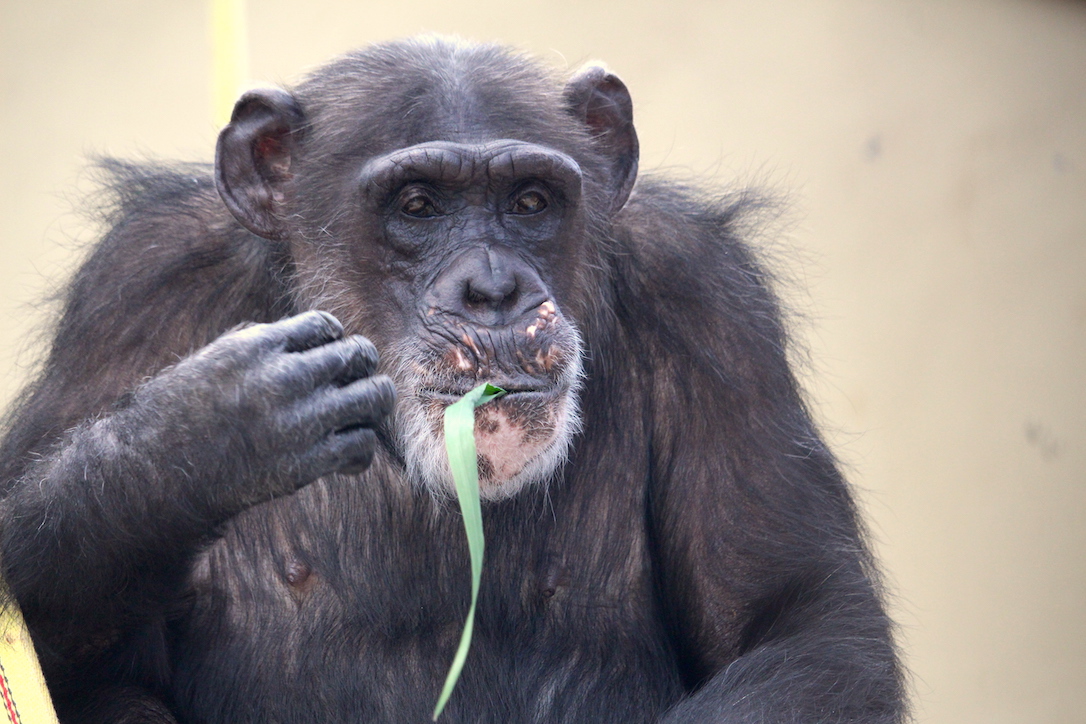
As we’ve mentioned before on this blog, this is very similar to the way some chimps in the wild ingest certain plants for medicinal purposes.
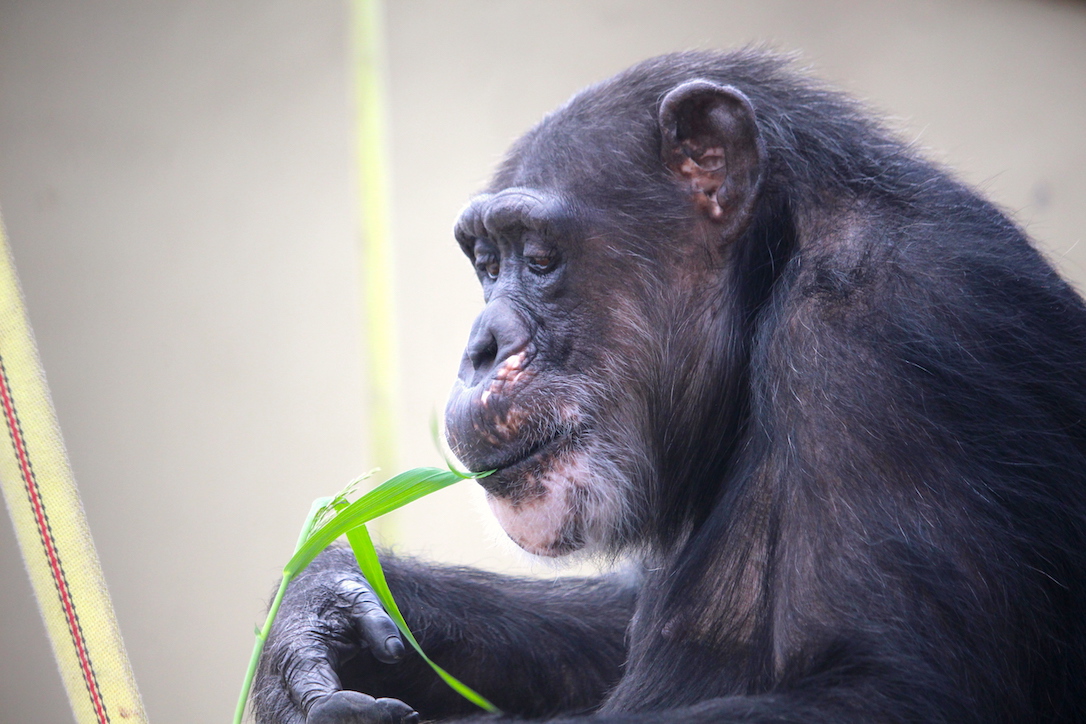
We do routine checks for parasites so it’s unlikely that they are self-medicating the way wild chimps do. But who knows? Maybe its preventive medicine. Or maybe it’s just a snack. Whatever the reason, the prescription is always the same: More of that grass, please.
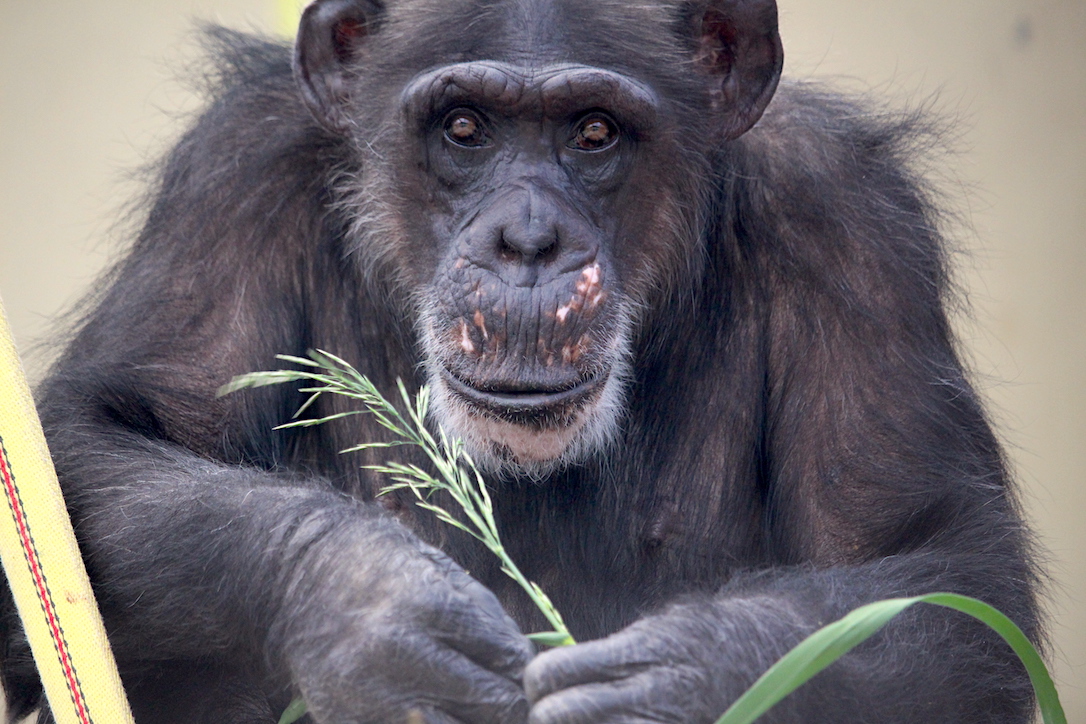
This morning, volunteers Rose, Ray, and Fred set out an early lunch forage for the chimps. Negra spent much of her time on the Escher climbing structure – I don’t know if she has a special fondness for this structure or if she just thinks we put more food up there. Either way, it’s great to see Negra climbing so high and enjoying the sun.

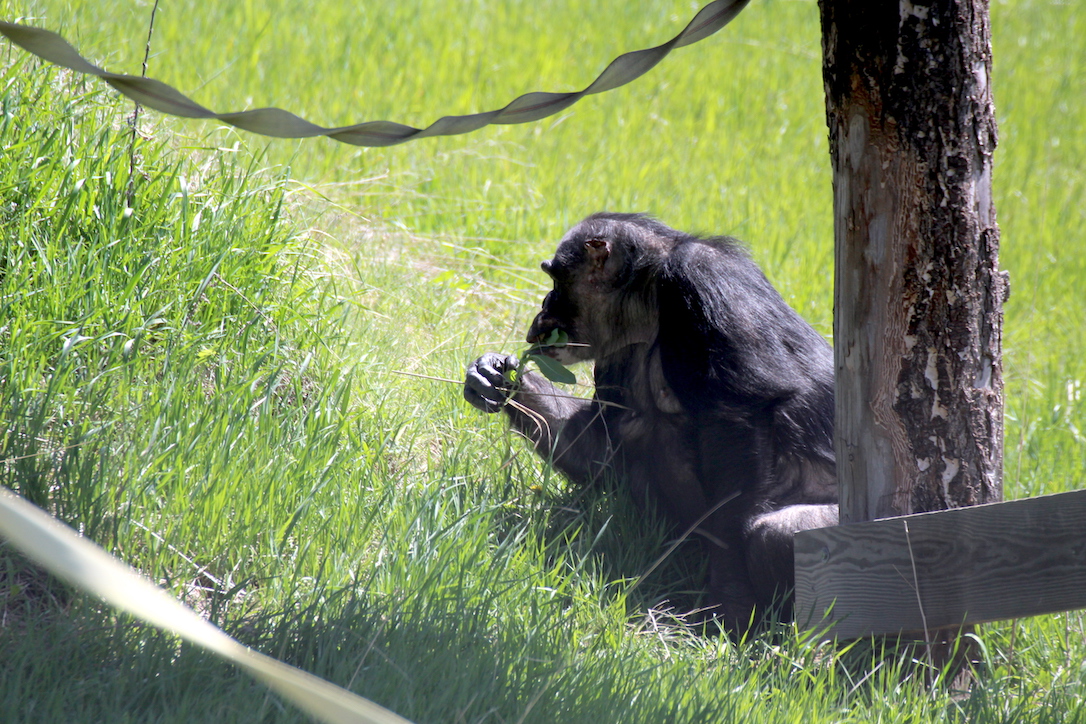
Afterwards she showed that in spring you don’t always have to rely on humans for your food. There’s plenty of wild lettuce out here, thank you very much.
Jamie was deep in dreamland after the forage (no doubt dreaming about boots and books and books filled with boots) when she was awoken by some activity out back.
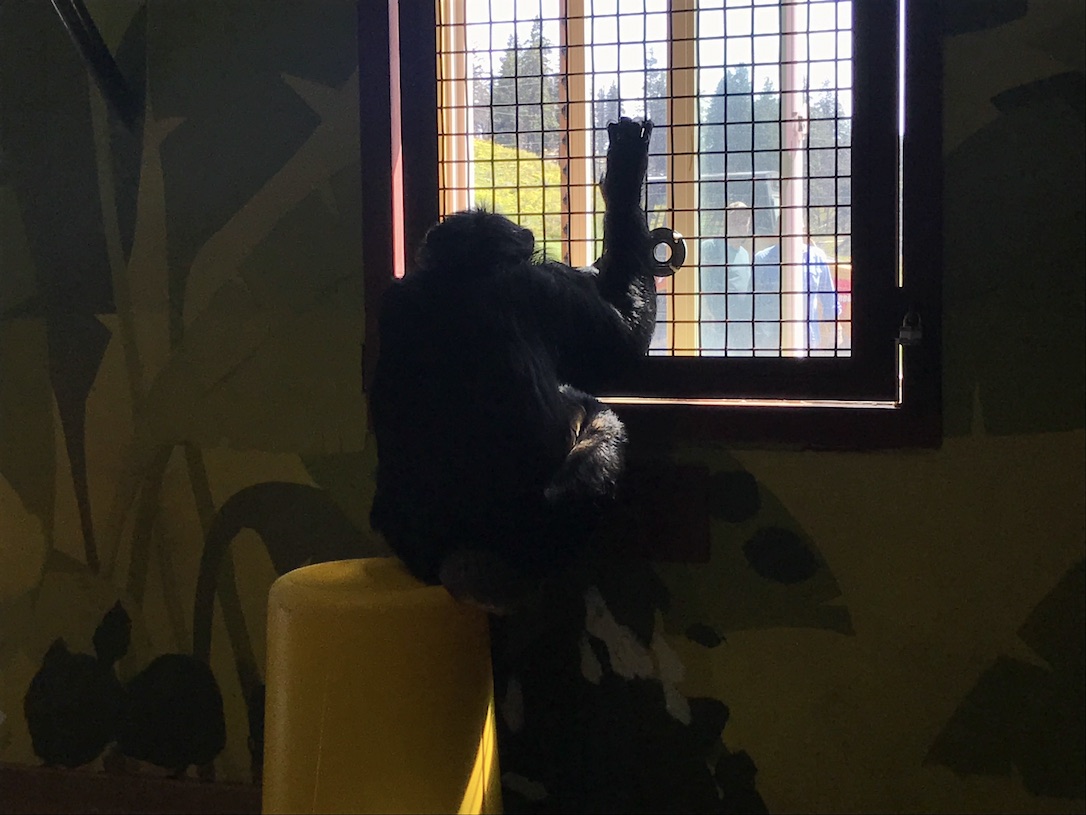
These people look like they need to be supervised.
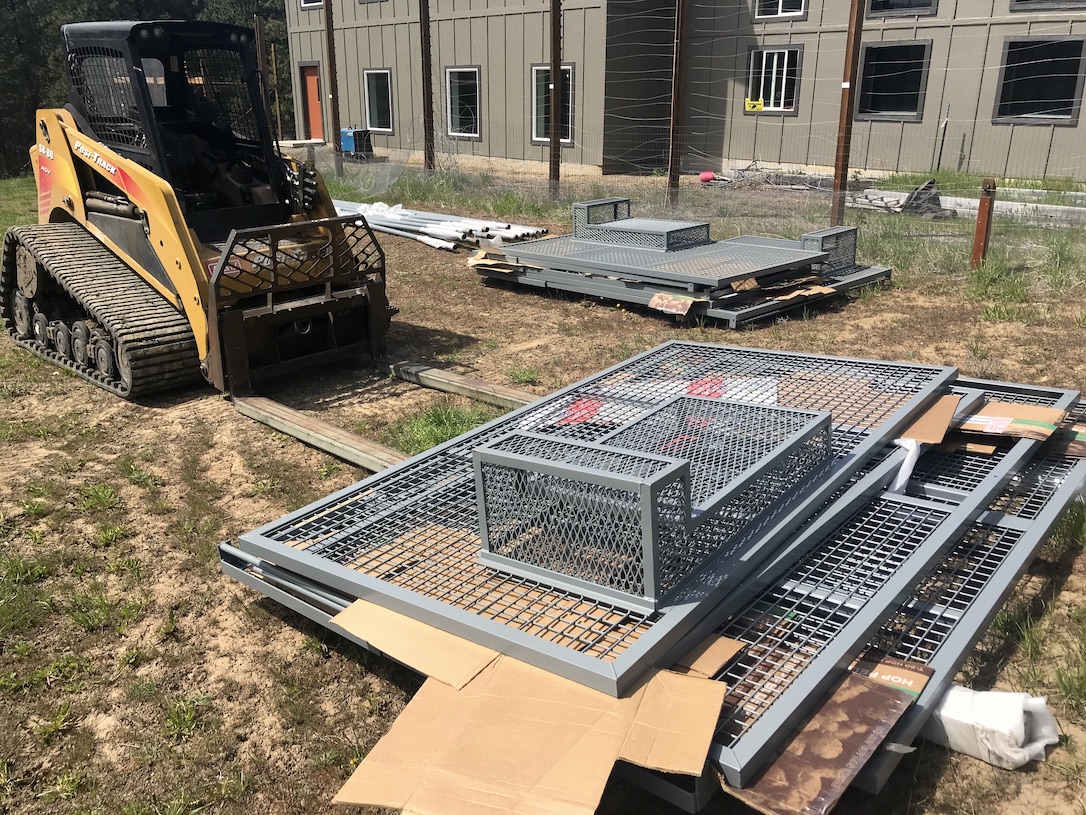
The welders had arrived with some of the caging that is being installed next week.
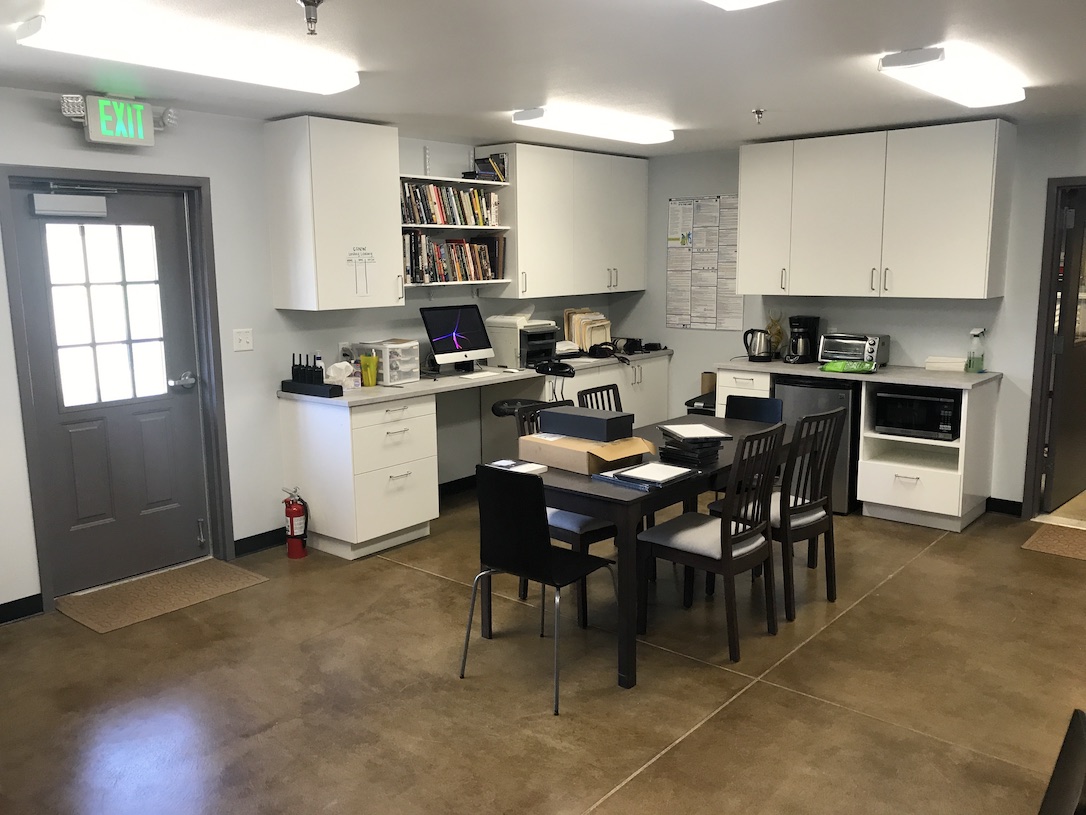
While we are still several weeks away from having the new chimp areas up and running, we have already begun putting the human areas of Phase 1 to use. Here’s a shot of the foyer which houses the computer workstation and break areas. I can’t tell you how exciting it is to have so much space after working for over a decade out of a one-room kitchen/laundry/enrichment/office workspace.
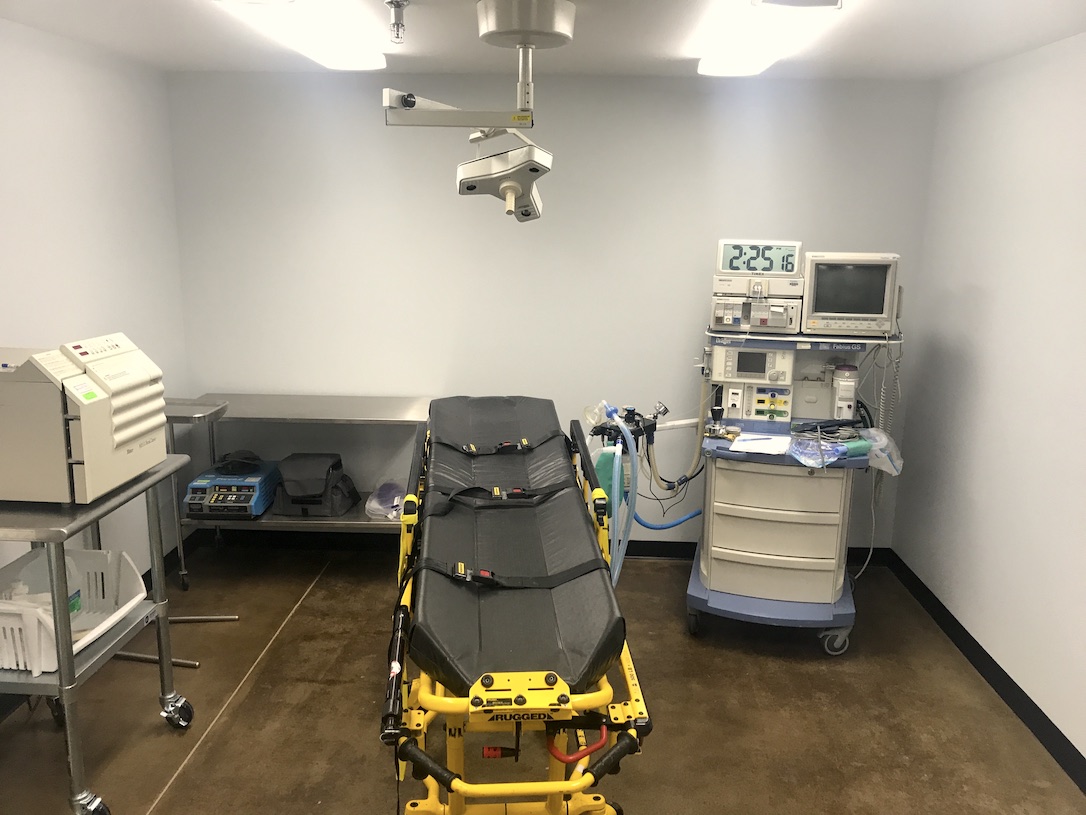
More important than the new foyer is the new clinic, which has twice the square footage of our mobile unit and includes much more storage space.

Once everything is done, we’ll put together a video tour of the whole facility. And then it’s on to Phases 2 and 3!
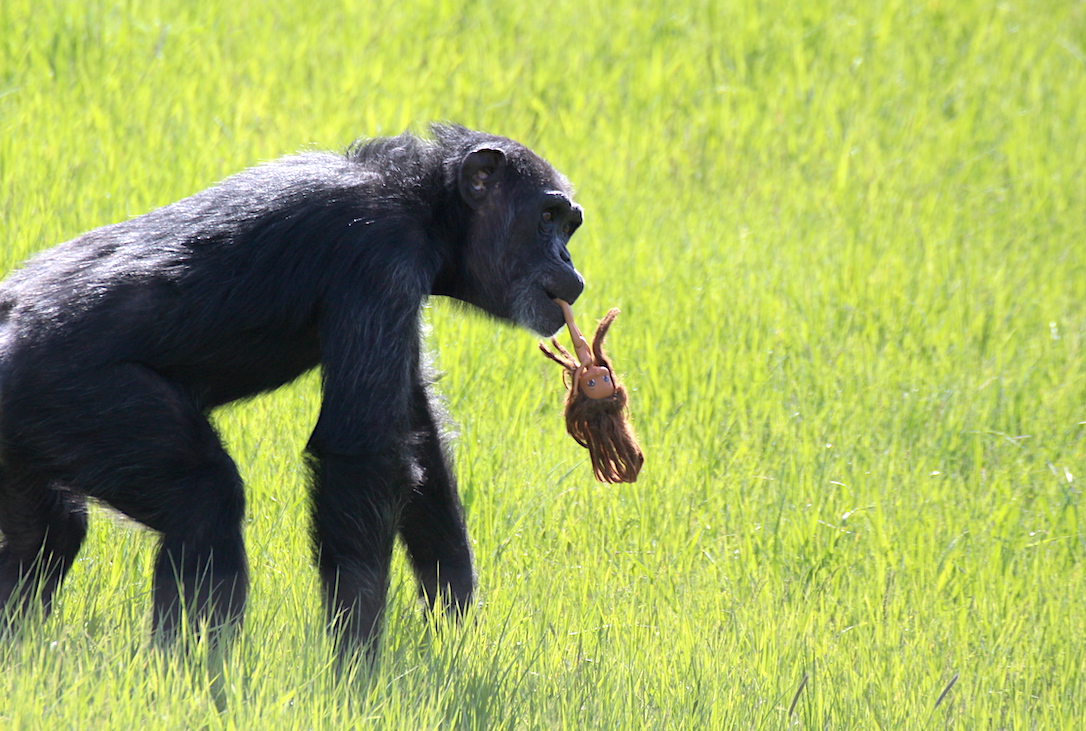
Yesterday, Diana and I returned to the sanctuary after a week away. I came up a little early for our afternoon positive reinforcement training session to say hello and was treated to some wonderful greetings by Annie and Negra, who were resting in the playroom. Annie’s was a grand submissive gesture – a series of pant-grunts delivered while bobbing up and down excitedly. Negra’s was gentle and sweet – a long kiss on the back of my hand accompanied by soft breathy pants.
Then Jamie approached. She walked up, slid a book under the caging, and walked away. If it were any other chimpanzee I might been a bit disappointed by her reaction, but I knew exactly what she was saying: No time to talk, let’s walk.
There really is no one else like her.
The sanctuary is located in the Cascade mountain range near the base of a relatively small peak known as Lookout Mountain. Missy sees this as both an opportunity and a responsibility.
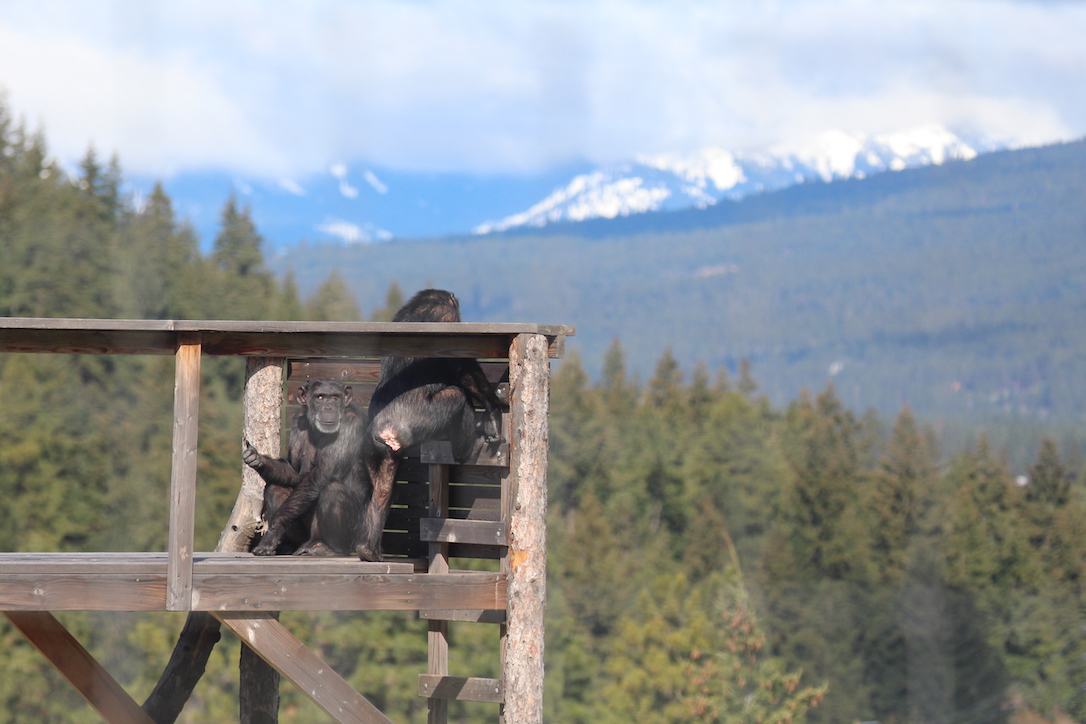

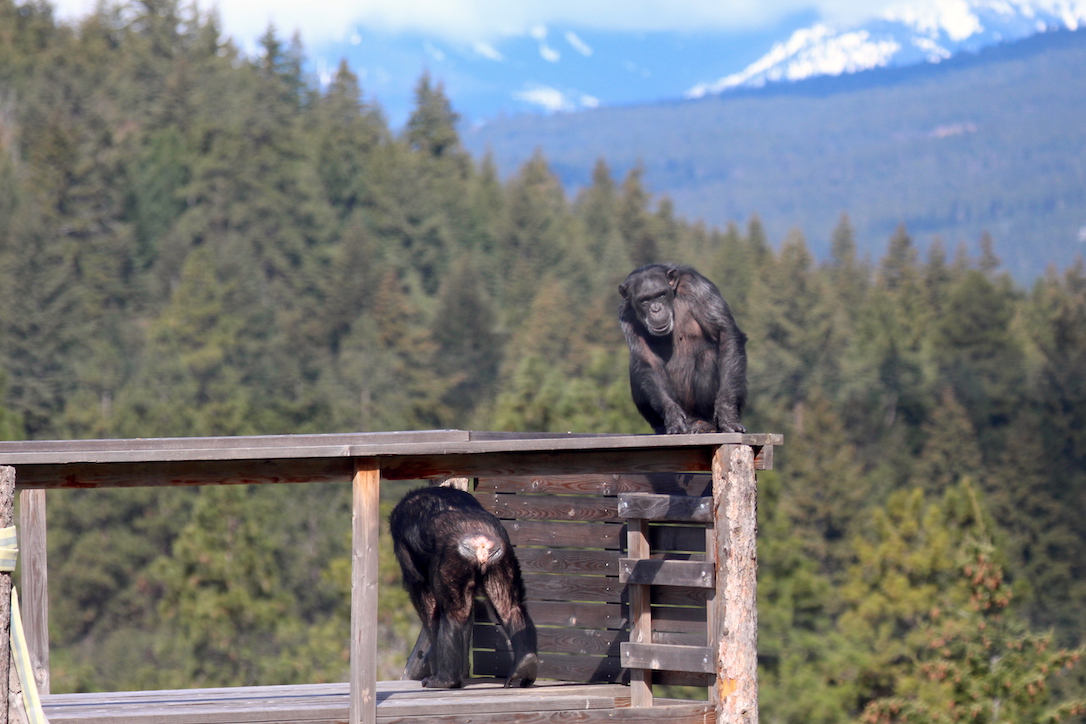
The chimps have two acres of outdoor space to roam but they spend much of their time on the elevated platforms taking in the view.

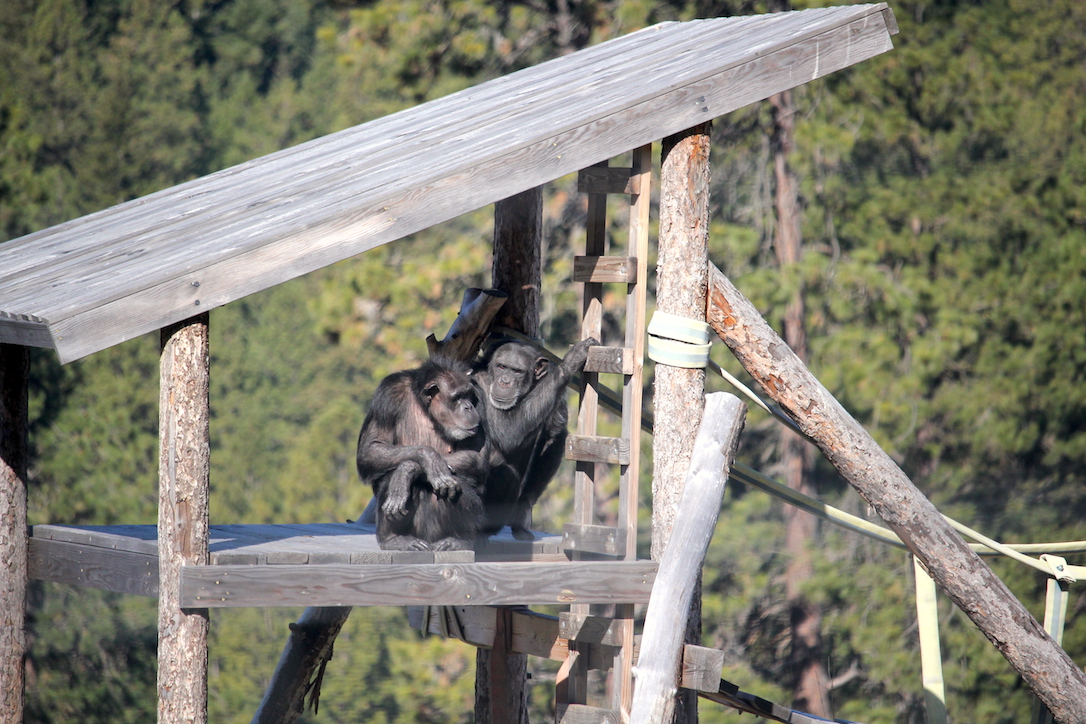
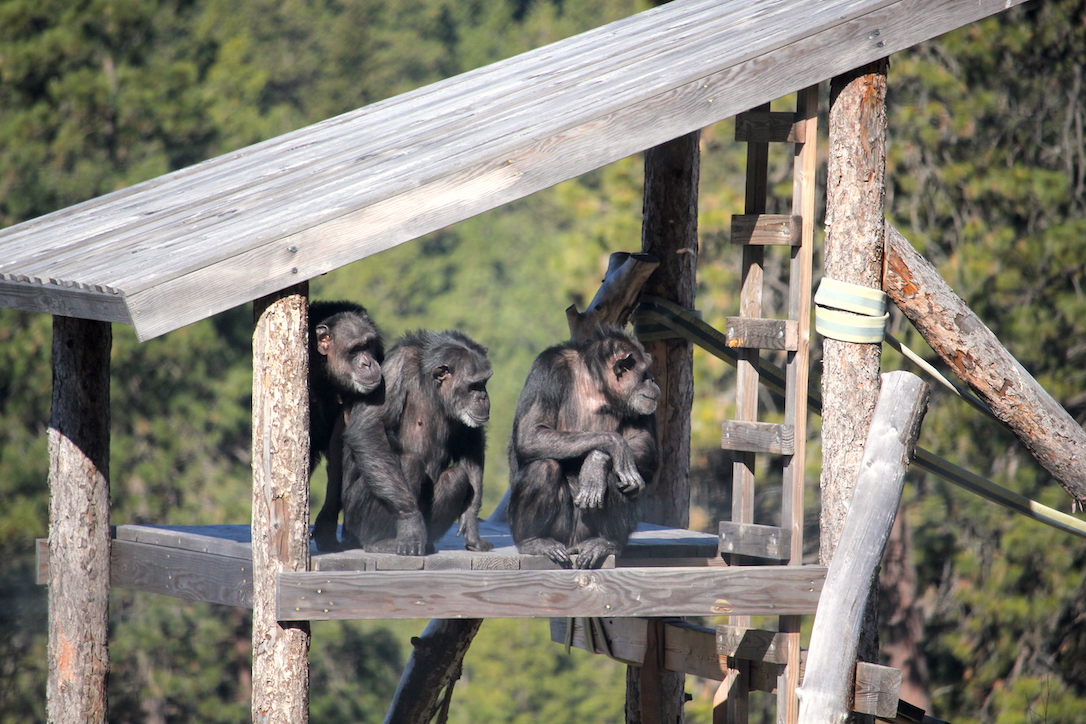
Railings on these platforms serve different purposes, depending on whether you are a human or a chimp. Do not try this unless you have opposable toes.
I saw this illustration of primate hands shared on social media recently and thought it was a great example of how diverse the primate order is.

The most unusual hand belongs to the aye-aye (Daubetonia). It taps its long, slender fingers on trees in search of food. After opening up a hollow with its rodent-like incisors, it uses its specialized middle digit to extract grubs. Think of them as the primate version of a woodpecker.
Some primates, like the slow loris (Nycticebus) and potto (Perodicticus), have evolved hands that allow for better arboreal grasping. Notice how the index fingers have become mostly vestigial and the thumb has rotated away from the other digits. This is part of a suite of adaptations that allow them to maintain a strong grip for long periods of time. It’s probably not a coincidence that they look more like birds’ feet.
In another example of form following function, the long digits of tarsiers (Tarsius) have rounded, frog-like pads, allowing them to cling and leap like…yes, frogs!
Many arboreal species, like orangutans (Pongo), have evolved small thumbs while others, like the spider monkey (Ateles), lack an external thumb entirely to aid in climbing. While it’s tempting to think of opposable thumbs as somehow better or more advanced (even the spider monkey’s genus name sounds judgmental – Ateles, meaning incomplete or imperfect, is a reference to their missing thumbs), this is simply not true. The ancestor to the spider monkey had opposable thumbs but in the course of adapting to their environment, spider monkeys got those lousy things out of the way so that they could grip and swing better. They are perfectly complete for the niche they inhabit.
Looking at a chimpanzee’s hand, you can see that they are far less specialized than those of many other primates, making them generally well-suited to both climbing and walking. While chimpanzees walk on the soles of their feet, they flex their hands and bear weight on the outside of the intermediate phalanges (the part of the finger between the second and third knuckle).
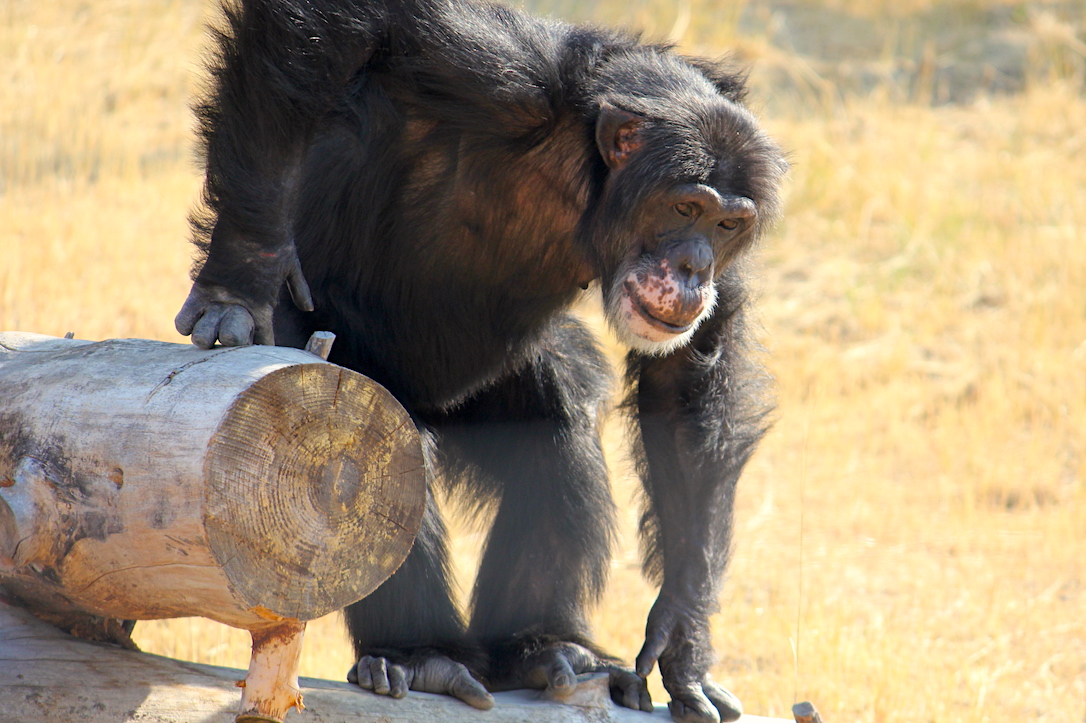
Thick pads develop on this part of the hand for protection.
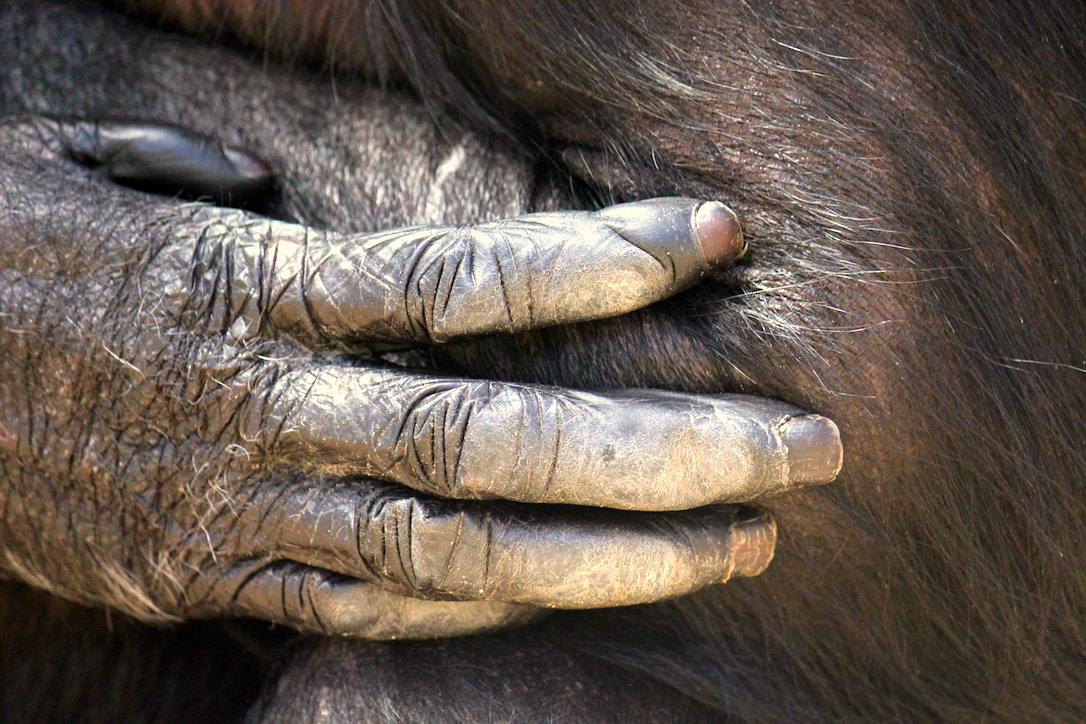
Long palms and fingers and short thumbs aid in gripping large trunks and branches.
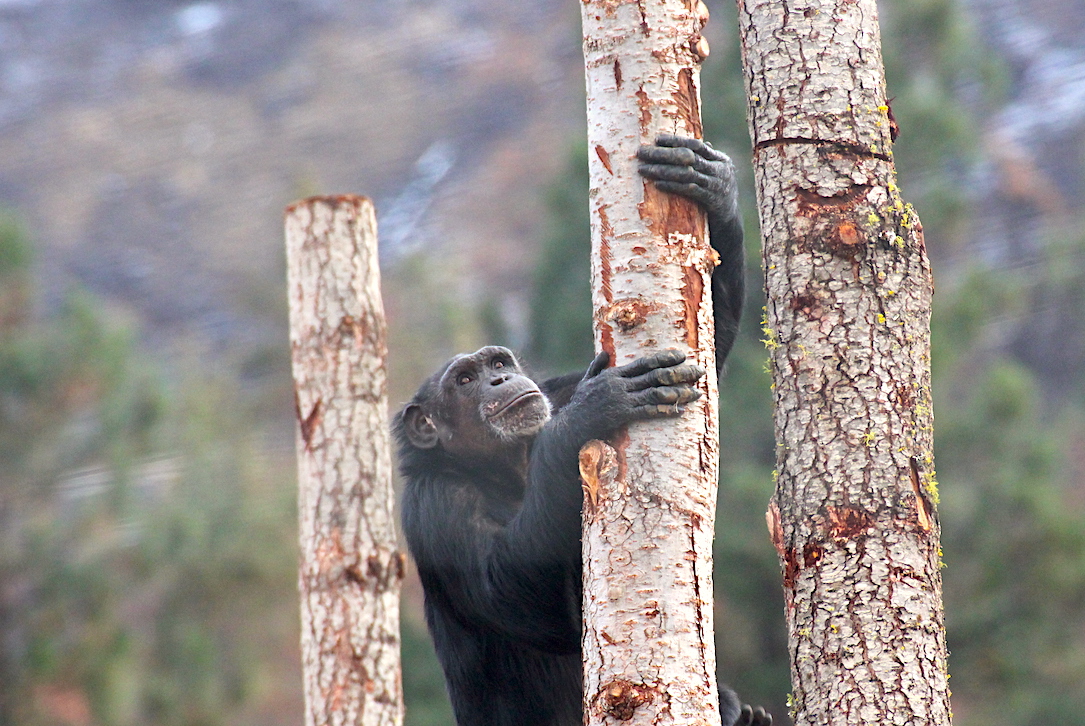
The trade-off, when compared to human hands, is less power and control in the precision grip.
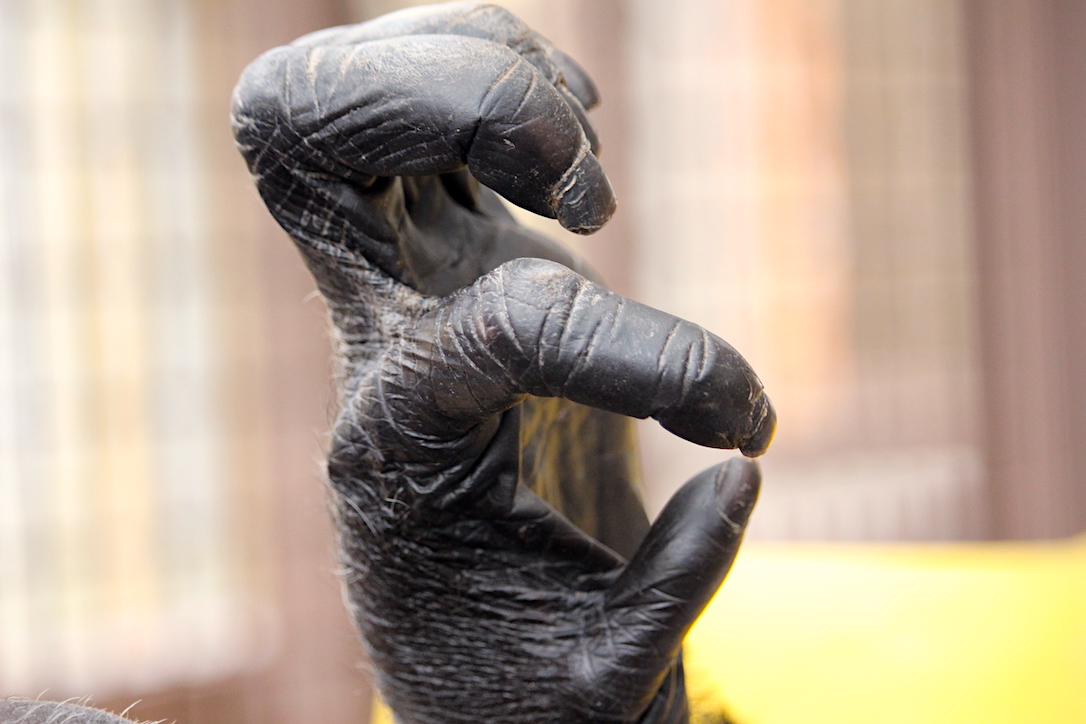
The length of a chimpanzee’s hand and more limited rotation and flexion of the thumb prevent pad-to-pad gripping or pinching, but they are still able to grasp and manipulate objects between the thumb and fingers, allowing for the use of tools.
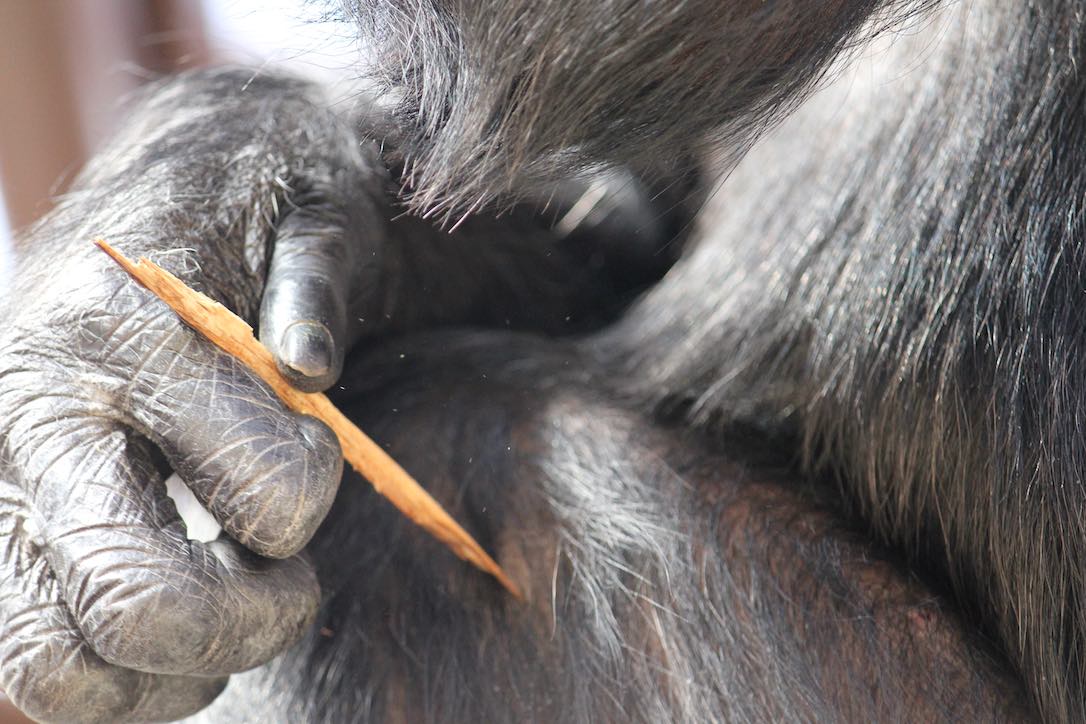
Missy and a few of the other chimps took their breakfast outside this morning.

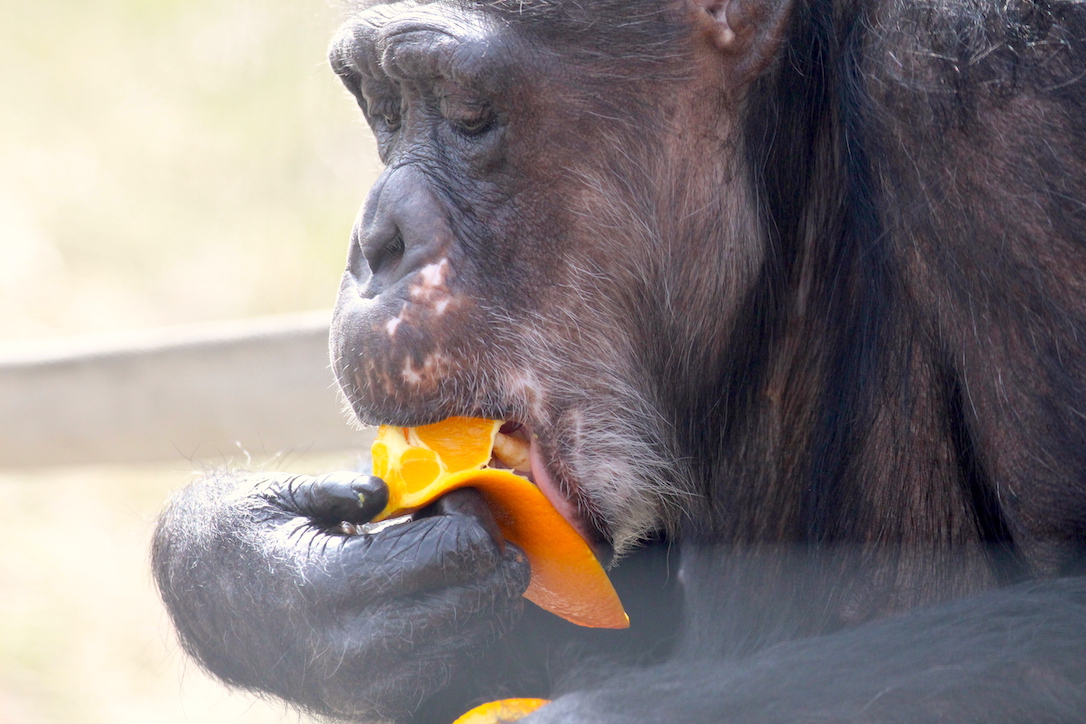
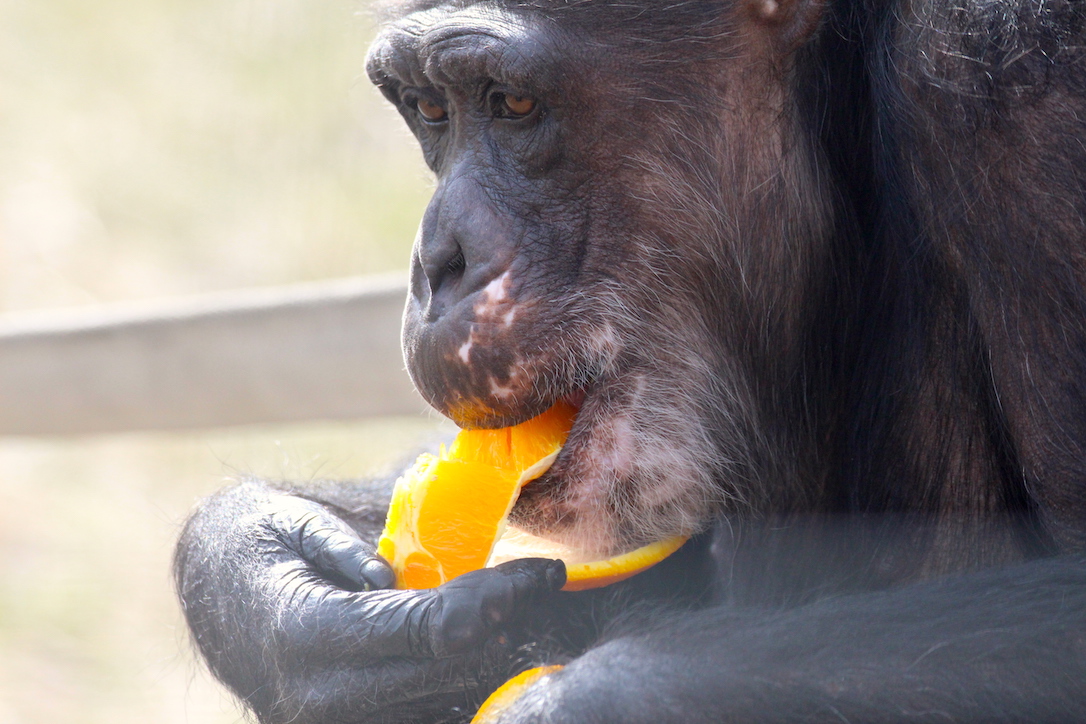
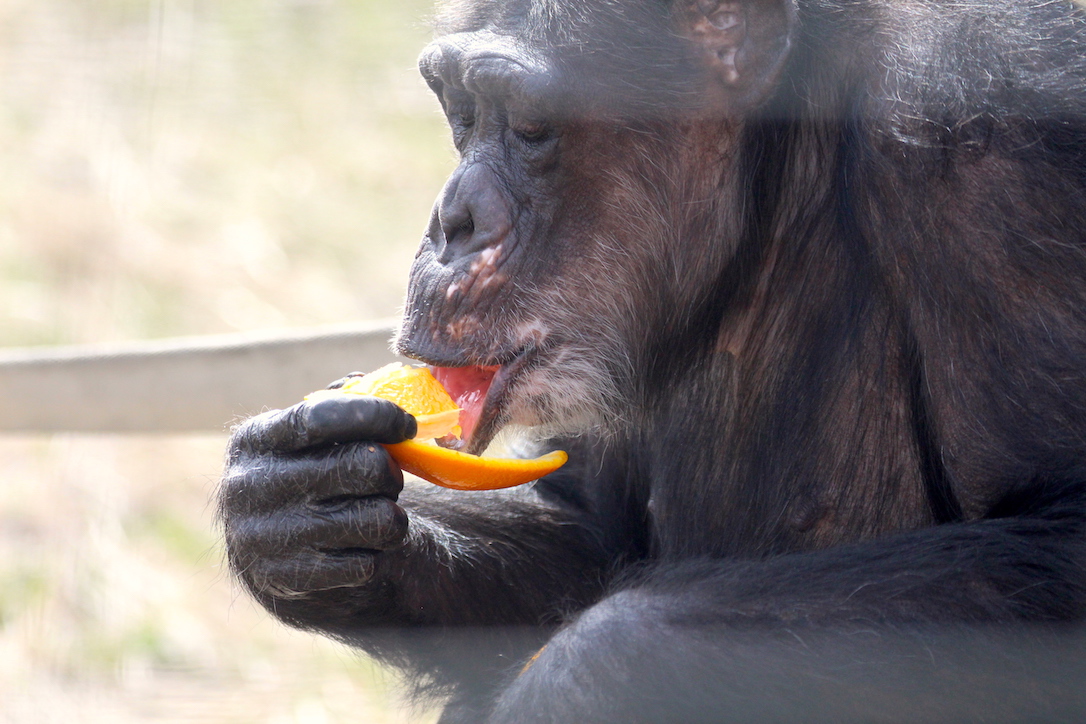
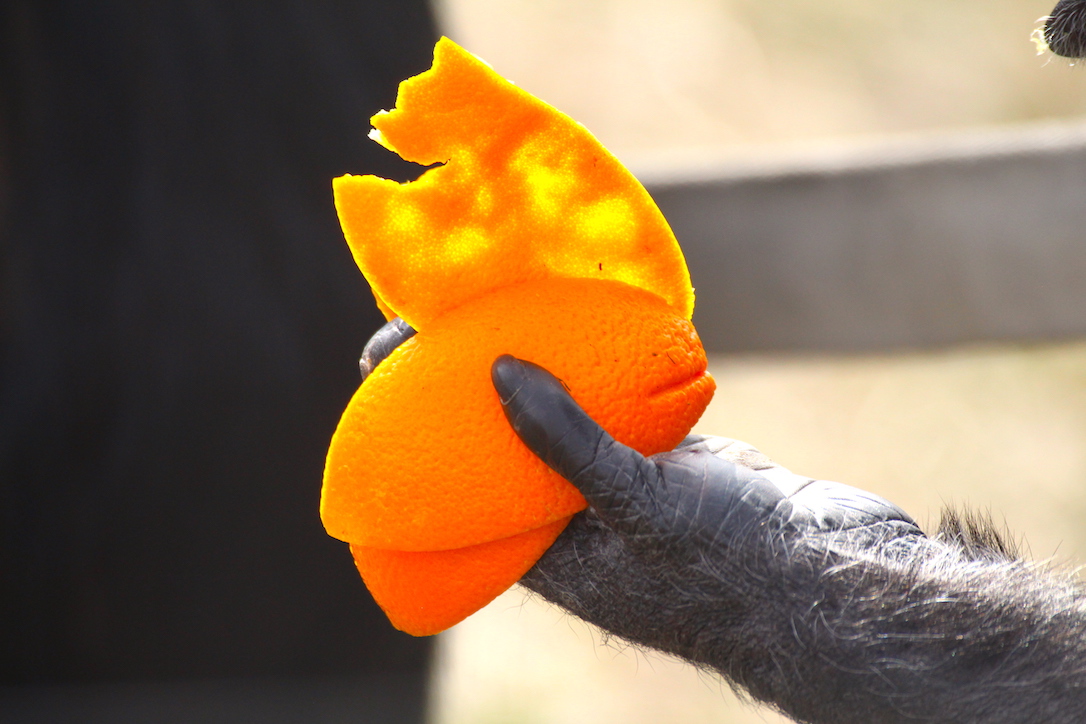
Chimps will often eat many of the peels and rinds that we avoid, but only after they’ve finished the best parts. Annie and Burrito are the biggest scavengers of these less desirable bits.
After fueling up, Missy led her gang up to the Twister and then on a walk around the perimeter of Young’s Hill.