Jamie loves to run but humans are just too slow – that’s why she gets so excited to race us in the Gator.
rescue
The tell
Chimpanzee communication involves many overt and unmistakable expressions, from eardrum-piercing pant hoots to boisterous dominance displays, but much of what they convey is far more subtle. This morning, as the chimps were being invited to shift enclosures for breakfast, the routine ground to a halt. Negra would not come inside from the greenhouse, even when presented with bowl of peanuts. Jody kept glancing over her shoulder. And Annie sat in the doorway from the playroom, clearly interested in breakfast but unwilling to commit.
I looked towards Burrito. Sitting quietly on a bench with his hands folded in his lap, he was the picture of calm.
Or was he?
Here’s why chimpanzees would be terrible at poker. As soon as they had a good hand, their hair would stand on end and their skin would be riddled with goosebumps, betraying their excitement. Piloerection, as it is known, is the ultimate tell, a dead giveaway for a chimps’ internal state.
Behind Burrito’s otherwise calm demeanor was a simmering cauldron of testosterone, adrenaline, and pent up frustration (due in large part to Jody’s tumescent backside). The chimps could read this from a mile away. The fuse had been lit and everyone was waiting for the bomb to go off.
They were, of course, correct in their assessment, and we soon took a five-minute break from serving breakfast while Burrito rattled the cage doors and occasionally lunged at anyone nearby. Once he got it out of his system, everyone finished shifting and we got on with the day.
Browsing
Jamie’s interest in architectural and western-themed magazines continues. You can get a little peak into her mind by observing which pages she lingers on…
New Boots
A recent visitor to the sanctuary wore a pair of boots that really caught Jamie’s eye, so you can imagine how excited we all were when those very boots were included in a care package that arrived earlier this week. As is Jamie’s preference, we started by modeling them and she was instantly enamored. Did she remember them? I would bet money on it. She seems to have a photographic memory when it comes to boots.
Playful Missy and Visitors from Ngamba Island
It’s been a busy week at the sanctuary! Contractors are finishing the human areas of the Phase 1 expansion now that a back ordered fixture is finally in and Missy, as you can see in the video above, is keeping us busy playing very competitive games of tug-o-war.
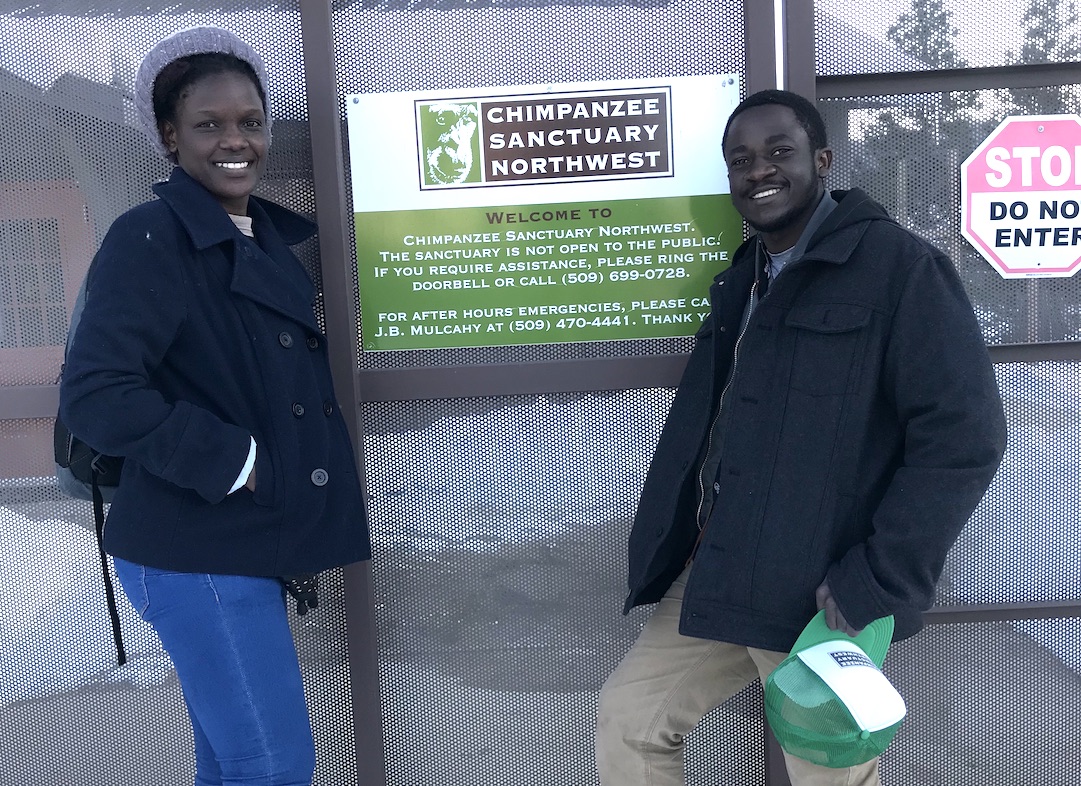
We were also fortunate to host two guests from Ngamba Island Chimpanzee Sanctuary in Uganda. Ngamba is home to 49 orphaned chimpanzees and through their NGO, the Chimpanzee Sanctuary and Wildlife Conservation Trust, they also do incredible work protecting wild chimpanzees through both field conservation and community education. Irene and Joseph have been visiting various primate sanctuaries while in the United States and they were able to spend the past week volunteering with us.
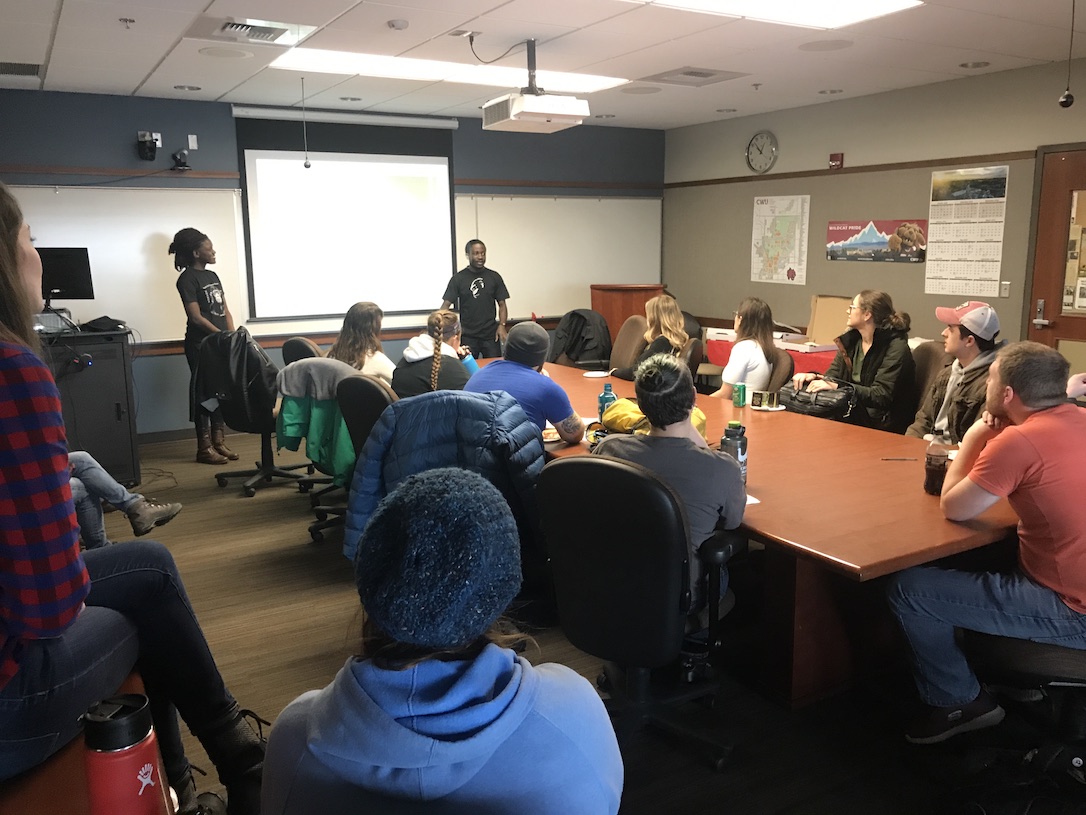
While here, they were also kind enough to share inspiring stories of their work with the students and faculty of the Primate Behavior and Ecology program at Central Washington University.
If you don’t already, I’d encourage you to follow Ngamba Island Chimpanzee Sanctuary on Facebook and support their efforts to protect chimpanzees. Many thanks, Irene and Joseph, from all of us at CSNW (especially Jody)!
Burrito and his after dinner enrichment
The chimps are presented with different food puzzles each night before they settle down and make their nests. Volunteers placed peanuts and spoonfuls of peanut butter in cups and screwed them together in stacks. Burrito carefully unscrewed the cups from each other to find the treats but found it much easier to use his large, powerful canine teeth to rip off the lids – reminding us that an effective solution to a problem often looks different from a chimpanzee’s perspective.
A new start for Ellie
Ellie is off to start a new life.
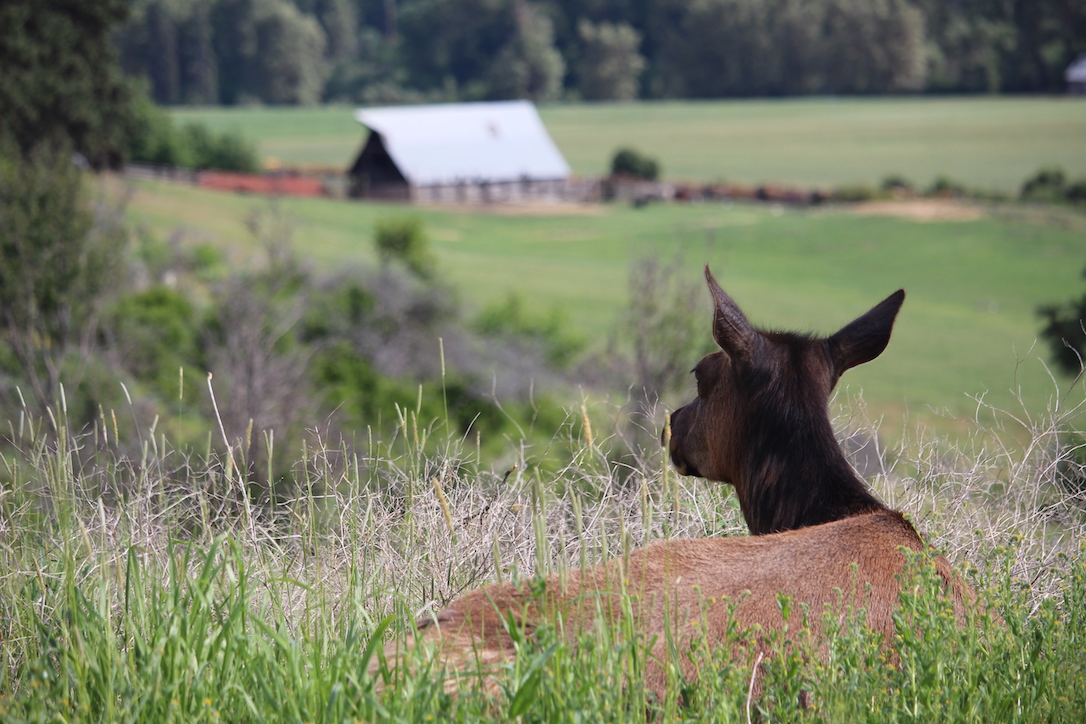
Seven years ago, we were graced with this most unusual visitor. As we sat with a small group of supporters in the sanctuary’s old barn, an elk walked in, took an apple off the table, and proceeded to chew everyone’s hair. We were stunned.
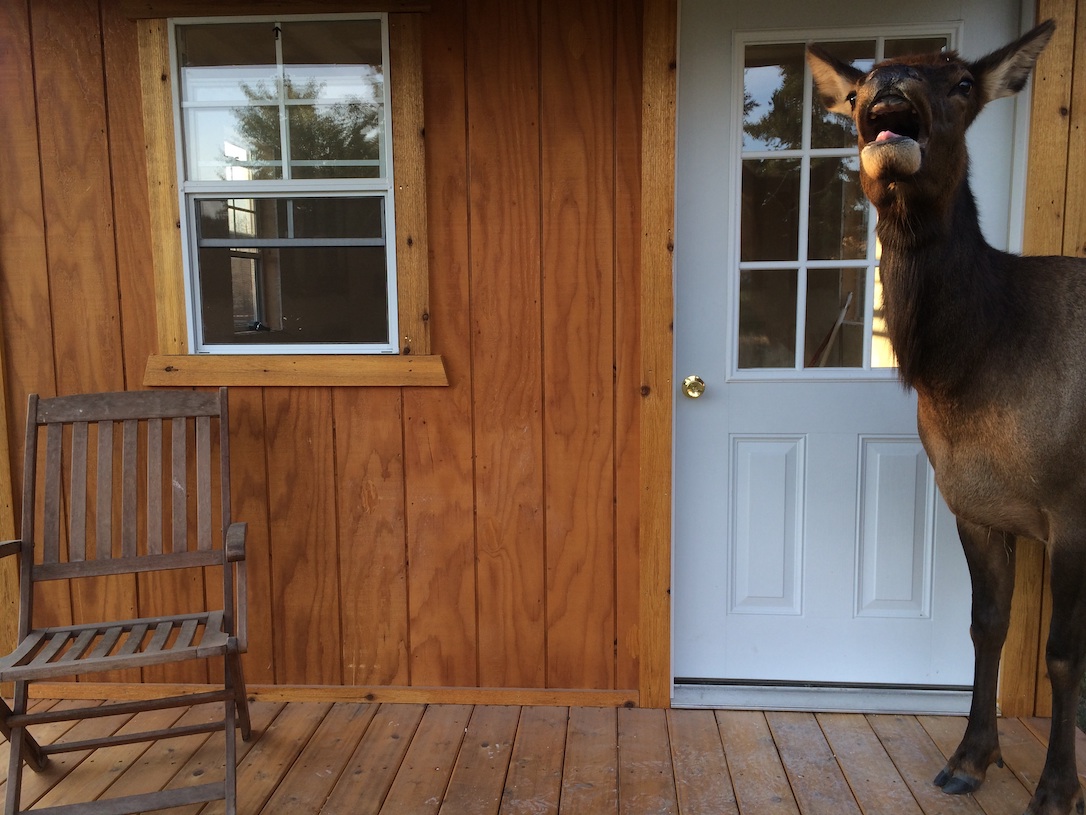
We didn’t know it at the time, but this elk had been orphaned shortly after birth and raised at a neighboring ranch. As she matured, she began to wander farther and farther from the ranch until she stumbled upon our sanctuary.
Not knowing her history, we named her Ellie. We would later find out that she had been named Buttons by those who raised her.
Ellie is a wild animal in that she is not a member of a domesticated species, but behaviorally she is as far from a wild elk as could be. To call her tame would be an understatement. She would stare at us through the window as we sat in the house. We had to change a doorknob after repeatedly finding her in the garage in the middle of the night eating dog food out of the can. We fenced off our back yard to keep her from taking food off of the picnic table and fenced off the front yard to keep her from antagonizing our dogs. She was so close to figuring out how to open the sliding door to the office. It was a never-ending battle – nothing was safe from Ellie and no place was secure.
Despite the challenges of living with an elk, she became a part of our sanctuary family. She was a fixture at the chimp house and seemed to enjoy watching the chimps frolic on Young’s Hill. Sometimes she would even join the chimps on perimeter walks. And she loved visitors more than anything. For Ellie, every UPS delivery or propane tank fill-up was a social occasion. We discouraged contact with Ellie to reduce her comfort around humans but no-contact policies with elk only work if the elk are in on the deal. Try telling a pushy 400-lb elk to keep her distance and you will realize that she is the one who makes the rules.
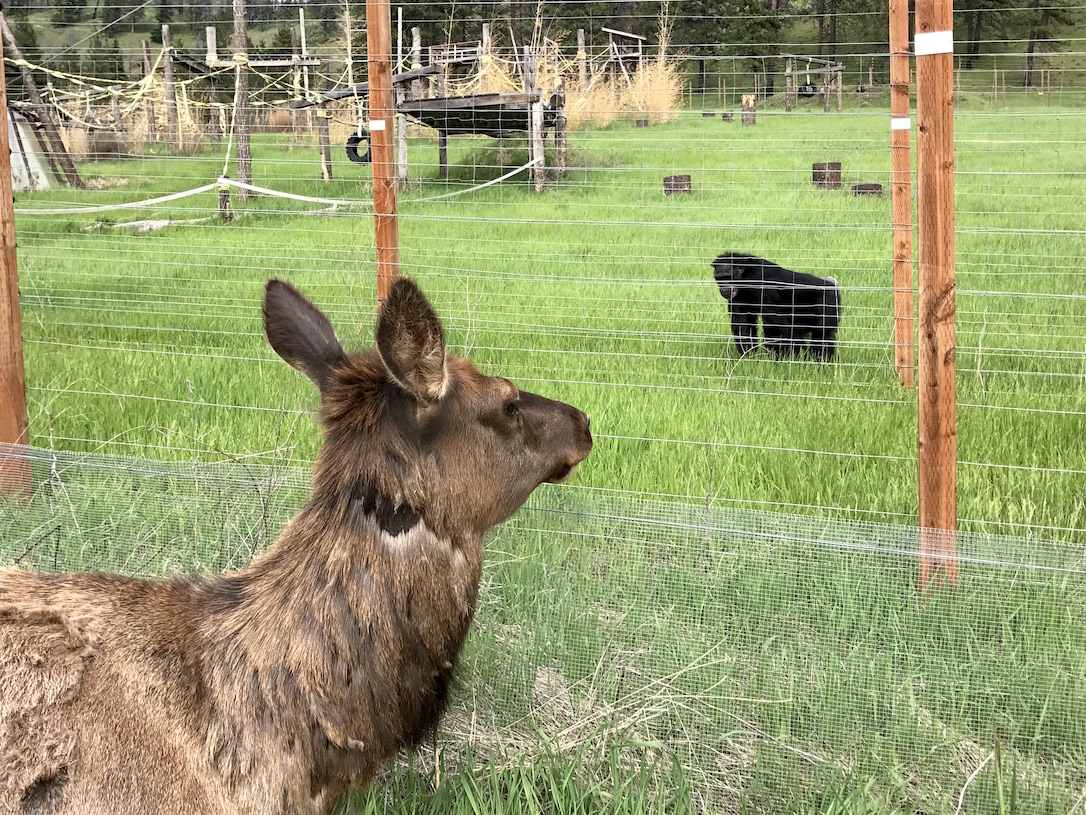
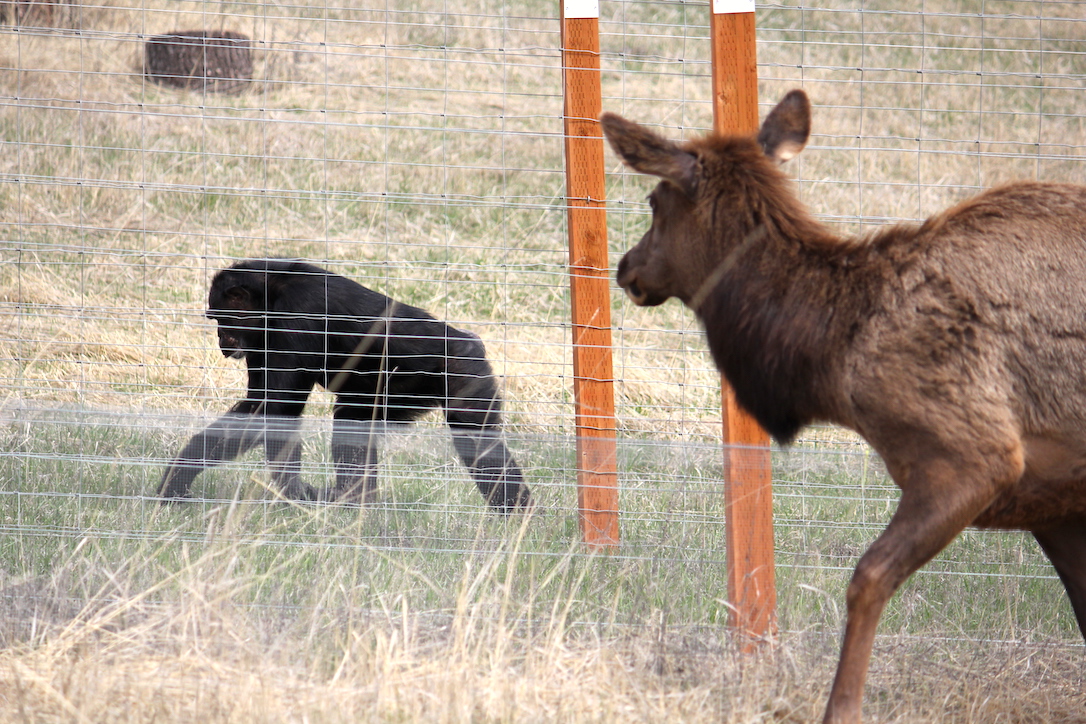
Throughout the years we agonized over what could be done for Ellie. As interesting as it was for us to have her around, this was no life for an elk. We wished that she would have been placed with a licensed wildlife rehabilitator from the start but that opportunity had passed. Early on we had hoped that she would voluntarily join a passing elk herd but she showed no interest in other elk. We looked into placing her at a wildlife park with no success. We feared her catching the attention of the Department of Fish and Wildlife because they had a policy of euthanizing deer and elk that had become habituated to humans. Given the limited options available, it seemed that letting Ellie be Ellie was the best and perhaps only possible course. This was the only life she knew, and somehow it seemed to work for her. Then again, what do we know about elk?
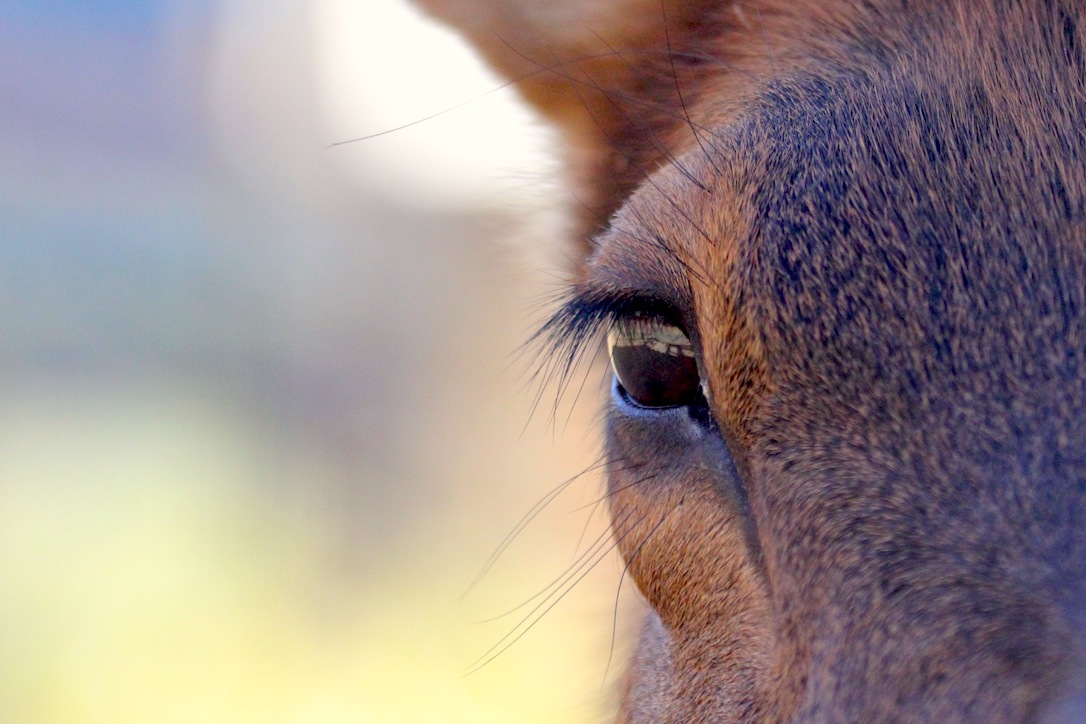
Unfortunately, over the last couple of winters Ellie began crossing the river to a small neighborhood on the opposite ridge. She was welcomed there, but more people and more homes meant more attention and more opportunities to get into trouble. Apparently, Fish & Wildlife was notified and felt they had to do something to protect her and the local residents, so last week they darted Ellie and relocated her to an area 30 miles south where there is an elk feeding station and a herd of 700 elk. We don’t know if she will find a place in a herd but we have no choice at this point but to be hopeful.
Many people in our county are outraged that Ellie was taken away. I honestly don’t know what the right answer is. She was loved and celebrated by this community but she was also intimidating at times and potentially dangerous. She is an elk that should be living with a herd but she is also a unique individual that declined opportunities to do so in the past. In many ways her experience is a lot like that of the chimps. Biologically an elk, raised by humans, but not of either tribe.
Much of this county will be following Ellie’s saga closely and the Department of Fish & Wildlife has promised to evaluate how well she has acclimated to her new environment later this year. We can only hope that she succeeds. Godspeed, Ellie – you will be missed.