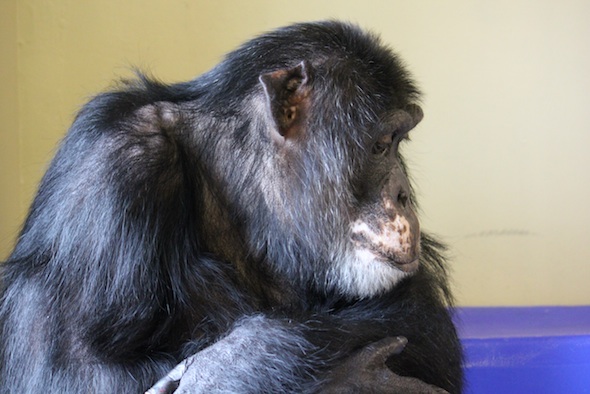
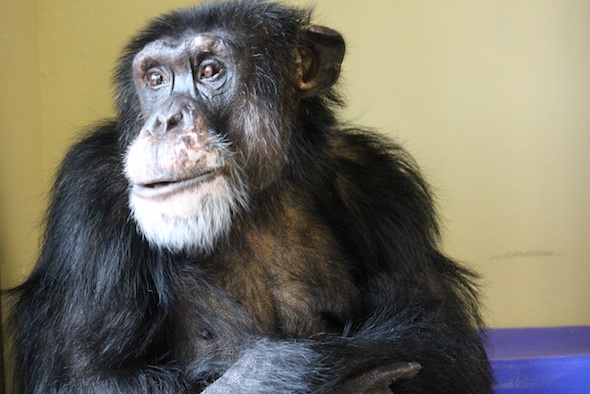
This morning, Foxie was clearly feeling playful – stomping around the playroom and doing somersaults. Jamie noticed this, approached Foxie, and swiped one of Foxie’s beloved dolls. (Jamie knows this is a surefire strategy for initiating play with Foxie.) Jamie’s move kicked off a long game of wrestling and doll keep-away.)
primate rescue
A wonderful Christmas time
The chimps (and the humans!) have been having a really great Christmas, thanks to all our amazing supporters! We had five people sponsor the day for the chimps today, so we owe a big thank you again to Laurel H., Kathleen K., Molly W., Michael H., and Janine B.
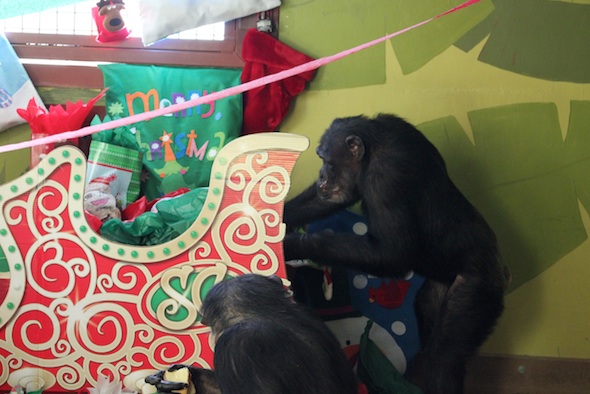
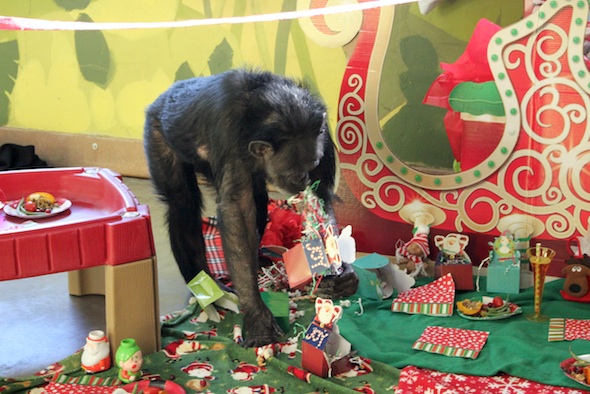
Also a huge shout out to Lisa S. and Jayne R. for their decorations that we were able to spread across yesterday‘s and today’s parties! Carol M. sent us seven adorable chimpiñatas which we added to the decor, too. More thank-yous are in order for everyone that sent in new toys which became presents for today’s celebration, including Sharon & Larry C., Diana M., Lisa S., Jayne R., and Helen K. Here’s part of the haul in front of Santa’s sleigh:
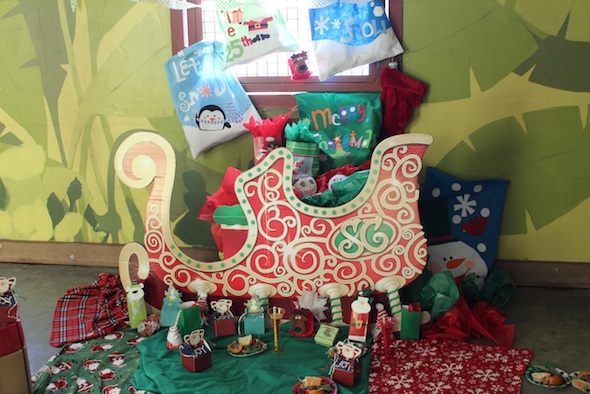

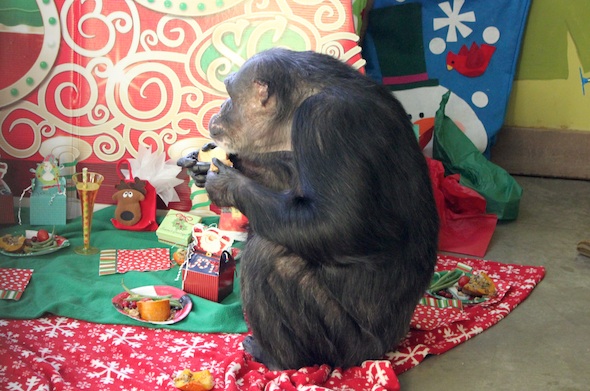
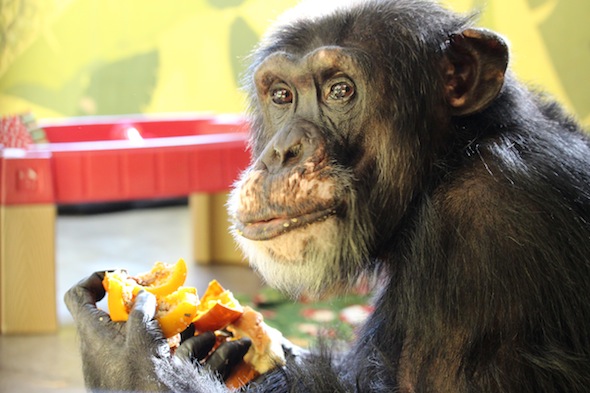
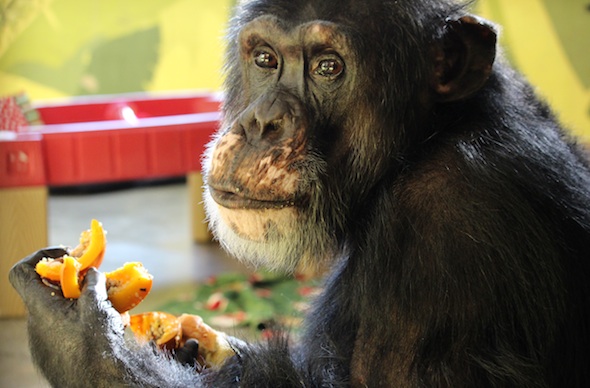
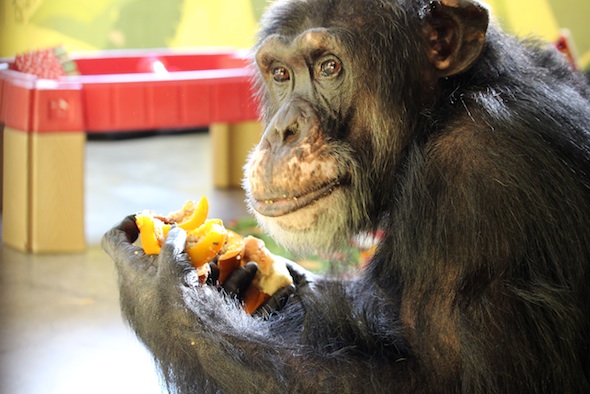
Volunteer Patti and supporter Anne also picked up a lot of yummy fresh produce for the party and Patti made amazing roasted pumpkins with quinoa, wild rice, and veggies.

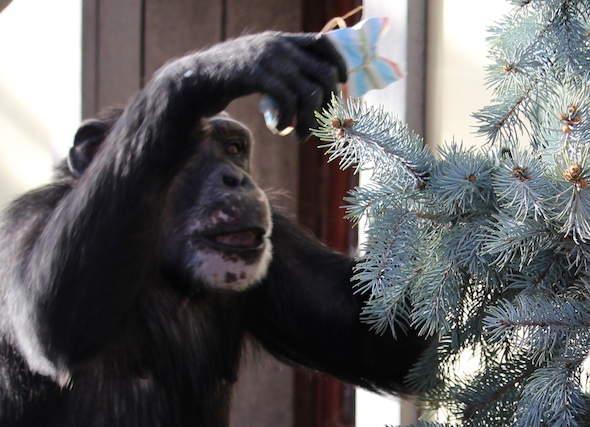
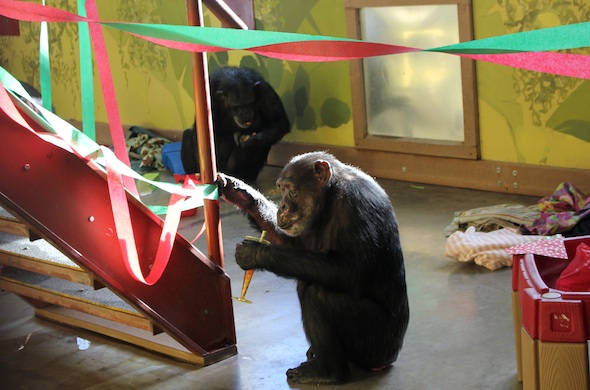
The day began with a small forage of tomatoes, pistachios, and shaved coconut in the tree. Negra was the first out to see what we had set up under (and in) the tree.
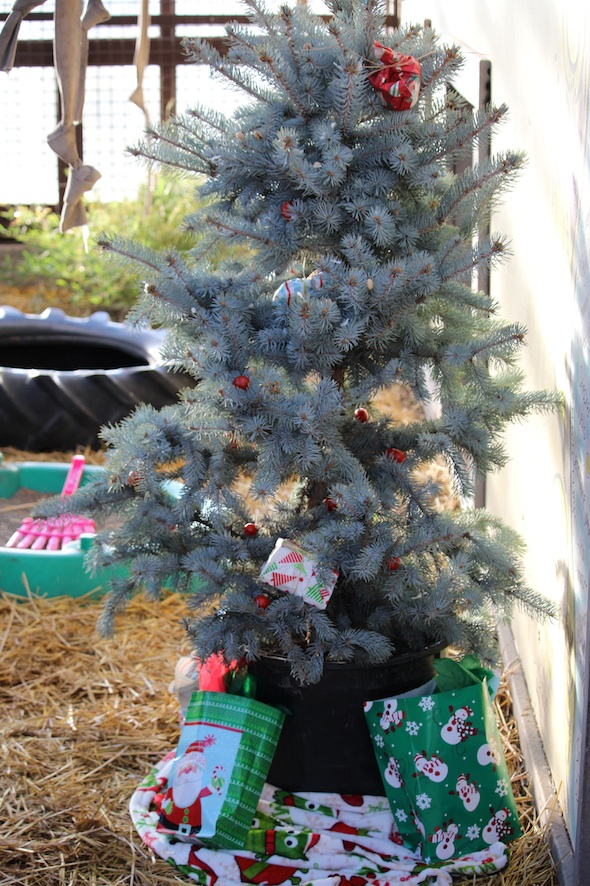

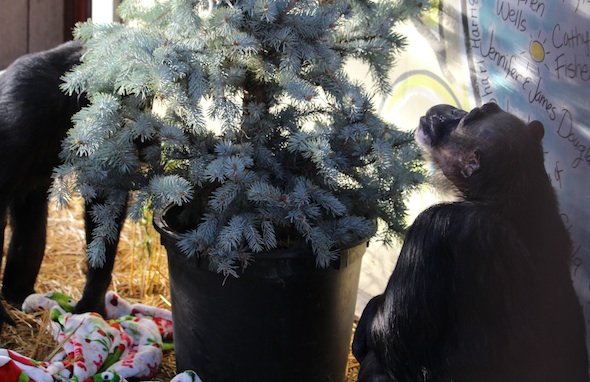
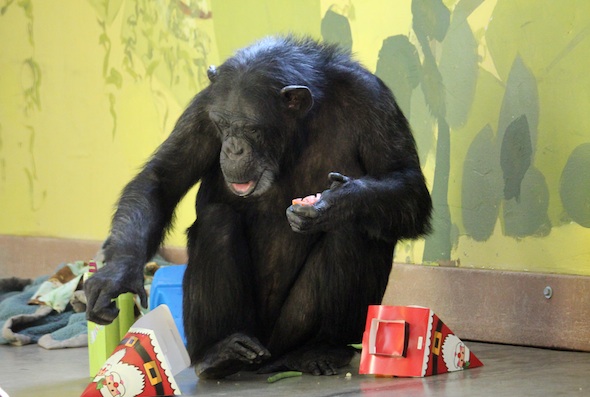
Missy snagged most of the tomatoes, and went through the presents, too:
The party then moved into the playroom, where all the food and presents from our friends near and far brought a lot of joy to the chimpanzees!
Annie:
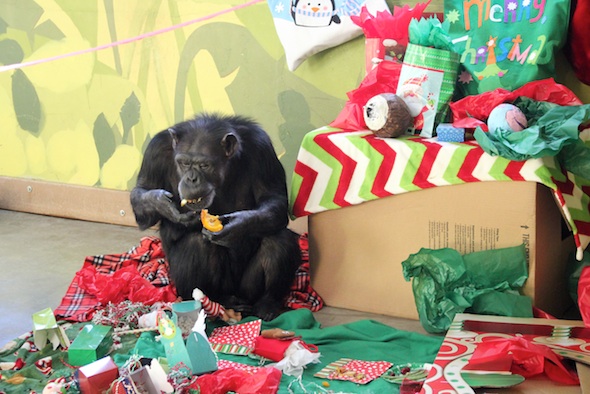
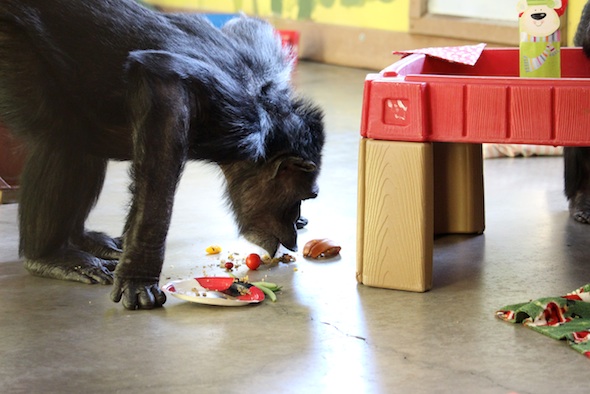
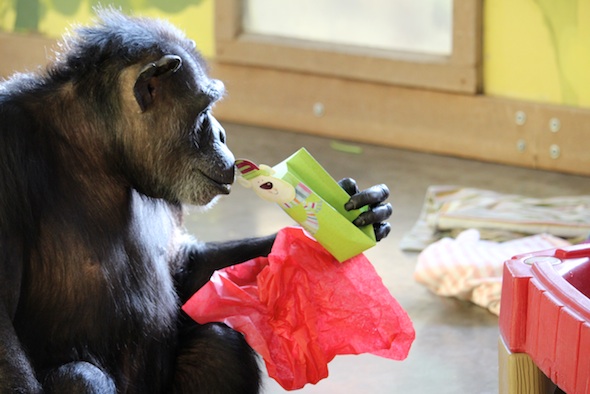
Jamie:
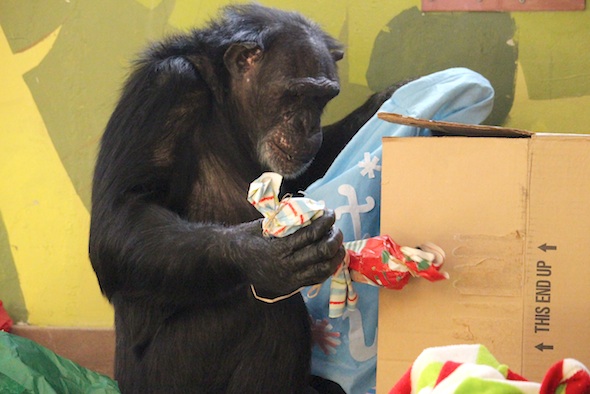
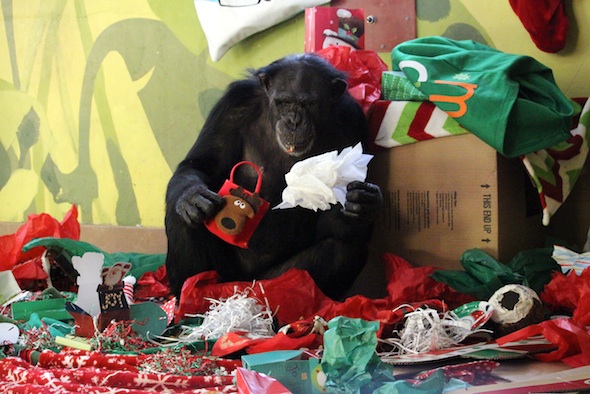
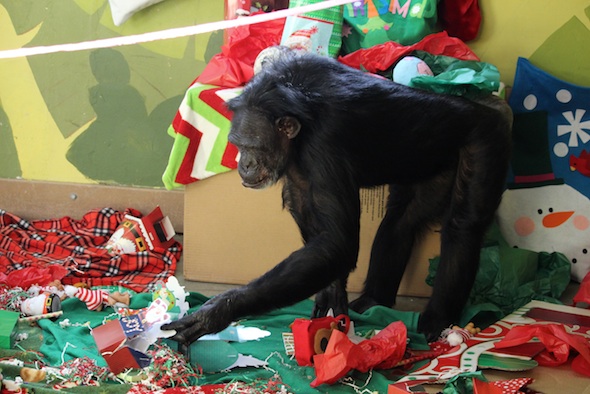
Foxie:

Missy:
Negra:
Jody:
Burrito
As if those photos weren’t enough, here’s a video of the festivities of the day. Thank you again to everyone who has helped bring such happiness to the chimpanzees this Christmas and every day!
Saving Dora
Foxie has an interesting relationship with her dolls. She almost always carries at least one with her, and we wouldn’t think of putting out the enrichment for the day and not including a handful (or several handfuls) of trolls and Doras. As much as Foxie likes having her dolls with her, she also doesn’t mind being separated from them – temporarily. She’ll toss one to a caregiver, or Jamie will swipe one to entice Foxie into a game of keep-away. But Foxie almost always reaches a point where enough is enough and she wants her “baby” back.
Today a Dora doll was stuck in a toy and Foxie was determined to get it out.
After awhile, Foxie had had enough and grew increasingly upset. With one final pull, she freed Dora, and then screamed at the offending toy for good measure.
Roasted pears on snow, a delicacy
‘Tis the season for roasting and baking foods for the chimpanzees! They’ve had baked sweet potatoes almost everyday this week and they LOVE it! Food squeaks echo throughout the chimp house when they see the caramelized glaze on the potatoes. Yum! We’ve been experimenting with roasting some other foods, too, to mix things up a bit. Beets, carrots, and pears have all been a huge hit.
Today volunteer Sandra and I baked some pears with the plan to put a couple out as a forage after we cleaned the chimpanzees’ playroom. Here’s the before and after shots:
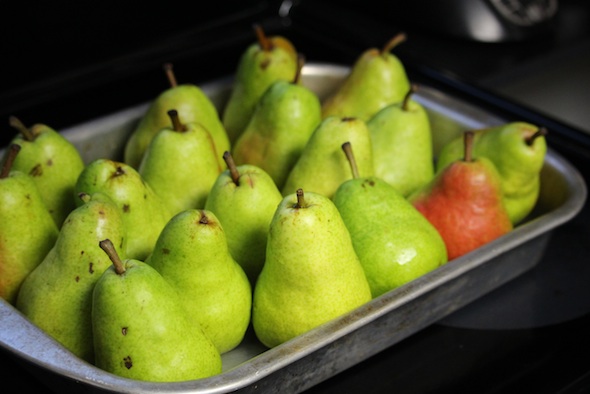
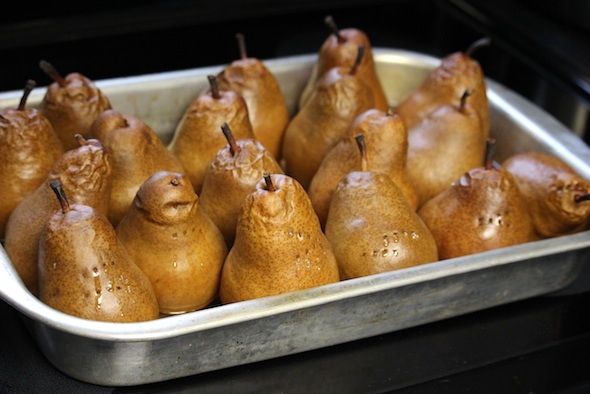
I turned off the oven well before we were done cleaning but the pears were still pretty hot when it was time to set up the forage. So we came up with a nice way to cool them off—use them as a topping on some snow!
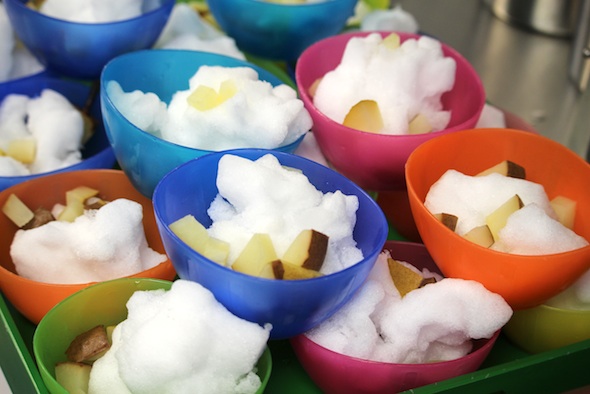
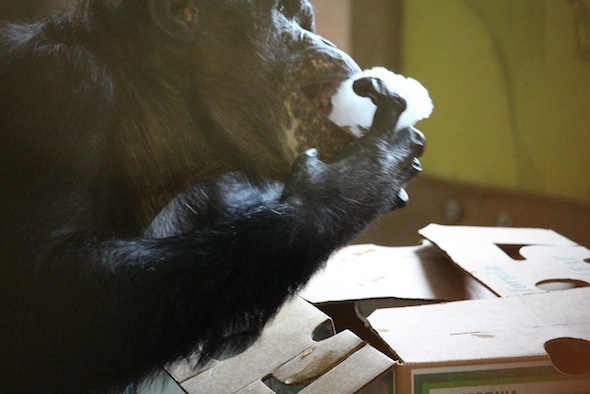
Sandra filled bowls up with fresh snow that fell this morning and scattered bits of roasted pear on top. All the chimpanzees huddled around the door as we set up the forage, pant hooting and food squeaking with excitement.
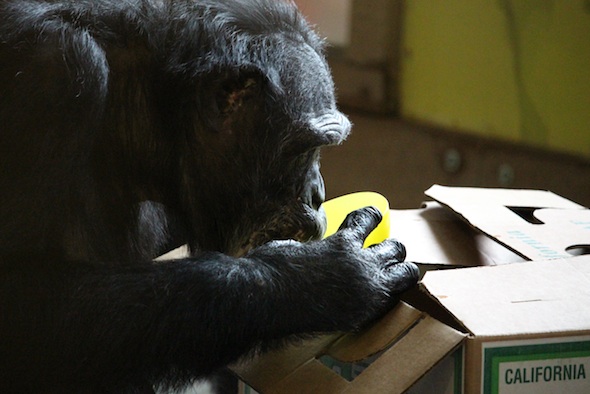
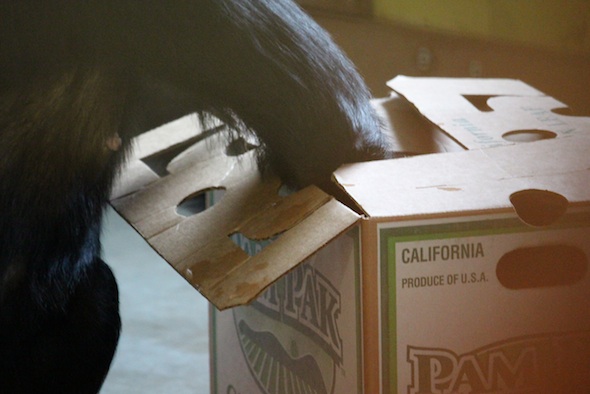
Jamie did not hesitate in grabbing as many bowls as she possibly could. Luckily we scattered many bowls around so everyone got to have a few, but Jamie got the biggest haul. It also helped that she used a box as a collection device. She pulled her box around and added bowls to it as she went through the playroom, as a sort of shopping cart.

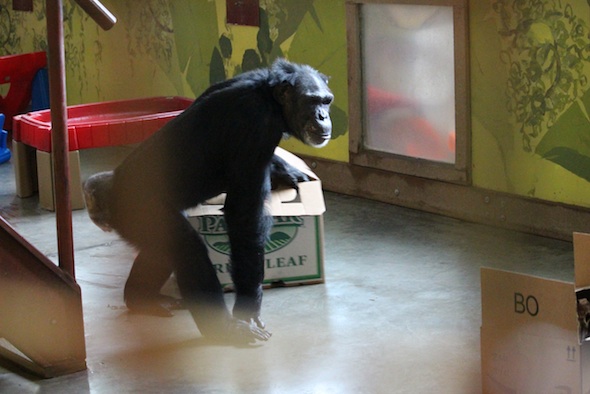
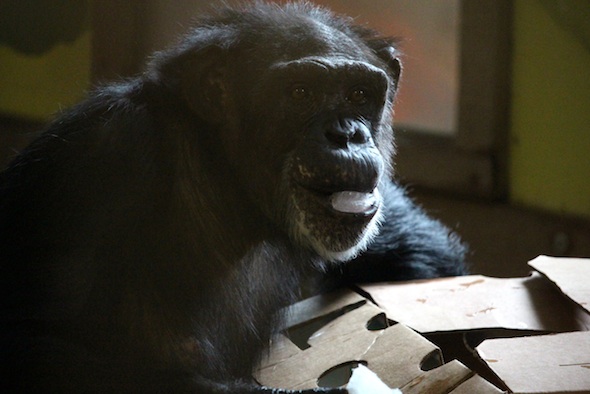
Once she had collected everything she could, she sat down to enjoy her snow and roasted pear snack.
Ebola and Great Ape Conservation
There are many questions about how this year’s Ebola outbreak started, how it spread so quickly, and how to prevent it from spreading further—but what does Ebola have to do with non-human great ape conservation?
It is known that Ebola Hemorrhagic Fever is transmitted by coming into direct contact with bodily fluids of someone infected and showing symptoms of the virus, a cadaver of someone who died from the virus, or the fluids or meat of an infected animal.
Bushmeat is the meat of any non-domesticated animal that is consumed by humans. In Africa, bushmeat is not only consumed locally, but it is exported worldwide. Many bushmeat species are endangered, in which cases the hunting of those species is illegal. Still, these animals are hunted, and their meat is sold on the black market and exported to other countries, including the United States. No one really knows just how many pounds of illegal bushmeat are smuggled into the U.S., because it is believed only a fraction of the imports are confiscated—but estimates range from hundreds of thousands to millions of pounds per year.
While habitat loss is the largest long-term threat to African ape populations, hunting for bushmeat has risen in the last couple of decades as the most significant immediate threat—and could cause species extinction if the practice continues to grow. However, with the emergence of the deadly Ebola virus, more people have begun to tune into the problem. Though research shows that fruit bats serve as hosts to the Ebola virus and are believed to be the direct source of the current outbreak, consumption of infected ape meat has been linked to previous outbreaks since the late 1990s. Primates and other animals can become infected by eating half-eaten fruit that have come in contact with fruit bat saliva, and the virus is passed to humans who eat infected animal bushmeat.
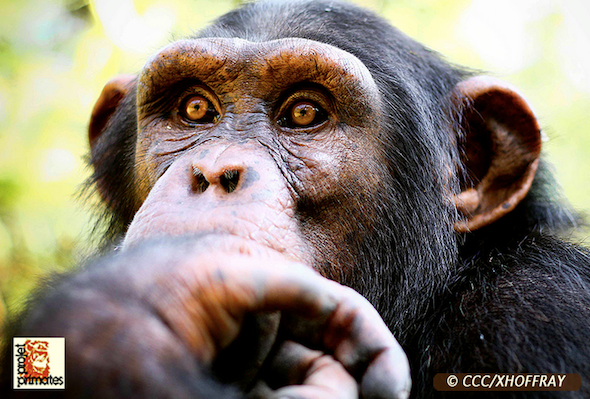
The Ebola virus can also be detrimental to wild ape populations. In 2002, over 5,000 gorillas died from an outbreak. In fact, the threat of imminent Ebola outbreaks (and other pathogens) on already dwindling populations has prompted researchers to propose developing a vaccination for the apes. Before vaccines could be administered to wild apes, however, some researchers feel they would need to be tested on captive apes. As we know, there is a push to end the use of chimpanzees in research altogether, so the topic sparked a debate earlier this year (read more on that here).
The Ebola scare has also left African sanctuaries in a predicament, such as Tacugama Chimpanzee Sanctuary in Sierra Leone—one of the affected countries.
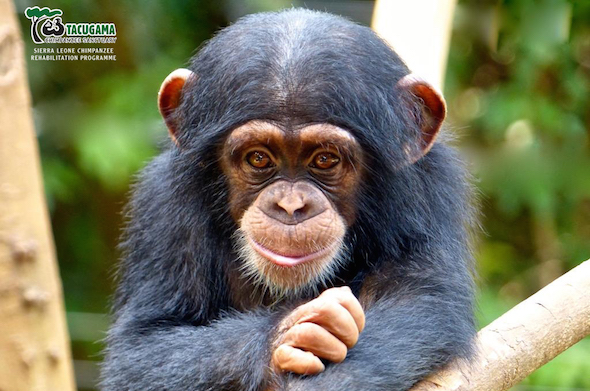
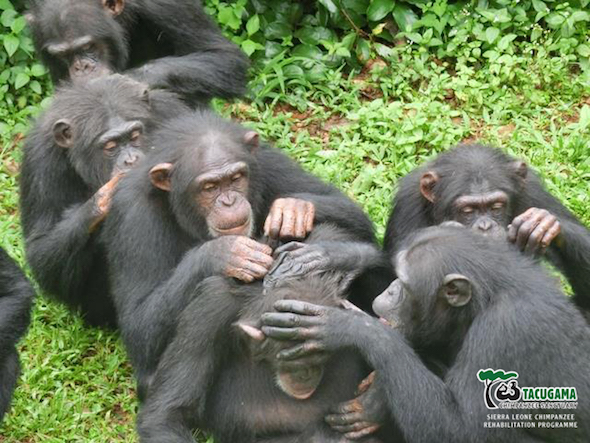
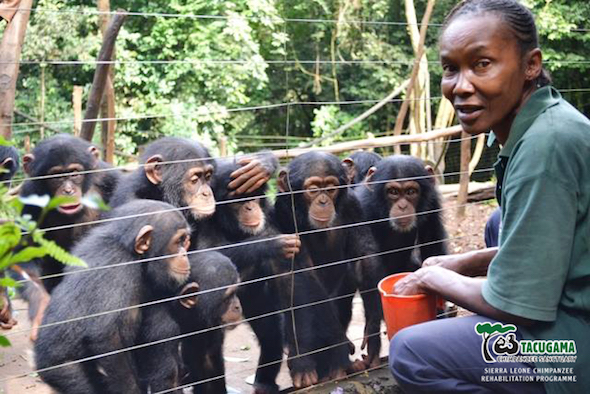
The travel limitations and general panic about the disease have kept people away from the country, and the lack of outreach opportunity has hit the sanctuary and others like them hard. Additionally, with travel restrictions in the affected countries, it is harder for volunteers to help with the day-to-day work. The sanctuaries have had to hire more local staff, causing their funds to be stretched thin. Recently, the Chimpanzee Conservation Center in Guinea has been impacted by this trouble as well. Thankfully, no apes in sanctuaries have contracted Ebola, and all the caregivers have been taking extra hygiene precautions to make sure everyone stays healthy.
Though the direct threat to great apes from Ebola is reason for concern, it’s possible that the attention on Ebola could have a positive impact on ape conservation and help prevent future outbreaks in human populations. Unlike other pandemics and deadly pathogens, which are able to sustain in human populations long-term, Ebola is a unique virus in that it comes and goes sporadically in humans in the form of destructive outbreaks. So far these outbreaks seem to have originated from human contact with infected wildlife. With effective education in local communities, and efforts to take legal action against logging, prevention of hunting and eating bushmeat can save countless lives—of both human and nonhuman apes.
From scrawny to brawny
When the chimpanzees first arrived at CSNW six and a half years ago, they were frail, weak, almost sickly ghosts of themselves. Through the years we have seen their once physically and mentally deprived selves transform into thriving, healthy, and fit chimpanzees full of personality.
The other day Jamie was sitting on a step in one of the front rooms and it struck me how strong her thigh muscles have become from her daily perimeter walks. It’s really very impressive!
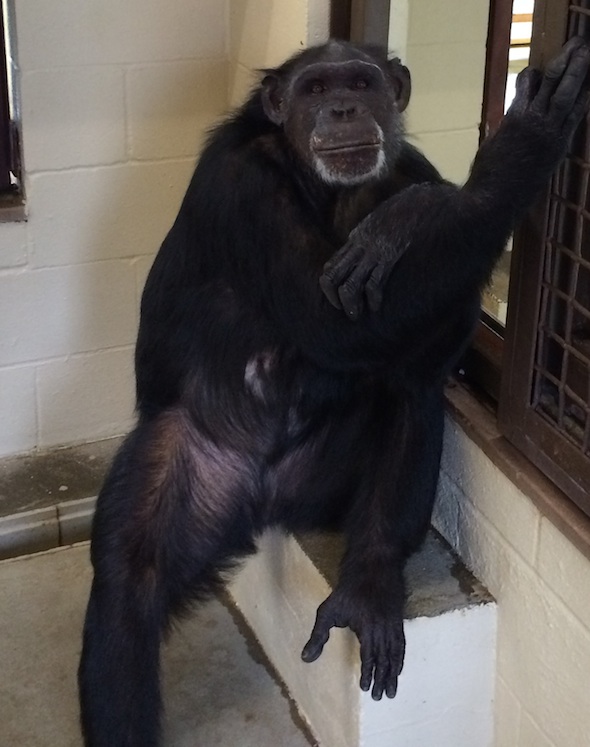
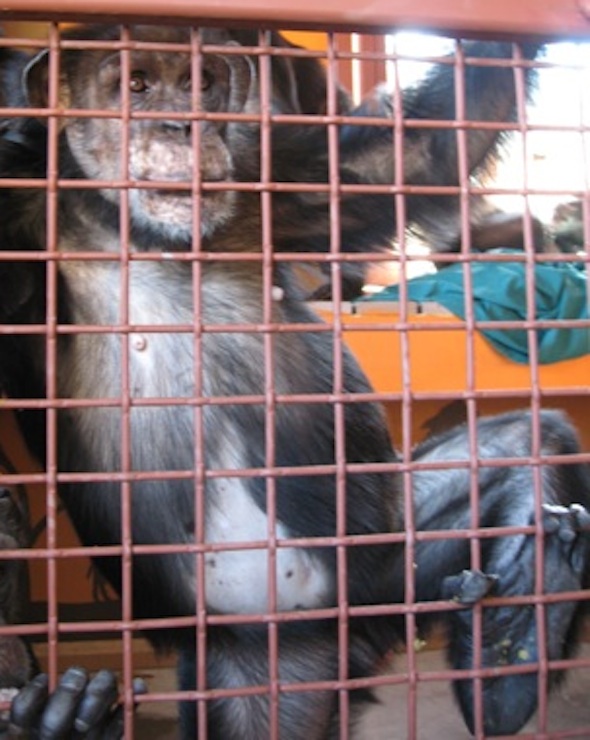
She’s really come a long way. These photos from the first days in sanctuary really highlight her fragile, atrophied leg muscles.
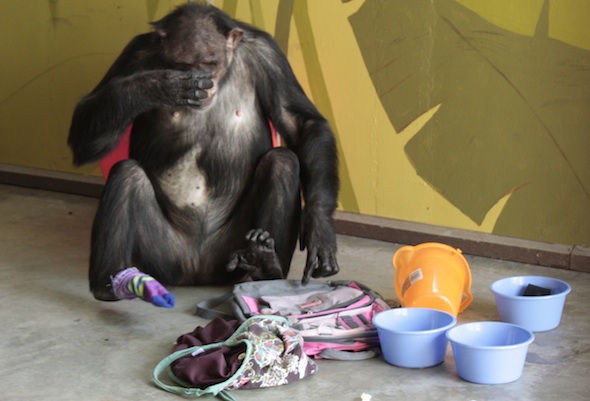
In this photo you can see not only how scrawny and skinny her legs look, but also how much she plucked her hair from her belly while in the lab, likely due to sheer boredom:
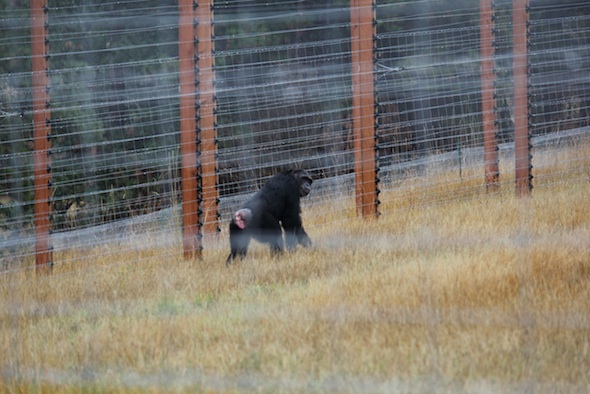
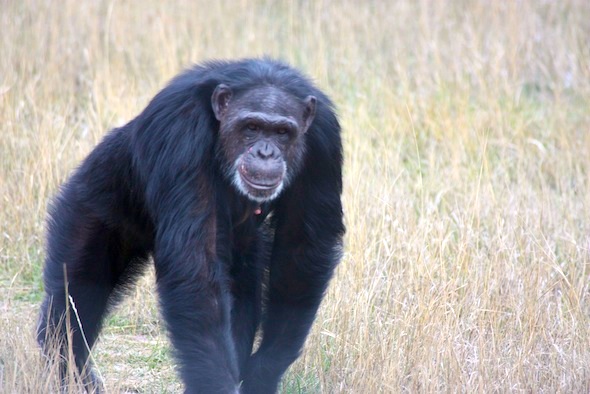
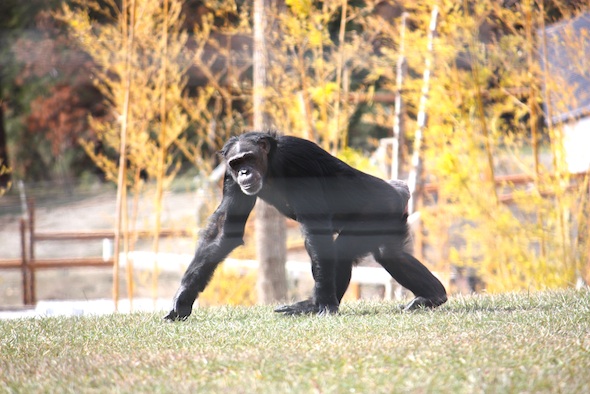
Sanctuary has provided Jamie the opportunity to patrol her territory, stretch her legs, and keep her mind active. Her life now is full of so much enrichment—both for mental stimulation and physical activity—that she doesn’t get as bored as she used to.
Of course, captivity is not perfect and Jamie still does pluck her belly every now and then, perhaps because it became a habit but also possibly due to periods of boredom. No matter how great we make her environment, we can never recreate the life she and all captive chimpanzees should have had in the wild. But for Jamie, the next best thing is taking walks around Young’s Hill while her caregivers follow along on the other side of the fence—always with at least one of her favorite boots, of course!
Ever the Charmer
I know it’s best to avoid speaking in absolutes, but I believe it is actually impossible not to love Burrito. He’s a blustery, macho male chimpanzee with equal parts little boy charm. For all his swagger, he has a certain vulnerability that is so endearing.