• Skip to main content
  • Skip to primary sidebar
  • Skip to footer

Chimpanzee Sanctuary Northwest

Hope. Love. Home. Sanctuary

  • Our Family
    • The Chimpanzees
    • The Cattle
  • Blog
  • About Us
    • Visiting the Sanctuary
    • Philosophy
      • FAQs
      • Mission, Vision & Goals
      • Privacy Policy
    • The Humans
      • Staff
      • Board of Directors
      • Founder
    • Annual Reports
    • The Future of CSNW
    • CSNW In The News
  • You can help
    • Donate
      • Become a Chimpanzee Pal
      • Sponsor A Day
      • Transfer Stock
      • Be A Produce Patron
      • Be a Bovine Buddy
      • Give from your IRA
      • Personalized Stones
      • Bring Them Home Campaign
    • Leave A Legacy
    • Employment Opportunities
    • Volunteer
    • See Our Wish List
    • Events
  • Resources
    • About Chimpanzees
    • Enrichment Database
    • Advocacy
      • Advocacy Action Center
      • Apes in Entertainment
        • Trainers
        • Role of the AHA
        • Greeting Cards
      • Chimpanzees as Pets
      • Roadside Zoos
      • Chimpanzees in Biomedical Research
      • Conservation
        • African Apes
        • Orangutans
  • Shop
    • Merchandise Store
  • Contact
  • DONATE NOW

primate protection

Foxie and her dolls

June 25, 2013 by Debbie

Foxie is usually never without a troll doll or Dora the Explorer doll. But there’s been some occasions where she differs from the usual and pick dolls or enrichment that are entirely different, and sometimes—shockingly—she’s been seen walking around Young’s Hill without any doll along for the ride. As endearing as Foxie’s doll love is, I think it’s really good to see her varying a bit in her choices for enrichment.

Sometimes she picks a troll AND a Dora:
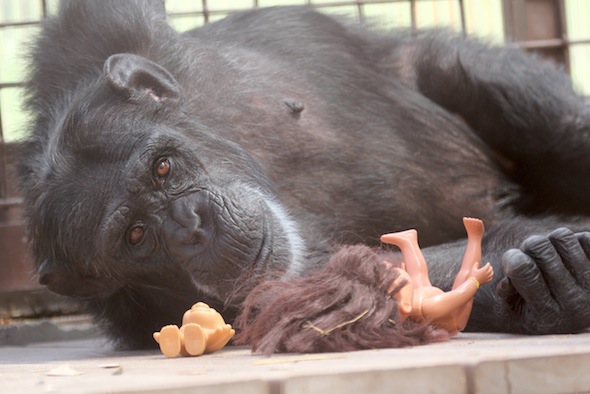
web_Foxie_lie_on_deck_troll_dora_look_at_camera_greenhouse_GH_ek_IMG_8733

Sometimes it’s something totally different (in this case, a “My Little Pony” pink horse head)

web_Foxie_pink_my_little_pony_head_playroom_PR_IMG_7518

Sometimes we can’t be for sure if she’s carrying one or not… but she sure looks good with that beautiful forest background!
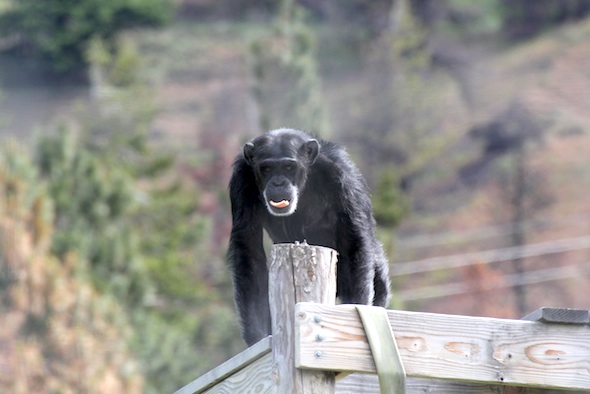
web_Foxie_top_of_climbing_structure_grapefruit_peel_in_mouth_look_toward_camera_Young's_Hill_YH_ek_IMG_8610

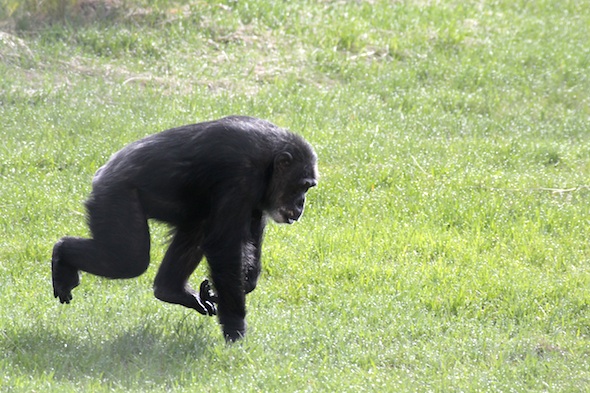
And sometimes she’s interested in enjoying the sunshine with her chimpanzee friends and leaves the dolls to wait for her inside:
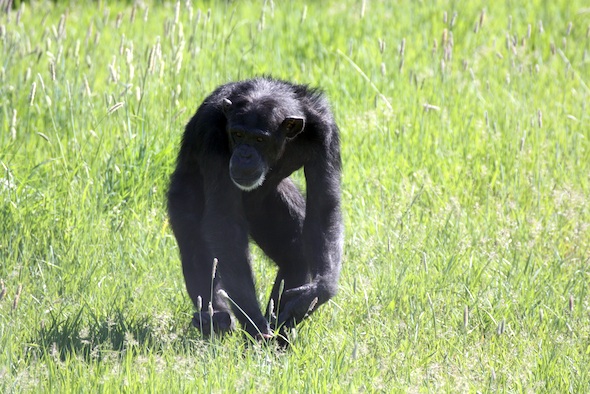
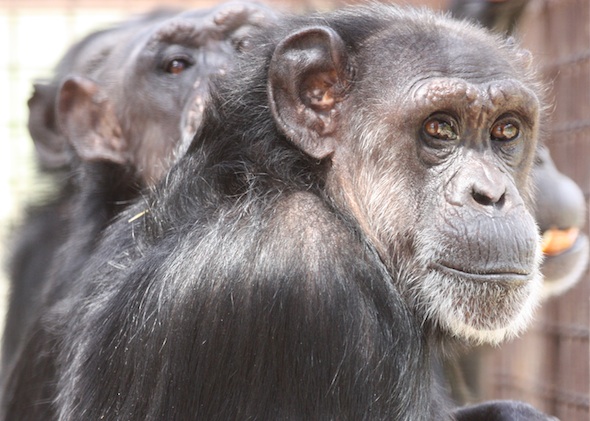
web_Foxie_walk_green_grass_Young's_Hill_YH_IMG_1839

Filed Under: Enrichment, Foxie, Sanctuary, Trolls, Young's Hill Tagged With: animal protection, animal rescue, animal rights, Animal Welfare, chimp enrichment, chimpanzee, chimpanzee rescue, chimpanzee retirement, chimpanzee sanctuary, Chimpanzee Sanctuary Northwest, Cle Elum 7, Cle Elum Seven, csnw, Enrichment, Foxie, primate protection, primate rescue, Sanctuary, young's hill

Beautiful Jody

June 20, 2013 by Debbie

I love Jody’s eyes. And in this picture, Negra’s eyes peeking over to Elizabeth as she’s taking the photo really bring a smile to my face!

web_Jody_look_at_camera_lunch_anniversary_birthday_party_greenhouse_GH_ek_IMG_2402

Filed Under: Jody, Negra, Sanctuary Tagged With: animal protection, animal rescue, animal rights, Animal Welfare, chimpanzee, chimpanzee rescue, chimpanzee retirement, chimpanzee sanctuary, Chimpanzee Sanctuary Northwest, Cle Elum 7, Cle Elum Seven, csnw, Enrichment, Jody, Negra, primate protection, primate rescue, rescue, Sanctuary

The FARDC ‘Petting Zoo’ at Bili

June 18, 2013 by Debbie

Dr. Cleve Hicks, one of our guest bloggers, was featured last month with a series of posts called “Along the Bushmeat Highway” (Read Part 1, Part 2, and Part 3). The story was from July of last year, and Cleve has given us some more recent follow-up information about the Bili forest area in the DRC. WARNING: some disturbing images included in this entry (the most graphic one is included as a link in its caption).

—

UPDATE – THE FARDC ‘PETTING ZOO’ AT BILI, OCTOBER 2012

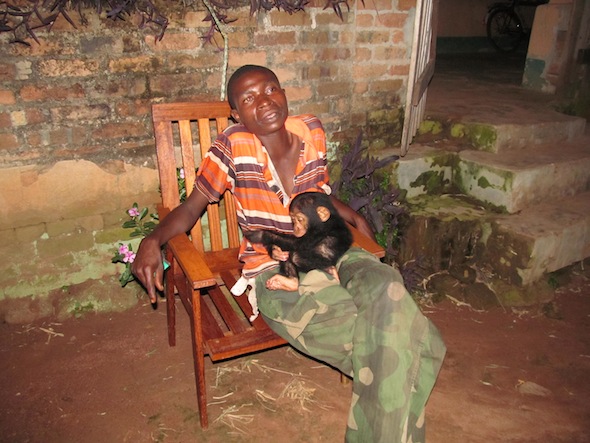
The skinny young man dressed in a mix of rags and military gear loomed out of the night like an apparition. He careened across our yard and nearly collapsed on top of Ephrem. Our evening banter was abruptly cut off as we rose from our chairs to confront the lurching, inebriated intruder. He was the youngest member in the squad of six Congolese soldiers stationed in a barracks up the hill from us in Bili. The soldier was so drunk that he could barely sit upright in the seat which we had offered him. At least on this occasion he had left his weapon back at the barracks. ‘I am a member of the Congolese military!’ he proclaimed in a slurred voice. ‘I am Congolese, and this is my pet!’ I looked in his lap and my heart sunk as I made out the dark shape clinging there: a baby chimpanzee, perhaps two years old, her eyes dull and glassy, pink tongue lolling out of her mouth. She periodically nodded off into a dazed slumber, and it looked as if the rumours that the troops were keeping her intoxicated with booze and dope were true.

1 drunk soldier with baby chimp

A drunken young soldier with a baby chimpanzee at our project house. (Photo © Ephrem Mpaka of the Lukuru Wildlife Research Foundation).

2 cleve with soldier and baby chimp

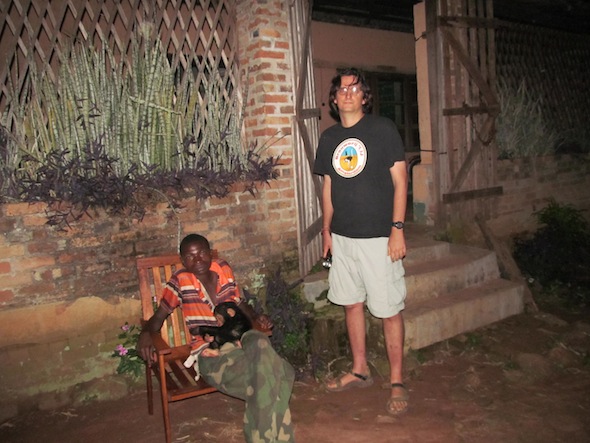
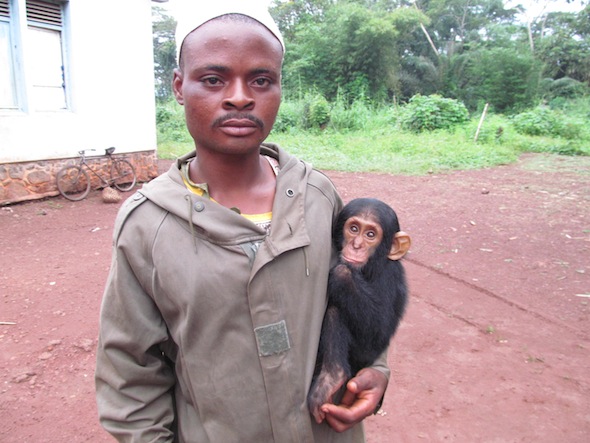
This was the same orphan that our team had photographed the day before, gazing out from the arms of her owner with a look of befuddled hopelessness. I had sent Ephrem with a pair of Ecoguards over to the barracks of the FARDC (Forces Armées de la République Démocratique du Congo) to photograph the ‘petting zoo’ which we had been told the new squad leader was keeping there. In addition to this little female chimpanzee, named Congo, the military and their families were keeping three monkey orphans: a baboon tied to a short leash, an agile mangabey, and a red tailed guenon. The latter two primates scampered around the yard looking for food. After some initial tension between our guards and the military, things calmed down and the soldiers allowed Ephrem to photograph the primates. The soldiers explained that they had acquired the orphan chimpanzee from a shop in the town of Roa about 50 km southwest of Bili, as a ‘mascot’ for the troops. Ephrem explained to the men that it was both dangerous and immoral to keep primates in such a condition, and in the case of the chimpanzee, illegal. Later that evening we considered sending the guards to confiscate Congo, but in the end, decided against it. These military were heavily-armed, often drunk, and had already made threats against our project. Also, we had no place to send the poor orphan.
3 orphan chimp Congo

The orphan chimpanzee Congo kept by a soldier at the military barracks in Bili.

We were unsure why this young soldier had come to our house with the baby chimpanzee. Did he want to sell her to us? Intimidate us? Or was he just out-of-his-mind drunk? Maybe all three at once. After failing completely to penetrate his whiskey-soaked stupor with reason, we sent him stumbling on his way back to the barracks.

Two of the three chimpanzee orphans we had encountered on this trip, one in Bili and the other two en route, had been held by FARDC soldiers and officers (the third was held by a traditional chief at Lisala). The one we saw in the regional capital of Buta had been kept by the highest military authority in that town. Although the people of Bili certainly consumed monkeys and other wildlife, we had never seen any chimpanzee meat or orphans in the hands of the locals. The indigenous Azande still seemed to hunt only for local trade and consumption, but it was clearly in the vested interested of a number of outsiders to link up Bili to the huge and rapidly expanding commercial bushmeat network a hundred miles to the south. This was particularly the case for ivory. What a terrible example these military men and federal officials were setting – and not only in regards to conservation.

Later in the month these military men, in cahoots with the corrupt territorial administrator, began to shake down local merchants for money and merchandise, citing a law forbidding non-soldiers from wearing military-style clothing and mercilessly harassing anyone who happened to be wearing khaki shorts or cargo pants. They would then use this money to buy copious amounts of alcohol, which they would drink in public – fuelling more roadside shakedowns. They even did this to one of our motorbike drivers at our project base, forcing me to record the incident on film and threaten to report the culprits to the authorities. Only the threat of exposure caused them to back down. It was and is my hope that the local people, frequently victims of such aggression and thievery from the soldiers and administrators, would realize that we could serve as an ally against such forces of anarchy – and there were indications that this was happening.

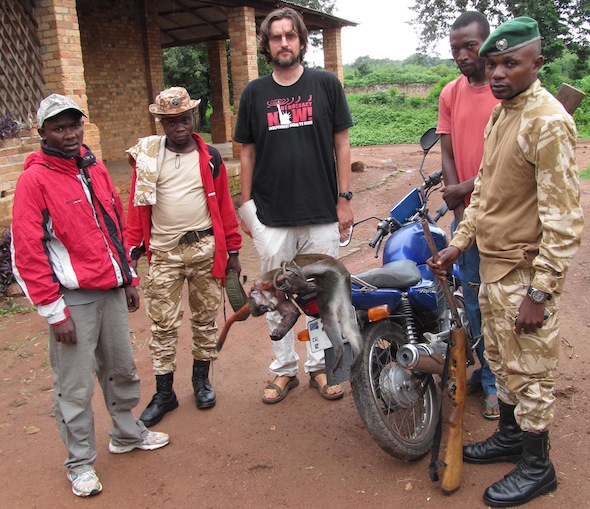
In addition, we found evidence that powerful outsiders were ignoring the closed hunting season, a period of several months in which it is forbidden by national law to hunt. The purpose of this closed season is to allow key prey species to recover. On the road between our forest camp and Bili, in the middle of this closed season, our guards came upon a man shooting a red tailed guenon out of a tree. They confiscated his gun and the monkey carcass and brought them to us. It turned out the gun belonged to a highly-placed government official in Bili. That man paid us a visit on the same night demanding that we return his gun. We refused to comply. Later, in a public hearing, he tried to explain to us why it should be permissible for powerful men like him to hunt any time they wanted to. We encountered similar incomprehension of or disrespect for basic Congolese law from a number of regional officials throughout the course of our stay in Bili.

4 confiscated monkey & shotgun

Our Ecoguards, Feruzi OPJ and Feruzi Yenga, confiscated this monkey and shotgun during the closed hunting season. The owner was a powerful governmental official.

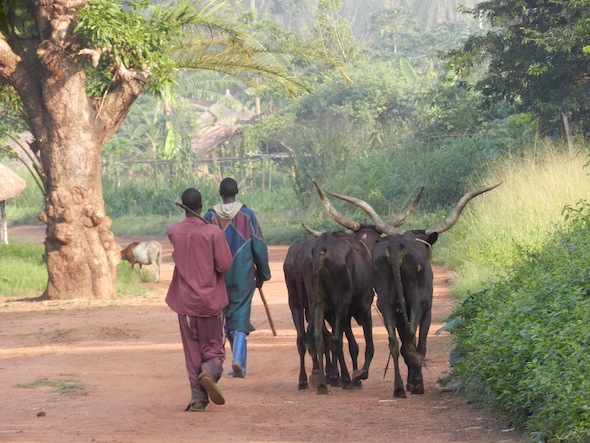
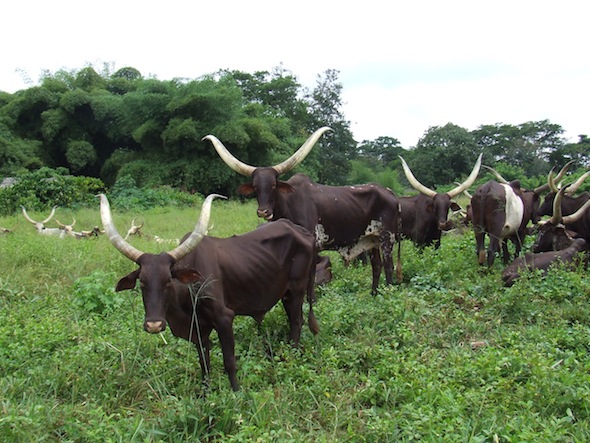
In late October, on our way out of Bili to Buta, we drove past a herd of 45 Mbororo cattle being imported into the lushly forested region. We had seen only a few very skinny cattle at Bili, but here, further south in the heart of the forest, domesticated animals were arriving in increasing numbers – out with the local fauna, in with the cattle, pigs, goats, and chickens. Arriving at Buta, we stopped at the headquarters of the highest-ranking regional military official, a man whom our team had confirmed owned a baby chimpanzee. Despite this, he was widely known to be professional and respectful in his dealings with civilians. He listened courteously to our complaints about his troops in Bili and said he would work to get them transferred, and that he would also send out a message to his soldiers not to buy baby chimpanzees. At least he listened to us and appeared to take our complaints seriously. I am under no illusions that this will change anything much, for the orphan Congo or the people of Bili, but I am convinced from what we have seen that the Congolese military are a crucial link in the illicit trade of protected wildlife species, from chimpanzees to elephants. The commander told us that he and his team had been recently trained at their base by military advisors from the United States, and he proudly showed us a certificate on the wall to prove it. Might this arrangement between foreign governments and the FARDC present us with an opportunity to spread to the Congolese troops the urgent message that they should be protecting, not cruelly exploiting, DR Congo’s priceless and world-famous endangered species?

5 bili cattle

Domesticated livestock are rapidly replacing the local fauna (above, Bili, below, Road to Buta)
6 cattle road to buta

7 male chimp gangu forest

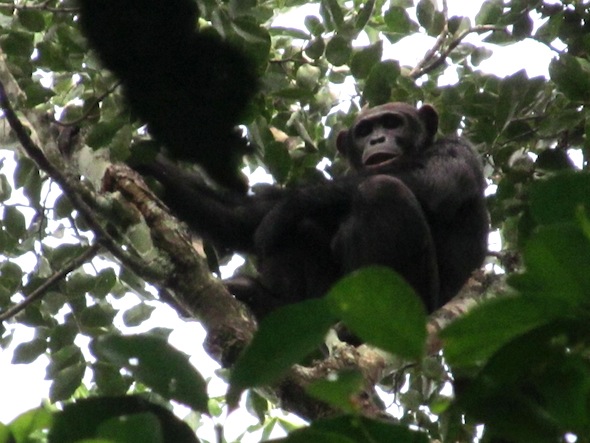
A majestic adult male chimpanzee in the Gangu Forest (photo © Ephrem Mpaka of Lukuru Wildlife Research Foundation). How can we keep him and his kind from ending up in the bushmeat markets? It may soon be too late for Gangu’s elephants (adult and juvenile mandibles found at a hunting camp).

Along the Bushmeat Highway: Part 1
Along the Bushmeat Highway: Part 2
Along the Bushmeat Highway: Part 3

This mission was made possible by the generous support of the Max Planck institute for Evolutionary Anthropology, The Lukuru Wildlife Research Foundation, The US Fish and Wildlife Service, l’ Institut Congolais pour la Conservation de la Nature, The Lucie Burgers Foundation, and The African Wildife Foundation.


Filed Under: Advocacy, Free-living chimps Tagged With: advocacy, animal protection, animal rescue, animal rights, Animal Welfare, bili, bushmeat, chimpanzee, chimpanzee sanctuary, Chimpanzee Sanctuary Northwest, dr. cleve hicks, FARDC, free-living chimps, lukuru wildlife research foundation, primate protection, primate rescue, wild chimps

Negra’s story

June 13, 2013 by Debbie

Today is the fifth anniversary of Negra and the Cle Elum Seven’s new lives in sanctuary. It’s amazing what sunshine and good food and comfort can do for these inspiring and resilient chimps. Today is the day to Give Five for our Queen on her birthday! Stay tuned for a video that we will be posting in just a little bit in celebration of five years of sanctuary.

Negra’s History:

Negra was captured from the wild, presumably in 1973, however she could be even older. Buckshire leased her to White Sands Research Center in March 1982 where she got the tattoo “#CA0041.”

WSRC started breeding Negra with Mack right away in April 1982, just one month after her arrival. Mack was a popular breeder – he was also paired at WSRC with Annie, Foxie, Jody, and is Burrito’s father. Tarzan, Rufus, and Spock are just a few other male breeder names we see in many of the chimps’ records. In between transfers to breeding pairs the females were sometimes housed alone, and sometimes with another female. At different points Annie was with Foxie and with Jody, Foxie was with Jody, Jody was with Negra, and Negra was with Karen, who was Burrito’s mother. The cross-over that we read about in these records is interesting, but also very sad. It only emphasizes how much these chimpanzees were used over and over to create more generations of lab chimps.

On November 29, 1983, technicians discovered Negra was pregnant. She gave birth to Heidi in January 1984.

1/8/84 – Delivered healthy female infant #91 Heidi. Removed & taken to nursery.

Heidi was taken immediately away, but Negra was able to stay with Angel (see below) for five whole days.

9/4/85 – Healthy infant born this date.

9/9/85 – Healthy infant removed and taken to nursery – female #126 Angel.

In early 1986 the scribbled notes indicate the lab techs believed Negra has some kind of infectious disease due to loose stool and negative parasite tests, and she was moved to isolation on March 31, 1986.

3/31/86 – Dr. ordered animal removed from main colony and placed in isolation for further testing.

The lab technicians took blood from Negra regularly, knocking her down each time. They took liver biopsies, which meant surgery. They tested her for hepatitis C on June 2, 1987, and for some reason the results did not return until over six months later on January 12, 1988. The entry for that date concluded that there was no evidence for the suspicion that Negra had hepatitis C. Negra had been housed in isolation for over a year and a half due to incorrect blood work. At this point, they transferred her back to the main chimp colony.

1/14/88 – Transferred from Quarantine to Bldg. 300 (Main colony) this date. 

1/14/88 – Enter cage #28 by herself. Home again.

Negra was transferred away from quarantine but was put back into the cage she had been in during that year and half, by herself. At this point it was considered her home to be alone in cage #28. Being alone didn’t last long, though. The next week, she was thrown back into breeding pairs.

10/17/89 – Infant born approximately 10:00am, taken from mother and removed to nursery. Infant boy. #205 Noah.

Even after living in isolation, undergoing tests, and having babies taken from her, WSRC still took more from her. In early January 1992, they used her in a study that involved injecting a serum near her lymph nodes in her left leg. By March they had done this five times, and prepped Negra for surgery to remove the nodes. As if that weren’t enough, just a couple months later, Negra was transferred again to another breeding pair. She did not have any more babies however, and left WSRC/Coulston with Annie, Foxie, and Jody to return to Buckshire on August 12, 1996.

Before coming to Cle Elum, Keith, J.B., Diana, and Sarah all met the chimps while they were still at Buckshire. Read this post to see what Diana said about Negra back then.

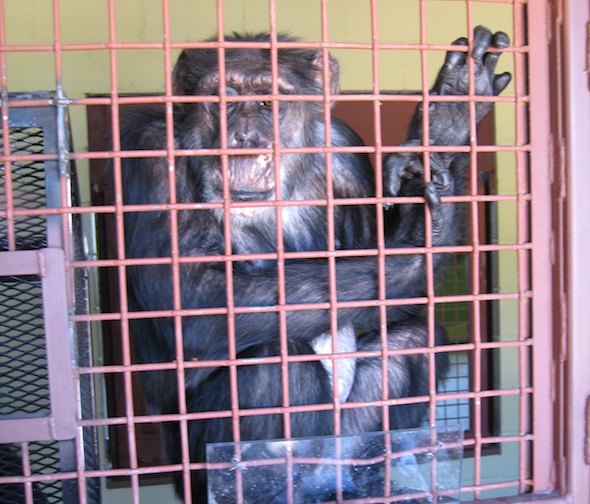
Negra, arriving at CSNW exactly five years ago today:

web Negra transfer cage 100_0162

web day 2 negra with blanket FR 4 Picture 106

Jamie and Negra at the barn doors:

web negra jamie groom barn doors early

Cage #28 is no longer Negra’s home. Now her home is Young’s Hill, where she’s really finding her place under the sun. It has taken her a little while to be fully comfortable on the hill, but this summer, she’s exploring and spending more and more time outside. Some days she’s hard to find! Seeing Negra, the honorary Queen of CSNW, able to relax and enjoy her home fills everyone around her with joy. She is the epitome of CSNW’s philosophy: Hope. Love. Home… Sanctuary.

web Negra nest under blanket catwalk PR orange IMG_9098

web Negra stand shade green grass bamboo look at camera YH (ek) IMG_9120

web Negra look down driveway sit on YH IMG_3167

web Negra blanket lay on top climbing structure GH watch chimps on YH IMG_7081

web Negra green grass in mouth Young's Hill YH IMG_7978

Negra getting some reassurance from Jamie:

web Negra seeking reassurance from Jamie approach 4 in series YH IMG_9410


Filed Under: Chimp histories, Chimpanzees in Biomedical Research, Negra, Sanctuary Tagged With: advocacy, Animal Welfare, biomedical research, Buckshire, chimpanzee rescue, Cle Elum 7, coulston foundation, csnw, Negra, primate protection, Sanctuary, white sands research center

Missy’s story

June 12, 2013 by Debbie

Missy cracks us up every day.

She is super active, but at times can be calm, gentle and is very intense and serious about grooming sessions. She also likes to use tools to groom herself. She doesn’t sit still for long though—every day she runs so fast around the playroom chasing Annie or on the hill just for the fun of it. Like Burrito and Foxie, she’s pretty goofy, has a great sense of humor, and will even sometimes crack herself up. She’s very energetic and has the ability to get just about anyone to play with her.

On Young’s Hill she seems to prefer to be an acrobat, and often times will walk along the firehoses like a tight rope rather than the structures themselves. To her that probably is just more fun. It’s awesome so see her enjoying herself so much.

Missy’s birthday is unknown but it’s estimated she was born in 1975, and Buckshire purchased her from a private breeder. Missy has two tattoos: “CH504” on her chest, which was from LEMSIP; and “#133” which is from another lab, possibly White Sands. We only have a few records from Buckshire and LEMSIP, and nothing prior to 1987, though it is likely she was either at LEMSIP or another lab previously. While at LEMSIP she was used in hepatitis vaccine trials and used as a breeder. In 1987 she gave birth to her first infant on record:

April 25, 1987: Male infant live born Day 229 of gestation. Showed a great deal of affection towards the infant but did not know now to carry him to breast or suckle him. Her behavior did not improve over the following week, during which time nutritional maintenance was given, and the baby was removed permanently to the nursery for rearing. 

December 12, 1987: Small amount of placental tissue aborted, accompanied by uterine bleeding (very early gestation.)

June 11, 1989: Female infant born Day 229 of gestation. Did not pick up infant at all, which was therefore removed to the nursery for rearing.

July 14, 1991: Stillborn female infant Day 225 of gestation.

In Late 1992 she moved back to Buckshire, where she lived, warehoused, until being rescued by Chimpanzee Sanctuary Northwest in 2008. Though her records do not indicate she was being used in any active biomedical research protocols during these years at Buckshire, just like the other chimpanzees there, Missy was routinely knocked down for blood draws, physicals, and tuberculosis tests.

Missy arriving at CSNW in 2008:
web Missy 2

web missy FR day 2 Picture 056

web missy day 3 nest bare belly Picture 037

Missy and her best friend Annie playing in the early sanctuary days:
web Annie, missy play 2

Today Missy is brave, easy-going, playful, and full of energy. It’s very hard to think of her stuck in small cages no bigger than a coat closet when she runs, full speed, across the open-air enclosure of Young’s Hill and scrambles up tall posts without a second thought.

web Missy run feet off ground young's hill YH IMG_5513

web Missy climb post Young's Hill YH IMG_8084

Annie and Missy now get to play with no cage above their head:

web Annie Missy wrestle play playface play bite climbing structure YH IMG_4436

And at the end of the day, she can relax in peace:

web Missy nest cute face blankets playroom PR IMG_4310

Give Five for Missy. $5 pays for one meal, and Missy loves fresh produce that provides her the calories she needs to keep her speed up!

Filed Under: Chimp histories, Chimpanzees in Biomedical Research, Missy, Sanctuary Tagged With: advocacy, Animal Welfare, biomedical research, Buckshire, chimpanzee rescue, Cle Elum 7, csnw, LEMSIP, Missy, primate protection, Sanctuary

Jody’s story

June 11, 2013 by Debbie

We are continuing with our chimpanzee profiles leading up to Give Five Day and the five-year anniversary of the chimpanzees’ arrival to sanctuary on June 13th. Today we feature Jody.

Jody has a unique personality. She’s very serious and independent, but also caring and kind, and will happily greet her caregivers every morning. She has beautiful, soulful eyes (something J.B. noticed when they first met at Buckshire). She loves to lounge around in the afternoon in the warm greenhouse, and builds the most fantastic nests. Seeing Jody nest is really fascinating. She is very diligent in the process—she seems to take it pretty seriously and sometimes she will have very elaborate nests. Lately, she’s been interested in nesting with the bamboo we planted in the greenhouse.

Jody was a little timid to go out on Young’s Hill at first, but after some encouragement she became fearless and will spend a long time out there—sometimes she is hiding behind structures and we have trouble finding her!

She is also very helpful. She will sometimes pull blankets out of doors when we ask nicely so that we can close them, and she will also “round up” stragglers at meal times, to get them to come out to the greenhouse for breakfast.

We celebrate Jody’s birthday on Mother’s Day, in honor of the 9 infants she had but was never able to properly care for as their mother. Jody’s records say that she was born in 1975, possibly from the wild, and that she may have spent a few years in a circus. Buckshire purchased Jody, and then in 1981 she was shipped to White Sands to be used in hepatitis research and for breeding. On her tenth day, she had her first knock-down. If her birth year is correct, she was six years old. She was given a new tattoo – “WSRC #37.”

Over the next year and a half, Jody was regularly transferred between cages. Sometimes she was with another female, sometimes by herself, but usually she was with a male for breeding purposes—Max, Mack, John, Magoo, and others all in an attempt to create the next generation of lab chimpanzees.

In January 1983, Jody gave birth for the first time. She was eight years old. The technician’s notes read:

1/4/83 – 4cc Ketaset IM. Delivered infant baby male – taken away to nursery… Baby – Male WSRC #66 OPY – appears healthy.

Jody never got to nurse Opy, or hold him, or carry him on her back, or teach him about the world. She was immediately knocked down with ketamine (a.k.a. Ketaset) and her baby was stolen. The “IM” in these notes stands for “intramuscular” meaning she—like all the other mothers—was being stabbed with syringes or shot with darts.

Six weeks after delivering and losing her first baby, Jody was put into a cage with a male named Rufus for breeding, and the cycle continued. She would go on to have eight other babies—Levi, April, Cliff, Clay, Adam, Andrea, Bart, and Taylor—as well as two miscarriages in just ten years.

11/23/83 – 4cc Ketaset IM. Delivered healthy infant male #88… removed and taken to nursery (Levi).

6/20/84 – Found approx. 2-month old fetus + placenta in cage this a.m.

4/26/85 – Delivered healthy looking baby at 10:30pm… 3cc Ketaset IM. Not taking care of baby. Infant removed to nursery (#119 April). Animal does not appear to be feeling well. Did not eat any fruit this date.

3/15/86 – Delivered healthy infant early a.m. this date. 3 1/2 cc Ketaset IM. Mother was leaving infant on the floor – infant removed + taken to nursery. Appears to be a healthy animal #142 Cliff, male.

5/20/87 – Delivered healthy male infant between 11:30 and 12:00 pm… 5cc Ketaset IM. Infant male #162 Clay removed and taken to nursery, Mother leaving infant unattended.

4/26/88 – PATHOLOGIST’S NOTE: Bloody mass found in cage – test indicates spontaneous abortion due to acute, hemorrhagic placentitis

1/4/89 – Arrived for night checks at 10:15pm… found infant alive in cage no more than one hour old – mother not taking good care of infant. 4 1/2 cc Ketaset IM. Removed infant male #0187 – appeared healthy.

9/30/90 – Delivered healthy infant female approx. 4 to 6 a.m. this date. Mother not taking good care of infant- leaving infant on floor unattended. 4 1/2 cc Vetalar IM, infant removed to nursery (#215 Andrea).

1/14/92 – Delivered healthy male at approx. 2:50pm this date. Mother not taking good care of baby. Leaving baby on floor unattended. 4.5 cc Vetalar IM Infant removed at 4:05pm, taken to nursery. Drew milk out for baby. (#226 Bart).

2/19/93 – Delivered infant early a.m. this date. 0515 hrs found infant on cage floor. Infant very cold. Removed infant immediately to nursery, mother not caring for infant. Infant male #236 Taylor.

Jody had the potential to be a great mother, but after being stolen from her own mother and forced to live in a lab, where baby after baby were taken from her, she was not attending to her infants the way she would have in a more natural environment. It really isn’t at all surprising that Jody wouldn’t create a bond with her infants when she had never had one with her own mother. She deserved to be raised with her mother and to learn what it is like to be loved unconditionally, and she deserved the chance to show her own children the same love.

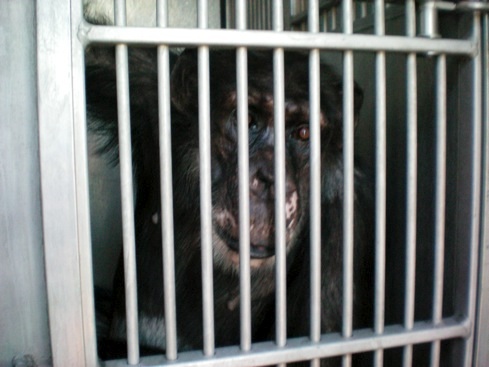
Jody, upon arrival at CSNW:

web Jody transfer cage 100_0155

web jody stand in nest blanket FR 4 day 3 Picture 067

web jody look out window 3rd day Picture 054

web jody early FR4 100_0345

We sadly can’t make everything right again, and we can’t undo what’s been done. But what we can do is honor Jody and make every day more interesting and more exciting than the last. Now she can build elaborate nests with blankets and paper and bamboo shoots if that’s what she prefers, she can play wrestle with chimpanzee friends and groom in the comfort of a safe home, and she can explore her expansive open-air enclosure and feel the sun over her—something she likely hasn’t felt since she herself was a baby in the forests of Africa.

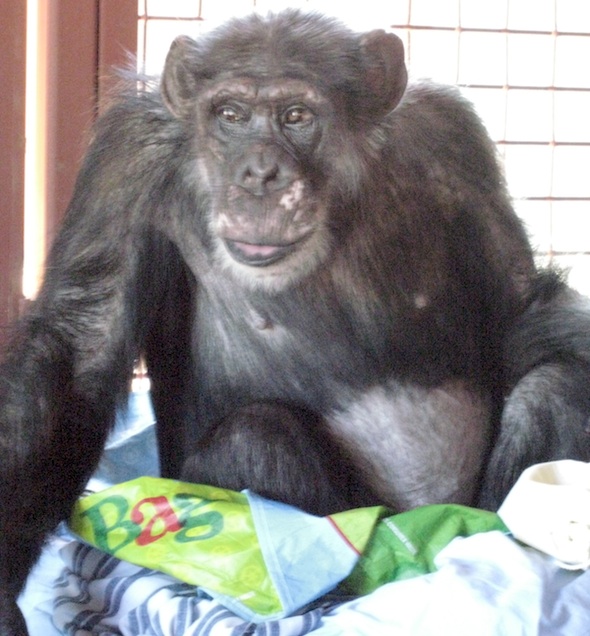
Jody after five years in sanctuary:

web Jody droopy lip grass yh IMG_8648

web Jody profile YH IMG_2467

web Jody best new blankets nest playroom IMG_2376

web Jody lie in blanket nest birthday party mother's day greenhouse GH IMG_1965 resized for Jody Pals

For five years Jody has been in sanctuary, free from all the horrors of the lab. Give Five in Jody’s honor today.

Filed Under: Chimp histories, Chimpanzees in Biomedical Research, Jody, Sanctuary Tagged With: advocacy, Animal Welfare, biomedical research, Buckshire, chimpanzee rescue, Cle Elum 7, coulston foundation, csnw, Jody, primate protection, Sanctuary, white sands research center

Take Action Tuesday: Split-listing may be removed!

June 11, 2013 by Debbie

EOA take action tuesday

This morning the US Fish and Wildlife Service (FWS)  announced that they are proposing to remove the split listing between captive and free-living chimpanzees, making ALL chimpanzees endangered. This potentially will have a major influence on how chimpanzees are treated in this country. It will certainly have an impact on invasive research and most likely entertainment as well.

Read our press release on the proposal and see this news article featuring a photo of CSNW’s resident, Jody (read her story here).

At this moment, the FWS  has only made a proposal and this does not guarantee that it will be passed.  The FWS is currently accepting public comment, so we need your help! Please leave a comment here to express your thoughts on this issue. Let them know that chimpanzees should be regarded as an endangered species and that the hundreds of chimps still in labs and entertainment truly deserve to be in sanctuaries. Spread the word!


Filed Under: Advocacy, Apes in Entertainment, Chimpanzees in Biomedical Research, Free-living chimps, Sanctuary Tagged With: advocacy, animal protection, animal rescue, animal rights, Animal Welfare, chimpanzee, chimpanzee rescue, chimpanzee retirement, chimpanzee sanctuary, Cle Elum Seven, csnw, endangered, eyes on apes, FWS, Jody, primate protection, primate rescue, Sanctuary, split-listing, US fish and wildlife

  • « Go to Previous Page
  • Page 1
  • Interim pages omitted …
  • Page 17
  • Page 18
  • Page 19
  • Page 20
  • Page 21
  • Interim pages omitted …
  • Page 43
  • Go to Next Page »

Primary Sidebar

Subscribe To the Blog and Get Notified of New Posts First!

Archives

Calendar of Blog Posts

June 2026
S M T W T F S
 123456
78910111213
14151617181920
21222324252627
282930  
« May    

Categories

SUBSCRIBE TO OUR NEWSLETTER

Footer

PO Box 952
Cle Elum, WA 98922
[email protected]
509-699-0728
501c3 registered charity
EIN: 68-0552915

Official DDAF Grantee

Menu

  • The Chimpanzees
  • Blog
  • About Us
  • You can help
  • Resources
  • Contact
  • Donate

Proud Member of

Connect With Us

Search

Copyright © 2026 Chimpanzee Sanctuary Northwest. All Rights Reserved. Site by Vegan Web Design