• Skip to main content
  • Skip to primary sidebar
  • Skip to footer

Chimpanzee Sanctuary Northwest

Hope. Love. Home. Sanctuary

  • Our Family
    • The Chimpanzees
    • The Cattle
  • Blog
  • About Us
    • Visiting the Sanctuary
    • Philosophy
      • FAQs
      • Mission, Vision & Goals
      • Privacy Policy
    • The Humans
      • Staff
      • Board of Directors
      • Founder
    • Annual Reports
    • The Future of CSNW
    • CSNW In The News
  • You can help
    • Donate
      • Become a Chimpanzee Pal
      • Sponsor A Day
      • Transfer Stock
      • Be A Produce Patron
      • Be a Bovine Buddy
      • Give from your IRA
      • Personalized Stones
      • Bring Them Home Campaign
    • Leave A Legacy
    • Employment Opportunities
    • Volunteer
    • See Our Wish List
    • Events
  • Resources
    • About Chimpanzees
    • Enrichment Database
    • Advocacy
      • Advocacy Action Center
      • Apes in Entertainment
        • Trainers
        • Role of the AHA
        • Greeting Cards
      • Chimpanzees as Pets
      • Roadside Zoos
      • Chimpanzees in Biomedical Research
      • Conservation
        • African Apes
        • Orangutans
  • Shop
    • Merchandise Store
  • Contact
  • DONATE NOW

chimps

A Festival for Willy B

March 1, 2020 by Anthony

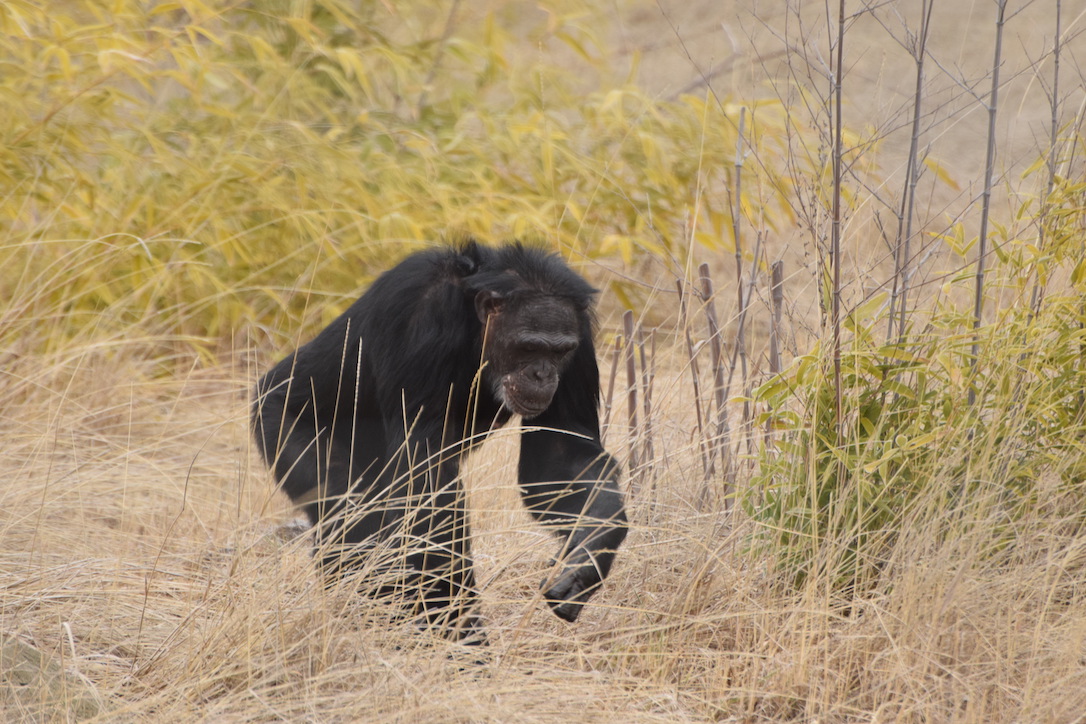
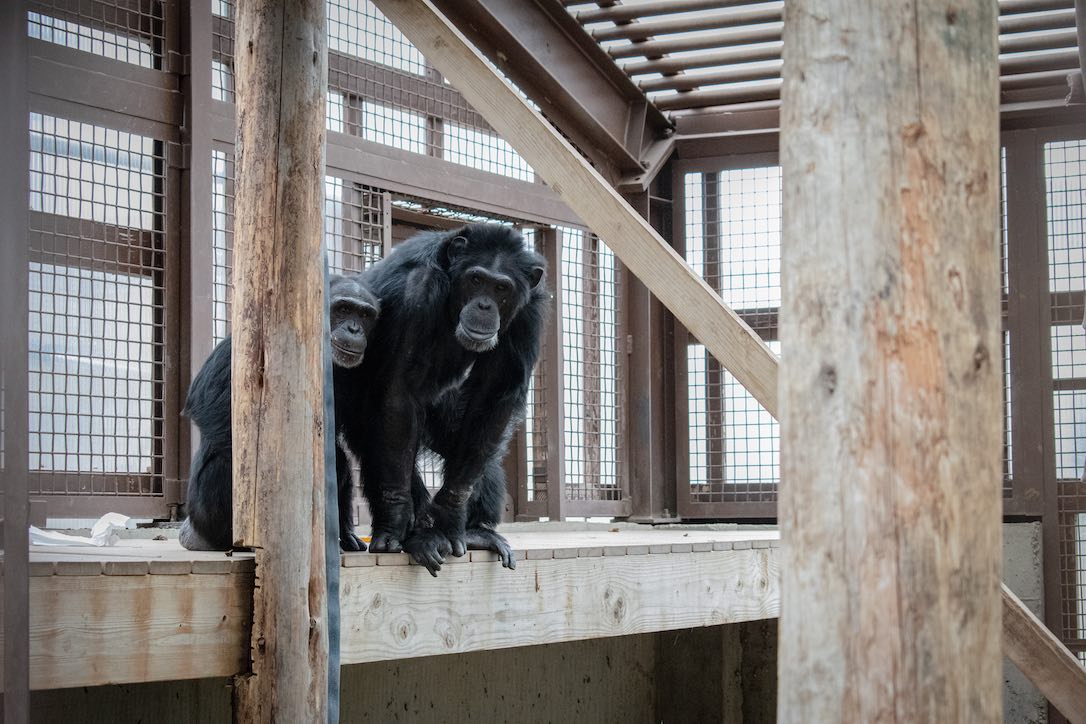
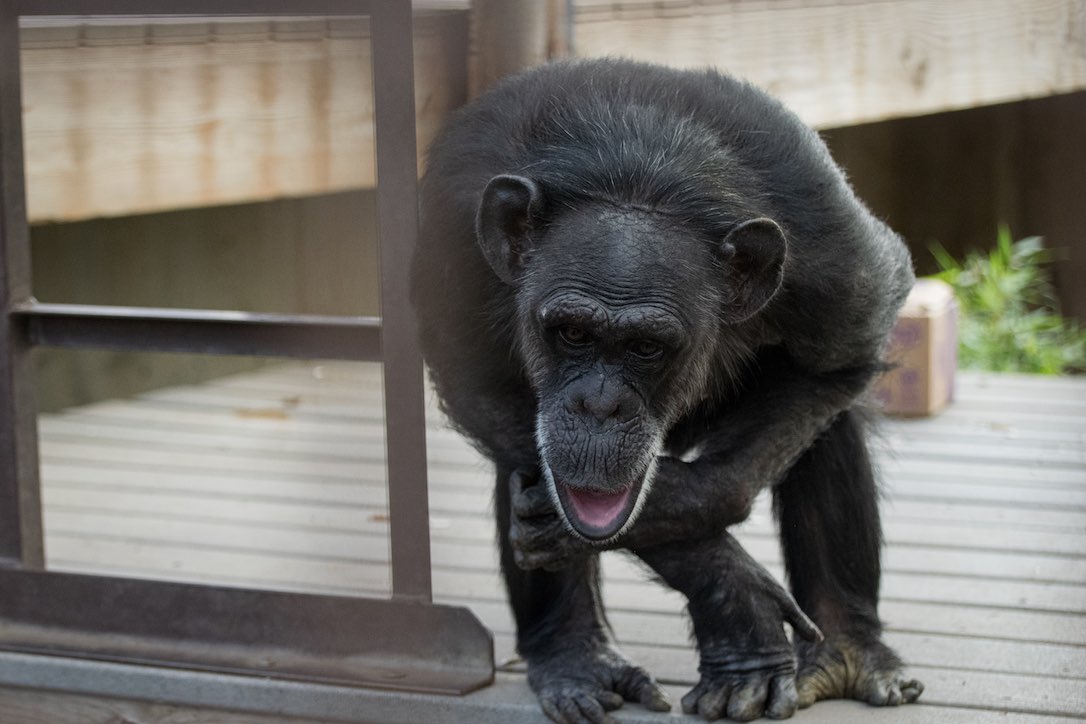
Willy B Chimpanzee is a heck of a guy with a unique way of doing things. Although he often chooses to remain reserved and observant, he’s been letting loose quite often during the past few weeks. This shift in behavior has led to many bouts of stomping playfully around the building, wrestling with his chimp friends, and busting out some mind-blowing slinky moves. In short, Willy has revealed the goofy side of his multifaceted personality.

Today, we celebrated Willy’s first birthday as a resident of CSNW with the support of two heartwarming Sponsor-a-Day donations (which you can read about here and here). To commemorate the special occasion, Willy and his companions were treated to a crazy lineup of enrichment activities that I started to refer to as “Willyfest“. Of course, we made sure that the lineup included all of Willy’s favorite things (including giant slinkies, plush toys, and avocados). As a firsthand witness, I can proudly say that this year’s party absolutely slapped, and I already have the date marked on my calendar for 2021.

I’m also preparing a video so that you can all see highlights from this year’s festival, but it might take a day or two to refine. To hold you over, I’ll reveal the day’s featured menu item: Chimp Taco Salad.
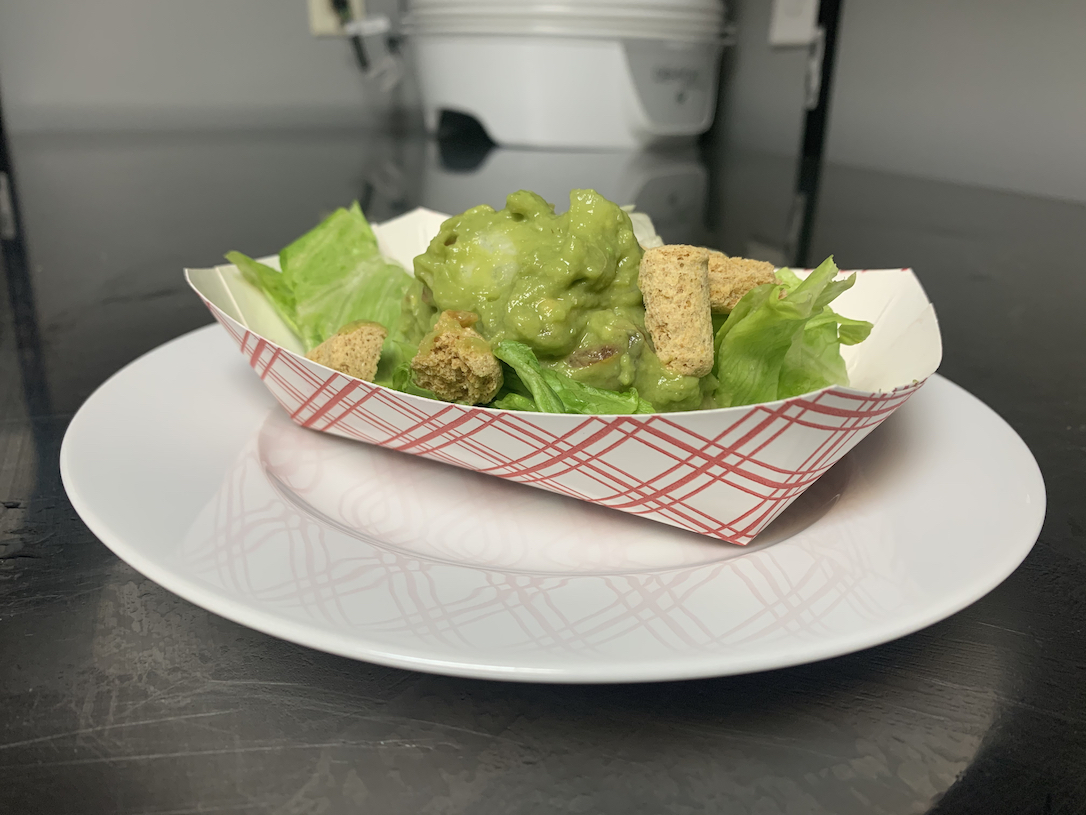
i Buen provecho !

This dish was designed, crafted, plated and served by Chad, one of the sanctuary’s creative and dedicated caregivers. Each serving featured a bed of shredded iceberg lettuce topped with a dollop of fresh guacamole. The guac, which was mashed on-site, consisted of buttery California avocados, diced Roma tomatoes, chopped red onion, and a squirt of zesty citrus juice from fresh limes. All of these ingredients were plated on a paper serving tray which Chad delicately topped with Zupreme biscuit crumbles (also known as around here simply as “chow”). Each chimp was treated to several of these “boats” along with a side of russet potato wedges. For dessert, the chimpanzees all received a complementary Night Bag filled with dried fruit, white popcorn, sunflower seeds and peanuts. Willy, of course, was also rewarded with a whole apple for not stealing anyone else’s food.

You’ll be able to see how the chimps reacted once I finish the video and share it on our social media channels (i.e. the blog, Facebook and YouTube). Until then, thank you all for helping to make Willy’s birthday a special one!


Filed Under: Enrichment, Food, Sanctuary, Thanks, Willy B Tagged With: Animal Welfare, chimp, chimp enrichment, chimp rescue, chimpanzee, chimpanzee rescue, chimpanzee retirement, chimpanzee sanctuary, Chimpanzee Sanctuary Northwest, chimpanzees, chimps, Primates, Sanctuary, Sponsor-a-day

The Elusive Honey B

February 26, 2020 by Anthony

Honey B is anything but shy.

This bright, enigmatic chimp seemed to arrive at the sanctuary with one setting: investigate.

For example, Honey B constantly inspects human personnel for new cuts, scrapes, bruises, hangnails, freckles, accessories and even tattoos, which she then insists on eagerly grooming. Her first reaction to new volunteers is to spit water on them, measure their reaction, and then stare at them as if they were a peculiar piece of art in a museum. This not-so-warm welcome seems to make people feel a bit uneasy at first. To quote volunteer Becca’s reaction after meeting Honey B last fall, “I feel like she knows my SAT scores.”

Honey B tends to be the first chimpanzee to enter new areas after they have been cleaned and provisioned with enrichment materials, and she was the first to figure out the drinking fountains in her new home. Even when meeting new chimps, her strategy seemed built around a framework of testing boundaries and pushing buttons. Curiosity may proverbially kill felines but it somehow hasn’t gotten Honey B yet.

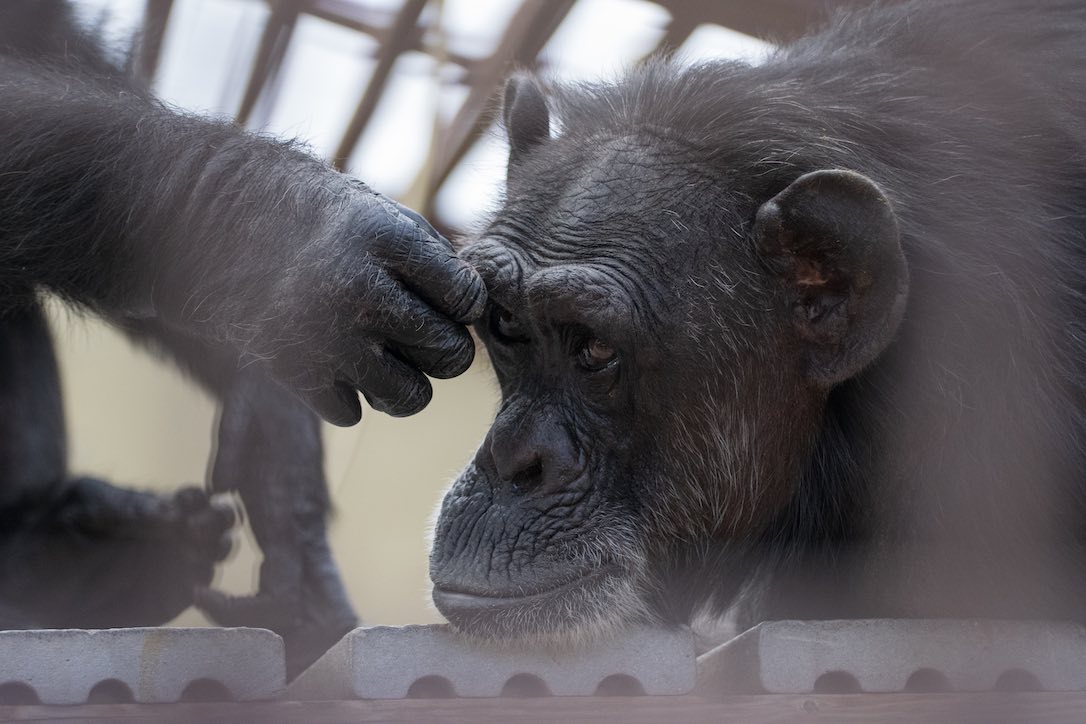
Her apparent rule that everything needs to be investigated in depth also applies to cameras and phones. While other chimps may be more curious about the reflective camera lens (like Willy B) or nervous about having their photo taken (like Mave), Honey B seems intent on somehow obtaining the camera. Her immediate reaction is to charge forward, get as close to the camera as possible, and ask the caregivers to let her groom the camera body. On rare occasions, she has asked me to drop a camera or phone in the food chute (which is not going to happen). We can only imagine what she would do with a camera, but it’s not impossible that she would actually attempt to take photographs with it. She’s learned how to clean by observing humans, so maybe the visual arts are next.

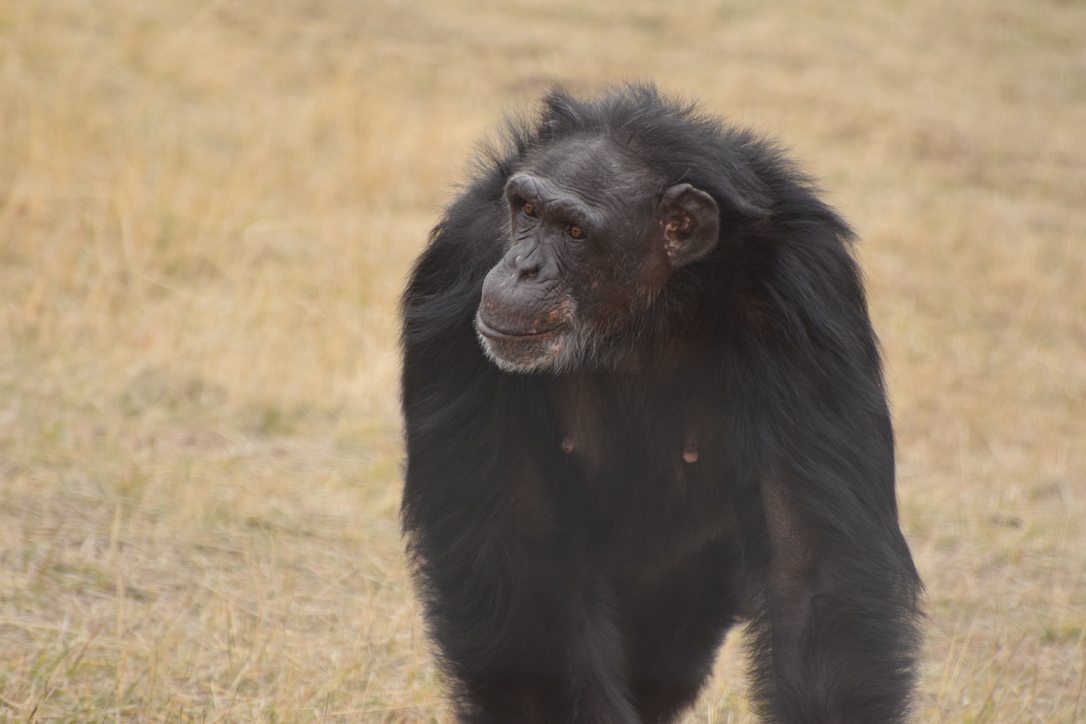
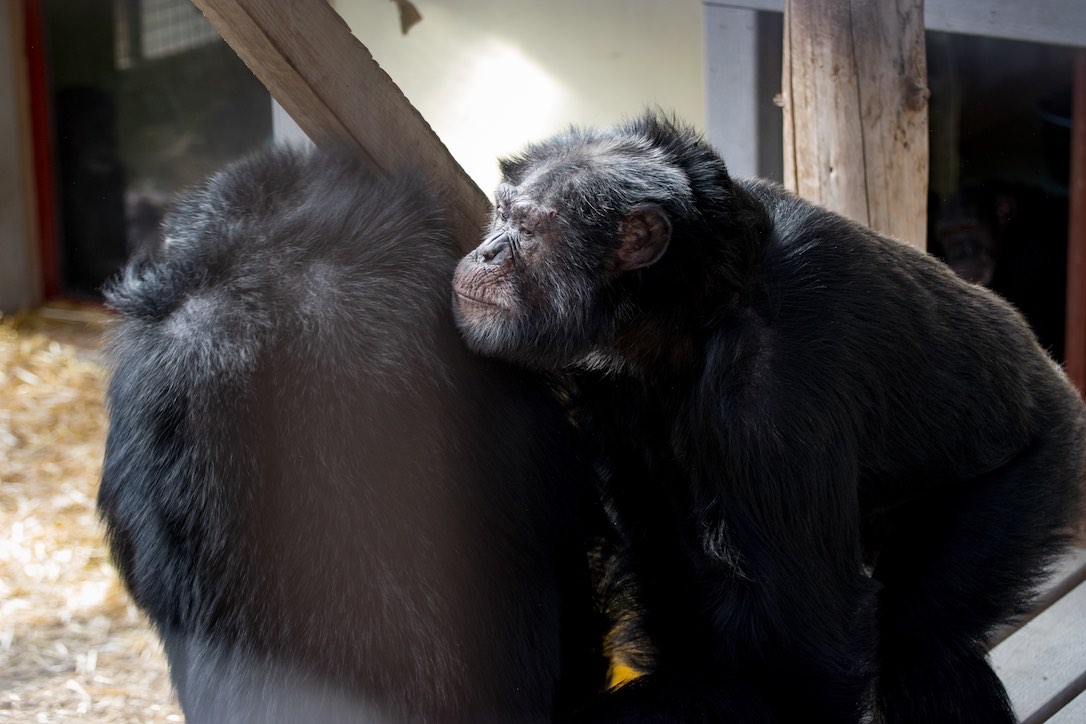
This tendency of hers to hover by the camera makes capturing portraits of her a challenge. Today, I got lucky. When I unlocked the wing of the building where Honey B and her two companions now reside, the three of them were sitting by the window in a beam of morning sunlight. I coincidentally had the camera by my side (armed with a groovy Canon lens that was generously donated by a supporter who saw it on our Wish List), making it a truly serendipitous moment. Honey B held still for a quick photo shoot as Mave lazily picked through her hair and groomed her shoulder. Perhaps I have Mave to thank for that whole moment.

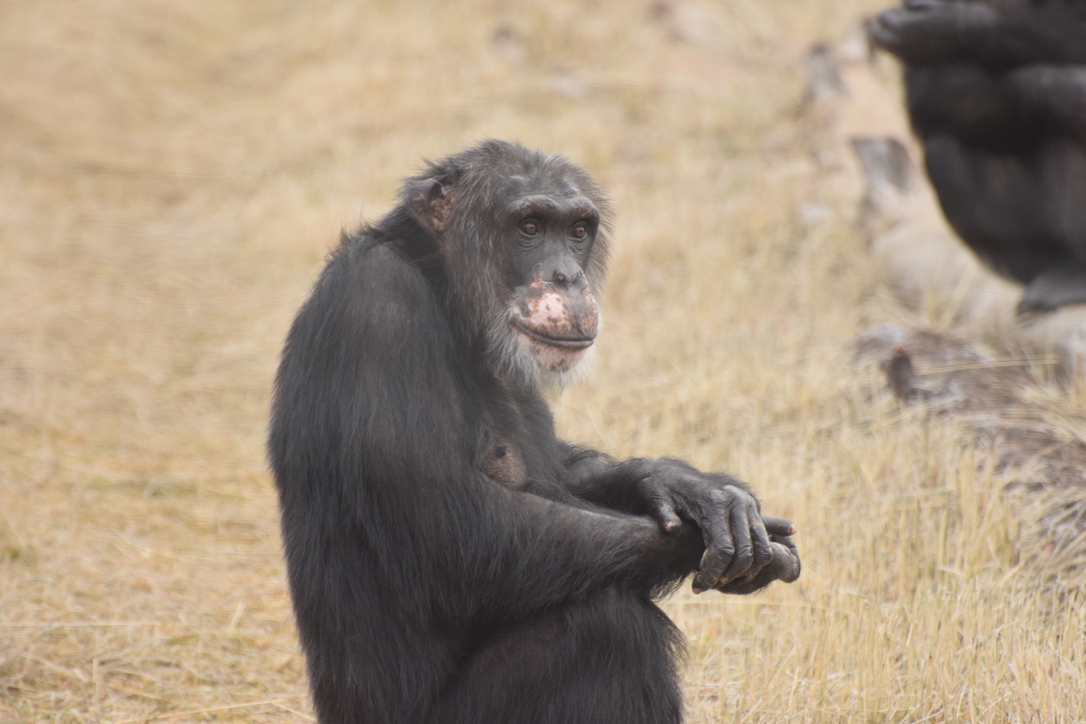
Anyway, you’re all being treated to a rare portrait of Honey B as the cornerstone of today’s blog post. Enjoy.

Filed Under: Caregivers, Grooming, Honey B, Intelligence, Mave Tagged With: Animal Welfare, chimp, chimp sanctuary, chimpanzee, chimpanzee retirement, chimpanzee sanctuary, Chimpanzee Sanctuary Northwest, chimpanzees, chimps, csnw, Primates, rescue, Sanctuary

Happy Valentine’s Day, Matt!

February 14, 2020 by Katelyn

This lovely day of sanctuary was sponsored by Sharon Langone for her husband, Matt Langone!

“Happy Valentine’s Day to my husband, Matt! We both love the work the team does at the sanctuary on Valentine’s Day and all year round- so it seemed fitting!”

Sharon and Matt, thank you so much for your support of the chimpanzees and cattle who call Chimpanzee Sanctuary Northwest home! We so appreciate your love for them and all of us here wish you a beautiful day filled with all, and who, you most love.

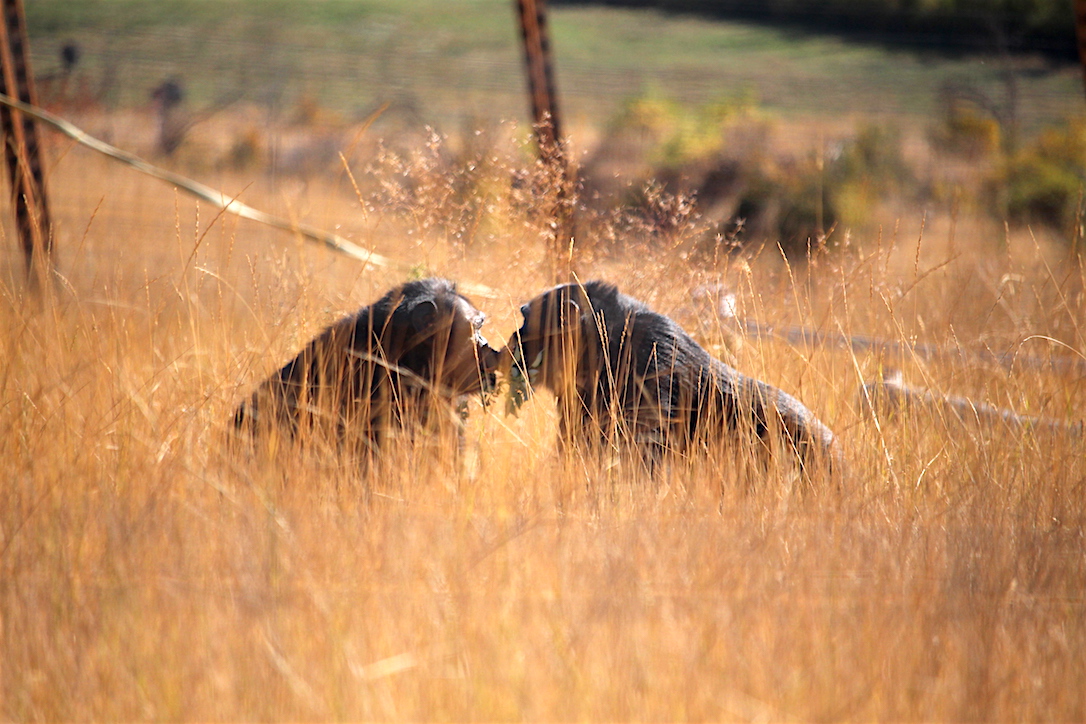
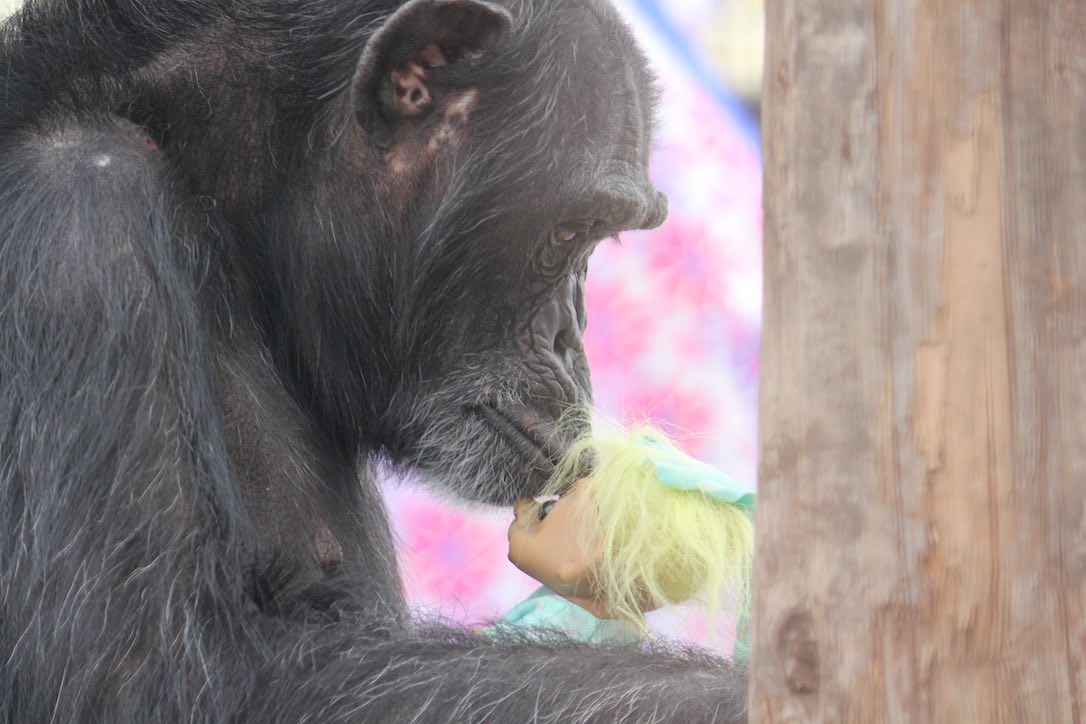
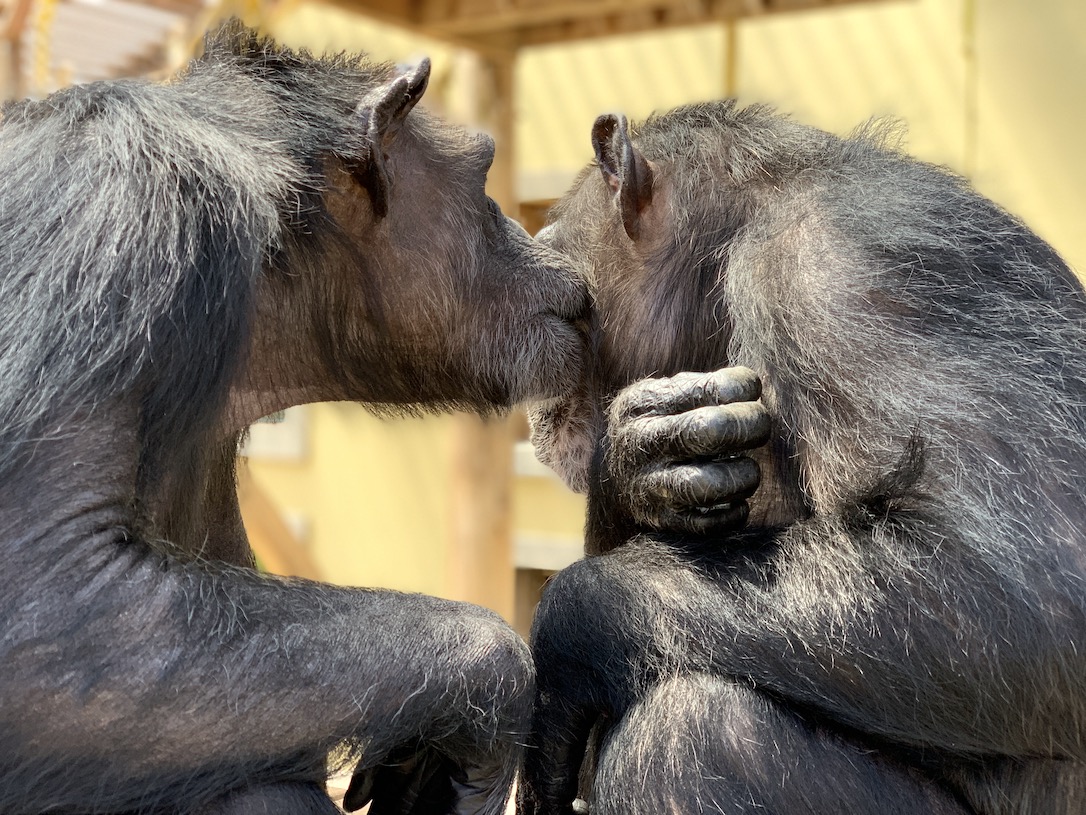
Chimpanzees “hug” and “kiss” all the time. And while it’s nearly impossible for us humans not to equate these gestures with our own human equivalents, in chimp lingo they are typically gestures of greeting and reassurance. But I don’t believe there is any less heart behind them. Happy Valentine’s Day everyone! (Naturally, be sure to tune in later for the chimps’ party 🙂 ).

Annie and Missy:

Jody and Missy:

Jody and Missy:

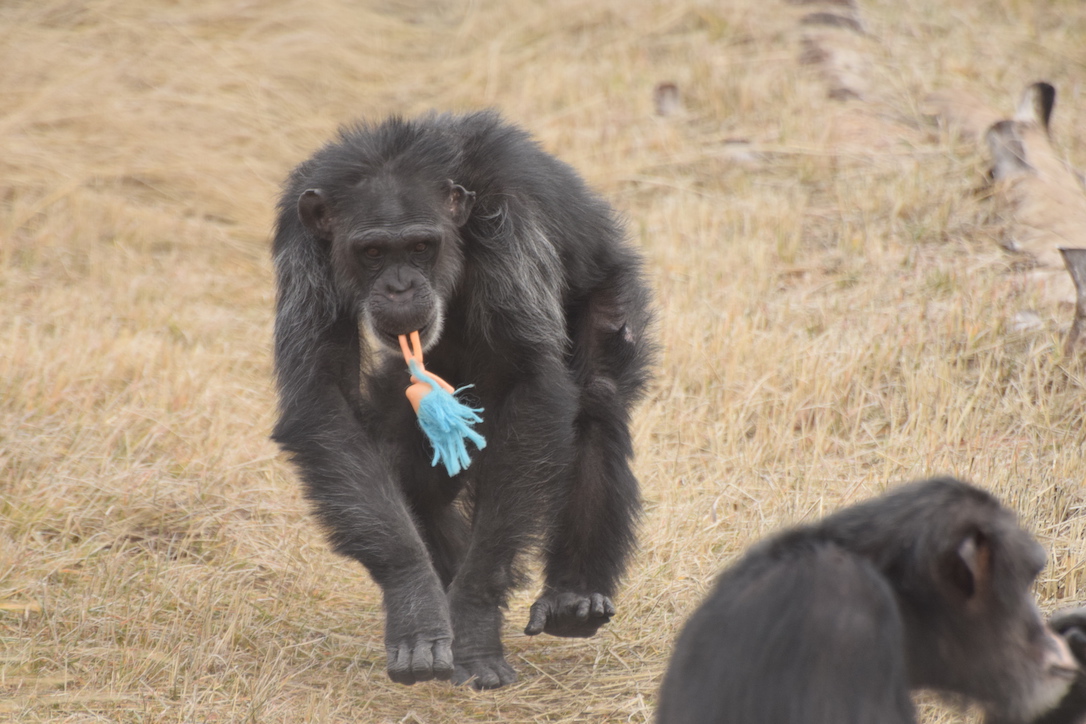
An oldie, but goodie of Foxie and her troll doll:

Burrito:

Filed Under: Annie, Burrito, Dolls, Foxie, Friendship, Jody, Mave, Missy, Sanctuary, Sponsor-a-day, Trolls, Willy B Tagged With: chimp sanctuary, chimpanzee sanctuary, Chimpanzee Sanctuary Northwest, chimps, Sanctuary, Sponsor-a-day

Annie and Pretzels

January 26, 2020 by Anthony

No, this post is not about Annie eating pretzels. It’s partially about Annie Chimpanzee, as seen in these photos, but it’s also about all the enormous pretzels, vegan bratwurst, and craft beer that our staff are going to consume during tonight’s visit to a magical place: Leavenworth.

For those of you who aren’t familiar with the area, Leavenworth is a town located north of the sanctuary in the shadow of the Cascades. It boasts a Bavarian theme and is known for its charm, cuisine, and recreation. The CSNW crew typically makes a pilgrimage there every December, but we missed our opportunity this year since Burrito’s medications had to be administered each night. Consequently, tonight’s itinerary includes our annual group trip to the fabled mountain village. We are also celebrating the addition of Chad to the team, and this will be our first outing with him as a full-time staff member. We can only hope that he proves to be as valuable to our trivia team as he is to our care staff.

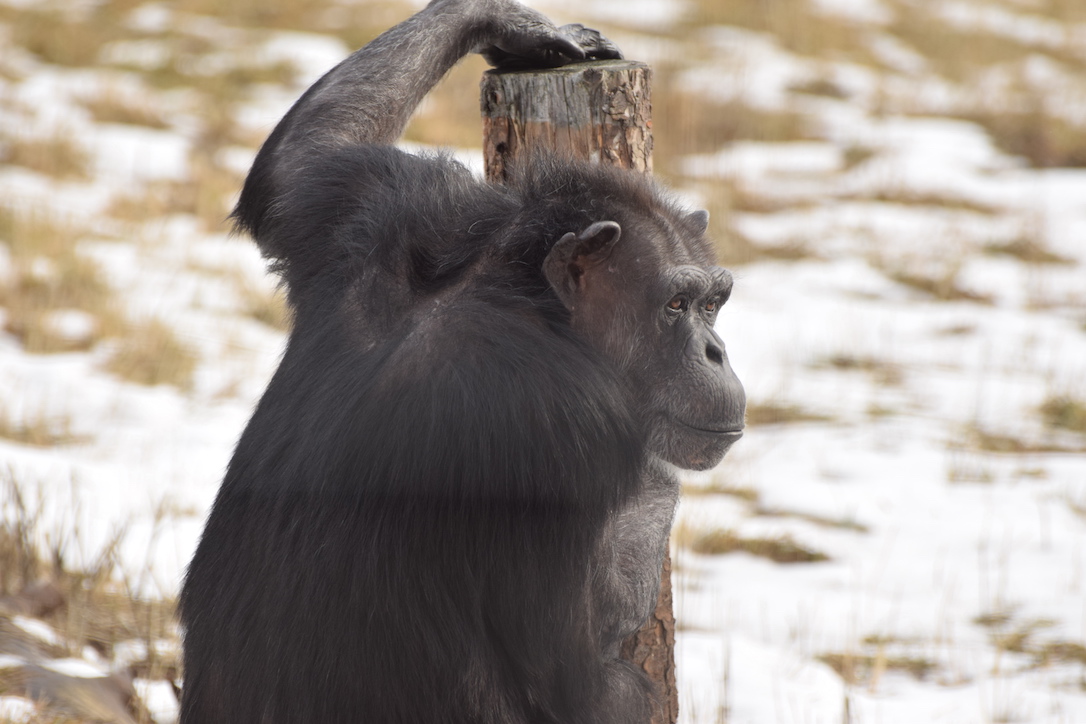
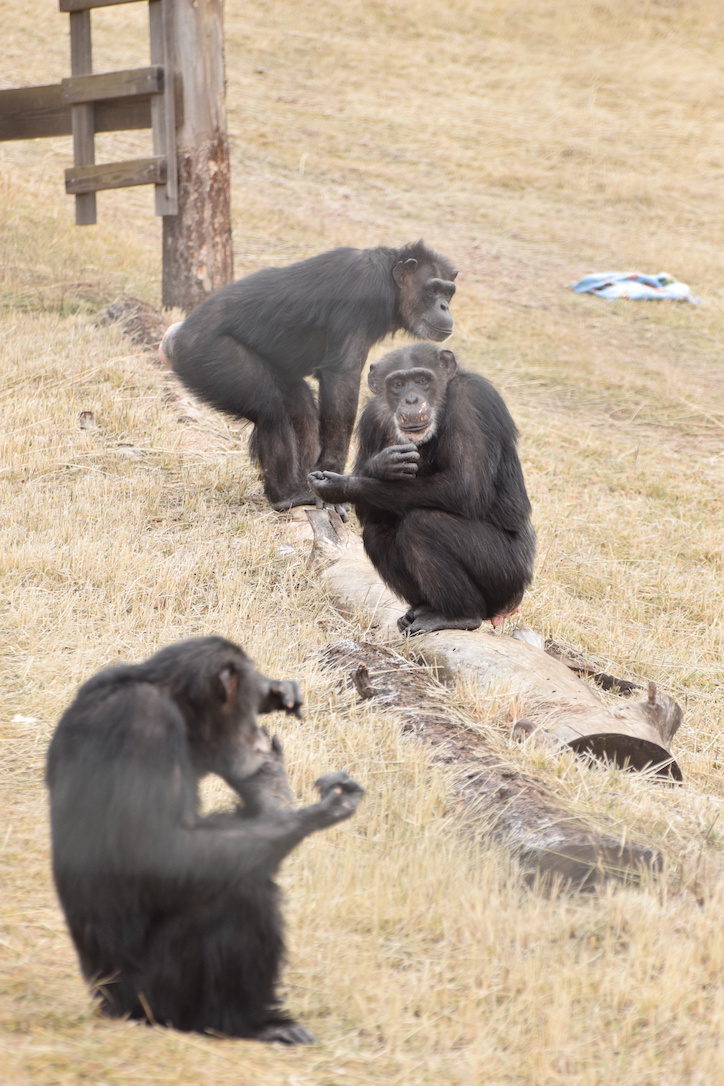
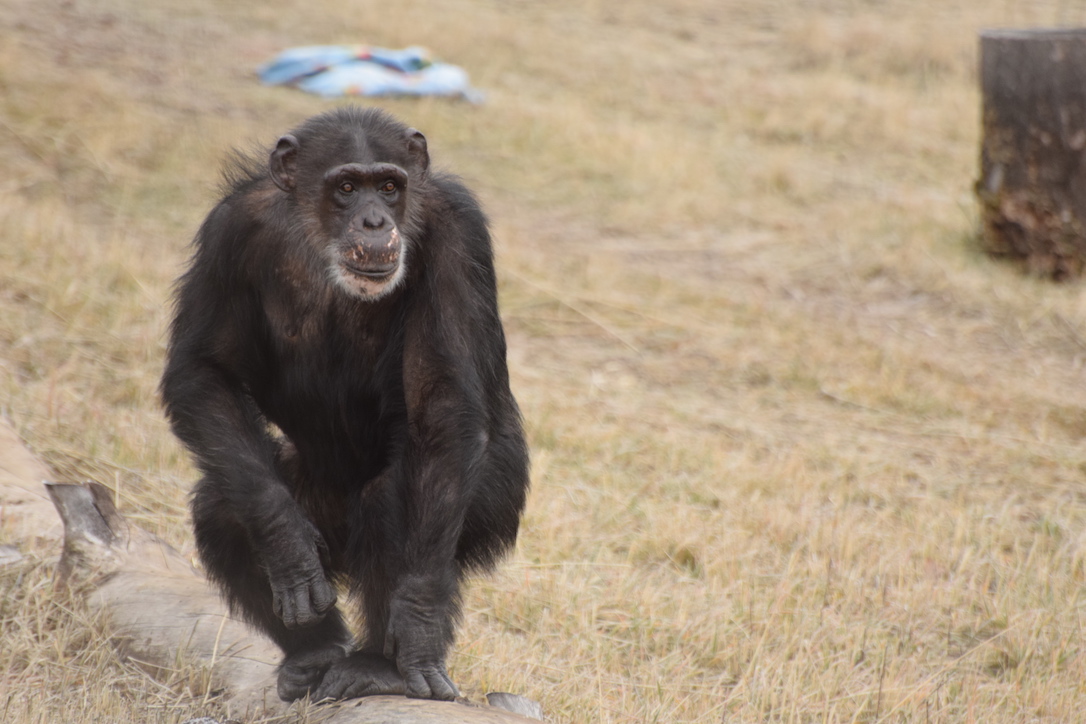
Therefore, I’ll withhold my summary of today’s events since the other caregivers are rushing me to finish writing the blog and closing down the Chimp House. Instead, I’ll leave you all with a few photos of Annie, who was the first chimpanzee to venture out onto the Hill today. It was unseasonably warm and the chimps were able to tiptoe on dry ground to avoid the remaining patches of snow.

I’d write more, but an evening of alpine fun awaits.

Filed Under: Annie, Caregivers, Young's Hill Tagged With: annie chimpanzee, caregivers, chimp, chimpanzee, chimpanzee sanctuary, chimpanzees, chimps, csnw, great apes, leavenworth, primate sanctuary, Sanctuary, staff, washington state

Burrito in Monochrome

January 19, 2020 by Anthony

The chimpanzees’ world is full of color.

In the spring, the landscape blooms with eye-catching wildflowers and green foliage that seem to radiate color and warmth. Summers are characterized by deep turquoise skies. Crisp autumn days turn the surrounding meadows a shiny gold and decorate the surrounding forest with speckles of red, orange and yellow. Even now, in the deep winter, the muted skies and pale snow are overshadowed by the emerald tint of the numerous evergreen trees. Regardless of season, the busy Chimp House itself is always full of colorful blankets, enrichment, produce, tools, and even some sensible wall decor.

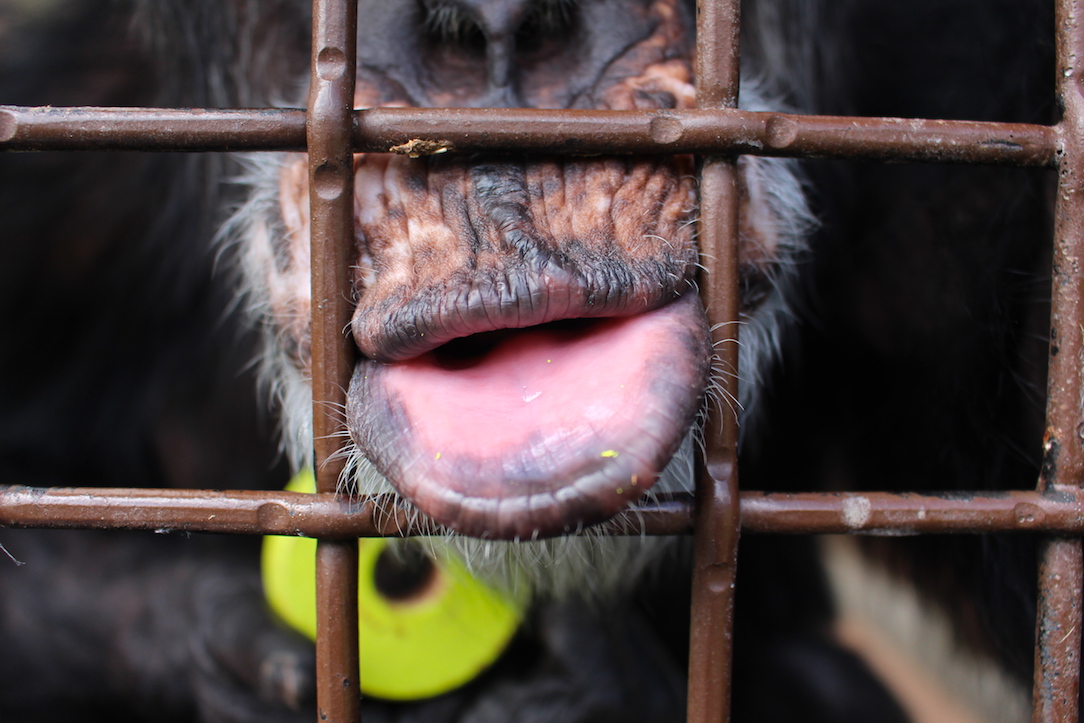
Despite all this light flowing around us, capturing compelling portraits of the chimps is usually difficult. For one thing, the chimps and humans are always separated by steel caging, a chimp-proof window or an electrified barrier. These structures wreak havoc on camera lenses and need to be focused out. Even when the chimpanzees are foraging or patrolling outdoors, they are often hundreds of feet away, obscured by dense foliage, or sprinting around the habitat (see: Missy). Sometimes, the bright sunlight creates harsh shadows that yield miserable photographs. Indoor lighting is also a challenge, to put it lightly, and using flash on an alert chimpanzee would be a horrible idea.

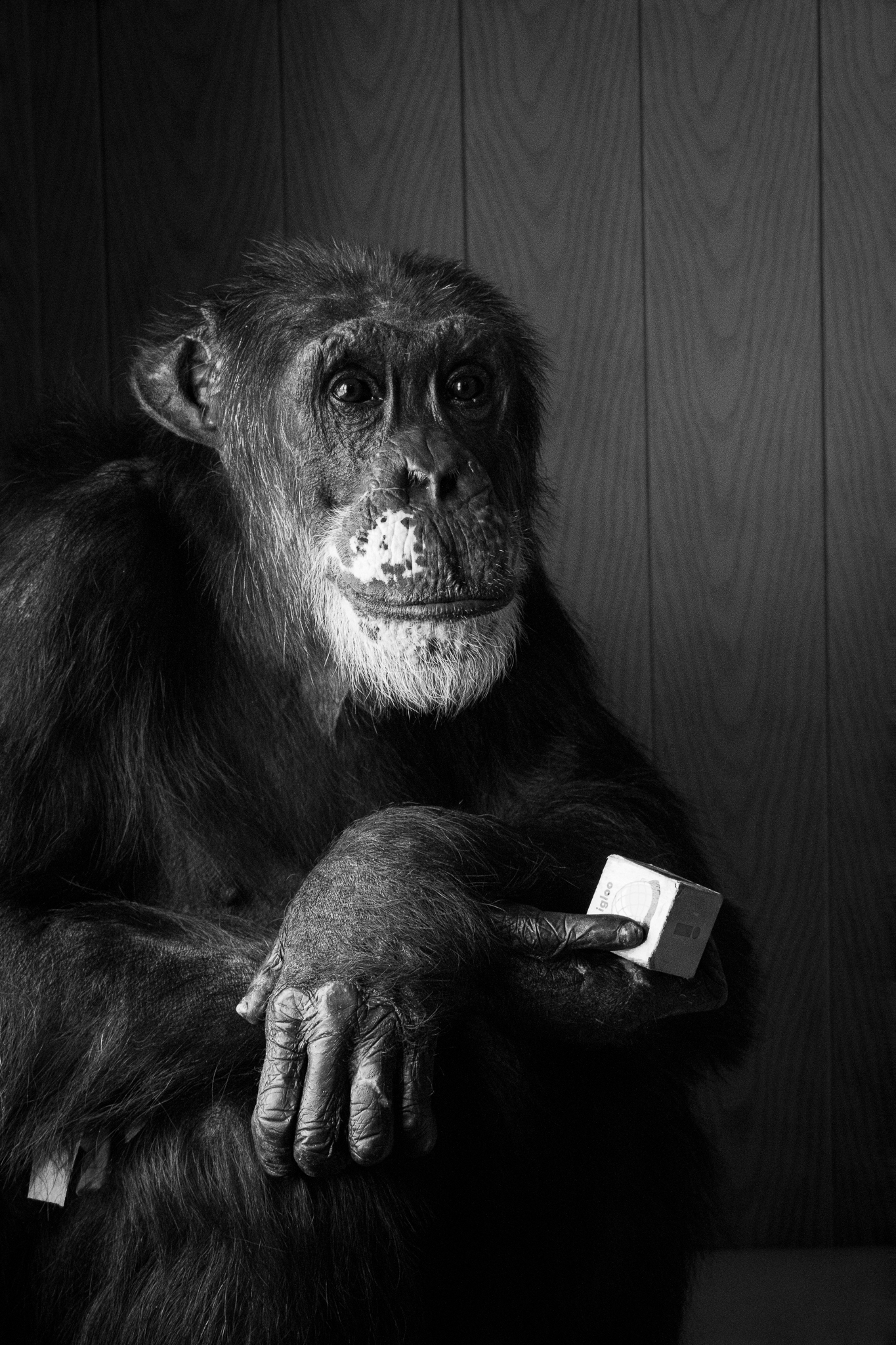
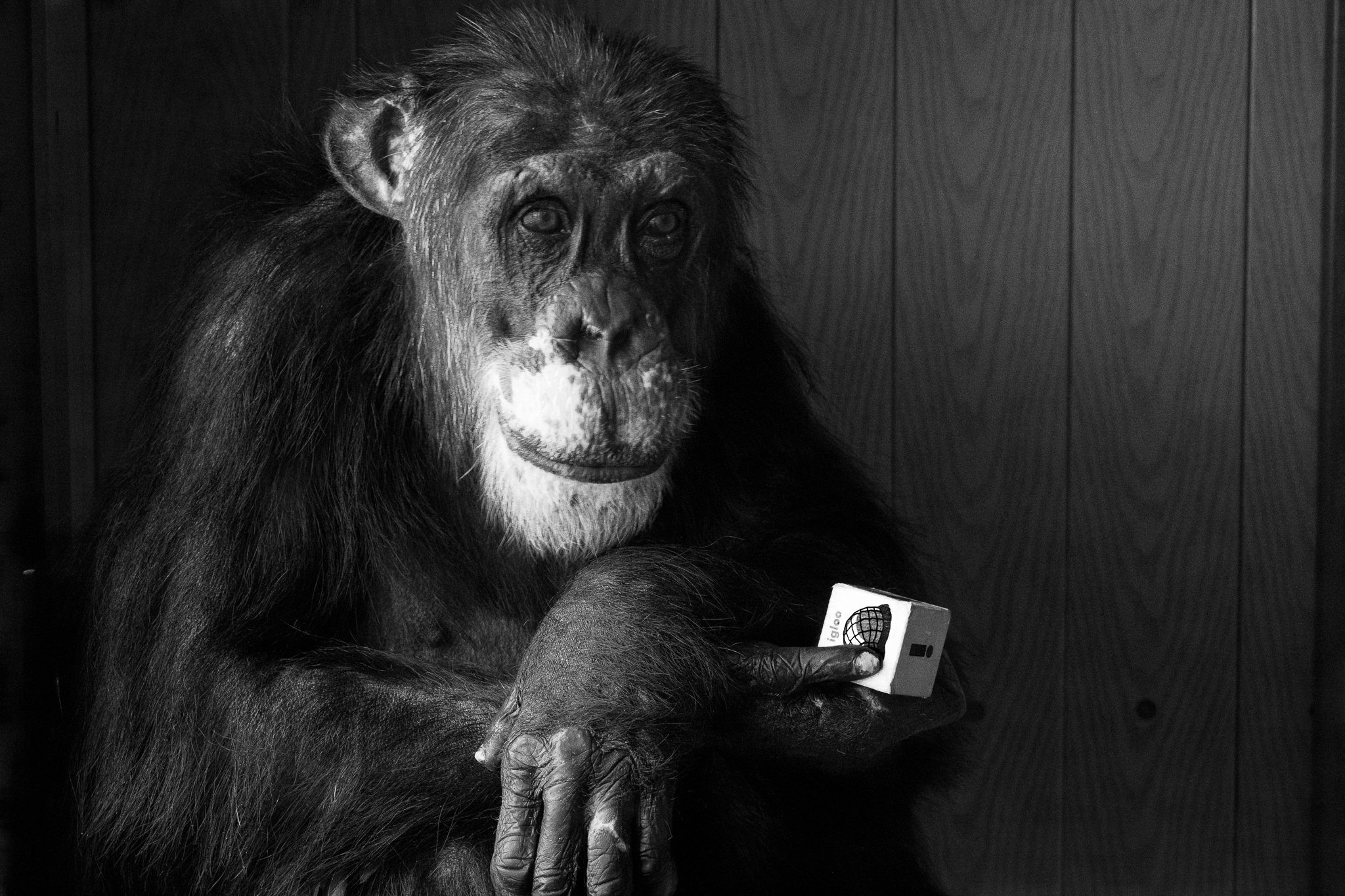
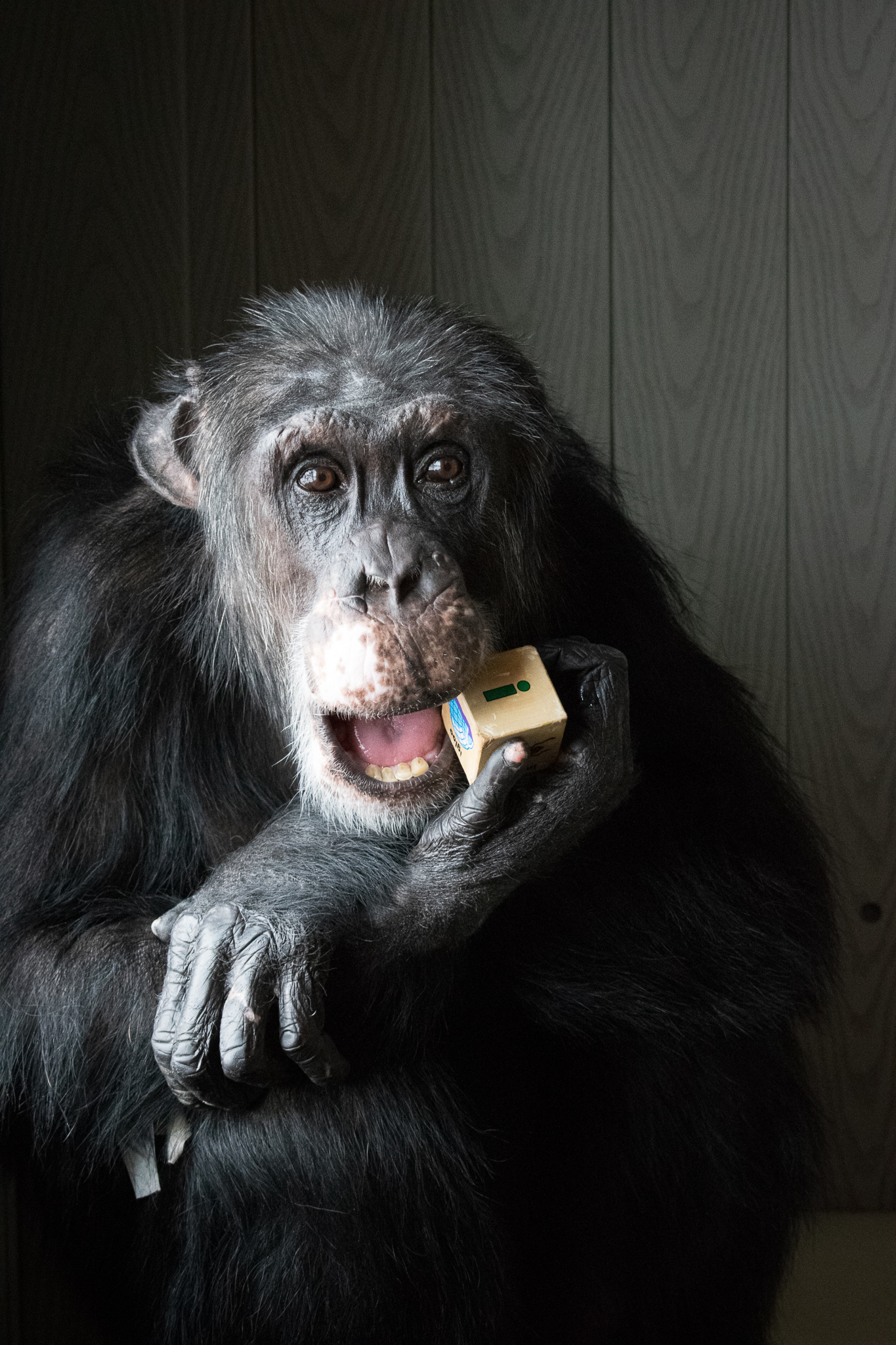
However, there is one place in the whole sanctuary where capturing portraits of the chimpanzees seems to be easier than anywhere else. Although it is formally known as Front Room 4, the staff often refer to one of the chimpanzees’ favorite locations as “The Portrait Studio” (1, 2, 3, 4). It’s popularity is likely due to the wide bench that is perfectly situated for looking down the hallway into the bustling kitchen and foyer. From the same vantage, they also can see out the window towards the garden, driveway, hay barn, neighboring cattle pasture, and even across the sanctuary to the opposite ridgeline. It’s a dream come true for nosy chimpanzees, but we caregivers appreciate the space for a different reason; the north-facing window bathes the chimpanzees in soft lighting that is well-suited for portraits.

When Burrito sat in that beam of diffuse light a couple of days ago, as he often does, I decided to snap a bunch of photos and then immediately forgot about them. Today, as I began to formulate a direction for today’s blog post, I rediscovered the series on my camera’s memory card. I then tinkered with the photographs in Adobe Photoshop Lightroom, a program commonly used for organizing and manipulating images. Of all the edits I made, I realized that I liked the way Burrito looked without any color. Black-and-white suits Bubba well.

A century ago, most photography was monochrome (gray or sepia) by default. Now, omitting or removing the hue from an image is something photographers and filmmakers purposefully do in order to create a certain aesthetic. As far as our work at CSNW is concerned, I think such a practice has merit. By taking color out of the equation, I feel more attuned to how light flows into the chimpanzees’ home, across the imposing barriers that separate us from them, and onto their facial features. It showcases the depth of their physical space and reminds me that their world, which I can only explore in a superficial manner, has a similar profundity. Furthermore, anatomical structures like hairs, wrinkles, muscles, scars and callouses give character and topography to what would otherwise be registered as a homogeneous gray body. Perhaps this medium highlights some of their more peculiar nonhuman traits while simultaneously making such differences between us and them seem more trivial. Whatever is going on in our eyes and brains, I like portraying them in this way.

Below are my favorites from the series. During processing, I tried not to dramatically alter the overall lighting, hoping instead to preserve the reality of Burrito’s location and mood. What I did tinker with, however, was the relative luminance of the various hues in the photographs, thereby changing how colors contributed to the lightness and darkness in each. Using such a mixer enabled me to create distinct portraits that were taken only seconds apart. For perspective, you can look at the print on the wooden toy block in Burrito’s hand (which is actually dark green, but appears different in each edit). I think that each has its own tone, and perhaps tells a different story. I’ll let you all be the judges.


1. In this portrait, I brightened purple, magenta and red hues.


2. This portrait is composed of mostly green and cyan hues.


3. I brightened red and orange light in this version, dampening cooler hues.


4. For this edit, I allowed all hues to contribute equally to the image but altered the lighting as a whole.


5. The lighting in this version is mildly edited but I left the coloration intact.

Filed Under: Art, Burrito Tagged With: animal art, animal sanctuary, Animal Welfare, apes, black and white, chimp, chimpanzee, chimpanzee portrait, chimpanzees, chimps, great apes, monochrome, photography, portrait photography, primate, primate sanctuary, Primates, Sanctuary

The Tough Questions

January 5, 2020 by Anthony

The common phrase “sharing is caring” doesn’t always ring true.

Those of us who work with wildlife in any capacity have to be cautious about the ways in which we publicize our work. In the modern age of consumerism and social media, organizations need to share compelling content to generate financial support and advocate for their respective causes. Although they can inspire people to take action, pieces of visual media can easily be taken out of context and may contribute to the suffering and exploitation of nonhuman animals elsewhere. This is one of the greatest challenges facing organizations like ours as we advance further into the 21st century.

Jamie

A new piece co-authored by a diverse group of esteemed scientists and conservationists is making waves for attempting to address this issue. The commentary, published last month in the American Journal of Primatology, urges researchers to be selective and judicious when sharing images and locations of the nonhuman individuals that they study.

This piece was spurred by emerging findings that irresponsible or inaccurate representations of nonhuman primates provide fuel for the wildlife trade. For example, Dr. Anna Nekaris and the Little Fireface Project have found strong links between viral videos featuring endangered slow lorises and the popularity of that species in the global wildlife trade. Contemporary organizations around the world have also uncovered similar links between social media content and the trafficking of wild primates. Notably, images featuring celebrities posing with primates (like this one of pop star Rihanna) wrongfully propagate their perceived value as pets. It seems likely that a selfie taken by a common researcher or tourist with a wild animal would have a smaller but similar effect. With so many of these images being circulated by well-meaning individuals and organizations, it is difficult to quantify just how big of an impact they have. Given that so many of the world’s primate species are at risk of extinction due to human activity, it is critical that those who study and protect wild primates do not accidentally create additional demand for their exploitation.

Burrito (foreground), Missy (center), and Annie (rear)

For those of us who advocate and care for captive primates, however, the relationships between shared images and potential outcomes are not as clear. Within the community of North American primate sanctuaries and zoos, sharing visuals that showcase the value of our work is part of our strategic plan. For example, our team at Chimpanzee Sanctuary Northwest inspires compassion for chimpanzees by writing and sharing daily blog posts that portray the lives of the chimpanzee residents. The goal is to highlight their emotions, intelligence, and social relationships. This collection of images and stories has, over time, amassed a tremendous community of supporters that directly benefits the chimpanzees.

However, we simultaneously take care to only share content that positively impacts primate individuals, populations, and species. Social media is truly a double-edged sword, and those who wield it carelessly may cause more harm than good. A video of Foxie playing with dolls, for example, could be woefully misunderstood if the provided contextual details are removed or ignored. An uninformed viewer may begin to wonder: Is she a trained performer? Does she have access to the outdoors? Does she have other chimps to play with? Is she privately owned and being bred for human entertainment? In the absence of critical information, such misconceptions may become widespread attitudes and beliefs.

Foxie

As a true sanctuary, we attempt to combat harmful misinformation. One of our objectives is to demonstrate that chimpanzees, as individuals and as a species, suffer immeasurably from exploitation. This claim sharply contrasts how nonhuman apes have been utilized and portrayed in recent decades. Thousands of chimps were housed in menageries, shot into outer space, dressed up as human children, infected with diseases and coerced to perform for our amusement. Thankfully, this pattern of abuse seems to be ending. With public opinion now favoring chimps, the last chimpanzee actor, an adolescent male named Eli, recently retired and will soon be transferred to an accredited facility. (Eli is the subject of an upcoming documentary.)

Even though the era of chimpanzees on the big screen seems to be over, the myth that chimpanzees belong in captivity is likely to perpetuate as long as people see chimpanzees in captivity. For example, seeing performing chimps on greeting cards, in commercials, or interacting closely with humans can shape how the public perceives them. Researchers affiliated with North American zoological parks have even found evidence that viewing images of nonhuman primates in humanized settings can influence how people interpret their conservation status, suitability as pets, and well-being. From this evident pattern emerges a multi-faceted dilemma.

The most difficult of these questions, in my opinion, is whether we can accurately tell the stories of captive chimpanzees without showing the less natural aspects of their daily lives. Should we use Photoshop to remove the electrified barriers on Young’s Hill, which are necessary to keep humans and chimpanzees safe? Should we hide that the chimpanzees prefer to nest with blankets or sleep on cement floors because that’s all they had access to during the decades that they spent in laboratories? Should we ignore that Jamie has fascinations with cowboy boots and various human accessories, likely shaped by her background as a performer? Sure, we attempt to focus or crop out the steel caging because it ruins our photographs, but should we be avoiding the same metal bars because they send the wrong message about chimps? On the other hand, if we only show photos of chimps frolicking outside in a green meadow, will people start to believe that keeping chimps in captivity is good for them? Are we on the verge of whitewashing the history of our relationship with chimpanzees?

There are no easy answers.

Burrito

Organizations are each free to respond to these new challenges in their own way. To lessen the risk of misinterpretation, we try our best to create content that prioritizes education and empathy over aesthetics and humor. We’ve found that most of our followers are invested in the chimpanzees’ well-being and, fortunately, thoroughly read and understand our captions. This gives us confidence that we can maintain transparency, and even occasionally be brutally honest, regarding the challenges of providing sanctuary care for chimpanzees. We caregivers remain impressed by how aware and understanding our supporters have been despite our sanctuary’s recent growing pains. Rather than just respond with emojis and ‘likes,’ our followers weigh in on the management of our social groups, suggest new enrichment ideas, and comment on the health of the individual chimps. This degree of engagement and awareness tells us that it is possible to share revealing content without necessarily spreading the wrong ideas.

That does not mean that we are all blameless. I recently went through my personal Facebook profile and erased many photos of me interacting with captive wildlife (including some of orphaned spider and howler monkeys using me as a climbing structure). It’s not that my actions were inherently irresponsible; in most cases, I was serving as a trained caregiver and the interactions were a necessary aspect of each individual’s rehabilitation and development. The real problem is that these photos are difficult to explain and the chances of them sending the wrong message are too high. If someone was scrolling too fast to read my captions, all they would see is a naive white backpacker holding a baby monkey. Some would even comment that they wanted me to bring one home so they could play with it. I have gladly hidden these photos  No amount of attention is worth putting an animal or human in danger.

Jamie

With this new paradigm in mind, please continue to enjoy and share our frequent and intimate portraits of the chimpanzee residents. We hope that they inspire you to care about and act on behalf of disadvantaged nonhuman primates. They need advocates, now, more than ever.

However, never forget that all chimpanzees are strong, intelligent, emotional, and adapted for their ancestral homes and complex societies. They do not belong in captivity and they do not thrive here. Sanctuaries like this one were created to mitigate the errors of the past and provide a better alternative for retired chimps, but they are not designed to exist indefinitely. All chimpanzees are unique individuals and valuable members of an endangered species that may be gone within the next century, and their exploitation takes more away from them than it gives to us.

Please share responsibly.

Missy

Filed Under: Advocacy, Apes in Entertainment, Chimp histories, Free-living chimps, News, Sanctuary Tagged With: Animal Welfare, apes in entertainment, chimpanzee actors, chimpanzees, chimps, entertainment, great apes, large apes, performing chimps, pet trade, pets, primate conservation, Primates, primatology, public perception, social media, wildlife trade, wildlife trafficking

A Break in the Action

October 13, 2019 by Anthony

Nothing exciting or noteworthy happened today.

That’s an exaggeration. We do, after all, have to manage a newly integrated group of chimpanzees and even the most stable groups of chimps have their drama.

Compared to the last few days, however, today was quite calm. There were some short bouts of screaming and slapping and lots of pant-grunts, but the arguments weren’t as loud and didn’t last as long. Honey B tried to extend one of the arguments by spitting water in Jamie’s face, but Mave acted as the referee long enough for Willy B to scatter everyone with a charge and a display. This situation, along with all the other conflicts, deescalated quickly. I don’t know if this stabilization marks a shift towards acceptance or if it is merely an aberration. It wouldn’t be a surprise if the chimps return to a more boisterous and confrontational state tomorrow.

Either way, today felt like a break and I’m taking what I can get.

Here are some photographs from today, along with a few from the past week. I hope that you all enjoy them.

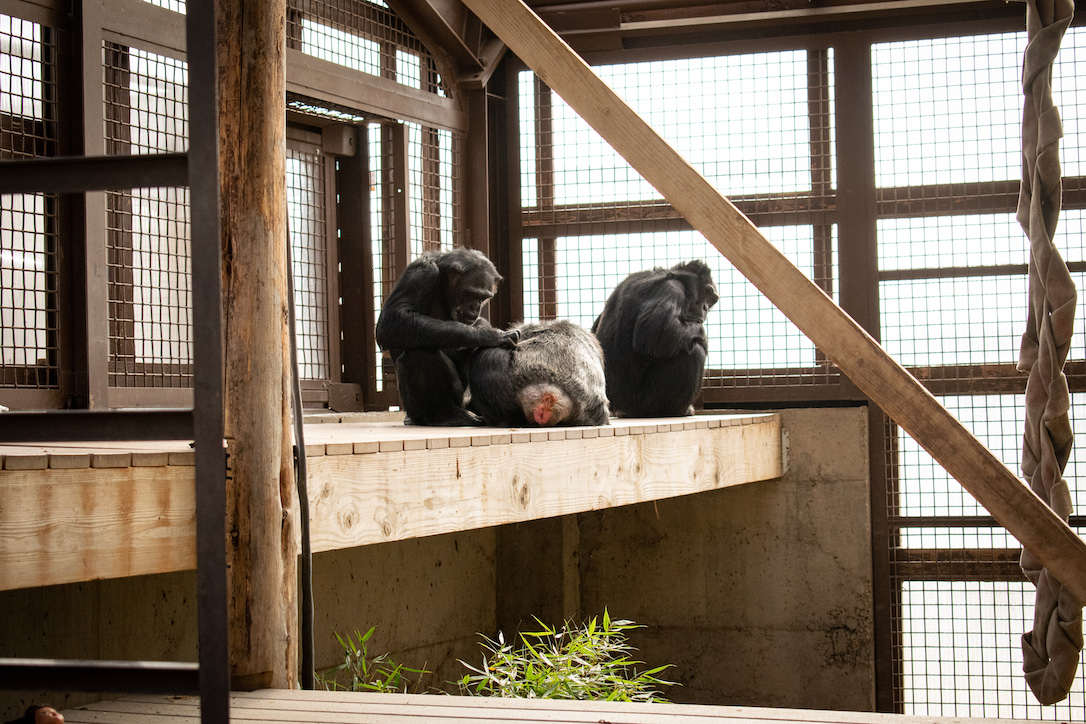
Jamie grooms Mave this morning.
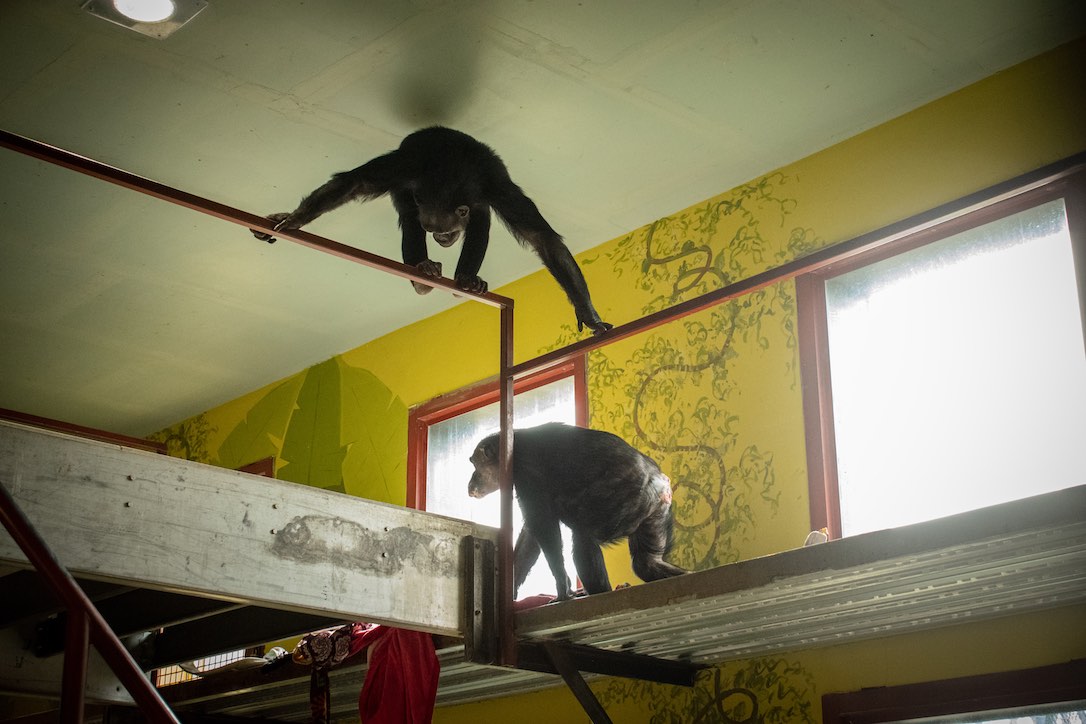
Honey B takes to the railing while playing with Negra this morning.
Jamie and Willy keep an eye on the Greenhouse today.
Jody pant-grunts at Willy B as he walks by.
Mave gently touches and grooms Jody.
Mave reassures Willy B during last week’s integration event.
Missy watches breakfast from her perch in the Greenhouse this morning.
Nutmeg
Meredith
Betsy
Honey

Filed Under: Cattle, Chimpanzee Behavior, Fights, Friendship, Grooming, Introductions Tagged With: Animal Welfare, chimp, chimp sanctuary, chimpanzee, chimpanzee sanctuary, Chimpanzee Sanctuary Northwest, chimpanzees, chimps, csnw, Primates, Sanctuary

  • « Go to Previous Page
  • Page 1
  • Interim pages omitted …
  • Page 13
  • Page 14
  • Page 15
  • Page 16
  • Page 17
  • Interim pages omitted …
  • Page 27
  • Go to Next Page »

Primary Sidebar

Subscribe To the Blog and Get Notified of New Posts First!

Archives

Calendar of Blog Posts

June 2026
S M T W T F S
 123456
78910111213
14151617181920
21222324252627
282930  
« May    

Categories

SUBSCRIBE TO OUR NEWSLETTER

Footer

PO Box 952
Cle Elum, WA 98922
[email protected]
509-699-0728
501c3 registered charity
EIN: 68-0552915

Official DDAF Grantee

Menu

  • The Chimpanzees
  • Blog
  • About Us
  • You can help
  • Resources
  • Contact
  • Donate

Proud Member of

Connect With Us

Search

Copyright © 2026 Chimpanzee Sanctuary Northwest. All Rights Reserved. Site by Vegan Web Design