Anna and volunteer Becca got some great footage of the chimps going on the offensive against a snake yesterday. Don’t mess with Foxie!
rescue
Friendship
Primatologist Robert Yerkes once said, “One chimpanzee is no chimpanzee.” Spend a single morning watching the Cle Elum Seven and you will know exactly what he meant.
Learning to speak chimp
The thing that originally sparked my interest in chimpanzees was the fact that they could learn sign language. Ape language studies of the ’60s and ’70s not only helped bridge the gap between the complex languages of humans and the seemingly much simpler grunts, barks, and chirps of other animals, but they hinted at a possibility almost too magical to believe: could signing chimpanzees actually tell us what they were thinking?
They could, and they did. Many of us at CSNW were lucky enough to help care for some of these signing chimpanzees during their later years and to converse with them in the process. And never have I been as humbled as I was on my first day of training, when I realized that the chimps signed faster and with a greater vocabulary than I could understand. This was a good way to put a new graduate student in his place.
As amazing as that experience was, however, we ultimately learned an even greater lesson from our mentors: Animals don’t need to learn our language to tell us what they are thinking. We can learn theirs.
Spend enough time around chimps and you start to absorb their mannerisms. You bob your head during greetings and crouch down low when placating a dominant chimp. You extend an arm when you need help and stomp your foot on the ground when initiating a game of chase. You pick up on the subtleties of their facial expressions, covering your top teeth when you smile and pouting your lips in sympathy when someone is upset. And if you’re not too self-conscious, you start to sing along when they pant hoot in excitement, or join in breathy laughter when tickling them with a stick.
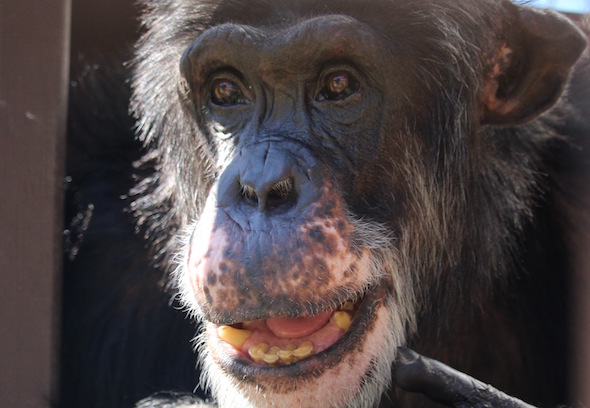
Training as a caregiver at CSNW means training in chimp language, because the chimps never stop communicating their thoughts and desires. From the moment we walk in the door in the morning, they are telling us what’s on their minds. For Jamie, it’s all about boots. She can’t wait for her caregivers to don a pair of her favorite cowboy boots and chase her around the chimp house. She tells us what she wants by gazing and pointing toward the boot bin while stomping her feet. She has a mental catalogue of all the boots in her collection and knows which pair she wants, and if we draw up the wrong pair she shakes her head and tells us to try again.
It’s easy to figure out what Jamie wants, though, because she’s so predictable. The same is true for Negra, who claps to prod her caregivers into action at least 30 minutes before each mealtime. Other situations require more thought. Sometimes Burrito greets us exuberantly first thing in the morning and initiates a game of chase. We chase after him for a while until he stops suddenly and begins to blow raspberries while pointing at something just outside the enclosure. Our eyes scan the ground until we finally come across the real reason for his excitement: a piece of food left over from the previous night’s dinner, just out of reach. Missy does something similar, except that her games of chase always end at the window facing the garden, where ripe cherry tomatoes grow just a few feet away. Her hand points towards the garden while her gaze switches back and forth between our eyes and the tomatoes, drawing an imaginary line between the two. The phrase “ulterior motive” had to have been coined by someone who worked with chimpanzees.
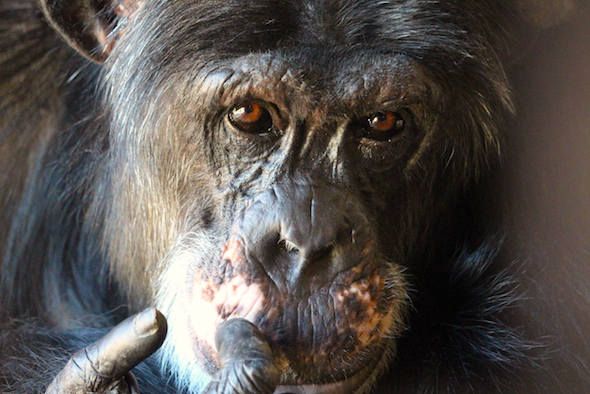
Throughout the day we hear updates from the chimps from afar. When a threat bark pierces the silence of an afternoon meal, it means that one of the caregivers has unwittingly violated the chimps’ social order, perhaps by serving food to a low ranking chimpanzee out of turn. Alarm calls can be easily differentiated into degrees of severity – single “hoo” calls mean that one chimp has seen something they can’t quite make sense of, while multiple “waa” calls mean that the group has identified and rallied around a source of danger. Even the “waa” calls can be broken into different levels of intensity, telling you whether they have uncovered a small garter snake or a large, and potentially deadly, rattlesnake.
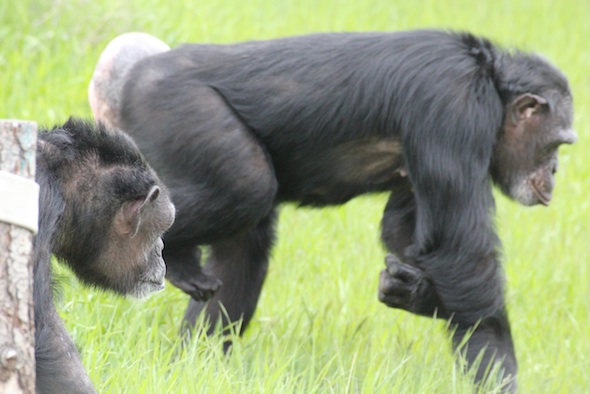
Closing up at night involves a routine that might sound familiar to anyone with young kids, but instead of “can you read me just one more story” or “can I have a glass of water”, it’s “can you give me just one more troll doll” or “can I have the boots you walked in this morning.” This process of making sure the chimps have everything they want before they go to bed can last for the better part of an hour, depending on their moods, and sometimes involves dumping everything out of the toy bins so that they can pick out exactly what they want. But when you figure out what they want, whether it’s that black pair of boots with the white stitching or the new Dora the Explorer doll, they often let you know with a low moan, while clutching the item gently to their chest. Reminiscent of Chewbacca, the low moan indicates satisfaction, and tells us all is good.
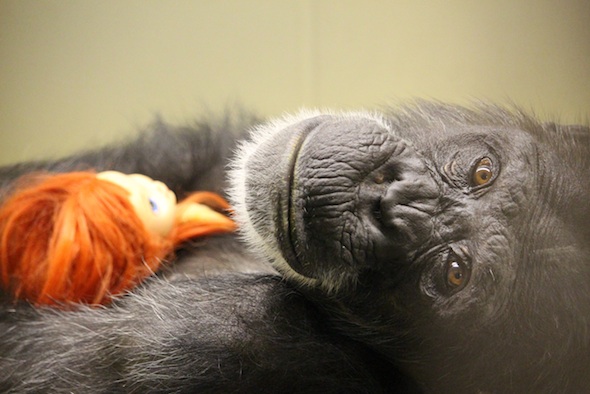
We talk to each other like this all day long and at the end of the day, the only thing left to say is “goodnight”, which in chimp-speak is delivered as a series of soft grunts, pants, and hoo’s known collectively as nest grunts. We caregivers often initiate this as we lock up for the night, and the chimps respond in turn. It’s a subtle and beautiful chorus; a vocalization that began high up in the trees of central Africa but somehow echoes from cozy blanket nests in a small sanctuary in Cle Elum.
It says, “we are all safe now, see you tomorrow,” in a language all their own.
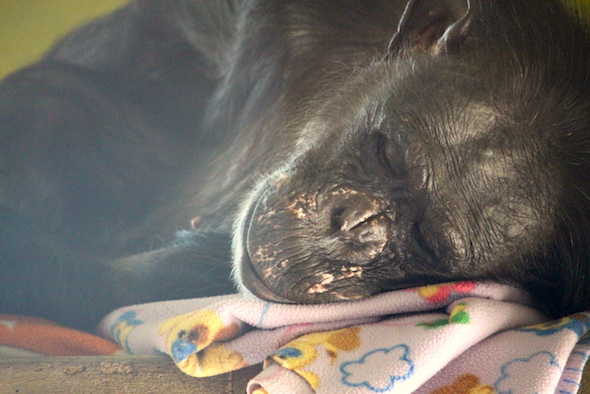
JODY!
I woke up thinking that I should feature Jody on the blog today. She’s a bit more elusive than some of the other chimpanzees, so we don’t get as many photos and videos of her.
She does have her routines, though.
Today, we spread a forage on the hill at lunch, and Jody, true to form, collected the food she wanted, came back inside, and emptied it on the deck while she sat on the lower part of the platform in the greenhouse.
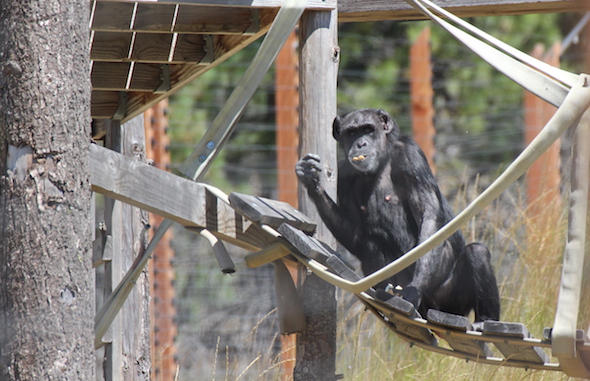
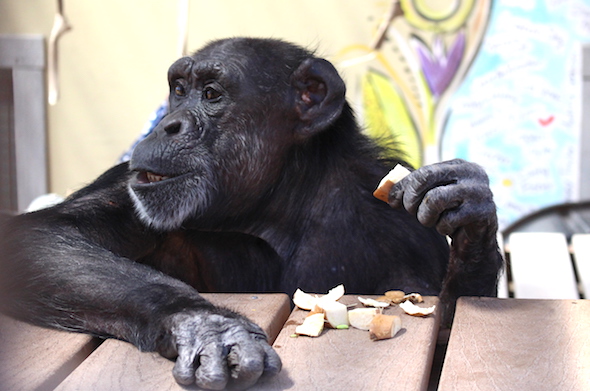
Then, she spent some time relaxing – we often see her in this position:
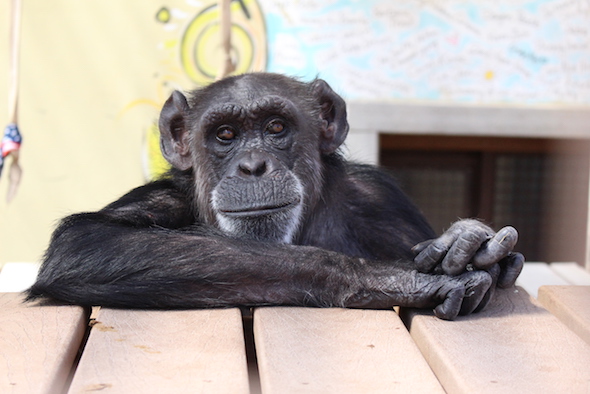
She did a little self-grooming:
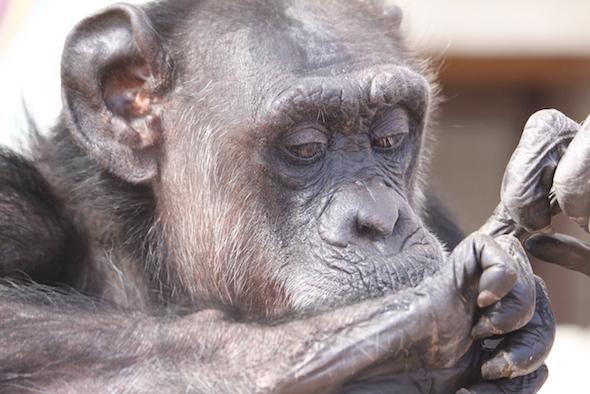
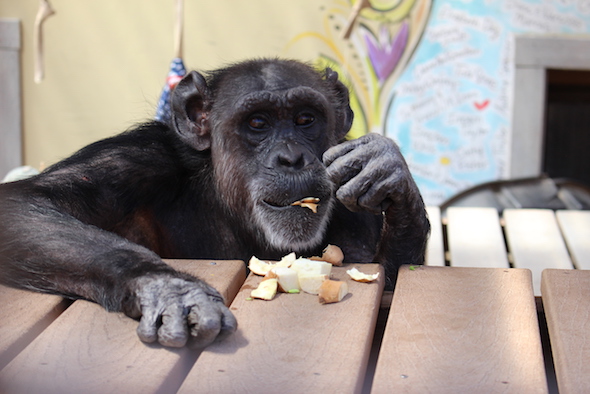
Graciously allowed me to take some close-up photos of her beautiful face:
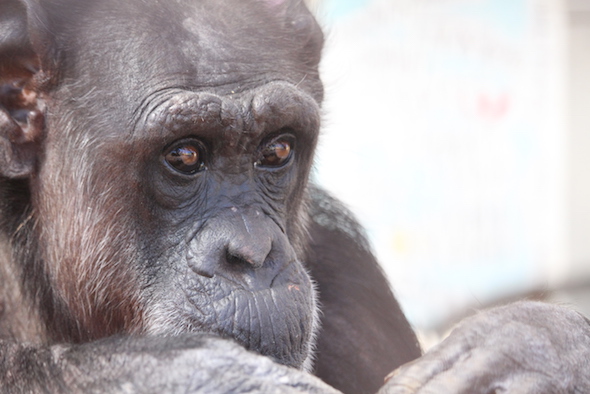
Volunteer Lynn and I were talking about Jody’s very round eyes that often appear to be hopeful or excited about something:
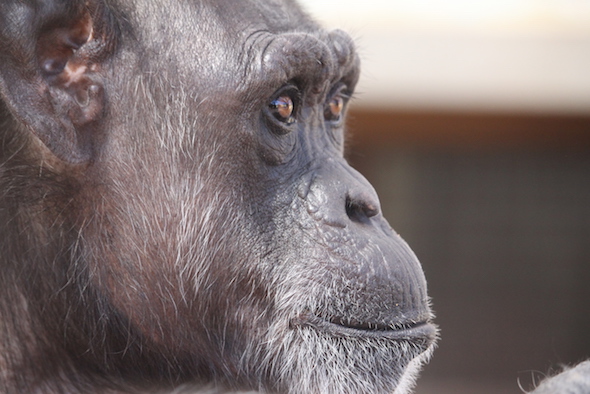
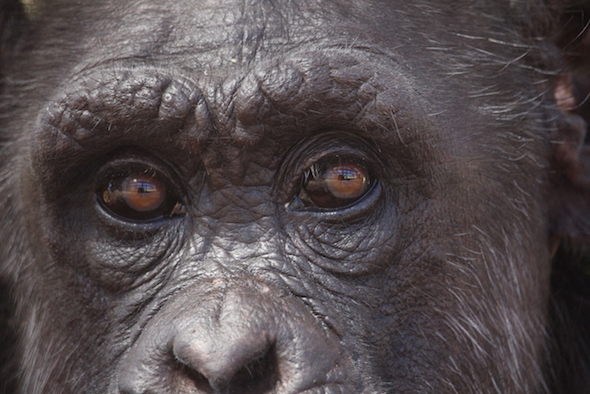

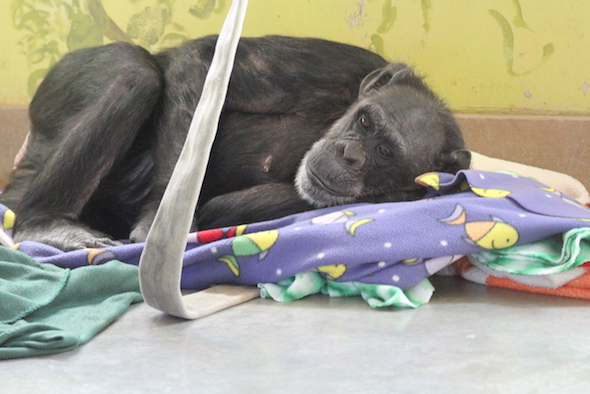
She soon retired to the cooler playroom for a post-meal siesta:
Adapting
People who have been incarcerated for long periods can have trouble adapting to life outside prison once they are released, a phenomenon we call institutionalization. Chimps are no different.
For the Cle Elum Seven, life in the lab was horrible, but after as much as 35 years it made some kind of sense. The deprivation they endured flipped the world on its head – metal and concrete were familiar and comforting, while grass and open sky would become sources of discomfort and fear. It’s perverse, that these chimpanzees should have to learn to adapt to what was their birthright.
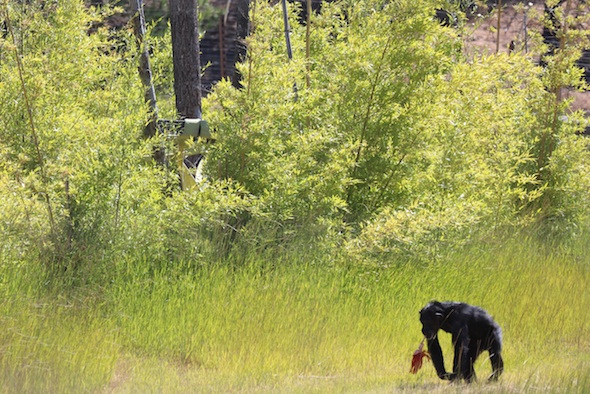
It’s tempting to think of reaching sanctuary as the end of a harrowing journey, but it is only a step in the process. When the chimps first set foot on Young’s Hill, they were scared. The world outside was big and unknown. Eventually, their fear became exhilaration as they explored their new territory. More and more now I think we see in them something akin to appreciation or even reverence for the outdoors.
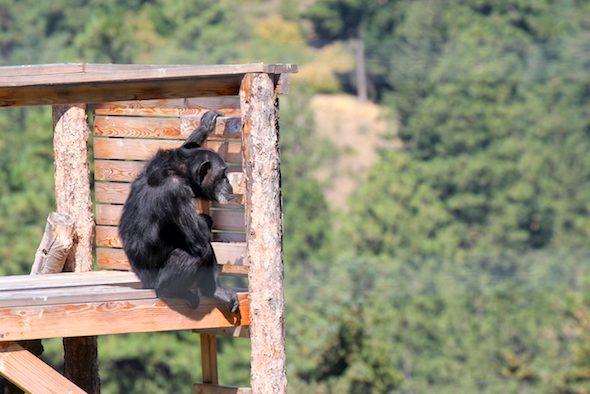
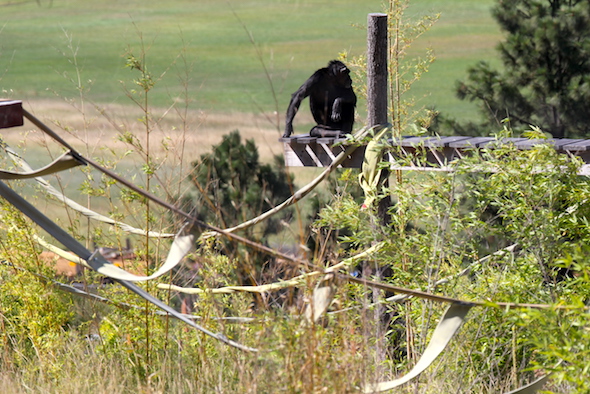
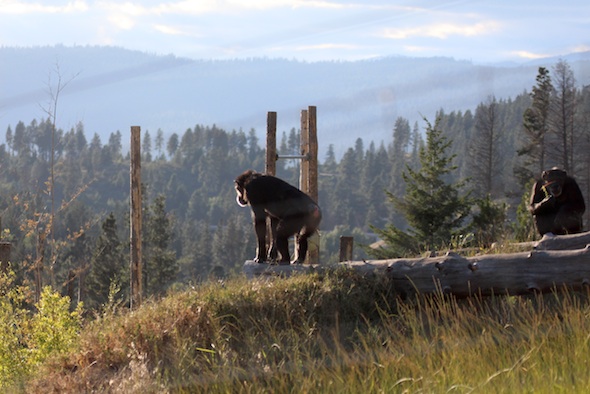
This process of adaptation continues and will likely never be complete. I think these chimps see themselves as visitors to the outdoors. It’s not their home. They take what they need before returning to the familiar surroundings of their indoor enclosures. But they are each adapting in their own way, and in their own time.
Just look how far they’ve come.
The Christmas in July Celebration
I have to admit, with temperatures pushing 100 degrees it’s hard to get into the Christmas spirit. But after receiving dozens of items from our wish list over the past week, you can’t help but feel the spirit of giving in the air.
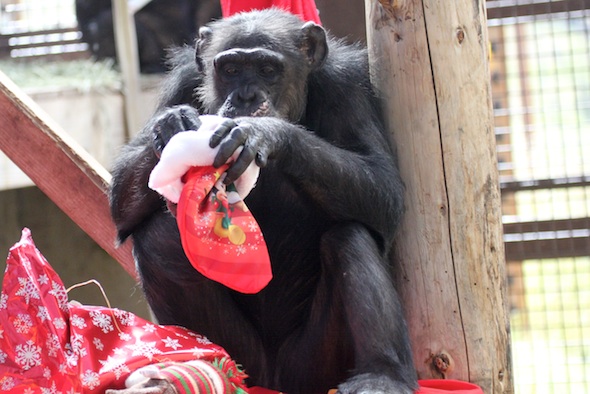
We’re so grateful for the support you’ve shown us – you helped stock our shelves with office and cleaning supplies; you gave us new medical equipment so that we can keep the chimps healthy; you sent food and treats for the chimps to enjoy and toys and enrichment to keep them occupied; and you gave us two gently used GoPro cameras so that we can give you a different perspective on life at Chimpanzee Sanctuary Northwest. We are truly humbled and grateful for your generosity.
This morning, we collected many of the items we’ve received so far and threw a little party for the chimps. I hope you can see the difference you make in their lives.
By the way, if you sent an item from our wish list and you don’t hear from us in a reasonable amount of time, please drop us a note. Packages from Amazon don’t always include information about the donor and we’d love to be able to thank you!
Merry Christmas in July!
Tug-o-War (Burrito-style)
Burrito and volunteer caregiver Whitney played a game of tug-o-war the other day.