• Skip to main content
  • Skip to primary sidebar
  • Skip to footer

Chimpanzee Sanctuary Northwest

Hope. Love. Home. Sanctuary

  • Our Family
    • The Chimpanzees
    • The Cattle
  • Blog
  • About Us
    • Visiting the Sanctuary
    • Philosophy
      • FAQs
      • Mission, Vision & Goals
      • Privacy Policy
    • The Humans
      • Staff
      • Board of Directors
      • Founder
    • Annual Reports
    • The Future of CSNW
    • CSNW In The News
  • You can help
    • Donate
      • Become a Chimpanzee Pal
      • Sponsor A Day
      • Transfer Stock
      • Be A Produce Patron
      • Be a Bovine Buddy
      • Give from your IRA
      • Personalized Stones
      • Bring Them Home Campaign
    • Leave A Legacy
    • Employment Opportunities
    • Volunteer
    • See Our Wish List
    • Events
  • Resources
    • About Chimpanzees
    • Enrichment Database
    • Advocacy
      • Advocacy Action Center
      • Apes in Entertainment
        • Trainers
        • Role of the AHA
        • Greeting Cards
      • Chimpanzees as Pets
      • Roadside Zoos
      • Chimpanzees in Biomedical Research
      • Conservation
        • African Apes
        • Orangutans
  • Shop
    • Merchandise Store
  • Contact
  • DONATE NOW

csnw

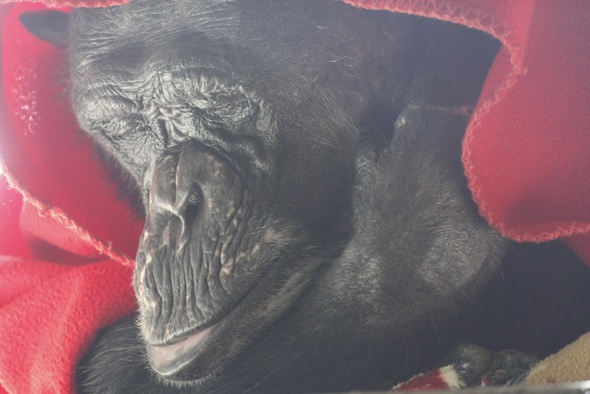
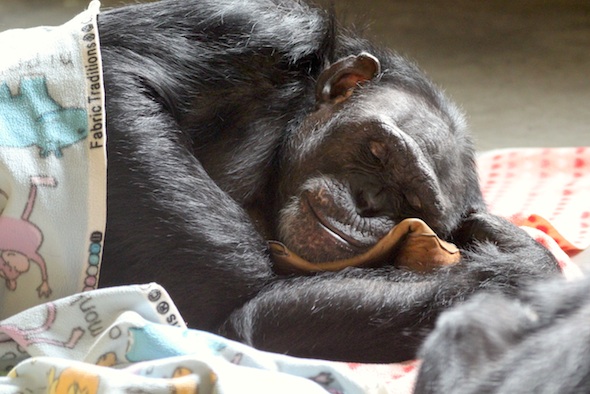
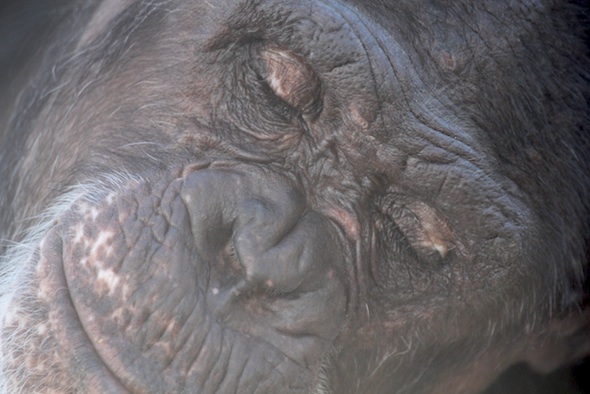
Close Your Eyes and Dream

May 24, 2014 by Diana

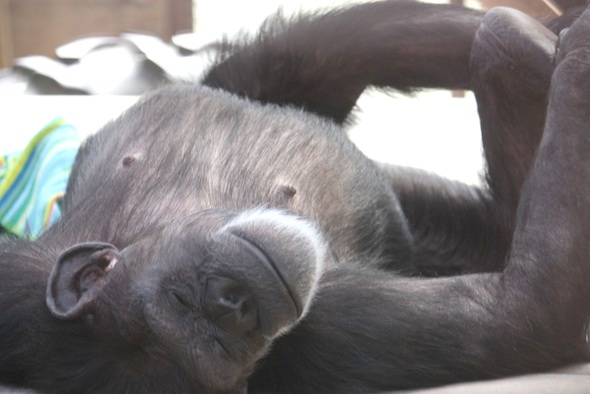
Sometimes I can hardly believe that this dream of Chimpanzee Sanctuary Northwest has really come true, and these seven chimpanzees, on June 13th, are going to celebrate six years of a new life of peace that they never could have dreamed was possible. Dreaming is a beautiful thing.

Foxie:
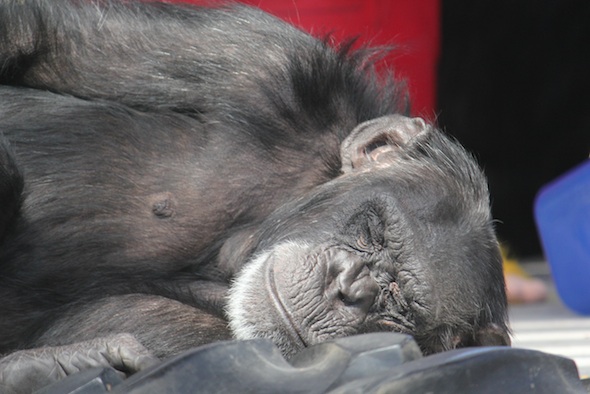
Foxie sleeping


Annie:

annie eyes closed


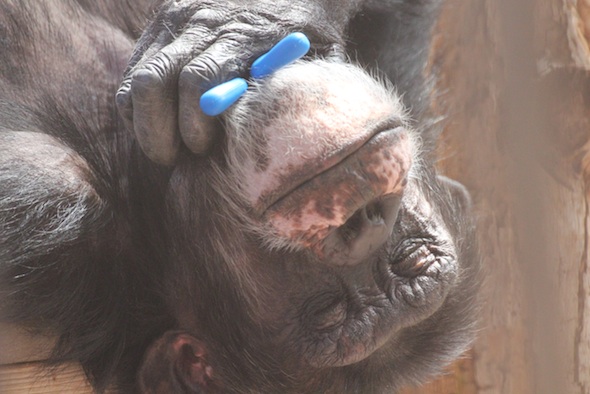
Burrito:

web Burrito lie on back hold fish toy enrichment eyes closed greenhouse GH IMG_7214


Jody:

Jody sleeping


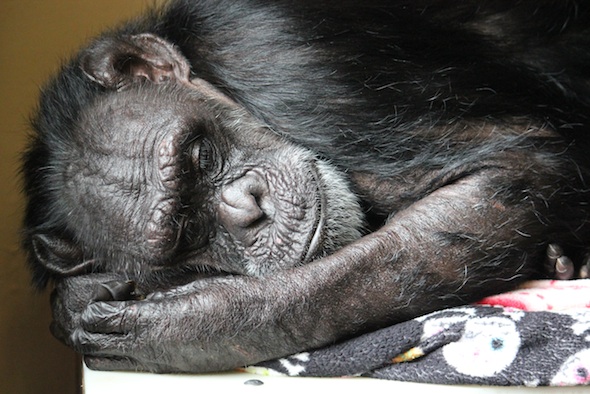
Negra:

web_negra_rest_big_lips_eyes_closed_PR_dm_IMG_0999negra under red blanket close up 2


Missy (I had to look really hard to find a photo of Missy sleeping):
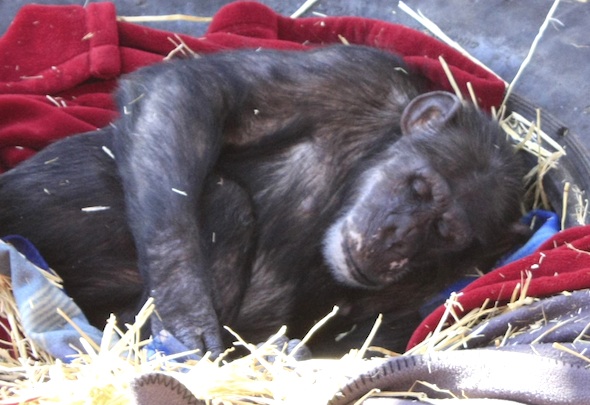
missy in the tire


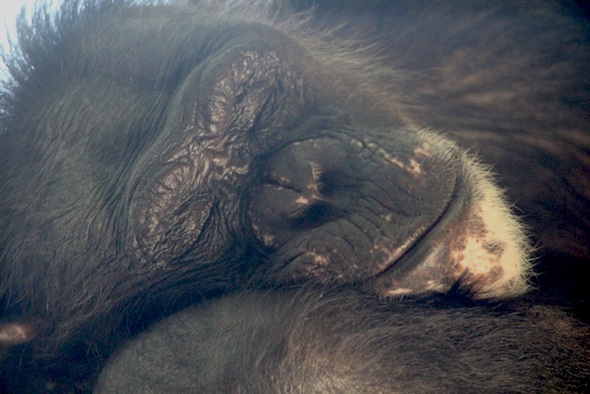
Jamie:

web Jamie eyes closed use boot as pillow sleep nest blanket PR IMG_4587

close up of Jamie with eyes closed


Filed Under: Annie, Burrito, Foxie, Jamie, Jody, Missy, Negra, Sanctuary Tagged With: chimp, chimpanzee, csnw, dream, eyes closed, northwest, rescue, Sanctuary, shelter, sleep

Friendships

May 23, 2014 by Debbie

It’s Friend Friday! Okay, well, we may have made that up last week—but it turns out that it actually is a thing! So, we thought we’d keep the trend going and post about some friendships today.

This morning I got a video of rambunctious play between Foxie, Diana, and Burrito. At one point, Burrito turned toward Foxie and they started to play with each other. This is really important for their bonding, and we as caregivers tend to take a step back and let them play on their own. You’ll see in the video that Diana did just that. Later on, Jody joined in too, and started to play tug with Foxie. Foxie looked toward Diana to keep playing with her, but Jody was so insistent that Foxie play with her that Diana encouraged Foxie to direct her attention back to Jody.

This is a little bit longer than the videos I usually post, but the whole thing was so great I had a hard time cutting anything out. Enjoy, and please share on social media with the hashtag #FriendFriday!

Filed Under: Burrito, Caregivers, Dolls, Foxie, Jody, Play, Sanctuary Tagged With: animal protection, animal rescue, animal rights, Animal Welfare, Burrito, chimp sanctuary, chimpanzee, Chimpanzee Sanctuary Northwest, Cle Elum 7, Cle Elum Seven, csnw, Foxie, Jody, Play, Sanctuary

Photos from today and Negra’s Journey

May 22, 2014 by Debbie

Check out this post on One Green Planet we posted today about Negra. It’s truly a wonderful story and we’d love it if you would share it on social media, or just forward the link to your friends!

Here’s some pictures I took today — the weather is absolutely gorgeous so we set up a quick lunch forage for the chimps to enjoy!

Foxie:

web_IMG_9593

web_IMG_9591

Burrito:

web_IMG_9579

web_IMG_9608

Jamie checking out some welding work J.B. was doing down at the caregiver house:

web_IMG_9584

And then she took her pile inside to enjoy and let me snap this nice head shot of her:

web_IMG_9607

Filed Under: Burrito, Food, Foxie, Jamie, Negra, Sanctuary, Young's Hill Tagged With: animal protection, animal rescue, animal rights, Animal Welfare, Burrito, Chimpanzee Sanctuary Northwest, Cle Elum 7, Cle Elum Seven, csnw, Foxie, Jamie, Negra, Sanctuary

Carrying things around when you’re a chimpanzee

May 19, 2014 by Lisa

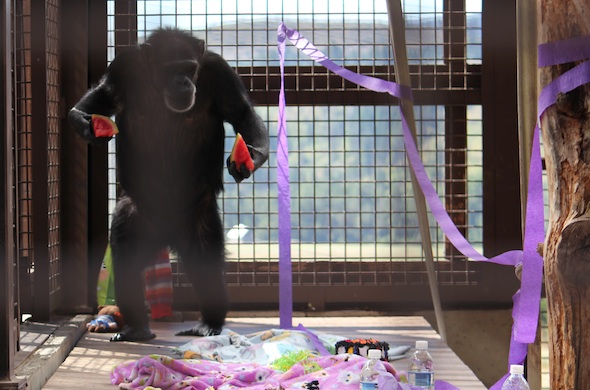
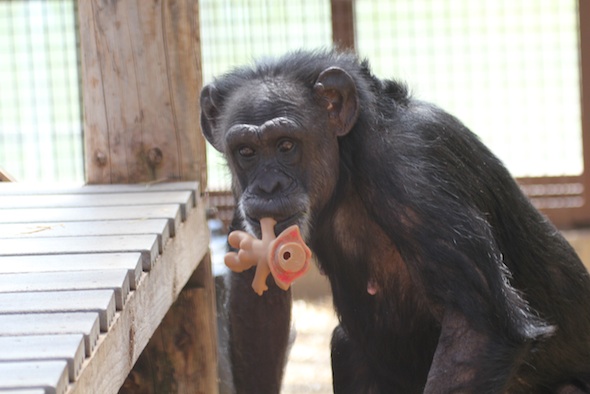
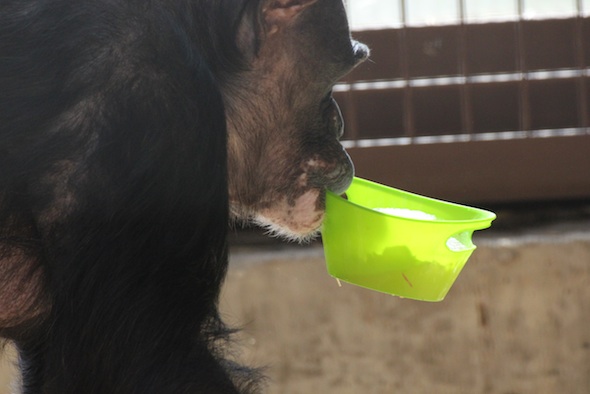
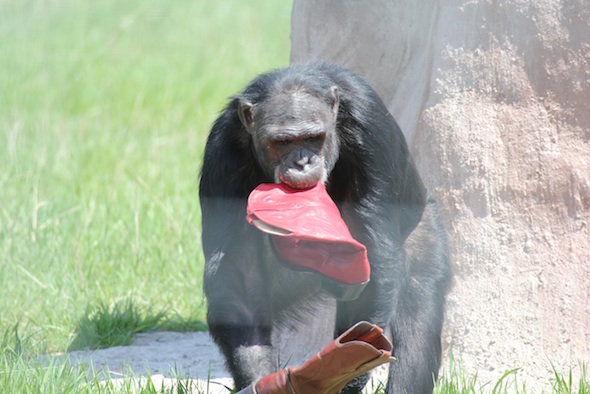
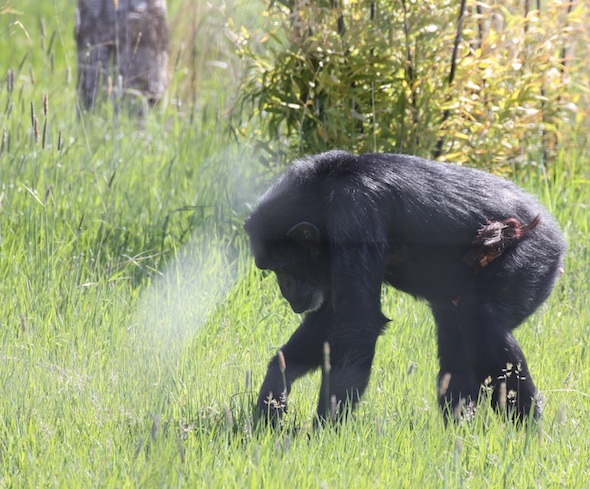
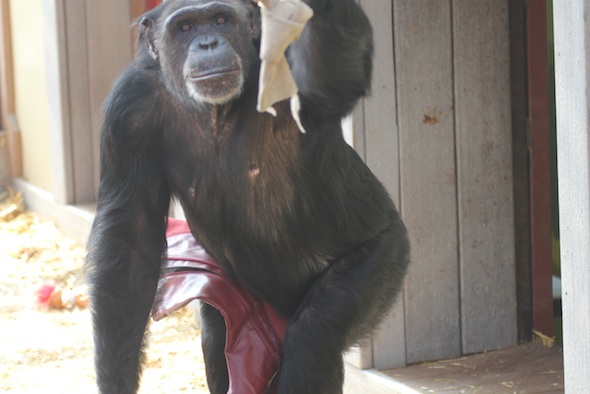
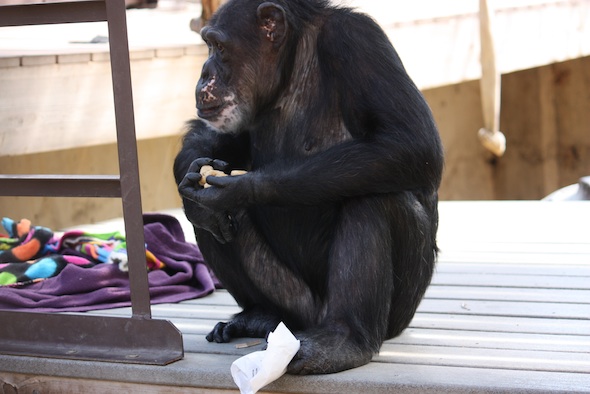
Everyday I put on clothes that have pockets to hold my keys, cell phone and wallet. When I leave the house, I carry a purse to transport the many “vital” items I might need throughout the day. Most of the time, I do this without thought since it’s such a natural part of my day. While I am grateful for the ease that these modern conveniences provide I can tell you with confidence that they are not strictly necessary. You might think that carrying things around as a chimpanzee could be challenging. The chimpanzees do not have pockets or purses (although they do have access to them provided by the daily enrichment) and yet they manage to carry around the important things just fine. In fact, their ingenuity is often inspiring! There are various solutions to the problem of carrying things when you’re a chimpanzee. Here are just a few.

Of course, hands and arms are always up to the task.
web_burrito armful chow forage cinco de mayo party gh food IMG_2503

web_annie carry food watermelon forage bipedal walk GH IMG_6543

Mouths are often quite useful as well.
web_Jody troll in mouth look at camera greenhouse GH IMG_7179

web_Negra bowl of snow in mouth greenhouse IMG_2409

web_jamie carry boots enrichment yh treat rock IMG_2342

Carrying things on your back takes a little practice, but Foxie is a pro.
web_Foxie carry blue troll on back enrichment yh IMG_9583

Options that are particular to chimpanzees are the hip pocket (the area between the thigh and the abdomen) and the ever popular foot grab!
web_cropped_Foxie_dora_in_pelvic_pocket_YH_ls_IMG_9334

web_Jamie boot in pelvic pocket greenhouse GH IMG_7749

web_Missy_hold_eat_chow_bag_in_foot_lunch_GH_ek_IMG_3700

web_Missy birthday party open coconut hold with foot cute playroom IMG_0034

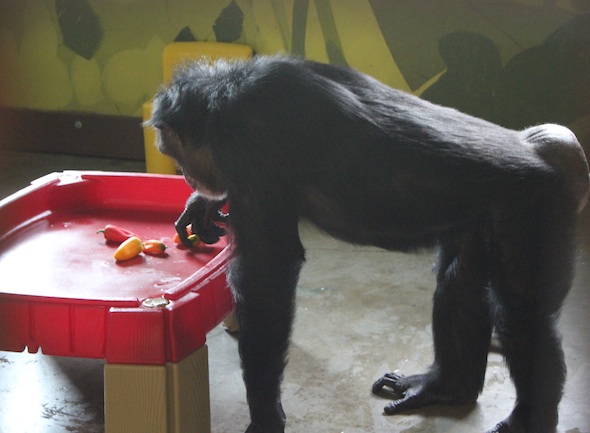
Sometimes, you just have to make it work with whatever you have at hand. Jamie’s problem solving skills often lend themselves to situations like this in interesting ways. For example, she has been seen on more than one occasion to use this table to carry her portion of food from a meal to a more comfortable location were she can enjoy her selection at leisure.
web_cropped_Jamie's_forage_table_PR_ls_IMG_7695

Filed Under: Chimpanzee Behavior, Sanctuary Tagged With: chimpanzee sanctuary, Chimpanzee Sanctuary Northwest, Cle Elum 7, Cle Elum Seven, csnw, Sanctuary

Today is in memory of Norman A. Johnson

May 16, 2014 by Katelyn

Today’s day of sanctuary was sponsored by Paula Nelson in memory of her father, Norman A. Johnson. Paula shared this lovely message about her father:

“My father passed away a year ago on May 9th. I wanted to honor his memory. He so enjoyed watching the videos and pictures of all the chimps. We had family in Cle Elum so that made it special for our family. I know he is smiling down still enjoying them. Love you Daddy.”

Paula, we are so touched that you thought of the chimpanzees when honoring the memory of your father. It makes us happy to know that they brought such joy to his life. Thank you so much for giving them a special day and our thoughts are with you and your family.

web_Burrito_close_up_peanut_food_in_mouth_GH_ek_IMG_6890

Filed Under: Burrito, Sanctuary, Sponsor-a-day Tagged With: Burrito, chimpanzee rescue, Chimpanzee Sanctuary Northwest, Cle Elum 7, Cle Elum Seven, csnw, Sanctuary, Sponsor-a-day

A busy day for Jamie

May 14, 2014 by Katelyn

The sanctuary is a hub of activity today! Well, at least for the humans and Jamie Chimpanzee. Keith and Nick are still working hard on the sprinkler system. Volunteer caregiver Denice came out to work in the chimpanzees’ garden and brought along her husband, Ken, who in turn brought his backhoe to help J.B. prepare to make way for some sidewalks!

It also happens to be on the warm side today with temperatures in the upper 80’s. None of the primates here at CSNW have quite adjusted to the sudden spike in temperatures and the chimpanzees have spent much of the day splayed out in the greenhouse. Judging by Burrito, one would think it was closer to 100 degrees:

web_burrito_so_hot_splayed_out_gh_kd_IMG_9529

Ssooooo hot:

web_burrito_so_hot_arm_on_chest_kd_IMG_9530

Why is it SO hot?!

web_burrito_lie_down_hot_look_camera_kd_IMG_9533

Well, all of the chimpanzees were splayed out except Jamie, that is. After all, she is the boss and had a lot of people and projects to supervise. A popular spot from which to keep an eye on everyone was one of the windows in the front rooms and here sat Jamie, with her trusty boot in hand:

web_jamie_hug_boot_supervise_work_fr4_kd_IMG_9535

Feeling revived from a refreshing treat of carrot juice ice cubes, Burrito decided to check out the activities from the cooler front rooms as well:

web_burrito_fr4_lean_to_side_look_camera_kd_IMG_9541

web_burrito_rest_chin_arm_fr4_kd_IMG_9549

It never ceases to amaze me how people come together in such selfless ways to improve the lives of the chimpanzees. Keith, Nick, Denice and Ken, (and J.B.!) thank you so much for working so hard, in the heat of this day, to make the chimpanzees’ home even better! And thank you especially for enriching Jamie’s day! And thank you to everyone who helped make this work possible, we couldn’t do it without all of our amazing supporters.

Filed Under: Jamie, Sanctuary Tagged With: Burrito, chimpanzee sanctuary, Chimpanzee Sanctuary Northwest, csnw, Jamie, Sanctuary

Protecting Mountain Gorillas through Community Involvement

May 13, 2014 by Debbie

This is our first guest blog post about gorilla conservation, written by Gretchen Clymer. Gretchen first became passionate about primate conservation after reading Gorillas in the Mist by Dian Fossey as a teenager. She went on to complete undergraduate and graduate studies in Biological Anthropology, conducting behavioral research on different primate species, including golden lion tamarins, rhesus macaques, and chacma baboons. She has worked for the Dian Fossey Gorilla Fund International (DFGFI) in both Atlanta and Musanze, Rwanda. As a primatologist, she has remained active in primate conservation and welfare, including currently working with Chimpanzee Sanctuary Northwest.

—

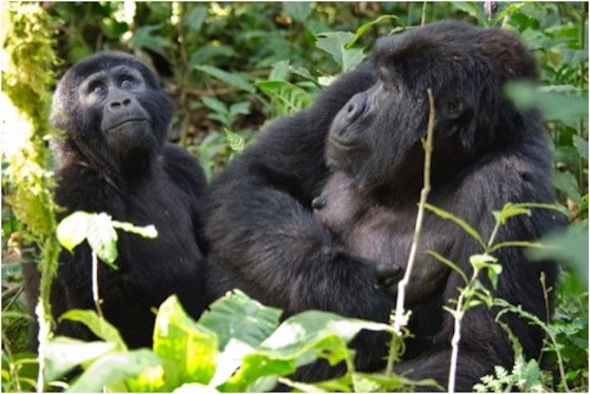
bwindi impentrable forest gorillas
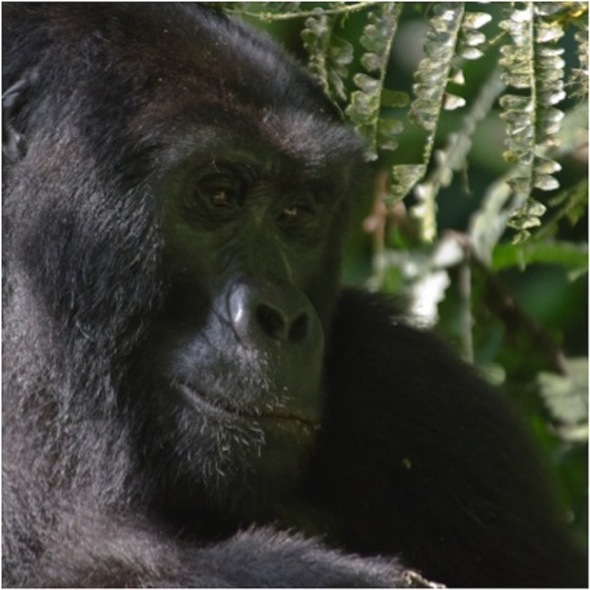
Bwindi Impenetrable Forest, Uganda. Photo: Ian and Kate Bruce, 2013.

The threats to the survival of mountain gorillas, and all of the great apes, are severe and multi-faceted. Habitat loss due to logging and industry, armed conflict, the illegal bushmeat and pet trades, and infectious disease represent significant threats to the populations of chimpanzees, gorillas, and orangutans. Over the past 50 years, approaches to ape conservation have shifted as conservationists understand more and more that survival of ape populations is inextricably linked with the welfare and involvement of the communities that live near chimpanzee, gorilla, and orangutan habitats.

Early approaches in conservation

The pioneering research conducted by Jane Goodall, Dian Fossey, and Birut? Galdikas in the 1960’s-1970’s brought the world’s attention to the fascinating behaviors of the great apes. Their work also brought to light the pressures that threatened the very survival of chimpanzees, gorillas, and orangutans. Conservation approaches at that time were largely focused on preservation of habitat, and the assumption that conservation of apes and their habitat was primarily realized through enforcement. Dian Fossey, in particular, championed methods she called “active conservation,” that were often antagonistic towards communities residing on the fringes of mountain gorilla habitat. This method of conservation focused only on protecting mountain gorilla populations while failing to take into account that poachers, loggers, and encroachers were not motivated by maliciousness, but rather the simple and stark need to provide for themselves and their families.

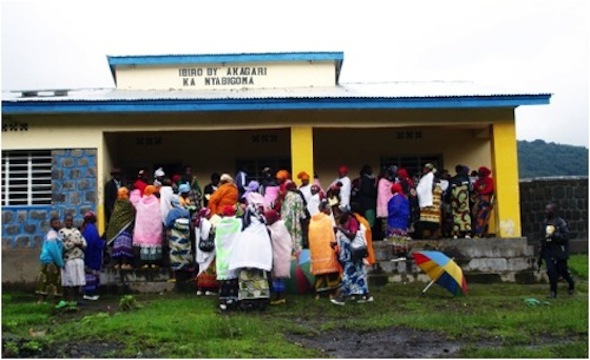
bisate health clinic
Bisate Health Clinic, Musanze, Rwanda. Photo: Gretchen Clymer, 2007.

The shift towards community-involved conservation

Habitat preservation is certainly paramount in working for the survival of the great apes, and this requires legislation to protect habitat as well as enforcement of existing legal protections for ape habitat and poaching bans. However, as approaches in ape conservation have been refined over the last 50 years, conservationists have learned the importance of embracing local communities in conservation, and of the intertwined relationship between human welfare and ape conservation.

Since Dian Fossey’s untimely and tragic death in 1985, the Dian Fossey Gorilla Fund International (DFGFI) and other mountain gorilla conservation groups have taken a different approach to conservation, focusing on including the local community into conservation efforts, through community programs, research, and eco-tourism.

It is estimated that “gorilla tourism may exceed $30 million USD shared between Rwanda, Uganda and the Democratic Republic of Congo (DRC)” (International Gorilla Conservation Program, 2014). Gorilla and other great ape eco-tourism not only brings money directly to conservation efforts by providing funds for anti-poaching patrols and research studies, but also helps to create a link to the local community by establishing a tourism industry, which in turn provides financial security to the area while actively discouraging unsustainable poaching and deforestation practices. Providing social services for population areas where community needs are great and currently unmet is an additional effective strategy to involve the community in conservation efforts. For example, the DFGFI, partnering with other organizations, provides funding for the Bisate Health Clinic, a rural health clinic in Musanze, Rwanda, by helping to promote health, education, and economic growth in an attempt to provide these communities with the opportunities to become more self-sufficient and less dependent on resources gathered from within the boundaries of the park.

Another program, in the Bwindi Impenetrable National Forest of Uganda, is Conservation through Public Health, which has focused on preventing “the spread of disease from wild animals to humans, and vice versa, by improving primary healthcare for people and animals in and around protected areas in Africa” (Whitley Fund for Nature, 2011). The program has sought to engage the local community by enlisting their help with gorilla population surveys and monitoring, as well as devoting efforts to community-led outreach and education. Conservation through Public Health also strengthens eco-tourism programs by improving facilities for this important conservation sector and ensuring that disease from visiting guests is not then spread to vulnerable mountain gorillas.

virungas
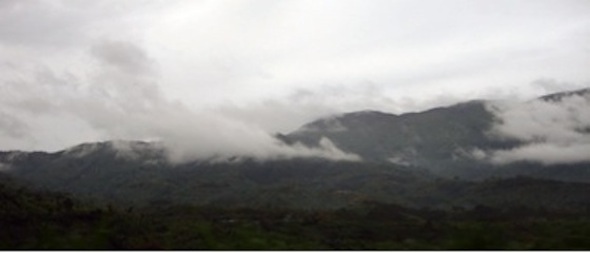
Virungas Volcanic Range, Rwanda. Photo: Gretchen Clymer, 2007.

Educational programs and support are another important realm in community-involved conservation. Practical education programs on health and sustainability can support local communities and ease resource or ecological pressures on ape habitat resources. Conservation education (from primary through graduate education levels), fosters local pride and involvement in conservation and can be hugely impactful in ongoing conservation efforts for apes. The Dian Fossey Gorilla Fund International is active in nearly every level of educational opportunity in the communities near mountain gorilla habitat – from health education programs in local communities, to conservation education in local schools, up through graduate research training at the Karisoke research center. These efforts not only demonstrate that conservation is beneficial to the local communities, they show respect to communities as key stakeholders in conservation.

bwindi gorilla
Bwindi Impenetrable Forest. Photo: Ian and Kate Bruce, 2013.

Signs for Hope

In the past decade, it appears community-outreach focused conservational approaches show promising signs of success for the mountain gorillas. A 2010 census of mountain gorillas showed a ~26% increase in their numbers in the Virungas since the prior census in 2003 (Gray et al, 2010). While still critically endangered, an increase in population – particularly with ongoing conflict in the region – is a significant victory for the efforts of conservationists and the local communities.

The close proximity between human populations and endangered great apes is undoubtedly a factor in the threat to ape survival. However, fifty years of conservation efforts have demonstrated the importance of protecting apes with the cooperation and support of the populations that reside in proximity to ape habitat. Providing training and material support in sustainable agriculture helps to mitigate the need to log or hunt in critical ape habitat. Using ape conservation funds to provide basic health services such as clean water and medical clinics makes ape conservation beneficial to both the apes and humans in the area. Lastly, educational outreach can instill a sense of local pride in the majestic gorillas, and will hopefully bring about the next generation of conservationists sharing a common homeland with the apes, who will then strive to increase mountain gorilla populations to sustainable levels.


Works Cited:

International Gorilla Conservation Programme (IGCP). 2014. “Tourism.”

Whitely Fund for Nature, 2011. “Mountain Gorilla Conservation through Public Health, Uganda.”

Gray, M. Fawcett, K., Basabose, A., Cranfield, M., Vigilant, L., Roy, J., Uwingeli, P., Mburanumwe, I., Kagoda, E., Robbins, M. 2010. Virunga Massif Mountain Gorilla Census — 2010 Summary Report.

Filed Under: Advocacy Tagged With: advocacy, animal protection, animal rescue, animal rights, Animal Welfare, Chimpanzee Sanctuary Northwest, conservation, csnw, dian fossey, gorilla, gretchen clymer, primate protection, rescue

  • « Go to Previous Page
  • Page 1
  • Interim pages omitted …
  • Page 104
  • Page 105
  • Page 106
  • Page 107
  • Page 108
  • Interim pages omitted …
  • Page 252
  • Go to Next Page »

Primary Sidebar

Subscribe To the Blog and Get Notified of New Posts First!

Archives

Calendar of Blog Posts

June 2026
S M T W T F S
 123456
78910111213
14151617181920
21222324252627
282930  
« May    

Categories

SUBSCRIBE TO OUR NEWSLETTER

Footer

PO Box 952
Cle Elum, WA 98922
[email protected]
509-699-0728
501c3 registered charity
EIN: 68-0552915

Official DDAF Grantee

Menu

  • The Chimpanzees
  • Blog
  • About Us
  • You can help
  • Resources
  • Contact
  • Donate

Proud Member of

Connect With Us

Search

Copyright © 2026 Chimpanzee Sanctuary Northwest. All Rights Reserved. Site by Vegan Web Design