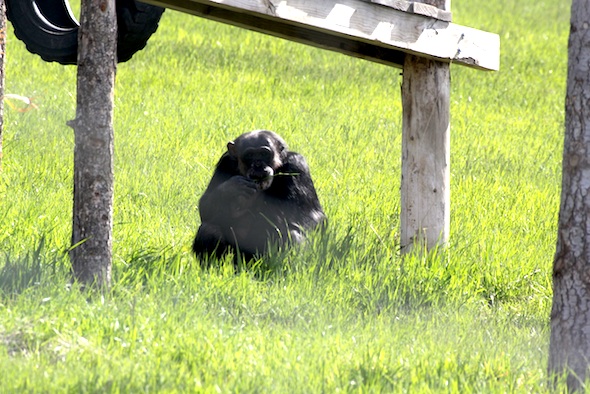
Clearly, there is something super special about the grass in this spot:
Chimpanzee Sanctuary Northwest
Hope. Love. Home. Sanctuary
Clearly, there is something super special about the grass in this spot:
Thank you to everyone who raised their paddles at the event last night towards the Veterinary Clinic!
Out of the Box 2013 in Seattle was so much fun! And you can keep the fun going by bidding on online auction items and making donations towards the Veterinary Fund. The online auction runs through May 6th at 6pm (PST).
William Wright sponsored today for Talia Silveri’s birthday. William says:
“Talia loves all the chimps at CSNW and wants to share her birthday love with her favorite animal friends!”
Happy birthday, Talia! We hope your day is full of surprises.
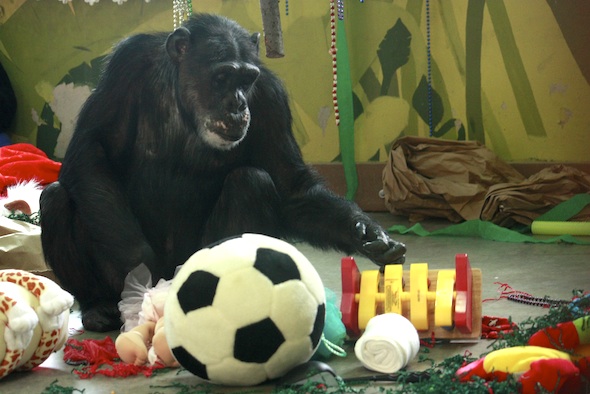

Have you heard about Brandon Wood? He is one of the most active chimpanzee advocates, always working tirelessly to help chimps through petitions, fundraisers, and tabling events. Did I mention he’s just 12 years old? He’s an inspiration! His latest project is a petition to a drug company Merck, a private biomedical testing lab, to stop biomedical testing on chimpanzees. Though the National Institutes of Health is moving toward retiring government-funded chimps in research, there are still many chimps in privately-funded labs. Lend Brandon a hand and help the chimps today by signing his petition! And don’t forget to share it with your friends, too.

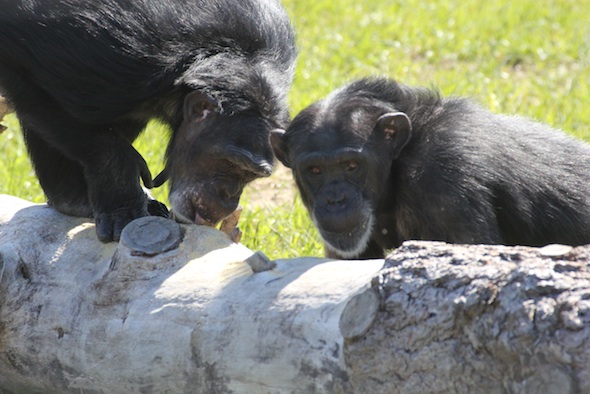
The bulk of the chimps’ diet consists of fresh fruits and vegetables, nuts, seeds, and browse (more fibrous plant material such as grape vines or cattails), but we still supplement their diet with a very small amount of commercially prepared primate chow. The end of the bag is usually filled with crumbs and chow dust, which the chimps view as a special treat.
Jamie got most of it during a forage the other day:
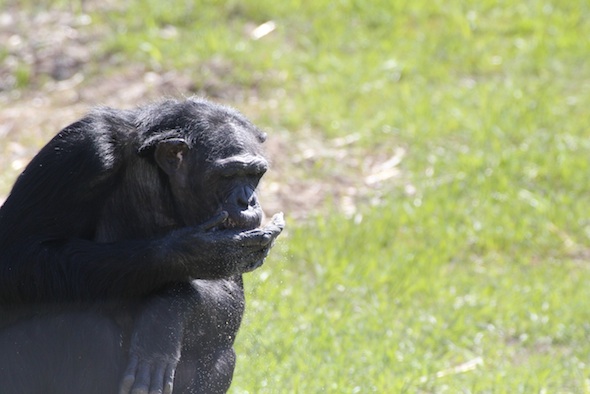
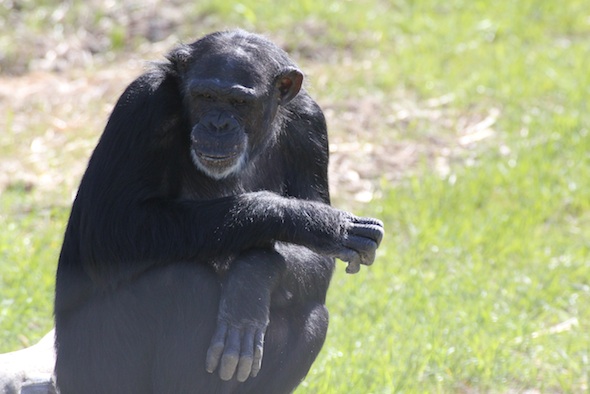
But Foxie came along to help her clean up what was left:
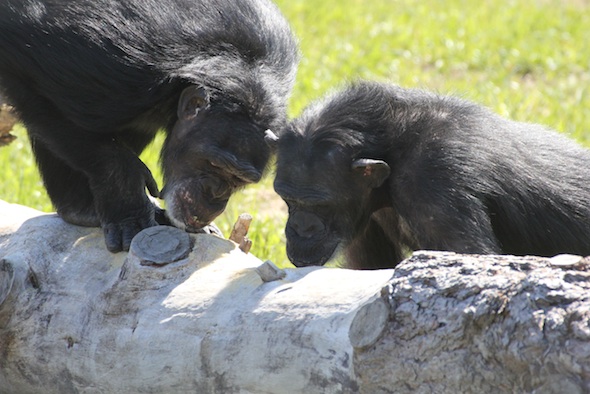
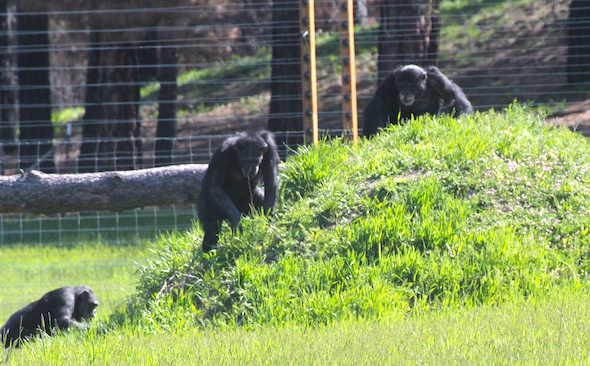
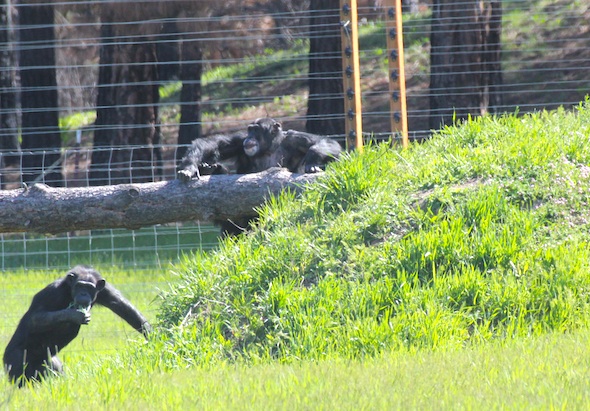
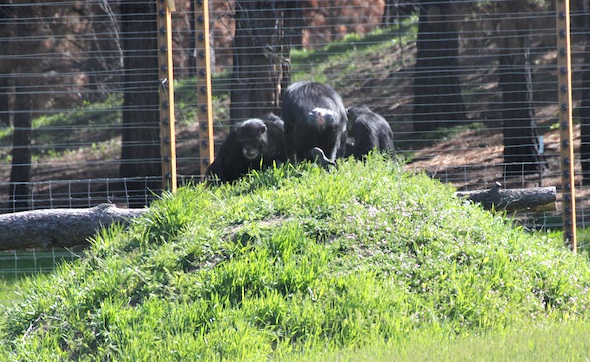
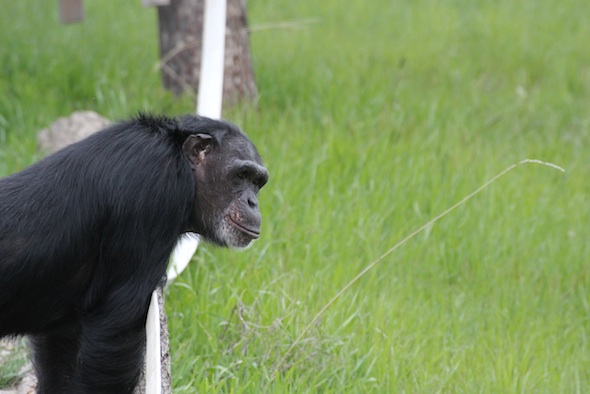
The other day, Jamie was quietly taking in the view from Young’s Hill.
As Jody passed by, the two of them noticed something in the grass.
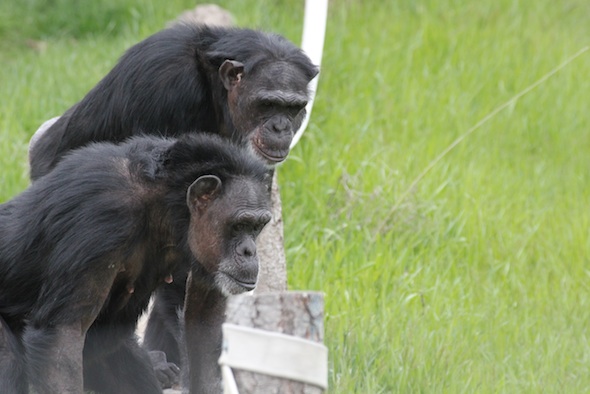
Young’s Hill is home to many other critters besides chimpanzees. Bugs, birds, garter snakes, and squirrels all try lay claim to these two acres, but they often run into trouble with their seven noisy neighbors.
You wouldn’t normally expect chimpanzees to be scared of creepy crawlies. Wild chimpanzees hunt and eat a variety of animals, which can include birds, reptiles, insects, and small mammals (even other primates), depending on the community. But the Cle Elum Seven are not wild. Physically, they are the same as their wild cousins, and they share many of the same behavioral traits, but they lack the culture of a wild community. And given their histories, they haven’t had much personal experience with the great outdoors either. So what might be seen as food by a chimp in Gombe might be feared by a chimp in Cle Elum.
Jamie certainly likes to kill, which shouldn’t surprise those of you that have gotten to know her through this blog. However, she has a good instinct for self-preservation and she still hasn’t quite figured out which animals fight back, so she often approaches cautiously. In fact, we sometimes liken her to a pointer, because she will stop dead in her tracks with one arm and one leg up. But rather than directing someone else to the prey, I always feel like she’s thinking…If it gets me, at least I’ll still have two good limbs.
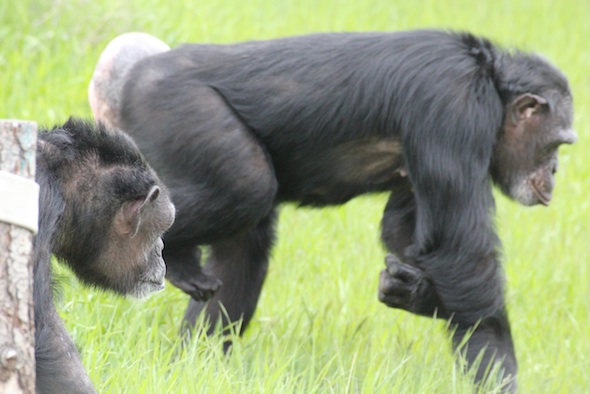
Thankfully, it usually ends up being a wild goose chase, as it did in this instance. The field mice quickly scurry back into their holes and the birds effortlessly fly away while the chimps are still trying to get up to speed.
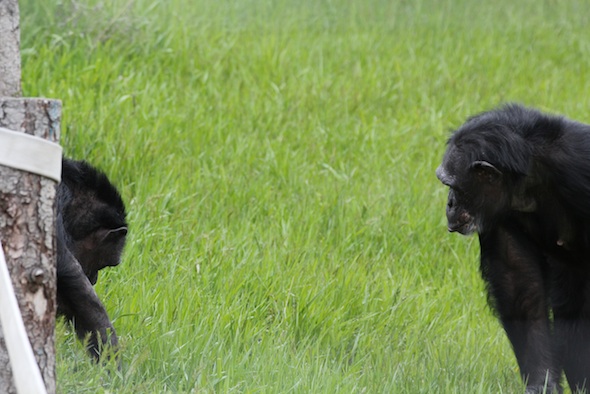
This type of enrichment can’t be beat – especially when no animals are harmed in the process. Captive chimpanzees will always require some kind of artificial enrichment, but there’s nothing like the unpredictable and often exhilarating enrichment that exists in the natural world.
Everyone is so happy about the spring grass (the chimps and the caregivers alike!) Just look at how content Jody looks:
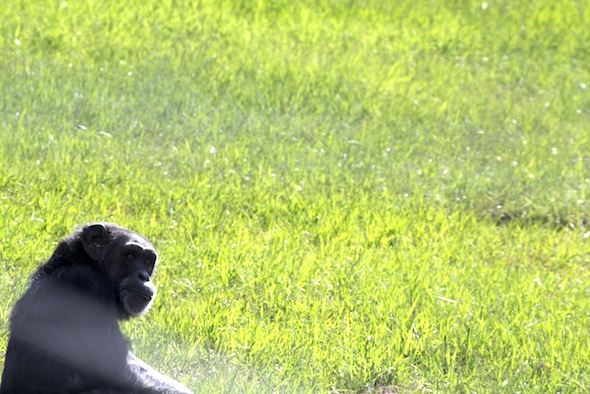
And Negra is ecstatic to have an entire 2-acre salad bowl to munch on all day.