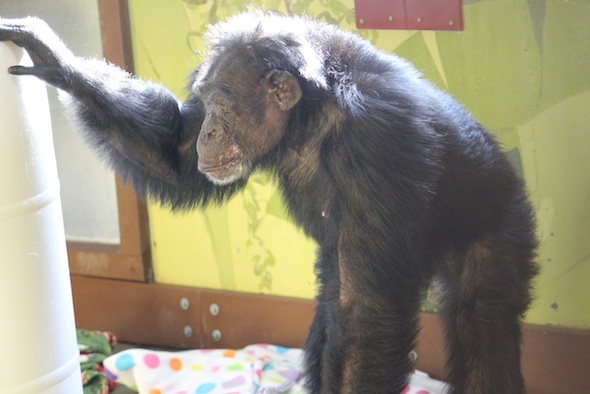
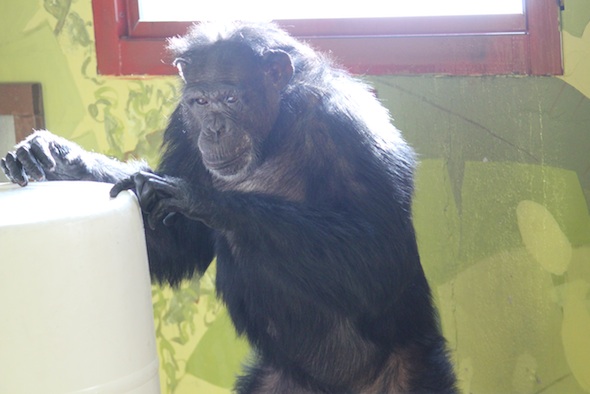
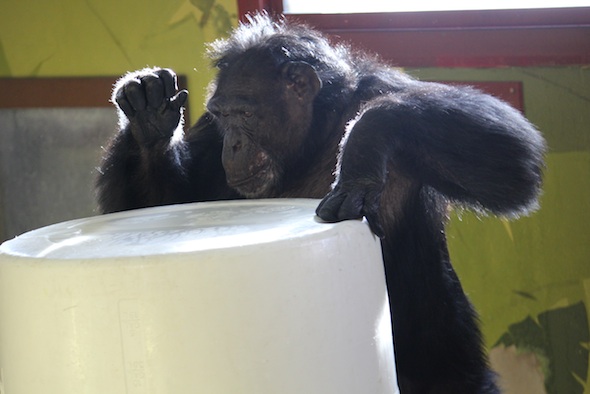
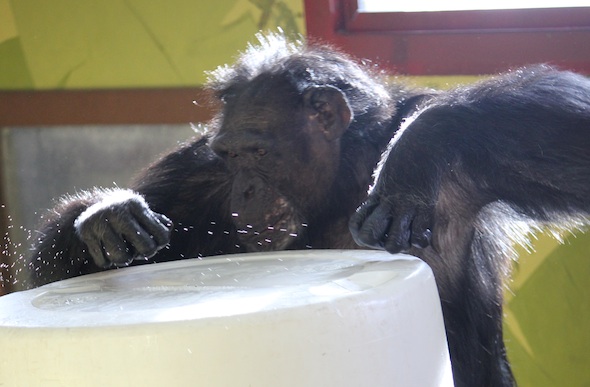
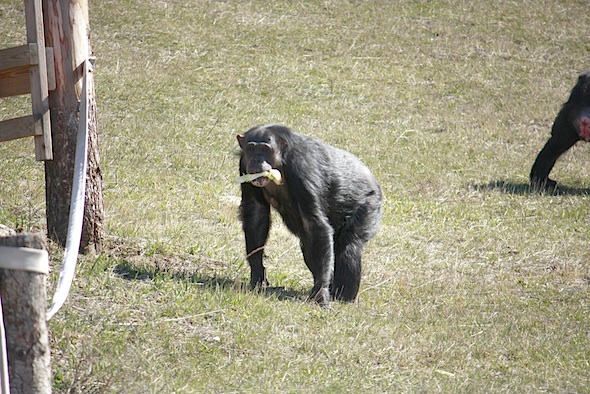
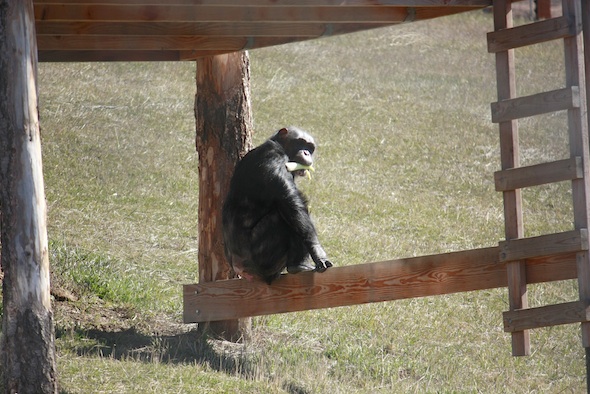
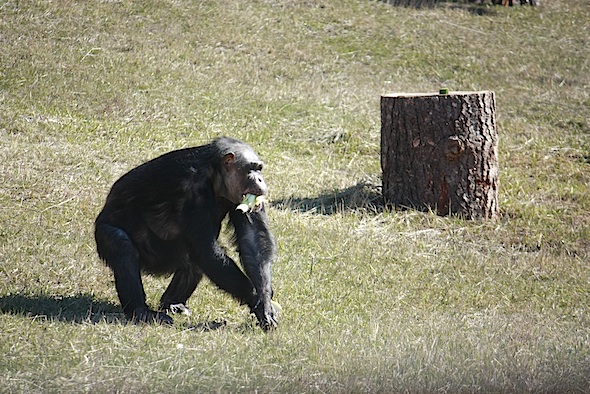
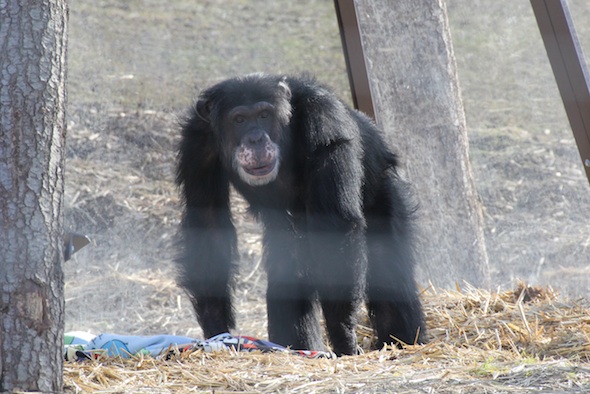
A reward for those of you who stayed awake to the end of my last post…some photos of Negra enjoying a forage on the hill this afternoon:
Chimpanzee Sanctuary Northwest
Hope. Love. Home. Sanctuary
A reward for those of you who stayed awake to the end of my last post…some photos of Negra enjoying a forage on the hill this afternoon:
It’s one of the most commonly asked questions about chimpanzees and for most of the last 15 years I’ve been answering it incorrectly. In my defense, I was not alone. Search the internet for “chimpanzee lifespan” and you will often read that chimpanzees live 40-50 years in the wild and 50-60 years in captivity, or something to this effect. This was the standard line when I first started to learn about chimps, but it now appears to be wildly inaccurate. How could this be?
For such a simple question, the answer for many years was difficult to come by. If, for example, you asked, “How long do fruit flies live?” the answer would be cut and dried. Just follow a bunch of fruit flies from birth to death and record their lifespan, which is measured in days. But for a species like the chimpanzee that has only been studied on a large scale for a handful of generations and whose lifespan is measured in decades, good data was hard to come by. Over the years, however, researchers have collected more and more data on captive and wild chimpanzees and a new picture has emerged, one which has drastically changed my own understanding of chimpanzees.
So…how long do chimpanzees really live?
For chimpanzees in captivity, the best information we have is this: For those who survive to their first birthday, median life expectancy is 31.7 years for males and 38.7 years for females. These figures were provided to us by Lincoln Park Zoo’s ChimpDATA as part of a unique program we participated in to help project future demographic trends in sanctuaries, and are based on 35 years of records from Association of Zoos & Aquariums (AZA) institutions.
A couple of technical points, if you’re interested: First, you’ll notice that this excludes infant mortality. If infant deaths were included, life expectancies would be even lower (closer to 32 years for males and females combined, I believe). The reason why infant deaths are excluded is because infancy remains a particularly high-risk period, even in captivity. If we want to know how long a yet-to-be-born chimpanzee might live, we might include it. But most of the time we are trying to determine the expected lifespan of chimpanzees who are already young adults or adults (typical of chimpanzees coming to sanctuaries), who by definition have already beaten the odds of that early high-risk period. Second, these figures are median ages. The way to interpret this is that for a given figure, half of all chimpanzees in that category will die before that age, and half will die after that age. So you would expect to see many chimpanzees live past the median age – in fact, one chimpanzee in the AZA group lived to 72. However, you would also expect an equal number to die before the median age. Finally, we don’t know how different captive environments and life histories affect life expectancy, so it’s possible that future data from sanctuaries will change our understanding of this unique population.
Life expectancy in wild chimpanzees tends to be the same or lower than in captive chimpanzees. One study found that average life expectancy for chimpanzees across five field study sites was only 15 years. But for those chimpanzees who survived to adulthood, which in this study was defined as 12 years old, their life expectancy was an additional 15 years. Of course, many wild chimpanzees live well beyond 27 years – the oldest wild chimpanzee was estimated to be about 63 years old when she died. Direct comparisons between these types of studies can be difficult because they use different methodologies and analyses, but it gives you a rough idea.
The importance of this issue is not just academic – it has the power to shape the way we think about many different aspects of captive chimpanzee care. As we learned through ChimpDATA, information about life expectancy can help us predict future capacity in sanctuaries, as well as the costs associated with caring for a chimpanzee across his or her lifetime. But just as importantly, it can help give us more realistic expectations about the lives of the chimpanzees that we all care for and support.
Chimpanzees are weird. I mean that in the nicest possible way, of course. But there are days when this job borders on surreal.
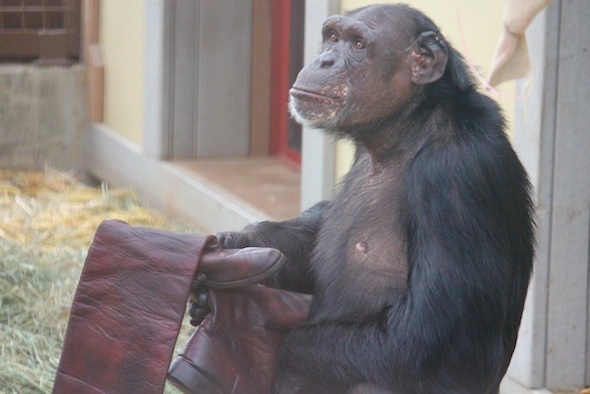
As many of you know, Jamie has a very strong personality and when she wants something she has no problem letting us know. Usually she just wants a pair of cowboy boots and we are happy to oblige. But for the last couple of months, Jamie’s demands were incessant and we could not figure out what she was asking for.
We tried all of the usual things…boots, a drink from the hose, a magazine to flip through, more boots…to no avail. We’d bring out entire bins full of enrichment and take each piece out one at a time looking for signs of interest, but our efforts only made her more frustrated. As caregivers, we felt like failures.
Somehow we stumbled upon the answer. And when I tell you what it was, you’ll see why we had so much trouble figuring it out.
She wants us to wear cowboy boots.
And walk with her.
All the way around Young’s Hill.
Two to three times.
And when we get back, she wants us to give her the boots off our feet.
The primate behavior textbooks we read in school did not prepare us for this.
Chimpanzees are incredibly intelligent and they have strong individual preferences. Add to this mix a childhood in the unnatural environment of the lab, circus, or human home and you end up in a strange place. All chimpanzee caregivers will tell you of a chimpanzee they know with an odd predilection – the chimp that demands that the TV be turned on when Oprah comes on at 3pm or the chimp that will only drink a specific brand of tea. Chimps that like Halloween masks or particular types of hats or Sponge Bob Square Pants pillows.
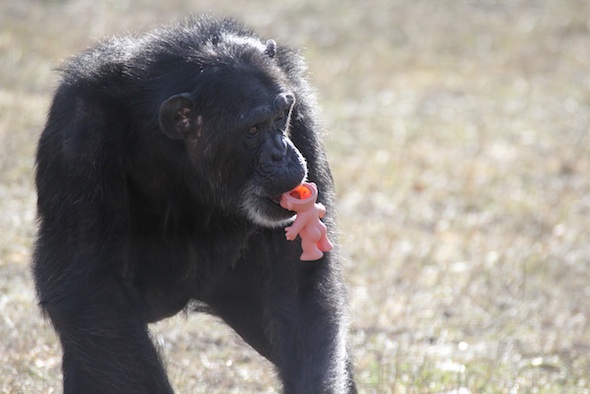
When you think about it, this strangeness is a window into a complex, creative mind that is caught between two worlds. Biologically, they’re all chimpanzee, but mentally and culturally, they’re not quite chimpanzee and not quite human. We do what we can to bring the “chimpanzeeness” out of them, but at the same time we can’t deny their histories. So we dance for Negra. And we run around with troll dolls in our pockets for Foxie. And now, we run laps around the enclosure in the ugliest boots you have ever seen.
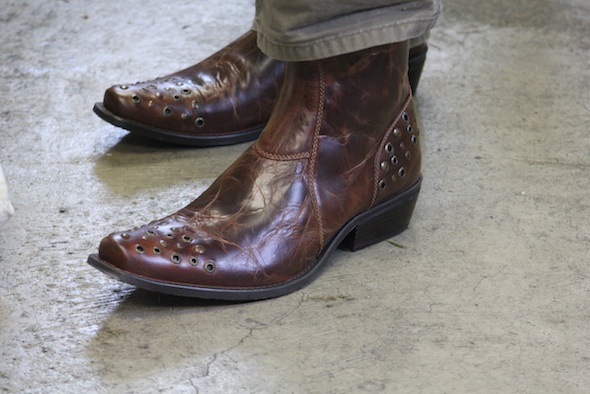
Don’t judge me:
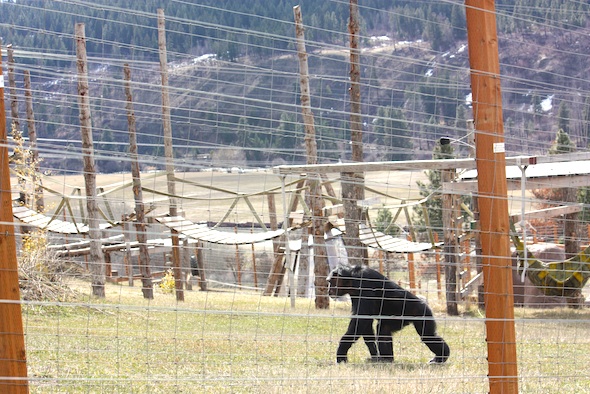
Off we go:
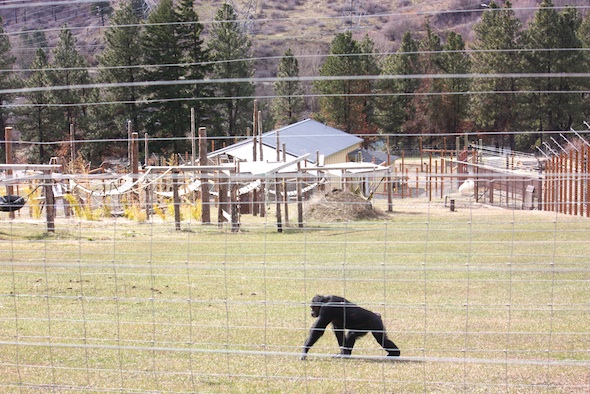
You would assume that Jamie has fun doing this, but there’s no smiling or laughing. It’s all business:
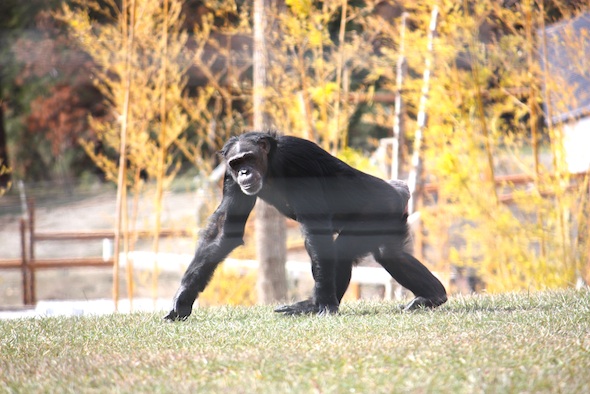
Once and a while she glances over at us or, more specifically, the boots:
Once we get back, the boot is given back to its rightful owner and the game is finished…for a little while, at least:
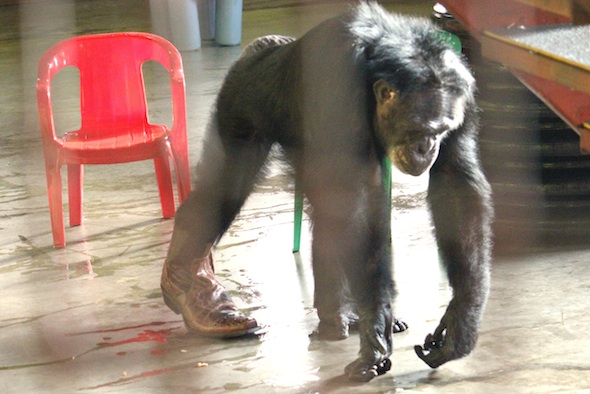
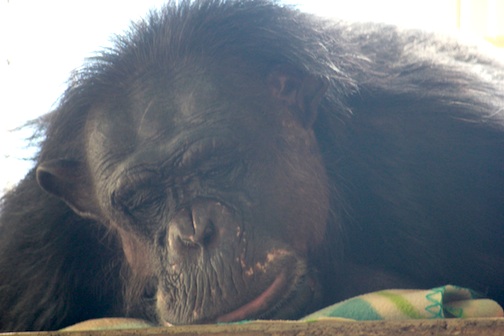
Due to their size, Negra’s lips are strongly influenced by the earth’s gravitational forces. As the day wears on, it gets harder and harder for Negra to resist their slow, inevitable descent.
Stage 1: Wide awake
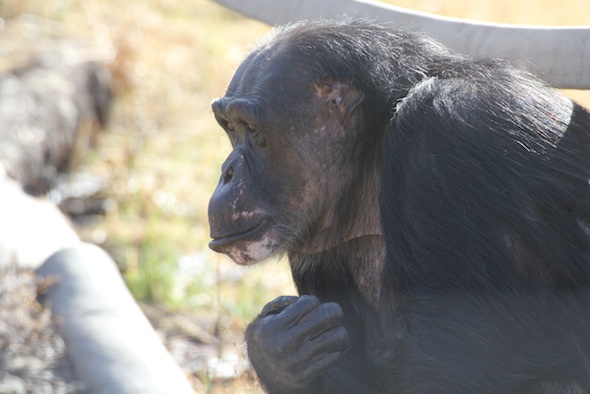
Stage 2: It’s been a long day
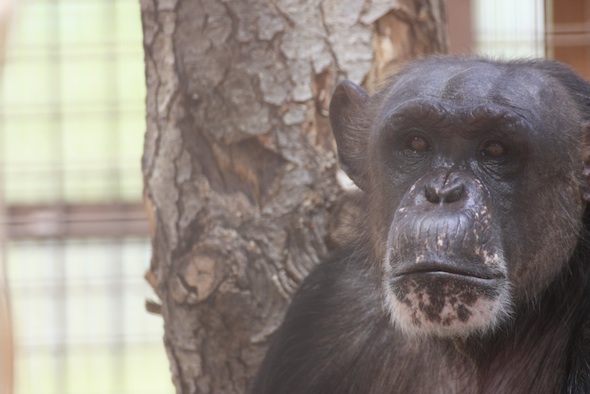
Stage 3: I could really use a nap
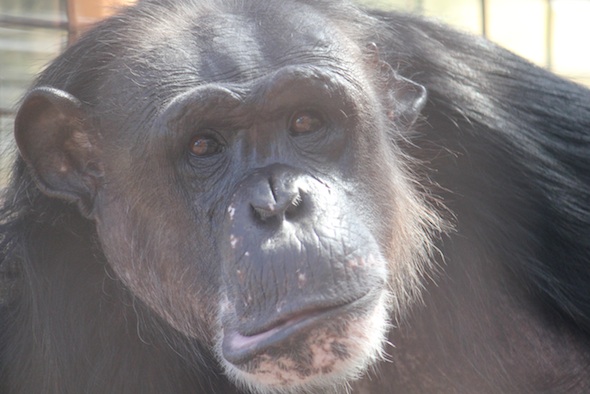
Stage 4: I’m just going to rest these here for a minute
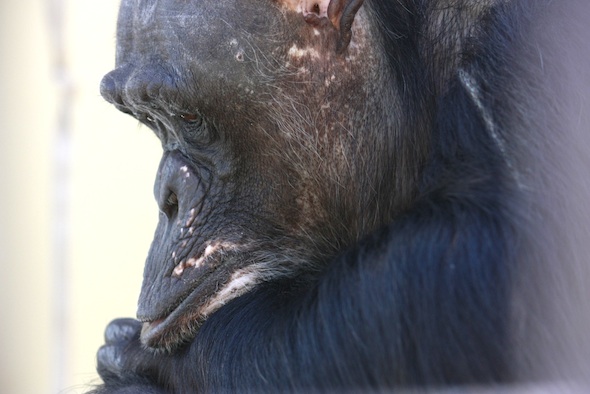
Stage 5: Goodnight
Every once and a while, our neighbor’s horses escape their pastures and come over to the sanctuary. I like to watch the look on their faces when they see the chimps for the first time. It goes from interested to confused to frightened in about five seconds.
I think the chimps enjoy engaging in territorial behavior from time to time. CSNW is different than most other chimpanzee sanctuaries in that we have only one group and they are together at all times. They never see or hear other chimpanzees and therefore they rarely have a reason to defend their territory as a group or to patrol the boundaries of their enclosure. But occasional visits from wild deer, stray dogs, and escaped horses and cattle keep them on their toes.
Jamie, being the alpha that she is, seems to live for this kind of thing.
This has been a long, snowy couple of months. But at last, the sun is out and the snow is gone…at least for now. The chimps have been celebrating this week by running, spinning, leaping, and climbing all over Young’s Hill.
OK, not everyone ran. Jody walked. But it was a brisk walk.
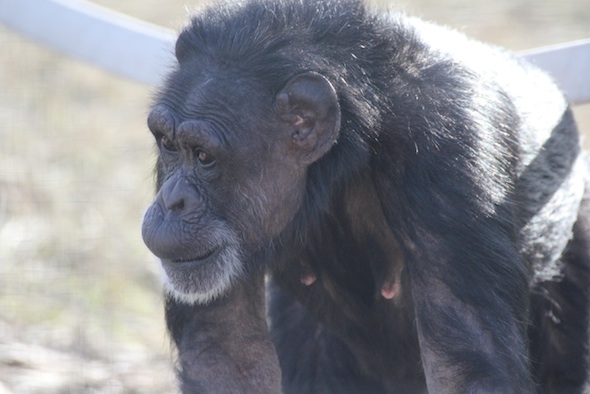
Foxie brought along a troll. Dora had to wait inside.
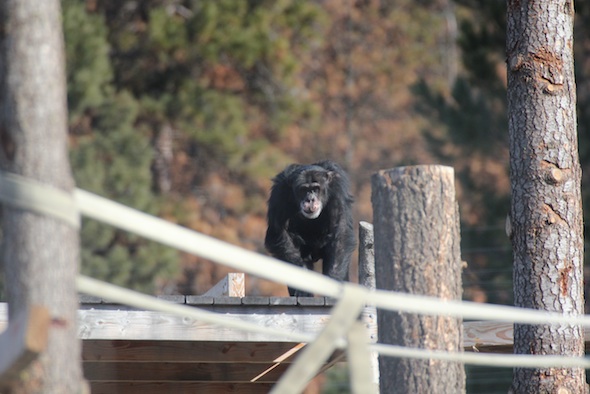
Burrito was all over the place, which is still so exciting to see. He soaked in some sun in Negra’s Cabin.
And climbed from platform to platform.
Negra even spent some time outside in the sun this morning but you’ll have to take my word for it. We don’t often get photos of Negra when she’s out because she doesn’t seem to tolerate the paparazzi the way the others do.
Missy and Annie chased each other over every inch of the hill, smiling the entire time.
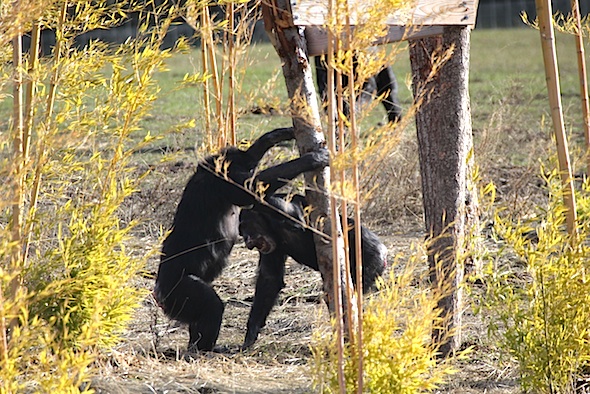
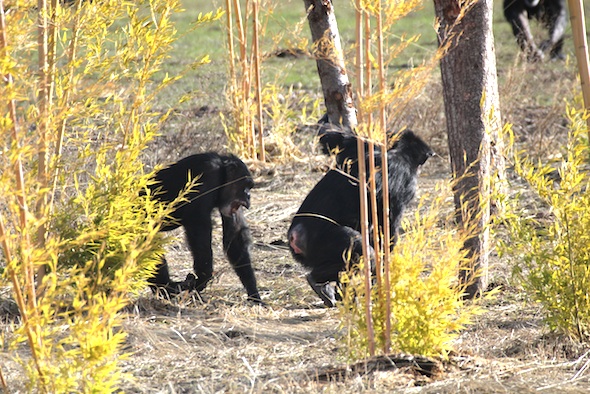
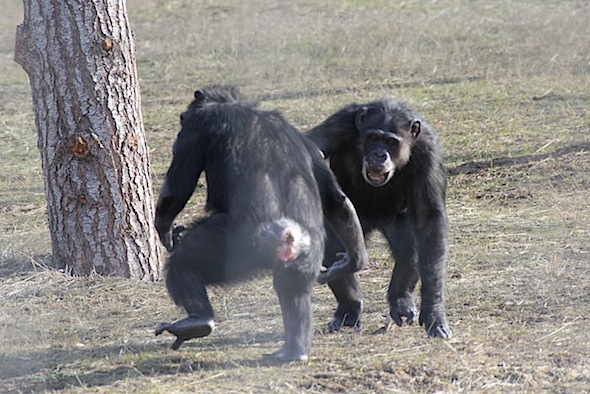
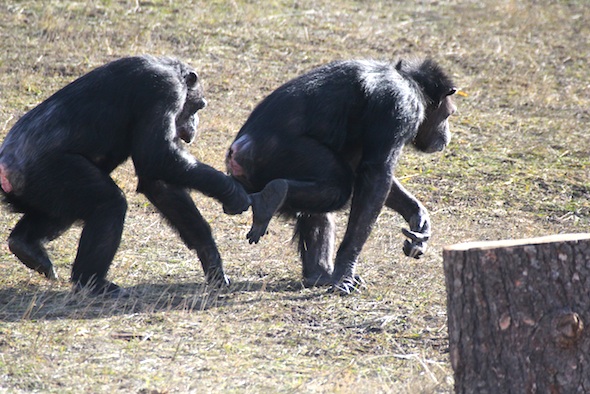
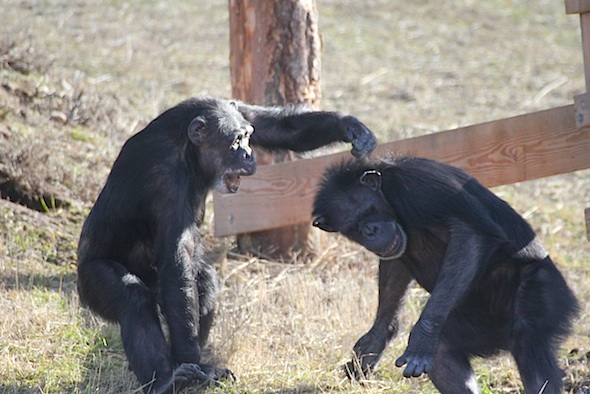
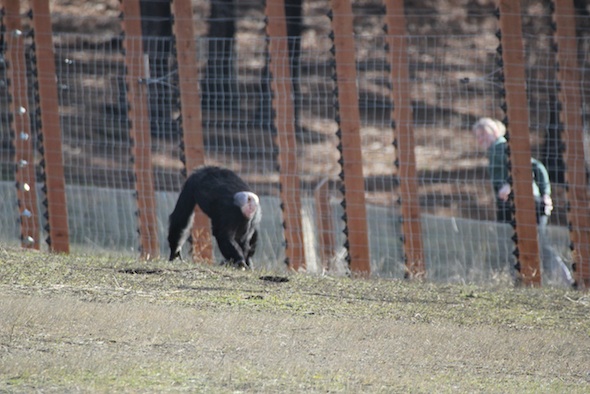
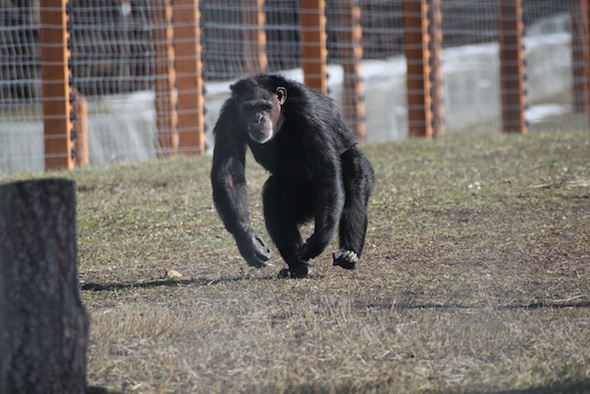
I don’t know why Jamie doesn’t engage in this kind of rambunctious play outside. For whatever reason, she prefers to have the staff and volunteers chase her around the hill when she wants to blow off some steam. Volunteer Seana was happy to oblige, but she ended up with more a workout than she was expecting. Jamie first chased her clockwise around the 2-acre enclosure.
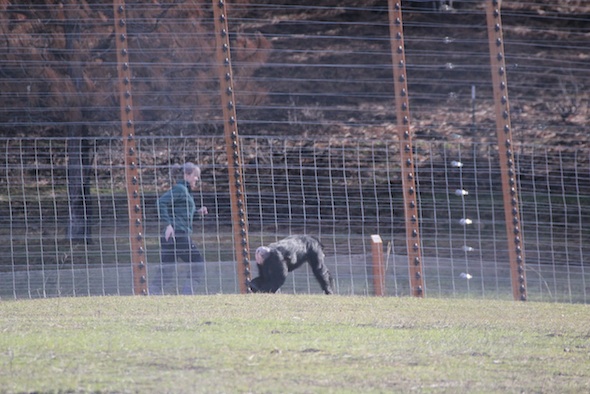
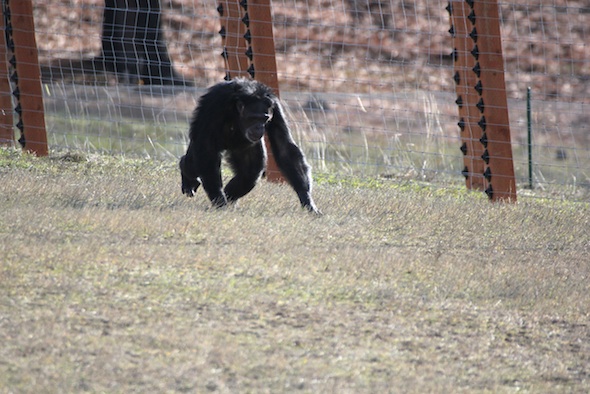
Then when they got back to the bottom, Jamie turned around and ran the whole thing in reverse. This pattern continued until Seana and Jamie were exhausted.
One of my favorite stories from Jane Goodall’s book In the Shadow of Man was the story of Mike.
Mike was a small, low-ranking male who was continually threatened and attacked by higher ranking chimpanzees until the day he discovered a pair of empty kerosene cans at the research camp. By banging the cans together, Mike’s displays made a sound that none of the other chimpanzees had heard before. Imagine hearing the clashing and booming of metal on metal, when even the toughest chimpanzees were stuck shaking branches and throwing rocks. Mike may not have had the size and strength of Goliath or David Graybeard but he was clever – clever enough to rise to alpha male and remain there for six years after his first kerosene can display.
I see a lot of Mike in Jamie. While Jamie is by no means small, she clearly knows how to use objects in her displays to her advantage. While Burrito runs around clapping his hands, Jamie shows him how it’s done.