One benefit of the ultra softness of Squishmallows, other than using them as pillows, is they make a great weapon in a Squishmallow fights! Just ask Annie and Missy!
Bonus Photo:
Chimpanzee Sanctuary Northwest
Hope. Love. Home. Sanctuary
One benefit of the ultra softness of Squishmallows, other than using them as pillows, is they make a great weapon in a Squishmallow fights! Just ask Annie and Missy!
Bonus Photo:
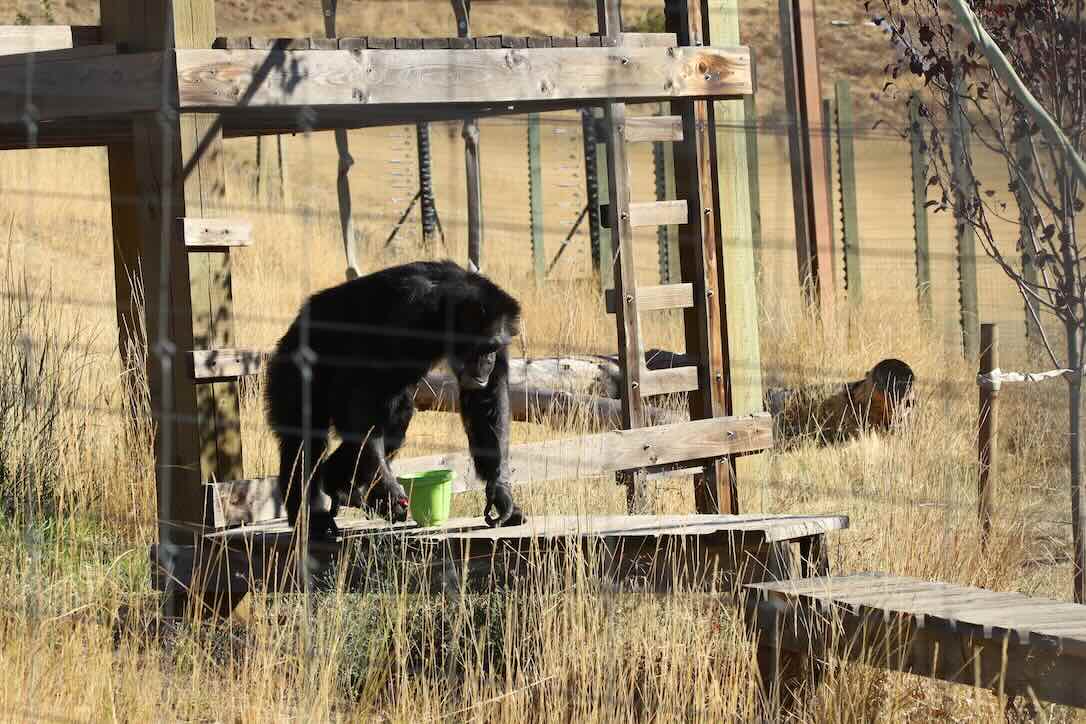
The Pacific Northwest is currently under an atmospheric river. No need to fear for our humble sanctuary though. Being on the high ground has it’s advantages. Atmospheric river or not, it still hasn’t stopped the chimps from going outside.


Though the rain isn’t finished and we have several more days in the forecast, I just really wanted to celebrate and applaud my fellow staff members and volunteers who braved the floods and mudslides to make it in today. I know to them it may not seem as much, but it’s the world to the residents here. I have met some pretty gritty people in my life, but the caregivers here, both staff and volunteer, are exemplary gritty. Braving the down pours, floods, walking through the mud and muck around the sanctuary, I admire each and every one of you and all that you do for the chimpanzees, cattle, and each other.
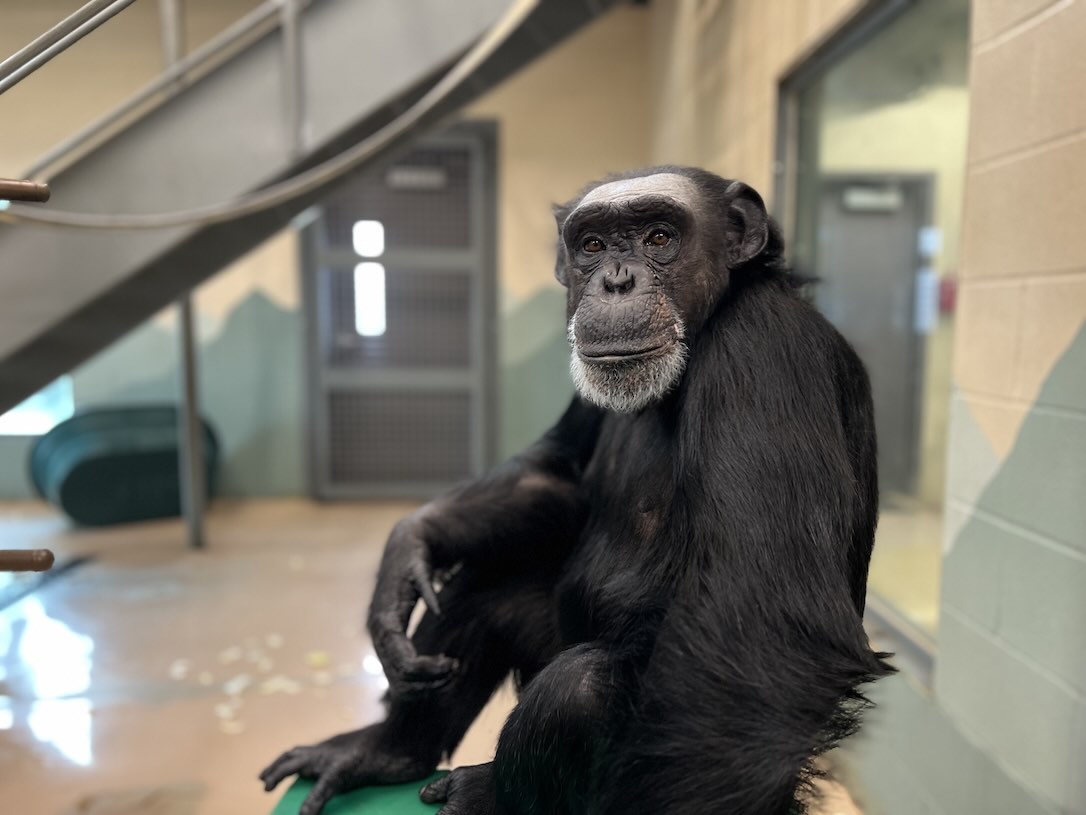
And one last photo of one the the most handsome individuals you could ever meet for good measure:

We are ch-ch-chuggin’ along with integrating George into a larger social group. Today marks another milestone in that goal. Rayne has now moved in with George and Cy permanently. This part of the introduction has gone pretty good so far, though it did have some of the challenges mentioned before in other meeting George had with Rayne. There had been some brief conflicts between them, with Cy acting as mediator. The only real time we have seen Cy “take a side” was when George lashed out at Cy for a minute, which really wasn’t taking a side as much as it was defending himself. Chimp politics, amirite?
But since then, the three have made up and we have caught them playing with each other at various points in the day.
What was the miscommunication? I’m not sure, personally, but they know. Which brings up on of the questions we received from last week’s invitation for questions.
One of our long time followers, Kathleen, had asked about my perspective on the role gestural communication plays in this integration process with George. In my view, it plays a pretty significant role.
As you may remember, for most of his life, George has lived with one other female or completely alone. There are several different theories on how gestural communication is acquired, but really they learn it primarily from their mothers and the community they grow up in. And chimpanzees are remarkably resilient in adaptation. When females leave their group when they become of age to bear children, they will adjust the gestures they have learned growing up to match that of the new group that allows them in.
Why females? Chimpanzees in the wild live in a patriarchal society, meaning the males stay in the groups they are born into and the females leave to ensure the gene pool remains diverse enough to successfully reproduce.
One of the things an advisor on my thesis committee told me when I questioned why it’s easier to study the older male population compared to younger chimpanzees or females is because the older males are just that. Stubborn, “not going to change my ways,” old men. So their gestures are going to be the best representative of that group’s gesture repertoire.
That being said though, George is still a vibrant young man and is learning how to communicate with his new friends. This is my own personal opinion and not supported fully by any research, but I believe there is a basic blueprint to some gestures, but how it’s produce and the meaning it takes on is based on the environmental factor. My apologies but I couldn’t find the reference quick enough for this blog, but there is some kind of understanding chimpanzees in accredited zoos tend to understand each other better when they move between the facilities. Unlike those in other captive settings, zoo chimpanzees get to be raised by their mother for the most part. All the behaviors they have learned have been passed down from generation to generation originating initially from a relatively small group of wild caught chimpanzees. Chimpanzees used in the biomedical field had a different type of upbringing.
To me, the biomedical chimpanzees’ situation is very reminiscent of the case if the Nicaraguan deaf children who spontaneously created their own sign language. It’s a fascinating case study I encourage you all to read. If you ever find it, there is also a really fun game called “Sign” that is based on it where you have to create your own gesture communication system with those you’re playing with. But again, it is my own personal theory backed by no formal research that those in a sanctuary setting are kind of piecemealing it together as they go. It is why I believe why there can be those misunderstandings in the beginning of introductions even though to our eyes it doesn’t seem like there isn’t any difference in the gestures they use with each other.
In this little example, you can see Rayne doing her group’s infamous “bunny hop” trying to get George to engage in play. It also seems like George is misreading it as a display so he is displaying back by trying to look bigger and hunching his shoulders over.
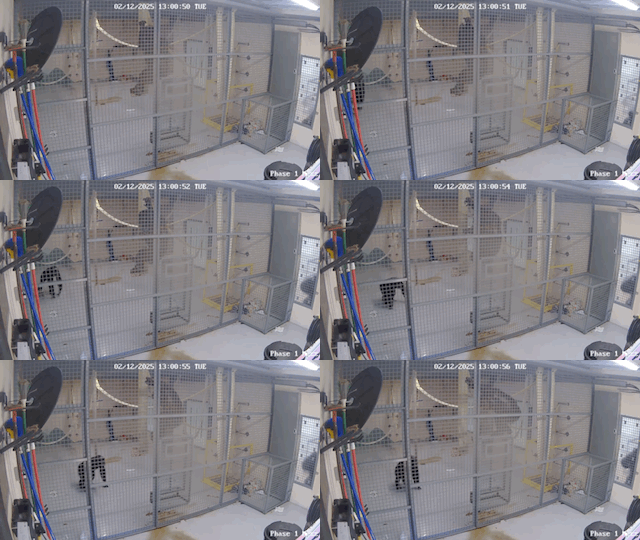
Luckily enough, in this instance, George picked up that Rayne’s intention was non-threatening so he engaged in a game of chase.
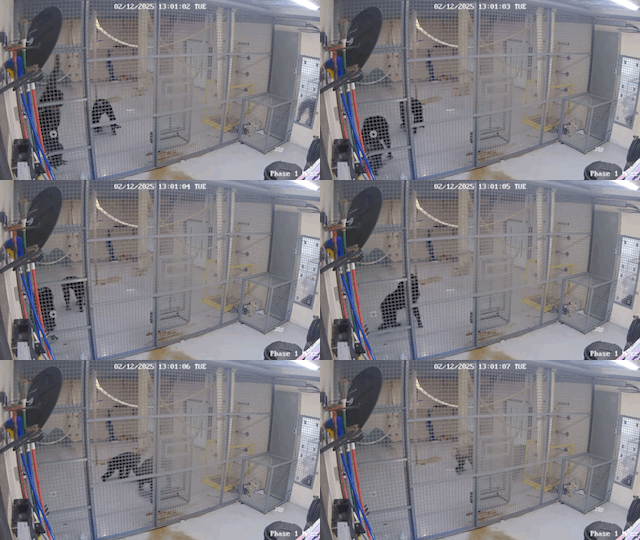
This next little clip is when I interpreted as evidence of George learning and adapting. The little “knocks” you see him doing to get Lucky to play don’t seem like much. If you were to ask any of the caregivers where they have seen this move before, however, there is a high chance they would respond, “Gordo.” That’s an almost exclusive Gordo move. We have not seen George do this until recently and after a recent intro with Gordo.
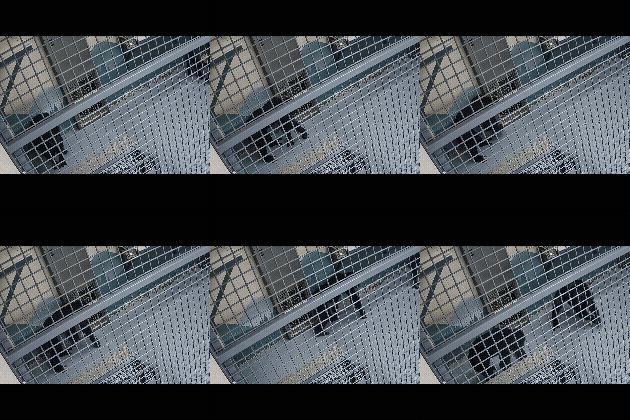
I cannot definitively confirm this because I am not George and can’t tell what he was thinking, but if I had to guess he picked it up to help himself be better understood by Lucky, who lives with Gordo. Again, that is my own guess.
Today is also Giving Tuesday! There is still time to help us reach our goal to help build a new support building for staff to work in! Any little bit gets us closer to helping us fully bring the expansion of our facility to reality!
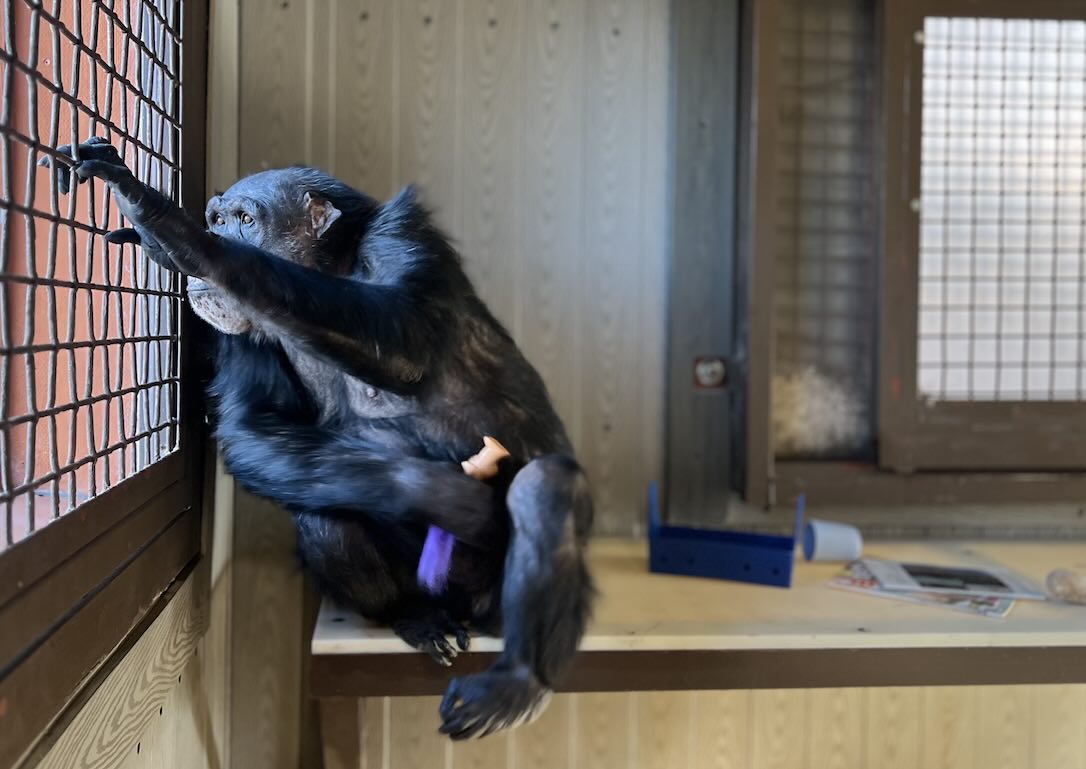
Bonus Photo of Negra coming in for lunch with a purple-haired Troll!
When we post the daily blog, the comment section are usually peppered with great questions you have, our beloved followers. Whether it’s about the chimpanzees’ personalities, the caregivers’ work, the ongoing introductions, medical procedures, and a vast array of other topics, you always ask great, sometimes hard-hitting, questions. It has been a long while since we have done this, but we would like to extend a warm invitation for any and all questions you may have. We will try to answer your questions as a blog topic of discussion to hopefully really answer your questions as detailed to the best of our abilities. I fall in the category of people who think there is “no dumb question” as it relates to the sanctuary, the chimpanzees, primates in general, advocacy, etc. If you’re thinking of question you’re hesitant to ask, there’s a big chance someone else is wondering the same thing. I know I probably was at some point.
Again, we will try to answer your questions to the best of our abilities or at the very least try to lead you in the right direction. You can always check out the previous call outs for questions (here, and here) if to see if any of those spark any ideas of things you were wondering.


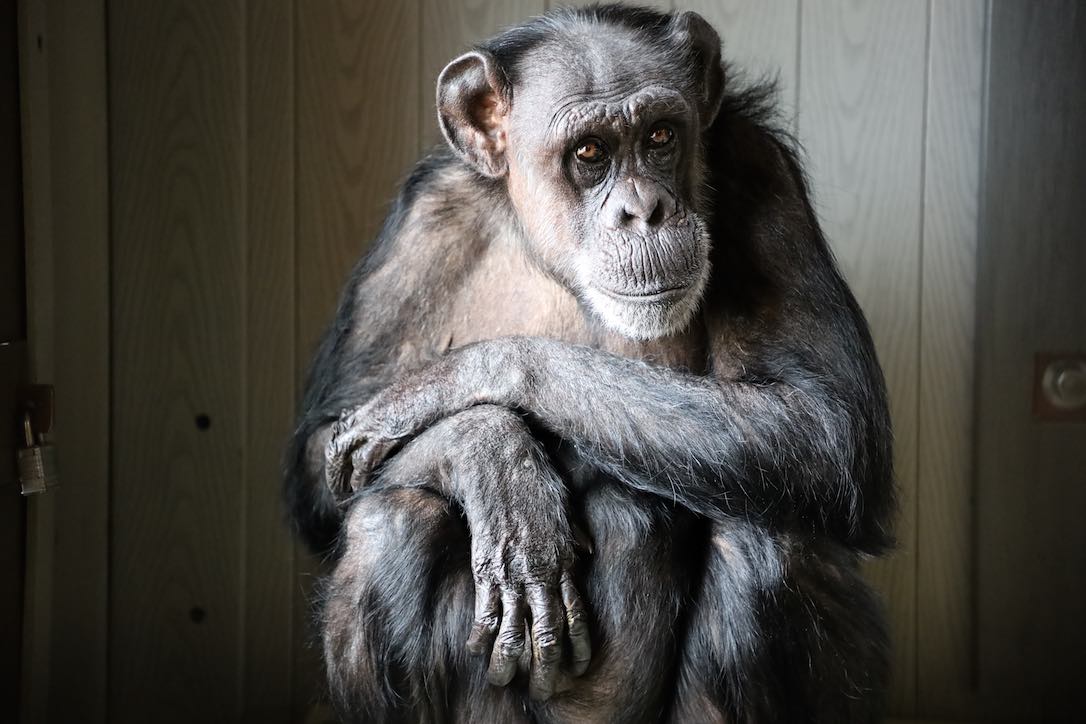
And then there was Mave…

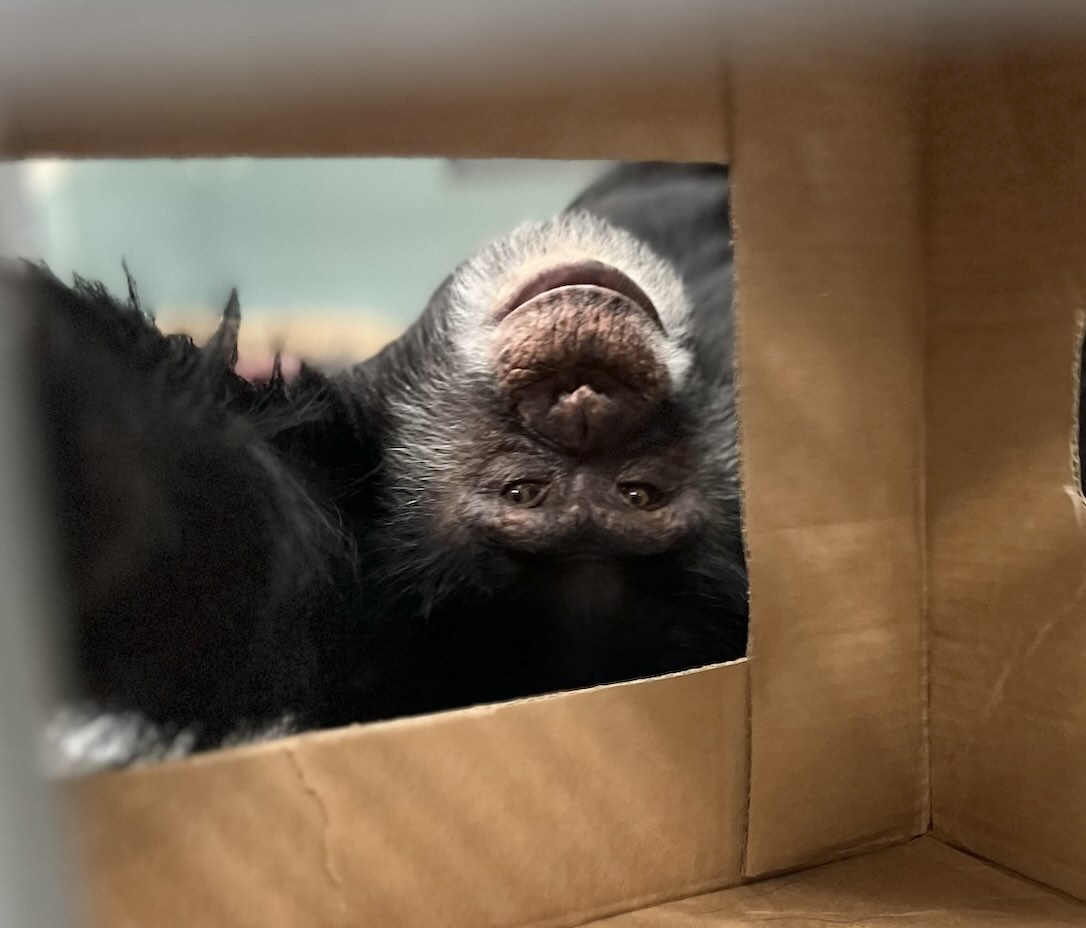


I was cleaning in the Mezzanine recently when I glanced at the window that looks into the Marmot Mountain Playroom. To my surprise, all I saw was a pair of dangling legs and white-ish sheet hanging from the ceiling. Though October, the traditional Spooky Season, has come and gone, this individual was not accepting of that fact. This individual clearly thinks Spooky Season is a year round celebration, like her mother.
Can you guess who the ghost of Marmot Mountain is?
There are times I wish I was able to peek into the chimpanzees’ thoughts to see what they actually are thinking. For instance, I really wish I could peek into Honey B’s mind to see what that brain conjures up imaginatively.
For the six years I have known her, watching her has always been intriguing. If you were able to watch her almost every day, you too would understand that mind is running on all cylinders at all times. From the luring in of unsuspecting caregivers to spit in their face, to the placement of toys in places to mess with daily shifting, to her strategic placement of items when she is building her nests, and yes, to some how figuring out how to steal a hose while the caregivers were away.
I was spending time with her in the afternoon while she was in the mezzanine. She was specifically in the area commonly know as “the cubby.” If there is an spot in her areas that she without a shadow of a doubt love, it’s that little spot. She was in such a playful mood (with me at least), spinning around on her back, making her little grunts of happiness that serenades my ears. She reached outside her area, grabbed a purple blanket and drug it in. Draping it over her head, she grabbed two corners and held them up into the cage mesh.

It looked like a little tent or fort. Honey B then invited me to come closer. It was like we were both playing a little game of “fort,” which she seemed to think was fun.


It was really reminiscent of being a child again, playing fort and telling secrets. And as it happens somewhat frequently, I missed a grand opportunity. I was telling my friend about it, to which they asked if I had a blanket on hand to complete Fort B. Unfortunately, I did not since I had not anticipated this fun little game. Next time though! (Hopefully there is a next time.)

Side note: here is Honey B’s mother, Missy, utilizing a fort during “Blanket Fort Day.” Missy was enjoying her food puzzle and watching that young whippersnapper, George, as he was on the Bray earlier.

*Bonus Photos*


What is personhood? What is a person? Who deserves to bear those titles? It’s an argument that is fought for several years.
If you follow other NAPSA sanctuaries online, then you might be familiar with some cases that have taken place that paved the way for certain individuals to call a sanctuary home. There’s Sandra at Center for Great Apes, who in 2019 was granted rights as a “non-human person” in Buenos Aires, Argentina. In that case, the judge granted the basic rights of life, freedom, and a premise of “no harm” either physically or psychologically to Sandra and soon thereafter she made the trip to Florida.
Unlike Sandra, Leo and Hercules didn’t win their case to have habeas corpus granted to them, though they did make their way to Project Chimps afterward. In the United States, the fight to grant chimpanzees (or any species really) rights as a living being is a tougher fight. What seems to be the main sticking points are; does a “person” mean “human” and does a “thing” mean “everything else other than human whether it be living or inanimate?”
The reason this came to my mind is because there was a hearing in Michigan today about this very topic. There are currently seven chimpanzees who live at DeYoung Family Zoo. Animal rights organizations have been pleading their case to have these seven be transferred to an accredited sanctuary (Note: I just want to make it clear I am not talking about us.). The route they have chosen is to take the case of non-human animal personhood to court. The ruling on this hearing is still pending as I am writing.
In the U.S., there are two legal categories that fall under the law: persons and things. In a sense, this particular fight is if chimpanzees are persons or things. There is a great reference book called “Chimpanzee Rights: A Philosophers’ Brief,” which dives pretty deep into this argument. If you would like to read more about it, I would recommend that book. It breaks down the arguments for and against for considering chimpanzees as persons in a language I wouldn’t ever to be able give justice.
I am by no means an expert on this case and don’t know the full, complete details regarding those chimpanzees and their situation. But I know in my heart of hearts, chimpanzees are more than mere “things.” They are not simply property that can be sold or traded. They are smart. They are curious. They are complex. And yes, they also can be goofy. They can make their own choices and their own decisions in a way that mirrors humans. They can send signals, whether it be vocal, gestural, or just simply body posture, and reversely, they can receive those signals as well, even from us humans. They are brave. They are fearful. They are confident. They are anxious. They may not be human, but they are people.
Now, for what I’m sure most of you came here for: photos from the day!