• Skip to main content
  • Skip to primary sidebar
  • Skip to footer

Chimpanzee Sanctuary Northwest

Hope. Love. Home. Sanctuary

  • Our Family
    • The Chimpanzees
    • The Cattle
  • Blog
  • About Us
    • Visiting the Sanctuary
    • Philosophy
      • FAQs
      • Mission, Vision & Goals
      • Privacy Policy
    • The Humans
      • Staff
      • Board of Directors
      • Founder
    • Annual Reports
    • The Future of CSNW
    • CSNW In The News
  • You can help
    • Donate
      • Become a Chimpanzee Pal
      • Sponsor A Day
      • Transfer Stock
      • Be A Produce Patron
      • Be a Bovine Buddy
      • Give from your IRA
      • Personalized Stones
      • Bring Them Home Campaign
    • Leave A Legacy
    • Employment Opportunities
    • Volunteer
    • See Our Wish List
    • Events
  • Resources
    • About Chimpanzees
    • Enrichment Database
    • Advocacy
      • Advocacy Action Center
      • Apes in Entertainment
        • Trainers
        • Role of the AHA
        • Greeting Cards
      • Chimpanzees as Pets
      • Roadside Zoos
      • Chimpanzees in Biomedical Research
      • Conservation
        • African Apes
        • Orangutans
  • Shop
    • Merchandise Store
  • Contact
  • DONATE NOW

Archives for September 2022

Happy Birthday, Meredith!

September 23, 2022 by J.B.

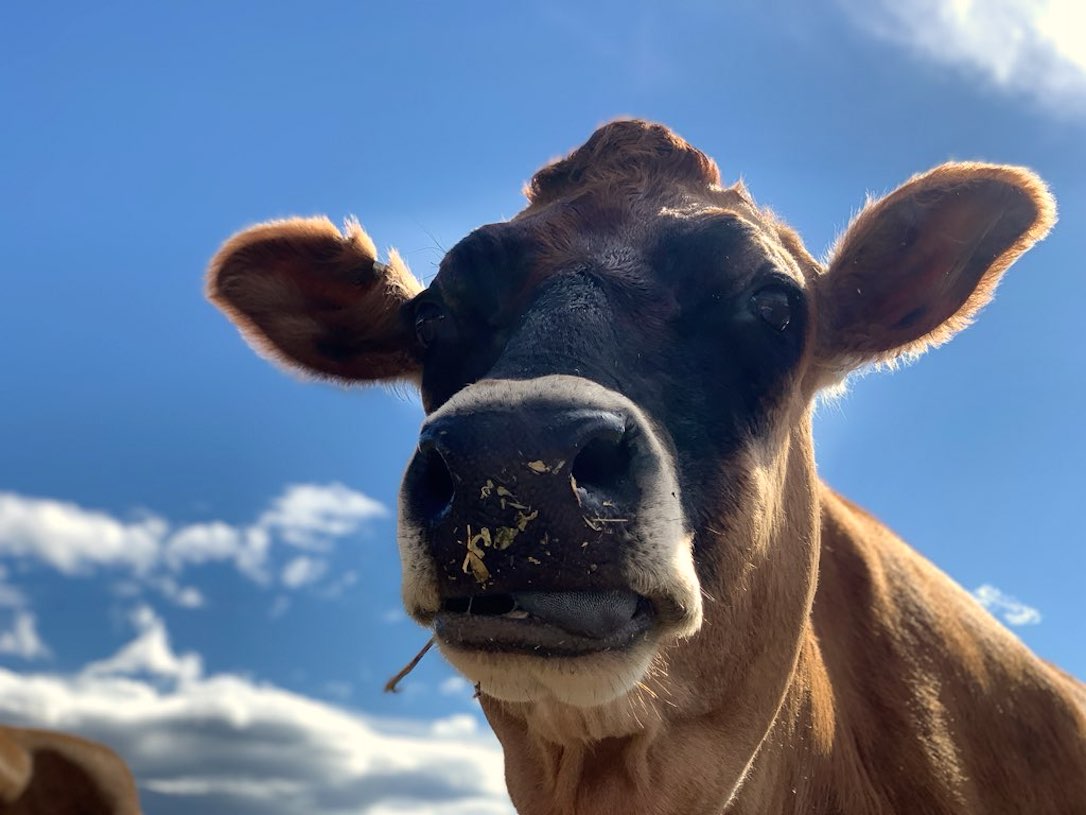
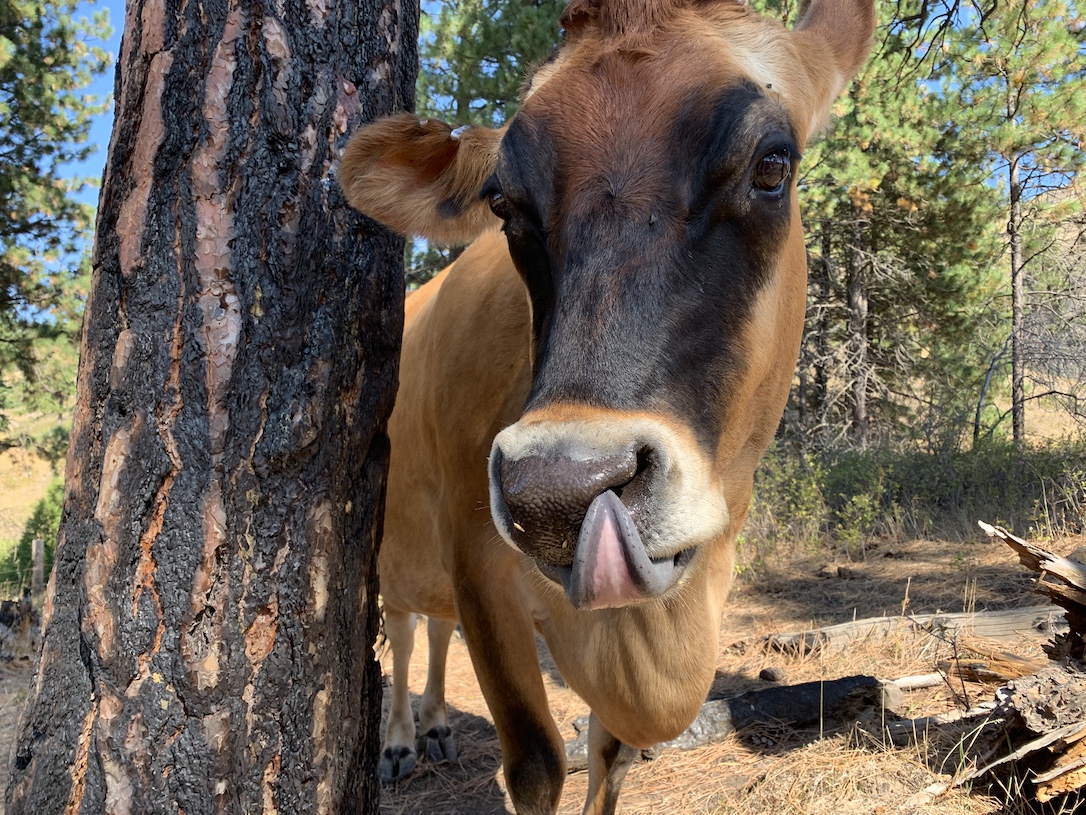
Meredith turns 7 years old today! Many thanks to both Paulette and to Tobin for sponsoring this day in her honor.

Our post office has been out of commission for the last week, but we got Tobin’s letter for Meredith just in time.

Here is Tobin’s personal message to the birthday bovine:

Dear Meredith,

I wish you a happy 7th birthday. I am very glad you, your mother, your Aunty Betsy, and the Dude with the Hairdo are residents of the sanctuary.

As you may have noticed, there is some construction going on near your meadow. The humans are configuring the acreage where your chimpanzee neighbors live. In addition to Willy B (you know, the singer and drummer) and the seven who were living here (including Jody, who joins Willy and me in sponsoring you) when you moved here four years ago, there are eight new chimpanzees who have taken residence. Some of them haven’t been outside yet. It is hoped that they will finally step out into their new enclosure soon.

If you follow the CSNW blog, you’ll remember that one of these new chimps – CY – reacted with fright in seeing a photograph of Betsy and Nutmeg. I doubt that his reaction was anything personal – I would assume that Cy simply wasn’t familiar with cattle despite his copious reading habits.

Hopefully, once Cy starts exploring the outside and looks across the pasture and sees you and your herd, he’ll figure out that you are a perfect fit for your immediate surroundings, and appreciate having you as a next-door neighbor.

If, however, Cy barks or screeches out some harsh words in your direction, simply moo back to him, “So, have you read any good magazines lately?” That should resolve any conflict.

Meanwhile, I wish you a happy birthday.

from your Bovine Buds, Tobin, Jody, and Willy B


This afternoon, Diana gave the herd a little extra alfalfa to celebrate:
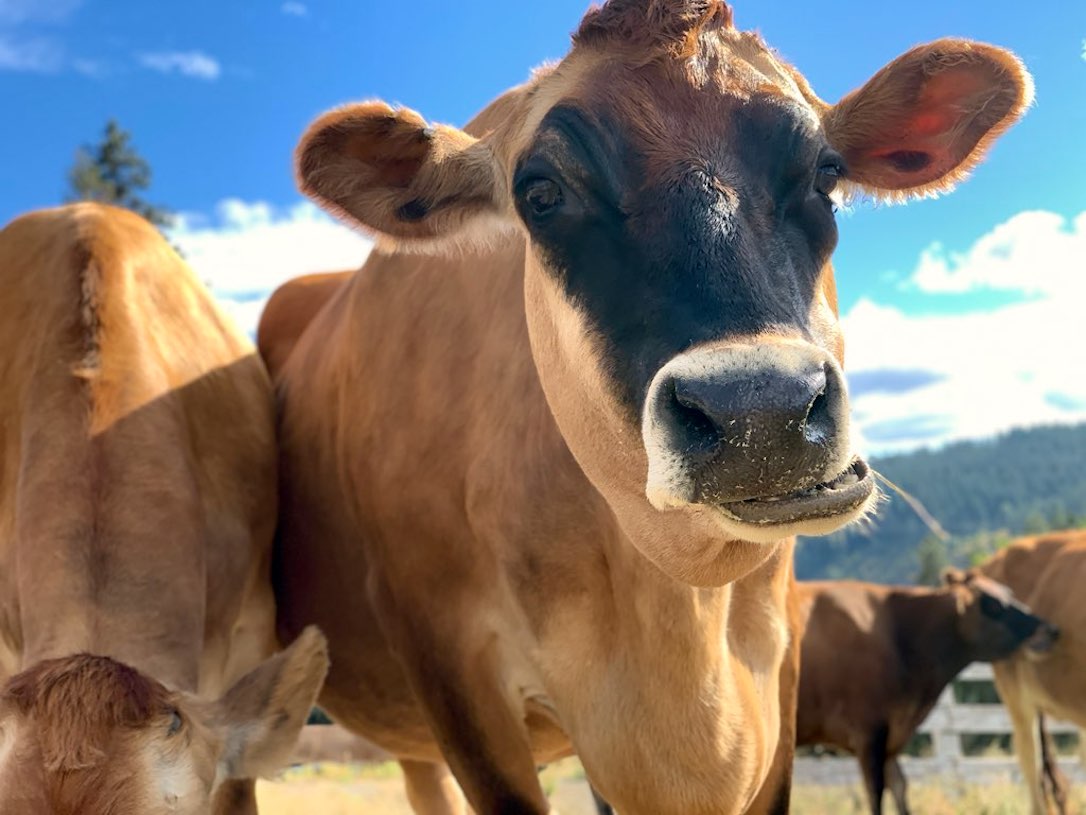
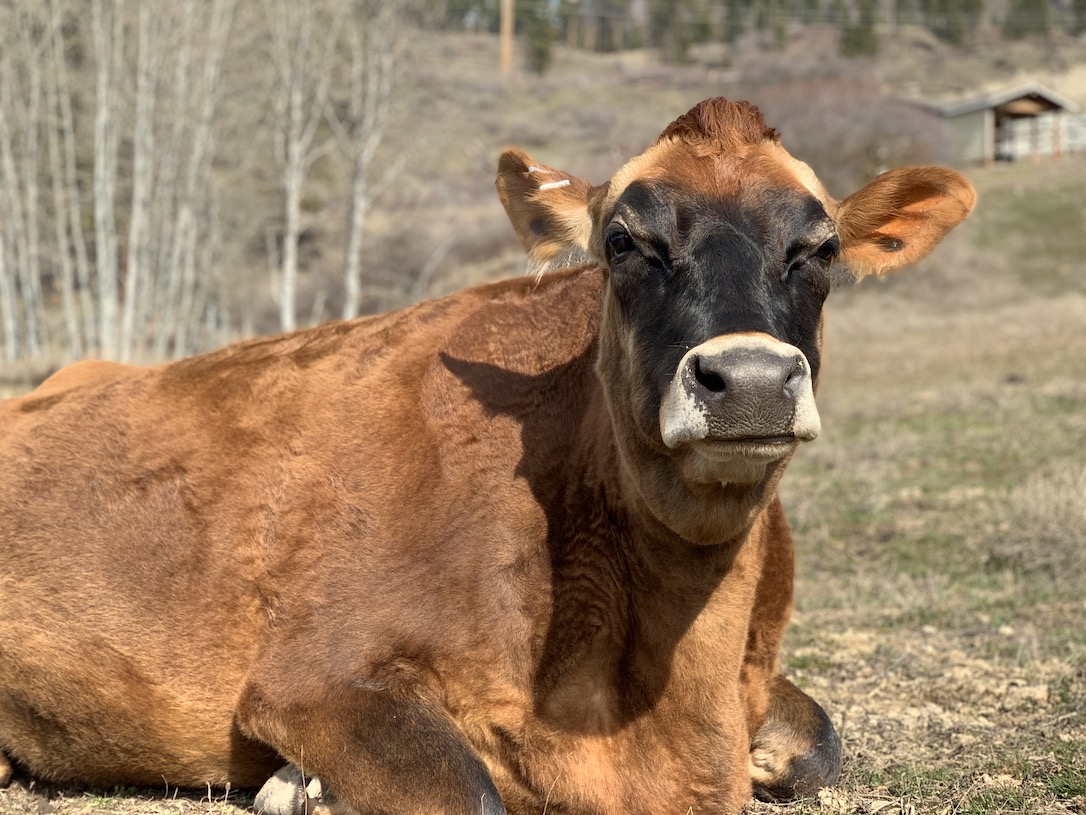
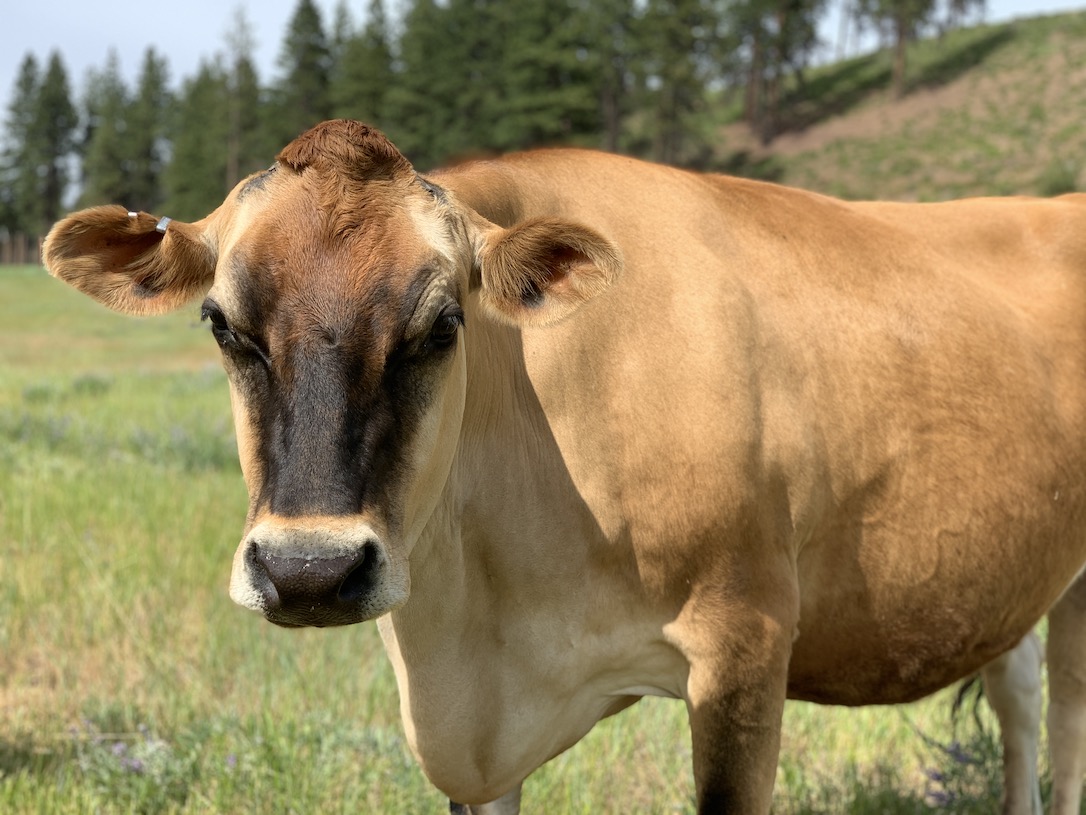
Here are a few other photos of the birthday girl that I’m fairly sure we haven’t posted before:
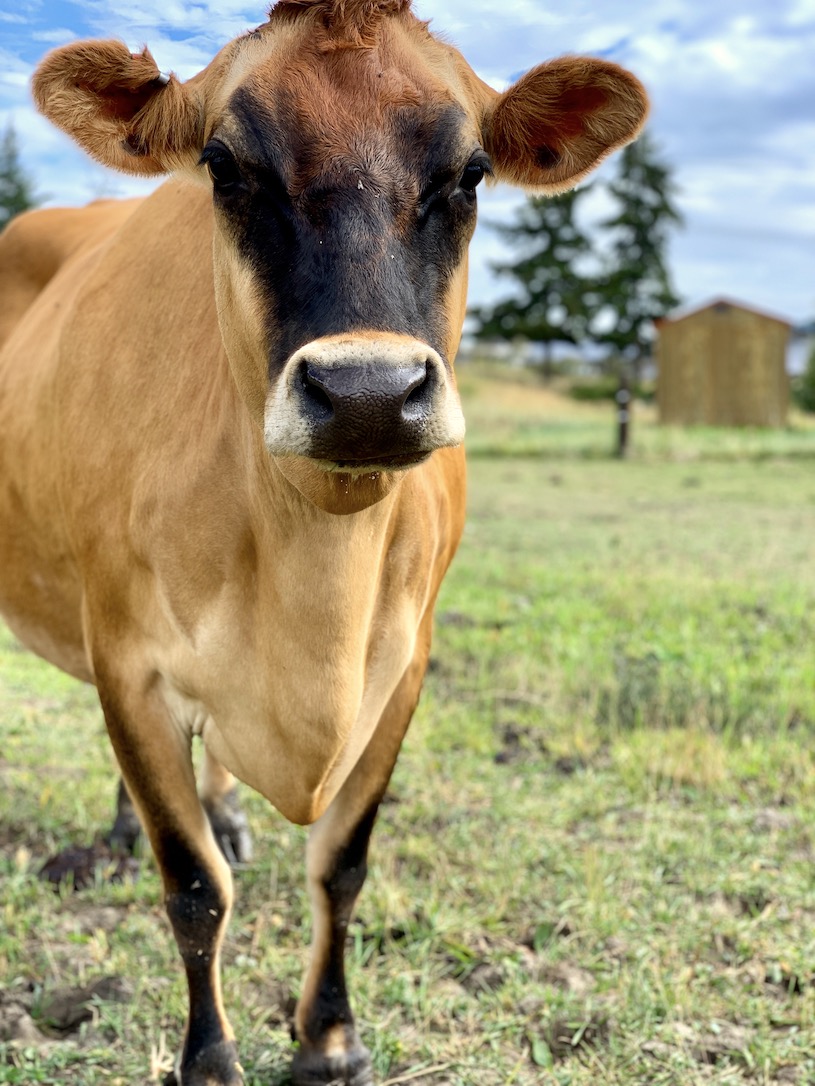
Check out that winter coat!
You can learn more about Meredith and her bovine family here. And for pictures of BABY MEREDITH (!), please visit this page from our friends at Farm Sanctuary.

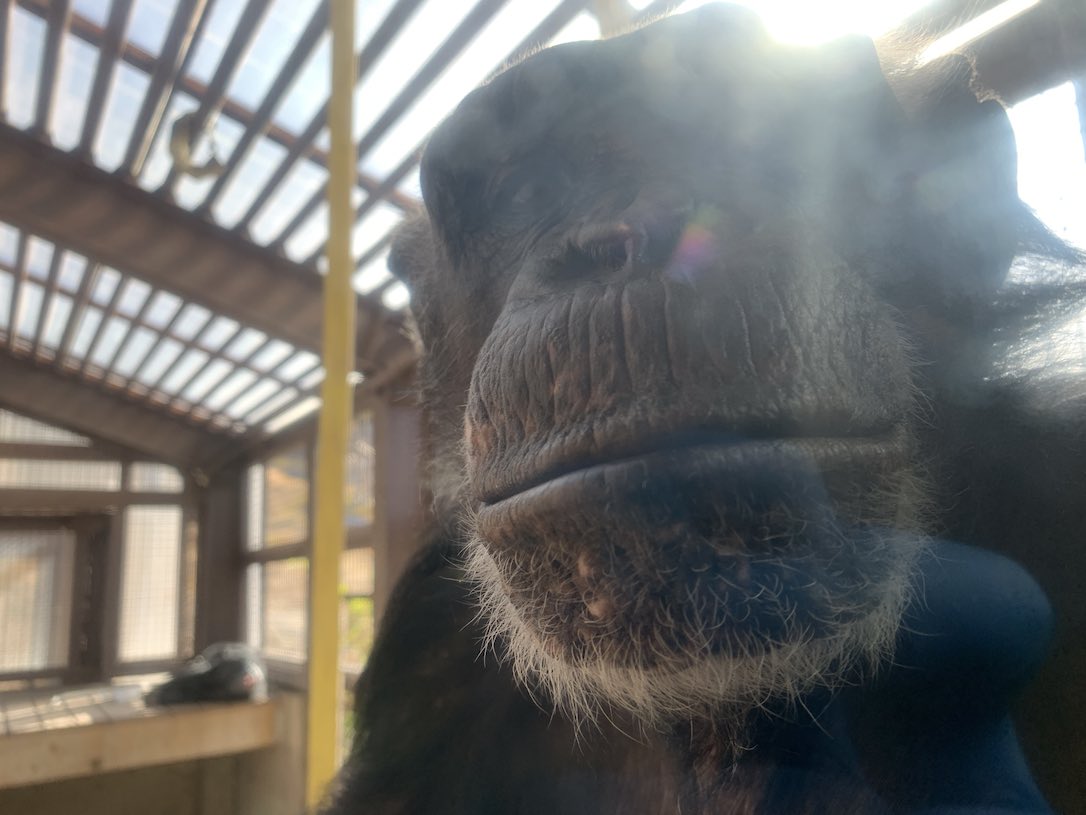
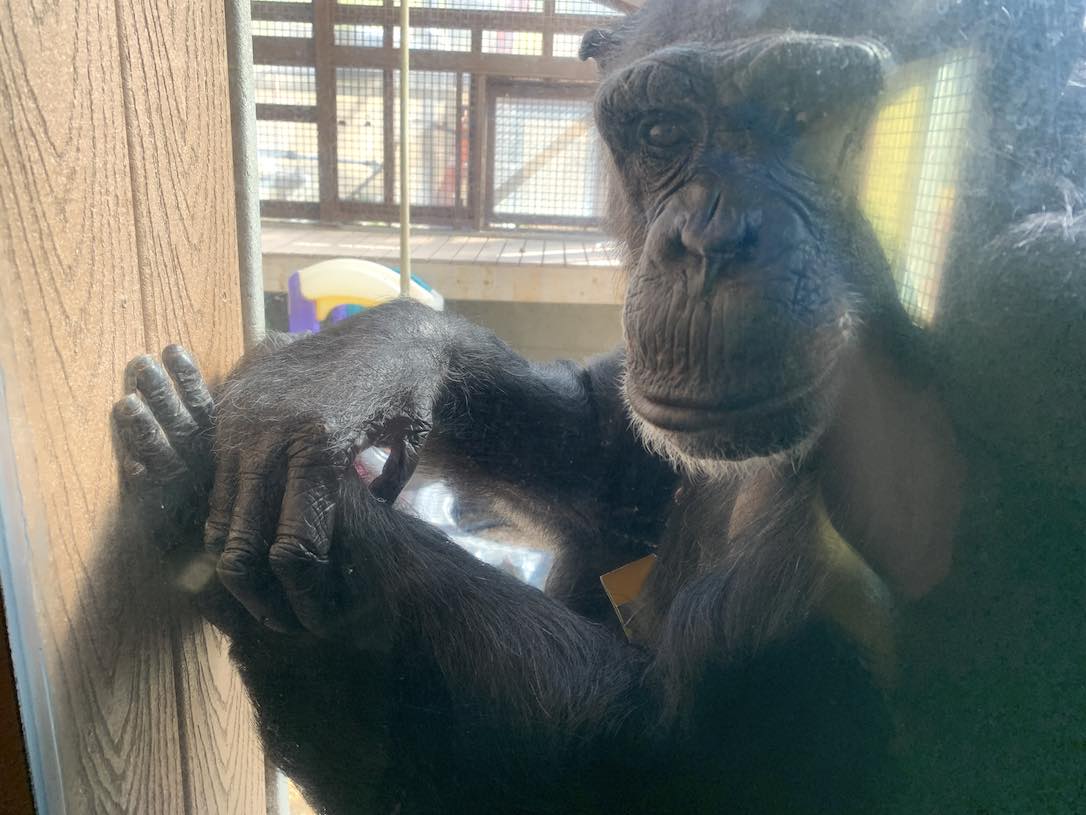
And as always, you can help support the daily care of the cows and chimpanzees by ordering from our Amazon Wish List!
Filed Under: Cattle, Meredith, Sanctuary Tagged With: birthday, cattle, chimpanzee, cows, Meredith, northwest, rescue, Sanctuary

Puzzles

September 22, 2022 by Anthony

Today’s blog is centered around a short video of chimpanzees extracting food from enrichment puzzles.

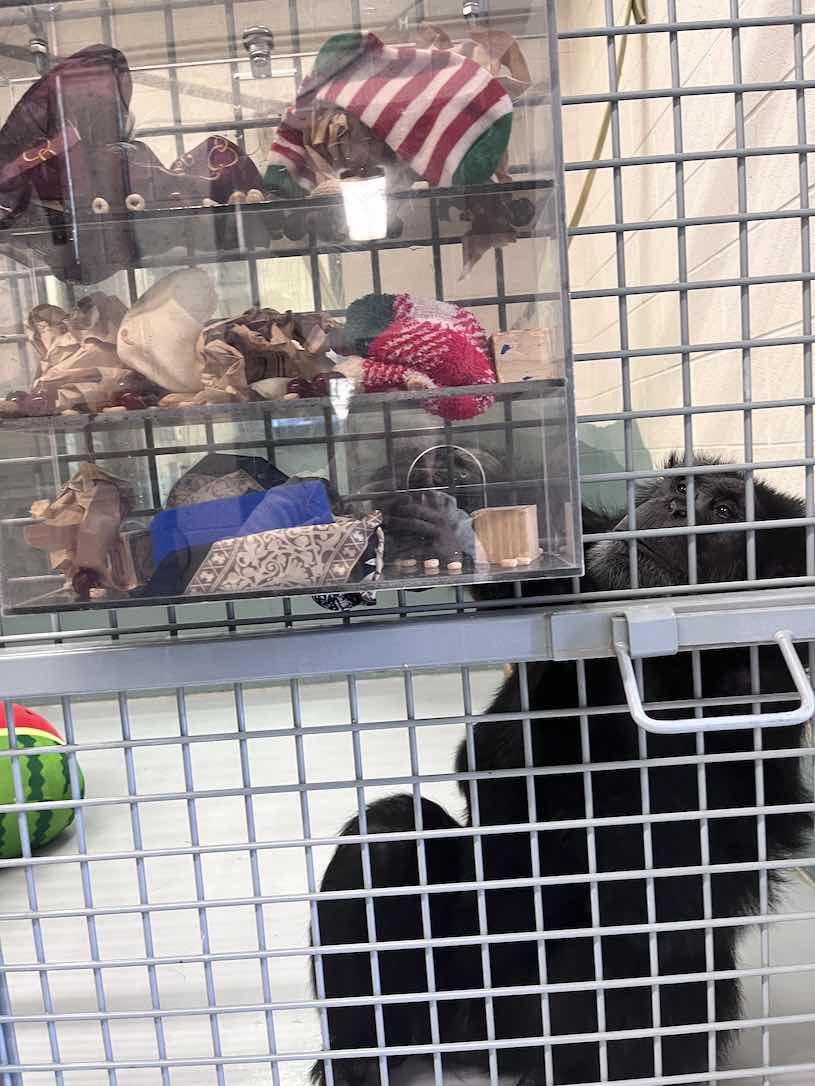
All of the chimps are given enrichment activities and items every day, but we’re giving additional enrichment to Willy B to keep him entertained while in recovery. So far, his favorite activity has been to tease grapes, walnuts, and other coveted snacks out of the transparent puzzle feeders. These specialized devices were purchased by our supporters from a helpful company, WildlifeToyBox.com. We’re always in need of more durable enrichment items, so Chad has set up a wish list on their site. You can see this special list by clicking here.

You also visit our Wish List page to learn more about our needs or go directly to the Amazon Wish List to see which other items we currently need for the chimpanzees (and cattle)!

Thank you all for your continued support of the sanctuary!

Filed Under: Chimpanzee, Dora, Enrichment, Food, Intelligence, Tool Use, Willy B, Wishlist Tagged With: Animal Welfare, chimp, chimpanzee, chimpanzee sanctuary, Chimpanzee Sanctuary Northwest, chimpanzees, csnw, Enrichment, Sanctuary

Let’s Not Forget

September 21, 2022 by Kelsi

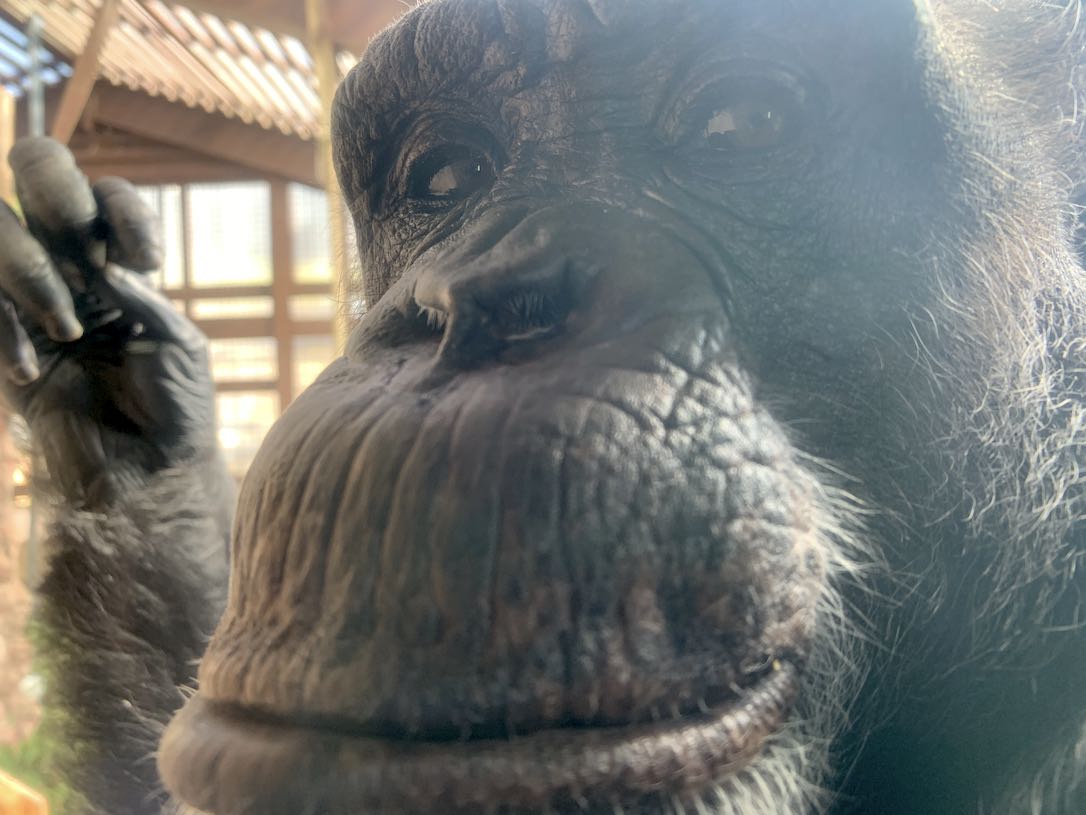
There is no rhyme or reason today, I just wanted to share that Jamie is the coolest. Jamie is so genuinely herself and she doesn’t waiver from who she is, it is something to admire. There is never a day that goes by when I don’t say out loud or in my head: “Jamie is so cool”. I just thought I would put this info right here just in case anyone hadn’t heard it in a while!

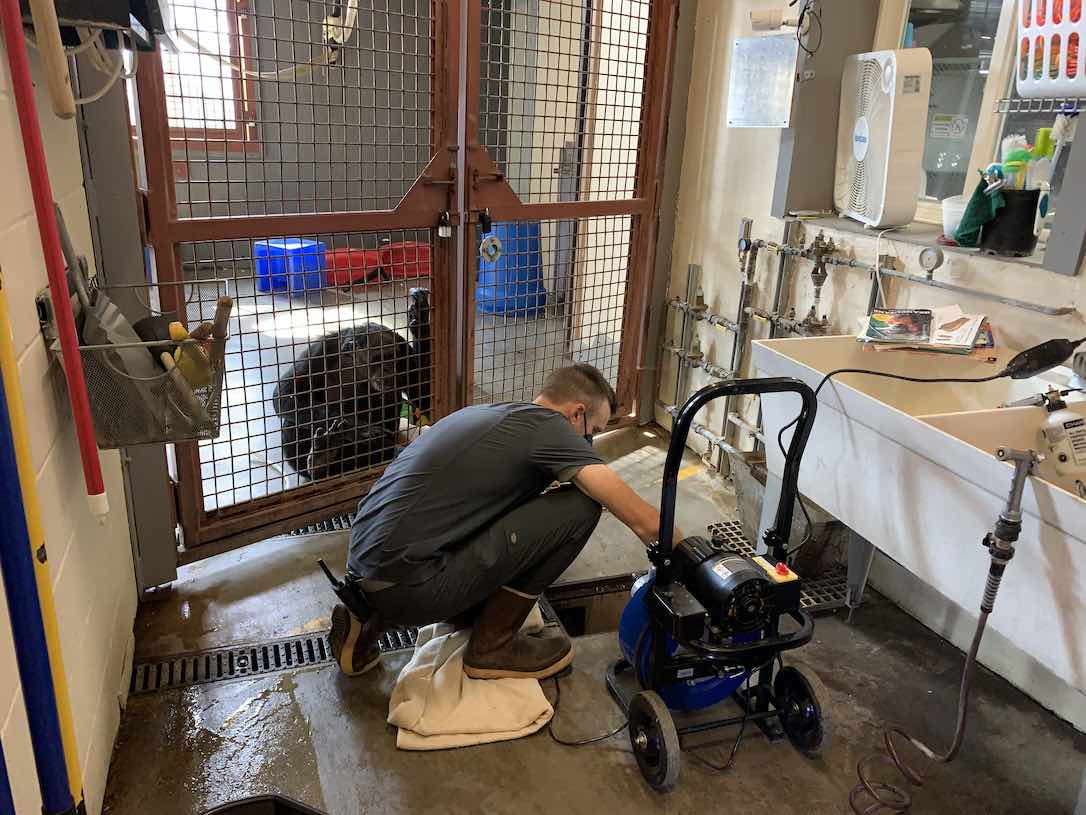
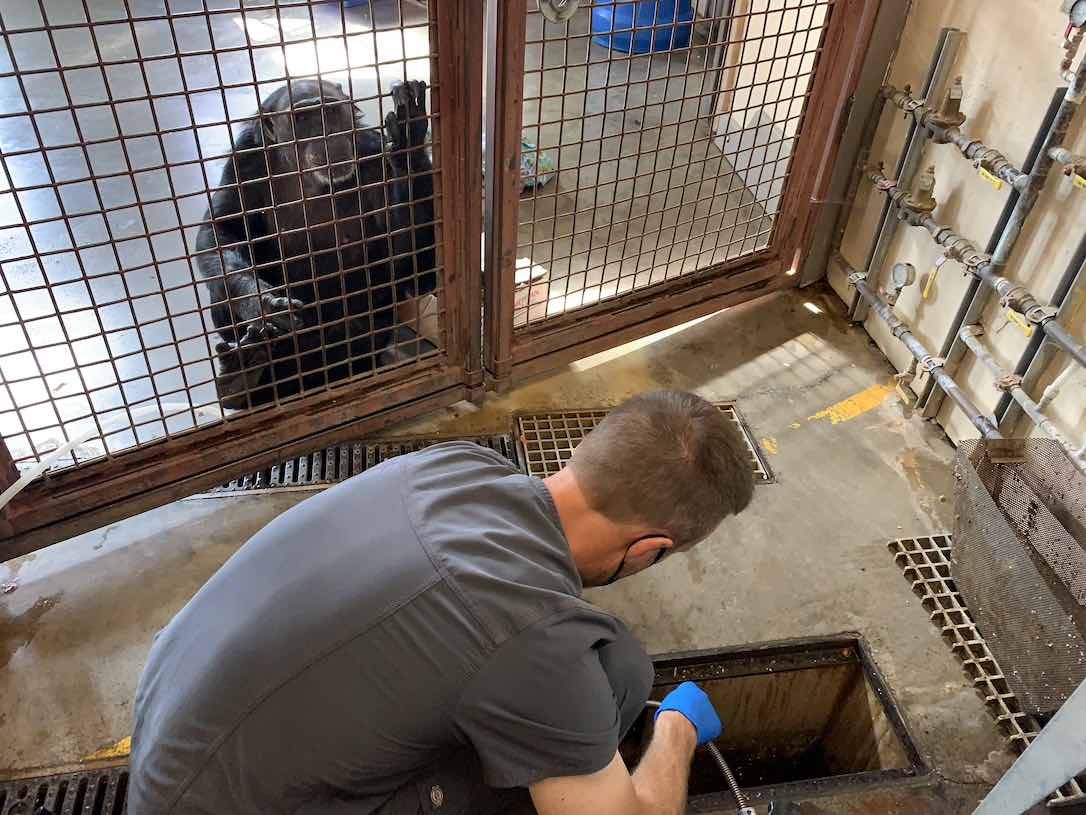
Jamie sat in the window ledge of the Green House to watch JB and I clean for a while. I stopped by to hang out with her for a few minutes.

While we cleaned the front rooms, Jamie had to monitor JB as he tried to snake the drain. Jamie was there to ensure JB was using his tools correctly.

Filed Under: Intelligence, Jamie, Sanctuary Tagged With: chimp, chimp enrichment, chimpanzee, chimpanzee sanctuary, Chimpanzee Sanctuary Northwest, chimpanzees, Jamie, Sanctuary

Grapes n’ Roses

September 20, 2022 by Sofia Castro-Loza

Today’s blog video is all about browse. Browse is a form of enrichment we provide the chimps to encourage natural behaviors like foraging for green items and food wadging. Portrayed on the video are two items that grow without any issue around the sanctuary’s property: grapes and rose hips. For the seven’s group, made up by Jamie, Missy, Annie, Burrito, Negra, Foxie, and Jody, we set up the rose hip forage in the front rooms. Before giving them back access to the front rooms, I could see that Missy had already spotted me with them. Before I was done opening all the doors to the front rooms, Missy had sneaked in and grabbed as much as she could before going up to the play room’s loft to feast. Luckily for her, no one noticed. By no one, I mean Jamie. Good for Missy, she executed the heist perfectly. The nine, Cy, Terry, Gordo, Willy B, Rayne, Mave, Honey B, Dora, and Lucky also got rose hips. Gordo and Rayne were big fans. Last week they got grapes straight from the vines and all of them loved it as well.


Filed Under: Latest Videos

Recall Me by Your Name

September 19, 2022 by Anthony

I recently discussed the behavioral training program in this blog post: “Are the chimps trained?”

The post summarized our efforts to improve the chimps’ lives by promoting cooperative behaviors. However, I neglected to mention one of the simplest and most important behaviors of all: recall.

In plain terms, recall behavior is approaching another individual’s location when they call you. Those of you who care for a domestic dog may already know the importance of reliable recalls, especially if your surroundings allow them to be off leash sometimes. In fact, recalls are often the first thing that companion animals learn, either intentionally or by accident, and that’s a good thing.

The chimpanzees are not pets, but we practice this behavior with them to ensure they cooperate when we need them to vacate an enclosure.

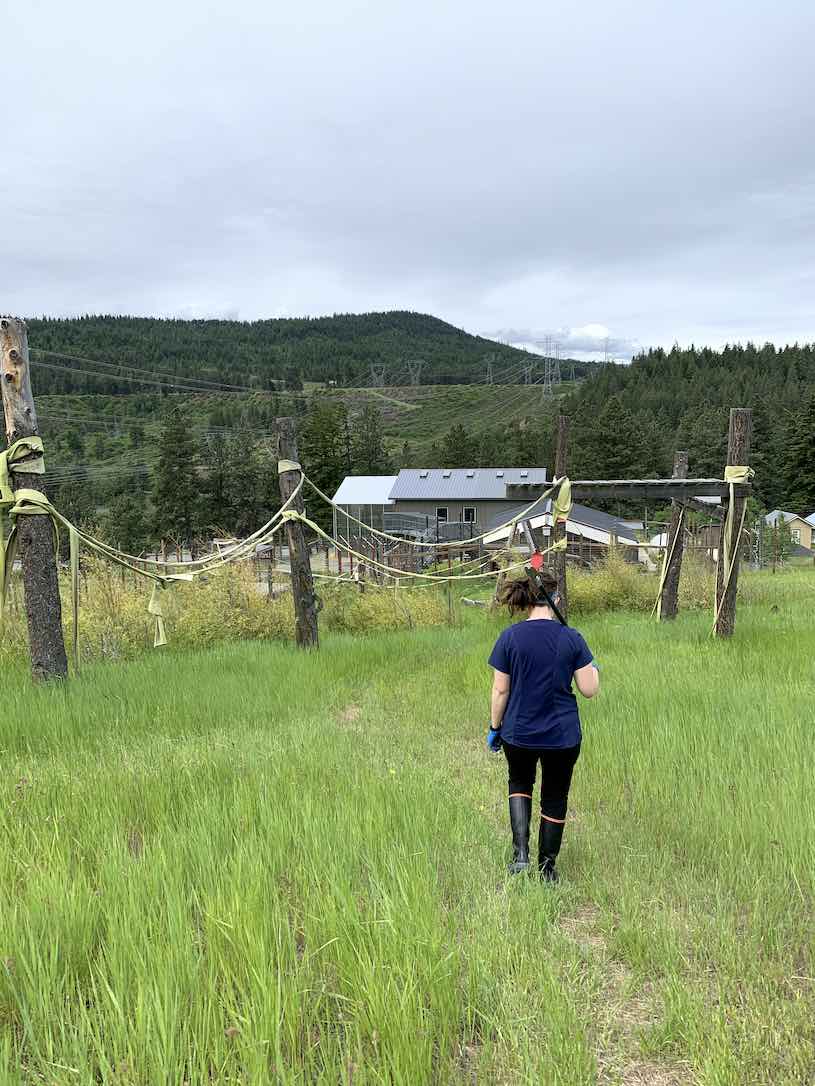
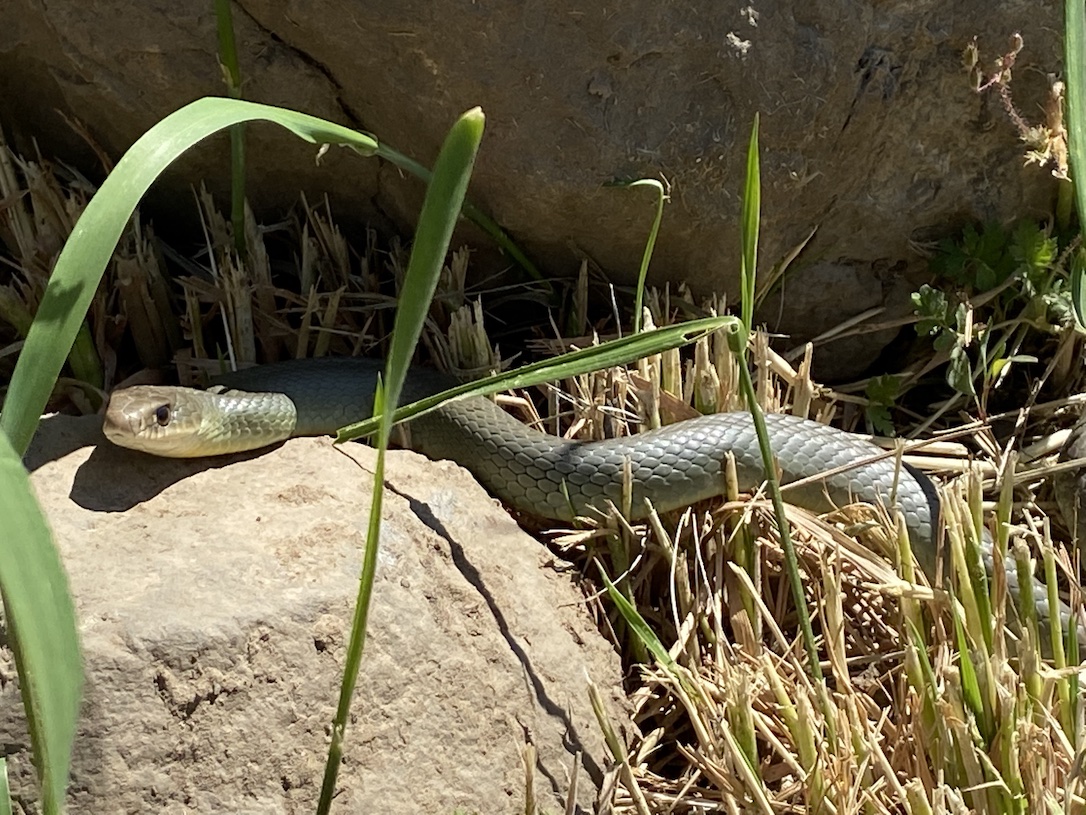
This ability is especially important when the chimps have access to outdoor areas such as Young’s Hill and the three greenhouses. Although they are enclosed in a mesh snake fence that prohibits easy entry, snakes and other wildlife occasionally find their way inside the perimeter and end up face-to-face with gangs of screaming chimpanzees. In these situations, caregivers need the chimps to leave the snake alone so it can be safely translocated back outside. Other scenarios that would also necessitate a recall include nearby wildfire, dangerously strong winds, a sudden drop in air quality, or an unexpected problem with the electrified fences.

The chimps in Jamie’s group mobbing a snake in 2018:

Caregiver Grace relocating a non-venomous snake last summer:

A non-venomous racer that Caregiver Chad relocated away from the Chimp House:

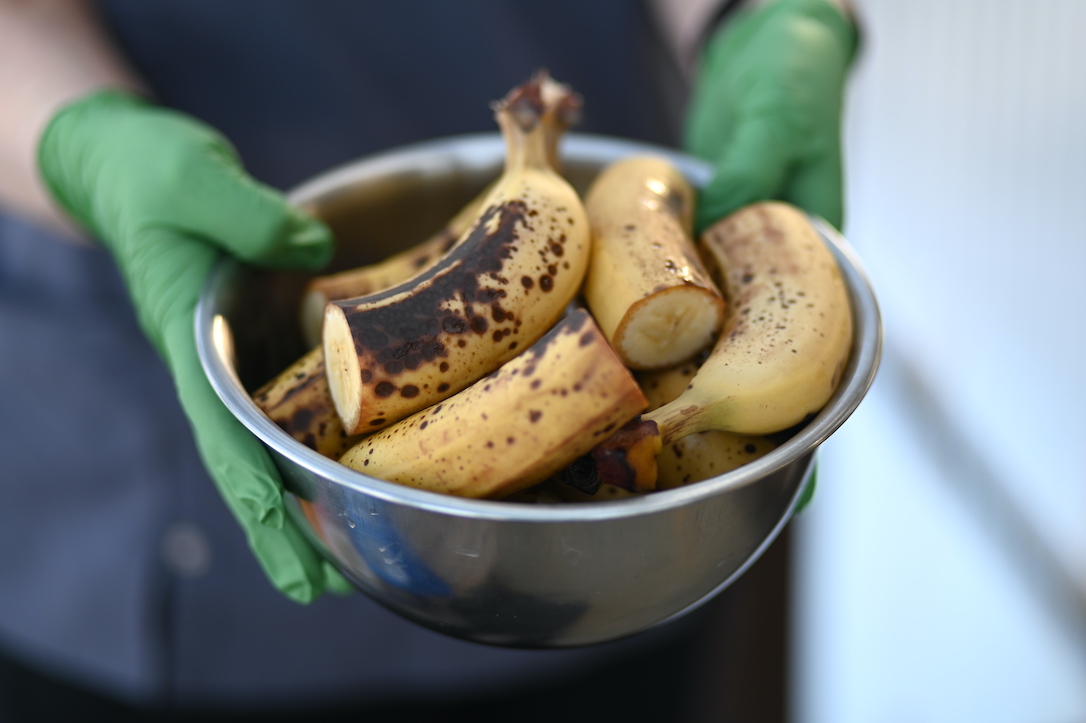
As with the behaviors mentioned in the other post, we encourage cooperative recall through the process of operant conditioning using only positive reinforcement. To initiate a recall, one caregiver rings a loud bell and yells “recall!” This combination of sounds serves as the cue for the desired behavior: shifting from the space they’re in into the space closest to the caregiver. When everyone chooses to shift into the preferred enclosure, a second caregiver closes the doors separating the areas. Once the doors are safely closed, the first caregiver marks that as the correct behavior using the clicker and rewards each chimp with a banana.

We give whole bananas every time to ensure the chimpanzees associate the cue and its corresponding behavior with the universally-loved food item. It’s likely that some individuals will occasionally choose not to participate in recalls, in which case we’ll have to “up the ante” with a reward of even higher value.

So far, we’ve had good success getting entire groups of chimpanzees to come in from their outdoor habitats. Earlier today, we asked the chimpanzees in Cy’s group to come into the playrooms so we could rescue a garter snake that had wandered into The Riverview Greenhouse. The entire squad came back inside without objections!

Lucky keeping an eye on the elusive serpent before the recall signal:

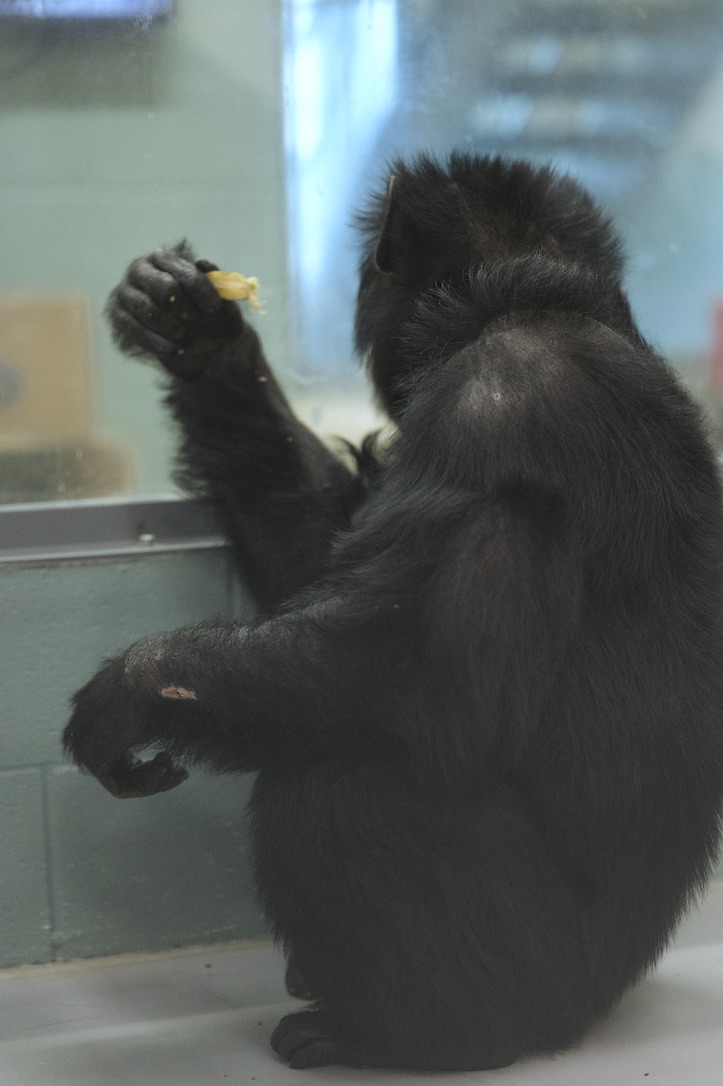
Willy B also received banana reward; he is still recovering from his recent procedure but heard the bell and probably would have cooperated if given the chance!

Willy watching the commotion while eating his complimentary snack:

Of course, one way for a chimp to beat the system is to voluntarily stay close to the Chimp House, ready to receive a free banana for staying exactly where they already wanted to be.

Negra has perfected this art:

Filed Under: Food, Sanctuary, Training, Wildlife, Young's Hill Tagged With: Animal Welfare, chimp, chimpanzee, chimpanzee sanctuary, Chimpanzee Sanctuary Northwest, chimpanzees, csnw, recall training, Sanctuary

Gratitude

September 18, 2022 by Grace

A lot has happened over this last week.

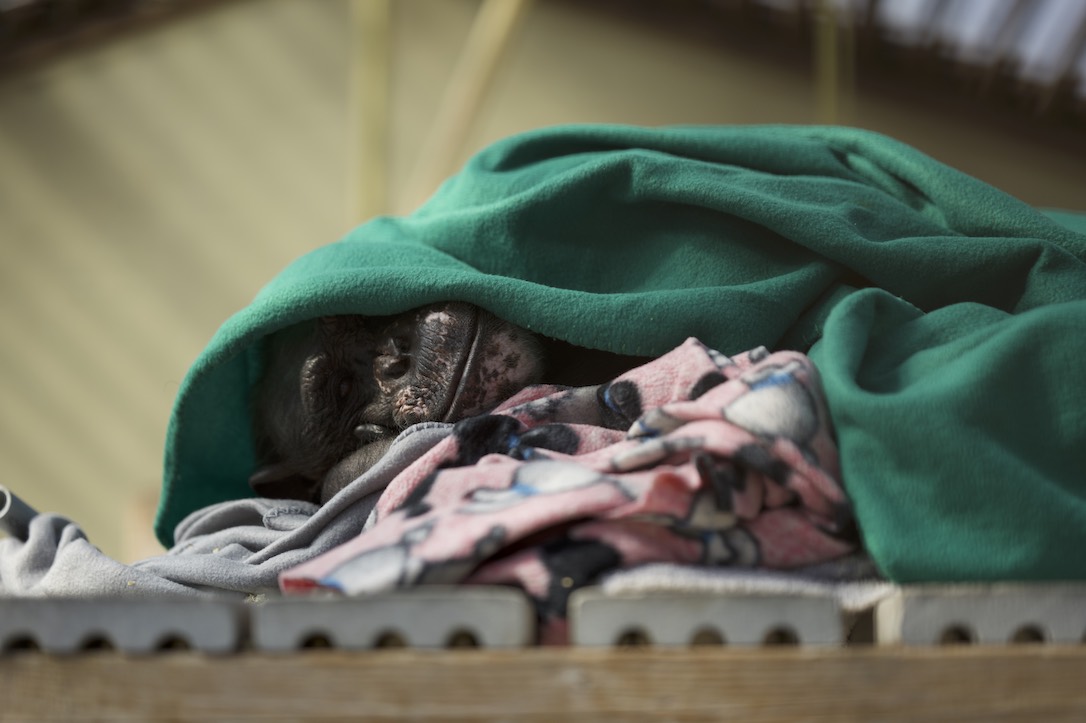
Between Willy B’s procedure and our HOOT! fundraiser, we have a lot to be grateful for here at CSNW. Willy B has been recovering well in the front rooms of Phase 1, with visual access to the rest of his group members through multiple windows. The rest of Cy’s group have been checking up on him constantly and many have chosen to sit by the windows to join him in watching the many movies we have been playing for him. The stitches in his nose have been holding up really well (knock on wood) and he seems to be enjoying the enrichment we have been giving him to keep him busy (and to keep him from displaying against the howdy door and riling up his neighbors). He is currently watching Shrek and working on a hanging puzzle… Sunday Fun-day, amiright?!

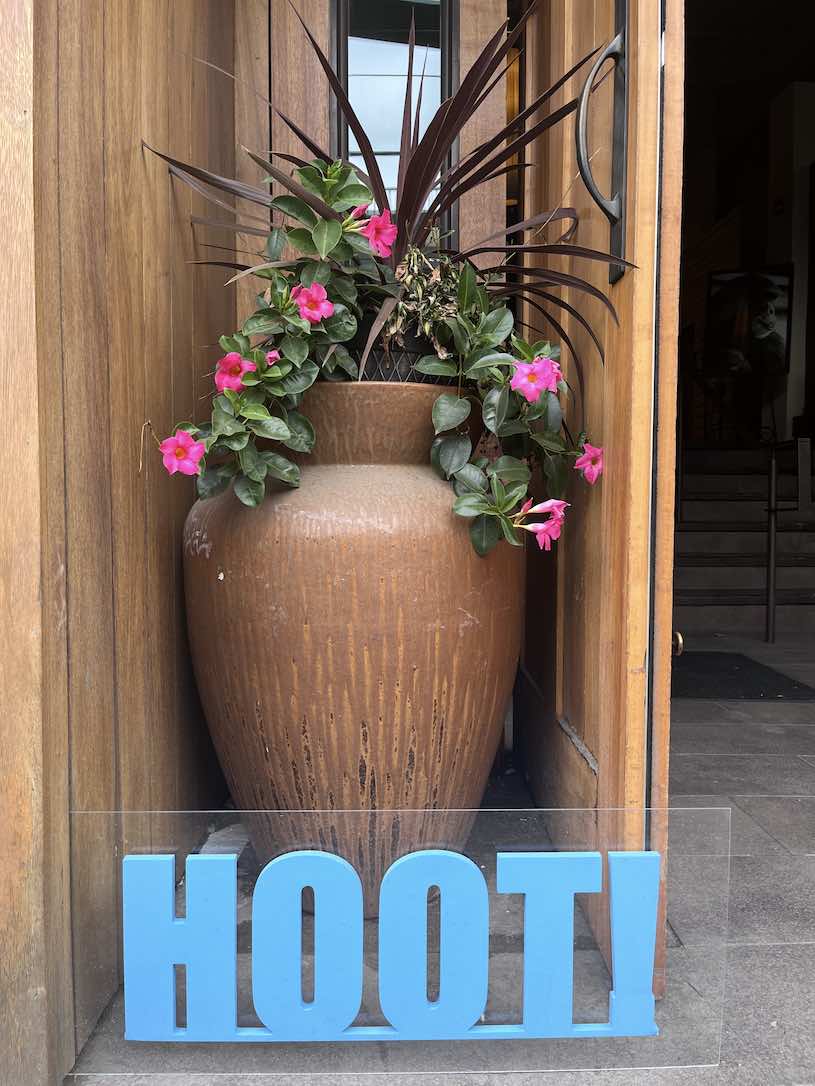
This past Friday was our signature annual fundraiser, HOOT!, and it was the first time it has been held in person for two years. It was my first time attending and I cannot say how heart warming it was to connect with our sponsors in-person and also virtually (via our Facebook live stream). I am always speechless when I think about the support we receive from so many people across the world. Being a part of an event where everyone is connected by the common goal of supporting CSNW brings this gratitude front and center, so I just want to take a moment to say a heartfelt thank you from all of the primates (and cattle) here at CSNW. Whether you have donated to HOOT!, connect with us via our daily blog, support us by being a Chimp Pal or Produce Patron, sending us items from our wish-lists, or supporting us another way, we can’t say thank you enough for allowing us to provide sustainable sanctuary for our residents.

Thank you.

Personally, I am mentally still processing all the events from the past week. I often spend a good amount of time reading outside of work, especially when work gets busier than normal, and often find that other authors have found words to express things that I am unable to voice. Excuse the cheesy-ness of the end of this blog, but a piece by Mary Oliver has really been on my mind lately. I’ve typed out a portion of it below…Maybe it will touch your heart, too.

The Messenger

My work is loving the world.

Here the sunflowers, there the hummingbird –

equal seekers of sweetness.

Here the quickening yeast; there the blue plums.

Here the clam deep in the speckled sand.

Are my boots old? Is my coat torn?

Am I no longer young and still not half-perfect? Let me

keep my mind on what matters, which is my work,

which is mostly standing still and learning to be astonished…

Which is mostly rejoicing, since all ingredients are here,

which is gratitude, to be given a mind and a heart

and these body-clothes,

a mouth with which to give shouts of joy…

telling them over, over and over, how it is

that we live forever.


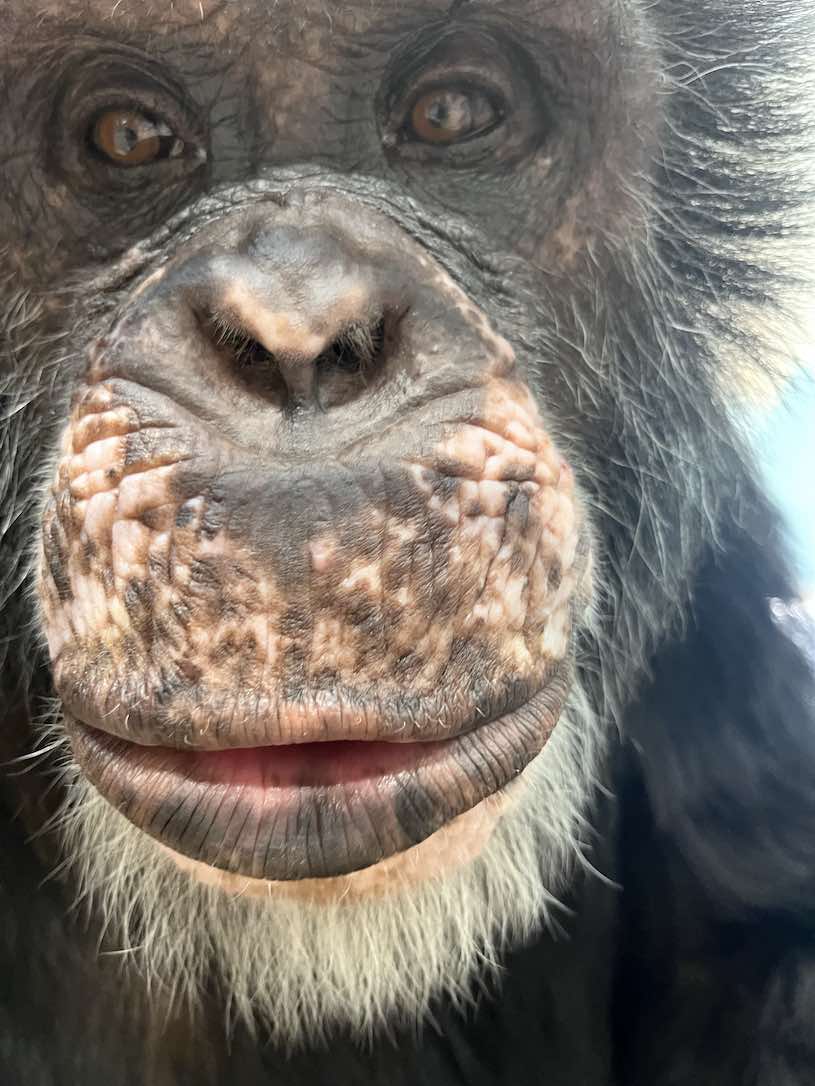
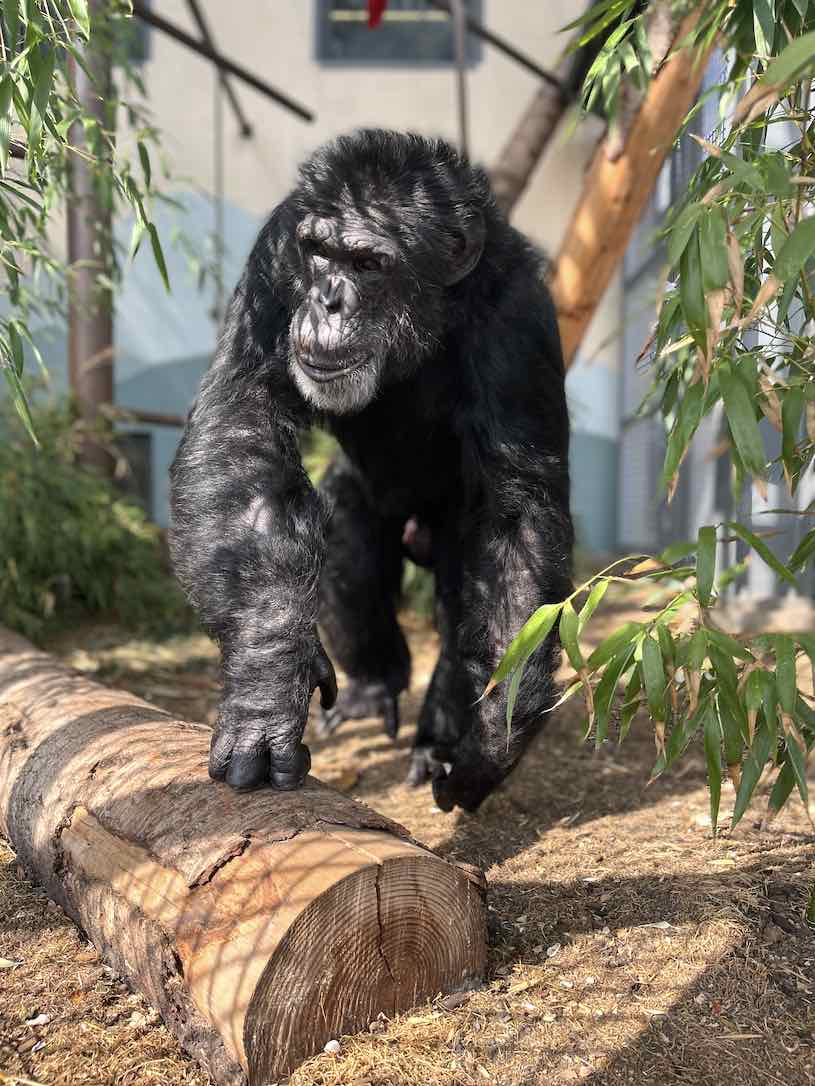
Photos above: Terry and Cy

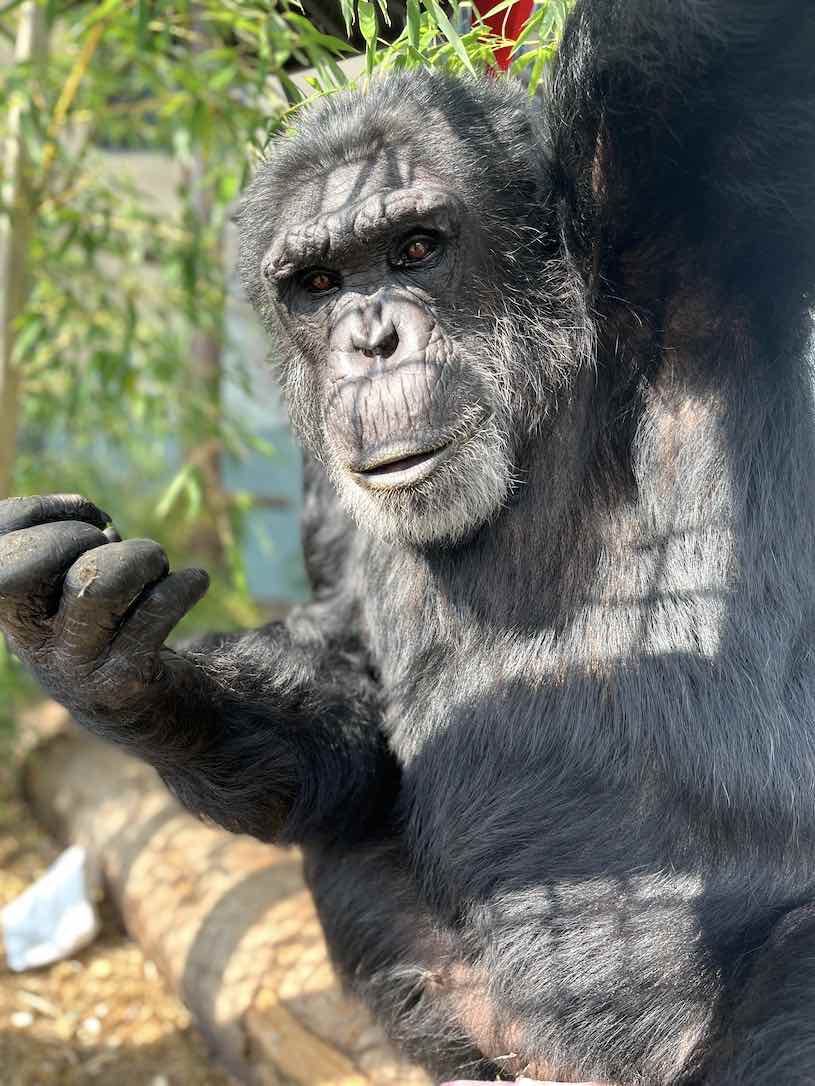
Cy:

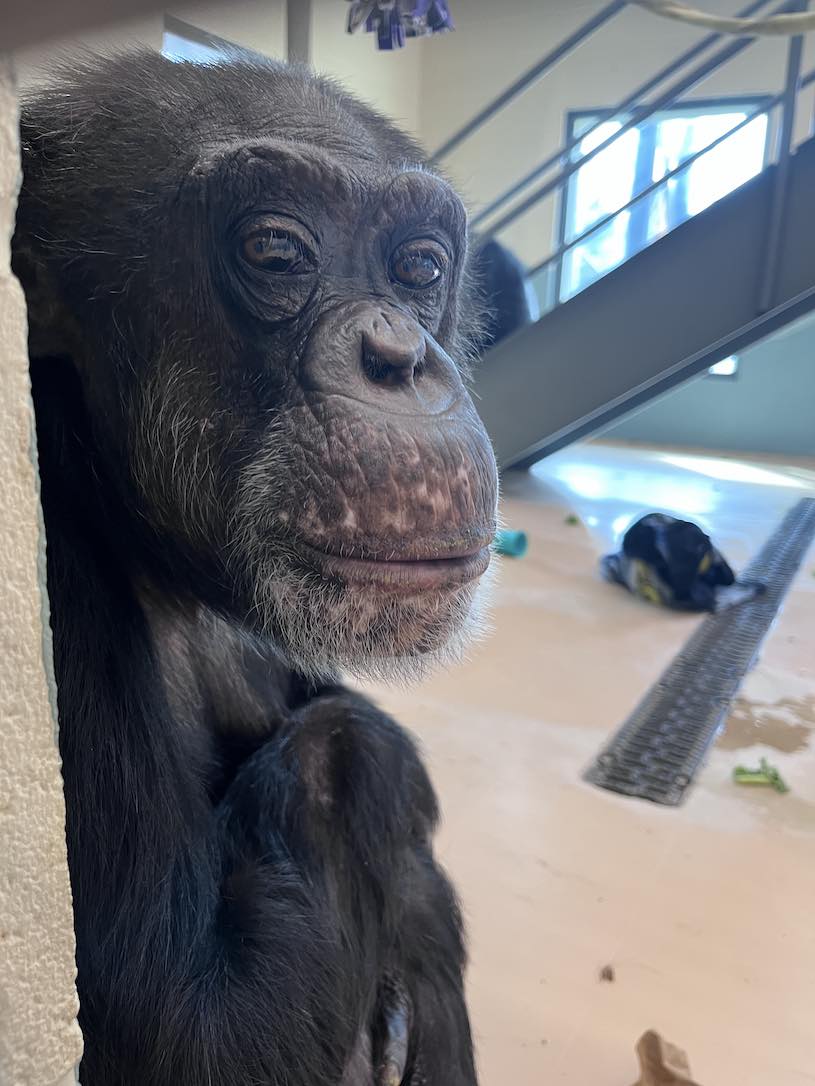
Dora:

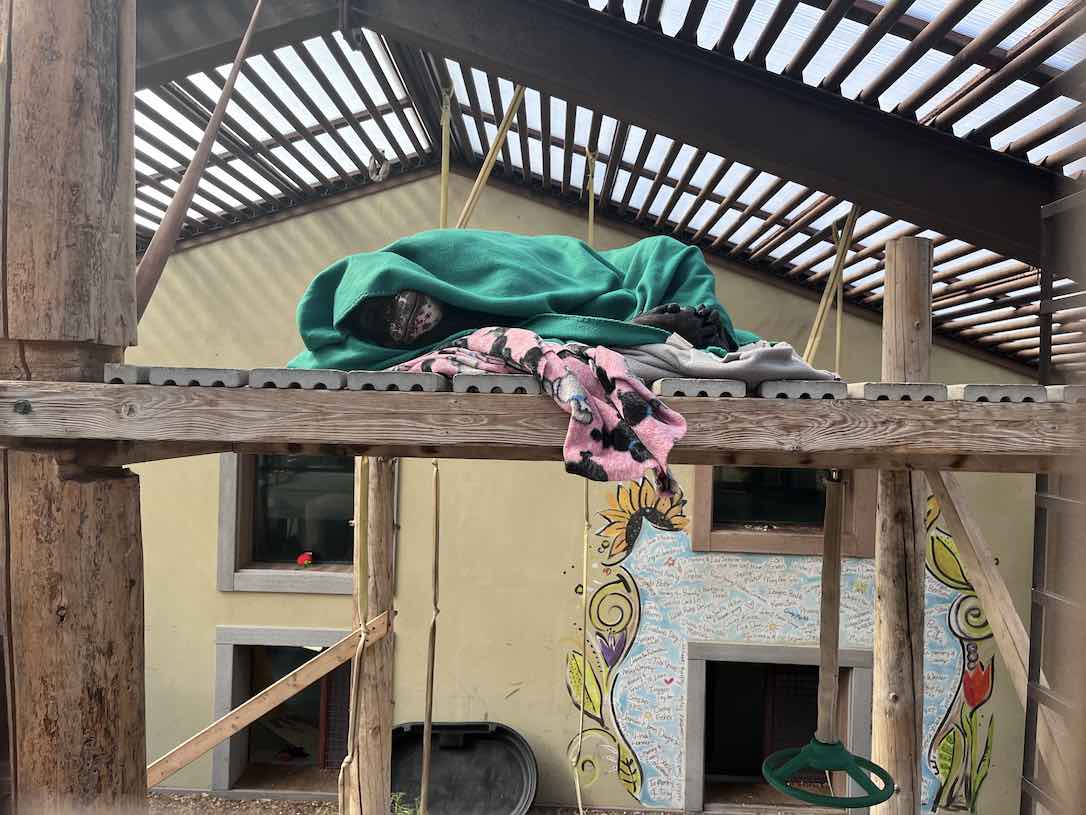
Negra, resting in the greenhouse:


Filed Under: Sanctuary Tagged With: chimp sanctuary, Chimpanzee Sanctuary Northwest, chimpanzees, Cle Elum, Enrichment, Negra, Sanctuary, Willy B

Ties to LEMSIP

September 17, 2022 by Jenna

Many of you may have noticed, several of our chimpanzees have a common origin story: LEMSIP.

Today, I wanted to scratch the surface on this topic. There is so much more to say about non-human primates in laboratories. Much of this blog is from online sources that I have found while researching LEMSIP, because my personal knowledge is limited. I was blown away by what I found.

LEMSIP stands for the Laboratory for Experimental Medicine and Surgery in Primates. LEMSIP was a research facility at New York University, beginning in 1965. The original goal was for LEMSIP to be a federally funded primate research center, although it remained a private laboratory until their closure. At one point, LEMSIP housed around 300 chimpanzees and nearly 300 monkeys, who were subjected to intensive biomedical research in areas such as reproduction, blood transfusions, hepatitis B, and HIV.

Ultimately, LEMSIP shut down in 1998. Many believe one of the contributing factors to the demise of the facility was the revision of caging requirements prescribed by the USDA, which would cost the University roughly $2 million to accommodate.

This made me think…

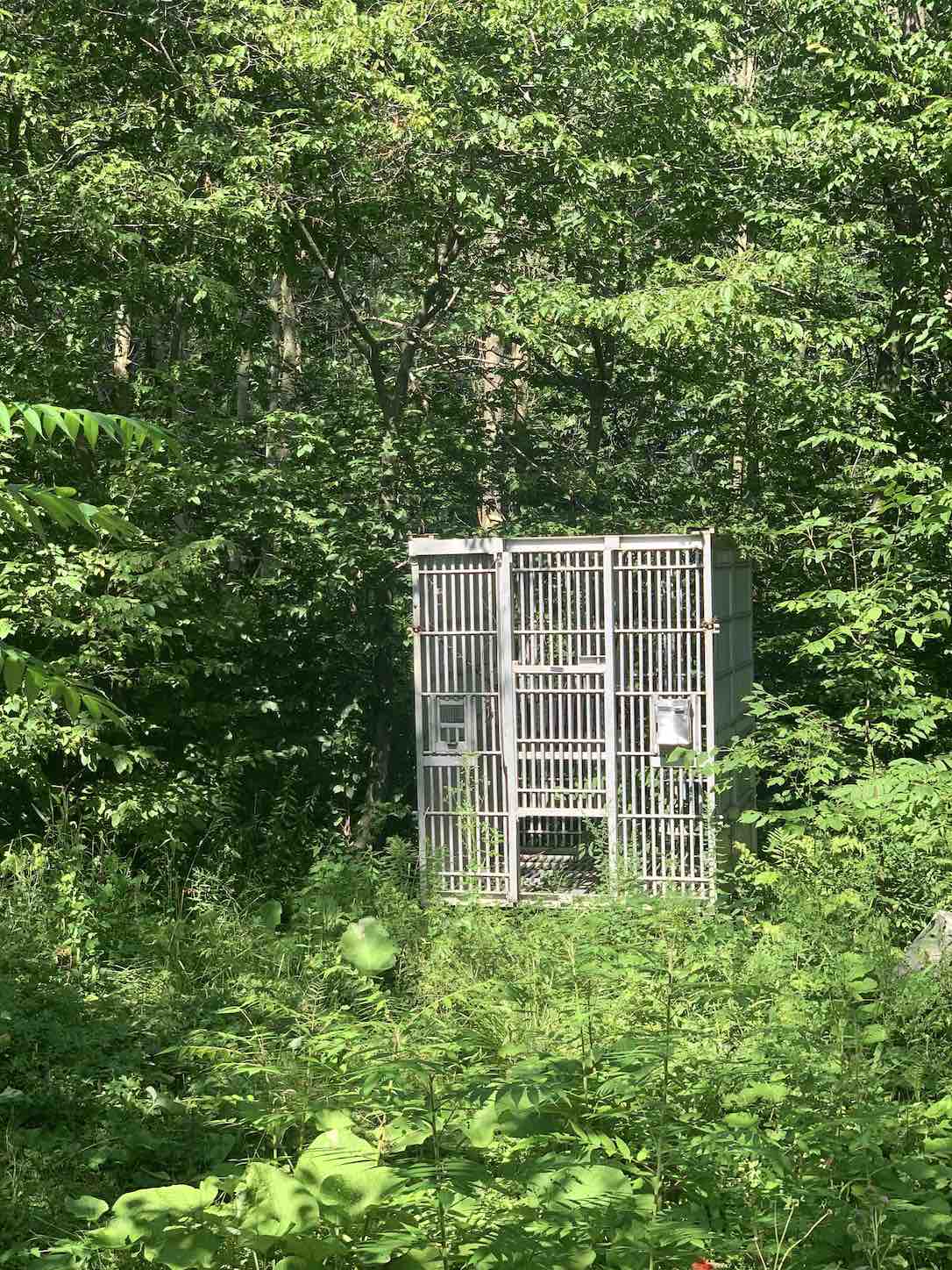
Back in 2019, I completed a summer internship at fellow sanctuary, Fauna Foundation, located in Canada. During that internship, I heard a lot about LEMSIP, because just like CSNW, many of their chimps had been at that laboratory. Although it has been over three years since my internship, I remember so vividly learning that this (pictured below) was the type of cage the chimps spent their lives in. The “home” they would not leave unless they were anesthetized and used for a biomedical research study.

Photo of cage from LEMSIP, which is on display at Fauna Foundation:

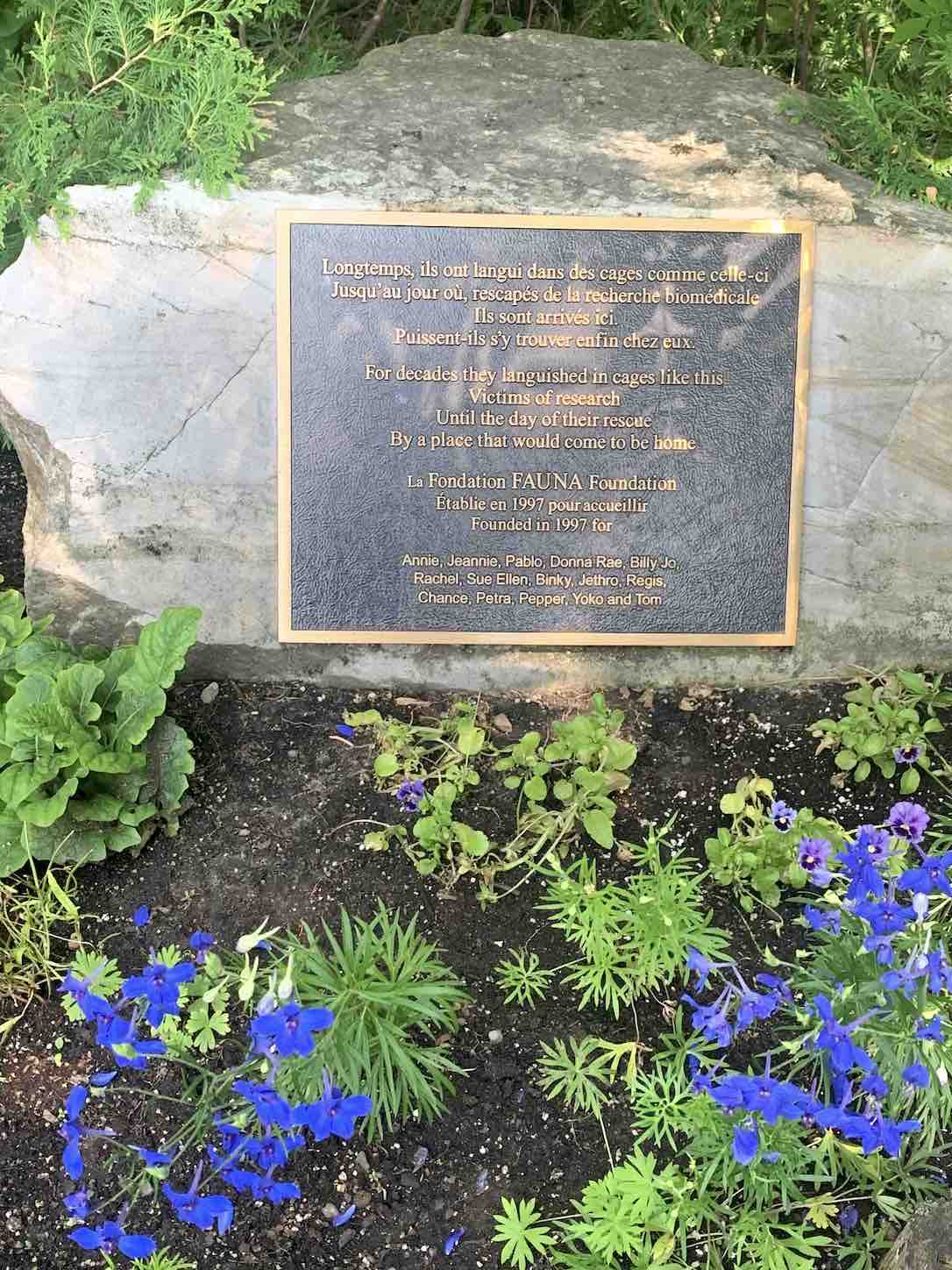
Plaque in front of cage:

“For decades they languished in cages like this

Victims of research

Until the day of their rescue

By a place that would come to be home

FAUNA Foundation

Founded in 1997 for

Annie, Jeannie, Pablo, Donna Rae, Billy Jo, Rachel, Sue Ellen, Binky, Jethro, Regis, Chance, Petra, Pepper, Yoko, and Tom”

At LEMSIP, the majority of the chimpanzees were housed singly in these small cages. It wasn’t uncommon for the chimps who were young enough, to be housed in pairs. But, that was short-lived as chimps grow quickly.

All of the cages hung above the floor. The founding director, Jan Moor-Jankowski, MD believed that “allowing feces and urine to fall out of the cages would maintain a healthier environment, opposed to hosing out the cages, creating dampness – a contributor to the widespread upper respiratory problems in captive primates.”

However, the design ultimately created a permanent foul stench from beneath the caging that the chimpanzees were forced to breathe in every single day.

Chimpanzees were denied any outdoor access because Moor-Jankowski believed that this would limit their germ exposure.

Adult chimpanzees were given little enrichment.

Infant chimpanzees were taken from their mothers and raised by human caregivers (in the “nursery”) to accustom them to being handled for procedures.

Chimpanzee mothers were bred repeatedly so more babies could go into research. None were allowed to raise their children past one year, if at all.

When NYU withheld the funds earmarked for increasing the size of the chimpanzees cages to comply with the updated regulations, Moor-Jankowski filed a complaint against his employer with the United States Department of Agriculture (USDA) highlighting the deficiencies.

In the early 1990s, the USDA charged NYU with 378 violations of the Animal Welfare Act at a separate university lab. The charges were in regard to water deprivation and other cruel treatment of monkeys used in addiction experiments. The charges stemmed from Moor-Jankowski having revealed information to the USDA about problems at that lab.

In 1995, NYU announced the sudden closure of LEMSIP and that all its primates will be sent to Coulston Foundation, a New Mexico-based toxicology laboratory. NYU made this placement decision despite knowing that the USDA had filed charges against Coulston for the negligent deaths of both chimpanzees and monkeys. Shortly after NYU’s announcement, Moor-Jankowski was fired from his director position of 30 years.

In 1997, around 100 chimpanzees were sent to Coulston Foundation, following the closure of LEMSIP.

However, James Mahoney, D.V.M., Ph.D, LEMSIP’s veterinarian managed to quietly place 109 chimpanzees and 100 monkeys in sanctuaries around North America. Those sanctuaries included Fauna Foundation, Wildlife Waystation, and the Primate Rescue Center.

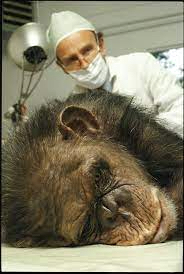
Picture of Dr. James Mahoney conducting a biomedical procedure at LEMSIP (Source: National Geographic)

Primate Rescue Center says Mahoney approached them asking, “How many chimpanzees can you make room for?”.

In 1998, Coulston Foundation was “awarded” 111 chimpanzees who were deemed “surplus” by the U.S. Air Force.

In 1999, the USDA settled three sets of charges against Coulston with a $100,000 fine and orders to restrict breeding and divest itself of 300 chimpanzees (half of their population) by 2002.

Coulston had many documented USDA welfare violations including temperatures in cages as high as 150 degrees, to botched medical procedures such as experimental spine surgery.

In 2002, most of the LEMSIP chimpanzees that were sent to Coulston years prior, were rescued by Save the Chimps, when it took over Coulston.

However, an unknown number of chimpanzees who remained incarcerated in lab cages, were transferred to the Alamogordo Primate Facility, which is owned by the National Institutes of Health (NIH) and operated under contract by Charles River Labs.

“Chimpanzees have not been used in invasive biomedical research – any research that causes injury, pain, or distress – in U.S. laboratories since 2015. But what to do with the former research chimps – and how to pay for their costly lifetime care – is a continuing conundrum.” – National Geographic

In 2015, the U.S. Fish and Wildlife Service listed captive chimps as endangered. This meant that research and experimentation could be done on chimps only if the institution could show the work will enhance the survival of chimps in the wild.

Today, five biomedical research facilities across the U.S. hold chimpanzees once used for research that was funded in some part by NIH.

With all of this said, these are all reasons why we do what we do at Chimpanzee Sanctuary Northwest and why sanctuaries are important. We have sixteen chimpanzees who were apart of the biomedical research industry. Their past lives were unfair, to put it simply. Although still in captivity, we hope what we do here everyday for our 16 chimpanzee residents helps make a difference in their lives.

**Special shout out to everyone involved in HOOT! last night. From attending the event in person, participating in the online auction from afar, or heck, even sharing our posts on Facebook…. As always, we appreciate your continued support for Chimpanzee Sanctuary Northwest. We wouldn’t be where we are without you!

Filed Under: Advocacy, Chimp histories, Chimpanzee, Chimpanzees in Biomedical Research Tagged With: animal protection, animal rescue, animal rights, Animal Welfare, chimpanzee, chimpanzee sanctuary, Chimpanzee Sanctuary Northwest, primate rescue

  • « Go to Previous Page
  • Page 1
  • Page 2
  • Page 3
  • Page 4
  • Page 5
  • Go to Next Page »

Primary Sidebar

Subscribe To the Blog and Get Notified of New Posts First!

Archives

Calendar of Blog Posts

September 2022
S M T W T F S
 123
45678910
11121314151617
18192021222324
252627282930  
« Aug   Oct »

Categories

SUBSCRIBE TO OUR NEWSLETTER

Footer

PO Box 952
Cle Elum, WA 98922
[email protected]
509-699-0728
501c3 registered charity
EIN: 68-0552915

Official DDAF Grantee

Menu

  • The Chimpanzees
  • Blog
  • About Us
  • You can help
  • Resources
  • Contact
  • Donate

Proud Member of

Connect With Us

Search

Copyright © 2026 Chimpanzee Sanctuary Northwest. All Rights Reserved. Site by Vegan Web Design