• Skip to main content
  • Skip to primary sidebar
  • Skip to footer

Chimpanzee Sanctuary Northwest

Hope. Love. Home. Sanctuary

  • Our Family
    • The Chimpanzees
    • The Cattle
  • Blog
  • About Us
    • Visiting the Sanctuary
    • Philosophy
      • FAQs
      • Mission, Vision & Goals
      • Privacy Policy
    • The Humans
      • Staff
      • Board of Directors
      • Founder
    • Annual Reports
    • The Future of CSNW
    • CSNW In The News
  • You can help
    • Donate
      • Become a Chimpanzee Pal
      • Sponsor A Day
      • Transfer Stock
      • Be A Produce Patron
      • Be a Bovine Buddy
      • Give from your IRA
      • Personalized Stones
      • Bring Them Home Campaign
    • Leave A Legacy
    • Employment Opportunities
    • Volunteer
    • See Our Wish List
    • Events
  • Resources
    • About Chimpanzees
    • Enrichment Database
    • Advocacy
      • Advocacy Action Center
      • Apes in Entertainment
        • Trainers
        • Role of the AHA
        • Greeting Cards
      • Chimpanzees as Pets
      • Roadside Zoos
      • Chimpanzees in Biomedical Research
      • Conservation
        • African Apes
        • Orangutans
  • Shop
    • Merchandise Store
  • Contact
  • DONATE NOW

rescue

Contact

October 30, 2020 by J.B.

As part of our ongoing Q&A series, I thought I’d address one of the most common questions we get: Do we ever wish we could have more physical contact with the chimps?

As many of you know, we strictly limit the ways in which we interact with the chimpanzees out of concern for our safety. Chimpanzees are incredibly fast and powerful animals with large, muscular jaws and massive canine teeth. Estimates vary, but it’s safe to say that chimpanzees possess at least twice the upper body strength of humans, pound for pound. And for chimpanzees, aggression is not an aberration but rather a normal part of the way they interact with one another and the world around them.
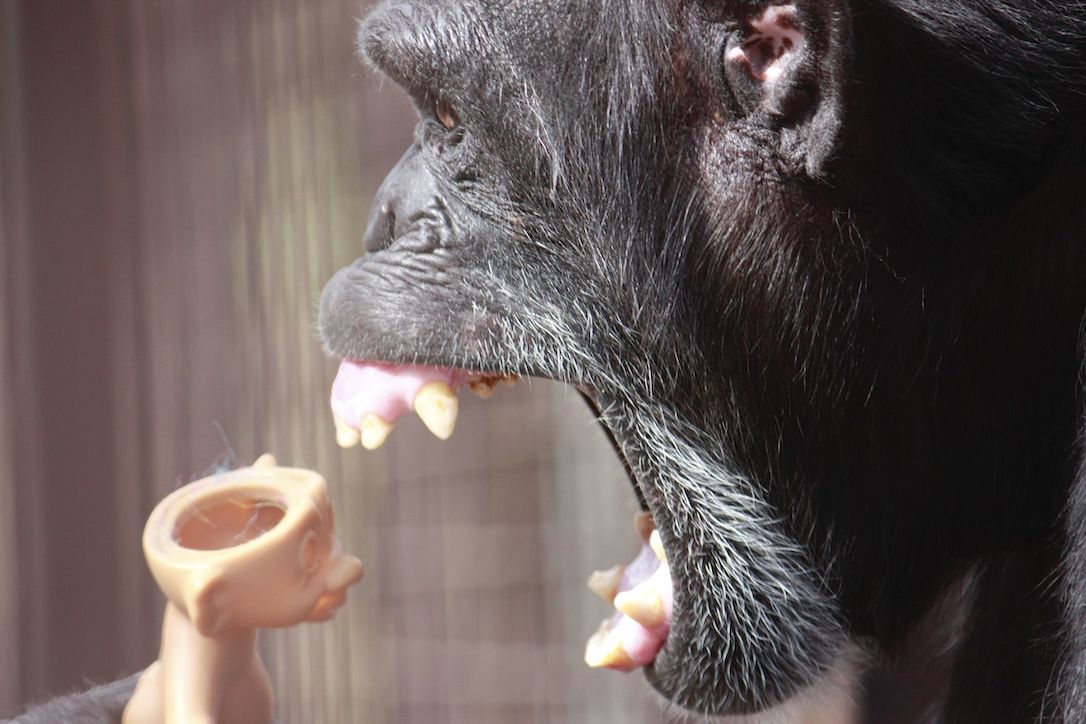
It was then that the troll realized he had made a terrible mistake.

Compounding the risk posed by their strength and natural behavior is the frustration they experience in captivity. One of the profound ironies of caring for chimpanzees is that you are far safer strolling through an African forest amidst a community of over a hundred free-living chimpanzees than you are standing near the enclosure of a captive chimpanzee. In fact, when Jane Goodall, the world’s foremost expert on chimpanzees, lost the tip of her thumb, it was not to one of the chimpanzees of Gombe that she had spent decades living among but rather to a chimpanzee in a laboratory cage. Frustration is not limited to chimpanzees in laboratories, however. Even in the best zoos and sanctuaries, we deny chimpanzees control over their lives and the ability to make choices for themselves. To put it bluntly, all captive chimpanzees are prisoners to varying degrees and we should not be surprised when they occasionally act as such.

So if we are concerned with safety, we’re left with a cautious and largely hands-off approach to caring for captive chimpanzees. In those times when we do have contact, we do so through the mesh fence in very controlled ways. We like to use the term protected contact, which originated as a way to describe the safe management of elephants from behind a safety barrier. At CSNW, this means that our bodies never penetrate the caging. If the chimps want us to touch them, we do so with the tip of a knuckle while the chimps press their bodies against the mesh. If they want to touch us, they must extend their fingers all the way out and we limit their reach to our bare elbows or wrists. These methods, along with countless hours of training, help limit opportunities to get bitten or grabbed.
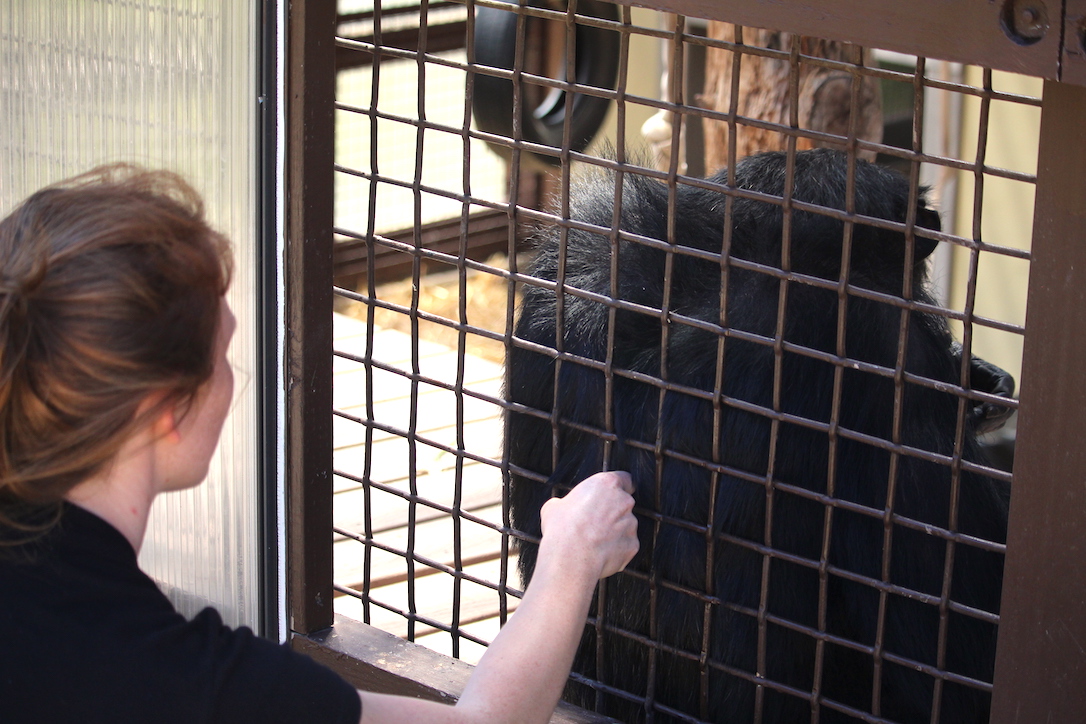
Kelsi playfully knuckle-rubs Burrito.

All of this eventually becomes second nature for both caregivers and the chimpanzees and I can honestly tell you that I rarely desire to have more contact with my chimpanzee friends. That said, I do remember feeling differently during my first summer spent around chimpanzees. In 1998, I was an apprentice at the Chimpanzee and Human Communication Institute, and my fellow apprentices and I would spend five or more days per week recording observational data on the chimps, cleaning near them, and coding videos of them. Our lives were consumed with chimps but we were not trained to a level where we could have any contact with them at all. It was killing us. So much so that when we’d be out on the town at night, we’d inevitably mob some unsuspecting dog and frantically pet them until they managed to break free and run for help.

There is one particular situation where it is relatively safe for us to have free contact with the chimps and where we do sometimes indulge ourselves, and that is when they are under anesthesia for medical care. In these moments, in between the IV prep and the blood pressure readings, we sometimes find ourselves holding their hands. Maybe it’s in the hopes that somewhere in the deep recesses of their subconscious they can sense that we are there with them. Or maybe we are looking to them for comfort.
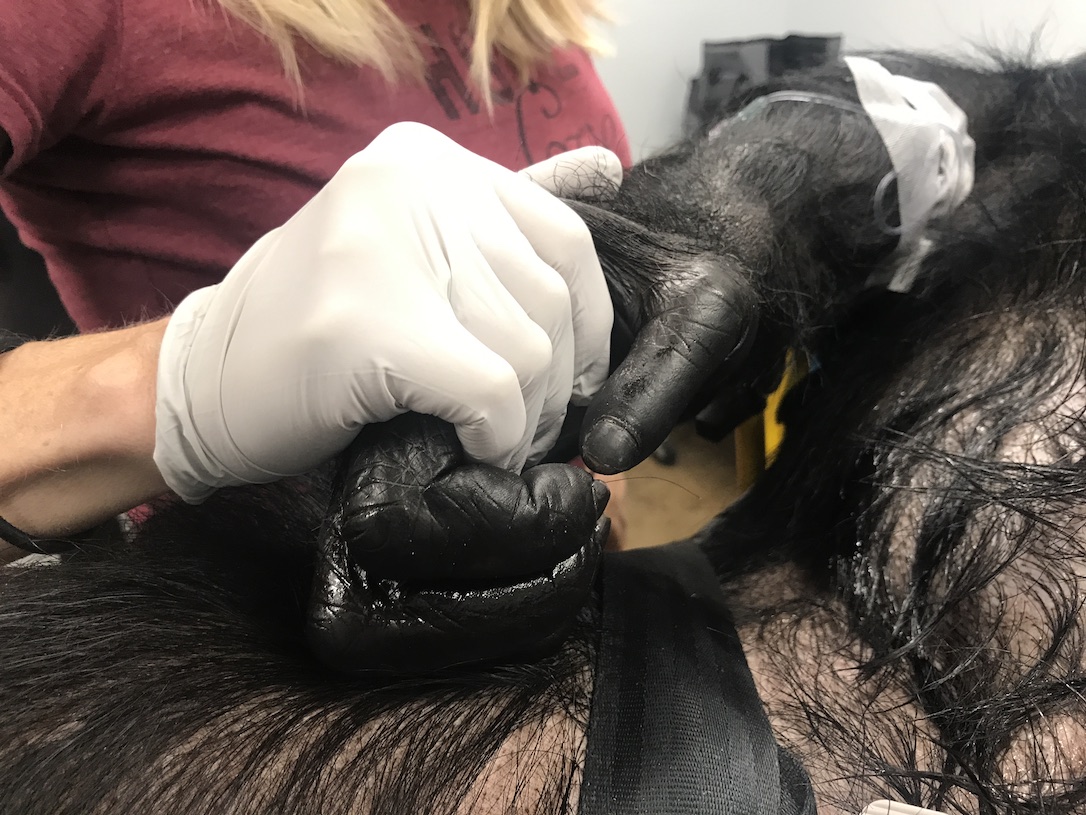
Diana holds Burrito’s hand during an echocardiogram.

It’s important to remember that in normal circumstances the chimpanzees in our care get all the hugs, snuggles, play slaps, and tickles they desire from their chimpanzee friends, and the chimps and their caregivers are able to develop rich and full relationships despite the physical separation. It’s only natural to want to have more physical contact with them, but eventually you come to realize that a raucous game of chase across the mesh barrier is a perfectly fine way for two friends to play. No physical contact needed.

And in those times when we need a good ol’ hug…well, that’s what dogs are for.
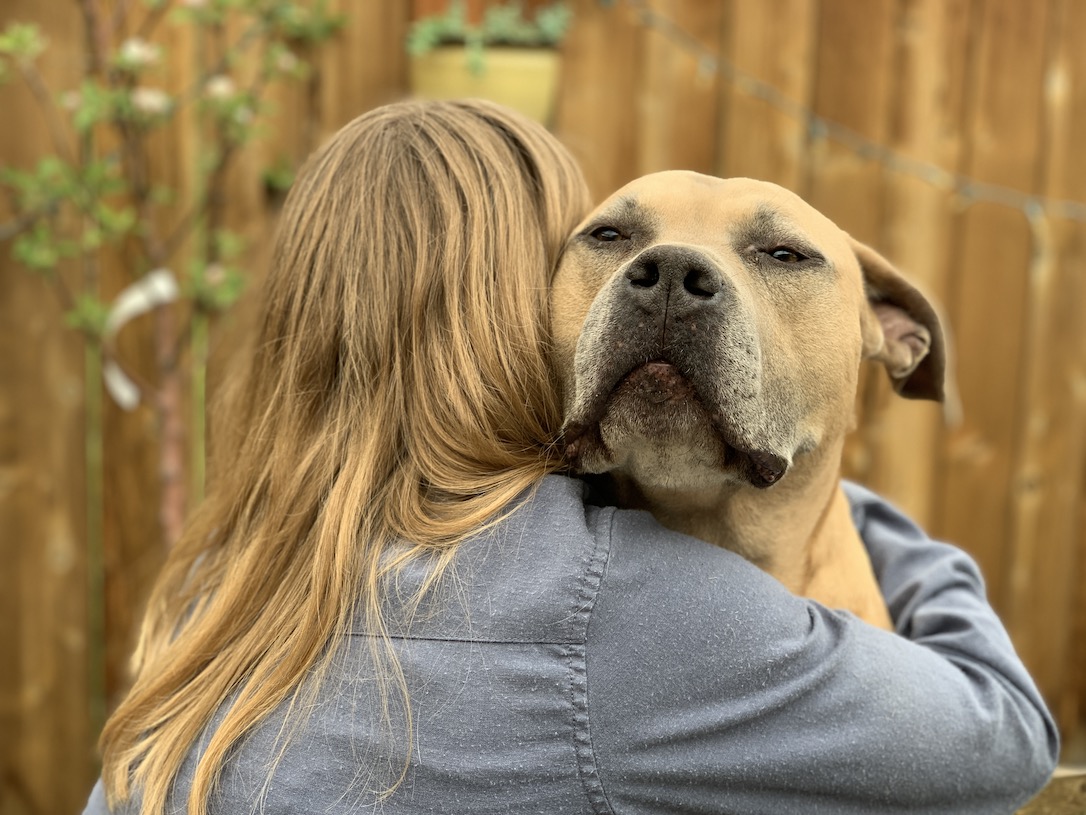
Wilson is always available for hugs.

Filed Under: Sanctuary Tagged With: caregivers, chimpanzee, contact, hug, northwest, physical, rescue, Sanctuary, touch

The Wonder of Progress

October 25, 2020 by Anthony

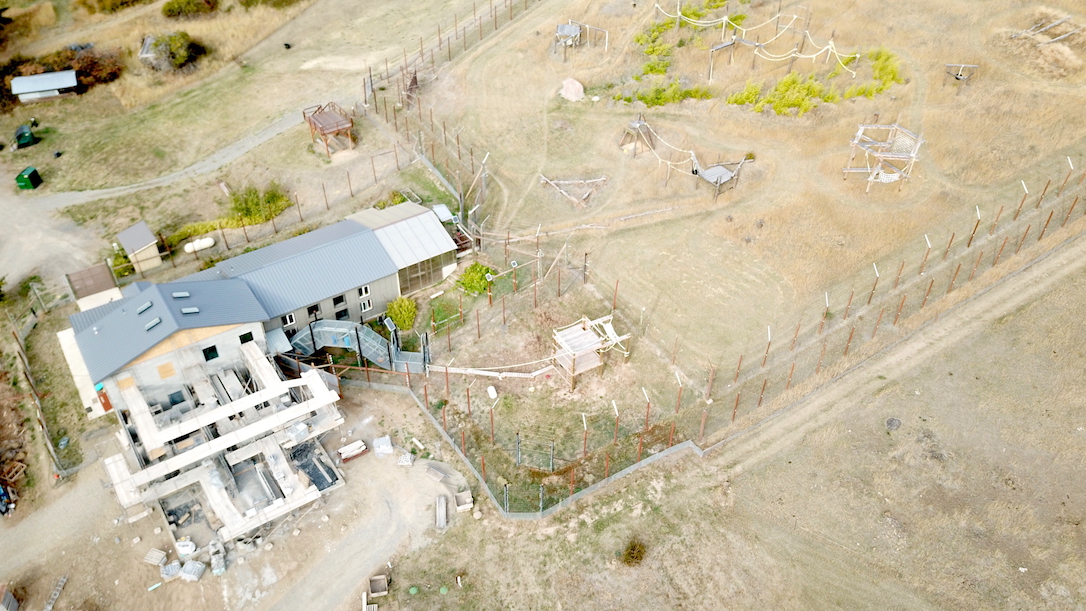
It’s been a crazy year, but it’s been very exciting for us to witness the steady progress on the new enclosures.

We’ve shared a few updates on the blog over the past few months (1, 2, 3) so that you all can get glimpses of the expanded Chimp House and see how the chimpanzees are coping with all of the commotion.

Today’s post includes a short video of the ongoing construction (and some clips of the three patient chimpanzees who have been taking it all in, day by day).

Filed Under: Caregivers, Construction, Honey B, Mave, Play, Sanctuary, Willy B Tagged With: Animal Welfare, chimp, chimp sanctuary, chimpanzee rescue, chimpanzee retirement, chimpanzee sanctuary, Chimpanzee Sanctuary Northwest, chimpanzees, chimps, Primates, rescue, Sanctuary

Willy B and his Dipper Tube

October 23, 2020 by J.B.

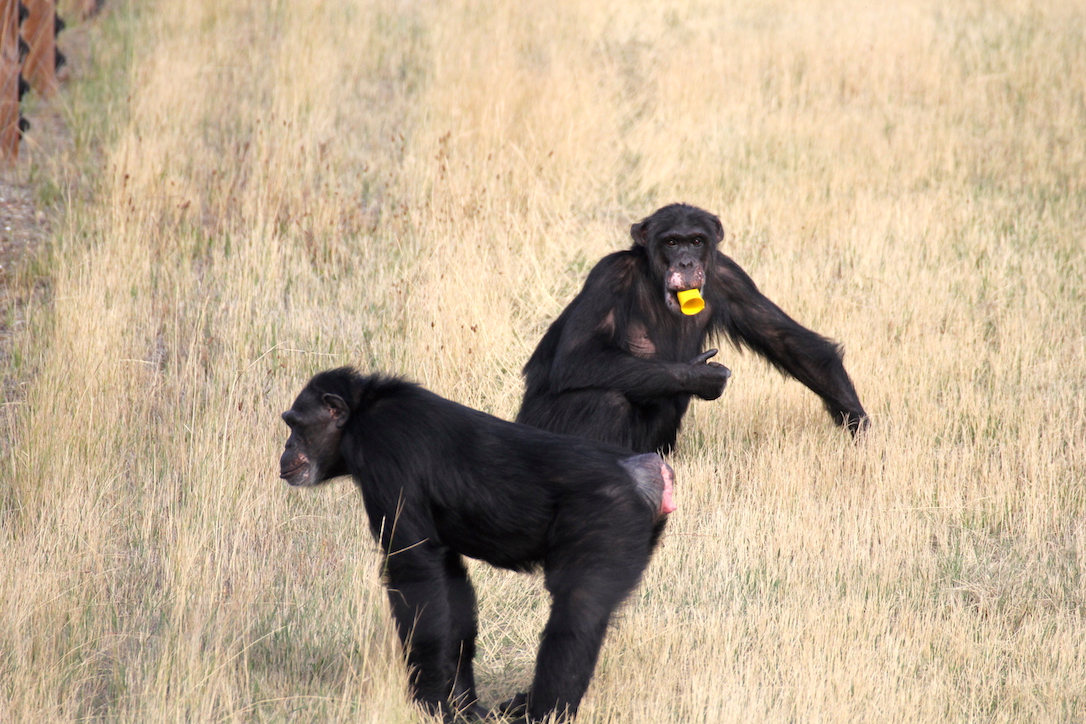
Willy B is quite the tool-user! As you can see, enrichment doesn’t have to be expensive or complicated to be effective.

It was a busy week for the block masons working on the new playrooms. You can see the walls taking shape now that the scaffolding has been taken down. Next week – fingers crossed – the roof goes on and we get ‘dried in’, so to speak. That should ensure that construction can continue even if the weather turns bad. This morning’s dreary snow/rain was an ominous start to the season.

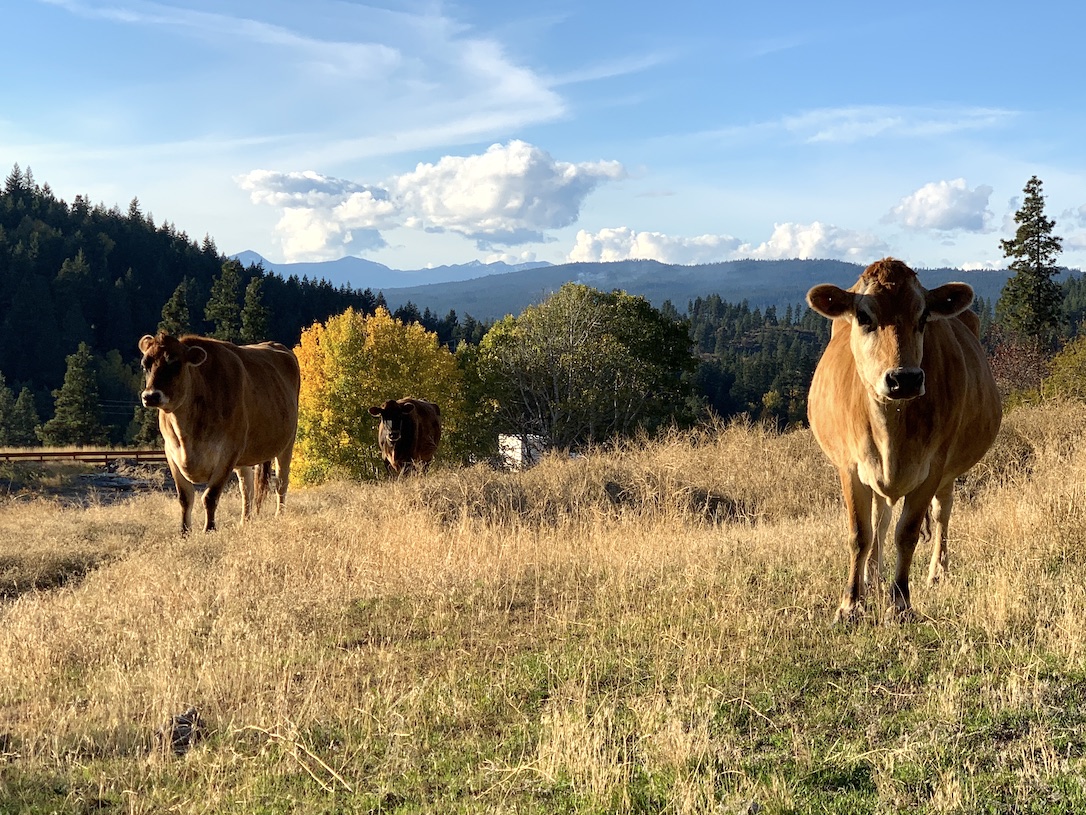
Meanwhile, on the other side of the ranch, the cows were thrilled to regain access to their winter pasture. I’ll have to share the video of them running through the fields in another post.

Filed Under: Enrichment, Latest Videos, Tool Use, Willy B Tagged With: chimpanzee, Enrichment, food puzzle, northwest, rescue, Sanctuary, tool use

Rainy Day Time to Play

October 16, 2020 by J.B.

The chimps weren’t about to let a little rain spoil their fun today.

Filed Under: Latest Videos, Play Tagged With: chimpanzee, northwest, Play, rescue, Sanctuary

Hope for Chimps and other News

October 9, 2020 by J.B.

Lots of news to share today.

First, Diana and the chimps participated in a unique virtual event this morning hosted by Animal Protection of New Mexico and featuring Senator Tom Udall. The purpose of the event was to highlight the plight of the 39 chimpanzees forced to remain at a federal research facility in New Mexico instead of being retired to Chimp Haven, the federal chimpanzee sanctuary. While New Mexico may be a long way from Cle Elum, there are many threads connecting CSNW to this issue. You may recognize that the event’s host, Laura Bonar, was a guest speaker at a past Hoot! gala. Or you may know that Diana hails from the great state of New Mexico. You may even know that several of the Cle Elum Seven’s kids, including Negra’s daughter Heidi, Foxie’s daughter Kelsey, and Jody’s son Levi, all lived at that very research facility. They were lucky to be retired to Chimp Haven in recent years but 39 others have not been as fortunate.

Connections aside, what is most important is that they are all chimpanzees deserving a better life. Urge the NIH to fulfill the CHIMP Act and transfer them to Chimp Haven, where they belong: https://chimpstosanctuary.org

While the event took place live on Facebook and Zoom, you can watch a rebroadcast here.

Next I want to congratulate former intern Jake Funkhouser for publishing yet another paper from the observational research he conducted during his time at CSNW and Central Washington University. His latest analysis demonstrates the extent to which human caregivers are part of the chimps’ social structure – something obvious to anyone working with chimps and yet somehow missing from most discussions of captive primate sociality. Expanding our view of chimpanzee social networks will not only have profound effects on how we understand captive chimpanzee social systems from a scientific perspective but also the way in which we care for chimpanzees in zoos and sanctuaries.

Funkhouser, J.A., Mayhew, J.A., Mulcahy, J. et al. Human caregivers are integrated social partners for captive chimpanzees. Primates (2020). https://doi.org/10.1007/s10329-020-00867-6

And finally, let’s celebrate what looks to be a bit of justice in the fight to protect the few remaining chimpanzees in the American entertainment industry. “Doc” Antle, who you may know from this blog – or more likely Netflix’s recent Tiger King series – was indicted on several felony and misdemeanor charges related to wildlife trafficking. We and our colleagues in the sanctuary and animal protection community have been opposed to and fighting against his exploitation of young chimpanzees and other animals for a long time. Cheers to the Virginia Attorney General’s office and all those working behind the scenes for this victory in the fight against cruelty.

Here in Cle Elum, it was another beautiful day in sanctuary. Jody wadged some cattails while lounging on the greenhouse deck.

Annie laid beside her in a very Annie-esque pose.

Missy kept an eye on Young’s Hill from a perch atop the greenhouse platform.

Later she and her pals Foxie and Annie spent some time climbing and swinging.

Jamie and Burrito waited for Anna to catch up in the gator for a walk/drive around the hill. Apologies to Burrito for shaving far more of his chest than I needed to for an EKG lead during his recent procedure. May it grow back quickly.

Both Missy and Foxie kept a watchful eye on the blockmasons that showed up to protect their equipment from an impending rain storm.

Speaking of the blockmasons, the walls of the new playrooms and greenhouses continue to rise ever higher beneath an elaborate maze of scaffolding. We can’t wait to see Mave, Honey B, and Willy B in their new digs – hopefully just a few short months.

Filed Under: Advocacy, Apes in Entertainment, Chimpanzees in Biomedical Research, Construction Tagged With: apnm, chimpanzee, doc antle, Hope for Chimps, myrtle beach safari, northwest, rescue, Sanctuary

Greeting Tour

September 27, 2020 by Anthony

A while back, one of our followers specifically requested a video of us greeting the chimpanzees in the morning.

Well, here it is.

I hope y’all appreciate the chimps’ enthusiasm as much as I do.

Filed Under: Caregivers, Chimpanzee Behavior, Latest Videos, Play, Young's Hill Tagged With: animal care, Animal Welfare, caregiver, chimp, chimp enrichment, chimpanzee, Chimpanzee Behavior, chimpanzee rescue, chimpanzee retirement, chimpanzee sanctuary, Chimpanzee Sanctuary Northwest, chimpanzees, csnw, Play, Primate behavior, rescue, Sanctuary, sanctuary caregiver, young's hill

Priorities

September 25, 2020 by J.B.

The rain pounds the metal roof above in a deafening roar. Bolts of lightning streak across an ominous sky. Thunder cracks just overhead, shaking the building to its very foundation. This could be how it all ends.

Mmmmm, but this night bag…

Mave’s certainly got her priorities straight. There’s some interesting research dating back to the ’70s showing that primates often overreact to perceived dangers when they are young, and only with the help of those around them do they learn to narrow their alarm calls to specific threats such as predators. Perhaps Mave never got that lesson, as she is the only chimp at CSNW that reacts in such a sustained and exaggerated fashion to thunder. But I can’t blame her. Fortunately for Mave (and our poor dogs), thunderstorms are relatively uncommon here in Central Washington.

Filed Under: Chimpanzee Behavior, Latest Videos, Mave, Weather Tagged With: alarm call, chimpanzee, Mave, northwest, rescue, Sanctuary, storm, thunder, vocalizations

  • « Go to Previous Page
  • Page 1
  • Interim pages omitted …
  • Page 37
  • Page 38
  • Page 39
  • Page 40
  • Page 41
  • Interim pages omitted …
  • Page 159
  • Go to Next Page »

Primary Sidebar

Subscribe To the Blog and Get Notified of New Posts First!

Archives

Calendar of Blog Posts

June 2026
S M T W T F S
 123456
78910111213
14151617181920
21222324252627
282930  
« May    

Categories

SUBSCRIBE TO OUR NEWSLETTER

Footer

PO Box 952
Cle Elum, WA 98922
[email protected]
509-699-0728
501c3 registered charity
EIN: 68-0552915

Official DDAF Grantee

Menu

  • The Chimpanzees
  • Blog
  • About Us
  • You can help
  • Resources
  • Contact
  • Donate

Proud Member of

Connect With Us

Search

Copyright © 2026 Chimpanzee Sanctuary Northwest. All Rights Reserved. Site by Vegan Web Design