• Skip to main content
  • Skip to primary sidebar
  • Skip to footer

Chimpanzee Sanctuary Northwest

Hope. Love. Home. Sanctuary

  • Our Family
    • The Chimpanzees
    • The Cattle
  • Blog
  • About Us
    • Visiting the Sanctuary
    • Philosophy
      • FAQs
      • Mission, Vision & Goals
      • Privacy Policy
    • The Humans
      • Staff
      • Board of Directors
      • Founder
    • Annual Reports
    • The Future of CSNW
    • CSNW In The News
  • You can help
    • Donate
      • Become a Chimpanzee Pal
      • Sponsor A Day
      • Transfer Stock
      • Be A Produce Patron
      • Be a Bovine Buddy
      • Give from your IRA
      • Personalized Stones
      • Bring Them Home Campaign
    • Leave A Legacy
    • Employment Opportunities
    • Volunteer
    • See Our Wish List
    • Events
  • Resources
    • About Chimpanzees
    • Enrichment Database
    • Advocacy
      • Advocacy Action Center
      • Apes in Entertainment
        • Trainers
        • Role of the AHA
        • Greeting Cards
      • Chimpanzees as Pets
      • Roadside Zoos
      • Chimpanzees in Biomedical Research
      • Conservation
        • African Apes
        • Orangutans
  • Shop
    • Merchandise Store
  • Contact
  • DONATE NOW

doc antle

It’s not all sunflowers and rainbows

September 3, 2023 by Diana

Crafting public messaging for a sanctuary can be challenging. As you all know, we tend to err on the side of transparency with Chimpanzee Sanctuary Northwest. One reason that I think we are able to do this (aside from having the best supporters in the world who take the time to really get to know the sanctuary) is that we share so often and include the many different voices from the caregivers who post to this blog.

As a community, I think sanctuaries and animal welfare organizations (us included) can do themselves a disservice by presenting the story of the animals in our care in very black and white terms, sometimes implying that after they are rescued or released from their past lives of exploitation, they never have a bad day again. We know on an intellectual level that this is not possible. As intelligent, emotional, and social beings living in a complex environment, all animals, no matter their circumstances, will continue to experience pain, fear, boredom, depression, and all of the other emotions that they have evolved to experience. At the same time, we want, with all of our hearts, to believe that sanctuary = a paradise free from any negative experiences. Everyone is a sucker for a happy ending.

And sometimes the messaging in our field emphasizes that unreachable ideal. So, when an animal does have a bad day, or gets hurt, or is struggling with an emotional or social issue, followers (particularly the more casual followers who may not know as much about a sanctuary) can become disenchanted and accusatory, which could lead, ironically, to a sanctuary being less transparent.

Of course, there are facilities out there that are truly not good for a variety of reasons. Unfortunately, anyone can call their place a sanctuary. These facilities (I’m thinking of Myrtle Beach Safari, as an example), may have a very polished social media presence with multiple trainers that have millions of followers, all the while they deal in wildlife trafficking, dangerously misrepresent the true nature of the animals in their care, and grossly exaggerate (to put it mildly) their claims of giving funds towards the conservation of endangered species.

It’s frustrating.

All legitimate sanctuaries [important side note: Check this page on our website for tips and links on how you can tell a legitimate sanctuary from a pseudo-sanctuary], want the best for those in their care and they want people to support their efforts to make this happen. It can feel risky to open up and share the difficult times or just the reality of captivity, like the fact that the chimps are inside and “behind bars“). But, if all we ever shared were the chimpanzees in their outdoor habitats and never talked about the hard days, it would give everyone the wrong picture and create an ideal that no sanctuary could live up to.

To be quite honest, though, Chimpanzee Sanctuary Northwest is pretty great :). The animals here experience a good life. Not a perfect life, not a life devoid of all suffering, but a good one.

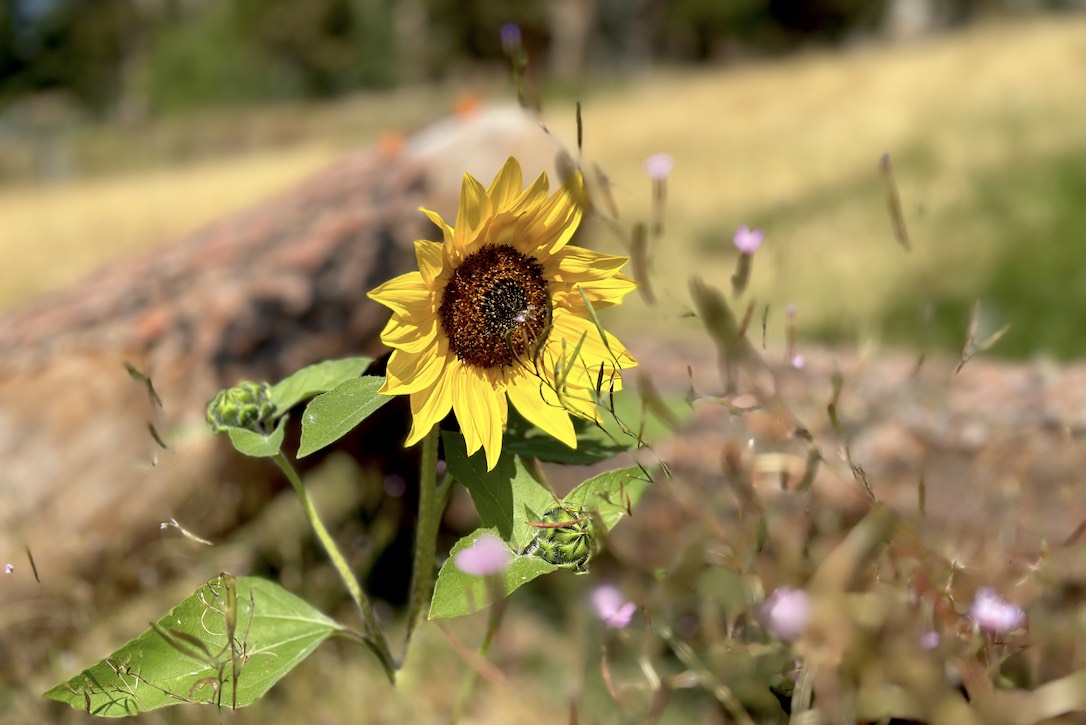
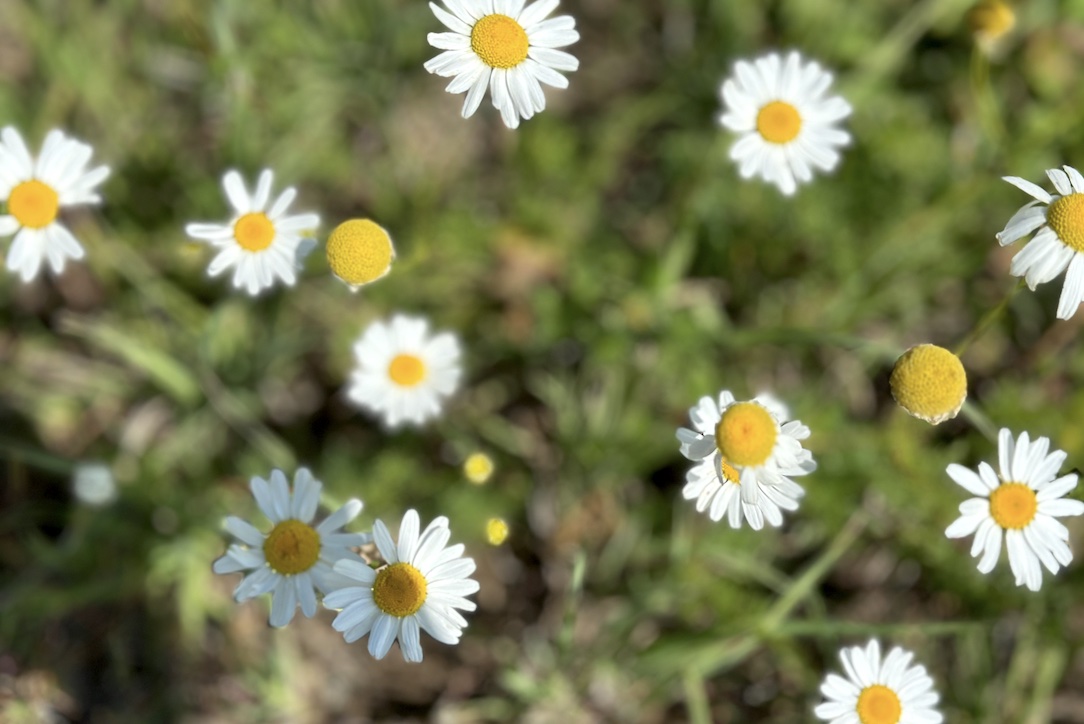
Here are some photos of flowers blooming all around them, to disprove my point about it not being all about sunflowers:

This is a sunflower that came up spontaneously, we think from a discarded or digested sunflower seed from the chimpanzees. They are becoming their own gardeners!
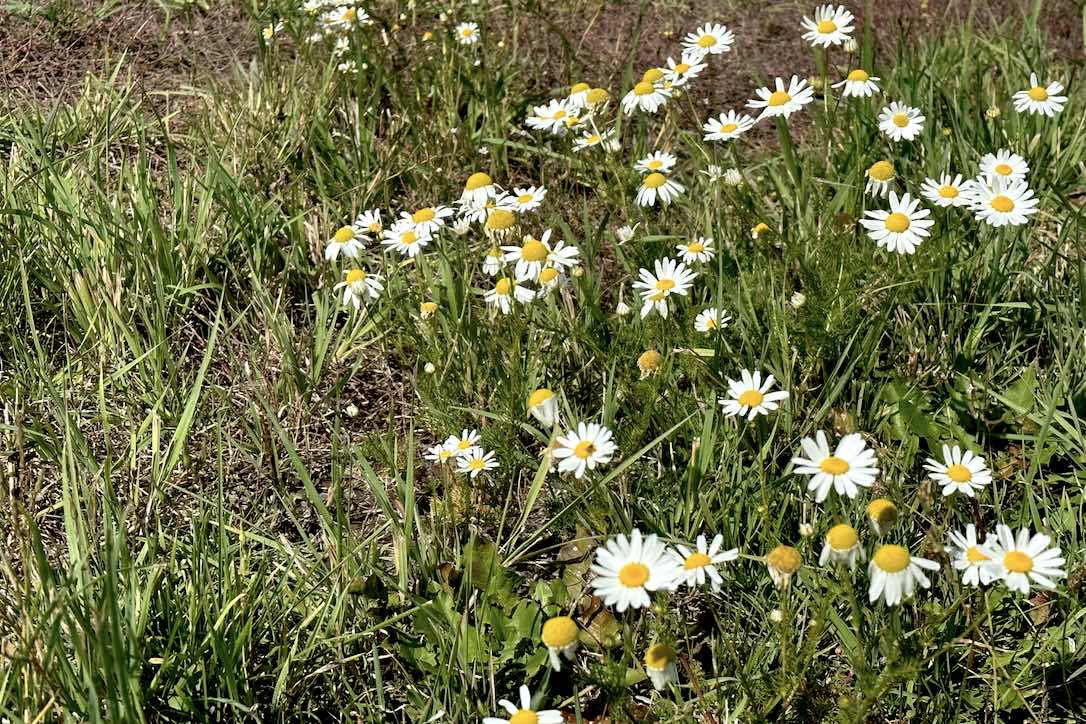
I’m not sure where these came from. I just noticed a small field of them on Young’s Hill. They look like chamomile to me.
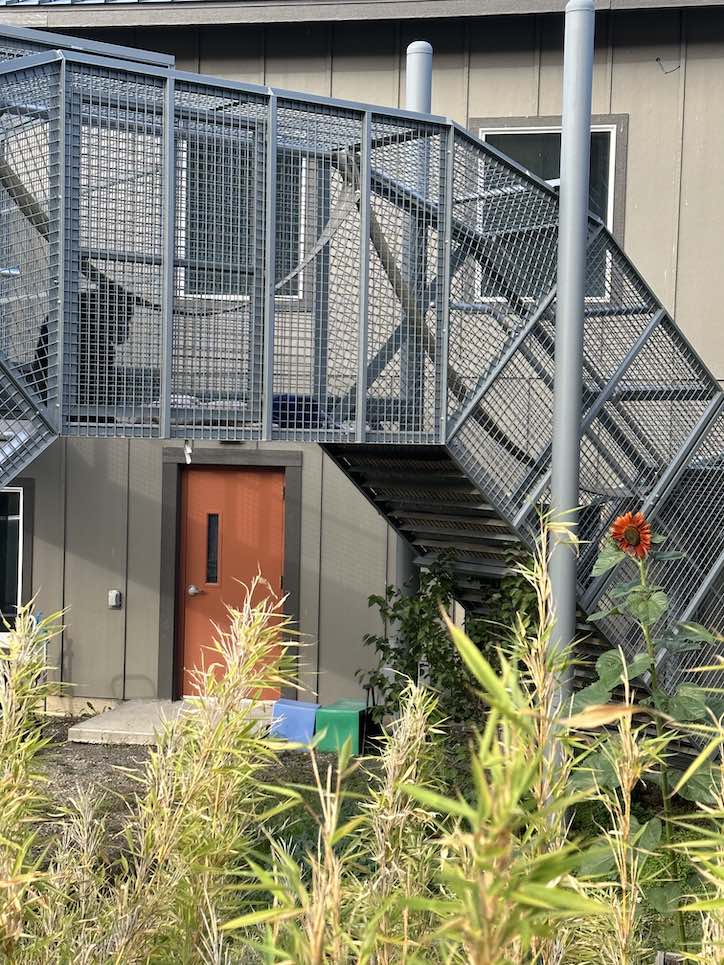
Here’s an update on that tall sunflower that I wrote about a couple of weeks ago. With the chute and door behind for scale, you can see how tall it is!
This was a few days ago:
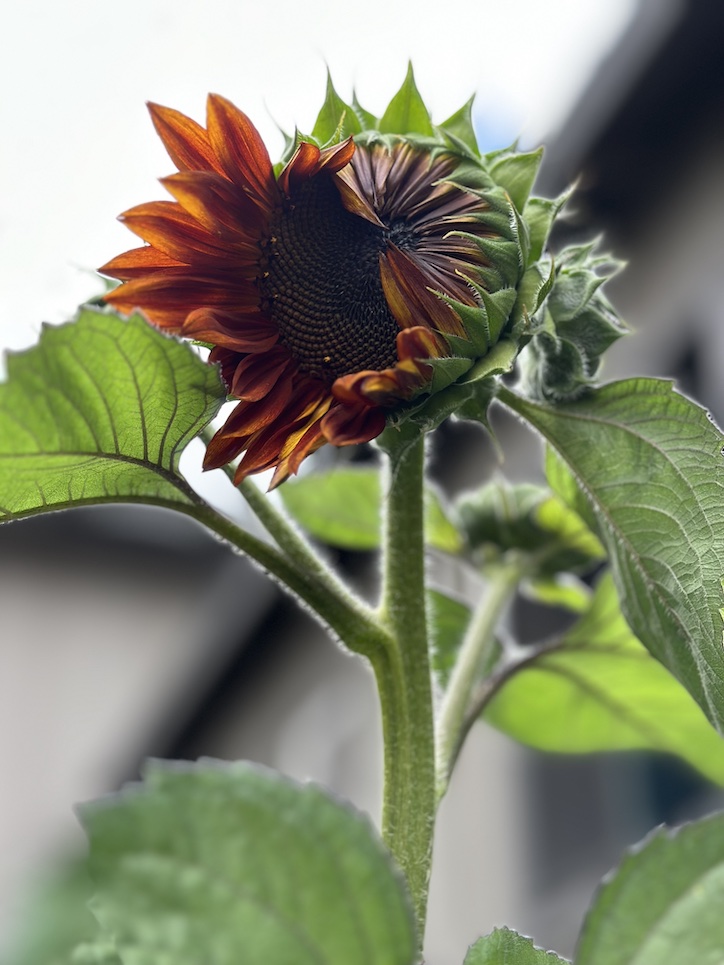
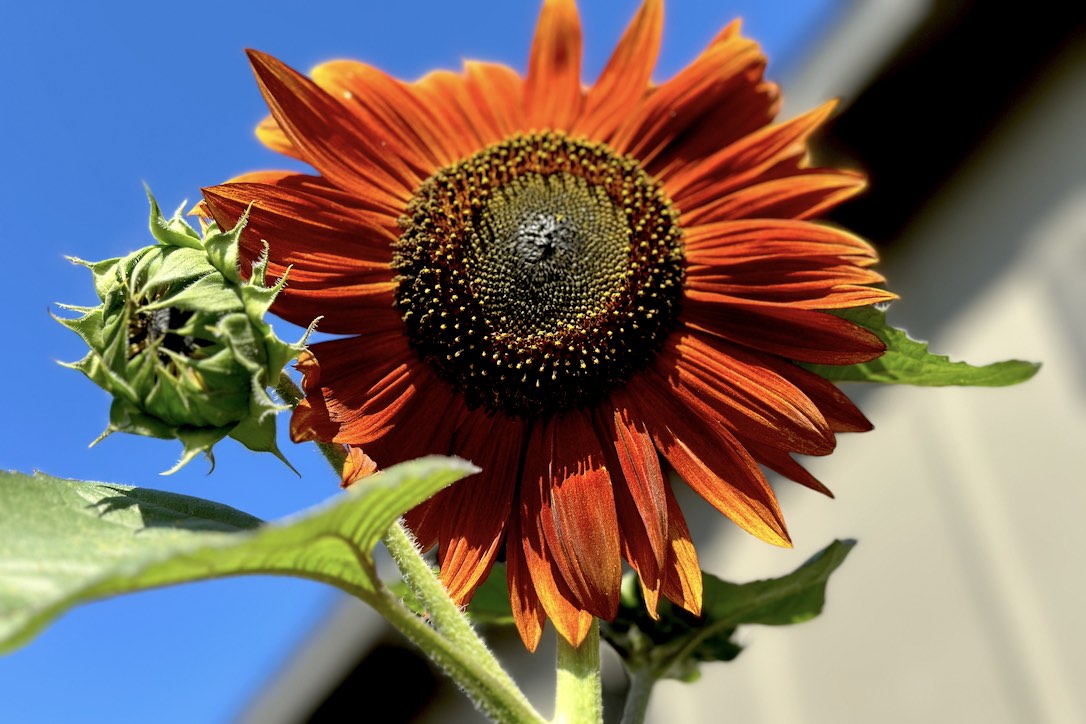
and this is how it looked this morning:
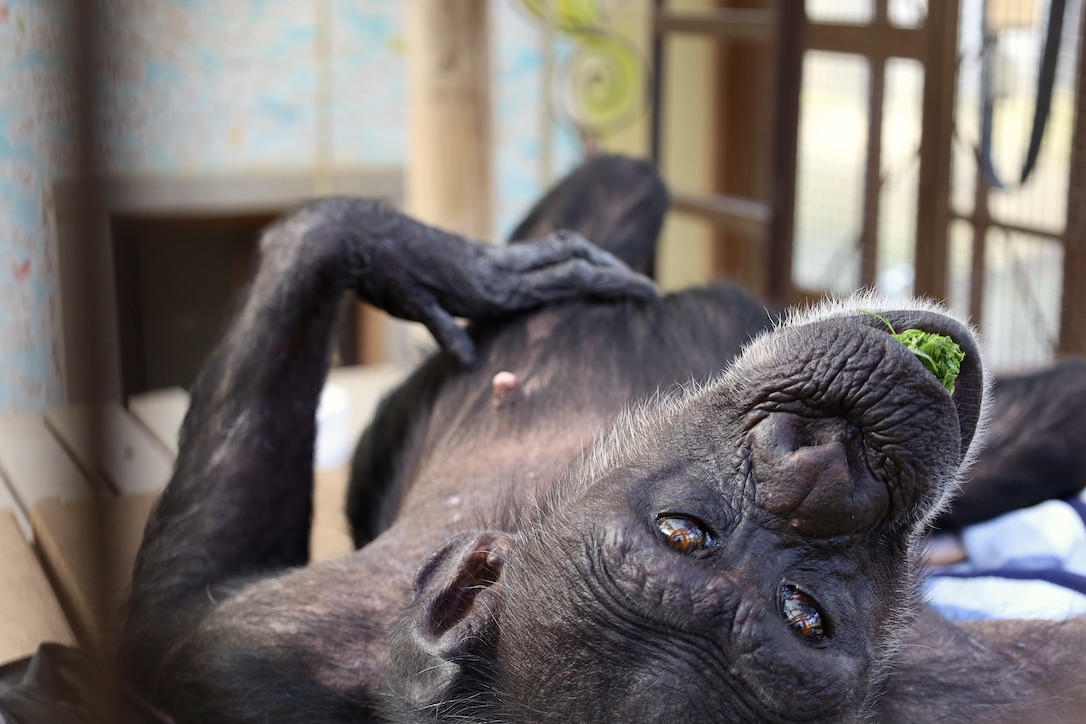
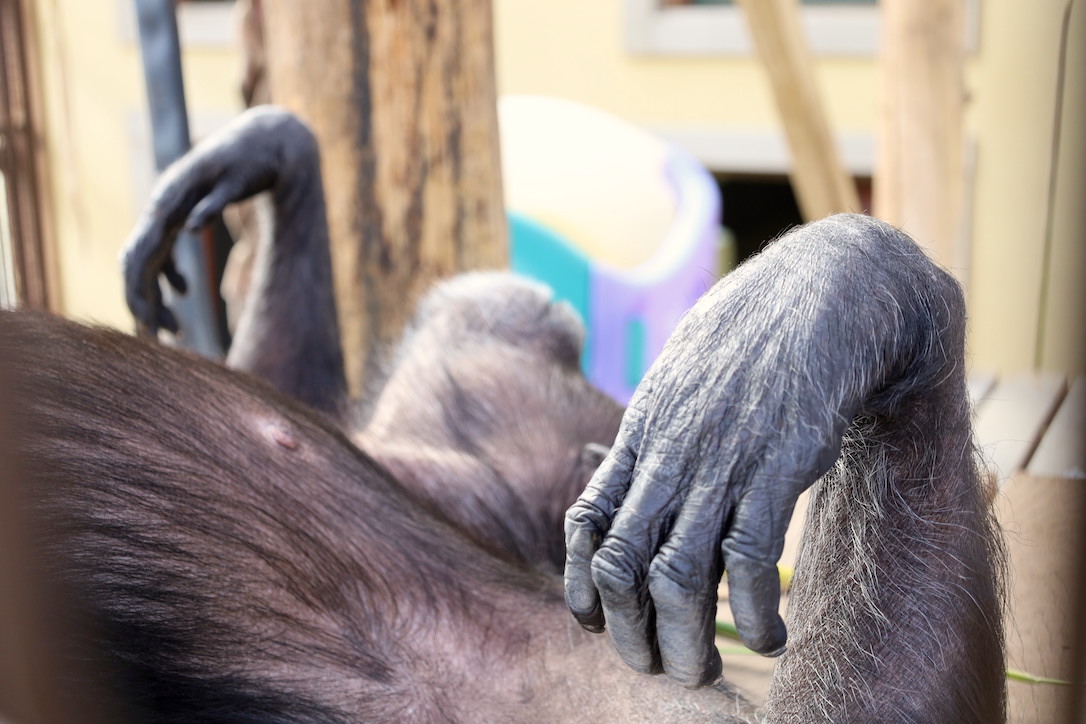
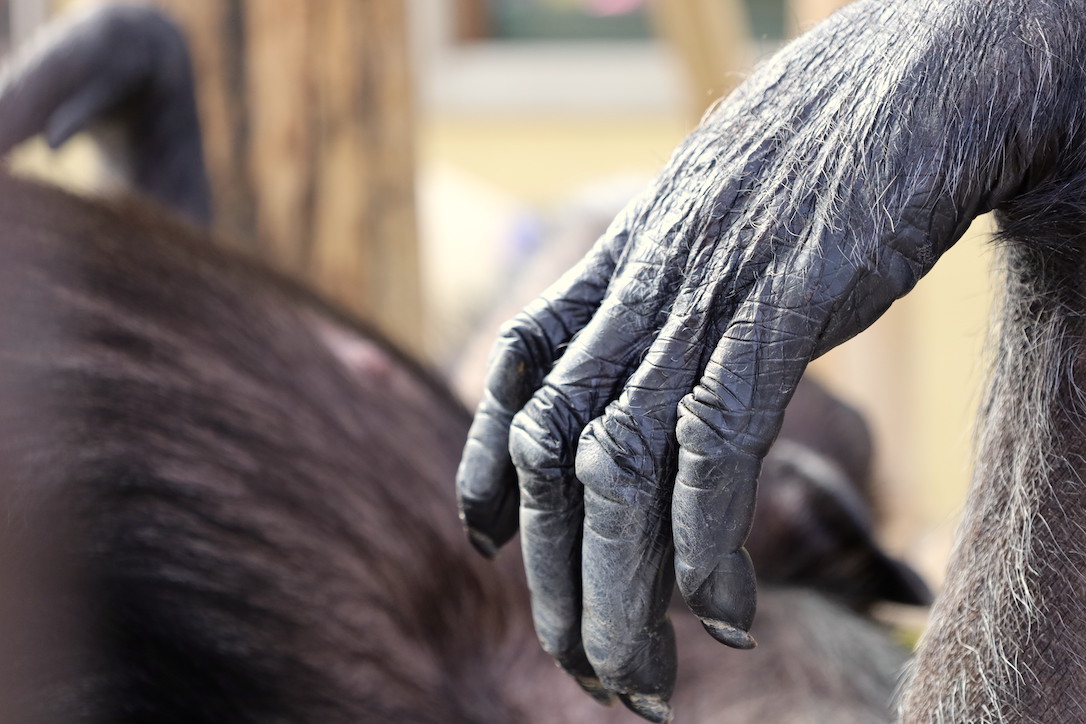
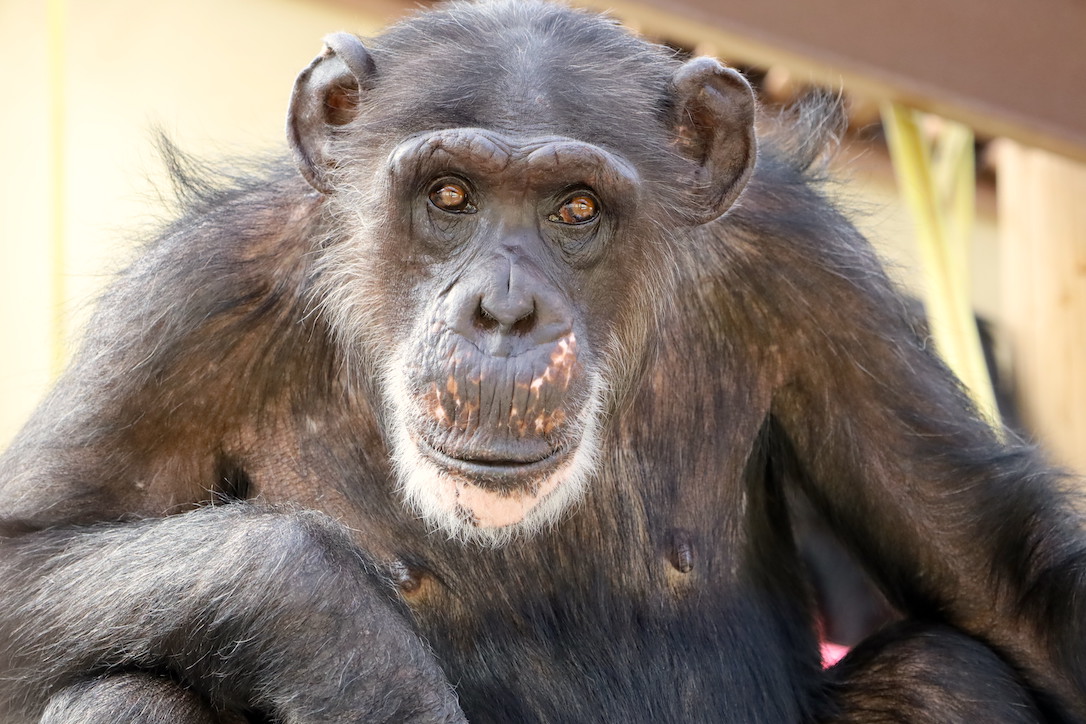
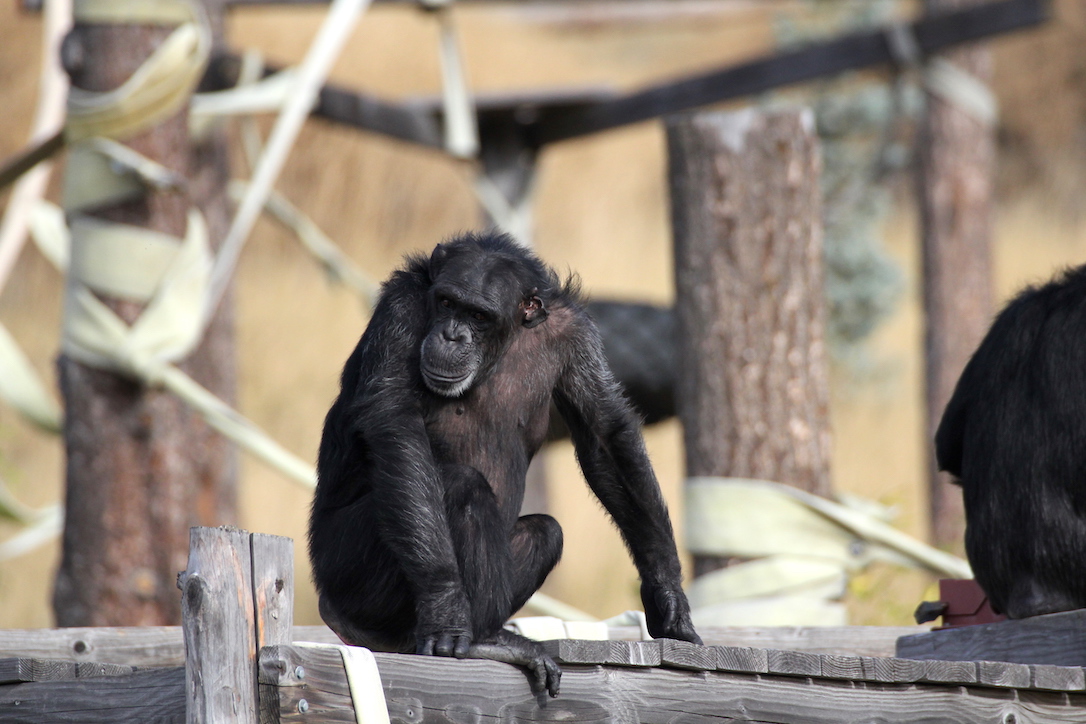
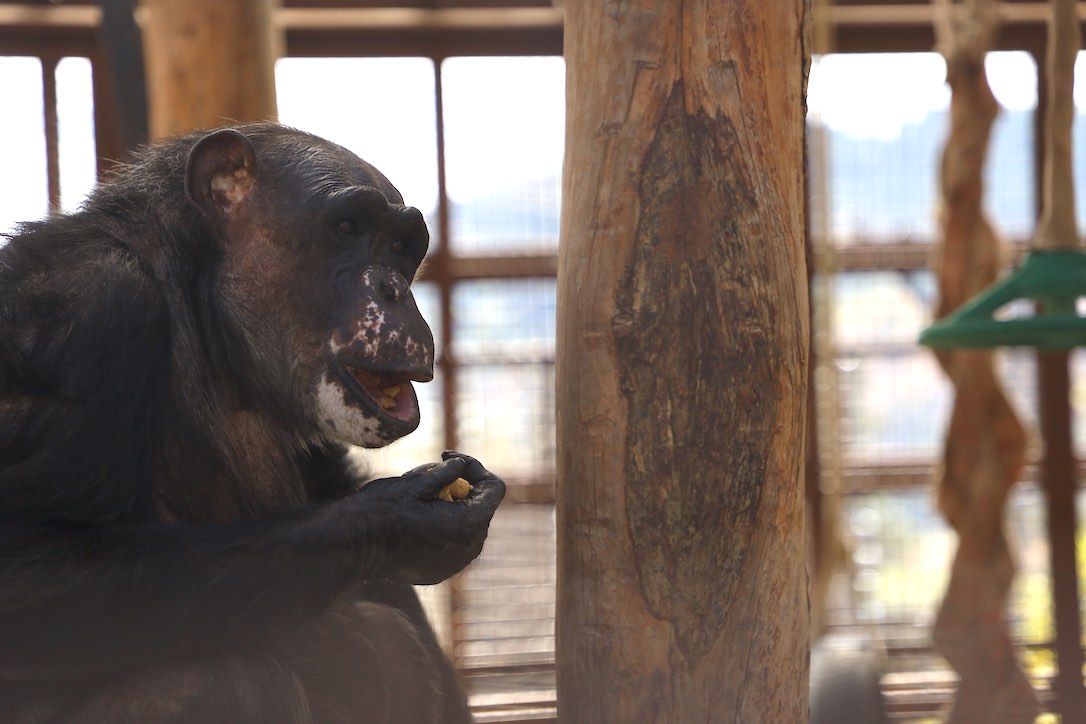
And here is 50+ year old Negra, more than 15 years into her sanctuary life, thoroughly enjoying part of today’s lunch forage:
Filed Under: Advocacy, Apes in Entertainment, Negra Tagged With: chow, doc antle, myrtle beach safari, Negra, sunflower, transparency

Hope for Chimps and other News

October 9, 2020 by J.B.

Lots of news to share today.

First, Diana and the chimps participated in a unique virtual event this morning hosted by Animal Protection of New Mexico and featuring Senator Tom Udall. The purpose of the event was to highlight the plight of the 39 chimpanzees forced to remain at a federal research facility in New Mexico instead of being retired to Chimp Haven, the federal chimpanzee sanctuary. While New Mexico may be a long way from Cle Elum, there are many threads connecting CSNW to this issue. You may recognize that the event’s host, Laura Bonar, was a guest speaker at a past Hoot! gala. Or you may know that Diana hails from the great state of New Mexico. You may even know that several of the Cle Elum Seven’s kids, including Negra’s daughter Heidi, Foxie’s daughter Kelsey, and Jody’s son Levi, all lived at that very research facility. They were lucky to be retired to Chimp Haven in recent years but 39 others have not been as fortunate.

Connections aside, what is most important is that they are all chimpanzees deserving a better life. Urge the NIH to fulfill the CHIMP Act and transfer them to Chimp Haven, where they belong: https://chimpstosanctuary.org

While the event took place live on Facebook and Zoom, you can watch a rebroadcast here.

Next I want to congratulate former intern Jake Funkhouser for publishing yet another paper from the observational research he conducted during his time at CSNW and Central Washington University. His latest analysis demonstrates the extent to which human caregivers are part of the chimps’ social structure – something obvious to anyone working with chimps and yet somehow missing from most discussions of captive primate sociality. Expanding our view of chimpanzee social networks will not only have profound effects on how we understand captive chimpanzee social systems from a scientific perspective but also the way in which we care for chimpanzees in zoos and sanctuaries.

Funkhouser, J.A., Mayhew, J.A., Mulcahy, J. et al. Human caregivers are integrated social partners for captive chimpanzees. Primates (2020). https://doi.org/10.1007/s10329-020-00867-6

And finally, let’s celebrate what looks to be a bit of justice in the fight to protect the few remaining chimpanzees in the American entertainment industry. “Doc” Antle, who you may know from this blog – or more likely Netflix’s recent Tiger King series – was indicted on several felony and misdemeanor charges related to wildlife trafficking. We and our colleagues in the sanctuary and animal protection community have been opposed to and fighting against his exploitation of young chimpanzees and other animals for a long time. Cheers to the Virginia Attorney General’s office and all those working behind the scenes for this victory in the fight against cruelty.

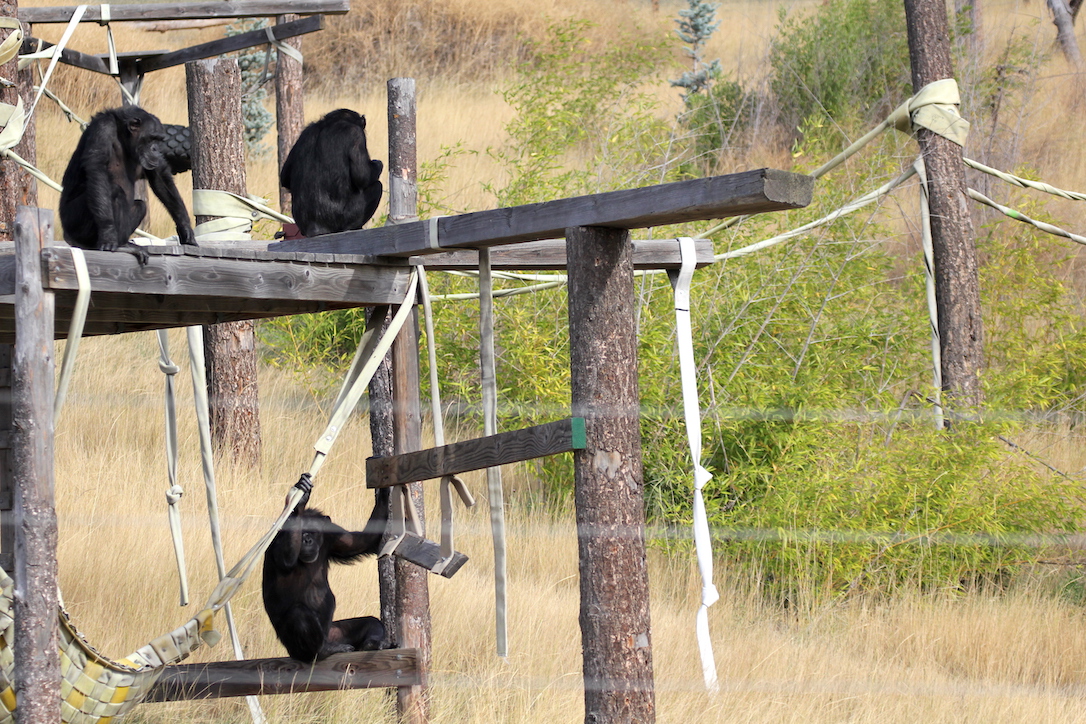
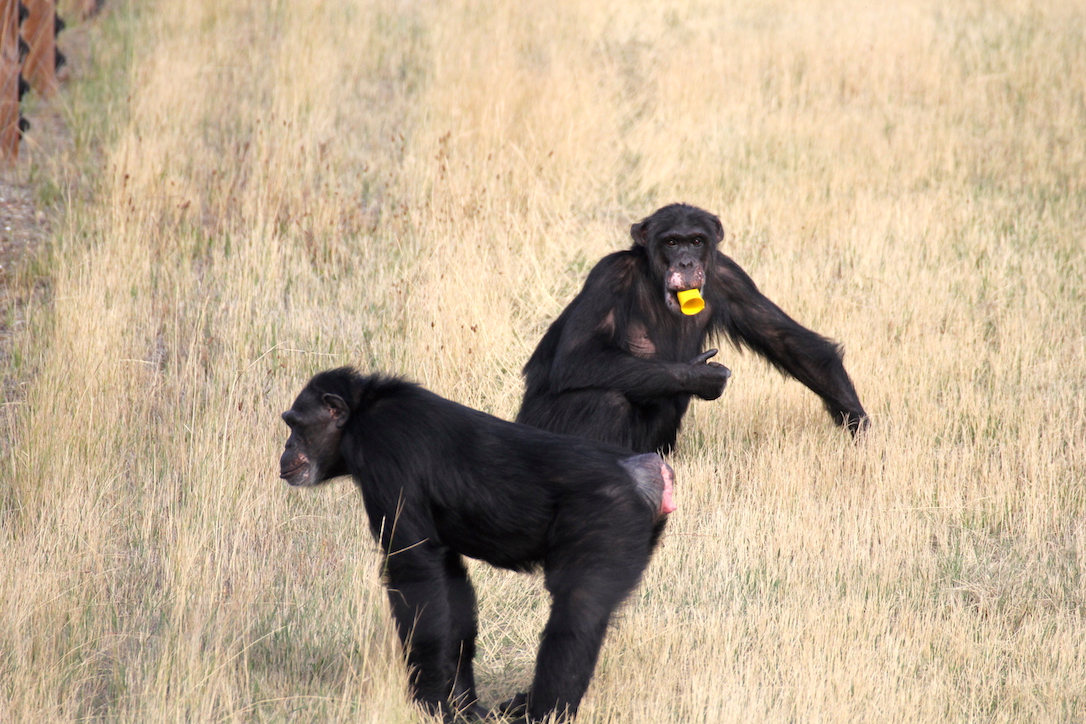
Here in Cle Elum, it was another beautiful day in sanctuary. Jody wadged some cattails while lounging on the greenhouse deck.

Annie laid beside her in a very Annie-esque pose.

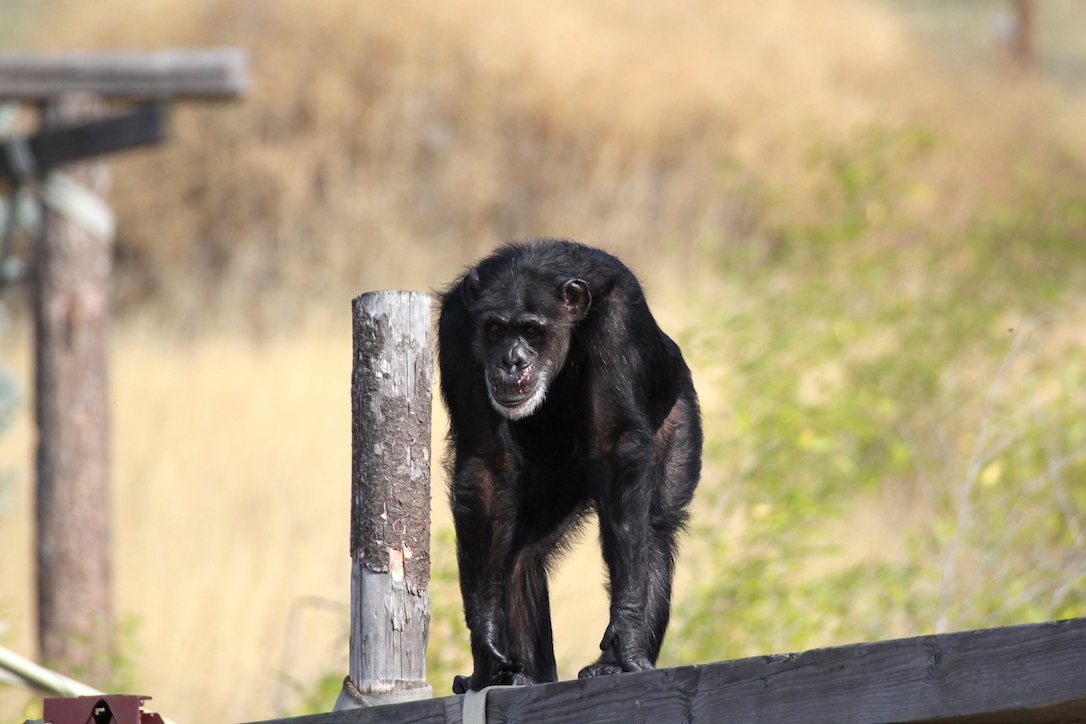
Missy kept an eye on Young’s Hill from a perch atop the greenhouse platform.

Later she and her pals Foxie and Annie spent some time climbing and swinging.

Jamie and Burrito waited for Anna to catch up in the gator for a walk/drive around the hill. Apologies to Burrito for shaving far more of his chest than I needed to for an EKG lead during his recent procedure. May it grow back quickly.

Both Missy and Foxie kept a watchful eye on the blockmasons that showed up to protect their equipment from an impending rain storm.

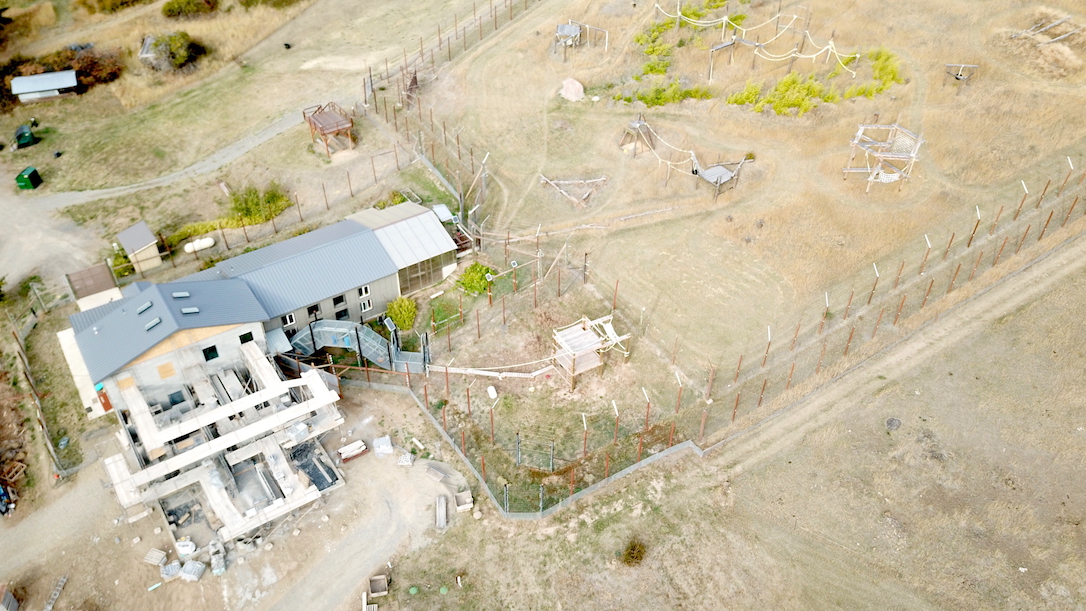
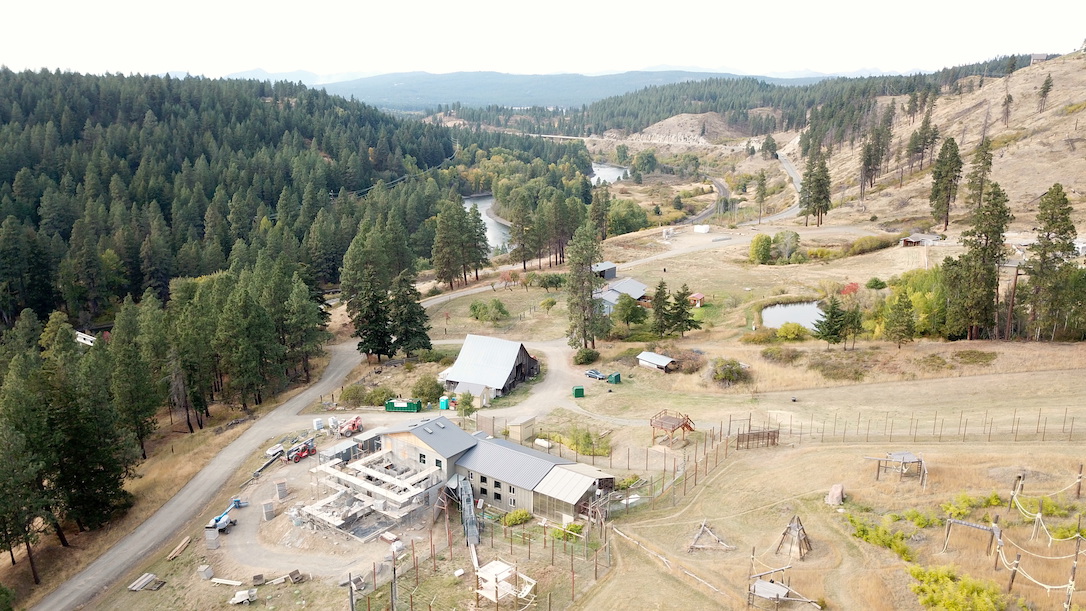
Speaking of the blockmasons, the walls of the new playrooms and greenhouses continue to rise ever higher beneath an elaborate maze of scaffolding. We can’t wait to see Mave, Honey B, and Willy B in their new digs – hopefully just a few short months.

Filed Under: Advocacy, Apes in Entertainment, Chimpanzees in Biomedical Research, Construction Tagged With: apnm, chimpanzee, doc antle, Hope for Chimps, myrtle beach safari, northwest, rescue, Sanctuary

Take Action Tuesday: When “cute” animals reveal an ugly truth

February 10, 2015 by Debbie

If you’re reading this, you probably have a love of animals, so when you see videos and photos of animals that make you laugh or melt your heart, you want to share them. Us too! Unfortunately, there’s often an ugly truth behind “cute” videos and photos.

A prime example is the slow loris videos that have circulated. The slow loris is such an adorable primate, and the videos seem to show these animals in a happy environment. But the ugly truth is that these endangered animals are part of the illegal exotic pet trade and the behaviors that may look cute to us are actually signs of fear and stress.

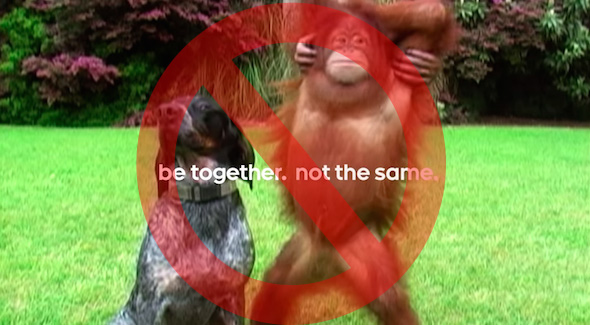
A new example is the Android commercial called “Friends Furever” promoting unlikely animal friendships. Upon first glance, the video clips seem like a heartwarming example of friendship breaking the species barrier, and your first instinct might be to share the commercial with other animal lovers. The ugly reality is that exotic animals such as the orangutan and the elephant seen in the commercial are trained at a very young age (when they should be with their mothers) to pose for photos with humans, and they are forced into relationships with other species for the sole purpose of creating and circulating “cute” photos and videos. The orangutan, Suryia, and the elephant, Bubbles, both live at Myrtle Beach Safari in South Carolina.

android-ad-suryia-roscoe-no-sign

Myrtle Beach Safari, operated by Bhagavan (Doc) Antle, has a history of repeated animal welfare violations. Masked behind what they claim is a sanctuary preserve, the facility regularly exploits their wild animals for a variety of media productions and endangers the public by offering “hands-on” experiences and traveling shows. Apes are wild animals, and without proper enclosures and respect for their true nature, many have attacked and brutally mauled humans.

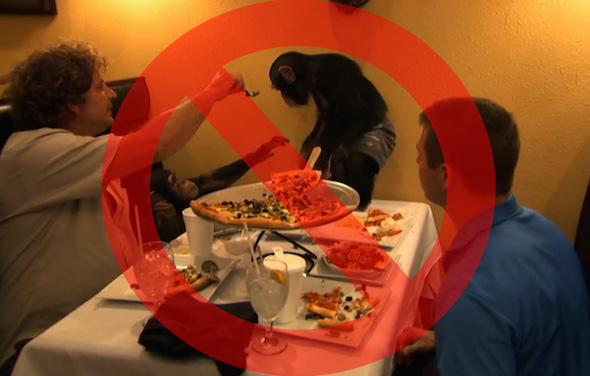
Just last summer, two young chimpanzees were taken to a movie theater to garner attention for the Safari. Recently, these same chimpanzees, Vali and Sugriva, were seen on an episode of A&E’s Wild Transport, where they were taken to a crowded restaurant—creating yet another public safety risk just for a glorified publicity stunt.

sugriva-vali-pizza-restaurant-table-no-sign

In that episode, Vali and Sugriva were being transported to a facility in Miami called Jungle Island, where they have special “hands-on” encounters with guests, sometimes celebrities, which gains even more attention for the Safari.

After speaking with Eyes on Apes and other advocacy groups about the issues surrounding Vali and Sugriva’s appearance in the show, the A&E Network decided to cancel the series—setting a precedent for other companies to follow.

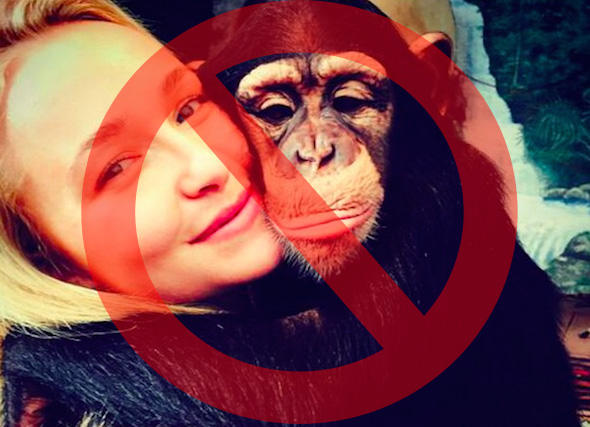
Unfortunately, actress Hayden Panettiere very recently posted a photo to her Twitter account of her holding the chimpanzee Vali at Jungle Island.

panettiere-vali-jungle-island-no-sign

Images like this with humans in contact with chimpanzees perpetuate the misunderstanding about chimpanzees’ true nature and encourage the exotic pet industry.

Vali, Sugriva, Suryia, and dozens of other exotic animals under Antle’s care are living at a romanticized roadside zoo. These animals deserve better—they deserve a true sanctuary home where they can live out their lives without being shuffled from one exhibition to another.

Companies such as Pfizer have responded favorably when they learned the truth about Myrtle Beach Safari. We’d like to call upon Android to make the same compassionate decision.

We urge you to write to Android and Hayden Panettiere and ask that they remove any material that misinforms the public and promotes the Safari.

You can leave comments on Android’s Facebook page or the post of the Friends Furever video, reply to their tweet on Twitter about the commercial, and reply to Panettiere’s photo on Twitter as well. You can also email Panettiere, c/o her publicist, at [email protected] . We’ve provided examples of what to write below.

In the big picture, when you see “cute” photos and videos of animals, ask yourself where these animals came from, where they are living now, what their future is likely to be like, and if the behaviors you see are the choice of the animal. You might be able to search and find the answers to these questions, or you might be left with more questions. When in doubt, don’t hit that share or forward button, because you might just be perpetuating exploitative, dangerous, or illegal activity.

Sample Facebook comment to Android:

I was disappointed to see that your new “Friends Furever” commercial promotes pseudo-sanctuaries such as Myrtle Beach Safari, where “unlikely animal friendships” like Suryia the orangutan and Roscoe the dog are forced after exotic animals are taken from their mothers at a very young age. In the wild, baby orangutans stay with their mothers until they are eight years old, so you can imagine how important that bond is for them. Not only does the Safari mislead the public into believing that these are “cute” relationships, but they also regularly put people at risk with public exhibitions of wild animals and exploit the animals for entertainment—things a reputable sanctuary would never do. This glorified roadside zoo has also had numerous animal welfare violations (EyesOnApes.org/suryia).

You’re not the first to be duped by this pseudo-sanctuary. Pfizer chose to alter a Robitussin commercial that was originally aired using Suryia, replacing the live animal scenes with realistic, high-tech computer generated images after they learned the truth behind the Safari. I urge you to make the same decision involving the clips of the exotic animals in your commercial. Thank you for your consideration of my comments on this urgent matter.

Sample Tweet to Android:

@Android please change #AndroidBFFs ad to exclude clips of animals in roadside zoos. Robitussin did it before! See more at EyesOnApes.org/suryia

@Android “cute” #AndroidBFFs animals reveal an ugly truth. Don’t glorify roadside zoos! See more at EyesOnApes.org/suryia

*Sample email to Hayden Panettiere:

Dear Ms. Panettiere,

I know that you are an animal lover and have spoken out about the dolphin slaughter in Japan. I applaud you for your passion! Because of your obvious concern for animals, I was shocked and disappointed to see a photo of you and a baby chimpanzee named Vali circulating social media. You should know that when people see you holding a baby chimpanzee it perpetuates the cruel pet and entertainment industries. Baby chimpanzees belong with their mothers, and they shouldn’t be shuffled around to exhibitions or hands-on encounters. Vali was reportedly purchased from an animal breeder, and he belongs in a true sanctuary where the focus would be on his needs, not the desire of the public to have photo-ops with him. I urge you to please remove the photo from your social media and pledge to never participate in hands-on experiences with captive wild animals again.

Sample Tweets to Hayden Panettiere:

@haydenpanettier please remove the photo of you and Vali the chimp. He deserves better! Learn more EyesOnApes.org/vali

@haydenpanettier love chimpanzees like you love dolphins – don’t participate in their exploitation! EyesOnApes.org/vali

RT! Tell @haydenpanettier to remove photo of her w/ chimp – they’re wild animals & shouldn’t be used for publicity. EyesOnApes.org/vali

Lastly, please share this alert with friends and family. Change can only happen with more awareness! Thank you for speaking up for apes in need.

*If you email Hayden, please remember to BCC [email protected] for tracking purposes. Thank you!!

Filed Under: Advocacy, Apes in Entertainment Tagged With: #AndroidBFFs, advocacy, android, animal protection, animal rescue, animal rights, Animal Welfare, apes in entertainment, chimp, chimpanzee, chimpanzee rescue, chimpanzee retirement, chimpanzee sanctuary, Chimpanzee Sanctuary Northwest, Cle Elum 7, Cle Elum Seven, csnw, doc antle, eyes on apes, friends furever, hayden panettiere, jungle island, myrtle beach safari, odd friendships, Sanctuary, sugriva, sugriva chimp, suryia, suryia and roscoe, t.i.g.e.r.s., unlikely animal friends, vali, vali chimp

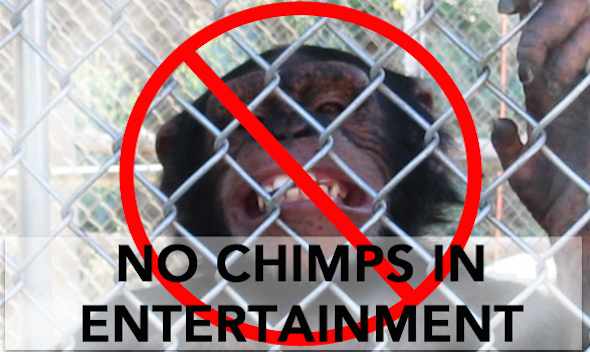
Chimpanzees Don’t Belong on Either Side of the Theater Screen

July 22, 2014 by Debbie

A story appeared recently in the Daily Mail and Good Morning America showing images and video of two young chimpanzees, Vali and Sugriva, going to the theater with their “handlers” and watching the film Dawn of the Planet of the Apes. The irony is that the two young chimpanzees were exploited for this publicity stunt, and brought into a theater to watch a movie that purposefully avoided using live ape actors… (Read more on Care2)

Angel was kept in a Hollywood training facility and routinely beaten and abused into submission by her trainers. She displayed a toothy grin—called a fear grimace—just at the sight of a camera. Angel was rescued by the Center for Great Apes as part of a legal suit against her former trainer.

For more on the training facility Vali and Sugriva live at, visit our trainer page on Eyes on Apes.

Thank you to Care2 for posting our op-ed on this issue! Please share the article with your friends and get the word out that chimpanzees do not belong on either side of the theater screen.

Filed Under: Advocacy, Apes in Entertainment Tagged With: animal protection, animal rescue, animal rights, Animal Welfare, apes in entertainment, care2, chimp sanctuary, chimpanzee, chimpanzee rescue, chimpanzee retirement, chimpanzee sanctuary, Chimpanzee Sanctuary Northwest, chimps in entertainment, Cle Elum 7, Cle Elum Seven, csnw, daily mail, dawn of the planet of the apes, doc antle, myrtle beach safari, pet chimps, primate protection, primate rescue, Sanctuary, sugriva, tigers, vali

Take Action Tuesday: New children’s book exploits Anjana and tiger cubs

October 8, 2013 by Debbie

EOA take action tuesday

Exploitation comes in many forms, and, unfortunately, it isn’t always obvious at first glance. Many of you have seen the “cute” pictures of a baby chimpanzee holding white tiger cubs or the photos and videos of an orangutan with a hound dog. These images and stories have been circulating and re-released in many forms over the last six years. All of these animals reside at a facility called The Institute of Greatly Endangered and Rare Species (T.I.G.E.R.S.).

Although T.I.G.E.R.S preaches about species conservation and they claim to contribute toward helping endangered species, the source of their money-making is nowhere near ethical. The premise of their facility revolves around photo ops and up-close and hands-on interaction with these animals, using them in traveling shows, and leasing them out for a variety of media productions. Displaying wild animals in this way involves numerous animal welfare concerns and poses serious public safety risks.

Suryia, the same orangutan who is seen with the hound dog, appeared in a Robitussin ad in 2010. You may remember that this ad was altered as a result of our advocacy efforts and other public pressure – Suryia was replaced by a CGI chimpanzee in the ad.

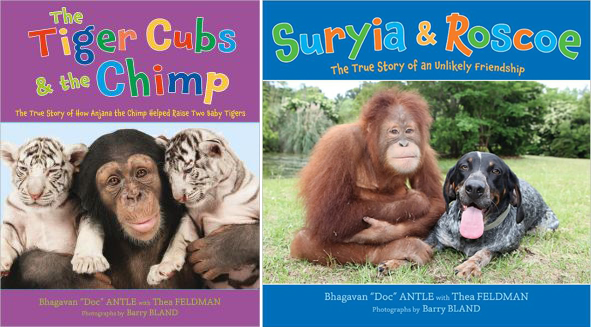
T.I.G.E.R.S. director Bhagavan “Doc” Antle continues to use the “unlikely animal friendships” angle to exploit endangered species and give the wrong impression of the proper care of these animals. He has published children’s books about Suryia and the hound dog, and now has a new book about Anjana the chimpanzee and the tiger cubs. It is scheduled to release in November, just in time for the holidays.

The books present children with the misleading notion that T.I.G.E.R.S. is a sanctuary preserve, when in truth it is a glorified roadside zoo with a history of violations for improper housing and care for the animals. Antle is also famous for showcasing ligers (a lion-tiger cross) who notoriously have genetic abnormalities, neurological disorders, and short life expectancies due to their unnatural breeding.

Doc Antle's children's books

Don’t support this exploitation. When you receive an email or see images of baby apes with other animals on Facebook, Twitter, Pinterest, etc, take the opportunity to investigate where the animals are living, and politely educate people on the true circumstances behind the photos. If the image is an orangutan with a dog or a chimpanzee with tiger cubs, now you know the real story.

Encourage your friends and family to avoid purchasing Antle’s children’s books. As an alternative, we suggest purchasing an educational children’s book about chimpanzee behavior like “A Chimpanzee Tale.” You can also give the books negative ratings on Amazon, which may deter others from purchasing them.

Sample response to emails and Facebook posts with “cute” pictures of baby apes:

Sadly, this picture is not cute and cuddly as it may appear. Portraying these exotic animals as cute and cuddly attractions seriously misinforms people about the true nature of these beings and perpetuates the pet and entertainment industries. Infant apes should be with their mothers — not tiger cubs, dogs, or humans. Unfortunately, the facilities where these pictures originate are breeding exotic animals, which leads to a lifetime of unwarranted imprisonment for those animals. No respectable sanctuary would intentionally breed, nor would they put their animals on display or exploit them for entertainment purposes.

Sample negative feedback for Amazon’s listing of Anjana and Suryia’s books:

This book paints a false picture of a hopeful, loving environment for Anjana and the other exotic animals at T.I.G.E.R.S. Unfortunately, the facility regularly exploits these animals for entertainment purposes, endangers the public by offering “hands-on” experiences, and breeds exotic animals, leading to a lifetime of unwarranted imprisonment. No reputable sanctuary would intentionally breed, nor would they put their animals on display or exploit them for entertainment purposes. Please do not buy this book for your children. It is highly misleading and purchasing it will only contribute to the continued exploitation of these highly intelligent beings.

Filed Under: Advocacy, Apes in Entertainment, Sanctuary Tagged With: advocacy, animal protection, animal rescue, animal rights, Animal Welfare, anjana, chimpanzee, chimpanzee rescue, chimpanzee sanctuary, Chimpanzee Sanctuary Northwest, Cle Elum 7, Cle Elum Seven, csnw, doc antle, ligers, primate protection, primate rescue, roadside zoo, roscoe dog, Sanctuary, suryia, t.i.g.e.r.s., the institute of greatly endangered and rare species, tiger cubs

Pfizer changes Robitussin ad

November 9, 2010 by Diana

Primate Patrol is an advocacy branch of CSNW that is dedicated to ending the exploitation of great apes in entertainment. If you are not already signed up for Primate Patrol action alerts, sign up here: www.primatepatrol.org/join and be sure to like the Primate Patrol Facebook page.

Volunteer Debbie has been busy this summer and fall sending out alerts to the list, and we’ve seen positive results. Combined with other organizations and activists, we’ve reached Dodge, Whatcom Educational Credit Union, and now Pfizer.

At the end of this post is the alert about Pfizer’s decision to change their recent ad for Robitussin that featured an orangutan. The orangutan, Suryia, is owned by a facility called The Institute of Greatly Endangered and Rare Species (T.I.G.E.R.S.). You’ve probably seen photos and videos of Suryia with a dog along with a story about their “friendship.”  Photos of a young chimpanzee pictured with a baby white tiger that have circulated widely are also from T.I.G.E.R.S.

T.I.G.E.R.S. is a confusing organization. They claim to work for conservation, yet they train the animals in their care to perform and regularly exploit them for all sorts of entertainment purposes. They breed animals and pride themselves on putting on live shows with exotic animals, including ligers, which are a hybrid species not seen in the wild. They allow visitors to get up close and personal and “cuddle” with potentially dangerous animals, which we all know is a recipe for disaster and not in the best interest of the animals. For film use they offer that if they don’t own a particular species of animal, they “can find it.”  T.I.G.E.R.S. in the business of exploiting exotic animals for profit, and Pfizer was apparently able to see this after being contacted by great ape activists.

The altered ad that Pfizer released could still be considered problematic. The human actor/computer generated chimpanzee that replaced Suyria the orangutan is actually quite good, and people may not realize he is not a real chimpanzee, so the message of great apes being funny creatures to laugh at is still present in the ad. However, Pfizer has agreed to never again use primates in advertising and they have gone to some expense to “walk their talk” by changing the commercial. They have shown that computer animation is as good if not better than using great ape actors, and they explain on the ad on their website that the chimpanzee is a “human actor enhanced by digital effects.”

Personally, I have always drawn inspiration from activist Henry Spira, and I count Peter Singer’s book Ethics into Action as one of my favorites.  I believe that this move by corporations like Dodge and Pfizer and Bodum to use computer generated great apes or other marketing techniques, even if those apes are depicted as silly, is what Spira called “moving the peanut forward.”

We welcome your views on the ad and this new move towards computer animation.

Here’s the Primate Patrol action alert that was sent out yesterday:

November 8, 2010

As many of you may know, Robitussin recently aired two commercials starring Suryia, a young orangutan “actor.” Pfizer, Robitussin’s parent company, listened to great ape advocates regarding the treatment of apes in entertainment. The company chose to remove the scenes featuring Suryia and instead replace him with a computer-generated chimpanzee.

Thank you to all our supporters that contacted Pfizer with their concerns about this marketing campaign! Go here to see Pfizer’s new and progressive commercial. Click on the video link on the right of the page.

The CGI in the new commercial shows that live apes do not need to be exploited for entertainment purposes. Pfizer has made the compassionate pledge to never exploit primates in any of their commercials again.

You may remember that earlier this year Dodge chose to alter a commercial with a chimpanzee “actor” as well. Using alternative marketing images rather than live animals is a growing trend in the advertising community, and we hope that Pfizer has helped set an example for other corporations.

This development would not have been accomplished without a growing public awareness of the inherent cruelty involved in using apes for entertainment purposes. We want to thank you for your involvement in this movement – your efforts are essential in creating a voice for abused and exploited apes. Please share this exciting news with your friends, and continue to spread the word about the issues surrounding primates in entertainment. You can make a difference!

Also take a look at PETA’s press release regarding this campaign.

Filed Under: Sanctuary Tagged With: activisim, actor, ad, CGI, doc antle, Dr. Bhagavan, great ape, henry spira, pfizer, rare species fund, robitussin, suyria, t.i.g.e.r.s.

Primary Sidebar

Subscribe To the Blog and Get Notified of New Posts First!

Archives

Calendar of Blog Posts

June 2026
S M T W T F S
 123456
78910111213
14151617181920
21222324252627
282930  
« May    

Categories

SUBSCRIBE TO OUR NEWSLETTER

Footer

PO Box 952
Cle Elum, WA 98922
[email protected]
509-699-0728
501c3 registered charity
EIN: 68-0552915

Official DDAF Grantee

Menu

  • The Chimpanzees
  • Blog
  • About Us
  • You can help
  • Resources
  • Contact
  • Donate

Proud Member of

Connect With Us

Search

Copyright © 2026 Chimpanzee Sanctuary Northwest. All Rights Reserved. Site by Vegan Web Design