• Skip to main content
  • Skip to primary sidebar
  • Skip to footer

Chimpanzee Sanctuary Northwest

Hope. Love. Home. Sanctuary

  • Our Family
    • The Chimpanzees
    • The Cattle
  • Blog
  • About Us
    • Visiting the Sanctuary
    • Philosophy
      • FAQs
      • Mission, Vision & Goals
      • Privacy Policy
    • The Humans
      • Staff
      • Board of Directors
      • Founder
    • Annual Reports
    • The Future of CSNW
    • CSNW In The News
  • You can help
    • Donate
      • Become a Chimpanzee Pal
      • Sponsor A Day
      • Transfer Stock
      • Be A Produce Patron
      • Be a Bovine Buddy
      • Give from your IRA
      • Personalized Stones
      • Bring Them Home Campaign
    • Leave A Legacy
    • Employment Opportunities
    • Volunteer
    • See Our Wish List
    • Events
  • Resources
    • About Chimpanzees
    • Enrichment Database
    • Advocacy
      • Advocacy Action Center
      • Apes in Entertainment
        • Trainers
        • Role of the AHA
        • Greeting Cards
      • Chimpanzees as Pets
      • Roadside Zoos
      • Chimpanzees in Biomedical Research
      • Conservation
        • African Apes
        • Orangutans
  • Shop
    • Merchandise Store
  • Contact
  • DONATE NOW

primate protection

Protecting Mountain Gorillas through Community Involvement

May 13, 2014 by Debbie

This is our first guest blog post about gorilla conservation, written by Gretchen Clymer. Gretchen first became passionate about primate conservation after reading Gorillas in the Mist by Dian Fossey as a teenager. She went on to complete undergraduate and graduate studies in Biological Anthropology, conducting behavioral research on different primate species, including golden lion tamarins, rhesus macaques, and chacma baboons. She has worked for the Dian Fossey Gorilla Fund International (DFGFI) in both Atlanta and Musanze, Rwanda. As a primatologist, she has remained active in primate conservation and welfare, including currently working with Chimpanzee Sanctuary Northwest.

—
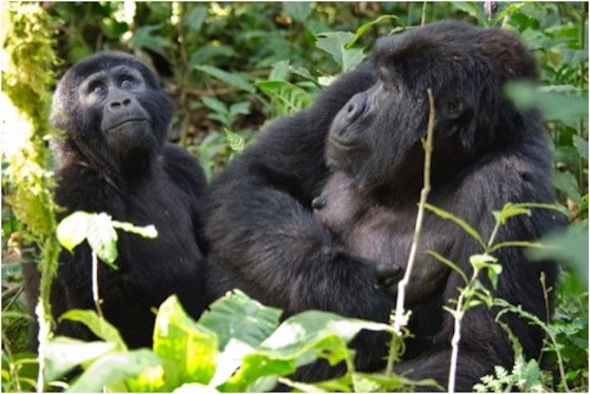
bwindi impentrable forest gorillas
Bwindi Impenetrable Forest, Uganda. Photo: Ian and Kate Bruce, 2013.

The threats to the survival of mountain gorillas, and all of the great apes, are severe and multi-faceted. Habitat loss due to logging and industry, armed conflict, the illegal bushmeat and pet trades, and infectious disease represent significant threats to the populations of chimpanzees, gorillas, and orangutans. Over the past 50 years, approaches to ape conservation have shifted as conservationists understand more and more that survival of ape populations is inextricably linked with the welfare and involvement of the communities that live near chimpanzee, gorilla, and orangutan habitats.

Early approaches in conservation

The pioneering research conducted by Jane Goodall, Dian Fossey, and Birut? Galdikas in the 1960’s-1970’s brought the world’s attention to the fascinating behaviors of the great apes. Their work also brought to light the pressures that threatened the very survival of chimpanzees, gorillas, and orangutans. Conservation approaches at that time were largely focused on preservation of habitat, and the assumption that conservation of apes and their habitat was primarily realized through enforcement. Dian Fossey, in particular, championed methods she called “active conservation,” that were often antagonistic towards communities residing on the fringes of mountain gorilla habitat. This method of conservation focused only on protecting mountain gorilla populations while failing to take into account that poachers, loggers, and encroachers were not motivated by maliciousness, but rather the simple and stark need to provide for themselves and their families.
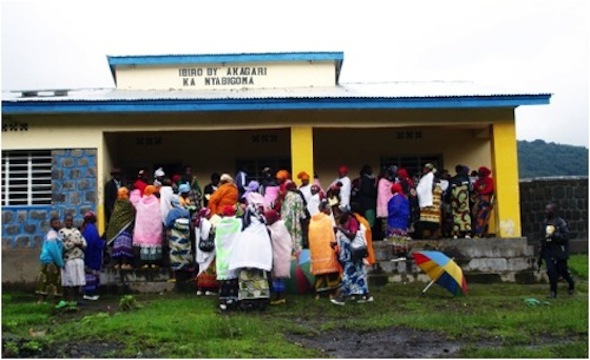
bisate health clinic
Bisate Health Clinic, Musanze, Rwanda. Photo: Gretchen Clymer, 2007.

The shift towards community-involved conservation

Habitat preservation is certainly paramount in working for the survival of the great apes, and this requires legislation to protect habitat as well as enforcement of existing legal protections for ape habitat and poaching bans. However, as approaches in ape conservation have been refined over the last 50 years, conservationists have learned the importance of embracing local communities in conservation, and of the intertwined relationship between human welfare and ape conservation.

Since Dian Fossey’s untimely and tragic death in 1985, the Dian Fossey Gorilla Fund International (DFGFI) and other mountain gorilla conservation groups have taken a different approach to conservation, focusing on including the local community into conservation efforts, through community programs, research, and eco-tourism.

It is estimated that “gorilla tourism may exceed $30 million USD shared between Rwanda, Uganda and the Democratic Republic of Congo (DRC)” (International Gorilla Conservation Program, 2014). Gorilla and other great ape eco-tourism not only brings money directly to conservation efforts by providing funds for anti-poaching patrols and research studies, but also helps to create a link to the local community by establishing a tourism industry, which in turn provides financial security to the area while actively discouraging unsustainable poaching and deforestation practices. Providing social services for population areas where community needs are great and currently unmet is an additional effective strategy to involve the community in conservation efforts. For example, the DFGFI, partnering with other organizations, provides funding for the Bisate Health Clinic, a rural health clinic in Musanze, Rwanda, by helping to promote health, education, and economic growth in an attempt to provide these communities with the opportunities to become more self-sufficient and less dependent on resources gathered from within the boundaries of the park.

Another program, in the Bwindi Impenetrable National Forest of Uganda, is Conservation through Public Health, which has focused on preventing “the spread of disease from wild animals to humans, and vice versa, by improving primary healthcare for people and animals in and around protected areas in Africa” (Whitley Fund for Nature, 2011). The program has sought to engage the local community by enlisting their help with gorilla population surveys and monitoring, as well as devoting efforts to community-led outreach and education. Conservation through Public Health also strengthens eco-tourism programs by improving facilities for this important conservation sector and ensuring that disease from visiting guests is not then spread to vulnerable mountain gorillas.
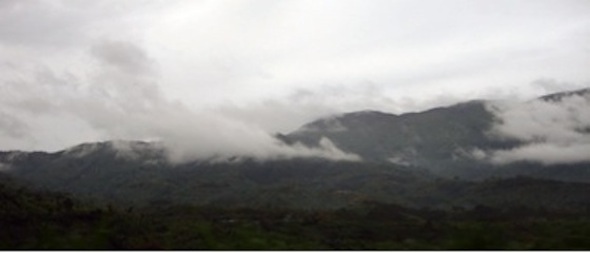
virungas
Virungas Volcanic Range, Rwanda. Photo: Gretchen Clymer, 2007.

Educational programs and support are another important realm in community-involved conservation. Practical education programs on health and sustainability can support local communities and ease resource or ecological pressures on ape habitat resources. Conservation education (from primary through graduate education levels), fosters local pride and involvement in conservation and can be hugely impactful in ongoing conservation efforts for apes. The Dian Fossey Gorilla Fund International is active in nearly every level of educational opportunity in the communities near mountain gorilla habitat – from health education programs in local communities, to conservation education in local schools, up through graduate research training at the Karisoke research center. These efforts not only demonstrate that conservation is beneficial to the local communities, they show respect to communities as key stakeholders in conservation.
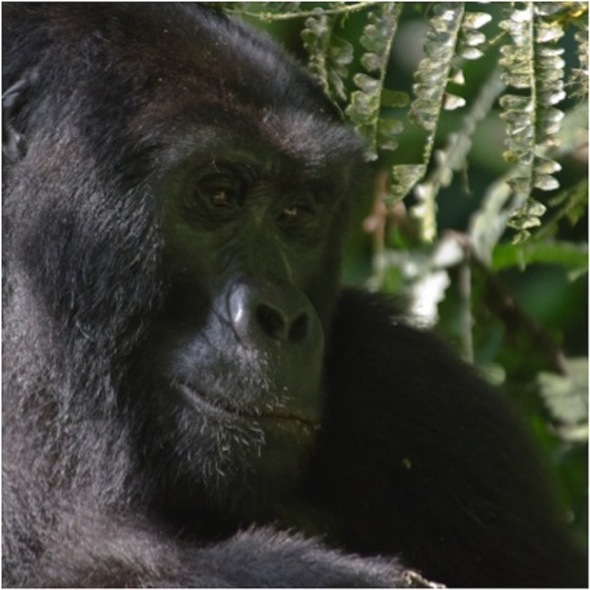
bwindi gorilla
Bwindi Impenetrable Forest. Photo: Ian and Kate Bruce, 2013.

Signs for Hope

In the past decade, it appears community-outreach focused conservational approaches show promising signs of success for the mountain gorillas. A 2010 census of mountain gorillas showed a ~26% increase in their numbers in the Virungas since the prior census in 2003 (Gray et al, 2010). While still critically endangered, an increase in population – particularly with ongoing conflict in the region – is a significant victory for the efforts of conservationists and the local communities.

The close proximity between human populations and endangered great apes is undoubtedly a factor in the threat to ape survival. However, fifty years of conservation efforts have demonstrated the importance of protecting apes with the cooperation and support of the populations that reside in proximity to ape habitat. Providing training and material support in sustainable agriculture helps to mitigate the need to log or hunt in critical ape habitat. Using ape conservation funds to provide basic health services such as clean water and medical clinics makes ape conservation beneficial to both the apes and humans in the area. Lastly, educational outreach can instill a sense of local pride in the majestic gorillas, and will hopefully bring about the next generation of conservationists sharing a common homeland with the apes, who will then strive to increase mountain gorilla populations to sustainable levels.


Works Cited:

International Gorilla Conservation Programme (IGCP). 2014. “Tourism.”

Whitely Fund for Nature, 2011. “Mountain Gorilla Conservation through Public Health, Uganda.”

Gray, M. Fawcett, K., Basabose, A., Cranfield, M., Vigilant, L., Roy, J., Uwingeli, P., Mburanumwe, I., Kagoda, E., Robbins, M. 2010. Virunga Massif Mountain Gorilla Census — 2010 Summary Report.
Filed Under: Advocacy Tagged With: advocacy, animal protection, animal rescue, animal rights, Animal Welfare, Chimpanzee Sanctuary Northwest, conservation, csnw, dian fossey, gorilla, gretchen clymer, primate protection, rescue

Play initiation and Hoot!

May 3, 2014 by Debbie

Tonight is our very first Hoot! gala event and I’m so excited to see everyone. I hope you all are ready to Give a Hoot! tonight! And don’t worry, for those of you that aren’t able to make it to the gala, we are going to have an online auction later this summer so everyone can participate.

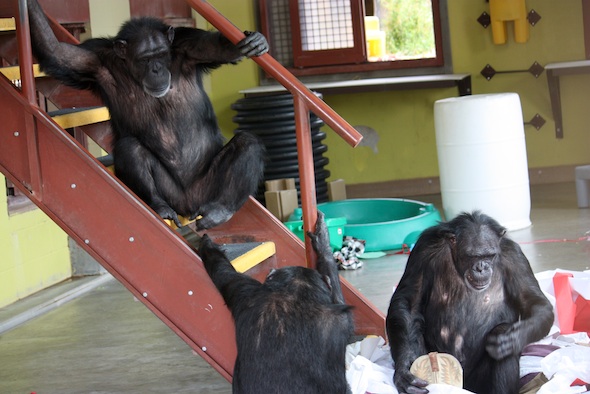
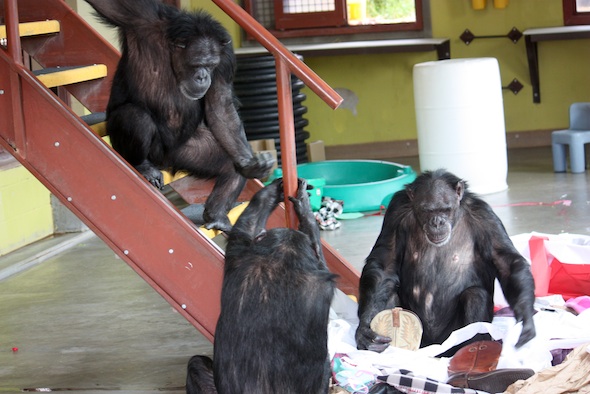
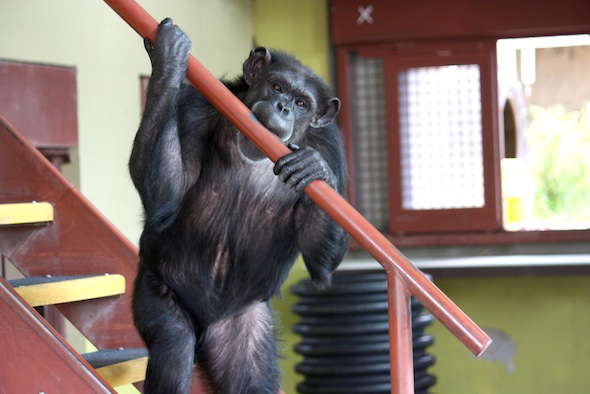
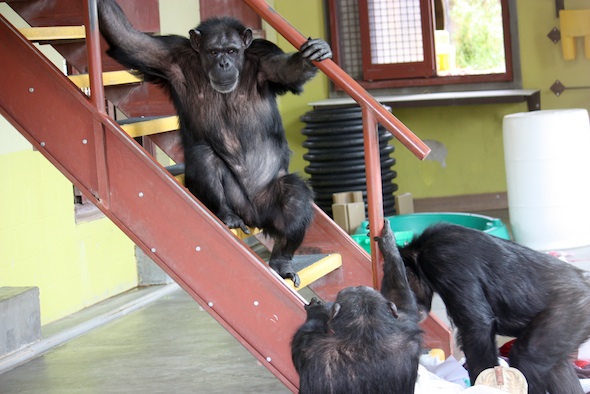
Yesterday I posted about Jamie’s huge paper nest, but I left out a couple photos that Elizabeth took that day. She captured Annie initiating some play by biting on the handrail of the stairs in the playroom, right above where Jamie was nesting. Missy couldn’t resist her invitation and of course started play slapping and wrestling immediately. They didn’t seem to mind that Jamie was trying to perfect her nest just inches away—and luckily, Jamie didn’t seem to be disturbed, either.

web_annie_playbite_stair_rail_cute_PR_ek_IMG_8981

web_annie_missy_play_stairs_jamie_paper_nest_boots_enrichment_PR_ek_IMG_8983

web_annie_missy_play_stairs_jamie_paper_nest_boots_enrichment_PR_ek_IMG_8984

web_annie_missy_play_stairs_jamie_paper_nest_boots_enrichment_PR_ek_IMG_8986

Filed Under: Annie, Enrichment, Jamie, Missy, Nesting, Play, Sanctuary Tagged With: animal protection, animal rescue, animal rights, Animal Welfare, Annie, chimp, chimp sanctuary, chimpanzee, chimpanzee rescue, chimpanzee retirement, chimpanzee sanctuary, Chimpanzee Sanctuary Northwest, Cle Elum 7, Cle Elum Seven, csnw, Jamie, Missy, primate protection, primate rescue, Sanctuary

Eyes on Apes website

April 8, 2014 by Debbie

One of our missions at Chimpanzee Sanctuary Northwest is to advocate for apes everywhere, which is why we developed the program Eyes on Apes. The idea is to have one centralized area for people to learn about issues that apes face both in captivity and in the wild, while providing tools for you to take action.

There’s a lot of great information on the pages for each of the issues (entertainment, pets, roadside zoos, biomedical research, and free-living issues in Africa and Asia).

One thing we just added were some pages on individual trainers in the entertainment industry. This is a really nice resource for people to have when you hear about a chimp in a commercial or movie and are curious what it is like for them with their trainers. Each page lists facts about the trainers, any relevant USDA citations, and links to our action alerts about productions these trainers were involved in.

Please share this site with your friends, and help raise awareness for apes everywhere! You can ask them to sign up for our Take Action list in order to get action alerts and help make a difference for apes everywhere.

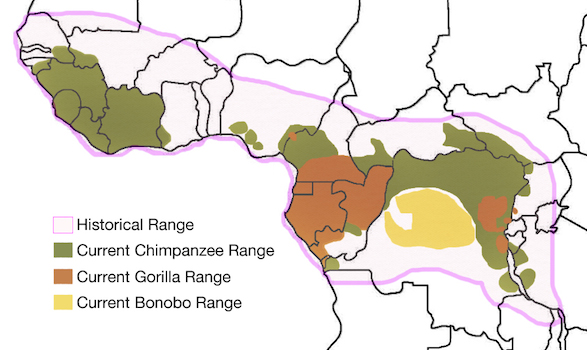
Take a look through all the pages—there’s been some makeovers throughout the site, like this informational map showing the current vs. historical population of African apes:

africadistribution

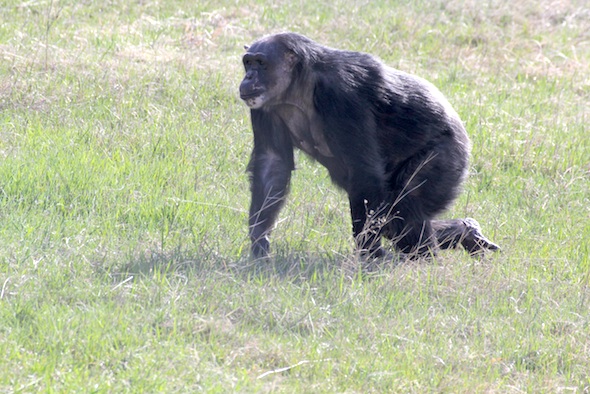
And, since this was a little bit of a wordy post, I thought I’d throw in a picture of Negra from this morning’s breakfast forage on Young’s Hill:

web_negra_walk_grass_YH_dm_IMG_0576

Filed Under: Advocacy, Apes in Entertainment, Free-living chimps, Negra, Sanctuary, Young's Hill Tagged With: advocacy, animal protection, animal rescue, animal rights, Animal Welfare, chimpanzee, chimpanzee rescue, chimpanzee retirement, chimpanzee sanctuary, Chimpanzee Sanctuary Northwest, Cle Elum Seven, csnw, Negra, primate protection, primate rescue, Sanctuary, young's hill

Is successful reintroduction possible?

March 18, 2014 by Debbie

In her previous post, Dr. Gwendy Reyes-Illg introduced us to her work with the story of Margot. Here she talks about reintroductions from Afican sanctuaries back into the wild, and some information on how we can help. The sad reality is that many of these chimpanzees simply cannot be reintroduced to the wild because they have suffered too much trauma. No captive chimpanzee in the US has been successfully integrated into African forests—it is nothing like what they are used to. The same can be said for any chimpanzee who begins life in captivity, even if they live in Africa.

—

Have you witnessed apes experience successful reintroduction and rehabilitation?

Each chimpanzee is a unique individual, and their responses to trauma vary widely. Chimpanzees who were only in captivity for a short while before they were rescued are very different from those who were subjected to years of life as a “pet.” The former seem to have an easier time integrating with the other chimpanzees once in a sanctuary, while the latter are sometimes abnormally bonded to humans and may have a harder time finding their place in the group. Despite their gradual psychological recovery, they may still exhibit stereotypical behaviors, such as rocking or over-grooming.

Sanctuary life is much better than being in the hands of poachers or “owners.” Solitary confinement, the norm for most illegally-held primates, is one of the most miserable situations in which a social animal can find herself. In sanctuaries, primates have others of their own kind with whom to bond and interact. They are given a variety of healthy foods and fresh water. Oftentimes, they also form close relationships with caring staff members.

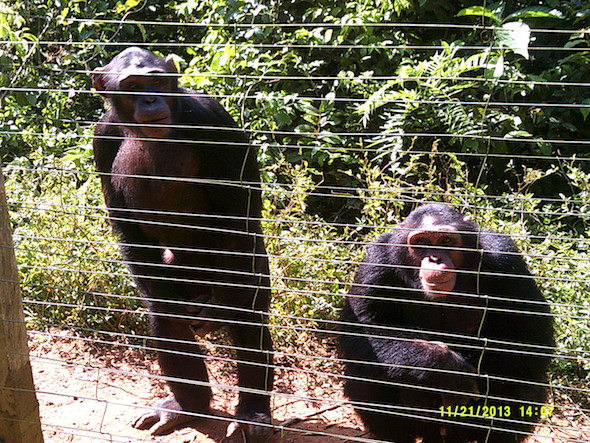
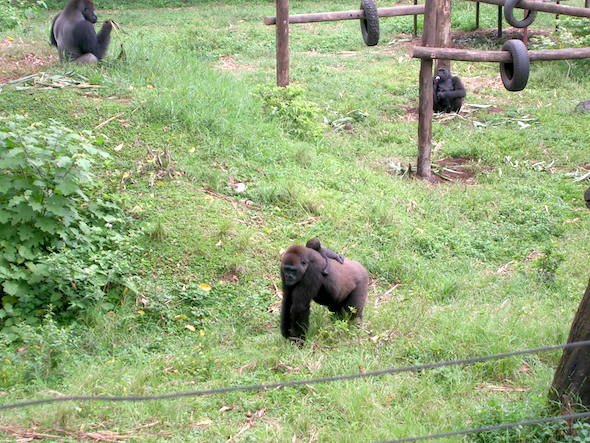
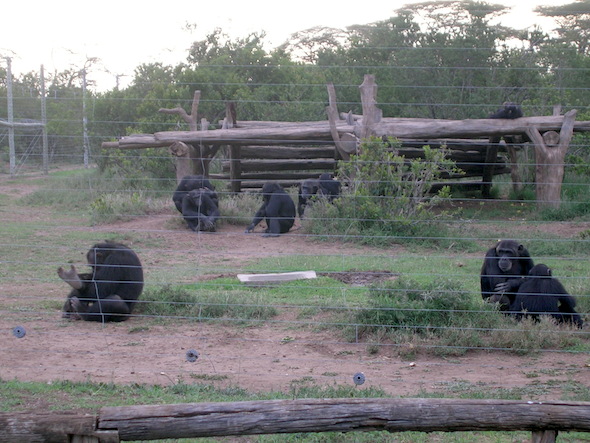
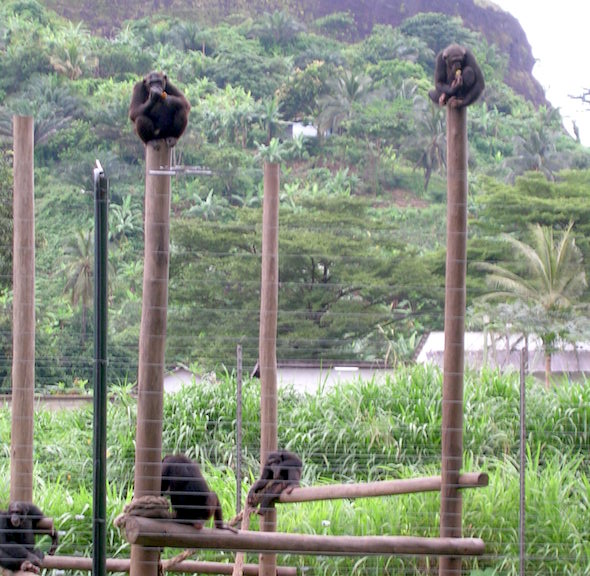
The sanctuaries I have volunteered for and visited in Africa differ greatly in the conditions in which the apes live. Some sanctuaries provide large tracts of forest where the apes can explore, play, build nests, etc. They are rarely seen during the day, coming near the cages only for feeding time. Other sanctuaries are much smaller, and caregivers must enrich the smaller area they have available to keep the primates stimulated and prevent boredom. Because most African sanctuaries rely on solar power for their electric fences, the apes must come inside at night so they will not escape when the power to the fence gets too low. Aggression can be a problem, especially in close inside quarters.

I have always been enamored with the idea of reintroducing chimpanzees to the wild. In theory, it seems to be one way to right all the wrongs our species has inflicted on these creatures. Reintroduction is liberation, emancipation. Unfortunately, the reality of chimpanzee reintroduction is much more muddled, both logistically and ethically.

The African sanctuaries I have worked closely with are still struggling to find a suitable release site—an area where reintroduced chimpanzees could find the resources they need to survive, without being killed by hunters, or by a well-established group of wild chimpanzees. This is a common challenge for sanctuaries hoping to reintroduce apes to the wild. In addition, apes who have been in captivity for any length of time may harbor infectious diseases that could endanger wild populations.

The actual “release” is just the beginning—not the end—of a life-long commitment to the animals: reintroduced apes must be fitted with tracking devices and constantly monitored for the rest of their lives. This is because they are inevitably habituated to people and areas uninhabited by people are almost impossible to find; to prevent human-ape conflict, crop-raiding, etc., releasers must ensure the reintroduced animals are not moving toward villages or farmland.

A fairly high percentage of chimpanzees die shortly after they are released, even with all the measures in place to prevent this. And after many years in a sanctuary environment, reintroduction may be a stress- and distress-causing event, at least initially, for the individuals involved. Finally, the financial costs of reintroduction project can be very high, and some might argue that limited resources would be better spent on individuals remaining in sanctuaries and on efforts to protect animals still in the wild, for example, by protecting forests or educating people.

Still, reintroduction may be the right option in certain situations. Successfully released apes have many options and freedoms not available to those in sanctuaries. They can roam where they choose, and are free to spend time with individuals they prefer and avoid those they don’t get along with. They do not have to depend on people for food, water, and other necessities. Chimpanzees reintroduced to the wild avoid the sometimes unpleasant husbandry and medical procedures that are an almost universal part of sanctuary chimpanzee life.

Another freedom that comes with reintroduction is the freedom to reproduce and raise offspring. Contraception is used in most sanctuaries because they do not wish to subject more animals to a life of captivity; in addition, every “vacancy” occupied by captive-born animal is not available for one who needs to be rescued. Once in the wild, reproduction not only enriches the lives of the mother and other group members, it also pulls the species a little further away from extinction in the wild—predicted by some to occur for chimpanzees in as little 15 years.

Finally, because reintroduction projects capture the hearts and imagination of many people, they can help draw attention of the plight of apes in general. Local people living in a proposed reintroduction site are “sensitized” to the idea of protecting the apes being released and this may have a ripple effect that gradually helps foster positive attitudes in the larger population.

What can we do to help?

Limited resources are one of the biggest challenges for sanctuaries, especially those in developing countries. People who want to help can donate equipment, supplies, time or money to help meet sanctuaries’ daily needs and help expand education and outreach programs. Many sanctuaries accept volunteers for extended periods, even individuals who have never worked with primates before. Since my work has a veterinary focus, I approach distributors, manufacturers, and practitioners in the hopes that they will donate medications, equipment (such as anesthesia monitors, ultrasound machines, and fracture repair instruments), and medical supplies to bring to the sanctuaries where I work.

In addition, it is important to examine how we might unintentionally be contributing to the tragedy of orphaned chimpanzees. When considering buying wood products, it may be worth looking into the source; logging companies seeking wood for Western markets contribute to the problem both by cutting roads into remote, formerly inaccessible areas of forest and by transporting illegal bushmeat out of the forest. In addition, they sometimes do not provide enough food to their workers, leading some individuals to resort to hunting primates and other wild species.

Finally, taking action on issues that harm primates in the U.S., such as medical research and use in the entertainment and pet industries, has a ripple effect for chimpanzees, gorillas and other primates still in their native regions. These campaigns always need supporters and even people with limited time to contribute can help raise the profile and the moral status of primates in our society.

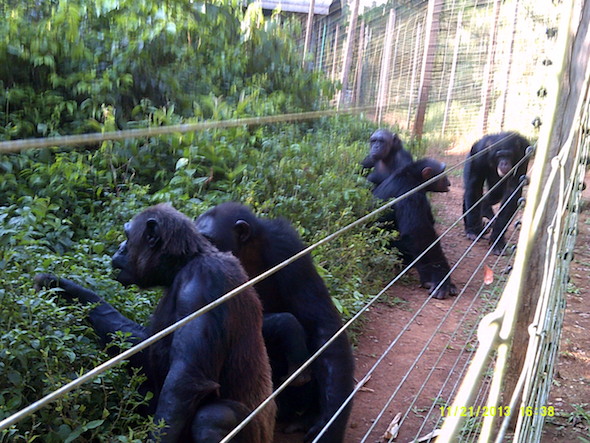
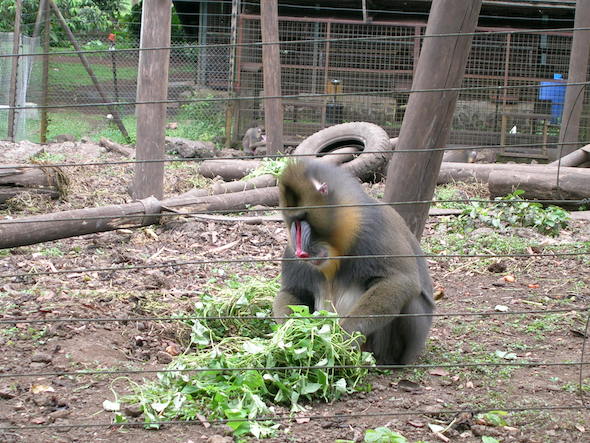
These pictures were taken at three of the sanctuaries Gwendy has worked for: Limbe Wildlife Centre (in Cameroon), In Defense of Animals—Africa’s Sanaga-Yong Chimpanzee Rescue Center (in Cameroon), and the Jane Goodall Institute South Africa (Chimp Eden).

gorillas in africa sanctuary

chimps in africa sanctuary4

chimps in africa sanctuary3

mandrill in africa sanctuary

Filed Under: Advocacy, Free-living chimps, Sanctuary Tagged With: advocacy, animal protection, animal rescue, animal rights, Animal Welfare, chimp sanctuary, Chimpanzee Sanctuary Northwest, Gwendy Reyes-Illg, primate protection, primate rescue, rescue, Sanctuary

Play, play, play

March 11, 2014 by Debbie

Annie and Missy are quite well-known for their excited games of chase and wrestling throughout the chimp house. Negra, however, isn’t always the most likely play partner—and when she does play, she’s got her own speed (kinda slow). This time Negra was keeping up with the experts!

This video is a little longer than some of our others but I thought you wouldn’t want to miss a second of this fun play session. Thanks again to Patty W. for sponsoring today for us and for being Negra’s Pal!

)

Filed Under: Annie, Missy, Negra, Play, Sanctuary, Thanks Tagged With: animal protection, animal rescue, animal rights, Animal Welfare, Annie, chimp, chimp enrichment, chimp sanctuary, chimpanzee, chimpanzee rescue, chimpanzee retirement, chimpanzee sanctuary, Chimpanzee Sanctuary Northwest, Cle Elum 7, Cle Elum Seven, csnw, Missy, Negra, Play, primate protection, primate rescue, Sanctuary

Permission

March 3, 2014 by Debbie

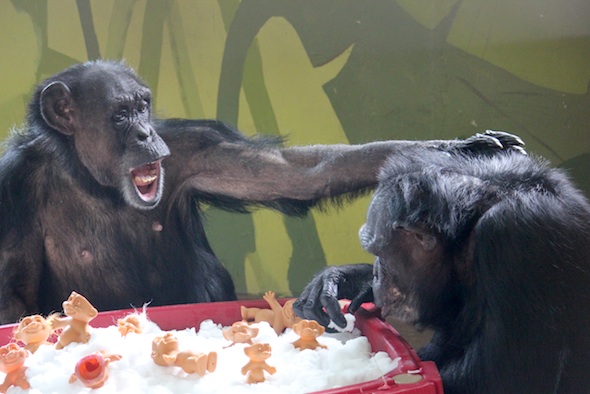
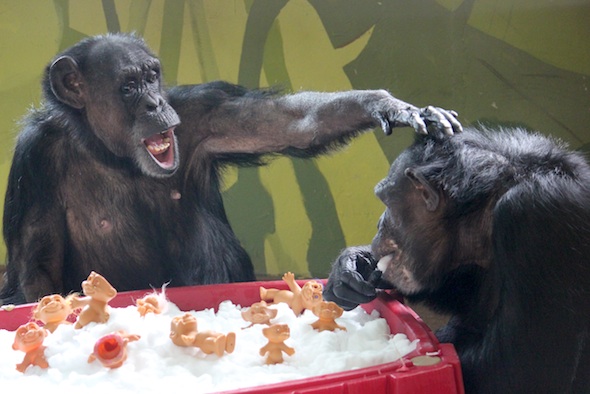
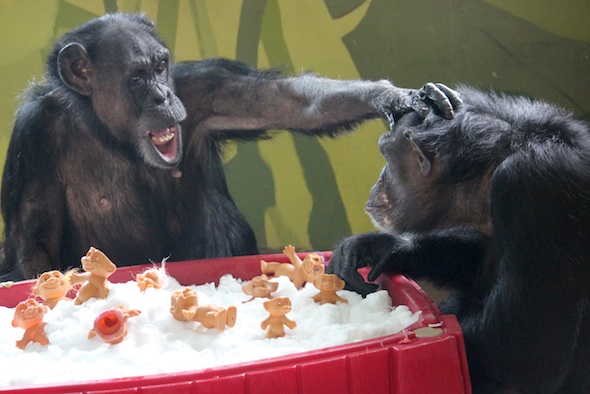
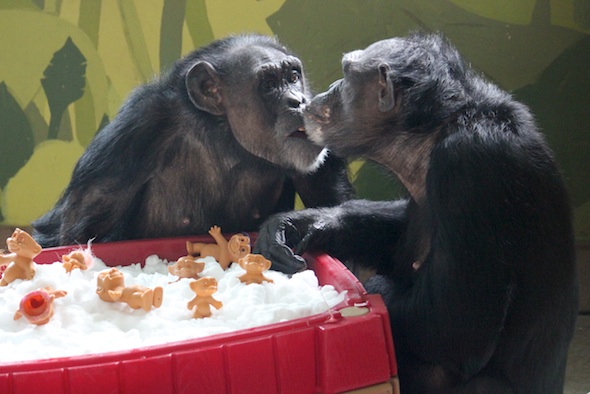
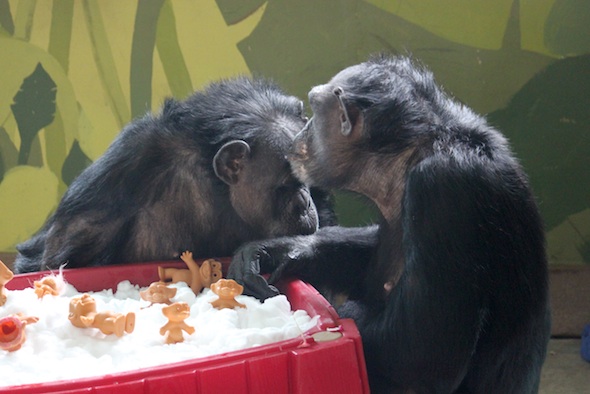
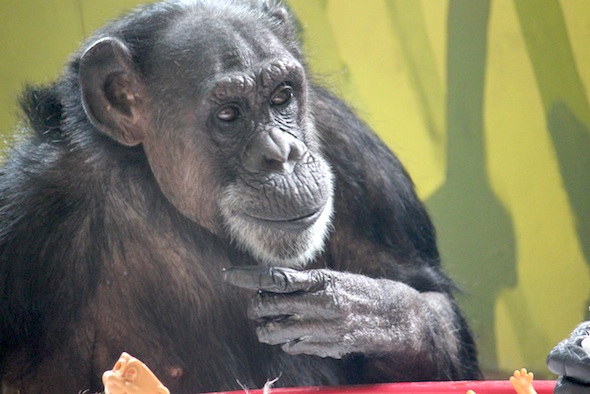
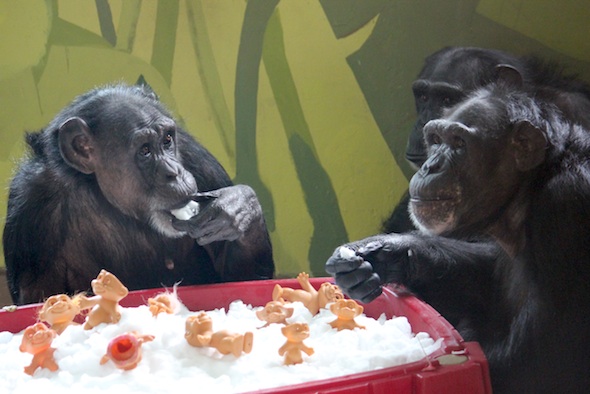
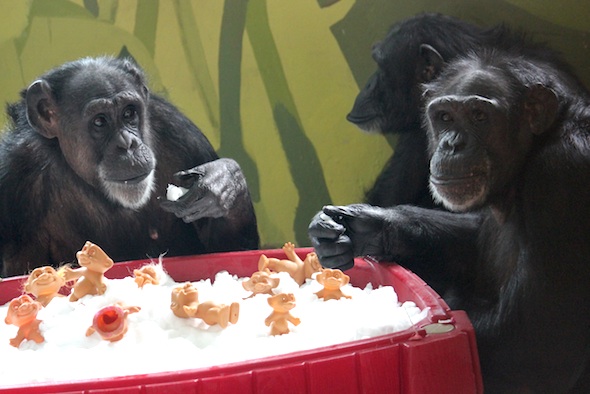
The last couple of days we’ve been experiencing some extra snow fall, which means the chimps get to snack on some fresh snow, which they love! Elizabeth and I filled up the chimps’ sandbox with snow and added some troll dolls for some CSNW flair.

Everyone was snacking on the snow, including of course Jamie. Since she is the boss, the other chimps wanted to make sure they were okay to snack on the snow, too. That’s completely natural chimpanzee behavior, and something that is essential to their society. Jamie was fine with the other chimps enjoying the snow, there was plenty to go around, and she wasn’t feeling particularly territorial of it.

When Jody asked for Jamie’s permission, she displayed perfect reassurance behaviors. She approached with a drooped lip, making it clear that she was not being at all aggressive or threatening. Then she reached out toward Jamie as if to say “is it okay if I join?” Jamie didn’t disapprove, so Jody’s next move was to give Jamie a quick kiss on the mouth. Jamie reciprocated and gave Jody permission by giving Jody a kiss back on her brow ridge. Jody then knew it was fine with Jamie that she join in, and immediately started snacking.

web_jody_reassurance_drooped_lip_arm_reach_jamie_snow_forage_PR_ek_IMG_9315

web_jody_reassurance_drooped_lip_arm_reach_jamie_snow_forage_PR_ek_IMG_9316

web_jody_reassurance_drooped_lip_arm_reach_jamie_snow_forage_PR_ek_IMG_9320

web_jody_reassurance_kiss_jamie_snow_forage_PR_ek_IMG_9323

web_jody_reassurance_kiss_jamie_snow_forage_PR_ek_IMG_9326

web_jody_eat_snow_troll_PR_ek_IMG_9332

web_jody_jamie_foxie_snow_forage_troll_PR_ek_IMG_9335

web_jody_jamie_look_at_camera_snow_forage_PR_ek_IMG_9336

Filed Under: Chimpanzee Behavior, Enrichment, Food, Jamie, Jody, Sanctuary Tagged With: animal protection, animal rescue, animal rights, Animal Welfare, chimp, chimp enrichment, chimp sanctuary, chimpanzee, chimpanzee rescue, chimpanzee retirement, chimpanzee sanctuary, Chimpanzee Sanctuary Northwest, Cle Elum 7, Cle Elum Seven, csnw, Enrichment, forage, Jamie, Jody, primate protection, primate rescue, reassurance, Sanctuary, snow

Why are orangutans endangered in the wild?

February 18, 2014 by Debbie

This guest blog is by Rich Zimmerman, Executive Director of Orangutan Outreach. Rich helped facilitate getting CSNW an iPad as part of their Apps for Apes program! He is our first guest blogger to tell us information about our red ape cousins in Asia. Rich’s experience is in helping raise awareness and funds for the projects in the field. He has accompanied a few rescue missions in Borneo but his work is mainly in New York and online—advocating on behalf of orangutans, promoting the cause and communicating the critical need to help them before it’s too late.

—

What inspired you to work with orangutans?

I’ve loved orangutans since I was a child. I went in a different direction professionally and it was only later in life—when I realized just how perilously close the orangutans were to extinction in the wild—that I decided I needed to do something to help them. After traveling to Indonesia and seeing the utter devastation to their forests and the rescue center cages full of hundreds of orphaned and displaced orangutans staring out with such sadness and desperation in their eyes, I decided to dedicate my life to helping them. I created Orangutan Outreach in 2007 as a way to raise awareness of the crisis facing wild orangutans and to raise funds for the rescue projects in Borneo and Sumatra.

Can you tell us a brief story about an individual orangutan that was personally affected by human encroachment?

Every orangutan in every rescue center has been affected by human encroachment. Whenever there is a conflict, the human always wins. Orangutans—and elephants, rhinos, tigers, monkey, you name it—always fall victim to the constant expansion of human settlement and the destruction of their habitat by logging, palm oil, and mining companies. Every baby in a rescue center was torn off his or her dying mother. These innocent babies are traumatized—just as any human baby would be if pulled from its mother. And for each infant confiscated and brought to a rehabilitation center, it’s estimated that anywhere from four to nine did not survive. It’s horrific what is being done to these creatures… for no fault of their own they are being wiped out of existence by humans.

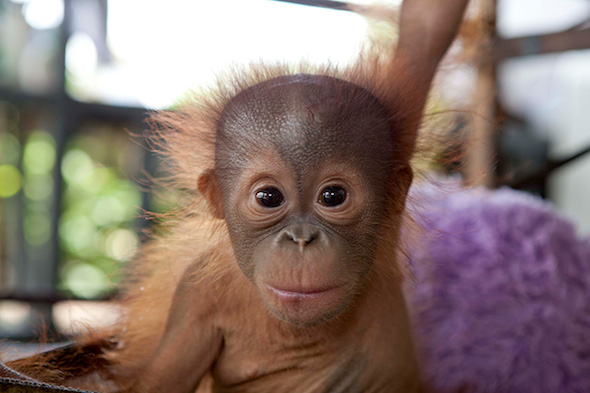
Let me tell you two quick stories. The first is Rickina, who was rescued by our partners International Animal Rescue (IAR) when she was less than a year old. When they confiscated her she has a gaping machete wound in her skull—obviously received when the poachers killer her mother. The wound was fresh. Rickina is now doing really well—thanks to the expert care of the team at IAR Ketapang. She is quite famous online—with more than 350,000 views of her video on YouTube.

OrangutanOutreach-IAR-rickina
Baby Orangutan Rickina is being cared for at IAR Ketapang (and can be adopted!). Photo © International Animal Rescue.

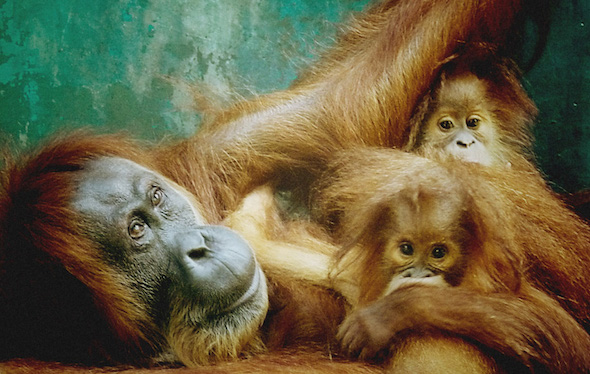
Another amazing story is Gober, a blind, older female orangutan being cared for by our partners Sumatran Orangutan Conservation Programme (SOCP). When she was caught eating fruit in the garden of a local villager she was going to be killed. Instead she was rescued and brought to the SOCP quarantine center. She had cataracts and could barely see. She was housed in a cage next to a younger male orangutan (named Leuser) who had been shot with a pellet gun more than a hundred times by local villagers. He was totally blind and the fact that he’d even survived is testament to the phenomenal will to live of orangutans. Well, orangutans never cease to amaze… nine months later Gober gave birth to beautiful twins, Ganteng and Ginting. Twins are extremely rare among orangutans—which makes sense given the fact that in the wild they spend their lives high up in the treetops. Imagine trying to move around in the canopy carrying two babies! Gober had successful cataract surgery and her sight has been partially restored. Hopefully she and the twins will be released back into the wild later this year!

OrangutanOutreach-SOCP-gober
Gober & the Twins are being cared for by SOCP (and can be adopted!) Photo © Sumatran Orangutan Conservation Programme.

Why are orangutans endangered in the wild?

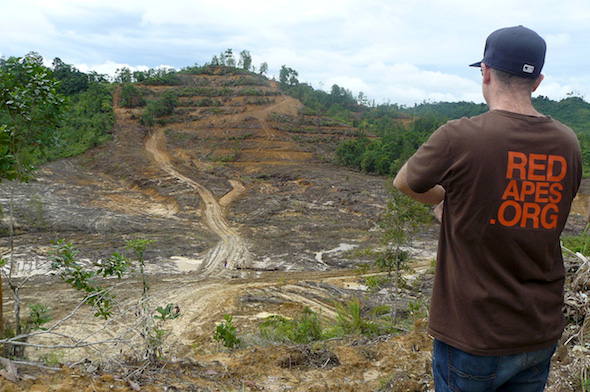
The expansionary activities of the timber, mining and palm oil industries have led to a catastrophic decrease in wild orangutan populations. Palm oil has been the main contributor to the orangutan genocide in the last decade. Around 90% of the global supply of palm oil comes from Indonesia & Malaysia and this has come at a tremendous cost for biodiversity. Indonesian forests are being burned to the ground—releasing so much carbon into the atmosphere that Indonesia now ranks only behind China and US in carbon emissions—and it is barely industrialized. The UNEP estimates that the forests of Indonesia are being cleared at a rate of six football fields per minute, every minute of every day.

The palm oil industry is guilty of truly heinous ecological atrocities. The forests of Borneo and Sumatra are the only place where these gentle, intelligent creatures live, and the cultivation of palm oil has directly led to the brutal deaths of thousands of individuals as the industry has expanded into previously undisturbed areas of rainforest at an alarming rate.

When the forest is cleared, adult orangutans are killed on sight. These peaceful, sentient beings who share approximately 97% of our DNA are shot, macheted, beaten, burned, mutilated, tortured and often eaten. Babies are literally torn off their dying mothers so they can be sold on the black market as illegal pets to wealthy families who see them as status symbols of their own power and prestige. This has been documented time and again.

OrangutanOutreach-deforestation-1200w
Surveying deforestation in West Kalimantan (Indonesian Borneo). Photo © Orangutan Outreach

Have you seen any recovery of wild orphaned orangutans (e.g. is reintroduction possible)?

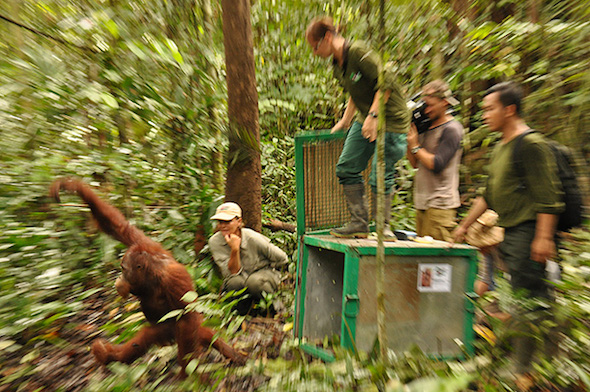
Reintroduction is very possible! Over the last year and a half, our partners at BOS have released more than 100 rehabilitated orangutans into a safe and secure forest deep in the heart of Borneo—far away from bulldozers and oil palm companies. And the population is flourishing! While there has been one death reported there have been multiple births recorded by the post-release monitoring team. The cycle of life continues in the forest for the world’s first re-created orangutan population. It takes roughly 250-300 individuals to create a stable population so there are many releases to go before the forest has reached carrying capacity according to strict IUCN guidelines. What BOS needs now is to find more forests to release more orangutans. There are still around 600 orangutans being cared for at the Nyaru Menteng Facility. They also have orangutans in East Kalimantan who are gradually being released into a separate forest. IAR is doing the same in West Kalimantan. They’ve been able to release orangutans from their excellent new facility in Ketapang. SOCP has a successful release program in Northern Sumatra. All these projects and programs are ongoing—and are only possible due to the generosity of donors.

OrangutanOutreach-BOS-Releases
BOS Nyaru Menteng Orangutan Release Photo © Borneo Orangutan Survival Foundation.

Filed Under: Advocacy, Sanctuary Tagged With: advocacy, animal protection, animal rescue, animal rights, apps for apes, chimp sanctuary, Chimpanzee Sanctuary Northwest, csnw, free-living orangutans, orangutan, orangutan outreach, primate protection, primate rescue, rehabilitation, rescue, Sanctuary, wild orangutans

  • « Go to Previous Page
  • Page 1
  • Interim pages omitted …
  • Page 11
  • Page 12
  • Page 13
  • Page 14
  • Page 15
  • Interim pages omitted …
  • Page 43
  • Go to Next Page »

Primary Sidebar

Subscribe To the Blog and Get Notified of New Posts First!

Archives

Calendar of Blog Posts

June 2026
S M T W T F S
 123456
78910111213
14151617181920
21222324252627
282930  
« May    

Categories

SUBSCRIBE TO OUR NEWSLETTER

Footer

PO Box 952
Cle Elum, WA 98922
[email protected]
509-699-0728
501c3 registered charity
EIN: 68-0552915

Official DDAF Grantee

Menu

  • The Chimpanzees
  • Blog
  • About Us
  • You can help
  • Resources
  • Contact
  • Donate

Proud Member of

Connect With Us

Search

Copyright © 2026 Chimpanzee Sanctuary Northwest. All Rights Reserved. Site by Vegan Web Design