• Skip to main content
  • Skip to primary sidebar
  • Skip to footer

Chimpanzee Sanctuary Northwest

Hope. Love. Home. Sanctuary

  • Our Family
    • The Chimpanzees
    • The Cattle
  • Blog
  • About Us
    • Visiting the Sanctuary
    • Philosophy
      • FAQs
      • Mission, Vision & Goals
      • Privacy Policy
    • The Humans
      • Staff
      • Board of Directors
      • Founder
    • Annual Reports
    • The Future of CSNW
    • CSNW In The News
  • You can help
    • Donate
      • Become a Chimpanzee Pal
      • Sponsor A Day
      • Transfer Stock
      • Be A Produce Patron
      • Be a Bovine Buddy
      • Give from your IRA
      • Personalized Stones
      • Bring Them Home Campaign
    • Leave A Legacy
    • Employment Opportunities
    • Volunteer
    • See Our Wish List
    • Events
  • Resources
    • About Chimpanzees
    • Enrichment Database
    • Advocacy
      • Advocacy Action Center
      • Apes in Entertainment
        • Trainers
        • Role of the AHA
        • Greeting Cards
      • Chimpanzees as Pets
      • Roadside Zoos
      • Chimpanzees in Biomedical Research
      • Conservation
        • African Apes
        • Orangutans
  • Shop
    • Merchandise Store
  • Contact
  • DONATE NOW

Grooming

The Intensity of Being a Chimpanzee

March 9, 2019 by Diana

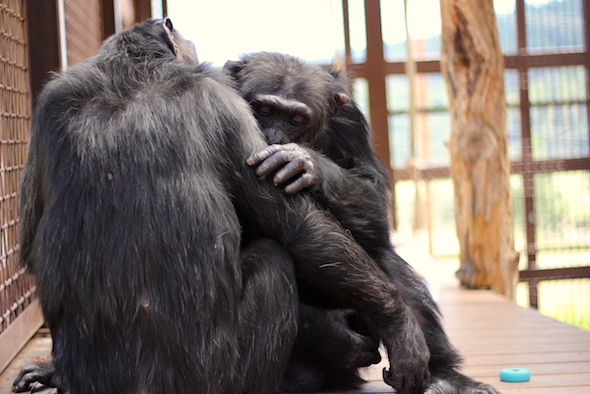
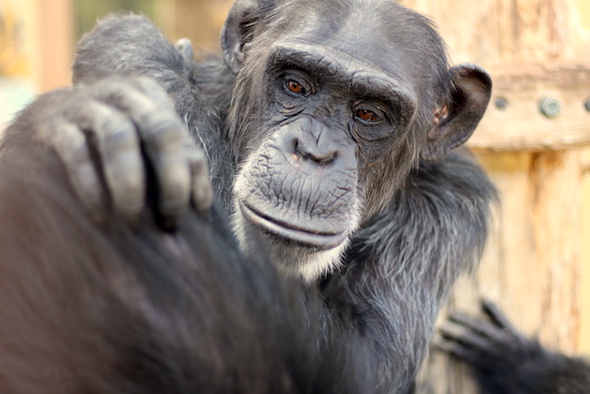
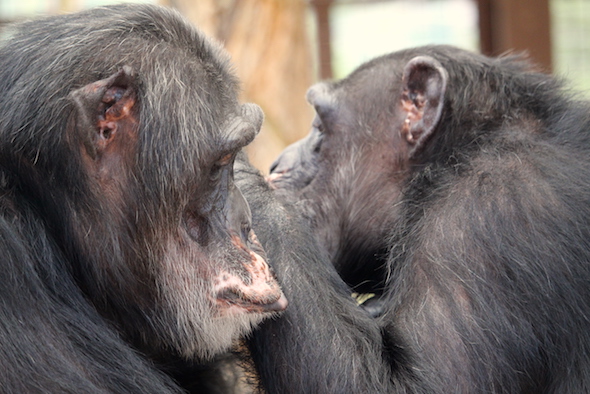
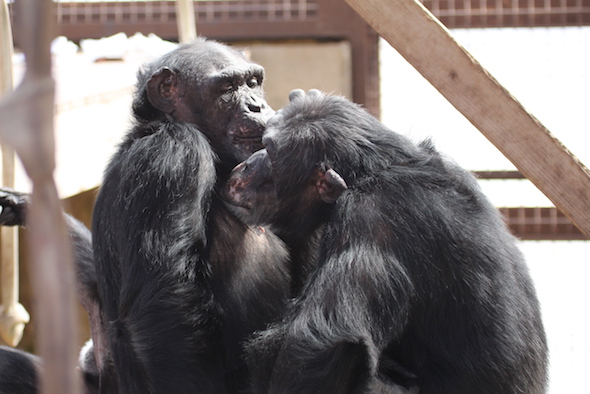
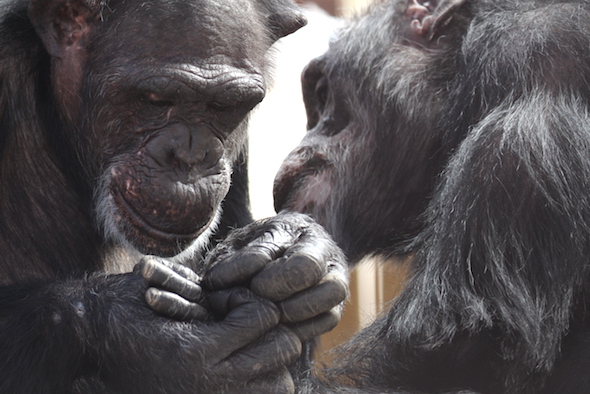
This afternoon, the chimp house was the epitome of peacefulness.

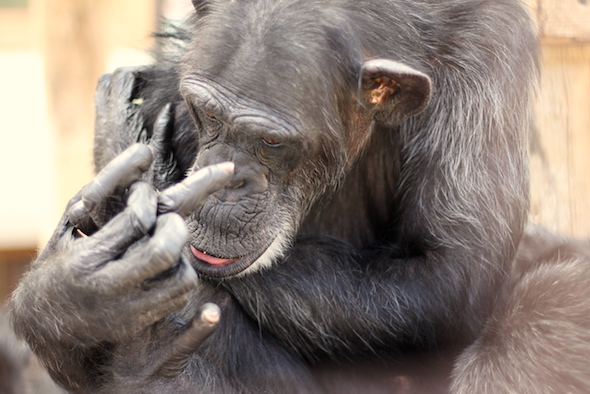
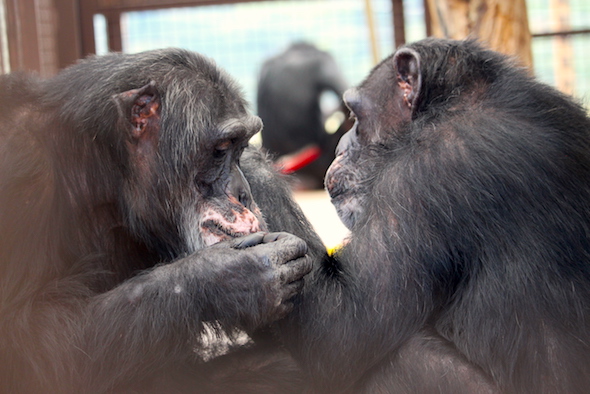
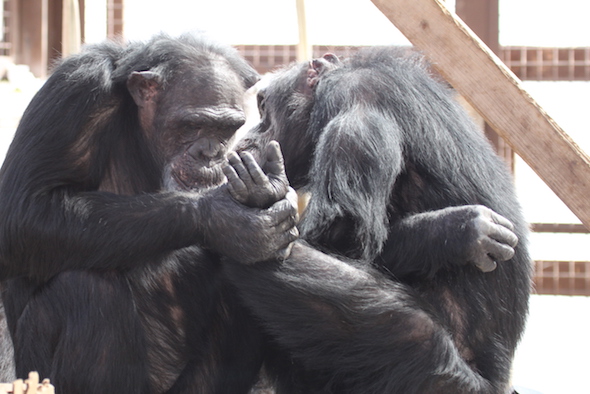
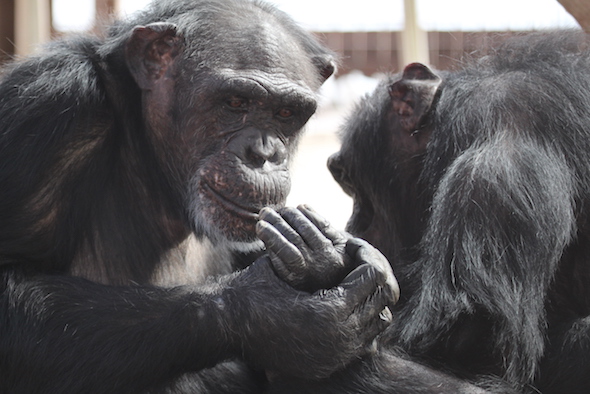
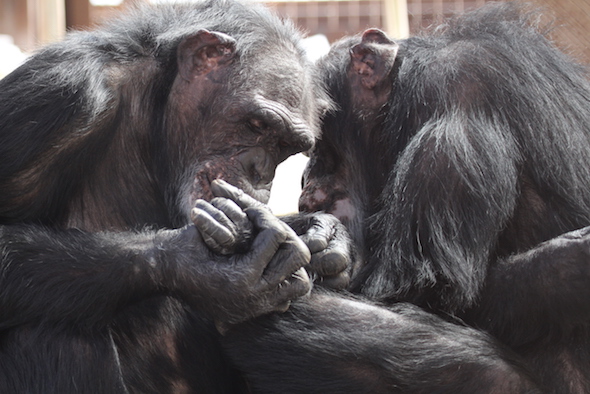
If you had walked in the door at 3:00, you would have had to strain to hear the soft lip-smacking and gentle raspberry sounds that accompanied their grooming.

If you had climbed the ladder to get a view of the chimpanzees in a fluid huddle in the loft, you might have marveled at what a close-knit and affectionate group they are.
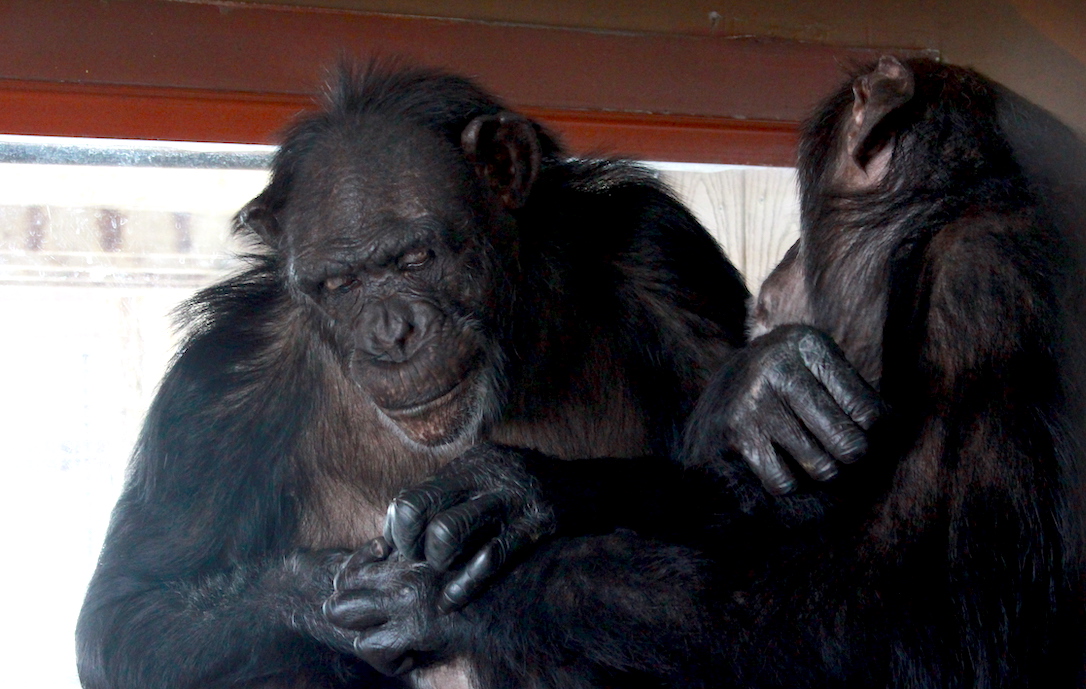
This peaceful scene erased the ear-piercing screams and general mayhem that constitute chimpanzee quarreling that had occurred throughout the morning.
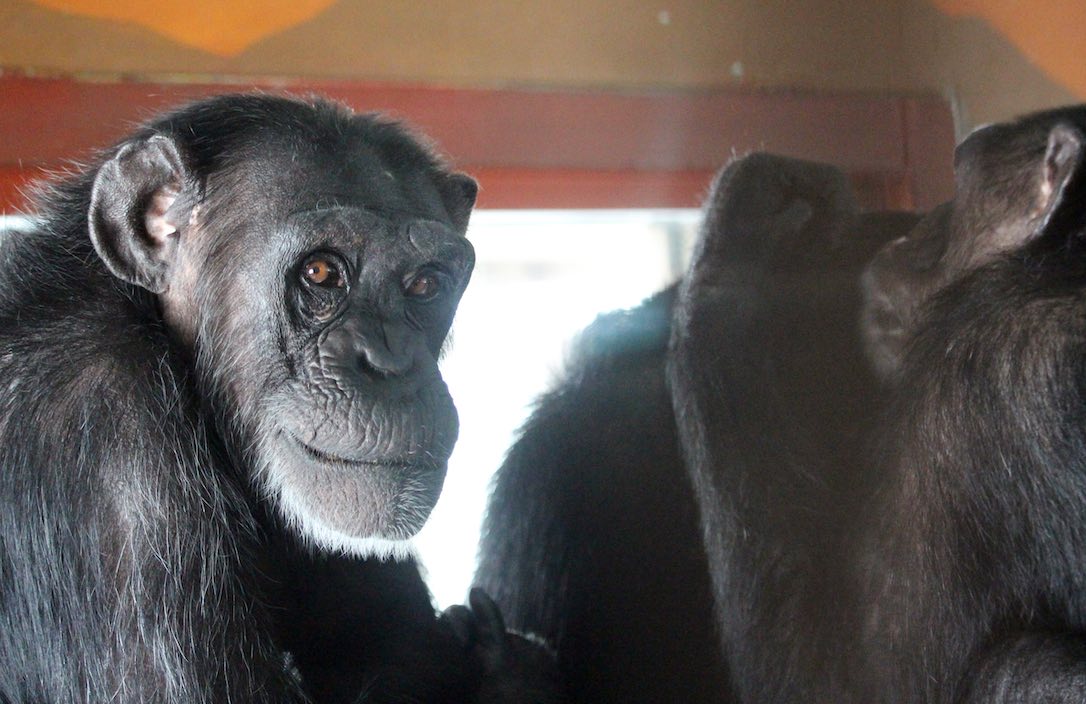
But that’s the nature of chimpanzees.

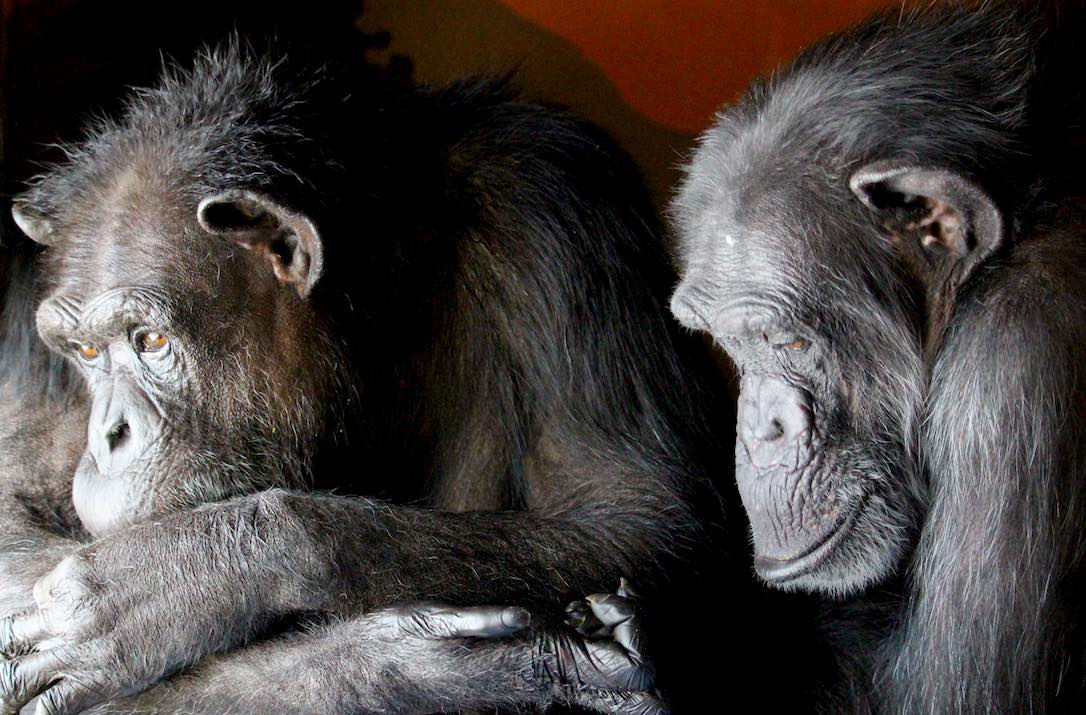
One minute they seem intensely angry at each other and the next they are engaged in the most intimate grooming session.
 

Filed Under: Annie, Burrito, Chimpanzee Behavior, Foxie, Grooming, Jamie, Sanctuary Tagged With: Animal Welfare, behavior, chimpanzee, chimpanzee sanctuary, Chimpanzee Sanctuary Northwest, Grooming, Primate behavior

Grooming Party

January 18, 2019 by J.B.

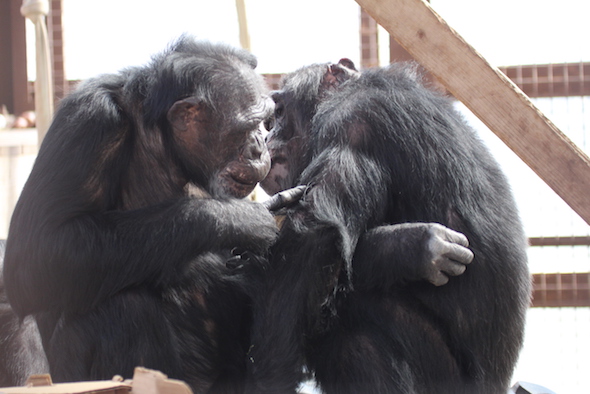
In the afternoon, the chimps can often be found gathered together in grooming parties. At CSNW, these parties usually take place on elevated platforms or, as you can see here, in a corner of the playroom loft. Though grooming partners change from day to day and even minute to minute, over time you can observe stable patterns of affiliation – what we would rightly call friendships. Grooming can also be viewed as a form of currency to be used strategically – I do a favor for you by grooming you, and at some point you can pay me back by sharing food, being less aggressive toward me, etc.

Based on research conducted by former CWU student and CSNW intern Jake Funkhouser, we know that Jamie and Negra are the least likely to be involved in these grooming sessions. Negra’s lack of interest in grooming shouldn’t come as a surprise, given that she is less social overall than the others. But Jamie? Shouldn’t the boss get groomed the most?

It may have something to do with the fact that Jamie directs much of her grooming behavior towards the staff and volunteers, which is not unusual in chimps raised by humans. But we can’t discount the face of Jamie that led us to think of her as the boss in the first place – she is a bit of a bully. And it may just be that while aggressiveness will win you an extra piece of fruit now and then, it won’t win you a lot of friends.

The heart of the social network, as Jake discovered, was Jody. She had strong affiliative relationships with the other chimps and was most often the recipient of grooming. As you can see in this video, Burrito and Foxie are engaged in reciprocal grooming, but Annie is happy to groom Jody without receiving anything in return (well, at least not at this time). This is quite the privilege.

Knowing this changes how we see the group, and it will inform the way we approach integrating other chimps. There’s certainly a lot going on in these quiet moments.

Filed Under: Chimpanzee Behavior, Friendship, Grooming, Latest Videos Tagged With: chimpanzee, Grooming, northwest, rescue, Sanctuary

The Healing Touch

February 17, 2018 by Diana

Even though the chimpanzees always live together as one group, Negra chooses to spend a lot of her time alone – often curled up in a big comfortable nest with a blanket over her head. She has a favorite spot on the catwalk of the playroom by the windows where she can lay in her nest and still keep an eye on things but remain out of the fray.

When she’s not in her nest, we frequently find her near her mound of blankets, looking out of the window. I see Negra gazing out of the windows in a way that I rarely witness the other chimpanzees doing.

She can spend long periods of time taking in the view that includes the cattle and horses on the neighboring property, the old highway, and the railroad. Negra exudes serenity in these quiet, private moments.


Even us introverts benefit from the company of others, though. Sometimes it helps to have a friend insist that you spend time with them. Missy in particular makes sure that Negra remains part of the social fabric. Missy is the self-appointed doctor of the group, examining every body part and tending to wounds. You might say that Missy has a healing touch.


After years of forced-isolation, the opportunity for Negra to develop long-lasting and trusting relationships with the other chimpanzees is one of the greatest gifts that this sanctuary has given.


Filed Under: Chimpanzee Behavior, Friendship, Grooming, Negra, Sanctuary Tagged With: chimp, chimpanzee, friendship, Grooming, rescue, Sanctuary

Reconciliation

July 21, 2017 by J.B.

The Cle Elum Seven fight a lot. You probably don’t get that sense from reading this blog. It’s not a conscious decision of ours to downplay their aggressiveness, but I do worry sometimes that our inclination to share mostly cute, funny, and uplifting stories leads us to unintentionally misrepresent the nature of chimpanzees.

Foxie:

Don’t get me wrong – relative to all the other things they do, like eating, resting, playing, and so on, fighting occurs infrequently. Chimpanzees are by and large peaceful and cooperative. But for most groups, all that peace and cooperation is punctuated on a fairly regular basis by terrifying bouts of screaming, hitting, clawing, and biting.

This morning, Jamie got upset when she missed an opportunity to steal food at breakfast. Jamie has a hair trigger temper – if she thinks she wasn’t given the deference she deserves, she reacts by screaming bloody murder. Her screaming gets the whole group upset and before long Burrito begins to display. With Jamie screaming and Burrito flying around like a Tasmanian devil, it’s only a matter of time before contact is made and a fight begins – sometimes between two chimps that had nothing to do with the cause of the disorder in the first place.

Most fights end without injury. In fact, this fight at breakfast ended quickly without incident, and the chimps returned to their meal. But Jamie held a grudge. She was probably stewing inside all morning. In fact, I know she was, because she took it out on me.

Captive chimps love to redirect their aggression (one of the many unflattering traits we share). Why pick a fight with another chimp, who could bite you back, when you could direct your aggression toward a human? Caregivers are at times the chimps’ unwitting therapists, allowing them to release pent-up frustrations in a safe space. Hence the high-velocity feces that grazed my head as I let the chimps onto Young’s Hill this morning. That was just Jamie’s way of coping, as were the threat barks directed at us by Negra, Missy, and even Annie (!) throughout the morning.

But hurling feces wasn’t enough for Jamie. As we were cleaning the playroom, we saw her walk into the greenhouse with a full closed grin (a misleading term for a facial expression that includes baring both the top and bottom teeth in fear or aggression) to round up other chimps. When her backup arrived, she ran into the front rooms to confront Burrito. Burrito suddenly found himself trapped on a bench where he had been resting, surrounded by five of his family members all lunging and swinging at him. Burrito had to decide….should he fight back and risk escalating the situation while greatly outnumbered, or try to escape? He chose the latter and managed to get away with only a small bite to his foot. Jamie had made her point. He was chastened.

Fights are unsettling to the whole group because social instability is a threat to everyone. Following a fight, the chimps groom intensely to repair and restore relationships.

Burrito’s go-to grooming buddy is Foxie. Even when she is his antagonist in the fight, he still goes to her for comfort. This afternoon, they groomed on the greenhouse deck for at least 30 minutes.

Foxie & Burrito:

This kind of grooming has nothing to do with hygiene. It’s all about closeness and physical connection.

Foxie:

Eventually, Missy approached and Burrito turned to groom her as well.

But Foxie wasn’t done with Burrito, and she cajoled him into returning with a smile, a poke, some head nods, and a series of breathy pants.

Some scientists think that captive chimpanzees have a greater propensity to reconcile after fights than their wild counterparts do because of the nature of captivity – in captivity, you can’t run away from your problems. If someone beats you up, you are probably going to have to sit with them at lunch an hour later. So your best bet is to take out some of your frustration in whichever way floats your boat – charging through the playroom, smashing a toy into a million pieces, spitting on your caregivers, or initiating a CODE BROWN on an innocent and unsuspecting Co-Director – and with that out of the way, get to work making up with your family.

Foxie:


Filed Under: Burrito, Chimpanzee Behavior, Fights, Foxie, Jamie, Missy Tagged With: chimpanzee, fight aggression, friends, Grooming, northwest rescue, reconciliation, Sanctuary

Close Grooming Among… Friends?

April 1, 2017 by Diana

Last week, I witnessed an intimate grooming session between an unlikely pair – Jamie and Burrito.

We’ve written many times on this blog about the importance of social grooming among chimpanzees. Jamie is a bit unusual, well, in many ways, but in particular with grooming. She is not seen grooming the other chimpanzees very often, and they are not often seen grooming her. This is all the more unusual because of her boss (or maybe the more appropriate term is “bossy”) status within the group.

Her relationship with Burrito is not a close friendship. I describe Jamie as treating Burrito like an annoying little brother. They do hang out together, and sometimes groom each other, but usually not for long periods of time.

Jamie is most interested in the human activity around the chimp house, and she likes to groom her human caregivers, though she doesn’t usually request that we groom her in exchange. So, when I think of Jamie engaged in social grooming, this is what I picture:

Jamie with tool grooming JB


Last week, however, this is what I witnessed:

(Jamie on the left and Burrito on the right)

Jamie & Burrito 1


Jamie & Burrito 2


Jamie & Burrito 4


Jamie & Burrito 5


Jamie & Burrito 6


Jamie & Burrito 7


This went on for quite a long time. I’m not sure how long because, after taking several photos, I decided to quietly depart the area and leave them to their grooming.

Being a removed observer of these moments between the chimpanzees, when they are wholly engaged in their interactions with each other and do not care whatsoever what I am doing, is what makes me most happy as a sanctuary caregiver.


Filed Under: Burrito, Chimpanzee Behavior, Grooming, Jamie Tagged With: Animal Welfare, behavior, caregiver, chimp, chimpanzee, csnw, Grooming, northwest, Sanctuary

Negotiation

February 3, 2017 by J.B.

The chimps spent the entire morning grooming one another on the playroom catwalk. Jamie began by directing her attention toward Negra, while Missy and Annie sat nearby grooming each other and occasionally breaking into gentle play. Further down, Burrito and Foxie paired off, each using one arm to groom while the other wrapped around their partner in a close embrace. Jody bounced from group to group until she somehow convinced them all to groom her at once.

There’s certainly nothing unusual about grooming; this is what chimps do. But you can detect a subtle difference in their grooming when there’s tension in the group. Their actions seem more calculated and strategic. Grooming begins to look more like what it really is – a form of social currency. You pay your rivals for forgiveness and reward your allies for their loyalty. Or maybe you use some of your currency to align yourself with someone who is moving up in the world. When the social order is knocked off balance, however slightly, it’s an opportunity to reshape it to your advantage.

The Cle Elum Seven chimps have been together as a group for about ten years, beginning in the lab and continuing here at the sanctuary. For captive chimps, that’s about as stable as it gets. But unfortunately, stability does not equal peace and tranquility.

There are a number of reasons why these chimps fight. One of the main proximate causes would have to be the chaos caused by the 115-pound ball of testosterone that we call Burrito. Burrito likes to start his day with a good dominance display, like many male chimpanzees do. His displays might include any combination of the following: pant hooting, screaming, pounding on the ceiling with his fists, rattling the cage doors incessantly, throwing things in the air, knocking over barrels, running through the enclosure while threatening to hit or kick his group mates, and/or actually hitting and kicking them. If you haven’t witnessed a prolonged display before, it’s hard to convey how agitating they can be. So while Burrito’s displays sometimes lead to a conflict between him and one or more of the girls, they are just as likely to lead to fights between the girls themselves. It seems that once everyone is riled up, it doesn’t matter who started it – any underlying tension is drawn to the surface to be hashed out.

The Instigator

Some of that underlying tension is due to the fact that dominance hierarchies aren’t static, regardless of how long the group has been together. Relationships change, as do personalities. Case in point: Annie is not the same chimp that she was eight years ago. Back then, she would have a panic attack if you looked at her funny. Now, she’ll take food from Negra and chase down Jamie or Burrito during a fight without hesitation. I don’t know if she’s alpha material, but she’s certainly not going to take flack from Jamie or Burrito anymore. As much as we all celebrate her newfound confidence, we also say a silent prayer each time that she doesn’t push things too far if she’s not prepared to fully back it up. In chimpanzee society, it’s best for everyone if you know your place.

Alpha Annie?

Finally, we can’t forget that these chimpanzees were deprived of normal family life in a normal community. This lack of natural socialization causes more lasting damage than any medical testing they experience. In fact, it’s generally understood that chimpanzees from pet and entertainment backgrounds are much harder to integrate than chimpanzees from labs. Why? Because pet and entertainment chimps are particularly human-enculturated. They grow up learning our habits and our style of communication and our rules, and they have no connection to chimpanzee culture. Imagine the shock that Burrito and Jamie experienced when they were introduced to other chimpanzees later in life. And the others had it only marginally better when they were young, living in small nursery groups or in breeding pairs as they matured. In many ways it’s like Lord of the Flies. Without a culture to provide a guide for their behavior, they’re forced to make it up as they go. Frankly, I’m amazed that they can get along at all.

Jamie close-up
The Lord of the Flies

The Cle Elum Seven go through long periods of relative stability, punctuated by short periods of increased fighting with occasional wounding. As quickly as the tension and conflict arises, they reorganize or reaffirm their relationships and order is restored. On the surface, that is. Quiet bouts of grooming like the ones we witnessed this morning might seem like a complete absence of conflict, but look closer and you’ll see that they are actually part of the negotiation.

Filed Under: Chimpanzee Behavior, Sanctuary Tagged With: chimpanzee, conflict, Grooming, northwest, rescue, Sanctuary, stability

Grooming Noises

January 18, 2017 by J.B.

Chimpanzees use distinct sounds to communicate during grooming. Grooming noises such as the lip smack, the teeth clack, and the Bronx cheer are made solely with the lips, tongue, and teeth and not the vocal tract.

Filed Under: Chimpanzee Behavior Tagged With: bronx cheer, chimpanzee, communication, Grooming, lip smack, noises, northwest, raspberry, rescue, Sanctuary, teeth clack

  • « Go to Previous Page
  • Page 1
  • Interim pages omitted …
  • Page 6
  • Page 7
  • Page 8
  • Page 9
  • Page 10
  • Interim pages omitted …
  • Page 13
  • Go to Next Page »

Primary Sidebar

Subscribe To the Blog and Get Notified of New Posts First!

Archives

Calendar of Blog Posts

June 2026
S M T W T F S
 123456
78910111213
14151617181920
21222324252627
282930  
« May    

Categories

SUBSCRIBE TO OUR NEWSLETTER

Footer

PO Box 952
Cle Elum, WA 98922
[email protected]
509-699-0728
501c3 registered charity
EIN: 68-0552915

Official DDAF Grantee

Menu

  • The Chimpanzees
  • Blog
  • About Us
  • You can help
  • Resources
  • Contact
  • Donate

Proud Member of

Connect With Us

Search

Copyright © 2026 Chimpanzee Sanctuary Northwest. All Rights Reserved. Site by Vegan Web Design