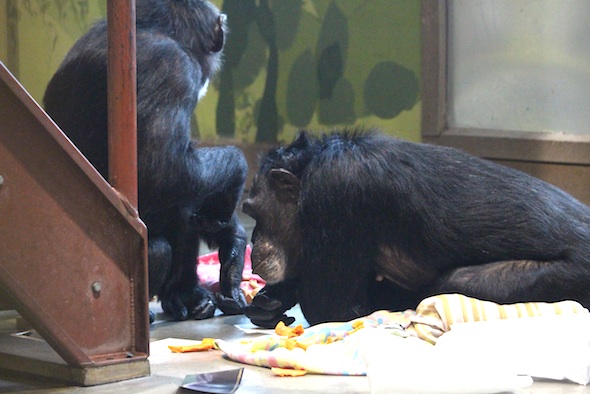
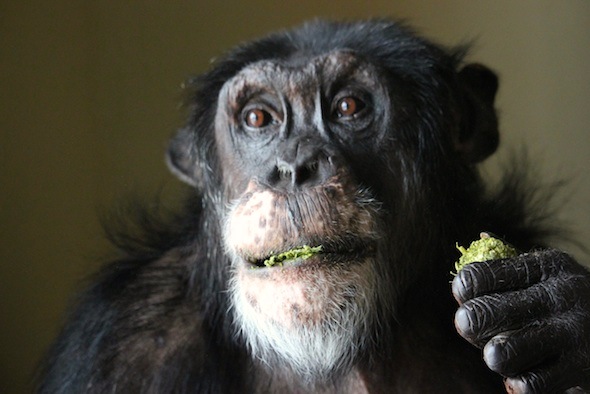
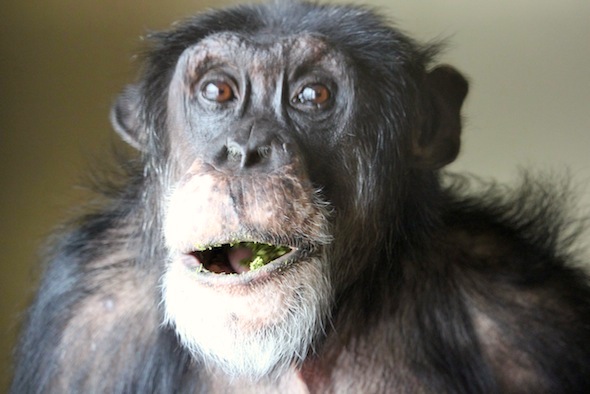
Can you tell what the chimpanzees ate for lunch recently?
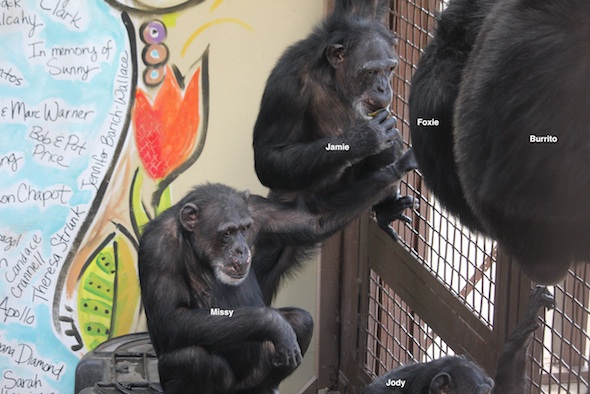
Missy
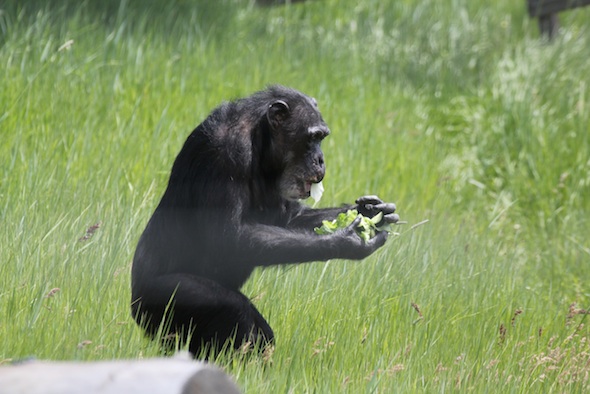
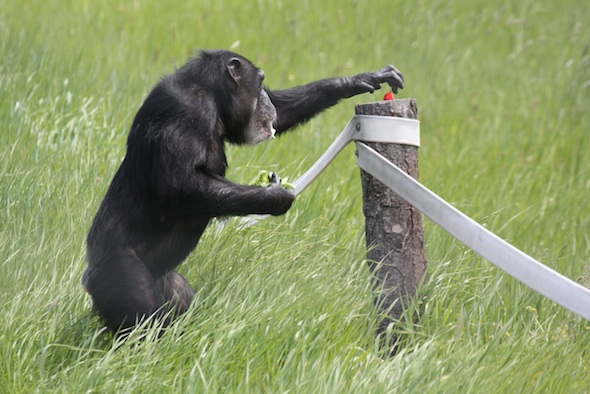
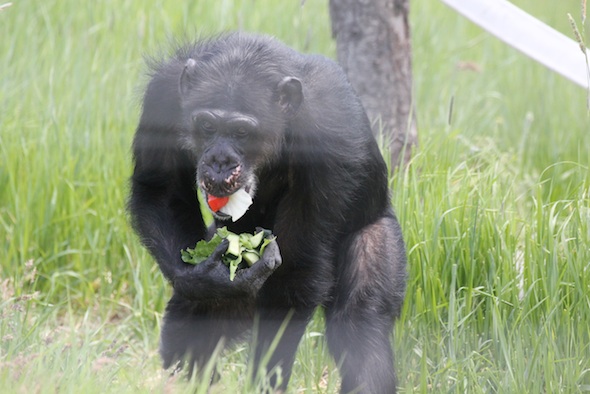

Jody
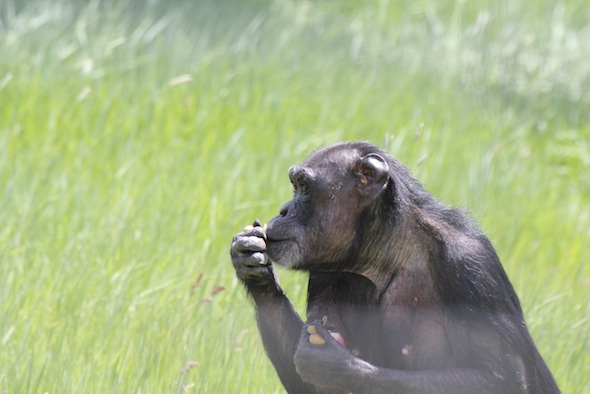
If you guessed, lettuce, cucumbers, tomatoes and primate chow, then you are right!
Chimpanzee Sanctuary Northwest
Hope. Love. Home. Sanctuary
Can you tell what the chimpanzees ate for lunch recently?
Missy
Jody
If you guessed, lettuce, cucumbers, tomatoes and primate chow, then you are right!
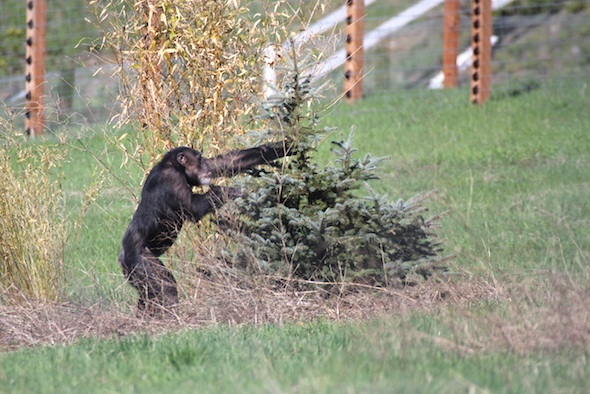
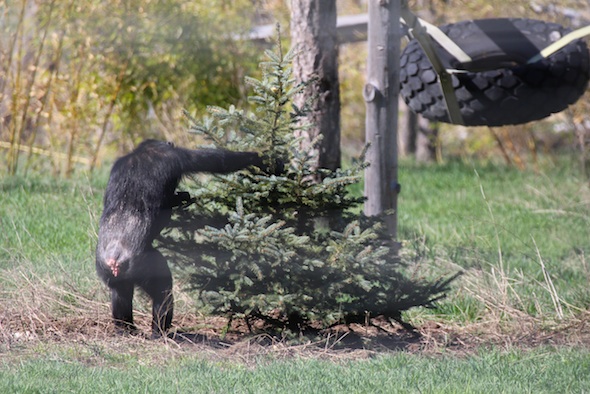
Last year, we waited until October to plant the chimps’ potted Christmas tree. Since Jody has been steadily devouring that one, I thought we’d get this one planted sooner. Missy was the first to check it out, but only because Anna decorated it with apple slices.
Today has been another beautiful, summer-like day. Perfect for walking around the hill with friends, both real and imaginary.
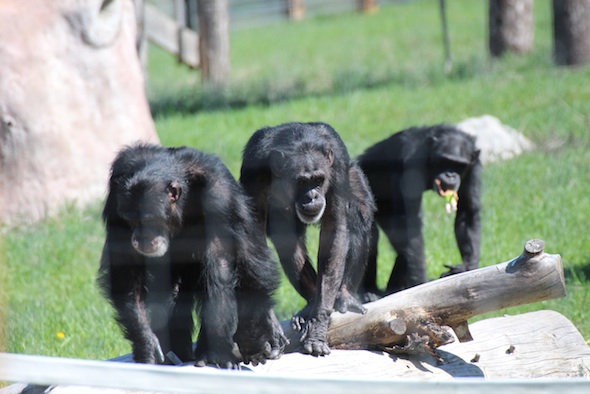
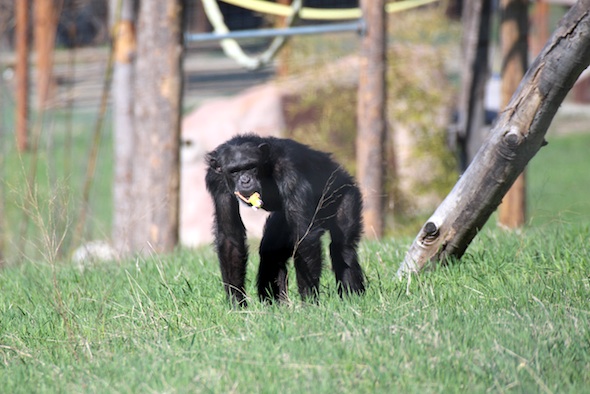
Also perfect for enjoying breakfast and lunch forages that included chive flowers, beets and greens, and Negra’s favorite, lettuce.
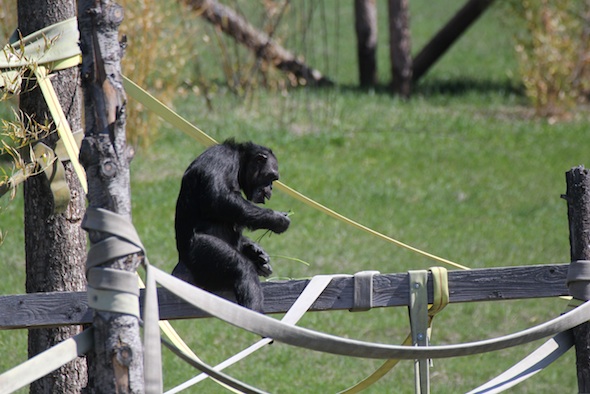
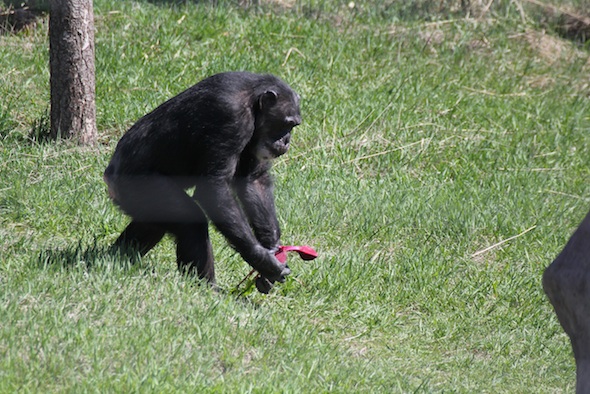
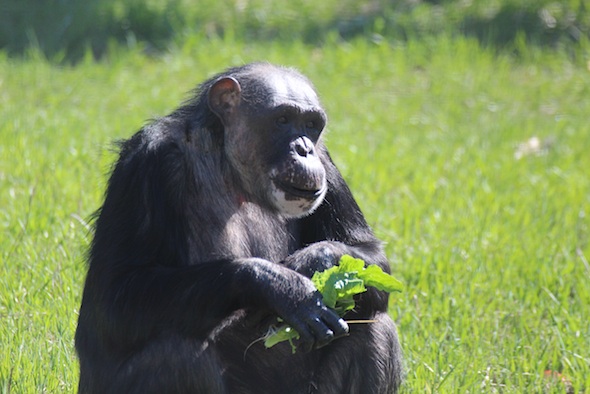
And when the food was all gone, the chimps took a moment to enjoy the amazing views from Young’s Hill.
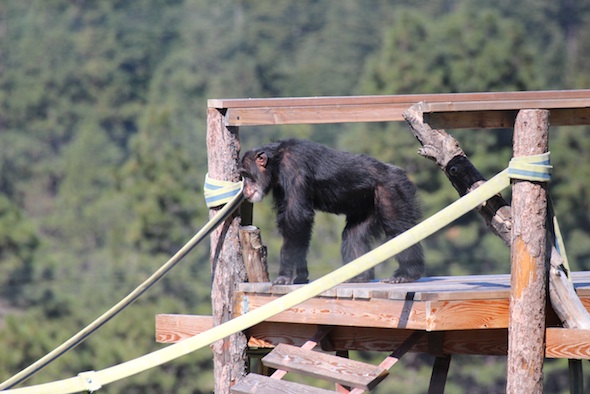
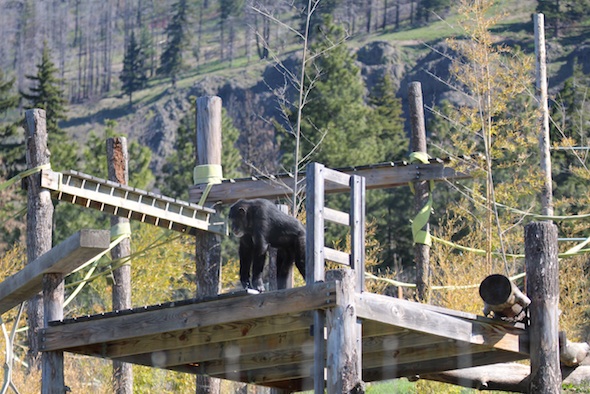
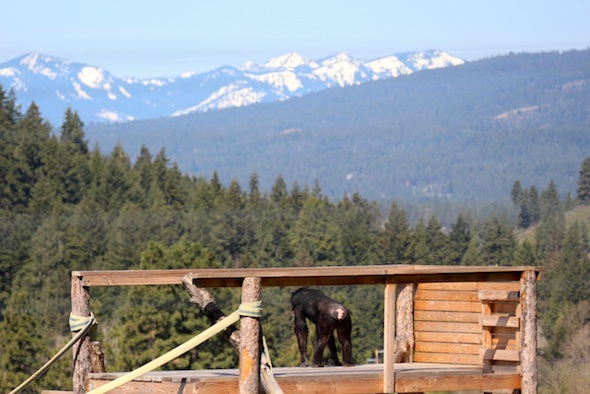
The chimpanzees have had many bell peppers donated from a local grocery store lately, so today we did an exciting whole pepper forage on the hill!
Missy made a play for two of the peppers:
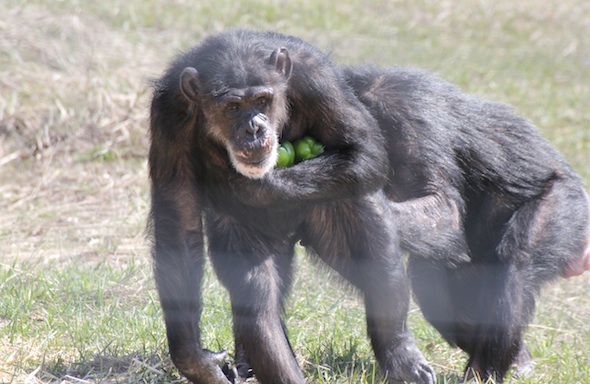
Jody made an attempt to force a turnover:
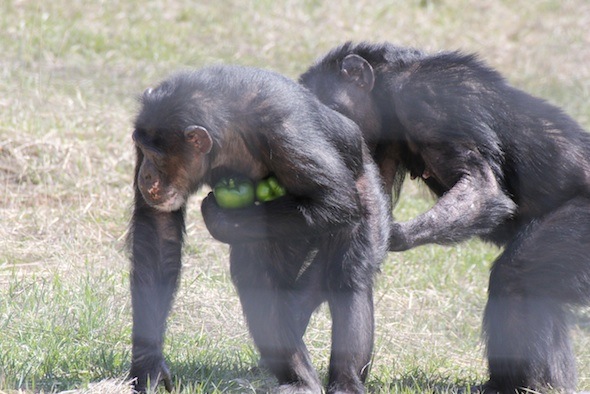
But Missy drove to the end zone:

Once the play was complete, she checked for injuries:
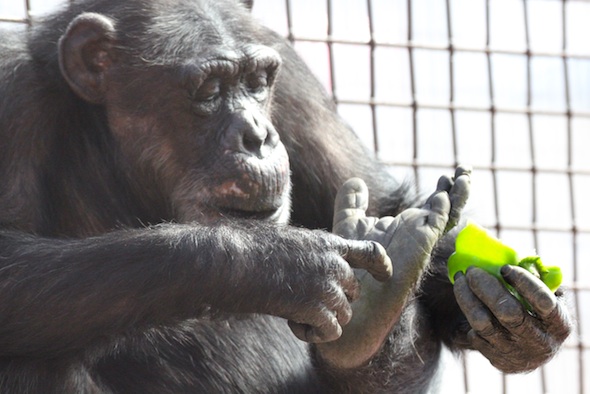
And then sat back and enjoyed her touchdown:
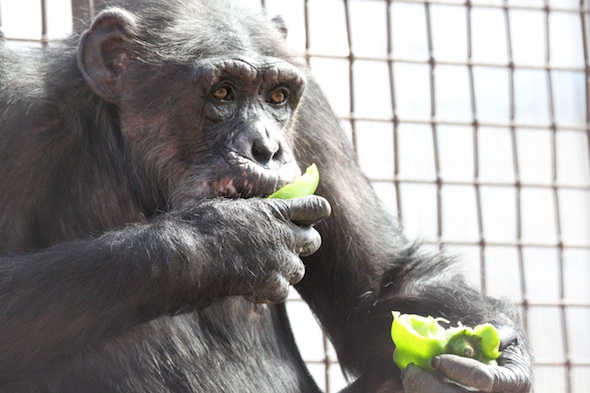
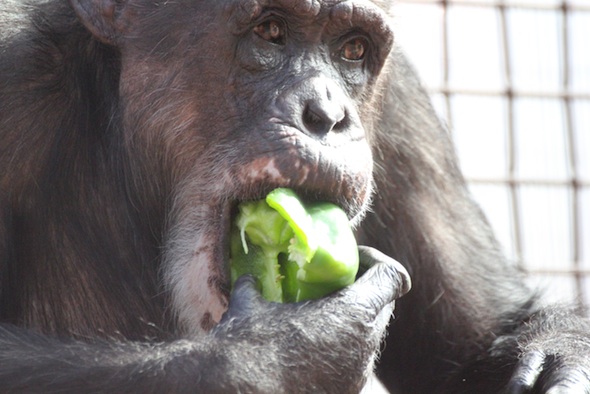
This post was inspired by one of the new personalized stones that is part of the Dr. Mel Richardson Memorial Walkway!
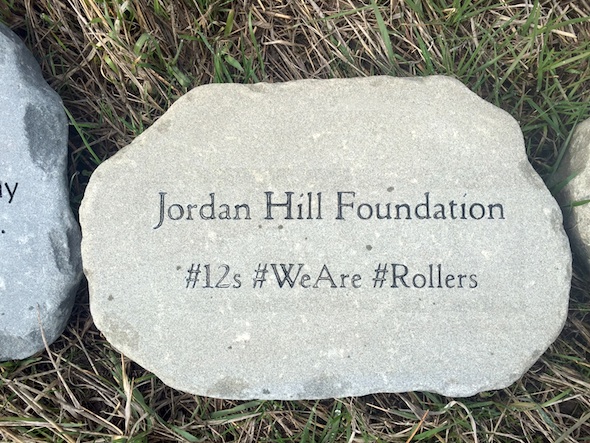
Thanks Jordan Hill!
I’ve been wanting to write a blog post about serving food for a while now in response to a question I am frequently asked. How do we give food to the chimpanzees if we never enter the enclosures with them or stick our fingers into the enclosures? There are a few different options, including serving the food through the openings in the caging to each of the chimps and setting up forages for the chimps to gather the food themselves.
Serving entails serving food to the chimps’ hand or mouth (or sometimes foot). We make sure to cut foods to a size that will easily fit through the squares in the caging or we can drop food into food chutes (located in the Front Rooms). Things like celery, carrots and cucumbers are easy to hand to the chimps through the openings. Roasted vegetables are softer and we use small paper plates or serving trays that can be rolled up and passed through the openings. Liquids, such as fruit smoothies, (which are served at breakfast) are poured into cups and caregivers hold the cups up to the chimps’ outstretched lips. Serving allows us to know exactly how much each chimp is getting of each food. Check out this link to see examples of meals we serve throughout the day.
The following photos were all taken during the chimps’ dinner from the top of the Greenhouse when the panels were off this past summer. As you can see in the photos, some of the chimps prefer to hang, while others prefer to sit on the ground or utilize the plastic chairs or barrels.
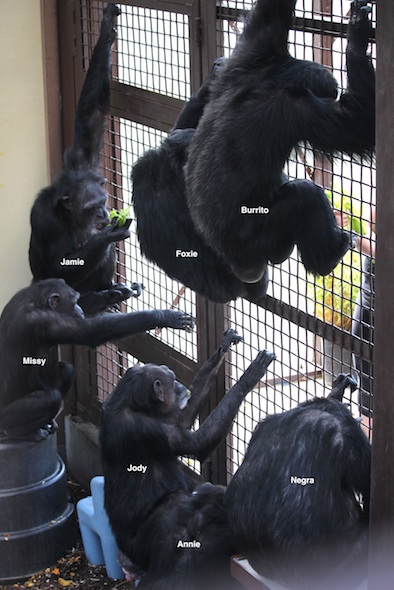
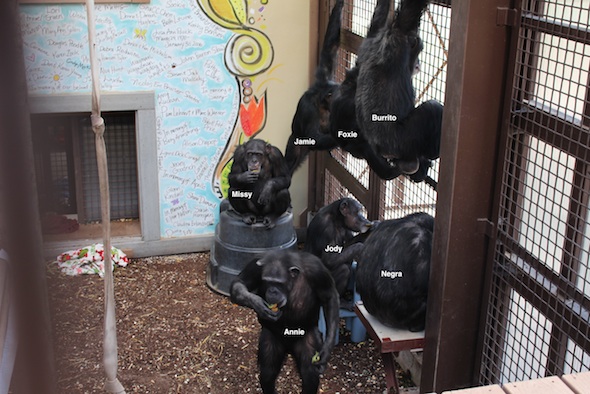
Foxie usually brings a friend with her to meals (hint, look at what is in her foot).
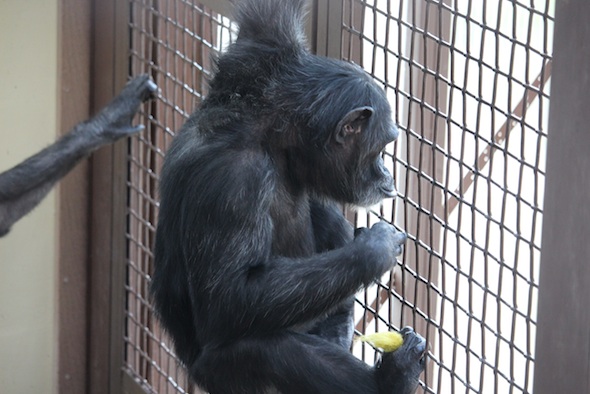
Burrito eating his night bag.
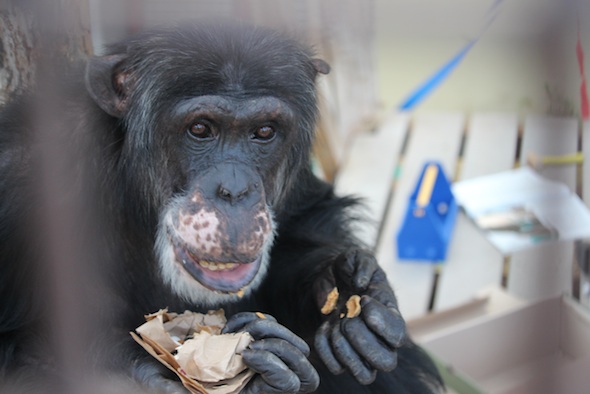
Annie
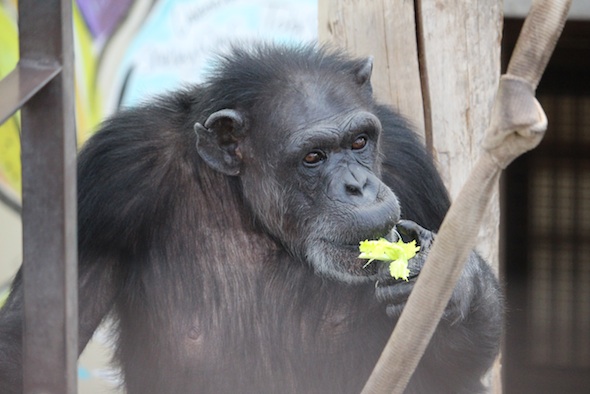
Some of the chimps prefer to stay and eat all of their food where it is served, while others tend to gather their portions and go to a different area to eat them.
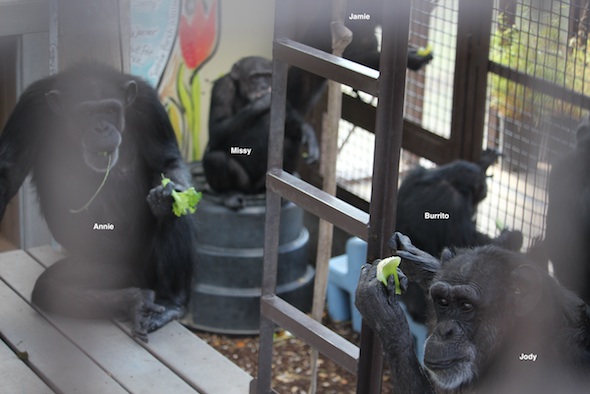
Jamie prefers to open her night bag, pour out its contents and pick through the nuts, seeds, popcorn and dried fruit.
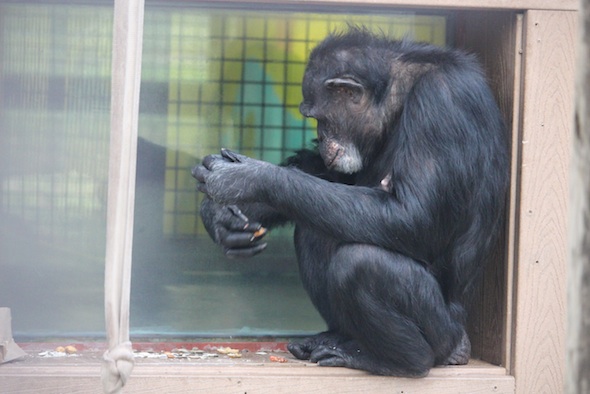
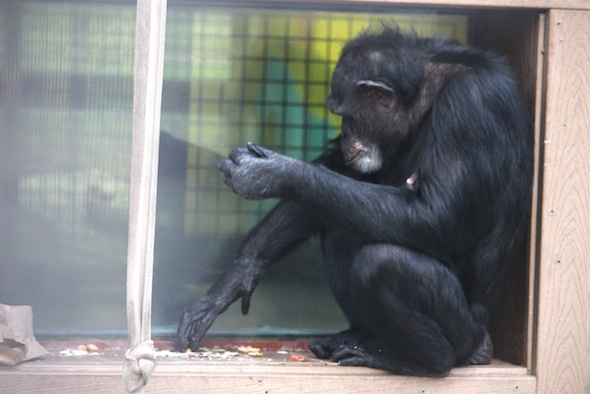
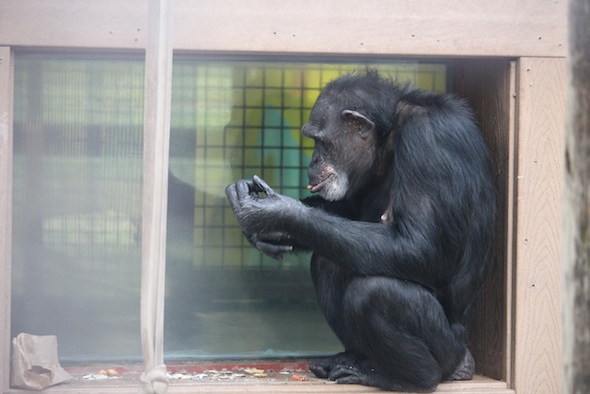
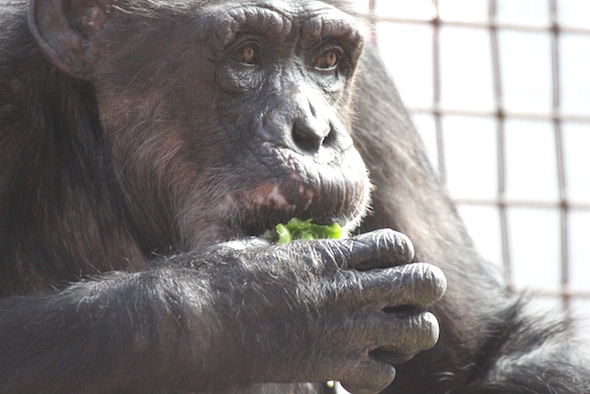
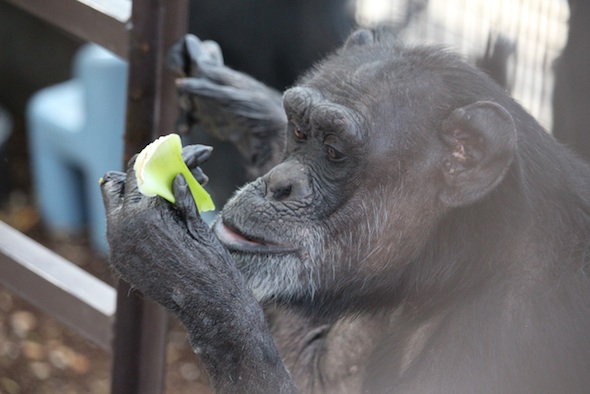
Here’s a closeup of Jody eating her celery.
Foraging allows the chimps to move around and gather the food themselves, which is what they would be doing in the wild. For forages, we cut the food into smaller pieces and scatter them throughout the various enclosures after we have cleaned (the chimps are locked out of the enclosure humans are in). Once we have locked up and done our safety checks, we give the chimps access to the enclosure and they gather the food themselves. Foraging gets the chimps moving (important for chimps in captivity) and gives the chimps choices over which foods they prefer to collect and eat first. Click on the link at the beginning of the paragraph for a great video of the chimps foraging on Young’s Hill.
If the chimps had their way, they’d eat all day long. Burrito would be unstoppable. Negra would probably forego blankets entirely and just make huge nests out of bread and peanuts so that she would never have to get out of bed again. But overeating is not usually conducive to good health, so for their sake we try to balance these two competing interests as best we can.
Thankfully, there’s a miracle diet food that helps keep chimps happy and healthy: alfalfa. Not just alfalfa, but also bamboo, grape vines, timothy hay, cattails – things that we collectively refer to as “browse”. Chimps love browse, but most browse plants are too fibrous to be digested properly, so they either pass right through or the chimps spit them out after a thorough chewing. Browse makes it possible for chimps to chew to their hearts’ content without eating a lot of calories.
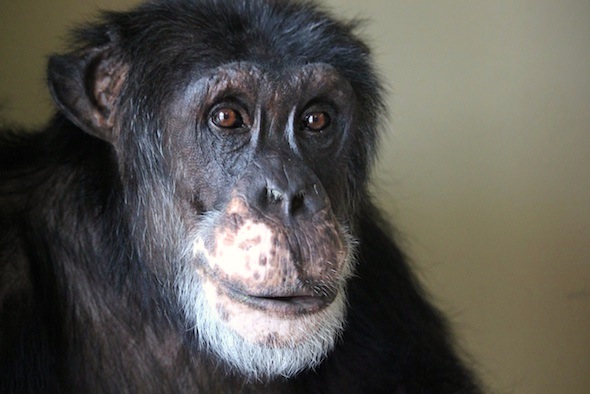
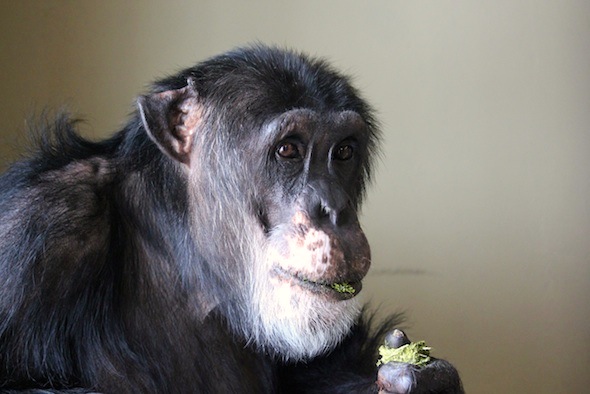
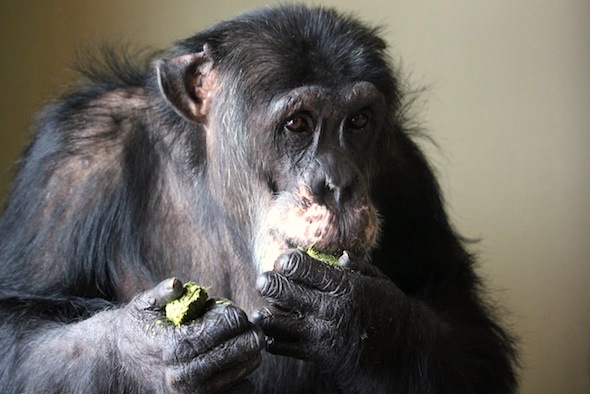
In the summer and fall, many types of browse grow naturally in the chimps’ two-acre enclosure, which allows them to grab a snack anytime they like. Naturally occurring browse is harder to find during the winter, so we make sure to provide Burrito and his family with store-bought treats like alfalfa cubes on a regular basis:
It was almost a year without Christmas.
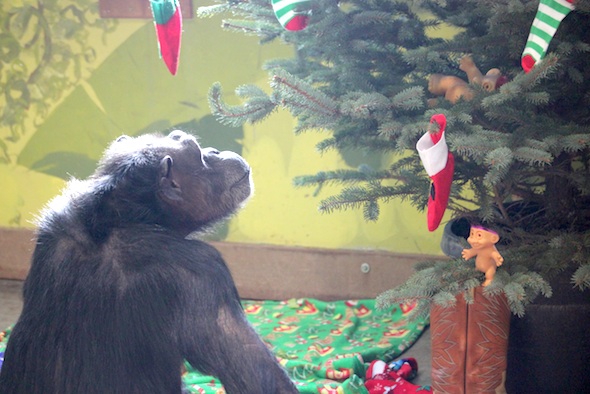
OK, that’s not true – but Christmas was nearly delayed by a few days. The Cascade Mountains here in Washington received more snow in the last week than in all of last winter. Interstate 90, the only direct route between the sanctuary and Seattle, was closed for days due to avalanches in the mountain pass, and many of our volunteers were stuck on the other side. Thankfully, the highway was reopened last night and volunteer Patti was able to make it over this morning with the chimps’ Christmas dinner.
I don’t know if that qualifies as a Christmas miracle, but the support we’ve been receiving over the last month has certainly been miraculous. Packages have been arriving for weeks from generous donors, some long time supporters of the Cle Elum Seven and some who just discovered the sanctuary through stories about Foxie and her dolls in the UK, Germany, and Australia. You can guess what our newest supporters sent for Foxie! And our dedicated volunteers have been braving some treacherous conditions on the pass to reach the sanctuary. We are so grateful to everyone that helped make this a special holiday season for the chimps.
This Christmas was filled with great food, lots of boots and dolls, and a few surprises as well. Check out the video to see for yourself!
Merry Christmas and Happy Holidays from all of us at Chimpanzee Sanctuary Northwest.
Usually, when we serve the chimpanzees a meal the food disappears right away. With some food items and some individuals, however, the food is not eaten as quickly. This is often the case with Jamie and carrots.
Today, Jamie brought her large carrot from lunch into the playroom. In the process of eating this carrot, several pieces dropped to the floor.
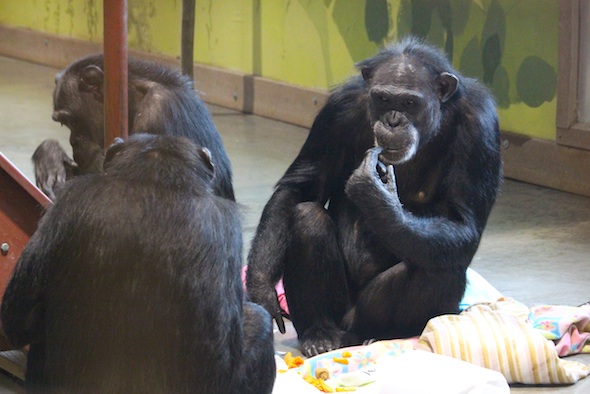
It was unclear if these were discarded pieces or if Jamie intended to eat them later:
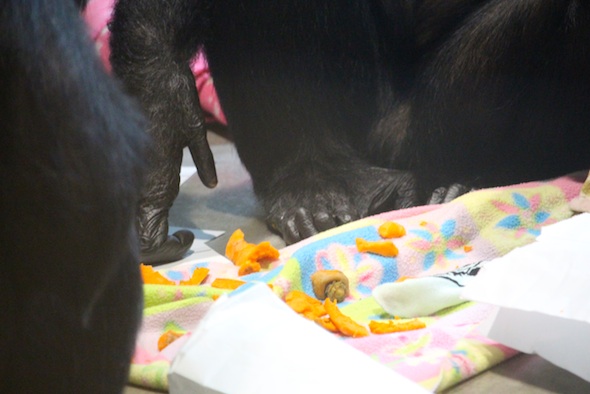
Missy decided to find out, but she knows Jamie probably better than anyone, so she proceeded with caution. Her first movement toward the carrot pieces turned into grooming Jamie’s hand instead.
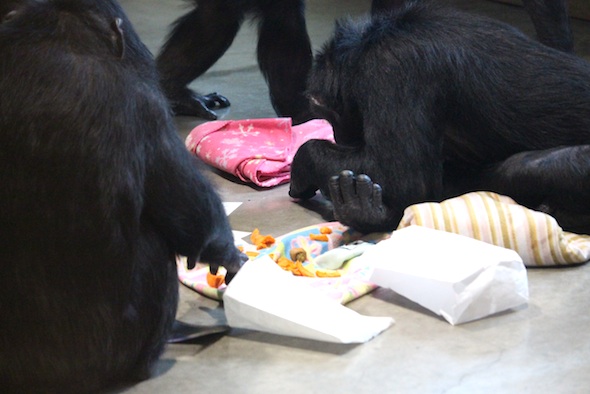
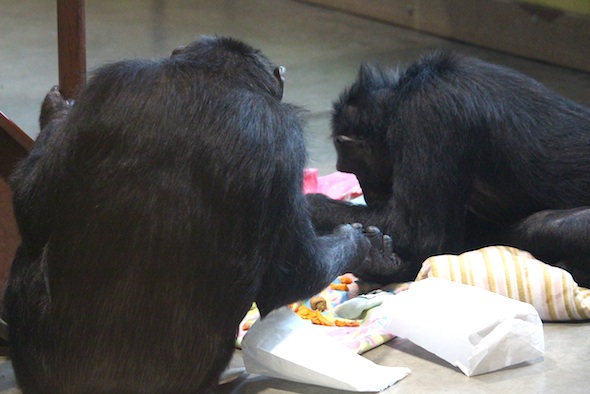
Several minutes later, she made another very slow move towards the pieces of carrots as Jamie watched:
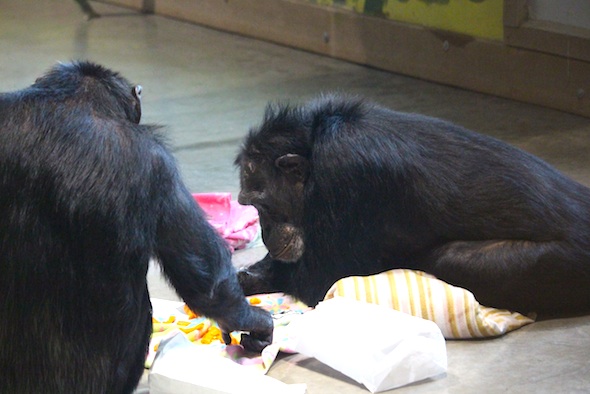
This was Jamie’s reaction:
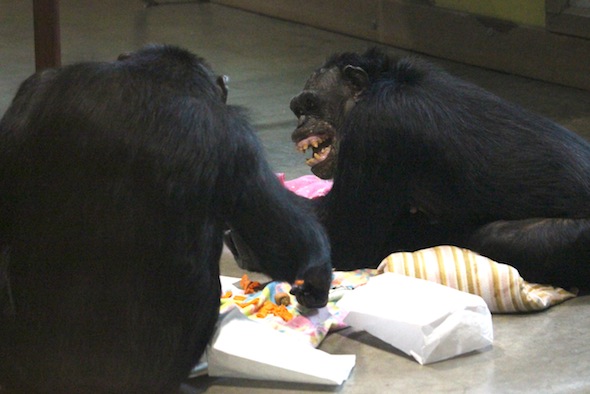
So Missy immediately reached to groom Jamie to reassure her that she didn’t intend to overstep her bounds and her respect for boss Jamie remains at the highest level:
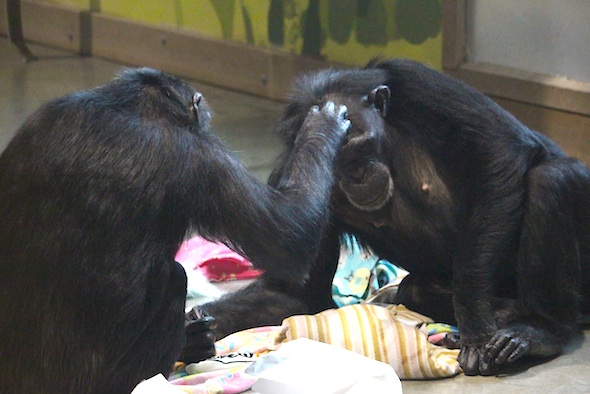

Jamie responded by reciprocating the grooming, letting Missy know that all was forgiven:
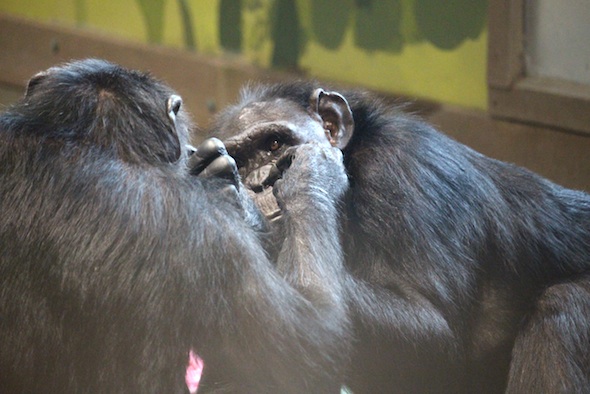
Annie was interested in the carrot saga too, and watched as Missy continued to groom Jamie:
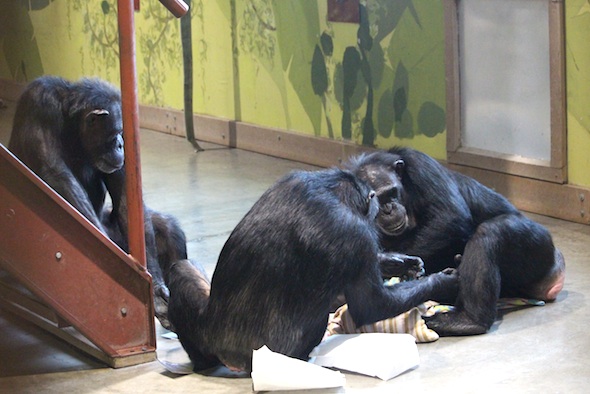
I kept my eye on things for 20 minutes or so, but I’m not sure how the saga ended. Jamie may have decided to let Missy or another chimpanzees take the pieces she had left, or she may have continued to guard them and ate them herself. This is the delicate treading that we all do with boss Jamie, as J.B. eloquently described in his blog post “The Power of Personality” yesterday.