• Skip to main content
  • Skip to primary sidebar
  • Skip to footer

Chimpanzee Sanctuary Northwest

Hope. Love. Home. Sanctuary

  • Our Family
    • The Chimpanzees
    • The Cattle
  • Blog
  • About Us
    • Visiting the Sanctuary
    • Philosophy
      • FAQs
      • Mission, Vision & Goals
      • Privacy Policy
    • The Humans
      • Staff
      • Board of Directors
      • Founder
    • Annual Reports
    • The Future of CSNW
    • CSNW In The News
  • You can help
    • Donate
      • Become a Chimpanzee Pal
      • Sponsor A Day
      • Transfer Stock
      • Be A Produce Patron
      • Be a Bovine Buddy
      • Give from your IRA
      • Personalized Stones
      • Bring Them Home Campaign
    • Leave A Legacy
    • Employment Opportunities
    • Volunteer
    • See Our Wish List
    • Events
  • Resources
    • About Chimpanzees
    • Enrichment Database
    • Advocacy
      • Advocacy Action Center
      • Apes in Entertainment
        • Trainers
        • Role of the AHA
        • Greeting Cards
      • Chimpanzees as Pets
      • Roadside Zoos
      • Chimpanzees in Biomedical Research
      • Conservation
        • African Apes
        • Orangutans
  • Shop
    • Merchandise Store
  • Contact
  • DONATE NOW

csnw

Sunday, Crummy Sunday

December 6, 2020 by Anthony

Sundays are usually quiet around here but today was unusually busy and a bit chaotic.

We experienced some of those bright moments that we expect when working around happy and healthy chimps, but we also encountered a few unexpected hang-ups that ensured this day would not go as smoothly as we initially hoped.

These days happen from time to time. Such is the life of a sanctuary caregiver.

Today’s minor obstacles included staff car troubles, sheets of ice on our vehicles and sidewalks, and mechanical issues around the building that required substantial effort to fix. I even hit snooze too many times and missed out on my usual dose of coffee. We’ll be fine (especially since I keep emergency coffee grounds in the Chimp House), but I would have been happier if everyone made it through the day without further setbacks.

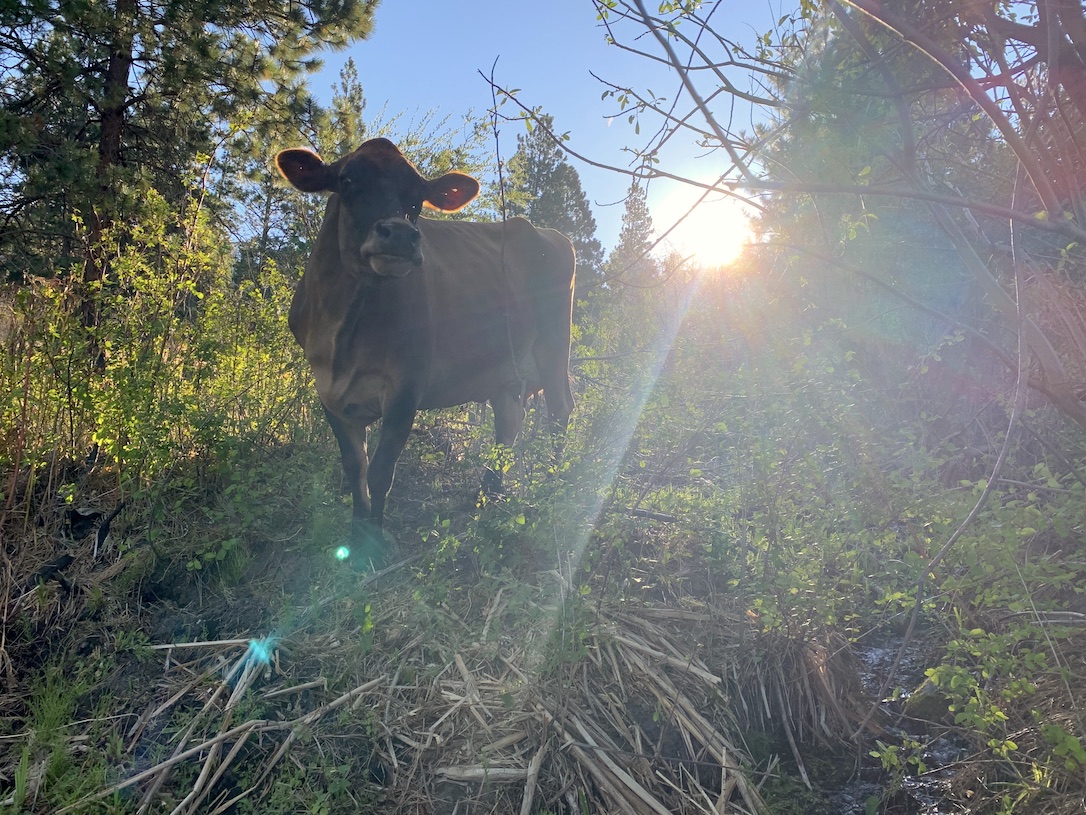
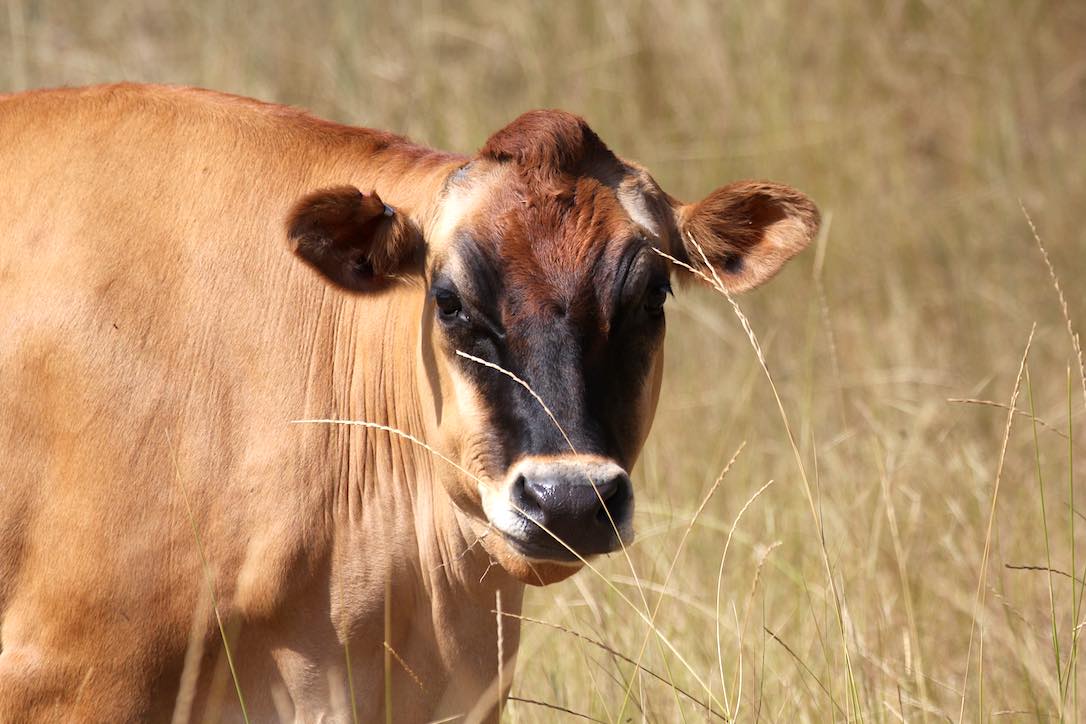
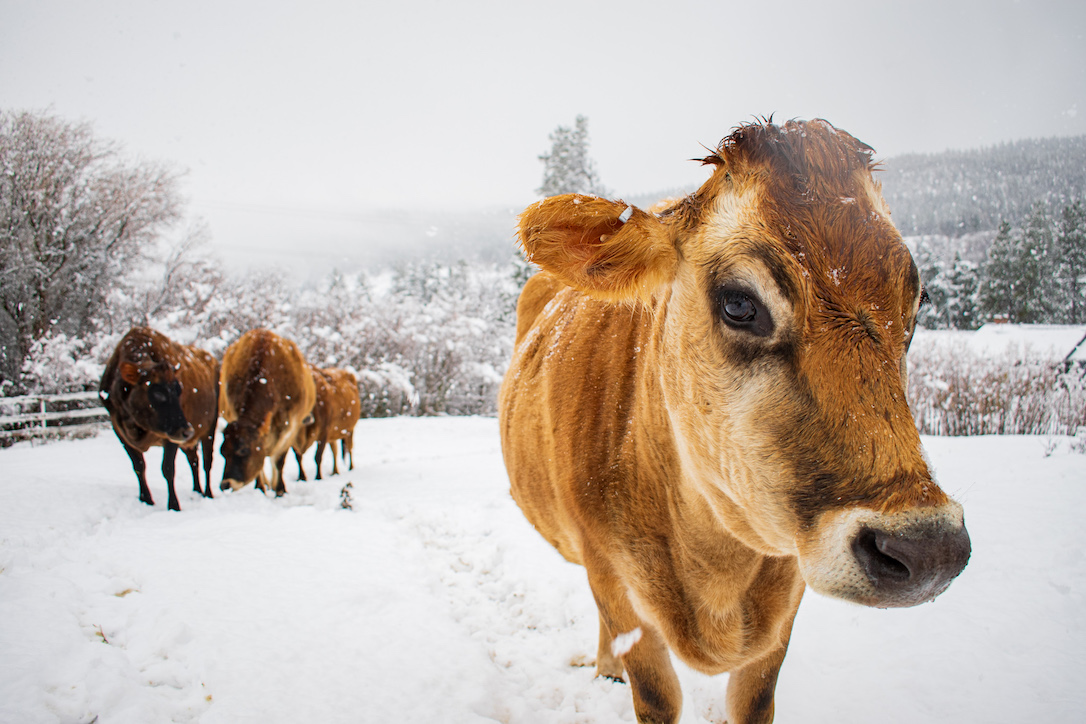
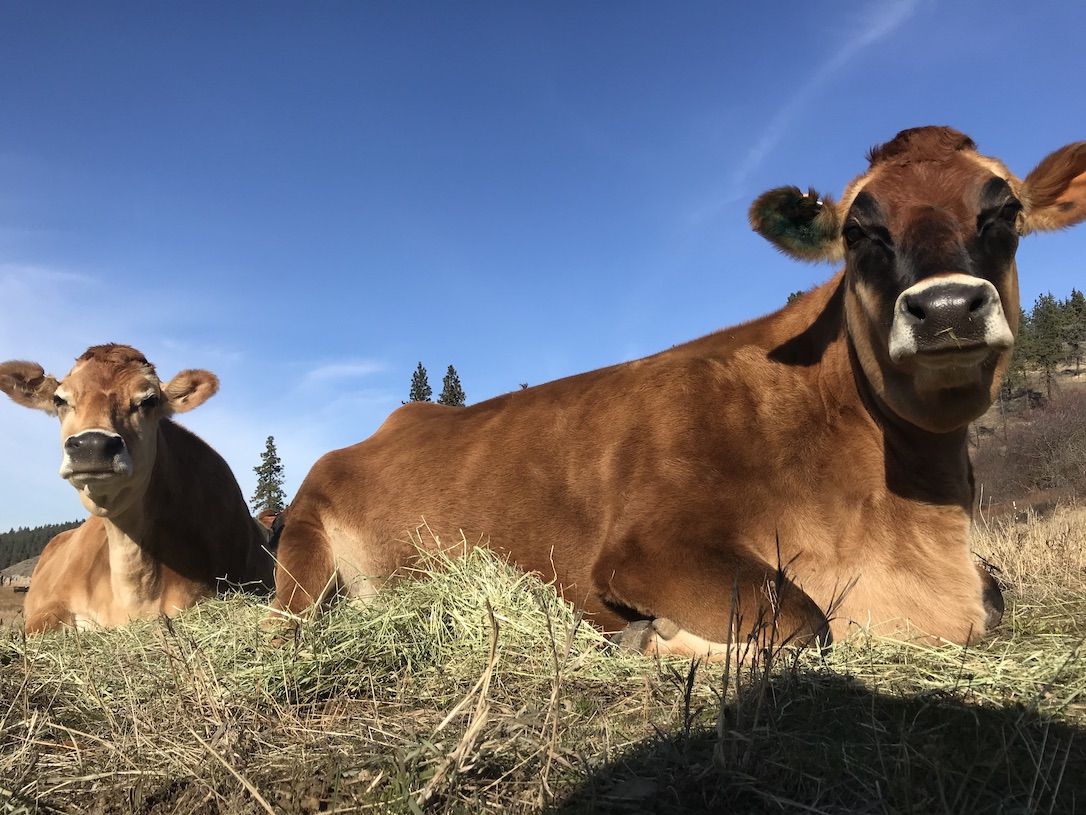
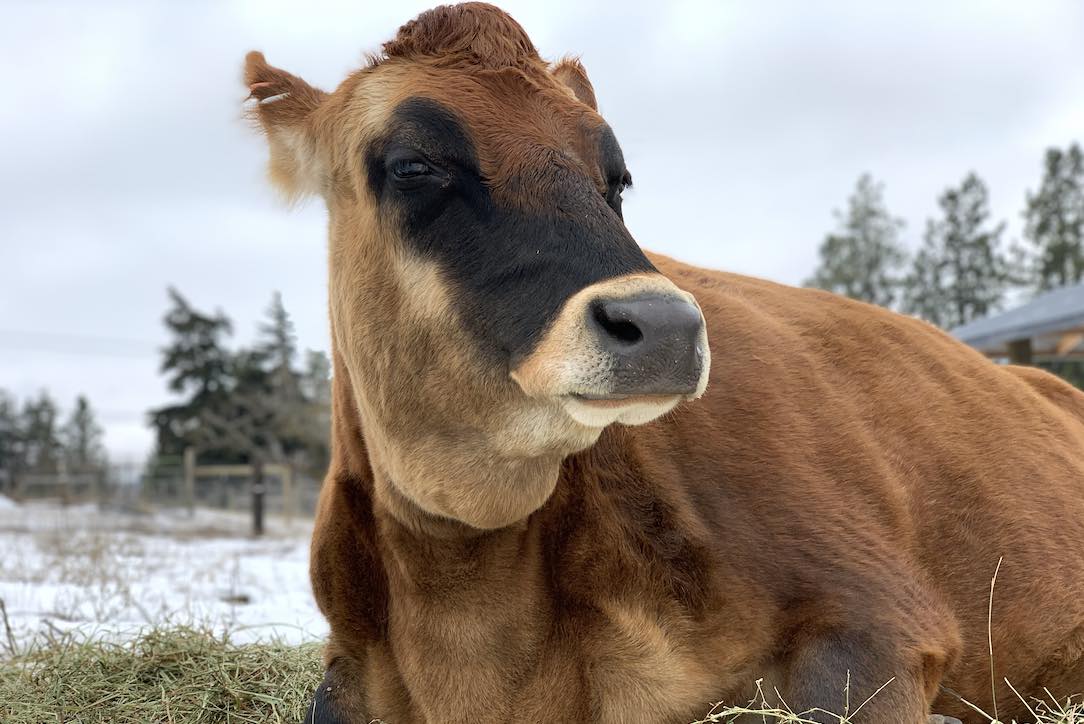
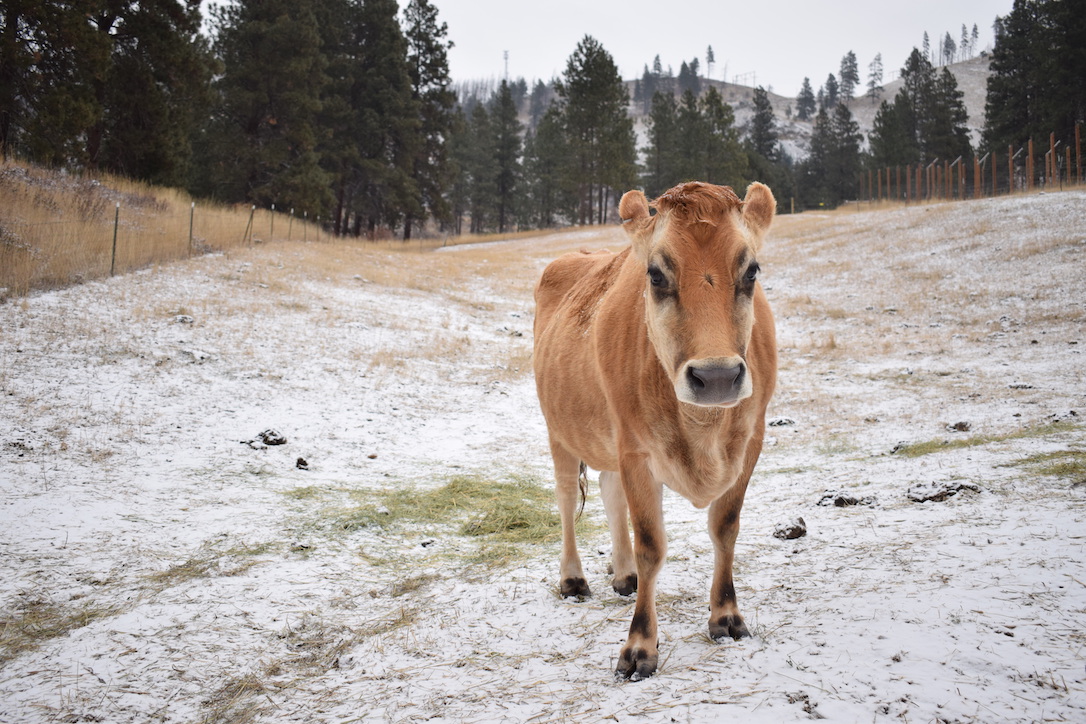
To add some sour frosting to this moldy cake, Chad noticed that Meredith was acting strangely (even for a Jersey cow) and we gave her a preliminary diagnosis of A.D.R. (the common but dreaded condition of simply “ain’t doin’ right”). Of course, this condition warrants a follow-up exam by a veterinarian, so we called in Dr. Erin.

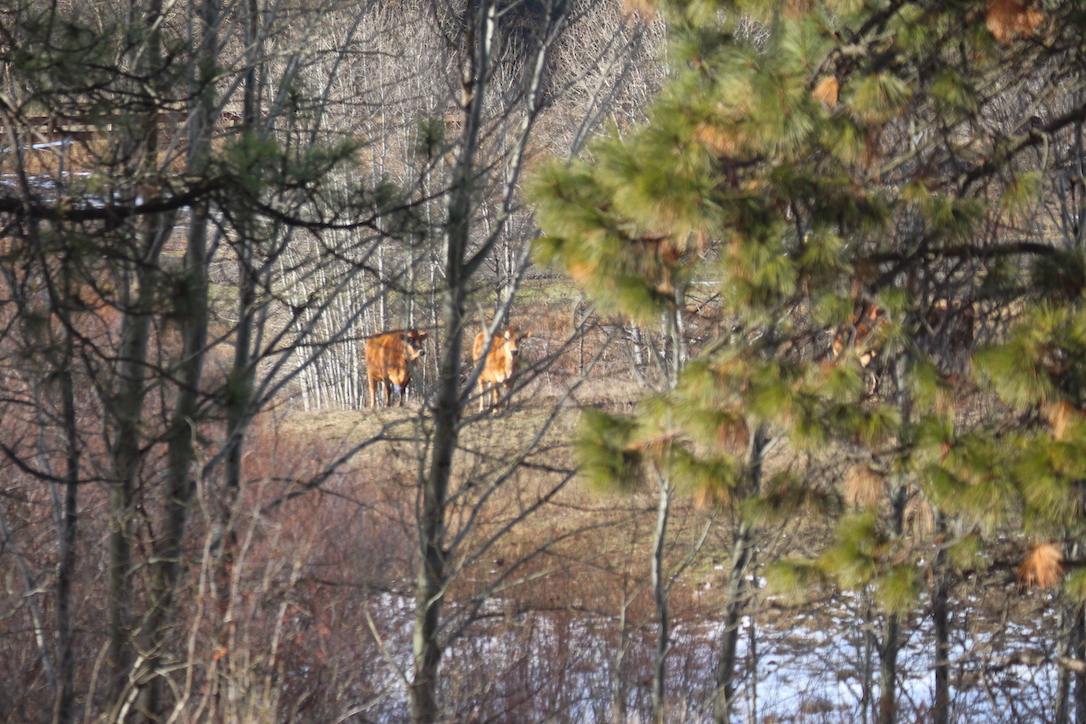
We love seeing Dr. Erin at the sanctuary, but we definitely prefer when she’s hanging with the chimps or delivering supplies for the vet clinic. Having to do an unexpected physical exam on a curiously-behaving bovine is not ideal, and it was difficult to get the suspicious cattle isolated as the sun rapidly set and plunged the pasture into darkness. We eventually secured Meredith and her companions into the winter paddock for what we hope is a quick check-up tomorrow morning. Hopefully, this is just some temporary discomfort and the cattle will be back to their usual activities soon.

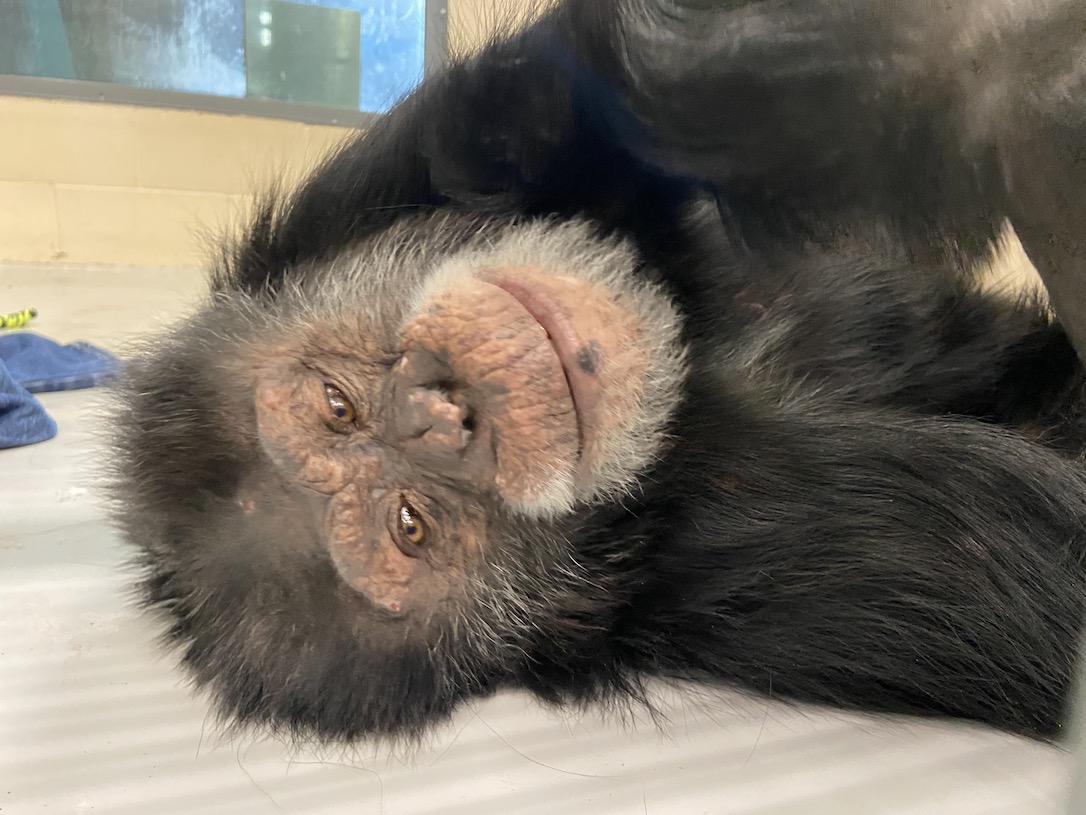
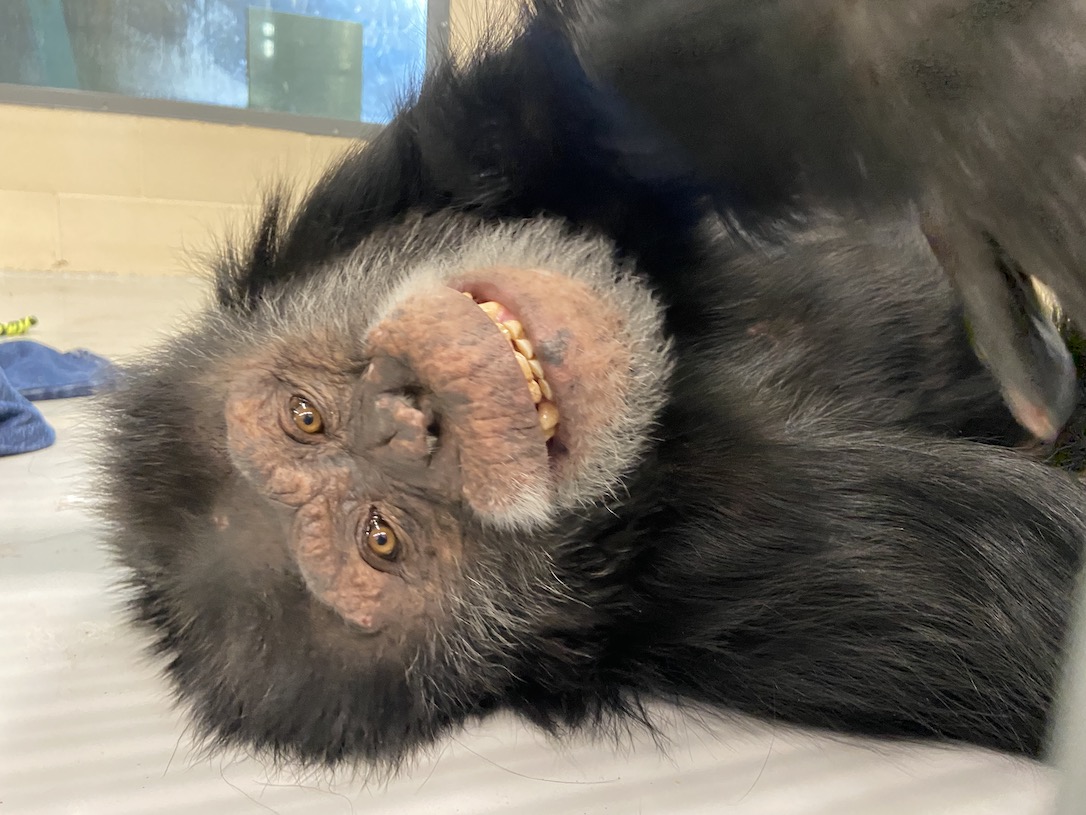
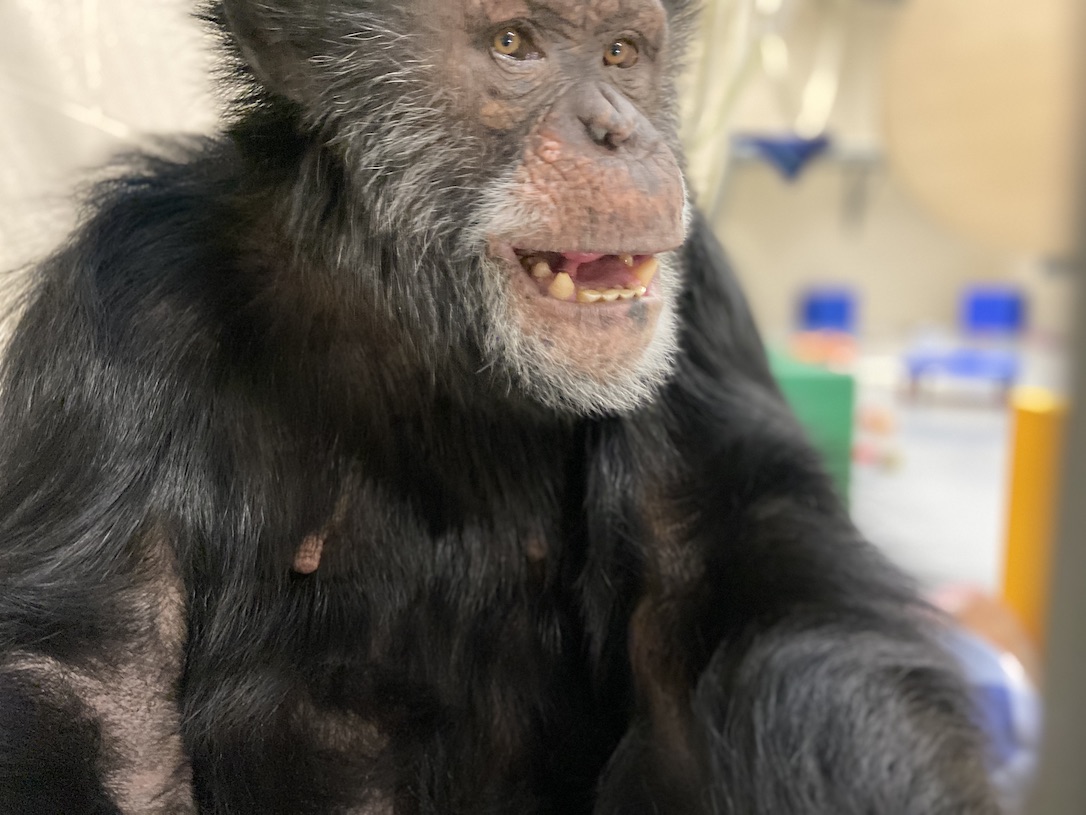
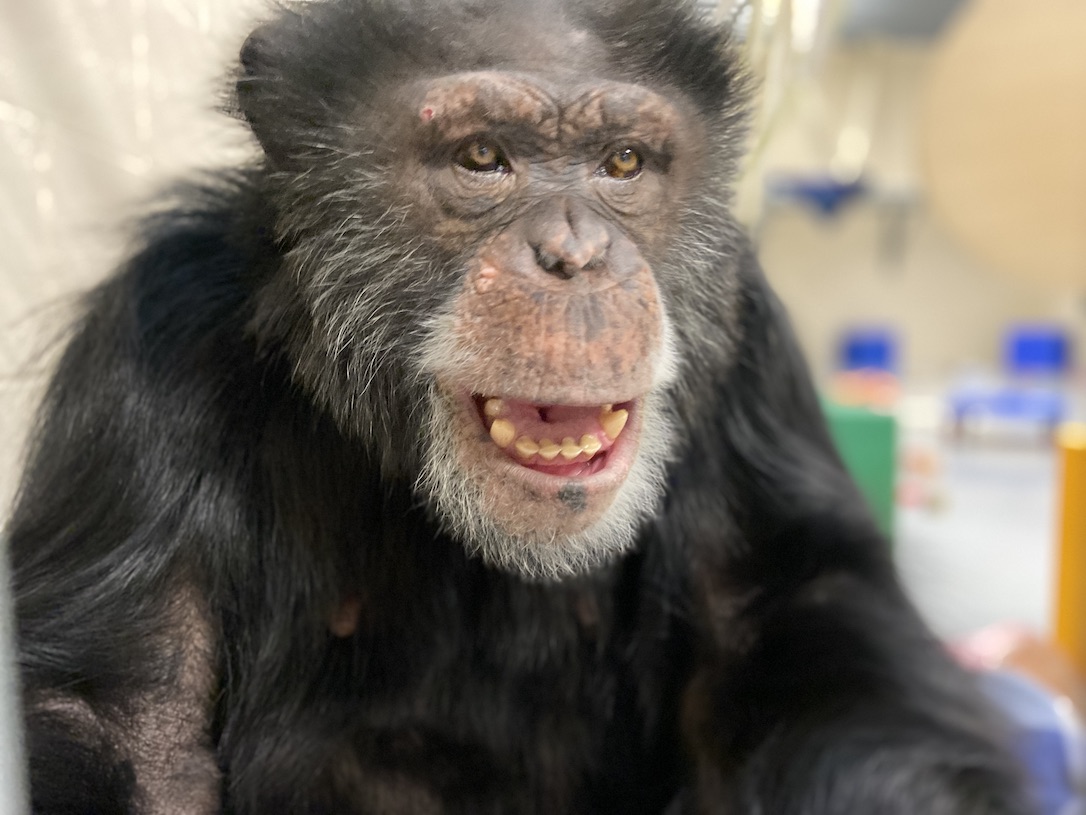
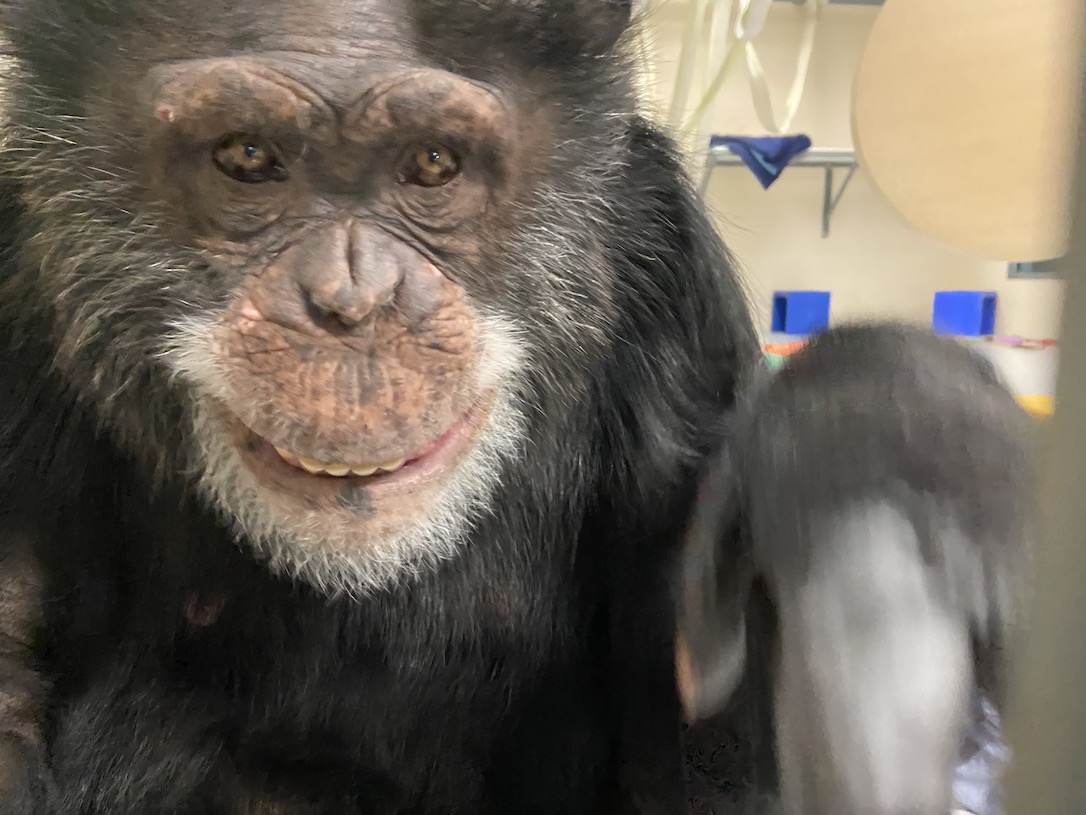
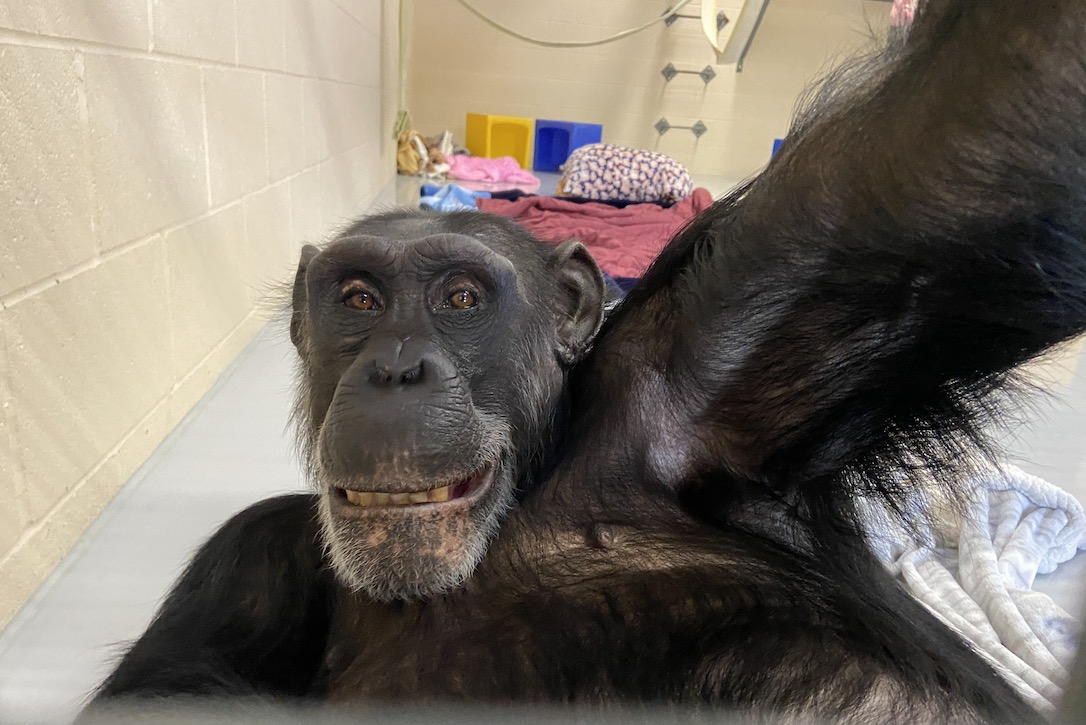
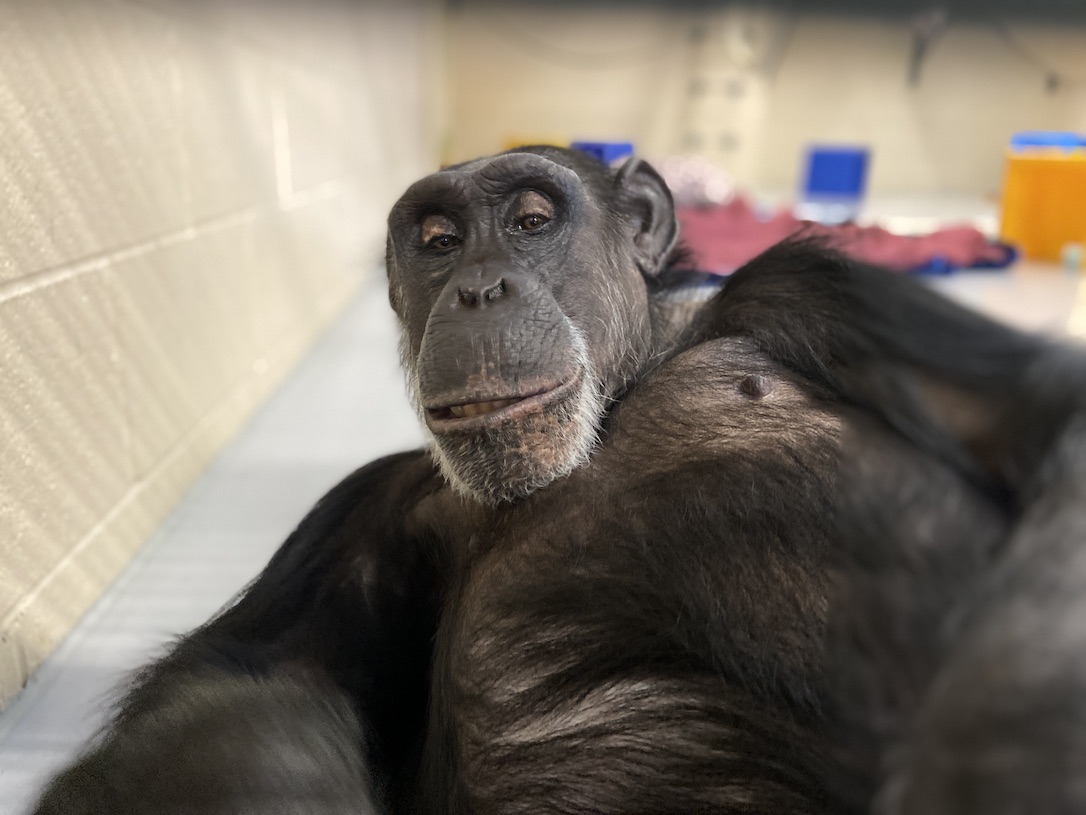
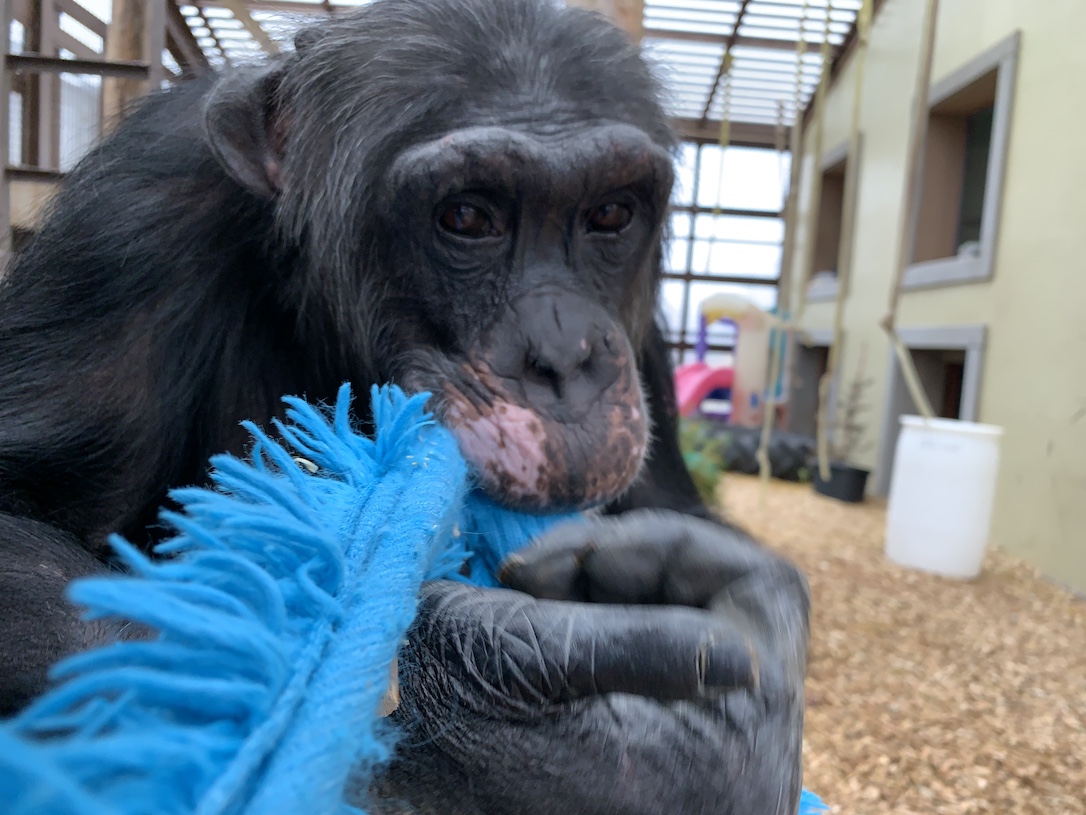
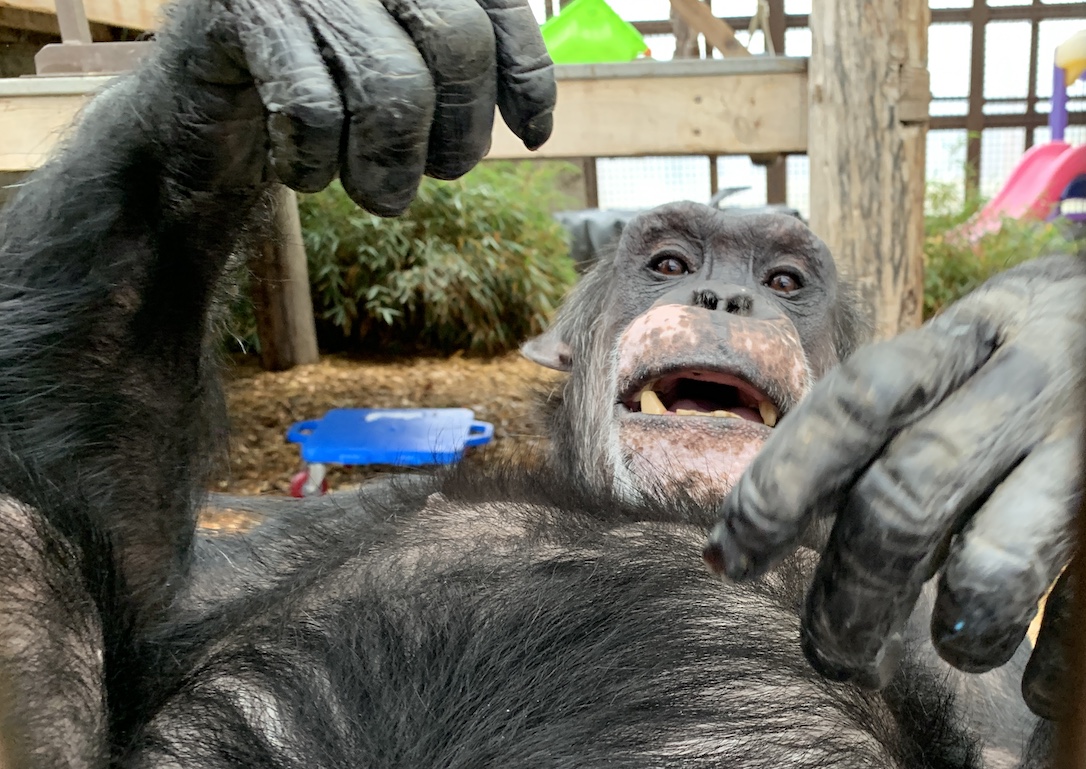
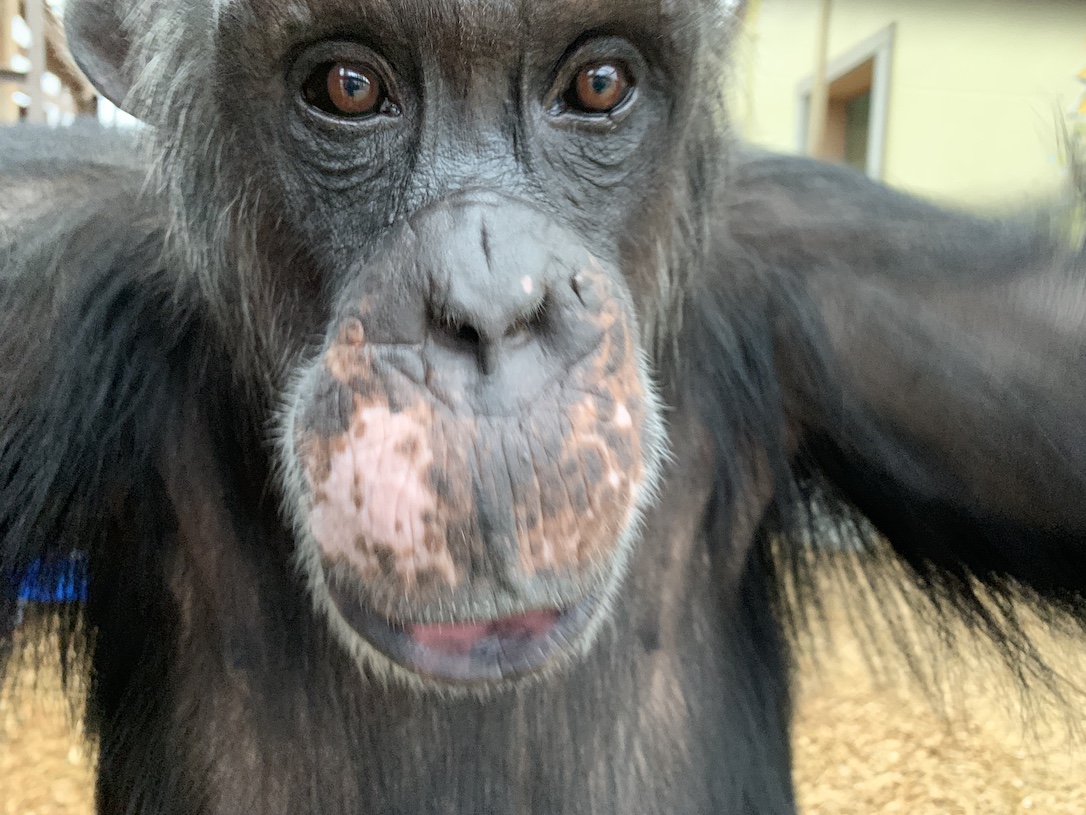
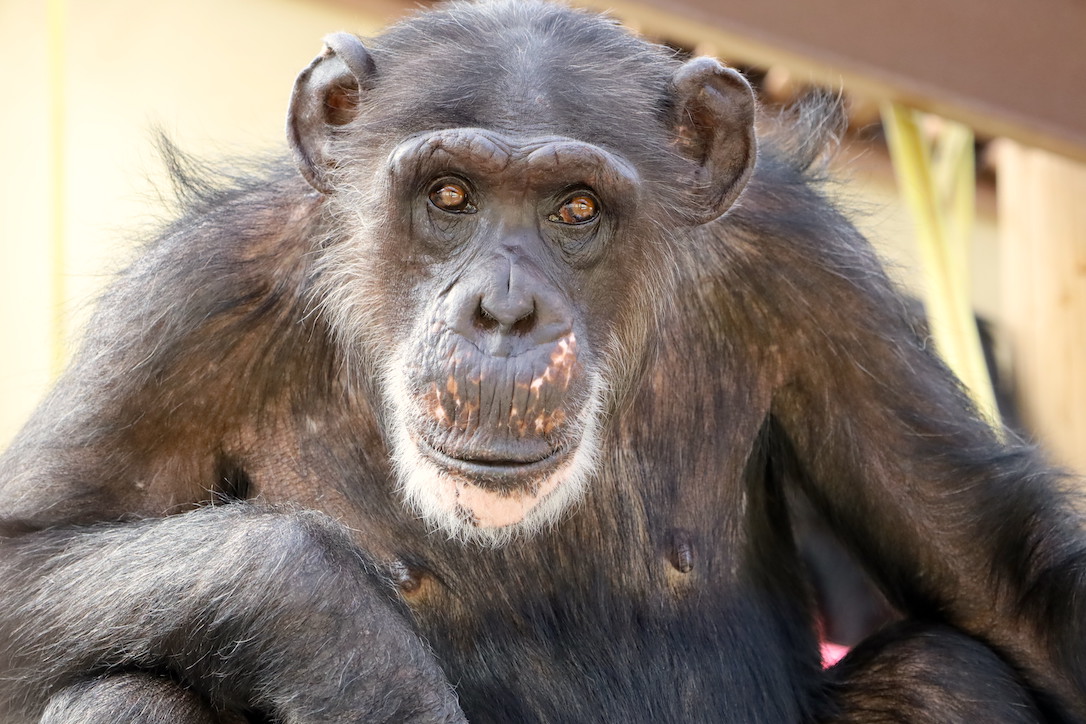
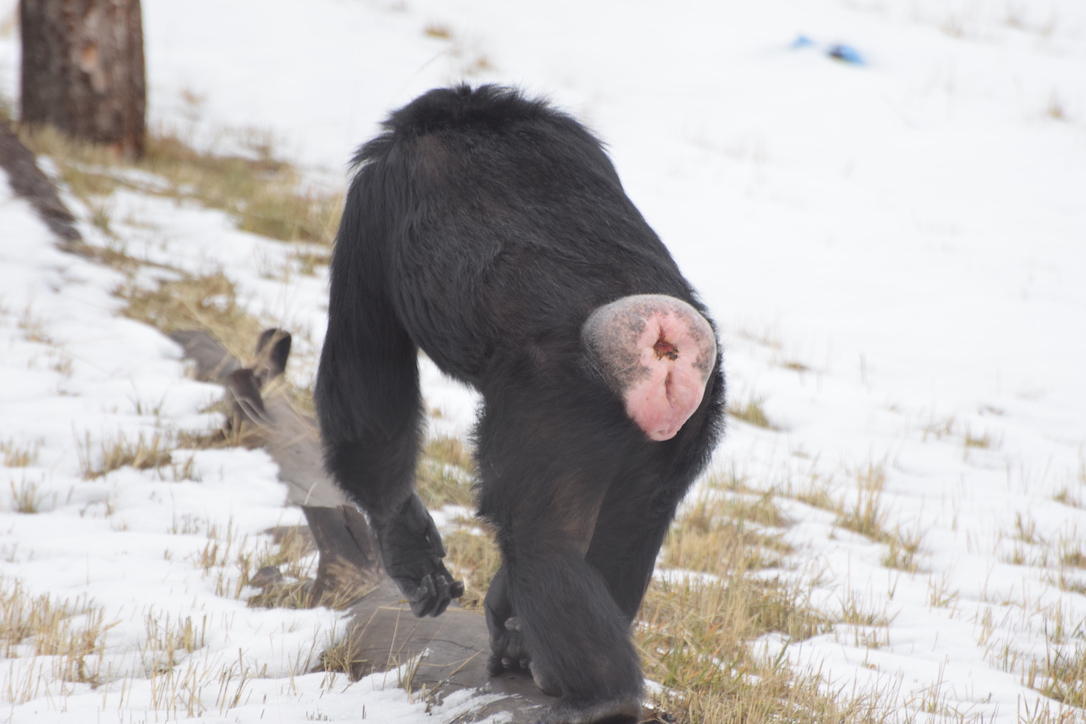
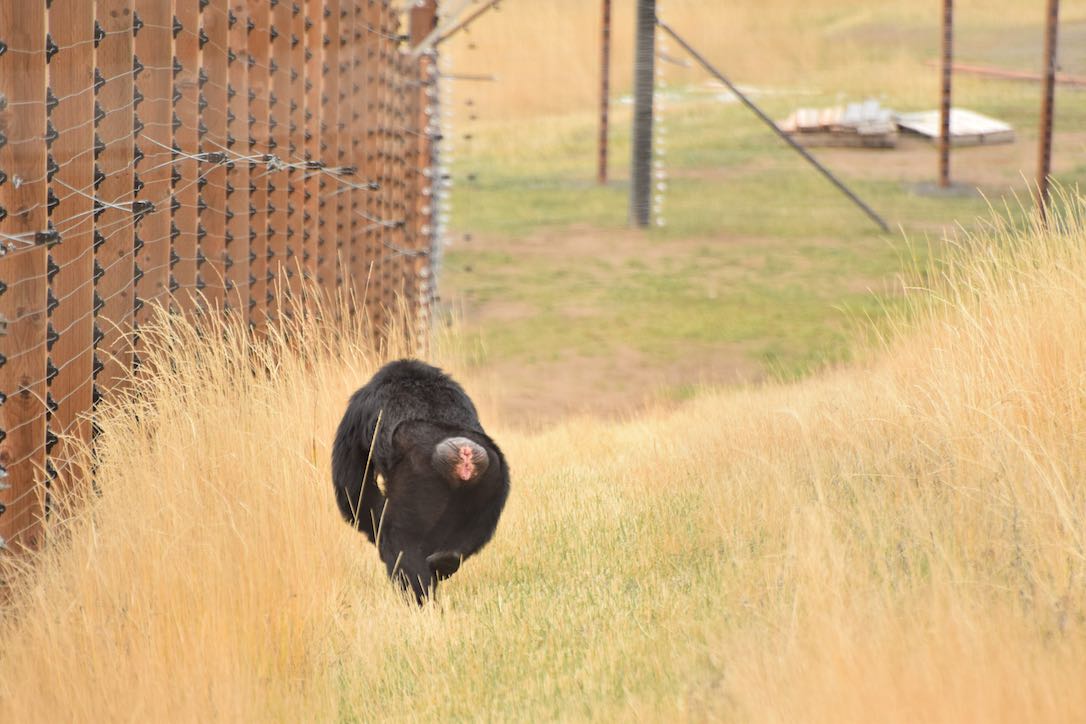
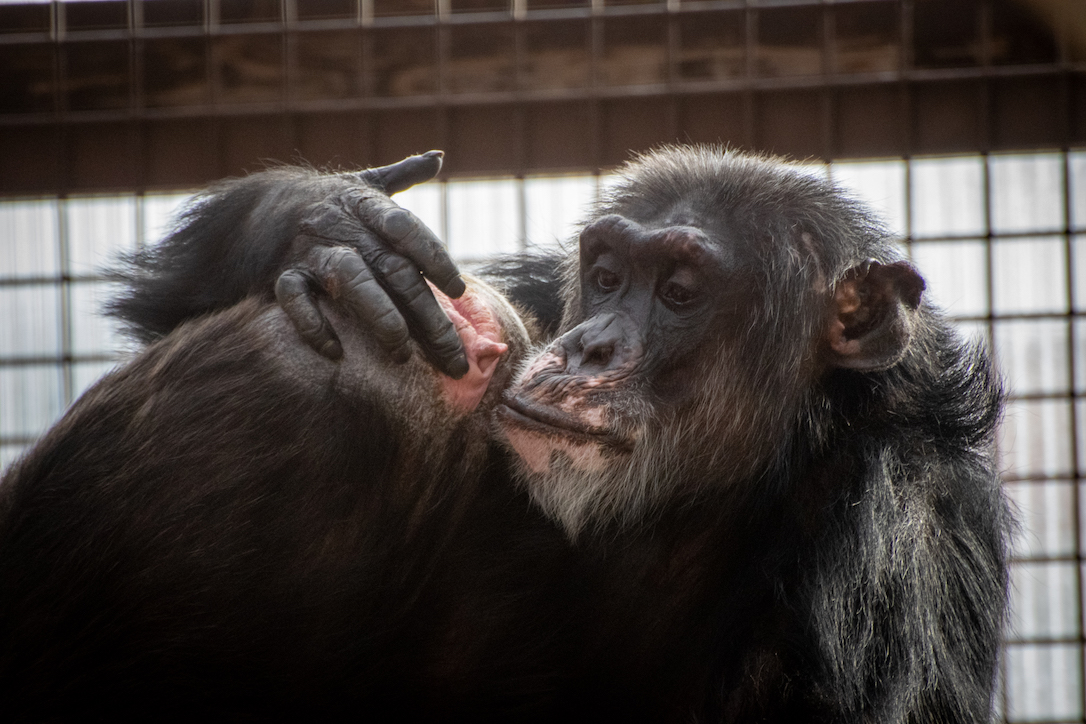
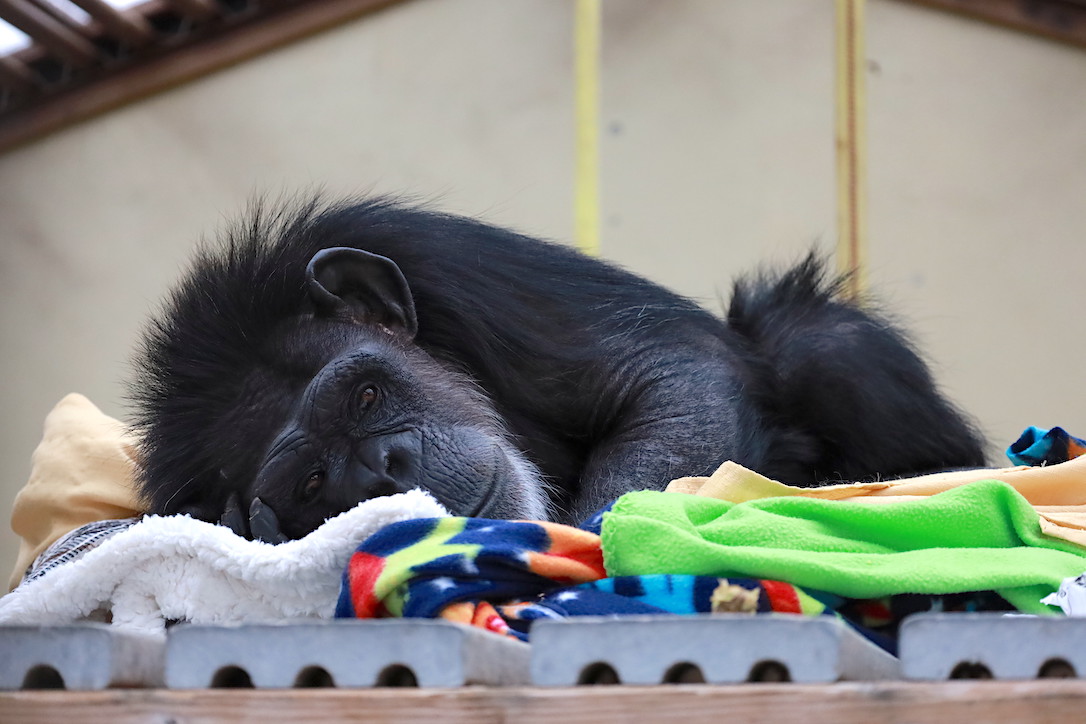
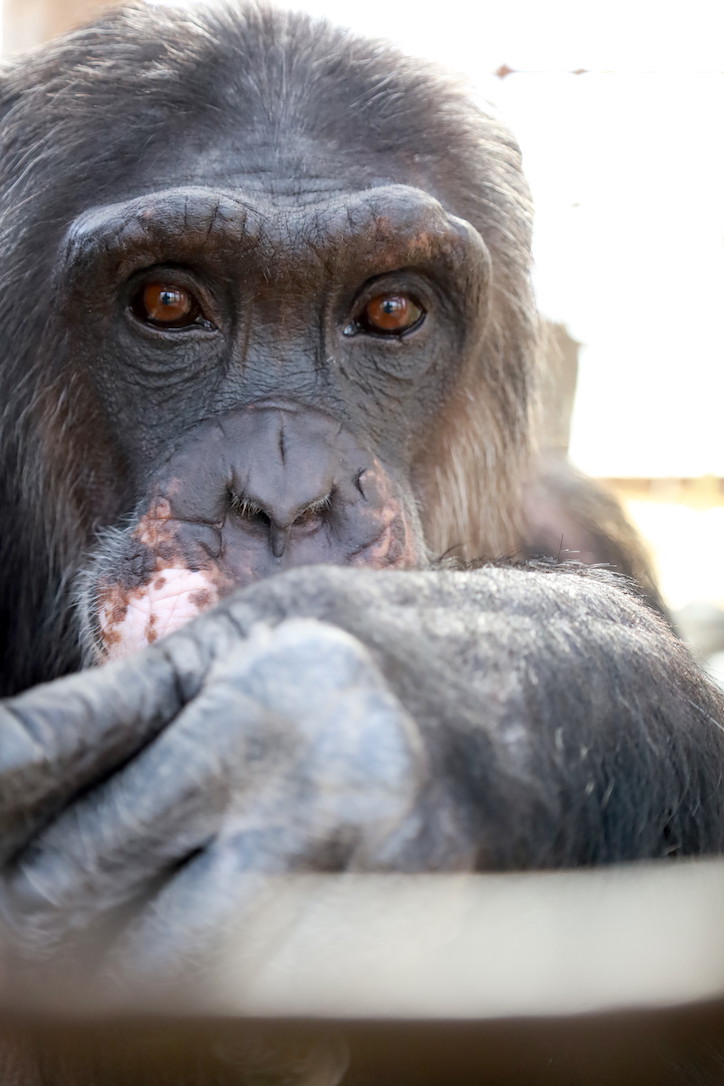
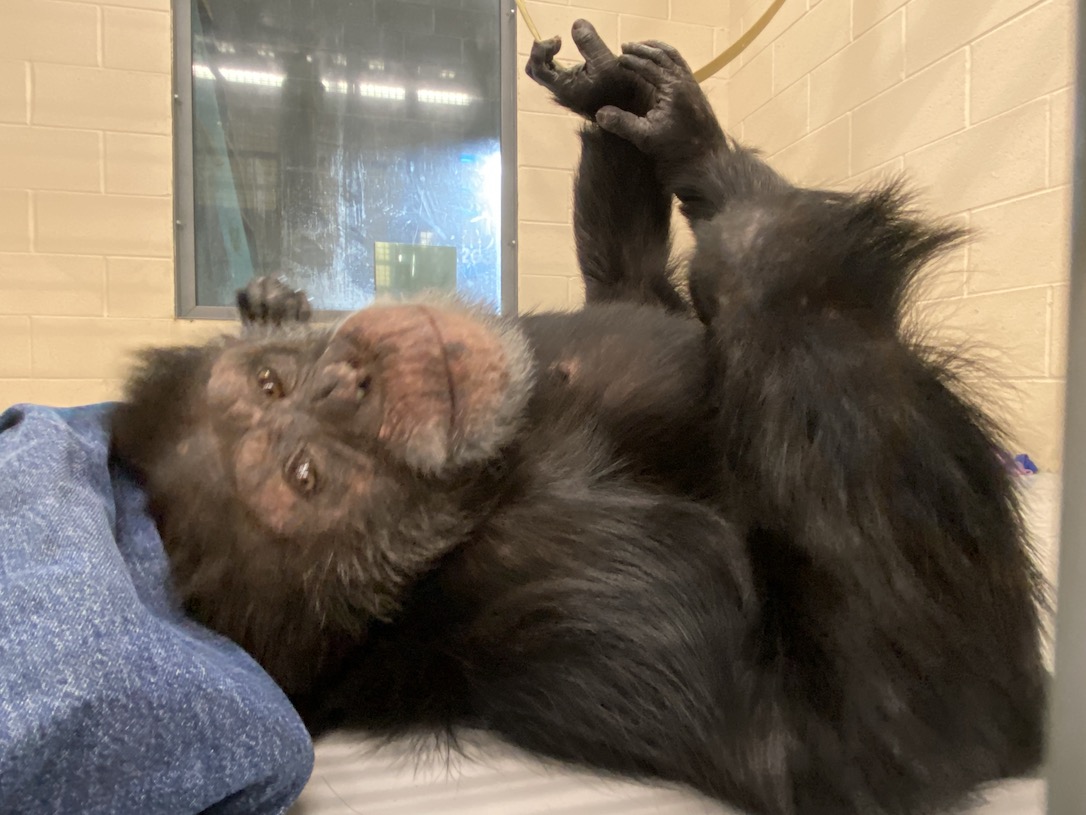
With all this stuff to do, I didn’t have time to take many photos or type out any additional thoughts. Therefore, today’s blog will center around this portrait series of Burrito, the Most Charismatic Chimpanzee in the World. I happened to capture this moment as he ventured out onto the Hill this morning (before everything else unraveled).
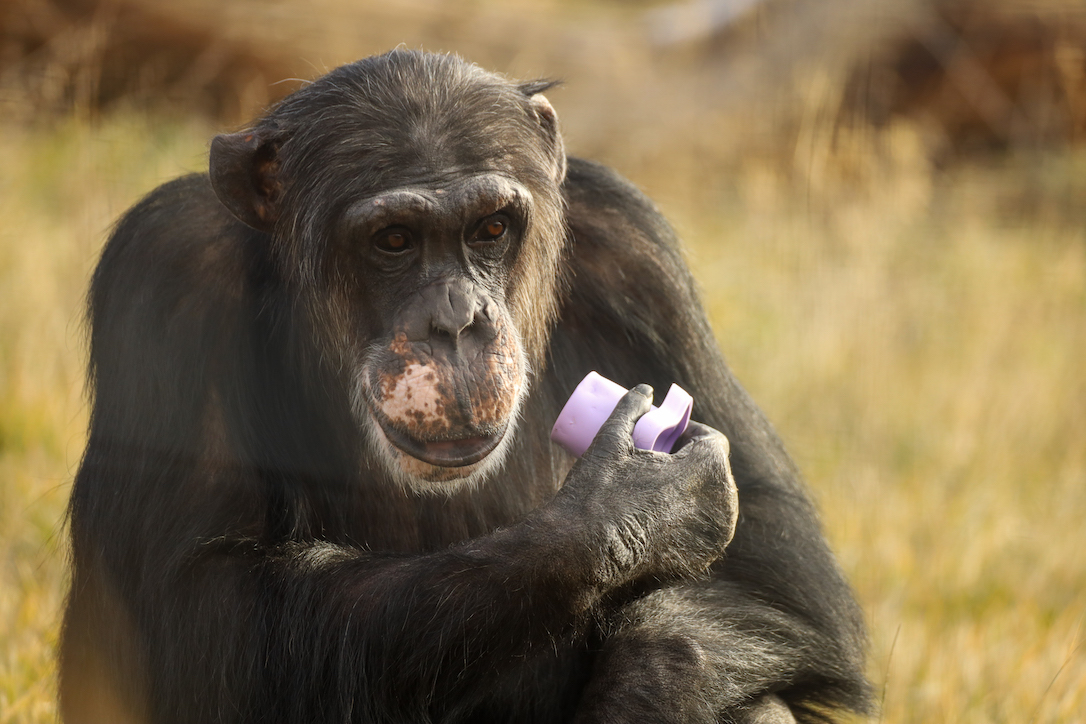
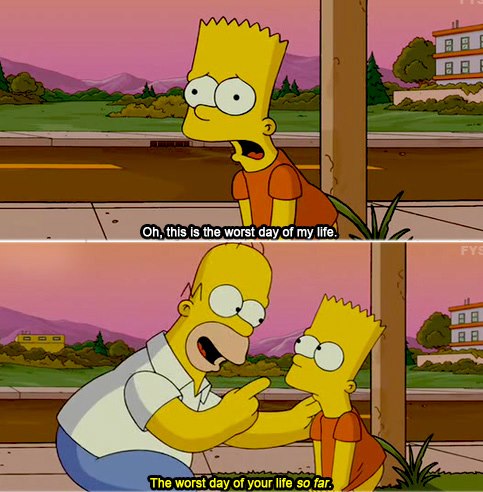
As with most of the unusual events that transpire around here, it’s much easier to get through if you maintain a wry sense of humor and a little optimism. Of course, as with any life situation, there’s also a Simpsons bit that encapsulates my feelings perfectly.
Filed Under: Burrito, Cattle, Sanctuary, Veterinary Care Tagged With: Animal Welfare, Burrito, cattle, cattle rescue, chimp, chimpanzee, chimpanzee sanctuary, Chimpanzee Sanctuary Northwest, chimpanzees, Cle Elum Seven, cows, csnw, jersey cattle, jersey cows, primate veterinarian, Sanctuary, veterinarian, veterinary care

All Smiles

November 24, 2020 by Chad de Bree

Chimpanzee smiles are one of the greatest things to see. Granted let’s not confuse a true chimpanzee smile with a fear grimace. What most humans recall when they think of a chimpanzee smile are those usually found on cards or advertisements. Usually a juvenile chimpanzee dressed up in some costume, and full teeth showing with the edges of their mouth going from ear-to-ear. For those of us who work with or study chimpanzees, fully showing the upper and bottom rows of their teeth is the indication they are fear grimacing. Chimpanzees use the grimacing to show that something is causing them anxiousness or fear, or to show off their impressive canine teeth to intimidate another.

A true chimpanzee smile, one used for play and enjoyment, only the bottom teeth are usually exposed. I say usually because there are occasions where something may be super exciting or really funny is too hard to contain. In these circumstances, other chimpanzee behaviors are looked for such as laughter, breathy pants, etc. But once we, as caregivers, confirm they are indeed chimpanzee smiles, and if directed toward us, it makes the day so much brighter.

Here are a few I was able to capture of Mave. Both the lead up and the actual smiles.

First was last week as I entered the Willy B, Honey B, and Mave’s side of the building. She really wanted to play an interaction called “shoe tickle.” As J.B. described in his blog a few weeks back, “shoe tickle” is when the chimpanzees fully extend their fingers through the mesh and can only touch the bottoms of our shoes with just the tips of their fingertips. This is to avoid them grabbing us in some way.

Then there is this sequence from Sunday of her in serious play mode.

Yesterday I was able to catch Honey B’s smile during a play session as well!

(Note the coloration of Honey B’s eyelids! It’s one of the many, many, many things I love about her that makes her unique!)

I tried to round this off by getting some photos of Willy B’s smile and play face. However, as some of you know, he is really difficult to get photos of. Either he’s too close for the cameras we have on hand, or he stops doing what he’s doing if a phone is brought out. Though Willy B is serious about 85% of the day, the other 15% he can really be a goofball. Though most of the time he doesn’t showcase a smile or play face, once in a while he’ll let one slip and it’s amazing!

I tried to supplement it with someone who almost always has a smile on his face and can be heard throughout the sanctuary laughing nearly 95% of the day.

Though Burrito spends nearly the entire day laughing and playing, it actually can be difficult to get photos of his smile. But this is what I could get.

Hopefully these smiles brightened up your day as they do ours!

And remember:

When you’re smilin’, keep on smilin’ and the world smiles with you.”

-Louis Armstrong

Filed Under: Burrito, Chimpanzee Behavior, Honey B, Mave, Play Tagged With: Animal Welfare, chimp rescue, chimp sanctuary, chimpanzee, chimpanzee rescue, chimpanzee retirement, chimpanzee sanctuary, Chimpanzee Sanctuary Northwest, chimps, csnw, Sanctuary

Burrito’s Superpower

October 24, 2020 by Diana

You may be asking yourself, does Burrito ever stop playing? The answer lately is, yes, when he’s asleep. I do wonder if even in his dreams he’s tickling and chasing and wrestling, though.

A very special thank to you blog readers who have posed questions on my blog post last week. You have inspired a lot of contemplation and conversation among the staff, and already a blog post or two, with many more to come in the future.

I had considered picking a topic among those questions for today’s blog post, but Burrito dictated that I put together this compilation video.

I trust this is a welcomed decision!

Filed Under: Annie, Burrito, Chimpanzee Behavior, Foxie, Latest Videos, Negra, Play, Sanctuary, Trolls Tagged With: animal protection, animal rescue, animal rights, Animal Welfare, chimpanzee play, chimpanzee retirement, chimpanzee sanctuary, Chimpanzee Sanctuary Northwest, csnw

The Mystery of Love

October 18, 2020 by Anthony

Yesterday, Diana had some thoughtful musings on the sanctuary’s blog and invited you all, our followers and supporters, to ask questions.

One topic that came up several times, as it has in the past, is that of chimpanzee reproductive behavior. I’d like to thank you all for giving me an excuse to write this blog for two main reasons. First, I thrive on awkwardness. Second, the sex lives of chimpanzees can really be fascinating.

For decades, scientists observed the sexual behavior of chimpanzees and other primates with the goal of learning more about our own species’ habits. The initial logic, seemingly, was that our ape cousins must have a system that closely resembles that of our common ancestor. By watching free-ranging primates go about their business, anthropologists hoped to gain a window into our evolutionary past that wasn’t obscured by the filter of our own culture.

Missy is a chimpanzee.

From our modern perspective, we now have a greater appreciation for a simple fact; chimps are related to us, but they’re not necessarily anything like our common ancestor. Chimps and humans have been separate for six million years, during which our respective lineages were subjected to extremely different pressures that caused us to diverge physically, behaviorally, and cognitively. Our branch diversified over time into several types of humans that took over the globe (the rest of which we then subsequently absorbed or drove to extinction). Meanwhile, the nearest branch grew in a different direction and, as far as we know, forked into a pair of twigs: chimpanzees and bonobos. Using this reasoning, the other primates are not really primitive. They’re not human-like oddities that emerged among the animals, nor are they less-evolved versions of early humans. They’re something different entirely. Chimpanzees are just chimpanzees.
For the most part, chimpanzees do resemble us (and vice versa). They have the same amount of hair (which is just coarser and longer than ours), similar skin and pigmentation, and muscles and bones that are arranged much like a human’s. Upon first glance, it can be difficult to identify any conspicuous trait that is uniquely chimpanzee, but they become familiar over time. Longer fingers… larger canine teeth… a pronounced brow ridge… shorter, stockier bodies… and, of course, the butts.

Annie Missy best friends
Annie and Missy

Male chimpanzees do not have flashy backsides. In fact, the norm is to have a flat, gray callous-like pad that serves as a portable seat cushion and seems to keep the pressure off of their oversized testicles. Relative to humans, adult male chimps have much larger testicles for their body size. (It looks like they’re hiding a pair of mangoes in there.) Meanwhile, their smaller penises stay hidden until they’re needed for copulation. The testes produce crucial hormones that influence behavior and physical development, so neuters are not a recommended form of population control for chimps (nor are they particularly safe or humane). Instead, most sanctuaries rely on less-invasive vasectomies to keep their males from successfully impregnating females, and many also use forms of birth control for females. As stated on our website, there are several good reasons to not breed captive chimpanzees.

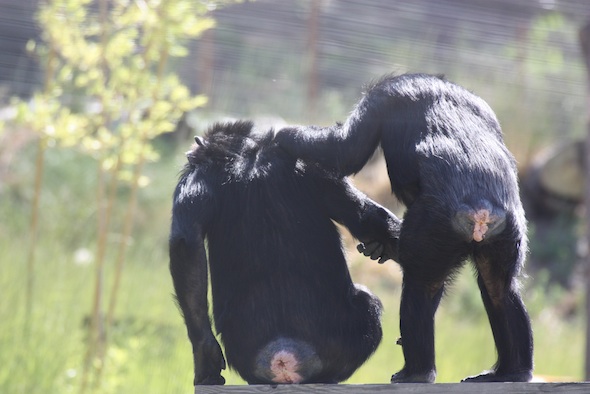
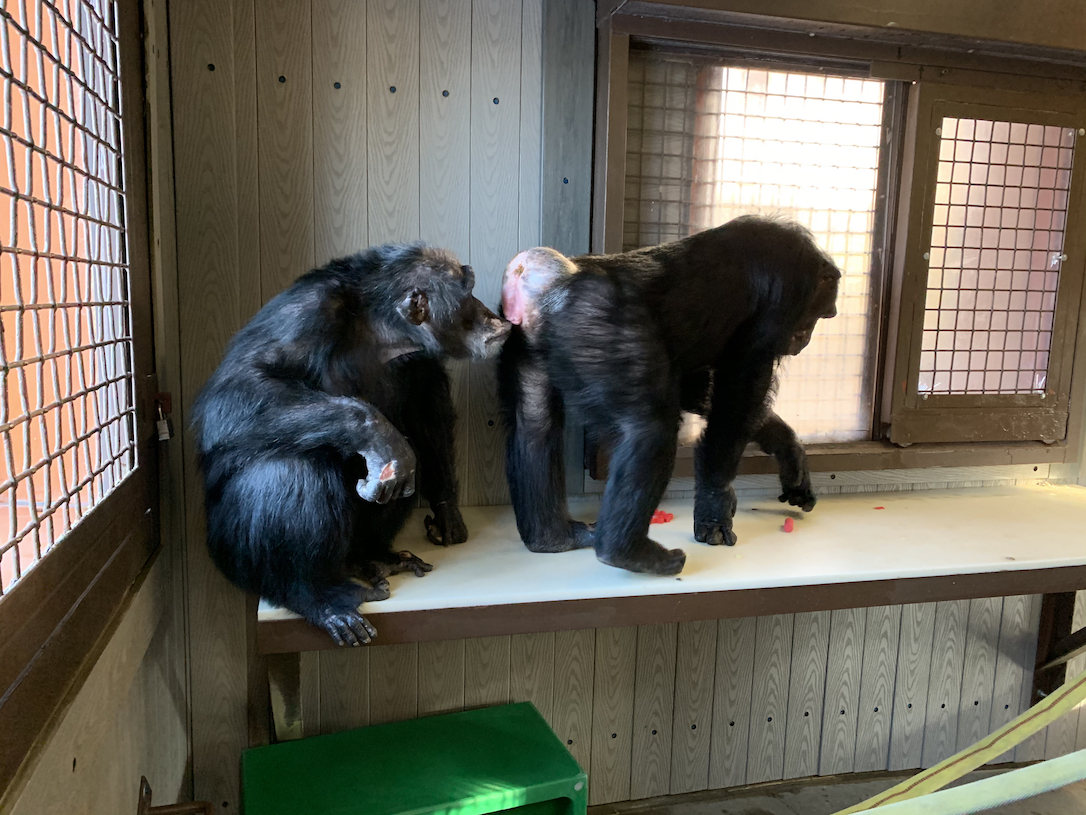
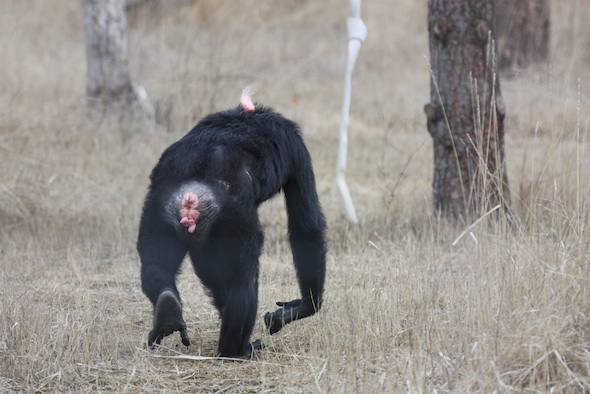
Much like in humans, female chimpanzees are anatomically different from males. Biologists call this disparity sexual dimorphism. In chimps, adult females have an entire appendage dedicated to advertising their reproductive status. Often referred to as a “swelling,” this wrinkly patch of skin is composed of the vulva and surrounds the anal and vaginal openings. This flap of tissue can inflate with over a liter of fluid, causing it to become rosy and bulbous. It looks uncomfortable to be so swollen for almost two weeks, but it’s a natural aspect of the chimpanzee experience. This process is often captured, unintentionally, in the photos we take while developing content for the blog.

Jamie’s swelling – mostly inflated! Note the shiny, stretched appearance and the higher proportion of pink skin to gray skin.
Jamie’s swelling – not inflated! Note the wrinkles and the higher ratio of gray to pink skin

Swellings help chimpanzees to maximize their reproductive potential. Essentially, the bright pink signal lets males know when a female is likely to ovulate, and that female receives a corresponding flood of attention and may even temporarily rise in social rank. As J.B. explained back in 2013, chimpanzee menstrual cycles are quite similar to ours (and notably different from the estrus cycles observed in many other mammals), but the swelling corresponds to some key differences. Ovulating female chimpanzees often choose to mate with any interested males, and those males usually attempt to mate with each swollen female (although the alpha male may guard them from the others). For this reason, females need a way to let the guys know what’s going on, and a bright pink swelling usually does the trick. A tumescent swelling literally brings all the boys to the yard.

Interestingly, females will often allow subordinate males to mate with them and will continue to mate frequently even once pregnancy has begun. Because of this, males have little idea which offspring are theirs and are therefore incentivized to protect them all equally. This pattern of paternity confusion acts as insurance against coups. If a new alpha emerges, he will be less likely to cull his group’s infants because he may have sired them back when he was still a subordinate. Furthermore, male chimps in the same community tend to be related to each other, so the potential costs of infanticide tend to outweigh any competitive advantages. In other primate societies where the alphas have exclusive mating rights, changes in leadership can be tragic for newborn infants.

You may have seen on the blog that the sanctuary’s male residents are fascinated by swellings, but don’t seem to have the social skills required to successfully copulate. This is not uncommon for captive chimps who were raised in abnormal social groups. However, it’s worth noting that Burrito and Willy B’s attractions to the females’ swellings are quite obvious and seem to have developed without the enculturation of a larger chimpanzee society. Furthermore, the life-saving castration that Burrito endured does not seem to affect this behavior, and he still watches over any swollen females with keen interest.

Burrito sniffs Jamie’s swelling.

One question that often arises is that of female contraception. As with many dilemmas relating to captive chimpanzees, we do our best to balance natural processes, physical health, emotional impacts, and logistical challenges. In the case of birth control, our team evaluates each female’s unique needs and consults with outside experts in order to give them the best experience that this environment allows. Therefore, we do not have a comprehensive protocol for administering contraceptives and each individual case is managed separately.

Foxie, Missy and Honey B underwent hysterectomies at their previous facilities due to underlying health issues. We also suspect that Negra had one in the past, although it’s possible that she has simply transitioned through menopause. In all of these cases, no contraception is necessary. These females don’t swell, have little chance of becoming pregnant, and aren’t prone to reproductive health issues.

Foxie’s swelling is permanently deflated.

Mave and Annie have no known health issues and are at low risk of pregnancy because both of the sanctuary’s males, in addition to being sexually naïve, are medically unable to reproduce. (Burrito no longer has testicles and Willy B’s vasectomy is still serving its purpose.) In these cases, we’re not intervening with contraceptives because there is no clinical reason to do so. Without a medical issue, we’re more comfortable with letting Annie and Mave’s respective cycles progress naturally, for now.

Jody and Jamie, on the other hand, receive daily doses of medroxyprogesterone (an oral contraceptive) for reasons other than preventing pregnancy. The medication is relatively bland and dissolves well in juice, so both females will gladly take it from their caregivers each morning. In Jody’s case, her recent medical exams allowed us to detect a small uterine mass that we suspect is a mineralized fibroid, and the medroxyprogesterone is a recommended treatment for managing these. Jamie, meanwhile, has a recurring anal fistula that is not severe but seems to cause more discomfort when she is swollen. Neither Jamie nor Jody swell while they are on “the pill,” although I have seen that female chimpanzees at other sanctuaries may continue to do so (albeit with changes in frequency and intensity).

Burrito inspects Mave’s swelling during their first meeting last year. Willy B did the same when he met Jody, Annie and Jamie.

One advantage of the chimpanzee sexual cycle is that males will be extremely interested in, and friendly to, swollen females. In the wild, females can use this attention to work their way into new communities once they are mature enough to leave the one they were born in. For managers of captive chimpanzees, an awareness of the reproductive cycle can help us to merge smaller social groups into larger ones. Predictably, males will generally be more accepting of an unfamiliar female if she’s dragging an inflated swelling behind her. I’ve even noticed that, in some cases, the excitement of socialization events and proximity to males seems to cause rapid inflation of the swelling. Accordingly, tracking sexual swellings helps us to understand their social behavior in addition to monitoring their physical health.

As the sanctuary grows and the chimpanzees age, their group dynamics and individual health conditions will certainly change, too. Some treatments that don’t make sense now may be more practical, or even imperative, in the future. Alternatively, new developments will surely force us to reconsider existing protocols. Therefore, we will continue to be open-minded about reproductive issues to ensure that all the chimps remain comfortable, healthy and safe throughout their retirement.


Filed Under: Chimpanzee Behavior, Featured Post, Free-living chimps, Introductions, Veterinary Care Tagged With: animal rescue, animal rights, Animal Welfare, chimp, chimp rescue, chimp sanctuary, chimpanzee, chimpanzee sanctuary, Chimpanzee Sanctuary Northwest, chimpanzees, chimps, csnw, Primates, Sanctuary

Giving Days and Days of Gifts

October 11, 2020 by Anthony

Today’s theme: gifts, giving, and gifts given.

Before we get to today’s update, though, I want to remind everyone that Giving Day for Apes is this Tuesday! It’s not too late to set up your own fundraising page via the sanctuary’s Giving Day for Apes page (just click on the big “Fundraise” button to get started). To see pages that others have created, scroll down on our page and look under “Campaigns supporting this organization.” All donations made on any of those campaigns will go directly to the sanctuary and will be eligible for the cash prizes offered!

Of course, the special fundraisers aren’t the only times that our supporters make generous gifts to the sanctuary.

Earlier today, we posted the following message:

Mary Horton sponsored this special day of sanctuary for her mom and long-time friend of the chimpanzees, Vicki Fagerlee… Vicki, you make a lasting difference in the chimpanzees’ and cattle’s lives, helping us ensure their joy, well-being and comfort for all their days forward. We’re so grateful to have you as part of our chimp and bovine family. Happy Birthday, from all of us here at the sanctuary!

It may have been Vicki’s birthday today, but she has been the one buying gifts for the sanctuary lately. Last week, we received notice that someone purchased a new mirrorless digital camera from our Amazon Wish List. Shortly after, the device arrived at our front gate with all the accessories we need to keep taking photos for the blog. The new Canon RP is much newer, lighter, and versatile than the donated Canon Rebels we have been using, and it has many new features that we have yet to master. Today, I spent some time to tinker with the auto-focus settings, low-light capabilities, and preset modes, but it definitely feels like learning to take photographs all over again. This technology has advanced quite far over the last ten years, so we appreciate that Vicki is helping us to stay current. I can’t wait to see what content we can create with this generous gift, and I really can’t wait to share the final products with you all.

Annie
Foxie and Missy
Jody and Foxie
Burrito
Burrito

P.S. Even the newest cameras have a difficult time focusing on Burrito’s face when he plays chase and tickle like an absolute maniac. In this case, I think I focused on his tiny white nose hairs. I wouldn’t have it any other way.

Filed Under: Burrito, Events, Thanks, Wishlist Tagged With: amazon, amazon wishlist, animal rescue, animal rights, Animal Welfare, chimp, chimp sanctuary, chimpanzee, chimpanzee rescue, chimpanzee retirement, chimpanzee sanctuary, Chimpanzee Sanctuary Northwest, chimpanzees, csnw, donate, donations, fundraiser, Fundraising, nonprofit, photography, Primates, Sanctuary

Celebrating World Animal Day… with Mediocre Haikus

October 4, 2020 by Anthony

This past week has been warm, but the transition into autumn is unmistakable. The sun is setting earlier, the morning air is crisper, and the elk are passing through the valley as they migrate to their winter ranges.

Even if you’re not into drinking pumpkin spice lattes, harvesting your crops in a worn-out flannel, or listening to Fleetwood Mac’s Rumors while walking through fallen leaves, this season’s potential silver lining is that it contains some great holidays.

Giving Day for Apes, Jamieween, Dia de Los Muertos, Native American Heritage Day, Election Day, Veteran’s Day, Thanksgiving, Black Friday… it’s always hard to pick a favorite! Of course, the best strategy is probably to cherish each one in its moment, just as we make the most of each passing season.

To kick things off, we honored today, October 4th, as World Animal Day. The first celebration of this holiday, which occurred in Germany in 1925, was chosen to honor the Catholic Saint Francis of Assisi who is regarded as a protector of nonhuman beings. In 1979, Pope John Paul II actually declared that Francis would also be the patron saint of the science of ecology, protecting the Earth’s fragile ecosystems. Rock on, St. Francis!

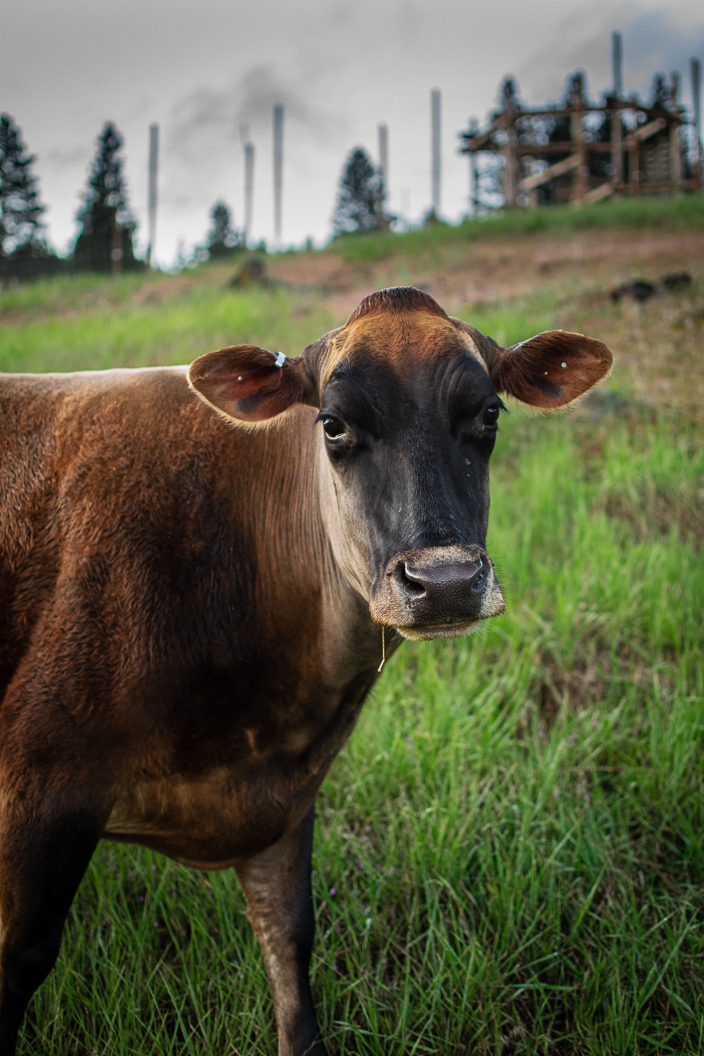
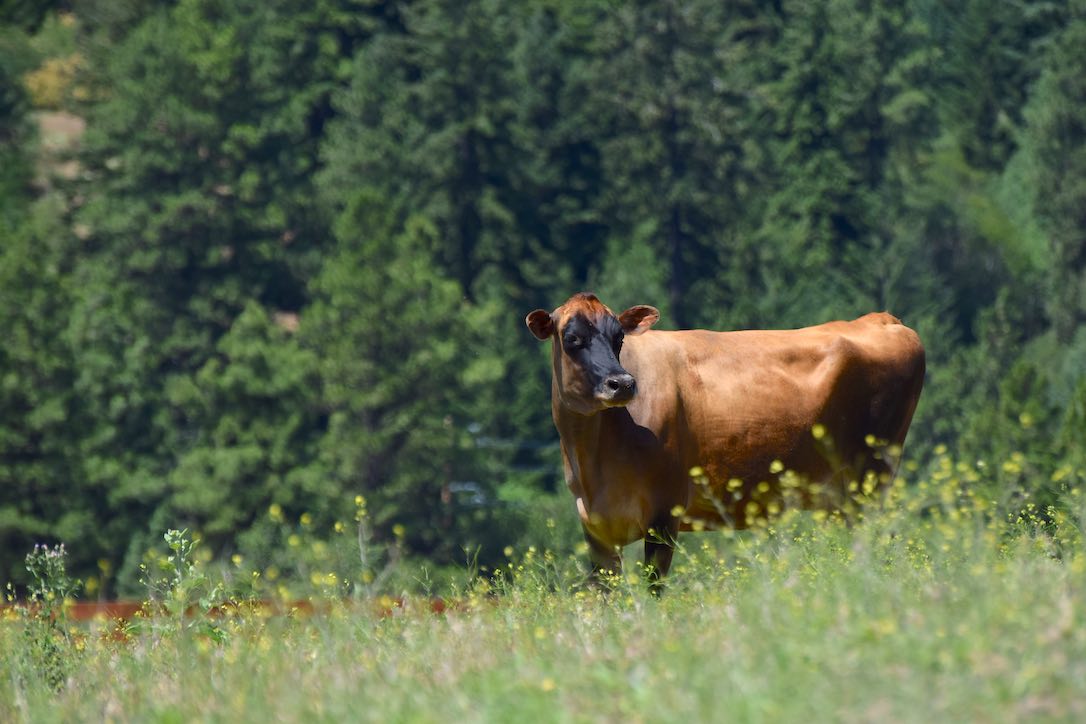
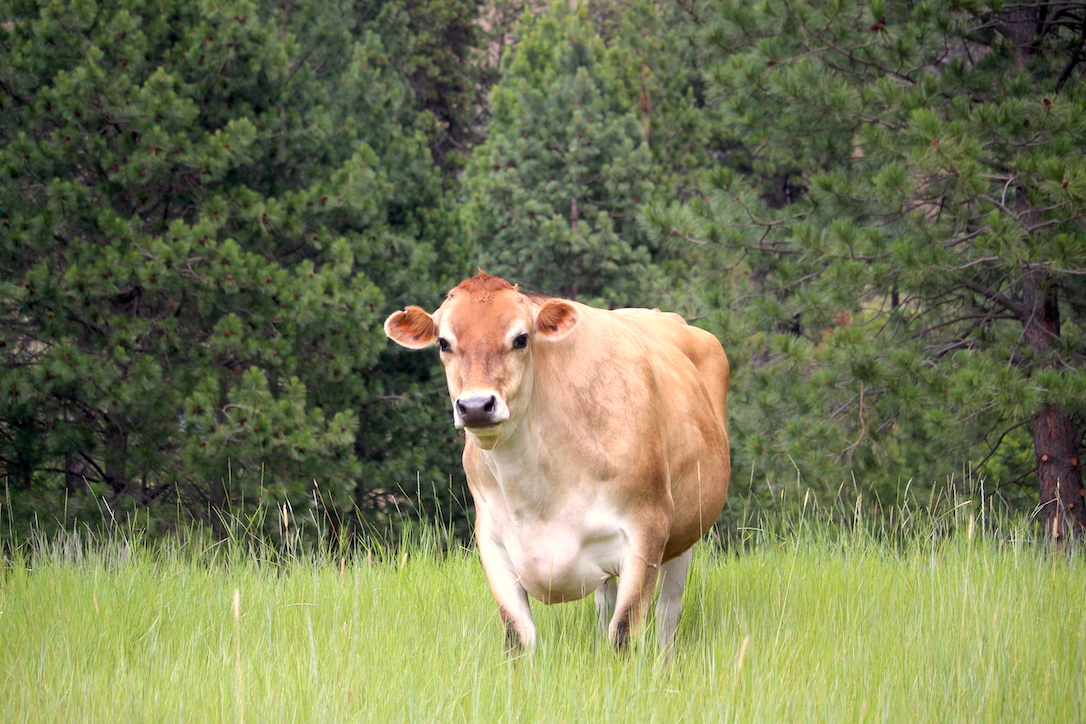
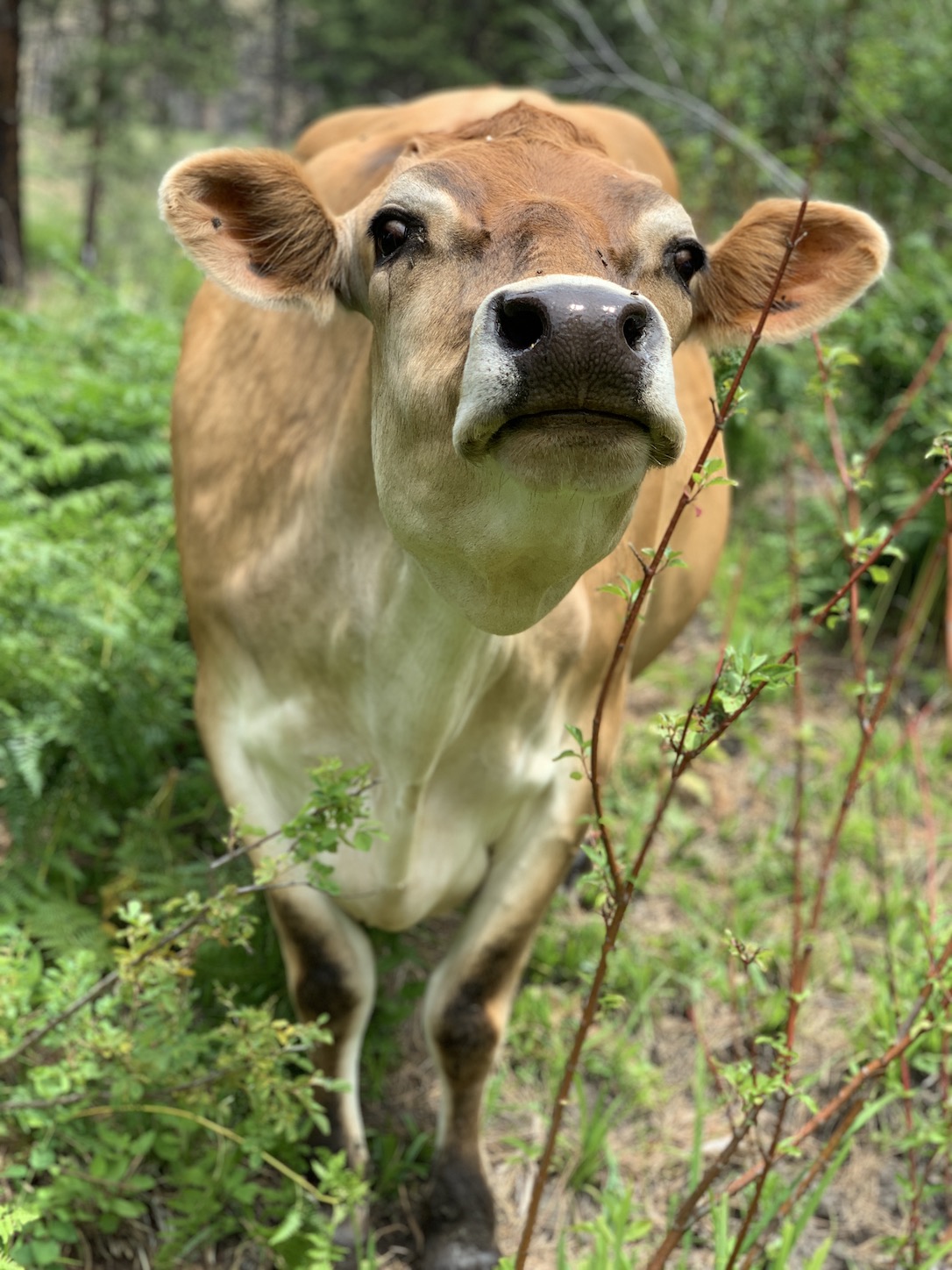
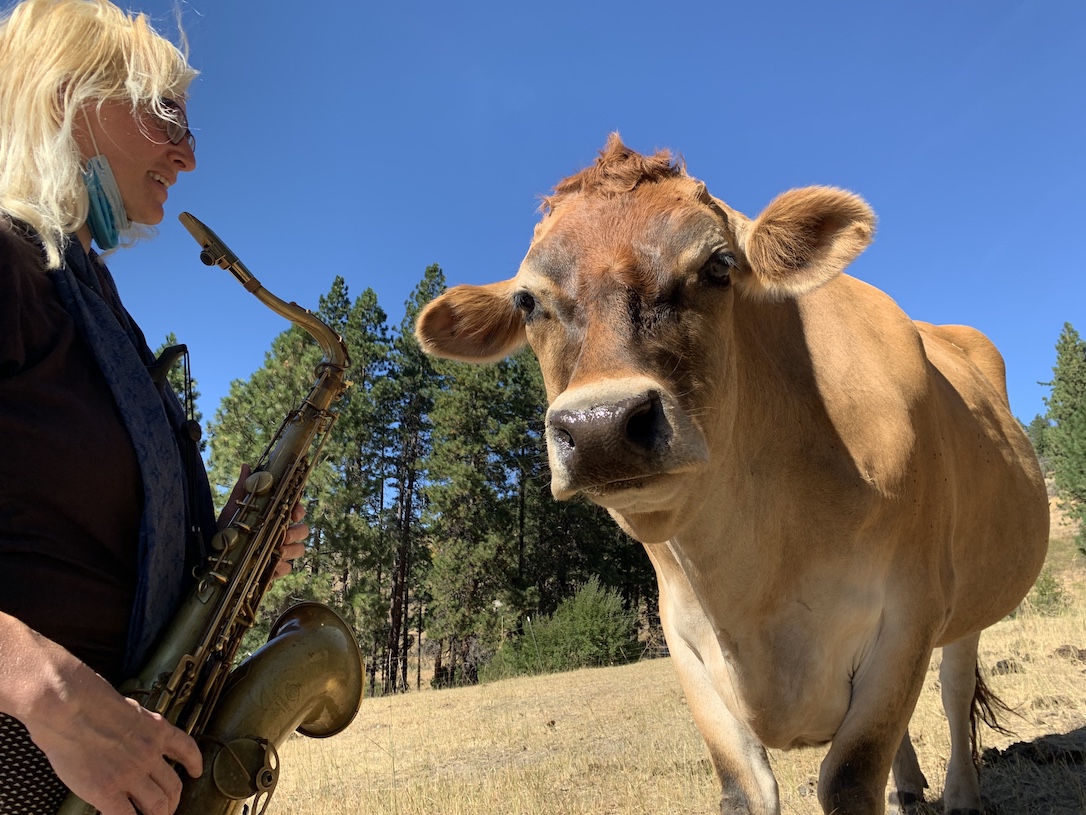
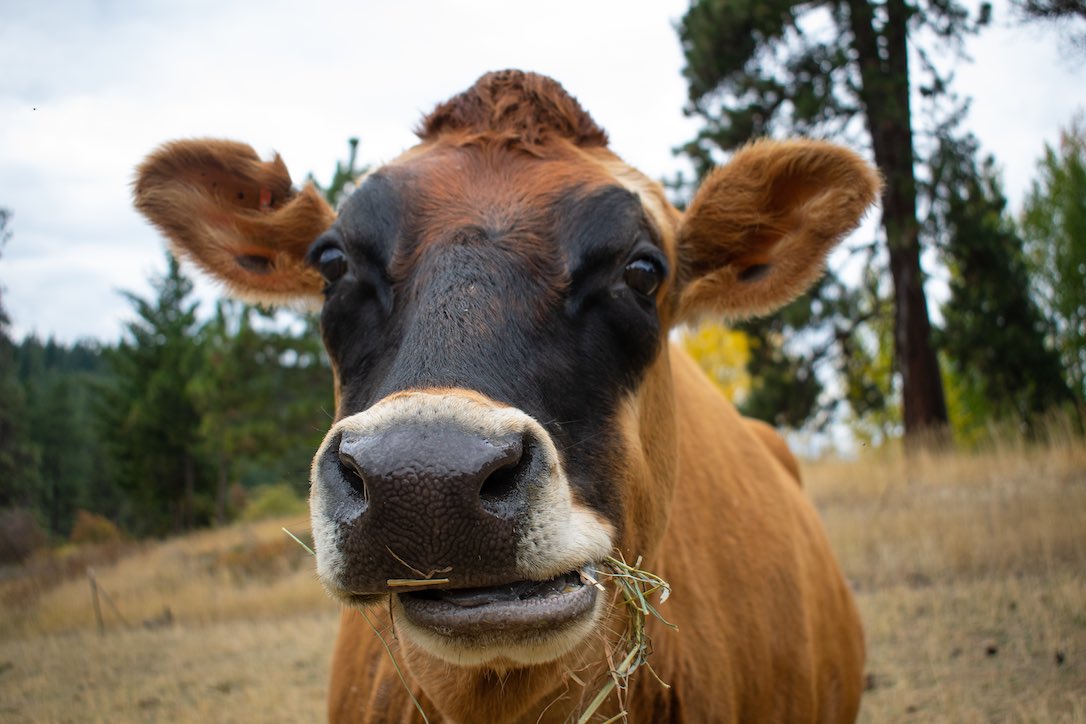
In celebration of this unique day, Chad and I thought it would be fitting to highlight our nonhuman friends: the cattle. Is there a better way to honor these bovine lawnmowers than with four amateur haikus, accompanied by some of my favorite seasonal photographs?


“Betsy”

Before the new grass

Look for her in the creek bed

In Nutmeg’s shadow


“Nutmeg”

Warm gentle giant

Mowing sanctuary lawns

Saxophones taste good


“Meredith”

Strolls the golden woods

Black mask over sweet nature

Real Jerseys have curves


“Honey”

Tan fur capped with frost

She awaits the alfalfa

Do not touch the horns


Happy World Animal Day, everyone!

Filed Under: Cattle, Events, Sanctuary, Weather Tagged With: animal rescue, animal rights, Animal Welfare, chimp, chimpanzee, chimpanzee sanctuary, Chimpanzee Sanctuary Northwest, chimpanzees, Cle Elum, csnw, northwest, Sanctuary

Greeting Tour

September 27, 2020 by Anthony

A while back, one of our followers specifically requested a video of us greeting the chimpanzees in the morning.

Well, here it is.

I hope y’all appreciate the chimps’ enthusiasm as much as I do.

Filed Under: Caregivers, Chimpanzee Behavior, Latest Videos, Play, Young's Hill Tagged With: animal care, Animal Welfare, caregiver, chimp, chimp enrichment, chimpanzee, Chimpanzee Behavior, chimpanzee rescue, chimpanzee retirement, chimpanzee sanctuary, Chimpanzee Sanctuary Northwest, chimpanzees, csnw, Play, Primate behavior, rescue, Sanctuary, sanctuary caregiver, young's hill

  • « Go to Previous Page
  • Page 1
  • Interim pages omitted …
  • Page 9
  • Page 10
  • Page 11
  • Page 12
  • Page 13
  • Interim pages omitted …
  • Page 252
  • Go to Next Page »

Primary Sidebar

Subscribe To the Blog and Get Notified of New Posts First!

Archives

Calendar of Blog Posts

June 2026
S M T W T F S
 123456
78910111213
14151617181920
21222324252627
282930  
« May    

Categories

SUBSCRIBE TO OUR NEWSLETTER

Footer

PO Box 952
Cle Elum, WA 98922
[email protected]
509-699-0728
501c3 registered charity
EIN: 68-0552915

Official DDAF Grantee

Menu

  • The Chimpanzees
  • Blog
  • About Us
  • You can help
  • Resources
  • Contact
  • Donate

Proud Member of

Connect With Us

Search

Copyright © 2026 Chimpanzee Sanctuary Northwest. All Rights Reserved. Site by Vegan Web Design