If you’re having a bad day, this video will help. If you’re having a good day, it’s about to get even better.
Cle Elum
Happy 4th of July!
Happy 4th of July from the Cle Elum Seven!
Highway 10 Fire
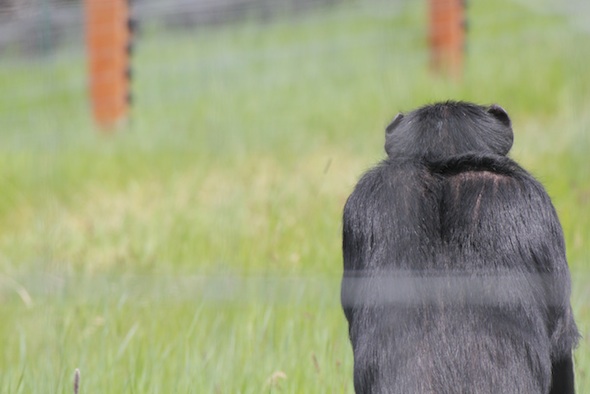
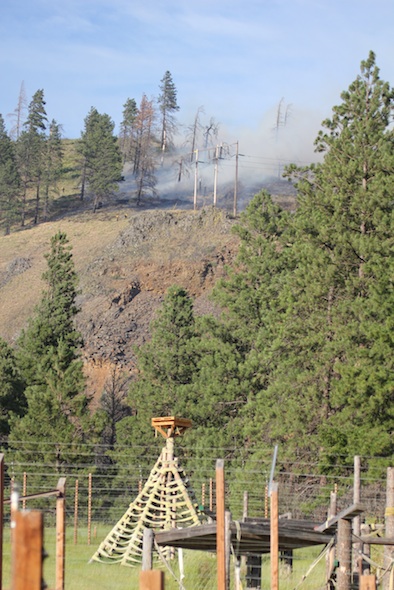
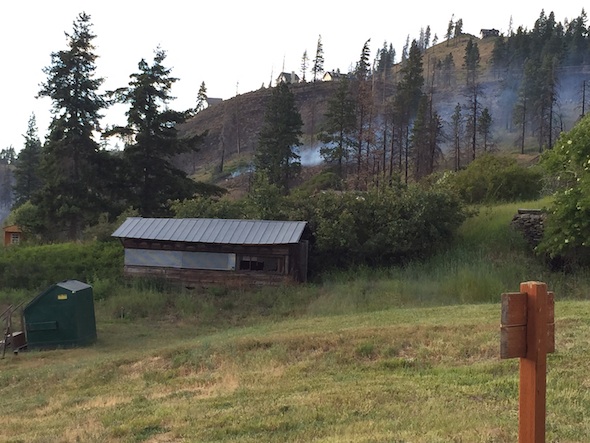
Today started out pretty normal. Us humans were busy cleaning all morning, with breaks to walk around the hill with Jamie and check in with the other chimps. We had finished cleaning the playroom and had started cleaning the front rooms. I was over by the playroom door and Jamie was craning her neck and body to see out. We know Jamie pretty well, and we knew something was up, so Anna went outside to see what Jamie might be looking at, and saw a plume of smoke a few hundred yards away.
The chimps have seen smoke from intentional fires on our property (when there’s not a burn ban!) and our neighbor’s property before, and I don’t think they’ve reacted to it, but maybe they knew this was different, having gone through the Taylor Bridge Fire in 2012.
Their alarm was warranted. The fire was close and was moving through the ground cover, burning some of the trees that had been downed in the fire four years ago.
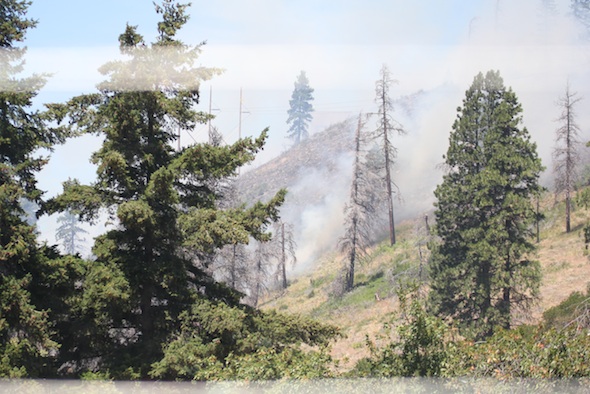
Just like the Taylor Bridge Fire, it traveled up the hill, towards some of the properties that had been rebuilt.
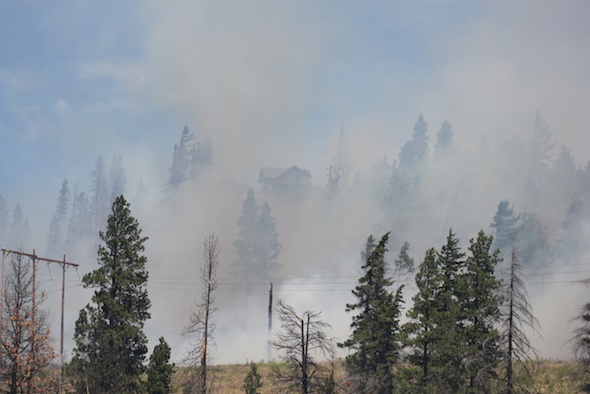
They came through okay, though, thanks to the firefighters.
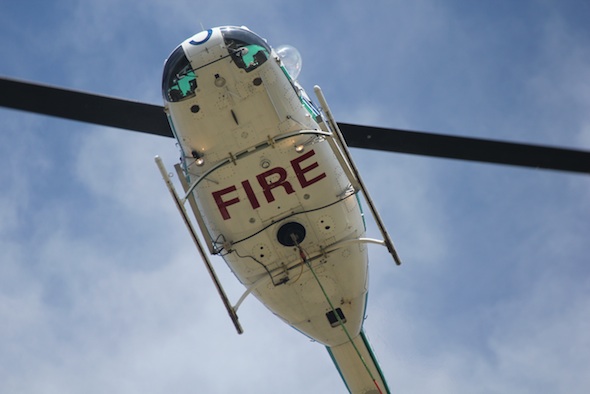

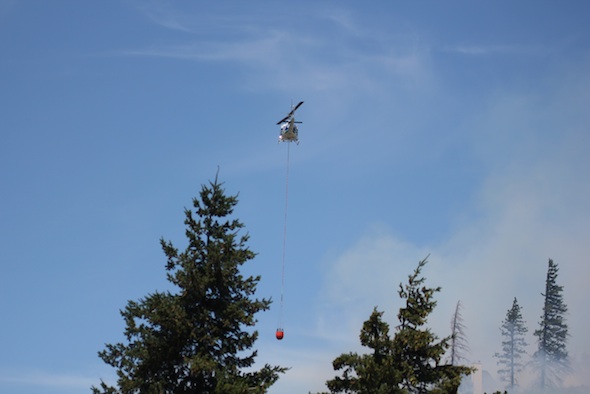
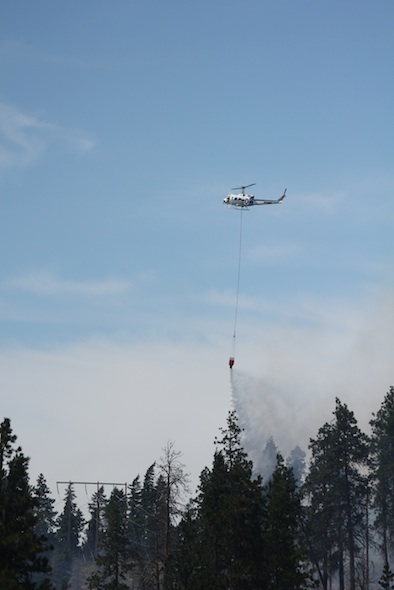
Thank goodness for firefighters, and thank goodness for volunteers and data collectors! Volunteer Ally and primatology student Jake jumped into action to help. We were asked to evacuate the house that J.B. and I share with our two dogs and two cats. Ally and Jake were lifesavers – helping get harnesses on the dogs and put the reluctant cats in crates, then, with caregiver Anna’s help, driving them to safety at Jake’s house.
In the meantime, J.B. got the emergency sprinkler system, which pumps water from the pond above the house:
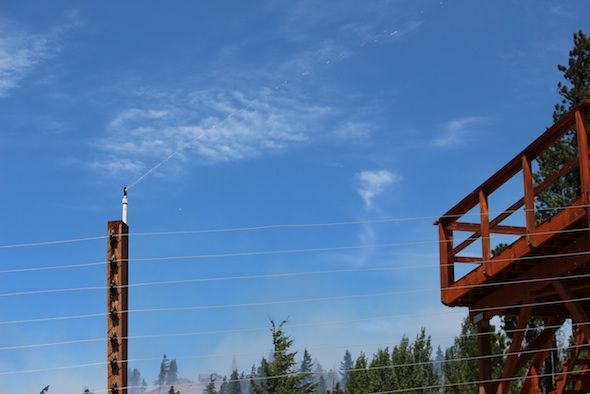
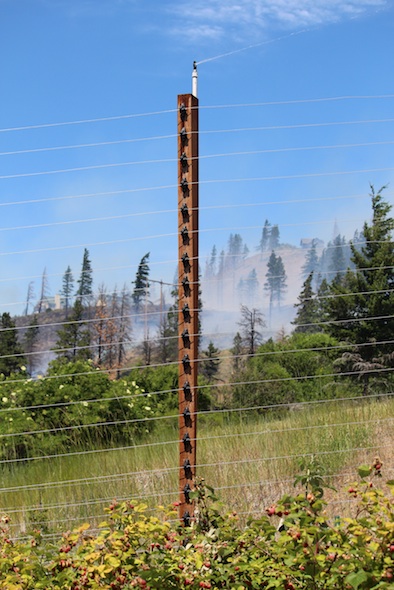
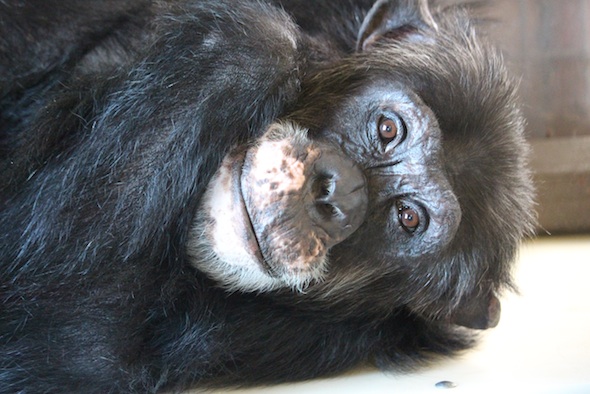
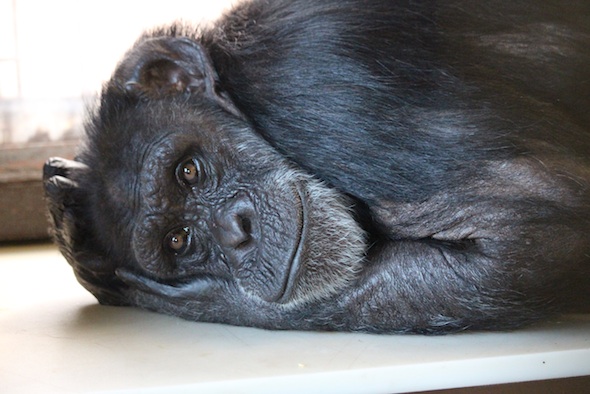
We had brought the chimps inside the building and shut all of the windows and doors, so the window in front room four was the spot to watch from. Most of the chimps were very calm. Jody and Foxie were a bit anxious, with Jody sticking close by Burrito most of the afternoon.
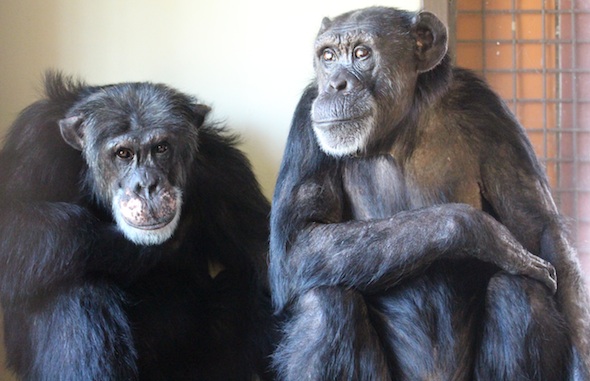
In the below two photos, Burrito and Jody were lying next to each other:
Foxie kept a Dora doll close:
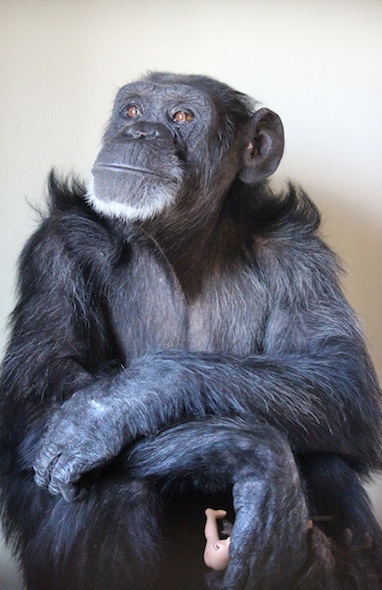
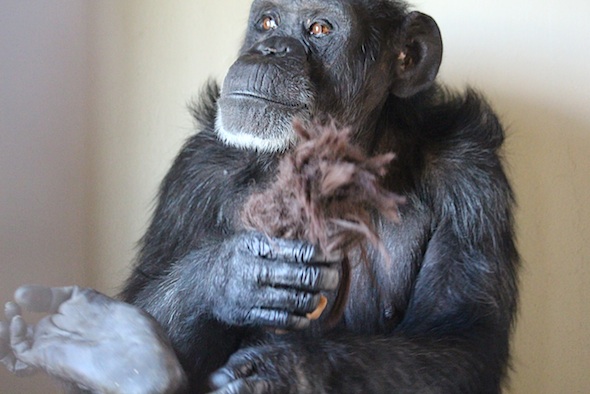
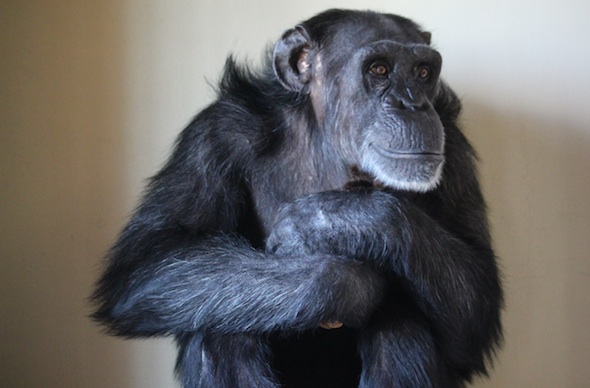
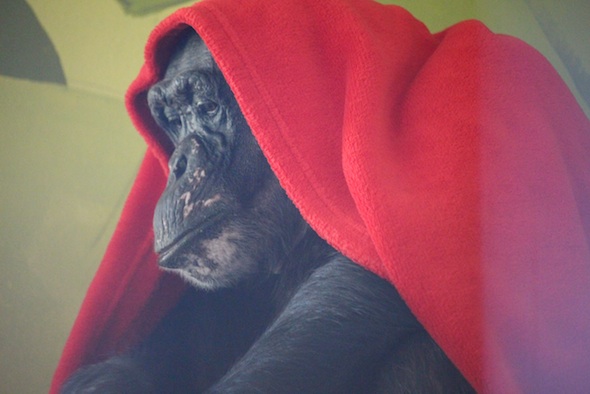
We gave them some extra treats today and otherwise followed the routine as much as possible. They are in bed now – Jamie with her boots, Foxie with her dolls, and Negra under a blanket.
Our dogs and cats are back home (thank you Anna, Katelyn, Ally & Jake!).
The fire seems to have sparked again well above the property as I was writing this. The helicopters were on it immediately. There are also still some smoldering spots nearby, but we feel that we and our neighbors are safe with the skilled firefighters working so hard.
We lost power (the electric company probably shut it off due to the fire), but the chimp house’s generator kicked on immediately, not even skipping a beat.
J.B. and I are making our own dinner in the chimp house kitchen, but trying to keep things quiet so we don’t wake any of the chimpanzees as the slumber safe in their nests.
After Hours
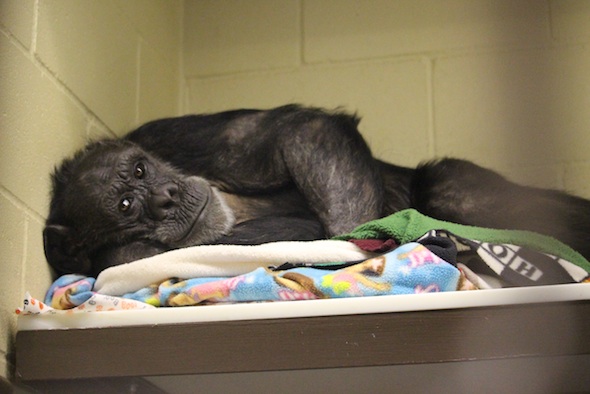
After dinner each day, most of the chimps grab their blankets and bed down for the night.
Jody:
Negra:
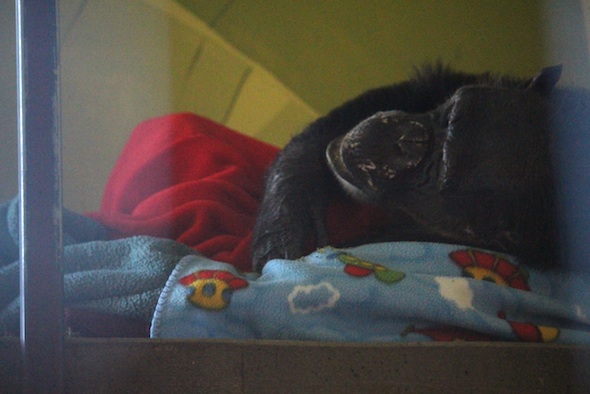
But for Jamie, the day is just getting started.
Jamie likes to be in control. It’s hard to say whether this is a result of spending decades in a research lab where she was absolutely powerless, or whether this would have been her personality regardless of the circumstances she was born into, in which case it’s even sadder to imagine her stuck in a cage with no choices and no control over her life.
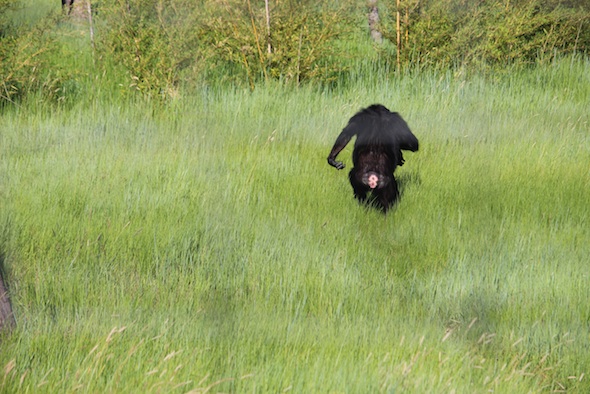
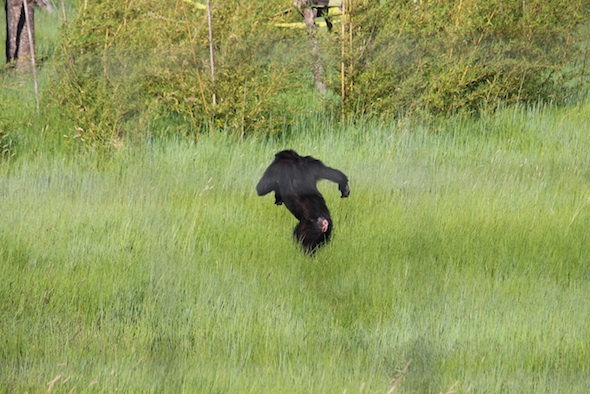
But not to worry; Jamie is making up for lost time. One of the ways she exerts her newfound power is by keeping the staff at work after hours. Before we go home each night, we close the door to Young’s Hill and make sure all the chimps are safe inside the building. As long as the door to Young’s Hill remains open, the staff are required to stay at the chimp house. Jamie is aware of this policy and will often run at top speed to throw her body into the doorway to prevent us from closing the door. This serves the dual purpose of buying her extra time outside in the evening, as well as extra time with her human friends/minions.
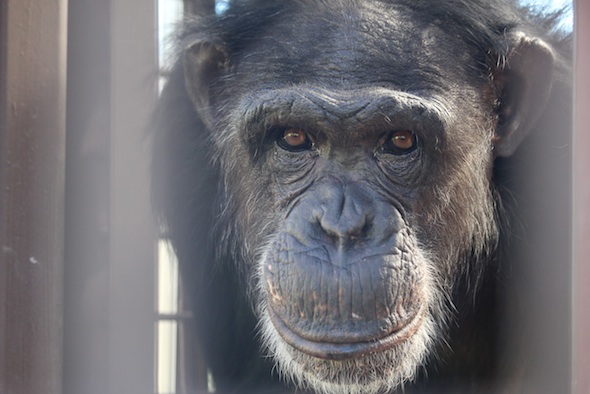
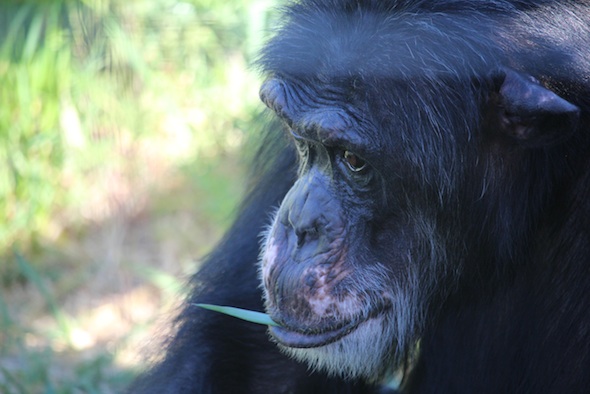
Until recently, Jamie has been the only one to take advantage of this “loophole.” She will keep her caregivers at work until 9 or 10pm some evenings, while the other chimps are snoozing away inside. But this summer Jamie has had some company during her after hours adventures. The other chimps are starting to see the appeal of warm, peaceful summer evenings outside.
Burrito:
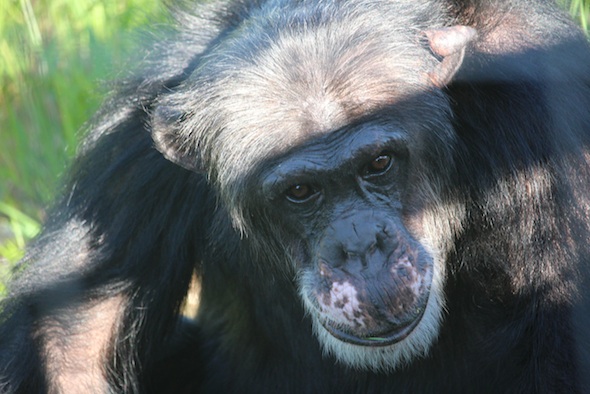
Annie:
Self-Care
We’ve been asked how the chimpanzees keep their nails short. For most of them, it’s the result of normal wear and tear, but Jamie has her own technique.
Speaking on Captivity
Captivity. It’s been in the news a lot, and I know on a lot of our minds.
It is simply a fact of everyday life and work when your occupation is caring for chimpanzees in a sanctuary. We go to great lengths to ensure that the chimpanzees are unable to breach the barriers we have constructed to contain them, and while we do it for both their own safety and the safety of those on the other side of the barriers, it doesn’t change the reality of the situation–the steel caging, bullet-proof glass, electric fence, and many, many locks of which only the humans have the keys.
As a sanctuary, our aim is to attempt to right what we perceive to be a wrong and to give back some measure of what our species has taken from another species, but we don’t view this second chance for the chimpanzees living here as the ideal life, and our friends behind bars often remind us of this. A few years ago, I wrote about my perception of Jamie’s awareness of her own captivity in the context of the shift in how we as a society view what chimpanzees deserve and what our obligations are towards them. You can read that post here.
I am buoyed by the positive events that have occurred for chimpanzees just since writing that post three years ago. We are closer than ever – maybe we are even there – to the end of chimpanzee biomedical research in this country. How did we get here? How did we get to this moment in history where the practice of using chimpanzees in biomedical testing is widely seen as abhorrent from a society that thought it was entirely permissible and within our rights as humans to slaughter chimpanzee families, collect the infants, and ship them across the world to use them in experimentation? There are many specific answers to that question, but the general answer, I think, can be explained by a formula that applies to progress towards greater human rights as well: knowledge + people speaking out + time = societal shifts.
These shifts don’t happen overnight and they don’t happen without resistance. By definition, it takes the majority of people who held onto an “old way” of thinking to either no longer be a part of society or it takes individuals to change their own stance. We all know how stubborn our species is, so the former is often the key factor and is really built into the formula under “time.” But our modern age has given us the ability to gain information and collect knowledge in an instant, and we are quickly made aware of more people speaking out. This allows shifts to happen faster.
As uncomfortable and impassioned as some discussions can get around the practice of keeping great apes and other non-human animals in captivity, I choose to view it as very positive sign that these discussion are happening in a very public way. The proverbial and literal elephant in the room is being pointed out, making it almost impossible to ignore the bigger ethical questions of holding intelligent, highly social, long-lived species in captive environments, generation after generation. What truly justifies this activity?
The thing about societal shifts in thinking, though, is that when you’re in the middle of them, there will be individuals and institutions on both sides. Looking back at shifts that have happened in the past, it’s really difficult to understand how so many people were involved in something that is now viewed as unjust, but that’s the benefit of hindsight. There is no “new way” without an “old way” and the “old way” is something that the majority of people likely had few qualms about, but that doesn’t mean they had some sort of flaw in their character. I applaud the individuals and institutions that are at the forefront of rejecting old, unfair, and unjust ways of doing things, but I understand that some will invariably be slower to adjust–that’s all part of a shift.
Let’s keep talking. Let’s not be afraid of our convictions and our desire for a more just world. And let’s also remember that each of us have different levels of knowledge, exposure to different voices, and may have developed our opinions in a different period of time and societal-wide mentality than ourselves.
In the meantime, let’s be thankful, on behalf of seven chimpanzees in Cle Elum, Washington, that societies do indeed shift towards greater understanding and compassion, and it happens one person at a time. Though we are unable to give the chimpanzees true freedom, we can give them something closer to it than they’ve ever experienced before.
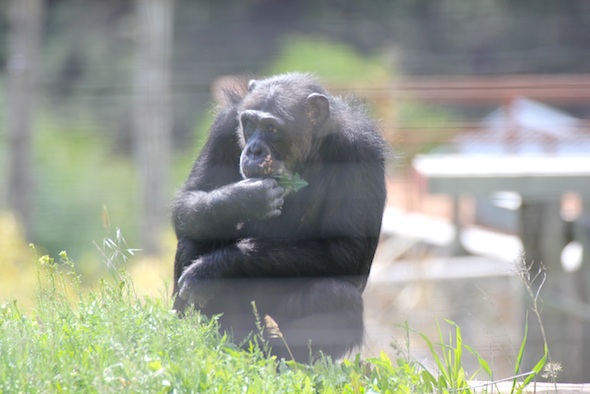
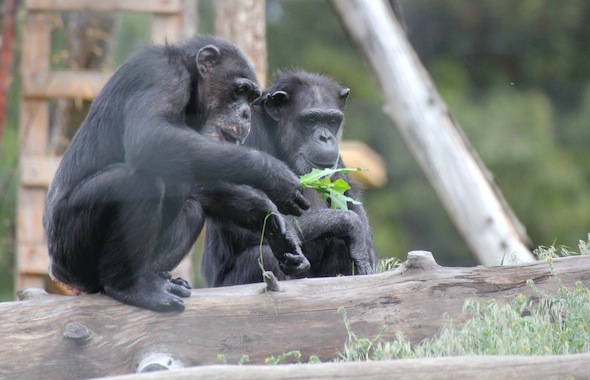
Here’s Missy and Annie enjoying the wild prickly lettuce that they harvested:
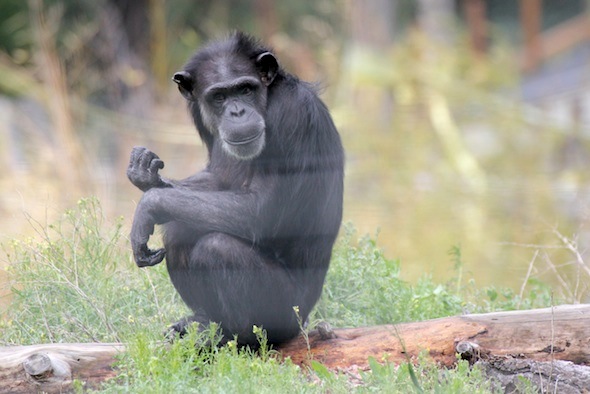
Then and Now
For lunch today, we set out a forage on Young’s Hill.
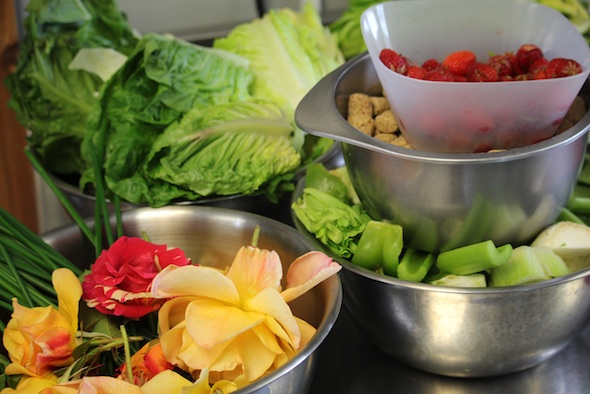
Life is so dramatically different for the Cle Elum Seven these days than it was just eight years ago. Gone are the days of climate-controlled, windowless buildings, hard surfaces, and cramped spaces. Life now is bright green grass, warm sun, gentle breezes, and roses for lunch.
Missy:
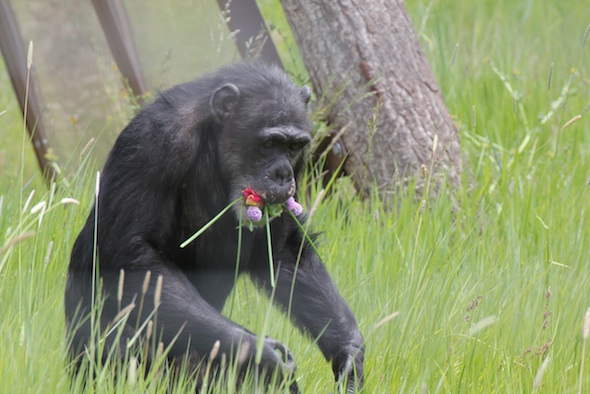
Jamie:
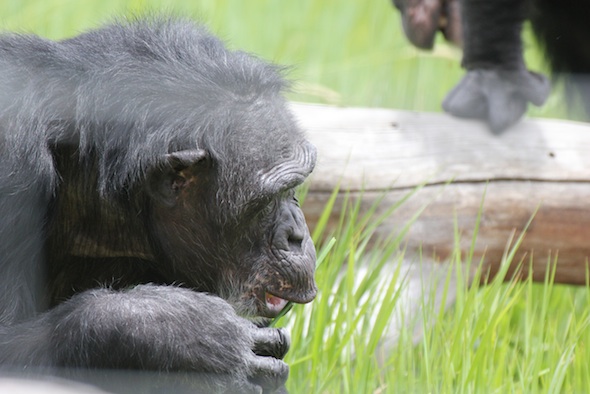
Negra:
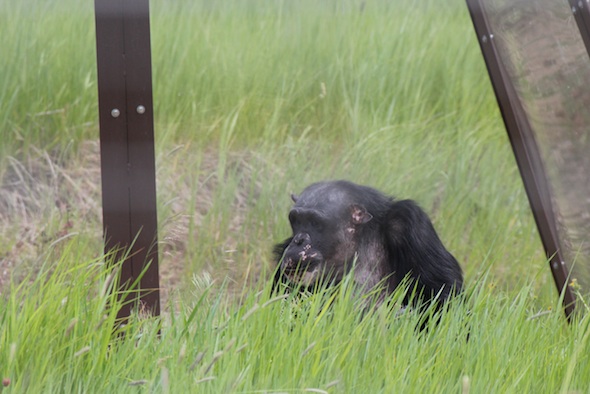
Annie:
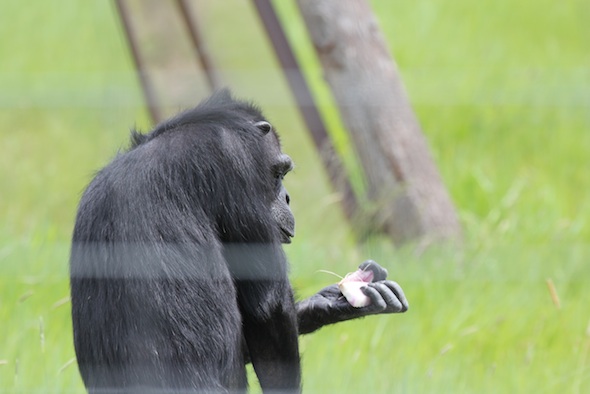
Foxie:
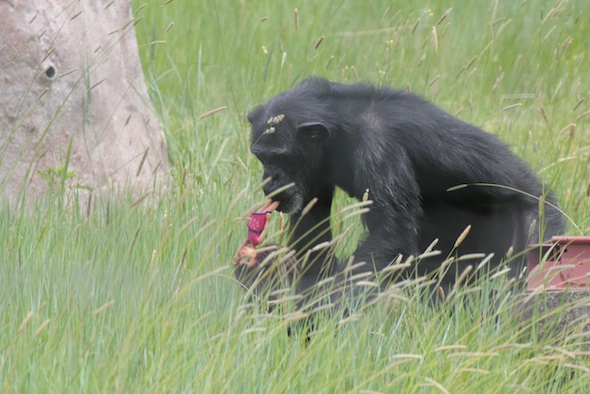
Burrito:
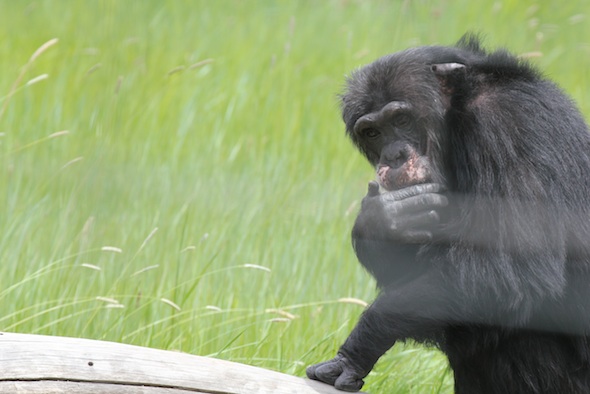
Jody: