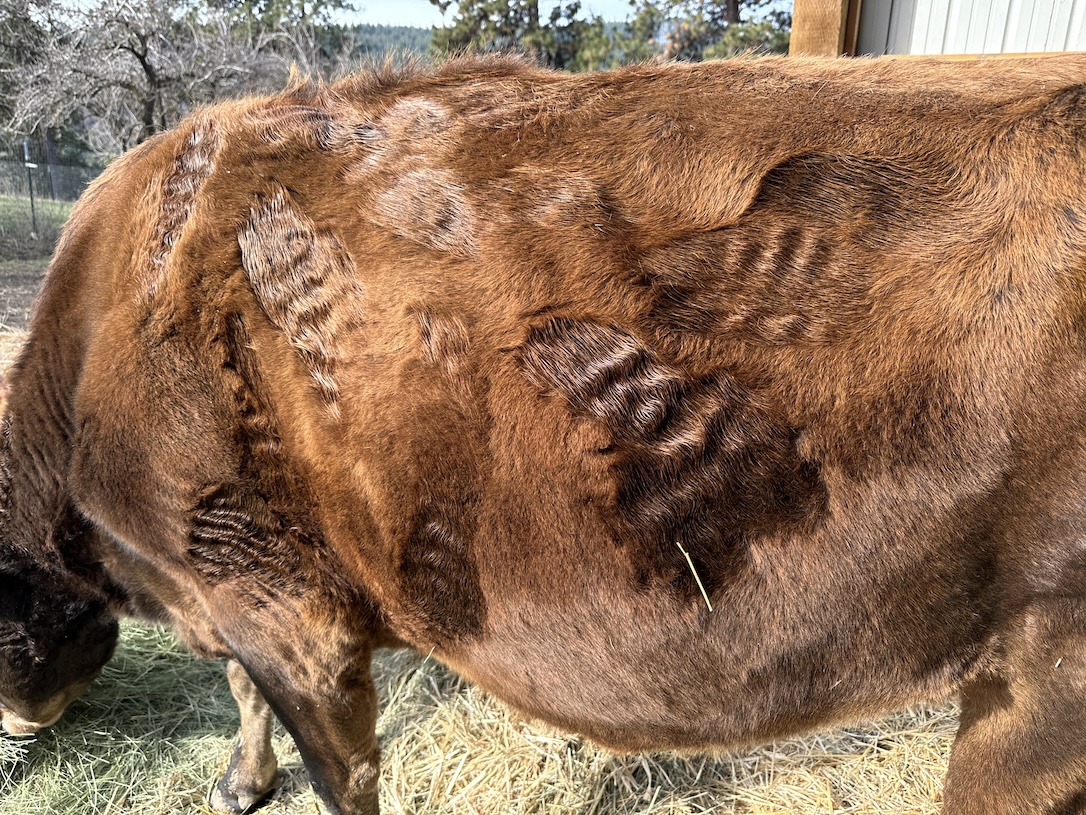
Getting licked by a cow is like being licked by a 1/2-ton cat (but without all of the kicking and biting afterwards). Their tongues are very rough! When their coats are longer, cow licks can result in some beautiful abstract impressionist artwork.
Chimpanzee Sanctuary Northwest
Hope. Love. Home. Sanctuary
Getting licked by a cow is like being licked by a 1/2-ton cat (but without all of the kicking and biting afterwards). Their tongues are very rough! When their coats are longer, cow licks can result in some beautiful abstract impressionist artwork.
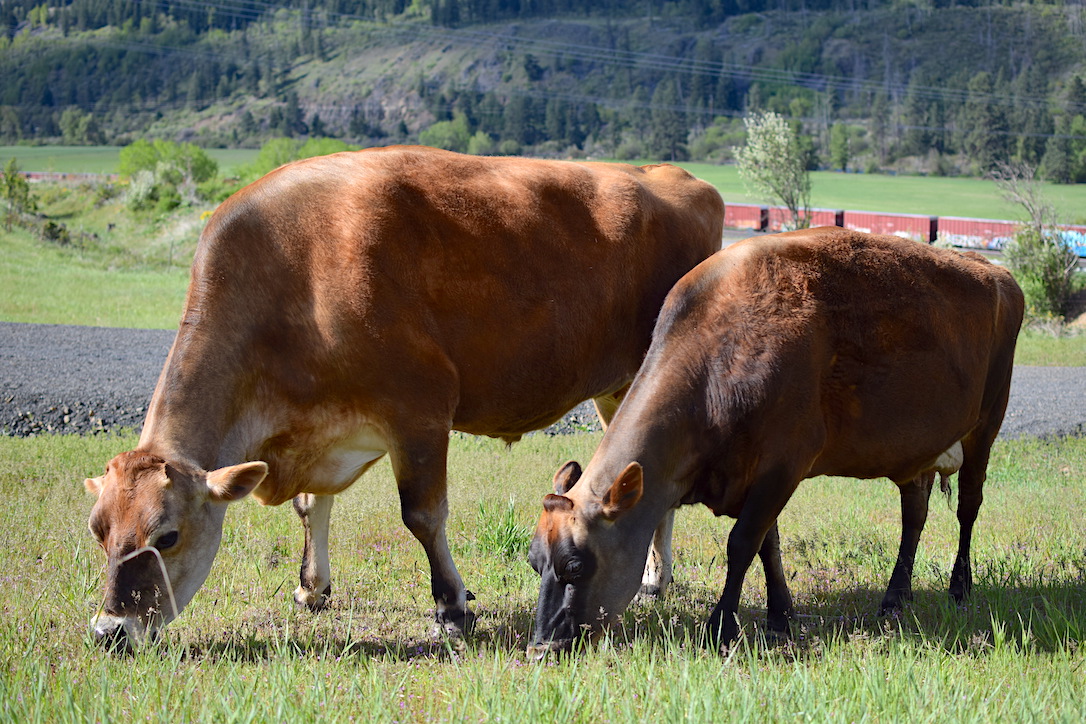
Lounging amid the grassy hills of Chimpanzee Sanctuary Northwest, you will find 3 somewhat unexpected animals, given the name of the sanctuary…our hardworking cows! These ladies help to keep the fire load in check by grazing on the grasses around the sanctuary and are valued members of our sanctuary family.
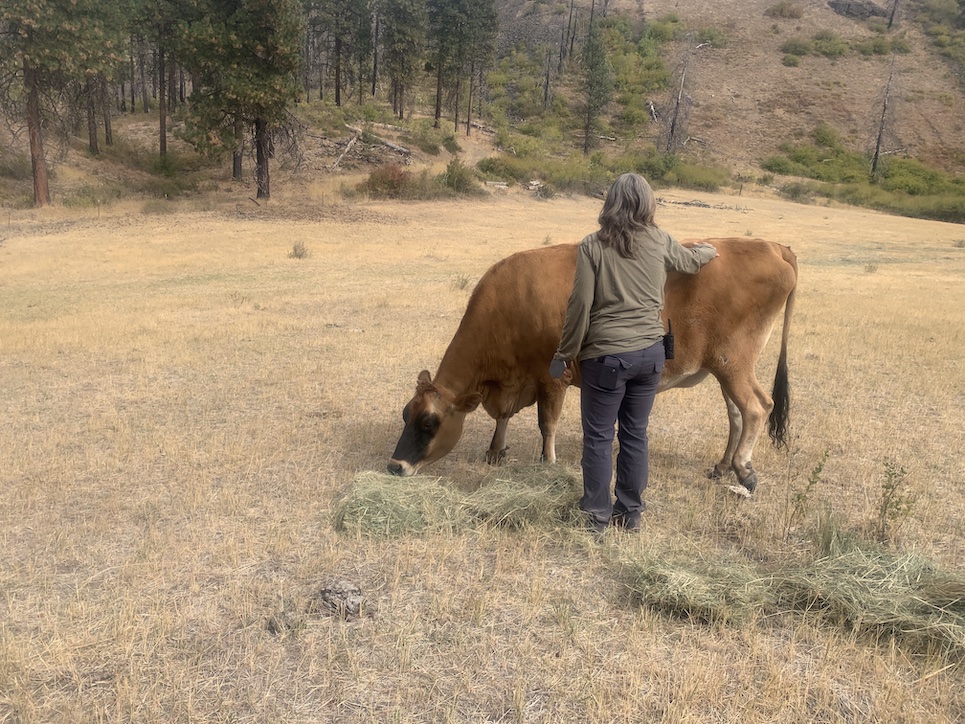
So this blog is about the cows! I was taking care of the cattle a few weeks ago and felt inspired to bring the camera along so that we could share some new photos with you all of these lovely ladies. They are a little bit of everything…sometimes spicy, sometimes sweet, and if you’re Betsy, always at least a little bit mischievous!
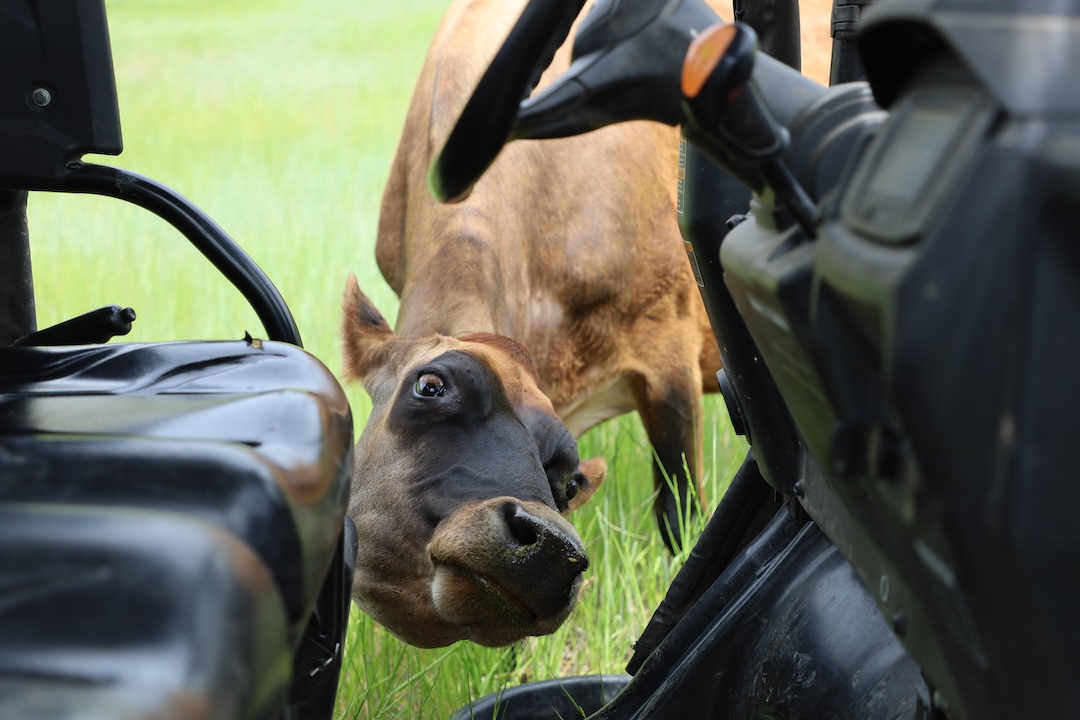
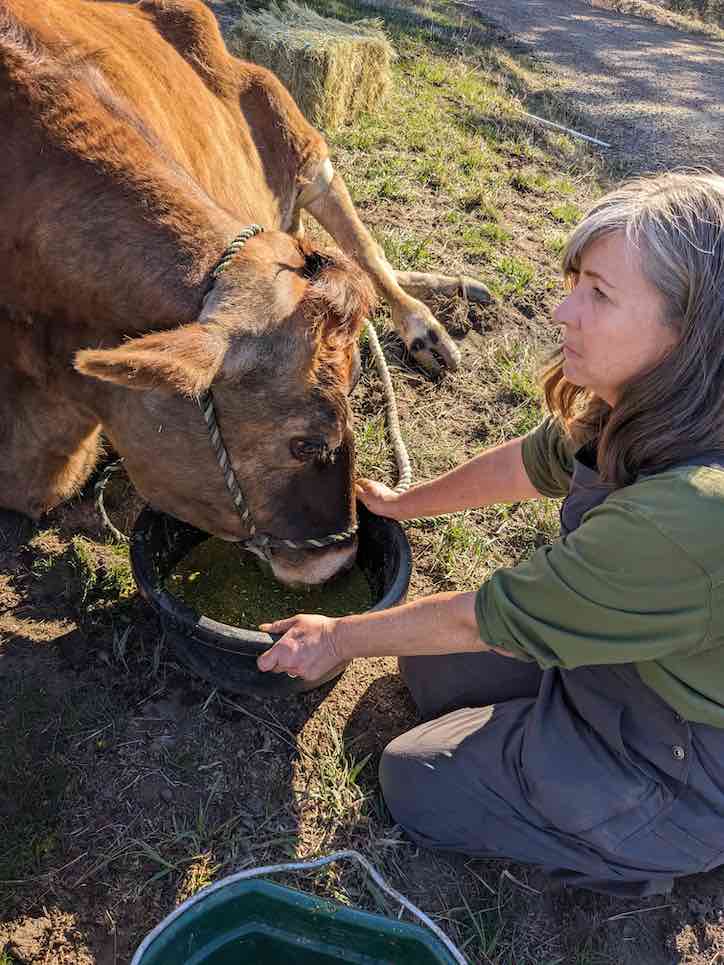
Betsy is a “the grass is greener on the other side” kind of gal, who has been known to use her smarts to let herself and her herd graze on grasses beyond their designated pastures by unlatching the gate and seeing themselves out. We adapted quickly, and now have more secure gates with clips that even Betsy can’t open! Our beloved Betsy is a softy too, I always give her hugs while she eats her meal and she doesn’t seem to mind one bit. She also enjoys licking us.
She is very food motivated too…just look at the face she makes when she sees her grain arrive!
Betsy
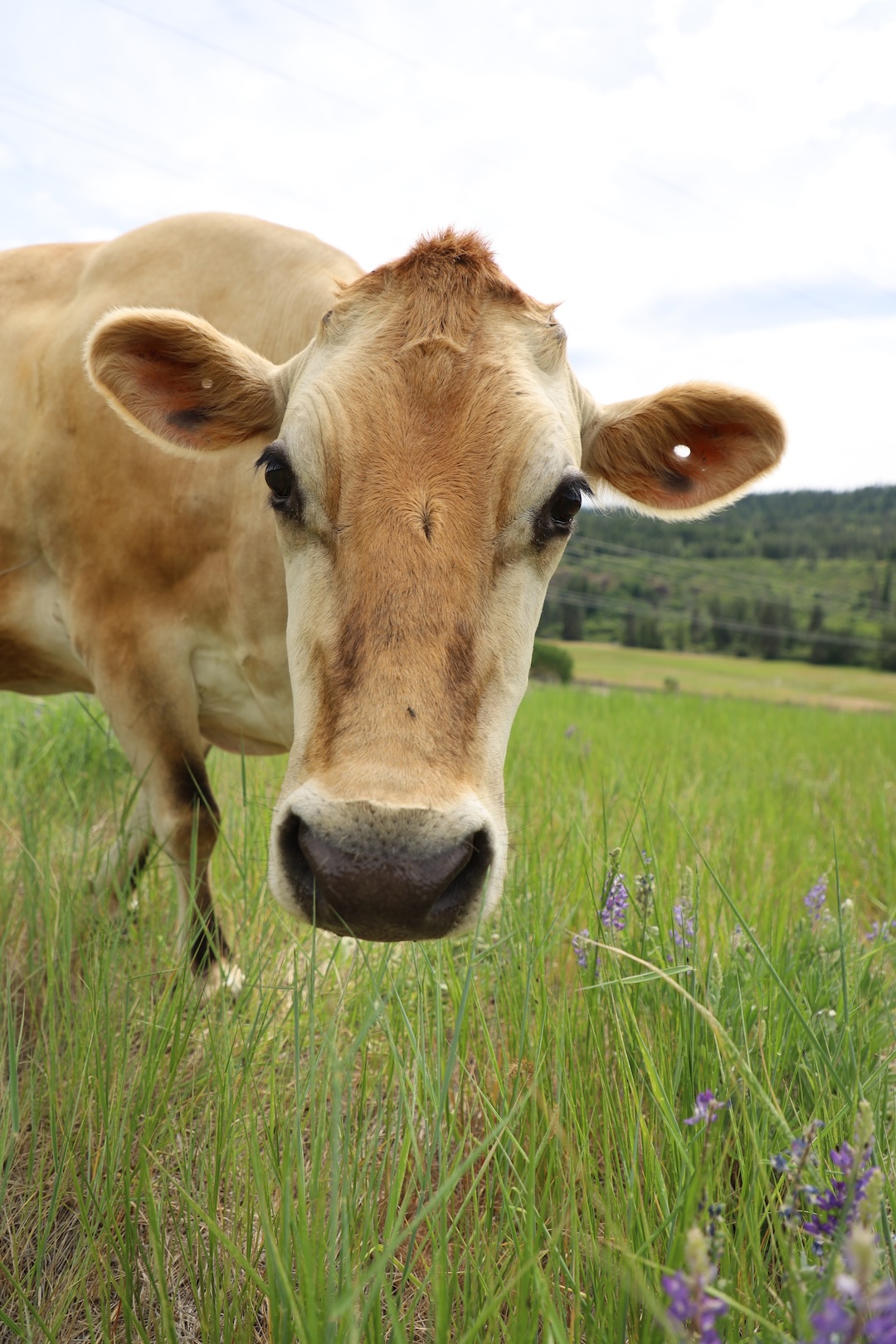
Honey is the sassiest of the three cows, often giving some intense side-eye if you look like you might be thinking about touching her. She does allow head scratches at times, which is always a special occasion! She enjoys food, with hay pellets being her favorite part of any meal. She is Meredith’s mom, and a good friend to Betsy. She is the lightest in color of the three cows, and a very pretty lady!
Honey
Meredith is right between Betsy and Honey in terms of coloring. She is light brown, but not as light as Honey. We have provided a lot of specialized care for Meredith over the past year as she has dealt with arthritis and had a procedure to provide her with some pain relief, which included a somewhat lengthy recovery time separate from her herd. She is doing well currently, still dealing with her arthritis but able to be with her herd and enjoy the different summer pastures we are able to move them between. She is a sweet lady, who enjoys being brushed and getting scratches, and gets a regular serving of applesauce with her medications which she seems to really enjoy!
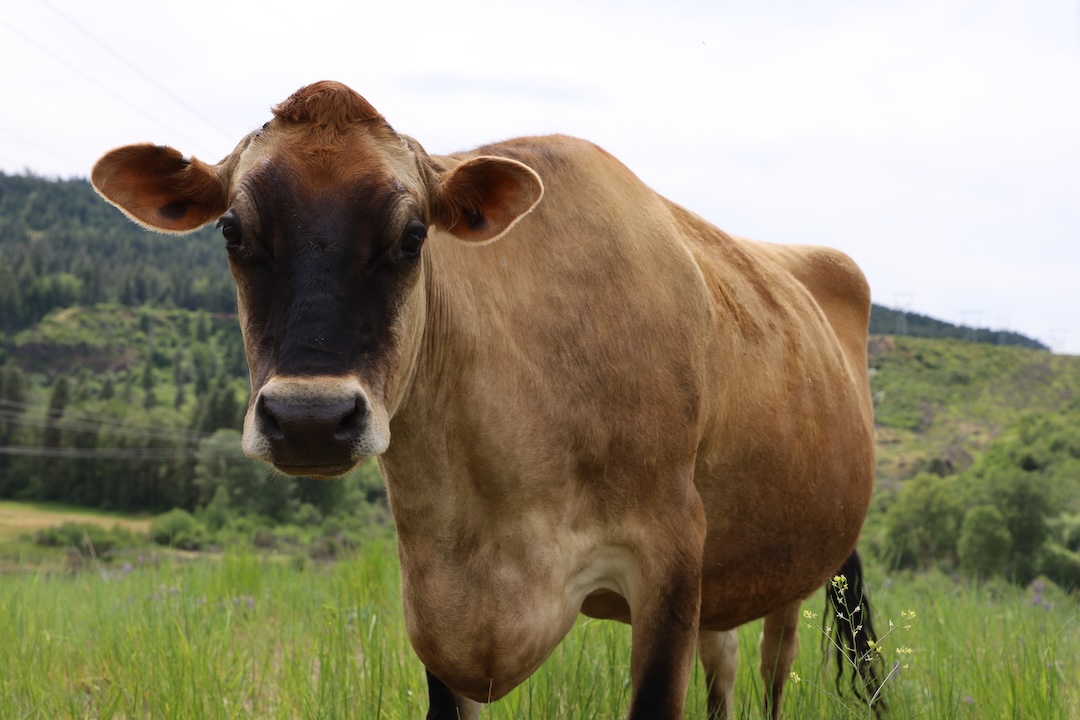
Meredith
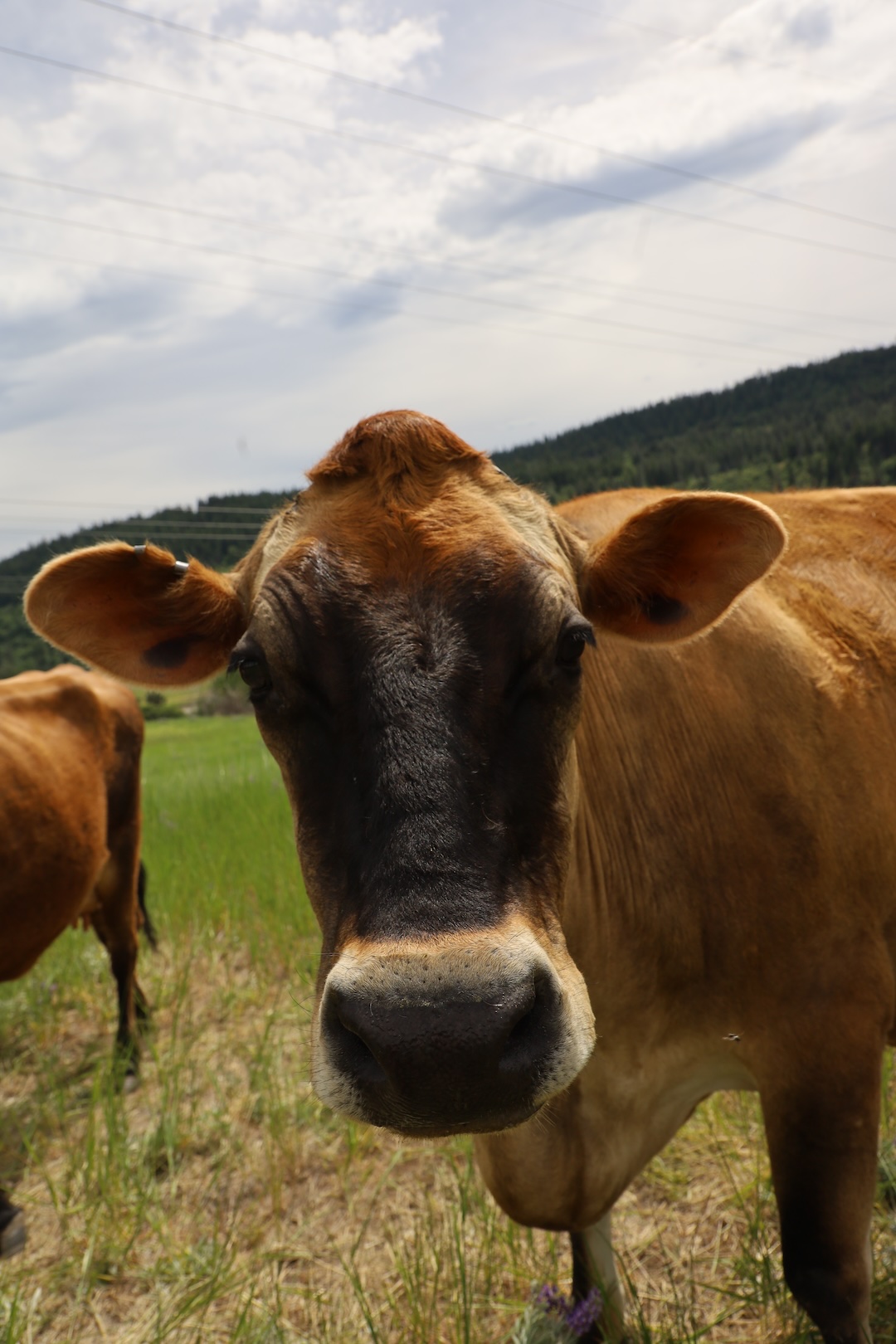
Meredith
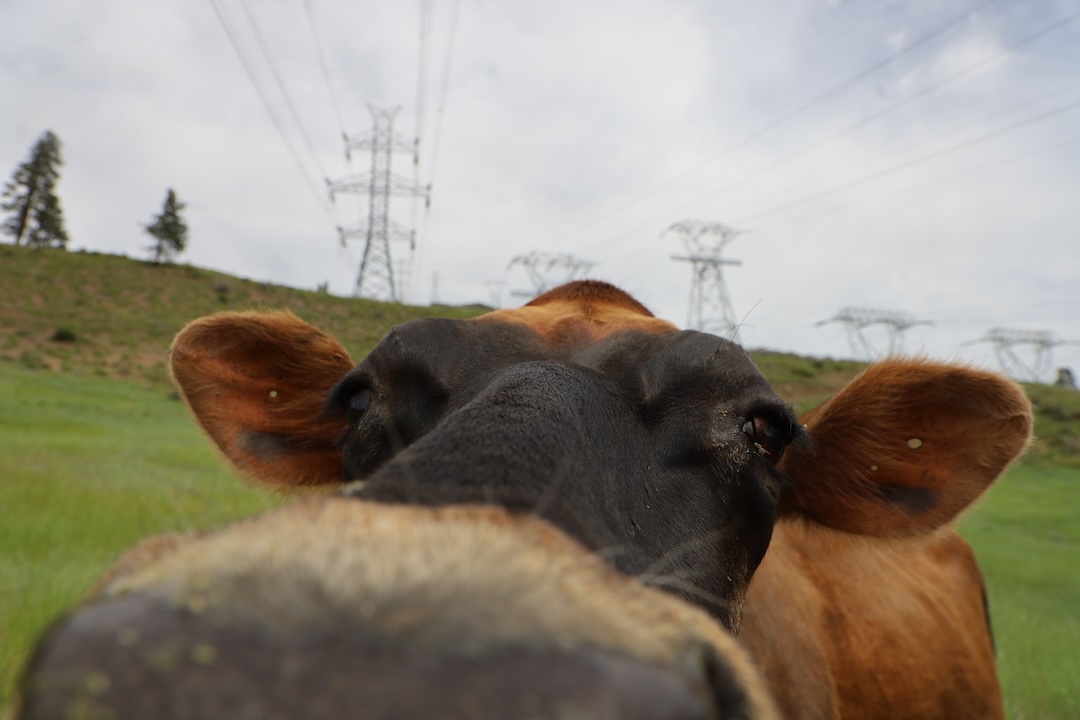
Silly close up of a Betsy nose boop!
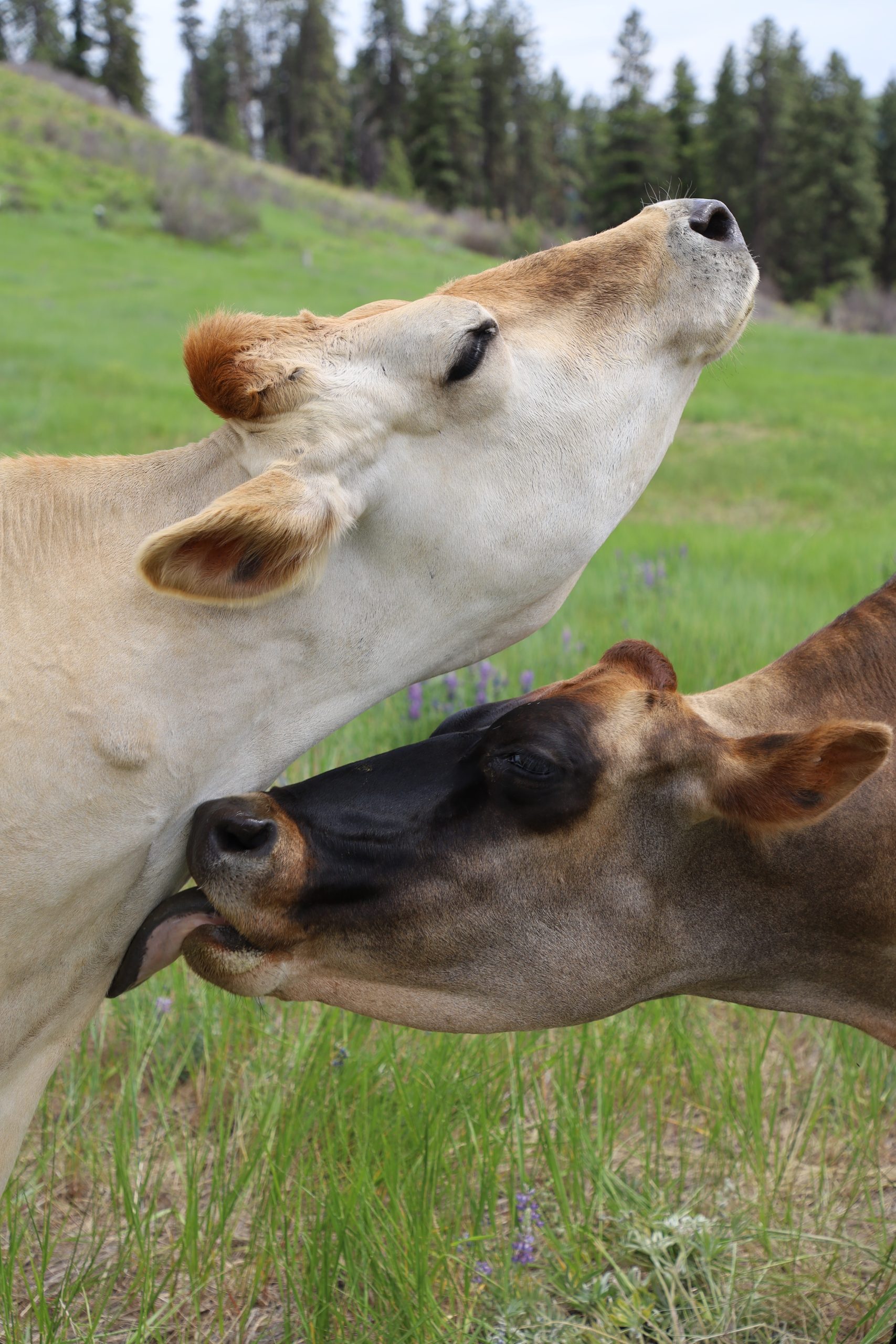
Betsy licks Honey
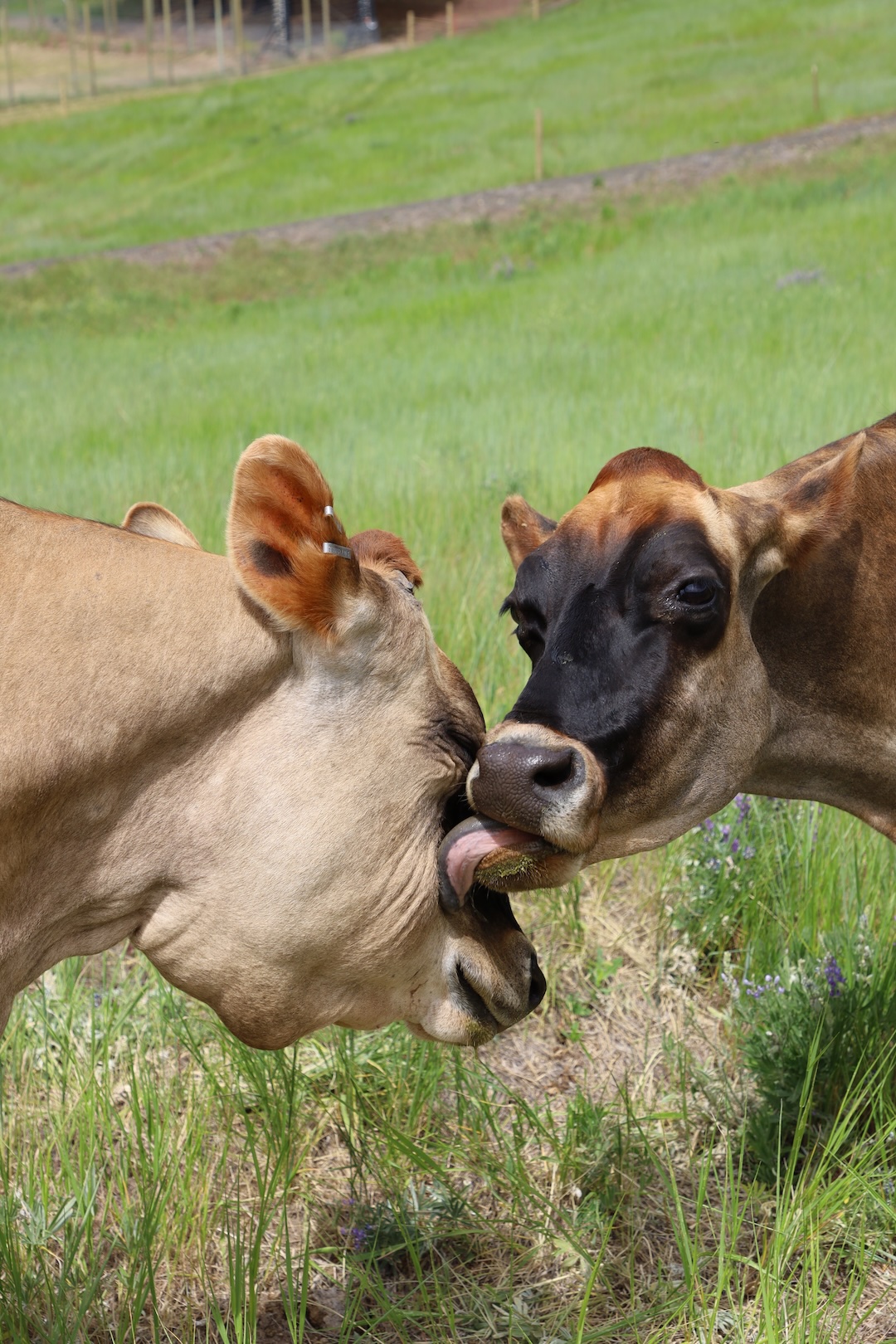
Betsy licks Meredith (there are plenty of Betsy licks to go around!)
We got a bit of a late start moving the cows this year but they are finally enjoying the first part of their summer pasture rotation. This year they’re back on the south pasture, next to the Bray, which was inaccessible and remained fallow during the last few years of chimp habitat renovations. Once the weather warms up, they’ll move to the upper pond pasture where they’ll have plenty of shade.
Normally, the running of the cows is a more exuberant affair, but this year things were a bit different. First, a lot has changed between the winter and summer pastures, and cattle aren’t big on change. They’d much prefer to follow a familiar path. Second, Meredith was held back this year so that she could be walked along a route that would be safer and easier on her arthritic feet, and cattle are less confident without their herd mates. And of course, this is the first year that they are moving to the summer pastures without Nutmeg.
But everyone made it (with one short detour), and Honey and Betsy were quickly reunited with Meredith. Now they can kick back and enjoy summer.
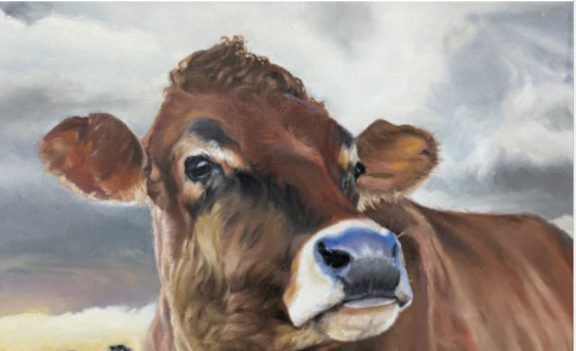
The Sweet Sixteen Online Auction is now live! Check out the amazing selection of works from talented artists, including this beautiful oil on canvas portrait of Nutmeg by Leslie Bell:
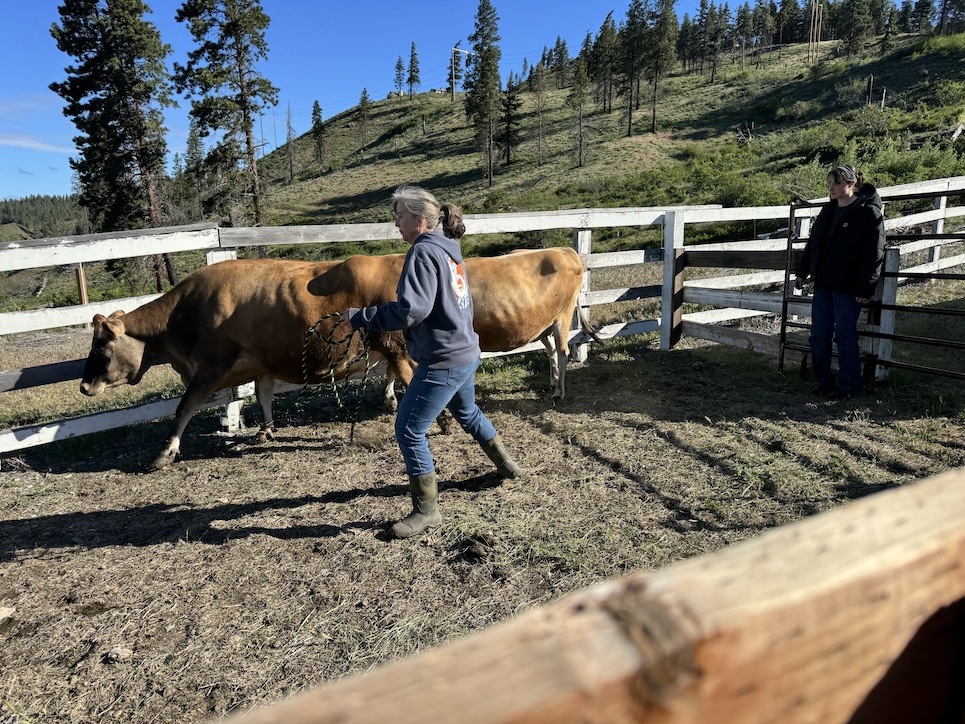
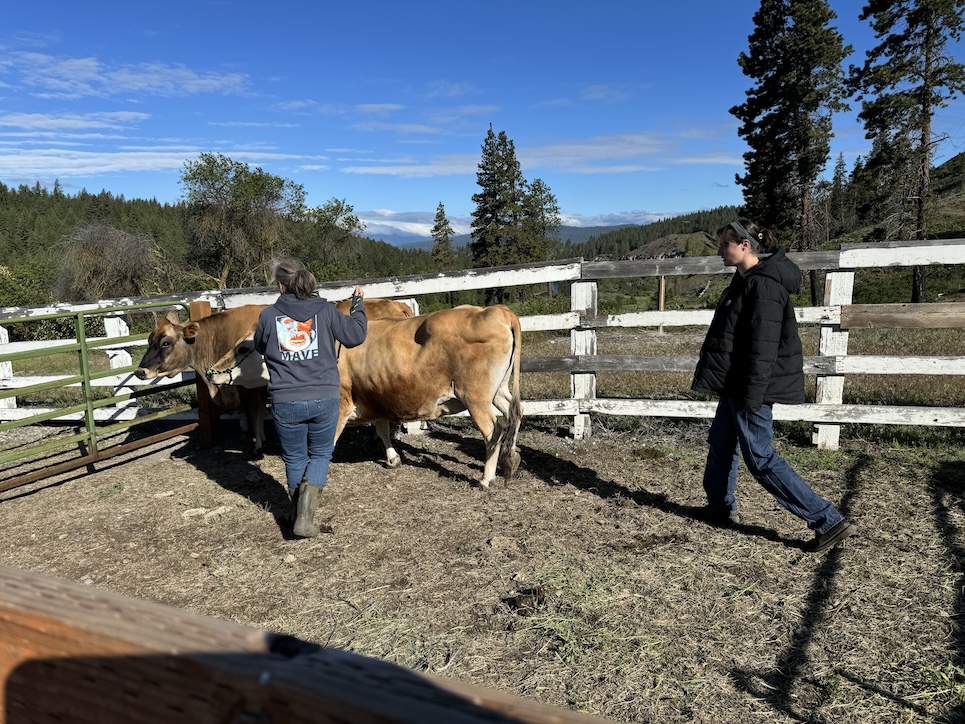
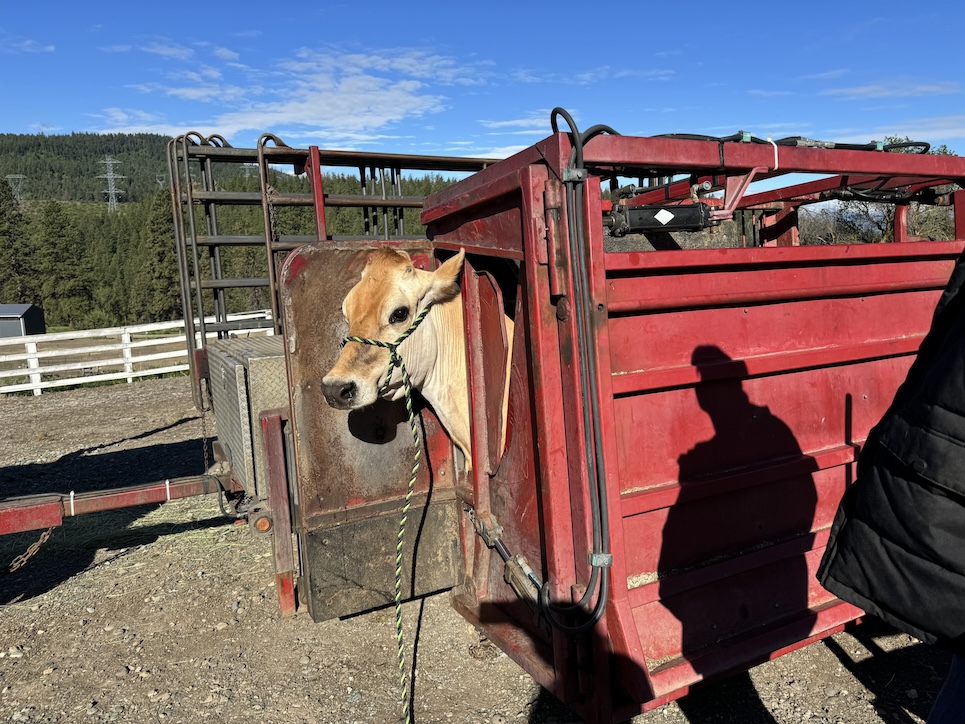
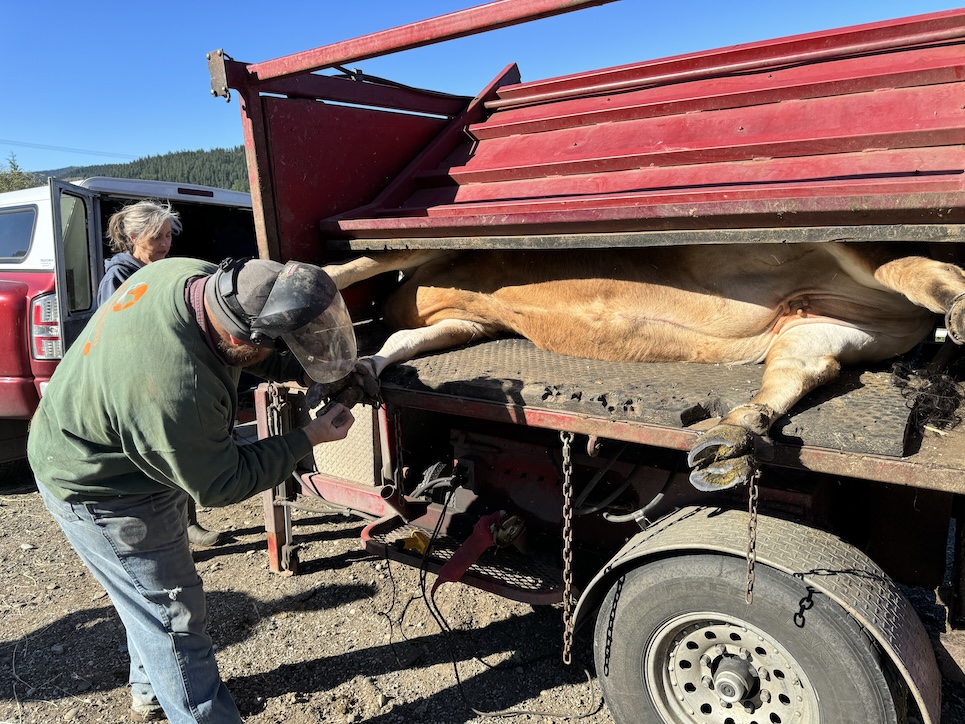
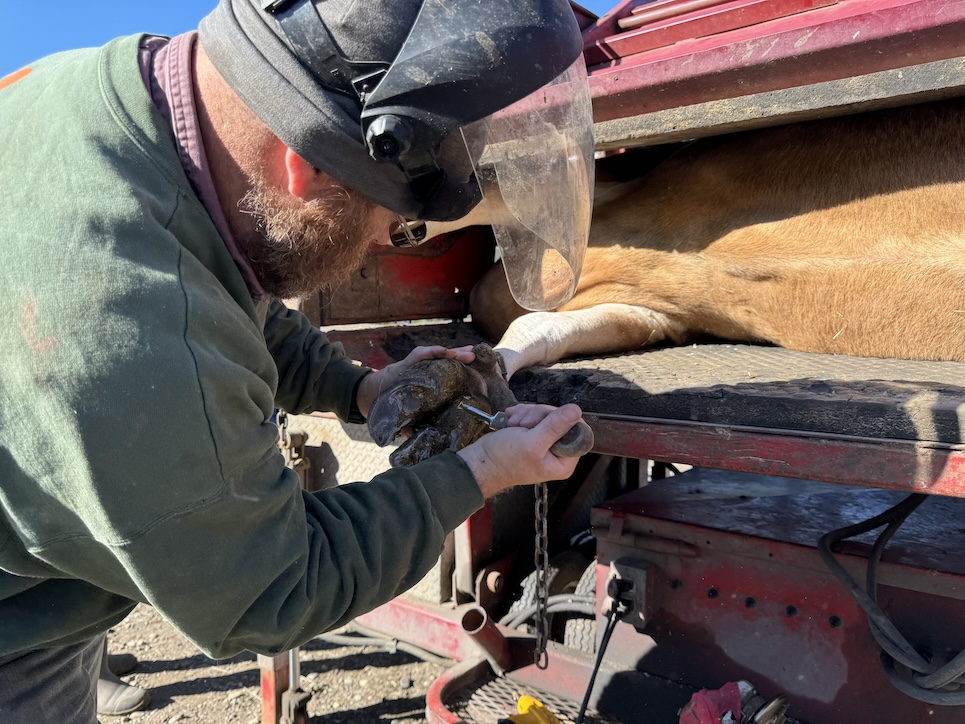
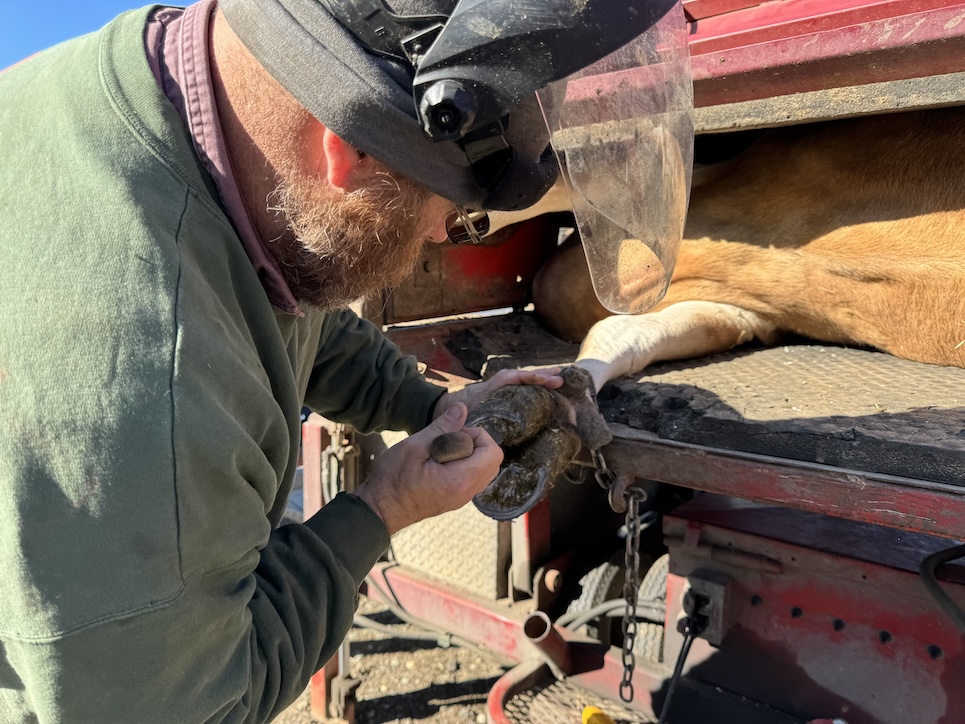
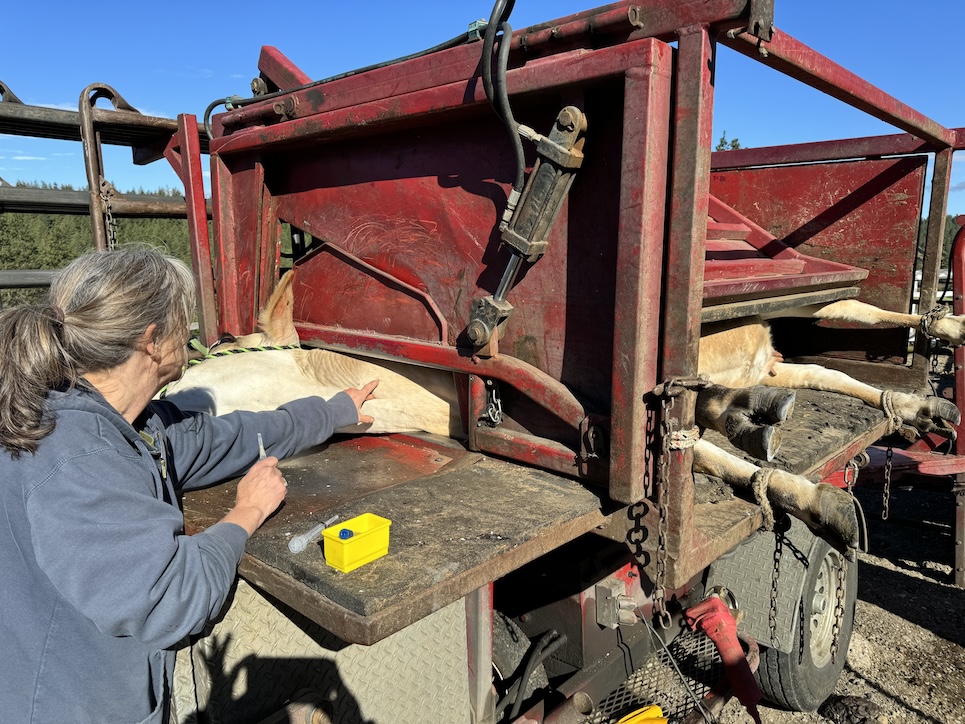
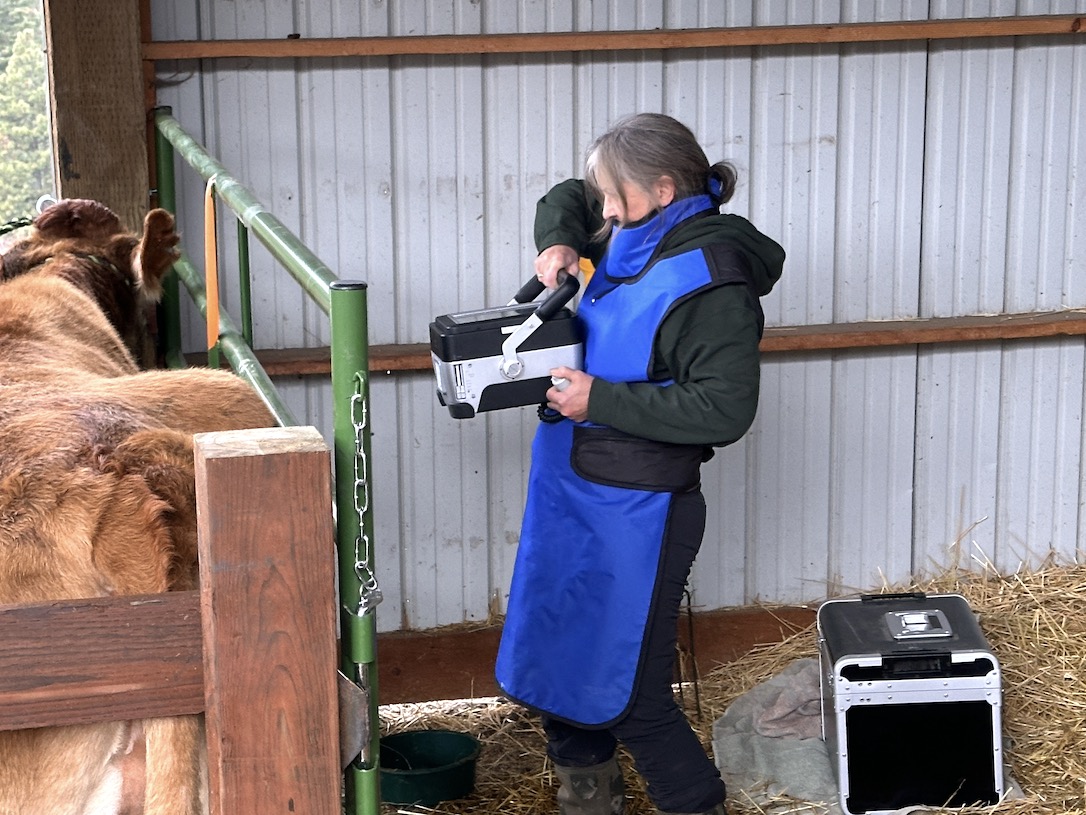
This week the cattle had a pedicure appointment with the hoof trimmer and a check-up with the Doc. So for today’s blog Dr. Erin shares an update on the bovine girls!
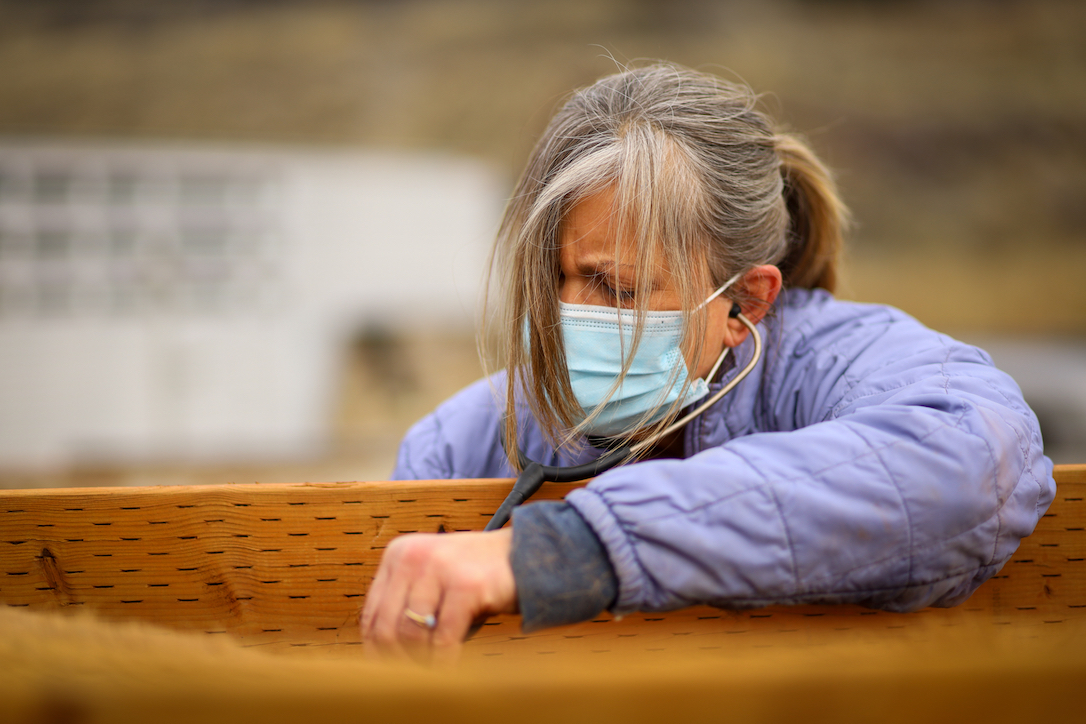 Dr. Erin
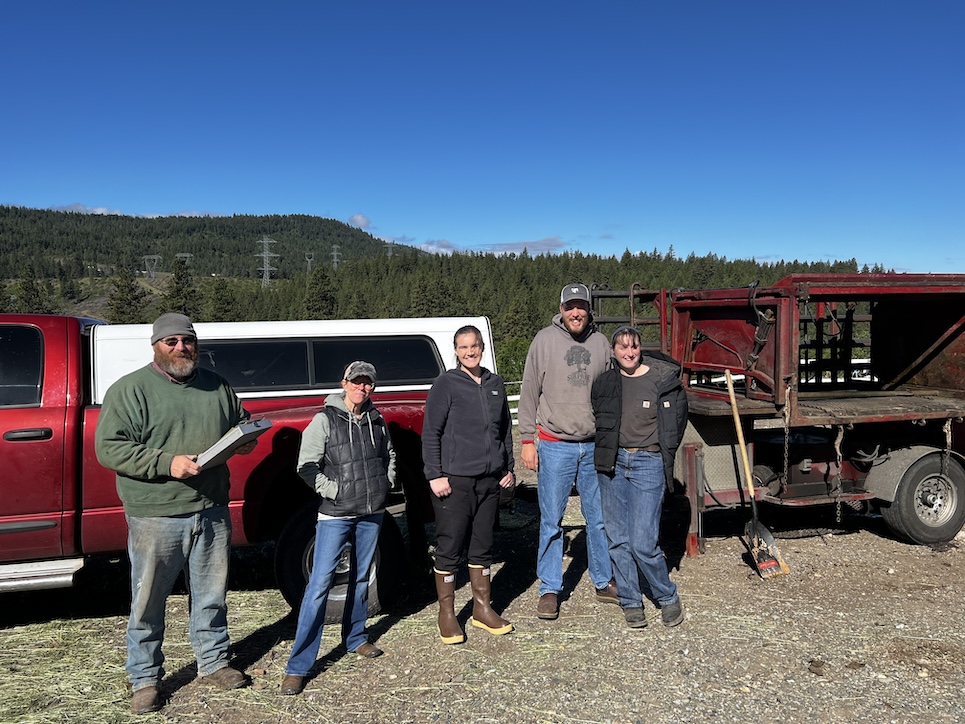
“Thursday was hoof trim day for the sanctuary herd. Like all healthcare interactions with the sanctuary residents, I both look forward to these opportunities to improve their health and well-being and dread causing any stress to these animals that we work so hard to provide with a peaceful and comfortable life. I arrived at the sanctuary bright and early Thursday morning to secure the girls were in the “Bud Box”, which is a small pen within the upper paddock that they exit via a narrow lane leading to the trimming chute. My plan to entice them into the box with a yummy breakfast of alfalfa hay (a treat generally reserved for very cold weather days) and some grain was witnessed mid-fail by Krissy, and pre-veterinary student Carly Ledbetter who came to help. Thirty minutes into my plan, when the trimmer is about to arrive, all three cows are standing at the opposite end of the paddock from where I want them giving off strong “not today doc” vibes.
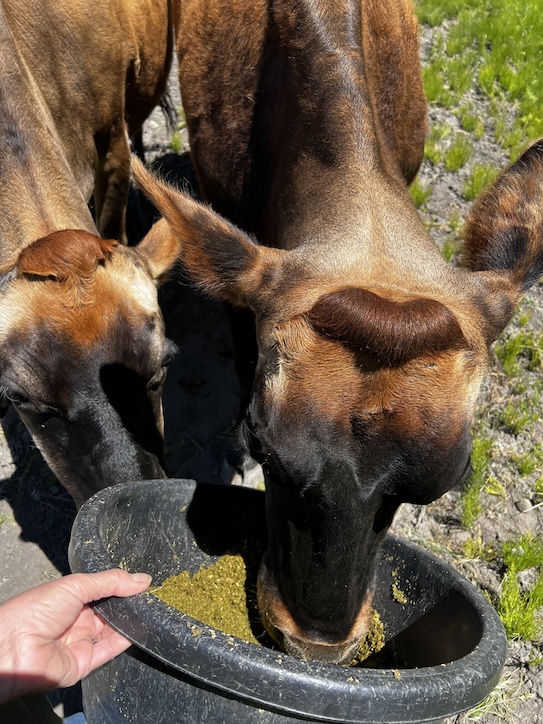
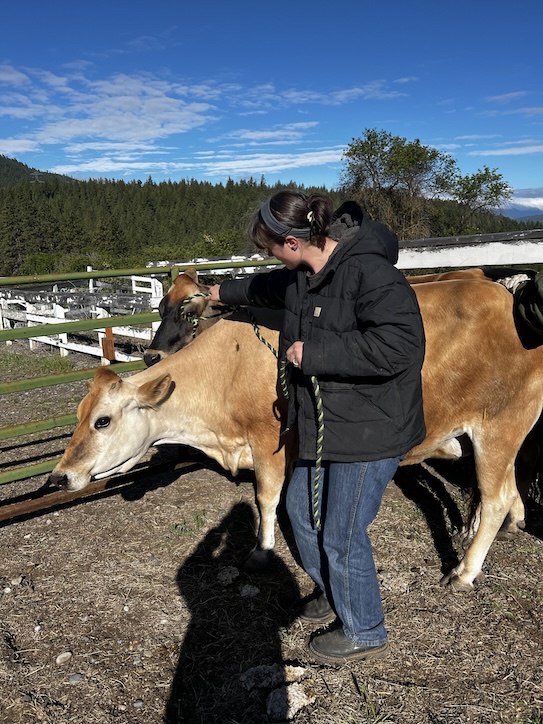
Autumn with Honey
We’re sorry to share that Nutmeg has passed away. This is the worst kind of news to share. I always worry about the impact of unexpected news on you all because I know how much you care about the animals here. And while we’ve had longer to absorb the reality of the situation, it’s coming at you all at once.
I know you’ll have a lot of questions, and I’m afraid that we just don’t have definitive answers in the case of Nutmeg. We did all we could for him and made the very tough decision to no longer prolong his discomfort, despite being left unsure about why his body failed him.
Dr. Erin, who has lost more than one night of sleep over the last few days, wrote the below about Nutmeg and her job in caring for him and his family.
Erin touched on this point, but I will add that it’s unusual to see adult male dairy cattle because the males are not economically useful to the industry. Dairy cattle have been bred with maximum milk production as the goal, and this genetic selection has resulted in males growing quickly and becoming very large. Nutmeg was so big that we had trouble finding a hoof trimmer with equipment that could accommodate his frame. While he was overall healthy in his time with us, we knew that his lifespan would likely not be incredibly long because of his size.
———-
From Erin:
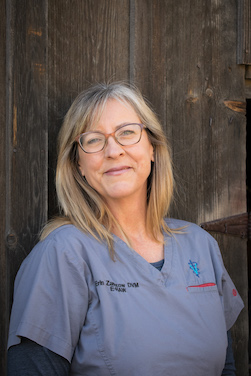
I learned in veterinary school that I didn’t want to work with “farm” animals. I knew I wasn’t cut out to have a production value attached to my patients. Naive? Perhaps. But here I am, almost 35 years later, and the concept of inherent worth is still one I apply to all my patients, all animals, for that matter, no matter what species. My practice has focused on “companion” animals, dogs, cats and horses, and now, of course, chimpanzees. In 2018 when the sanctuary welcomed 4 beautiful Jersey cattle to the sanctuary, I thought, “ok Zamzow, here’s another species you aren’t familiar with to learn about!”
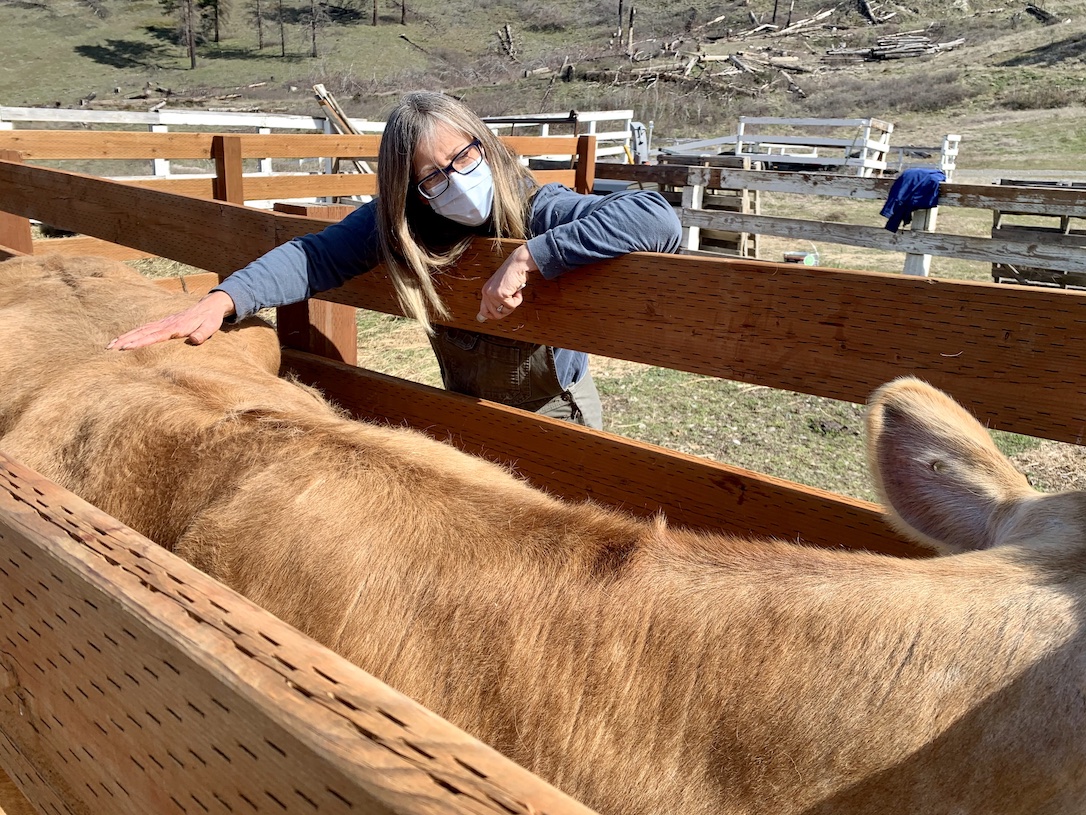
Heck, I learned about pigs by rescuing four of them so why not cattle too! Well, that knowledge from my “food” animal (now called “agricultural” animal) classes and rotations was buried alongside a few other traumatic experiences in my life. Yet, as once learned factoids tend to do, it bubbled up here and there and continues to be bolstered by online lectures, helpful, supportive, colleagues and, the best instruction of all, lived experience. I’m no expert by a long shot and I’d be lost without my cattle vet peeps (including the amazing and recently retired Dr. Mike Fuller here in Ellensburg) and colleagues from various veterinary school teaching hospitals.
I have come to cherish my time with our little herd. Getting to know them, their personalities, likes and dislikes and monitoring the health and well-being of these beautiful bovines is a pleasure and I often get ‘delayed’ in the barn or pasture because I enjoy being with them so much. These cattle get to exist free from the obligation to provide anything for humans-except of course, their natural grazing abilities that help to keep the property clear of excess fire fuel.
When the herd came to the sanctuary in early November of 2018, Nutmeg was not even 4 years old and already twice as big as his mother Betsy. In most dairy operations, a calf is separated from their mother anywhere from a few hours to a few days from birth, a traumatic event for both mother and baby. Fortunately some dairies leave cow and calf together for longer periods but they are still weaned earlier than if the decision were left up to mama and baby. In Nutmeg and Betsy’s case, the nursing went on, even if occasionally, for over 4 years. We rarely saw Nutmeg nurse after the herd came to CSNW but every so often someone would report seeing him sneak a sip from mom. Eventually, things ran their course and the milk bar closed for good.

This week has been a particularly tough one for all of us that love these cattle. Monday morning, Nutmeg was laying on his side in front of the barn and couldn’t get up. Cattle can and do lay on their sides once in a while but normally sleep in a ‘sternal’ position with their head curled around toward their back legs. Because of their size and the weight, like most megafauna, it’s not safe to lay on their sides for very long. Nerve and muscle damage can occur on their down side and the force of gravity causes blood to pool in the down side lungs. There is also the risk for ‘bloat’, a build up of gas in the rumen that can be life threatening. A normal adult bovine rumen holds about 40 gallons of fluid/ingesta, a lot of weight in that abdomen that puts pressure on other internal organs if they are in the same position for too long.
A “downer cow” is situation usually seen in cows after they have given birth and can be due to mineral imbalances or nerve damage sustained in delivery. In cattle on pasture, it can occur due to injury or a sudden shift in diet from hay to pasture that creates a drop in magnesium. It can be a hard condition to diagnose and sometimes, they just get down in the wrong position on an incline and can’t get their feet back under them.
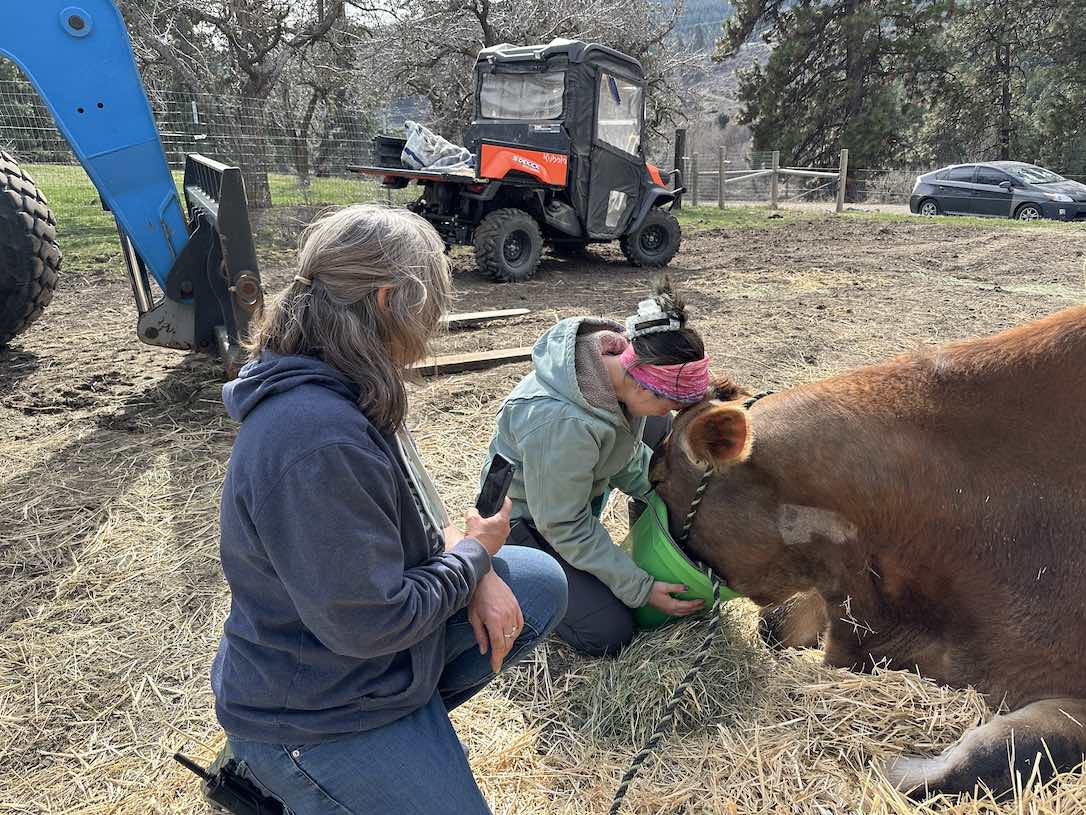
We immediately got to work to turn Nutmeg onto his other side and then get him in a sternal position – no easy feat when dealing with a 2000 lb animal, but JB and Diana are amazingly creative when it comes to figuring out what one of our residents needs. We checked electrolyte and mineral levels, administered IV and oral electrolytes, dextrose and anti-inflammatory medications and monitored his vital signs closely. When a large animal is down, it’s important that they be watched continually in case they hurt themselves trying to get up. Nutmeg was propped up and watched around the clock with staff and volunteer Anthony taking shifts throughout the day and night. He was blanketed, brushed and doted on. JB was able to fashion a sling with some firehose so he could be lifted for short periods to take the weight off his legs. I did acupuncture and laser treatments on him as well which he initially seemed to respond to.
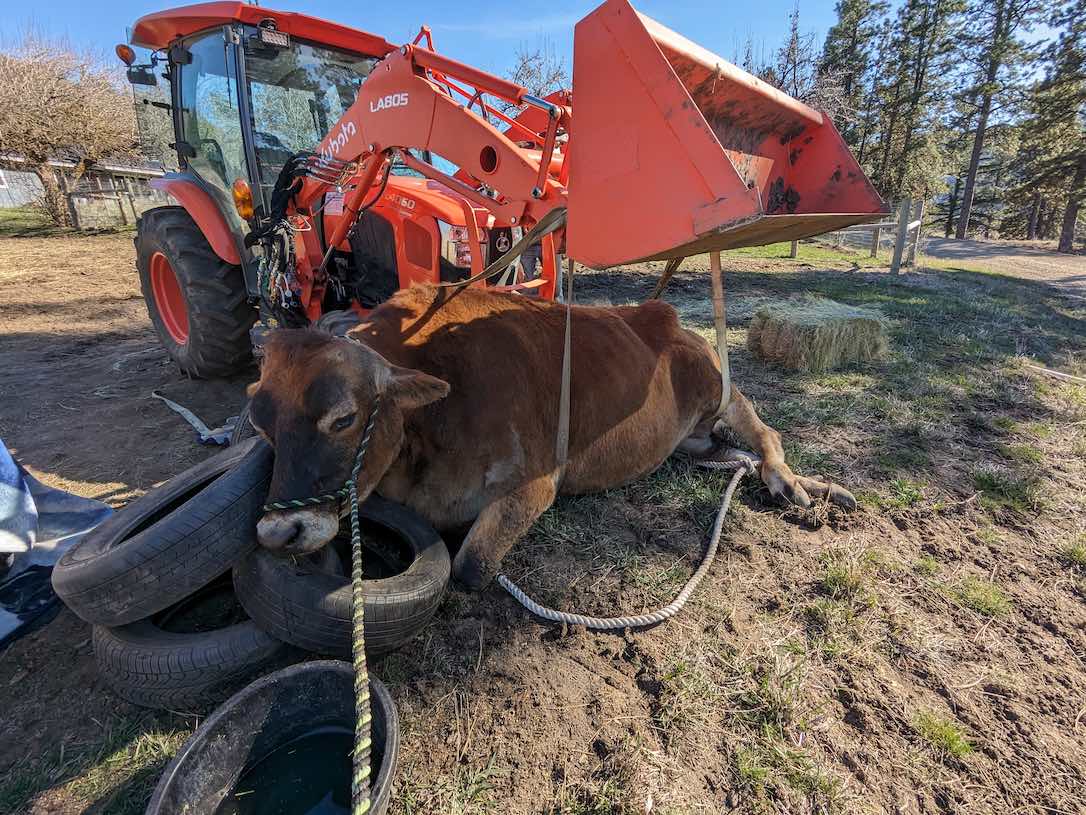
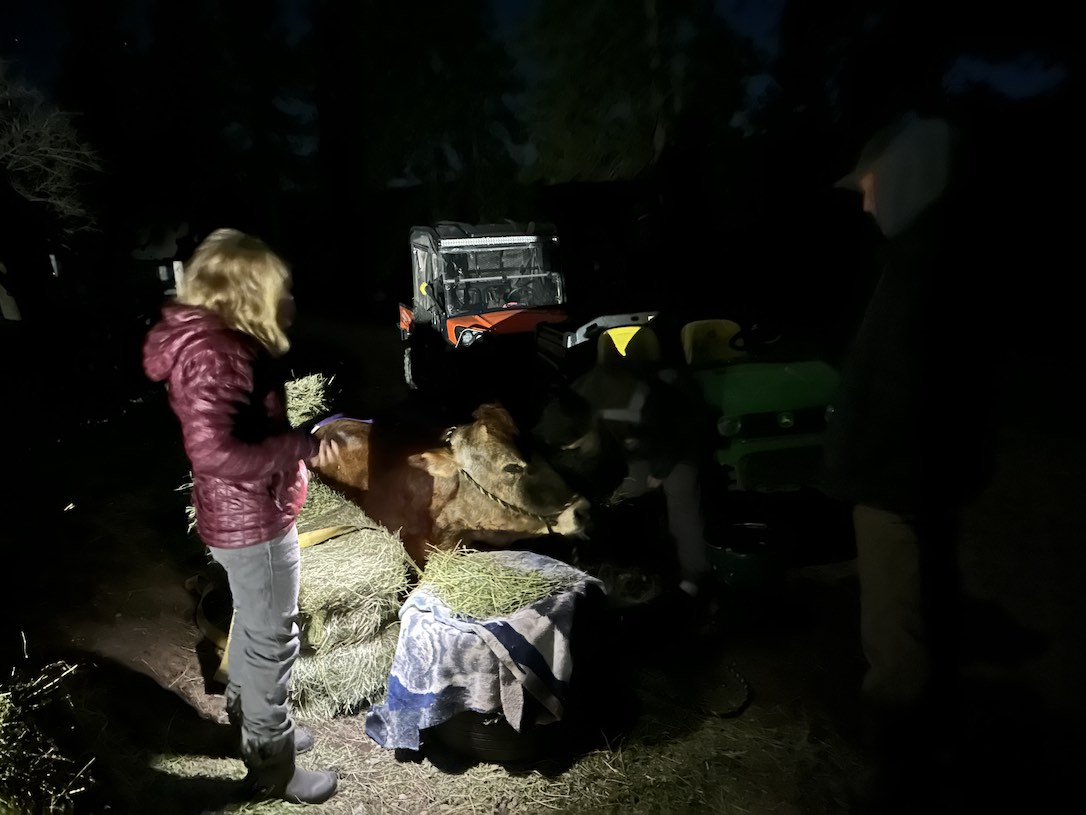
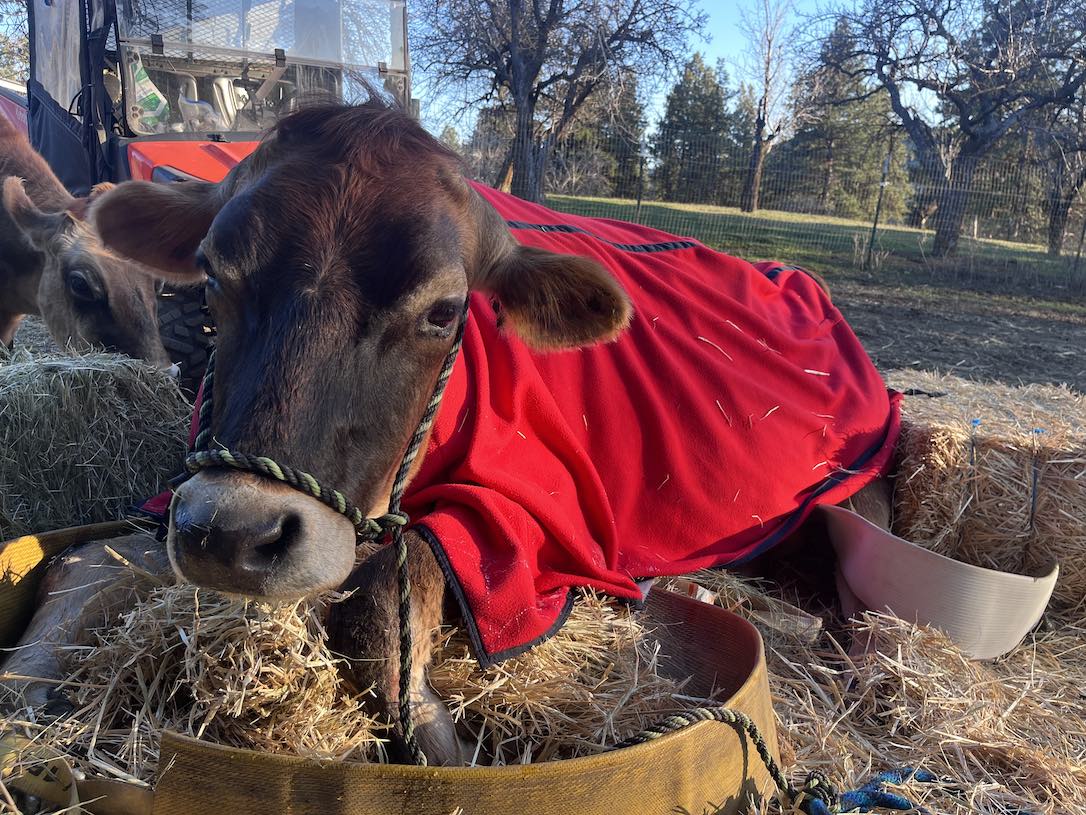
Nutmeg ate and drank water, chewed his cud and made valiant efforts to rise but by Wednesday afternoon, it was clear that he was exhausted and had sustained too much damage to his hind legs to recover. His appetite waned and the look in his eye changed. He spent his last night on a massive bed of straw in the barn, with his mama and Honey by his side and Meredith in her recovery pen just a few feet away. Staff visited and said their goodbyes and yesterday afternoon he was peacefully freed from his body and laid to rest surrounded by love.
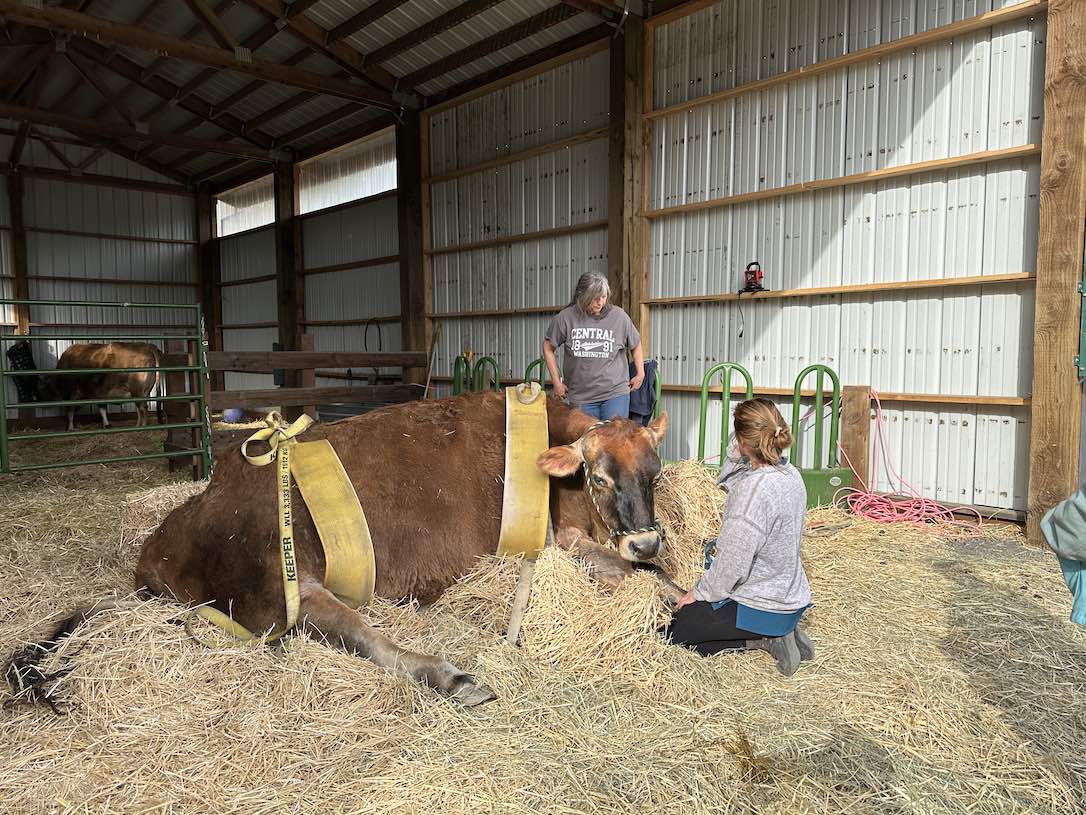
Our hearts are broken and we will miss our beautiful, gentle giant so much. I am deeply thankful that he and his herd were sent to sanctuary instead of back to the dairy industry and that he was able to spend the last 5 1/2 years of his life grazing the pastures of this beautiful sanctuary with his family.
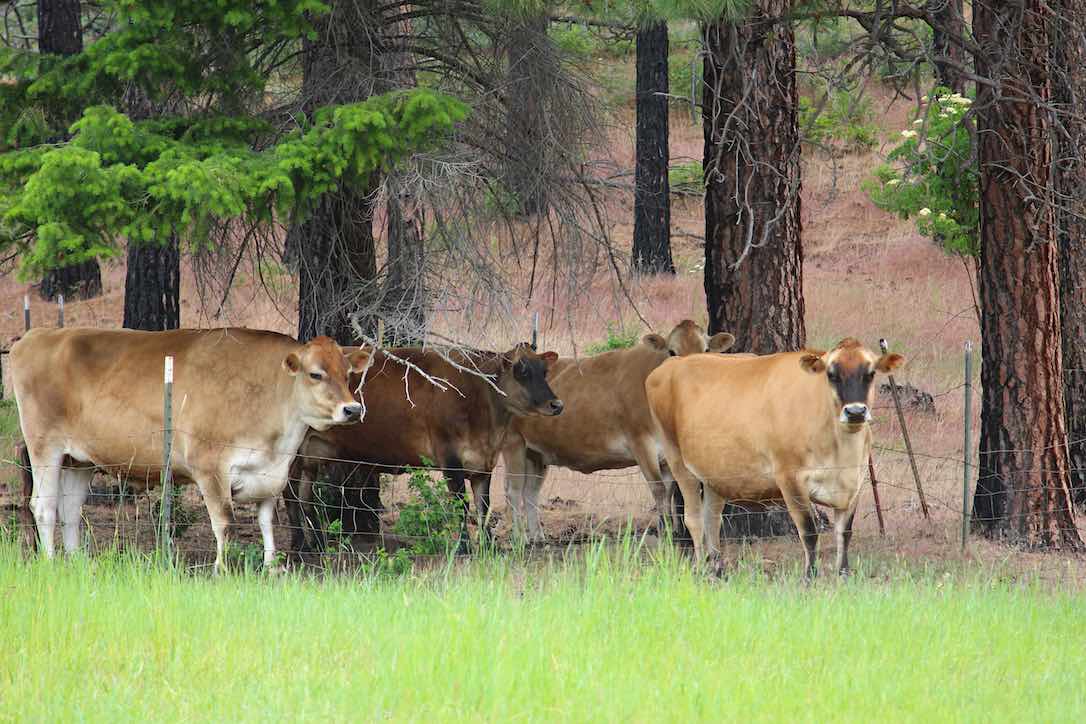
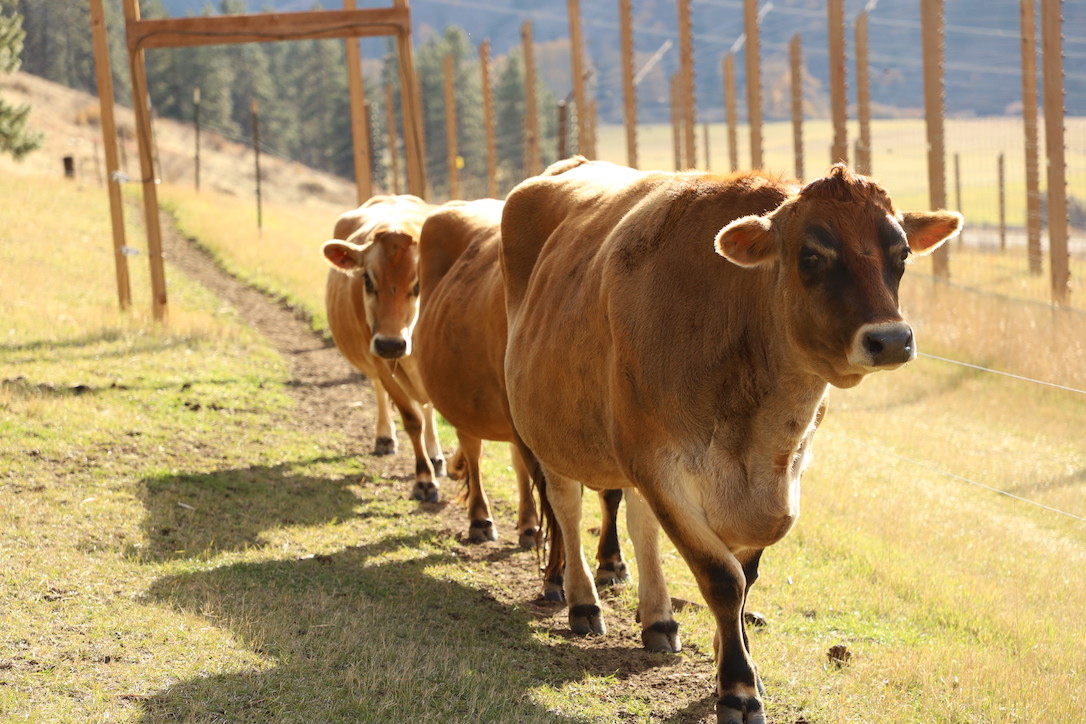
———-
We don’t talk about this much, but J.B. and I became vegan after first meeting chimpanzees and contemplating that line that humanity has historically drawn between “us” and “animals” and learning about industrial agriculture. We’re not perfect or pure vegans by any means, so perhaps the term plant-based is more appropriate, but we came to the decision from an animal welfare perspective, as did Dr. Erin many years ago. I think there are different ways of looking at personal food choices, and we certainly don’t expect everyone to come to the same decisions, but everyone should know what’s involved in producing the food they eat.
Our nearest neighbor manages a beef cattle ranch that harkens back to an older way of farming, where the cattle graze freely and contentedly. The calves stay with their moms and herds for some time before being separated, but, ultimately it’s still a for-profit business and they are separated and sold. This neighbor was more than happy to help us with Nutmeg when we first discovered our tractor was not strong enough to fully lift him off the ground. He brought his tractor over and helped us lift Nutmeg in the hopes that we could help him stand again. We are extremely grateful for Austin’s help, generosity, and undertanding.
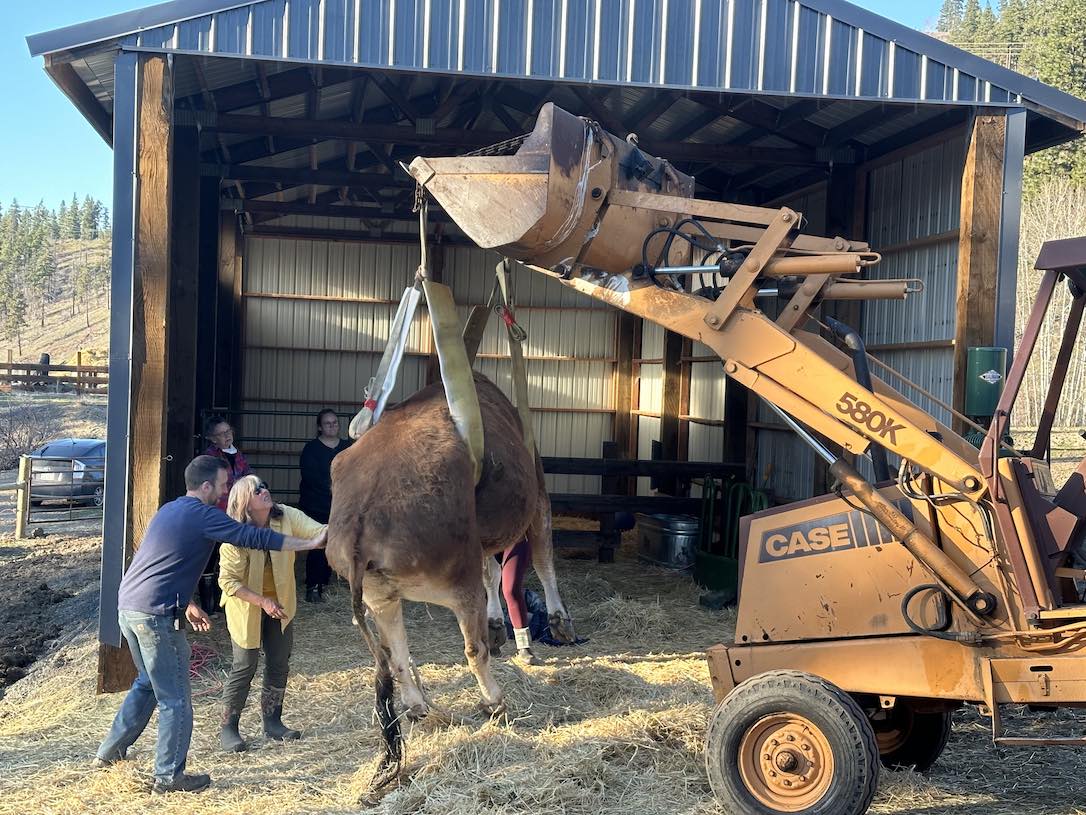
It seems fitting to end this post with one of the last photos that Katelyn took of Nutmeg with his mom:
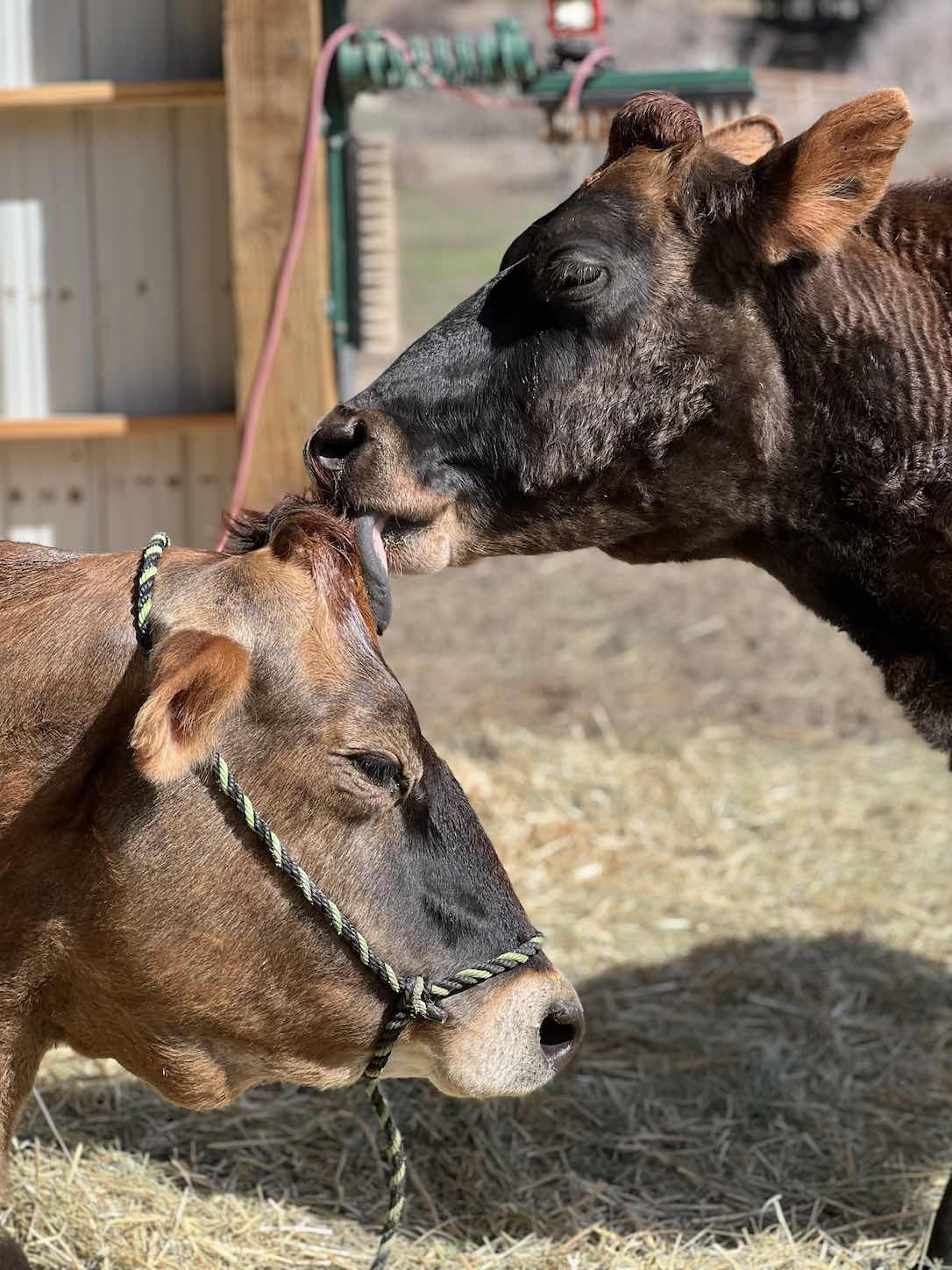
He will forever be her baby.
Last, but not least of our Bovine Buddies, is the lovely Meredith who, shockingly, only has two sponsors, Monica and Jackie, who actually sponsor all four of our cattle comrades! Thank you for being such stellar supporters, Monica and Jackie! If you would like to boost Meredith’s numbers and become her Bovine Buddy, you can do so here.
Watch the video below created by our co-director, Diana, to fall in love with Meredith!
Meredith is the biological daughter of Honey, the adopted daughter of Betsy, and the adopted sister to Nutmeg. One big happy family! She was born in 2015 during the filming of a reality TV show called Utopia, which aired for only a brief time. Honey and Betsy were purchased for the show from a dairy farm and both were pregnant. After giving birth, Honey had trouble nursing Meredith due to a case of mastitis, which is very painful and is a common complication for dairy cows. Luckily for Meredith, however, Betsy, being pregnant with Nutmeg, prematurely produced milk and eagerly allowed Meredith to nurse. Soon after, Nutmeg was born – impossibly tiny compared to his great size today – and the family unity was complete!
Click here to watch a video of baby Meredith being reunited with her mom(s)!
When the show got cancelled, the four cattle were taken in by Farm Sanctuary in Northern California and when the sanctuary had to close in 2018, they moved to CSNW where they will live out the rest of their lives in cow heaven.
Little Meredith at Farm Sanctuary
I’ve only had about six months to get to know Meredith so far, but she’s been a joy to work with. I quickly learned that she loves to receive scratches and will streeeetch her nose straight up while you scratch under her chin and jaw. She also seems to kindof enjoy gentle eye rubs. I’m told she will forage for willow leaves and wild rose in the summer and I know first hand she loves alfalfa and her daily grain!
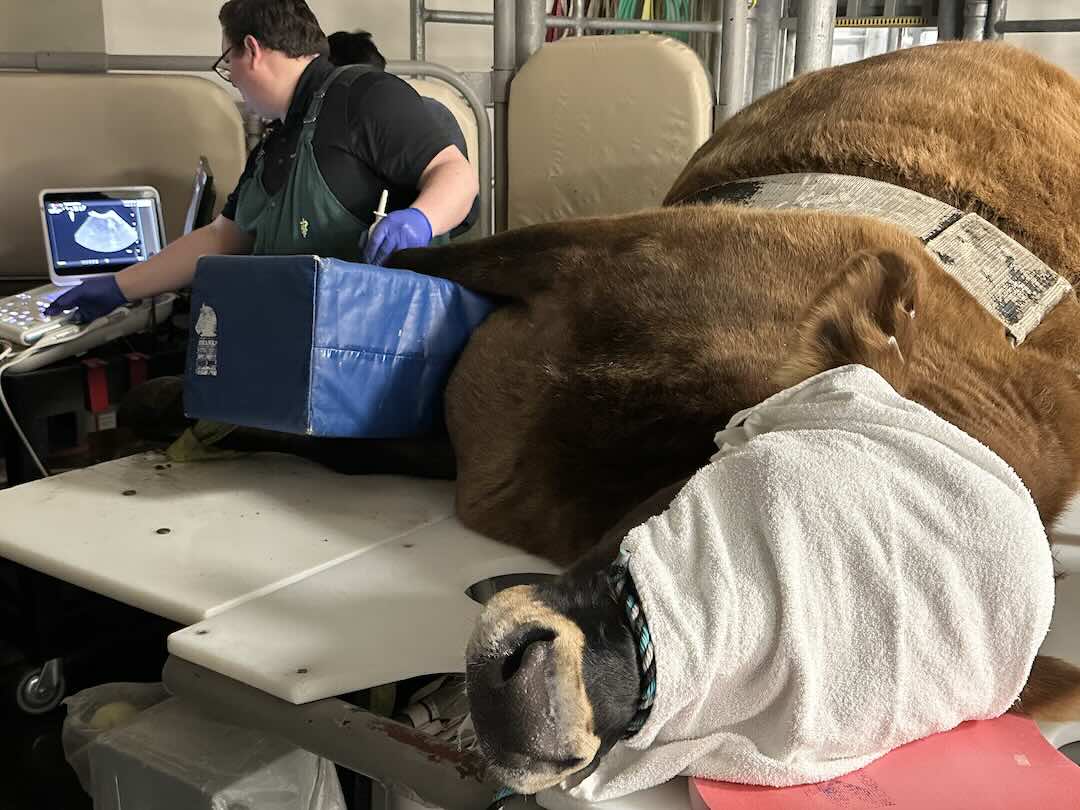
Meredith has developed arthritis in her front hoof joints, making it painful to walk, but she’s been a real trooper as the care staff have done their best to diagnose and treat it. She has endured a full season of pokes and prods, transportation to WSU for treatment, limited access to her habitat during recovery, and even chiropractic appointments! She lets us know when she’s irritated, but considering everything she puts up with, she has been very patient. Can you imagine Honey cow in her place?? We would have to wear armor, I think.
Meredith getting scanned at WSU
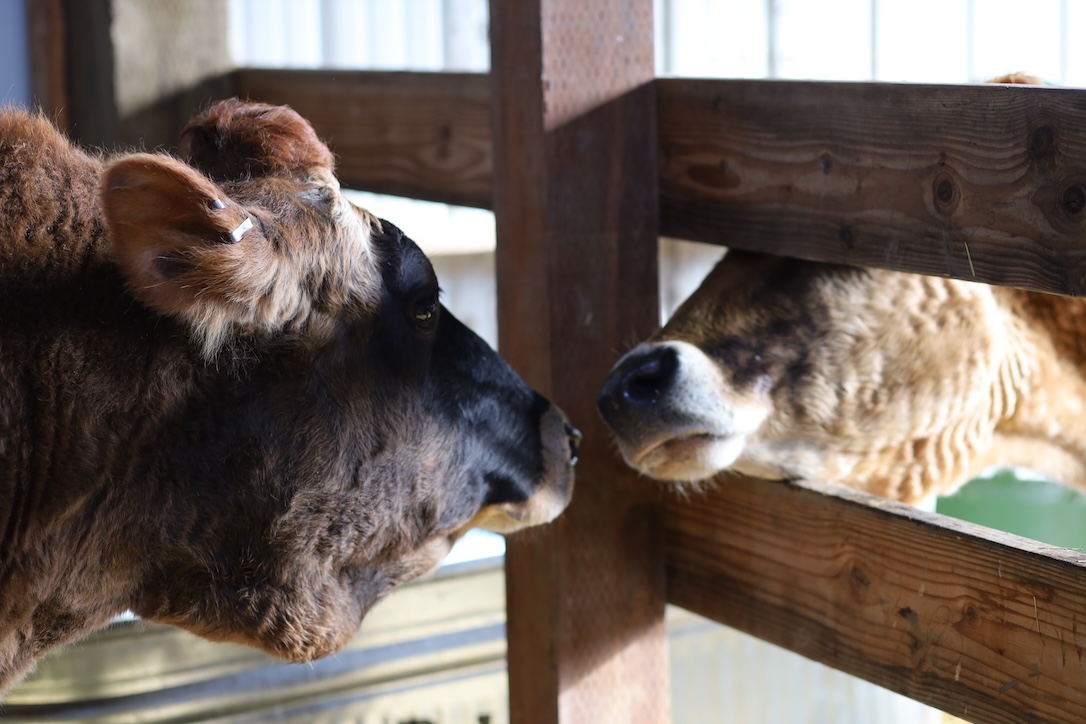
Meredith and her mom, Honey, share a tender moment while Meredith is separated for recovery
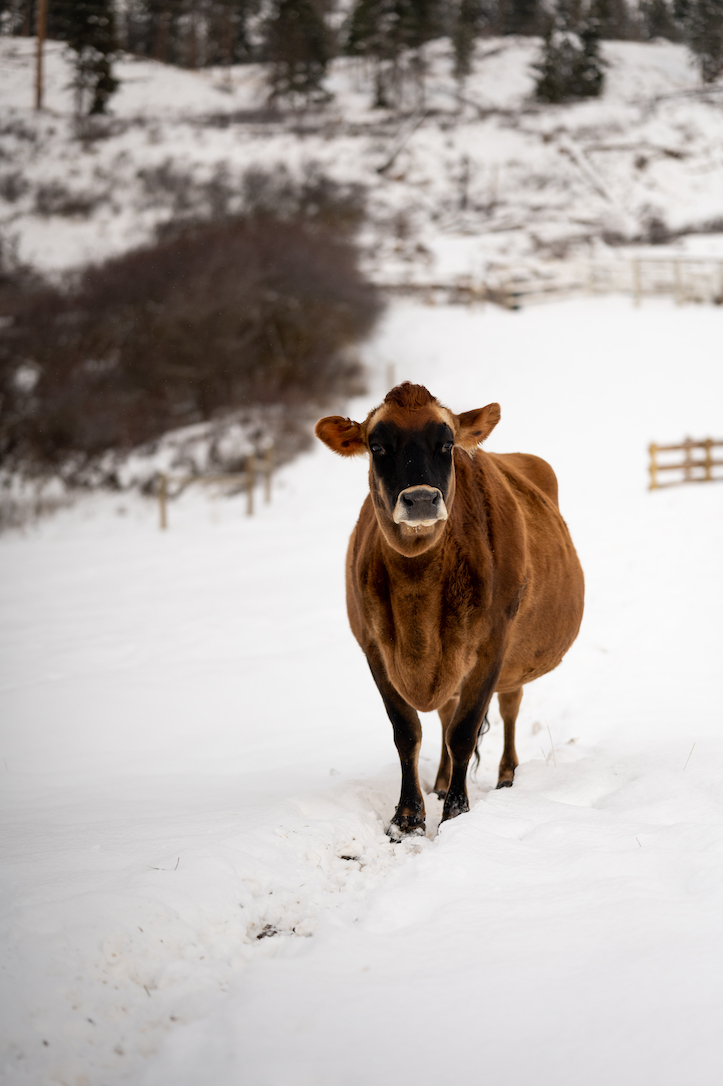
Beautiful wintery Meredith
If you’ve fallen in love with Meredith like we all have, please consider becoming her Bovine Buddy!
You know how last week in our Be Mine series, I said that Betsy was easy to get to know because of her gregariousness towards humans? Well, today, let me introduce you to her cow opposite in that respect – Honey Cow!
If you want the quick and delightful overview of all that is wonderful Honey, watch her Fall in Love video that Grace made last week, then read on:
Honey was likely born in 2007 and we choose to celebrate her birthday on November 10th.
(Allow me to pause here and skip ahead a bit to tell you that, shockingly, Honey Cow only has three Bovine Buddies currently – Monica, Jackie, and Jennifer (thank you to them!!). So, if you are looking to add a cow friend to sponsor (and why wouldn’t you, for just $10/month?!), I definitely recommend you read on and choose Honey for your Buddy!)
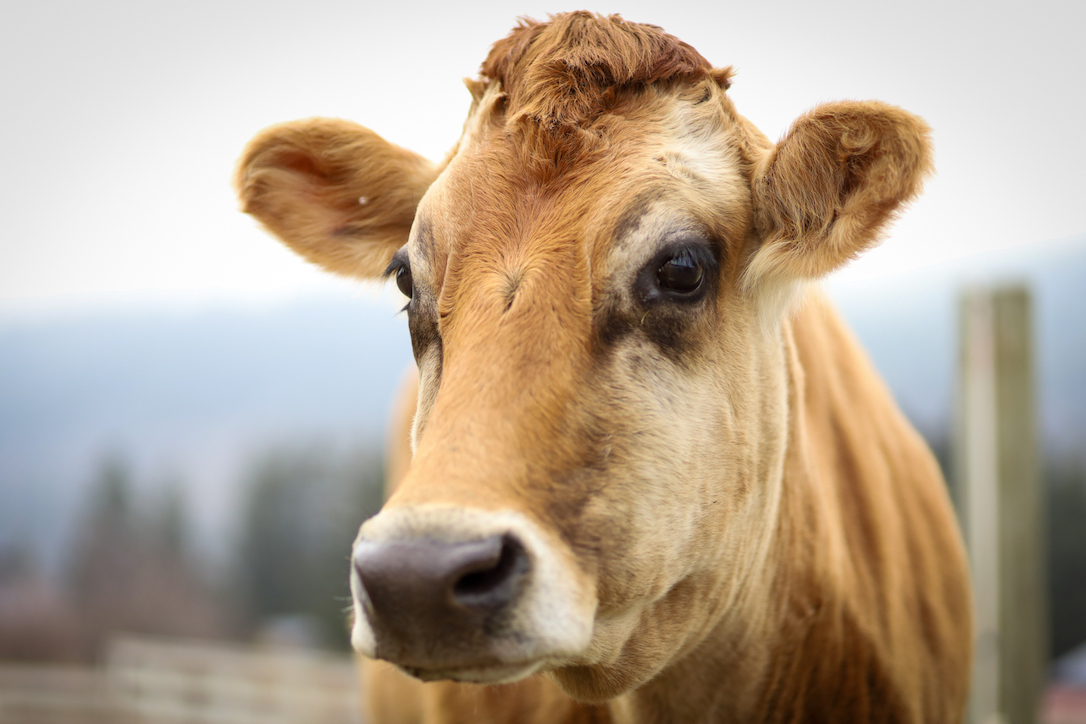
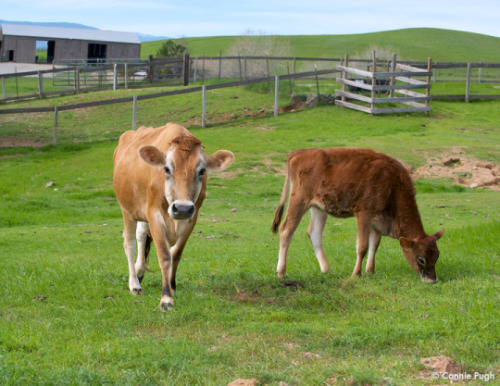
Honey, as we’ve explained through Betsy and Nutmeg‘s Be Mine blog posts, is mom to Meredith. Like Betsy, she was used in the dairy industry before being purchased for use in the reality TV show Utopia. In fact, Honey gave birth to Meredith during the filming of the series. When Utopia was cancelled after just two months, Betsy, Honey and Meredith all went to Farm Sanctuary’s shelter in northern California (you can read more from Farm Sanctuary about how they ended up at that sanctuary here, a profile of Honey from Farm Sanctuary here, and a mention in the Hollywood Reporter here). They were soon joined by lil’ baby Nutmeg (who is now big baby Nutmeg 😉 )
Honey and little Meredith at Farm Sanctuary:
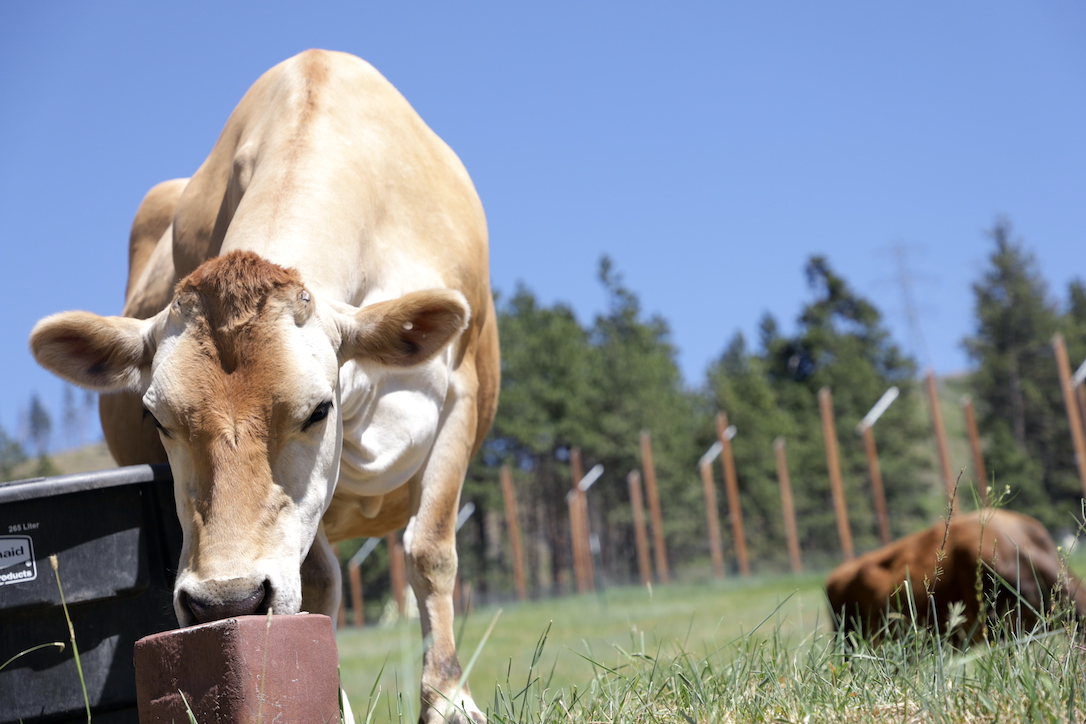
Honey is a fan of alfalfa, and she also likes to lick up salt and mineral supplements. We have these in block form for the cattle to lick whenever they want to, and we also add loose salt and minerals to their grain in the wintertime when they are relying on dry hay for nutrients rather than grazing.
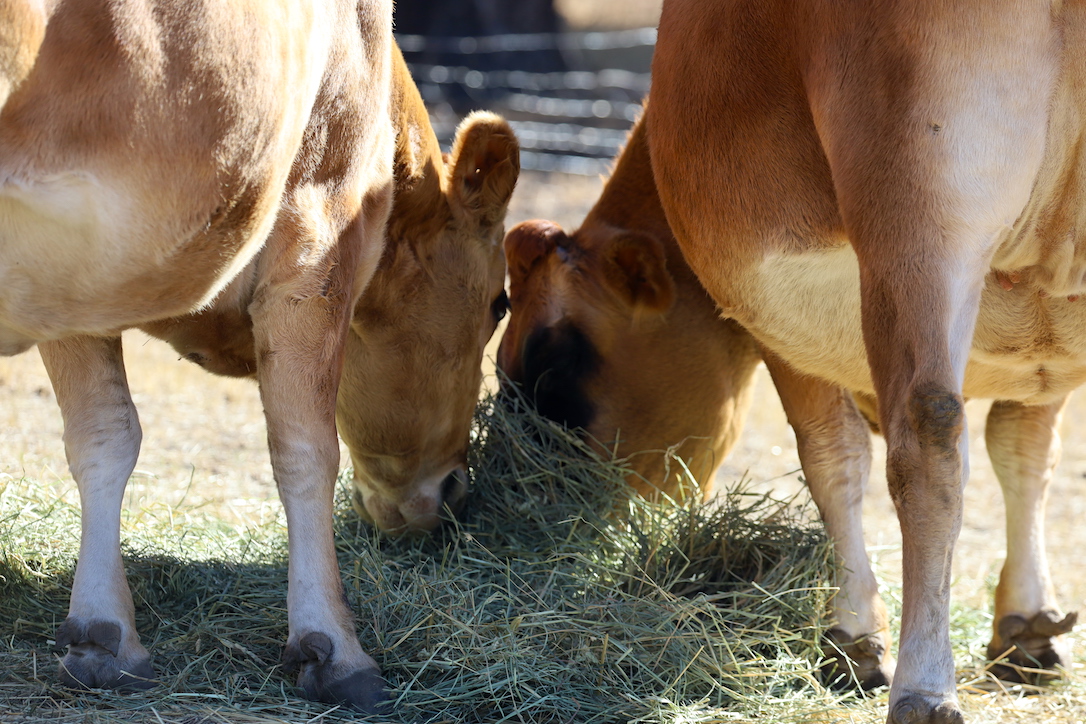
In the winter, when the temps drop, the cattle start to get a thicker coat of hair. On Honey in particular, her longer hair develops a wonderfully luxurious wavy pattern.
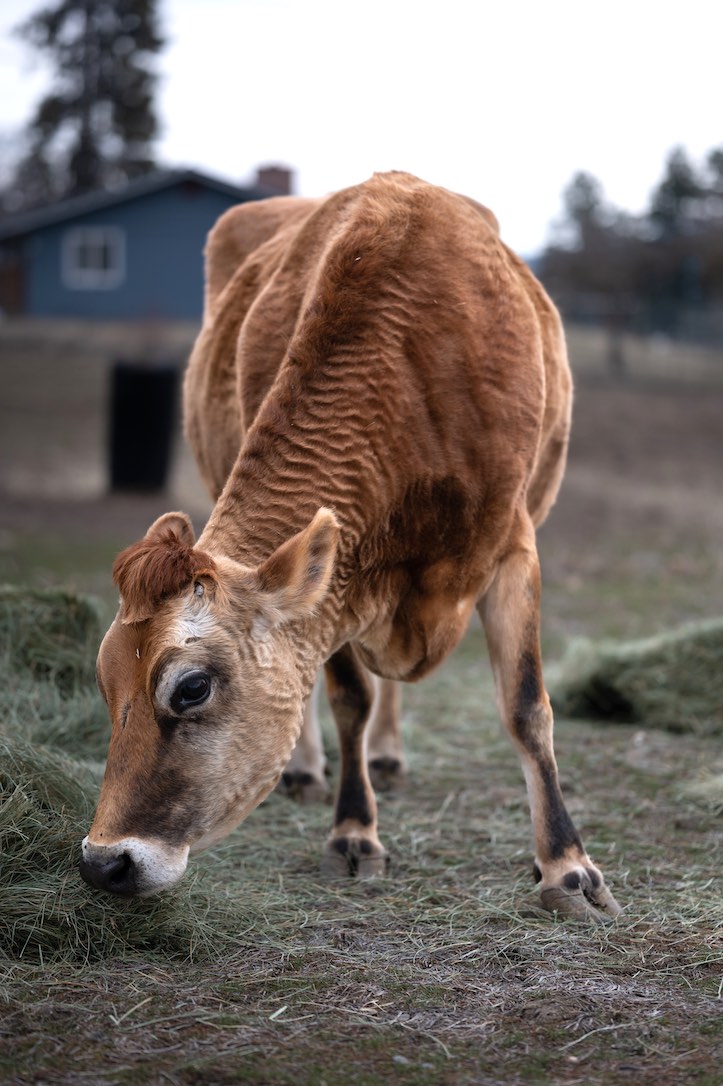
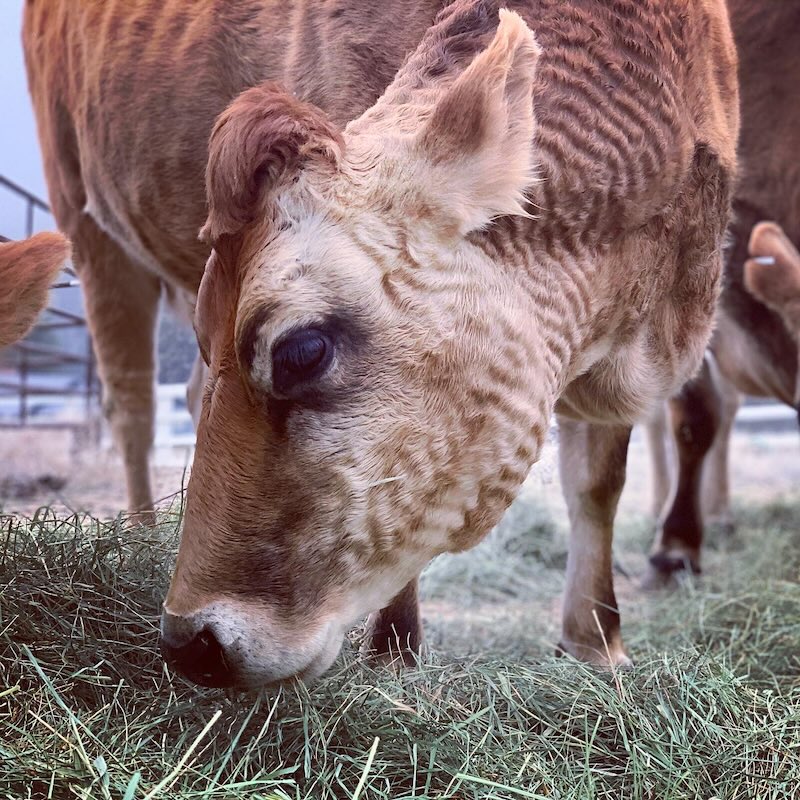
Like Betsy, Honey is very curious:
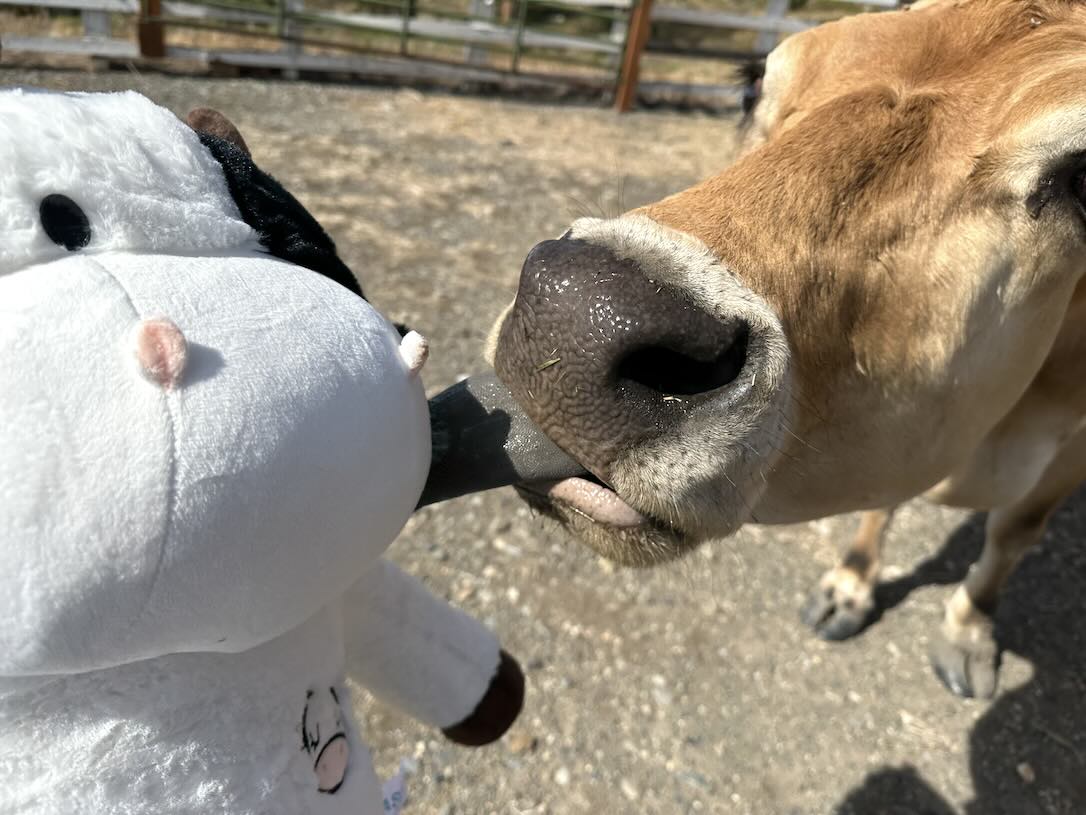

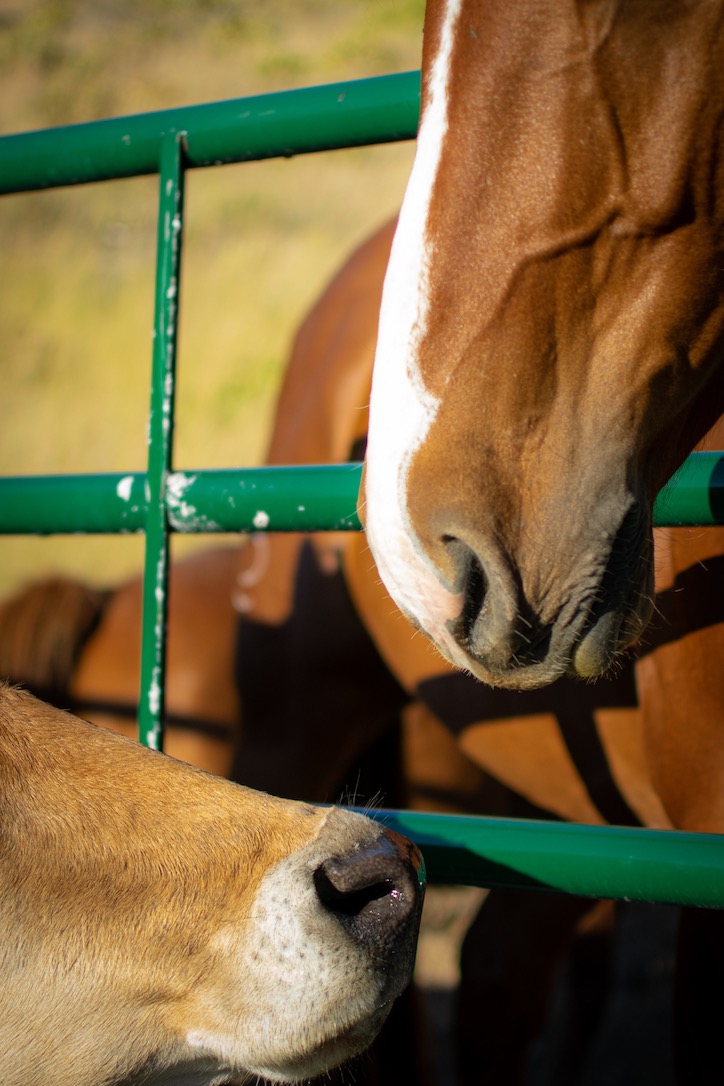
Unlike Betsy, Honey is somewhat suspicious of humans and has a certain disdain to be touched by them. I would venture to say that one of her favorite activities is looking scornfully at people. She will definitively let you know when you have invaded her personal space with a shake of her head or a head butt.
I’ve mentioned before that the more “difficult” animals, the ones who have to be won over, always seem to find a big place in my heart, and this is certainly the case for Honey Cow.
I love that she’s sometimes annoyed by my presence! And I love even more that I can now touch her or brush her head and, though she still acts annoyed, she usually doesn’t stop me.
Once again, I encourage you to choose Honey for your Buddy!
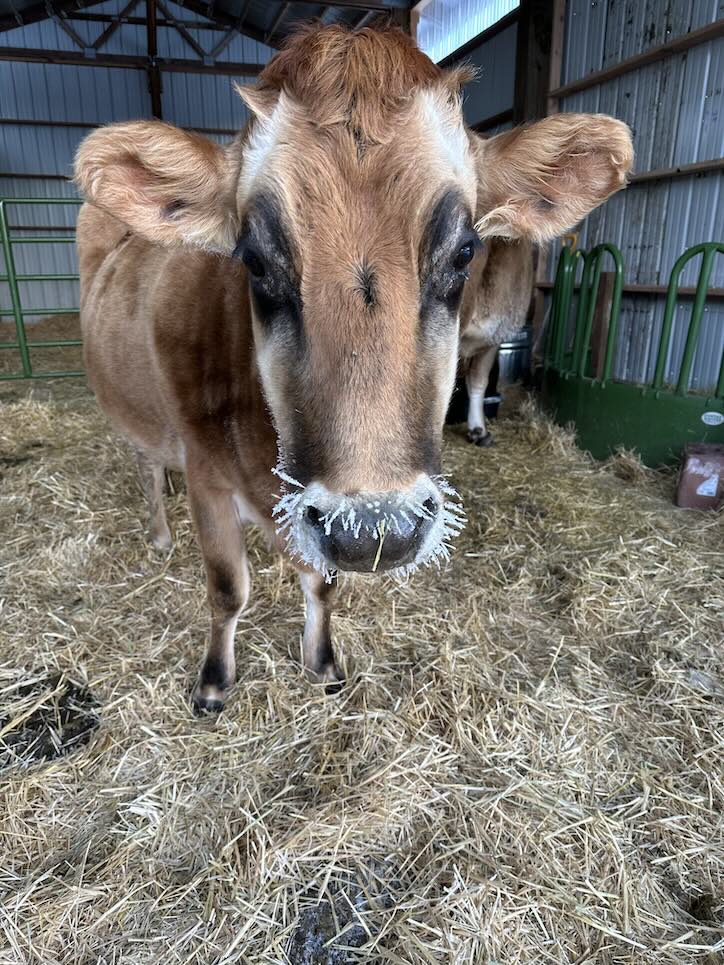
Here’s a bonus photo taken during our deep freeze this winter. Similar to when we exhale in the cold and there’s a cloud of our warm respiration, Honey’s exhale created a nose halo of face frost.