• Skip to main content
  • Skip to primary sidebar
  • Skip to footer

Chimpanzee Sanctuary Northwest

Hope. Love. Home. Sanctuary

  • Our Family
    • The Chimpanzees
    • The Cattle
  • Blog
  • About Us
    • Visiting the Sanctuary
    • Philosophy
      • FAQs
      • Mission, Vision & Goals
      • Privacy Policy
    • The Humans
      • Staff
      • Board of Directors
      • Founder
    • Annual Reports
    • The Future of CSNW
    • CSNW In The News
  • You can help
    • Donate
      • Become a Chimpanzee Pal
      • Sponsor A Day
      • Transfer Stock
      • Be A Produce Patron
      • Be a Bovine Buddy
      • Give from your IRA
      • Personalized Stones
      • Bring Them Home Campaign
    • Leave A Legacy
    • Employment Opportunities
    • Volunteer
    • See Our Wish List
    • Events
  • Resources
    • About Chimpanzees
    • Enrichment Database
    • Advocacy
      • Advocacy Action Center
      • Apes in Entertainment
        • Trainers
        • Role of the AHA
        • Greeting Cards
      • Chimpanzees as Pets
      • Roadside Zoos
      • Chimpanzees in Biomedical Research
      • Conservation
        • African Apes
        • Orangutans
  • Shop
    • Merchandise Store
  • Contact
  • DONATE NOW

Animal Welfare

Eyes on Apes website

April 8, 2014 by Debbie

One of our missions at Chimpanzee Sanctuary Northwest is to advocate for apes everywhere, which is why we developed the program Eyes on Apes. The idea is to have one centralized area for people to learn about issues that apes face both in captivity and in the wild, while providing tools for you to take action.

There’s a lot of great information on the pages for each of the issues (entertainment, pets, roadside zoos, biomedical research, and free-living issues in Africa and Asia).

One thing we just added were some pages on individual trainers in the entertainment industry. This is a really nice resource for people to have when you hear about a chimp in a commercial or movie and are curious what it is like for them with their trainers. Each page lists facts about the trainers, any relevant USDA citations, and links to our action alerts about productions these trainers were involved in.

Please share this site with your friends, and help raise awareness for apes everywhere! You can ask them to sign up for our Take Action list in order to get action alerts and help make a difference for apes everywhere.

Take a look through all the pages—there’s been some makeovers throughout the site, like this informational map showing the current vs. historical population of African apes:
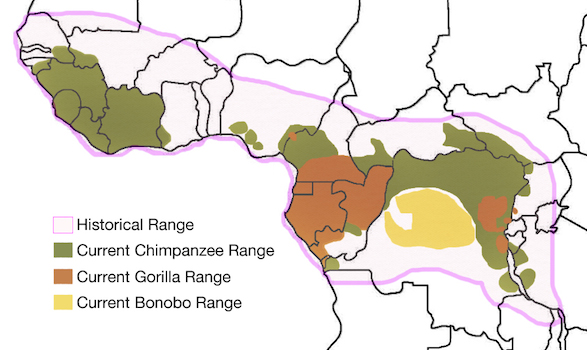
africadistribution

And, since this was a little bit of a wordy post, I thought I’d throw in a picture of Negra from this morning’s breakfast forage on Young’s Hill:
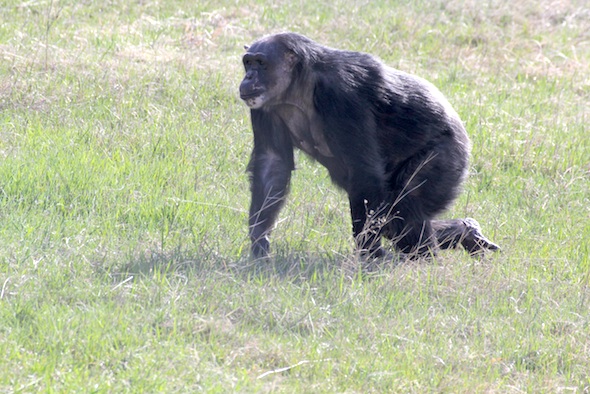
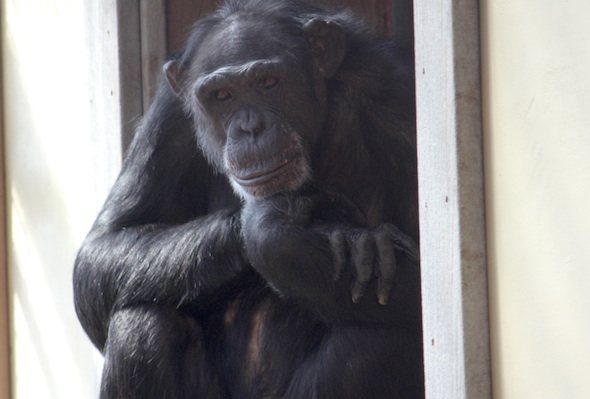
web_negra_walk_grass_YH_dm_IMG_0576

Filed Under: Advocacy, Apes in Entertainment, Free-living chimps, Negra, Sanctuary, Young's Hill Tagged With: advocacy, animal protection, animal rescue, animal rights, Animal Welfare, chimpanzee, chimpanzee rescue, chimpanzee retirement, chimpanzee sanctuary, Chimpanzee Sanctuary Northwest, Cle Elum Seven, csnw, Negra, primate protection, primate rescue, Sanctuary, young's hill

Relaxing

April 4, 2014 by Debbie

I found some photos on the computer taken by Elizabeth and Lisa a few days ago. Just looking at these pictures makes me feel so relaxed!

Jamie

Burrito

Missy

Foxie

Filed Under: Burrito, Foxie, Jamie, Missy, Sanctuary Tagged With: animal protection, animal rescue, animal rights, Animal Welfare, Burrito, chimp, chimp enrichment, chimp sanctuary, chimpanzee, chimpanzee rescue, chimpanzee retirement, chimpanzee sanctuary, Chimpanzee Sanctuary Northwest, Cle Elum 7, Cle Elum Seven, csnw, Foxie, Jamie, Missy, primate rescue, Sanctuary

April Fool’s Day at the chimp house

April 1, 2014 by Debbie

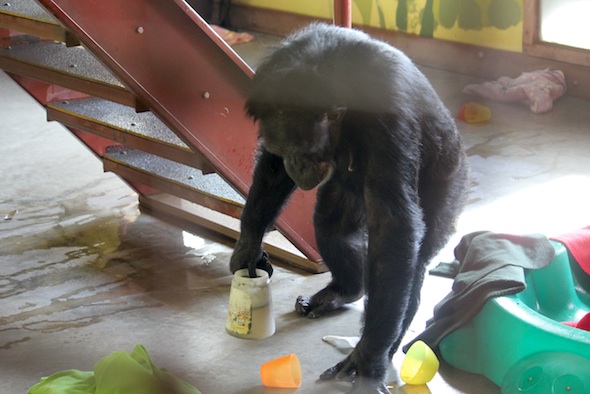
We are always trying to come up with fun and interesting ideas to enrich the chimpanzees at CSNW. Since today is April Fool’s Day, I was coming up with ways to mix things up for the chimps. We tried to serve lunch at breakfast, which didn’t seem to go over as well as I had thought—the chimps were expecting fruit smoothie! So we made up for that faux pas by doing a smoothie forage.

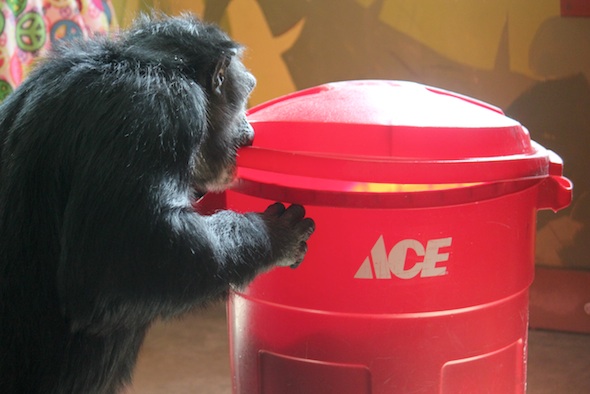
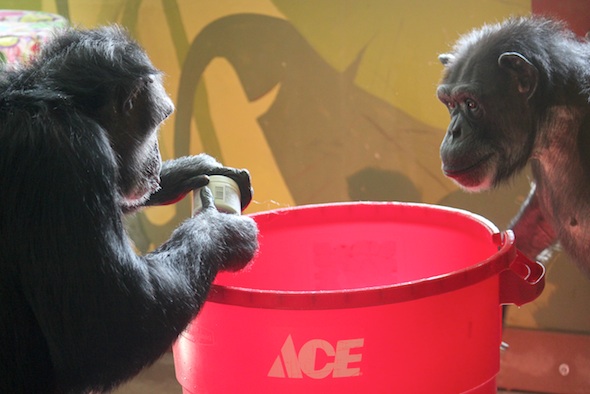
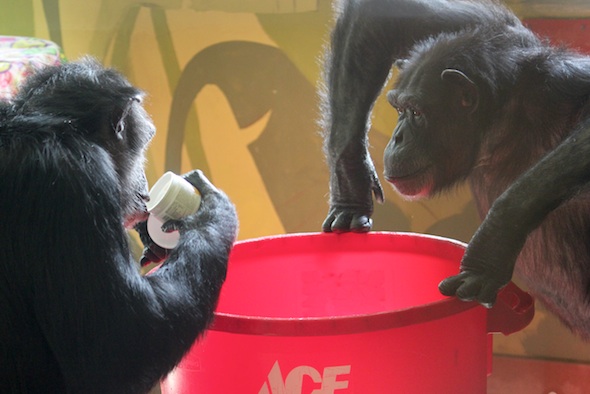
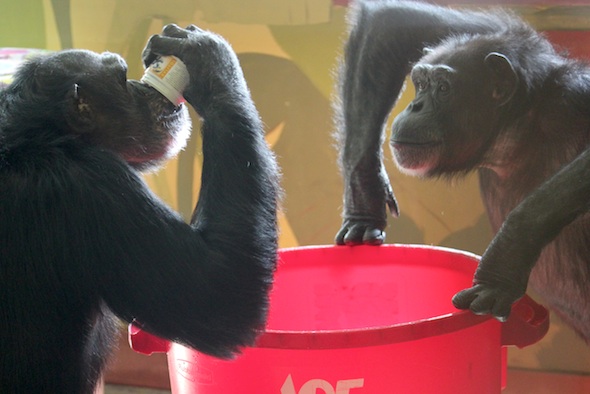
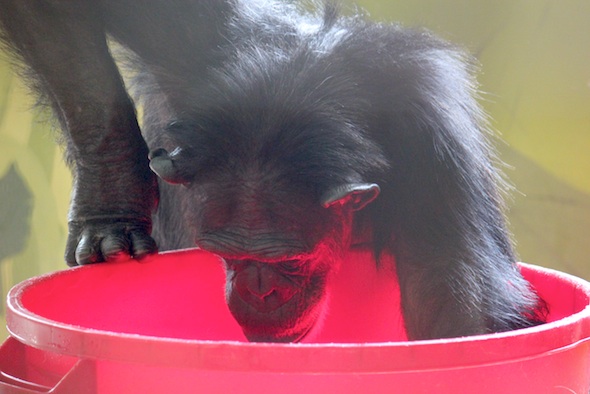
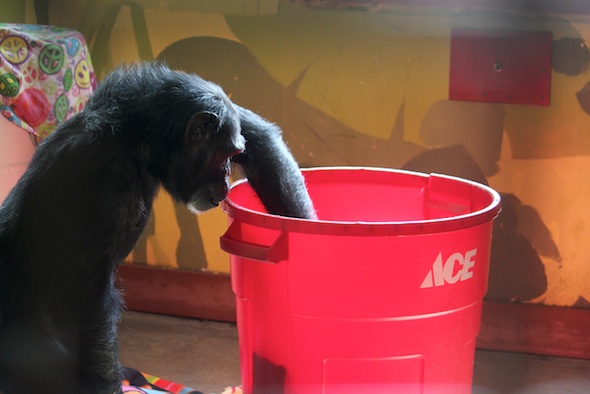
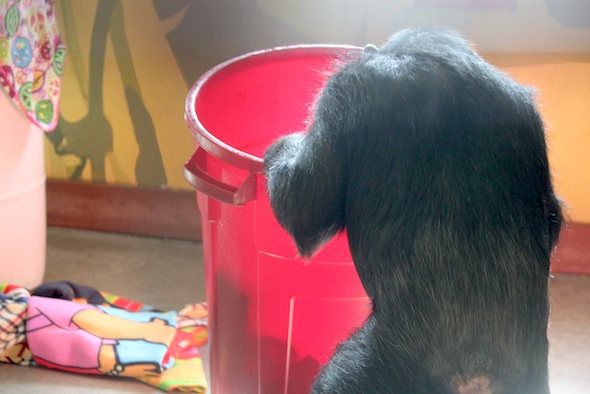
While Elizabeth and I were setting up the smoothie cups, we were trying to come up with “jokes” to play with the enrichment. We decided to put all their toys for the day inside an old trash can, and “leave behind” some things we normally don’t let the chimps have. We left a disinfectant container (with tea instead of disinfectant of course) and a gum container with just a couple pieces of gum in it, plus some kitchen utensils and other chimp-safe things we could find. This part of the day’s enrichment went much better than the first April Fool’s joke we played on the chimps! They loved it.

Jamie was the first to open the trash can of enrichment, and Annie was very interested, too.

web_jamie_bite_trash_can_lid_april_fools_PR_ek_IMG_0357

web_jamie_open_gum_container_trash_can_enrichment_april_fools_annie_peer_PR_ek_IMG_0364

web_jamie_open_gum_container_trash_can_enrichment_april_fools_annie_peer_PR_ek_IMG_0367

web_jamie_eat_gum_trash_can_enrichment_april_fools_annie_peer_PR_ek_IMG_0368

web_annie_reach_trash_can_enrichment_april_fools_PR_ek_IMG_0388

Foxie:

web_foxie_reach_trash_can_enrichment_april_fools_PR_dm_IMG_0383

Missy:

web_missy_trash_can_enrichment_april_fools_PR_dm_IMG_0379

Jody found the “disinfectant” tea first:

web_jody_sip_tea_disinfectant_bottle_enrichment_april_fools_PR_dm_IMG_0374

And Jamie also took an interest:

web_jamie_tea_disinfectant_bottle_enrichment_april_fools_PR_dm_IMG_0386

Filed Under: Annie, Enrichment, Food, Foxie, Jamie, Jody, Missy, Sanctuary Tagged With: Animal Welfare, Annie, april fool's day, chimp, Chimpanzee Sanctuary Northwest, Jamie, Jody, Missy, Sanctuary

More play communication

March 28, 2014 by Debbie

Just earlier this week I posted a video I caught of Foxie using exaggerated signals to get Negra to play with her. Today, it was Missy initiating the play with Foxie! And of course, Foxie couldn’t resist.

Filed Under: Enrichment, Foxie, Missy, Play, Sanctuary Tagged With: animal protection, animal rescue, animal rights, Animal Welfare, chimp enrichment, chimpanzee, chimpanzee rescue, chimpanzee retirement, chimpanzee sanctuary, Chimpanzee Sanctuary Northwest, Cle Elum 7, Cle Elum Seven, csnw, Foxie, Missy, Play, Sanctuary

Annie on Young’s Hill

March 26, 2014 by Debbie

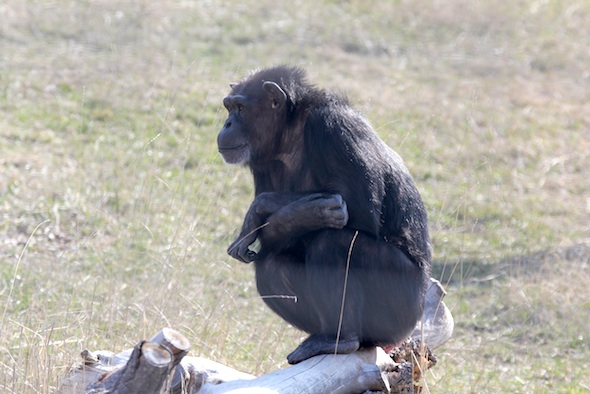
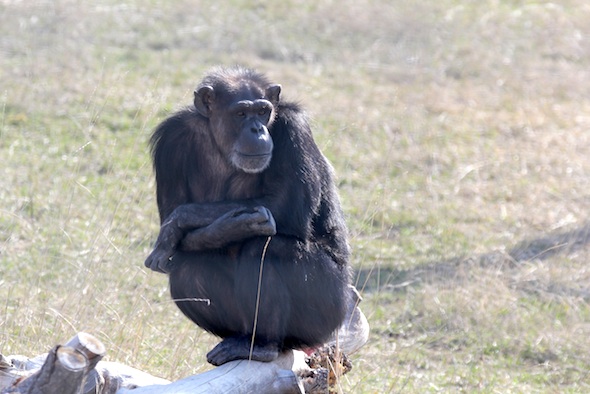
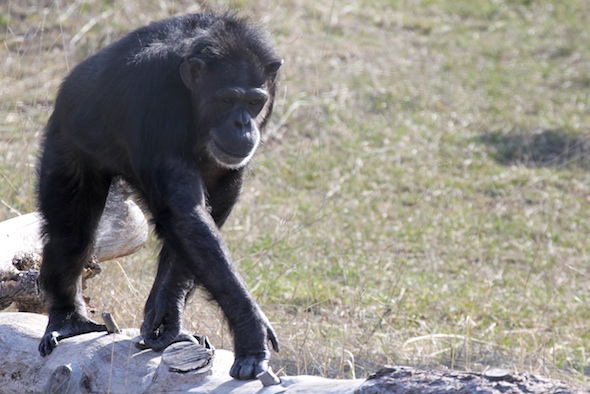
Sometimes, Annie will sit out on Young’s Hill to just take in the view and feel the sun on her back, even if no one is sitting there with her. We used to say that Annie wouldn’t do much without Missy by her side, but that’s not how we describe Annie anymore. She is fine being on her own.

web_Annie_sit_on_logs_profile_YH_ls_IMG_0175

web_Annie_sit_on_logs_profile_YH_ls_IMG_0177

web_Annie_sit_on_logs_YH_look_toward_camera_ls_IMG_0181

web_Annie_walk_on_logs_YH_ls_IMG_0188

It’s only for a short while though, because of course her friend Missy will run out to play chase at full speed.

Missy chase Annie

Filed Under: Annie, Missy, Play, Sanctuary, Young's Hill Tagged With: animal protection, animal rescue, animal rights, Animal Welfare, Annie, chimpanzee, chimpanzee rescue, chimpanzee retirement, Chimpanzee Sanctuary Northwest, Cle Elum 7, Missy, Play, Sanctuary, young's hill

Play communication

March 25, 2014 by Debbie

Because humans use verbal language to communicate, we often don’t notice all the subtle nonverbal cues we give off during interactions with others. Working directly with another species definitely makes you notice those cues, both in nonhuman animals and in humans. Sometimes if someone misinterprets what you are saying or doing, you have to almost exaggerate the opposite cues to make sure they don’t keep thinking you were purposely being mean.

An easy example is when dogs are playing, and if one dog starts to think things are becoming more aggressive, they may snarl and bark and seem somewhat threatening. If the other play partner wants to make sure things don’t get out of control, they will play bow really low to the ground, wag their tail with enthusiasm, and make sure their teeth are not bared. The opposite cues are standing tall, hair up, and teeth bared, and that is how they show aggression. The same can be said for chimps, as well. They have opposite cues for opposite circumstances. When trying to be aggressive, they stand up, swagger, pant hoot, and show all their top teeth to demonstrate how intimidating they are. Opposite behaviors are bowing down, showing a play face (hiding their top teeth), bobbing their head, laughing, and so on to show they are being playful.

Sometimes play can get kind of exciting, and there is a fine line between play and threat. The other day I was playing with Foxie and we were stomping and she was hitting the ceiling. Though she was definitely playing with me, Negra couldn’t see Foxie’s play face and misinterpreted her actions as a threat. Negra started to swagger and pant hoot and her hair was standing up a bit. Foxie quickly wanted to let Negra know she was not at all being aggressive and so she was extremely exaggerated in her play behaviors. She approached Negra with a low posture and really big play face, laugh, and playfully slapped the ground. Negra understood what was going on and began to chase Foxie across the loft and the catwalk of the playroom (at Neggie speed, of course) and I was able to catch the tail end of this play session. You can see how Foxie is continuing to use everything in her arsenal to make sure Negra knows she means to be playful.

Filed Under: Chimpanzee Behavior, Foxie, Negra, Play, Sanctuary Tagged With: Animal Welfare, chimp, chimpanzee, Chimpanzee Sanctuary Northwest, Cle Elum Seven, communication, Foxie, Negra, Play, Sanctuary

Is successful reintroduction possible?

March 18, 2014 by Debbie

In her previous post, Dr. Gwendy Reyes-Illg introduced us to her work with the story of Margot. Here she talks about reintroductions from Afican sanctuaries back into the wild, and some information on how we can help. The sad reality is that many of these chimpanzees simply cannot be reintroduced to the wild because they have suffered too much trauma. No captive chimpanzee in the US has been successfully integrated into African forests—it is nothing like what they are used to. The same can be said for any chimpanzee who begins life in captivity, even if they live in Africa.

—

Have you witnessed apes experience successful reintroduction and rehabilitation?

Each chimpanzee is a unique individual, and their responses to trauma vary widely. Chimpanzees who were only in captivity for a short while before they were rescued are very different from those who were subjected to years of life as a “pet.” The former seem to have an easier time integrating with the other chimpanzees once in a sanctuary, while the latter are sometimes abnormally bonded to humans and may have a harder time finding their place in the group. Despite their gradual psychological recovery, they may still exhibit stereotypical behaviors, such as rocking or over-grooming.

Sanctuary life is much better than being in the hands of poachers or “owners.” Solitary confinement, the norm for most illegally-held primates, is one of the most miserable situations in which a social animal can find herself. In sanctuaries, primates have others of their own kind with whom to bond and interact. They are given a variety of healthy foods and fresh water. Oftentimes, they also form close relationships with caring staff members.

The sanctuaries I have volunteered for and visited in Africa differ greatly in the conditions in which the apes live. Some sanctuaries provide large tracts of forest where the apes can explore, play, build nests, etc. They are rarely seen during the day, coming near the cages only for feeding time. Other sanctuaries are much smaller, and caregivers must enrich the smaller area they have available to keep the primates stimulated and prevent boredom. Because most African sanctuaries rely on solar power for their electric fences, the apes must come inside at night so they will not escape when the power to the fence gets too low. Aggression can be a problem, especially in close inside quarters.

I have always been enamored with the idea of reintroducing chimpanzees to the wild. In theory, it seems to be one way to right all the wrongs our species has inflicted on these creatures. Reintroduction is liberation, emancipation. Unfortunately, the reality of chimpanzee reintroduction is much more muddled, both logistically and ethically.

The African sanctuaries I have worked closely with are still struggling to find a suitable release site—an area where reintroduced chimpanzees could find the resources they need to survive, without being killed by hunters, or by a well-established group of wild chimpanzees. This is a common challenge for sanctuaries hoping to reintroduce apes to the wild. In addition, apes who have been in captivity for any length of time may harbor infectious diseases that could endanger wild populations.

The actual “release” is just the beginning—not the end—of a life-long commitment to the animals: reintroduced apes must be fitted with tracking devices and constantly monitored for the rest of their lives. This is because they are inevitably habituated to people and areas uninhabited by people are almost impossible to find; to prevent human-ape conflict, crop-raiding, etc., releasers must ensure the reintroduced animals are not moving toward villages or farmland.

A fairly high percentage of chimpanzees die shortly after they are released, even with all the measures in place to prevent this. And after many years in a sanctuary environment, reintroduction may be a stress- and distress-causing event, at least initially, for the individuals involved. Finally, the financial costs of reintroduction project can be very high, and some might argue that limited resources would be better spent on individuals remaining in sanctuaries and on efforts to protect animals still in the wild, for example, by protecting forests or educating people.

Still, reintroduction may be the right option in certain situations. Successfully released apes have many options and freedoms not available to those in sanctuaries. They can roam where they choose, and are free to spend time with individuals they prefer and avoid those they don’t get along with. They do not have to depend on people for food, water, and other necessities. Chimpanzees reintroduced to the wild avoid the sometimes unpleasant husbandry and medical procedures that are an almost universal part of sanctuary chimpanzee life.

Another freedom that comes with reintroduction is the freedom to reproduce and raise offspring. Contraception is used in most sanctuaries because they do not wish to subject more animals to a life of captivity; in addition, every “vacancy” occupied by captive-born animal is not available for one who needs to be rescued. Once in the wild, reproduction not only enriches the lives of the mother and other group members, it also pulls the species a little further away from extinction in the wild—predicted by some to occur for chimpanzees in as little 15 years.

Finally, because reintroduction projects capture the hearts and imagination of many people, they can help draw attention of the plight of apes in general. Local people living in a proposed reintroduction site are “sensitized” to the idea of protecting the apes being released and this may have a ripple effect that gradually helps foster positive attitudes in the larger population.

What can we do to help?

Limited resources are one of the biggest challenges for sanctuaries, especially those in developing countries. People who want to help can donate equipment, supplies, time or money to help meet sanctuaries’ daily needs and help expand education and outreach programs. Many sanctuaries accept volunteers for extended periods, even individuals who have never worked with primates before. Since my work has a veterinary focus, I approach distributors, manufacturers, and practitioners in the hopes that they will donate medications, equipment (such as anesthesia monitors, ultrasound machines, and fracture repair instruments), and medical supplies to bring to the sanctuaries where I work.

In addition, it is important to examine how we might unintentionally be contributing to the tragedy of orphaned chimpanzees. When considering buying wood products, it may be worth looking into the source; logging companies seeking wood for Western markets contribute to the problem both by cutting roads into remote, formerly inaccessible areas of forest and by transporting illegal bushmeat out of the forest. In addition, they sometimes do not provide enough food to their workers, leading some individuals to resort to hunting primates and other wild species.

Finally, taking action on issues that harm primates in the U.S., such as medical research and use in the entertainment and pet industries, has a ripple effect for chimpanzees, gorillas and other primates still in their native regions. These campaigns always need supporters and even people with limited time to contribute can help raise the profile and the moral status of primates in our society.

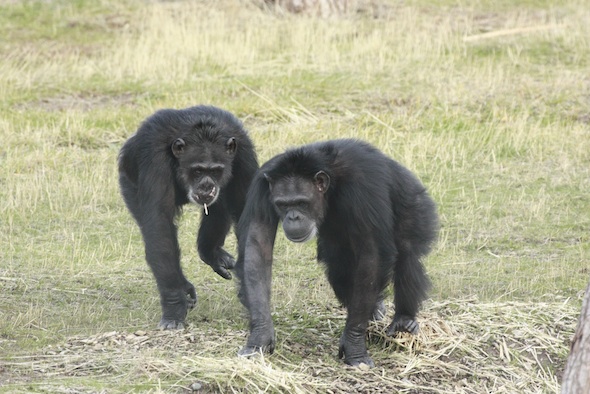
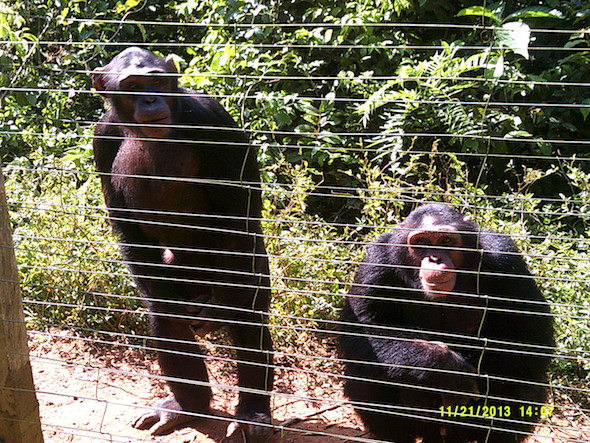
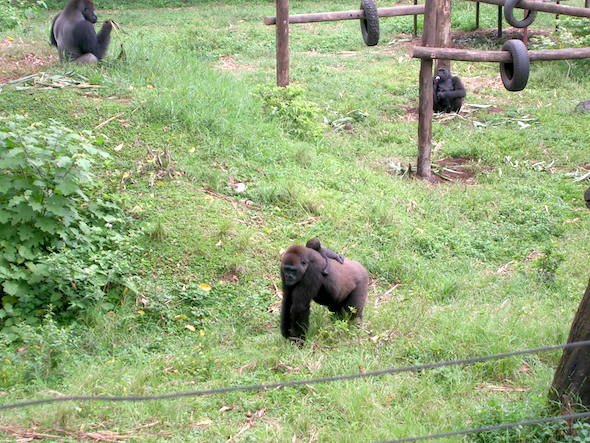
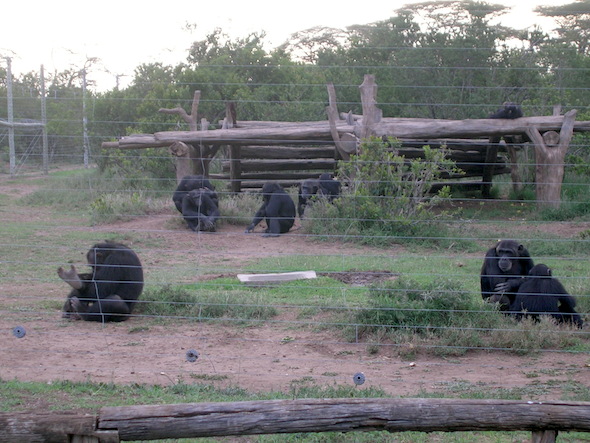
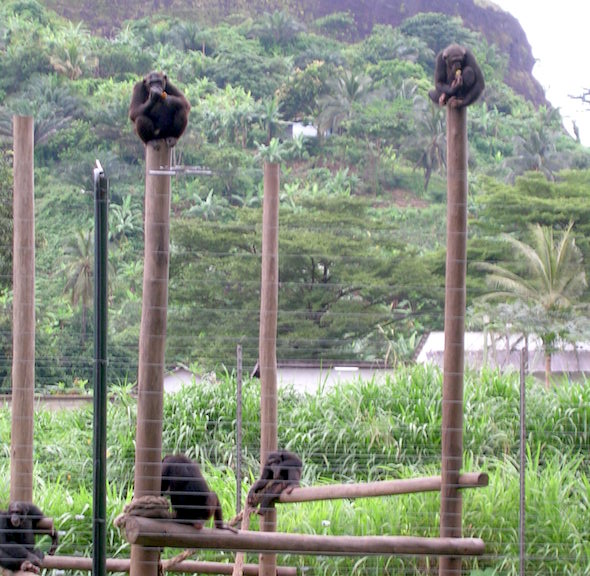
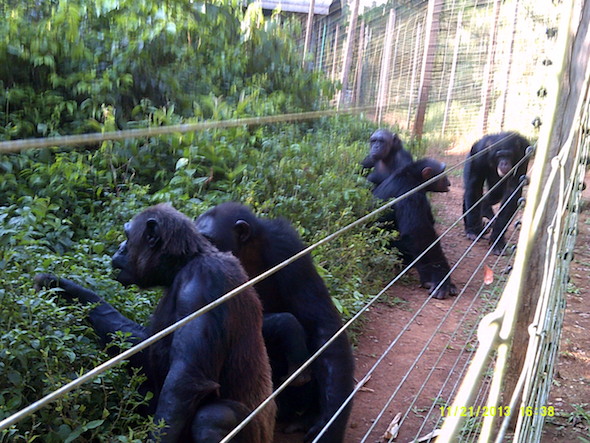
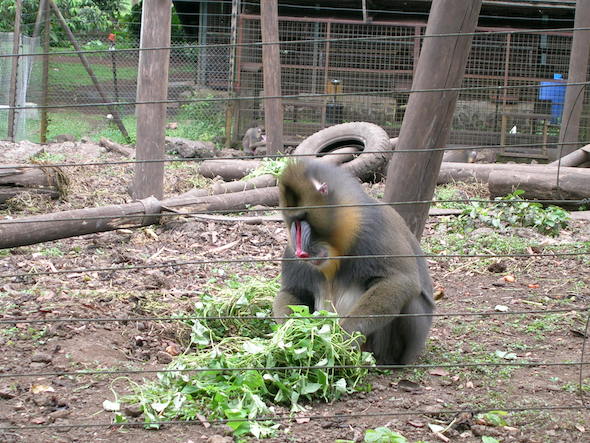
These pictures were taken at three of the sanctuaries Gwendy has worked for: Limbe Wildlife Centre (in Cameroon), In Defense of Animals—Africa’s Sanaga-Yong Chimpanzee Rescue Center (in Cameroon), and the Jane Goodall Institute South Africa (Chimp Eden).

gorillas in africa sanctuary

chimps in africa sanctuary4

chimps in africa sanctuary3

mandrill in africa sanctuary

Filed Under: Advocacy, Free-living chimps, Sanctuary Tagged With: advocacy, animal protection, animal rescue, animal rights, Animal Welfare, chimp sanctuary, Chimpanzee Sanctuary Northwest, Gwendy Reyes-Illg, primate protection, primate rescue, rescue, Sanctuary

  • « Go to Previous Page
  • Page 1
  • Interim pages omitted …
  • Page 135
  • Page 136
  • Page 137
  • Page 138
  • Page 139
  • Interim pages omitted …
  • Page 235
  • Go to Next Page »

Primary Sidebar

Subscribe To the Blog and Get Notified of New Posts First!

Archives

Calendar of Blog Posts

June 2026
S M T W T F S
 123456
78910111213
14151617181920
21222324252627
282930  
« May    

Categories

SUBSCRIBE TO OUR NEWSLETTER

Footer

PO Box 952
Cle Elum, WA 98922
[email protected]
509-699-0728
501c3 registered charity
EIN: 68-0552915

Official DDAF Grantee

Menu

  • The Chimpanzees
  • Blog
  • About Us
  • You can help
  • Resources
  • Contact
  • Donate

Proud Member of

Connect With Us

Search

Copyright © 2026 Chimpanzee Sanctuary Northwest. All Rights Reserved. Site by Vegan Web Design