Did we ever tell you about the time Willy B went blind?
Caring for chimpanzees is an endless parade of difficult choices, but no decision is more wrenching than choosing when to intervene when a chimp becomes ill. Veterinary care for chimpanzees falls into two distinct categories: those procedures that we can do through the mesh with their cooperation, and those that require anesthesia. Positive reinforcement training broadens the range of diagnostics that can be performed cooperatively, but when a chimpanzee is really sick, its limitations quickly become apparent. If the tests than you can do cooperatively are insufficient or inconclusive, what’s next? How sure are you that the condition is serious enough to warrant further action? Are you willing to dart and sedate a chimpanzee for what could be a bad case of gas?
We find ourselves in these situations far more often than we would like. Like this past January, when Willy went blind.
I remember getting called on the radio a little after 8am. In the course of their opening rounds, the staff had noticed that Willy’s eyes were closed tight and he was having trouble navigating his enclosure. Rayne, Mave, and Gordo were all inspecting his eyes and showing concern for their friend who was in obvious distress. The staff immediately notified Dr. Erin and isolated Willy in the Front Rooms.
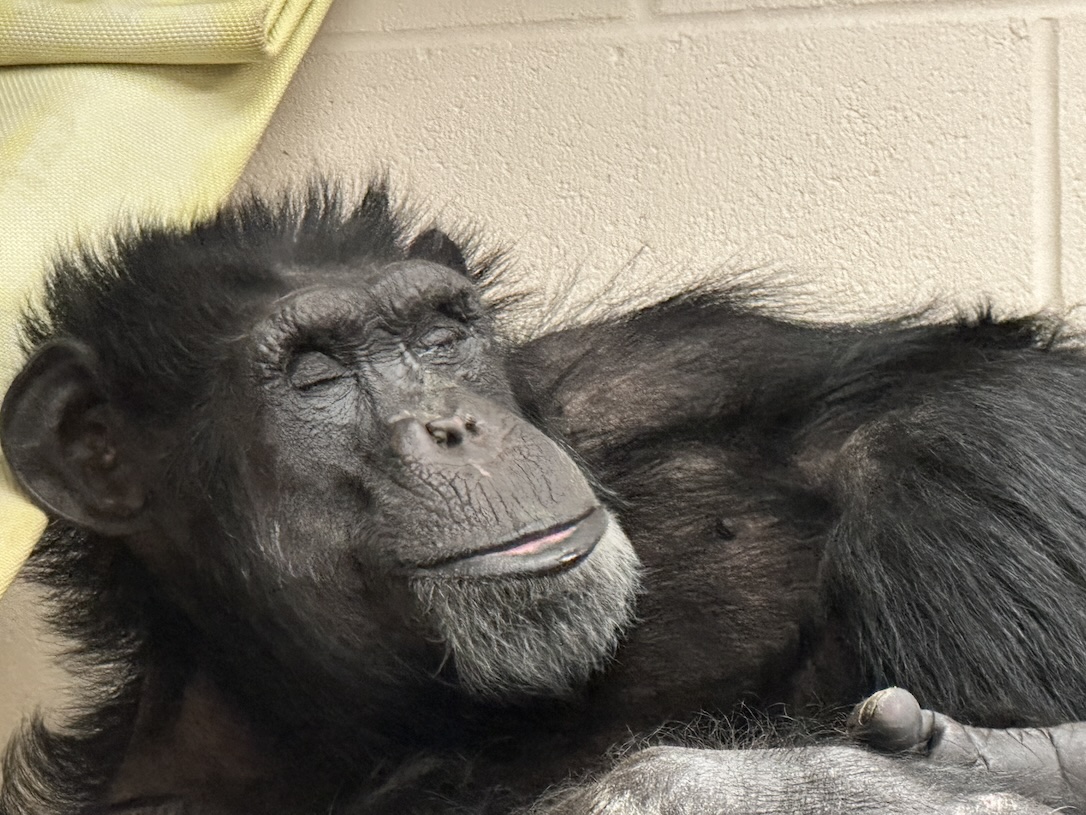
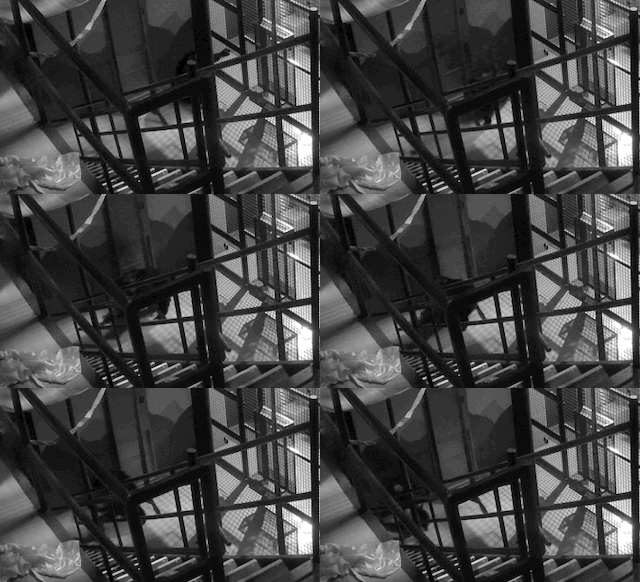
Were his eyes irritated? Could he open them at all? Was he hit in the face? Was it neurological? Other than some very slight discharge from his left eye and some understandable anxiety, he appeared otherwise healthy. We checked the overnight security camera footage, which showed Willy B making his nest as usual the previous night. And as we had thought, the evening was calm and peaceful, with no fights or falls that might have provided the opportunity for a smack to the face or a knock on the head. After he awoke in the morning and descended from the catwalk, however, he could clearly be seen groping his way across the playroom floor. Something had changed while he was asleep.
Dr. Erin was instrumental in creating a working group for veterinarians within the North American Primate Sanctuary Alliance. She queried her colleagues to see if anyone had ever encountered something like this. Besides their concern and offers of support, the most common response was something to the effect of, “Wow, that’s really weird.”
Willy remained in isolation for the rest of the day while Dr. Erin and the team continued with what tests they could and prepared for everything from neurological consults to a CT scan. Willy went to bed that night without having opened his eyes once.
I went up early the next morning, hoping that his condition would have miraculously improved overnight. But his eyes were still closed and he could only orient towards me by the sound of my voice. He showed no reaction to a floodlight being shined directly at his eyes at close range.
Later, I offered to serve breakfast to Willy. His anxiety had subsided, and was calmly taking his fruit from me through the mesh when I placed it directly in his hand. I left Willy for a brief moment to speak with the staff serving breakfast to the rest of the group, and when I returned, Willy was patiently waiting for the rest of his fruit. With his eyes open.
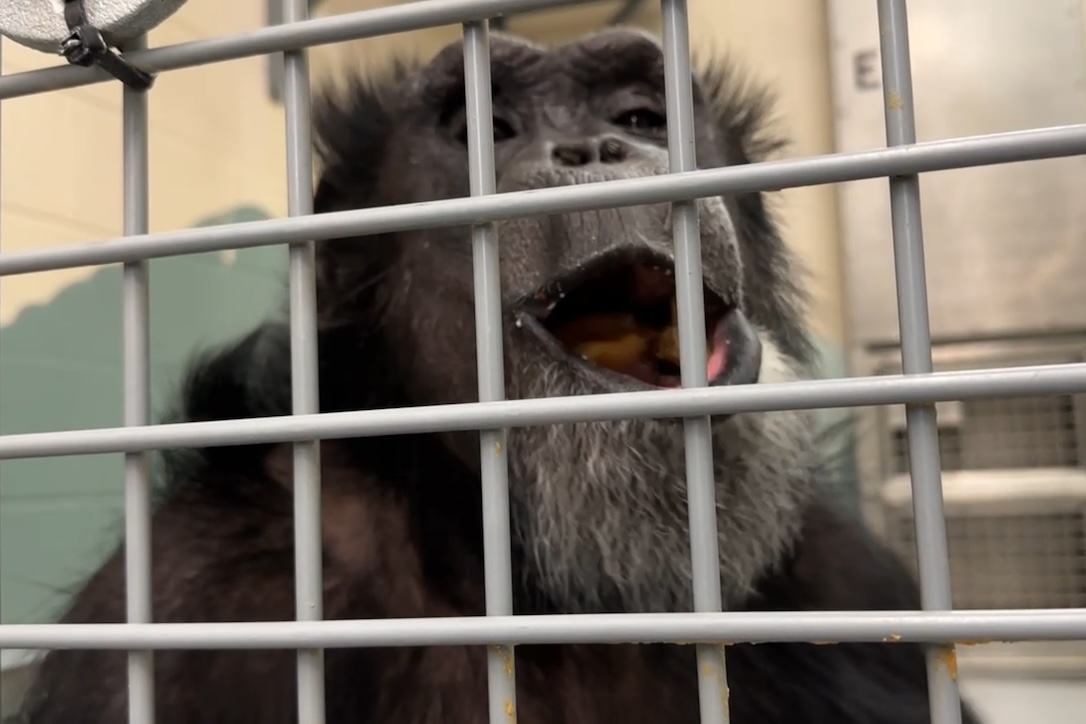
He reverted to closing his eyes for brief periods throughout the day but by the following morning it was as if nothing had ever happened. He was reunited with his group and the behavior has not returned since.
The most common medical dilemmas we encounter are ones involving fatigue and inappetence. All of us get an upset stomach or cramps from time to time. Food becomes less appealing and all we want to do is lay down and rest. Nothing to worry about, right? Then again, we also get appendicitis, which requires emergency surgery. It’s good to know the difference.
Not too long ago, Burrito was displaying these same symptoms. He was showing up for meals but eating less, and he was overall less active than usual. His condition continued to worsen a bit over the course of 36 hours and the other chimps were starting to notice.
Again, there’s a lot we can do short of anesthetizing a chimp and examining them in the clinic. Dr. Erin immediately works up a differential diagnosis which guides both the things we monitor and measure and how long we wait before intervening more invasively. Food grade glitter comes in handy when you want to know if a particular chimp in the group is having bowel movements (and if you happen to like your poop festive). Remote thermometers and thermal cameras can show hot spots on the body that might indicate inflammation. Heart rate, respiratory rate, and other vitals can be gathered through observation or with devices like KardiaMobile. But sometimes everything looks normal and the chimp is still sick.
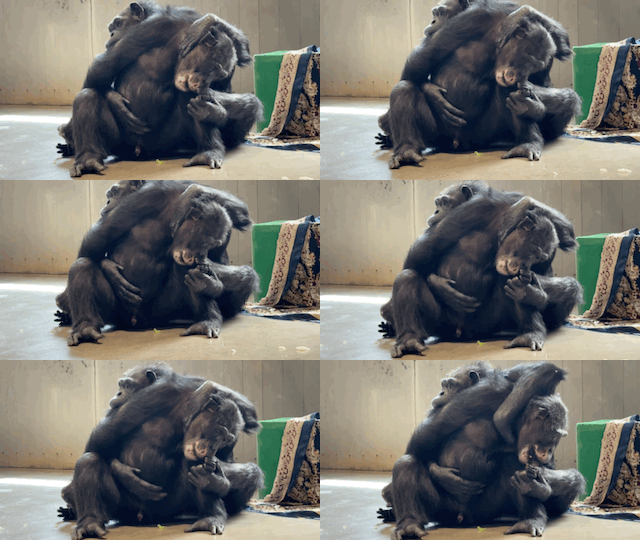
One afternoon, a few of us came upon Burrito as he was laying on the floor on Front Room 3. This is not a spot that he would usually rest. Annie and Negra were both hunched over him and Annie was very deliberately pressing on his abdomen with her hands like an doctor testing for abdominal tenderness. While I was grateful to Doctor Annie for investigating his symptoms, the scene was not encouraging. In cases like this, we have a plan put together and ready to implement should we feel the need to intervene with more invasive tests; it seemed like this might be the trigger.
But Doctor Annie was persistent. She turned it into a game and soon he was up and moving around. The two continued to play. Notably, Annie did not take her focus off of Burrito’s belly, which she continued to gently pat as the two hugged and wrestled.
Over the next few days, Burrito’s appetite returned. And like Willy B, he was not inclined to look back. There were meals to be eaten and games of chase to be played.
Every great ape caregiver has dozens of stories like this, because there will always be times when the wisest course of action is to wait and see. Spontaneous recoveries don’t necessarily preclude further action, as veterinarians may have legitimate concerns that an underlying illness or disease, such as a stroke or a partial bowel obstruction, warrants further investigation, even if things appear resolved. But in many cases, we simply thank the chimp gods and move on.