• Skip to main content
  • Skip to primary sidebar
  • Skip to footer

Chimpanzee Sanctuary Northwest

Hope. Love. Home. Sanctuary

  • Our Family
    • The Chimpanzees
    • The Cattle
  • Blog
  • About Us
    • Visiting the Sanctuary
    • Philosophy
      • FAQs
      • Mission, Vision & Goals
      • Privacy Policy
    • The Humans
      • Staff
      • Board of Directors
      • Founder
    • Annual Reports
    • The Future of CSNW
    • CSNW In The News
  • You can help
    • Donate
      • Become a Chimpanzee Pal
      • Sponsor A Day
      • Transfer Stock
      • Be A Produce Patron
      • Be a Bovine Buddy
      • Give from your IRA
      • Personalized Stones
      • Bring Them Home Campaign
    • Leave A Legacy
    • Employment Opportunities
    • Volunteer
    • See Our Wish List
    • Events
  • Resources
    • About Chimpanzees
    • Enrichment Database
    • Advocacy
      • Advocacy Action Center
      • Apes in Entertainment
        • Trainers
        • Role of the AHA
        • Greeting Cards
      • Chimpanzees as Pets
      • Roadside Zoos
      • Chimpanzees in Biomedical Research
      • Conservation
        • African Apes
        • Orangutans
  • Shop
    • Merchandise Store
  • Contact
  • DONATE NOW

hope

Why Them?

February 19, 2022 by Diana

There’s an image from the news last month that I can’t get out of my mind. I’m betting many of you saw it too. It was a photograph, shared in this New York Times article, among many other publications, of wooden crates strewn across a highway, some of them upright, some of them on their sides. There are stickers on the crates that say “Live Animals” and “Do Not Tip”.

We know from the reporting that these crates held cynomolgus macaques, often referred to as “cynos” by caretakers in biomedical laboratories, and commonly called both crab-eating and long-tailed macaques. We know that there were around 100 monkeys on the truck that crashed in Pennsylvania and that they were being transported from John F. Kennedy airport to an undisclosed biomedical facility. The main headline was that several of the monkeys “escaped” when the truck crashed, and that the public was asked to stay away from the area and avoid contact with the monkeys.

We also know that these macaques were shipped from Mauritius to JFK. Mauritius is a small island country in the Indian Ocean, off the eastern coast of Africa, 500 miles east of Madagascar. From my brief background searching, I found that Mauritius is a beautiful island with an interesting political and economic history that has resulted in a diverse religious and ethnic population, with many of the human residents decedents of indentured servants used to farm sugar plantations. Like a lot of the world, it was under the control of different European nations over the years and is now independently governed.

Macaques are not native to the island. They were thought to have been brought there in the 1600s by sailors. Wild populations of these macaques now thrive on the island and are considered to be an invasive species. Starting a few decades ago, wild macaques were captured and captive-breeding programs began specifically to export their offspring to biomedical laboratories primarily in the United States and the U.K. Mauritius supplies as many as 10,000 cynomolgus macaques per year to U.S. laboratories.

More recently, and controversially, laboratories are being developed on the island to do research there rather than only relying on the export of the monkeys to labs in other countries. If you type “Mauritius monkeys” into any search engine, you will find a lot of information about the monkey trade there and the animal activism that has resulted from that trade.

It’s still difficult for me to cognitively comprehend the scale of biomedical research using non-human primates. It is estimated that there are around 75,000 monkeys used each year in biomedical research, including breeding programs and holding facilities, in the United States alone.

Even those of us who know a little bit about biomedical research on monkeys are rarely confronted with the reality of all of this primate research. The crates that were tossed from the transport truck during the accident and the monkeys who got out of their crates to briefly roam Pennsylvania, I imagine in a terrified mental state, were a tiny reminder of all the individual lives that are sacrificed for biomedical testing.

Of course the news cycle is quick, and I doubt many people who read the original headlines are still thinking about those monkeys or the tens of thousands of their kind they represent.

You might be wondering at this point what happened to the escapees. Some of the stories I saw just mentioned that they were “accounted for” within a few days, though the Associated Press expanded upon that and said that three were “euthanized” once they were found. Further reporting specified that the macaques were shot with firearms.

The airline that initially shipped the monkeys, Kenya Airways, has since publicly stated that they are ending their contract with the undisclosed company that had the monkeys shipped to the U.S. Perhaps the CEO of Kenya Airways, like me, can’t get that image of those crates in the highway out of his mind.

We at Chimpanzee Sanctuary Northwest have plans for the future that include building and caring for monkeys, perhaps monkeys that are now part of biomedical research. It’s very unlikely that the sanctuary community will ever be large enough or have the funds to retire all monkeys from biomedical testing, and there are currently no restrictions on “euthanizing” non-chimpanzee primates for purely management or financial reasons (chimpanzees hold a unique place in the biomedical research field for this practice of not being killed when they are no longer useful).

I often think about the chimpanzees who lived their entire lives in laboratories. The ones who were part of the system long before sanctuaries existed, and the ones who are still part of the system because they have been deemed ineligible for retirement.

There’s no just reason for particular chimpanzees to have been given the opportunity of a different kind of life in a sanctuary while others were not, and the same will hold true for monkeys.

Here’s the tiny bit of hope, though:

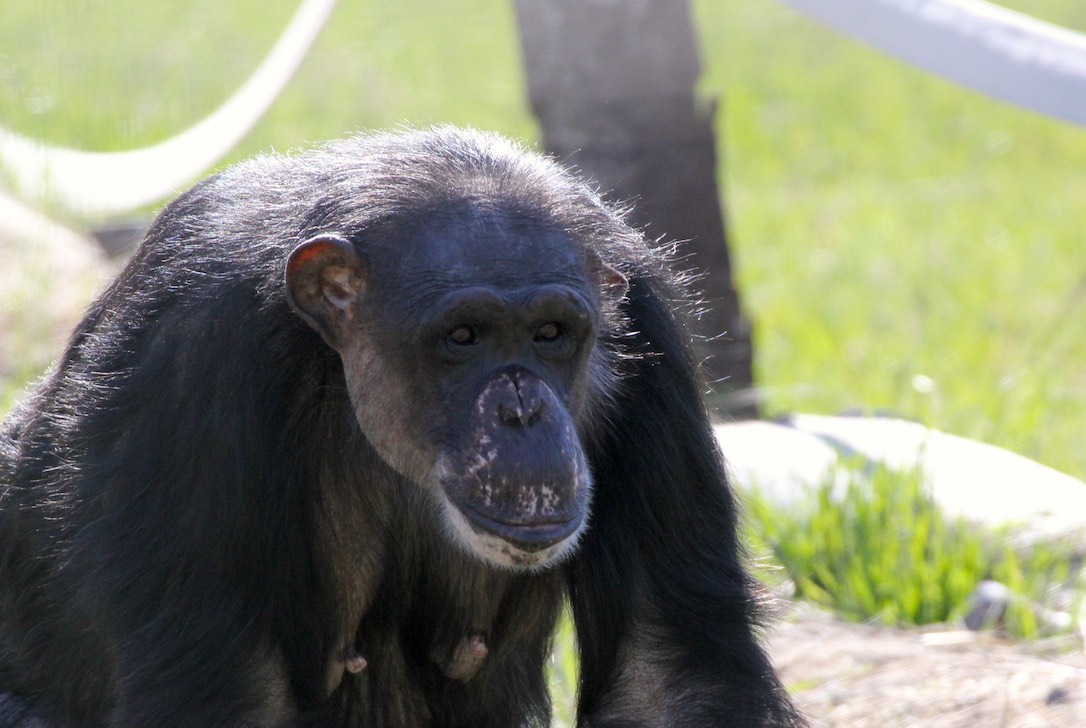
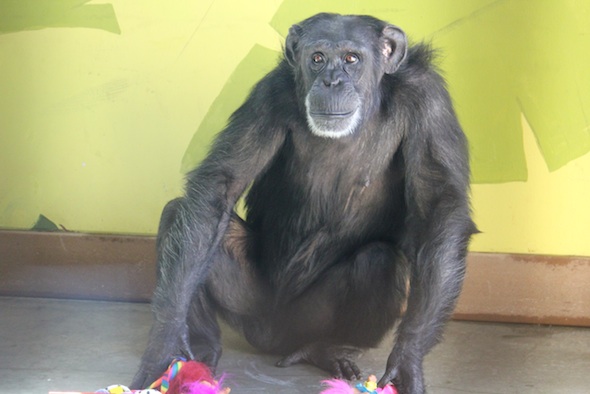
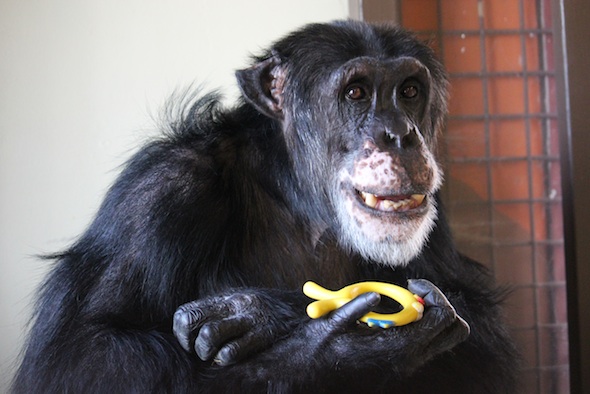
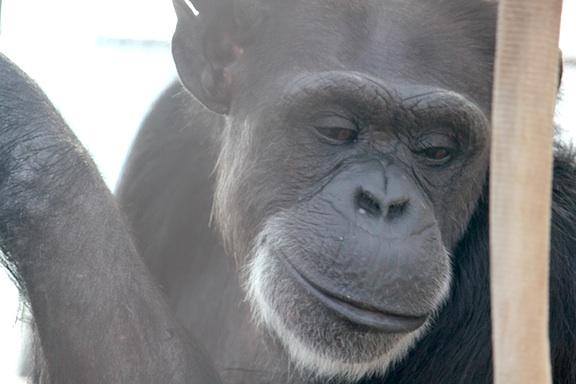
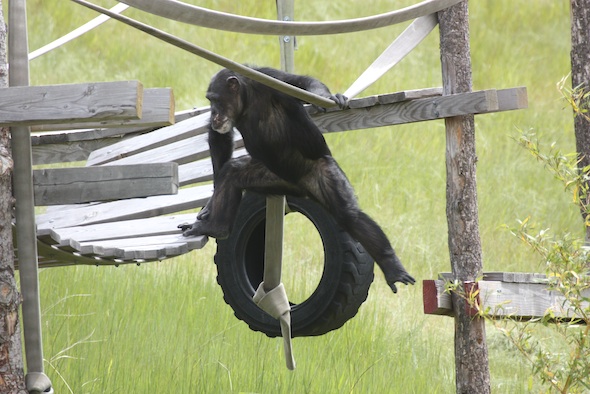
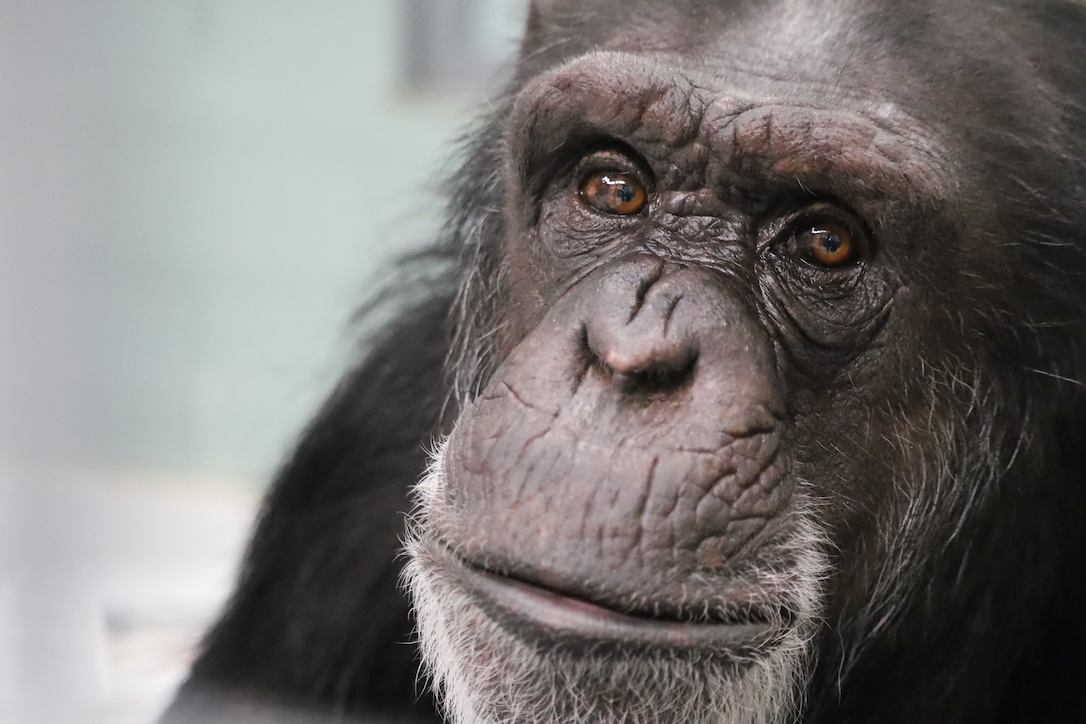
We will keep working for those chimpanzees still in laboratories. We will continue to try to give the chimpanzees in our care a true sanctuary life. We will continue to share their beautiful faces and personalities with you, like these photos I took today of brother and sister Cy and Lucky:
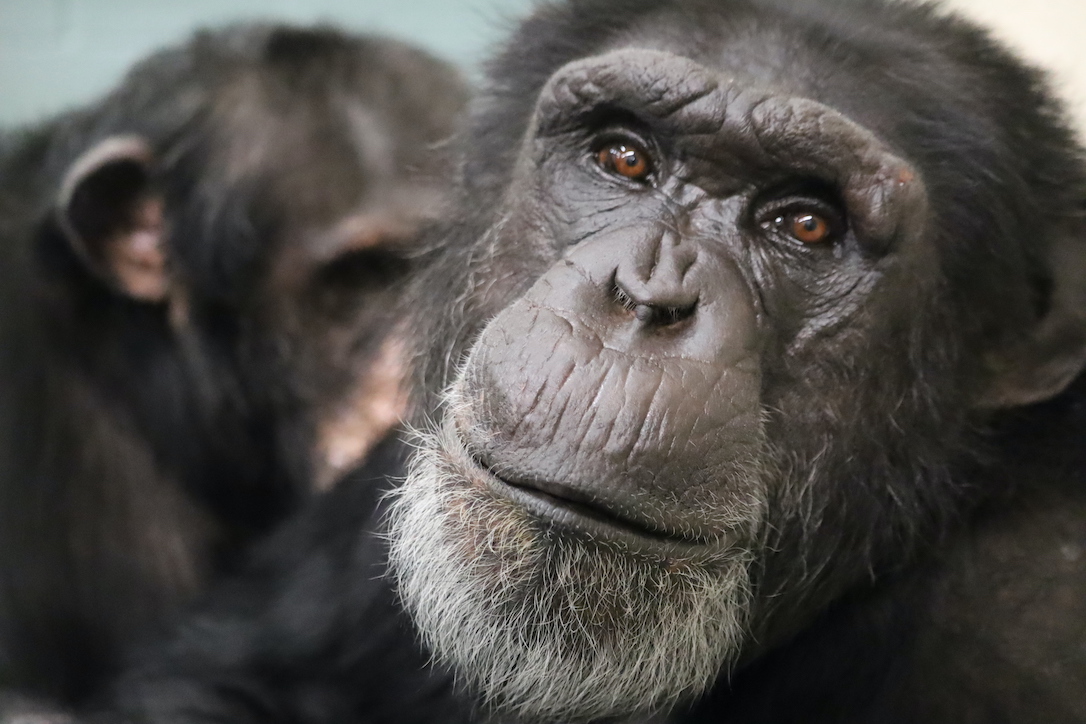
Cy
Lucky

And you will continue to remind others that their lives are important.

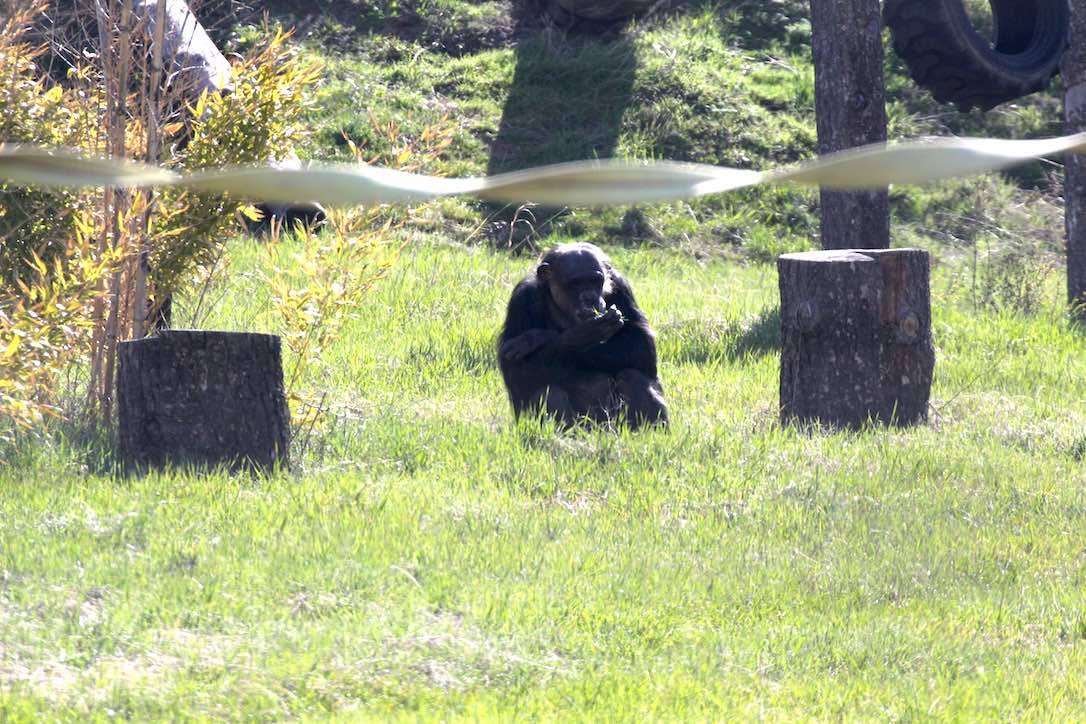
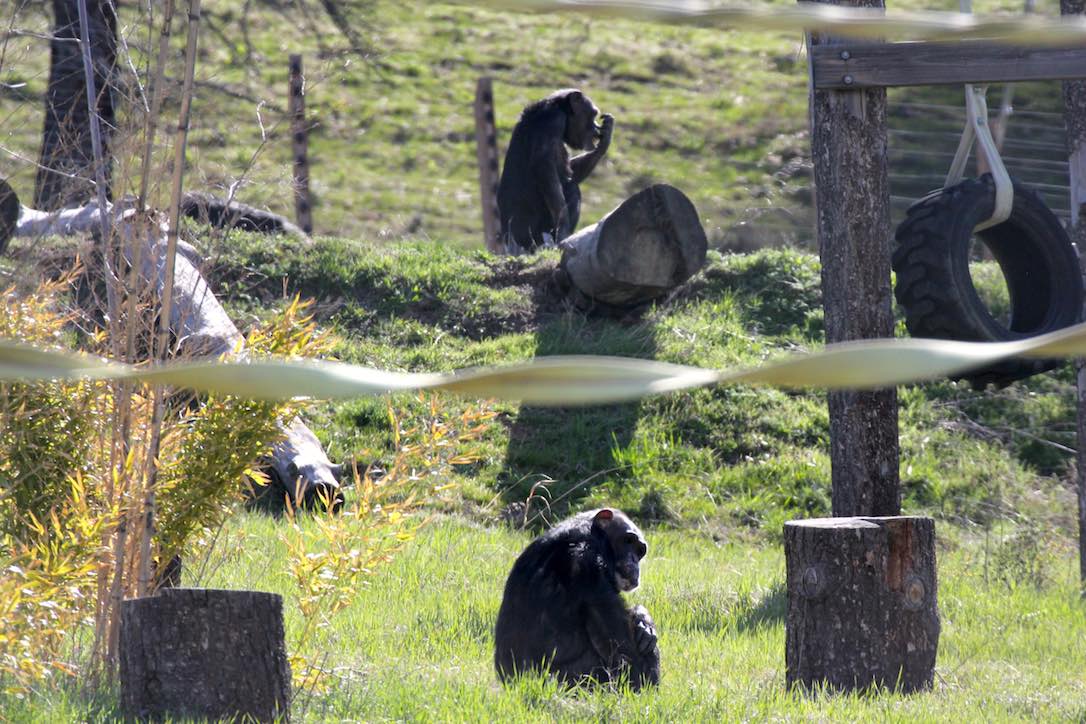
There are some monkeys that are being retired from biomedical testing to other sanctuaries now. One day we will join them in providing a home for monkeys. It won’t be all the monkeys who deserve retirement, but for those who come here, we will give them a true sanctuary life and we will share their beautiful faces and personalities with you. Because their lives are important too.

Some day in the future, I can’t even begin to imagine when, but some day, there will be a celebration for the last monkeys in biomedical research in the U.S. going to their sanctuary home.
Filed Under: Chimpanzees in Biomedical Research, Cy, Lucky, Sanctuary Tagged With: biomedical research, biomedical testing, chimp, chimpanzee, chimps, cynomolgus macaques, escaped monkey, hope, macaque, mauritius, monkey retirement, photo, portrait, Primates

The Phoenix

April 20, 2018 by J.B.

Diana and I recently had the pleasure of reading Phoenix Zones, a new book by a good friend of the sanctuary, Dr. Hope Ferdowsian. In it, Hope shares the lessons she’s learned about building strength and resilience throughout the course of her incredible career as a human rights physician and animal advocate. The book is filled with stories demonstrating how humans and other animals can recover from trauma and heal – a process known as the “Phoenix Effect” – if we attend to certain key principles such as love, dignity, justice, and respect for liberty. Phoenix Zones, by extension, are the places where these principles are put into practice, and where those suffering from trauma can rise from the proverbial ashes to find peace and hope.

One example of a Phoenix Zone that Hope discusses in her book is Chimpanzee Sanctuary Northwest. Her story focuses on Negra, who was stolen from her family and endured 35 years of unimaginable suffering but now exemplifies the power of Phoenix Zones promote healing and resilience in even the most traumatized individuals.

It’s easy to forget just how far Negra has come. This morning, we found her enjoying sweet spring grass near the top of the hill, a place that she had feared not so long ago.

A key message of the book is that physical and emotional recovery are only possible when we are free to make our own choices, when we are able to live with dignity, and, perhaps most importantly, when we have a sense of hope. Negra’s story should inspire hope in all of us.

Diana and I will be joining Hope for a discussion of her book at the Elliott Bay Book Company in Seattle on April 30th. If you live nearby, we hope to see you there!

Filed Under: Negra Tagged With: chimpanzee, hope, hope ferdowsian, Negra, northwest, phoenix zones, recovery, rescue, resilience elliott bay book company, Sanctuary, trauma

It’s hard to believe…

November 7, 2015 by Diana

… that Burrito, Missy, Jamie, Jody, Annie, Foxie, and Negra were ever thought of as a means to an end in biomedical testing.

Thanks to everyone who has supported Chimpanzee Sanctuary Northwest and allowed these seven chimpanzees to learn how to be chimpanzees, to learn who they are, and to be able to live in a home full of love and freedom. This video, as always, is for you!

Filed Under: Burrito, Missy, Young's Hill Tagged With: chimp, chimpanzee, freedom, home, hope, love, northwest, rescue, Sanctuary

The Circle of Caring

April 4, 2015 by Diana

Our primary objectives as caregivers in a sanctuary is continuously improving the well being of those in our care and working to make the world a better place for all chimpanzees. We strive to provide what our tagline says: hope. love. home… sanctuary.

It doesn’t take long to realize that all of this just ends up circling back.

The chimpanzees give me hope everyday.

Sometimes the problems the world is facing seem insurmountable. Sometimes I just want to go back to sleep when I open my eyes in the morning and think of the work that lies ahead. But then there are these seven chimpanzees who lived for most of their lives with no reason for hope, yet they didn’t shut down.

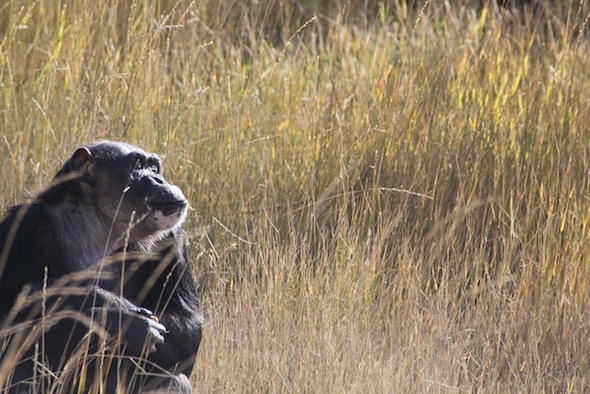
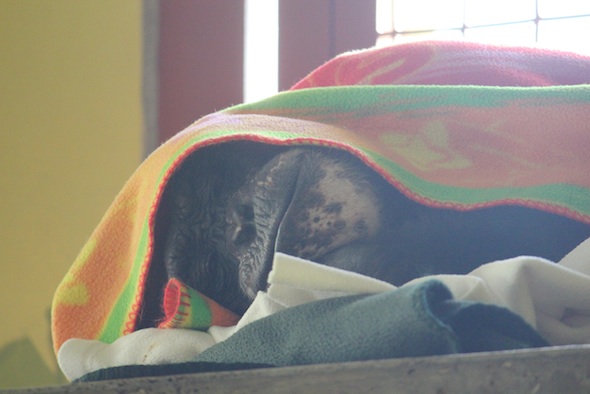
Even Negra, who was ripped from her home and her family as a baby and used as a test tube for over three decades – she survived. And she can now lift her head to the sky and allow the rays of the sun to warm her face, or curl up under a blanket and sleep peacefully.

Negra eyes to sky

Negra under a blanket

Nothing gives me hope more than seeing the chimpanzees thrive at CSNW.

And then there’s love. After what humans have done to them, these chimpanzees should be angry. It would be completely justified for them to rise up Planet of the Apes style and never trust another human. Yet, surprisingly, they do show affection towards humans.

It’s easy to see that Foxie is happiest when she’s making someone else laugh or smile. She often spots me from a distance and runs over just to have a little playtime.

foxie with new trolls


Burrito too. Just this morning, in between his a.m. displaying, he was stomping his feet and running through the front rooms to get me to play chase.

Burrito play face

burrito bite fire hose


All the love I try to convey to the Seven just comes right back.


These misfit captive chimpanzees could melt the coldest of hearts.


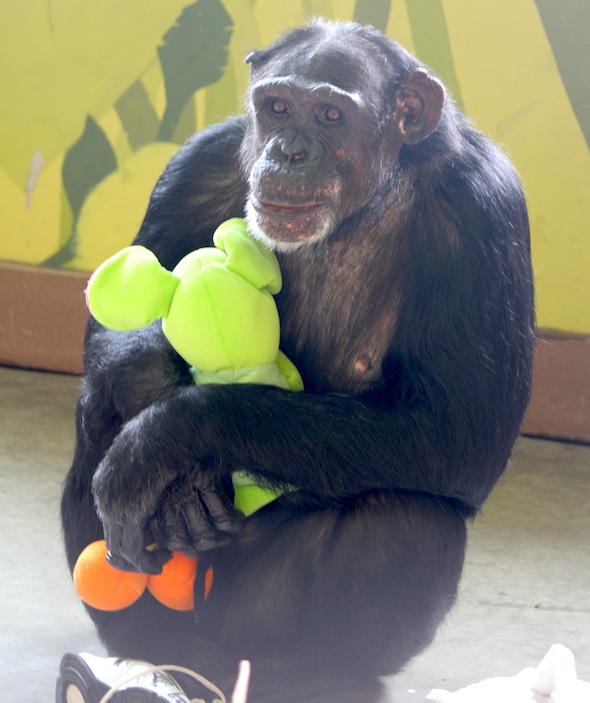
Jamie:

Jamie hug stuffed animal

That brings us to home. The sanctuary provides J.B. and me with a physical home, but, far more significantly, the chimpanzees and the people that they bring into their lives through their sheer force of charm has created a more remarkable sense of home than I’ve ever experienced.

I really just can’t get over how amazing it is to be surrounded by such caring, compassionate, funny, and all-around lovely people that make up the staff, volunteers, and supporters. And that includes a lot of people who I’ve never even met in person. The Seven are really quite good at attracting the best people to be a part of their lives.

Sanctuary. It’s a word that is often misused, but it truly applies to this place. And, as I’ve learned, the spirit of true sanctuary is circular. Thank you for being a part of it.

Sweet Annie:

Annie

Adventurous Missy:

Missy leaping

Jody – taken this afternoon:

Jody with eyes closed


Filed Under: Burrito, Foxie, Friendship, Negra, Sanctuary, Thanks, Volunteers Tagged With: animal rights, Animal Welfare, chimp, chimpanzee, csnw, home, hope, love, rescue, Sanctuary, shelter

The Importance of Foraging

March 15, 2014 by Diana

With all apologies to our east coast friends, the weather here is gorgeous! Perfect for a lunch forage on the hill today.

Volunteer Lynn decided to fancy things up by making sweet potato stuffed bell peppers, which she, Patti, and Amanda spread on the hill, along with beets and chow for the chimpanzees to find.

Before I forget – today is the last day to purchase Jody label wine from Northwest Cellars, so you should get on that now.

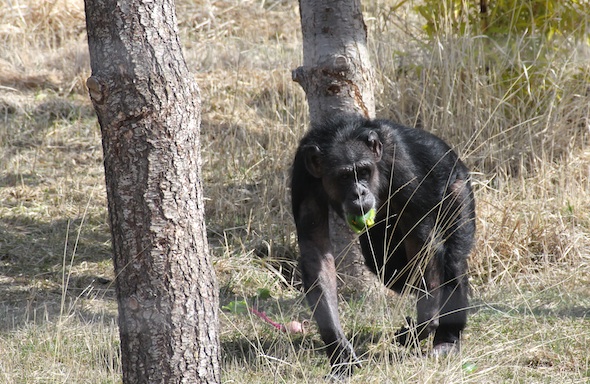
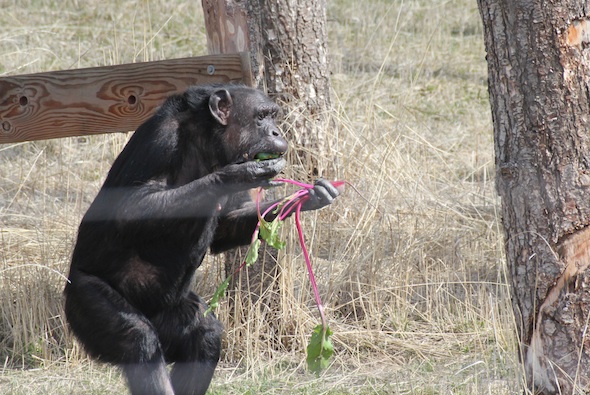
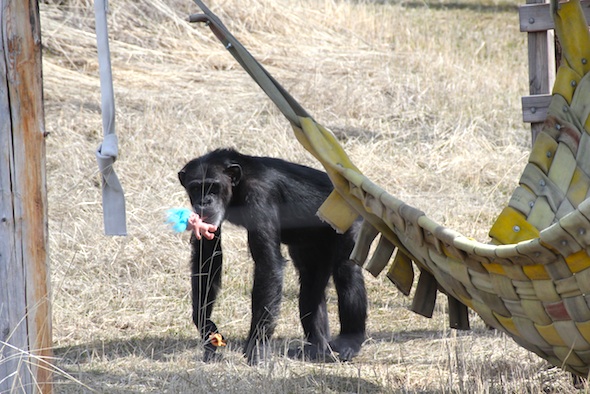
After making your wine purchase, enjoy the photo series below: portraits with mouths full

Though this is a fairly lighthearted photo series, foraging is serious business for chimpanzees. It’s their main job in the wild, making it pretty hard-wired, so searching for food is mentally stimulating and very enjoyable to chimpanzees in captivity.

There was one recent behavioral research study of chimpanzees in the wild that showed chimpanzees use long-term memory (as opposed to merely visual or olfactory cues) to find trees with the largest amount of fruit across fruiting seasons.

I posted a couple of additional photos from today’s forage on Jody’s and Burrito’s respective Facebook pages that illustrate how the Cle Elum Seven also use their long-term memory to check for the spots on the hill where they have previously found food. We humans are a predictable species and the chimps probably have us completely figured out.

In any case, here are a few photos of some of the chimpanzees enjoying the “fruits” of their foraging labor:

Missy:

Missy eating sweet potato


Jamie:

Jamie eating sweet potato


Jody:

Jody eat while walking

Jody eat while standing


I bet you can guess who:

Foxie with troll doll in mouth

Filed Under: Dolls, Enrichment, Foxie, Jamie, Jody, Missy, Sanctuary, Trolls, Young's Hill Tagged With: chimp, chimpanzee, csnw, dolls, Food, forage, home, hope, love, northwest, rescue, Sanctuary, shelter, troll

Negra

November 6, 2009 by J.B.

When you take care of chimpanzees in a sanctuary, your whole life revolves around trying to make them happy. You live for those moments when they are food squeaking over a good meal, or playing a wild game of chase around the outdoor enclosure. For some members of the Cle Elum Seven, we’ve begun to take these moments for granted. When does Missy not want to play chase? And is there ever a moment when Foxie is not playing with her troll dolls?

But for some chimps, its harder to tell when they are happy. Negra has one speed (slow) and a limited number of activities that she engages in (eat, sleep, groom, gaze out the window). Perhaps its due in part to her personality; some folks just live life at a different pace. But you can’t help but wonder how much of it is due to 35 years of confinement in a laboratory.

Determining what effect a lifetime of stress in the laboratory has on chimpanzees is currently the work of two researchers, Debra Durham and Hope Ferdowsian. Debra and Hope are conducting a large-scale study of post-traumatic stress disorder (PTSD) in ex-laboratory chimpanzees. This summer, we participated in interviews with the researchers to look for indications of PTSD in the Cle Elum Seven.

Debra recently penned an Op-Ed for the Orlando Sentinel (see Drawing Ourselves into the Lives of Chimpanzees), in which she comments on the improvements they have seen in Negra. And, as fate would have it, the article’s publication coincided nicely with this video we took of Negra playing with Missy right before Jamie’s birthday party. (My favorite part of the video? When Negra grabs both or Missy’s ears and shakes her head back and forth 🙂

Its not likely that Negra will ever be rambunctious like Missy, or acrobatic like Foxie. Usually, I take comfort in the fact that when Negra chooses to put a blanket over her head and stare out the window, at least she has a choice. But she does have her playful moments, and according to Debra and Hope’s research, she is still showing signs of improvement.  So we can all look forward to seeing Negra pull Missy’s legs and ears more and more in the days to come.

Filed Under: Missy, Negra, Party, Play Tagged With: chimpanzee, debra, durham, ferdowsian, hope, Missy, Negra, northwest, orlando, Play, ptsd, rescue, Sanctuary, sentinel

Primary Sidebar

Subscribe To the Blog and Get Notified of New Posts First!

Archives

Calendar of Blog Posts

June 2026
S M T W T F S
 123456
78910111213
14151617181920
21222324252627
282930  
« May    

Categories

SUBSCRIBE TO OUR NEWSLETTER

Footer

PO Box 952
Cle Elum, WA 98922
[email protected]
509-699-0728
501c3 registered charity
EIN: 68-0552915

Official DDAF Grantee

Menu

  • The Chimpanzees
  • Blog
  • About Us
  • You can help
  • Resources
  • Contact
  • Donate

Proud Member of

Connect With Us

Search

Copyright © 2026 Chimpanzee Sanctuary Northwest. All Rights Reserved. Site by Vegan Web Design