• Skip to main content
  • Skip to primary sidebar
  • Skip to footer

Chimpanzee Sanctuary Northwest

Hope. Love. Home. Sanctuary

  • Our Family
    • The Chimpanzees
    • The Cattle
  • Blog
  • About Us
    • Visiting the Sanctuary
    • Philosophy
      • FAQs
      • Mission, Vision & Goals
      • Privacy Policy
    • The Humans
      • Staff
      • Board of Directors
      • Founder
    • Annual Reports
    • The Future of CSNW
    • CSNW In The News
  • You can help
    • Donate
      • Become a Chimpanzee Pal
      • Sponsor A Day
      • Transfer Stock
      • Be A Produce Patron
      • Be a Bovine Buddy
      • Give from your IRA
      • Personalized Stones
      • Bring Them Home Campaign
    • Leave A Legacy
    • Employment Opportunities
    • Volunteer
    • See Our Wish List
    • Events
  • Resources
    • About Chimpanzees
    • Enrichment Database
    • Advocacy
      • Advocacy Action Center
      • Apes in Entertainment
        • Trainers
        • Role of the AHA
        • Greeting Cards
      • Chimpanzees as Pets
      • Roadside Zoos
      • Chimpanzees in Biomedical Research
      • Conservation
        • African Apes
        • Orangutans
  • Shop
    • Merchandise Store
  • Contact
  • DONATE NOW

biomedical testing

Monkeys in the News

November 23, 2025 by Diana

Monkeys, specifically monkeys who are being used in biomedical research, have been in the news frequently lately.

A few years ago, I wrote about a truck carrying 100 monkeys that overturned in Pennsylvania, spilling crates of primates onto a highway. I would not have guessed then that “escaped lab monkeys” would become almost commonplace in the years following that incident.

Late last year, 43 young female rhesus macaques at Alpha Genesis Primate Research Center in Yemassee, South Carolina left their cages and the perimeter fence of the facility when a gate was left open. Some of them survived for months outside, with the last one captured in January.

More recently, on October 28th, a pickup truck pulling a trailer containing 21 crated macaques overturned in rural Mississippi. The initial news reports indicated that no one claimed ownership of these monkeys who were apparently being transported from one facility to another. Finally, almost a week after the crash, PreLabs, LLC released a statement confirming that the monkeys belonged to them.

In that statement, they also cleared up misinformation that had been spread about the health status of the monkeys. Apparently, the county sheriff initially described the monkeys as dangerous and carrying diseases based on what the driver of the truck told him. Citizens took this warning to heart–two of the monkeys were shot and killed when residents spotted them.

I want to first raise the question of whether it’s even appropriate to describe any of these monkeys as “escaped” when their being “loose” was the result of errors or accidents on the part of human beings. Virtually nothing in their lives has been their choice, including ending up on the side of a highway. In a very interesting in-depth New Yorker article focused on the Yemassee Alpha Genesis facility, the author shares the opposite point, characterizing monkeys in captivity as being preoccupied with getting out of the cages they are confined to, so there’s certainly different ways of looking at the volition of the monkeys who end up in the news as escapees.

Though there has been an uptick in these incidents in the last few years, lab monkeys on the loose is not an entirely new phenomenon.

There is a colony of vervet monkeys living freely today in Florida who were genetically traced to monkeys originally from Africa who “escaped” from the Dania Chimpanzee Farm in the 1940s where they were being sold for biomedical and military research.

The recent incidents have shined a light on a the industry using monkeys in invasive research, which is a good thing. People are asking where these monkeys are coming from and how are they being used within these facilities. There have been investigations into how the demand for monkeys in the United States for medical testing has led to the illegal capture of monkeys from the wild. The solution from within the industry to this problem has been a call to increase the breeding of monkeys within the U.S., but the proposed construction of new breeding facilities has thankfully been met with push-back.

Things are changing.

In April, the FDA announced that it will phase out all animal testing for certain drugs and therapies, replacing animal testing with more sophisticated methods. And just last week, the CDC announced it will no longer use monkeys in the research that it conducts.

It’s important to note that the FDA announcement is significant and unprecedented, but still cautious in its approach and it doesn’t equate to the end of animal testing for all drugs.

The CDC announcement appears to impact 200 macaques reportedly currently in use by the CDC. That’s a very small number of monkeys compared to the tens of thousands being used across other government agencies and private institutions, but it is indicative of the shift that is happening.

It’s an open question where these monkeys being used by the CDC would go, though the article states that Peaceable Primate Sanctuary was contacted by the agency and is willing to work on a solution, given enough funding.

As I said back in 2022, we will be providing a home for monkeys in the future, like other sanctuaries are now. And maybe, just maybe, that day when we can all celebrate the last monkeys in biomedical research in the U.S. going to their sanctuary home will come much sooner than I dreamed.

This photo J.B. took today of a rainbow over Jody’s statue seemed to be the perfect visual accompaniment to this news.

I will bet you anything that there’s a rhesus macaque named Jody in a lab right now who was used as a breeder and research subject.
She deserves sixteen years of sanctuary life just like our Jody had.


Filed Under: Advocacy, Education, Jody, Monkeys, Weather Tagged With: advocacy, biomedical research, biomedical testing, CDC, escapees, FDA, memorial garden, monkeys, statue

Why Them?

February 19, 2022 by Diana

There’s an image from the news last month that I can’t get out of my mind. I’m betting many of you saw it too. It was a photograph, shared in this New York Times article, among many other publications, of wooden crates strewn across a highway, some of them upright, some of them on their sides. There are stickers on the crates that say “Live Animals” and “Do Not Tip”.

We know from the reporting that these crates held cynomolgus macaques, often referred to as “cynos” by caretakers in biomedical laboratories, and commonly called both crab-eating and long-tailed macaques. We know that there were around 100 monkeys on the truck that crashed in Pennsylvania and that they were being transported from John F. Kennedy airport to an undisclosed biomedical facility. The main headline was that several of the monkeys “escaped” when the truck crashed, and that the public was asked to stay away from the area and avoid contact with the monkeys.

We also know that these macaques were shipped from Mauritius to JFK. Mauritius is a small island country in the Indian Ocean, off the eastern coast of Africa, 500 miles east of Madagascar. From my brief background searching, I found that Mauritius is a beautiful island with an interesting political and economic history that has resulted in a diverse religious and ethnic population, with many of the human residents decedents of indentured servants used to farm sugar plantations. Like a lot of the world, it was under the control of different European nations over the years and is now independently governed.

Macaques are not native to the island. They were thought to have been brought there in the 1600s by sailors. Wild populations of these macaques now thrive on the island and are considered to be an invasive species. Starting a few decades ago, wild macaques were captured and captive-breeding programs began specifically to export their offspring to biomedical laboratories primarily in the United States and the U.K. Mauritius supplies as many as 10,000 cynomolgus macaques per year to U.S. laboratories.

More recently, and controversially, laboratories are being developed on the island to do research there rather than only relying on the export of the monkeys to labs in other countries. If you type “Mauritius monkeys” into any search engine, you will find a lot of information about the monkey trade there and the animal activism that has resulted from that trade.

It’s still difficult for me to cognitively comprehend the scale of biomedical research using non-human primates. It is estimated that there are around 75,000 monkeys used each year in biomedical research, including breeding programs and holding facilities, in the United States alone.

Even those of us who know a little bit about biomedical research on monkeys are rarely confronted with the reality of all of this primate research. The crates that were tossed from the transport truck during the accident and the monkeys who got out of their crates to briefly roam Pennsylvania, I imagine in a terrified mental state, were a tiny reminder of all the individual lives that are sacrificed for biomedical testing.

Of course the news cycle is quick, and I doubt many people who read the original headlines are still thinking about those monkeys or the tens of thousands of their kind they represent.

You might be wondering at this point what happened to the escapees. Some of the stories I saw just mentioned that they were “accounted for” within a few days, though the Associated Press expanded upon that and said that three were “euthanized” once they were found. Further reporting specified that the macaques were shot with firearms.

The airline that initially shipped the monkeys, Kenya Airways, has since publicly stated that they are ending their contract with the undisclosed company that had the monkeys shipped to the U.S. Perhaps the CEO of Kenya Airways, like me, can’t get that image of those crates in the highway out of his mind.

We at Chimpanzee Sanctuary Northwest have plans for the future that include building and caring for monkeys, perhaps monkeys that are now part of biomedical research. It’s very unlikely that the sanctuary community will ever be large enough or have the funds to retire all monkeys from biomedical testing, and there are currently no restrictions on “euthanizing” non-chimpanzee primates for purely management or financial reasons (chimpanzees hold a unique place in the biomedical research field for this practice of not being killed when they are no longer useful).

I often think about the chimpanzees who lived their entire lives in laboratories. The ones who were part of the system long before sanctuaries existed, and the ones who are still part of the system because they have been deemed ineligible for retirement.

There’s no just reason for particular chimpanzees to have been given the opportunity of a different kind of life in a sanctuary while others were not, and the same will hold true for monkeys.

Here’s the tiny bit of hope, though:

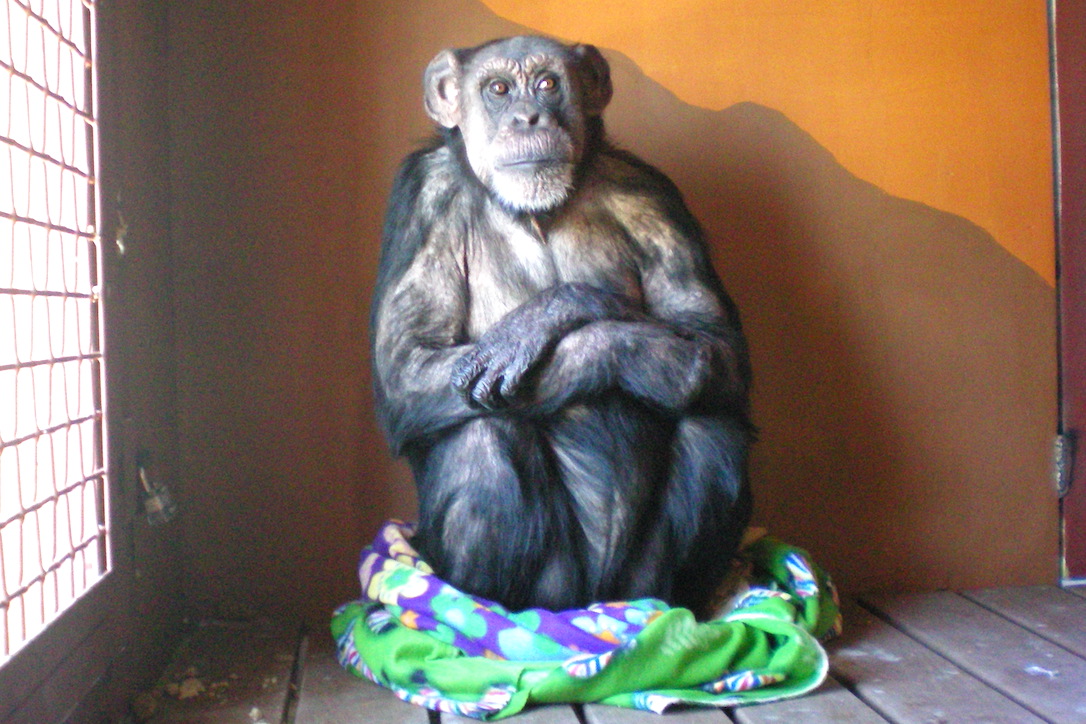
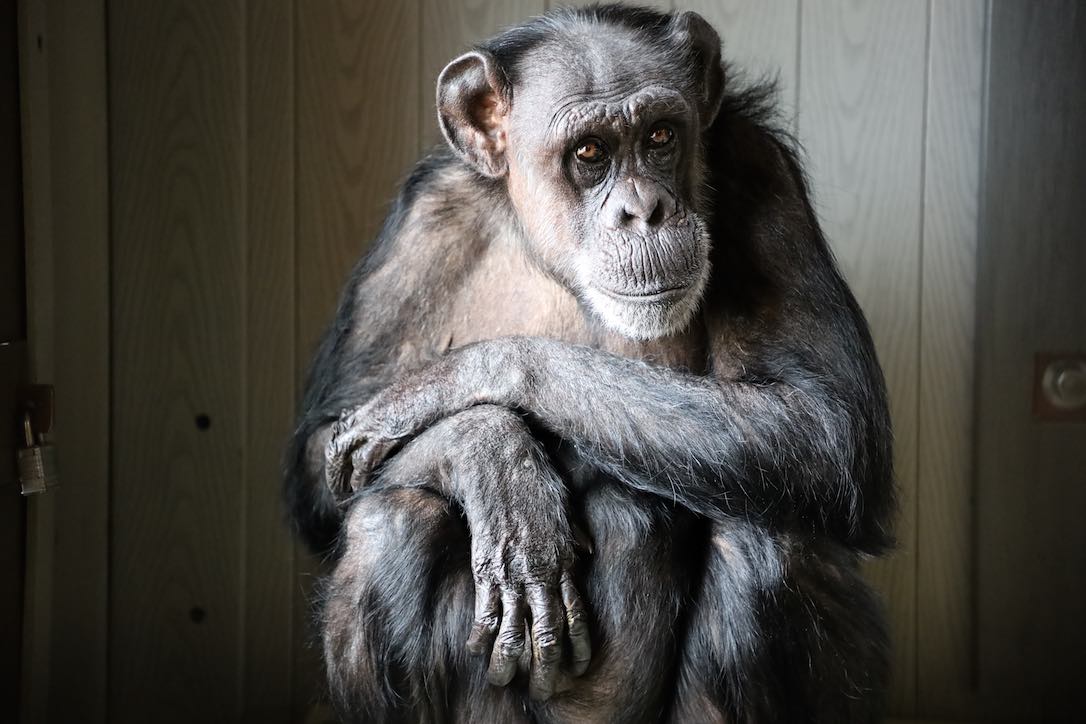
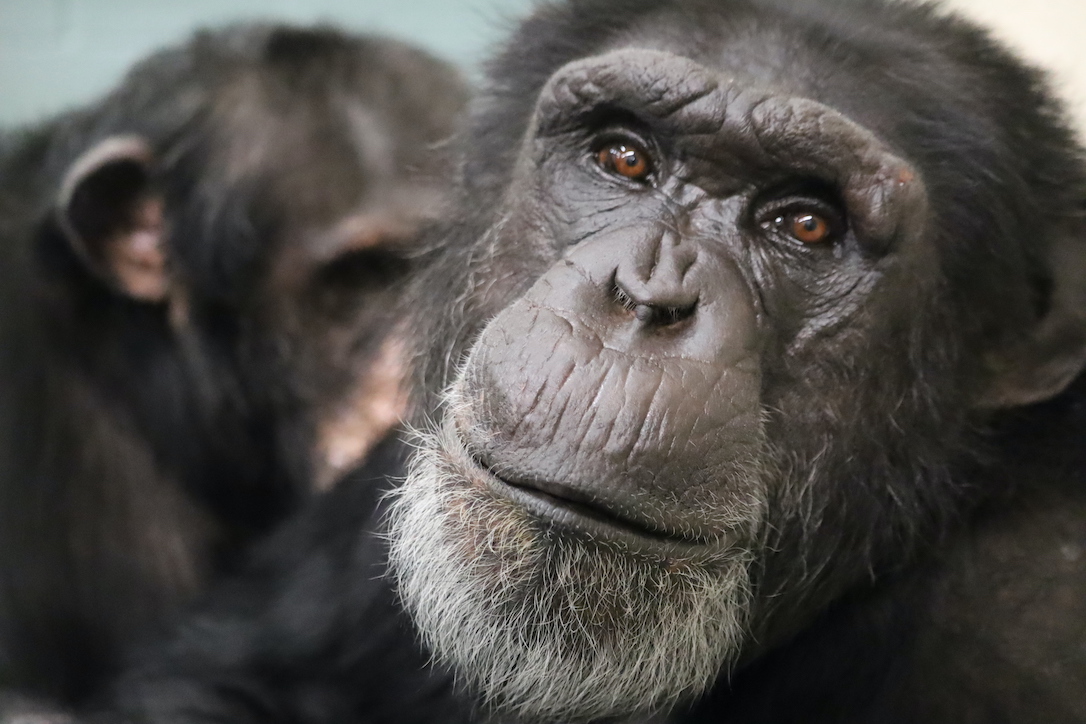
We will keep working for those chimpanzees still in laboratories. We will continue to try to give the chimpanzees in our care a true sanctuary life. We will continue to share their beautiful faces and personalities with you, like these photos I took today of brother and sister Cy and Lucky:

Cy
Lucky

And you will continue to remind others that their lives are important.

There are some monkeys that are being retired from biomedical testing to other sanctuaries now. One day we will join them in providing a home for monkeys. It won’t be all the monkeys who deserve retirement, but for those who come here, we will give them a true sanctuary life and we will share their beautiful faces and personalities with you. Because their lives are important too.

Some day in the future, I can’t even begin to imagine when, but some day, there will be a celebration for the last monkeys in biomedical research in the U.S. going to their sanctuary home.

Filed Under: Chimpanzees in Biomedical Research, Cy, Lucky, Sanctuary Tagged With: biomedical research, biomedical testing, chimp, chimpanzee, chimps, cynomolgus macaques, escaped monkey, hope, macaque, mauritius, monkey retirement, photo, portrait, Primates

Primary Sidebar

Subscribe To the Blog and Get Notified of New Posts First!

Archives

Calendar of Blog Posts

June 2026
S M T W T F S
 123456
78910111213
14151617181920
21222324252627
282930  
« May    

Categories

SUBSCRIBE TO OUR NEWSLETTER

Footer

PO Box 952
Cle Elum, WA 98922
[email protected]
509-699-0728
501c3 registered charity
EIN: 68-0552915

Official DDAF Grantee

Menu

  • The Chimpanzees
  • Blog
  • About Us
  • You can help
  • Resources
  • Contact
  • Donate

Proud Member of

Connect With Us

Search

Copyright © 2026 Chimpanzee Sanctuary Northwest. All Rights Reserved. Site by Vegan Web Design