• Skip to main content
  • Skip to primary sidebar
  • Skip to footer

Chimpanzee Sanctuary Northwest

Hope. Love. Home. Sanctuary

  • Our Family
    • The Chimpanzees
    • The Cattle
  • Blog
  • About Us
    • Visiting the Sanctuary
    • Philosophy
      • FAQs
      • Mission, Vision & Goals
      • Privacy Policy
    • The Humans
      • Staff
      • Board of Directors
      • Founder
    • Annual Reports
    • The Future of CSNW
    • CSNW In The News
  • You can help
    • Donate
      • Become a Chimpanzee Pal
      • Sponsor A Day
      • Transfer Stock
      • Be A Produce Patron
      • Be a Bovine Buddy
      • Give from your IRA
      • Personalized Stones
      • Bring Them Home Campaign
    • Leave A Legacy
    • Employment Opportunities
    • Volunteer
    • See Our Wish List
    • Events
  • Resources
    • About Chimpanzees
    • Enrichment Database
    • Advocacy
      • Advocacy Action Center
      • Apes in Entertainment
        • Trainers
        • Role of the AHA
        • Greeting Cards
      • Chimpanzees as Pets
      • Roadside Zoos
      • Chimpanzees in Biomedical Research
      • Conservation
        • African Apes
        • Orangutans
  • Shop
    • Merchandise Store
  • Contact
  • DONATE NOW

health

Treats

July 5, 2014 by Diana

This weekend marked the start of our summer visitor program. During the guided observation of the chimpanzees, while the chimpanzees foraged for their lunch, I found myself talking a lot about food with our guests.

One thing that we discussed was how easy it is as a caregiver to want to give the chimpanzees “exciting” food all of the time. Chimpanzees, much like humans, love food. Witnessing their excitement as they see food being presented and hearing their food grunts and squeaks is incredibly rewarding.

We made the very conscious decision before the chimpanzees came to the sanctuary that we would not give them processed sugar and we would avoid food with added salt. In the last few years, we’ve even gone further, and rarely give them processed foods of any kind (with exceptions for certain holiday parties, like 4th of July, Thanksgiving, and Christmas, and their primate biscuits). Their diet therefore is almost entirely fresh produce with some seeds and nuts, peanut butter, air-popped popcorn, and a small amount of commercial “primate chow.”

The result of our somewhat strict rules on food is that the chimpanzees remain extremely excited about fresh produce. We hear food grunts and squeaks everyday over fruits and vegetables, even produce that they get on a frequent basis like apples and tomatoes.

If we had decided that it was okay to give the chimpanzees things like cookies, cake, pizza, ice cream, and all of those foods that we humans tend to have a love / hate relationship with, the chimpanzees would have grown accustomed to that diet and might look down their (rather flat) noses at lettuce, kale, cucumbers, radishes, and all of the produce they truly love now.

We recognize that we are responsible for the health of the chimpanzees, and we try to ensure that we are doing everything we can in the way of preventative health care, which means providing a healthy diet and opportunities for exercise.

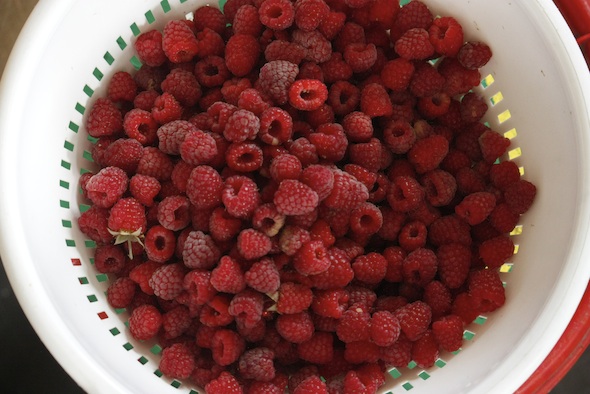
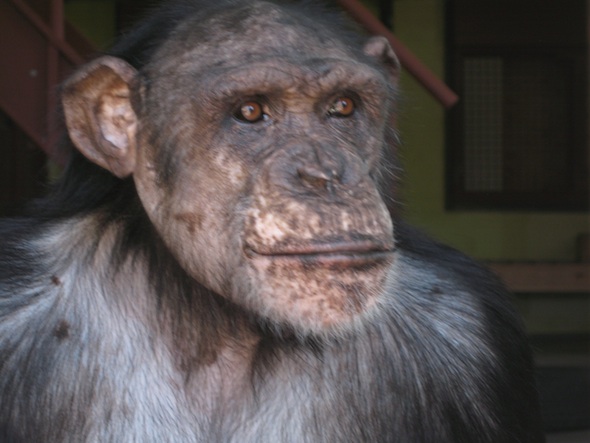
We’re very happy that something like a single fresh raspberry, picked from the bushes right outside of the greenhouse and still warm from the sun, is a huge treat for Foxie (pictured below) and for all of the chimpanzees:
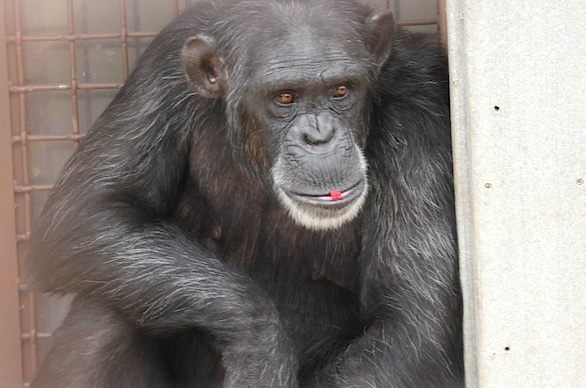
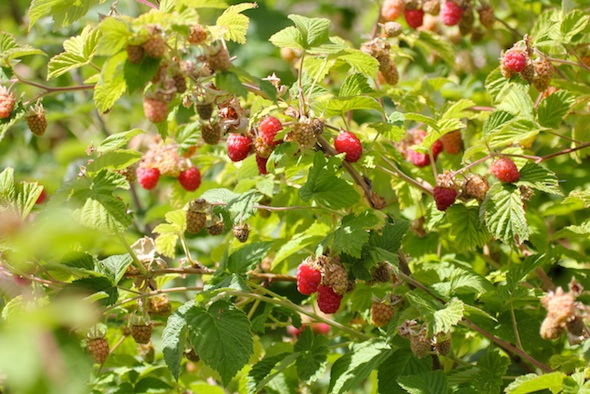
Foxie eating a raspberry

raspberries on vine

bowl of rasperries


Today Jamie savored the broccoli that was spread on the hill as part of the lunch forage, bringing it into the greenhouse to slowly eat:
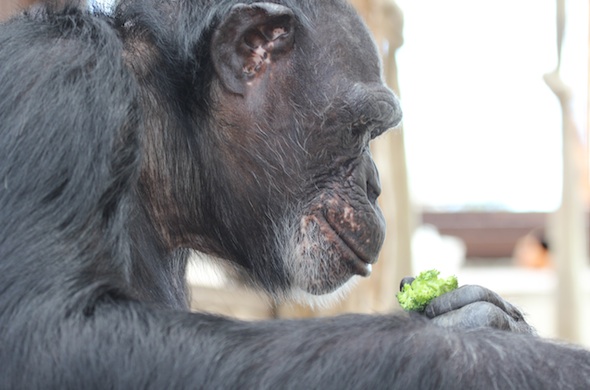
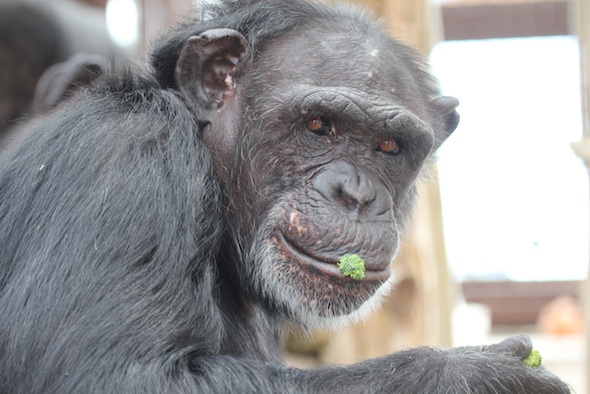
Jamie with broccoli

Jamie eating broccoli floret


Dinner tonight included lettuce, watermelon (a special summer treat), and peppers:
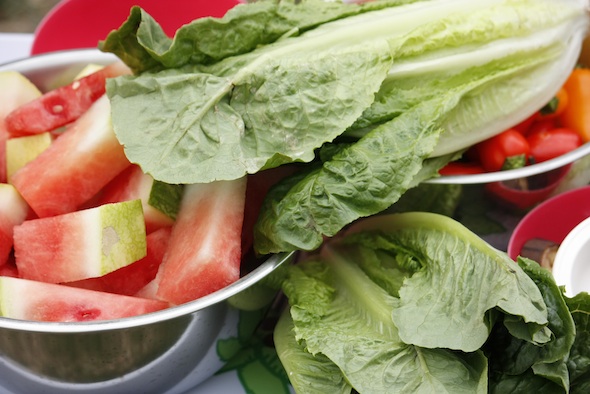
dinner tray


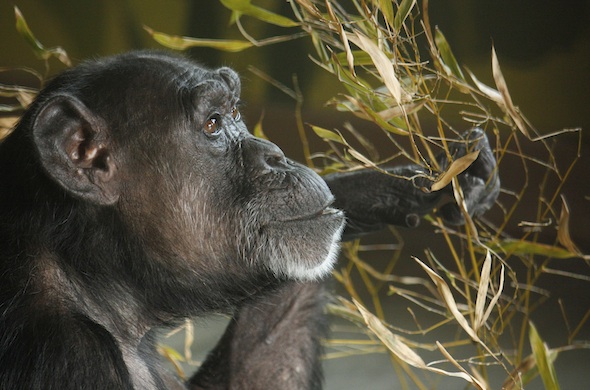
Jody in particular likes to supplement the diet we provide with plants that she picks herself, including this bamboo that she brought into the playroom this afternoon and ate the leaves, one by one:
jody with bamboo

Our friend Zarin, who has written guest blog posts about her work at the Kibale National Park in Uganda, shared research they did that examined the nutritional profile of food that the chimpanzees in Kibale eat. One interesting thing they found was that even ripe fruit that the chimpanzees eat in the wild at that field site contain about the same amount of natural sugars as the carrots found in grocery stores and gardens here.

This information led us to serve more vegetables and less fruit to the Cle Elum Seven, and we now often sneak veggies into the chimps’ morning fruit smoothie. No doubt our policies will continue to adapt as we learn more, and hopefully the result will be healthy, happy, and long-lived chimpanzees.
Filed Under: Food, Foxie, Jamie, Jody, Sanctuary Tagged With: chimp, chimpanzee, csnw, diet, Food, forage, fruit, health, northwest, Sanctuary

Transformation

April 19, 2013 by J.B.

Earlier this week, as volunteer Keri and I were finishing a walk around the hill with Jamie, we did some quick calculations to figure out just how far Jamie is walking each day. At a minimum, I think she is doing a mile a day just in walks with her caregivers – around an enclosure that rises 100 feet in elevation from end to end, no less. For a free-living chimpanzee, this wouldn’t be much, but for a chimpanzee who spent her life in a laboratory, it’s not bad at all.

web Jamie top of YH valley look at camera IMG_6137

The physical transformations that we’ve witnessed over the past five years have been incredible. After decades in tiny cages in a windowless basement, these seven chimps finally saw the sun, breathed fresh air, and got to run, climb, jump, and swing. Almost immediately, their skin darkened, their hair filled in, and their muscles grew stronger.

While most of these changes occurred over the first few months, we are still witnessing changes to this day. I think this is driven in part by their emotional recovery. This morning, as I watched Jamie run playfully after her friend Missy, I couldn’t help thinking about how much physical health and emotional health are intertwined. The stronger they get, the more they play and explore. And the more they play and explore, the stronger they get. I guess they call this a virtuous cycle.

web Jamie run YH IMG_6313

When I look back at photos from the chimps’ arrival in 2008, I hardly recognize them. Their bodies displayed the toll of so many years in the laboratory, but in their faces you could see the even greater damage that was done to their spirits. They looked sick, tired, scared, and beaten down:

web Jamie pale hairless 2008 IMG_1451

Five years in sanctuary can do a lot. Today, Jamie looks better in every imaginable way. And I’m sure she feels the same. Who knows what changes we’ll see in the next five years.

web Jamie sit log bridge beneath structure YH IMG_6302

Filed Under: Jamie Tagged With: before and after, chimpanzee, exercise, health, Jamie, northwest, recovery, rescue, Sanctuary

An important message about Burrito

June 15, 2012 by J.B.

The Cle Elum Seven are fortunate to have a huge family of supporters from around the world. We are touched by how much you have grown to care about each of them, so we want to share with you some news about Burrito’s health.

We have recently started treating Burrito for congestive heart disease. In basic terms, his heart is not working as efficiently as it once did and as a result, his body has begun to accumulate fluids. While this sounds frightening, don’t be alarmed. Congestive heart disease is a chronic condition and with proper care it can often be managed quite successfully. We believe that we have caught it early, so that will be an advantage in his treatment.

CSNW has an amazing team of veterinarians overseeing Burrito’s care and we are working closely with other chimpanzee veterinarians with experience in treating this condition, so he is in great hands. I can assure you that at this point, Burrito is as happy and full of energy as he has ever been. We will of course do all we can to make sure he stays that way.

Below you will find a list of questions and answers to help explain things in more detail. If you have any questions that are not answered here, please feel free to leave a comment on this post or send us an email and we will do our best to answer it for you.

Thank you for being such an important part of Burrito’s family.

…

What is congestive heart disease?

Congestive heart disease is a condition in which the heart can not pump
blood efficiently enough to take care of the body’s needs. In response,
the body has difficulty expelling fluid and becomes “congested,”
particularly in the extremities.

What are the symptoms of congestive heart disease?

In chimpanzees, the most common initial symptom is swelling (edema). In
Burrito’s case, the first and at this point only sign of visible
swelling was in the scrotum. Other symptoms may include shortness of
breath, weakness, fatigue, and coughing due to fluid in the lungs.

Why do chimpanzees get heart disease?

In chimpanzees, heart disease includes both congestive heart disease and
idiopathic cardiomyopathy, in which the heart muscle becomes enlarged,
fibrous, or rigid. Heart disease is the leading cause of death in
captive chimpanzees. One study found that 68% of all chimpanzees
examined during necropsy at a large laboratory in the United States
showed evidence of heart disease. No one can say definitively at this
point why the prevalence of heart disease is so great in chimpanzees,
but it is most likely influenced by a combination of genetics, diet,
inactivity, and chronic stress.

What is CSNW doing to treat Burrito’s illness?

As is the case with humans, the best treatment for heart disease
includes a combination of medication, diet, and exercise. Burrito is
currently on medications that will help to improve his heart function
and eliminate excess fluid. The chimps at CSNW have always been on a
no-salt diet due to the general risk of heart disease in chimpanzees,
and that will continue. And with the opening of Young’s Hill last fall,
Burrito’s activity levels have increased even further since his days in
a laboratory cage.

What is Burrito’s prognosis?

Burrito’s care is being discussed and overseen by many of the world’s
best great ape veterinarians. We believe that we have caught Burrito’s
illness in its early stages. This, combined with medication, proper
diet, and exercise, should allow Burrito to enjoy many more years at
Chimpanzee Sanctuary Northwest.

Does Burrito’s illness cause him any pain or stress?

At this point, Burrito is not showing any signs of illness besides
swelling. In fact, he is happier and more playful now than he has been
in many months.

Filed Under: Burrito Tagged With: Burrito, chimpanzee, congestive, disease, health, heart, northwest, rescue, Sanctuary

  • « Go to Previous Page
  • Page 1
  • Page 2

Primary Sidebar

Subscribe To the Blog and Get Notified of New Posts First!

Archives

Calendar of Blog Posts

June 2026
S M T W T F S
 123456
78910111213
14151617181920
21222324252627
282930  
« May    

Categories

SUBSCRIBE TO OUR NEWSLETTER

Footer

PO Box 952
Cle Elum, WA 98922
[email protected]
509-699-0728
501c3 registered charity
EIN: 68-0552915

Official DDAF Grantee

Menu

  • The Chimpanzees
  • Blog
  • About Us
  • You can help
  • Resources
  • Contact
  • Donate

Proud Member of

Connect With Us

Search

Copyright © 2026 Chimpanzee Sanctuary Northwest. All Rights Reserved. Site by Vegan Web Design