• Skip to main content
  • Skip to primary sidebar
  • Skip to footer

Chimpanzee Sanctuary Northwest

Hope. Love. Home. Sanctuary

  • Our Family
    • The Chimpanzees
    • The Cattle
  • Blog
  • About Us
    • Visiting the Sanctuary
    • Philosophy
      • FAQs
      • Mission, Vision & Goals
      • Privacy Policy
    • The Humans
      • Staff
      • Board of Directors
      • Founder
    • Annual Reports
    • The Future of CSNW
    • CSNW In The News
  • You can help
    • Donate
      • Become a Chimpanzee Pal
      • Sponsor A Day
      • Transfer Stock
      • Be A Produce Patron
      • Be a Bovine Buddy
      • Give from your IRA
      • Personalized Stones
      • Bring Them Home Campaign
    • Leave A Legacy
    • Employment Opportunities
    • Volunteer
    • See Our Wish List
    • Events
  • Resources
    • About Chimpanzees
    • Enrichment Database
    • Advocacy
      • Advocacy Action Center
      • Apes in Entertainment
        • Trainers
        • Role of the AHA
        • Greeting Cards
      • Chimpanzees as Pets
      • Roadside Zoos
      • Chimpanzees in Biomedical Research
      • Conservation
        • African Apes
        • Orangutans
  • Shop
    • Merchandise Store
  • Contact
  • DONATE NOW

coronavirus

A visit from a friend

January 15, 2021 by J.B.

You’ve probably heard by now that several members of a gorilla troop at the San Diego Zoo began exhibiting respiratory symptoms and later tested positive for the coronavirus that causes COVID-19. This is a moment that we’ve all been fearing, and to a large extent expecting, since the pandemic began. From what we know, the gorillas’ symptoms are still mild and zoo officials are hopeful that they will fully recover. But there’s so much we still don’t know about the pathogenicity of SARS-CoV-2 in nonhuman apes.

The coronavirus isn’t the first airborne pathogen transmitted by humans to threaten the health of captive apes. Historically, one of the greatest concerns for captive ape populations has been tuberculosis, which is why most facilities, including CSNW, require staff and volunteers to be tested at least annually and avoid the sanctuary when exhibiting any new respiratory symptoms. But in rare cases, even something as seemingly innocuous as the common cold can have devastating effects on other apes, as we saw in the death of an otherwise healthy chimpanzee at the Lincoln Park Zoo in 2009. Incidents like this, and the lingering unknowns surrounding COVID in great apes, have led most institutions to further strengthen the precautions they take to protect the apes in their care. In the case of the gorillas at the San Diego Zoo, there’s nothing at all to suggest that a lack of adequate precautions contributed to the transmission. But it’s a stark reminder that we cannot let our guard down too soon.

Like our colleagues, we’re still doing what we can to protect the chimps from COVID based on the best information available. We wear masks at all times and don scrubs, gloves, and boots when around the chimps and when cleaning their enclosures or handling food and enrichment. We take the chimps’ temperatures as well as our own each morning. We’ve invested in several commercial air scrubbers, which have been shown to help filter the air of large airborne particles that may contain the virus. And we rely on a mix of natural ventilation via open doors and windows and our industrial ventilation systems to maintain fresh air in the building. We’re always thinking about what more we could do but there’s just no way to isolate captive apes from their human caregivers entirely.

One of the most difficult changes we had to make as a result of the pandemic, both for the staff and the chimps, was suspending our intern and volunteer program. Only two volunteers, Patti and Lisa, were able to meet our strict criteria for COVID precautions in their lives outside of the sanctuary, and we and the chimps are incredibly lucky to have them. But the chimps are missing many of their other friends.

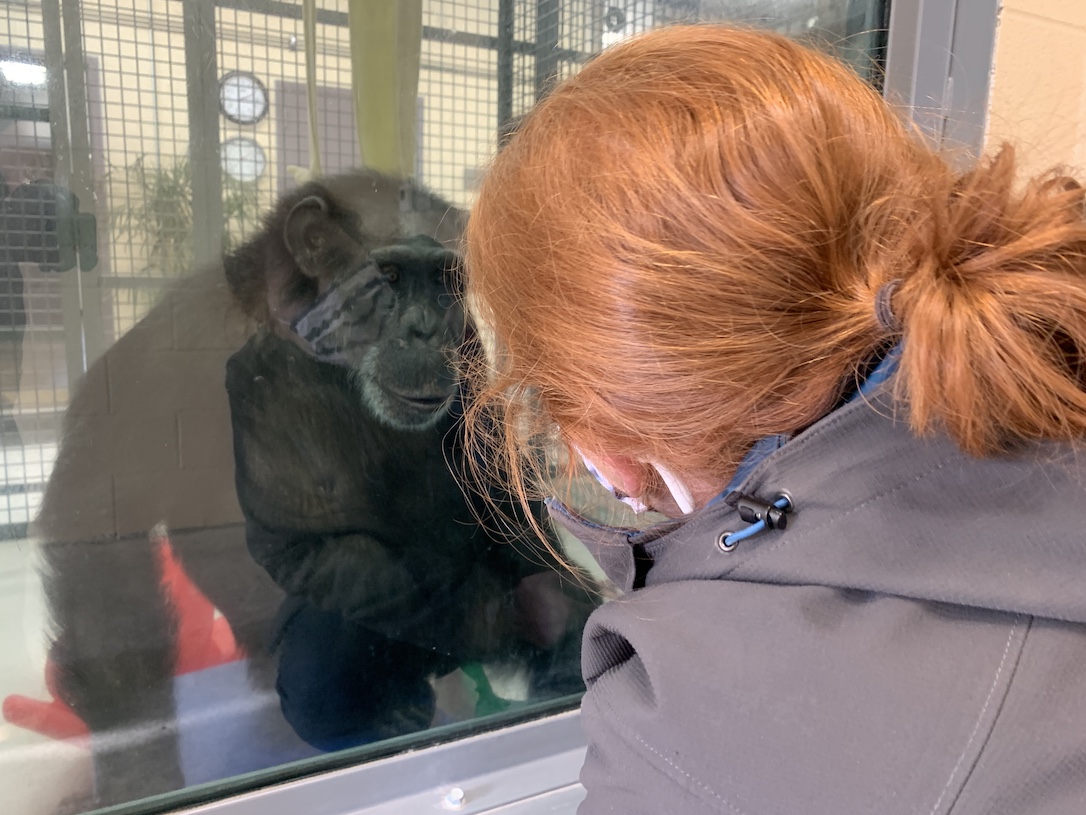
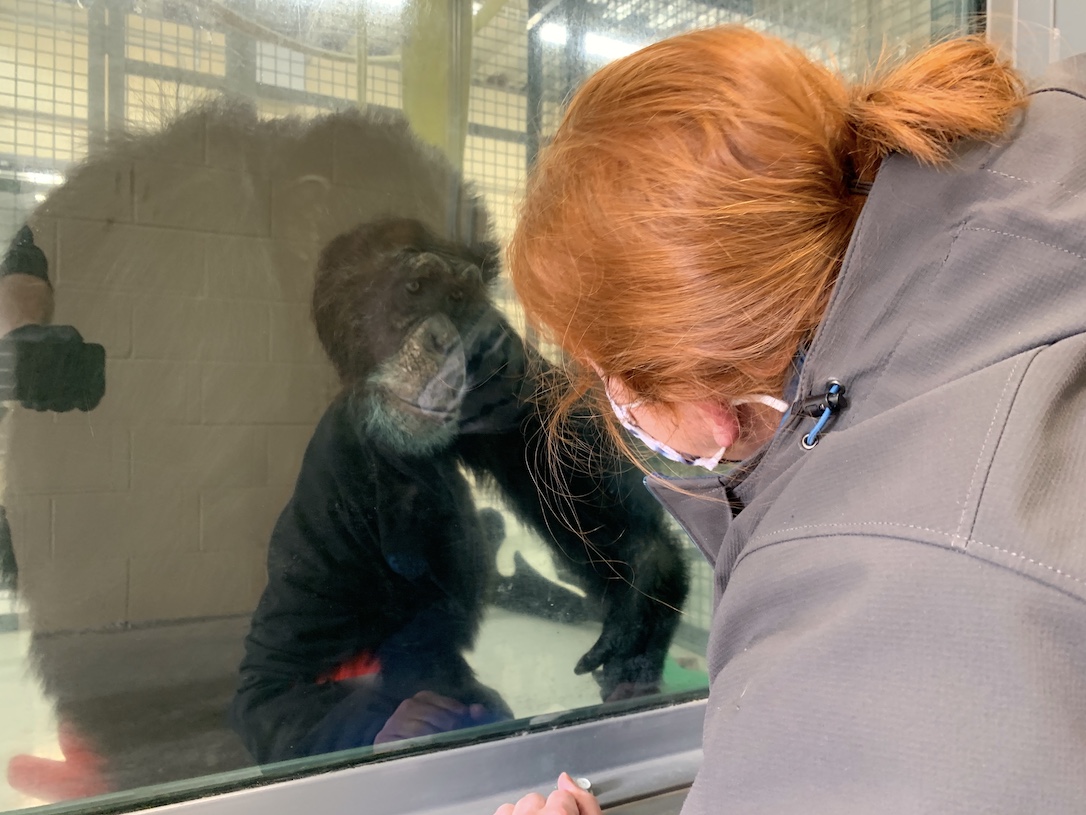
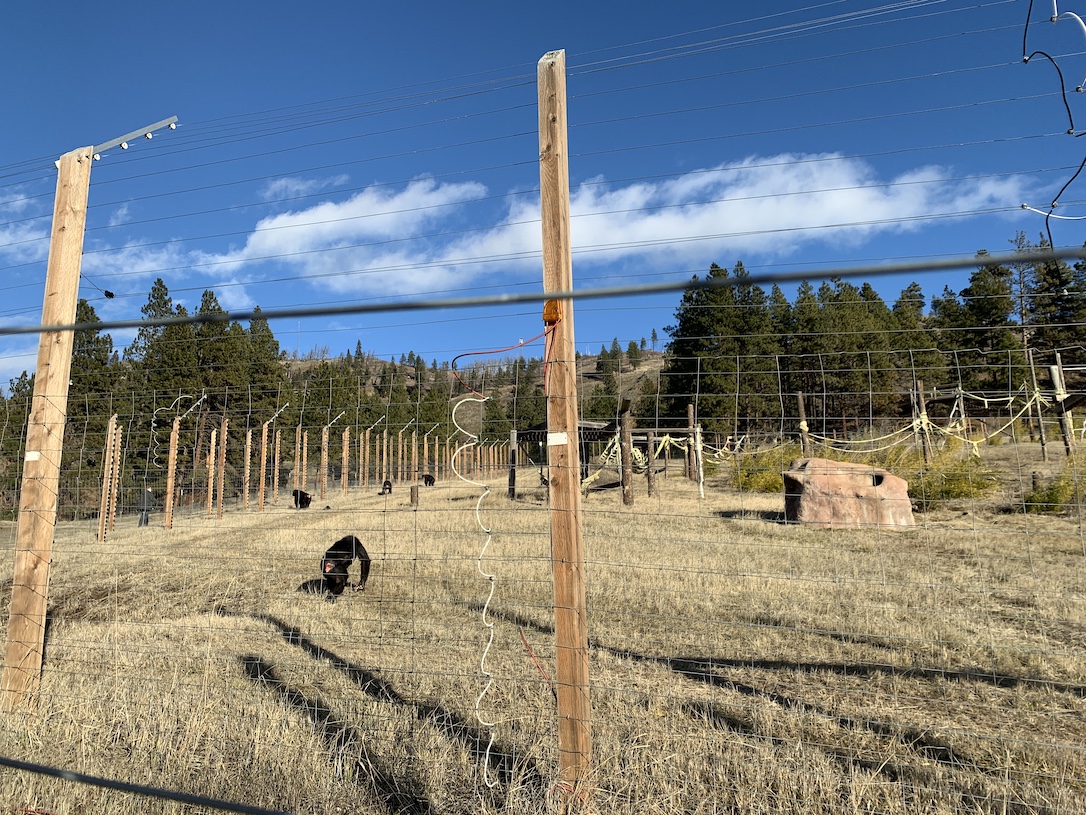
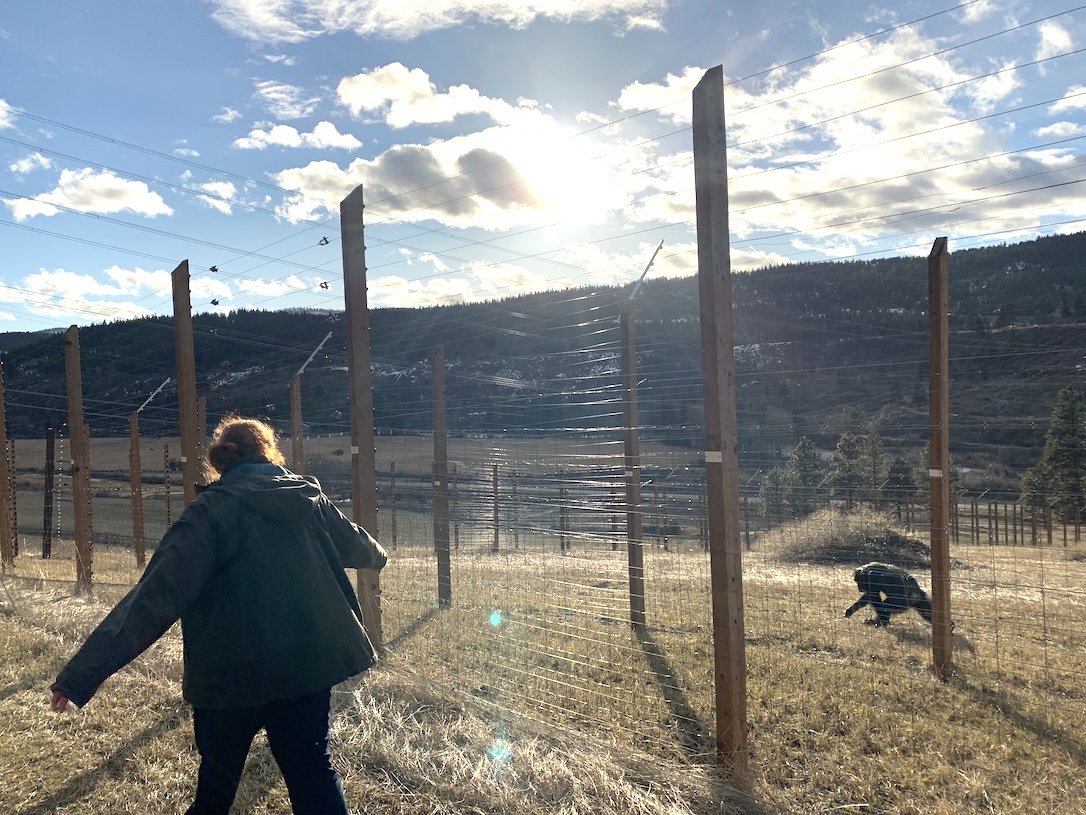
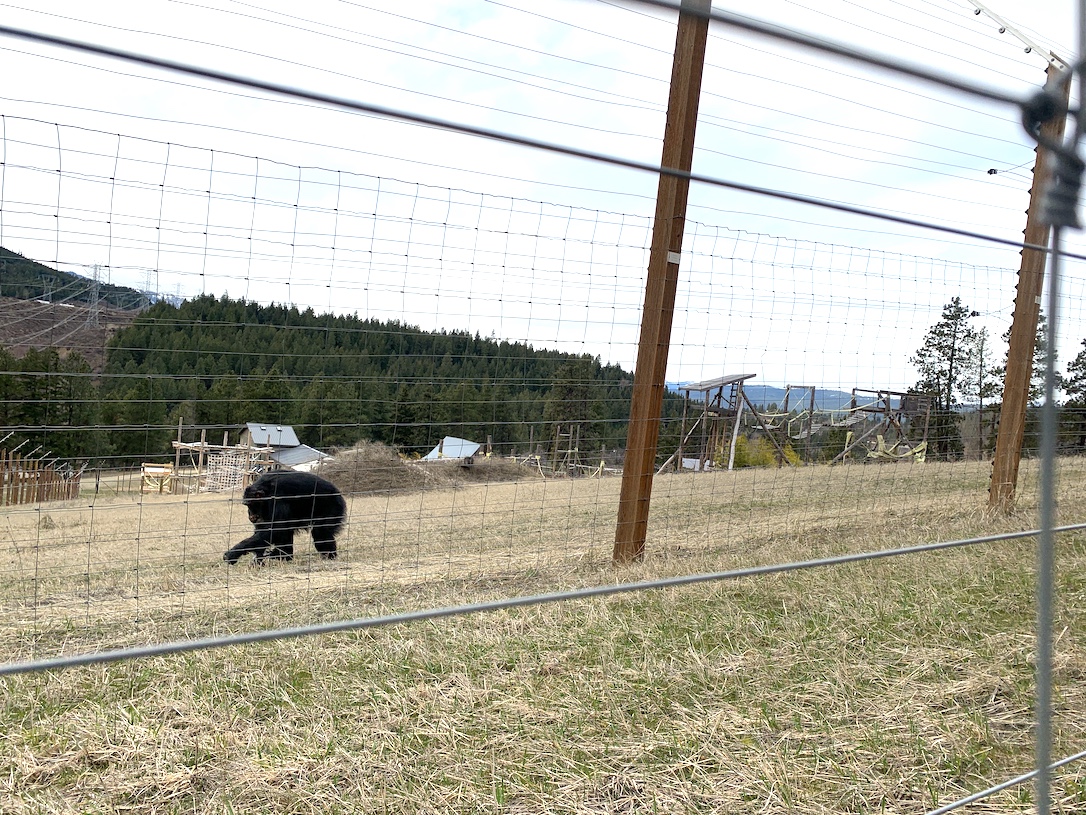
Thankfully, spring-like weather has made socially distanced walks around the hill possible all winter long for our other local volunteer caregivers. And now, with our new building, we have several locations where the chimps’ friends can visit with them through glass without sharing the same air space. Long-time staff member turned volunteer, Elizabeth, came by this afternoon to see her chimp friends. Everyone was so excited to see her – Burrito even did his happy dance.

As COVID continues to challenge us all, we’re thankful for bright moments like these.
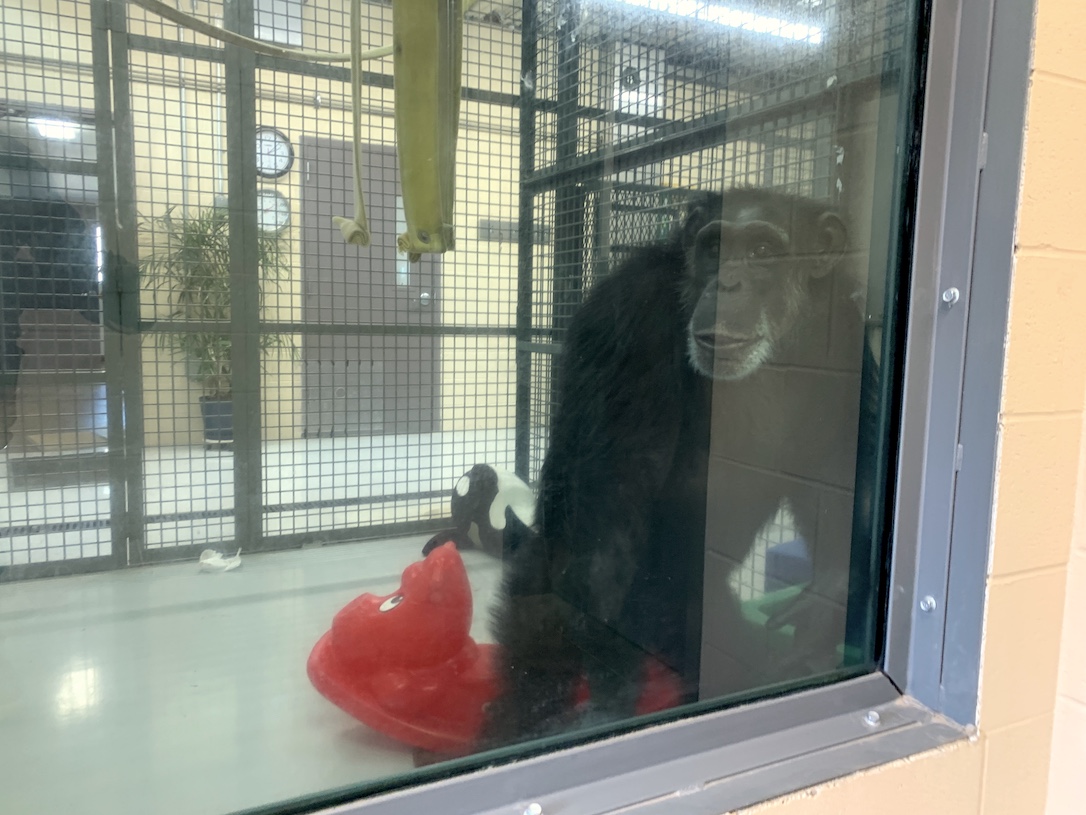
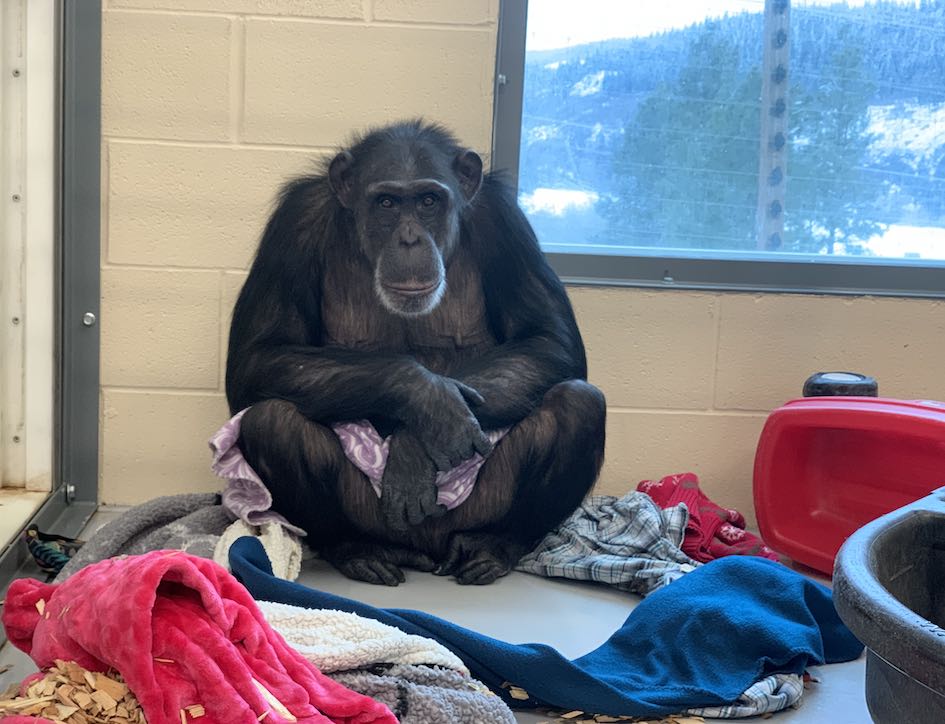
Honey B eagerly waits in the medical enclosure for Elizabeth to enter the new building
Honey B always gazes directly into your eyes
Mave saves her gazing for special occasions
The gang of seven heads out on a walk with an old friend
Burrito and Elizabeth walk off into the sunset

Filed Under: Volunteers Tagged With: chimpanzee, coronavirus, covid, northwest, rescue, Sanctuary

Taking temperatures

March 20, 2020 by J.B.

In recent weeks, we’ve implemented a number of precautionary measures to prevent the chimpanzees from being exposed to the coronavirus. At the same time, we’re ramping up routine health monitoring to aid in early detection should a chimpanzee become ill. Thanks to years of positive reinforcement training, body temperatures can be collected quickly and easily at mealtimes. Chimps, like humans, exhibit individual variation in baseline temperatures and temperature readings vary depending on how they are obtained (no-contact, oral, rectal, armpit, etc.). But by collecting temperatures routinely and consistently we can notice trends that could indicate infection before other clinical symptoms appear.

Mave, Honey B, and Willy B, our newest residents, learned quickly and are also enjoying this daily routine!

Filed Under: Latest Videos, Veterinary Care Tagged With: chimpanzee, coronavirus, northwest, rescue, Sanctuary, temperature, thermometer, veterinary

Video update on the state of things…

March 19, 2020 by Diana

…and how you can help!

Here’s a link to that list of suggested businesses from our auction committee mentioned in the video: https://bit.ly/390Ui8x

And here’s a link to the 2020 Goals document: https://chimpsnw.org/wp-content/uploads/2020/03/2020-Individual-Donor-Needs-ChimpsNW.pdf

And here’s a photo of Honey B getting ready for bed, really just wondering what YOU’RE doing:

Filed Under: Fundraising, Honey B, Latest Videos Tagged With: animal protection, animal rescue, Animal Welfare, chimpanzee, chimpanzee rescue, chimpanzee sanctuary, Chimpanzee Sanctuary Northwest, coronavirus, video

Life in the Time of Coronavirus

March 6, 2020 by J.B.

Many of you are likely wondering about the risk of the COVID-19 coronavirus to the chimps. This is something we are taking seriously, given our proximity to the known areas of community transmission in and around Seattle. While we don’t know precisely how this virus would affect a chimpanzee, we are determined not to find out. Staff and volunteers are following strict hygiene and disinfection protocols and wearing gloves and masks whenever they are in and around the facility, not just when they are in the chimpanzee areas. Planning meetings usually held in person are now being held by phone. And after consulting with our Direct Care Committee, a committee of our Board of Directors made up of veterinarians and primatologists (including a veterinarian that specializes in infectious disease and global pandemics), we decided to suspend all volunteer shifts for people who live and/or work in the greater Seattle area for the time being. Other restrictions will be put in place as needed as we follow the progression of this virus.

While the humans must adapt to a new way of working, it’s business as usual for the chimps.

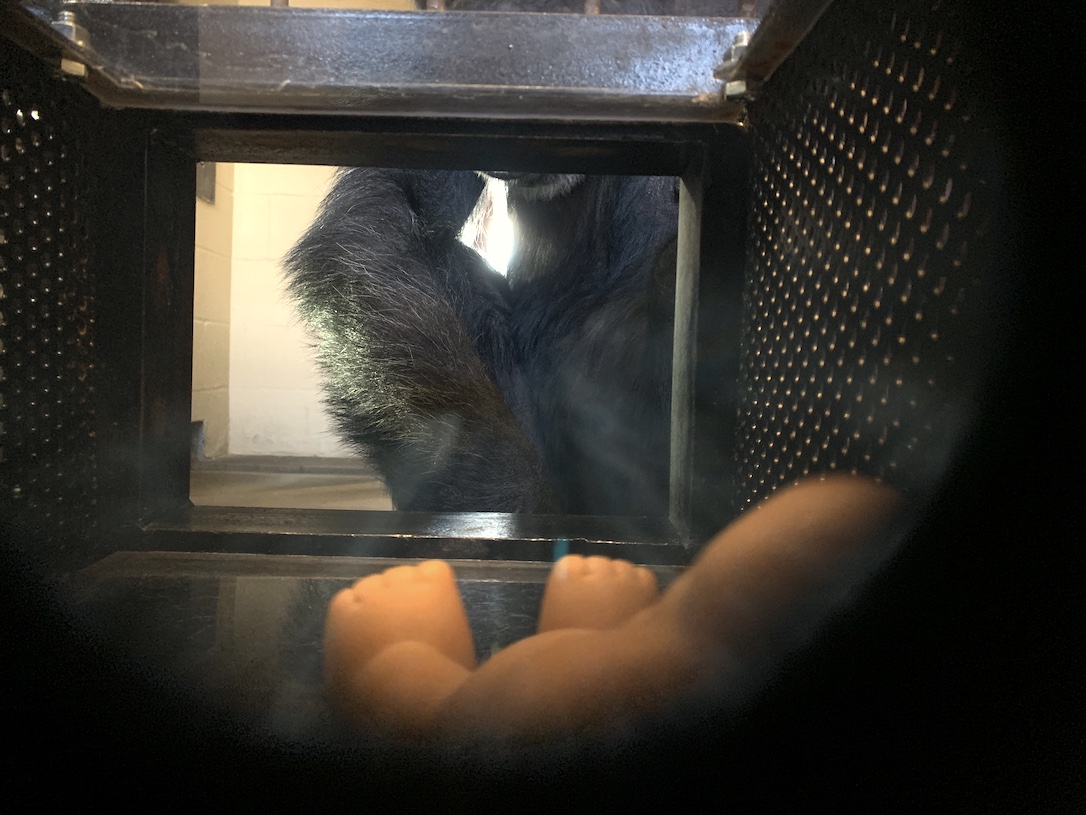
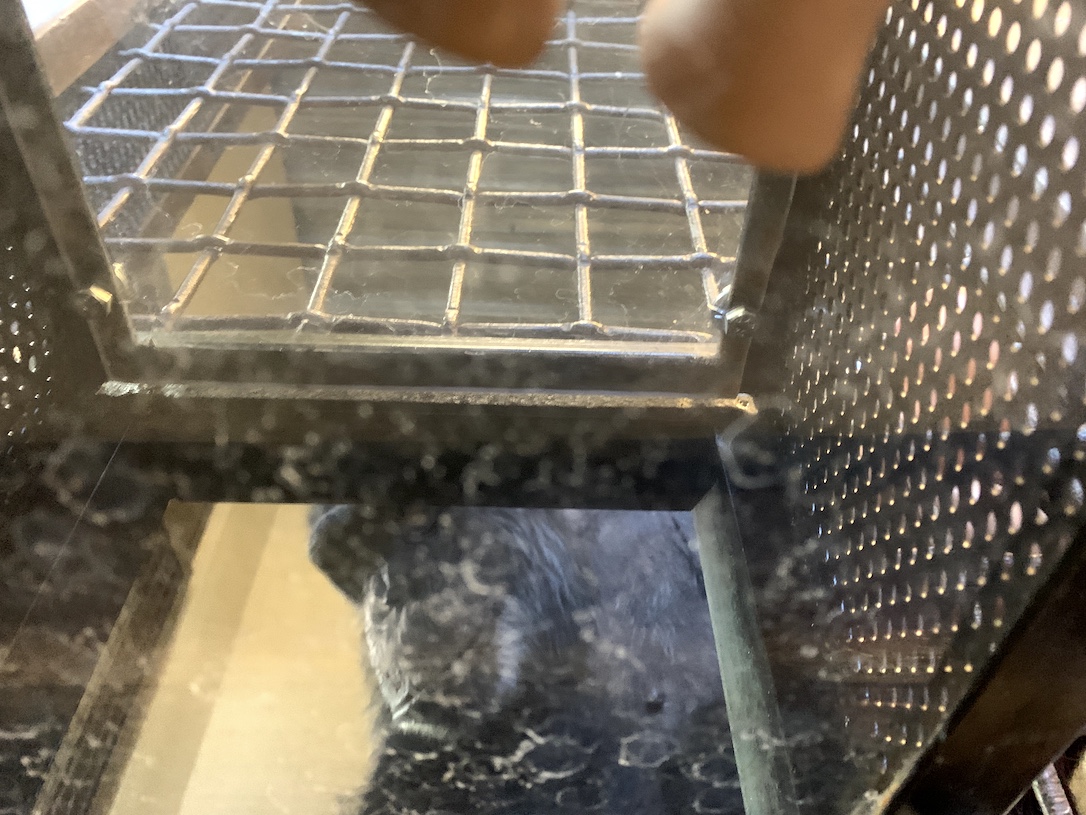
This morning, Foxie immediately wanted to play a game with her trolls in the “foot box” (a contraption we built to allow for x-rays of the chimps’ hands and feet).

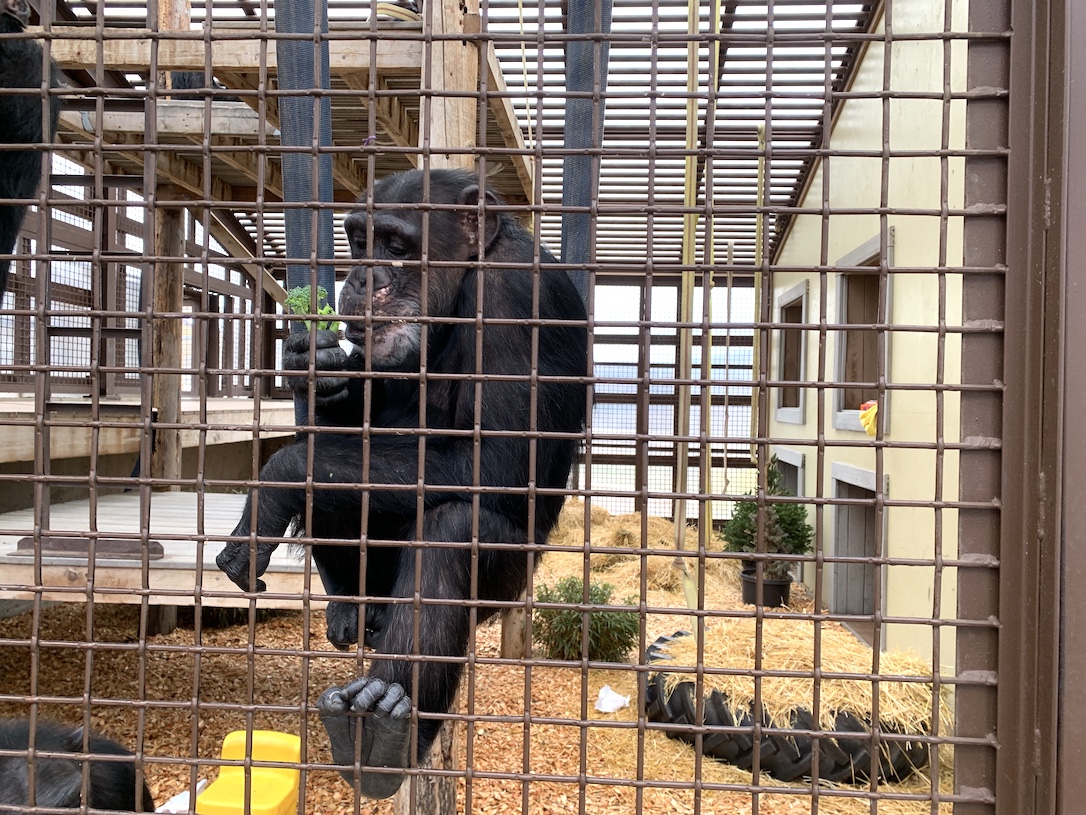
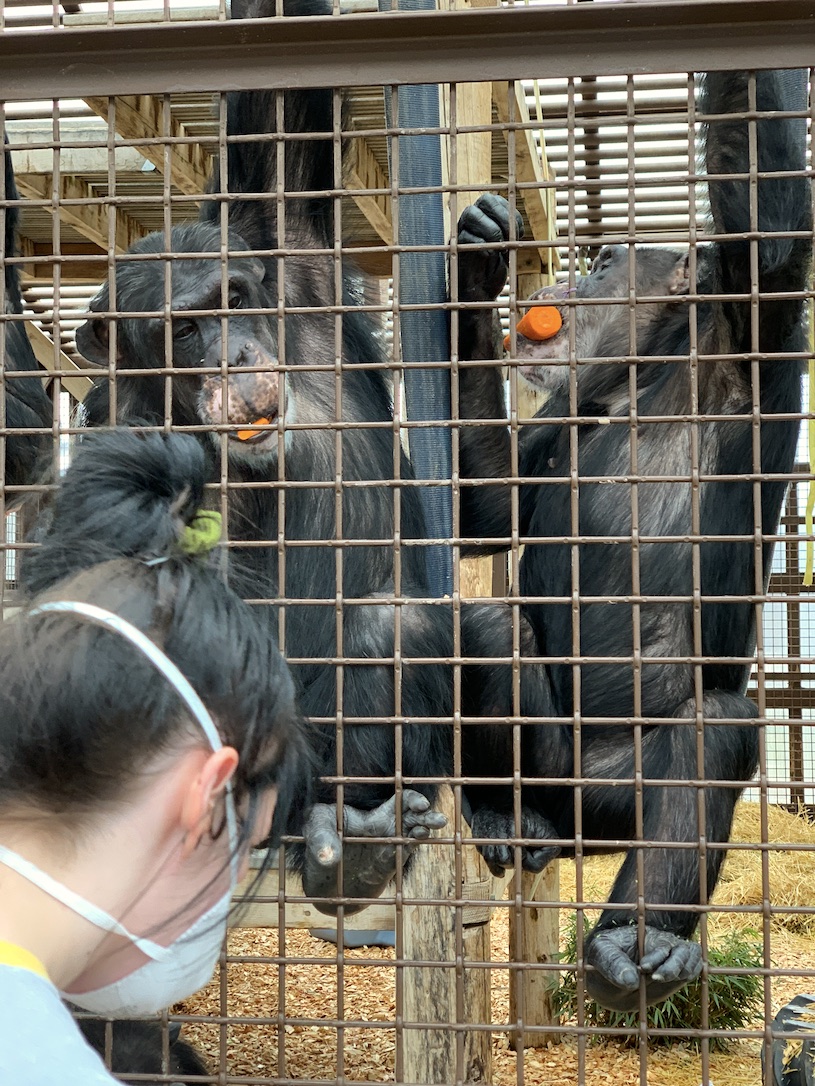
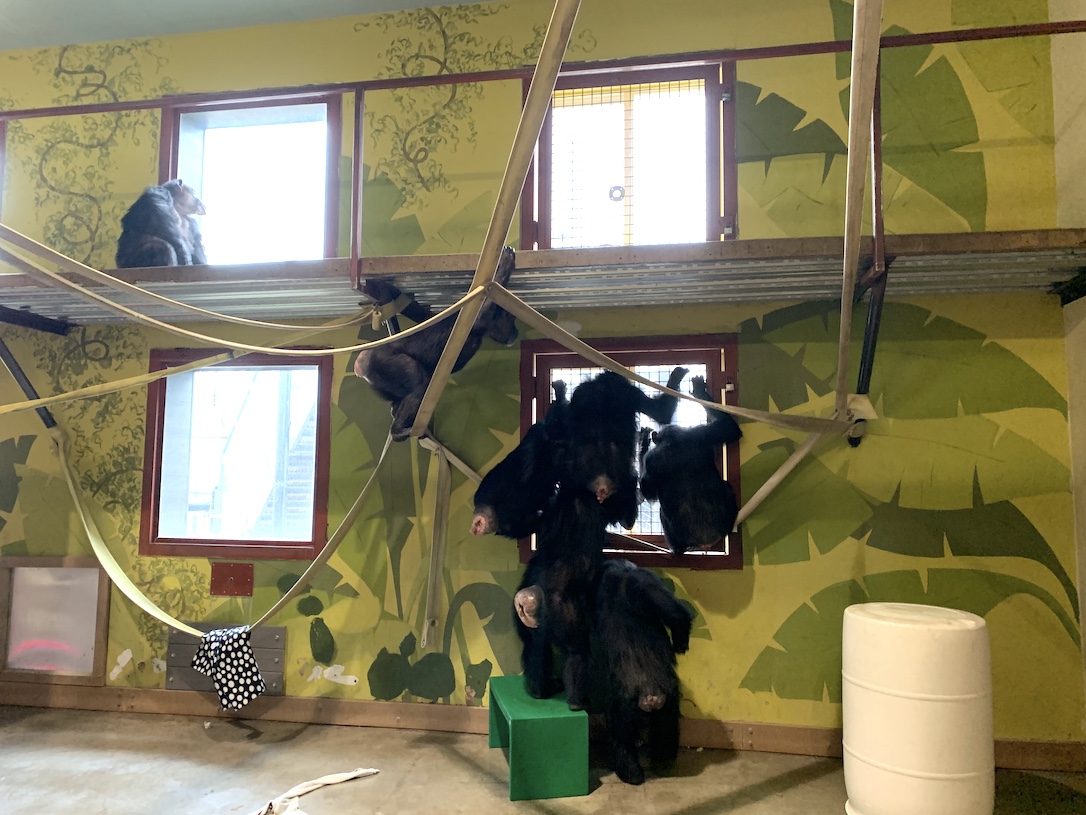
Lunch was a casual affair. The chimps love to sit in the fire hose swings at mealtime. While the caregivers are willing to squat down to the chimps’ level to serve them food, the chimps prefer to come up to our height and will often move barrels and benches up to the caging to make this possible. I doubt this is out of any concern for our ageing knees but rather to be positioned right at eye level when trying to get our attention for more food.

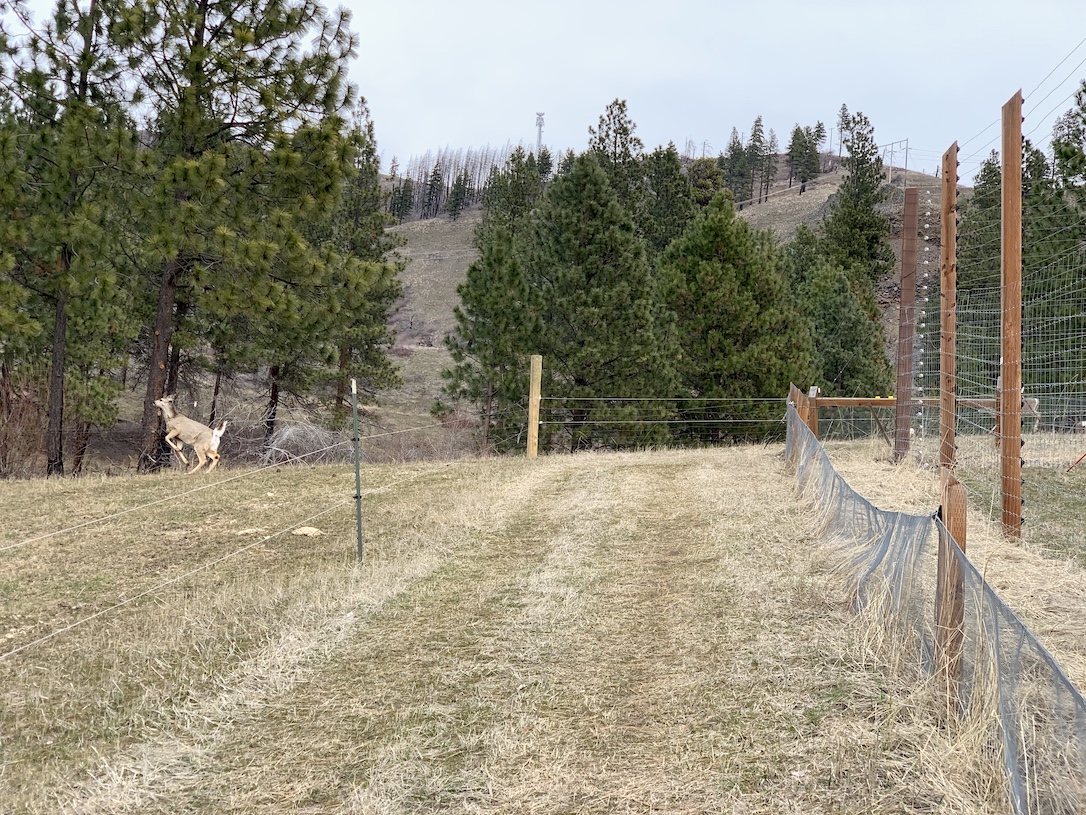
Burrito took a number of walks around the hill today. At one point, he and Jamie started running, which I took as an invitation to play. However, I soon realized that they had spotted a herd of 13 deer near the top of the hill and they were attempting to chase them off into the woods. Mission accomplished.

The two groups at CSNW spent most of the day in relative harmony, but early in the afternoon Willy B got some ants in his pants and decided to display in the Chute. Screams and threat barks were exchanged but before long everyone was more interested in dinner.

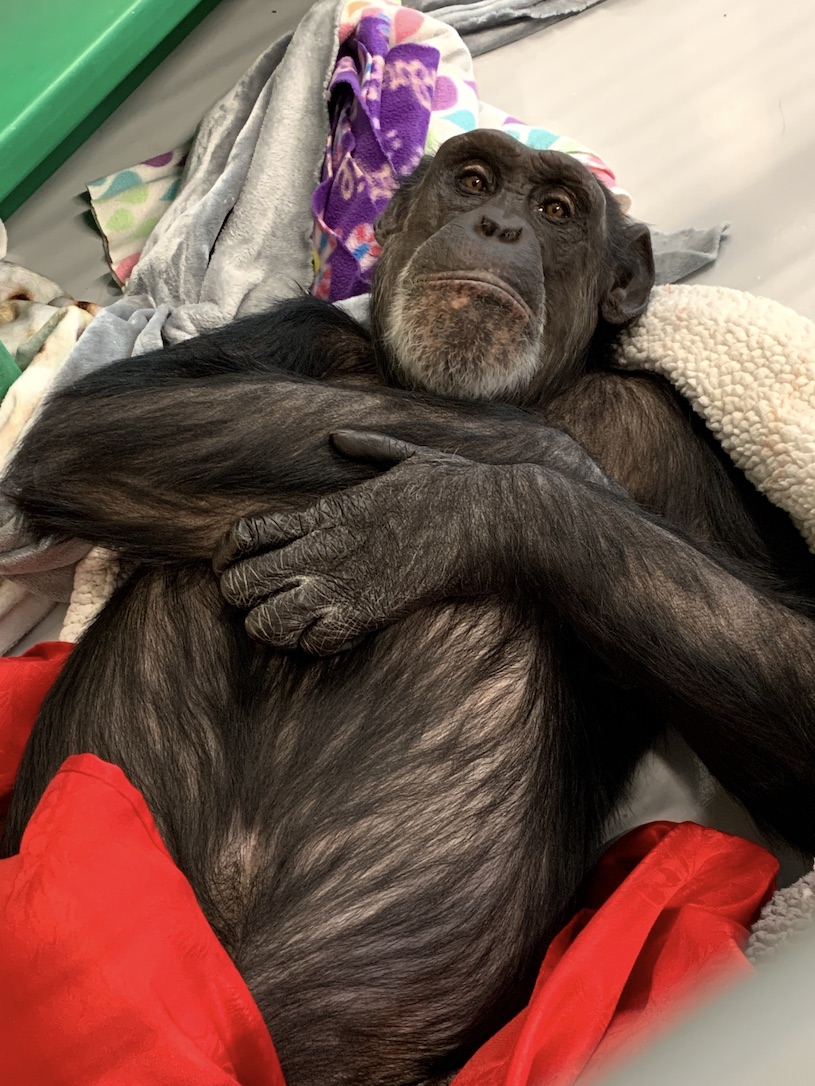
The chimps all have their own individual habits when bedding down for the night – where they sleep, how they create their nests, etc. Honey B likes to make a comfortable bed on the heated floor and then pull the covers halfway up.

Sleep tight, Honey B.


Filed Under: Veterinary Care Tagged With: chimpanzee, coronavirus, COVID-19, northwest, rescue, Sanctuary

Primary Sidebar

Subscribe To the Blog and Get Notified of New Posts First!

Archives

Calendar of Blog Posts

June 2026
S M T W T F S
 123456
78910111213
14151617181920
21222324252627
282930  
« May    

Categories

SUBSCRIBE TO OUR NEWSLETTER

Footer

PO Box 952
Cle Elum, WA 98922
[email protected]
509-699-0728
501c3 registered charity
EIN: 68-0552915

Official DDAF Grantee

Menu

  • The Chimpanzees
  • Blog
  • About Us
  • You can help
  • Resources
  • Contact
  • Donate

Proud Member of

Connect With Us

Search

Copyright © 2026 Chimpanzee Sanctuary Northwest. All Rights Reserved. Site by Vegan Web Design